SEMANTICS
Sense and Reference
L E A R N I N G
O B J E C T I V E S
• Define and explain the concept of
semantics and its role in language
meaning.
• Analyze words and phrases to
determine their semantic meaning
and identify potential ambiguities.
• Develop a critical awareness of the
complexity and nuance of language
meaning, recognizing the importance
of context and cultural background.
SEMANTIC
S
“Semantics is the study of
meaning in Language.”
“Linguistic Semantics is the
study of meaning that is
used by humans to express
themselves through
language.(Hurford, Heasley
and Smith, 2007)
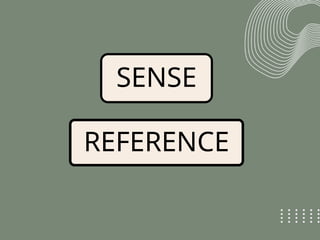
SENSE
REFERENCE
SENSE
Sense deals with relationship
inside the Language.
Sense of an expression is its
place in a system of semantic
relationship with other
expression in the language.
EXAMPLE OF
SENSE
1. The example of sense in word-form
GUILT
• Blame, Culpability, Guiltiness,
Iniquity, Wrong, etc.
• Feeling of shame for having done
wrong, Fact that somebody has
done something illegal, Blame or
responsibility for wrongdoing.
EXAMPLE OF
SENSE
2. The example of sense in phrase or
sentence
A prisoner escaped from jail
yesterday.
• A prisoner ran away from the jail
yesterday.
• A prisoner got free from the jail
yesterday.
REFERENC
E
Reference deals with the
relationship between language
and the world.
Reference is a relationship
between parts of language and
things outside language (in the
world).
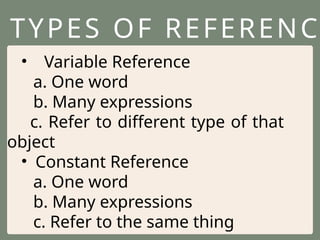
TYPES OF REFERENC
• Variable Reference
a. One word
b. Many expressions
c. Refer to different type of that
object
• Constant Reference
a. One word
b. Many expressions
c. Refer to the same thing
EXAMPLE OF
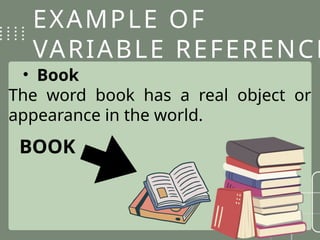
VARIABLE REFERENCE
• Book
The word book has a real object or
appearance in the world.
BOOK
EXAMPLE OF
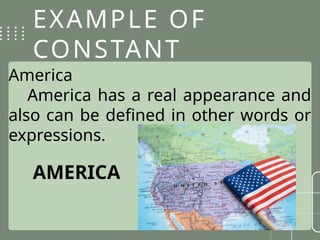
CONSTANT
REFERENCE.
America
America has a real appearance and
also can be defined in other words or
expressions.
AMERICA
THE
EXPRESSION
OF AMERICA
THAN
K YOU

SEMANTICS-ENG1.pptx presentation report.

  • 1.
  • 2.
    L E AR N I N G O B J E C T I V E S • Define and explain the concept of semantics and its role in language meaning. • Analyze words and phrases to determine their semantic meaning and identify potential ambiguities. • Develop a critical awareness of the complexity and nuance of language meaning, recognizing the importance of context and cultural background.
  • 3.
    SEMANTIC S “Semantics is thestudy of meaning in Language.” “Linguistic Semantics is the study of meaning that is used by humans to express themselves through language.(Hurford, Heasley and Smith, 2007)
  • 4.
  • 5.
    SENSE Sense deals withrelationship inside the Language. Sense of an expression is its place in a system of semantic relationship with other expression in the language.
  • 6.
    EXAMPLE OF SENSE 1. Theexample of sense in word-form GUILT • Blame, Culpability, Guiltiness, Iniquity, Wrong, etc. • Feeling of shame for having done wrong, Fact that somebody has done something illegal, Blame or responsibility for wrongdoing.
  • 7.
    EXAMPLE OF SENSE 2. Theexample of sense in phrase or sentence A prisoner escaped from jail yesterday. • A prisoner ran away from the jail yesterday. • A prisoner got free from the jail yesterday.
  • 8.
    REFERENC E Reference deals withthe relationship between language and the world. Reference is a relationship between parts of language and things outside language (in the world).
  • 9.
    TYPES OF REFERENC •Variable Reference a. One word b. Many expressions c. Refer to different type of that object • Constant Reference a. One word b. Many expressions c. Refer to the same thing
  • 10.
    EXAMPLE OF VARIABLE REFERENCE •Book The word book has a real object or appearance in the world. BOOK
  • 11.
    EXAMPLE OF CONSTANT REFERENCE. America America hasa real appearance and also can be defined in other words or expressions. AMERICA
  • 12.
  • 13.