

P R E S E N T E D BY: -
H E M L ATA T E K WA N I
NA I M I Q BA L K H A N
A B I S H E K ( M U T T H U )
ROLE OF TESTS AND INTERVIEWS IN
SELECTION PROCESS
Employee selection
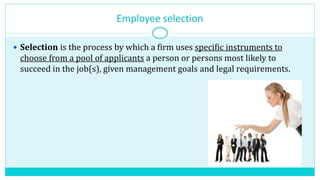
 Selection is the process by which a firm uses specific instruments to
choose from a pool of applicants a person or persons most likely to
succeed in the job(s), given management goals and legal requirements.
Selection Methods
 Sifting applications: Application forms, CV-s and covering letters
 Biodata analysis: objective, weighted scoring of biographical data (e.g. sex, age, family
background, work experience, leisure interest…)
 Work sample tests
 Written tests: ability, intelligence (or cognitive ability), personality, aptitude
 Interviews:
 individual interviews, interview panels, selection boards
 Structured or general interview
 Assessment centres
 References
 The final stage: offer a job contract
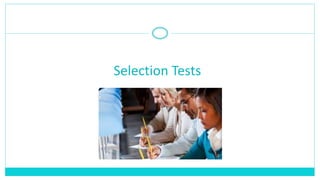
Selection Tests
EMPLOYMENT TESTS
“A test is an instrument designed to measure selected psychological and
mechanical attributes of an individual”
WHY DO WE USE TESTS?
 FOR THE SELECTION AND PLACEMENT OF NEW EMPLOYEES
 FOR APPRAISING EMPLOYEES FOR PROMOTIONAL POTENTIALS
 FOR COUNSELLING EMPLOYEES
ADVANTAGES OF TESTING
 TEST CAN HELP UNCOVER TALENT
 TEST REDUCE THE COSTS OF SELECTION AND PLACEMENT
 TEST PROVIDE A HEALTHY BASIS FOR COMPARING APPLICANT’S
BACKGROUND
KINDS OF TESTS
 Mental Ability or Intelligence (cognitive)Test
 Personality Tests
 Ability tests
 Aptitude Tests
 Attainment Tests
Intelligence test
• Measures general intelligence: the capacity of abstract thinking and
reasoning
• Higher IQ leads your performance on the Job.(a2)
Personality Tests
 Many different tests
 Five-factors model{Big five personality-test)
 Openness to experience
 Conscientiousness
 Extraversion/intraversion
 Agreeableness (cooperativity)
 Neuroticism(Emotional stability)
 Myers – Briggs Type Indicator (in the USA)
 Self-reporting tests
Ability Tests
 Test of Psychomotor abilities and specific aptitudes (vision, hearing,
motor dexterity , artistic ability , mechanical ability , management
potential , leadership potential etc.)
 Tests of general ability attempt to measure a person’s ability to problem
solve , analyze and adapt to new situations or challenges
Aptitude tests
 Job specific tests that are designed to predict the potential performance
of given job tasks
 E.g. clerical aptitude, mechanical aptitude…
• Measuring abilities and skill already acquired
• E.g. typing test
Attainment tests
Selection Interviews
EMPLOYMENT INTERVIEW
 THE INTERVIEW IS AN ALMOST UNIVERSAL SELECTION DEVICE.
 IT ENABLES THE PERSON RESPONSIBLE FOR EMPLOYMENT TO
APPRAISE THE CANDIDATE AND HIS BEHAVIOUR.
PURPOSE OF INTERVIEW
 TO FIND OUT THE SUITABILITY OF THE CANDIDATE
 TO SEEK MORE INFORMATION ABOUT THE CANDIDATE
 TO GIVE HIM THE ACCURATE PICTURE OF JOB
KINDS OF INTERVIEW
 PRELIMINARY INTERVIEW
 STRESS INTERVIEW
 BACKGROUND INFORMATION INTERVIEW
 DISCUSSION INTERVIEW
 GROUP INTERVIEW
 NON DIRECTED INTERVIEW
 PATTERNED OR STRUCTURED INTERVIEW
PROCEDURE OF INTERVIEW
 SHORTLISTING OF CANDIDATE
 PHYSICAL ARRANGEMENT FOR THE INTERVIEW
 RECEPTION OF THE CANDIDATES
 CONDUCT OF INTERVIEW
 FINALISATION OF MINUTES OF THE INTERVIEW
Selection testing & interview

Selection testing & interview

  • 1.
    P R ES E N T E D BY: - H E M L ATA T E K WA N I NA I M I Q BA L K H A N A B I S H E K ( M U T T H U ) ROLE OF TESTS AND INTERVIEWS IN SELECTION PROCESS
  • 2.
    Employee selection  Selectionis the process by which a firm uses specific instruments to choose from a pool of applicants a person or persons most likely to succeed in the job(s), given management goals and legal requirements.
  • 3.
    Selection Methods  Siftingapplications: Application forms, CV-s and covering letters  Biodata analysis: objective, weighted scoring of biographical data (e.g. sex, age, family background, work experience, leisure interest…)  Work sample tests  Written tests: ability, intelligence (or cognitive ability), personality, aptitude  Interviews:  individual interviews, interview panels, selection boards  Structured or general interview  Assessment centres  References  The final stage: offer a job contract
  • 4.
  • 5.
    EMPLOYMENT TESTS “A testis an instrument designed to measure selected psychological and mechanical attributes of an individual”
  • 6.
    WHY DO WEUSE TESTS?  FOR THE SELECTION AND PLACEMENT OF NEW EMPLOYEES  FOR APPRAISING EMPLOYEES FOR PROMOTIONAL POTENTIALS  FOR COUNSELLING EMPLOYEES
  • 7.
    ADVANTAGES OF TESTING TEST CAN HELP UNCOVER TALENT  TEST REDUCE THE COSTS OF SELECTION AND PLACEMENT  TEST PROVIDE A HEALTHY BASIS FOR COMPARING APPLICANT’S BACKGROUND
  • 8.
    KINDS OF TESTS Mental Ability or Intelligence (cognitive)Test  Personality Tests  Ability tests  Aptitude Tests  Attainment Tests
  • 9.
    Intelligence test • Measuresgeneral intelligence: the capacity of abstract thinking and reasoning • Higher IQ leads your performance on the Job.(a2)
  • 10.
    Personality Tests  Manydifferent tests  Five-factors model{Big five personality-test)  Openness to experience  Conscientiousness  Extraversion/intraversion  Agreeableness (cooperativity)  Neuroticism(Emotional stability)  Myers – Briggs Type Indicator (in the USA)  Self-reporting tests
  • 11.
    Ability Tests  Testof Psychomotor abilities and specific aptitudes (vision, hearing, motor dexterity , artistic ability , mechanical ability , management potential , leadership potential etc.)  Tests of general ability attempt to measure a person’s ability to problem solve , analyze and adapt to new situations or challenges
  • 12.
    Aptitude tests  Jobspecific tests that are designed to predict the potential performance of given job tasks  E.g. clerical aptitude, mechanical aptitude…
  • 13.
    • Measuring abilitiesand skill already acquired • E.g. typing test Attainment tests
  • 14.
  • 15.
    EMPLOYMENT INTERVIEW  THEINTERVIEW IS AN ALMOST UNIVERSAL SELECTION DEVICE.  IT ENABLES THE PERSON RESPONSIBLE FOR EMPLOYMENT TO APPRAISE THE CANDIDATE AND HIS BEHAVIOUR.
  • 16.
    PURPOSE OF INTERVIEW TO FIND OUT THE SUITABILITY OF THE CANDIDATE  TO SEEK MORE INFORMATION ABOUT THE CANDIDATE  TO GIVE HIM THE ACCURATE PICTURE OF JOB
  • 17.
    KINDS OF INTERVIEW PRELIMINARY INTERVIEW  STRESS INTERVIEW  BACKGROUND INFORMATION INTERVIEW  DISCUSSION INTERVIEW  GROUP INTERVIEW  NON DIRECTED INTERVIEW  PATTERNED OR STRUCTURED INTERVIEW
  • 18.
    PROCEDURE OF INTERVIEW SHORTLISTING OF CANDIDATE  PHYSICAL ARRANGEMENT FOR THE INTERVIEW  RECEPTION OF THE CANDIDATES  CONDUCT OF INTERVIEW  FINALISATION OF MINUTES OF THE INTERVIEW