SELECTION OF A RESEARCH 
PROBLEM 
By 
Dr.Shazia Zamir
Contents 
SELECTION OF A RESEARCH PROBLEM 
- Definition of a Problem 
- Selection of the Problem 
- Evaluation of the Problem 
• Refinement of the Research Problem
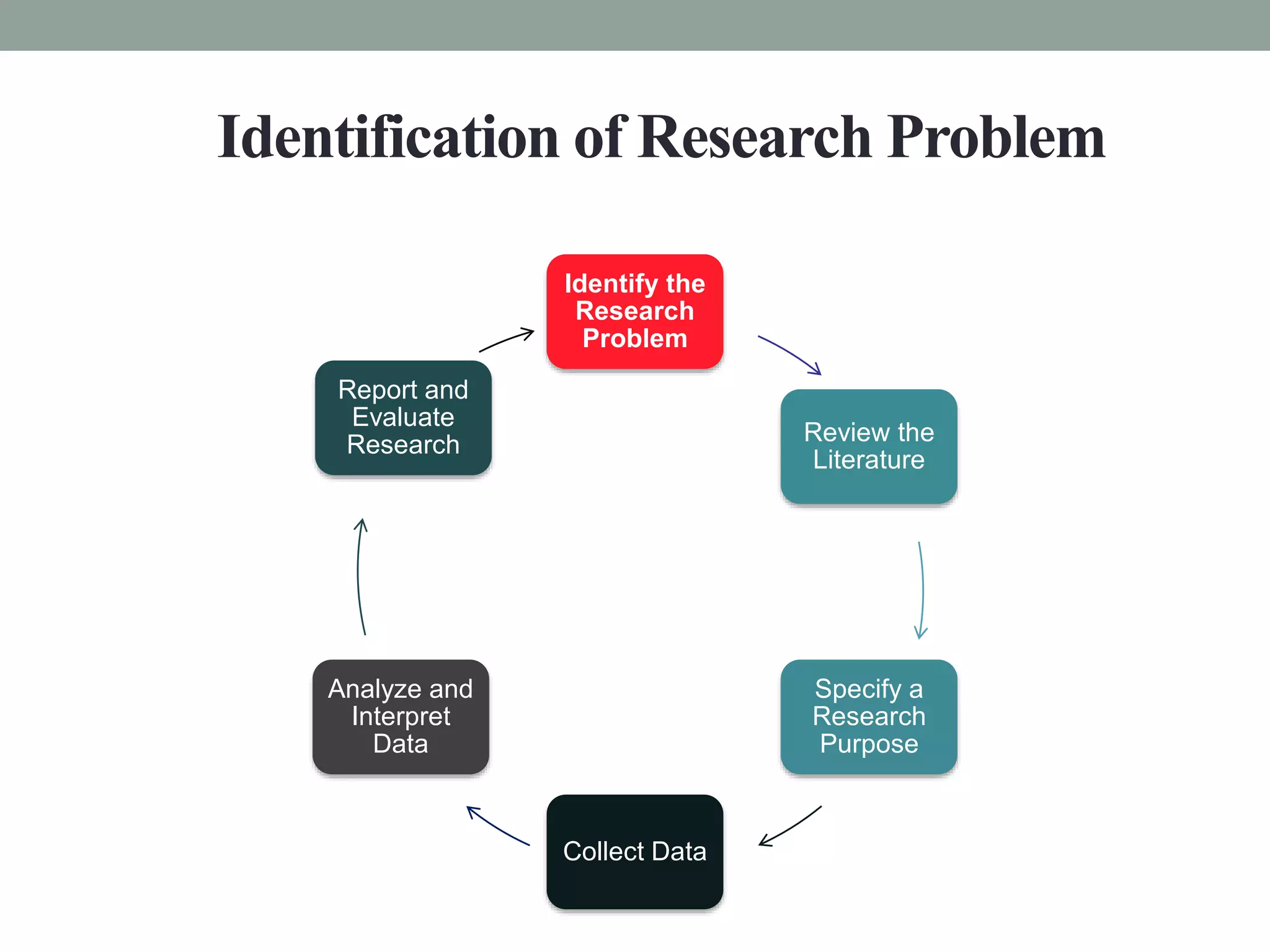
Identification of Research Problem 
Identify the 
Research 
Problem 
Review the 
Literature 
Specify a 
Research 
Purpose 
Collect Data 
Report and 
Evaluate 
Research 
Analyze and 
Interpret 
Data
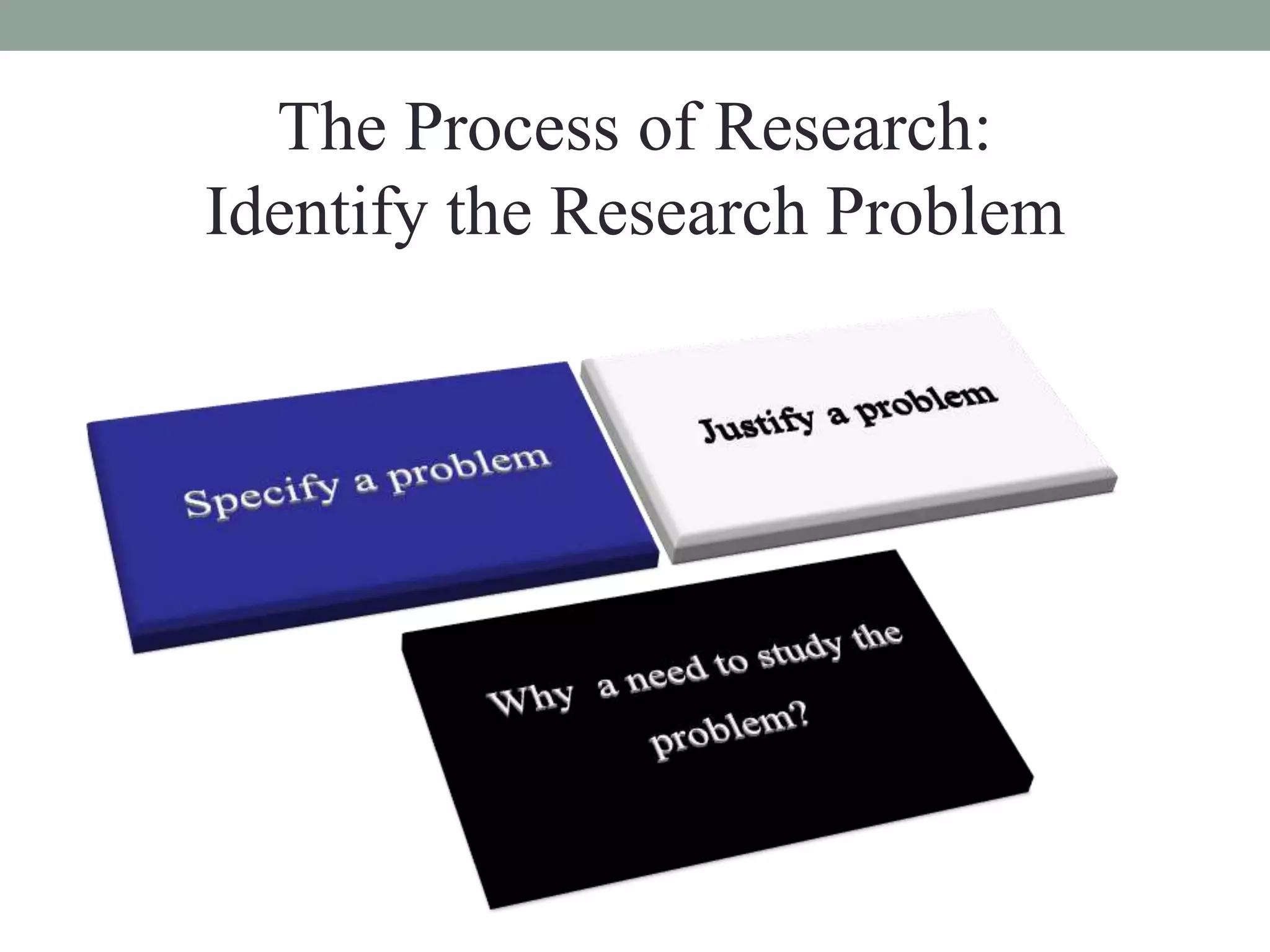
The Process of Research: 
Identify the Research Problem
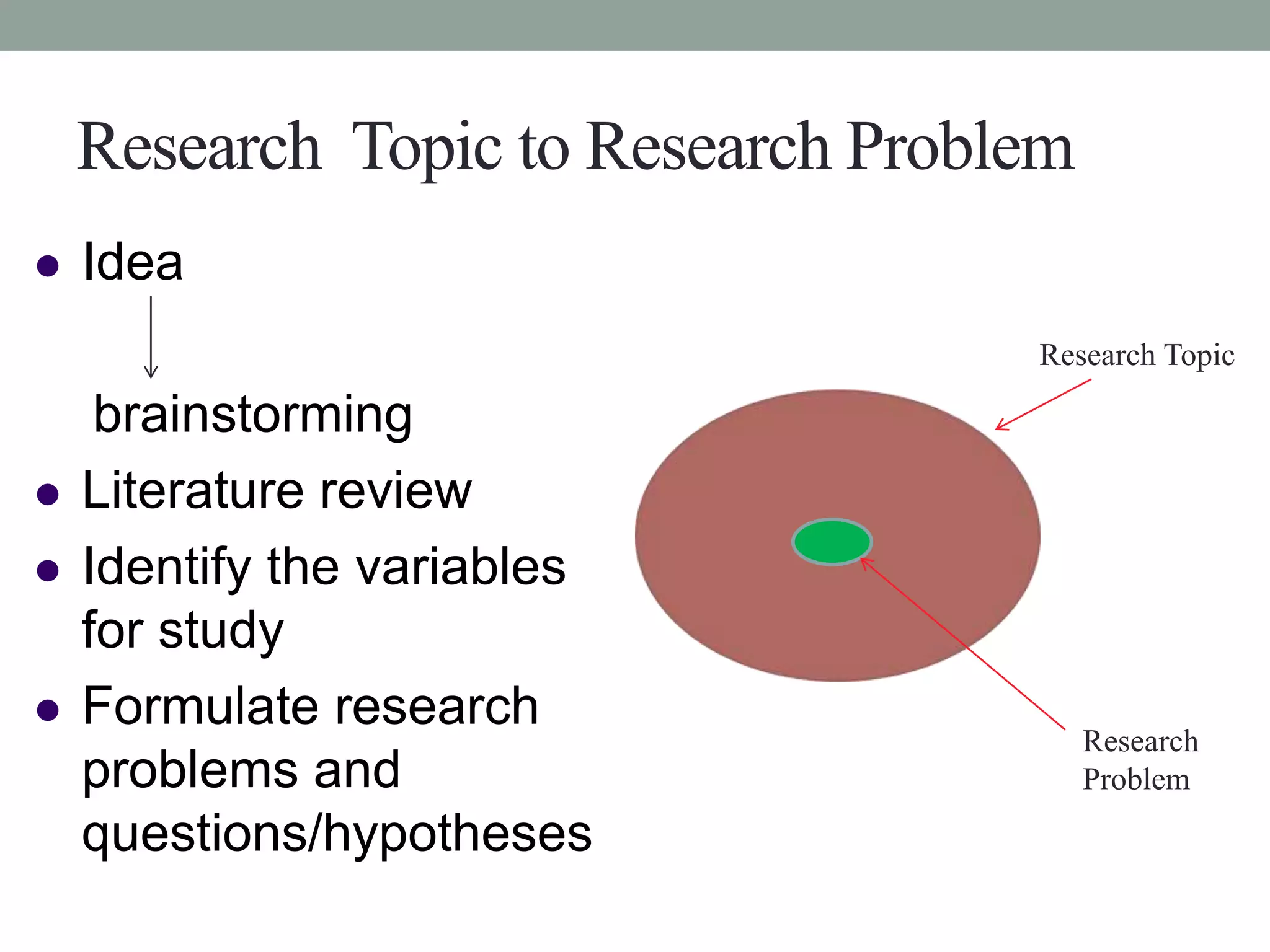
Research Topic 
Research 
Problem 
Research Topic to Research Problem 
 Idea 
brainstorming 
 Literature review 
 Identify the variables 
for study 
 Formulate research 
problems and 
questions/hypotheses
Sources of the Problems 
 Previous researches/dissertations/studies/etc 
 Books/reports 
 Resource persons/professors/ 
 Brainstorming 
 Newspapers/TV/radios/medias 
 Seminars, workshops/conferences 
 Relations organizations/research centers/research institutes 
 Encyclopedia 
 Own critical observations 
 Discussions with fellows, colleagues, friends, etc 
 Dinning tables 
----------------------------
Definition of Research Problem 
A research problem is the situation that causes the researcher to 
feel apprehensive, confused and hard. 
Operationalization is then used to give some indication of the 
exact definitions of the variables, and the type of scientific 
measurement used. 
Operationalization is the process of strictly defining variables 
into measurable factors. The process defines ambiguous concepts 
and allows them to be measured, empirically and quantitatively. 
For example, intelligence may be measured with IQ and human 
responses could be measured with a questionnaire from ‘1- 
strongly disagree’, to ‘5 - strongly agree’.
Selection of Research Problem 
First step in research process is the choice of a suitable problem 
Enlist the specific questions like WHO,WHAT, WHERE, 
WHEN and WHY of the problem. 
A problem well defined is half solved 
The formulation of the problem is often more essential than its 
solution. 
The actual reasons (possible causes) for the discrepancy between 
what is (current situation) and what is desired (e.g. lack of 
motivation among students)
Selection of Research Problem 
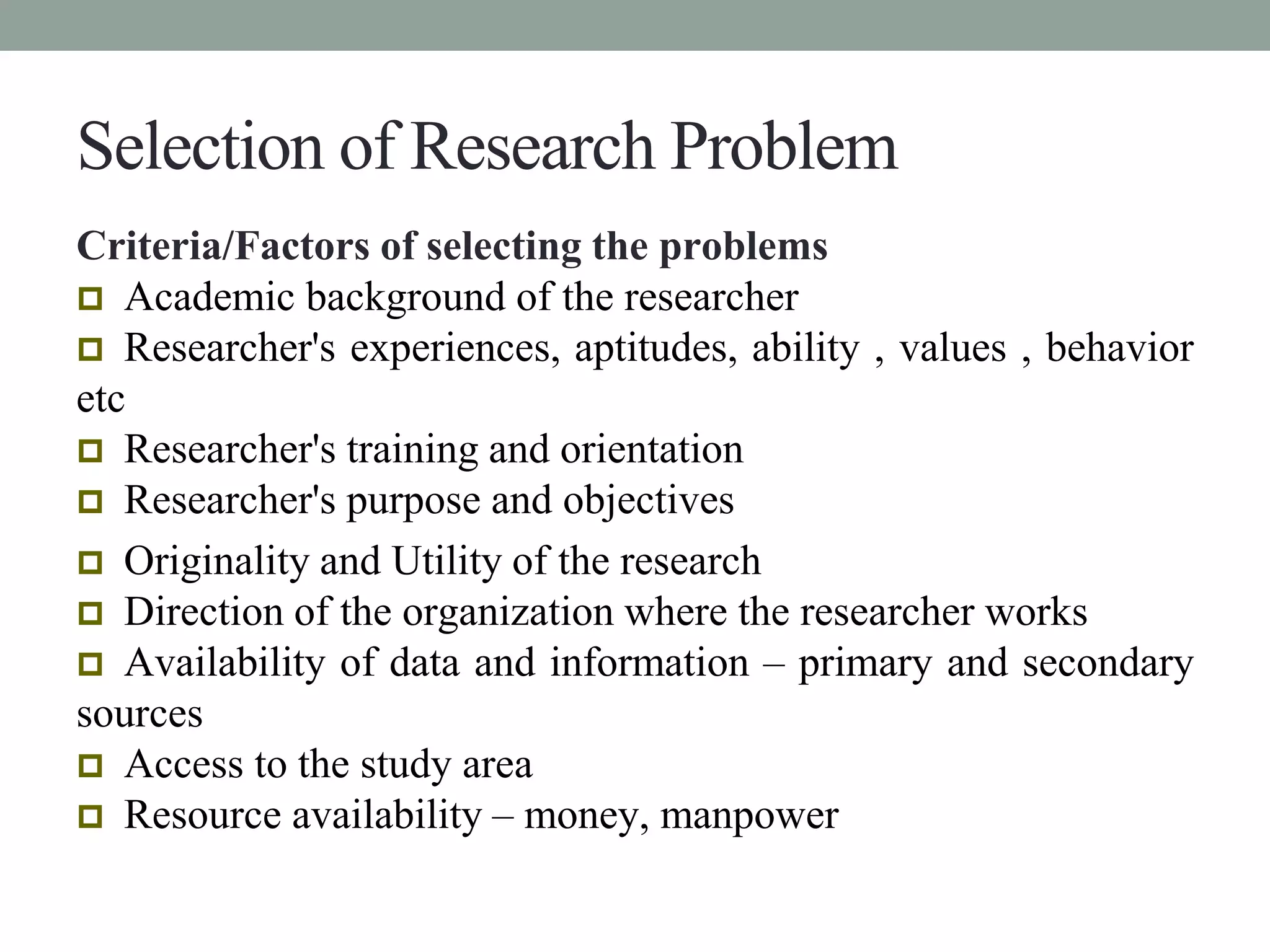
Criteria/Factors of selecting the problems 
 Academic background of the researcher 
 Researcher's experiences, aptitudes, ability , values , behavior 
etc 
 Researcher's training and orientation 
 Researcher's purpose and objectives 
 Originality and Utility of the research 
 Direction of the organization where the researcher works 
 Availability of data and information – primary and secondary 
sources 
 Access to the study area 
 Resource availability – money, manpower
Selection of Research Problem 
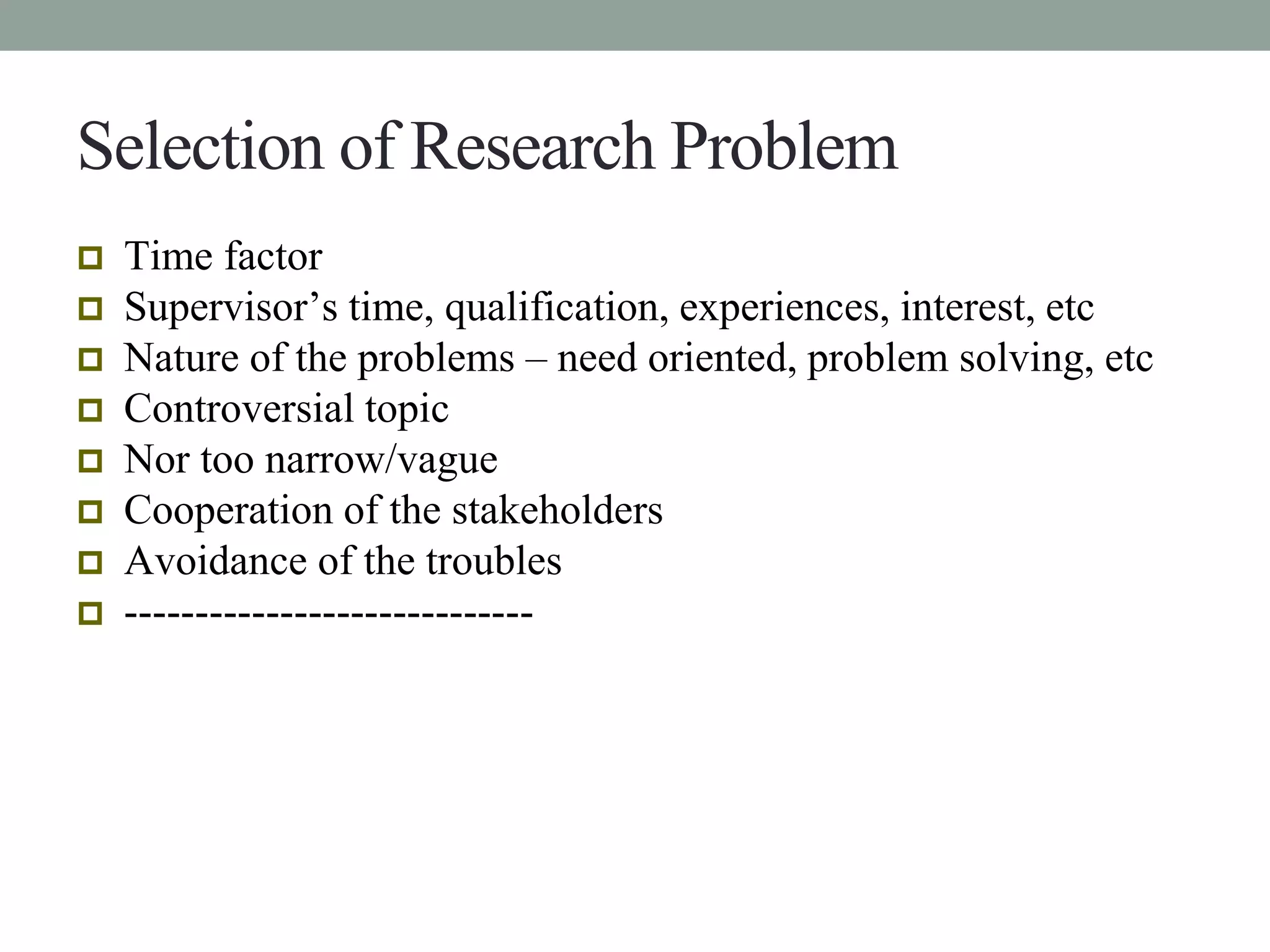
 Time factor 
 Supervisor’s time, qualification, experiences, interest, etc 
 Nature of the problems – need oriented, problem solving, etc 
 Controversial topic 
 Nor too narrow/vague 
 Cooperation of the stakeholders 
 Avoidance of the troubles 
 -----------------------------
Evaluation of The Research Problem 
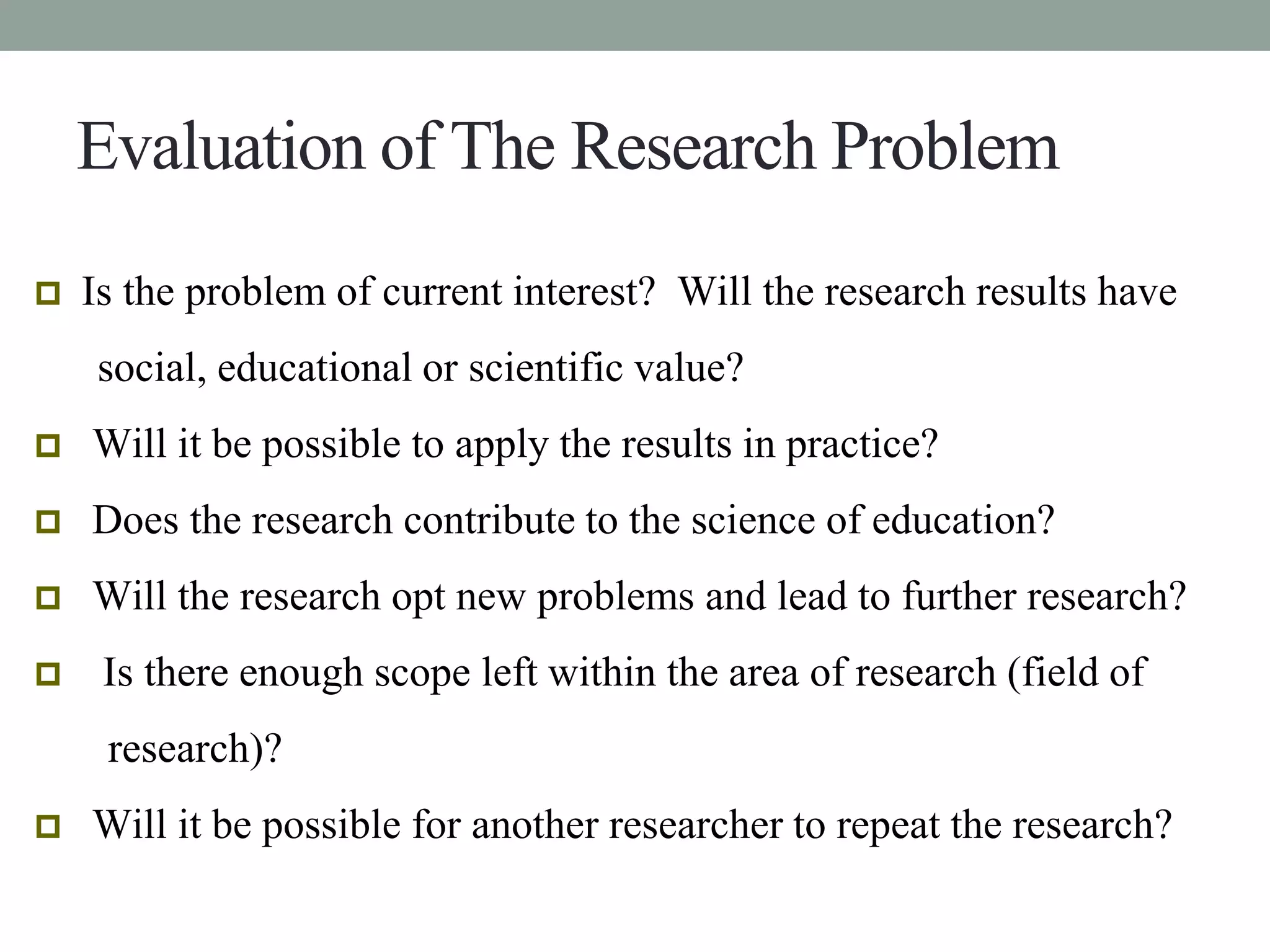
 Is the problem of current interest? Will the research results have 
social, educational or scientific value? 
 Will it be possible to apply the results in practice? 
 Does the research contribute to the science of education? 
 Will the research opt new problems and lead to further research? 
 Is there enough scope left within the area of research (field of 
research)? 
 Will it be possible for another researcher to repeat the research?
Evaluation of The Research Problem 
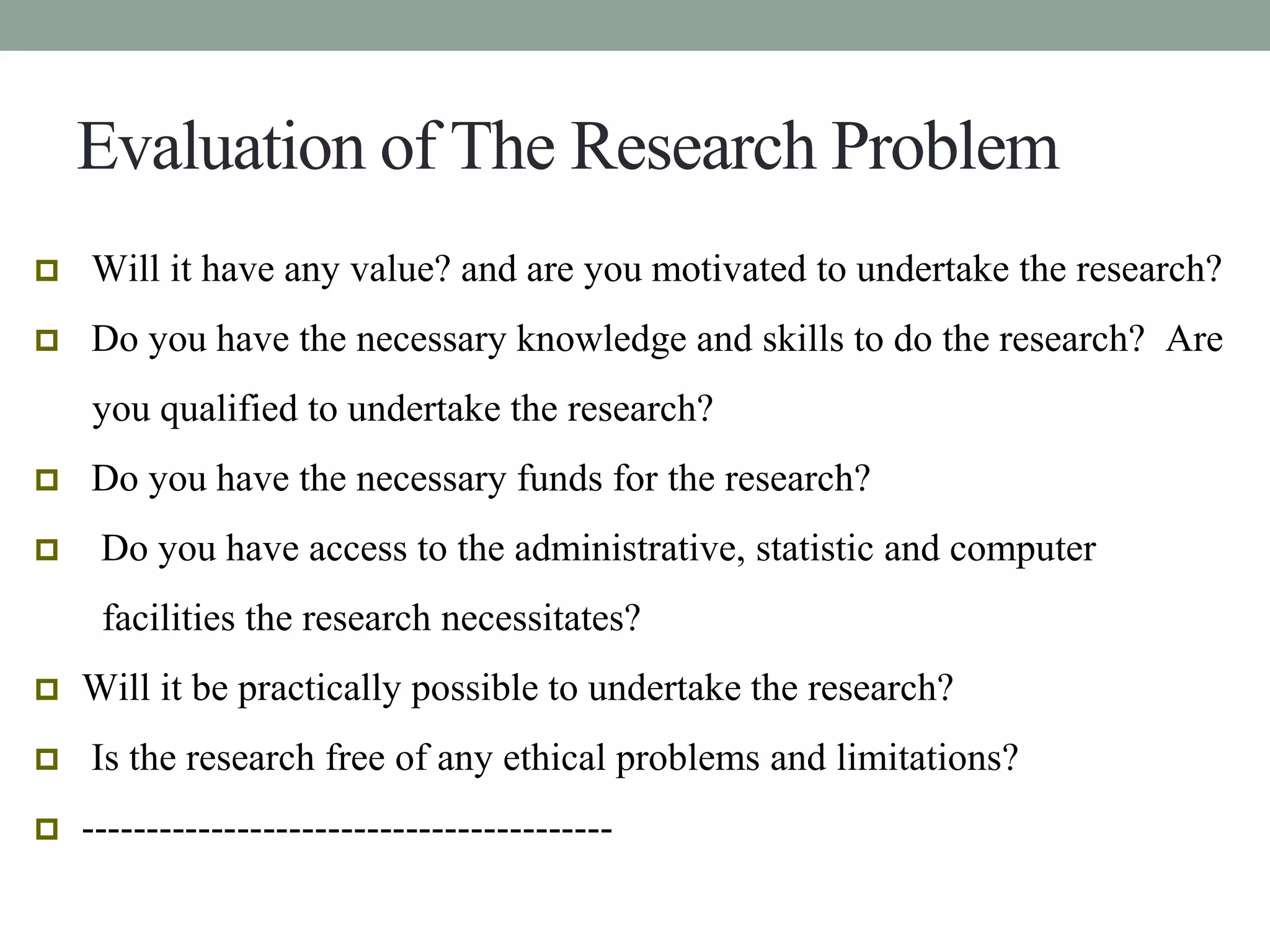
 Will it have any value? and are you motivated to undertake the research? 
 Do you have the necessary knowledge and skills to do the research? Are 
you qualified to undertake the research? 
 Do you have the necessary funds for the research? 
 Do you have access to the administrative, statistic and computer 
facilities the research necessitates? 
 Will it be practically possible to undertake the research? 
 Is the research free of any ethical problems and limitations? 
 -----------------------------------------
Evaluation of the Research Problem 
In short 
• Is the problem researchable? 
• Is the problem new? 
• Is the problem significant? 
• Is the solution to this problem helpful for the development of 
further knowledge? 
• Is the problem feasible for researcher? 
• Research competencies 
• Interest and enthusiasm 
• Financial consideration 
• Time requirements 
• Administrative considerations
Refinement of Research Problem 
• Refine problem under three methods of research; Historical, 
Descriptive and Experimental 
• Historical 
• Role of education policies in development of literacy 
• Refined: An analysis of the role of education policies in the 
development of literacy in Pakistan. 
• ------------------- 
• Descriptive 
• A study on the impact of self financing scheme on the development 
of education 
• Refined: A survey study on the impact of self financing scheme on 
the education of MBA students of National University of Modern 
Languages, Islamabad. 
• ------------------------------
Refinement of Research Problem 
• Experimental 
• Comparison of the integrated curriculum and traditional 
curriculum of primary level 
• Refined: A comparative study of the effectiveness of the 
integrated curriculum and traditional curriculum of class III. 
• ------------------------------
Class/Library Activity 
1) Your Research Problem 
• What is your area of interest? 
• Where could you look for help in deciding upon a specific 
research problem? 
• What criteria will you apply when deciding upon a specific 
research problem? 
• How could you narrow down your research problem from 
research topic? 
2) Library Activity

Selection of a Research Problem

  • 1.
    SELECTION OF ARESEARCH PROBLEM By Dr.Shazia Zamir
  • 2.
    Contents SELECTION OFA RESEARCH PROBLEM - Definition of a Problem - Selection of the Problem - Evaluation of the Problem • Refinement of the Research Problem
  • 3.
    Identification of ResearchProblem Identify the Research Problem Review the Literature Specify a Research Purpose Collect Data Report and Evaluate Research Analyze and Interpret Data
  • 4.
    The Process ofResearch: Identify the Research Problem
  • 5.
    Research Topic Research Problem Research Topic to Research Problem  Idea brainstorming  Literature review  Identify the variables for study  Formulate research problems and questions/hypotheses
  • 6.
    Sources of theProblems  Previous researches/dissertations/studies/etc  Books/reports  Resource persons/professors/  Brainstorming  Newspapers/TV/radios/medias  Seminars, workshops/conferences  Relations organizations/research centers/research institutes  Encyclopedia  Own critical observations  Discussions with fellows, colleagues, friends, etc  Dinning tables ----------------------------
  • 7.
    Definition of ResearchProblem A research problem is the situation that causes the researcher to feel apprehensive, confused and hard. Operationalization is then used to give some indication of the exact definitions of the variables, and the type of scientific measurement used. Operationalization is the process of strictly defining variables into measurable factors. The process defines ambiguous concepts and allows them to be measured, empirically and quantitatively. For example, intelligence may be measured with IQ and human responses could be measured with a questionnaire from ‘1- strongly disagree’, to ‘5 - strongly agree’.
  • 8.
    Selection of ResearchProblem First step in research process is the choice of a suitable problem Enlist the specific questions like WHO,WHAT, WHERE, WHEN and WHY of the problem. A problem well defined is half solved The formulation of the problem is often more essential than its solution. The actual reasons (possible causes) for the discrepancy between what is (current situation) and what is desired (e.g. lack of motivation among students)
  • 9.
    Selection of ResearchProblem Criteria/Factors of selecting the problems  Academic background of the researcher  Researcher's experiences, aptitudes, ability , values , behavior etc  Researcher's training and orientation  Researcher's purpose and objectives  Originality and Utility of the research  Direction of the organization where the researcher works  Availability of data and information – primary and secondary sources  Access to the study area  Resource availability – money, manpower
  • 10.
    Selection of ResearchProblem  Time factor  Supervisor’s time, qualification, experiences, interest, etc  Nature of the problems – need oriented, problem solving, etc  Controversial topic  Nor too narrow/vague  Cooperation of the stakeholders  Avoidance of the troubles  -----------------------------
  • 11.
    Evaluation of TheResearch Problem  Is the problem of current interest? Will the research results have social, educational or scientific value?  Will it be possible to apply the results in practice?  Does the research contribute to the science of education?  Will the research opt new problems and lead to further research?  Is there enough scope left within the area of research (field of research)?  Will it be possible for another researcher to repeat the research?
  • 12.
    Evaluation of TheResearch Problem  Will it have any value? and are you motivated to undertake the research?  Do you have the necessary knowledge and skills to do the research? Are you qualified to undertake the research?  Do you have the necessary funds for the research?  Do you have access to the administrative, statistic and computer facilities the research necessitates?  Will it be practically possible to undertake the research?  Is the research free of any ethical problems and limitations?  -----------------------------------------
  • 13.
    Evaluation of theResearch Problem In short • Is the problem researchable? • Is the problem new? • Is the problem significant? • Is the solution to this problem helpful for the development of further knowledge? • Is the problem feasible for researcher? • Research competencies • Interest and enthusiasm • Financial consideration • Time requirements • Administrative considerations
  • 14.
    Refinement of ResearchProblem • Refine problem under three methods of research; Historical, Descriptive and Experimental • Historical • Role of education policies in development of literacy • Refined: An analysis of the role of education policies in the development of literacy in Pakistan. • ------------------- • Descriptive • A study on the impact of self financing scheme on the development of education • Refined: A survey study on the impact of self financing scheme on the education of MBA students of National University of Modern Languages, Islamabad. • ------------------------------
  • 15.
    Refinement of ResearchProblem • Experimental • Comparison of the integrated curriculum and traditional curriculum of primary level • Refined: A comparative study of the effectiveness of the integrated curriculum and traditional curriculum of class III. • ------------------------------
  • 16.
    Class/Library Activity 1)Your Research Problem • What is your area of interest? • Where could you look for help in deciding upon a specific research problem? • What criteria will you apply when deciding upon a specific research problem? • How could you narrow down your research problem from research topic? 2) Library Activity