Understanding Hooks
Size, Scale, and Sustainability…
Gauge
 The ‘Weight’ of a hook is its ‘Gauge’
 Thin wire hooks have a light gauge
 Heavier wire means stronger hooks and larger gauge.
Light Wire
 Wire Hooks for Let Your Bait Swim Naturally
 Wire Hooks Penetrate Faster than a Heavier Hook
 Great for Open Water and Very Natural Presentations.
 However Might Bend
Heavier Gauge Hooks
 Much Stronger
 Great for Heavier Fish
 Great for Fishing Near Structure
 They Do Not Bend Like Light Wire Hooks
 But heavier weight often has negative impact on live bait and
causes it to not act naturally.
Pick the Right Hook
 There are NO RULES in Fishing
 Lighter baits benefit from lighter wire
 Heavier baits and tough conditions benefit from heavier gauge hooks
 Fine balance between gauge and presentation
The Points on Your Hooks
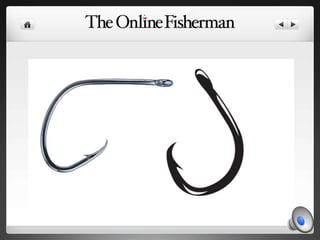
 There are two major varieties of hooks
 The first are “Needle Points”
 The second are special “Cutting Points”
Cutting Point Fails
 Cutting Points Literally Cut a Fish’s mouth
 Fish like trout with soft mouths can be cut
 The whole left by the sharp point can result in lost fish.
Needle Points
 Best for fish with soft mouths
 Pointed and Rounded
 Once it penetrates it does not leave a gash
Cutting Points Successes
 Redfish
 Sheepshead
 Any species with tough mouths or teeth
 Much easier to set the hook
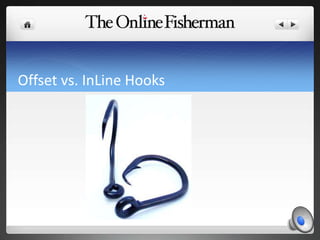
Offset vs. InLine Hooks
Offset Hooks
 Look down the shank
 The point of the hook will not align
 The offset of the hook point to the shank is what classifed it
 They are common among commercial anglers
Which is best?
 Tournaments do not allow the use of offset hooks
 Some states – Florida included – make them illegal in state (but not federal)
waters
 Be sure to check the package; they do not always tell you and you have to
look to see
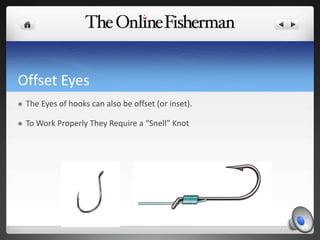
Offset Eyes
 The Eyes of hooks can also be offset (or inset).
 To Work Properly They Require a “Snell” Knot
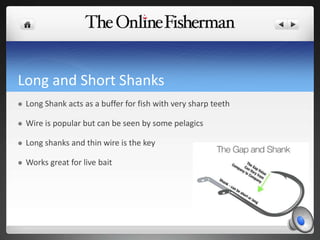
Long and Short Shanks
 Long Shank acts as a buffer for fish with very sharp teeth
 Wire is popular but can be seen by some pelagics
 Long shanks and thin wire is the key
 Works great for live bait
Understanding Hooks
Comments and Questions for the Team

Selecting the Correct FIshing Hook

  • 1.
    Understanding Hooks Size, Scale,and Sustainability…
  • 2.
    Gauge  The ‘Weight’of a hook is its ‘Gauge’  Thin wire hooks have a light gauge  Heavier wire means stronger hooks and larger gauge.
  • 3.
    Light Wire  WireHooks for Let Your Bait Swim Naturally  Wire Hooks Penetrate Faster than a Heavier Hook  Great for Open Water and Very Natural Presentations.  However Might Bend
  • 5.
    Heavier Gauge Hooks Much Stronger  Great for Heavier Fish  Great for Fishing Near Structure  They Do Not Bend Like Light Wire Hooks  But heavier weight often has negative impact on live bait and causes it to not act naturally.
  • 6.
    Pick the RightHook  There are NO RULES in Fishing  Lighter baits benefit from lighter wire  Heavier baits and tough conditions benefit from heavier gauge hooks  Fine balance between gauge and presentation
  • 7.
    The Points onYour Hooks  There are two major varieties of hooks  The first are “Needle Points”  The second are special “Cutting Points”
  • 8.
    Cutting Point Fails Cutting Points Literally Cut a Fish’s mouth  Fish like trout with soft mouths can be cut  The whole left by the sharp point can result in lost fish.
  • 9.
    Needle Points  Bestfor fish with soft mouths  Pointed and Rounded  Once it penetrates it does not leave a gash
  • 10.
    Cutting Points Successes Redfish  Sheepshead  Any species with tough mouths or teeth  Much easier to set the hook
  • 11.
  • 12.
    Offset Hooks  Lookdown the shank  The point of the hook will not align  The offset of the hook point to the shank is what classifed it  They are common among commercial anglers
  • 13.
    Which is best? Tournaments do not allow the use of offset hooks  Some states – Florida included – make them illegal in state (but not federal) waters  Be sure to check the package; they do not always tell you and you have to look to see
  • 14.
    Offset Eyes  TheEyes of hooks can also be offset (or inset).  To Work Properly They Require a “Snell” Knot
  • 15.
    Long and ShortShanks  Long Shank acts as a buffer for fish with very sharp teeth  Wire is popular but can be seen by some pelagics  Long shanks and thin wire is the key  Works great for live bait
  • 16.
    Understanding Hooks Comments andQuestions for the Team