Section 43 of the
Information Technology Act
by Dr Sapna Sukrut Deo Dean,
School of Law , MIT ADT University
1 Employee Misuse
Junior employee uses manager's credentials to view HR files
without permission.
2 Student Exploitation
Student accesses professor's account to check exam questions.
Unauthorized Data Extraction
Corporate Espionage
Employee downloads confidential client list and shares with
rival company.
Personal Gain
Marketing executive copies customer data onto USB drive
before resigning.
Introducing Malicious Code
Internal Threat
Disgruntled IT employee inserts
malicious script into payroll
software.
External Attack
Hacker sends phishing emails
with malware, infecting devices
with trojan virus.
Damaging Computer
Systems
Targeted Attack
Competitor hires hacker to breach server and delete
operational data.
Physical Tampering
Person physically damages public Wi-Fi router, making it
unusable.
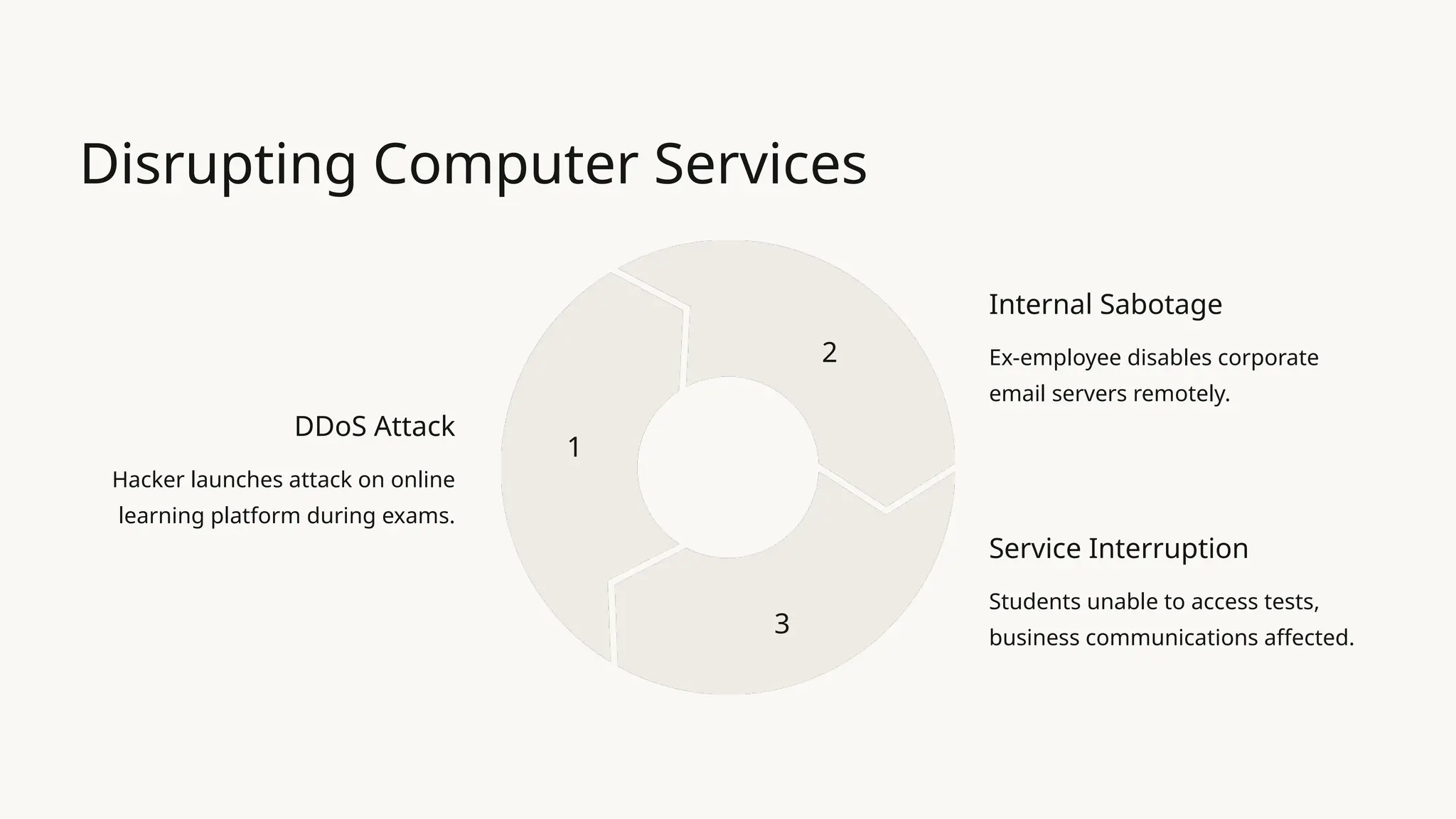
Disrupting Computer Services
DDoS Attack
Hacker launches attack on online
learning platform during exams.
1
Internal Sabotage
Ex-employee disables corporate
email servers remotely.
2
Service Interruption
Students unable to access tests,
business communications affected.
3
Denying Authorized Access
Administrative Abuse
IT admin changes database credentials before resigning, blocking
employee access.
Malicious Interference
Student hacks friend's exam portal, changing password to
prevent submission.
Consequences
Critical systems inaccessible, exam submission blocked.
Assisting in Cyber Fraud
1
Facilitating Fraud
Cyber café owner allows hackers to use computers for credit card fraud.
2
Insider Threat
Bank employee provides customer details to cybercriminals.
3
Legal Implications
Both can be held liable under Section 43(g).
Destroying or Altering Data
1
Malicious Deletion
Ex-employee deletes important project files from company's cloud storage.
2
Data Manipulation
Student modifies attendance records in college database.
3
Consequences
Significant loss for company, false academic records.
Case Study: Corporate Espionage
1
Access
Employee uses manager's credentials to view confidential files.
2 Extraction
Downloads sensitive client list from company database.
3
Sharing
Provides stolen data to rival company.
4 Legal Action
Company can pursue action under Sections 43(a) and 43(b).
Case Study: Malware Attack
Preparation
Hacker creates malicious phishing emails
with embedded malware.
1
Distribution
Sends emails to multiple unsuspecting
users.
2
Infection
Users' devices infected with trojan virus.
3
Legal Implications
Hacker liable under Section 43(c) of IT
Act.
4
Case Study: DDoS Attack
Attack Initiation
Hacker launches DDoS attack on online learning platform during exams.
Service Disruption
Students unable to access and submit their tests.
Impact
Educational process severely disrupted, causing stress and potential
academic losses.
Legal Recourse
Attacker can be prosecuted under Section 43(e) of IT Act.
Case Study: Internal Sabotage
Preparation
IT administrator plans to resign from company.
Malicious Action
Changes database access credentials before leaving.
Consequence
All employees blocked from logging into critical systems.
Legal Implication
Administrator liable under Section 43(f) of IT Act.
Case Study: Exam Portal
Hacking
1 Unauthorized Access
Student hacks friend's online exam portal.
2 Malicious Action
Changes the password, preventing access.
3 Consequence
Friend unable to submit the exam.
4 Legal Recourse
Hacker can be held liable under Section 43(f) of IT Act.
Case Study: Cyber Café
Fraud
Facilitation
Cyber café owner
allows hackers to use
computers.
Criminal Activity
Hackers conduct
online credit card
fraud.
Legal
Consequence
Owner liable under
Section 43(g) of IT
Act.
Case Study: Bank Employee Collusion
Insider Access
Bank employee has access to
customer account details.
1
Data Sharing
Provides information to
cybercriminals.
2
Fraudulent Activity
Criminals use data for unauthorized
transactions.
3
Legal Action
Employee can be prosecuted under
Section 43(g) of IT Act.
4
Case Study: Vengeful Data Destruction
1
Preparation
Employee decides to quit company.
2
Malicious Act
Deletes important project files from cloud storage.
3
Impact
Company suffers significant loss.
4
Legal Consequence
Ex-employee liable under Section 43(h) of IT Act.
Case Study: Academic Record Tampering
Student modifies attendance records in college database. Institution can take action under Section 43(h) of IT Act.
Key Takeaways: IT Act Violations
1 Unauthorized Access
Using someone else's credentials or exploiting system vulnerabilities is
illegal.
2 Data Theft
Downloading or copying data without permission is a serious offense.
3 System Damage
Introducing viruses, damaging systems, or disrupting services are
punishable acts.
4 Cyber Fraud
Assisting in fraudulent activities, even indirectly, can lead to legal
consequences.
Protecting Against IT Act Violations
Strong Authentication
Implement multi-factor authentication
to prevent unauthorized access.
Data Encryption
Encrypt sensitive data to protect
against theft and unauthorized access.
Employee Training
Regularly educate staff about IT
security practices and legal
implications.

Section 43 of the Information Technology Act

  • 1.
    Section 43 ofthe Information Technology Act by Dr Sapna Sukrut Deo Dean, School of Law , MIT ADT University
  • 2.
    1 Employee Misuse Junioremployee uses manager's credentials to view HR files without permission. 2 Student Exploitation Student accesses professor's account to check exam questions.
  • 3.
    Unauthorized Data Extraction CorporateEspionage Employee downloads confidential client list and shares with rival company. Personal Gain Marketing executive copies customer data onto USB drive before resigning.
  • 4.
    Introducing Malicious Code InternalThreat Disgruntled IT employee inserts malicious script into payroll software. External Attack Hacker sends phishing emails with malware, infecting devices with trojan virus.
  • 5.
    Damaging Computer Systems Targeted Attack Competitorhires hacker to breach server and delete operational data. Physical Tampering Person physically damages public Wi-Fi router, making it unusable.
  • 6.
    Disrupting Computer Services DDoSAttack Hacker launches attack on online learning platform during exams. 1 Internal Sabotage Ex-employee disables corporate email servers remotely. 2 Service Interruption Students unable to access tests, business communications affected. 3
  • 7.
    Denying Authorized Access AdministrativeAbuse IT admin changes database credentials before resigning, blocking employee access. Malicious Interference Student hacks friend's exam portal, changing password to prevent submission. Consequences Critical systems inaccessible, exam submission blocked.
  • 8.
    Assisting in CyberFraud 1 Facilitating Fraud Cyber café owner allows hackers to use computers for credit card fraud. 2 Insider Threat Bank employee provides customer details to cybercriminals. 3 Legal Implications Both can be held liable under Section 43(g).
  • 9.
    Destroying or AlteringData 1 Malicious Deletion Ex-employee deletes important project files from company's cloud storage. 2 Data Manipulation Student modifies attendance records in college database. 3 Consequences Significant loss for company, false academic records.
  • 10.
    Case Study: CorporateEspionage 1 Access Employee uses manager's credentials to view confidential files. 2 Extraction Downloads sensitive client list from company database. 3 Sharing Provides stolen data to rival company. 4 Legal Action Company can pursue action under Sections 43(a) and 43(b).
  • 11.
    Case Study: MalwareAttack Preparation Hacker creates malicious phishing emails with embedded malware. 1 Distribution Sends emails to multiple unsuspecting users. 2 Infection Users' devices infected with trojan virus. 3 Legal Implications Hacker liable under Section 43(c) of IT Act. 4
  • 12.
    Case Study: DDoSAttack Attack Initiation Hacker launches DDoS attack on online learning platform during exams. Service Disruption Students unable to access and submit their tests. Impact Educational process severely disrupted, causing stress and potential academic losses. Legal Recourse Attacker can be prosecuted under Section 43(e) of IT Act.
  • 13.
    Case Study: InternalSabotage Preparation IT administrator plans to resign from company. Malicious Action Changes database access credentials before leaving. Consequence All employees blocked from logging into critical systems. Legal Implication Administrator liable under Section 43(f) of IT Act.
  • 14.
    Case Study: ExamPortal Hacking 1 Unauthorized Access Student hacks friend's online exam portal. 2 Malicious Action Changes the password, preventing access. 3 Consequence Friend unable to submit the exam. 4 Legal Recourse Hacker can be held liable under Section 43(f) of IT Act.
  • 15.
    Case Study: CyberCafé Fraud Facilitation Cyber café owner allows hackers to use computers. Criminal Activity Hackers conduct online credit card fraud. Legal Consequence Owner liable under Section 43(g) of IT Act.
  • 16.
    Case Study: BankEmployee Collusion Insider Access Bank employee has access to customer account details. 1 Data Sharing Provides information to cybercriminals. 2 Fraudulent Activity Criminals use data for unauthorized transactions. 3 Legal Action Employee can be prosecuted under Section 43(g) of IT Act. 4
  • 17.
    Case Study: VengefulData Destruction 1 Preparation Employee decides to quit company. 2 Malicious Act Deletes important project files from cloud storage. 3 Impact Company suffers significant loss. 4 Legal Consequence Ex-employee liable under Section 43(h) of IT Act.
  • 18.
    Case Study: AcademicRecord Tampering Student modifies attendance records in college database. Institution can take action under Section 43(h) of IT Act.
  • 19.
    Key Takeaways: ITAct Violations 1 Unauthorized Access Using someone else's credentials or exploiting system vulnerabilities is illegal. 2 Data Theft Downloading or copying data without permission is a serious offense. 3 System Damage Introducing viruses, damaging systems, or disrupting services are punishable acts. 4 Cyber Fraud Assisting in fraudulent activities, even indirectly, can lead to legal consequences.
  • 20.
    Protecting Against ITAct Violations Strong Authentication Implement multi-factor authentication to prevent unauthorized access. Data Encryption Encrypt sensitive data to protect against theft and unauthorized access. Employee Training Regularly educate staff about IT security practices and legal implications.