Scientific Method

                   Basic Steps
              (The Rattlesnake Experiment)


03/02/13               By W. Ribbeck
Definition
►Scientific method:
 basic steps that
 scientists follow in
 uncovering facts
 and solving
 scientific problems
Basic Parts of Scientific Method
► Stating the problem
► Gathering information
► Suggesting an answer for the problem
► Performing an experiment to see whether
  the suggested answer makes sense
► Recording and analyzing the results of
  experiments or other observations
► Stating conclusions
Stating the Problem
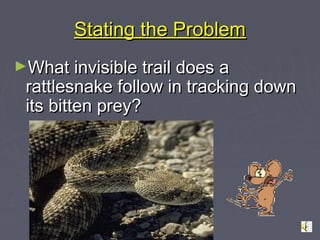
►What invisible trail does a
 rattlesnake follow in tracking down
 its bitten prey?
Gathering Information
► A rattlesnakes eyes are only sensitive to visible
  light
► A pair of organs located under the eyes detect
  invisible light in the form of heat
► A rattler’s tongue “smells” certain odors in the air
► The sight or smell of an unbitten animal does not
  trigger the rattler’s tracking action
Hypothesis
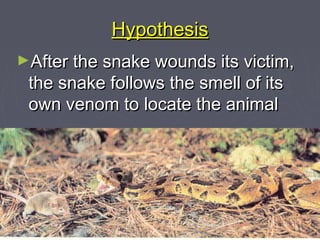
►After the snake wounds its victim,
 the snake follows the smell of its
 own venom to locate the animal
Experiment
► Drag a dead mouse that has been struck and
  poisoned by a rattlesnake along a curved path
  on the bottom of an empty cage
► Place the snake in the cage
► The snake follows the exact trail that has been
  laid out
► Control
► Drag an unbitten dead mouse along the path
► The snake seems disinterested
Recording and Analyzing Data
►Do the
 experiment
 many times
►Record the
 data
Conclusion

►The scent of venom was
the only factor that could
cause a rattlesnake to
follow its bitten victim.
Conclusion

►The scent of venom was
the only factor that could
cause a rattlesnake to
follow its bitten victim.

Scientific method 2

  • 1.
    Scientific Method Basic Steps (The Rattlesnake Experiment) 03/02/13 By W. Ribbeck
  • 2.
    Definition ►Scientific method: basicsteps that scientists follow in uncovering facts and solving scientific problems
  • 3.
    Basic Parts ofScientific Method ► Stating the problem ► Gathering information ► Suggesting an answer for the problem ► Performing an experiment to see whether the suggested answer makes sense ► Recording and analyzing the results of experiments or other observations ► Stating conclusions
  • 4.
    Stating the Problem ►Whatinvisible trail does a rattlesnake follow in tracking down its bitten prey?
  • 5.
    Gathering Information ► Arattlesnakes eyes are only sensitive to visible light ► A pair of organs located under the eyes detect invisible light in the form of heat ► A rattler’s tongue “smells” certain odors in the air ► The sight or smell of an unbitten animal does not trigger the rattler’s tracking action
  • 6.
    Hypothesis ►After the snakewounds its victim, the snake follows the smell of its own venom to locate the animal
  • 7.
    Experiment ► Drag adead mouse that has been struck and poisoned by a rattlesnake along a curved path on the bottom of an empty cage ► Place the snake in the cage ► The snake follows the exact trail that has been laid out ► Control ► Drag an unbitten dead mouse along the path ► The snake seems disinterested
  • 8.
    Recording and AnalyzingData ►Do the experiment many times ►Record the data
  • 9.
    Conclusion ►The scent ofvenom was the only factor that could cause a rattlesnake to follow its bitten victim.
  • 10.
    Conclusion ►The scent ofvenom was the only factor that could cause a rattlesnake to follow its bitten victim.