The Scientific Method
Whatis the
scientific method?
It is a process
that is used to
find answers to
questions about
the world around
us.
3.
Is thereonly one “scientific method”?
No, there are several versions of the
scientific method.
Some versions have more steps, while
others may have only a few.
However, they all begin with the
identification of a problem or a question
to be answered based on observations
of the world around us.
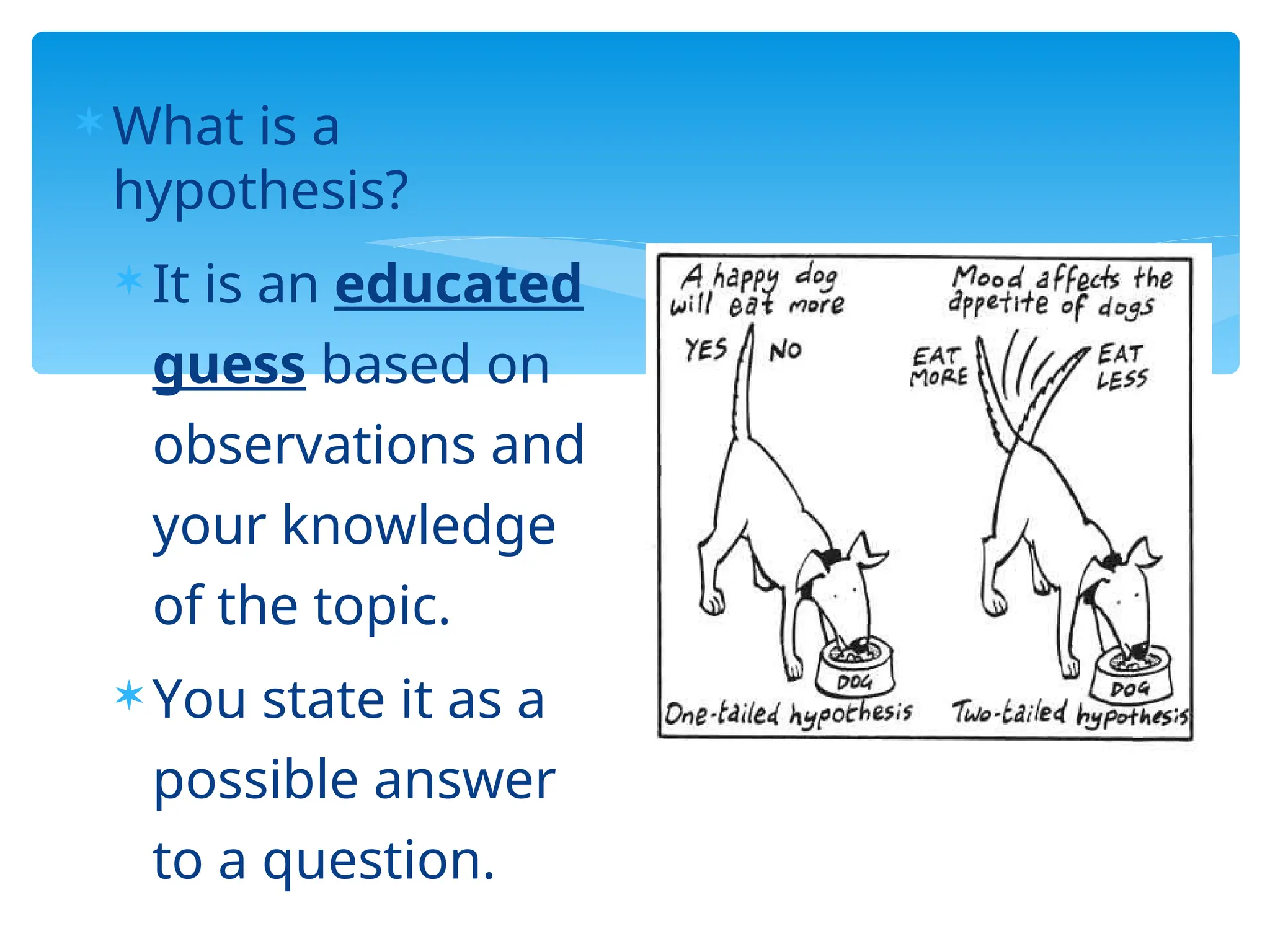
What isa
hypothesis?
It is an educated
guess based on
observations and
your knowledge
of the topic.
You state it as a
possible answer
to a question.
6.
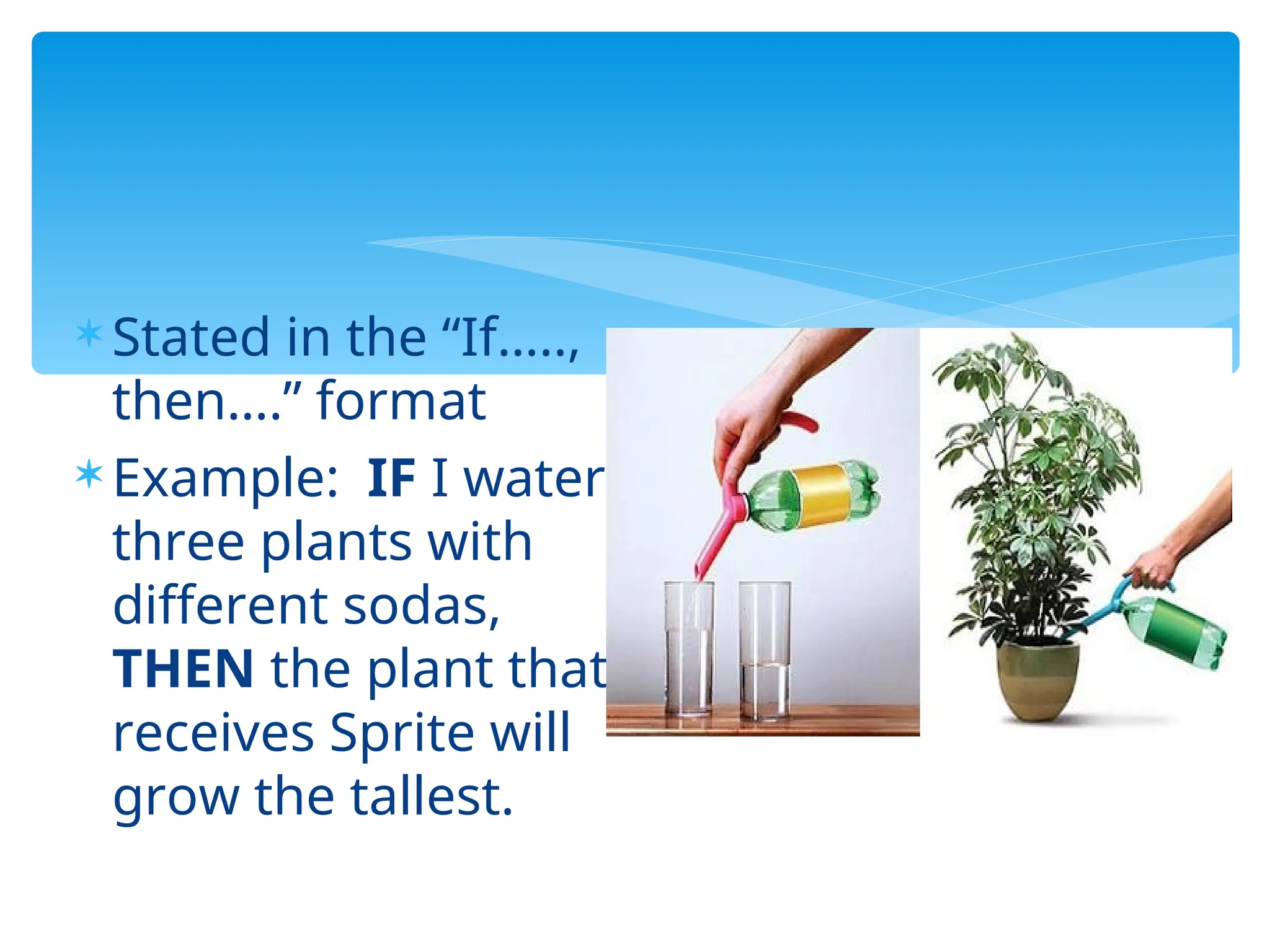
Stated inthe “If…..,
then….” format
Example: IF I water
three plants with
different sodas,
THEN the plant that
receives Sprite will
grow the tallest.
7.
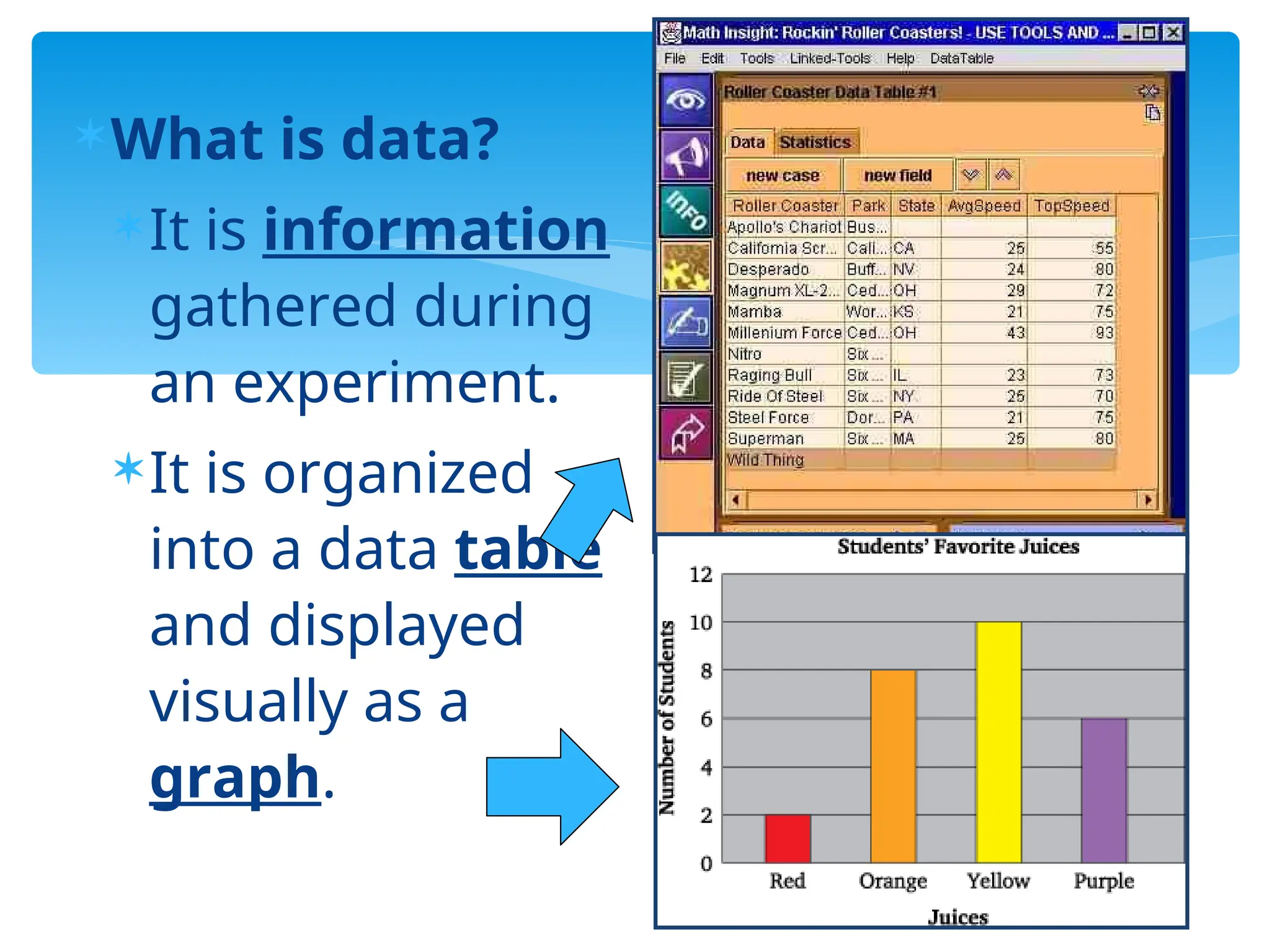
What is data?
Itis information
gathered during
an experiment.
It is organized
into a data table
and displayed
visually as a
graph.
8.
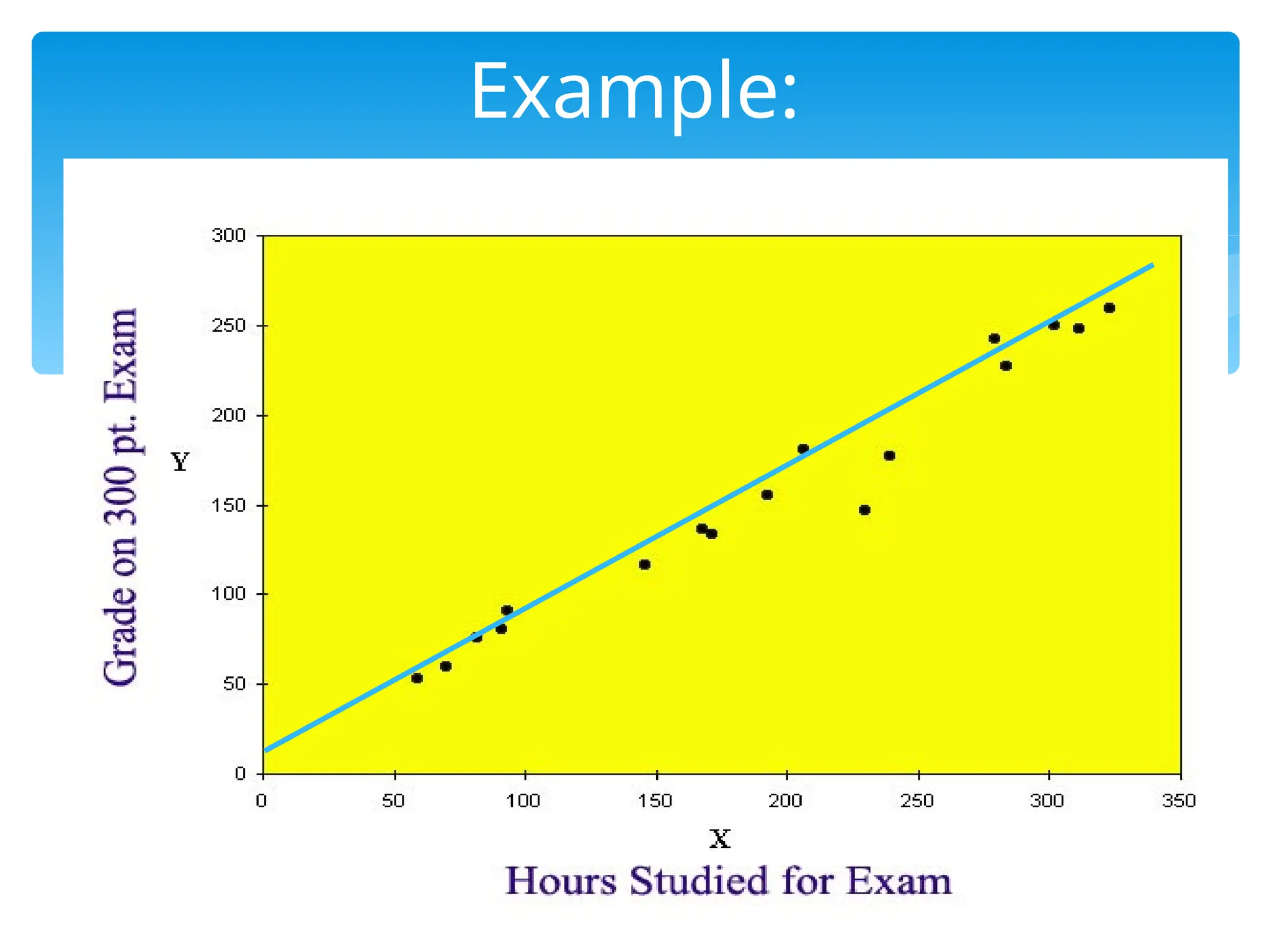
Graphs
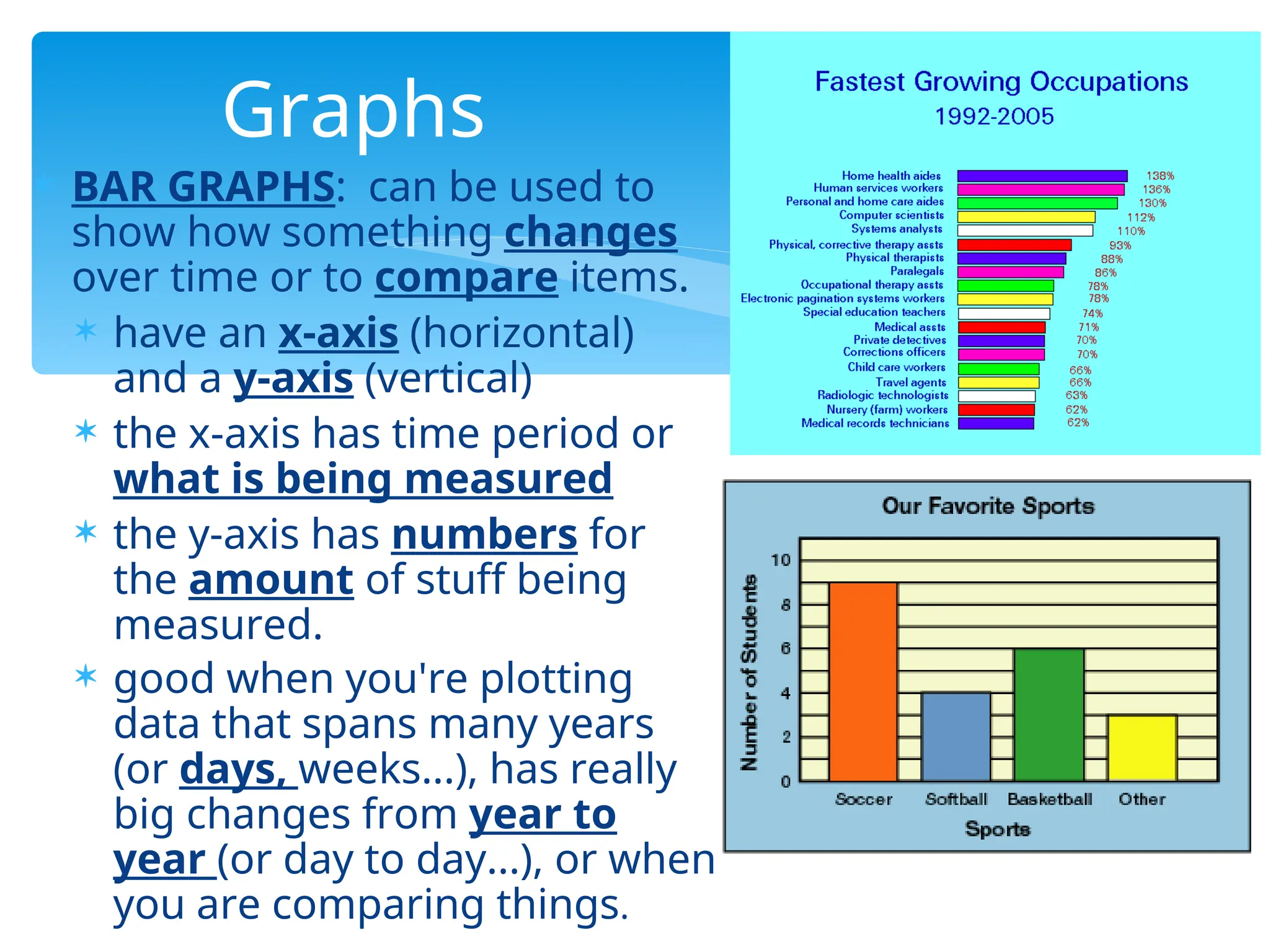
BAR GRAPHS:can be used to
show how something changes
over time or to compare items.
have an x-axis (horizontal)
and a y-axis (vertical)
the x-axis has time period or
what is being measured
the y-axis has numbers for
the amount of stuff being
measured.
good when you're plotting
data that spans many years
(or days, weeks...), has really
big changes from year to
year (or day to day...), or when
you are comparing things.
9.
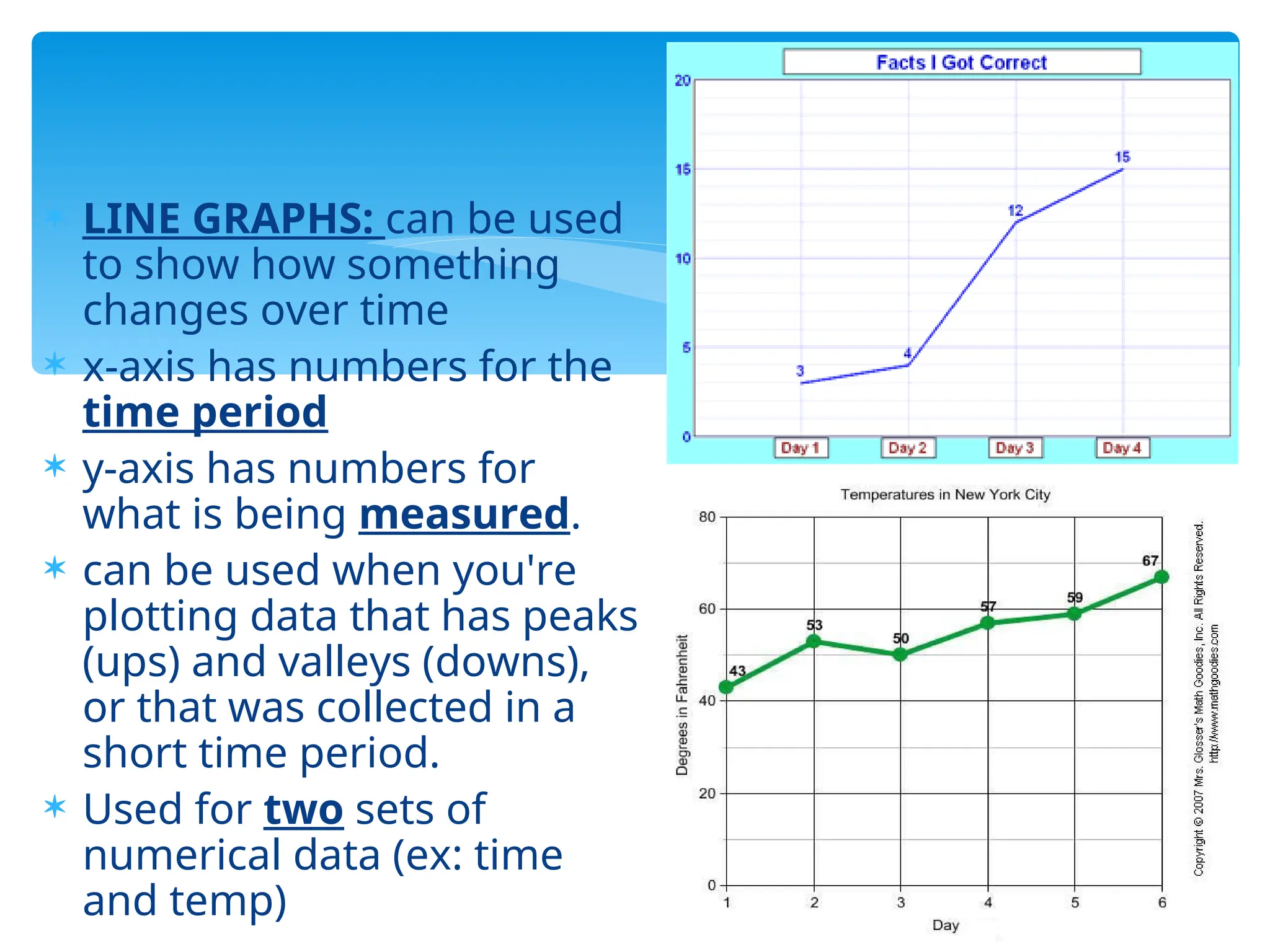
LINE GRAPHS:can be used
to show how something
changes over time
x-axis has numbers for the
time period
y-axis has numbers for
what is being measured.
can be used when you're
plotting data that has peaks
(ups) and valleys (downs),
or that was collected in a
short time period.
Used for two sets of
numerical data (ex: time
and temp)
10.
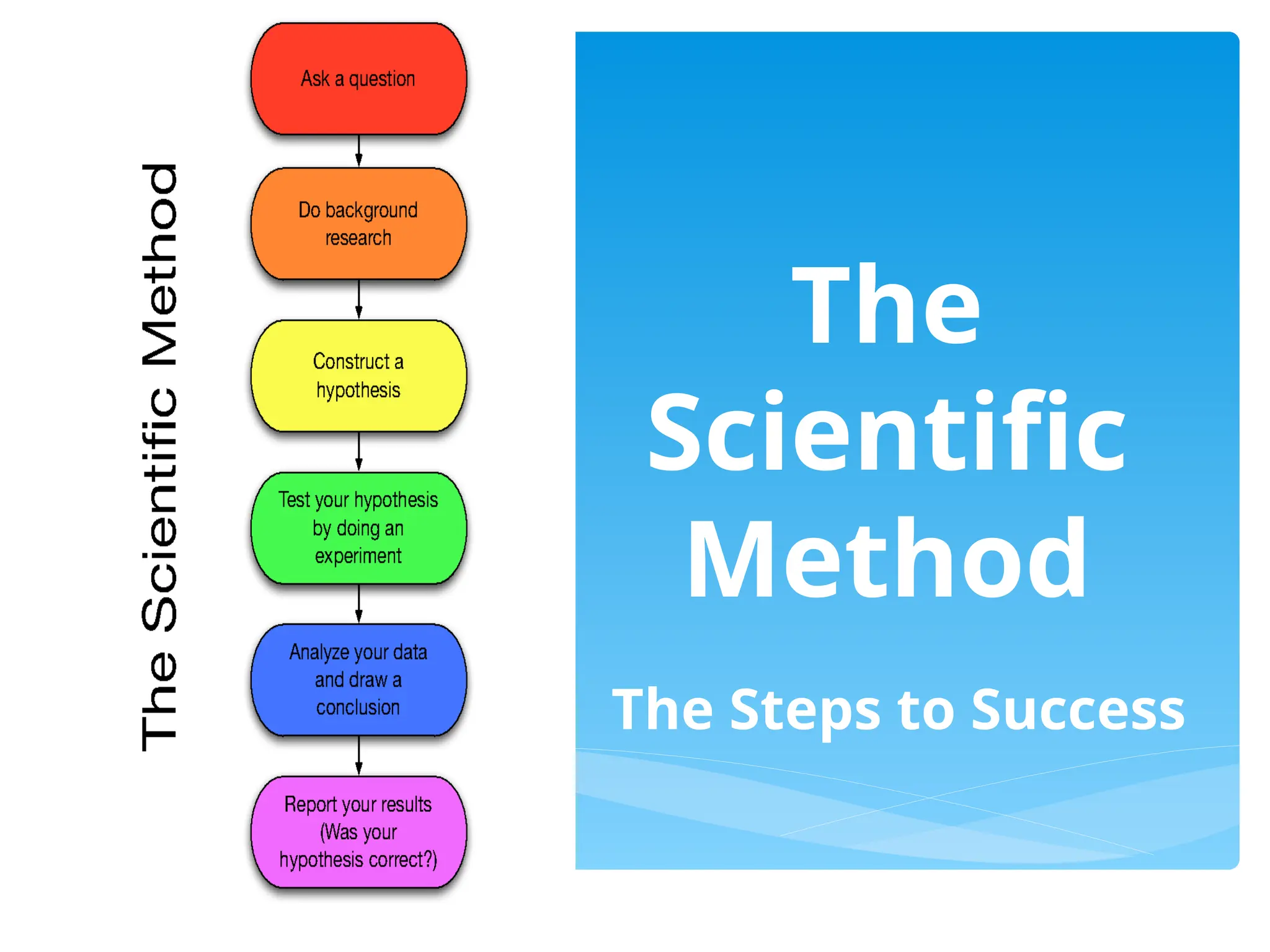
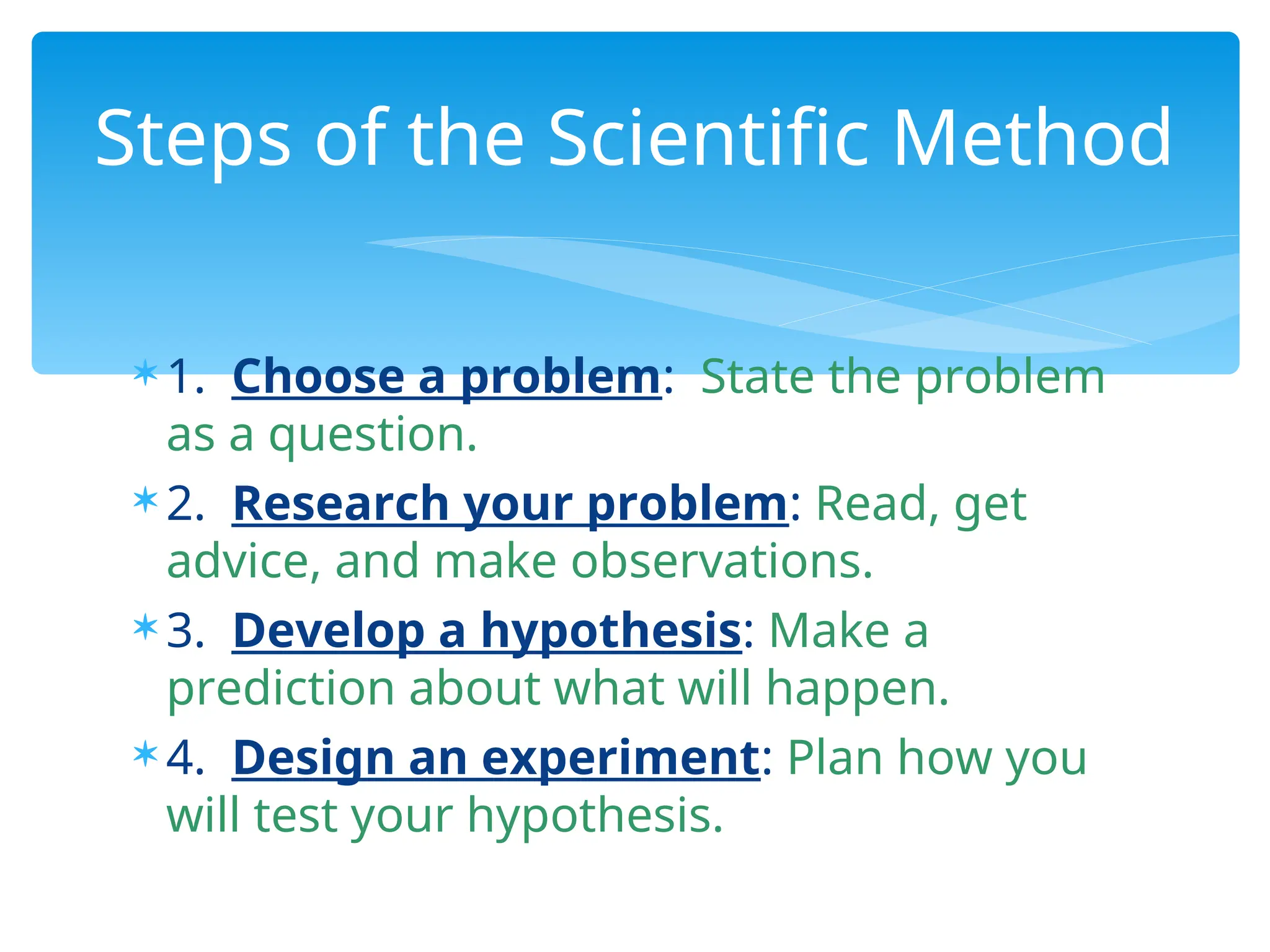
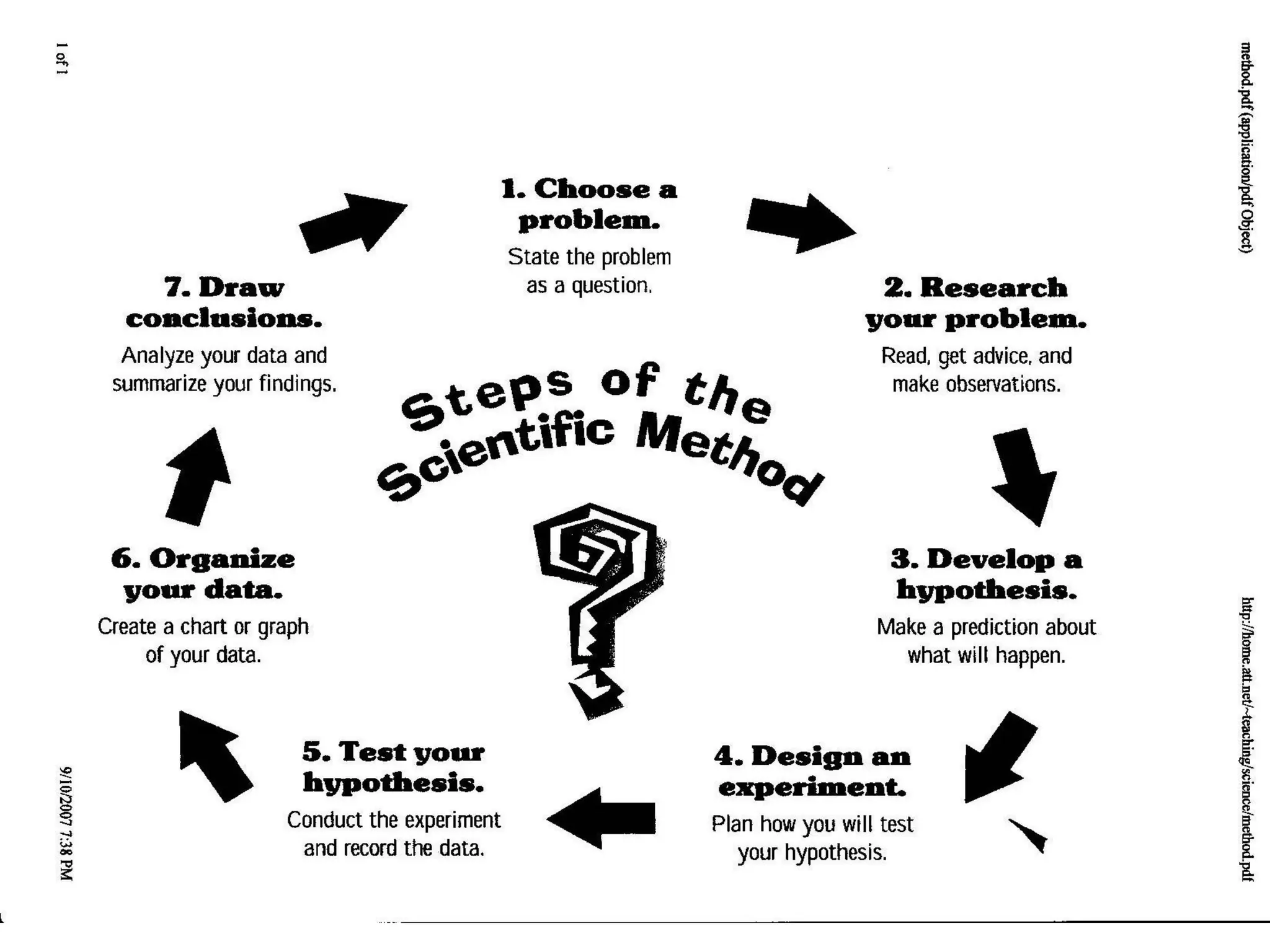
1. Choosea problem: State the problem
as a question.
2. Research your problem: Read, get
advice, and make observations.
3. Develop a hypothesis: Make a
prediction about what will happen.
4. Design an experiment: Plan how you
will test your hypothesis.
Steps of the Scientific Method
11.
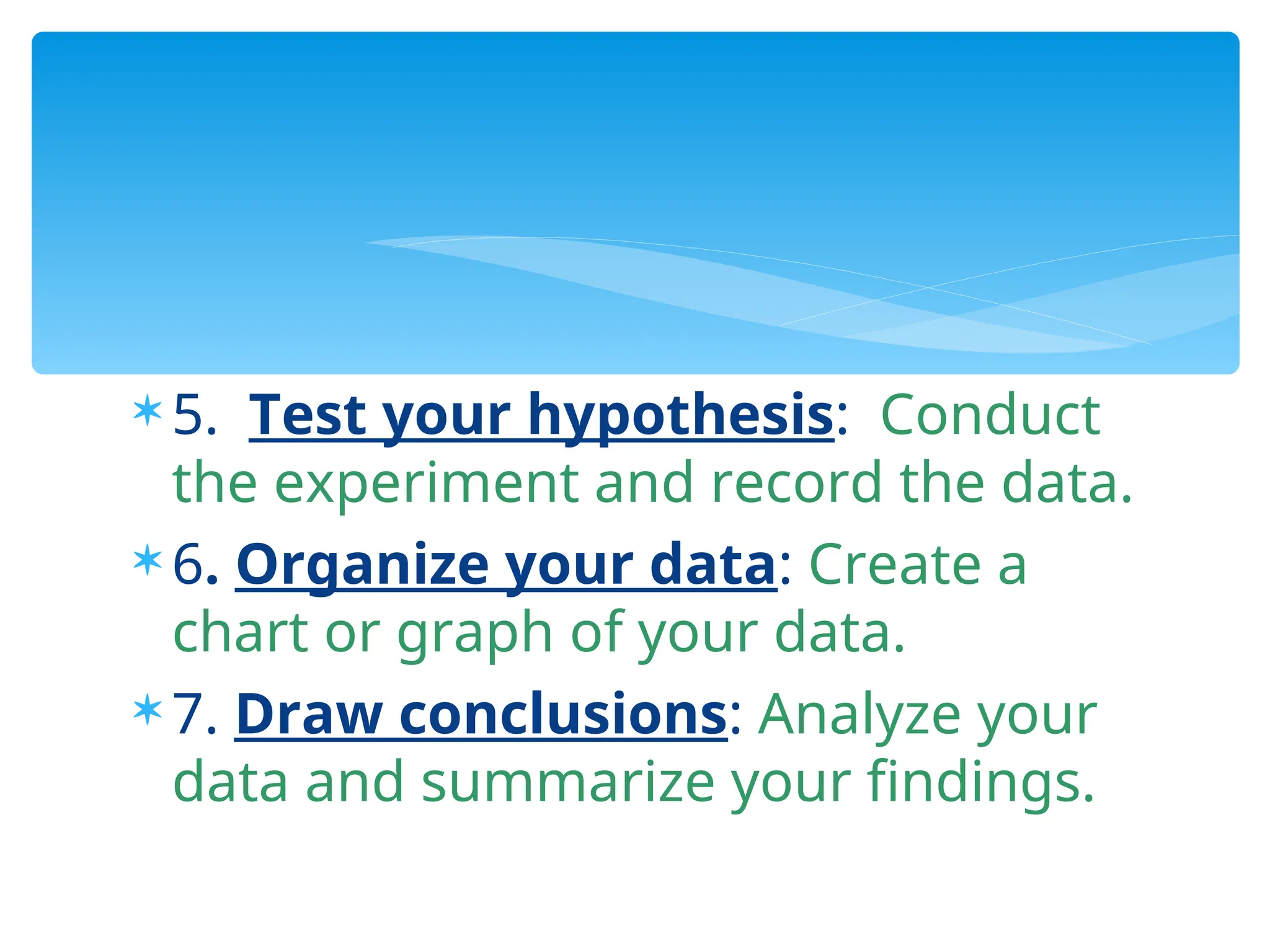
5. Testyour hypothesis: Conduct
the experiment and record the data.
6. Organize your data: Create a
chart or graph of your data.
7. Draw conclusions: Analyze your
data and summarize your findings.
Dependent Variable –something
that might be affected by the change
in the independent variable
What is observed
What is measured
The data collected during the
investigation
“the numbers”
Example: how tall the plant grew, how
far the paper airplane flew
Controlled Variable –a variable
that is not changed
Also called CONSTANTS
Allow for a “fair test”
Everything in the experiment
except for the IV should be kept
constant
19.
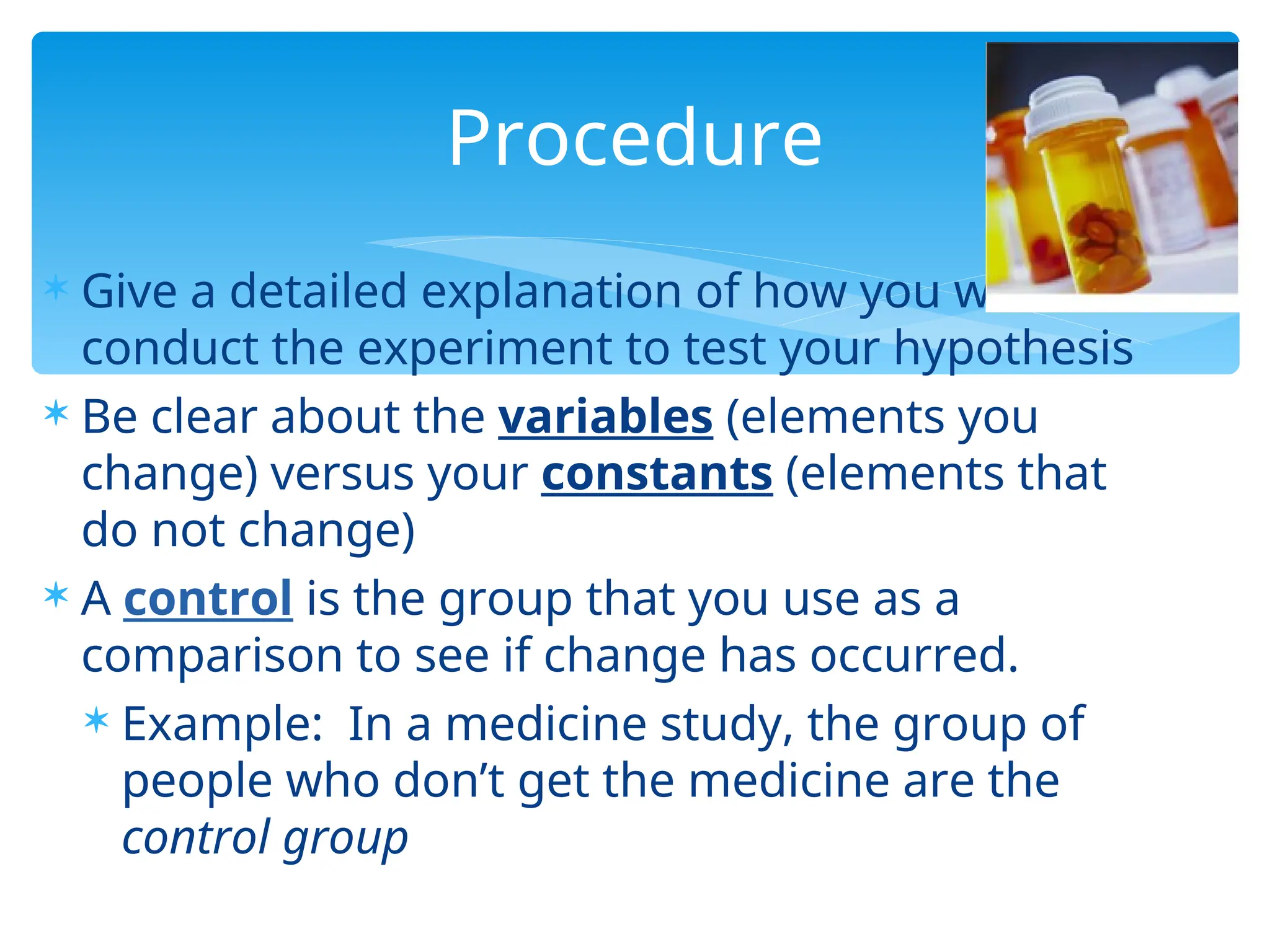
Give adetailed explanation of how you will
conduct the experiment to test your hypothesis
Be clear about the variables (elements you
change) versus your constants (elements that
do not change)
A control is the group that you use as a
comparison to see if change has occurred.
Example: In a medicine study, the group of
people who don’t get the medicine are the
control group
Procedure
20.
Be veryspecific about how you
will measure results to prove
or disprove your hypothesis.
You should include a regular
timetable for measuring
results or observing the
projects (such as every hour,
every day, every week)
21.
Conclusion: yourresults or findings based
on data collected during the experiment
Answer your problem/purpose statement
What does it all add up to? What is the
value of your project?
What further study do you recommend
given the results of your experiment? What
would be the next question to ask?
If you repeat this project, what would you
change?
Conclusion
22.
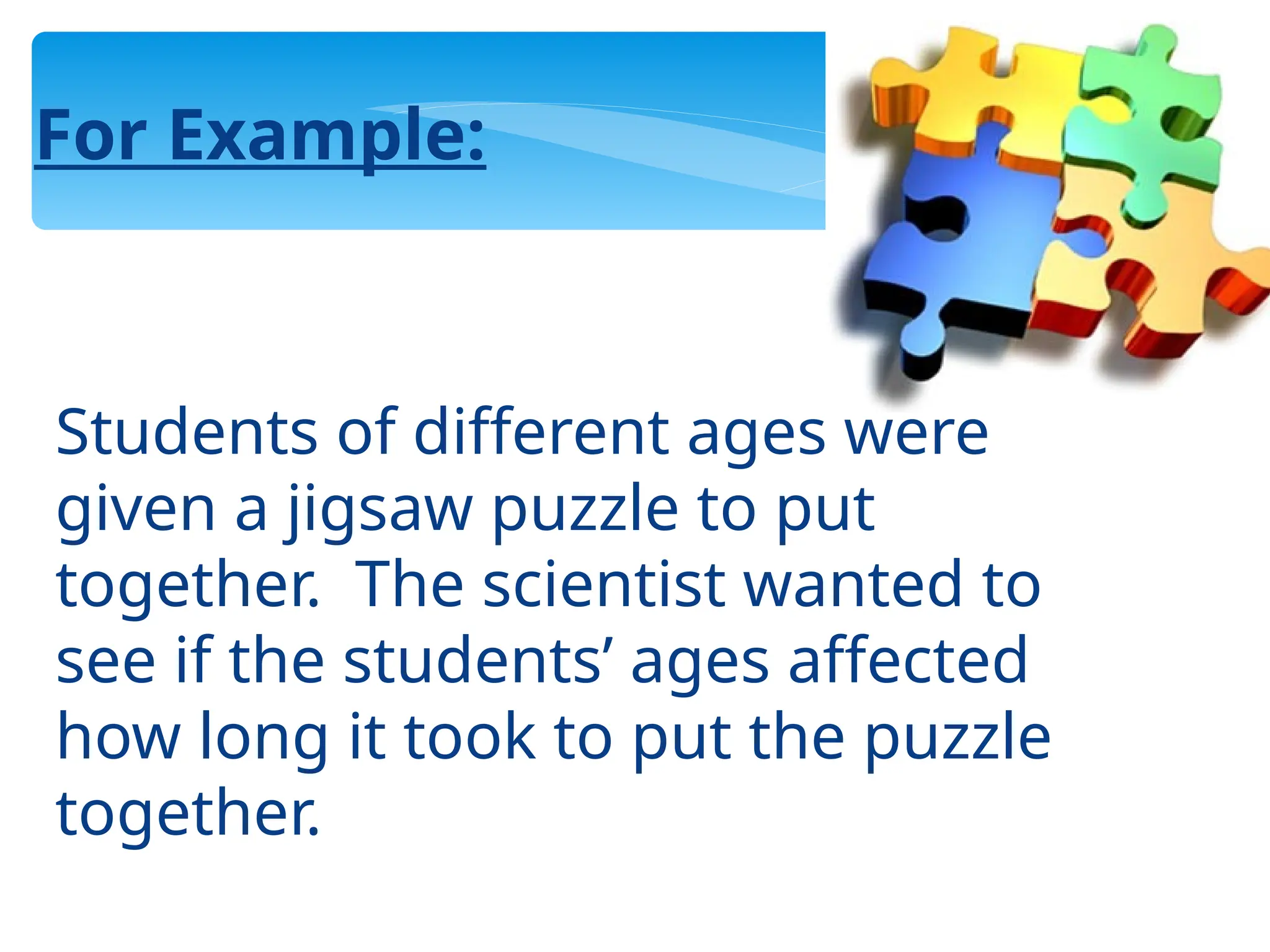
For Example:
Students ofdifferent ages were
given a jigsaw puzzle to put
together. The scientist wanted to
see if the students’ ages affected
how long it took to put the puzzle
together.
23.
Independent Variable (IV):
Agesof the students
Different ages were tested by the scientist
Dependent Variable (DV):
The time it took to put the puzzle
together
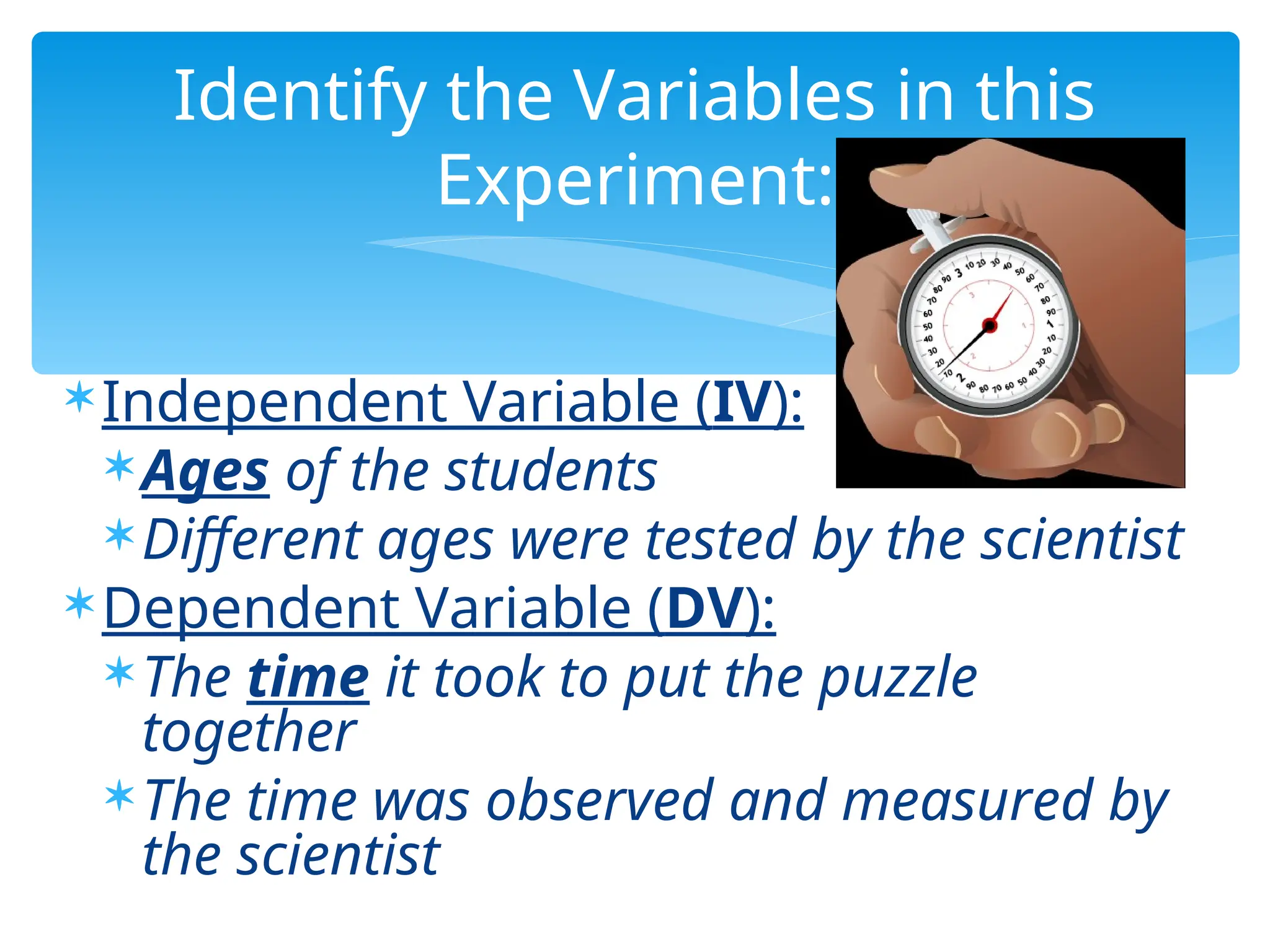
The time was observed and measured by
the scientist
Identify the Variables in this
Experiment:
24.
(1) Samepuzzle
All of the participants were tested with
the same puzzle.
It would not have been a fair test if
some had an easy 30 piece puzzle and
some had a harder 500 piece puzzle.
Other constants: (2) same location, (3)
same stopwatch, (4) same person
timing the experiment
What were the constants?
25.
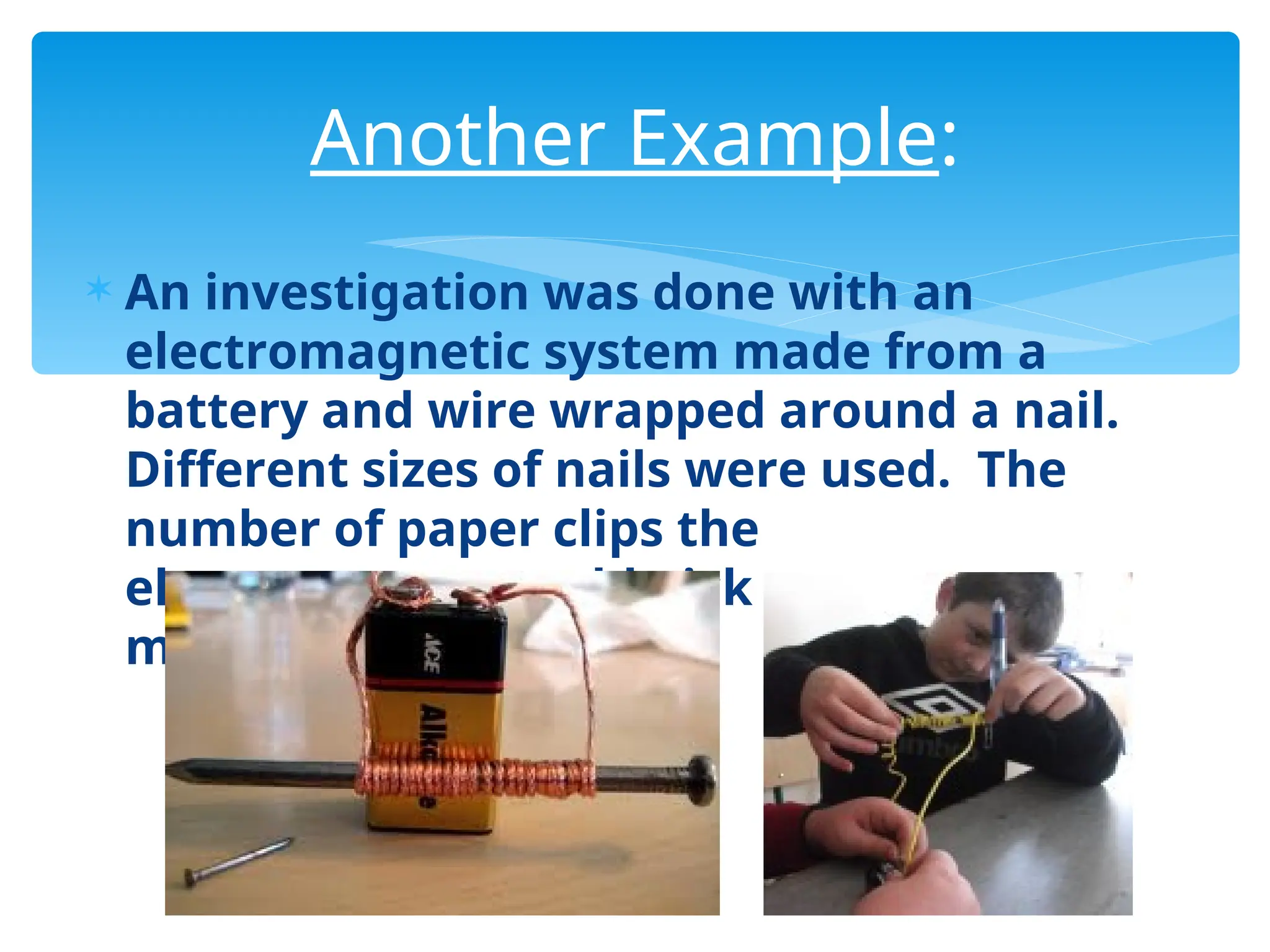
An investigationwas done with an
electromagnetic system made from a
battery and wire wrapped around a nail.
Different sizes of nails were used. The
number of paper clips the
electromagnet could pick up was
measured.
Another Example:
26.
IV: Sizes ofnails
These were changed by the scientist
DV: Number of paper clips picked up
The number of paper clips observed
and counted (measured)
Constants: Battery, wire, type of nail
None of these items were changed
What are the Variables?
27.
Let’s Practice!
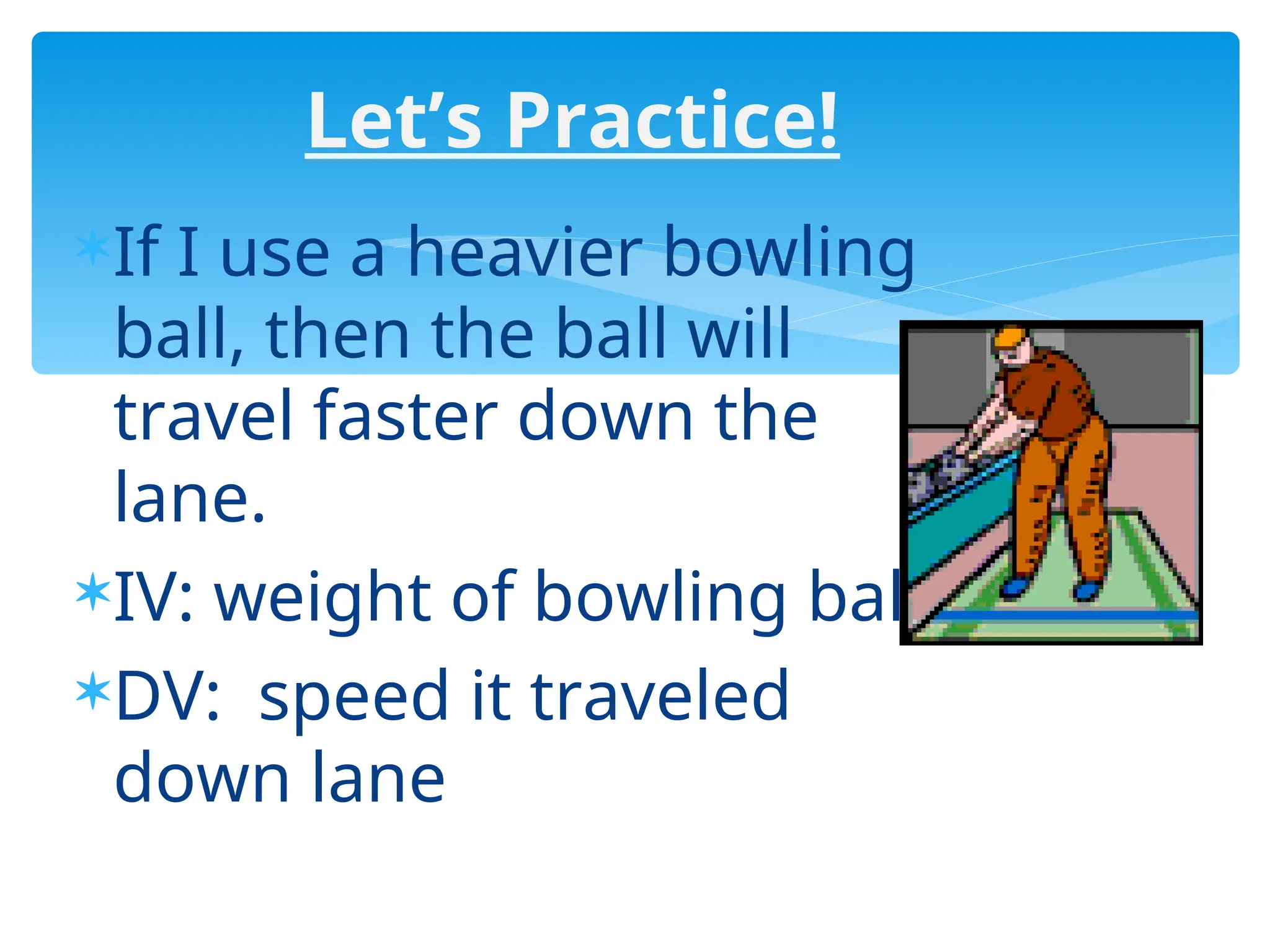
If Iuse a heavier bowling
ball, then the ball will
travel faster down the
lane.
IV: weight of bowling ball
DV: speed it traveled
down lane
28.
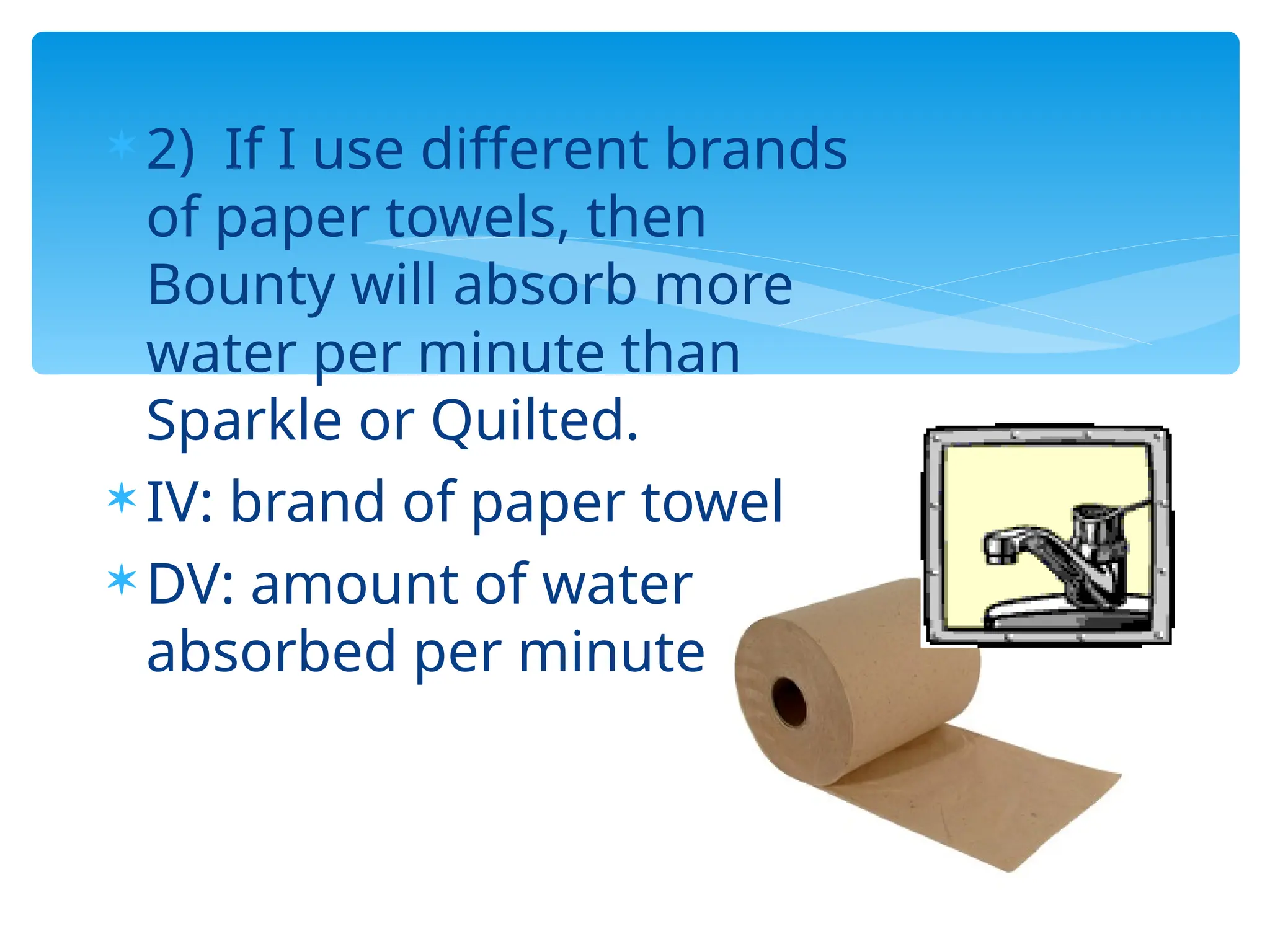
2) IfI use different brands
of paper towels, then
Bounty will absorb more
water per minute than
Sparkle or Quilted.
IV: brand of paper towel
DV: amount of water
absorbed per minute
29.
3) If Iput 3 spider plants in
different locations, then the
plant in the sunlight will
grow taller in a one-week
period than the plants in the
closet and basement.
IV: location of the plants
DV: height of plants