27. D. L. Swenson et al., Vaccine 23, 3033–3042 (2005).
28. K. L. Warfield et al., J. Immunol. 175, 1184–1191 (2005).
29. E. S. Kempner, J. Pharm. Sci. 90, 1637–1646 (2001).
ACKNOWLEDGMENTS
We thank E. Ollmann-Saphire (Scripps Research Institute, La Jolla,
CA) for purified EBOV NP. We also thank S. Watson for editing the
manuscript, T. Armbrust for excellent technical assistance, and
staff of the Rocky Mountain Veterinary Branch for assistance with
animal work. Y.K. and G.N. are inventors on a patent (held by the
University of Wisconsin Alumni Research Foundation) for EBOV
reverse genetics; therefore, a Material Transfer Agreement (MTA)
is required to obtain this system. Funding for this research was
provided by the Region V “Great Lakes” Regional Center of
Excellence (GLRCE; U54 AI 57153) and by Health and Labour
Sciences Research Grants, Japan. The study was partially funded
by the Intramural Research Program of the National Institute of
Allergy and Infectious Diseases, NIH. Raw data can be found at
https://docs.google.com/spreadsheets/d/1dBgzt5_z4rp-
qOuxXcI_FbUz8wNqMvHy6kVP_tpW0MY/edit?usp=sharing.
SUPPLEMENTARY MATERIALS
www.sciencemag.org/content/348/6233/439/suppl/DC1
Materials and Methods
Tables S1 to S3
Figs. S1 and S2
14 December 2014; accepted 13 March 2015
Published online 26 March 2015;
10.1126/science.aaa4919
GENOME EDITING
The mutagenic chain reaction: A
method for converting heterozygous
to homozygous mutations
Valentino M. Gantz* and Ethan Bier*
An organism with a single recessive loss-of-function allele will typically have a wild-type
phenotype, whereas individuals homozygous for two copies of the allele will display a
mutant phenotype. We have developed a method called the mutagenic chain reaction
(MCR), which is based on the CRISPR/Cas9 genome-editing system for generating
autocatalytic mutations, to produce homozygous loss-of-function mutations. In Drosophila,
we found that MCR mutations efficiently spread from their chromosome of origin to the
homologous chromosome, thereby converting heterozygous mutations to homozygosity
in the vast majority of somatic and germline cells. MCR technology should have broad
applications in diverse organisms.
I
t is often desirable to generate recessive loss-
of-function mutations in emergent model
organisms; however, identifying such muta-
tions in the heterozygous condition is chal-
lenging. Taking advantage of the CRISPR/
Cas9 genome-editing method (1, 2), we have
developed a strategy to convert a Drosophila
heterozygous recessive mutation into a homozy-
gous condition manifesting a mutant phenotype.
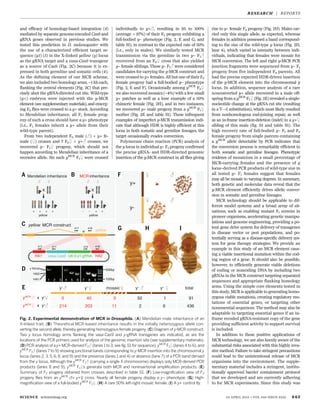
Wereasonedthatautocatalyticinsertional mutants
could be generated with a construct having three
components: (i) A Cas9 gene (expressed in both
somatic and germline cells), (ii) a guide RNA
(gRNA) targeted to a genomic sequence of in-
terest, and (iii) homology arms flanking the
Cas9-gRNA cassettes that match the two ge-
nomic sequences immediately adjacent to either
side of the target cut site (Fig. 1A). In such a
tripartite construct, Cas9 should cleave the ge-
nomic target at the site determined by the gRNA
(Fig. 1A) and then insert the Cas9-gRNA cassette
into that locus via homology-directed repair (HDR)
(Fig. 1, B and C). Cas9 and the gRNA produced
from the insertion allele should then cleave the
opposing allele (Fig. 1D), followed by HDR-
driven propagation of the Cas9-gRNA cassette
to the companion chromosome (Fig. 1, E and F).
We refer to this trans-acting mutagenesis scheme
as a mutagenic chain reaction (MCR).
We expected that autocatalytic allelic conver-
sion by MCR should be very efficient in both
somatic and germline precursor cells, given the
high frequency and specificity of mutagenesis (3)
442 24 APRIL 2015 • VOL 348 ISSUE 6233 sciencemag.org SCIENCE
RESEARCH | REPORTS
Section of Cell and Developmental Biology, University of
California, San Diego, La Jolla, CA 92095, USA.
*Corresponding author. E-mail: vgantz@ucsd.edu (V.M.G.);
ebier@ucsd.edu (E.B.)
Fig. 1. Scheme outlining the mutagenic chain
reaction (MCR). (A to C) A plasmid consisting of a
core cassette carrying a Cas9 transgene, a gRNA
targeting a genomic sequence of interest, and
flanking homology arms corresponding to genomic
sequences abutting the target cleavage site (A)
inserts the core Cas9-gRNA cassette into the
targeted locus via HDR [(B) and (C)]. (D to F) In
turn, the inserted cassette expresses both Cas9
and the gRNA, leading to cleavage (D) and HDR-
mediated insertion of the cassette into the second
allele, thereby rendering the mutation homozygous
[(E) and (F)]. HA1 and HA2 denote the two
homology arms that directly flank the gRNA-
directed cut site.
HA1
genome
HA2Cas9 gRNA
HA1
Homology Directed Repair (HDR)
HA2Cas9 gRNA
HA1 HA2
Cas9 gRNA
Cas9 gRNA
Homology Directed Repair (HDR)
Cas9 gRNAHA1 HA2
Cas9 gRNA
Cas9 gRNA
Cas9 gRNA
second allele
onDecember10,2015www.sciencemag.orgDownloadedfromonDecember10,2015www.sciencemag.orgDownloadedfromonDecember10,2015www.sciencemag.orgDownloadedfrom
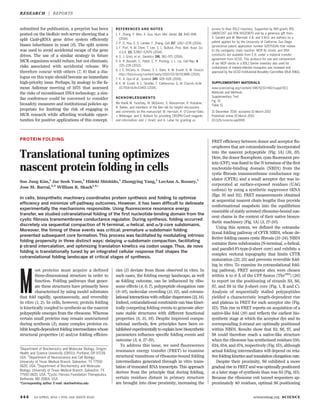
and efficacy of homology-based integration (4)
mediated by separate genome-encoded Cas9 and
gRNA genes observed in previous studies. We
tested this prediction in D. melanogaster with
the use of a characterized efficient target se-
quence (y1) (5) in the X-linked yellow (y) locus
as the gRNA target and a vasa-Cas9 transgene
as a source of Cas9 (Fig. 2C) because it is ex-
pressed in both germline and somatic cells (4).
As the defining element of our MCR scheme,
we also included two homology arms, ~1 kb each,
flanking the central elements (Fig. 2C) that pre-
cisely abut the gRNA-directed cut site. Wild-type
(y+) embryos were injected with the y-MCR
element (see supplementary materials), and emerg-
ing F0 flies were crossed to a y+ stock. According
to Mendelian inheritance, all F1 female prog-
eny of such a cross should have a y+ phenotype
(i.e., F1 females inherit a y+ allele from their
wild-type parent).
From two independent F0 male (♂) × y+ fe-
male (♀) crosses and 7 F0♀ × y+♂ crosses, we
recovered y– F1♀ progeny, which should not
happen according to Mendelian inheritance of a
recessive allele. Six such yMCR
F1♀ were crossed
individually to y+♂, resulting in 95 to 100%
(average = 97%) of their F2 progeny exhibiting a
full-bodied y– phenotype (Fig. 2, E and G, and
table S1), in contrast to the expected rate of 50%
(i.e., only in males). We similarly tested MCR
transmission via the germline in two y– F1♂
recovered from an F0♀ cross that also yielded
y– female siblings. These y– F1♂ were considered
candidates for carrying the y-MCR construct and
were crossed to y+ females. All but one of their F2
female progeny had a full-bodied y– phenotype
(Fig. 2, E and F). Occasionally among yMCR
F2♀
we also recovered mosaics (~4%) with a few small
y+ patches as well as a lone example of a 50%
chimeric female (Fig. 2H), and in two instances,
we recovered y+ male progeny from a yMCR
F1♀
mother (Fig. 2E and table S1). These infrequent
examples of imperfect y-MCR transmission indi-
cate that although HDR is highly efficient at this
locus in both somatic and germline lineages, the
target occasionally evades conversion.
Polymerase chain reaction (PCR) analysis of
the y locus in individual y– F1 progeny confirmed
the precise gRNA- and HDR-directed genomic
insertion of the y-MCR construct in all flies giving
rise to y– female F2 progeny (Fig. 2D). Males car-
ried only this single allele, as expected, whereas
females in addition possessed a band correspond-
ing to the size of the wild-type y locus (Fig. 2D,
lane 4), which varied in intensity between indi-
viduals, indicating that females were mosaic for
MCR conversion. The left and right y-MCR PCR
junction fragments were sequenced from y– F1
progeny from five independent F0 parents. All
had the precise expected HDR-driven insertion
of the y-MCR element into the chromosomal y
locus. In addition, sequence analysis of a rare
nonconverted y+ allele recovered in a male off-
spring from a yMCR
F1♀ (Fig. 2E) revealed a single-
nucleotide change at the gRNA cut site (resulting
in a T→I substitution), which most likely resulted
from nonhomologous end-joining repair, as well
as an in-frame insertion-deletion (indel) in a y+♀
sibling of this male (fig. S1 and table S1). The
high recovery rate of full-bodied y– F1 and F2
female progeny from single parents containing
a yMCR
allele detectable by PCR indicates that
the conversion process is remarkably efficient in
both somatic and germline lineages. Phenotypic
evidence of mosaicism in a small percentage of
MCR-carrying females and the presence of y
locus–derived PCR products of wild-type size in
all tested y– F1 females suggest that females
may all be mosaic to varying degrees. In summary,
both genetic and molecular data reveal that the
y-MCR element efficiently drives allelic conver-
sion in somatic and germline lineages.
MCR technology should be applicable to dif-
ferent model systems and a broad array of sit-
uations, such as enabling mutant F1 screens in
pioneer organisms, accelerating genetic manipu-
lations and genome engineering, providing a po-
tent gene drive system for delivery of transgenes
in disease vector or pest populations, and po-
tentially serving as a disease-specific delivery sys-
tem for gene therapy strategies. We provide an
example in this study of an MCR element caus-
ing a viable insertional mutation within the cod-
ing region of a gene. It should also be possible,
however, to efficiently generate viable deletions
of coding or noncoding DNA by including two
gRNAs in the MCR construct targeting separated
sequences and appropriate flanking homology
arms. Using the simple core elements tested in
this study, MCR is applicable to generating homo-
zygous viable mutations, creating regulatory mu-
tations of essential genes, or targeting other
nonessential sequences. The method may also be
adaptable to targeting essential genes if an in-
frame recoded gRNA-resistant copy of the gene
providing sufficient activity to support survival
is included.
In addition to these positive applications of
MCR technology, we are also keenly aware of the
substantial risks associated with this highly inva-
sive method. Failure to take stringent precautions
could lead to the unintentional release of MCR
organisms into the environment. The supple-
mentary material includes a stringent, institu-
tionally approved barrier containment protocol
that we developed and are currently adhering
to for MCR experiments. Since this study was
SCIENCE sciencemag.org 24 APRIL 2015 • VOL 348 ISSUE 6233 443
x
Mendelian inheritance MCR inheritance
x
+ + + + - - + +
y+
y-
yellow yellow
HA1 HA2vasa-Cas9
yellow
U6:3-y1-gRNA
418
418410
417
417 411
yellow MCR construct
1 2 3 4 5 6 7 8 9
500bp
100bp
y locus
HA2
HA1
y- y- mosaic y+
y+
total
0 40 0 50 1 91
214 203 11 2 6 436
yMCR
x y+
yMCR
x y+
Fig. 2. Experimental demonstration of MCR in Drosophila. (A) Mendelian male inheritance of an
X-linked trait. (B) Theoretical MCR-based inheritance results in the initially heterozygous allele con-
verting the second allele, thereby generating homozygous female progeny. (C) Diagram of y-MCR construct.
Two y locus homology arms flanking the vasa-Cas9 and y-gRNA transgenes are indicated, as are the
locations of the PCR primers used for analysis of the genomic insertion site (see supplementary materials).
(D) PCR analysis of a y+ MCR-derived F2♂ (lanes 1 to 3; see fig.S1 for sequence), yMCR
F1♀ (lanes 4 to 6), and
yMCR
F1♂ (lanes 7 to 9) showing junctional bands corresponding to y-MCR insertion into the chromosomal y
locus (lanes 2, 3, 5, 6, 8, and 9) and the presence (lanes 1 and 4) or absence (lane 7) of a PCR band derived
from the y locus. Although the yMCR
F1♂ (carrying a single X chromosome) displays only MCR-derived PCR
products (lanes 8 and 9), yMCR
F1♀s generate both MCR and noninsertional amplification products. (E)
Summary of F2 progeny obtained from crosses described in table S1. (F) Low-magnification view of F2
progeny flies from an yMCR
♂× y+♀ cross. Nearly all female progeny display a y– phenotype. (G) High-
magnification view of a full-bodied yMCR
F1♀. (H) A rare 50% left-right mosaic female. (I) A y+ control fly.
RESEARCH | REPORTS
submitted for publication, a preprint has been
posted on the bioRxiv web server showing that a
split Cas9-gRNA gene drive system efficiently
biases inheritance in yeast (6). The split system
was used to avoid accidental escape of the gene
drives. The use of a similar strategy in future
MCR organisms would reduce, but not eliminate,
risks associated with accidental release. We
therefore concur with others (7, 8) that a dia-
logue on this topic should become an immediate
high-priority issue. Perhaps, by analogy to the fa-
mous Asilomar meeting of 1975 that assessed
the risks of recombinant DNA technology, a sim-
ilar conference could be convened to consider
biosafety measures and institutional policies ap-
propriate for limiting the risk of engaging in
MCR research while affording workable oppor-
tunities for positive applications of this concept.
REFERENCES AND NOTES
1. F. Zhang, Y. Wen, X. Guo, Hum. Mol. Genet. 23, R40–R46
(2014).
2. P. D. Hsu, E. S. Lander, F. Zhang, Cell 157, 1262–1278 (2014).
3. F. Port, H. M. Chen, T. Lee, S. L. Bullock, Proc. Natl. Acad. Sci.
U.S.A. 111, E2967–E2976 (2014).
4. S. J. Gratz et al., Genetics 196, 961–971 (2014).
5. A. R. Bassett, C. Tibbit, C. P. Ponting, J. L. Liu, Cell Rep. 4,
220–228 (2013).
6. J. E. DiCarlo, A. Chavez, S. L. Dietz, K. M. Esvelt, G. M. Church,
http://biorxiv.org/content/early/2015/01/16/013896 (2015).
7. K. A. Oye et al., Science 345, 626–628 (2014).
8. K. M. Esvelt, A. L. Smidler, F. Catteruccia, G. M. Church, eLife
10.7554/eLife.03401 (2014).
ACKNOWLEDGMENTS
We thank M. Yanofsky, W. McGinnis, S. Wasserman, R. Kolodner,
H. Bellen, and members of the Bier lab for helpful discussions
and comments on the manuscript; M. Harrison, K. O’Connor-Giles,
J. Wildonger, and S. Bullock for providing CRISPR/Cas9 reagents
and information; and J. Vinetz and A. Lubar for granting us
access to their BSL2 Insectary. Supported by NIH grants R01
GM067247 and R56 NS029870 and by a generous gift from
S. Sandell and M. Marshall. E.B. and V.M.G. are authors on a
patent applied for by the University of California, San Diego
(provisional patent application number 62075534) that relates
to the mutagenic chain reaction. MCR fly stocks and DNA
constructs are available from E.B. under a material transfer
agreement from UCSD. This protocol for use and containment
of our MCR stocks in a BSL2 barrier insectary also used for
containment of malaria-infected mosquitos was reviewed and
approved by the UCSD Institutional Biosafety Committee (BUA R461).
SUPPLEMENTARY MATERIALS
www.sciencemag.org/content/348/6233/442/suppl/DC1
Materials and Methods
Supplementary Text
Fig. S1
Table S1
31 December 2014; accepted 10 March 2015
Published online 19 March 2015;
10.1126/science.aaa5945
PROTEIN FOLDING
Translational tuning optimizes
nascent protein folding in cells
Soo Jung Kim,1
Jae Seok Yoon,1
Hideki Shishido,1
Zhongying Yang,1
LeeAnn A. Rooney,1
Jose M. Barral,2,3
William R. Skach1,4
*
In cells, biosynthetic machinery coordinates protein synthesis and folding to optimize
efficiency and minimize off-pathway outcomes. However, it has been difficult to delineate
experimentally the mechanisms responsible. Using fluorescence resonance energy
transfer, we studied cotranslational folding of the first nucleotide-binding domain from the
cystic fibrosis transmembrane conductance regulator. During synthesis, folding occurred
discretely via sequential compaction of N-terminal, a-helical, and a/b-core subdomains.
Moreover, the timing of these events was critical; premature a-subdomain folding
prevented subsequent core formation. This process was facilitated by modulating intrinsic
folding propensity in three distinct ways: delaying a-subdomain compaction, facilitating
b-strand intercalation, and optimizing translation kinetics via codon usage. Thus, de novo
folding is translationally tuned by an integrated cellular response that shapes the
cotranslational folding landscape at critical stages of synthesis.
M
ost proteins must acquire a defined
three-dimensional structure in order to
function. Folding pathways that gener-
ate these structures have primarily been
characterized by using model substrates
that fold rapidly, spontaneously, and reversibly
in vitro (1, 2). In cells, however, protein folding
is kinetically coupled to synthesis as the nascent
polypeptide emerges from the ribosome. Whereas
certain small proteins may remain unstructured
during synthesis (3), many complex proteins ex-
hibit length-dependent foldingintermediates whose
structural properties (4) and/or folding efficien-
cies (5) deviate from those observed in vitro. In
such cases, the folding energy landscape, as well
as folding outcome, can be influenced by ribo-
some effects (4, 6, 7), polypeptide elongation rate
(8–10), molecular crowding (11, 12), and cotrans-
lationalinteractions with cellularchaperones (13,14).
Indeed, cotranslational constraints can bias kinet-
ically competing folding events to generate alter-
nate stable structures with different functional
properties (8, 15, 16). Despite improved compu-
tational methods, few principles have been es-
tablishedexperimentallytoexplainhow biosynthetic
parameters influence specific folding events and
outcome (3, 4, 17–19).
To address this issue, we used fluorescence
resonance energy transfer (FRET) to examine
structural transitions of ribosome-bound folding
intermediates generated through in vitro trans-
lation of truncated RNA transcripts. This approach
derives from the principle that during folding,
certain residues distant in primary structure
are brought into close proximity, increasing the
FRET efficiency between donor and acceptor flu-
orophores that are cotranslationally incorporated
into the nascent polypeptide (Fig. 1A) (18, 19).
Here, the donor fluorophore, cyan fluorescent pro-
tein (CFP), was fused to the N terminus of the first
nucleotide-binding domain (NBD1) from the
cystic fibrosis transmembrane conductance reg-
ulator (CFTR), and a small acceptor dye was in-
corporated at surface-exposed residues (UAG
codons) by using a synthetic suppressor tRNA
(figs. S1 and S2). FRET measurements obtained
at sequential nascent chain lengths thus provide
conformational snapshots into the equilibrium
ensemble of stably arrested ribosome-bound nas-
cent chains in the context of their native biosyn-
thetic machinery (Fig. 1A) (3, 17–20).
Using this system, we defined the cotransla-
tional folding pathway of CFTR NBD1, whose de-
fective folding causes cystic fibrosis (21–24). NBD1
contains three subdomains (N-terminal, a-helical,
and parallel-F1-type-b-sheet core) and exhibits a
complex vectoral topography that limits CFTR
maturation (22, 25) and prevents reversible fold-
ing in vitro. To examine its cotranslational fold-
ing pathway, FRET acceptor sites were chosen
within 4 to 9 Å of the CFP fusion (Thr389
) (26)
to report on the positioning of strands S3, S6,
S7, and S8 in the b-sheet core (Fig. 1, B and C).
Analysis of sequentially stalled polypeptides
yielded a characteristic length-dependent rise
and plateau in FRET for each acceptor site (Fig.
1D). This rise in FRET reports on acquisition of a
native-like fold (19) and reflects the earliest bio-
synthetic stage at which the acceptor dye and its
corresponding b-strand are optimally positioned
within NBD1. Results show that S3, S6, S7, and
S8 could therefore reach a native-like structure
when the ribosome has synthesized residues 550,
624, 654, and 674, respectively (Fig. 1D), although
actual folding intermediates will depend on rela-
tive folding kinetics and translation elongation rate.
Despite their proximity, S6 exhibited a more
gradual rise in FRET and was optimally positioned
at a later stage of synthesis than was S3 (Fig. 1D).
Because the ribosome exit tunnel sequesters ap-
proximately 40 residues, optimal S6 positioning
444 24 APRIL 2015 • VOL 348 ISSUE 6233 sciencemag.org SCIENCE
1
Department of Biochemistry and Molecular Biology, Oregon
Health and Science University (OHSU), Portland, OR 97239,
USA. 2
Department of Neuroscience and Cell Biology,
University of Texas Medical Branch, Galveston, TX 77550-
0620, USA. 3
Department of Biochemistry and Molecular
Biology, University of Texas Medical Branch, Galveston, TX
77550-0620, USA. 4
Cystic Fibrosis Foundation Therapeutics,
Bethesda, MD 20814, USA.
*Corresponding author. E-mail: skachw@ohsu.edu
RESEARCH | REPORTS
DOI: 10.1126/science.aaa5945
, 442 (2015);348Science
Valentino M. Gantz and Ethan Bier
to homozygous mutations
The mutagenic chain reaction: A method for converting heterozygous
This copy is for your personal, non-commercial use only.
clicking here.colleagues, clients, or customers by
, you can order high-quality copies for yourIf you wish to distribute this article to others
here.following the guidelines
can be obtained byPermission to republish or repurpose articles or portions of articles
):December 10, 2015www.sciencemag.org (this information is current as of
The following resources related to this article are available online at
http://www.sciencemag.org/content/348/6233/442.full.html
version of this article at:
including high-resolution figures, can be found in the onlineUpdated information and services,
http://www.sciencemag.org/content/suppl/2015/03/18/science.aaa5945.DC1.html
can be found at:Supporting Online Material
http://www.sciencemag.org/content/348/6233/442.full.html#related
found at:
can berelated to this articleA list of selected additional articles on the Science Web sites
http://www.sciencemag.org/content/348/6233/442.full.html#ref-list-1
, 5 of which can be accessed free:cites 7 articlesThis article
http://www.sciencemag.org/content/348/6233/442.full.html#related-urls
10 articles hosted by HighWire Press; see:cited byThis article has been
http://www.sciencemag.org/cgi/collection/development
Development
subject collections:This article appears in the following
registered trademark of AAAS.
is aScience2015 by the American Association for the Advancement of Science; all rights reserved. The title
CopyrightAmerican Association for the Advancement of Science, 1200 New York Avenue NW, Washington, DC 20005.
(print ISSN 0036-8075; online ISSN 1095-9203) is published weekly, except the last week in December, by theScience
onDecember10,2015www.sciencemag.orgDownloadedfrom

Science-2015-Gantz-442-4

  • 1.
    27. D. L.Swenson et al., Vaccine 23, 3033–3042 (2005). 28. K. L. Warfield et al., J. Immunol. 175, 1184–1191 (2005). 29. E. S. Kempner, J. Pharm. Sci. 90, 1637–1646 (2001). ACKNOWLEDGMENTS We thank E. Ollmann-Saphire (Scripps Research Institute, La Jolla, CA) for purified EBOV NP. We also thank S. Watson for editing the manuscript, T. Armbrust for excellent technical assistance, and staff of the Rocky Mountain Veterinary Branch for assistance with animal work. Y.K. and G.N. are inventors on a patent (held by the University of Wisconsin Alumni Research Foundation) for EBOV reverse genetics; therefore, a Material Transfer Agreement (MTA) is required to obtain this system. Funding for this research was provided by the Region V “Great Lakes” Regional Center of Excellence (GLRCE; U54 AI 57153) and by Health and Labour Sciences Research Grants, Japan. The study was partially funded by the Intramural Research Program of the National Institute of Allergy and Infectious Diseases, NIH. Raw data can be found at https://docs.google.com/spreadsheets/d/1dBgzt5_z4rp- qOuxXcI_FbUz8wNqMvHy6kVP_tpW0MY/edit?usp=sharing. SUPPLEMENTARY MATERIALS www.sciencemag.org/content/348/6233/439/suppl/DC1 Materials and Methods Tables S1 to S3 Figs. S1 and S2 14 December 2014; accepted 13 March 2015 Published online 26 March 2015; 10.1126/science.aaa4919 GENOME EDITING The mutagenic chain reaction: A method for converting heterozygous to homozygous mutations Valentino M. Gantz* and Ethan Bier* An organism with a single recessive loss-of-function allele will typically have a wild-type phenotype, whereas individuals homozygous for two copies of the allele will display a mutant phenotype. We have developed a method called the mutagenic chain reaction (MCR), which is based on the CRISPR/Cas9 genome-editing system for generating autocatalytic mutations, to produce homozygous loss-of-function mutations. In Drosophila, we found that MCR mutations efficiently spread from their chromosome of origin to the homologous chromosome, thereby converting heterozygous mutations to homozygosity in the vast majority of somatic and germline cells. MCR technology should have broad applications in diverse organisms. I t is often desirable to generate recessive loss- of-function mutations in emergent model organisms; however, identifying such muta- tions in the heterozygous condition is chal- lenging. Taking advantage of the CRISPR/ Cas9 genome-editing method (1, 2), we have developed a strategy to convert a Drosophila heterozygous recessive mutation into a homozy- gous condition manifesting a mutant phenotype. Wereasonedthatautocatalyticinsertional mutants could be generated with a construct having three components: (i) A Cas9 gene (expressed in both somatic and germline cells), (ii) a guide RNA (gRNA) targeted to a genomic sequence of in- terest, and (iii) homology arms flanking the Cas9-gRNA cassettes that match the two ge- nomic sequences immediately adjacent to either side of the target cut site (Fig. 1A). In such a tripartite construct, Cas9 should cleave the ge- nomic target at the site determined by the gRNA (Fig. 1A) and then insert the Cas9-gRNA cassette into that locus via homology-directed repair (HDR) (Fig. 1, B and C). Cas9 and the gRNA produced from the insertion allele should then cleave the opposing allele (Fig. 1D), followed by HDR- driven propagation of the Cas9-gRNA cassette to the companion chromosome (Fig. 1, E and F). We refer to this trans-acting mutagenesis scheme as a mutagenic chain reaction (MCR). We expected that autocatalytic allelic conver- sion by MCR should be very efficient in both somatic and germline precursor cells, given the high frequency and specificity of mutagenesis (3) 442 24 APRIL 2015 • VOL 348 ISSUE 6233 sciencemag.org SCIENCE RESEARCH | REPORTS Section of Cell and Developmental Biology, University of California, San Diego, La Jolla, CA 92095, USA. *Corresponding author. E-mail: vgantz@ucsd.edu (V.M.G.); ebier@ucsd.edu (E.B.) Fig. 1. Scheme outlining the mutagenic chain reaction (MCR). (A to C) A plasmid consisting of a core cassette carrying a Cas9 transgene, a gRNA targeting a genomic sequence of interest, and flanking homology arms corresponding to genomic sequences abutting the target cleavage site (A) inserts the core Cas9-gRNA cassette into the targeted locus via HDR [(B) and (C)]. (D to F) In turn, the inserted cassette expresses both Cas9 and the gRNA, leading to cleavage (D) and HDR- mediated insertion of the cassette into the second allele, thereby rendering the mutation homozygous [(E) and (F)]. HA1 and HA2 denote the two homology arms that directly flank the gRNA- directed cut site. HA1 genome HA2Cas9 gRNA HA1 Homology Directed Repair (HDR) HA2Cas9 gRNA HA1 HA2 Cas9 gRNA Cas9 gRNA Homology Directed Repair (HDR) Cas9 gRNAHA1 HA2 Cas9 gRNA Cas9 gRNA Cas9 gRNA second allele onDecember10,2015www.sciencemag.orgDownloadedfromonDecember10,2015www.sciencemag.orgDownloadedfromonDecember10,2015www.sciencemag.orgDownloadedfrom
  • 2.
    and efficacy ofhomology-based integration (4) mediated by separate genome-encoded Cas9 and gRNA genes observed in previous studies. We tested this prediction in D. melanogaster with the use of a characterized efficient target se- quence (y1) (5) in the X-linked yellow (y) locus as the gRNA target and a vasa-Cas9 transgene as a source of Cas9 (Fig. 2C) because it is ex- pressed in both germline and somatic cells (4). As the defining element of our MCR scheme, we also included two homology arms, ~1 kb each, flanking the central elements (Fig. 2C) that pre- cisely abut the gRNA-directed cut site. Wild-type (y+) embryos were injected with the y-MCR element (see supplementary materials), and emerg- ing F0 flies were crossed to a y+ stock. According to Mendelian inheritance, all F1 female prog- eny of such a cross should have a y+ phenotype (i.e., F1 females inherit a y+ allele from their wild-type parent). From two independent F0 male (♂) × y+ fe- male (♀) crosses and 7 F0♀ × y+♂ crosses, we recovered y– F1♀ progeny, which should not happen according to Mendelian inheritance of a recessive allele. Six such yMCR F1♀ were crossed individually to y+♂, resulting in 95 to 100% (average = 97%) of their F2 progeny exhibiting a full-bodied y– phenotype (Fig. 2, E and G, and table S1), in contrast to the expected rate of 50% (i.e., only in males). We similarly tested MCR transmission via the germline in two y– F1♂ recovered from an F0♀ cross that also yielded y– female siblings. These y– F1♂ were considered candidates for carrying the y-MCR construct and were crossed to y+ females. All but one of their F2 female progeny had a full-bodied y– phenotype (Fig. 2, E and F). Occasionally among yMCR F2♀ we also recovered mosaics (~4%) with a few small y+ patches as well as a lone example of a 50% chimeric female (Fig. 2H), and in two instances, we recovered y+ male progeny from a yMCR F1♀ mother (Fig. 2E and table S1). These infrequent examples of imperfect y-MCR transmission indi- cate that although HDR is highly efficient at this locus in both somatic and germline lineages, the target occasionally evades conversion. Polymerase chain reaction (PCR) analysis of the y locus in individual y– F1 progeny confirmed the precise gRNA- and HDR-directed genomic insertion of the y-MCR construct in all flies giving rise to y– female F2 progeny (Fig. 2D). Males car- ried only this single allele, as expected, whereas females in addition possessed a band correspond- ing to the size of the wild-type y locus (Fig. 2D, lane 4), which varied in intensity between indi- viduals, indicating that females were mosaic for MCR conversion. The left and right y-MCR PCR junction fragments were sequenced from y– F1 progeny from five independent F0 parents. All had the precise expected HDR-driven insertion of the y-MCR element into the chromosomal y locus. In addition, sequence analysis of a rare nonconverted y+ allele recovered in a male off- spring from a yMCR F1♀ (Fig. 2E) revealed a single- nucleotide change at the gRNA cut site (resulting in a T→I substitution), which most likely resulted from nonhomologous end-joining repair, as well as an in-frame insertion-deletion (indel) in a y+♀ sibling of this male (fig. S1 and table S1). The high recovery rate of full-bodied y– F1 and F2 female progeny from single parents containing a yMCR allele detectable by PCR indicates that the conversion process is remarkably efficient in both somatic and germline lineages. Phenotypic evidence of mosaicism in a small percentage of MCR-carrying females and the presence of y locus–derived PCR products of wild-type size in all tested y– F1 females suggest that females may all be mosaic to varying degrees. In summary, both genetic and molecular data reveal that the y-MCR element efficiently drives allelic conver- sion in somatic and germline lineages. MCR technology should be applicable to dif- ferent model systems and a broad array of sit- uations, such as enabling mutant F1 screens in pioneer organisms, accelerating genetic manipu- lations and genome engineering, providing a po- tent gene drive system for delivery of transgenes in disease vector or pest populations, and po- tentially serving as a disease-specific delivery sys- tem for gene therapy strategies. We provide an example in this study of an MCR element caus- ing a viable insertional mutation within the cod- ing region of a gene. It should also be possible, however, to efficiently generate viable deletions of coding or noncoding DNA by including two gRNAs in the MCR construct targeting separated sequences and appropriate flanking homology arms. Using the simple core elements tested in this study, MCR is applicable to generating homo- zygous viable mutations, creating regulatory mu- tations of essential genes, or targeting other nonessential sequences. The method may also be adaptable to targeting essential genes if an in- frame recoded gRNA-resistant copy of the gene providing sufficient activity to support survival is included. In addition to these positive applications of MCR technology, we are also keenly aware of the substantial risks associated with this highly inva- sive method. Failure to take stringent precautions could lead to the unintentional release of MCR organisms into the environment. The supple- mentary material includes a stringent, institu- tionally approved barrier containment protocol that we developed and are currently adhering to for MCR experiments. Since this study was SCIENCE sciencemag.org 24 APRIL 2015 • VOL 348 ISSUE 6233 443 x Mendelian inheritance MCR inheritance x + + + + - - + + y+ y- yellow yellow HA1 HA2vasa-Cas9 yellow U6:3-y1-gRNA 418 418410 417 417 411 yellow MCR construct 1 2 3 4 5 6 7 8 9 500bp 100bp y locus HA2 HA1 y- y- mosaic y+ y+ total 0 40 0 50 1 91 214 203 11 2 6 436 yMCR x y+ yMCR x y+ Fig. 2. Experimental demonstration of MCR in Drosophila. (A) Mendelian male inheritance of an X-linked trait. (B) Theoretical MCR-based inheritance results in the initially heterozygous allele con- verting the second allele, thereby generating homozygous female progeny. (C) Diagram of y-MCR construct. Two y locus homology arms flanking the vasa-Cas9 and y-gRNA transgenes are indicated, as are the locations of the PCR primers used for analysis of the genomic insertion site (see supplementary materials). (D) PCR analysis of a y+ MCR-derived F2♂ (lanes 1 to 3; see fig.S1 for sequence), yMCR F1♀ (lanes 4 to 6), and yMCR F1♂ (lanes 7 to 9) showing junctional bands corresponding to y-MCR insertion into the chromosomal y locus (lanes 2, 3, 5, 6, 8, and 9) and the presence (lanes 1 and 4) or absence (lane 7) of a PCR band derived from the y locus. Although the yMCR F1♂ (carrying a single X chromosome) displays only MCR-derived PCR products (lanes 8 and 9), yMCR F1♀s generate both MCR and noninsertional amplification products. (E) Summary of F2 progeny obtained from crosses described in table S1. (F) Low-magnification view of F2 progeny flies from an yMCR ♂× y+♀ cross. Nearly all female progeny display a y– phenotype. (G) High- magnification view of a full-bodied yMCR F1♀. (H) A rare 50% left-right mosaic female. (I) A y+ control fly. RESEARCH | REPORTS
  • 3.
    submitted for publication,a preprint has been posted on the bioRxiv web server showing that a split Cas9-gRNA gene drive system efficiently biases inheritance in yeast (6). The split system was used to avoid accidental escape of the gene drives. The use of a similar strategy in future MCR organisms would reduce, but not eliminate, risks associated with accidental release. We therefore concur with others (7, 8) that a dia- logue on this topic should become an immediate high-priority issue. Perhaps, by analogy to the fa- mous Asilomar meeting of 1975 that assessed the risks of recombinant DNA technology, a sim- ilar conference could be convened to consider biosafety measures and institutional policies ap- propriate for limiting the risk of engaging in MCR research while affording workable oppor- tunities for positive applications of this concept. REFERENCES AND NOTES 1. F. Zhang, Y. Wen, X. Guo, Hum. Mol. Genet. 23, R40–R46 (2014). 2. P. D. Hsu, E. S. Lander, F. Zhang, Cell 157, 1262–1278 (2014). 3. F. Port, H. M. Chen, T. Lee, S. L. Bullock, Proc. Natl. Acad. Sci. U.S.A. 111, E2967–E2976 (2014). 4. S. J. Gratz et al., Genetics 196, 961–971 (2014). 5. A. R. Bassett, C. Tibbit, C. P. Ponting, J. L. Liu, Cell Rep. 4, 220–228 (2013). 6. J. E. DiCarlo, A. Chavez, S. L. Dietz, K. M. Esvelt, G. M. Church, http://biorxiv.org/content/early/2015/01/16/013896 (2015). 7. K. A. Oye et al., Science 345, 626–628 (2014). 8. K. M. Esvelt, A. L. Smidler, F. Catteruccia, G. M. Church, eLife 10.7554/eLife.03401 (2014). ACKNOWLEDGMENTS We thank M. Yanofsky, W. McGinnis, S. Wasserman, R. Kolodner, H. Bellen, and members of the Bier lab for helpful discussions and comments on the manuscript; M. Harrison, K. O’Connor-Giles, J. Wildonger, and S. Bullock for providing CRISPR/Cas9 reagents and information; and J. Vinetz and A. Lubar for granting us access to their BSL2 Insectary. Supported by NIH grants R01 GM067247 and R56 NS029870 and by a generous gift from S. Sandell and M. Marshall. E.B. and V.M.G. are authors on a patent applied for by the University of California, San Diego (provisional patent application number 62075534) that relates to the mutagenic chain reaction. MCR fly stocks and DNA constructs are available from E.B. under a material transfer agreement from UCSD. This protocol for use and containment of our MCR stocks in a BSL2 barrier insectary also used for containment of malaria-infected mosquitos was reviewed and approved by the UCSD Institutional Biosafety Committee (BUA R461). SUPPLEMENTARY MATERIALS www.sciencemag.org/content/348/6233/442/suppl/DC1 Materials and Methods Supplementary Text Fig. S1 Table S1 31 December 2014; accepted 10 March 2015 Published online 19 March 2015; 10.1126/science.aaa5945 PROTEIN FOLDING Translational tuning optimizes nascent protein folding in cells Soo Jung Kim,1 Jae Seok Yoon,1 Hideki Shishido,1 Zhongying Yang,1 LeeAnn A. Rooney,1 Jose M. Barral,2,3 William R. Skach1,4 * In cells, biosynthetic machinery coordinates protein synthesis and folding to optimize efficiency and minimize off-pathway outcomes. However, it has been difficult to delineate experimentally the mechanisms responsible. Using fluorescence resonance energy transfer, we studied cotranslational folding of the first nucleotide-binding domain from the cystic fibrosis transmembrane conductance regulator. During synthesis, folding occurred discretely via sequential compaction of N-terminal, a-helical, and a/b-core subdomains. Moreover, the timing of these events was critical; premature a-subdomain folding prevented subsequent core formation. This process was facilitated by modulating intrinsic folding propensity in three distinct ways: delaying a-subdomain compaction, facilitating b-strand intercalation, and optimizing translation kinetics via codon usage. Thus, de novo folding is translationally tuned by an integrated cellular response that shapes the cotranslational folding landscape at critical stages of synthesis. M ost proteins must acquire a defined three-dimensional structure in order to function. Folding pathways that gener- ate these structures have primarily been characterized by using model substrates that fold rapidly, spontaneously, and reversibly in vitro (1, 2). In cells, however, protein folding is kinetically coupled to synthesis as the nascent polypeptide emerges from the ribosome. Whereas certain small proteins may remain unstructured during synthesis (3), many complex proteins ex- hibit length-dependent foldingintermediates whose structural properties (4) and/or folding efficien- cies (5) deviate from those observed in vitro. In such cases, the folding energy landscape, as well as folding outcome, can be influenced by ribo- some effects (4, 6, 7), polypeptide elongation rate (8–10), molecular crowding (11, 12), and cotrans- lationalinteractions with cellularchaperones (13,14). Indeed, cotranslational constraints can bias kinet- ically competing folding events to generate alter- nate stable structures with different functional properties (8, 15, 16). Despite improved compu- tational methods, few principles have been es- tablishedexperimentallytoexplainhow biosynthetic parameters influence specific folding events and outcome (3, 4, 17–19). To address this issue, we used fluorescence resonance energy transfer (FRET) to examine structural transitions of ribosome-bound folding intermediates generated through in vitro trans- lation of truncated RNA transcripts. This approach derives from the principle that during folding, certain residues distant in primary structure are brought into close proximity, increasing the FRET efficiency between donor and acceptor flu- orophores that are cotranslationally incorporated into the nascent polypeptide (Fig. 1A) (18, 19). Here, the donor fluorophore, cyan fluorescent pro- tein (CFP), was fused to the N terminus of the first nucleotide-binding domain (NBD1) from the cystic fibrosis transmembrane conductance reg- ulator (CFTR), and a small acceptor dye was in- corporated at surface-exposed residues (UAG codons) by using a synthetic suppressor tRNA (figs. S1 and S2). FRET measurements obtained at sequential nascent chain lengths thus provide conformational snapshots into the equilibrium ensemble of stably arrested ribosome-bound nas- cent chains in the context of their native biosyn- thetic machinery (Fig. 1A) (3, 17–20). Using this system, we defined the cotransla- tional folding pathway of CFTR NBD1, whose de- fective folding causes cystic fibrosis (21–24). NBD1 contains three subdomains (N-terminal, a-helical, and parallel-F1-type-b-sheet core) and exhibits a complex vectoral topography that limits CFTR maturation (22, 25) and prevents reversible fold- ing in vitro. To examine its cotranslational fold- ing pathway, FRET acceptor sites were chosen within 4 to 9 Å of the CFP fusion (Thr389 ) (26) to report on the positioning of strands S3, S6, S7, and S8 in the b-sheet core (Fig. 1, B and C). Analysis of sequentially stalled polypeptides yielded a characteristic length-dependent rise and plateau in FRET for each acceptor site (Fig. 1D). This rise in FRET reports on acquisition of a native-like fold (19) and reflects the earliest bio- synthetic stage at which the acceptor dye and its corresponding b-strand are optimally positioned within NBD1. Results show that S3, S6, S7, and S8 could therefore reach a native-like structure when the ribosome has synthesized residues 550, 624, 654, and 674, respectively (Fig. 1D), although actual folding intermediates will depend on rela- tive folding kinetics and translation elongation rate. Despite their proximity, S6 exhibited a more gradual rise in FRET and was optimally positioned at a later stage of synthesis than was S3 (Fig. 1D). Because the ribosome exit tunnel sequesters ap- proximately 40 residues, optimal S6 positioning 444 24 APRIL 2015 • VOL 348 ISSUE 6233 sciencemag.org SCIENCE 1 Department of Biochemistry and Molecular Biology, Oregon Health and Science University (OHSU), Portland, OR 97239, USA. 2 Department of Neuroscience and Cell Biology, University of Texas Medical Branch, Galveston, TX 77550- 0620, USA. 3 Department of Biochemistry and Molecular Biology, University of Texas Medical Branch, Galveston, TX 77550-0620, USA. 4 Cystic Fibrosis Foundation Therapeutics, Bethesda, MD 20814, USA. *Corresponding author. E-mail: skachw@ohsu.edu RESEARCH | REPORTS
  • 4.
    DOI: 10.1126/science.aaa5945 , 442(2015);348Science Valentino M. Gantz and Ethan Bier to homozygous mutations The mutagenic chain reaction: A method for converting heterozygous This copy is for your personal, non-commercial use only. clicking here.colleagues, clients, or customers by , you can order high-quality copies for yourIf you wish to distribute this article to others here.following the guidelines can be obtained byPermission to republish or repurpose articles or portions of articles ):December 10, 2015www.sciencemag.org (this information is current as of The following resources related to this article are available online at http://www.sciencemag.org/content/348/6233/442.full.html version of this article at: including high-resolution figures, can be found in the onlineUpdated information and services, http://www.sciencemag.org/content/suppl/2015/03/18/science.aaa5945.DC1.html can be found at:Supporting Online Material http://www.sciencemag.org/content/348/6233/442.full.html#related found at: can berelated to this articleA list of selected additional articles on the Science Web sites http://www.sciencemag.org/content/348/6233/442.full.html#ref-list-1 , 5 of which can be accessed free:cites 7 articlesThis article http://www.sciencemag.org/content/348/6233/442.full.html#related-urls 10 articles hosted by HighWire Press; see:cited byThis article has been http://www.sciencemag.org/cgi/collection/development Development subject collections:This article appears in the following registered trademark of AAAS. is aScience2015 by the American Association for the Advancement of Science; all rights reserved. The title CopyrightAmerican Association for the Advancement of Science, 1200 New York Avenue NW, Washington, DC 20005. (print ISSN 0036-8075; online ISSN 1095-9203) is published weekly, except the last week in December, by theScience onDecember10,2015www.sciencemag.orgDownloadedfrom