SAP ABAP Online Training Course

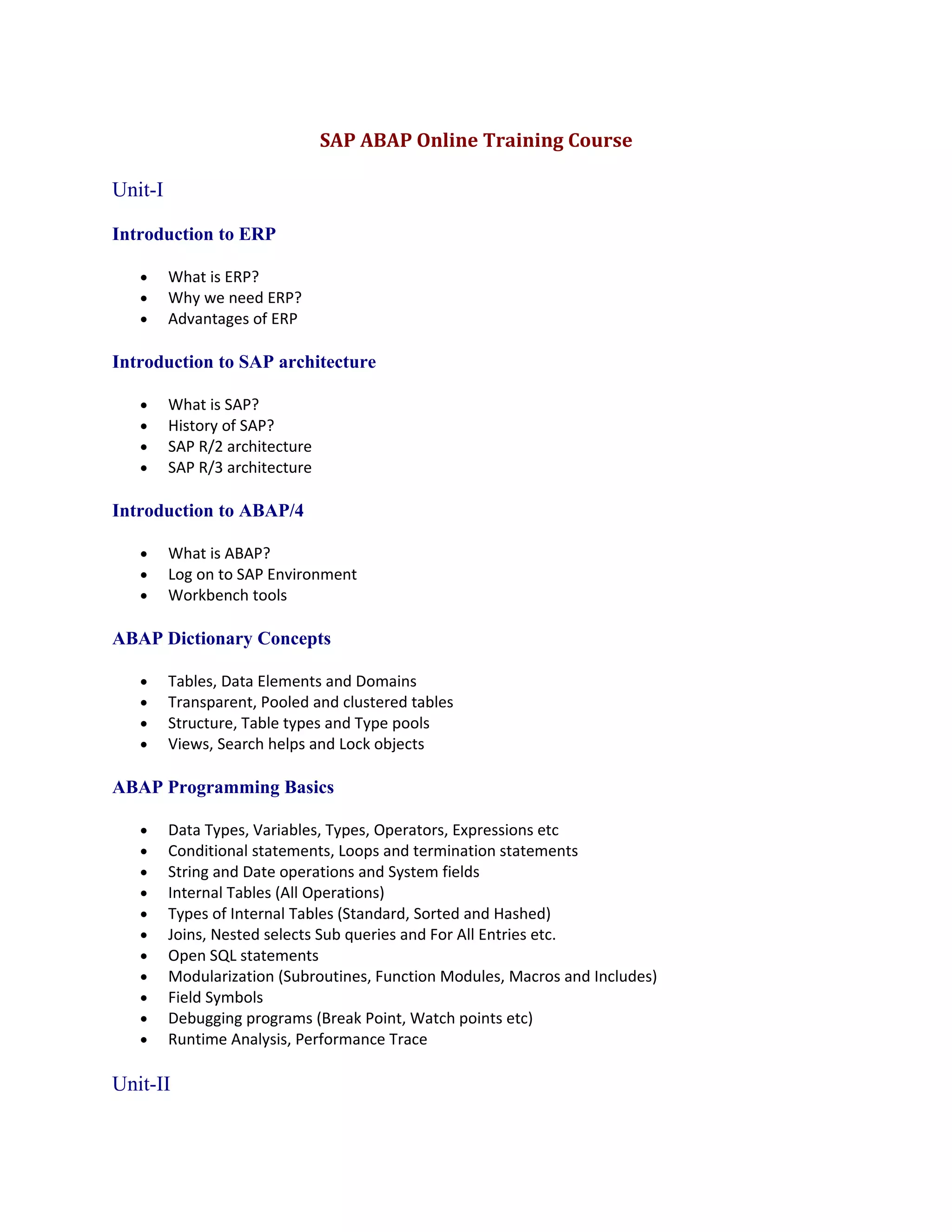
Unit-I

Introduction to ERP

   •     What is ERP?
   •     Why we need ERP?
   •     Advantages of ERP

Introduction to SAP architecture

   •     What is SAP?
   •     History of SAP?
   •     SAP R/2 architecture
   •     SAP R/3 architecture

Introduction to ABAP/4

   •     What is ABAP?
   •     Log on to SAP Environment
   •     Workbench tools

ABAP Dictionary Concepts

   •     Tables, Data Elements and Domains
   •     Transparent, Pooled and clustered tables
   •     Structure, Table types and Type pools
   •     Views, Search helps and Lock objects

ABAP Programming Basics

   •     Data Types, Variables, Types, Operators, Expressions etc
   •     Conditional statements, Loops and termination statements
   •     String and Date operations and System fields
   •     Internal Tables (All Operations)
   •     Types of Internal Tables (Standard, Sorted and Hashed)
   •     Joins, Nested selects Sub queries and For All Entries etc.
   •     Open SQL statements
   •     Modularization (Subroutines, Function Modules, Macros and Includes)
   •     Field Symbols
   •     Debugging programs (Break Point, Watch points etc)
   •     Runtime Analysis, Performance Trace

Unit-II
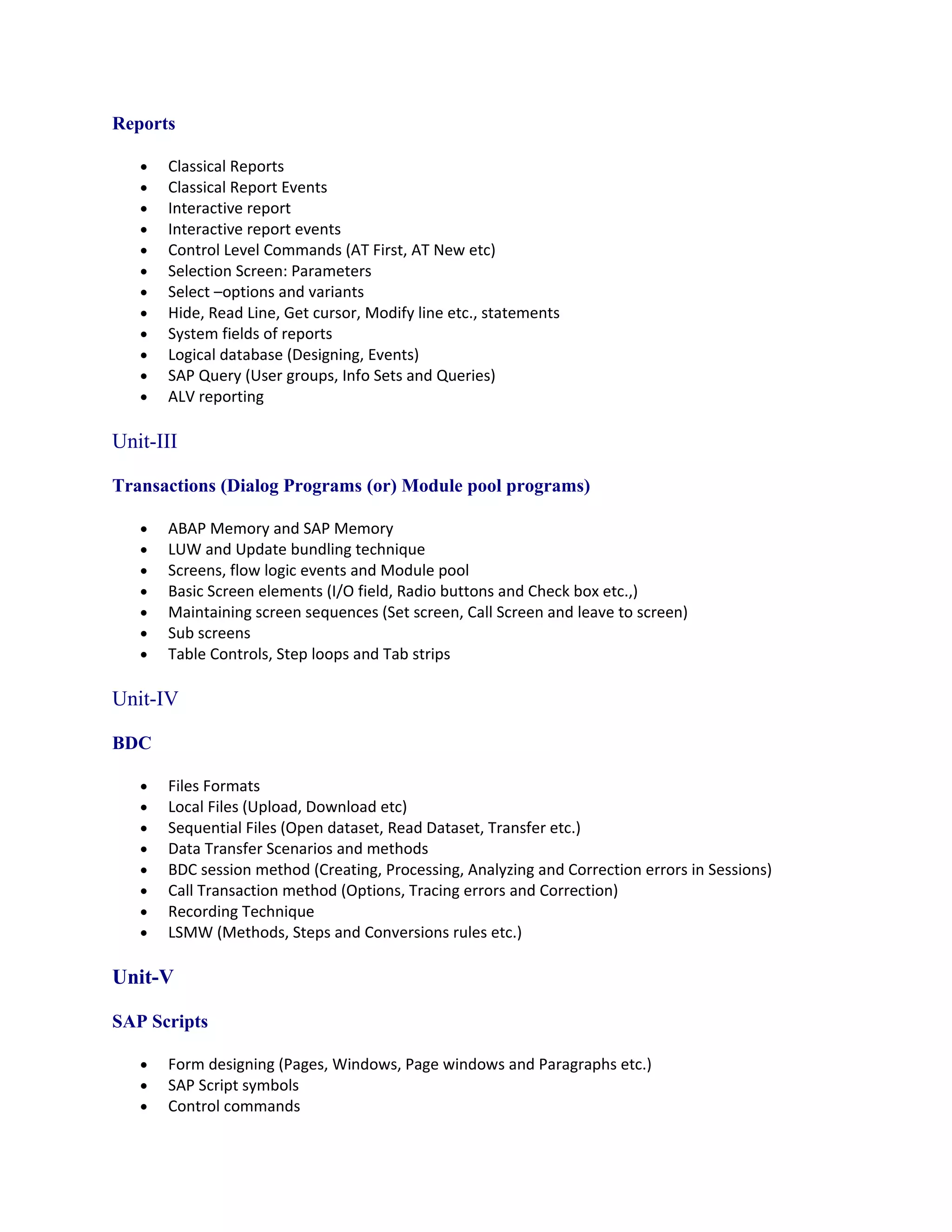
Reports

   •   Classical Reports
   •   Classical Report Events
   •   Interactive report
   •   Interactive report events
   •   Control Level Commands (AT First, AT New etc)
   •   Selection Screen: Parameters
   •   Select –options and variants
   •   Hide, Read Line, Get cursor, Modify line etc., statements
   •   System fields of reports
   •   Logical database (Designing, Events)
   •   SAP Query (User groups, Info Sets and Queries)
   •   ALV reporting

Unit-III

Transactions (Dialog Programs (or) Module pool programs)

   •   ABAP Memory and SAP Memory
   •   LUW and Update bundling technique
   •   Screens, flow logic events and Module pool
   •   Basic Screen elements (I/O field, Radio buttons and Check box etc.,)
   •   Maintaining screen sequences (Set screen, Call Screen and leave to screen)
   •   Sub screens
   •   Table Controls, Step loops and Tab strips

Unit-IV

BDC

   •   Files Formats
   •   Local Files (Upload, Download etc)
   •   Sequential Files (Open dataset, Read Dataset, Transfer etc.)
   •   Data Transfer Scenarios and methods
   •   BDC session method (Creating, Processing, Analyzing and Correction errors in Sessions)
   •   Call Transaction method (Options, Tracing errors and Correction)
   •   Recording Technique
   •   LSMW (Methods, Steps and Conversions rules etc.)

Unit-V

SAP Scripts

   •   Form designing (Pages, Windows, Page windows and Paragraphs etc.)
   •   SAP Script symbols
   •   Control commands
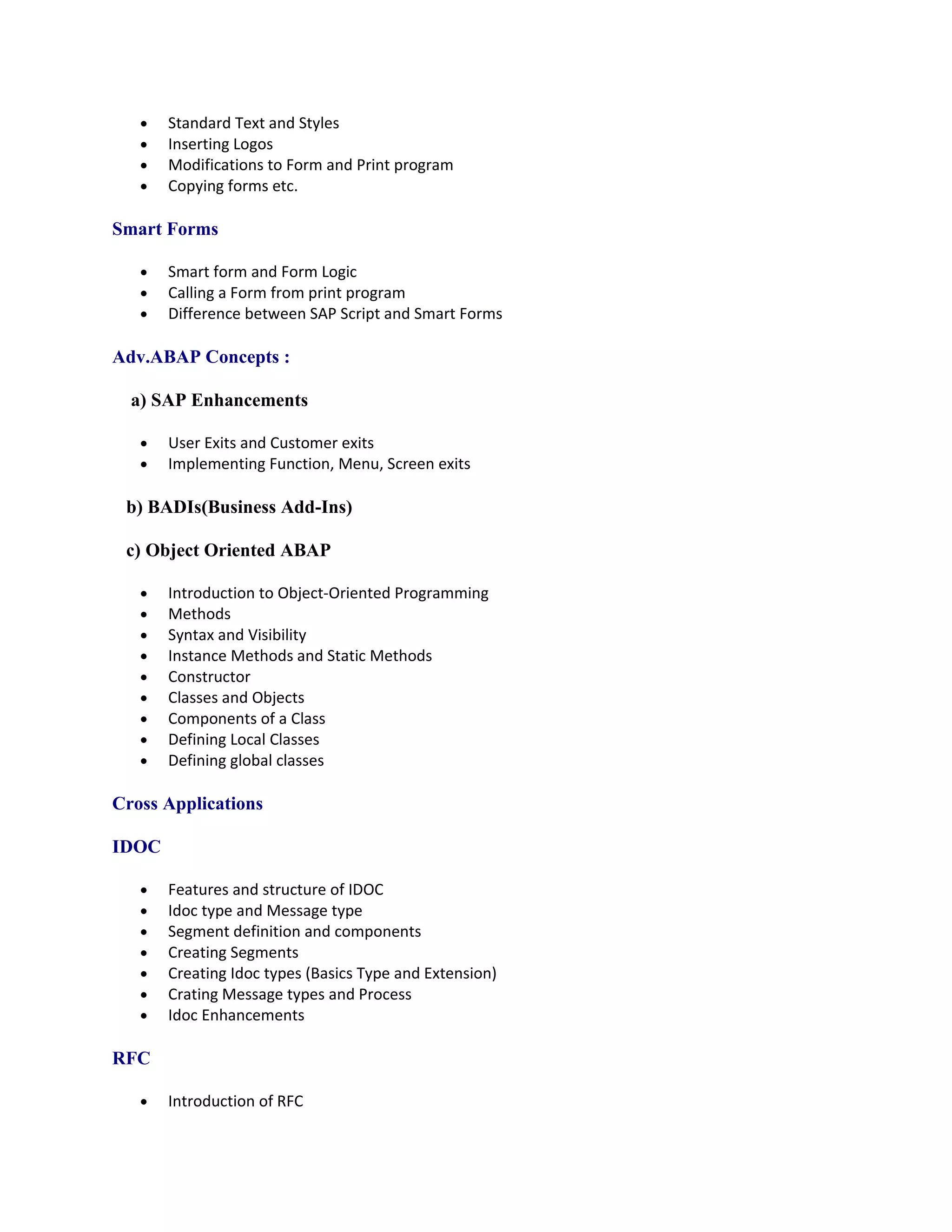
•   Standard Text and Styles
   •   Inserting Logos
   •   Modifications to Form and Print program
   •   Copying forms etc.

Smart Forms

   •   Smart form and Form Logic
   •   Calling a Form from print program
   •   Difference between SAP Script and Smart Forms

Adv.ABAP Concepts :

  a) SAP Enhancements

   •   User Exits and Customer exits
   •   Implementing Function, Menu, Screen exits

 b) BADIs(Business Add-Ins)

 c) Object Oriented ABAP

   •   Introduction to Object-Oriented Programming
   •   Methods
   •   Syntax and Visibility
   •   Instance Methods and Static Methods
   •   Constructor
   •   Classes and Objects
   •   Components of a Class
   •   Defining Local Classes
   •   Defining global classes

Cross Applications

IDOC

   •   Features and structure of IDOC
   •   Idoc type and Message type
   •   Segment definition and components
   •   Creating Segments
   •   Creating Idoc types (Basics Type and Extension)
   •   Crating Message types and Process
   •   Idoc Enhancements

RFC

   •   Introduction of RFC
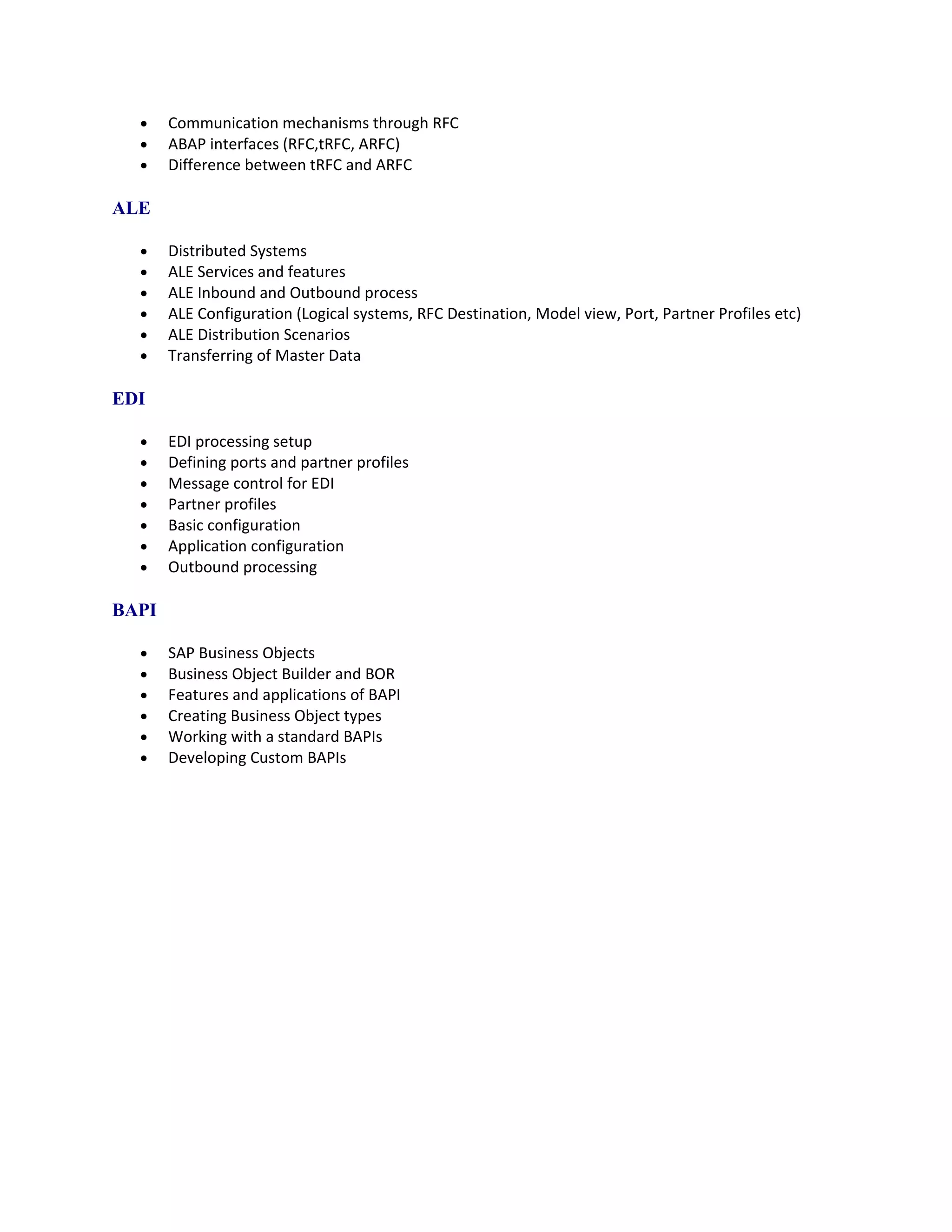
•    Communication mechanisms through RFC
  •    ABAP interfaces (RFC,tRFC, ARFC)
  •    Difference between tRFC and ARFC

ALE

  •    Distributed Systems
  •    ALE Services and features
  •    ALE Inbound and Outbound process
  •    ALE Configuration (Logical systems, RFC Destination, Model view, Port, Partner Profiles etc)
  •    ALE Distribution Scenarios
  •    Transferring of Master Data

EDI

  •    EDI processing setup
  •    Defining ports and partner profiles
  •    Message control for EDI
  •    Partner profiles
  •    Basic configuration
  •    Application configuration
  •    Outbound processing

BAPI

  •    SAP Business Objects
  •    Business Object Builder and BOR
  •    Features and applications of BAPI
  •    Creating Business Object types
  •    Working with a standard BAPIs
  •    Developing Custom BAPIs

Sap abap online training course

  • 1.
    SAP ABAP OnlineTraining Course Unit-I Introduction to ERP • What is ERP? • Why we need ERP? • Advantages of ERP Introduction to SAP architecture • What is SAP? • History of SAP? • SAP R/2 architecture • SAP R/3 architecture Introduction to ABAP/4 • What is ABAP? • Log on to SAP Environment • Workbench tools ABAP Dictionary Concepts • Tables, Data Elements and Domains • Transparent, Pooled and clustered tables • Structure, Table types and Type pools • Views, Search helps and Lock objects ABAP Programming Basics • Data Types, Variables, Types, Operators, Expressions etc • Conditional statements, Loops and termination statements • String and Date operations and System fields • Internal Tables (All Operations) • Types of Internal Tables (Standard, Sorted and Hashed) • Joins, Nested selects Sub queries and For All Entries etc. • Open SQL statements • Modularization (Subroutines, Function Modules, Macros and Includes) • Field Symbols • Debugging programs (Break Point, Watch points etc) • Runtime Analysis, Performance Trace Unit-II
  • 2.
    Reports • Classical Reports • Classical Report Events • Interactive report • Interactive report events • Control Level Commands (AT First, AT New etc) • Selection Screen: Parameters • Select –options and variants • Hide, Read Line, Get cursor, Modify line etc., statements • System fields of reports • Logical database (Designing, Events) • SAP Query (User groups, Info Sets and Queries) • ALV reporting Unit-III Transactions (Dialog Programs (or) Module pool programs) • ABAP Memory and SAP Memory • LUW and Update bundling technique • Screens, flow logic events and Module pool • Basic Screen elements (I/O field, Radio buttons and Check box etc.,) • Maintaining screen sequences (Set screen, Call Screen and leave to screen) • Sub screens • Table Controls, Step loops and Tab strips Unit-IV BDC • Files Formats • Local Files (Upload, Download etc) • Sequential Files (Open dataset, Read Dataset, Transfer etc.) • Data Transfer Scenarios and methods • BDC session method (Creating, Processing, Analyzing and Correction errors in Sessions) • Call Transaction method (Options, Tracing errors and Correction) • Recording Technique • LSMW (Methods, Steps and Conversions rules etc.) Unit-V SAP Scripts • Form designing (Pages, Windows, Page windows and Paragraphs etc.) • SAP Script symbols • Control commands
  • 3.
    Standard Text and Styles • Inserting Logos • Modifications to Form and Print program • Copying forms etc. Smart Forms • Smart form and Form Logic • Calling a Form from print program • Difference between SAP Script and Smart Forms Adv.ABAP Concepts : a) SAP Enhancements • User Exits and Customer exits • Implementing Function, Menu, Screen exits b) BADIs(Business Add-Ins) c) Object Oriented ABAP • Introduction to Object-Oriented Programming • Methods • Syntax and Visibility • Instance Methods and Static Methods • Constructor • Classes and Objects • Components of a Class • Defining Local Classes • Defining global classes Cross Applications IDOC • Features and structure of IDOC • Idoc type and Message type • Segment definition and components • Creating Segments • Creating Idoc types (Basics Type and Extension) • Crating Message types and Process • Idoc Enhancements RFC • Introduction of RFC
  • 4.
    Communication mechanisms through RFC • ABAP interfaces (RFC,tRFC, ARFC) • Difference between tRFC and ARFC ALE • Distributed Systems • ALE Services and features • ALE Inbound and Outbound process • ALE Configuration (Logical systems, RFC Destination, Model view, Port, Partner Profiles etc) • ALE Distribution Scenarios • Transferring of Master Data EDI • EDI processing setup • Defining ports and partner profiles • Message control for EDI • Partner profiles • Basic configuration • Application configuration • Outbound processing BAPI • SAP Business Objects • Business Object Builder and BOR • Features and applications of BAPI • Creating Business Object types • Working with a standard BAPIs • Developing Custom BAPIs