Downloaded 132 times

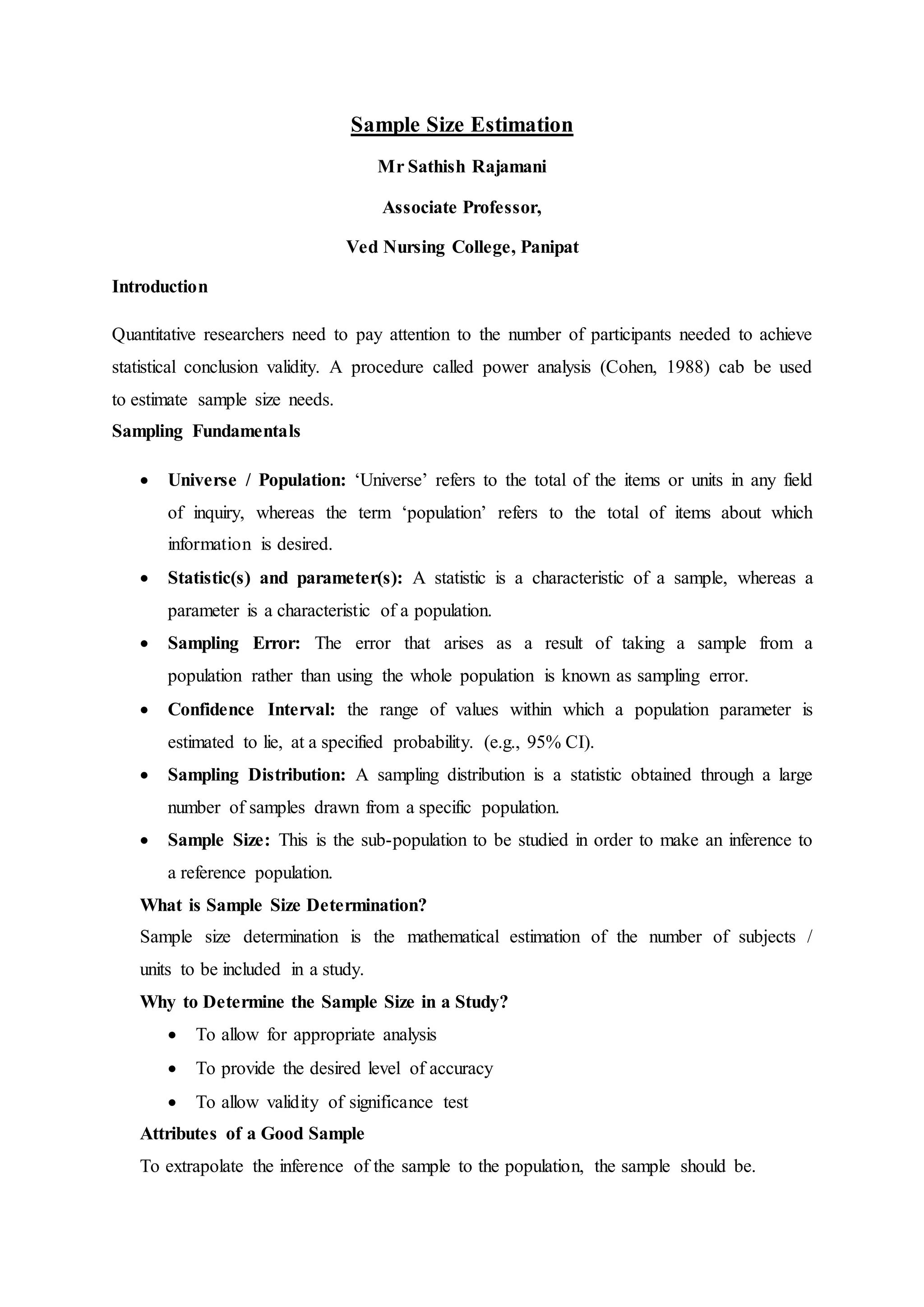
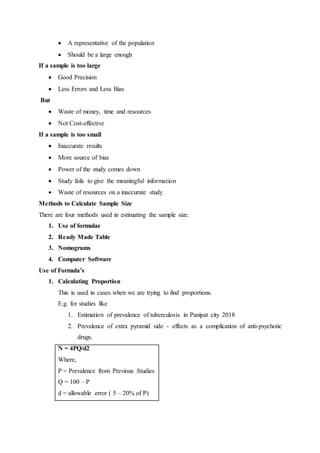
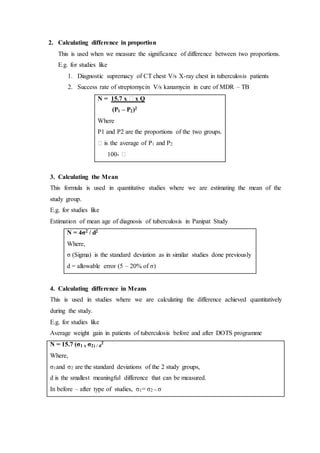
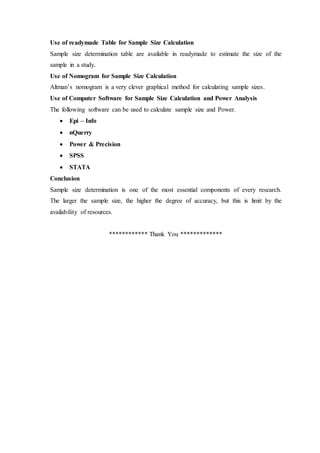

This document discusses sample size estimation and determination. It defines key terms like population, statistic, parameter, sampling error, and confidence interval. It explains that sample size determination is calculating the number of subjects needed in a study to make inferences about a reference population. An appropriate sample size allows for valid analysis and the desired level of accuracy. The sample should be representative of the population and large enough to minimize errors and bias. Both too large and too small samples have disadvantages. Common methods for calculating sample size are using formulas, ready-made tables, nomograms, and computer software. Formulas are provided for estimating proportions, differences in proportions, means, and differences in means.


