Safety and Working Guidelines for
Rope Access
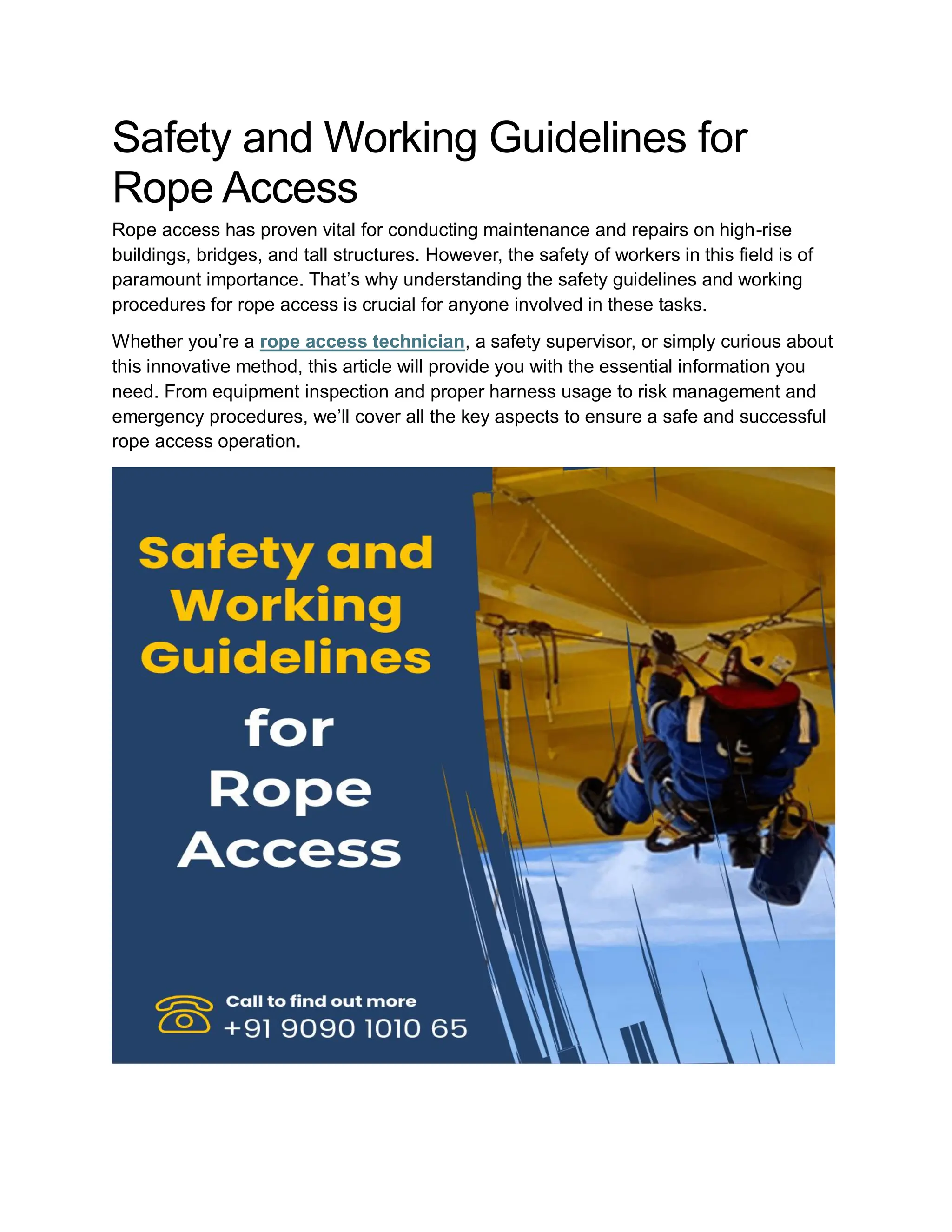
Rope access has proven vital for conducting maintenance and repairs on high-rise
buildings, bridges, and tall structures. However, the safety of workers in this field is of
paramount importance. That’s why understanding the safety guidelines and working
procedures for rope access is crucial for anyone involved in these tasks.
Whether you’re a rope access technician, a safety supervisor, or simply curious about
this innovative method, this article will provide you with the essential information you
need. From equipment inspection and proper harness usage to risk management and
emergency procedures, we’ll cover all the key aspects to ensure a safe and successful
rope access operation.
The Importance of Safety in Rope Access
Rope access work involves technicians operating at great heights, often in challenging
and unpredictable environments. Therefore, safety must be the top priority in any rope
access operation. Adhering to strict safety guidelines can minimize potential risks and
ensure the well-being of workers.
One of the primary safety factors for rope access is using personal protective equipment
(PPE). PPE includes helmets, harnesses, gloves, and safety glasses. These pieces of
equipment are specifically designed to provide protection against falls, impacts, and
other potential hazards. All PPE must be thoroughly inspected before each use to
ensure it is in proper working condition. Regular maintenance and replacement of worn-
out equipment are also critical to maintaining safety standards.
Rope access techniques and best practices also significantly ensure safety.
Technicians must be trained in proper rope handling, knot tying, and anchor point
selection. They should know about different types of ropes and their strengths and
limitations. Implementing safe techniques, such as the Two-Rope Technique (2RT) or
the Three-Rope Technique (3RT), can further enhance the security of rope access
operations.
Risk assessment and hazard identification are crucial steps in maintaining a safe work
environment in rope access. Before starting any project, a thorough site evaluation must
be conducted to identify potential risks and develop appropriate control measures. This
includes assessing weather conditions, identifying unstable structures, and analyzing
potential falling objects. Regular communication between technicians and safety
supervisors is essential to ensure that risks are continuously monitored and mitigated
during the operation.
Ultimately, the importance of safety in rope access must be addressed. By prioritizing
safety at every step, workers can confidently carry out their tasks and minimize the risk
of accidents or injuries.
Personal Protective Equipment (PPE) for Rope Access
Personal protective equipment (PPE) is a crucial component of ensuring the safety of
rope access technicians. It is a barrier between the worker and potential hazards,
protecting in case of falls, impacts, or other accidents. Here are some essential PPE
items used in rope access:
1. Harness: A harness is the primary equipment that connects the technician to the rope
system. It should be well-fitted and comfortable, allowing for a full range of movement
while providing adequate support. Before each use, the harness should be regularly
inspected, including checking for any signs of wear or damage.
2. Helmet: A helmet protects the head from falling objects or impacts. It should be worn
at all times during rope access operations. Inspect the helmet for any cracks or signs of
damage and replace it if necessary.
3. Gloves: Gloves provide hand protection, allowing technicians to grip ropes and other
equipment firmly. They should be made of durable material that offers both dexterity and
resistance to abrasion. Inspect gloves for any signs of wear or tear and replace them if
necessary.
4. Safety Glasses: Safety glasses protect the eyes from debris, dust, or other flying
particles. They should be impact-resistant and provide a clear vision. Regularly clean
the lenses and inspect for any scratches or damage.
5. Safety Boots: Safety boots with slip-resistant soles provide stability and protection
against falls. They should have reinforced toes and soles to prevent injuries from falling
objects or sharp edges.
Remember, PPE is only adequate if it is appropriately used and maintained. Technicians
should be trained on the correct way to wear and adjust their equipment. Regular pre-
and post-use inspections are essential to identify any signs of wear or damage.
Damaged equipment should be replaced immediately to ensure the technician’s safety.
Rope Access Techniques and Best Practices
Rope access techniques and best practices are fundamental to the safe and efficient
execution of tasks at height. By following established procedures, technicians can
minimize risks and optimize their productivity. Here are some basic techniques and best
practices for rope access:
1. Rope Handling: Proper rope handling is crucial to ensure the stability and integrity of
the rope system. Technicians should be trained in coiling, uncoiling, and managing
ropes to prevent tangles or knots that could compromise safety. Using rope protectors
and edge guards can minimize wear and tear on the ropes.
2. Anchor Point Selection: Selecting suitable anchor points is essential for the stability
and security of the rope system. Anchor points should be strong, stable, and capable of
withstanding the expected load. Technicians should be trained to identify and evaluate
anchor points, ensuring they meet the required standards.
3. Knot Tying: Proficiency in various knot-tying techniques is essential for rope access
technicians. The knot choice depends on the task and the load it will bear. Knots should
be adequately secured to prevent slippage or failure. Regular practice and training in
knot tying are necessary to maintain proficiency.
4. Communication: Clear and effective communication between technicians and safety
supervisors is vital during rope access operations. Technicians should be trained to use
standardized communication signals and ensure they understand the supervisor’s
instructions or warnings. Regular check-ins and updates should be conducted to
maintain a safe working environment.
5. Safety Checks: Regular safety checks should be performed throughout the rope
access operation. Technicians should inspect their equipment, including harnesses,
ropes, and anchor points, to identify signs of wear or damage. They should also check
for proper connections and tension in the rope system. Any issues or concerns should
be reported and addressed immediately.
By following these techniques and best practices, rope access technicians can ensure
the safety and efficiency of their work. Regular training and practice are essential to
maintaining proficiency in these techniques and staying up-to-date with the latest
industry standards.
Emergency Procedures and Rescue Techniques in Rope Access
Despite robust safety measures, emergencies can still occur during rope access
operations. Therefore, it is essential to have well-defined emergency procedures and
rescue techniques in place to respond promptly and effectively. Here are some critical
aspects of emergency procedures and rescue techniques in rope access:
1. Emergency Preparedness: Before starting any rope access project, ensure all
workers are familiar with emergency procedures. This includes knowing the location of
emergency exits, assembly points, and first aid facilities. Establish a transparent chain
of command and assign responsibilities for emergency response.
2. Communication: Effective communication is crucial during emergencies. Establish a
system for clear and concise communication between all personnel involved in the rope
access operation. This may include using radios, hand signals, or other communication
devices. Ensure that all workers understand the communication protocols and can
convey information accurately.
3. Evacuation Procedures: Develop evacuation procedures specific to the rope access
operation and the site. This may involve establishing designated evacuation routes,
identifying safe anchor points for rescue, and training technicians in self-rescue
techniques. Regular drills and practice sessions should be conducted to familiarize
workers with the evacuation procedures.
4. Rescue Techniques: Train technicians in rescue techniques to safely retrieve a
fellow worker in case of an emergency. This may involve techniques such as ascending
or descending to reach the stranded worker, using specialized rescue equipment, or
performing a controlled descent. Regular training and practice are essential to maintain
proficiency in these techniques.
5. First Aid and Medical Support: Ensure that first aid kits are readily available at the
worksite and that workers are trained in basic first aid procedures. Establish protocols
for contacting emergency medical services and providing necessary information about
the location and nature of the emergency. Consider the potential challenges of
accessing medical support in high-rise or remote locations.
Rope access projects can respond swiftly and effectively in emergencies with well-
defined emergency procedures and trained personnel. Regular drills and practice
sessions help maintain readiness and ensure all workers know their roles and
responsibilities.
Training and Certification for Rope Access Technicians
Proper training and certification are essential for rope access technicians to perform
their tasks safely and efficiently. Training programs provide technicians with the
necessary knowledge and skills to navigate the unique challenges of working at heights.
Here are some critical aspects of training and certification for rope access technicians:
1. Training Programs: Look for training programs compliant with international
standards, such as those established by the Industrial Rope Access Trade Association
(IRATA) or the Society of Professional Rope Access Technicians (SPRAT). These
programs typically cover equipment usage, rope handling, knot tying, rescue
techniques, and safety procedures. Training should include both theoretical knowledge
and practical hands-on experience.
2. Certification Levels: Training programs often have different certification levels, each
representing a specific skill set and level of experience. These levels may include
beginner, intermediate, and advanced certifications. Technicians should progress
through these levels as they gain experience and demonstrate proficiency in the
required skills. Certification is typically valid for a certain period and may require
renewal or retesting.
3. Continuing Education: Rope access techniques and safety standards evolve.
Through continuing education programs, Technicians must stay current with the latest
industry developments. These programs may cover new equipment, updated
regulations, or emerging best practices. Staying informed and continuously improving
skills ensures technicians maintain competence and adapt to changing industry
requirements.
4. On-the-Job Experience: While formal training programs provide a solid foundation,
on-the-job experience is invaluable for rope access technicians. It allows technicians to
apply their knowledge in real-world scenarios and further develop their skills. Working
alongside experienced technicians and mentors enhances learning and prepares
technicians for various challenges they may encounter in their careers.
Training and certification programs are essential for ensuring the competence and
safety of rope access technicians. By investing in quality training and providing
opportunities for continuing education, companies can enhance the professionalism of
their workforce and deliver high-quality rope access services.
Conclusion: The Future of Rope Access Safety and Its Impact on Various
Industries
As the demand for rope access services grows, safety guidelines and working
procedures become increasingly crucial. The future of rope access safety lies in
continuously improving training programs, equipment advancements, and industry
standards. By investing in research and development, companies can further enhance
the safety and efficiency of rope access operations.
Rope access techniques have already made a significant impact on various industries.
Maintenance and inspections of high-rise buildings, wind turbines, oil rigs, and bridges
have become more cost-effective and efficient with rope access. However, it is essential
to recognize that safety should always be the top priority in these operations.
The ongoing collaboration between industry stakeholders, regulatory bodies, and
training organizations will continue to advance safety guidelines and working
procedures in rope access. By sharing knowledge, exchanging best practices, and
conducting research, the industry can ensure that rope access remains safe and
reliable for performing maintenance and repairs at heights.
In conclusion, safety and working guidelines for rope access are critical for protecting
workers and ensuring the success of projects in this field. Rope access technicians can
carry out their tasks confidently and efficiently by prioritizing safety, utilizing proper
equipment, following best practices, conducting thorough risk assessments, and being
prepared for emergencies. Continuous training, certification, and industry collaboration
are critical to the future of rope access safety and its positive impact on various
industries.
Tags: Rope access services, Rope access training

Safety and Working Guidelines for Rope Access

  • 1.
    Safety and WorkingGuidelines for Rope Access Rope access has proven vital for conducting maintenance and repairs on high-rise buildings, bridges, and tall structures. However, the safety of workers in this field is of paramount importance. That’s why understanding the safety guidelines and working procedures for rope access is crucial for anyone involved in these tasks. Whether you’re a rope access technician, a safety supervisor, or simply curious about this innovative method, this article will provide you with the essential information you need. From equipment inspection and proper harness usage to risk management and emergency procedures, we’ll cover all the key aspects to ensure a safe and successful rope access operation.
  • 2.
    The Importance ofSafety in Rope Access Rope access work involves technicians operating at great heights, often in challenging and unpredictable environments. Therefore, safety must be the top priority in any rope access operation. Adhering to strict safety guidelines can minimize potential risks and ensure the well-being of workers. One of the primary safety factors for rope access is using personal protective equipment (PPE). PPE includes helmets, harnesses, gloves, and safety glasses. These pieces of equipment are specifically designed to provide protection against falls, impacts, and other potential hazards. All PPE must be thoroughly inspected before each use to ensure it is in proper working condition. Regular maintenance and replacement of worn- out equipment are also critical to maintaining safety standards. Rope access techniques and best practices also significantly ensure safety. Technicians must be trained in proper rope handling, knot tying, and anchor point selection. They should know about different types of ropes and their strengths and limitations. Implementing safe techniques, such as the Two-Rope Technique (2RT) or the Three-Rope Technique (3RT), can further enhance the security of rope access operations. Risk assessment and hazard identification are crucial steps in maintaining a safe work environment in rope access. Before starting any project, a thorough site evaluation must be conducted to identify potential risks and develop appropriate control measures. This includes assessing weather conditions, identifying unstable structures, and analyzing potential falling objects. Regular communication between technicians and safety supervisors is essential to ensure that risks are continuously monitored and mitigated during the operation. Ultimately, the importance of safety in rope access must be addressed. By prioritizing safety at every step, workers can confidently carry out their tasks and minimize the risk of accidents or injuries. Personal Protective Equipment (PPE) for Rope Access Personal protective equipment (PPE) is a crucial component of ensuring the safety of rope access technicians. It is a barrier between the worker and potential hazards, protecting in case of falls, impacts, or other accidents. Here are some essential PPE items used in rope access: 1. Harness: A harness is the primary equipment that connects the technician to the rope system. It should be well-fitted and comfortable, allowing for a full range of movement while providing adequate support. Before each use, the harness should be regularly inspected, including checking for any signs of wear or damage.
  • 3.
    2. Helmet: Ahelmet protects the head from falling objects or impacts. It should be worn at all times during rope access operations. Inspect the helmet for any cracks or signs of damage and replace it if necessary. 3. Gloves: Gloves provide hand protection, allowing technicians to grip ropes and other equipment firmly. They should be made of durable material that offers both dexterity and resistance to abrasion. Inspect gloves for any signs of wear or tear and replace them if necessary. 4. Safety Glasses: Safety glasses protect the eyes from debris, dust, or other flying particles. They should be impact-resistant and provide a clear vision. Regularly clean the lenses and inspect for any scratches or damage. 5. Safety Boots: Safety boots with slip-resistant soles provide stability and protection against falls. They should have reinforced toes and soles to prevent injuries from falling objects or sharp edges. Remember, PPE is only adequate if it is appropriately used and maintained. Technicians should be trained on the correct way to wear and adjust their equipment. Regular pre- and post-use inspections are essential to identify any signs of wear or damage. Damaged equipment should be replaced immediately to ensure the technician’s safety. Rope Access Techniques and Best Practices Rope access techniques and best practices are fundamental to the safe and efficient execution of tasks at height. By following established procedures, technicians can minimize risks and optimize their productivity. Here are some basic techniques and best practices for rope access: 1. Rope Handling: Proper rope handling is crucial to ensure the stability and integrity of the rope system. Technicians should be trained in coiling, uncoiling, and managing ropes to prevent tangles or knots that could compromise safety. Using rope protectors and edge guards can minimize wear and tear on the ropes. 2. Anchor Point Selection: Selecting suitable anchor points is essential for the stability and security of the rope system. Anchor points should be strong, stable, and capable of withstanding the expected load. Technicians should be trained to identify and evaluate anchor points, ensuring they meet the required standards. 3. Knot Tying: Proficiency in various knot-tying techniques is essential for rope access technicians. The knot choice depends on the task and the load it will bear. Knots should be adequately secured to prevent slippage or failure. Regular practice and training in knot tying are necessary to maintain proficiency.
  • 4.
    4. Communication: Clearand effective communication between technicians and safety supervisors is vital during rope access operations. Technicians should be trained to use standardized communication signals and ensure they understand the supervisor’s instructions or warnings. Regular check-ins and updates should be conducted to maintain a safe working environment. 5. Safety Checks: Regular safety checks should be performed throughout the rope access operation. Technicians should inspect their equipment, including harnesses, ropes, and anchor points, to identify signs of wear or damage. They should also check for proper connections and tension in the rope system. Any issues or concerns should be reported and addressed immediately. By following these techniques and best practices, rope access technicians can ensure the safety and efficiency of their work. Regular training and practice are essential to maintaining proficiency in these techniques and staying up-to-date with the latest industry standards. Emergency Procedures and Rescue Techniques in Rope Access Despite robust safety measures, emergencies can still occur during rope access operations. Therefore, it is essential to have well-defined emergency procedures and rescue techniques in place to respond promptly and effectively. Here are some critical aspects of emergency procedures and rescue techniques in rope access: 1. Emergency Preparedness: Before starting any rope access project, ensure all workers are familiar with emergency procedures. This includes knowing the location of emergency exits, assembly points, and first aid facilities. Establish a transparent chain of command and assign responsibilities for emergency response. 2. Communication: Effective communication is crucial during emergencies. Establish a system for clear and concise communication between all personnel involved in the rope access operation. This may include using radios, hand signals, or other communication devices. Ensure that all workers understand the communication protocols and can convey information accurately. 3. Evacuation Procedures: Develop evacuation procedures specific to the rope access operation and the site. This may involve establishing designated evacuation routes, identifying safe anchor points for rescue, and training technicians in self-rescue techniques. Regular drills and practice sessions should be conducted to familiarize workers with the evacuation procedures. 4. Rescue Techniques: Train technicians in rescue techniques to safely retrieve a fellow worker in case of an emergency. This may involve techniques such as ascending or descending to reach the stranded worker, using specialized rescue equipment, or
  • 5.
    performing a controlleddescent. Regular training and practice are essential to maintain proficiency in these techniques. 5. First Aid and Medical Support: Ensure that first aid kits are readily available at the worksite and that workers are trained in basic first aid procedures. Establish protocols for contacting emergency medical services and providing necessary information about the location and nature of the emergency. Consider the potential challenges of accessing medical support in high-rise or remote locations. Rope access projects can respond swiftly and effectively in emergencies with well- defined emergency procedures and trained personnel. Regular drills and practice sessions help maintain readiness and ensure all workers know their roles and responsibilities. Training and Certification for Rope Access Technicians Proper training and certification are essential for rope access technicians to perform their tasks safely and efficiently. Training programs provide technicians with the necessary knowledge and skills to navigate the unique challenges of working at heights. Here are some critical aspects of training and certification for rope access technicians: 1. Training Programs: Look for training programs compliant with international standards, such as those established by the Industrial Rope Access Trade Association (IRATA) or the Society of Professional Rope Access Technicians (SPRAT). These programs typically cover equipment usage, rope handling, knot tying, rescue techniques, and safety procedures. Training should include both theoretical knowledge and practical hands-on experience. 2. Certification Levels: Training programs often have different certification levels, each representing a specific skill set and level of experience. These levels may include beginner, intermediate, and advanced certifications. Technicians should progress through these levels as they gain experience and demonstrate proficiency in the required skills. Certification is typically valid for a certain period and may require renewal or retesting. 3. Continuing Education: Rope access techniques and safety standards evolve. Through continuing education programs, Technicians must stay current with the latest industry developments. These programs may cover new equipment, updated regulations, or emerging best practices. Staying informed and continuously improving skills ensures technicians maintain competence and adapt to changing industry requirements. 4. On-the-Job Experience: While formal training programs provide a solid foundation, on-the-job experience is invaluable for rope access technicians. It allows technicians to
  • 6.
    apply their knowledgein real-world scenarios and further develop their skills. Working alongside experienced technicians and mentors enhances learning and prepares technicians for various challenges they may encounter in their careers. Training and certification programs are essential for ensuring the competence and safety of rope access technicians. By investing in quality training and providing opportunities for continuing education, companies can enhance the professionalism of their workforce and deliver high-quality rope access services. Conclusion: The Future of Rope Access Safety and Its Impact on Various Industries As the demand for rope access services grows, safety guidelines and working procedures become increasingly crucial. The future of rope access safety lies in continuously improving training programs, equipment advancements, and industry standards. By investing in research and development, companies can further enhance the safety and efficiency of rope access operations. Rope access techniques have already made a significant impact on various industries. Maintenance and inspections of high-rise buildings, wind turbines, oil rigs, and bridges have become more cost-effective and efficient with rope access. However, it is essential to recognize that safety should always be the top priority in these operations. The ongoing collaboration between industry stakeholders, regulatory bodies, and training organizations will continue to advance safety guidelines and working procedures in rope access. By sharing knowledge, exchanging best practices, and conducting research, the industry can ensure that rope access remains safe and reliable for performing maintenance and repairs at heights. In conclusion, safety and working guidelines for rope access are critical for protecting workers and ensuring the success of projects in this field. Rope access technicians can carry out their tasks confidently and efficiently by prioritizing safety, utilizing proper equipment, following best practices, conducting thorough risk assessments, and being prepared for emergencies. Continuous training, certification, and industry collaboration are critical to the future of rope access safety and its positive impact on various industries. Tags: Rope access services, Rope access training