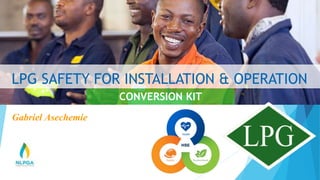
LPG SAFETY FOR INSTALLATION & OPERATION
CONVERSION KIT
Gabriel Asechemie
Why LP gas Utilization?
 Gas reserves of 190 Tcf, potential 600 Tcf, 7th
 Nigeria flares 500 Bcf/yr, 10% of global
 Loss 18.2 million U.S. dollars daily
 3.2million MT produced annually, 731,500 MT is reserved for local
consumption.
 Actual domestic consumption stands at 400,000 MT and
unconsumed domestic LP Gas allocation is 331,500 MT
 45.32% of available quantity is a huge market potential to explore
for job and wealth creation in terms of manpower and
infrastructure.
 FG to enhance gas sector by implementing favourable regulations:
gas price, LPG utilization policy and phase removal of kerosene
subsidy.
Why LP gas?
 LP Gas is a safe, clean and efficient
fuel
 LP Gas is the cleanest burning fossil
fuel
 LP Gas is most popular alternative
energy source
 LP Gas improves air quality by
Removing pollutants; Sulfur &
Nitrogen Oxide
What is LPG?
 Liquefied Petroleum Gas, LPG or LP Gas or LP
Gases, AutoGas
 Commonly called Cooking gas
 It’s a mixture of hydrocarbons Propane C3H8 and
Butane C4H10
 LP Gas is colourless in vapour and liquid phase
 LP Gas at normal temperature is 1.5 heavier than
air and will diffuse into the atmosphere very
slowly.
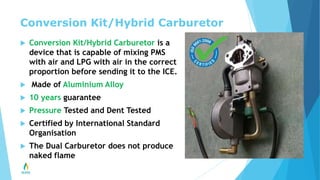
Conversion Kit/Hybrid Carburetor
 Conversion Kit/Hybrid Carburetor is a
device that is capable of mixing PMS
with air and LPG with air in the correct
proportion before sending it to the ICE.
 Made of Aluminium Alloy
 10 years guarantee
 Pressure Tested and Dent Tested
 Certified by International Standard
Organisation
 The Dual Carburetor does not produce
naked flame
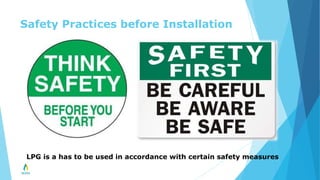
Safety Practices before Installation
LPG is a has to be used in accordance with certain safety measures
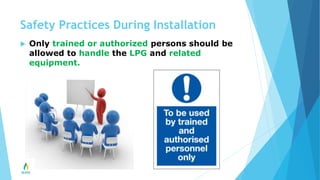
 Only trained or authorized persons should be
allowed to handle the LPG and related
equipment.
Safety Practices During Installation
Checklist Before Installation
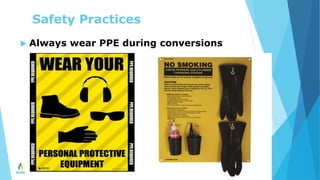
 Always put on appropriate personal protective
equipment (PPE) before any conversion
 Ensure spanners, conversion kit, gas cylinder,
pressure regulator, gas hose (2m min. to 4m max.
length) and clips are in good working condition
before conversion.
 Ensure generator is in perfect working condition.
Check the oil level, put on the generator and run
on average load to be sure that it supplies power
to the home or office.
Safety Practices
 Always wear PPE during conversions
Safety Practices
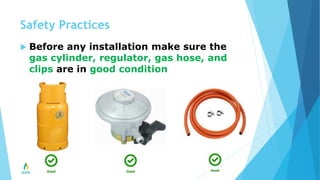
 Before any installation make sure the
gas cylinder, regulator, gas hose, and
clips are in good condition
Safety Practices
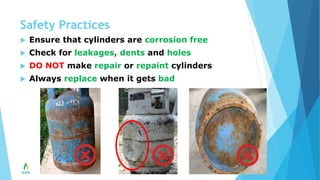
 Ensure that cylinders are corrosion free
 Check for leakages, dents and holes
 DO NOT make repair or repaint cylinders
 Always replace when it gets bad
Safety Practice
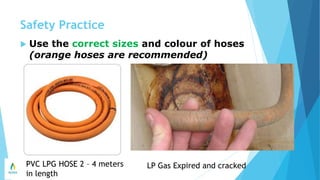
 Use the correct sizes and colour of hoses
(orange hoses are recommended)
PVC LPG HOSE 2 – 4 meters
in length
LP Gas Expired and cracked
Safety Practices during Installation
 Follow installation procedures carefully
 Ensure all butts and nuts are properly
fastened.
 Check the gasket to be sure it is not
damaged else it could affect the stability of
the generator.
 Ensure the clips properly secure the gas
hose connecting the pressure regulator
and carburetor inlet.
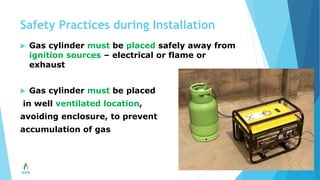
Safety Practices during Installation
 Gas cylinder must be placed safely away from
ignition sources – electrical or flame or
exhaust
 Gas cylinder must be placed
in well ventilated location,
avoiding enclosure, to prevent
accumulation of gas
Safety Practices After Installation
 Ensure cylinder is placed on a firm
and level surface like concrete
floor
 Do not place cylinder in gutter or
drainage, wet or moist area, on
wood or bare floor
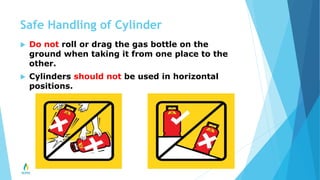
Safe Handling of Cylinder
 Do not roll or drag the gas bottle on the
ground when taking it from one place to the
other.
 Cylinders should not be used in horizontal
positions.
Safety Practices
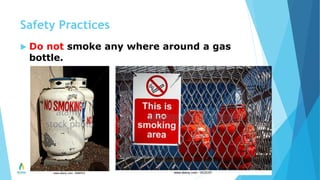
 Do not smoke any where around a gas
bottle.
Checklist for Operation
 Check the hose clips to see if they
are tightly fixed
 Make sure the petrol tank is closed
 Open the LPG regulator for at least a
minute before you run the generator
 Make sure your gas hose does not
have leakages
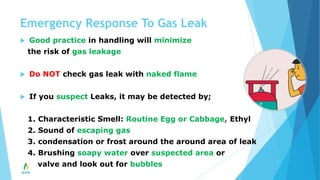
Emergency Response To Gas Leak
 Good practice in handling will minimize
the risk of gas leakage
 Do NOT check gas leak with naked flame
 If you suspect Leaks, it may be detected by;
1. Characteristic Smell: Routine Egg or Cabbage, Ethyl
2. Sound of escaping gas
3. condensation or frost around the around area of leak
4. Brushing soapy water over suspected area or
valve and look out for bubbles
Emergency Response Gas Leak or Fire
 Close the gas valve
 Relocate the cylinder to a more ventilated area
 If you can’t contain the situation, call for help
 Call a fire service agent immediately
Customer Education
 Ensure to educate customer on safe operation
of hybrid Carburetor and safe handling of LP
Gas
 Advice the customer to have at least a 6kg fire
extinguisher at home
 All maintenance should be done by a trained
technician
THANK YOU FOR
LISTENING

Safe installation and operation LPG conversion kit for gasoline generators

  • 1.
    LPG SAFETY FORINSTALLATION & OPERATION CONVERSION KIT Gabriel Asechemie
  • 2.
    Why LP gasUtilization?  Gas reserves of 190 Tcf, potential 600 Tcf, 7th  Nigeria flares 500 Bcf/yr, 10% of global  Loss 18.2 million U.S. dollars daily  3.2million MT produced annually, 731,500 MT is reserved for local consumption.  Actual domestic consumption stands at 400,000 MT and unconsumed domestic LP Gas allocation is 331,500 MT  45.32% of available quantity is a huge market potential to explore for job and wealth creation in terms of manpower and infrastructure.  FG to enhance gas sector by implementing favourable regulations: gas price, LPG utilization policy and phase removal of kerosene subsidy.
  • 3.
    Why LP gas? LP Gas is a safe, clean and efficient fuel  LP Gas is the cleanest burning fossil fuel  LP Gas is most popular alternative energy source  LP Gas improves air quality by Removing pollutants; Sulfur & Nitrogen Oxide
  • 4.
    What is LPG? Liquefied Petroleum Gas, LPG or LP Gas or LP Gases, AutoGas  Commonly called Cooking gas  It’s a mixture of hydrocarbons Propane C3H8 and Butane C4H10  LP Gas is colourless in vapour and liquid phase  LP Gas at normal temperature is 1.5 heavier than air and will diffuse into the atmosphere very slowly.
  • 5.
    Conversion Kit/Hybrid Carburetor Conversion Kit/Hybrid Carburetor is a device that is capable of mixing PMS with air and LPG with air in the correct proportion before sending it to the ICE.  Made of Aluminium Alloy  10 years guarantee  Pressure Tested and Dent Tested  Certified by International Standard Organisation  The Dual Carburetor does not produce naked flame
  • 6.
    Safety Practices beforeInstallation LPG is a has to be used in accordance with certain safety measures
  • 7.
     Only trainedor authorized persons should be allowed to handle the LPG and related equipment. Safety Practices During Installation
  • 8.
    Checklist Before Installation Always put on appropriate personal protective equipment (PPE) before any conversion  Ensure spanners, conversion kit, gas cylinder, pressure regulator, gas hose (2m min. to 4m max. length) and clips are in good working condition before conversion.  Ensure generator is in perfect working condition. Check the oil level, put on the generator and run on average load to be sure that it supplies power to the home or office.
  • 9.
    Safety Practices  Alwayswear PPE during conversions
  • 10.
    Safety Practices  Beforeany installation make sure the gas cylinder, regulator, gas hose, and clips are in good condition
  • 11.
    Safety Practices  Ensurethat cylinders are corrosion free  Check for leakages, dents and holes  DO NOT make repair or repaint cylinders  Always replace when it gets bad
  • 12.
    Safety Practice  Usethe correct sizes and colour of hoses (orange hoses are recommended) PVC LPG HOSE 2 – 4 meters in length LP Gas Expired and cracked
  • 13.
    Safety Practices duringInstallation  Follow installation procedures carefully  Ensure all butts and nuts are properly fastened.  Check the gasket to be sure it is not damaged else it could affect the stability of the generator.  Ensure the clips properly secure the gas hose connecting the pressure regulator and carburetor inlet.
  • 14.
    Safety Practices duringInstallation  Gas cylinder must be placed safely away from ignition sources – electrical or flame or exhaust  Gas cylinder must be placed in well ventilated location, avoiding enclosure, to prevent accumulation of gas
  • 15.
    Safety Practices AfterInstallation  Ensure cylinder is placed on a firm and level surface like concrete floor  Do not place cylinder in gutter or drainage, wet or moist area, on wood or bare floor
  • 16.
    Safe Handling ofCylinder  Do not roll or drag the gas bottle on the ground when taking it from one place to the other.  Cylinders should not be used in horizontal positions.
  • 17.
    Safety Practices  Donot smoke any where around a gas bottle.
  • 18.
    Checklist for Operation Check the hose clips to see if they are tightly fixed  Make sure the petrol tank is closed  Open the LPG regulator for at least a minute before you run the generator  Make sure your gas hose does not have leakages
  • 19.
    Emergency Response ToGas Leak  Good practice in handling will minimize the risk of gas leakage  Do NOT check gas leak with naked flame  If you suspect Leaks, it may be detected by; 1. Characteristic Smell: Routine Egg or Cabbage, Ethyl 2. Sound of escaping gas 3. condensation or frost around the around area of leak 4. Brushing soapy water over suspected area or valve and look out for bubbles
  • 20.
    Emergency Response GasLeak or Fire  Close the gas valve  Relocate the cylinder to a more ventilated area  If you can’t contain the situation, call for help  Call a fire service agent immediately
  • 21.
    Customer Education  Ensureto educate customer on safe operation of hybrid Carburetor and safe handling of LP Gas  Advice the customer to have at least a 6kg fire extinguisher at home  All maintenance should be done by a trained technician
  • 22.