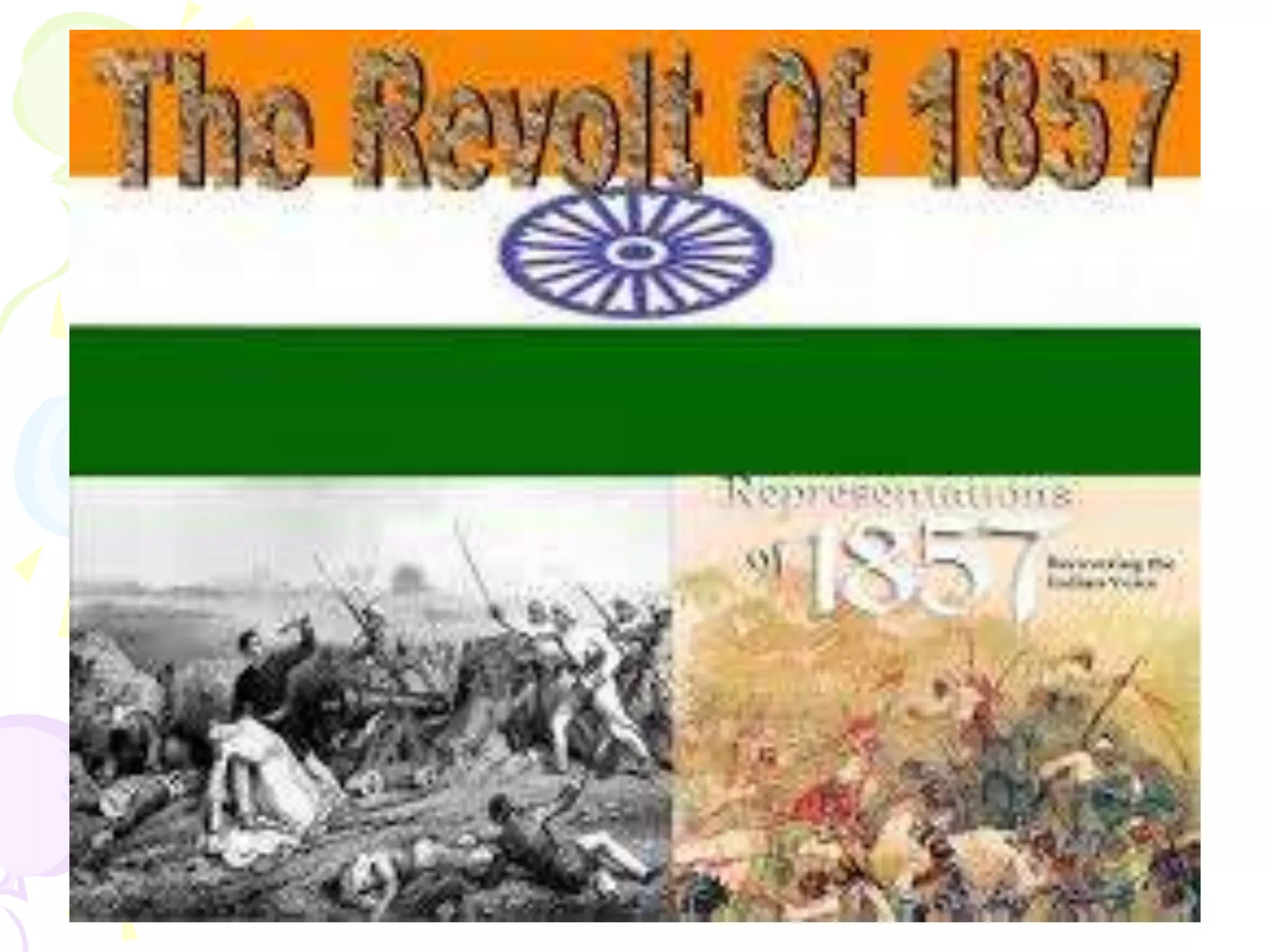
Revolt of 1857
• First Major Challenge to British Rule in India
• Result of Exploitative Colonial Policies of British in India
• Causes Of the Revolt
– Economic Causes
• Collapse of Indian Agriculture
• Higher Taxation on the Peasants
• Loss of Support for the Artisans and Handicraftsmen
• Lack of Employment Opportunities
• Zamindars rights taken away
– Political Causes
• Doctrine of Lapse
• Subsidiary Alliance
Continued..
– Socio-Religious Causes
• Activities of Christian Missionaries
• Reforms such as Abolition of Sati, Widow Remarriage and
Education of Women
• Tax on Temples and Mosques
• Religious Disabilities Act
– Influence of Outside Events
• First Afghan War (1838-42)
• Punjab Wars (1845-49)
• Santhal Rebellion (1855-57)
– Soldiers in the British Army
• Racial Discrimination in salary and Promotions
• Restrictions on wearing Caste and Sectarian Marks
• Rumours of Conversion by Christian Missionaries
• General Services Enlistment Act
• Discontinuation of Foreign Allowance (Bhatta) when Serving in
Sindh and Punjab
Beginning and Spread of Revolt
• Trigger for the Revolt
– Introduction of Enfield Rifle
– Rumours of Mixing Bone Dust in Atta
• Started on May 10 1857 in Meerut and Spread to rest of the North
India
 Challenges to British Rule before 1857
 19th Native Infantry at Berhampur (Feb 1857)
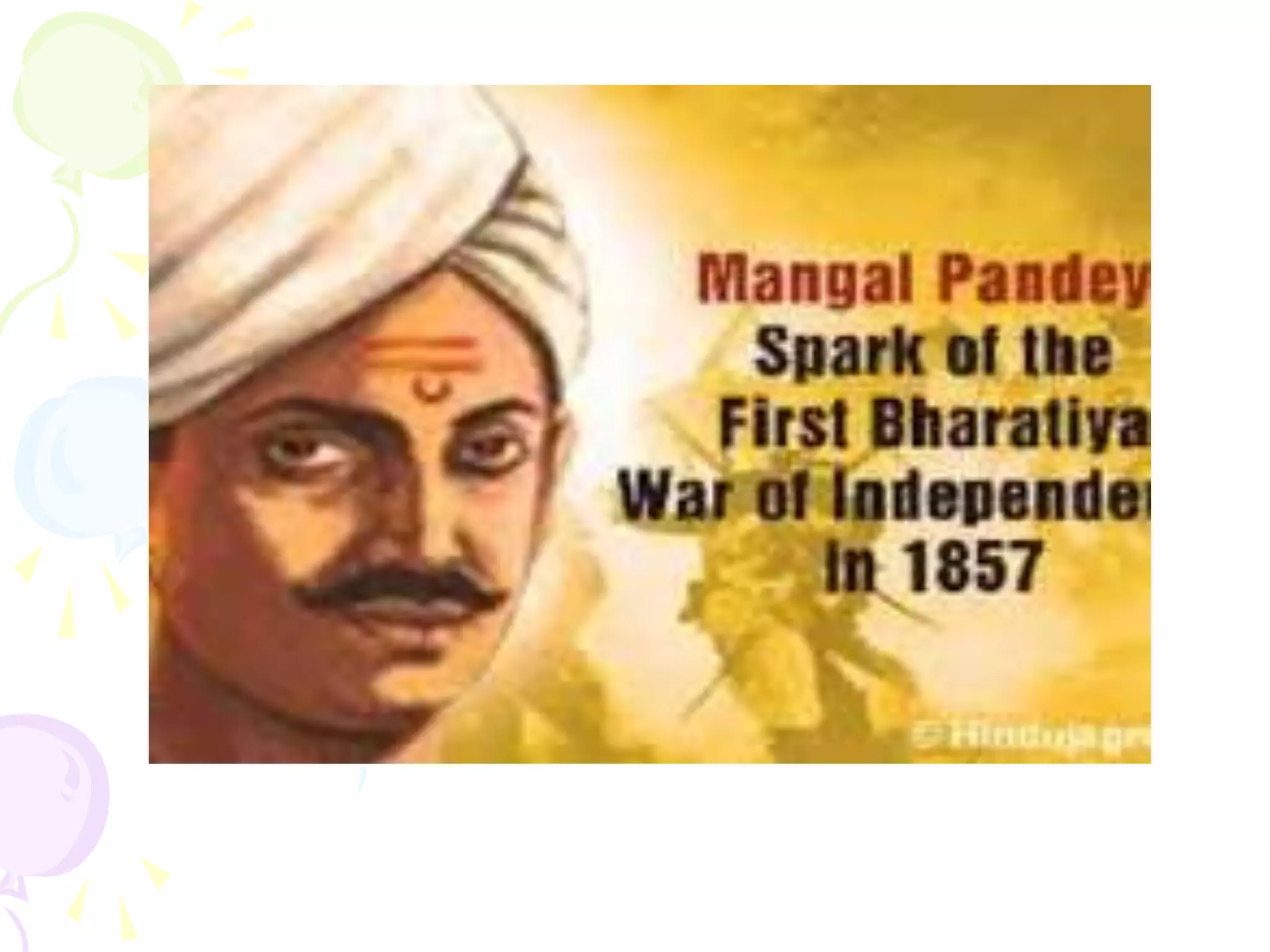
 34th Native Infantry at Barrackpore led by Mangal Pandey (April 1857)
 Timeline of Events
 3rd Native Cavalry at Meerut breaks out in Mutiny on May 10
 March to Delhi and Killed an European Officer Simon Fraser
 On May 12, Bahadur Shah Zafar declared as Emperor of India
 Civilian Population Joins the Soldiers in the Rebellion
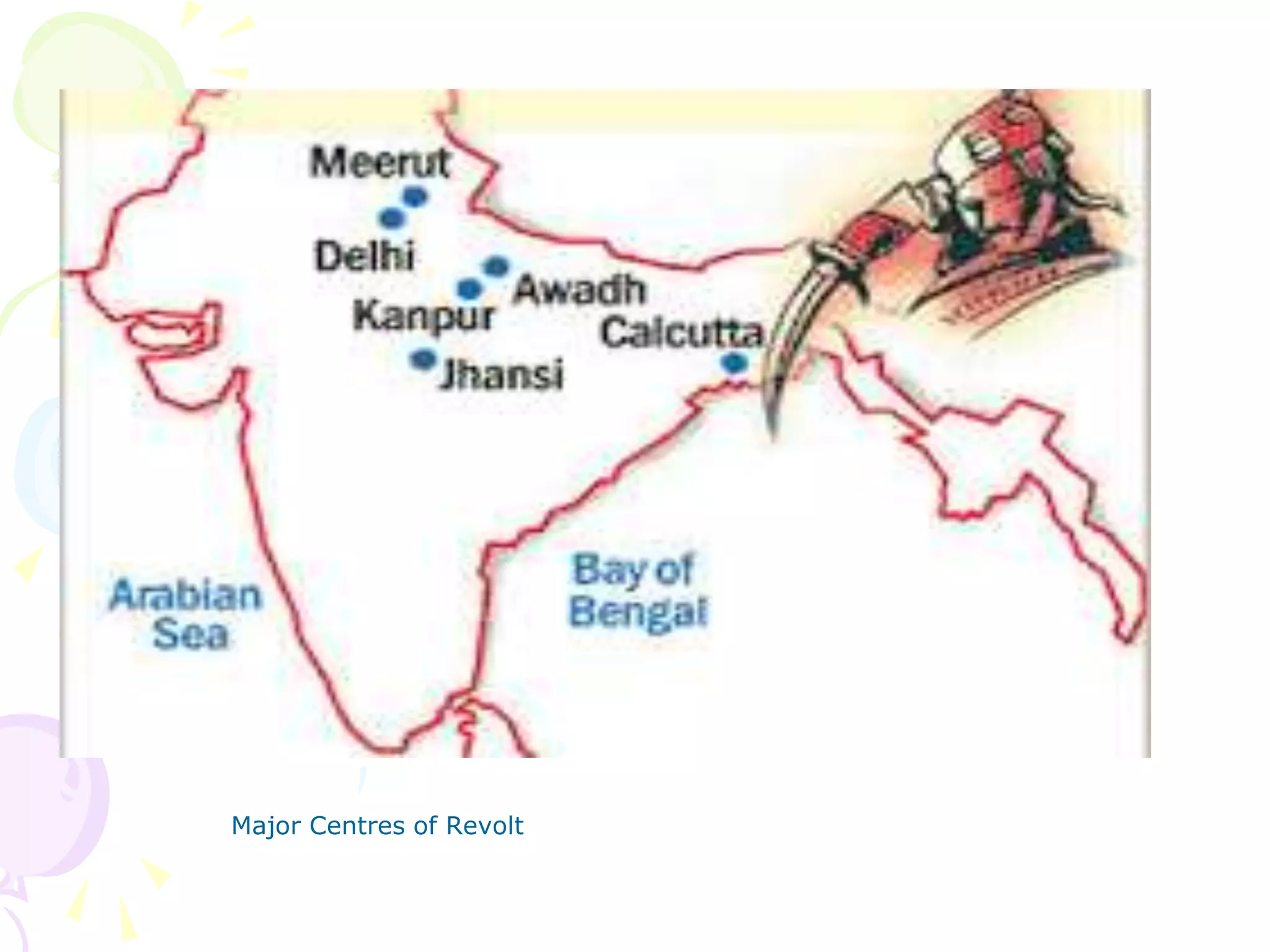
Major Centres of Revolt
Spread of Revolt
 Delhi – Bahadur Shah (Nominal Head)
General Bakht Khan ( Headed the Council of Soldiers)
 Kanpur – Nana Saheb (Adopted Son of last Peshwa Baji Rao II)
defeated Hugh Wheeler
 Lucknow – Begum Hazrat Mahal declared her Son Birjis Qadir as
Nawab
 Bareilly – Khan bahadur
 Bihar - Kunwar Singh defeated William Taylor and Vincent Eyre
 Faizabad – Maulvi Ahmadullah (Defeated Henry Lawrence in the
Battle of Chinhat)
 Jhansi – Rani Laxmi Bai
 Gwalior – Tantia Tope
 Meerut – Kadam Singh
 Mathura- Devi Singh
 Allahabad – Liaqat Ali
Suppression of Revolt
• Sep 20 1857
– Delhi captured by John Nicholson
– Lt. Hudson killed the Royal Princes
– Bahadur Shah Exiled to Rangoon
• Sir Colin Campbell Captured Kanpur. Nana Saheb Escaped to Nepal
• Jhansi Captured by Hugh Rose
• Benaras- Rebellion was crushed by Colonel Neill
Reasons for Failure of Revolt
• Not an All India Revolt
– Eastern, Southern and Western Parts of India not part of Revolt
• Many Sections of People did not Participate
– Big Zamindars
– Money Lenders
– Indian Rulers
– Educated Indians
• No Central Leadership
• Soldiers were poorly Equipped
• Exceptional Leadership of British Officers
Hindu-Muslim Unity Factor
• Bahadur Shah Zafar Proclaimed as Emperor
• Ban on Slaughter of Cows after the Success of Revolt
• Nana Saheb – Support of Azimullah
• Laxmi Bai – Support of Afghans
• Begum Hazrat Mahal- Support of Maharaja Bal Krishna and Jiya Lal
Nature of Revolt
• Planned War of Indian Independence – V.D.Savarkar
• It began as fight for religion but ended as a war for Independence
– S.N.Sen
• First war of Indian Independence is neither First nor war of
Independence nor national – R.C.Mujumdar
• Selfish and Unpatriotic Mutiny of Sepoys which had no Central
Leadeship- John Seeley
Consequences of the Revolt
• Company Rule Abolished
• Direct Responsibility by the British Government
(Queen’s Proclamation)
• Promise by the British not to annex Indian States
• Policy of Divide and Rule
• Reorganization of British Army

Revolt of 1857

  • 2.
    Revolt of 1857 •First Major Challenge to British Rule in India • Result of Exploitative Colonial Policies of British in India • Causes Of the Revolt – Economic Causes • Collapse of Indian Agriculture • Higher Taxation on the Peasants • Loss of Support for the Artisans and Handicraftsmen • Lack of Employment Opportunities • Zamindars rights taken away – Political Causes • Doctrine of Lapse • Subsidiary Alliance
  • 3.
    Continued.. – Socio-Religious Causes •Activities of Christian Missionaries • Reforms such as Abolition of Sati, Widow Remarriage and Education of Women • Tax on Temples and Mosques • Religious Disabilities Act – Influence of Outside Events • First Afghan War (1838-42) • Punjab Wars (1845-49) • Santhal Rebellion (1855-57) – Soldiers in the British Army • Racial Discrimination in salary and Promotions • Restrictions on wearing Caste and Sectarian Marks • Rumours of Conversion by Christian Missionaries • General Services Enlistment Act • Discontinuation of Foreign Allowance (Bhatta) when Serving in Sindh and Punjab
  • 5.
    Beginning and Spreadof Revolt • Trigger for the Revolt – Introduction of Enfield Rifle – Rumours of Mixing Bone Dust in Atta • Started on May 10 1857 in Meerut and Spread to rest of the North India  Challenges to British Rule before 1857  19th Native Infantry at Berhampur (Feb 1857)  34th Native Infantry at Barrackpore led by Mangal Pandey (April 1857)  Timeline of Events  3rd Native Cavalry at Meerut breaks out in Mutiny on May 10  March to Delhi and Killed an European Officer Simon Fraser  On May 12, Bahadur Shah Zafar declared as Emperor of India  Civilian Population Joins the Soldiers in the Rebellion
  • 6.
  • 7.
    Spread of Revolt Delhi – Bahadur Shah (Nominal Head) General Bakht Khan ( Headed the Council of Soldiers)  Kanpur – Nana Saheb (Adopted Son of last Peshwa Baji Rao II) defeated Hugh Wheeler  Lucknow – Begum Hazrat Mahal declared her Son Birjis Qadir as Nawab  Bareilly – Khan bahadur  Bihar - Kunwar Singh defeated William Taylor and Vincent Eyre  Faizabad – Maulvi Ahmadullah (Defeated Henry Lawrence in the Battle of Chinhat)  Jhansi – Rani Laxmi Bai  Gwalior – Tantia Tope  Meerut – Kadam Singh  Mathura- Devi Singh  Allahabad – Liaqat Ali
  • 8.
    Suppression of Revolt •Sep 20 1857 – Delhi captured by John Nicholson – Lt. Hudson killed the Royal Princes – Bahadur Shah Exiled to Rangoon • Sir Colin Campbell Captured Kanpur. Nana Saheb Escaped to Nepal • Jhansi Captured by Hugh Rose • Benaras- Rebellion was crushed by Colonel Neill
  • 9.
    Reasons for Failureof Revolt • Not an All India Revolt – Eastern, Southern and Western Parts of India not part of Revolt • Many Sections of People did not Participate – Big Zamindars – Money Lenders – Indian Rulers – Educated Indians • No Central Leadership • Soldiers were poorly Equipped • Exceptional Leadership of British Officers
  • 10.
    Hindu-Muslim Unity Factor •Bahadur Shah Zafar Proclaimed as Emperor • Ban on Slaughter of Cows after the Success of Revolt • Nana Saheb – Support of Azimullah • Laxmi Bai – Support of Afghans • Begum Hazrat Mahal- Support of Maharaja Bal Krishna and Jiya Lal
  • 11.
    Nature of Revolt •Planned War of Indian Independence – V.D.Savarkar • It began as fight for religion but ended as a war for Independence – S.N.Sen • First war of Indian Independence is neither First nor war of Independence nor national – R.C.Mujumdar • Selfish and Unpatriotic Mutiny of Sepoys which had no Central Leadeship- John Seeley
  • 12.
    Consequences of theRevolt • Company Rule Abolished • Direct Responsibility by the British Government (Queen’s Proclamation) • Promise by the British not to annex Indian States • Policy of Divide and Rule • Reorganization of British Army