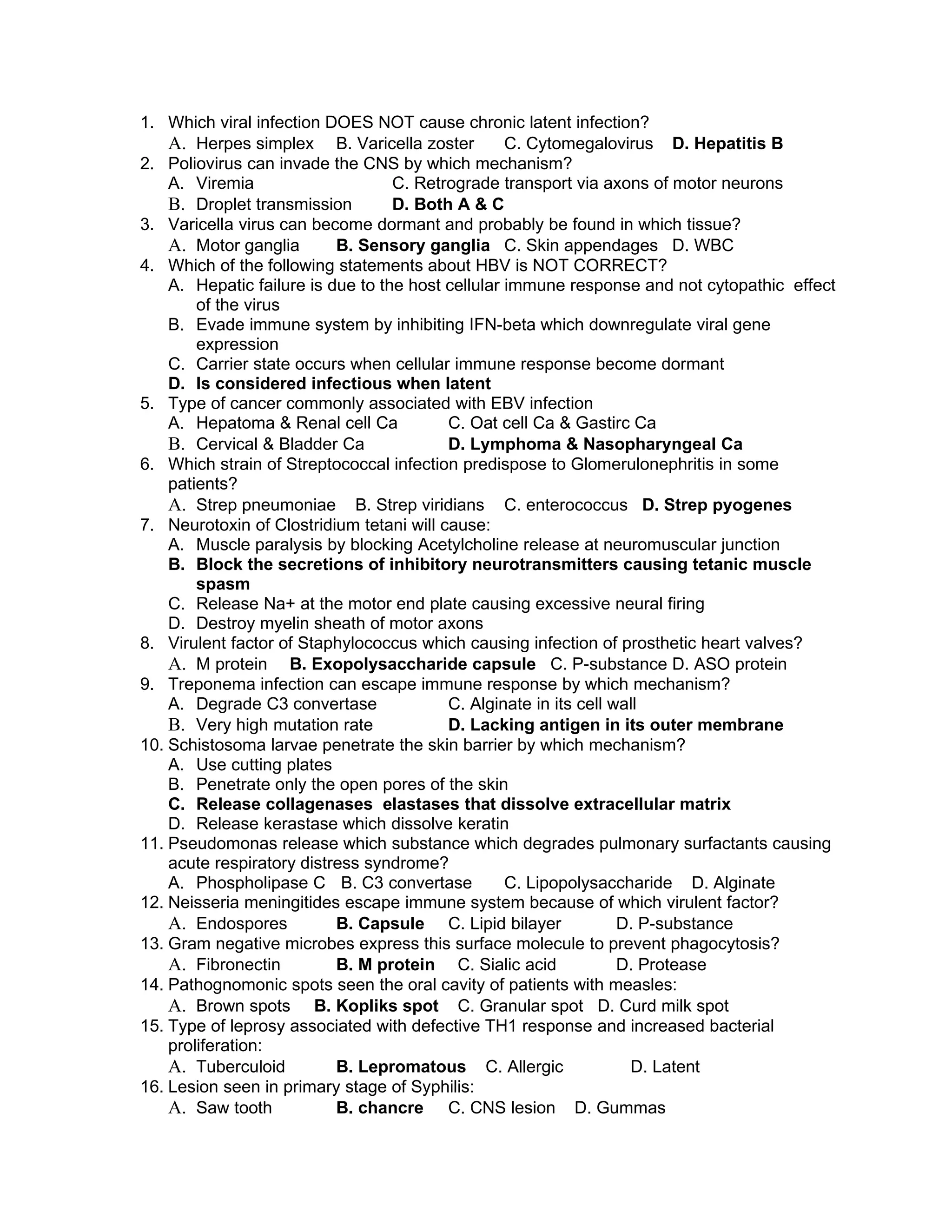
1. Which viral infection DOES NOT cause chronic latent infection?
    A. Herpes simplex B. Varicella zoster          C. Cytomegalovirus D. Hepatitis B
2. Poliovirus can invade the CNS by which mechanism?
    A. Viremia                     C. Retrograde transport via axons of motor neurons
    B. Droplet transmission        D. Both A & C
3. Varicella virus can become dormant and probably be found in which tissue?
    A. Motor ganglia       B. Sensory ganglia C. Skin appendages D. WBC
4. Which of the following statements about HBV is NOT CORRECT?
    A. Hepatic failure is due to the host cellular immune response and not cytopathic effect
        of the virus
    B. Evade immune system by inhibiting IFN-beta which downregulate viral gene
        expression
    C. Carrier state occurs when cellular immune response become dormant
    D. Is considered infectious when latent
5. Type of cancer commonly associated with EBV infection
    A. Hepatoma & Renal cell Ca           C. Oat cell Ca & Gastirc Ca
    B. Cervical & Bladder Ca              D. Lymphoma & Nasopharyngeal Ca
6. Which strain of Streptococcal infection predispose to Glomerulonephritis in some
    patients?
    A. Strep pneumoniae B. Strep viridians C. enterococcus D. Strep pyogenes
7. Neurotoxin of Clostridium tetani will cause:
    A. Muscle paralysis by blocking Acetylcholine release at neuromuscular junction
    B. Block the secretions of inhibitory neurotransmitters causing tetanic muscle
        spasm
    C. Release Na+ at the motor end plate causing excessive neural firing
    D. Destroy myelin sheath of motor axons
8. Virulent factor of Staphylococcus which causing infection of prosthetic heart valves?
    A. M protein B. Exopolysaccharide capsule C. P-substance D. ASO protein
9. Treponema infection can escape immune response by which mechanism?
    A. Degrade C3 convertase              C. Alginate in its cell wall
    B. Very high mutation rate            D. Lacking antigen in its outer membrane
10. Schistosoma larvae penetrate the skin barrier by which mechanism?
    A. Use cutting plates
    B. Penetrate only the open pores of the skin
    C. Release collagenases elastases that dissolve extracellular matrix
    D. Release kerastase which dissolve keratin
11. Pseudomonas release which substance which degrades pulmonary surfactants causing
    acute respiratory distress syndrome?
    A. Phospholipase C B. C3 convertase            C. Lipopolysaccharide D. Alginate
12. Neisseria meningitides escape immune system because of which virulent factor?
    A. Endospores          B. Capsule C. Lipid bilayer             D. P-substance
13. Gram negative microbes express this surface molecule to prevent phagocytosis?
    A. Fibronectin         B. M protein C. Sialic acid             D. Protease
14. Pathognomonic spots seen the oral cavity of patients with measles:
    A. Brown spots B. Kopliks spot C. Granular spot D. Curd milk spot
15. Type of leprosy associated with defective TH1 response and increased bacterial
    proliferation:
    A. Tuberculoid         B. Lepromatous C. Allergic               D. Latent
16. Lesion seen in primary stage of Syphilis:
    A. Saw tooth           B. chancre C. CNS lesion D. Gummas
17. Infective stage of malaria to man:
    A. Sporozoites       B. Merozoites C. Schizonts       D. Gametocytes
18. Most common cause of community acquired pneumonia in adults
    A. Strep pneumoniae               B. Infuenza C. Staphylococci D.Mycoplasma
19. Which of the following is implicated in myonecrosis seen in gas gangrene?
        a. Pseudomonas             b. Clostridium perfringens c.. Clostridium deficile
        d. Staphylocci
20. Pseudomembranous colitis usually caused by :
        a. Pseudomonas b.Clostridium perfringens c. Clostridium deficile
         d. Staphylocci

Review Corrected

  • 1.
    1. Which viralinfection DOES NOT cause chronic latent infection? A. Herpes simplex B. Varicella zoster C. Cytomegalovirus D. Hepatitis B 2. Poliovirus can invade the CNS by which mechanism? A. Viremia C. Retrograde transport via axons of motor neurons B. Droplet transmission D. Both A & C 3. Varicella virus can become dormant and probably be found in which tissue? A. Motor ganglia B. Sensory ganglia C. Skin appendages D. WBC 4. Which of the following statements about HBV is NOT CORRECT? A. Hepatic failure is due to the host cellular immune response and not cytopathic effect of the virus B. Evade immune system by inhibiting IFN-beta which downregulate viral gene expression C. Carrier state occurs when cellular immune response become dormant D. Is considered infectious when latent 5. Type of cancer commonly associated with EBV infection A. Hepatoma & Renal cell Ca C. Oat cell Ca & Gastirc Ca B. Cervical & Bladder Ca D. Lymphoma & Nasopharyngeal Ca 6. Which strain of Streptococcal infection predispose to Glomerulonephritis in some patients? A. Strep pneumoniae B. Strep viridians C. enterococcus D. Strep pyogenes 7. Neurotoxin of Clostridium tetani will cause: A. Muscle paralysis by blocking Acetylcholine release at neuromuscular junction B. Block the secretions of inhibitory neurotransmitters causing tetanic muscle spasm C. Release Na+ at the motor end plate causing excessive neural firing D. Destroy myelin sheath of motor axons 8. Virulent factor of Staphylococcus which causing infection of prosthetic heart valves? A. M protein B. Exopolysaccharide capsule C. P-substance D. ASO protein 9. Treponema infection can escape immune response by which mechanism? A. Degrade C3 convertase C. Alginate in its cell wall B. Very high mutation rate D. Lacking antigen in its outer membrane 10. Schistosoma larvae penetrate the skin barrier by which mechanism? A. Use cutting plates B. Penetrate only the open pores of the skin C. Release collagenases elastases that dissolve extracellular matrix D. Release kerastase which dissolve keratin 11. Pseudomonas release which substance which degrades pulmonary surfactants causing acute respiratory distress syndrome? A. Phospholipase C B. C3 convertase C. Lipopolysaccharide D. Alginate 12. Neisseria meningitides escape immune system because of which virulent factor? A. Endospores B. Capsule C. Lipid bilayer D. P-substance 13. Gram negative microbes express this surface molecule to prevent phagocytosis? A. Fibronectin B. M protein C. Sialic acid D. Protease 14. Pathognomonic spots seen the oral cavity of patients with measles: A. Brown spots B. Kopliks spot C. Granular spot D. Curd milk spot 15. Type of leprosy associated with defective TH1 response and increased bacterial proliferation: A. Tuberculoid B. Lepromatous C. Allergic D. Latent 16. Lesion seen in primary stage of Syphilis: A. Saw tooth B. chancre C. CNS lesion D. Gummas
  • 2.
    17. Infective stageof malaria to man: A. Sporozoites B. Merozoites C. Schizonts D. Gametocytes 18. Most common cause of community acquired pneumonia in adults A. Strep pneumoniae B. Infuenza C. Staphylococci D.Mycoplasma 19. Which of the following is implicated in myonecrosis seen in gas gangrene? a. Pseudomonas b. Clostridium perfringens c.. Clostridium deficile d. Staphylocci 20. Pseudomembranous colitis usually caused by : a. Pseudomonas b.Clostridium perfringens c. Clostridium deficile d. Staphylocci