
RESTing with
 DJANGO


   Fernando Ciciliati
   Python Ireland November Meet-up
   10/11/2010 – The Science Gallery – Dublin
Contents
●   Quick review of REST ?
●   Even quicker review of Django ?
●   Let's REST with Django...
REST
Practical REST

●   Building a web for computers
    ●   They (computers) want to find 'computer-friendly'
        pages
    ●   They love well organised data/information
    ●   They don't mind about ”visual appeal”
●   Side note: There is no ”Google” for them [yet].
REST Keywords
●   Resource
●   ”Resource name” or URI [or URL]
●   Representation
●   Methods/Verbs (Uniform Interface)
●   Links
REST: Resource
●   Any entity, object or concept we want our
    application to keep information about
●   Obvious resources:
    ●   Books, people, employees, cities, blog entries, bank
        accounts, hotels, flights, ..
●   Slightly less obvious:
    ●   Money transfers, hotel reservations, flight tickets, …
●   Even less obvious:
    ●   User session, transaction, ...
REST: Resource Name
●   Every resource should receive at least one
    name that identifies it uniquely in its context of
    usage or existence – ideally, in the world.
●   This name should be durable, persistent.
●   Typical naming schemas: URLs, URIs, URNs
●   It is OK to have more than one name identifying
    the same resource
REST: Representation
●   Representations are the materialization, in
    bytes and bits, of resources.
●   Resources are ideas, concepts; representations
    are ”physical”, ”tangible” REPRESENTATIONS
    of ideas
●   Multiple formats possible
●   A single resource can have multiple
    representations associated to it
REST: Uniform Interface
●   Minimize number of ”verbs”
    ●   REST x ”WebServices”
●   Stick to HTTP verbs
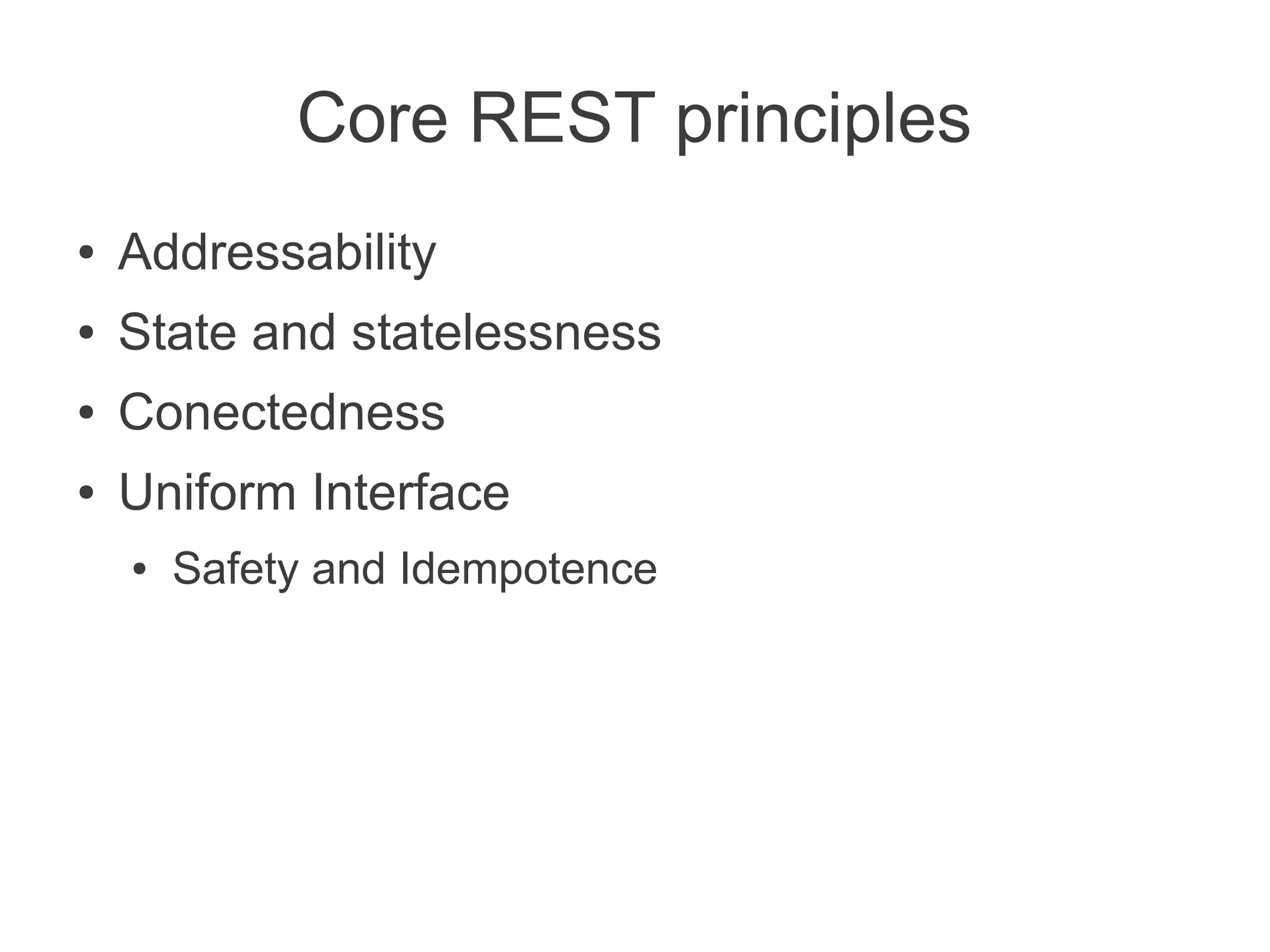
Core REST principles
●   Addressability
●   State and statelessness
●   Conectedness
●   Uniform Interface
    ●   Safety and Idempotence
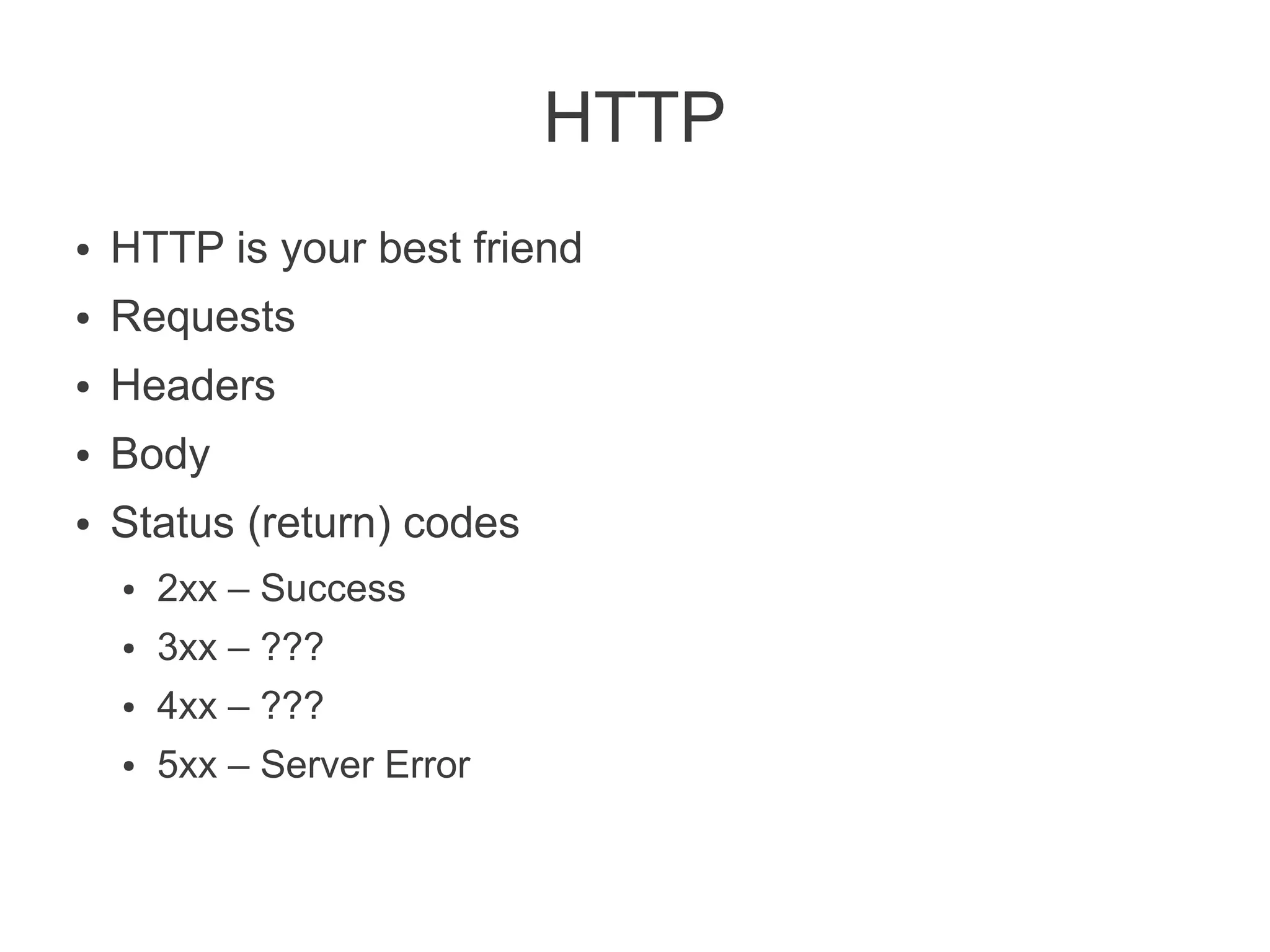
HTTP
●   HTTP is your best friend
●   Requests
●   Headers
●   Body
●   Status (return) codes
    ●   2xx – Success
    ●   3xx – ???
    ●   4xx – ???
    ●   5xx – Server Error
Django + REST
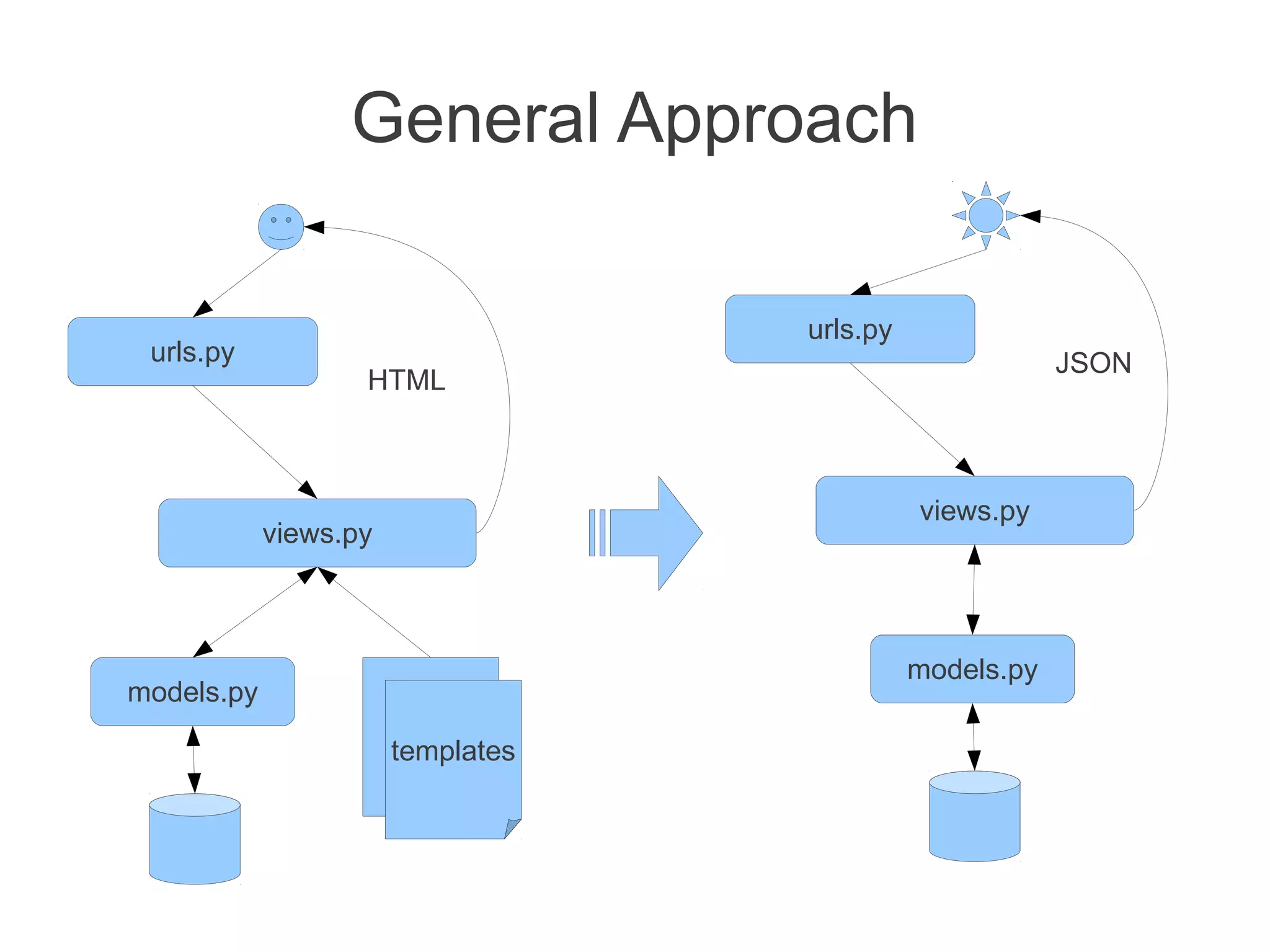
General Approach

                                   urls.py
 urls.py                                                 JSON
                   HTML


                                             views.py
            views.py


                                             models.py
models.py

                       templates
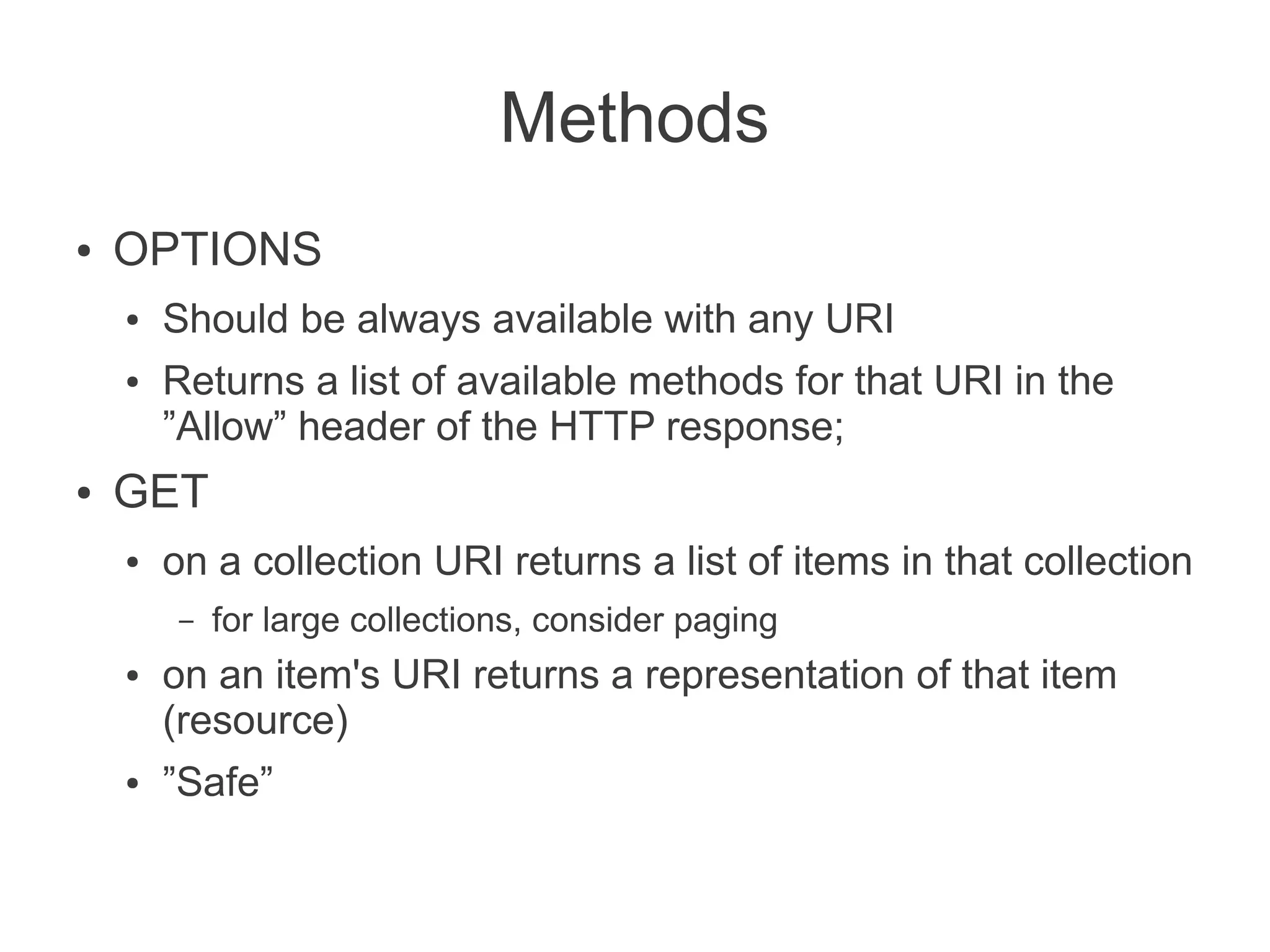
Methods
●   OPTIONS
    ●   Should be always available with any URI
    ●   Returns a list of available methods for that URI in the
        ”Allow” header of the HTTP response;
●   GET
    ●   on a collection URI returns a list of items in that collection
        –   for large collections, consider paging
    ●   on an item's URI returns a representation of that item
        (resource)
    ●   ”Safe”
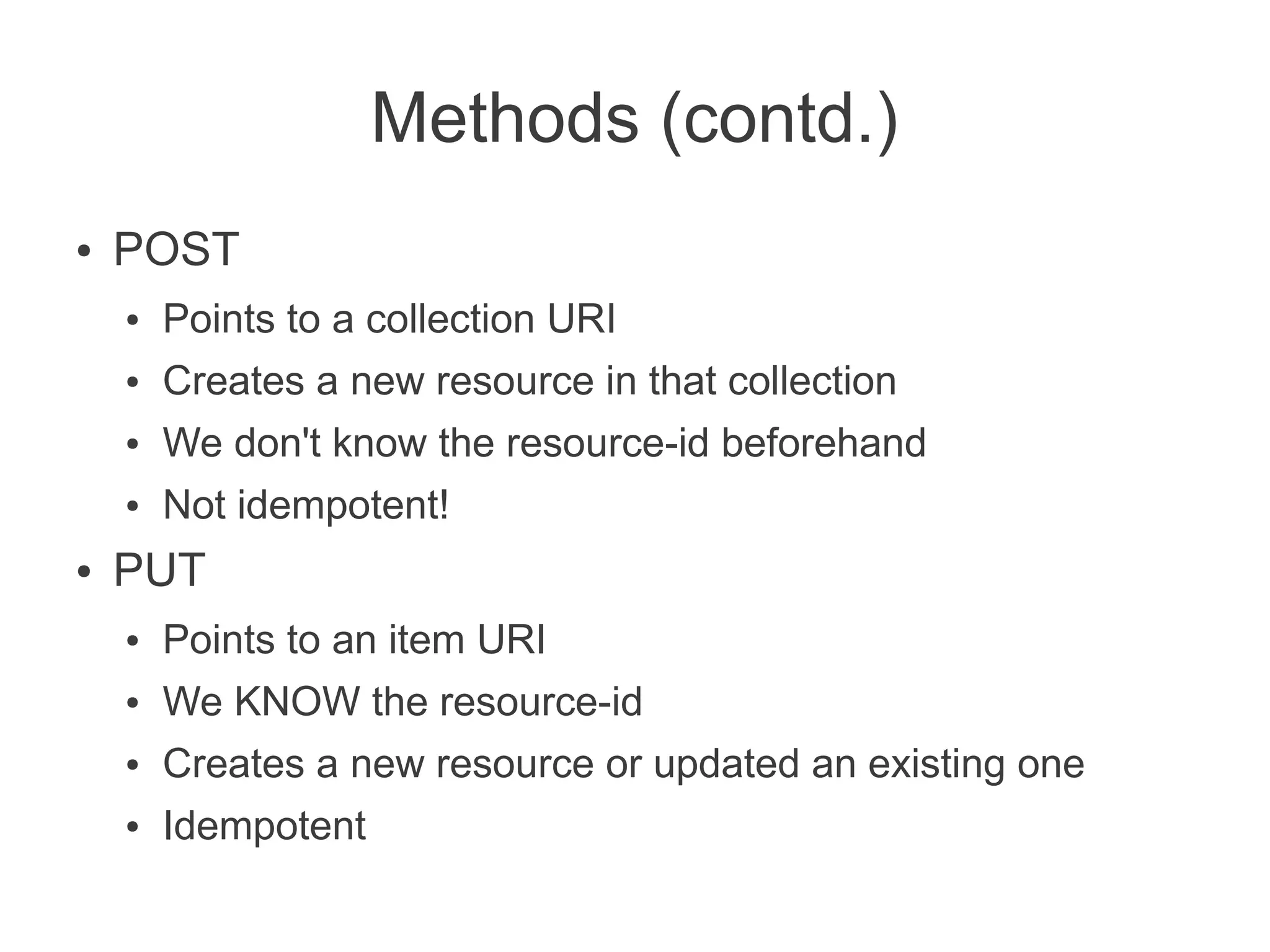
Methods (contd.)
●   POST
    ●   Points to a collection URI
    ●   Creates a new resource in that collection
    ●   We don't know the resource-id beforehand
    ●   Not idempotent!
●   PUT
    ●   Points to an item URI
    ●   We KNOW the resource-id
    ●   Creates a new resource or updated an existing one
    ●   Idempotent
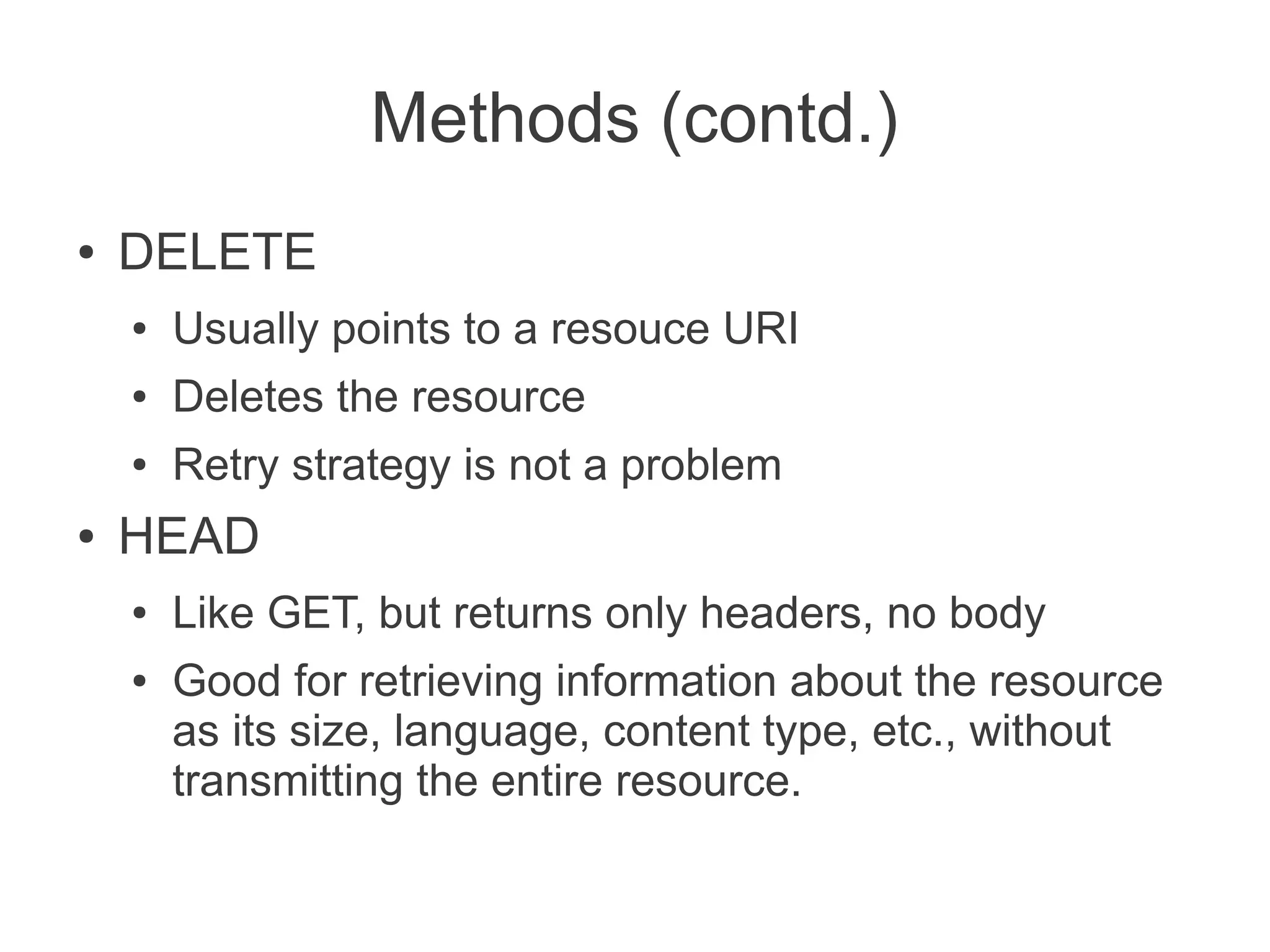
Methods (contd.)
●   DELETE
    ●   Usually points to a resouce URI
    ●   Deletes the resource
    ●   Retry strategy is not a problem
●   HEAD
    ●   Like GET, but returns only headers, no body
    ●   Good for retrieving information about the resource
        as its size, language, content type, etc., without
        transmitting the entire resource.
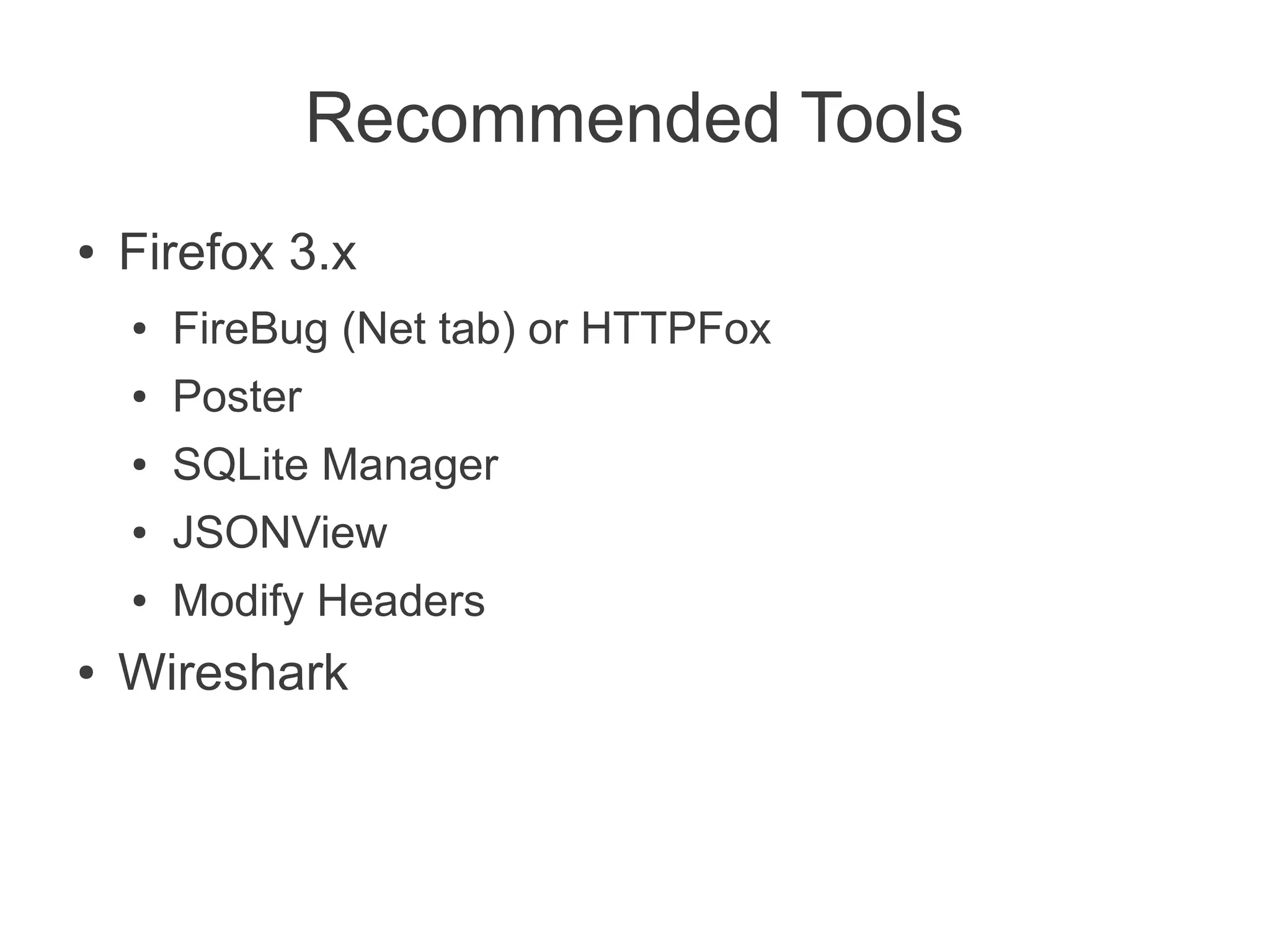
Recommended Tools
●   Firefox 3.x
    ●   FireBug (Net tab) or HTTPFox
    ●   Poster
    ●   SQLite Manager
    ●   JSONView
    ●   Modify Headers
●   Wireshark
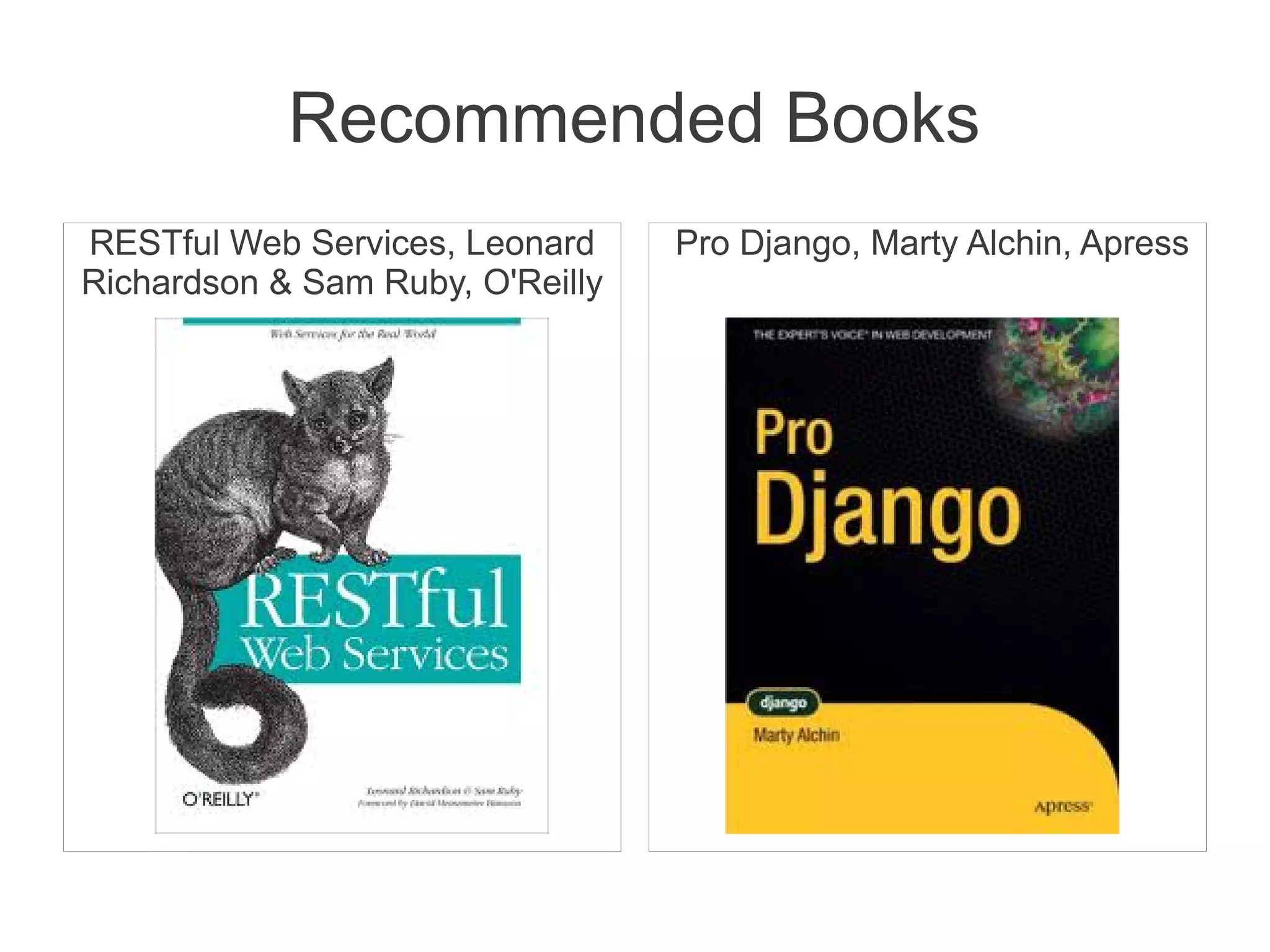
Recommended Books
RESTful Web Services, Leonard     Pro Django, Marty Alchin, Apress
Richardson & Sam Ruby, O'Reilly

Python Ireland Nov 2010 - RESTing with Django

  • 1.
    RESTing with DJANGO Fernando Ciciliati Python Ireland November Meet-up 10/11/2010 – The Science Gallery – Dublin
  • 2.
    Contents ● Quick review of REST ? ● Even quicker review of Django ? ● Let's REST with Django...
  • 3.
  • 4.
    Practical REST ● Building a web for computers ● They (computers) want to find 'computer-friendly' pages ● They love well organised data/information ● They don't mind about ”visual appeal” ● Side note: There is no ”Google” for them [yet].
  • 5.
    REST Keywords ● Resource ● ”Resource name” or URI [or URL] ● Representation ● Methods/Verbs (Uniform Interface) ● Links
  • 6.
    REST: Resource ● Any entity, object or concept we want our application to keep information about ● Obvious resources: ● Books, people, employees, cities, blog entries, bank accounts, hotels, flights, .. ● Slightly less obvious: ● Money transfers, hotel reservations, flight tickets, … ● Even less obvious: ● User session, transaction, ...
  • 7.
    REST: Resource Name ● Every resource should receive at least one name that identifies it uniquely in its context of usage or existence – ideally, in the world. ● This name should be durable, persistent. ● Typical naming schemas: URLs, URIs, URNs ● It is OK to have more than one name identifying the same resource
  • 8.
    REST: Representation ● Representations are the materialization, in bytes and bits, of resources. ● Resources are ideas, concepts; representations are ”physical”, ”tangible” REPRESENTATIONS of ideas ● Multiple formats possible ● A single resource can have multiple representations associated to it
  • 9.
    REST: Uniform Interface ● Minimize number of ”verbs” ● REST x ”WebServices” ● Stick to HTTP verbs
  • 10.
    Core REST principles ● Addressability ● State and statelessness ● Conectedness ● Uniform Interface ● Safety and Idempotence
  • 11.
    HTTP ● HTTP is your best friend ● Requests ● Headers ● Body ● Status (return) codes ● 2xx – Success ● 3xx – ??? ● 4xx – ??? ● 5xx – Server Error
  • 12.
  • 13.
    General Approach urls.py urls.py JSON HTML views.py views.py models.py models.py templates
  • 14.
    Methods ● OPTIONS ● Should be always available with any URI ● Returns a list of available methods for that URI in the ”Allow” header of the HTTP response; ● GET ● on a collection URI returns a list of items in that collection – for large collections, consider paging ● on an item's URI returns a representation of that item (resource) ● ”Safe”
  • 15.
    Methods (contd.) ● POST ● Points to a collection URI ● Creates a new resource in that collection ● We don't know the resource-id beforehand ● Not idempotent! ● PUT ● Points to an item URI ● We KNOW the resource-id ● Creates a new resource or updated an existing one ● Idempotent
  • 16.
    Methods (contd.) ● DELETE ● Usually points to a resouce URI ● Deletes the resource ● Retry strategy is not a problem ● HEAD ● Like GET, but returns only headers, no body ● Good for retrieving information about the resource as its size, language, content type, etc., without transmitting the entire resource.
  • 17.
    Recommended Tools ● Firefox 3.x ● FireBug (Net tab) or HTTPFox ● Poster ● SQLite Manager ● JSONView ● Modify Headers ● Wireshark
  • 18.
    Recommended Books RESTful WebServices, Leonard Pro Django, Marty Alchin, Apress Richardson & Sam Ruby, O'Reilly