August 21-23, 2014 Santa Clara, California 
a SENS Research Foundation Conference 
Program Guide
2 
Dear Colleagues, 
a SENS Research Foundation Conference 
August 21-23, 2014 
Hyatt Regency Hotel 
Santa Clara, California 
It is our pleasure to welcome you to the 2014 Rejuvenation Biotechnology Conference. 
The continuing growth of research into the underlying causes of the diseases of aging 
brings with it the opportunity to build a Rejuvenation Biotechnology industry, an 
industry which builds on the strengths of regenerative medicine. Together over the next 
three days, we believe we can help create this new industry and inspire each other – as 
clinicians, researchers, patient advocates, regulators, venture capitalists, investors and 
industry leaders – to work together to make this happen. 
This conference has been designed to offer something for everyone: from the 
inspirational words of our scientific, business, and venture capital speakers to the latest 
research on diseases, such as Alzheimer’s Disease, cancer, cardiovascular disease, and 
diabetes. An entire track of sessions will cover the regulatory, financial, and economic 
issues involved in building a Rejuvenation Biotechnology industry. We have also 
scheduled plenty of time for networking with each other during our meal breaks, Poster 
sessions and our evening entertainment. 
We would like to thank each of your for attending the Rejuvenation Biotechnology 
Conference and bringing your expertise to our gathering. You have the vision, the 
knowledge, the wherewithal and the experience to come together to pave the way 
into the future. Throughout this conference, we ask you to stay engaged, deepen your 
understanding of the field, build communities of interest and create collaborations that 
will help shape the future of the industry. 
Thank you for choosing this conference. Enjoy your time here, and once again welcome to 
the Rejuvenation Biotechnology Conference. 
Mike Kope 
CEO, SENS Research Foundation 
Aubrey de Grey 
CSO, SENS Research Foundation
TO PARKING STRUCTURE 
Welcome Letter. 2 
Conference Schedule . 4 
Speaker Biographies. 14 
Sponsors . 26 
Poster Abstracts . 33 
NAPA I NAPA II NAPA III 
SONOMA 
MENDOCINO 
SANTA CLARA 
CONVENTION 
CENTER 
TUSCA 
COURTYARD 
TUSCA RESTAURANT 
POOL ELEVATOR 
CABANAS 
WHIRLPOOL 
SWIMMING POOL 
@ THE MARKET 
TERRA COURTYARD 
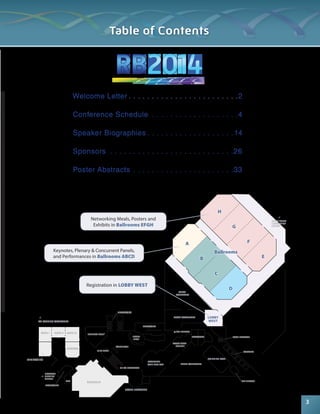
Networking Meals, Posters and 
Exhibits in Ballrooms EFGH 
EVOLUTION 
CAFE AND BAR 
FRONT 
DESK 
ELEVATORS 
CONCIERGE 
UP TO BALLROOM 
HOTEL ENTRANCE 
GIFT SHOP 
ATM 
REGENCY CLUB® 
MAGNOLIA 
NETWORK 
MEETING 
CENTER 
RESTROOMS 
TRUYA SUSHI 
LOUNGE 
RESTROOMS 
RESTROOMS 
Keynotes, Plenary & Concurrent Panels, 
and Performances in Ballrooms ABCD 
Registration in LOBBY WEST 
Ballrooms 
LOBBY 
WEST 
A 
B 
C 
D 
H 
G 
F 
E 
3 
Table of Contents
Conference Schedule 
Registration (until 5:00 pm) - [LOBBY WEST] 
Networking Breakfast - [Ballrooms EFGH] 
Opening Remarks - Michael Kope, CEO , SENS Research Foundation - [Ballrooms ABCD] 
Keynote: George Church, Professor of Genetics, Harvard Medical School, Professor of Health 
Sciences and Technology, Harvard and MIT: New Epigenome Analysis and Engineering 
Technologies for Reversal of Aging - [Ballrooms ABCD] 
Molecular and Cellular Damage as the Cause of the Diseases of Aging Panel - [Ballrooms ABCD] 
This panel will discuss the idea that the diseases of aging may stem from molecular and cellular 
damage that accrues with age. Topics of discussion will include the types of damage that may 
be involved, examples of how this applies to one or more diseases, and thoughts on how basic 
research and industry could use this concept to drive therapeutic target identification and drug 
treatment/development. 
• Richard Barker, Director, Center for the Advancement of Sustainable Medical Innovation: 
(Moderator) 
• Aubrey de Grey, Co-Founder and Chief Science Officer, SENS Research Foundation 
• Caleb Finch, ARCO/Kieschnick Professor of Gerontology and Biological Science and University 
Professor, USC Davis School of Gerontology 
• Jeff Karp, Associate Professor, Harvard Medical School, Co-Director of the Center for 
Regenerative Therapeutics, Brigham and Women’s Hospital 
• Stephen Minger, Chief Scientist, Cellular Sciences, GE Healthcare Life Sciences, UK 
Networking Lunch & Exhibits - [Ballrooms EFGH] 
8:00 am 
8:00 am 
9:00 am 
9:30 am 
10:30 am 
12:00 pm 
Day 1: Thursday, August 21, 2014 
4
[Ballroom A] [Ballroom D] [Ballrooms BC] 
Alzheimer’s Disease Session 1 
This session will highlight two types of 
cellular and molecular damage currently 
being researched as therapeutic targets for 
Alzheimer’s Disease. Speakers will discuss 
how tau tangles and cell loss are believed 
to lead to Alzheimer’s Disease, current 
ideas on how to remove or repair tau 
tangles, and how cell replacement can be 
used to treat Alzheimer’s. 
• Jean Hébert, Professor, Departments of 
Neuroscience and Genetics, Albert Einstein 
College of Medicine: A Twist of Fate - 
Reprogramming Neural Precursor Cells 
to Generate New Neocortical Neurons 
• Einar Sigurdsson, Associate Professor, 
Department of Neuroscience & 
Physiology, New York University: Tau 
Immunotherapy and Imaging 
• Claude Wischik, Professor of Old Age 
Psychiatry, University of Aberdeen, 
Executive Chairman, TauRX Therapeutics, 
Ltd.: Status of the First Phase 3 Clinical 
Trials Targeting the Tauopathy of 
Alzheimer’s Disease: Origins, Rationale 
and Design Considerations 
Cardiovascular Disease Session 1 
Building upon the idea discussed by the 
morning panel of using damage repair 
therapeutics to treat the diseases of aging, 
this session will consider cellular and 
molecular damage that can be targeted 
for cardiovascular disease therapy. 
Presentations will explain how cellular or 
molecular damage may lead to cardiovas-cular 
disease and how this damage may 
be removed or repaired. 
• Guillermo Garcia Cardena, Associate 
Professor of Pathology, Harvard Medical 
School, Director of the Laboratory for 
Systems Biology, Center for Excellence in 
Vascular Biology, Brigham and Women’s 
Hospital: Mechanical Forces, Vascular 
Inflammation and Atherosclerosis 
• W. Gray Jerome, Associate Professor and 
Director, Graduate Program in Cellular 
and Molecular Pathology, Vanderbilt 
University Medical Center: Chewing 
the Fat: Cholesterol, Autophagy and 
Lysosome Dysfunction 
• Michael Sherratt, Lecturer, Center 
for Regenerative Medicine, 
University of Manchester: Causes 
and Consequences of Age-Related 
Extracellular Matrix Remodelling 
Toward a New Investment 
Paradigm Panel 
This panel will discuss the challenges in 
bringing new and especially preventative 
therapies to treat the diseases of aging 
from the research lab to the market. 
The panel will offer and discuss new 
investment paradigms that could drive 
drug and therapeutic development. 
• David Brindley, Research Fellow, 
University of Oxford/Center for the 
Advancement of Sustainable Medical 
Innovation: (Moderator) 
• Neil Littman, Business Development 
Officer, California Institute for 
Regenerative Medicine 
• James O’Neill, Partner and 
Chief Operating Officer, Mithril 
Capital Management 
• Bernard Siegel, Executive Director, 
Genetics Policy Institute 
• Michael West, CEO, BioTime, Inc. 
1:00 pm CONCURRENT SESSIONS. PLEASE CHOOSE ONE: 
Conference Schedule 
5
Conference Schedule 
Day 1: Thursday, August 21, 2014 
Alzheimer’s Disease Session 2 
A third type of damage being targeted for 
Alzheimer’s therapeutics, A-beta aggregates, 
will be discussed during this session. Speak-ers 
will address how A-beta aggregates are 
believed to lead to Alzheimer’s Disease and 
current ideas on how to prevent or remove 
them. This session will also discuss how 
changing the way researchers, regulators, 
and pharmaceutical companies view the 
disease will change Alzheimer’s Disease 
drug development. Particular attention will 
be paid to the Accelerate Cure/Treatments 
for Alzheimer’s Disease (ACT-AD) proposal 
and recent guidance from the FDA. 
• Ashley Bush, Head of the Oxidation 
Disorders Laboratory, Mental Health 
Research Institute, University of 
Melbourne, Director of the Laboratory 
for Oxidation Biology Genetics and 
Aging Unit, Massachusetts General 
Hospital, Associate Professor, 
Department of Psychiatry, Harvard 
Medical School: Iron in Aging and 
Neurodegenerative Disease 
• Rachelle Doody, Professor of Neurology, 
Director, Alzheimer’s Disease and Memory 
Disorders Center, Baylor College of 
Medicine: Approaches to Brain Aging 
and Alzheimer’s Disease: What are We 
Learning from Clinical Trials? 
• Eric Siemers, Medical Director, 
Alzheimer’s Disease Team, Eli Lilly: 
New Paradigms in Alzheimer’s 
Disease Drug Development 
Cardiovascular Disease Session 2 
In this session, examples of current 
pharmaceutical advances in cardiovascular 
disease therapeutics will be presented. 
The talks will describe how these 
therapeutics remove or repair molecular 
and cellular damage and, in doing so, 
delay or prevent cardiovascular disease. 
• Gabor Forgacs, Professor, Biophysics 
Laboratory, Department of Physics 
& Astronomy, University of Missouri- 
Columbia, Founder, Organovo: The Role 
of Bioprinting in Rejuvenation 
• Linda Marban, CEO, Capricor 
Therapeutics: Raising Capricor: 
Building a Biotech Company 
from Bench to Bedside 
• James Yoo, Professor, Associate Director 
and Chief Scientific Officer, Wake Forest 
Institute for Regenerative Medicine: 
Tissue Engineering Solutions for 
Cardiovascular Tissue Pathologies 
The Economic Impact of an Aging 
Population on the Healthcare 
System Panel 
This panel will discuss the impending 
economic crisis the healthcare system 
will soon face caring for the ever-growing 
elderly population and possible solutions 
to this crisis, such as an outcomes-based 
healthcare model. 
• David Brindley, Research Fellow, 
University of Oxford/Center for the 
Advancement of Sustainable Medical 
Innovation: (Moderator) 
• Catalina Hoffman, Founder, Catalina 
Hoffmann Holding Group 
• Peter Nakada, Managing Director of Risk 
Markets, Risk Management Solutions, Inc. 
2:30 pm CONCURRENT SESSIONS. PLEASE CHOOSE ONE: 
[Ballroom A] [Ballroom D] [Ballrooms BC] 
6
Performance by Comedian Hal Sparks - [Ballrooms ABCD] 
Currently starring in the Disney XD show, LAB RATS, actor/comedian Hal Sparks began his 
professional career while still a teenager in Chicago. As a member of the famed Second City 
Troupe, his quick wit and affable personality quickly gained him recognition and acclaim 
and he was named the “Funniest Teenager In Chicago” by the Chicago Sun Times. Sparks 
went on to host the Emmy Award- winning “Talk Soup” on E! Entertainment Television, 
winning rave reviews from fans and critics alike. He starred for five seasons on Showtime’s 
hit series “Queer As Folk” and appeared in the films “Extract,” “Spiderman 2” and “Dude, 
Where’s My Car?.” Sparks recently starred in his own one hour Showtime comedy special, 
“Charmageddon,” which is now a best-selling DVD. He is a star commentator on VH1’s popular 
“I Love the 80’s” series and can be heard every Wednesday on the nationally syndicated 
“Stephanie Miller Radio Show.” Hal is also a pop culture expert and regularly appears on such 
shows as “Joy Behar” and CNN’s “Your Money.” His numerous other television appearances 
include “The Tonight Show,” “Larry King Live,” “Charlie Rose,” “Good Morning America,” “The 
View,” “Jimmy Kimmel” and MTV. In addition to a busy acting and stand-up career, he is an 
accomplished musician. Hal and his band, Zero 1, recently released their debut album. 
8:00 pm 
Afternoon Break & Exhibits - [Ballrooms EFGH] 
Advancing Regenerative Therapies in Alzheimer’s and Cardiovascular Disease Panel - [Ballrooms ABCD] 
This panel will bring together speakers from sessions throughout the day to consider the promise 
of a damage repair strategy to develop therapeutics for the diseases of aging. Discussion will 
include a summary of the accomplishments of the Alzheimer’s community in suggesting an 
innovative drug development strategy as well as debate about how such a strategy could 
apply to cardiovascular therapies. In particular, the panel will consider the impact applying 
a strategy similar to the ACT-AD proposal would have on cardiovascular disease therapeutic 
development, investment in cardiovascular drug development, and the healthcare system. 
• Aubrey de Grey, CSO, SENS Research Foundation: (Moderator) 
• Rachelle Doody, Professor of Neurology, Director, Alzheimer’s Disease and Memory Disorders 
Center, Baylor College of Medicine 
• Neil Littman, Business Development Officer, California Institute for Regenerative Medicine (CIRM) 
• Linda Marban, CEO, Capricor Therapeutics 
• Eric Siemers, Medical Director, Alzheimer’s Disease Team, Eli Lilly 
Poster Session/ Buffet Dinner & Exhibits - [Ballrooms EFGH] 
4:00 pm 
4:30 pm 
6:00 pm 
Conference Schedule 
7
Conference Schedule 
Registration (until 5:00 pm) - [LOBBY WEST] 
Networking Breakfast & Exhibits - [Ballrooms EFGH] 
Opening Remarks by Edward James Olmos, Actor - [Ballrooms ABCD] 
Keynote: Jim O’Neill, Partner and Chief Operating Officer, Mithril Capital Management: 
Fight Aging with a Durable Business - [Ballrooms ABCD] 
Toward a New Research Paradigm Panel - [Ballrooms ABCD] 
This panel will explore new ways to approach research to tackle the diseases of aging. In particular, 
consideration will be given to the effects a damage repair paradigm would have on developing 
new strategies to identify and study therapeutic targets, fostering more collaboration between 
researchers studying different diseases, and changing the way translational research and drug 
development are approached. 
• Richard Barker, Director, Center for the Advancement of Sustainable Medical Innovation: 
(Moderator) 
• Julie Allickson, Director, Translational Research, Wake Forest Institute for Regenerative Medicine 
• Judith Campisi, Professor, Buck Institute for Research on Aging 
• Howard Foyt, Vice President, Clinical Development and Chief Medical Officer, Viacyte, Inc 
• Daniel Kraft, Faculty Chair for Medicine, Singularity University 
Networking Lunch & Exhibits - [Ballrooms EFGH] 
8:00 am 
8:00 am 
9:00 am 
9:30 am 
10:30 am 
12:00 pm 
Day 2: Friday, August 22, 2014 
8
Cancer Session 
This session will highlight current break-throughs 
in cancer research. Additionally, 
the impact the I-SPY TRIAL 2 (Investigation 
of Serial studies to Predict Your Therapeutic 
Response with Imaging and Molecular 
Analysis 2) program has had on drug 
development, particularly Alzheimer’s 
drugs, will be discussed. 
• Judith Campisi, Professor, Buck Institute 
for Research on Aging: Cancer and 
Aging: Rival Demons? 
• Laura Esserman, Professor, Departments 
of Surgery and Radiology, and Affiliate 
Faculty, Institute for Health Policy 
Studies and Director, Carol Franc Buck 
Breast Care Center; Co-Leader, Breast 
Oncology Program, UCSF Helen Diller 
Family Comprehensive Cancer Center, 
University of California, San Francisco: 
Accelerating Knowledge Turns: The 
I-SPY Model and Drug Development 
• Claudia Gravekamp, Associate Professor, 
Albert Einstein College of Medicine: 
Curing Cancer in the Elderly Through 
Novel Strategies 
Parkinson’s Disease Session 
This session will feature the latest in 
Parkinson’s Disease research. A causal 
relationship between molecular and/ 
or cellular damage and Parkinson’s 
Disease will be explored. The speakers 
will also consider how this research 
could lead to preventative or damage 
repair treatment of the disease. 
• Julie Andersen, Professor, Buck Institute 
for Research on Aging: Senescence and 
the Aging Brain 
• Jeanne Loring, Professor, Scripps 
Research Institute: Negotiating the 
Mine Field in the Quest for a Parkinson’s 
Disease Cell Therapy 
• Dale Schenk, CEO, Prothena 
Corporation: Challenges and Hopes in 
Preventing and Developing Meaningful 
Therapeutic Strategies for Alzheimer’s 
and Parkinson’s Diseases 
Risk-Benefit Analysis in Therapies for 
the Diseases and Disabilities of Aging 
Today, the translation of healthcare 
innovations into patient outcomes is 
an inherently multi-stakeholder effort. 
Consequently, there is a major need to 
maintain rigor and independence in the 
regulation of healthcare innovations, 
while improving regulatory transparency 
and opportunities for multi-stakeholder 
input to accommodate fundamental 
changes in the life-science ecosystem and 
global healthcare demands. A key strategy 
in this endeavor is the development and 
utilization of novel risk-benefit appraisal 
methodologies, leveraging advances 
in patient reported outcomes (PROMS), 
stratified medicines – including ‘big data’ 
and risk management methodologies 
utilized presently in other industries. 
• David Brindley, Research Fellow, 
University of Oxford/Center for the 
Advancement of Sustainable Medical 
Innovation: (Moderator) 
• Richard Barker, Director, Center for 
the Advancement of Sustainable 
Medical Innovation 
• Chris Hornsby, Head of Model 
Development, Life Risks, Risk 
Management Solutions, Inc. 
• Brock Reeve, Executive Director, Harvard 
Stem Cell Institute 
1:00 pm CONCURRENT SESSIONS. PLEASE CHOOSE ONE: 
[Ballroom A] [Ballroom D] [Ballrooms BC] 
2:30 pm Afternoon Break & Exhibits - [Ballrooms EFGH] 
Conference Schedule 
9
Conference Schedule 
Day 2: Friday, August 22, 2014 
Performance by Comedian Dan Nainan - [Ballrooms ABCD] 
Dan Nainan got his start by taking a comedy class to get over the nervousness of speaking 
on stage in his job as a demo engineer with Intel Corporation. After leaving Intel to pursue 
comedy, he has toured with Russell Peters and other notable comedians. Dan has appeared 
on network television including “Last Comic Standing” as well as in feature films, on radio 
and in an Apple commercial. He just completed a comedy tour of India. 
8:00 pm 
Advancing Regenerative Therapies in Cancer and Parkinson’s Disease Panel - [Ballrooms ABCD] 
This panel will bring together speakers from throughout the day to summarize the impact of 
the I-SPY TRIAL 2 program on drug trial design for Alzheimer’s therapeutics and speculate on 
the applicability of trial designs similar to the one proposed for Alzheimer’s Disease to the 
development of therapeutics for other diseases of aging, such as Parkinson’s Disease and cancer. 
• Aubrey de Grey, CSO, SENS Research Foundation: (Moderator) 
• Rachelle Doody, Professor of Neurology, Director, Alzheimer’s Disease and Memory Disorders 
Center, Baylor College of Medicine 
• Laura Esserman, Professor, Departments of Surgery and Radiology, and Affiliate Faculty, 
Institute for Health Policy Studies and Director, Carol Franc Buck Breast Care Center; Co-Leader, 
Breast Oncology Program, UCSF Helen Diller Family Comprehensive Cancer Center, University 
of California, San Francisco 
• Jeanne Loring, Professor, Scripps Research Institute 
• Brock Reeve, Executive Director, Harvard Stem Cell Institute 
• Dale Schenk, CEO, Prothena Corporation 
Networking Dinner/ Poster Session & Exhibits - [Ballrooms EFGH] 
3:30 pm 
5:30 pm 
Concert by Cecilia Noël 
Originally from Lima, Perú, Cecilia’s career began at the age of eight with a starring role in a 
Peruvian television show. As a teenager, Cecilia’s mother sent her to Argentina and Germany 
to take voice, violin, and piano lessons. Encouraged by the legendary Stan Getz to move to the 
US, Cecilia relocated to New York City and briefly performed as a dancer with Jo Jo’s Dance 
Factory and Menudo. Cecilia moved to Los Angeles in 1989 and in the early 1990s formed 
Cecilia Noël and The Wild Clams. The group received quick attention for their explosive live 
shows and were consequently booked at the House of Blues and the Playboy Jazz Festival. 
Critics have long called her the “Latin Tina Turner.” “Salsoul”, the genre Cecilia created to 
describe her sound, combines elements of salsa, soul, jazz, funk, and Afro-cuban. Cecilia also 
performs and records with husband and former Men At Work frontman Colin Hay. 
10
Networking Breakfast & Exhibits - [Ballrooms EFGH] 
Conference Schedule 
Keynote: Peter Diamandis, Co-founder and Vice Chairman, Human Longevity, Inc, Founder and 
CEO, X PRIZE Foundation: Creating a Culture of Innovation and Breakthroughs - [Ballrooms ABCD] 
Applying a Damage Repair Paradigm to Developing Therapies for the Diseases of Aging 
Panel - [Ballrooms ABCD] 
Building upon the discussion of a damage repair paradigm from days 1 and 2, this panel will weigh 
the benefits of application of a damage repair paradigm to drug development to combat the 
diseases of aging. Discussion will include the feasibility of applying such a strategy, the advantages 
and disadvantages such a model would confer, and an analysis of the regulatory changes that 
would be required to make such a paradigm possible. 
• Richard Barker, Director, Center for the Advancement of Sustainable Medical Innovation: 
(Moderator) 
• Julie Allickson, Director, Translational Research, Wake Forest Institute for Regenerative Medicine 
• Stephen Minger, Chief Scientist, Cellular Sciences, GE Healthcare Life Sciences, UK 
• Evan Snyder, Director, Center for Stem Cell and Regenerative Medicine, Director, Stem Cell Research 
Center and Core Facility, Sanford-Burnham Medical Research Institute 
Networking Lunch & Exhibits - [Ballrooms EFGH] 
8:00 am 
9:00 am 
10:00 am 
11:30 am 
Day 3: Saturday, August 23, 2014 
11
Conference Schedule 
Day 3: Saturday, August 23, 2014 
Musculoskeletal Disease Session 
This session will highlight current muscu-loskeletal 
disease research. Presenters will 
discuss how molecular or cellular damage 
is believed to lead to their musculoskeletal 
disease of interest and how their research 
may contribute to delaying or preventing 
the disease. 
• Christy Carter, Assistant Professor, 
Department of Aging and Geriatric 
Research, Institute on Aging, University of 
Florida: What is Sarcopenia? Definitions, 
Diagnosis and Developing Interventions 
• Young Jang, Assistant Professor, 
Georgia Institute of Technology: The 
Rejuvenation of Aged Skeletal Muscle 
by Systematic Factors 
Diabetes Session 
Breakthroughs in diabetes research will be 
presented in this session. The molecular 
and cellular causes of diabetes will be 
considered and strategies to remove, repair, 
or replace such damage will be discussed. 
• Camillo Ricordi, Stacy Joy Goodman 
Professor of Surgery, Distinguished Professor 
of Medicine, Director, Diabetes Research 
Institute and Cell Transplant Program, 
University of Miami: Cellular Therapies 
and Regenerative Medicine Strategies 
for Treatment of Diabetes 
• David Schaffer, Professor, University of 
California, Berkeley, Director, Berkeley 
Stem Cell Center: Molecular Elucidation 
and Engineering of Stem Cell Therapies 
for the Nervous System 
Regulating a Damage Repair 
Approach to Cure the Diseases of 
Aging Panel 
Escalating societal healthcare needs have 
driven an unprecedented era of biomedical 
innovation. However, the development of 
candidate technologies without consider-ation 
of a robust regulatory strategy is likely 
to contribute to stymied patient access and 
commercial viability. Therefore, this session 
will consider worldwide efforts to rapidly 
and proportionally develop international 
regulatory processes to accommodate 
increasingly heterogeneous and unfamiliar 
healthcare technologies and their swift 
translation from lab to bedside. 
• David Brindley, Research Fellow, 
University of Oxford/Center for the 
Advancement of Sustainable Medical 
Innovation: (Moderator) 
• Bob Clay, Chief Regulatory Officer, 
Kinapse & Manging Director, Highbury 
Regulatory Science 
• Andrew Martello, Managing Director, 
Spoonful of Sugar 
• Evan Snyder, Director, Center for 
Stem Cell and Regenerative Medicine, 
Director, Stem Cell Research Center 
and Core Facility, Sanford-Burnham 
Medical Research Institute 
12:30 pm CONCURRENT SESSIONS. PLEASE CHOOSE ONE: 
[Ballroom A] [Ballroom D] [Ballrooms BC] 
12
Break 
Advancing Regenerative Therapies in Musculoskeletal Disease and Diabetes Panel - [Ballrooms ABCD] 
This panel will bring together speakers from the morning sessions to consider the possibility of 
applying a drug trial design similar to the ones emerging from the Alzheimer’s Disease and cancer 
communities. The feasibility of applying such a model will be considered with the biology of the 
disease, regulatory concerns, and pharmaceutical needs in mind. 
• Aubrey de Grey, CSO, SENS Research Foundation: (Moderator) 
• Christy Carter, Assistant Professor, Department of Aging and Geriatric Research, Institute on 
Aging, University of Florida 
• Andrew Martello, Managing Director, Spoonful of Sugar 
• Camillo Ricordi, Stacy Joy Goodman Professor of Surgery, Distinguished Professor of Medicine, 
Director, Diabetes Research Institute and Cell Transplant Program, University of Miami 
• Young Jang, Assistant Professor, Georgia Institute of Technology 
Building a Rejuvenation Biotechnology Industry - [Ballrooms ABCD] 
This panel will synthesize the discussions from all of the conference sessions and panels. A cross-section 
of academics, pharmaceutical reps, policy makers, and other presenters will revisit the 
merits of a damage repair paradigm to address the diseases of aging considered at this conference. 
Panelists will consider the changes that would be required to lay the groundwork for a new industry 
perspective focused on addressing damage indications for the diseases of aging either through 
preventing or repairing such damage. 
• Michael Kope, CEO, SENS Research Foundation: (Moderator) 
• George Church, Professor of Genetics, Harvard Medical School, Professor of Health Sciences 
and Technology, Harvard and MIT 
• Dana Goldman, Leonard D. Schaeffer Chair and Director of the Schaeffer Center for Health Policy 
and Economics, University of Southern California 
• Stephen Minger, Chief Scientist, Cellular Sciences, GE Healthcare Life Sciences, UK 
• Brock Reeve, Executive Director, Harvard Stem Cell Institute 
Conference Concludes 
1:30 pm 
2:00 pm 
3:00 pm 
4:30 pm 
Conference Schedule 
13
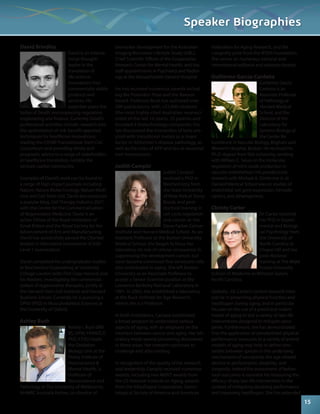
Julie Allickson 
Dr. Allickson focuses 
on the translation of 
regenerative 
medicine products 
including cell 
therapy, tissue 
engineering, 
biomaterials and 
devices. This process 
begins at Proof-of- 
Concept where early discussions with 
regulators and clinicians are critical in 
moving the technology from the bench to 
the bedside. 
Prior to joining the institute, she was an 
Executive Officer of the company and Vice 
President of Laboratory Operations and 
R & D at Cryo-Cell International, Inc., an 
AABB accredited Cord Blood Bank. Prior to 
this position, she worked for the Univer-sity 
Of Miami School Of Medicine, Diabe-tes 
Research Institute as the Laboratory 
Director of the cGMP Hematopoietic Cell 
Processing Facility. She was responsible 
for the design and implementation of the 
State Licensed Clinical Flow Cytometry 
Laboratory. 
Dr . Allickson was the lead in Regulatory 
Affairs for the processing laboratory of Islet 
and Hematopoietic Cell products which 
included oversight of all Investigational 
New Drugs (IND) and external regulations. 
Prior to this, she worked for the American 
Red Cross managing the Hematopoietic 
Cell Processing and Platelet Serology 
Laboratory and serving as a member of the 
National Stem Cell Task Force. 
She has a Doctorate in Health Sciences and 
a Master’s Degree in Medical Laboratory 
Sciences. She is one of the founding mem-bers 
of the International Society of Cellular 
Therapy and a member of the American 
Association of Blood Banks (AABB) for 25 
years. She is currently Chair of the AABB 
Standards Committee for Cell Therapy 
Product Services. Dr. Allickson is also on 
the Technical Advisory Board for Tissue 
Engineered Products under ICCBBA and the 
ISCT Commercialization Committee. 
Julie Andersen 
As a renowned 
expert on Parkin-son’s 
disease, Dr. 
Andersen is 
pursuing a wide 
array of leads 
toward treatments 
for this complex 
neurodegenerative 
disorder. She has 
identified several early risk signals for 
Parkinson’s, an age-related illness that 
causes a progressive decline in movement 
and muscle control. The symptoms can 
include shaking hands and difficulty with 
walking. 
Amongst the early risk signals identified 
by Dr. Andersen are elevated levels of iron 
and declining amounts of a protective 
antioxidant called glutathione. Recently, 
the Andersen lab has also discovered 
valuable clues by examining the roles 
of enzymes and other proteins involved 
in nerve cell degeneration. Normally, 
proteins carry out the routine work inside 
cells. But some enzymes can promote the 
symptoms of Parkinson’s disease. Blocking 
those enzymes might slow down the 
disease. Other therapies might result from 
the opposite tactic: reinforcing the work 
of different enzymes that guard against 
Parkinson’s disease. These enzymes seem 
to prevent damage to genes that protect 
the nervous system. 
The Andersen lab is also involved in identi-fying 
potential biomarkers for Parkinson’s 
that may allow early interventional therapy. 
Dr. Andersen earned a doctorate in 
Neuromolecular Biology at the University 
of California, Los Angeles (UCLA). She 
completed a postdoctoral fellowship at 
Harvard Medical School and Massachusetts 
General Hospital before going to the 
University of Southern California as an 
assistant then an associate professor at the 
Andrus Gerontology Center. She joined the 
Buck Institute in 2000. 
Richard Barker 
Richard is a strategic 
advisor, speaker and 
author on health-care 
and life 
sciences. He is 
Director of the 
Centre for the 
Advancement of 
Sustainable Medical 
Innovation, a major 
European initiative aimed at transforming 
the R&D and regulatory processes in life 
sciences to bring advances more rapidly 
and affordably to patients. 
He is also chairman of the South London 
Academic Health Science Network, accel-erating 
innovation in this region of the 
NHS, and Chairman of Stem Cells for Safer 
Medicines, a public-private partnership 
developing stem cell technology for 
predicting the safety profile of new medi-cines. 
He is a board member of Celgene, a 
major US-based bio-therapeutics company 
and of iCo Therapeutics, a Canadian 
bioscience company. 
His 25-year business career in healthcare 
has spanned biopharmaceuticals, diag-nostics 
and medical informatics – both in 
the USA and Europe. Most recently he was 
Director General of the Association of the 
British Pharmaceutical Industry, member 
of the Executive Committee of EFPIA (the 
European industry association) and Council 
member of IFPMA (the international 
equivalent). 
As a co-founder of Life Sciences UK, 
member of the NHS Stakeholder Forum, 
vice-chair of the UK Clinical Trials Collab-oration 
and in many other roles, he has 
advised successive UK governments on 
healthcare issues, especially those relating 
to developing, valuing and using new 
healthcare technologies. 
His past leadership roles include head of 
McKinsey’s European healthcare practice, 
General Manager of Healthcare Solutions 
for IBM and Chief Executive of Chiron 
Diagnostics. He was also Chairman and 
Chief Executive of Molecular Staging, a US 
bioscience company, now part of Qiagen. 
Speaker Biographies 
14
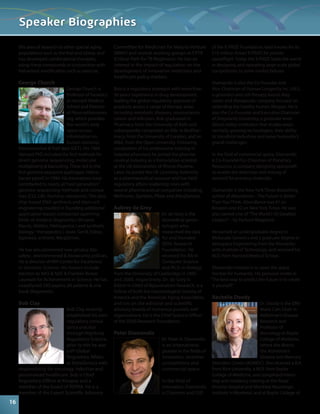
David Brindley 
David is an interna-tional 
thought-leader 
in the 
translation of 
life-science 
innovations into 
commercially viable 
products and 
services. His 
expertise spans the 
‘Valley of Death,’ encompassing regulation, 
engineering and finance. Currently David’s 
professional activities include: research into 
the optimization of risk: benefit appraisal 
techniques for healthcare innovations, 
leading the CASMI Translational Stem Cell 
Consortium and providing timely and 
pragmatic advice to a range of stakeholders 
in healthcare translation, notably the 
venture capital community. 
Examples of David’s work can be found in 
a range of high impact journals including 
Nature, Nature Biotechnology, Nature Medi-cine 
and Cell Stem Cell. David also produces 
a popular blog, Cell Therapy Industry 2027, 
with the Centre for the Commercialisation 
of Regenerative Medicine. David is an 
active Fellow of the Royal Institution of 
Great Britain and the Royal Society for the 
Advancement of Arts and Manufacturing. 
David has successfully passed the Charted 
Analyst in Alternative Investments (CAIA) 
Level 1 examination. 
David completed his undergraduate studies 
in Biochemical Engineering at University 
College London (with First Class Honors) and 
his Masters, investigating the commercial-ization 
of regenerative therapies, jointly at 
the Harvard Stem Cell Institute and Harvard 
Business School. Currently he is pursuing a 
DPhil (PhD) in Musculoskeletal Sciences at 
the University of Oxford. 
Ashley Bush 
Ashley I. Bush (MB 
BS, DPM, FRANZCP, 
PhD, FTSE) heads 
the Oxidation 
Biology Unit at the 
Florey Institute of 
Neuroscience & 
Mental Health, is 
Professor of 
Neuroscience and 
Pathology at The University of Melbourne, 
NHMRC Australia Fellow, co-director of 
Speaker Biographies 
biomarker development for the Australian 
Imaging Biomarker Lifestyle Study (AIBL), 
Chief Scientific Officer of the Cooperative 
Research Center for Mental Health, and has 
staff appointments in Psychiatry and Radiol-ogy 
at the Massachusetts General Hospital. 
He has received numerous awards includ-ing 
the Potamkin Prize and the Beeson 
Award. Professor Bush has authored over 
300 publications, with >21,000 citations 
(the most highly-cited Australian neurosci-entist 
of the last 10 years), 23 patents and 
founded 4 biotechnology companies. His 
lab discovered the interaction of beta-am-yloid 
with transitional metals as a major 
factor in Alzheimer’s disease pathology, as 
well as the roles of APP and tau in neuronal 
iron homeostasis. 
Judith Campisi 
Judith Campisi 
received a PhD in 
Biochemistry from 
the State University 
of New York at Stony 
Brook, and post-doctoral 
training in 
cell cycle regulation 
and cancer at the 
Dana-Farber Cancer 
Institute and Harvard Medical School. As an 
Assistant Professor at the Boston University 
Medical School, she began to focus her 
laboratory on role of cellular senescence in 
suppressing the development cancer, but 
soon became convinced that senescent cells 
also contributed to aging. She left Boston 
University as an Associate Professor to 
accept a Senior Scientist position at the 
Lawrence Berkeley National Laboratory in 
1991. In 2002, she established a laboratory 
at the Buck Institute for Age Research, 
where she is a Professor. 
At both institutions, Campisi established 
a broad program to understand various 
aspects of aging, with an emphasis on the 
interface between cancer and aging. Her lab-oratory 
made several pioneering discoveries 
in these areas. Her research continues to 
challenge and alter existing 
In recognition of the quality of her research 
and leadership, Campisi received numerous 
awards, including two MERIT awards from 
the US National Institute on Aging, awards 
from the AlliedSignal Corporation, Geron-tological 
Society of America and American 
Federation for Aging Research, and the 
Longevity prize from the IPSEN Foundation. 
She serves on numerous national and 
international editorial and advisory boards. 
Guillermo García-Cardeña 
Guillermo Garcia 
Cardena is an 
Associate Professor 
of Pathology at 
Harvard Medical 
School, and the 
Director of the 
Laboratory for 
Systems Biology at 
the Center for 
Excellence in Vascular Biology, Brigham and 
Women’s Hospital, Boston. He received his 
Ph.D. degree from Yale University, working 
with William C. Sessa on the molecular 
regulation of nitric oxide production in 
vascular endothelium. His postdoctoral 
research with Michael A. Gimbrone Jr. at 
Harvard Medical School was on studies of 
endothelial cell gene expression, hemody-namics, 
and atherogenesis. 
Christy Carter 
Dr. Carter received 
her PhD in Experi-mental 
and Biologi-cal 
Psychology from 
the University of 
North Carolina at 
Chapel Hill and her 
post-doctoral 
training at The Wake 
Forest University 
School of Medicine in Winston-Salem, 
North Carolina. 
Globally , Dr. Carter’s current research inter-ests 
lie in preserving physical function and 
healthspan during aging; and in particular 
focuses on the use of a preclinical rodent 
model of aging to test a variety of late-life 
interventions designed to mitigate sarco-penia. 
Furthermore, she has demonstrated 
that the application of standardized physical 
performance measures to a variety of animal 
models of aging may help to define simi-larities 
between species in the underlying 
mechanisms of sarcopenia, the age-related 
decline in performance, disability, and 
longevity. Indeed the assessment of behav-ioral 
outcomes is essential for measuring the 
efficacy of any late-life intervention in the 
context of mitigating declining performance 
and improving healthspan. She has extended 
15
this area of research to other special aging 
populations such as the frail and obese, and 
has developed combinatorial therapies, 
using these compounds in conjunction with 
behavioral modification such as exercise. 
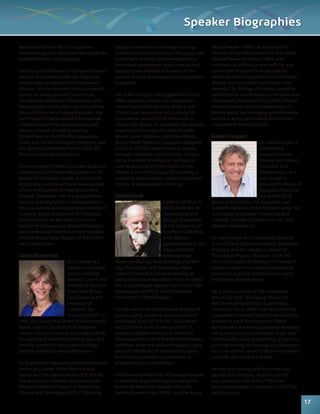
George Church 
George Church is 
Professor of Genetics 
at Harvard Medical 
School and Director 
of PersonalGenomes. 
org, which provides 
the world’s only 
open-access 
information on 
human Genomic, 
Environmental & Trait data (GET). His 1984 
Harvard PhD included the first methods for 
direct genome sequencing, molecular 
multiplexing & barcoding. These led to the 
first genome sequence (pathogen, Helico-bacter 
pylori) in 1994. His innovations have 
contributed to nearly all “next generation” 
genome sequencing methods and compa-nies 
(CGI, Life, Illumina, nanopore). This plus 
chip-based DNA synthesis and stem cell 
engineering resulted in founding additional 
application-based companies spanning 
fields of medical diagnostics (Knome, 
Alacris, AbVitro, Pathogenica ) and synthetic 
biology / therapeutics ( Joule, Gen9, Editas, 
Egenesis, enEvolv, WarpDrive). 
He has also pioneered new privacy, bio-safety 
, environmental & biosecurity policies. 
He is director of NIH Center for Excellence 
in Genomic Science. His honors include 
election to NAS & NAE & Franklin Bower 
Laureate for Achievement in Science. He has 
coauthored 330 papers, 60 patents & one 
book (Regenesis). 
Bob Clay 
Bob Clay recently 
established his own 
regulatory consul-tancy 
practice 
through Highbury 
Regulatory Science, 
prior to this he was 
a VP Global 
Regulatory Affairs 
at AstraZeneca with 
responsibility for oncology, infection and 
personalised healthcare. Bob is Chief 
Regulatory Officer at Kinapse and a 
member of the board of TOPRA. He is a 
member of the Expert Scientific Advisory 
Committee for Medicines for Malaria Venture 
(MMV) and several working groups at CPTR 
(Critical Path for TB Regimens). He has an 
interest in the impact of regulation on the 
development of innovative medicines and 
healthcare policy matters. 
Bob is a regulatory strategist with more than 
30 years’ experience in drug development, 
leading the global regulatory approval of 
products across a range of therapy areas 
including metabolic diseases, neuroscience, 
cancer and infection. Bob graduated in 
Pharmacy from the University of Bath and 
subsequently completed an MSc in BioPhar-macy, 
from the University of London, and an 
MBA, from the Open University. Following 
completion of his professional training in 
hospital pharmacy he joined the pharma-ceutical 
industry as a formulation scientist 
at the UK laboratories of Rhone-Poulenc. 
Later, he joined the UK Licensing Authority 
as a pharmaceutical assessor and has held 
regulatory affairs leadership roles with 
several pharmaceutical companies including 
Wellcome, Zambon, Pfizer and AstraZeneca. 
Aubrey de Grey 
Dr. de Grey is the 
biomedical geron-tologist 
who 
researched the idea 
for and founded 
SENS Research 
Foundation. He 
received his BA in 
Computer Science 
and Ph.D. in Biology 
from the University of Cambridge in 1985 
and 2000, respectively. Dr. de Grey is 
Editor-in-Chief of Rejuvenation Research, is a 
Fellow of both the Gerontological Society of 
America and the American Aging Association, 
and sits on the editorial and scientific 
advisory boards of numerous journals and 
organizations. He is the Chief Science Officer 
of the SENS Research Foundation. 
Peter Diamandis 
Dr. Peter H. Diamandis 
is an international 
pioneer in the fields of 
innovation, incentive 
competitions and 
commercial space. 
In the field of 
Innovation, Diamandis 
is Chairman and CEO 
of the X PRIZE Foundation, best known for its 
$10 million Ansari X PRIZE for private 
spaceflight. Today the X PRIZE leads the world 
in designing and operating large-scale global 
competitions to solve market failures. 
Diamandis is also the Co-Founder and 
Vice-Chairman of Human Longevity Inc. (HLI), 
a genomics and cell therapy-based diag-nostic 
and therapeutic company focused on 
extending the healthy human lifespan. He is 
also the Co-Founder and Executive Chairman 
of Singularity University, a graduate-level 
Silicon Valley institution that studies expo-nentially 
growing technologies, their ability 
to transform industries and solve humanity’s 
grand challenges. 
In the field of commercial space, Diamandis 
is Co-Founder/Co-Chairman of Planetary 
Resources, a company designing spacecraft 
to enable the detection and mining of 
asteroid for precious materials. 
Diamandis is the New York Times Bestselling 
author of Abundance – The Future Is Better 
Than You Think. Abundance was #1 on 
Amazon and #2 on New York Times. He was 
also named one of “The World’s 50 Greatest 
Leaders” – by Fortune Magazine. 
He earned an undergraduate degree in 
Molecular Genetics and a graduate degree in 
Aerospace Engineering from the Massachu-setts 
Institute of Technology, and received his 
M.D. from Harvard Medical School. 
Diamandis’ mission is to open the space 
frontier for humanity. His personal motto is: 
“The best way to predict the future is to create 
it yourself.” 
Rachelle Doody 
Dr. Doody is the Effie 
Marie Cain Chair in 
Alzheimer’s Disease 
Research and 
Professor of 
Neurology at Baylor 
College of Medicine, 
where she directs 
the Alzheimer’s 
Disease and Memory 
Disorders Center (ADMDC). She received a B.A. 
from Rice University, a M.D. from Baylor 
College of Medicine, and completed intern-ship 
and residency training at the Royal 
Victoria Hospital and Montreal Neurologic 
Institute in Montreal, and at Baylor College of 
Speaker Biographies 
16
Medicine and has a Ph.D. in Cognitive 
Anthropology from Rice University where she 
studied the brain and language. 
She has published over 170 original research 
articles, most dealing with the diagnosis, 
progression, or treatment of Alzheimer’s 
Disease. She has received multiple research 
grants, including a Zenith Award from 
the National Alzheimer’s Association, and 
designed and conducted numerous clinical 
trials of Alzheimer’s Disease therapies. She 
participates in National and International 
collaborative efforts, review boards, and 
advisory boards including Steering 
Committees for the NIH AD Cooperative 
Study and AD Neuroimaging Initiatives, and 
the Steering Committee for the Texas AD 
Research and Care Consortium. 
Current research interests include studies to 
understand and model the progression of 
Alzheimer’s Disease, studies of clinical het-erogeneity, 
and research and development 
of new medications to treat Alzheimer’s 
Disease. She works with many biopharma-ceutical 
and large pharma collaborators in 
the assessment and experimental testing of 
a diverse group of potential AD therapies. 
She has served on the Texas Council on 
Alzheimer’s Disease and Related Disorders, 
and the Board of Directors for the Houston 
and Southeast Texas Chapter of the Alzhei-mer’s 
Association. 
Laura Esserman 
Dr. Esserman is a 
surgeon and breast 
cancer oncology 
specialist, and is the 
Director of the Carol 
Franc Buck Breast 
Care Center at the 
University of 
California, San 
Francisco (UCSF). In 
1996, she started the Center of Excellence for 
Breast Cancer Care at UCSF to integrate 
clinical care and research, automate tools for 
the capture of patient and clinical data, and 
develop systems to tailor care to biology, 
patient preference, and performance. 
Dr. Esserman is nationally and internationally 
known as a leader in the field of breast 
cancer and has published over 200 articles. 
She served as a member of a taskforce for 
President Obama’s Council of Advisors on 
Science and Technology (PCAST) Working 
Speaker Biographies 
Group on Advancing Innovation in Drug 
Development and Evaluation. The group was 
tasked with making recommendations to 
the federal government about how to best 
support science-based innovation in the 
process of drug development and regulatory 
evaluation. 
She is the Principle Investigator of the I-SPY 
TRIAL program, a multi-site neoadjuvant 
clinical trial (which includes phase 2 and 
3 trials) that has evolved into a model for 
translational research and innovation in 
clinical trial design. Dr. Esserman has recently 
launched a University of California-wide 
breast cancer initiative called the Athena 
Breast Health Network, a program designed 
to follow 150,000 women from screening 
through treatment and outcomes, incorpo-rating 
the latest in molecular testing and 
web-based tools into the course of care. 
Athena is in the final stages of launching a 
statewide demonstration project and phase 
1/2 trial of personalized screening. 
Caleb Finch 
Caleb Finch Ph.D. is 
ARCO Professor of 
Gerontology and 
Biological Sciences 
at the University of 
Southern California, 
with adjunct 
appointments in the 
Department of 
Anthropology, 
Molecular Biology, Neurobiology, Psychol-ogy, 
Physiology, and Neurology. Major 
research interest is the neurobiology of 
aging and human evolution. Finch received 
his undergraduate degree from Yale in 1961 
(Biophysics) and Ph.D. from Rockefeller 
University in 1969 (Biology). 
His life work is the fundamental biology of 
human aging, started in grad school and 
continued since 1972 at USC. Discoveries 
include a new form of neurotoxicity of 
amyloid peptides relevant to Alzheimer 
disease and the role of shared inflammatory 
pathways in normal and pathological aging 
process. Fifteen of his mentored students 
hold senior positions in universities or 
pharmaceutical corporations. 
Finch has received most of the major awards 
in biomedical gerontology, including the 
Robert W. Kleemeier Award (1985), the 
Sandoz Premier Prize (1995), and the Irving 
Wright Award (1999). He was founding 
Director of the NIA-funded USC Alzheimer 
Disease Research Center (1984), and 
continues as coDirector and coPI. He also 
co-founded Acumen Pharmaceuticals, 
which develops therapeutics for Alzheimer 
disease. He has written four books, most 
recently, The Biology of Human Longevity: 
Inflammation and Nutrition in the Evolution 
of Lifespans (Academic Press, 2007). Recent 
interests include the paleopathology of 
human aging and emerging environmental 
factors in aging, particularly air pollution 
components from fossil fuels. 
Gabor Forgacs 
Dr. Gabor Forgacs is 
a theoretical 
physicist turned 
bioengineer turned 
innovator and 
entrepreneur. He is 
the George H. 
Vineyard Professor of 
Biological Physics at 
the University of 
Missouri-Columbia, the Executive and 
Scientific Director of the Shipley Center for 
Innovation at Clarkson University and 
scientific founder of Organovo, Inc. and 
Modern Meadow, Inc. 
He was trained as a theoretical physicist 
at the Roland Eotvos University, Budapest, 
Hungary and the Landau Institute of 
Theoretical Physics, Moscow, USSR. He 
also has a degree in biology. His research 
interests span from topics in theoretical 
physics to physical mechanisms in early 
embryonic development. 
He is the co-author of the celebrated 
text in the field, “Biological Physics of 
the Developing Embryo” (Cambridge 
University Press, 2005) that discusses the 
fundamental morphogenetic mechanisms 
evident in early development. These 
mechanisms are being applied to building 
living structures of prescribed shape and 
functionality using bioprinting, a novel tis-sue 
engineering technology he pioneered. 
He is the author of over 160 peer-reviewed 
scientific articles and 5 books. 
He has been recognized by numerous 
awards and citations. In particular, he 
was named as one of the “100 most 
innovative people in business in 2010” by 
FastCompany. 
17
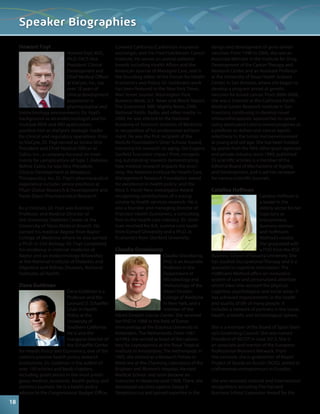
Howard Foyt 
Howard Foyt, M.D., 
Ph.D. FACP, Vice 
President, Clinical 
Development and 
Chief Medical Officer 
at ViaCyte, Inc., has 
over 18 years of 
clinical development 
experience in 
pharmaceutical and 
biotechnology environments. Dr. Foyt’s 
background as an endocrinologist and his 
multiple NDA and IND applications 
position him as ViaCyte’s strategic leader 
for clinical and regulatory operations. Prior 
to ViaCyte, Dr. Foyt served as Senior Vice 
President and Chief Medical Officer at 
Cebix, Inc., a company focused on treat-ments 
for complications of type 1 diabetes. 
Before Cebix, he was Vice President, 
Clinical Development at Metabasis 
Therapeutics, Inc. Dr. Foyt’s pharmaceutical 
experience includes senior positions at 
Pfizer Global Research & Development and 
Parke-Davis Pharmaceutical Research. 
As a clinician, Dr. Foyt was Assistant 
Professor and Medical Director of 
the University Diabetes Center at the 
University of Texas Medical Branch. He 
earned his medical degree from Baylor 
College of Medicine where he also earned 
a Ph.D. in Cell Biology. Dr. Foyt completed 
his residency in internal medicine at 
Baylor and an endocrinology fellowship 
at the National Institute of Diabetes and 
Digestive and Kidney Diseases, National 
Institutes of Health. 
Dana Goldman 
Dana Goldman is a 
Professor and the 
Leonard D. Schaeffer 
Chair in Health 
Policy at the 
University of 
Southern California. 
He is also the 
inaugural director of 
the Schaeffer Center 
for Health Policy and Economics, one of the 
nation’s premier health policy research 
institutions. Dr. Goldman is the author of 
over 150 articles and book chapters, 
including publications in the most presti-gious 
medical, economic, health policy, and 
statistics journals. He is a health policy 
advisor to the Congressional Budget Office, 
Covered California (California’s insurance 
exchange), and the Fred Hutchinson Cancer 
Institute. He serves on several editorial 
boards including Health Affairs and the 
American Journal of Managed Care, and is 
the founding editor of the Forum for Health 
Economics and Policy. Dr. Goldman’s work 
has been featured in the New York Times, 
Wall Street Journal, Washington Post, 
Business Week, U.S. News and World Report, 
The Economist, NBC Nightly News, CNN, 
National Public Radio, and other media. In 
2009, he was elected to the National 
Academy of Science’s Institute of Medicine 
in recognition of his professional achieve-ment. 
He was the first recipient of the 
MetLife Foundation’s Silver Scholar Award, 
honoring his research on aging; the Eugene 
Garfield Economic Impact Prize, recogniz-ing 
outstanding research demonstrating 
how medical research impacts the econ-omy; 
the National Institute for Health Care 
Management Research Foundation award 
for excellence in health policy; and the 
Alice S. Hersh New Investigator Award 
recognizing contributions of a young 
scholar to health services research. He is 
also a founder and managing director of 
Precision Health Economics, a consulting 
firm to the health care industry. Dr. Gold-man 
received his B.A. summa cum laude 
from Cornell University and a Ph.D. in 
Economics from Stanford University. 
Claudia Gravekamp 
Claudia Gravekamp, 
PhD, is an Associate 
Professor in the 
Department of 
Microbiology and 
Immunology of the 
Albert Einstein 
College of Medicine 
in New York, and a 
member of the 
Albert Einstein Cancer Center. She received 
her PhD in 1988 in the field of Tumor 
Immunology at the Erasmus University in 
Rotterdam, The Netherlands. From 1987 
to1993, she served as head of the Labora-tory 
for Leptospirosis at the Royal Tropical 
Institute in Amsterdam, The Netherlands. In 
1993, she started as a Research Fellow in 
Medicine at the Channing Laboratory of the 
Brigham and Women’s Hospital, Harvard 
Medical School, and soon became an 
Instructor in Medicine until 1998. There, she 
developed vaccines against Group B 
Streptococcus and gained expertise in the 
design and development of gene-driven 
vaccines. From 1998 to 2006, she was an 
Associate Member in the Institute for Drug 
Development of the Cancer Therapy and 
Research Center and an Assistant Professor 
at the University of Texas Health Science 
Center, in San Antonio, where she began to 
develop a program aimed at genetic 
vaccines for breast cancer. From 2006-2008, 
she was a Scientist at the California Pacific 
Medical Center Research Institute in San 
Francisco, continuing to develop novel 
immunotherapeutic approaches to cancer 
using attenuated Listeria monocytogenes as 
a platform to deliver anti-cancer agents 
selectively to the tumor microenvironment 
at young and old age. She has been funded 
by grants from the NIH, other grant agencies 
and private industry since 1999, published 
55 scientific articles, is a member of the 
Editorial Board of Mechanisms of Ageing 
and Development, and is ad-hoc reviewer 
for various scientific journals. 
Catalina Hoffman 
Catalina Hoffman is 
a leader in the 
elderly sector for her 
trajectory as 
entrepreneur, 
business woman 
and Hoffmann 
Method’s creator. 
She graduated with 
a PDD from the IESE 
Business School of Navarra University. She 
has studied Occupational Therapy and is a 
specialist in cognitive stimulation. The 
Hoffmann Method offers an innovative 
system of care and personalized attention 
which takes into account the physical, 
cognitive, psychological and social areas. It 
has achieved improvements in the health 
and quality of life of many people. It 
includes a network of partners in the social, 
health, scientific and technological sphere. 
She is a member of the Board of Spain Start-up’s 
Governing Council. She was named 
President of SECOT in June 2013. She is 
an associate and mentor of the European 
Professional Women’s Network. From 
this network, she is godmother of Mapel 
Project of Ayuda en Acción (NOG), aimed to 
craftswoman entrepreneurs in Ecuador. 
She also received national and international 
recognitions including The Harvard 
Business School Expansion Award for the 
Speaker Biographies 
18
Entrepreneurship. She was added to The 
Top 100 Women Leaders in Spain 2012. 
Plataforma Editorial published her first 
book “Emprender soñando”. The Prince of 
Girona Foundation granted her the Award 
of Business Woman 2013. The Association of 
Young Entrepreneur of Madrid named her 
the Young Entrepreneur of Madrid 2014. 
In 2013, she created the Catalina Hoffmann 
Holding Group, a group of companies 
specialized in different areas of science, 
health, health care, new technologies, 
consulting, innovation and development 
of new products and services. It includes 
Vitalia, Hoffman Elderly,Hoffmann Health- 
Care Innovation and Catalina Hoffmann 
Foundation. 
Chris Hornsby 
Chris’ academic 
background is in 
applied mathemat-ics 
and epidemiol-ogy, 
his doctoral 
research at Univer-sity 
College London 
was focused on 
probabilistic models 
of the multistage 
development of cancer. Chris joined the 
LifeRisks group at RMS in 2008 working 
initially as lead developer of the RMS 
Longevity Risk Model and subsequently 
more broadly on insurance capital reserv-ing 
and risk transfer applications in respect 
of both life catastrophe and longevity. 
Chris has played a key role, through the 
provision of expert risk analysis, in the early 
development of capital markets based 
solutions for hedging longevity risk. 
Jean Hébert 
Jean Hébert Jean 
Hébert completed 
his PhD at the 
University of 
California, San 
Francisco, under the 
mentorship of Gail 
Martin where he 
studied cell-signaling 
factors that regulate 
some of the early steps in mammalian 
development. For these studies, he used 
embryonic stem cells and mouse genetics. 
As a postdoctoral fellow in Susan McCon-nell’s 
lab at Stanford University, he then 
focused his attention on how the neocortex, 
Speaker Biographies 
the part of our brains that we use for our 
highest cognitive and perceptual functions, 
develops. Continuing along these interests, 
he currently heads his own research lab at 
the Albert Einstein College of Medicine 
where his group has primarily undertaken 
two lines of investigation. 
The first is understanding how a simple 
sheet of neuroepithelial cells early in 
embryogenesis develops into the adult 
neocortex, seat of our consciousness. 
Conditional genetic approaches in the 
mouse, whereby candidate genes that 
regulate neocortex formation are deleted 
or overexpressed specifically in neural 
precursor cells, comprise the central method 
driving these studies. 
The second line of investigation aims to 
establish ways of regenerating the principle 
neurons of the adult cerebral cortex when 
these neurons are lost due to trauma or 
degeneration, including degeneration due 
to aging. Since endogenous precursors do 
not replace cortical neurons when they are 
lost, two strategies are being developed: 
manipulating these precursors with molec-ular 
genetic techniques to start generating 
neurons and transplanting engineered 
precursors that are programmed to disperse 
in the cortex and differentiate into cortical 
projection neurons. 
Young Jang 
Young Jang received 
his Ph.D. in Biomedi-cal 
Sciences (Cell 
Biology) from 
University of Texas in 
2008, and completed 
his postdoctoral 
training from 
Barshop Institute for 
Longevity and Aging 
Studies and the laboratory of Amy Wagers 
at Harvard University and Harvard Stem 
Cell Institute. In 2014, he was appointed as 
an Assistant Professor in the School of 
Applied Physiology and a faculty member 
in the Parker H. Petit Institute for Bioengi-neering 
and Bioscience at Georgia Institute 
of Technology. 
The primary research focus of the Jang 
laboratory is to understand the molec-ular 
and biochemical mechanisms of 
age-related muscle loss and function. The 
Jang laboratory applies bioengineering 
approaches and stem cell-based therapies 
to study skeletal muscle dysfunction 
during aging and in age-associated muscle 
diseases. The laboratory develops and 
applies novel tools using a combination of 
animal and stem cell models. 
W. Gray Jerome 
Dr. Jerome is 
Associate Professor 
of Pathology, 
Microbiology and 
Immunology and 
Associate Professor 
of Cancer Biology at 
Vanderbilt Univer-sity. 
He is also 
Co-Director of the 
Cell Imaging Shared Resource at Vanderbilt. 
Jay is a Past-president of the Microscopy 
Society of America, the Co-Editor of a 
textbook on confocal microscopy, and an 
Editor for the journal Microscopy and 
Microanalysis. 
Jay’s research focuses on intracellular lipid 
metabolism and how disruption of normal 
lipid metabolism contributes to disease. His 
most recent studies investigate how lipids, 
particularly cholesterol, affects lysosome 
function and how alterations in lysosome 
function feedback to influence lipid 
metabolism. Lysosomes are key homeo-static 
organelles and lysosome dysfunction 
is associated with a number of diseases 
that become more prevalent with age. Dr. 
Jerome has shown that cholesterol overload 
inhibits lysosome function and disrupts cell 
homeostasis, particularly in inflammatory 
cells which can easily become overloaded 
with cholesterol. His group has also shown 
that lysosomal cholesterol-engorgement 
shifts other aspects of cellular lipid balance 
in ways that can push cells further into the 
disease state. 
Jeffrey Karp 
Jeff Karp is an 
Associate Professor 
at Brigham and 
Women’s Hospital, 
Harvard Medical 
School, and is 
Principal Faculty at 
the Harvard Stem 
Cell Institute and 
affiliate faculty at MIT 
through the Harvard-MIT Division of Health 
Sciences and Technology. His research uses 
19
materials and biology to solve medical 
problems with emphasis on nanoscale/ 
microscale materials and bio-inspiration. He 
has published more than 100 peer-reviewed 
papers and book chapters and has given over 
130 national and international invited lectures 
and has 50 issued or pending patents. Several 
technologies that he has invented are 
currently being translated into medical 
products to improve the quality of life of 
suffering patients. 
In 2011 the Boston Business Journal recog-nized 
Dr. Karp as a Champion in Healthcare 
Innovation and in 2013 the Institute for 
Chemical Engineers (IChemE) awarded one 
of his technologies the Most Innovative 
Product of the Year. MIT’s Technology 
Review Magazine (TR35) also recognized 
Dr. Karp as being one of the top innovators 
in the world under the age of 35. He has 
received the Society for Biomaterials Young 
Investigator Award and his work has been 
selected as one of Popular Mechanic’s 
“Top 20 New Biotech Breakthroughs that 
Will Change Medicine”. Dr. Karp was also 
elected in 2013 to the American Institute 
for Medical and Biological Engineering’s 
College of Fellows and as a Kavli Fellow. 
Dr. Karp is also an acclaimed mentor. He 
was selected as the Outstanding Faculty 
Undergraduate Mentor among all Faculty 
at MIT and received the HST McMahon 
Mentoring award for being the top mentor 
among all faculty who mentor Harvard- 
MIT students. 
Michael Kope 
Michael Kope is 
President, Chief 
Executive Officer, 
and Co-founder of 
the SENS Research 
Foundation. Mr. 
Kope received his 
J.D. from the 
University of 
Michigan in 1990. 
He has served as the University of 
Michigan’s Intellectual Property Counsel; 
as Director of Corporate Development for 
Aviron, and for MedImmune, Inc.; and as 
CEO and officer of a number of start-ups in 
the biotechnology space. He specializes in 
business development and consulting, 
and is widely experienced with biotech-nology 
organizations. 
Mike has negotiated a broad range of 
business acquisition and partnership 
agreements, designed strategies for 
technology protection and promotion in 
many fields of research, and facilitated a 
number of successful startups. 
Daniel Kraft 
Daniel Kraft is a 
Stanford and 
Harvard trained 
physician-scientist, 
inventor, entrepre-neur 
and innovator. 
Dr. Kraft has over 20 
years of experience 
in clinical practice, 
biomedical research 
and healthcare innovation. Daniel chairs 
the Medicine track for Singularity Univer-sity 
and is Founding Executive Director for 
FutureMed (now called Exponential 
Medicine), a program which explores 
convergent, exponentially developing 
technologies and their potential in 
biomedicine and healthcare. 
Following undergraduate degrees at 
Brown University and medical school at 
Stanford, Dr. Kraft was board certified in 
the Harvard combined Internal Medicine 
and Pediatrics residency program at the 
Massachusetts General Hospital and 
Boston Children’s Hospital. He went on 
to complete Stanford fellowships in 
hematology/oncology & bone marrow 
transplantation, and to conduct extensive 
research in stem cell biology and 
regenerative medicine. He has multiple 
scientific publications (including in the 
journals Nature and Science) and medical 
device, immunology and stem cell related 
patents through faculty positions with 
Stanford University School of Medicine 
and as clinical faculty for the pediatric 
bone marrow transplantation service at 
University of California San Francisco. 
Dr. Kraft recently founded Bioniq Health, 
focused on enabling connected, data 
driven, and integrated personalized 
medicine. He is also the inventor of the 
MarrowMiner, an FDA approved device 
for the minimally invasive harvest of 
bone marrow, and founded RegenMed 
Systems, a company developing tech-nologies 
to enable adult stem cell based 
regenerative therapies. 
Neil Littman 
Neil Littman is the 
Business Develop-ment 
Officer at the 
California Institute 
for Regenerative 
Medicine. Mr. 
Littman is responsi-ble 
for facilitating 
opportunities for 
outside investment 
in stem cell research in California by 
biopharma companies, investors, and 
disease foundations. 
Prior to joining CIRM in 2012, Mr. Littman 
was a Senior Associate in the Merchant 
Banking Group at Burrill & Company, a 
diversified global financial services firm 
focused on the life sciences industry based 
in San Francisco. While at Burrill & Company, 
Mr. Littman’s responsibilities included both 
strategic advisory and capital raises for 
biopharma companies throughout the U.S. 
and internationally. 
Mr. Littman’s strategic advisory experience 
includes buy-side and sell-side M&A, as well 
as in-licensing and out-licensing of both 
development stage and commercial prod-ucts. 
Prior to joining Burrill & Company in 
2009, Mr. Littman worked in the Healthcare 
Investment Banking group at Thomas Weisel 
Partners where he focused on strategic 
advisory and public and private financings. 
Prior to Thomas Weisel Partners, Mr. Littman 
worked in the Healthcare Investment 
Banking group at Deutsche Bank Securities. 
Mr. Littman received a Master of Science 
in Biotechnology with a concentration in 
Biotechnology Enterprise from The Johns 
Hopkins University, and a Bachelor of Arts in 
Molecular, Cellular and Development Biology 
from the University of Colorado Boulder. 
Jeanne Loring 
Jeanne Loring, Ph.D., 
is a Professor and 
the founding 
Director of the 
Center for Regenera-tive 
Medicine at The 
Scripps Research 
Institute in La Jolla. 
Her research team 
focuses on large-scale 
analysis of genomics and epigenetics 
of human pluripotent stem cells (hPSCs) and 
Speaker Biographies 
20
their derivatives, in order to ensure the 
quality and safety of these cells for clinical 
use. The team’s translational projects include 
development of cell therapies for Parkin-son’s 
disease, multiple sclerosis, and 
Alzheimer disease, and epigenetic modeling 
of autism. The team is also producing an 
ethnically diverse library of iPSC (induced 
pluripotent stem cell) lines for use in 
pharmaceutical screening. In addition, her 
lab is developing a “zoo” of induced 
pluripotent stem cells from endangered 
species to aid in their conservation. 
Dr. Loring is committed to educating both 
scientists and the public. She has trained 
more than 400 scientists over the last 10 
years in intensive laboratory courses in 
human ES and iPSC biology, and is author 
of a comprehensive laboratory manual on 
human pluripotent stem cells (“Human 
Stem Cell Manual: a Laboratory Guide, in 
second edition, 2012). She is frequently 
quoted in major newspapers, and gives 
numerous public lectures and interviews 
to inform the public about biological and 
societal issues associated with stem cell 
research, including the ethics of stem 
cell generation and clinical use, the legal 
implications of stem cell patents, and 
public education about the dangers of 
unregulated stem cell treatments (“stem 
cell tourism”). Dr. Loring serves on both 
bioethics and scientific advisory boards. 
Linda Marban 
Linda Marban is 
currently CEO, 
President and 
Director of Caprico 
Therapeutics. She 
combines her 
background in 
research with her 
business experience 
to lead Capricor and 
create a path to commercialization for its 
novel stem-cell cardiac therapies. Dr. 
Marban was the lead negotiator in procur-ing 
the license agreements that are the 
foundation of Capricor’s intellectual 
property portfolio. Under her direction as 
Chief Executive Officer, Capricor secured 
approximately $27.0 million in nondilutive 
grants and a loan award which funds 
Capricor’s R&D programs and clinical trials 
involving its CAP-1002 product. Dr. Marban’s 
deep knowledge of the cardiac space in 
particular, allows her to provide unique 
Speaker Biographies 
direction for the company’s development 
and growth. From 2003 to 2009, Dr. Marban 
was with Excigen, Inc., a biotechnology 
start-up company, where she was responsi-ble 
for business development, operations, 
pre-clinical research, and supervising the 
development of gene therapy products in a 
joint development agreement with Gen-zyme 
Corp. While at Excigen, she also 
negotiated a joint development and 
sublicense agreement with Medtronic Corp. 
utilizing Excigen’s technology and super-vised 
the building of a lab in which the work 
was to be performed. 
Dr . Marban began her career in academic 
science at the Cleveland Clinic Foundation 
working on the biophysical properties of 
cardiac muscle. She moved to a postdoc-toral 
fellowship at Johns Hopkins University 
and advanced to the rank of Research 
Assistant Professor in the Department of 
Pediatrics, continuing her work on the 
mechanism of contractile dysfunction in 
heart failure. Dr. Marban earned a Ph.D. 
from Case Western Reserve University in 
cardiac physiology. 
Andrew Martello 
Andrew Martello is 
co-founder & CEO of 
Spoonful of Sugar 
(SoS). He leads an 
expert team 
developing 
academically-led 
adherence consul-tancy 
and evi-dence- 
based 
adherence solutions to global healthcare 
providers and the pharmaceutical industry. 
SoS is a University College London spinout 
company that applies the learnings of a 
15-year research program in behavioral 
medicine, specifically, how patients engage 
with long-term illnesses and treatment. 
Over the past five years, Andrew has 
been directly involved in the planning 
and implementation of multi-country 
adherence and patient support programs 
utilizing the latest research into illness and 
medicines-related behavior. As part of this 
work, Andrew has led the development of 
proprietary software designed to diagnose 
and treat both perceptual and practical 
barriers to optimal adherence at an 
individual patient level. 
Passionate about the role of digital 
technology in changing health behaviors, 
Andrew’s main interest is the role of 
personalized medicine, from both a clinical 
and psychological perspective and its real 
world application. 
Prior to founding SoS, Andrew spent over 
ten years working for and consulting with 
the pharmaceutical industry, predominantly 
in HIV medicine. 
Much of his work in this field focused on 
the development of strategies supporting a 
greater understanding of the patient’s per-spective 
throughout the drug development 
and product lifestyle pathway. This included 
the development of novel formulations and 
devices, packaging and support services to 
optimize the use of medicines. 
This work not only focused on the devel-oped 
world but also included innovative 
strategies to widen access to medicines 
throughout the developing world. 
Andrew’s previous assignments have been 
with GlaxoSmithKline, Abbott Laboratories, 
Novartis and Sandoz Biopharmaceuticals. 
Stephen Minger 
Dr. Stephen Minger 
received his PhD in 
Pathology (Neuro-sciences) 
in 1992 
from the Albert 
Einstein College of 
Medicine in New 
York City. After 
post-doctoral work 
in central nervous 
system gene therapy, neural transplantation 
and neural stem cell biology, he was 
appointed a Lecturer in Biomolecular 
Sciences at King’s College London in 1998. 
He was appointed a Senior Lecturer in Stem 
Cell Biology in 2005 and was the Director of 
the Stem Cell Biology Laboratory from 2002 
until joining GE Healthcare in 2009. 
Over the past 20 years, Stephen’s research 
group has been at the forefront of human 
stem cell research. In 2002, they were 
awarded one of the first two licenses 
granted by the UK Human Fertilisation and 
Embryology Authority for the derivation 
of human embryonic stem (hES) cells and 
his group was the first to deposit a hES cell 
line into the UK Stem Cell Bank. Stephen’s 
21
was also one of the first two groups in the 
UK to be granted a research license by 
the HFEA in 2008 to pursue Somatic Cell 
Nuclear Transfer (SCNT) to generate “hybrid 
human embryos” for fundamental research 
into genetic forms of neurodegenerative 
conditions. He was activity involved with 
the UK Department of Health and in the 
consultation that led to the passage of 
the Human Embryo Bill of 2009 and the 
inclusion of new forms of animal-human 
embryos within primary legislation. 
In the summer of 2013, Stephen was 
appointed Chief Scientist for Cellular 
Sciences, GE Healthcare Life Sciences, and 
is now responsible for long-term global 
research strategy for technology develop-ment 
in cell therapy, regenerative medicine, 
cellular technologies, in vivo diagnostic 
imaging and molecular pathology/person-alized 
medicine. 
Peter Nakada 
Peter Nakada leads 
the RMS Capital 
Markets and 
LifeRisks groups. 
After joining the 
company in 2005, 
he formed the RMS 
Capital Markets 
group to provide an 
infrastructure for 
capital markets participants to understand 
catastrophe risk. He focuses on taking the 
company’s catastrophe risk expertise into 
adjacent markets and leads the RMS 
LifeRisks team to provide excess mortality 
and longevity risk analytics to life insurers 
and capital markets investors. 
Nakada began his career in financial services 
as a general account fixed income portfolio 
manager for Prudential Insurance Company. 
Prior to joining RMS, Nakada was a partner 
at Oliver, Wyman & Company, where he 
specialized in advising banks and insurers 
on aspects of risk, capital, and shareholder 
value. In 2000, Nakada co-founded ERisk, 
a spinoff from Oliver, Wyman & Company, 
which provides software-as-a-service for 
enterprise risk management and economic 
capital quantification. 
Nakada has co-authored many articles on 
topics related to risk, capital, and share-holder 
value, as well as the securitization of 
catastrophic risk. His articles include “Risk, 
Capital & Value Measurement in Financial 
Institutions – Part I: The Debtholder’s 
Perspective (1998),”P&C RAROC: A Catalyst 
for Improved Capital Management in 
the Property and Casualty Insurance 
Industry” (1999), “Understanding Longevity 
Risk: Insights from Structural Cause-of-Im-provement 
Models” (2012) and “Quantifying 
the Mortality-Longevity Offset”(2013). 
Nakada holds a bachelor’s degree in 
engineering sciences from Harvard College 
and a master’s degree in engineering 
management from Stanford University. He 
earned the Chartered Financial Analyst® 
designation in 1990. 
Edward James Olmos 
Edward James 
Olmos (Axford) has 
achieved extraordi-nary 
success as an 
actor, producer and 
humanitarian. The 
Tony, Emmy and 
Academy Award® 
Nominated actor, is 
probably best 
known to young audiences for his work on 
television series “Battlestar Galatica” as 
Admiral William Adama. Although the 
series kept the actor busy during its run 
from 2003 through 2009, it didn’t stop him 
from directing the HBO movie “Walkout” 
in 2007, for which he earned a DGA 
Nomination in the Outstanding Directorial 
Achievement in Movies for Television 
category. 
Olmos earned two Golden Globe and 
Emmy Award nominations, resulting in 
a win from each. In 1988, he received an 
Academy Award® nomination for Best Actor 
for his starring role in Stand and Deliver 
and won the Golden Globe for his portrayal 
of Jaime Escalante in Stand and Deliver. 
Olmos’ career in entertainment spans over 
30 years. In that time he created a signa-ture 
style and aesthetic that he applies to 
every artist endeavor. His dedication to his 
craft has brought him worldwide attention. 
Olmos went on to appear in the films 
Wolfen, Blade Runner, and the Ballad of 
Gregorio Cortez before starring in his 
biggest role to date, that of Lieutenant 
Martin Castillo in the iconic 80’s television 
series “Miami Vice”. 
He directed and starred in his first motion 
picture, American Me, in 1992. 
Olmos’ passion for the arts grows every 
year, but he never forgets to give back to 
the communities that support him with 
their dedication. 
He is an international advocate, spokesman, 
and humanitarian working with organi-zations 
such as Thank You Ocean, Project 
Hope Foundation, Children’s Hospital of 
Los Angeles, The Boy’s and Girl’s Club of 
America, The River Keepers, Dr. Andros’ 
Diabetic Foot Global Conference and he 
speaks up to 150 times a year in schools, 
universities, and corporations. 
Jim O’Neill 
Jim O’Neill is partner 
and chief operating 
officer at Mithril, a 
growth fund for 
transformative and 
durable technology 
companies in fields 
such as cyber-security; 
next 
generation finance; 
medical robotics; rail integration; enter-prise 
cloud services; 3D seismic technol-ogy; 
and data integration, visualization, 
and analysis. Mithril invests with convic-tion 
and helps teams successfully navigate 
high-growth periods. 
Before helping to launch Mithril, Jim was 
a managing director of Clarium, a global 
macro investment fund. He also ran the Thiel 
Foundation and co-founded the 20 Under 
20 Thiel Fellowship and Breakout Labs. 
Previously, as the principal associate 
deputy secretary of health and human 
services, Jim helped manage an agency 
whose 67,000 employees regulate more 
than 25% of the U.S. economy. His main 
areas of policy and program responsibility 
included the Food and Drug Administra-tion, 
the National Institutes of Health, the 
Centers for Disease Control and Prevention, 
security, intelligence, preparedness, and 
health diplomacy. He also made invest-ments 
in drug, vaccine, and diagnostic 
research on the steering committee of 
the $200 million Biomedical Advanced 
Research and Development Authority. 
Speaker Biographies 
22
Brock Reeve 
Brock Reeve is 
Executive Director 
of the Harvard Stem 
Cell Institute. In 
partnership with the 
Faculty Directors, he 
has overall responsi-bility 
for the 
operations and 
strategy of the 
Institute whose mission is to use stem cells, 
both as tools and as therapies, to under-stand 
and treat the root causes of leading 
degenerative diseases. 
HSCI is comprised of the schools of Harvard 
University and all its affiliated hospitals and 
research institutions. Under the leadership 
of the Executive Committee, HSCI invests in 
scientific research and its faculty has grown 
to include over 300 Principal and Affiliated 
members. The Institute is engaged with 
several leading pharmaceutical companies 
and foundations in joint research projects 
and its faculty have founded several stem 
cell-related startup companies and serve on 
leading Scientific Advisory Boards. 
Brock came to this role from the commercial 
sector with extensive experience in both 
management consulting and operations for 
technology-based companies, with a focus 
on life sciences. Brock received a BA and 
MPhil from Yale University and an MBA from 
Harvard Business School. 
Camillo Ricordi 
Camillo Ricordi is 
Professor and 
Director of the 
Diabetes Research 
Institute (DRI; www. 
diabetesresearch. 
org ) and the Cell 
Transplant Program 
at the University of 
Miami. 
Dr. Ricordi and collaborators developed 
the method for large scale production of 
human pancreatic islets, and he led the 
team that performed the first series of 
successful clinical islet allotransplants to 
reverse diabetes. The procedure is now 
used by laboratories performing clinical 
islet transplants worldwide. Ricordi was 
president of the Cell Transplant Society, 
on the NIH-NIAID Expert Panel on clinical 
Speaker Biographies 
approaches for tolerance induction, on 
the FDA Biologic Response Modifiers 
Advisory Committee and on the NIH-NIDDK 
Strategic Planning Committee. 
Ricordi is currently serving as Chairperson 
of the NIH funded Clinical Islet Transplanta-tion 
(CIT) Consortium, which standardized 
cell manufacturing protocols in North 
America and Europe and just completed 
the first multicenter FDA Phase III trial for 
what could become the first biologically 
active cell product approved in the US by 
the FDA. 
Ricordi has received numerous honors and 
awards and was also Knighted by the Presi-dent 
of the Republic of Italy. He is currently 
serving on the editorial boards of CellR4 
(Editor-in-Chief; www.cellr4.org) and Cell 
Transplantation (Co-Editor-in-Chief ). In 
2013 he was appointed President of the 
Ri.MED Foundation by the Italian Prime 
Minister (http://www.fondazionerimed.eu), 
one of the largest European investments in 
Biomedical Research, Biotechnologies and 
Regenerative Medicine. Ricordi also serves 
as President of The Cure Alliance (www. 
thecurealliance.org) and Chairman of the 
Diabetes Research Institute Federation 
(www.diabetesresearch.org). He has 
authored over 700 scientific publications 
and 19 awarded patents. 
David Schaffer 
David Schaffer is a 
Professor of 
Chemical and 
Biomolecular 
Engineering, 
Bioengineering, and 
Neuroscience at 
University of 
California, Berkeley, 
where he also 
serves as the Director of the Berkeley Stem 
Cell Center. He graduated from Stanford 
University with a B.S. degree in Chemical 
Engineering in 1993. Afterward, he 
attended Massachusetts Institute of 
Technology and earned his Ph.D. also in 
Chemical Engineering in 1998. Finally, he 
did a postdoctoral fellowship in the 
laboratory of Fred Gage at the Salk Institute 
for Biological Studies in La Jolla, CA before 
moving to UC Berkeley in 1999. 
At Berkeley, Dr. Schaffer applies 
engineering principles to enhance stem 
cell and gene therapy approaches for 
neuroregeneration, work that includes 
novel approaches for molecular engineer-ing 
and evolution of new viral vectors as 
well as new technologies to investigate 
and control stem cell fate decisions. 
David Schaffer has received an NSF 
CAREER Award, Office of Naval Research 
Young Investigator Award, Whitaker 
Foundation Young Investigator Award, and 
was named a Technology Review Top 100 
Innovator. He was also awarded the Bio-medical 
Engineering Society Rita Shaffer 
Young Investigator Award in 2000, the 
American Chemical Society BIOT Division 
Young Investigator Award in 2006, and 
was inducted into the College of Fellows 
of the American Institute of Medical and 
Biological Engineering in 2010. 
Dale Schenk 
Dr. Dale Schenk, 
Chief Executive 
Officer of Prothena, 
plc, was previously 
Chief Scientific 
Officer and Execu-tive 
Vice President at 
Elan Pharmaceuti-cals 
where he 
provided the 
leadership and scientific direction for Elan¹s 
research and development programs. Prior 
to joining Elan, Dr. Schenk was a founding 
scientist of Athena Neurosciences, which 
was acquired by Elan Pharmaceuticals. 
Dr . Schenk has pioneered the immuno-therapeutic 
approaches for the treatment 
of amyloidosis, as exemplified for Alzhei-mer 
¹s disease, Parkinson’s disease and light 
chain (AL) Amyloidosis. Dr. Schenk¹s work 
in this area, as well as in early detection, 
testing and other pathways to these 
diseases, has led specifically to the most 
advanced potential treatment approach 
for Alzheimer¹s disease. Clinical trials are 
also currently underway for AL amyloi-dosis 
and Parkinon’s disease that utilize 
immunotherapy. 
Dr . Schenk earned his BA and PhD in 
Pharmacology and Physiology from the 
University of California, San Diego. 
23
Michael Sherratt 
Following a PhD 
and postdoctoral 
positions with 
Professor Cay Kielty 
at the University of 
Manchester, 
Michael was 
awarded an AgeUK 
Fellowship and 
Senior Fellowship. 
He is currently a Lecturer in Molecular 
Biochemistry at the University of Manches-ter 
and director of the BioAFM (atomic 
force microscopy) Facility at the same 
institution. For the past four years he has 
served as treasurer of the British Society for 
Research on Ageing and his main research 
interests are in the effects of ageing on 
tissue extracellular matrix structure and 
mechanical function. 
Using biochemical, ultra-structural, bioin-formatic 
and micro-mechanical approaches, 
Michael’s work suggests that: i) elastic 
fibre associated proteins (which are highly 
enriched in Cys, Trp and Tyr amino acid 
residues) may be differentially susceptible 
to UV-radiation and oxidation in ageing 
tissues and ii) the effects of ageing on tissue 
mechanical properties are localized in large 
arteries such as the aorta. 
In collaboration with colleagues in the 
Manchester X-ray Imaging Facility he is now 
developing new imaging methodologies 
to characterize the effects of intra-luminal 
pressure on the 3D structure of young and 
aged arteries. 
Bernard Siegel 
Bernard Siegel, J.D., 
is the founder and 
Executive Director 
of Genetics Policy 
Institute (GPI), a 
nonprofit organiza-tion 
with offices in 
Palm Beach, Florida; 
Silicon Valley, 
California and 
Washington, D.C. He founded and co-chairs 
the annual World Stem Cell Summit, 
founded and serves editor-in-chief of the 
peer-reviewed World Stem Cell Report and 
is the editor of the 360 Stem Cell & Regener-ative 
Medicine weekly newsletter. He 
founded and is the spokesperson for the 
Stem Cell Action Coalition, a 100+ member 
international alliance of nonprofits and 
research institutions leading the global 
“Pro-Cures Movement.” 
In 2002, he filed the first court case relating 
to reproductive cloning and is widely 
credited for debunking the claim of the 
group claiming that they cloned the first 
baby. He also played a pivotal leadership 
role in galvanizing a global movement that 
successfully lobbied the United Nations to 
reject a treaty that called for a prohibition 
of nuclear transfer, or therapeutic cloning. 
As a recognized policy expert on stem cell 
research, regenerative medicine and cloning, 
he works with leading scientists and patient 
advocates, raising public awareness and 
educating lawmakers, the media and public 
on stem cells and regenerative medicine. He 
is a frequent panelist and keynote speaker 
on the subject of stem cells, public policy 
and patient advocacy. 
Eric Siemers 
Eric Siemers, M.D. is 
the Senior Medical 
Director of the 
Alzheimer’s Disease 
Global Develop-ment 
Team at Eli 
Lilly and Company. 
He earned his MD 
with highest 
distinction from the 
Indiana University School of Medicine in 
1982. After an internship in the Department 
of Internal Medicine at the Indiana Univer-sity 
School of Medicine, he completed his 
residency in the Department of Neurology 
in 1986. Prior to joining Lilly, he founded 
and headed the Indiana University Move-ment 
Disorder Clinic; his previous research 
included investigations of Parkinson’s 
disease and Huntington’s disease, and he 
established one of the first centers for 
surgical PD treatments in the US. 
Dr . Siemers currently directs late stage 
clinical research efforts at Lilly concerning 
investigational treatments for Alzheimer’s 
disease, and is more broadly involved 
with other neurological indications such 
as Parkinson’s disease. Major research 
interests include the use of biomarkers 
in investigational drug research and the 
development of trial designs that broadly 
characterize the effects of investigational 
drugs on chronic diseases. 
Dr . Siemers is a founding member and 
current Chair of the Alzheimer’s Association 
Research Roundtable. He is a member of 
the Steering Committee for the Alzheimer’s 
Disease Neuroimaging Initiative (ADNI). He 
served as the chair of the Industry Scientific 
Advisory Board for ADNI in 2007. Dr. Siemers 
is a current member of the New York 
Academy of Sciences Alzheimer’s Disease 
Leadership Counsel. He participated as a 
member of the NIA working group that 
proposed criteria for preclinical Alzheimer’s 
disease in 2011. He is a past member of the 
Board of Directors of the American Society 
of Experimental Neurotherapeutics. 
Einar M. Sigurdsson 
Einar M. Sigurdsson, 
Ph.D. is a tenured 
Associate Professor 
of Neuroscience and 
Physiology, and 
Psychiatry at New 
York University 
School of Medicine. 
A native of Iceland, 
he received a 
master’s degree in Pharmacy from the 
University of Iceland, and a Ph.D. in Pharma-cology 
from Loyola University Chicago 
Medical Center. He subsequently obtained 
postdoctoral training at New York University 
School of Medicine. 
His current research focuses on pathogen-esis, 
therapy and diagnosis for age-related 
protein conformational disorders, in 
particular Alzheimer’s disease. 
His honors include a Zenith Fellows Award 
and the Margaret M. Cahn Research Award 
from the Alzheimer´s Association, and the 
Irma T. Hirschl Career Scientist Award. He is 
presently serving as a standing member on 
an NIH study section. 
Dr. Sigurdsson and his collaborators pio-neered 
the use of modified Aβ derivatives 
as potential immunotherapy for Alzheimer’s 
disease. Furthermore, they showed for the 
first time that active and passive immuniza-tion 
as well as chelators delayed the onset 
of prion disease in mice, with follow up 
immunization studies leading to prevention 
of clinical symptoms in mice. 
On the diagnostic front, Dr. Sigurdsson 
and colleagues published the initial report 
on detection of amyloid plaques in living 
Speaker Biographies 
24
mouse brains by magnetic resonance imag-ing. 
Lately, he has pioneered the approach 
to harness the immune system to target 
pathological tau protein in Alzheimer’s 
disease and other tauopathies. 
Evan Y. Snyder 
Dr. Snyder earned 
his M.D. and his Ph.D. 
in neuroscience 
from the University 
of Pennsylvania in 
1980. He completed 
residencies in 
pediatrics and 
neurology at 
Children’s Hospi-tal- 
Boston, Harvard Medical School and 
postdoctoral research at Harvard Medical 
School. In 1992, Dr. Snyder was appointed an 
instructor in neurology at Harvard Medical 
School and was promoted to assistant 
professor in 1996. 
He is regarded as one of the fathers of 
the stem cell field, having identified over 
2 decades ago that cells that came to be 
called stem cells were a source of neural 
plasticity. He was the first to demonstrate 
that non-hematopoietic stem cells could 
mediate cell and gene replacement, home 
to injury, and perform protective, trophic, 
pro-regenerative, and anti-inflammatory 
actions. He was the first to isolate human 
neural stem cells. 
In 2003, after 23 years at Harvard, Dr. Snyder 
was recruited to Sanford Burnham Medical 
Research Institute as professor and director 
of the Stem Cells and Regeneration program. 
Michael D. West 
Michael D. West, 
Ph.D. became Chief 
Executive Officer of 
Biotime during 
October 2007, and 
has served on the 
Board of Directors 
since 2002. Prior to 
becoming Chief 
Executive Officer, Dr. 
West served as Chief Executive Officer, 
President, and Chief Scientific Officer of 
Advanced Cell Technology, Inc., a company 
engaged in developing human stem cell 
technology for use in regenerative medicine. 
Speaker Biographies 
Dr . West also founded Geron Corporation 
of Menlo Park, California, and from 1990 to 
1998 he was a Director and Vice-President, 
where he initiated and managed programs 
in telomerase diagnostics, oligonucle-otide- 
based telomerase inhibition as 
anti-tumor therapy, and the cloning and 
use of telomerase in telomerase-mediated 
therapy wherein telomerase is utilized to 
immortalize human cells. From 1995 to 1998 
he organized and managed the research 
between Geron and its academic collabora-tors 
James Thomson and John Gearhart that 
led to the first isolation of human embryonic 
stem and human embryonic germ cells. 
Dr . West received a B.S. Degree from 
Rensselaer Polytechnic Institute in 1976, 
an M.S. Degree in Biology from Andrews 
University in 1982, and a Ph.D. from Baylor 
College of Medicine in 1989 concentrating 
on the biology of cellular aging. 
Claude Wischik 
Claude Wischik is 
Professor of Old Age 
Psychiatry at the 
University of 
Aberdeen and 
Executive Chairman 
of TauRx Therapeu-tics. 
He studied 
medicine in 
Australia, then PhD 
and post-doctoral research at the MRC 
Laboratory of Cambridge, UK. He also 
completed psychiatric training in 
Cambridge. 
During his PhD he discovered that the 
neurofibrillary tangle is composed of the 
microtubule associated protein Tau. He also 
discovered that they could be dissolved 
by diaminophenothiazines. He established 
a team which developed in vitro and in 
vivo systems to establish plausibility of 
developing Tau Aggregation Inhibitor (TAI) 
therapy for AD. 
He cofounded TauRx Therapeutics to 
develop diagnostics and therapeutics for 
AD based on the TAI approach. In the first 
ever TAI phase 2 trial, TauRx demonstrated 
the feasibility of arresting disease progres-sion 
over 12 months. TauRx is currently 
conducting a global phase 3 trial of its lead 
compound in approximately 1,500 subjects 
in 22 countries. 
James Yoo 
Dr. Yoo is a surgeon 
and researcher. He is 
currently a Professor, 
Associate Director 
and Chief Scientific 
Officer at the Wake 
Forest Institute for 
Regenerative 
Medicine. Dr. Yoo’s 
research efforts 
have been directed toward the clinical 
translation of tissue engineering techno­logies 
and cell-based therapies. Dr. Yoo’s 
background in cell biology and medicine 
has facilitated the transfer of several 
cell-based technologies from the bench-top 
to the bedside. 
A few notable examples of successful clinical 
translation include the bladder, urethra, 
vagina and muscle cell therapy for incon-tinence. 
Other technologies that are being 
developed for translation include therapies 
for renal, liver and cardiovascular patholo-gies, 
skin bioprinting and skin expander for 
the treatment of burn patients. 
Dr. Yoo has served in many institutional, 
national and international committees 
and advisory boards. He has successfully 
organized and directed many scientific 
meetings and symposia, and managed 
numerous multi-institutional and interna-tional 
collaborative research projects and 
programs. He has actively contributed to 
the scientific community through publica-tion, 
meeting presentations and lectures 
internationally. 
25
Sierra Sciences shares the SENS 
Research Foundation’s mission of 
extending the human lifespan and 
pursuing healthy longevity. 
Cure Aging or Die Trying 
Mountain View, CA 
www.SierraSci.com 
Congratulations SRF, on your 
innagural U.S. Conference!
Look and Feel Younger 
with a Complimentary Life Extension Foundation® Membership 
Did you know that you can feel 
healthier, avoid disease, extend 
your life, and maybe even save 
it? If you or your loved ones want 
to achieve better health, join the 
Life Extension Foundation … 
the world’s largest non-profit 
organization dedicated to 
ongoing research on anti-aging 
and optimal health. 
Life Extension® offers you the most 
advanced life-extending therapies 
in the world as they are developed. 
o YES! I want to join the Life Extension Foundation for 6 months (new members only) at no charge to me. 
I understand there is no obligation to renew, and my satisfaction is guaranteed. 
AVG404A 
New Members receive: 
■ A 6-month subscription ($29.94 
newsstand value) to the informative 
Life Extension Magazine®, filled with 
medical research, news reports, abstracts, 
updates, and more. (Plus, you’ll have the 
option to receive the Life Extension Update 
conveniently delivered via e-mail, featuring 
timely articles to help you stay fit for life.) 
■ Discounts of 25% to 50% on all Life Extension Foundation 
Buyers Club products. Plus, special sales during the year 
offer even greater discounts on these extraordinary products. 
■ Direct access toll-free to 
a knowledgeable team of 
Health Advisors who can 
help you personalize a 
unique anti-aging program 
and provide you with 
answers about health 
concerns and supplements. 
■ Life Extension Annual 
Directory — a compre-hensive 
listing of products, 
many available only from 
Life Extension. 
At the forefront of scientific 
research, Life Extension offers 
information on: 
• Heart Disease, Diabetes, Cancer, 
and Other Illnesses 
• Anti-Aging and Hormone 
Replacement Therapies 
• Age-Related Memory Loss 
• Vitamins, Minerals, Antioxidants, 
and Other Supplements 
• And Much More 
Name Phone 
Address 
City, State, Zip E-mail 
o Yes, I want to receive the weekly FREE Life Extension Update by e-mail. I can unsubscribe at any time. 
Mail To: 
Life Extension Foundation 
P.O. Box 407198 • Fort Lauderdale, FL 33340 
Or Call Toll Free 1-800-544-4440 • Fax: 1-866-728-1050 
656.27A 0814 
Item code: MEMBFREE6M 
$37.50 VALUE 
(please print) 
Discount Code:
EXCLUSIVE 
OFFER for SENS 
attendees: 
FREE 12 Month Subscription to the 
AGING MATTERS™ MAGAZINE worth $48.00 
The Aging Matters™ Magazine is published by the IAS Group. Since 1991 the 
IAS Group has been making the latest information and products available 
worldwide, we showcase the very best and our private club magazine is 
read by over 50,000 readers 6 times a year. 
The Aging Matters™ Magazine has articles from leading 
professionals, a Q&A by the renowned ‘smart drug’ pioneer 
Dr. Ward Dean and a full run down of the 
250 essential products for the 
preventative and regenerative 
health enthusiast. 
To claim your free subscription, simply sign up for an account at: 
www.antiaging-systems.com/subscribe 
Tel: +44 208 123 2106 • Web: www.antiaging-systems.com
The leading peer-reviewed 
journal publishing 
cutting-edge research on 
rejuvenation therapies in 
the laboratory and clinic 
Rejuvenation 
Research 
Sign up for TOC Alerts! 
www.liebertpub.com/rej 
Editor-in-Chief 
Aubrey D.N.J. de Grey 
The Offi cial Journal of the European Society 
of Preventive, Regenerative and Anti-Aging Medicine (ESAAM) 
WF WVI 
WORLD FEDERATION (WF) & 
WORLD VIRTUAL INSTITUTE (WVI) 
OF PREVENTIVE & REGENERATIVE MEDICINE 
The Offi cial Journal of PYRAMED: World Federation & World 
Virtual Institute of Preventive & Regenerative Medicine
Save the Date 
SENS7 Conference 
September 3 to 7, 2015 
Queens’ College 
Cambridge, England
1. THE TARGETED DELIVERY OF CYTOKINES BY 
AUTOLOGOUS ERYTHROCYTE GHOSTS 
Authors: Berikkhanova K, Gulyayev A, Shulgau Z, Ibrasheva D, 
Bokebaev Z, Mussin N, Nurgozhin T, Askarova S, Zhumadilov Z 
Presenter Institutions: PI Center for Life Sciences; JSC Nazarbayev 
University 
Targeted delivery of cytokines by autologous erythrocyte ghosts 
may create high concentrations of cytokines in blood plasma or 
in certain body tissues for a long period of time. This is highly 
important in treatment of surgical patients with purulent diseases. 
Activity of various cytokines has been studied and the results for 
interleukin IL-1β and recombinant human angiogenin activity 
are presented. The goal of this research was to assess the activity 
of IL-1β and recombinant human angiogenin encapsulated into 
erythrocyte ghosts compared to intravenously injected free form 
of both cytokines. 
Cytokines were encapsulated by the method of hypotonic hemo-lysis. 
The experiments were performed using albino rats with 
mass of 200.0-220.0 g (n = 28). Both cytokines were used in two 
dosage forms: encapsulated in autologous erythrocyte ghosts 
and standard free form. Animals were randomly divided into four 
groups, and each group received a different kind of intravenous 
injection of a certain cytokine via the tail vein. Group A received 
500 μg of free IL-1β, group B received an injection of erythrocyte 
ghosts loaded with 500 μg of IL-1β. Group C received 4000 pg of 
free angiogenin, group D received an injection of erythrocyte 
ghosts loaded with 4000 pg of angiogenin. For all groups serum 
samples were collected at 15, 30, 60, 180, 540, 720, and 1440 min-utes 
after IV injections. Homogenates of liver, spleen, lung, heart, 
kidney, and adipose tissue were obtained 24 hours after injections. 
Concentrations of the tested substances in the collected organs 
and blood plasma were measured by ELISA. Modeling was per-formed 
using Borgia 1.03 software. 
We observed an increased half-life period (T1/2) for encapsulated 
IL-1β and angiogenin compared to the control. After introduction 
of free IL-1β the half-life period was equal to about one hour, 
when administration of loaded erythrocyte ghosts allowed the 
half-life period to increase by more than 15 fold (1043.40 ± 137.92 
min). After introduction of free angiogenin the half-life period was 
equal to about 32 min., when administration of loaded erythro-cyte 
ghosts allowed the half-life period to increase by more than 
9 fold (296,3 ± 31.6 min). The increase of the residence time of 
cytokines in the body when administered in the form of loaded 
erythrocyte ghosts can be explained by reduction of elimination 
constant (Cel) and clearance (CLel). High levels of IL-1β and angio-genin 
activity remained in the blood throughout 24 hours. We 
also observed an increased concentration of IL-1β and angiogenin 
in liver, and spleen during at least 24 hours; when administered in 
free form, IL-1β and angiogenin disappeared from these organs 
within 6 hours. 
Erythrocyte ghosts provide prolong action of IL-1β and angio-genin 
in the body by increasing the half-life period, reducing the 
clearance and elimination time, as well as due to the deposition of 
IL-1β and angiogenin in liver and spleen. These data suggest that 
Poster Abstracts 
erythrocyte ghosts are effective drug carriers for targeted delivery 
of cytokines and can potentially provide a significant therapeutic 
effect maintaining the stable level of cytokines in the blood and 
its deposition to liver and spleen. 
2. BIOLOGICAL ACTIVITIES OF AQUEOUS EXTRACT OF 
INDIAN SANDALWOOD 
Author: Fatima S 
Presenter Institution: Jamia Millia Islamia 
Santalum album, commonly known as sandalwood, is used 
traditionally in India. It is an evergreen and hemi-parasitic tree 
and has a long history in Indian religious rituals and traditional 
Chinese medicine. Due to its wide application in cosmetics and 
therapeutics, we have done this study to explore the possibility of 
using aqueous extract of S. album as antibacterial and antioxidant 
agent. The S. album extract was prepared in distilled water. The 
activity of aqueous extract was evaluated against eight bacterial 
pathogens including two strains of Escherichia coli, one each of 
Klebsiella pneumoniae, Staphylococcus aureus, Bacillus subtilis, 
Pseudomonas aeruginosa, Aeromonas species, and Klebsiella 
oxytoca. The anti-oxidant activity was analyzed by two of the 
most common radical scavenging assays, FRAP (ferric reducing 
antioxidant power) and DPPH (1,1- diphenyl-2-picrylhydrazyl). 
Results showed that S. album had the strongest inhibitory activity 
against S. aureus (MTCC 902) i.e. 87% whereas, it showed no 
inhibition against E.coli (ATCC 25922) and B. subtilis (MTCC736). 
The S. album extract showed DPPH radical scavenging activity in a 
concentration–dependent manner with maximum scavenging of 
64% in presence of 500 μl of aqueous extract. The FRAP assay also 
proved antioxidant potential of S. album with the highest value of 
0.628mM at 200μl of aqueous extract. 
3. NON-ENZYMATIC GLYCATION AND ASSOCIATED 
DEFENSE MECHANISM: UNIVERSAL DETERMINANTS OF 
VIABILITY AND SENESCENCE IN ALL FORMS OF LIFE 
Authors: Szwergold B, Miller C 
Presenter Institution: Deglycation Research 
Non-enzymatic glycation reactions (a.k.a. Maillard reactions) 
are major contributors to senescence and have been a focus of 
intensive studies in connection to diabetic complications. It was 
noted only recently that Maillard reactions are a challenge to 
all organisms and consequently, defense mechanisms against 
non-enzymatic glycation (anti-Maillard defenses) are a ubiqui-tous 
feature of life. 
We have contributed to this growing awareness by explicitly 
raising the issue of anti-Maillard defenses in organisms as diverse 
as hyperthermophilic archaea and birds. We have proposed 
some concrete and testable hypotheses, but even more impor-tantly, 
we have, for the first time, explicitly formulated and 
published such questions. 
Most recently we have directed out attention to autrophic 
organisms (plants) in which Maillard reactions have not been 
studied much. Notable exceptions to this neglect are two 
33
recent papers that present unequivocal evidence of Maillard 
reactions in plants. Significantly, these reactions appear to be 
stimulated by photosynthesis. 
These studies, however, neglected to probe the most important 
Maillard-related compound in plants; ribulose-1,5-bisphosphate 
(RuBP). This indispensable photosynthetic intermediate is found 
in high concentrations in all chloroplasts and is an extremely 
potent glycating agent. 
We postulate that RuBP-mediated glycation and defenses against 
it are important factors in determining senescence of plants and 
that understanding these processes may be of value in devising 
anti-Maillard therapies for humans. 
4. BIRDS AS A PATHOLOGY-FREE MODEL OF TYPE 2 
DIABETES. THREE CONTRIBUTING FACTORS: ABSENCE 
OF THE RAGE GENE, HIGH LEVELS OF TAURINE AND 
OTHER CARBONYL SCAVENGERS, AND LOW PLASMA 
CONCENTRATIONS OF METHYLGLYOXAL 
Authors: Szwergold B, Miller C 
Presenter Institution: Deglycation Research 
Normal glucose levels in blood plasma of all birds are much higher 
than in humans. In addition, avian body temperatures range 
between 39 oC and 42oC, they have a higher BMR, and are sub-jects 
to oxidative stresses comparable or higher than humans. In 
spite of these factors, birds experience no complications compara-ble 
to diabetic humans and live longer than terrestrial animals of 
comparable body sizes. For instance, pigeons with blood glucose 
of ~ 20 mM have a lifespan of ~ 20 years while rats with blood 
glucose of ~ 5 mM live for ~ 2 years. 
In an attempt to understand avian resistance to chronic hyper-glycemia, 
which would be very deleterious to humans, we have 
elected to view birds as a “pathology-free animal models of type 
2 diabetes.” In this presentation, we elaborate advantages of 
this new perspective over traditional animal models of diabetes. 
Furthermore, even in the absence of any new data, this approach 
illuminates a number of biochemical differences between humans 
and birds. 
One of these differences is the apparent absence of an avian 
homolog to the ubiquitous mammalian RAGE gene (Receptor 
for Advanced Glycation End Products) that is a contributor to the 
developments of diabetic complications. In our analysis of this 
issue we probed completed vertebrate genomes for homologues 
of the RAGE gene, using as a probe the bovine mRNA RAGE 
sequence. Significant homologies were found in all the mammals 
but in none of other vertebrates. This latter category included 
three bird species (chicken, turkey and zebra finch). 
A second difference is in the composition of blood plasma. Specifi-cally, 
we noted that, compared to humans, birds have significantly 
higher plasma levels of taurine and other carbonyl scavengers. 
Finally, since avian erythrocytes do not use glucose as an energy 
source, their glycolytic rates are about 90% lower than those of 
humans and consequently they appear to produce significantly 
lower amounts of the potent glycating agent methylglyoxal. 
We therefore postulate that the remarkable avian longevity and 
resistance to chronic hyperglycemia is due, in part, to these three 
factors. 
5. PEPTIDE-MEDIATED SIRNA DELIVERY TARGETING VEGF 
EXPRESSION IN GLIOBLASTOMA AND ENDOTHELIAL CELLS 
FOR ANTI-ANGIOGENIC THERAPY OF CANCER 
Authors: Shubina A, Egorova A, Baranov V, Kiselev A 
Presenter Institution: Department of Genetics and Biotechnology, 
Saint-Petersburg State University 
Cancer is one of the most common and severe age-related 
diseases. The lack of efficient treatment of this disorder makes 
it suitable for development of alternative gene therapeutic 
approaches. One of the main features of most solid tumor cancers 
is angiogenesis. Of particular importance is vascular endothelial 
growth factor (VEGF), which stimulates endothelial cell migration 
and proliferation. Thus, delivery of small interfering RNA (siRNA) 
down-regulating VEGF expression may be a promising approach 
to anti-tumor therapy. For this purpose targeted delivery system 
has to be developed. To achieve targeted gene delivery, carriers 
can be modified with ligand for cell-specific receptor. Previously, 
we have developed peptide carriers modified with ligand to 
CXCR4, a receptor overexpressed in different metastatic tumors. 
We studied vehicles composed of cross-linking peptides con-jugated 
with CXCR4 ligand and compared them to ligand-free 
peptides. Physicochemical properties of the siRNA/peptide com-plexes 
were tested. We also evaluated the toxicity of siRNA/pep-tide 
complexes. Transfection efficacy of complexes was studied in 
vitro on CXCR4-expressing cells, such as endothelial hybridoma 
E.A.Hy926 cells and A172 glioblastoma cells. For down-regula-tion 
of VEGF expression the cells were transfected with siRNA 
against VEGF. To test whether anti-VEGF siRNA delivery can 
inhibit pro-angiogenic activity of endothelial cells, we evaluated 
the ability of siRNA/peptide complexes to inhibit migration of 
endothelial cells in vitro. 
It was shown that carriers efficiently bind siRNA and protected 
it from enzymatic degradation. siRNA/peptide complexes 
efficiently transfected CXCR4 expressing cells and modification 
of siRNA/peptide complexes with CXCR4 ligand significantly 
increased their transfection efficacy. Moreover, transfection 
efficacy of complexes containing peptides modified with CXCR4 
ligand was significantly higher than of control complexes con-taining 
commercial transfection reagent PEI. We demonstrated 
that siRNA/peptide complexes are not toxic for cell cultures. 
siRNA delivery by means of ligand-conjugated carriers resulted in 
2.5-3-fold decrease of VEGF expression in glioblastoma cells and 
in 1.5-2-fold decrease of VEGF expression in endothelial cells in 
vitro. Delivery of siRNA/peptide complexes resulted in 2-6-fold 
decrease in VEGF protein production by endothelial cells. And 
delivery of siRNA/peptide complexes containing CXCR4 ligand 
resulted in significant inhibition of cell migration in vitro. 
Poster Abstracts 
34
The study shows that utilization of peptide carriers modified 
with CXCR4 ligand is a promising approach to development of a 
targeted nucleic acid delivery system to human cancer cells. Com-plexes 
containing these carriers and siRNA significantly down-reg-ulate 
VEGF expression in human glioblastoma and endothelial 
cells, inhibit VEGF protein production and migration of endothe-lial 
cells in vitro and thus can be used to develop anti-angiogenic 
treatment for solid tumor cancers. 
This work was supported by OPTEC company fellowship, RFBR 
grant 12-04-31400-mol-a and by the Ministry of education and 
science of Russia (no. 8142). 
6. BROADLY ACCESSIBLE MICROFLUIDIC TECHNOLOGIES TO 
SUPPORT MICROTISSUE ENGINEERING WITH PLURIPOTENT 
STEM CELLS 
Authors: Razian G, Hayden C, Ungrin M 
Presenter Institution: Department of Comparative Biology and 
Experimental Medicine Faculty of Veterinary Medicine University 
of Calgary 
Microtissue engineering – the production and study of engi-neered 
tissue constructs in the sub-millimeter range – is the 
central focus of the Ungrin laboratory. Constructs at this scale 
reveal the self-organizational capacity of cells of various types, 
while avoiding the limitations on transport of oxygen and other 
factors that arise when the interior of a construct is too far from 
the nearest edge. In support of these goals, we are pursuing the 
development of broadly accessible supporting technologies, such 
as our previously released AggreWell system for the production 
of large numbers of uniform three-dimensional microtissues. We 
have previously published the capacity of human pluripotent 
stem cells to recapitulate key aspects of early morphogenesis that 
are otherwise inaccessible for study. We anticipate that an under-standing 
of the native processes of organogenesis during human 
development will be critical in order to reproduce these processes 
for regenerative medicine applications. Consequently, we have 
developed a widely accessible process for the generation of 
microfluidic devices, usable in a conventional biological-research 
laboratory. We will present the process, and discuss on-going 
experiments as we begin studies of pluripotent microtissues in 
this system. 
7. IMPLICATIONS OF TA-65 IN CARDIOVASCULAR AND 
METABOLIC HEALTH 
Authors: Suram A, Singaravelu G, Patton N, Harley C, Raffaele J 
Presenter Institution: T. A. Sciences 
Increasing age is associated with accumulation of dysfunctional 
cells. Cells with limited replicative capacity contribute to the 
age-related decline in the functioning of the tissues and organs 
of the body, including the cardiovascular system. Telomeres, the 
ends of chromosomes, shorten every time a cell divides and 
expose chromosomes to the perils of DNA damage. Very short 
telomeres result in replicative senescence and dysfunctional 
cells. Various research groups propose strategies to prevent 
the formation of dysfunctional telomeres. Here we present an 
Poster Abstracts 
intervention that prevents telomere dysfunction in selected 
cells. Telomerase, a reverse transcriptase, is the enzyme that adds 
telomere repeats to the ends of chromosomes. TA-65® is a small 
molecule compound extracted from a Chinese herbal medicine, 
and has been identified as a telomerase activator in an empiri-cal 
screen. Extensive research was carried out in exploring the 
effects of TA-65®in vitro, in animal models, and in human clinical 
trials. Activation of telomerase has been consistently observed in 
different telomerase-competent cell types, such as keratinocytes, 
lymphocytes, human colonic epithelial cells, etc. TA-65® enhances 
immune function by thwarting telomere shortening, increasing 
proliferative potential and anti-viral activity of cytotoxic T lympho-cytes 
isolated from HIV infected patients. Mice studies indicate 
TA-65® activates telomerase, elongates telomeres and elicits other 
anti-aging effects. Telomere dysfunction causes changes in key 
metabolic and cardiovascular systems. The current study reports 
the effects of TA-65® on cardiovascular and metabolic profiles of 
human volunteers. The potential of TA-65® as an intervention to 
prevent telomere dysfunction and the metabolic derangements 
caused by aging is discussed. 
8. THE EFFECT OF DIETARY METHIONINE RESTRICTION ON 
CARDIAC FUNCTION IN MICE 
Authors: Ables G, Peffers M, Seymour H, Hampton T, Perodin F, 
Augie I, Orentreich D, Orentreich N 
Presenter Institution: The Orentreich Foundation for the 
Advancement of Science 
Dietary methionine restriction extends lifespan in rodents with 
concomitant hyperhomocysteinemia, a condition that is associ-ated 
with increased risk for cardiovascular disease. The paradoxi-cal 
effect of homocysteine on lifespan was, therefore, assessed by 
testing the cardiac function in young and old mice on the MR diet. 
Young (8–20 weeks old, n = 7–8/group) and old (60–74 weeks old, 
n = 7–8/group) C57BL/6J male mice were fed a diet containing 
either 0.84% methionine (control fed; CF) or 0.12% methionine 
(methionine restricted; MR) for 12-14 weeks. We show that young 
and old MR mice had relative cardiac enlargement and hyperho-mocysteinemia 
compared to the CF group. In addition, plasma 
levels of the sulfur amino acids: methionine, taurine and cysteine 
were lower in the MR mice. Cardiac gene expression analysis 
revealed upregulation of the hypertrophy markers for natriuretic 
peptide A (Nppa) in young MR mice while Nppb was upregulated 
in both young and old MR mice as compared to CF. Histological 
analysis showed that cardiomyocyte sizes were similar in both 
groups of young mice but were smaller in old MR mice than in 
old CF mice. Immunohistochemistry analysis for cell proliferation 
marker Ki67 was similar among all four cohorts. Non-invasive 
electrocardiography (ECG) showed that, at baseline, the young 
MR mice had longer QRS segments than the CF mice. However, 
following an acute response to cardiac hypertrophy by β-adren-ergic 
stimulations using isoproterenol, the response was similar in 
both groups of young mice. In the old mice, we found no differ-ences 
between the 2 groups at baseline in all the ECG parameters. 
Interestingly, while the old CF mice responded to the isoprotere-nol 
injections with longer RR, PQ, and PR segments compared 
to its own baseline, the MR mice did not elicit any response 
following the stimulation. To test for cardiac contractility, isolated 
35
heart retrograde perfusion tests were conducted and revealed 
similar levels of response at baseline and even after calcium and 
isoproterenol stimulations in both groups of old mice. Overall, 
our studies suggest that MR-induced hyperhomocysteinemia 
may not affect cardiac function in mice. 
9. SERUM IGF-BP2 STRONGLY MODERATES AGE’S EFFECT 
ON COGNITION 
Authors: Royall D, Palmer R 
Presenter Institutions: Departments of Psychiatry, Medicine, 
and Family and Community Medicine; The University of Texas 
Health Science Center and the South Texas Veterans Health 
Administration Geriatric Research Education and Clinical Center 
We have employed structural equation models of a theory driven 
factor structure to produce a latent variable measure of dementia 
severity. Our approach is modular, and be redirected towards “the 
cognitive correlates of age”. It parses the observed variance in 
cognitive performance into three compartments: the “age-related” 
fraction of shared variance (“dAGE”), the non-AGE-related fraction 
of shared variance (g’, i.e., dAGE’s residual in Spearman’s g), and 
measure specific variance (including measurement error). We 
have associated dAGE with a set of serum protein biomarkers in 
a well characterized cohort, the Texas Alzheimer’s Research and 
Care Consortium (TARCC). It now becomes an empirical question 
whether individual serum proteins, e.g., IGF-BP, have associations 
with cognitive test performance, and if so, then whether they are 
mediated via dAGE, g’ or independently of them. In this analysis, 
we find that serum IGF-BP is strongly associated with dAGE, but 
not g’. Independent of its effect on dAGE, IGF-BP has moderate 
positive effects on verbal measures (i.e., animal naming, verbal 
fluency, and Boston Naming) and an inverse association with Trail 
Making. IGF-BP’s potentially beneficial direct effects on cognition 
are likely to be overwhelmed by it’s adverse effects on dAGE. Thus, 
IGF-BP’s effects on cognition are complex. These findings suggest 
that complete understanding of such associations may necessarily 
require a latent variable approach. 
10. HUMAN EVOLUTION, LIFE HISTORY THEORY, AND THE 
END OF BIOLOGICAL REPRODUCTION 
Author: Last C 
Presenter Institution: Global Brain Institute, Vrije Universiteit 
Brussel 
Throughout primate history there have been three major life 
history transitions towards increasingly delayed sexual maturation 
and biological reproduction, as well as towards extended life 
expectancy. Monkeys reproduce later and live longer than do 
prosimians, apes reproduce later and live longer than do monkeys, 
and humans reproduce later and live longer than do apes. These 
life history transitions are connected to increased encephaliza-tion. 
During the last life history transition from apes to humans, 
increased encephalization co-evolved with increased dependence 
on cultural knowledge for energy acquisition. This led to a dra-matic 
pressure for more energy investment in growth over current 
biological reproduction. Since the industrial revolution socioeco-nomic 
development has led to even more energy being devoted 
to growth over current biological reproduction. I propose that this 
is the beginning of an ongoing fourth major primate life history 
transition towards completely delayed biological reproduction 
and an extension of the evolved human life expectancy. I argue 
that the only fundamental difference between this primate life 
history transition and previous life history transitions is that this 
transition is being driven solely by cultural evolution, which may 
suggest some deeper evolutionary transition away from biologi-cal 
evolution is already in the process of occurring. 
In this paper, we are attempting to provide a multi-disciplinary 
perspective on the elimination of aging (from here referred to 
as “radical life extension”). The first thing that must be considered 
when discussing radical life extension (RLE) are the practical con-sequences 
such an achievement would have on human growth 
and reproduction. Popular and political opposition to RLE pri-marily 
stems from the belief that such a development would lead 
to catastrophic overpopulation issues. I would like to specifically 
address how human growth and reproduction should be affected 
by the achievement of RLE. Such an understanding would help 
us properly prepare for the resulting demographic transforma-tion, 
as well as restructure popular and political dialogue around 
real problems, as opposed to imagined problems. In order to 
accomplish this I am proposing a straightforward methodology 
dependent on A) the evolution of human growth and repro-duction, 
B) a situation of this evolution within the explanatory 
framework of Life History Theory (LHT), and C) an extrapolation 
of modern developed world sexual behavior into the near-term 
future (~2040-2050). With such an approach we should be able to 
understand the evolved life history of humanity and how major 
technological breakthroughs related to RLE should affect our 
growth and reproduction patterns. Hopefully such an analysis will 
give demographers, historians, anthropologists, biologists and 
futurists the framework they need to better understand the future 
of the human population. 
11. A CASE FOR SENILITY: AGE ADVERSELY AFFECTS 
COGNITION, BUT ONLY THROUGH δ 
Authors: Royall D, Palmer R 
Presenter Institutions: Departments of Psychiatry, Medicine, Family 
and Community Medicine, The University of Texas Health Science 
Center and the South Texas Veterans Health Administration 
Geriatric Research Education and Clinical Center 
We have employed structural equation models (SEM) to explicitly 
distinguish functional status, and therefore “dementia-relevant” 
variance in cognitive task performance (i.e., “δ” for dementia). 
Regardless of the sample frame and /or the measures used 
to construct it, δ appears to be strongly related to dementia 
severity, and accurately distinguishes dementia from both “Mild 
Cognitive Impairment” (MCI) and controls. In this study, we test 
age’s association with δ in a Multiple Indicators Multiple Causes 
(MIMIC) model. Age’s adverse effects on cognition are entirely 
mediated through δ, independent of education, ethnicity, gender, 
depression ratings, serum homo-cysteine levels, hemoglobin 
A1c, and apolipoprotein e4 status. This suggests that normative 
aging is a potentially dementing condition (i.e., a “senility”). It also 
constrains age’s adverse effect on cognition to the age-related 
Poster Abstracts 
36
fraction of “general intelligence” (Spearman’s “g”). That finding 
has biological and pathophysiological implications. Future studies 
can now identify the biomarkers that mediate the association 
between age and δ scores. Those might offer opportunities for 
the specific remediation, modulation or prevention of age-related 
cognitive disability. 
12. THE USE OF STEM CELLS FOR A HEALTHIER START TO 
LIFE FOR THE DISABLED CHILD 
Author: Verma V 
Presenter Institution: International Centre for Advocacy Auckland 
Man has been trying to understand, philosophize, and address 
disability in various ways through the use of prayer, technology, 
and now biotechnology. Stem cells appear to have a great poten-tial 
for serving children with disability. This poster will cover recent 
advances in the experiments on understanding the use of stem 
cells in animal models to enhance the quality of life of disabled 
children. Stem cells have the potential to reverse hypoxemic-isch-emic 
injury to the brain through stimulating recovery of neural 
tissue in the brain. We are in the exciting stage of trying to get a 
better understanding of these mechanisms. This poster will also 
address further areas of research being done to use this significant 
tool of stem cell therapy, to give disabled children in the world a 
healthier start to life. This poster will also address the legal and 
ethical issues in the use of stem cells for children with disability. 
13. AGE-RELATED ALTERATIONS IN HUMAN 
HEMATOPOIETIC STEM AND PROGENITOR CELLS 
Authors: Rundberg Nilsson A, Bryder D, Pronk C 
Presenter Institution: Lund University, Institution for Experimental 
Medical Research 
Aging of the human hematopoietic system is often associated 
with decreased bone marrow cellularity, reduced adaptive 
immune responses, increased incidence of anemia and an increas-ing 
risk for myeloid diseases. Similar observations were made in 
mice and have been shown, at least in part, to originate already 
at the hematopoietic stem cell (HSC) level. Current knowledge 
on age-related alterations of the hematopoietic system is to a 
large extent based on studies of the murine system. Studies on 
the consequences of aging in the human hematopoietic system 
remain limited and have to some extent been contradictory. We 
therefor decided to further detail human hematopoietic aging 
and compared adult bone marrow samples from young and old 
individuals as well as cord blood cells for a number of parameters. 
We observed similar changes as reported in the murine system, 
including a functional decline in the proliferative and cloning 
potential of HSCs, as well as impaired lymphoid cell production 
with age. Furthermore, using flow cytometry, we revealed that 
HSCs were increased in frequency during aging as well as in 
adult bone marrow compared to cord blood. This likely reflects a 
decreased output/potential from single HSCs with age. Common 
lymphoid progenitors (CLPs) showed a reverse pattern from 
HSCs, decreasing with age and from cord blood to bone marrow. 
Adult bone marrow granulocyte/macrophage progenitors (GMPs) 
decreased with age, however the frequencies in adult bone 
Poster Abstracts 
marrow were higher compared to cord blood. Megakaryocyte/ 
erythrocyte progenitors (MEPs) were lower in young adult bone 
marrow compared to cord blood and increased with age in adult 
bone marrow. Additionally, transcriptome profiling of aged HSCs 
demonstrated a skewing towards GMP/MEP-associated genes, 
while lymphoid-associated genes were downregulated. This 
indicated that, similar to mice, the phenotypes associated with 
human hematopoietic aging could be linked to changes in the 
very primitive HSC compartment. 
14. EPIGENETICS: PROMISING RESEARCH IN THE 
PROGRESSION AND TREATMENT OF ALZHEIMER’S DISEASE 
Author: Mukti R 
Presenter Institution: Mawlana Bhashani Science and Technology 
University 
Epigenetics holds great promise to resolve and explain many 
unsolved questions and issues in modern biology. Epigenetics is 
the reversible inherited changes in gene expression that occurs 
without any alteration in DNA sequence. As epigenetic modifi-cations 
can be reversed by nutrients or drugs or other environ-mental 
factors, the design of more rational interventions to target 
or detect epigenetic changes is expected in the near future to 
complement the science of genomics in making new inroads to 
effective personalized medicine. Alzheimer disease (AD) is the 
most common form of dementia that causes memory loss and 
problems with behavior and other intellectual abilities, serious 
enough to interfere with daily life. AD is caused by hypomethyla-tion 
and increased histone acetylation of APP (amyloid precursor 
protein) promoter. Aberrant miRNA-mediated processing of 
mRNA can lead to abnormal levels of mRNA and consequent 
neuronal dysfunction in AD brain hippocampus. Environmental 
cues such as diet, metal exposure, maternal care and intrauterine 
exposures may perturb gene regulation during early development 
causing epigenetic dysregulation and contribute to the patho-genesis 
of AD. The knowledge about the role of epigenetics in 
the progression of this neurodevelopmental disorder provides a 
perfect opportunity to design rationale therapeutic strategies, for 
example, contextual memory deficits can be completely reversed 
by the administration of histone deacetylases.Epigenetics holds 
great promise to resolve and explain many unsolved questions 
and issues in modern biology. Epigenetics is the reversible 
inherited changes in gene expression that occurs without any 
alteration in DNA sequence. As epigenetic modifications can be 
reversed by nutrients or drugs or other environmental factors, the 
design of more rational interventions to target or detect epigen-etic 
changes is expected in the near future to complement the 
science of genomics in making new inroads to effective personal-ized 
medicine. Alzheimer’s disease (AD) is the most common form 
of dementia that causes memory loss and problems with behavior 
and other intellectual abilities, serious enough to interfere with 
daily life. AD is caused by hypomethylation and increased histone 
acetylation of APP (amyloid precursor protein) promoter. Aberrant 
miRNA-mediated processing of mRNA can lead to abnormal 
levels of mRNA and consequent neuronal dysfunction in AD 
brain hippocampus. Environmental cues such as diet, metal 
exposure, maternal care and intrauterine exposures may perturb 
gene regulation during early development causing epigenetic 
37
dysregulation and contribute to the pathogenesis of AD. The 
knowledge about the role of epigenetics in the progression of this 
neurodevelopmental disorder provides a perfect opportunity to 
design rationale therapeutic strategies, for example, contextual 
memory deficits can be completely reversed by the administra-tion 
of histone deacetylases. 
15. THE HIGH OXIDATIVE STRESS RESISTANCE OF RPE CELLS 
DIMINISHES LIPOFUSCIN ACCUMULATION 
Author: Karlsson M, Kurz T 
Presenter Institution: Division of Drug Research, Department of 
Medical and Health Sciences, Linköping University 
Postmitotic retinal pigment epithelial (RPE) cells phagocytose 
on a daily basis the expended tips of the photoreceptors in the 
eye. Residing in the retina, RPE cells live in an oxygen-enriched 
environment and degrade substantial amounts of lipid-rich mate-rial. 
All these are prerequisites for the formation of lipofuscin, the 
non-degradable age pigment whose accumulation in RPE cells 
is a risk factor for development of age-related macular degener-ation 
(AMD) - the eye disease that causes most cases of central 
visual impairment in the western world. Interestingly, RPE cells 
accumulate lipofuscin only late in life. We have previously shown 
that cells of the immortalized RPE cell line ARPE-19 are remarkably 
resistant against oxidative stress compared to another profes-sional 
scavenger cell line J774. We investigated possible causes 
for the oxidative stress resistance of ARPE-19 cells in comparison 
to the moderately sensitive J774 cells and found: (1) similar H2O2 
degradation efficiency and total as well as lysosomal iron in both 
cell types, (2) tight iron binding that yet allows for survival/prolif-eration 
even under conditions of iron starvation of RPE cells, (3) 
much enhanced basal levels of the iron-binding proteins metallo-thionein, 
HSP70 and ferritin as well as a high capacity for upreg-ulation 
of metallothionein and ferritin in RPE cells. A constant 
autophagic influx of these three iron-binding proteins into the 
lysosomal compartment would keep the redox-active iron level 
invariably low and prevent intralysosomal formation of hydroxyl 
radicals, explaining why RPE cells tolerate high doses of oxidative 
stress and accumulate lipofuscin only late in life. 
16. SYSTEMS BIOLOGY OF HUMAN AGING: NETWORK 
MODEL PRIMARY TABS 
Author: Furber J 
Presenter Institution: Legendary Pharmaceuticals 
This network diagram is presented to aid in conceptualizing 
the many processes of aging, the causal chains of events, and 
the interactions among them. Contemplation of this network 
suggests promising intervention points for therapy develop-ment. 
This diagram is maintained on the Web as a reference for 
researchers and students. Content is updated as new informa-tion 
comes to light. 
At first glance the network looks like a complicated web. How-ever, 
as a conceptual summary, in one view, we can see how 
most biogerontological processes relate to each other. Impor-tantly, 
examination of these relationships allows us to pick out 
reasonably plausible causal chains of events. Within these chains, 
we can see age-related changes or accumulations that appear to 
be promising targets for future therapy development. The many 
observable signs of human senescence have been hypothesized 
by various researchers to result from several primary causes. 
Inspection of the biochemical and physiological pathways associ-ated 
with age-related changes and with the hypothesized causes 
reveals several parallel cascades of events that involve several 
important interactions and feedback loops. This network model 
includes both intracellular and extracellular processes. It ranges in 
scale from the molecular to the whole-body level. Effects due to 
externalities, lifestyle, environment, and proposed interventions 
are highlighted around the margins of the network. 
17. AGING IS INEVITABLE… BUT IS IT AVOIDABLE? 
Authors: Augsburger B, Irwin M 
Presenter Institution: Department of Pathobiology, College of 
Veterinary Medicine, Auburn University 
Every biomolecule is subject to the second law of thermody-namics, 
which applies constant pressure towards degeneration. 
The low entropy state in living organisms is maintained only 
through the combination of: 1) activation energy requirements 
for breaking chemical bonds, and 2) the directed investment of 
additional energy to repair and replace biomolecules. A prospec-tive 
approach was applied towards characterizing the inevitability 
of biomolecular degradation in mammalian organisms. Such 
degradation is ubiquitous in aging, yet a causal diagram of the 
aging process and the relative positioning of the various classes 
of damaged biomolecules in this diagram have yet to be firmly 
established. 
A thermodynamic analysis of mammalian genetic molecular 
fidelity was performed, with consideration given to known biome-chanisms 
and utilization of transition state theory. The temporal 
and spatial distribution of the genetic molecules in an organism 
throughout a full lifespan was also considered in the analysis. 
Thermodynamic system boundaries were modelled based on 
mammalian organismal biology. Germline genetic molecular 
integrity was similarly analyzed. 
The results demonstrate that the nuclear and mitochondrial 
genetic molecular fidelity of a mammalian organism are destined 
to be compromised with time. In other words, the degradation of 
nuclear and mitochondrial DNA is certain, given sufficient time. An 
additional analysis demonstrates how germ cells, through some-what 
different mechanisms, are able to maintain nuclear DNA 
integrity and effectively reset mitochondrial DNA populations to 
healthy, homogeneous states typical of a youthful organism. 
The degradation of other classes of biomolecules is also 
considered. Similar analyses demonstrate how pools of these 
molecules can, in theory, be maintained with perfect fidelity, 
provided genetic fidelity is maintained; thus, they are not by 
necessity top level contributors to aging. Also discussed are 
hypothetical biomechanisms that, if present in an organism’s 
genome, could potentially overcome the inevitability of genetic 
molecular degradation. 
Poster Abstracts 
38
Although genetic molecular fidelity reduction is inevitable 
given the current evolutionary state of mammals, the amount of 
energetic resources an organism invests into maintaining genetic 
fidelity can modulate the rate of decay but with diminishing 
returns. Considering that cellular energy spent on genetic fidelity 
is unavailable for other processes, species have evolved in a way 
that balances the requirement for maintaining genetic fidelity 
with other energy consuming processes, thus establishing a 
compromise between lifespan and other factors that provide 
selective advantage. 
The results of these analyses provide important insight into the 
causal relationships of different classes of biomolecular degrada-tion 
in the aging process. Establishing a hierarchal causal diagram 
of the aging process is important for a number of reasons. The 
multitude of aging theories, the discontinuities between them, 
and the failure of the scientific community to agree on root causes 
of aging has hindered public acceptance of the feasibility of aging 
research as a means to extend useful lifespan. This discourages 
investment. Beyond contributing towards public acceptance, a 
clearer understanding of the causal relationships involved in the 
aging process, by definition, helps distinguish between cause 
and effect, and thus is valuable in the identification of potential 
targets for therapies. 
18. A SHORT REVIEW OF POSSIBLE USE OF CURCUMA 
LONGA LINN., PIPER LONGUM LINN., AND GHEE IN THE 
PREVENTION OF ALZHEIMER’S DISEASE 
Authors: Joseph M, Mohan P 
Presenter Institution: AVP Research Foundation 
The objective of the study is to compile the evidence from the 
literature indicating possible use of Curcuma longa Linn., Piper 
longum Linn., and ghee as a combination in the prevention of 
Alzheimer’s disease. 
The properties of C. Longa Linn., P. longum Linn., and ghee were 
assessed by careful study of classical literature and research 
papers searched from the PubMed database, EBSCO Host and 
Science Direct databases and Google Scholar for studies that 
provide evidence for their use in the prevention of Alzheimer’s 
disease. These substances were found to be ingredients in various 
combinations in quite a number of Recipes lending support to 
the efficacy of the combination in Alzheimer’s disease. This effect 
was made explainable by modern principles like the action of 
curcumin (chemical constituent of Curcuma longa Linn.) on the 
Alzheimer’s disease, the action of piperine (chemical constituent 
of Piper longum Linn.) in increasing bioavailability of curcumin 
and the action of lipid in crossing the blood brain barrier to target 
the drug on neurons. 
The ghee processed with C.longa Linn. and P.longum Linn. seems 
to have a potential for prevention of Alzheimer’s disease based 
on this short review. This preparation should be evaluated for 
its efficacy in preventing the progression of Alzheimer’s disease 
diagnosed in the early stages. 
Poster Abstracts 
The ghee processed with C.longa Linn. and P.longum Linn. 
appears to be a potential prevention for Alzheimer’s disease. The 
literature study on this ghee preparation and its effects on Alzhei-mer’s 
disease shows scope to do a preclinical and clinical study to 
establish its effect on Alzheimer’s disease. 
19. SIRT7 REGULATES A STRESS RESPONSE IN 
HEMATOPOIETIC STEM CELLS 
Authors: Mohrin M, Liu Y, Shin J, Brown K, Luo H, Haynes C, Chen D 
Presenter Institution: University of California, Berkeley 
SIRT7, one of seven mammalian homologs to the longevity gene 
SIR2, negatively regulates gene expression by deacetylating lysine 
18 of histone H3 (H3K18Ac), and modulates expression of genes 
involved in protein biosynthesis, such as ribosomal proteins and 
translation factors. SIRT7 localizes to the nucleus and is highly 
expressed in the liver and hematopoietic system. All the cells of 
the hematopoietic system are derived from hematopoietic stem 
cells (HSCs). With advanced age hematopoietic malignancies 
increase and hematopoietic function declines. SIRT7 expression 
is decreased in old HSCs. Furthermore, SIRT7 is also known to 
localize to a chromosomal region deleted in leukemia, and loss 
of function of ribosomal proteins –many of which are targets of 
SIRT7– is associated with hematopoietic malignancies. To under-stand 
the role of SIRT7 in the hematopoietic system we set out to 
characterize SIRT7 deficient mice. We found that SIRT7 deficiency 
causes reduced quiescence, increased mitochondrial mass, and 
compromised regenerative capacity of HSCs. We confirmed that 
expression of SIRT7 is reduced in aged HSCs and discovered that 
SIRT7 upregulation improves the regenerative capacity of aged 
HSCs. Together, these data suggest that SIRT7 is part of a stress 
response system that regulates HSC maintenance, and establishes 
the deregulation of this SIRT7 pathway as a contributing factor 
for HSC aging. Our future directions are to uncover the stress 
response genes targeted by SIRT7 that regulate mitochondrial 
biogenesis and metabolic function in HSCs. 
20. ELUCIDATING THE ROLE OF TGF-Β SIGNALING IN 
HUNTINGTON’S DISEASE 
Author: Karen R 
Presenter Institution: Buck Institute for Research on Aging 
Huntington’s disease (HD) results from an expansion in the num-ber 
of CAG repeats in the first exon of the huntingtin (HTT) gene. It 
is characterized by impairments of motor function, psychological 
disturbances, personality changes, chorea, and cognitive decline. 
HD patients display a loss of neurons in the striatum and cortex 
associated with the toxicity of mutant HTT (mHTT) protein. There 
is no cure or effective treatment to alter HD progression and 
mechanisms of the disease are not completely understood. Our 
lab has generated a human stem cell model of HD using human 
induced pluripotent stem cells (iPSCs) to generate human neural 
cells in vitro. Using homologous recombination, we corrected 
HD patient-derived iPSCs to generate isogenic, corrected iPSCs 
with normal CAG repeat length. Using these isogenic stem 
cells, we identified phenotypes specific to mHTT including 
elevated caspase activity, reduced BDNF protein, mitochondrial 
39
dysfunction, and altered signaling pathways, including cadherin 
and transforming growth factor-beta (TGF-β), in HD neural stem 
cells (NSCs). The TGF-β signaling pathway has been implicated in 
various neurodegenerative diseases but thus has been minimally 
studied in HD. Our goal is to identify the role that altered TGF-β 
signaling plays in the pathogenesis of HD. Thus far we have identi-fied 
differences in levels of TGF-β signaling molecules using RNA-seq 
and qPCR analyses of HD and corrected NSCs derived from our 
isogenic iPSCs. Furthermore, we find that TGF-β1 is neuroprotec-tive 
in HD NSCs and reduces levels of caspase-3/7 activity. Lastly 
we show that the latent TGF-β complex is processed differently in 
mutant HD and wild type 293 cells indicating a potential mecha-nism 
for altered TGF-β expression in HD cells. By elucidating the 
role of TGF-β signaling in HD stem cell models, we will provide a 
further understanding of mechanisms leading to HD and hope to 
identify new therapeutic targets to benefit HD patients. 
21. ENHANCED PRIMARY ENDOTHELIAL CELL ATTACHMENT 
VIA ANTIBODY CONJUGATION: TOWARD KIDNEY 
IMPLANTATION USING AUTOLOGOUS CELL SOURCES 
Authors: Bassin E, Huling J, Ko I, Yoo J, Atala A 
Presenter Institution: Wake Forest Institute for Regenerative 
Medicine 
The only definitive treatment for end stage renal disease is 
renal transplantation. However, a shortage of kidney donors 
has created long waiting lists for patients. Recent progress in 
whole organ engineering techniques based on decellularization/ 
recellularization suggests that this method could eventually be 
used in transplantation. Although the previous approaches have 
made important progress that enabled small organ constructs to 
be implanted in vivo, these approaches are limited to short-term 
assessments. One major challenge for long-term in vivo success 
of bioengineered organs is vascular patency. In the absence of 
complete endothelial reseeding of vascular matrices, significant 
thrombosis is likely to occur within the vasculatures of the scaffold. 
To address this issue, the WFIRM team previously developed 
an endothelial cell seeding method, combined with antibody 
conjugation that permits effective coating of the vascular matrix 
of decellularized porcine kidney scaffolds. The WFIRM team 
demonstrated the effectiveness of antibody-conjugation-me-diated 
re-endothelialization using a xenogeneic endothelial 
cell line through an in vitro cell detachment test and an in vivo 
implantation test. Toward clinical translation, we aim to test the 
feasibility of kidney implantation using autologous cell sources of 
a functionally re-endothelialized and human-scaled porcine renal 
scaffold. It is hypothesized that conjugating CD31 antibody to the 
decellularized vascular matrix will improve primary endothelial 
cell (pEC) attachment following implantation. To test this hypoth-esis, 
we performed a cell detachment test using a flow chamber 
system to determine effects of CD31 antibody conjugation on the 
improvement of pEC attachment. 
As cell sources, porcine pEC were used after isolation and expan-sion. 
To characterize endothelial cell phenotypes, the expanded 
cells were immunostained for CD31 and VE-cad. To prepare 
antibody conjugated glass surfaces, CD31 antibody was conju-gated 
onto collagen-coated glass slides using EDC/NHS chemistry. 
To assess cell detachment, a flow chamber system was designed 
using a commercially available device. The glass slides were 
placed in the chamber and protein blocked using BSA solution. 
pEC at a concentration of 7.5 × 10⁵ cells/ml was introduced to the 
slides and allowed to attach. The pre-adhered cells were exposed 
to various physiological flow conditions and the flow experiment 
was video-recorded. The number of cells on the glass slides were 
counted using Image J. 
Immunostaining results demonstrate that the expanded endothe-lial 
cells expressed CD31 and VE-cad positive on their surfaces. To 
examine the effects of antibody conjugation on improvement of 
pEC attachment, the level of cell detachment from the surfaces 
under flow conditions was determined. At the lowest flow rate of 
18 ml/hr, 97% of cells remained attached on antibody conjugated 
slides, while 43% of cells remained on the untreated surface. With 
increasing of flow rate, more than 90% of the original pre-at-tached 
cells detached from the untreated surfaces. However, the 
cells on the antibody conjugated surfaces remained above 70% of 
cell attachment (Two-way ANOVA, p<0.001). These results suggest 
that CD31 antibody conjugation may improve primary endothelial 
cell attachment under physiological flow conditions. 
22. MITOCHONDRIAL DYSFUNCTION-ASSOCIATED 
SENESCENCE RESULTS IN A NON-CANONICAL SECRETORY 
PHENOTYPE 
Authors: Wiley C, Velarde M, Freund A, Sarnoski E, Shirakawa K, 
Verdin E, Campisi J 
Presenter Institution: Buck Institute for Research on Aging 
Loss of mitochondrial function is a potential vector for age-related 
tissue decline. Despite ample evidence linking mitochondrial 
dysfunction to age-related phenotypes in nerve and muscle, less 
is known of the mechanisms behind this link in mitotically active 
tissues. One potential mechanism for the age-related decline of 
proliferating tissues is cellular senescence. Cellular senescence 
results in permanent mitotic arrest, but may also result in the 
secretion of a myriad of biologically active factors collectively 
known as the senescence-associate secretory phenotype, or SASP. 
We identified mitochondrial dysfunction as an inducer of cellular 
senescence. Multiple mitochondrial manipulations - including 
targeted knockdowns of mitochondrial proteins, depletion of 
mitochondrial DNA, and inhibition of the electron transport chain 
- resulted in senescence, but that senescence response lacked 
canonical secretory phenotypes, especially the IL-1 inflammatory 
arm of the SASP. Cells induced to senescence in this manner 
displayed altered NAD+/NADH ratios, and both senescence arrest 
and secretory phenotypes could be rescued by manipulations 
that restored NAD redox balance. Altered NAD redox balance 
resulted in P53 phosphorylation in an AMPK-dependent manner, 
and activation of P53 was required for both senescence and 
suppression of the IL-1 inflammatory arm of the SASP. Senescent 
cells also accumulated in the adipose tissue of progeroid mice that 
rapidly accrue mitochondrial DNA mutations (POLGD257A mice), 
and the secretory profile of those tissues closely resembled that of 
human fibroblasts during mitochondrial dysfunction, indicating 
that these phenotypes can also occur in vivo. These data provide a 
Poster Abstracts 
40
novel link between mitochondrial dysfunction and aging through 
the process of cellular senescence. 
23. EXPOSURE TO AN ENVIRONMENTAL TOXIN ASSOCIATED 
WITH PARKINSON’S DISEASE INDUCES ASTROCYTIC 
SENESCENCE WITHIN THE SUBSTANTIA NIGRA AND LEADS 
TO DOPAMINERGIC CELL LOSS 
Authors: *Woods G, *Chinta S, Rane A, Zou Y, Demaria M, Campisi J, 
Andersen J 
Presenter Institution: Buck Institute for Research on Aging 
Parkinson’s disease (PD) is a neurodegenerative disease charac-terized 
by the loss of dopaminergic (DAergic) neurons within a 
region of the midbrain known as the substantia nigra (SN). PD is 
thought to arise from the combined effect of susceptible genetic 
backgrounds and repeated exposure to environmental insults. 
In particular, exposure to the herbicide, paraquat (PQ), has been 
linked to the development of PD. Yet, the single largest risk factor 
for acquiring PD is advanced age. As tissues age and cancer risks 
amass, mitotic cells can undergo cellular senescence, a tumor 
suppressive mechanism which induces near permanent mitotic 
arrest. However, the accumulation of senescent cells on its own 
is thought to directly contribute to the physiology of aging and 
its associated diseases. Evidence suggests that glial cells undergo 
senescence over time in the brain and that this may contribute to 
age-related neuropathologies. Therefore, we tested the possibility 
that PQ administration induces glial senescence, hypothesizing 
that the accumulation of senescent glia could itself contribute to 
eventual DAergic cell loss. 
We found that exposure of mice to PQ caused neurodegeneration 
of DAergic cells in the SN, which was accompanied by hallmarks of 
cellular senescence in the SN proper. PQ administration caused SN 
resident astrocytes to undergo cellular senescence as evidenced 
by a loss of laminB1 and HMGB1 expression in GFAP positive 
cells. Ablation of senescent cells, using a mouse model in which 
senescent cells can be inducibly eliminated in vivo, was protective 
against PQ induced Parkinsonian pathologies. Thus the accumu-lation 
of senescent astrocytes, as a result of aging or exposure to 
toxins, may mechanistically contribute to the development of PD. 
Support: T32 (GW), Ellison Senior Scholar Award (JKA), Marin 
Community Foundation (JKA/JC) 
* co-first authors 
24. NEUROPEPTIDE SIGNALING AND HEALTHSPAN IN C. 
ELEGANS 
Authors: Aguiar S, Liang T, Adams N, Tseng J, Garrison J 
Presenter Institution: The Buck Institute for Research on Aging 
Genetic manipulation has enabled the five-fold extension of C. 
elegans lifespan (Chen et al., 2013). This synergistic elongation 
was accomplished by mutating only two genes: rsks-1 (TOR) and 
daf-2 (insulin receptor). The search for additional life-extending 
genes is ongoing. 
Poster Abstracts 
Neuropeptides (NPs) are modulatory intercellular signaling 
molecules secreted exclusively by neurons, and may coordinate 
organismal aging. NPs, such as brain-derived neurotropic factor 
(BDNF) and gonadotropin-releasing hormone (GnRH), have been 
shown to play a role in cell survival and systemic “inflammaging,” 
respectively. However, the role of other NPs in aging is a relatively 
new area of inquiry. 
The hypothalamus secretes a number of neuropeptides putatively 
relevant to aging, including vasopressin (AVP), and oxytocin (OXY). 
The former has been shown to regulate water retention and the 
latter social cognition and the rate of muscle regeneration in mice 
(Elabd et al., 2014). Recently, the nematode C. elegans was found to 
possess an AVP/OXY ortholog, known as nematocin (Garrison et al., 
2012). Research on this NP is just beginning. It is known that male 
worms require nematocin to mate properly, but it is unknown 
whether this newly discovered NP plays any role in aging. 
This project will evaluate the effect of nematocin knockout on 
mean lifespan (comparing automated and manual assays), muscle 
tissue degeneration (sarcopenia), and thermotolerance. The 
primary aim of this study is to determine whether nematocin is 
involved in longevity. Secondarily, sarcopenia testing bears upon 
whether the putative muscle-rejuvenating activity of oxytocin is 
conserved in C. elegans. Third, thermotolerance data may pro-vide 
insight as to whether neuropeptide KOs are living longer or 
shorter lives due to altered stress resistance versus a genetically 
programmed longevity clock that operates irrespective of stress. 
25. EVALUATION OF ENGRAFTMENT OF HUMAN MSC 
ENGINEERED TO ENHANCE IMMUNOMODULATORY 
POTENTIAL IN A MURINE MODEL OF INFLAMMATORY 
BOWEL DISEASE, THROUGH CONFOCAL MICROSCOPY 
Authors: Crowley C, Mokhtari S, Vance M, Rodman C, Marrs G, 
Porada C, Almeida-Porada G 
Presenter Institution: Wake Forest Institute for Regenerative 
Medicine 
Inflammatory Bowel Disease, (IBD), is a group of disorders 
characterized by inflammation of the gastro-intestinal tract due to 
an altered immune response. Despite affecting nearly 1.5 million 
individuals in the U.S. and 2.2 million individuals in Europe, no 
treatment option thus far has emerged as a successful cure to this 
disease. Today, many cellular based therapies are being consid-ered 
as a potential treatment for IBD. Of particular interest, mes-enchymal 
stromal cells (MSCs) have been shown to migrate, upon 
infusion, to areas of inflammation, where they release soluble 
factors to promote healing, inhibit apoptosis, and stimulate/sup-port 
resident stem/progenitor cells. Yet, only 30% of IBD patients 
in clinical trials respond to MSC therapy. 
Here, we hypothesized that transplantation of MSCs engineered 
to enhance their inherent immunomodulatory potential and/or 
to increase homing would improve the ability of MSCs to 
migrate to the intestine and enhance their therapeutic potential. 
Therefore, we used a T cell transfer model in Balb/c-scid mice to 
replicate IBD-like disease and treated the animals with one of 
three different human MSC (hMSC) cell lines: unmodified hMSC, 
41
hMSC modified to increase their anti-inflammatory potential 
through HLA-G1, or hMSC modified with improved anti-inflamma-tory 
potential and improved migratory specificity to the intestinal 
crypts through HLA-G1 and Eph-B2. 
Large intestine samples (Cecum) from transplanted animals (n=12) 
were harvested approximately 3 month after therapy. Negative 
control animals consisted of age-matched mice in which no dis-ease 
induction or cell therapy was performed (n=3). Tissues were 
paraffin embedded after which they were cut, mounted on slides, 
and stained to image via confocal microscopy. The staining was 
performed using a mouse on mouse (M.O.M.) kit and antibody 
specific to human mitochondria. Samples were counterstained 
with DAPI to visualize nuclei within the cells. A LSM Zeiss 710 
confocal microscope was used with 10x and 40x oil magnifications 
to visualize the tissue samples from each of the 15 animals. High 
levels of human MSC engraftment were seen in animals trans-planted 
with all MSC populations. However, the highest levels of 
engraftment were observed in mice treated with hMSCs modified 
with HLA-G1, whereas animals transplanted with Eph-B2 showed 
the lowest levels of engraftment. 
Because transfer of mitochondria can occur as part of the regen-erative 
process mediated by MSC, future studies will determine 
whether cells displaying human mitochondrial staining are indeed 
human MSC that engrafted in the intestine or are murine cells 
containing transferred human mitochondria. Therefore, fluores-cent 
in situ hybridization (FISH) using probes specific for human 
DNA will be performed simultaneously with human mitochondria 
detection in a protocol that we are currently optimizing. Further-more, 
we will continue to stain for immune cell activity using 
CD8 and CD25 antibodies, which will give us a better look at the 
altered immune state within the IBD mouse, specifically those 
treated with our different cell lines. 
26. EVALUATION OF ENGRAFTMENT AND APOPTOSIS 
FOLLOWING TRANSPLANTATION OF MODIFIED HUMAN 
BONE MARROW MESENCHYMAL STROMAL CELLS IN A 
MURINE MODEL OF INFLAMMATORY BOWEL DISEASE 
Authors: Hawkins A, Soland M, Rodman C, Porada C, Almeida- 
Porada G 
Presenter Institution: Wake Forest Institute for Regenerative 
Medicine 
Inflammatory Bowel Disease (IBD) comprises a group of chronic 
inflammatory conditions of the gastro-intestinal tract, the most 
common forms of which are Crohn’s disease and ulcerative colitis. 
IBD is a significant and rapidly growing health care burden that 
affects more than 1.5 million people in the US alone. Although 
several therapies to induce remission and/or to prevent relapse 
exist, the side effects, toxicity, and lack of response many patients 
experience highlight the urgent need to develop a cure for this 
devastating and costly disease. 
Our goal is to develop novel cell-based therapies that could 
promise a curative treatment for IBD. We have based these 
therapies on mesenchymal stromal cells (MSC) due to the innate 
ability of MSC to home to areas of inflammation and produce both 
immunomodulatory factors and trophic factors that stimulate 
endogenous repair/regeneration within injured/diseased tissues. 
Unfortunately, many of the infused MSC never make it to their 
desired target tissue following administration. Moreover, despite 
their anti-inflammatory properties, those that do arrive to the 
site of injury are often unable to completely reset the abnormal 
immune response. To overcome these barriers, we modified 
human MSC to overexpress immunomodulatory factors and mol-ecules 
that increase their ability to home to the large intestine. To 
begin testing the therapeutic potential of these cellular therapies, 
we generated an adoptive T cell transfer-induced murine model 
of IBD that accurately recapitulates many of the inflammatory and 
immunological aspects of human IBD. 
We then used this model to evaluate the therapeutic potential of 
three populations of human bone marrow MSC: 1) unmodified 
MSC 2) MSC overexpressing immunomodulatory factors; and 
3) MSC overexpressing both immunomodulatory factors and 
homing molecules. Following injections of the various MSC 
populations, we noted a marked clinical improvement in many 
of the animals receiving the modified MSC. Following euthanasia, 
we examined the intestinal tissue from the animals to determine 
whether a correlation exists between the degree of clinical 
improvement and the levels of MSC engraftment within the 
intestine and to ascertain whether MSC engraftment resulted in a 
reduction in the levels of apoptosis occurring within the intestinal 
mucosa and/or an increase in apoptosis in the resident autore-active 
T cells. To determine the extent of engraftment within 
the large intestine, we performed quantitative PCR (qPCR) with 
primers specific to human GAPDH. While all 3 cell populations 
successfully engrafted the IBD intestine, the levels of engraft-ment 
differed among the 3 groups. To evaluate the effect of the 
engrafted cells on the incidence of apoptosis, we performed West-ern 
blotting for Caspase-3, an enzyme that is activated in apop-totic 
cells, on protein extracts from the large intestine. Mice that 
received MSC overexpressing both immunomodulatory factors 
and homing molecules exhibited the highest levels of Caspase-3, 
while mice that received MSC overexpressing immunomodulatory 
factors had the lowest levels. Further studies employing immuno-histochemistry 
will determine whether the apoptosis is occurring 
in epithelial cells or resident autoreactive T cells. We are also per-forming 
cytokine arrays to understand how our cell therapy has 
affected the aberrant cytokine production that characterizes IBD. 
27. SENESCENCE, CANCER, AND HYPOXIA-INDUCIBLE 
FACTOR 
Authors: Harper M1, Demaria M1, Campisi J1,2 
Presenter Institutions: 
1Buck Institute for Research on Aging 
2Lawrence Berkeley National Laboratory 
Aging promotes both degenerative pathologies, characterized by 
loss of tissue or cellular homeostasis, and hyperplastic pathologies, 
such as cancer, in which cells develop new, detrimental functions. 
These seemingly contrasting pathologies may both be affected 
by an antagonistically pleiotropic response to genotoxic stress, 
termed cellular senescence. Though senescence has been linked 
to both cancer and aging, the mechanisms by which senescence is 
Poster Abstracts 
42
regulated and the effect of senescence on these diseases has yet 
to be fully determined. Cellular senescence is a state of irreversible 
growth arrest that serves as a tumor-suppressive mechanism. 
Senescent cells experience deep morphological and functional 
changes, and they activate a transcriptionally-regulated secretory 
program known as the senescence-associated secretory pheno-type 
(SASP). The SASP includes several proinflammatory factors 
with strong paracrine activity for which levels are elevated during 
aging and cancer treatment. 
The hypoxia-inducible factor (HIF)-1a is one of the transcription 
factors that participate in the senescence program. Under normal 
conditions, HIF-1a responds to oxygen levels to promote the 
formation of new blood vessels in hypoxic conditions. Here, we 
compared HIF-1a knockdown and control cells for induction 
of senescence and levels of SASP factors. Levels of HIF-1a were 
compared at hypoxic (1%), normoxic (3%), and atmospheric (20%) 
oxygen concentrations. HIF-1a is expected to be present in tissue 
traditionally low on oxygen, such as tumor masses. This experi-ment 
examined whether oxygen levels similarly played a role in 
induction of senescence and control of the SASP. All together, the 
data indicates the connection between HIF-1a, senescence, and 
oxygen concentration. 
Together with aging, standard anticancer treatments, such as 
chemotherapy and irradiation, induce senescence in the tissue 
microenvironment. These therapeutic approaches may cause a 
senescence-dependent cancer recurrence or accelerated aging 
through the disruption of normal tissue functions. Here, we look 
at varying chemotherapy drug concentration for induction of 
senescence, and we define the importance of counteracting the 
senescence phenotype upon anti-cancer treatments to limit 
adverse effects of the therapies. 
28. RESPONSE OF ROBO1-DEFICIENT HUMAN RPE CELLS TO 
PHYSICAL DAMAGE 
Authors: Liker K, Goldin E 
Presenter Institution: SRF Research Center 
Age-related macular degeneration (AMD) is the leading cause 
of adult blindness in developed countries, yet scientists know 
relatively little about how AMD begins and progresses to visual 
impairment. Available treatments for the disease target mainly 
one type of AMD (neovascular or “wet” AMD) and do not success-fully 
treat early stage AMD or the “dry” form known as geographic 
atrophy. Studies often use rodent models to study AMD, but 
model organisms are not always ideal systems for developing 
human treatments. Additionally, human trials can be costly and 
dangerous. We propose a cell model of AMD using mature human 
retinal pigment epithelial (RPE) cells to study genes implicated in 
AMD and potential AMD treatments. This model will give us a safe, 
cost-effective, and realistic model for better characterizing the 
behavior of diseased RPE cells and the effects of genes involved in 
the RPE extracellular matrix (ECM) and lipid transport. 
RPE cells supply photoreceptor cells with nutrients, process the 
photoreceptors’ light-transducing outer segments that are shed 
daily, and are involved in recycling retinoids, which are essential 
Poster Abstracts 
chemical components for vision processing. Experts believe that 
in AMD, dysfunction or death of RPE cells contributes to the death 
of photoreceptors, vision loss, and the formation of drusen, which 
are lipid deposits characteristic of AMD. However, RPE cell cultures 
that mimic AMD have rarely been created since there is disagree-ment 
in the scientific community regarding whether aged RPE 
cells accurately represent AMD. 
Our RPE cells will mimic AMD through RNAi knockdown of three 
genes associated with both human and rodent versions of AMD. 
Two of these genes code for transmembrane proteins significant 
in lipid and nutrient transport. In AMD, reduced lipid and nutrient 
transport could contribute to the buildup of the lipid deposits 
inside drusen and the viability of RPE cells. The final gene of 
interest is ROBO1, an extracellular matrix (ECM) protein in RPE 
cells. Cells deficient in ROBO1 are known to be less adherent, to 
migrate poorly, and to proliferate poorly. The inability of RPE cells 
to migrate could be a cause of AMD: loss of motion could prevent 
the replacement of old RPE cells by new RPE cells that migrate 
from the periphery of the macula. The macula is the central part 
of the retina and is responsible for acute vision. If new cells are 
unable to replace old RPE cells, then the macula may degenerate 
as seen in AMD. We will perform a physical damage assay to test if 
ROBO1 is necessary for RPE cell migration and proliferation. If the 
cells with impaired ROBO1 function show reduced cell prolifer-ation 
and healing compared to healthy RPE cells after damage, 
then ROBO1 could be a new target for AMD therapies. 
Once all of the RNAi cell lines are established, the team plans to 
use these cells to test the response of cells to lysosomal treat-ments. 
Researchers propose that lysosomal dysfunction could be 
a contributing factor to drusen-related lipid buildup. By restoring 
lysosomal function to our model, the team hopes to reduce this 
intracellular waste accretion. 
29. FUNCTIONAL SKIN GRAFTS FABRICATED USING A 3D 
BIOPRINTER FORM AND MAINTAIN SKIN STRUCTURE AFTER 
IN VIVO IMPLANTATION. 
Authors: Marco J, Jeong C, Yoo J, Atala A 
Presenter Institution: Wake Forest Institute for Regenerative 
Medicine 
Full-thickness skin wounds and extensive burn injuries are one of 
the major causes of morbidity and mortality. Globally, 11 million 
burn injuries are reported per year. Between 1998 and 2007, the 
overall mortality rate due to burn injuries was 4.9%. Currently, the 
clinical standard for wound treatment is the use of autologous 
split-thickness skin grafts. Unfortunately, this requires surgery 
to remove a portion of the patient’s skin and is not applicable to 
extensive wound coverage. An alternative therapy is the use of 
allografts, but immunosuppression is used in conjunction with 
this therapy, leading to increased patient susceptibility to illness 
and pain. 
The application of skin cells onto wound sites to improve wound 
healing is a promising area of research. This can provide wound 
coverage with minimal skin grafting as cells can be expanded 
to cover larger wound areas. Cell printing by a 3D bioprinter 
43
has been suggested as a primary form of cell application for 
wounded skin or skin grafting to cover such larger wound sites. 
The objective of this study was to create functional skin grafts by 
printing not only human fibroblasts and keratinocytes but also 
human papilla cells for hair follicle formation and human mela-nocytes 
for skin pigmentation, all with carefully controlled layer-ing 
techniques. Fibroblasts and papilla cells were suspended in 
a printable hydrogel containing fibrin. These cells were printed 
first in order to create the dermal layer. Keratinocytes and mela-nocytes 
were suspended in the same hydrogel and were printed 
second to create the epidermal layer. The constructs were 1 cm 
x 1 cm and only two layers thick in order to mimic the thickness 
of normal mouse skin. Once the constructs were printed, they 
were cross-linked with thrombin to make the gels stable and 
firm. The bilayered skin grafts were cultured for 5 days and then 
implanted onto nude mice. 
After a week of in vivo implantation, the constructs showed 
revascularization and started to mimic the structure of mouse skin. 
This indicated that the mice were not rejecting the implanted skin 
grafts. The constructs were also able to maintain their structural 
integrity during this time and were easily retrieved for analysis. 
A gel-only group (used as control) was also implanted on each 
mouse along with cell-seeded hydrogels. The gel-only group did 
not maintain its structure and was not retrievable after one week. 
This indicated that the cells within the construct were producing a 
sturdy matrix. Massons Trichrome staining confirmed the pres-ence 
of ECM in the cell-containing constructs. Finally, it was noted 
that the size of the wound containing the cells in hydrogel were 
slightly bigger than the gel-only group, indicating that cells from 
the surrounding area are not migrating in to close the wound 
and suggesting that the construct is being allowed to integrate 
into the skin. Further analysis and relevant results from this study 
are ongoing. Based on the current data, we conclude that the 
constructs are capable of forming and maintaining their skin-like 
structure even after 1 week of in vivo implantation (12 days after 
printing). Constructs will be retrieved again at 3 weeks in vivo (26 
days after printing) in order to examine the structural integrity, 
to determine if follicles are being formed, and to ascertain if any 
further pigmentation can be seen. 
30. SEEDING OF PIG THYMUS SCAFFOLD EX VIVO USING 
MOUSE THYMIC EPITHELIAL AND BONE MARROW CELLS TO 
REGENERATE A FUNCTIONAL THYMUS 
Authors: Singh S, Marco J, Gutierrez S, Jackson J 
Presenter Institution: Wake Forest Institute for Regenerative 
Medicine 
Old age has a detrimental effect on the function of various tissues 
and organs in the body, one of which is the thymus. Aging causes 
thymic involution, resulting in the loss of structural and functional 
abilities of the thymus. The thymus is a specialized organ in the 
immune system involved in the maturation of T-cells. It consists 
of two lobes, which are further divided into lobules, and each 
lobule contains a cortex and a medulla. T cells are produced from 
the T cell precursors that are present in the bone marrow. These 
progenitor cells enter the thymus and mature as they move 
through the different regions of the thymus. With the progression 
of age, there is a decrease in the amount of circulating naïve T 
cells, which renders the immune system less effective in fighting 
novel infections. One approach to restore the immune system in 
aged individuals is the regeneration of the thymus, which is the 
objective of this project. 
Specifically, the purpose of this study was to analyze the matura-tion 
of bone marrow progenitor cells when seeded in a pig thy-mus 
scaffold along with mice epithelial cells. First, a pig thymus 
was decellularized using a mild detergent in order to remove all 
the cellular components and obtain an extracellular matrix scaf-fold. 
This scaffold (5 cc) was then seeded with different amounts 
(1 million, 2 million, and 5 million) of mice thymic epithelial cells, 
and the attachment and survival of these cells in the scaffold was 
histologically assessed over three weeks. Next, the scaffold was 
seeded with both bone marrow progenitor cells and thymic epi-thelial 
cells to evaluate the effect of the association of these two 
types of cells on cell attachment and retention in the scaffold. A 
flow cytometry analysis was also performed on the cells extracted 
from the scaffold to detect maturing T cells, the presence of which 
would indicate functional regeneration of the thymus. 
Histological analysis of the scaffold seeded with thymic epithelial 
cells revealed cell attachment after one week. However, a loss of 
cells from the scaffold was observed at the end of the second and 
the third weeks. Immunohistochemical staining also suggested 
that medullary epithelial cells survived better than cortical cells. 
For the second reseeding experiment, samples from the first 
week time point have been obtained thus far. Cell attachment 
in the scaffold was observed, and the epithelial cells displayed 
cell-specific markers, cytokeratin 5 (expressed by medullary cells) 
and cytokeratin 8 (expressed by cortical cells). We will continue to 
collect data from samples from the next two time points. The data 
analysis will help determine whether the reseeded scaffold pro-vides 
a functional microenvironment for mature T cell production. 
31. DETERMINING HOW TRANSCRIPTION FACTOR GCN4 
EXPRESSION CHANGES IN LONG–LIVED S. CEREVISIAE 
AND C. ELEGANS MUTANTS CONTAINING MITOCHONDRIAL 
RIBOSOMAL PROTEIN DELETIONS 
Authors: Tesfamariam H, McCormick M, Kennedy B 
Presenter Institution: The Buck Institute for Research on Aging 
In eukaryotic cells, mitochondria are organelles that contain a 
separate set of genetic material (mtDNA) independent of the 
genome found in the cell’s nucleus. Mitochondria have their own 
ribosomes distinct from the cytosolic ribosomes in the cell, that 
specifically translate some but not all of the other mitochondrial 
proteins. Previous experiments have determined that certain 
deletions in cytosolic large ribosomal proteins (RPL) result in an 
increase in lifespan (Steffen et al., 2008; Steffen et al., 2012) and an 
upregulation of GCN4 (Steffen et al., 2008). The upregulation of 
Gcn4, a nutrient responsive transcription factor, suggests dele-tions 
in ribosomal proteins initiate changes in cell metabolism that 
ultimately increase lifespan. Therefore, we wanted to determine 
whether the lifespan-extending mitochondrial large ribosomal 
protein (MRPL) deletions have a similar relationship to Gcn4. The 
Poster Abstracts 
44
role of Gcn4 will be analyzed in both the budding yeast Saccharo-myces 
cerevisiae and the nematode C. elegans. 
Our approach to understanding whether any of these novel long-lived 
strains containing an MRPL deletion show an up-regulation 
of Gcn4 is based upon a plasmid containing a dual-luciferase 
reporter. Firefly luciferase label fused to the GCN4 gene is used 
to measure the GCN4 protein expression. The relative amount 
of firefly luciferase activity will be compared to Renilla luciferase 
fused to Pgk1, a housekeeping protein, which will be used as a 
baseline reference. We can measure relative differences in protein 
expression levels compared to Pgk1 gene expression. These Gcn4 
level measurements will be normalized relative to a wild-type 
control strain. 
A C. elegans model was selected to observe if Gcn4 activity was 
conserved in a higher level multicellular organism. C.elegans have 
relatively short lives, making them ideal multicellular organisms 
on which to conduct lifespan studies. The C. elegans used in this 
study will be fed E. coli containing dsRNA producing plasmids to 
knockdown the orthologs of the S. cerevisiae mrpl genes by RNAi. 
Lifespan of the nematodes will be recorded and standardized 
against a wild-type strain to determine if mrpl deletions can 
extend lifespan in C. elegans. Conducting this experiment in a 
C. elegans model will allow us to determine if mrp also play a role 
in C. elegans lifespan. Finally, we will also delete GCN4 in both 
S. cerevisiae and C. elegans to determine if Gcn4 is necessary in 
both organisms for the observed increase in lifespan. Ultimately, 
these studies will allow us to test the conservation of these mech-anisms 
across eukaryotic organisms. 
32. IN VITRO GENERATION AND CHARACTERIZATION 
OF HORMONE-RELEASING OVARIAN FOLLICULAR 
STRUCTURES 
Authors: Szymkowiak S, Joo S, Yoo J 
Presenter Institution: Wake Forest Institute for Regenerative 
Medicine 
Ovaries serve two very important functions in the body: hormone 
production and reproduction. Loss of ovarian function due to 
menopause, polycystic ovarian syndrome, chemotherapy, radia-tion, 
or any other cause either natural or induced not only causes 
infertility but also causes other hormone-related physiological 
complications. While conventional hormone replacement therapy, 
in the form of an injection or pill, is able to maintain female 
secondary sexual characteristics, this therapy has its own set of 
complications and side effects and is unable to restore fertility. 
Creation of ovarian tissue that can produce fertile eggs and the 
necessary hormones would provide numerous benefits to women 
of all ages. The results of this study demonstrate the influence of 
luteinizing hormone (LH), follicle-stimulating hormone (FSH), and 
interactions between the two on the production of physiologi-cally 
necessary hormones and the morphological changes that 
result from gonadotropin stimulation, which is an important step 
in a much bigger project. These methods for growing ovarian cells 
in aggregates have been previously demonstrated and charac-terized, 
but the hormone profile of the follicle-like structures had 
not been established; if this technology is going to have clinical 
Poster Abstracts 
applications, the mechanisms and biological relevance must be 
understood as completely as possible. 
The objective of this study was to ascertain the hormone produc-tion 
of in vitro follicle-like structures in response to gonado-tropins. 
Rat ovarian cells were cultured in a micro-well system for 
several days to allow them to form these structures, which were 
cultured in either the basal germline stem cell media or in the 
same media treated with LH and FSH. These two gonadotropins 
are known to stimulate the production of hormones by the ovary 
in vivo. The cell growth media was collected every other day and 
assessed for the presence of two such hormones, β-estradiol 
and progesterone using an ELISA. Anti-Müllerian Hormone 
(AMH), which is frequently used in conventional fertility treat-ments 
as a means for assessing ovarian reserve was also assayed 
as an indicator of the same quality of the ovarian follicle-like 
structures that we were able to produce. Cells were fixed every 
other day and plated onto chamber slides for H&E morphology 
analysis and staining of a marker for the zona pellucida, which is 
a glycoprotein membrane that surrounds the plasma membrane 
of mature oocytes, or egg cells. 
The results demonstrate a qualitative difference between the 
basal cultures and those cultured in the presence of FSH and LH. 
The cultures with gonadotropins added display a quicker self-or-ganization 
into coherent follicle-like structures. Furthermore, the 
aggregates grown in the presence of gonadotropins produced 
more oocytes, which matured to a higher average diameter than 
did the aggregates cultured in basal media. Mature oocytes 
with zona pellucida antibody staining were visible in culture 
groups after day 3. The cultures with FSH and LH added to them 
produce higher levels of both β-estradiol and progesterone than 
the basal cultures. These results demonstrate that the addition 
of the gonadotropins LH and FSH stimulates the development of 
the follicle-like structures, and their ability to produce hormones, 
as predicted. 
33. RESCUE OF MITOCHONDRIAL DYSFUNCTION BY 
TRANSFERRING MITOCHONDRIAL DNA-ENCODED GENES 
TO THE NUCLEUS 
Authors: Wang S, Crampton A, Powers K, Vanhoozer S, 
Boominathan A, O’Connor M 
Presenter Institution: SRF Research Center 
Mitochondria serve as the energy source in all eukaryotic organ-isms. 
The majority of proteins in the organelle are encoded by 
the nuclear genome and transported into mitochondria, and 
13 of them are encoded by mitochondrial DNA (mtDNA). Since 
mitochondria do not possess a substantial DNA repair system, 
mitochondrial DNA mutations accumulate over time can lead to 
respiratory chain defects, which can cause insufficient energy 
production. Currently, researchers are trying to develop gene 
therapies in order to treat human diseases caused by mitochon-drial 
DNA mutations, but available methods are limited. One 
approach to treating mitochondrial dysfunction involves inserting 
the wild-type copy of a gene normally found in the mitochondria 
into the nucleus. The protein can be translated in the cytosol 
and targeted to the mitochondria and, therefore, rescue the 
45
missing mitochondrial function. Specifically, the recoded mRNA is 
exported from the nucleus into the cytoplasm where it is trans-lated 
while attached to the mitochondrial outer membrane, and 
co-translationally imported into the mitochondria. Our present 
studies focus on ATP8, which is part of subunit FO in complex V 
in the respiratory chain. Previous data from our group showed 
that attaching a mitochondrial target sequence (MTS) upstream 
to the recoded gene for ATP8 allowed successful expression of 
its corresponding protein in Atp8 null cell line. The protein was 
efficiently targeted to mitochondria and localized to Complex V; 
however, it failed to rescue its function. Here, we discuss strate-gies 
to improve functional rescue i.e., optimizing the MTS, and by 
attaching a 3’UTR downstream to the gene. 
34. ARE EXTRACELLULAR VESICLES AN ECONOMICALLY 
FEASIBLE ALTERNATIVE TO CELL-BASED THERAPEUTICS? 
Authors: Smith J3, Ng K1­- 
3, Mead B1­- 
3, Reeve B3, Brindley D3-6, Karp 
M1­- 
3 
Presenter Institutions: 
1Division of Biomedical Engineering, Department of Medicine, 
Center for Regenerative Therapeutics, Brigham and Women’s 
Hospital, Harvard Medical School 
2Harvard-MIT Division of Health Sciences and Technology 
3Harvard Stem Cell Institute 
4The Oxford-UCL Centre for the Advancement of Sustainable 
Medical Innovation, University of Oxford 
5Nuffield Department of Orthopaedics, Rheumatology and 
Musculoskeletal Sciences, Nuffield Orthopaedic Centre, University 
of Oxford 
6Centre for Behavioural Medicine, UCL School of Pharmacy, 
University College London 
This study examines the economics of biomanufacturing pro-cesses 
for therapeutic cells in comparison to extracellular vesicles 
(EVs) that such cells produce. Cells constitutively secrete EVs that 
harbor an array of biomolecules including mRNA, microRNA 
and proteins. Increasing evidence indicates that EVs secreted by 
therapeutic cells can effect similar benefits to cells themselves, 
suggesting that EV therapy could serve as a potential alternative 
to cell therapy. There are several reasons why EV therapy may be 
advantageous. For example, compared to the dynamic nature of 
cells and their varied responses to the local microenvironment, 
EVs are relatively stable. In particular, EV therapy obviates the 
inherent risk of tumorigenesis that accompanies cell therapy, such 
as therapeutic use of embryonic stem cells and their progeny. 
From a regulatory perspective, EVs may be more specifically 
defined biochemically, which could alleviate some difficulties of 
quality control associated with cell therapy. Given the high costs 
of developing new therapeutics, analysis of economic feasibility 
and scalability early in the developmental pipeline is important. 
Therefore, we are designing bioprocess models for EV production 
based on existing cell therapy production processes with the 
eventual aim of analyzing the cost of goods for various cell/EV 
doses and production processes. This work is critical in evaluating 
the potential of EV treatment to reach the clinic on a larger scale 
and will serve as a useful reference for commercial and academic 
parties looking to develop EV-based therapies and products. 
35. MANUFACTURING REQUIREMENTS FOR TRANSLATING 
HOLLOW ORGAN TISSUE ENGINEERING TO ROUTINE 
CLINICAL PRACTICE 
Authors: Jones R1, Brindley D2,3, Birchall M4, Wall I1,5 
Presenter Institutions: 
1UCL Department of Biochemical Engineering 
2Botnar Institute of Musculoskeletal Sciences, Nuffield Department 
of Orthapaedics, Rheumatology and Musculoskeletal Sciences, 
University of Oxford 
3The Oxford-UCL Centre for the Advancement of Sustainable 
Medical Innovation, University of Oxford 
4UCL Ear Institute, University College London 
5Department of Nanobiomedical Science, BK21 PLUS NBM Global 
Research Center for Regenerative Medicine, Dankook University 
Clinical success of transplanting bioengineered hollow organs has 
already been achieved: bioengineered tracheas being the most 
prominent example. Although many different approaches have 
been taken, results have been varied, and currently there is no 
clear consensus regarding the ‘gold standard’ method to produce 
the bioengineered transplants. 
In response to this gap in the field, we have carried out a detailed 
review of methods used so far, looking at each stage of produc-tion, 
from creation or harvest of the scaffold to transplantation 
into the recipient patient. Current protocols have been assessed, 
bioprocessing bottlenecks of each stage in production have been 
identified, and potential solutions have been suggested where 
possible. Key translational challenges from a non-manufacturing 
perspective have also been acknowledged. It is hoped that by 
addressing these issues clinical adoption of tissue-engineered 
organs will become more widespread. 
Process maps for each stage of production have been created. 
In terms of the scaffold, we have focused on methodologies 
that employ decellularization as they present native extracel-lular 
matrix, although it has been widely suggested that future 
scaffolds might combine both natural and synthetic components, 
yielding the desired biological and mechanical properties. 
Bioactive molecules and their documented effect on tissue-engi-neered 
transplants have also been assessed. A table of candidate 
regenerative growth factors has been created to evaluate the 
potential of each option, to reflect that to date there is still no 
clear consensus regarding the optimal combination of molecules 
and their quantities. 
Objectives for bioreactor design have been identified and 
assessed. GLP certified hollow organ bioreactors have already 
become commercially available, yet there is still widespread 
desire for greater automation in current designs with respect to 
control and monitoring of process and product. However, before 
this can be achieved, operating parameters themselves need to 
be defined. For example, there is currently no published informa-tion 
as to the optimum pH at which these engineered constructs 
should be held during the seeding and culture process. Further-more, 
current seeding via micro-syringe needs to be modified to 
Poster Abstracts 
46
reduce contamination risk, increase reproducibility, and widen 
availability of this technology. 
Finally, this review has identified the currently available pro-duction 
methods that are the most promising candidates to 
achieve standardized manufacture, whilst indicating where future 
improvements can be made, particularly regarding quality assur-ance 
and quality control in the manufacture of bioengineered 
hollow organs. With clinical trials for bioengineered tracheas 
already underway, it is time for focus to shift to the long-term 
biomanufacturing strategy of these organs. This will ultimately 
ensure that the best quality tissue-engineered organs are being 
produced through safe and monitored protocols, where there 
is potential for scale-up and widespread clinical adoption of this 
technology. 
36. DETERMINING THE IMPACT OF HOMOLOGOUS 
RECOMBINATION INHIBITORS ON THE ALT CANCER 
PATHWAY USING A HIGH-THROUGHPUT AND HIGH-CONTENT 
VERSION OF THE APB ASSAY 
Authors: Wu C, Silva H 
Presenter Institution: SRF Research Center 
In normal cells, telomeres shorten progressively with each cell 
division, inducing cellular senescence and apoptosis. In cancer 
cells, however, cells use telomere maintenance mechanisms 
(TMM) allowing for unlimited proliferation and tumorigene-sis. 
It is estimated that 10-15% of cancers use the Alternative 
Lengthening of Telomeres (ALT) pathway, a proposed mecha-nism 
cancer cells activate when the commonly studied telomer-ase 
pathway is absent. The purpose of this project is to (1) to 
optimize one of the few available ALT-specific assays (the APB 
assay), for high-throughput screening and (2) to perform a pilot 
drug screen to assess the potential of specific drugs for ALT 
cancer therapy. 
Unlike the telomerase-based pathway, much of the ALT path-way’s 
molecular mechanism is still unknown. Yet, of what is 
known, ALT relies primarily on the homologous recombination 
(HR) machinery and is correlated with at least one or more of the 
following three markers: (1) long and highly heterogeneous telo-mere 
length, (2) the presence of C-circles, and (3) the presence 
of ALT-associated promyelocytic nuclear bodies (APBs). C-circles 
are extrachromosomal telomeric repeats of partially dou-ble- 
stranded, C-rich (CCCTAAA) circles. These circular telomeric 
DNA pieces can be detected by rolling circle amplification, which 
generates long strands of complementary TTAGGG repeats 
(C-circle assay). While the presence of C-circles measured via the 
C-circle assay has been validated as a positive marker for virtually 
all known ALT-positive cell lines, this project focuses on the APB 
assay and furthering the understanding of its usefulness as an 
ALT marker in a high-throughput, high-content screen. In this 
assay, we identify APBs by the co-localization of fluorescently 
stained telomeric chromatin (i.e. TRF2) within promyelocytic 
(PML) nuclear bodies in cell nuclei. 
My summer project first involved optimizing the APB assay to 
provide a standard protocol for cell culture, image acquisition, 
Poster Abstracts 
and analysis in a high-throughput format. We used a model drug, 
hydroxyurea, to optimize experimental parameters. Using the 
optimized APB assay, I ran a pilot drug screen using four drugs 
identified as HR inhibitors that target the RAD51/RecA protein 
family. RAD51 and its homolog RecA play a major role in HR 
during double-strand break repair by binding to DNA at the site 
of a break and covering it in a protein sheath as the first step 
of the HR pathway. As ALT is hypothesized as a HR-dependent 
process using either linear or circular telomeric templates, we 
analyzed the potential effect of these drugs on ALT with our 
high-throughput and high-content APB assay. We analyzed 
the data resulting from the APB assay with several parameters 
in mind, all of which provide us further understanding of drug 
action mechanisms and the functional impact anti-HR drugs 
have on the ALT pathway. In particular, we quantified the 
number of APBs to measure ALT activity; the total cell count to 
determine drug toxicity or cell cycle arrest, which was measured 
further by area and intensity of nuclear staining; and the area 
and intensity of the APB, PML, and TRF2 foci. This pilot drug 
screening demonstrates that our APB assay is a valid method 
for high-throughput drug screens and reveals one drug as a 
potential inhibitor of ALT activity. 
37. IDENTIFICATION OF SCARA5, A NOVEL BIOMARKER IN 
BONE PATHOPHYSIOLOGY 
Authors: Zada S, Hurley H, Brindley D, Al-Mossawi H, Sabokbar A 
Presenter Institution: University of Oxford 
As the human body succumbs to aging, the natural effect of 
deterioration takes place. Homeostatic mechanisms in the bone 
falter as bone resorption surpasses bone synthesis. A reduction 
of bone density takes place, which results in shorter stature and 
a curved posture. Early onset of this aging effect can also occur 
in diseased joints, producing debilitating aches and pains. The 
causes of bone diseases such as osteoarthritis and rheumatoid 
arthritis are currently unknown. Therefore, unfortunately, pre-vention 
is not available as a therapeutic option. 
In the Sabokbar Lab at the University of Oxford, the scavenger 
class A receptor member 5 (SCARA-5) is being studied for its 
prospective role in ameliorating the mechanisms behind bone 
disease. Results from past transgenic studies present SCARA-5 
functioning through osteoblasts. Therefore, in SCARA-5 knock-out 
samples, the lack of this critical bone remodeling protein 
results in a loss of osteoblast regulation. This caused increased 
trabecular and cortical bone density in mice femurs. 
In previous cell culture experiments, murine osteoblast and 
osteocyte-like cell lines were used to demonstrate the effects of 
SCARA-5 in vitro. For the murine animal model, a recombinant 
murine SCARA-5 protein (m-SCARA5) was used in the in vitro 
studies. Cell proliferation, alkaline-phosphatase (ALP) activity, 
and mineralization assays were performed to study cellular 
behavior in the presence of exogenous additions of m-SCARA5. 
Quantitative RT-PCR was used to assess the SCARA-5 mRNA lev-els 
and other critical bone remodeling proteins. These proteins 
were of interest in the investigation of the mechanism behind 
SCARA-5’s activity. 
47
In the cell culture assays, the results via the cell proliferation 
and ALP assays indicated that m-SCARA5 inhibits osteoblast 
differentiation and activity. In contrast, mineralization detection 
and qRT-PCR results show SCARA-5 expression had insignificant 
effects on osteoblast-dependent mineralization. However, these 
inconsistent results may be due to in-vitro experiments being 
incapable of adequately portraying the in-vivo microenviron-ment. 
Therefore, experiments on osteoclasts in human diseased 
tissues will be performed to configure SCARA-5’s mechanism in 
bone remodeling and its diseased counter state. 
Osteoarthritic and rheumatoid arthritic human tissue samples 
will be used to compare SCARA-5 expression in diseased and 
normal cells. Immunohistochemistry using an anti-SCARA-5 
antibody can reveal such expression. H&E staining of these tissue 
sections will allow for the visualization of the multi-nucleated 
osteoclasts. From these osteoclast numbers, the importance of 
SCARA-5 in bone remodeling can be assessed. It is reasonable 
to postulate that SCARA-5 expression in the human system, or 
lack thereof, will produce results corroborated by the previous 
murine experiments. The goal of this project is to conclusively 
define a significant differential SCARA-5 expression between 
diseased and normal tissue. 
38. META-ANALYSIS LEADS TO DEEPER UNDERSTANDING 
OF CELLULAR SENESCENCE 
Authors: Morrissey C, Mooney S 
Presenter Institutions: The Buck institute on Aging Research 
In the 1960’s it was discovered that healthy cells could not pro-liferate 
in vitro indefinitely. After some maximum number of cell 
divisions the cells, while still viable, would no longer undergo 
mitosis and would transition to a senescent state. This senescent 
state has long been believed to play a role in aging as senes-cent 
cells accumulate in older tissues. More recently this link 
has been strengthened through the discovery of a set of extra 
cellular signal proteins secreted by senescent cells which have 
been shown to play a role in chronic inflammation associated 
with aging. Senescence has also long been believed to be an 
anti-cancer mechanism as this cellular state can be triggered by 
certain oncogenes, and it is a direct check against the ram-pant 
proliferation necessary to form tumors. The relationship 
between senescence and cancer has been complicated by more 
recent findings that the secreted signal protein cohort charac-teristic 
of senescent cells can be conducive to tumor growth in 
the surrounding tissue. Further complicating our understanding 
of this cell fate, senescent cells have also been found to play 
a beneficial role in wound healing in healthy tissues, and a 
deleterious role in tissues with a high burden of senescent cells. 
This unique set of beneficial as well as harmful effects for the 
organism, leads us to believe that cellular senescence is a poten-tial 
example of antagonistic pleiotropy wherein the evolution-ary 
advantage senescence provides as a check against cancer 
and an aid in wound healing outweighs its deleterious effects 
one older, post reproductive organisms. As such it provides an 
attractive target for therapeutic regulation. 
We aim to better understand these myriad aspects of cellular 
senescence by conducting a meta analysis of available data 
for various models of senescence in both mouse and human 
tissues. It is already understood that senescence can be induced 
by a number of factors including telomere shortening, DNA 
damage, and the expression of certain oncogenes. Despite the 
mode by which senescence is induced, there are some charac-teristic 
changes in gene expression that seem to be cell type 
independent, and conserved between mouse and human. Still, 
the mechanisms by which cells transition to the senescent state 
are not fully characterized. We are integrating transcriptomic, 
proteomic, and epigenetic data from a number of studies to 
better understand these signatures of senescence. We hope 
to leverage the available gene ontologies and annotations to 
interrogate the network of gene pathways involved with this 
fascinating cellular state. 
Initial results indicate that we are able to detect transcriptional 
regulation of the genes involved with the senescence-associated 
secretory phenotype as well as genes involved in mitotic replica-tion. 
Gene set enrichment analysis has also indicated changes to 
the lysosome may accompany this cell fate. As the core pathways 
for induction of senescence are illuminated, we hope to utilize 
tools like the connectivity map, cmap, and the small molecule 
pathway database to identify druggable windows into the regu-lation 
of this complex process. 
Poster Abstracts 
48
Notes 
49
Notes 
50
51 
About the 
At SENS Research Foundation (SRF), we believe that a world free 
of age-related disease is possible. That’s why we’re funding work 
at universities across the world and at our own Research Center in 
Mountain View, CA. 
Our research emphasizes the application of regenerative medicine to 
age-related disease, with the intent of repairing underlying damage 
to the body’s tissues, cells, and molecules. Our goal is to help build 
the industry that will cure the diseases of aging. 
SRF is, at its core, a research-focused outreach organization. Our 
outreach efforts include the biennial SENS conference at Cambridge, 
speaking engagements, and general advocacy. We strive to inform 
policymakers and the public at large about the promise of the 
damage-repair approach to treating age-related disease. 
sens research foundation - 110 Pioneer Way, Suite J - Mountain View, CA 94041 - USA 
phone: 650-336-1780 - fax: 650-336-1781 
www.sens.org
We would like to thank our conference sponsors: 
™ 
Gold Sponsor 
Silver Sponsors 
Bronze Sponsors 
Supporting Sponsors 
Media Sponsor

2014 Rejuvenation biotechnology full program

  • 1.
    August 21-23, 2014Santa Clara, California a SENS Research Foundation Conference Program Guide
  • 2.
    2 Dear Colleagues, a SENS Research Foundation Conference August 21-23, 2014 Hyatt Regency Hotel Santa Clara, California It is our pleasure to welcome you to the 2014 Rejuvenation Biotechnology Conference. The continuing growth of research into the underlying causes of the diseases of aging brings with it the opportunity to build a Rejuvenation Biotechnology industry, an industry which builds on the strengths of regenerative medicine. Together over the next three days, we believe we can help create this new industry and inspire each other – as clinicians, researchers, patient advocates, regulators, venture capitalists, investors and industry leaders – to work together to make this happen. This conference has been designed to offer something for everyone: from the inspirational words of our scientific, business, and venture capital speakers to the latest research on diseases, such as Alzheimer’s Disease, cancer, cardiovascular disease, and diabetes. An entire track of sessions will cover the regulatory, financial, and economic issues involved in building a Rejuvenation Biotechnology industry. We have also scheduled plenty of time for networking with each other during our meal breaks, Poster sessions and our evening entertainment. We would like to thank each of your for attending the Rejuvenation Biotechnology Conference and bringing your expertise to our gathering. You have the vision, the knowledge, the wherewithal and the experience to come together to pave the way into the future. Throughout this conference, we ask you to stay engaged, deepen your understanding of the field, build communities of interest and create collaborations that will help shape the future of the industry. Thank you for choosing this conference. Enjoy your time here, and once again welcome to the Rejuvenation Biotechnology Conference. Mike Kope CEO, SENS Research Foundation Aubrey de Grey CSO, SENS Research Foundation
  • 3.
    TO PARKING STRUCTURE Welcome Letter. 2 Conference Schedule . 4 Speaker Biographies. 14 Sponsors . 26 Poster Abstracts . 33 NAPA I NAPA II NAPA III SONOMA MENDOCINO SANTA CLARA CONVENTION CENTER TUSCA COURTYARD TUSCA RESTAURANT POOL ELEVATOR CABANAS WHIRLPOOL SWIMMING POOL @ THE MARKET TERRA COURTYARD Networking Meals, Posters and Exhibits in Ballrooms EFGH EVOLUTION CAFE AND BAR FRONT DESK ELEVATORS CONCIERGE UP TO BALLROOM HOTEL ENTRANCE GIFT SHOP ATM REGENCY CLUB® MAGNOLIA NETWORK MEETING CENTER RESTROOMS TRUYA SUSHI LOUNGE RESTROOMS RESTROOMS Keynotes, Plenary & Concurrent Panels, and Performances in Ballrooms ABCD Registration in LOBBY WEST Ballrooms LOBBY WEST A B C D H G F E 3 Table of Contents
  • 4.
    Conference Schedule Registration(until 5:00 pm) - [LOBBY WEST] Networking Breakfast - [Ballrooms EFGH] Opening Remarks - Michael Kope, CEO , SENS Research Foundation - [Ballrooms ABCD] Keynote: George Church, Professor of Genetics, Harvard Medical School, Professor of Health Sciences and Technology, Harvard and MIT: New Epigenome Analysis and Engineering Technologies for Reversal of Aging - [Ballrooms ABCD] Molecular and Cellular Damage as the Cause of the Diseases of Aging Panel - [Ballrooms ABCD] This panel will discuss the idea that the diseases of aging may stem from molecular and cellular damage that accrues with age. Topics of discussion will include the types of damage that may be involved, examples of how this applies to one or more diseases, and thoughts on how basic research and industry could use this concept to drive therapeutic target identification and drug treatment/development. • Richard Barker, Director, Center for the Advancement of Sustainable Medical Innovation: (Moderator) • Aubrey de Grey, Co-Founder and Chief Science Officer, SENS Research Foundation • Caleb Finch, ARCO/Kieschnick Professor of Gerontology and Biological Science and University Professor, USC Davis School of Gerontology • Jeff Karp, Associate Professor, Harvard Medical School, Co-Director of the Center for Regenerative Therapeutics, Brigham and Women’s Hospital • Stephen Minger, Chief Scientist, Cellular Sciences, GE Healthcare Life Sciences, UK Networking Lunch & Exhibits - [Ballrooms EFGH] 8:00 am 8:00 am 9:00 am 9:30 am 10:30 am 12:00 pm Day 1: Thursday, August 21, 2014 4
  • 5.
    [Ballroom A] [BallroomD] [Ballrooms BC] Alzheimer’s Disease Session 1 This session will highlight two types of cellular and molecular damage currently being researched as therapeutic targets for Alzheimer’s Disease. Speakers will discuss how tau tangles and cell loss are believed to lead to Alzheimer’s Disease, current ideas on how to remove or repair tau tangles, and how cell replacement can be used to treat Alzheimer’s. • Jean Hébert, Professor, Departments of Neuroscience and Genetics, Albert Einstein College of Medicine: A Twist of Fate - Reprogramming Neural Precursor Cells to Generate New Neocortical Neurons • Einar Sigurdsson, Associate Professor, Department of Neuroscience & Physiology, New York University: Tau Immunotherapy and Imaging • Claude Wischik, Professor of Old Age Psychiatry, University of Aberdeen, Executive Chairman, TauRX Therapeutics, Ltd.: Status of the First Phase 3 Clinical Trials Targeting the Tauopathy of Alzheimer’s Disease: Origins, Rationale and Design Considerations Cardiovascular Disease Session 1 Building upon the idea discussed by the morning panel of using damage repair therapeutics to treat the diseases of aging, this session will consider cellular and molecular damage that can be targeted for cardiovascular disease therapy. Presentations will explain how cellular or molecular damage may lead to cardiovas-cular disease and how this damage may be removed or repaired. • Guillermo Garcia Cardena, Associate Professor of Pathology, Harvard Medical School, Director of the Laboratory for Systems Biology, Center for Excellence in Vascular Biology, Brigham and Women’s Hospital: Mechanical Forces, Vascular Inflammation and Atherosclerosis • W. Gray Jerome, Associate Professor and Director, Graduate Program in Cellular and Molecular Pathology, Vanderbilt University Medical Center: Chewing the Fat: Cholesterol, Autophagy and Lysosome Dysfunction • Michael Sherratt, Lecturer, Center for Regenerative Medicine, University of Manchester: Causes and Consequences of Age-Related Extracellular Matrix Remodelling Toward a New Investment Paradigm Panel This panel will discuss the challenges in bringing new and especially preventative therapies to treat the diseases of aging from the research lab to the market. The panel will offer and discuss new investment paradigms that could drive drug and therapeutic development. • David Brindley, Research Fellow, University of Oxford/Center for the Advancement of Sustainable Medical Innovation: (Moderator) • Neil Littman, Business Development Officer, California Institute for Regenerative Medicine • James O’Neill, Partner and Chief Operating Officer, Mithril Capital Management • Bernard Siegel, Executive Director, Genetics Policy Institute • Michael West, CEO, BioTime, Inc. 1:00 pm CONCURRENT SESSIONS. PLEASE CHOOSE ONE: Conference Schedule 5
  • 6.
    Conference Schedule Day1: Thursday, August 21, 2014 Alzheimer’s Disease Session 2 A third type of damage being targeted for Alzheimer’s therapeutics, A-beta aggregates, will be discussed during this session. Speak-ers will address how A-beta aggregates are believed to lead to Alzheimer’s Disease and current ideas on how to prevent or remove them. This session will also discuss how changing the way researchers, regulators, and pharmaceutical companies view the disease will change Alzheimer’s Disease drug development. Particular attention will be paid to the Accelerate Cure/Treatments for Alzheimer’s Disease (ACT-AD) proposal and recent guidance from the FDA. • Ashley Bush, Head of the Oxidation Disorders Laboratory, Mental Health Research Institute, University of Melbourne, Director of the Laboratory for Oxidation Biology Genetics and Aging Unit, Massachusetts General Hospital, Associate Professor, Department of Psychiatry, Harvard Medical School: Iron in Aging and Neurodegenerative Disease • Rachelle Doody, Professor of Neurology, Director, Alzheimer’s Disease and Memory Disorders Center, Baylor College of Medicine: Approaches to Brain Aging and Alzheimer’s Disease: What are We Learning from Clinical Trials? • Eric Siemers, Medical Director, Alzheimer’s Disease Team, Eli Lilly: New Paradigms in Alzheimer’s Disease Drug Development Cardiovascular Disease Session 2 In this session, examples of current pharmaceutical advances in cardiovascular disease therapeutics will be presented. The talks will describe how these therapeutics remove or repair molecular and cellular damage and, in doing so, delay or prevent cardiovascular disease. • Gabor Forgacs, Professor, Biophysics Laboratory, Department of Physics & Astronomy, University of Missouri- Columbia, Founder, Organovo: The Role of Bioprinting in Rejuvenation • Linda Marban, CEO, Capricor Therapeutics: Raising Capricor: Building a Biotech Company from Bench to Bedside • James Yoo, Professor, Associate Director and Chief Scientific Officer, Wake Forest Institute for Regenerative Medicine: Tissue Engineering Solutions for Cardiovascular Tissue Pathologies The Economic Impact of an Aging Population on the Healthcare System Panel This panel will discuss the impending economic crisis the healthcare system will soon face caring for the ever-growing elderly population and possible solutions to this crisis, such as an outcomes-based healthcare model. • David Brindley, Research Fellow, University of Oxford/Center for the Advancement of Sustainable Medical Innovation: (Moderator) • Catalina Hoffman, Founder, Catalina Hoffmann Holding Group • Peter Nakada, Managing Director of Risk Markets, Risk Management Solutions, Inc. 2:30 pm CONCURRENT SESSIONS. PLEASE CHOOSE ONE: [Ballroom A] [Ballroom D] [Ballrooms BC] 6
  • 7.
    Performance by ComedianHal Sparks - [Ballrooms ABCD] Currently starring in the Disney XD show, LAB RATS, actor/comedian Hal Sparks began his professional career while still a teenager in Chicago. As a member of the famed Second City Troupe, his quick wit and affable personality quickly gained him recognition and acclaim and he was named the “Funniest Teenager In Chicago” by the Chicago Sun Times. Sparks went on to host the Emmy Award- winning “Talk Soup” on E! Entertainment Television, winning rave reviews from fans and critics alike. He starred for five seasons on Showtime’s hit series “Queer As Folk” and appeared in the films “Extract,” “Spiderman 2” and “Dude, Where’s My Car?.” Sparks recently starred in his own one hour Showtime comedy special, “Charmageddon,” which is now a best-selling DVD. He is a star commentator on VH1’s popular “I Love the 80’s” series and can be heard every Wednesday on the nationally syndicated “Stephanie Miller Radio Show.” Hal is also a pop culture expert and regularly appears on such shows as “Joy Behar” and CNN’s “Your Money.” His numerous other television appearances include “The Tonight Show,” “Larry King Live,” “Charlie Rose,” “Good Morning America,” “The View,” “Jimmy Kimmel” and MTV. In addition to a busy acting and stand-up career, he is an accomplished musician. Hal and his band, Zero 1, recently released their debut album. 8:00 pm Afternoon Break & Exhibits - [Ballrooms EFGH] Advancing Regenerative Therapies in Alzheimer’s and Cardiovascular Disease Panel - [Ballrooms ABCD] This panel will bring together speakers from sessions throughout the day to consider the promise of a damage repair strategy to develop therapeutics for the diseases of aging. Discussion will include a summary of the accomplishments of the Alzheimer’s community in suggesting an innovative drug development strategy as well as debate about how such a strategy could apply to cardiovascular therapies. In particular, the panel will consider the impact applying a strategy similar to the ACT-AD proposal would have on cardiovascular disease therapeutic development, investment in cardiovascular drug development, and the healthcare system. • Aubrey de Grey, CSO, SENS Research Foundation: (Moderator) • Rachelle Doody, Professor of Neurology, Director, Alzheimer’s Disease and Memory Disorders Center, Baylor College of Medicine • Neil Littman, Business Development Officer, California Institute for Regenerative Medicine (CIRM) • Linda Marban, CEO, Capricor Therapeutics • Eric Siemers, Medical Director, Alzheimer’s Disease Team, Eli Lilly Poster Session/ Buffet Dinner & Exhibits - [Ballrooms EFGH] 4:00 pm 4:30 pm 6:00 pm Conference Schedule 7
  • 8.
    Conference Schedule Registration(until 5:00 pm) - [LOBBY WEST] Networking Breakfast & Exhibits - [Ballrooms EFGH] Opening Remarks by Edward James Olmos, Actor - [Ballrooms ABCD] Keynote: Jim O’Neill, Partner and Chief Operating Officer, Mithril Capital Management: Fight Aging with a Durable Business - [Ballrooms ABCD] Toward a New Research Paradigm Panel - [Ballrooms ABCD] This panel will explore new ways to approach research to tackle the diseases of aging. In particular, consideration will be given to the effects a damage repair paradigm would have on developing new strategies to identify and study therapeutic targets, fostering more collaboration between researchers studying different diseases, and changing the way translational research and drug development are approached. • Richard Barker, Director, Center for the Advancement of Sustainable Medical Innovation: (Moderator) • Julie Allickson, Director, Translational Research, Wake Forest Institute for Regenerative Medicine • Judith Campisi, Professor, Buck Institute for Research on Aging • Howard Foyt, Vice President, Clinical Development and Chief Medical Officer, Viacyte, Inc • Daniel Kraft, Faculty Chair for Medicine, Singularity University Networking Lunch & Exhibits - [Ballrooms EFGH] 8:00 am 8:00 am 9:00 am 9:30 am 10:30 am 12:00 pm Day 2: Friday, August 22, 2014 8
  • 9.
    Cancer Session Thissession will highlight current break-throughs in cancer research. Additionally, the impact the I-SPY TRIAL 2 (Investigation of Serial studies to Predict Your Therapeutic Response with Imaging and Molecular Analysis 2) program has had on drug development, particularly Alzheimer’s drugs, will be discussed. • Judith Campisi, Professor, Buck Institute for Research on Aging: Cancer and Aging: Rival Demons? • Laura Esserman, Professor, Departments of Surgery and Radiology, and Affiliate Faculty, Institute for Health Policy Studies and Director, Carol Franc Buck Breast Care Center; Co-Leader, Breast Oncology Program, UCSF Helen Diller Family Comprehensive Cancer Center, University of California, San Francisco: Accelerating Knowledge Turns: The I-SPY Model and Drug Development • Claudia Gravekamp, Associate Professor, Albert Einstein College of Medicine: Curing Cancer in the Elderly Through Novel Strategies Parkinson’s Disease Session This session will feature the latest in Parkinson’s Disease research. A causal relationship between molecular and/ or cellular damage and Parkinson’s Disease will be explored. The speakers will also consider how this research could lead to preventative or damage repair treatment of the disease. • Julie Andersen, Professor, Buck Institute for Research on Aging: Senescence and the Aging Brain • Jeanne Loring, Professor, Scripps Research Institute: Negotiating the Mine Field in the Quest for a Parkinson’s Disease Cell Therapy • Dale Schenk, CEO, Prothena Corporation: Challenges and Hopes in Preventing and Developing Meaningful Therapeutic Strategies for Alzheimer’s and Parkinson’s Diseases Risk-Benefit Analysis in Therapies for the Diseases and Disabilities of Aging Today, the translation of healthcare innovations into patient outcomes is an inherently multi-stakeholder effort. Consequently, there is a major need to maintain rigor and independence in the regulation of healthcare innovations, while improving regulatory transparency and opportunities for multi-stakeholder input to accommodate fundamental changes in the life-science ecosystem and global healthcare demands. A key strategy in this endeavor is the development and utilization of novel risk-benefit appraisal methodologies, leveraging advances in patient reported outcomes (PROMS), stratified medicines – including ‘big data’ and risk management methodologies utilized presently in other industries. • David Brindley, Research Fellow, University of Oxford/Center for the Advancement of Sustainable Medical Innovation: (Moderator) • Richard Barker, Director, Center for the Advancement of Sustainable Medical Innovation • Chris Hornsby, Head of Model Development, Life Risks, Risk Management Solutions, Inc. • Brock Reeve, Executive Director, Harvard Stem Cell Institute 1:00 pm CONCURRENT SESSIONS. PLEASE CHOOSE ONE: [Ballroom A] [Ballroom D] [Ballrooms BC] 2:30 pm Afternoon Break & Exhibits - [Ballrooms EFGH] Conference Schedule 9
  • 10.
    Conference Schedule Day2: Friday, August 22, 2014 Performance by Comedian Dan Nainan - [Ballrooms ABCD] Dan Nainan got his start by taking a comedy class to get over the nervousness of speaking on stage in his job as a demo engineer with Intel Corporation. After leaving Intel to pursue comedy, he has toured with Russell Peters and other notable comedians. Dan has appeared on network television including “Last Comic Standing” as well as in feature films, on radio and in an Apple commercial. He just completed a comedy tour of India. 8:00 pm Advancing Regenerative Therapies in Cancer and Parkinson’s Disease Panel - [Ballrooms ABCD] This panel will bring together speakers from throughout the day to summarize the impact of the I-SPY TRIAL 2 program on drug trial design for Alzheimer’s therapeutics and speculate on the applicability of trial designs similar to the one proposed for Alzheimer’s Disease to the development of therapeutics for other diseases of aging, such as Parkinson’s Disease and cancer. • Aubrey de Grey, CSO, SENS Research Foundation: (Moderator) • Rachelle Doody, Professor of Neurology, Director, Alzheimer’s Disease and Memory Disorders Center, Baylor College of Medicine • Laura Esserman, Professor, Departments of Surgery and Radiology, and Affiliate Faculty, Institute for Health Policy Studies and Director, Carol Franc Buck Breast Care Center; Co-Leader, Breast Oncology Program, UCSF Helen Diller Family Comprehensive Cancer Center, University of California, San Francisco • Jeanne Loring, Professor, Scripps Research Institute • Brock Reeve, Executive Director, Harvard Stem Cell Institute • Dale Schenk, CEO, Prothena Corporation Networking Dinner/ Poster Session & Exhibits - [Ballrooms EFGH] 3:30 pm 5:30 pm Concert by Cecilia Noël Originally from Lima, Perú, Cecilia’s career began at the age of eight with a starring role in a Peruvian television show. As a teenager, Cecilia’s mother sent her to Argentina and Germany to take voice, violin, and piano lessons. Encouraged by the legendary Stan Getz to move to the US, Cecilia relocated to New York City and briefly performed as a dancer with Jo Jo’s Dance Factory and Menudo. Cecilia moved to Los Angeles in 1989 and in the early 1990s formed Cecilia Noël and The Wild Clams. The group received quick attention for their explosive live shows and were consequently booked at the House of Blues and the Playboy Jazz Festival. Critics have long called her the “Latin Tina Turner.” “Salsoul”, the genre Cecilia created to describe her sound, combines elements of salsa, soul, jazz, funk, and Afro-cuban. Cecilia also performs and records with husband and former Men At Work frontman Colin Hay. 10
  • 11.
    Networking Breakfast &Exhibits - [Ballrooms EFGH] Conference Schedule Keynote: Peter Diamandis, Co-founder and Vice Chairman, Human Longevity, Inc, Founder and CEO, X PRIZE Foundation: Creating a Culture of Innovation and Breakthroughs - [Ballrooms ABCD] Applying a Damage Repair Paradigm to Developing Therapies for the Diseases of Aging Panel - [Ballrooms ABCD] Building upon the discussion of a damage repair paradigm from days 1 and 2, this panel will weigh the benefits of application of a damage repair paradigm to drug development to combat the diseases of aging. Discussion will include the feasibility of applying such a strategy, the advantages and disadvantages such a model would confer, and an analysis of the regulatory changes that would be required to make such a paradigm possible. • Richard Barker, Director, Center for the Advancement of Sustainable Medical Innovation: (Moderator) • Julie Allickson, Director, Translational Research, Wake Forest Institute for Regenerative Medicine • Stephen Minger, Chief Scientist, Cellular Sciences, GE Healthcare Life Sciences, UK • Evan Snyder, Director, Center for Stem Cell and Regenerative Medicine, Director, Stem Cell Research Center and Core Facility, Sanford-Burnham Medical Research Institute Networking Lunch & Exhibits - [Ballrooms EFGH] 8:00 am 9:00 am 10:00 am 11:30 am Day 3: Saturday, August 23, 2014 11
  • 12.
    Conference Schedule Day3: Saturday, August 23, 2014 Musculoskeletal Disease Session This session will highlight current muscu-loskeletal disease research. Presenters will discuss how molecular or cellular damage is believed to lead to their musculoskeletal disease of interest and how their research may contribute to delaying or preventing the disease. • Christy Carter, Assistant Professor, Department of Aging and Geriatric Research, Institute on Aging, University of Florida: What is Sarcopenia? Definitions, Diagnosis and Developing Interventions • Young Jang, Assistant Professor, Georgia Institute of Technology: The Rejuvenation of Aged Skeletal Muscle by Systematic Factors Diabetes Session Breakthroughs in diabetes research will be presented in this session. The molecular and cellular causes of diabetes will be considered and strategies to remove, repair, or replace such damage will be discussed. • Camillo Ricordi, Stacy Joy Goodman Professor of Surgery, Distinguished Professor of Medicine, Director, Diabetes Research Institute and Cell Transplant Program, University of Miami: Cellular Therapies and Regenerative Medicine Strategies for Treatment of Diabetes • David Schaffer, Professor, University of California, Berkeley, Director, Berkeley Stem Cell Center: Molecular Elucidation and Engineering of Stem Cell Therapies for the Nervous System Regulating a Damage Repair Approach to Cure the Diseases of Aging Panel Escalating societal healthcare needs have driven an unprecedented era of biomedical innovation. However, the development of candidate technologies without consider-ation of a robust regulatory strategy is likely to contribute to stymied patient access and commercial viability. Therefore, this session will consider worldwide efforts to rapidly and proportionally develop international regulatory processes to accommodate increasingly heterogeneous and unfamiliar healthcare technologies and their swift translation from lab to bedside. • David Brindley, Research Fellow, University of Oxford/Center for the Advancement of Sustainable Medical Innovation: (Moderator) • Bob Clay, Chief Regulatory Officer, Kinapse & Manging Director, Highbury Regulatory Science • Andrew Martello, Managing Director, Spoonful of Sugar • Evan Snyder, Director, Center for Stem Cell and Regenerative Medicine, Director, Stem Cell Research Center and Core Facility, Sanford-Burnham Medical Research Institute 12:30 pm CONCURRENT SESSIONS. PLEASE CHOOSE ONE: [Ballroom A] [Ballroom D] [Ballrooms BC] 12
  • 13.
    Break Advancing RegenerativeTherapies in Musculoskeletal Disease and Diabetes Panel - [Ballrooms ABCD] This panel will bring together speakers from the morning sessions to consider the possibility of applying a drug trial design similar to the ones emerging from the Alzheimer’s Disease and cancer communities. The feasibility of applying such a model will be considered with the biology of the disease, regulatory concerns, and pharmaceutical needs in mind. • Aubrey de Grey, CSO, SENS Research Foundation: (Moderator) • Christy Carter, Assistant Professor, Department of Aging and Geriatric Research, Institute on Aging, University of Florida • Andrew Martello, Managing Director, Spoonful of Sugar • Camillo Ricordi, Stacy Joy Goodman Professor of Surgery, Distinguished Professor of Medicine, Director, Diabetes Research Institute and Cell Transplant Program, University of Miami • Young Jang, Assistant Professor, Georgia Institute of Technology Building a Rejuvenation Biotechnology Industry - [Ballrooms ABCD] This panel will synthesize the discussions from all of the conference sessions and panels. A cross-section of academics, pharmaceutical reps, policy makers, and other presenters will revisit the merits of a damage repair paradigm to address the diseases of aging considered at this conference. Panelists will consider the changes that would be required to lay the groundwork for a new industry perspective focused on addressing damage indications for the diseases of aging either through preventing or repairing such damage. • Michael Kope, CEO, SENS Research Foundation: (Moderator) • George Church, Professor of Genetics, Harvard Medical School, Professor of Health Sciences and Technology, Harvard and MIT • Dana Goldman, Leonard D. Schaeffer Chair and Director of the Schaeffer Center for Health Policy and Economics, University of Southern California • Stephen Minger, Chief Scientist, Cellular Sciences, GE Healthcare Life Sciences, UK • Brock Reeve, Executive Director, Harvard Stem Cell Institute Conference Concludes 1:30 pm 2:00 pm 3:00 pm 4:30 pm Conference Schedule 13
  • 14.
    Julie Allickson Dr.Allickson focuses on the translation of regenerative medicine products including cell therapy, tissue engineering, biomaterials and devices. This process begins at Proof-of- Concept where early discussions with regulators and clinicians are critical in moving the technology from the bench to the bedside. Prior to joining the institute, she was an Executive Officer of the company and Vice President of Laboratory Operations and R & D at Cryo-Cell International, Inc., an AABB accredited Cord Blood Bank. Prior to this position, she worked for the Univer-sity Of Miami School Of Medicine, Diabe-tes Research Institute as the Laboratory Director of the cGMP Hematopoietic Cell Processing Facility. She was responsible for the design and implementation of the State Licensed Clinical Flow Cytometry Laboratory. Dr . Allickson was the lead in Regulatory Affairs for the processing laboratory of Islet and Hematopoietic Cell products which included oversight of all Investigational New Drugs (IND) and external regulations. Prior to this, she worked for the American Red Cross managing the Hematopoietic Cell Processing and Platelet Serology Laboratory and serving as a member of the National Stem Cell Task Force. She has a Doctorate in Health Sciences and a Master’s Degree in Medical Laboratory Sciences. She is one of the founding mem-bers of the International Society of Cellular Therapy and a member of the American Association of Blood Banks (AABB) for 25 years. She is currently Chair of the AABB Standards Committee for Cell Therapy Product Services. Dr. Allickson is also on the Technical Advisory Board for Tissue Engineered Products under ICCBBA and the ISCT Commercialization Committee. Julie Andersen As a renowned expert on Parkin-son’s disease, Dr. Andersen is pursuing a wide array of leads toward treatments for this complex neurodegenerative disorder. She has identified several early risk signals for Parkinson’s, an age-related illness that causes a progressive decline in movement and muscle control. The symptoms can include shaking hands and difficulty with walking. Amongst the early risk signals identified by Dr. Andersen are elevated levels of iron and declining amounts of a protective antioxidant called glutathione. Recently, the Andersen lab has also discovered valuable clues by examining the roles of enzymes and other proteins involved in nerve cell degeneration. Normally, proteins carry out the routine work inside cells. But some enzymes can promote the symptoms of Parkinson’s disease. Blocking those enzymes might slow down the disease. Other therapies might result from the opposite tactic: reinforcing the work of different enzymes that guard against Parkinson’s disease. These enzymes seem to prevent damage to genes that protect the nervous system. The Andersen lab is also involved in identi-fying potential biomarkers for Parkinson’s that may allow early interventional therapy. Dr. Andersen earned a doctorate in Neuromolecular Biology at the University of California, Los Angeles (UCLA). She completed a postdoctoral fellowship at Harvard Medical School and Massachusetts General Hospital before going to the University of Southern California as an assistant then an associate professor at the Andrus Gerontology Center. She joined the Buck Institute in 2000. Richard Barker Richard is a strategic advisor, speaker and author on health-care and life sciences. He is Director of the Centre for the Advancement of Sustainable Medical Innovation, a major European initiative aimed at transforming the R&D and regulatory processes in life sciences to bring advances more rapidly and affordably to patients. He is also chairman of the South London Academic Health Science Network, accel-erating innovation in this region of the NHS, and Chairman of Stem Cells for Safer Medicines, a public-private partnership developing stem cell technology for predicting the safety profile of new medi-cines. He is a board member of Celgene, a major US-based bio-therapeutics company and of iCo Therapeutics, a Canadian bioscience company. His 25-year business career in healthcare has spanned biopharmaceuticals, diag-nostics and medical informatics – both in the USA and Europe. Most recently he was Director General of the Association of the British Pharmaceutical Industry, member of the Executive Committee of EFPIA (the European industry association) and Council member of IFPMA (the international equivalent). As a co-founder of Life Sciences UK, member of the NHS Stakeholder Forum, vice-chair of the UK Clinical Trials Collab-oration and in many other roles, he has advised successive UK governments on healthcare issues, especially those relating to developing, valuing and using new healthcare technologies. His past leadership roles include head of McKinsey’s European healthcare practice, General Manager of Healthcare Solutions for IBM and Chief Executive of Chiron Diagnostics. He was also Chairman and Chief Executive of Molecular Staging, a US bioscience company, now part of Qiagen. Speaker Biographies 14
  • 15.
    David Brindley Davidis an interna-tional thought-leader in the translation of life-science innovations into commercially viable products and services. His expertise spans the ‘Valley of Death,’ encompassing regulation, engineering and finance. Currently David’s professional activities include: research into the optimization of risk: benefit appraisal techniques for healthcare innovations, leading the CASMI Translational Stem Cell Consortium and providing timely and pragmatic advice to a range of stakeholders in healthcare translation, notably the venture capital community. Examples of David’s work can be found in a range of high impact journals including Nature, Nature Biotechnology, Nature Medi-cine and Cell Stem Cell. David also produces a popular blog, Cell Therapy Industry 2027, with the Centre for the Commercialisation of Regenerative Medicine. David is an active Fellow of the Royal Institution of Great Britain and the Royal Society for the Advancement of Arts and Manufacturing. David has successfully passed the Charted Analyst in Alternative Investments (CAIA) Level 1 examination. David completed his undergraduate studies in Biochemical Engineering at University College London (with First Class Honors) and his Masters, investigating the commercial-ization of regenerative therapies, jointly at the Harvard Stem Cell Institute and Harvard Business School. Currently he is pursuing a DPhil (PhD) in Musculoskeletal Sciences at the University of Oxford. Ashley Bush Ashley I. Bush (MB BS, DPM, FRANZCP, PhD, FTSE) heads the Oxidation Biology Unit at the Florey Institute of Neuroscience & Mental Health, is Professor of Neuroscience and Pathology at The University of Melbourne, NHMRC Australia Fellow, co-director of Speaker Biographies biomarker development for the Australian Imaging Biomarker Lifestyle Study (AIBL), Chief Scientific Officer of the Cooperative Research Center for Mental Health, and has staff appointments in Psychiatry and Radiol-ogy at the Massachusetts General Hospital. He has received numerous awards includ-ing the Potamkin Prize and the Beeson Award. Professor Bush has authored over 300 publications, with >21,000 citations (the most highly-cited Australian neurosci-entist of the last 10 years), 23 patents and founded 4 biotechnology companies. His lab discovered the interaction of beta-am-yloid with transitional metals as a major factor in Alzheimer’s disease pathology, as well as the roles of APP and tau in neuronal iron homeostasis. Judith Campisi Judith Campisi received a PhD in Biochemistry from the State University of New York at Stony Brook, and post-doctoral training in cell cycle regulation and cancer at the Dana-Farber Cancer Institute and Harvard Medical School. As an Assistant Professor at the Boston University Medical School, she began to focus her laboratory on role of cellular senescence in suppressing the development cancer, but soon became convinced that senescent cells also contributed to aging. She left Boston University as an Associate Professor to accept a Senior Scientist position at the Lawrence Berkeley National Laboratory in 1991. In 2002, she established a laboratory at the Buck Institute for Age Research, where she is a Professor. At both institutions, Campisi established a broad program to understand various aspects of aging, with an emphasis on the interface between cancer and aging. Her lab-oratory made several pioneering discoveries in these areas. Her research continues to challenge and alter existing In recognition of the quality of her research and leadership, Campisi received numerous awards, including two MERIT awards from the US National Institute on Aging, awards from the AlliedSignal Corporation, Geron-tological Society of America and American Federation for Aging Research, and the Longevity prize from the IPSEN Foundation. She serves on numerous national and international editorial and advisory boards. Guillermo García-Cardeña Guillermo Garcia Cardena is an Associate Professor of Pathology at Harvard Medical School, and the Director of the Laboratory for Systems Biology at the Center for Excellence in Vascular Biology, Brigham and Women’s Hospital, Boston. He received his Ph.D. degree from Yale University, working with William C. Sessa on the molecular regulation of nitric oxide production in vascular endothelium. His postdoctoral research with Michael A. Gimbrone Jr. at Harvard Medical School was on studies of endothelial cell gene expression, hemody-namics, and atherogenesis. Christy Carter Dr. Carter received her PhD in Experi-mental and Biologi-cal Psychology from the University of North Carolina at Chapel Hill and her post-doctoral training at The Wake Forest University School of Medicine in Winston-Salem, North Carolina. Globally , Dr. Carter’s current research inter-ests lie in preserving physical function and healthspan during aging; and in particular focuses on the use of a preclinical rodent model of aging to test a variety of late-life interventions designed to mitigate sarco-penia. Furthermore, she has demonstrated that the application of standardized physical performance measures to a variety of animal models of aging may help to define simi-larities between species in the underlying mechanisms of sarcopenia, the age-related decline in performance, disability, and longevity. Indeed the assessment of behav-ioral outcomes is essential for measuring the efficacy of any late-life intervention in the context of mitigating declining performance and improving healthspan. She has extended 15
  • 16.
    this area ofresearch to other special aging populations such as the frail and obese, and has developed combinatorial therapies, using these compounds in conjunction with behavioral modification such as exercise. George Church George Church is Professor of Genetics at Harvard Medical School and Director of PersonalGenomes. org, which provides the world’s only open-access information on human Genomic, Environmental & Trait data (GET). His 1984 Harvard PhD included the first methods for direct genome sequencing, molecular multiplexing & barcoding. These led to the first genome sequence (pathogen, Helico-bacter pylori) in 1994. His innovations have contributed to nearly all “next generation” genome sequencing methods and compa-nies (CGI, Life, Illumina, nanopore). This plus chip-based DNA synthesis and stem cell engineering resulted in founding additional application-based companies spanning fields of medical diagnostics (Knome, Alacris, AbVitro, Pathogenica ) and synthetic biology / therapeutics ( Joule, Gen9, Editas, Egenesis, enEvolv, WarpDrive). He has also pioneered new privacy, bio-safety , environmental & biosecurity policies. He is director of NIH Center for Excellence in Genomic Science. His honors include election to NAS & NAE & Franklin Bower Laureate for Achievement in Science. He has coauthored 330 papers, 60 patents & one book (Regenesis). Bob Clay Bob Clay recently established his own regulatory consul-tancy practice through Highbury Regulatory Science, prior to this he was a VP Global Regulatory Affairs at AstraZeneca with responsibility for oncology, infection and personalised healthcare. Bob is Chief Regulatory Officer at Kinapse and a member of the board of TOPRA. He is a member of the Expert Scientific Advisory Committee for Medicines for Malaria Venture (MMV) and several working groups at CPTR (Critical Path for TB Regimens). He has an interest in the impact of regulation on the development of innovative medicines and healthcare policy matters. Bob is a regulatory strategist with more than 30 years’ experience in drug development, leading the global regulatory approval of products across a range of therapy areas including metabolic diseases, neuroscience, cancer and infection. Bob graduated in Pharmacy from the University of Bath and subsequently completed an MSc in BioPhar-macy, from the University of London, and an MBA, from the Open University. Following completion of his professional training in hospital pharmacy he joined the pharma-ceutical industry as a formulation scientist at the UK laboratories of Rhone-Poulenc. Later, he joined the UK Licensing Authority as a pharmaceutical assessor and has held regulatory affairs leadership roles with several pharmaceutical companies including Wellcome, Zambon, Pfizer and AstraZeneca. Aubrey de Grey Dr. de Grey is the biomedical geron-tologist who researched the idea for and founded SENS Research Foundation. He received his BA in Computer Science and Ph.D. in Biology from the University of Cambridge in 1985 and 2000, respectively. Dr. de Grey is Editor-in-Chief of Rejuvenation Research, is a Fellow of both the Gerontological Society of America and the American Aging Association, and sits on the editorial and scientific advisory boards of numerous journals and organizations. He is the Chief Science Officer of the SENS Research Foundation. Peter Diamandis Dr. Peter H. Diamandis is an international pioneer in the fields of innovation, incentive competitions and commercial space. In the field of Innovation, Diamandis is Chairman and CEO of the X PRIZE Foundation, best known for its $10 million Ansari X PRIZE for private spaceflight. Today the X PRIZE leads the world in designing and operating large-scale global competitions to solve market failures. Diamandis is also the Co-Founder and Vice-Chairman of Human Longevity Inc. (HLI), a genomics and cell therapy-based diag-nostic and therapeutic company focused on extending the healthy human lifespan. He is also the Co-Founder and Executive Chairman of Singularity University, a graduate-level Silicon Valley institution that studies expo-nentially growing technologies, their ability to transform industries and solve humanity’s grand challenges. In the field of commercial space, Diamandis is Co-Founder/Co-Chairman of Planetary Resources, a company designing spacecraft to enable the detection and mining of asteroid for precious materials. Diamandis is the New York Times Bestselling author of Abundance – The Future Is Better Than You Think. Abundance was #1 on Amazon and #2 on New York Times. He was also named one of “The World’s 50 Greatest Leaders” – by Fortune Magazine. He earned an undergraduate degree in Molecular Genetics and a graduate degree in Aerospace Engineering from the Massachu-setts Institute of Technology, and received his M.D. from Harvard Medical School. Diamandis’ mission is to open the space frontier for humanity. His personal motto is: “The best way to predict the future is to create it yourself.” Rachelle Doody Dr. Doody is the Effie Marie Cain Chair in Alzheimer’s Disease Research and Professor of Neurology at Baylor College of Medicine, where she directs the Alzheimer’s Disease and Memory Disorders Center (ADMDC). She received a B.A. from Rice University, a M.D. from Baylor College of Medicine, and completed intern-ship and residency training at the Royal Victoria Hospital and Montreal Neurologic Institute in Montreal, and at Baylor College of Speaker Biographies 16
  • 17.
    Medicine and hasa Ph.D. in Cognitive Anthropology from Rice University where she studied the brain and language. She has published over 170 original research articles, most dealing with the diagnosis, progression, or treatment of Alzheimer’s Disease. She has received multiple research grants, including a Zenith Award from the National Alzheimer’s Association, and designed and conducted numerous clinical trials of Alzheimer’s Disease therapies. She participates in National and International collaborative efforts, review boards, and advisory boards including Steering Committees for the NIH AD Cooperative Study and AD Neuroimaging Initiatives, and the Steering Committee for the Texas AD Research and Care Consortium. Current research interests include studies to understand and model the progression of Alzheimer’s Disease, studies of clinical het-erogeneity, and research and development of new medications to treat Alzheimer’s Disease. She works with many biopharma-ceutical and large pharma collaborators in the assessment and experimental testing of a diverse group of potential AD therapies. She has served on the Texas Council on Alzheimer’s Disease and Related Disorders, and the Board of Directors for the Houston and Southeast Texas Chapter of the Alzhei-mer’s Association. Laura Esserman Dr. Esserman is a surgeon and breast cancer oncology specialist, and is the Director of the Carol Franc Buck Breast Care Center at the University of California, San Francisco (UCSF). In 1996, she started the Center of Excellence for Breast Cancer Care at UCSF to integrate clinical care and research, automate tools for the capture of patient and clinical data, and develop systems to tailor care to biology, patient preference, and performance. Dr. Esserman is nationally and internationally known as a leader in the field of breast cancer and has published over 200 articles. She served as a member of a taskforce for President Obama’s Council of Advisors on Science and Technology (PCAST) Working Speaker Biographies Group on Advancing Innovation in Drug Development and Evaluation. The group was tasked with making recommendations to the federal government about how to best support science-based innovation in the process of drug development and regulatory evaluation. She is the Principle Investigator of the I-SPY TRIAL program, a multi-site neoadjuvant clinical trial (which includes phase 2 and 3 trials) that has evolved into a model for translational research and innovation in clinical trial design. Dr. Esserman has recently launched a University of California-wide breast cancer initiative called the Athena Breast Health Network, a program designed to follow 150,000 women from screening through treatment and outcomes, incorpo-rating the latest in molecular testing and web-based tools into the course of care. Athena is in the final stages of launching a statewide demonstration project and phase 1/2 trial of personalized screening. Caleb Finch Caleb Finch Ph.D. is ARCO Professor of Gerontology and Biological Sciences at the University of Southern California, with adjunct appointments in the Department of Anthropology, Molecular Biology, Neurobiology, Psychol-ogy, Physiology, and Neurology. Major research interest is the neurobiology of aging and human evolution. Finch received his undergraduate degree from Yale in 1961 (Biophysics) and Ph.D. from Rockefeller University in 1969 (Biology). His life work is the fundamental biology of human aging, started in grad school and continued since 1972 at USC. Discoveries include a new form of neurotoxicity of amyloid peptides relevant to Alzheimer disease and the role of shared inflammatory pathways in normal and pathological aging process. Fifteen of his mentored students hold senior positions in universities or pharmaceutical corporations. Finch has received most of the major awards in biomedical gerontology, including the Robert W. Kleemeier Award (1985), the Sandoz Premier Prize (1995), and the Irving Wright Award (1999). He was founding Director of the NIA-funded USC Alzheimer Disease Research Center (1984), and continues as coDirector and coPI. He also co-founded Acumen Pharmaceuticals, which develops therapeutics for Alzheimer disease. He has written four books, most recently, The Biology of Human Longevity: Inflammation and Nutrition in the Evolution of Lifespans (Academic Press, 2007). Recent interests include the paleopathology of human aging and emerging environmental factors in aging, particularly air pollution components from fossil fuels. Gabor Forgacs Dr. Gabor Forgacs is a theoretical physicist turned bioengineer turned innovator and entrepreneur. He is the George H. Vineyard Professor of Biological Physics at the University of Missouri-Columbia, the Executive and Scientific Director of the Shipley Center for Innovation at Clarkson University and scientific founder of Organovo, Inc. and Modern Meadow, Inc. He was trained as a theoretical physicist at the Roland Eotvos University, Budapest, Hungary and the Landau Institute of Theoretical Physics, Moscow, USSR. He also has a degree in biology. His research interests span from topics in theoretical physics to physical mechanisms in early embryonic development. He is the co-author of the celebrated text in the field, “Biological Physics of the Developing Embryo” (Cambridge University Press, 2005) that discusses the fundamental morphogenetic mechanisms evident in early development. These mechanisms are being applied to building living structures of prescribed shape and functionality using bioprinting, a novel tis-sue engineering technology he pioneered. He is the author of over 160 peer-reviewed scientific articles and 5 books. He has been recognized by numerous awards and citations. In particular, he was named as one of the “100 most innovative people in business in 2010” by FastCompany. 17
  • 18.
    Howard Foyt HowardFoyt, M.D., Ph.D. FACP, Vice President, Clinical Development and Chief Medical Officer at ViaCyte, Inc., has over 18 years of clinical development experience in pharmaceutical and biotechnology environments. Dr. Foyt’s background as an endocrinologist and his multiple NDA and IND applications position him as ViaCyte’s strategic leader for clinical and regulatory operations. Prior to ViaCyte, Dr. Foyt served as Senior Vice President and Chief Medical Officer at Cebix, Inc., a company focused on treat-ments for complications of type 1 diabetes. Before Cebix, he was Vice President, Clinical Development at Metabasis Therapeutics, Inc. Dr. Foyt’s pharmaceutical experience includes senior positions at Pfizer Global Research & Development and Parke-Davis Pharmaceutical Research. As a clinician, Dr. Foyt was Assistant Professor and Medical Director of the University Diabetes Center at the University of Texas Medical Branch. He earned his medical degree from Baylor College of Medicine where he also earned a Ph.D. in Cell Biology. Dr. Foyt completed his residency in internal medicine at Baylor and an endocrinology fellowship at the National Institute of Diabetes and Digestive and Kidney Diseases, National Institutes of Health. Dana Goldman Dana Goldman is a Professor and the Leonard D. Schaeffer Chair in Health Policy at the University of Southern California. He is also the inaugural director of the Schaeffer Center for Health Policy and Economics, one of the nation’s premier health policy research institutions. Dr. Goldman is the author of over 150 articles and book chapters, including publications in the most presti-gious medical, economic, health policy, and statistics journals. He is a health policy advisor to the Congressional Budget Office, Covered California (California’s insurance exchange), and the Fred Hutchinson Cancer Institute. He serves on several editorial boards including Health Affairs and the American Journal of Managed Care, and is the founding editor of the Forum for Health Economics and Policy. Dr. Goldman’s work has been featured in the New York Times, Wall Street Journal, Washington Post, Business Week, U.S. News and World Report, The Economist, NBC Nightly News, CNN, National Public Radio, and other media. In 2009, he was elected to the National Academy of Science’s Institute of Medicine in recognition of his professional achieve-ment. He was the first recipient of the MetLife Foundation’s Silver Scholar Award, honoring his research on aging; the Eugene Garfield Economic Impact Prize, recogniz-ing outstanding research demonstrating how medical research impacts the econ-omy; the National Institute for Health Care Management Research Foundation award for excellence in health policy; and the Alice S. Hersh New Investigator Award recognizing contributions of a young scholar to health services research. He is also a founder and managing director of Precision Health Economics, a consulting firm to the health care industry. Dr. Gold-man received his B.A. summa cum laude from Cornell University and a Ph.D. in Economics from Stanford University. Claudia Gravekamp Claudia Gravekamp, PhD, is an Associate Professor in the Department of Microbiology and Immunology of the Albert Einstein College of Medicine in New York, and a member of the Albert Einstein Cancer Center. She received her PhD in 1988 in the field of Tumor Immunology at the Erasmus University in Rotterdam, The Netherlands. From 1987 to1993, she served as head of the Labora-tory for Leptospirosis at the Royal Tropical Institute in Amsterdam, The Netherlands. In 1993, she started as a Research Fellow in Medicine at the Channing Laboratory of the Brigham and Women’s Hospital, Harvard Medical School, and soon became an Instructor in Medicine until 1998. There, she developed vaccines against Group B Streptococcus and gained expertise in the design and development of gene-driven vaccines. From 1998 to 2006, she was an Associate Member in the Institute for Drug Development of the Cancer Therapy and Research Center and an Assistant Professor at the University of Texas Health Science Center, in San Antonio, where she began to develop a program aimed at genetic vaccines for breast cancer. From 2006-2008, she was a Scientist at the California Pacific Medical Center Research Institute in San Francisco, continuing to develop novel immunotherapeutic approaches to cancer using attenuated Listeria monocytogenes as a platform to deliver anti-cancer agents selectively to the tumor microenvironment at young and old age. She has been funded by grants from the NIH, other grant agencies and private industry since 1999, published 55 scientific articles, is a member of the Editorial Board of Mechanisms of Ageing and Development, and is ad-hoc reviewer for various scientific journals. Catalina Hoffman Catalina Hoffman is a leader in the elderly sector for her trajectory as entrepreneur, business woman and Hoffmann Method’s creator. She graduated with a PDD from the IESE Business School of Navarra University. She has studied Occupational Therapy and is a specialist in cognitive stimulation. The Hoffmann Method offers an innovative system of care and personalized attention which takes into account the physical, cognitive, psychological and social areas. It has achieved improvements in the health and quality of life of many people. It includes a network of partners in the social, health, scientific and technological sphere. She is a member of the Board of Spain Start-up’s Governing Council. She was named President of SECOT in June 2013. She is an associate and mentor of the European Professional Women’s Network. From this network, she is godmother of Mapel Project of Ayuda en Acción (NOG), aimed to craftswoman entrepreneurs in Ecuador. She also received national and international recognitions including The Harvard Business School Expansion Award for the Speaker Biographies 18
  • 19.
    Entrepreneurship. She wasadded to The Top 100 Women Leaders in Spain 2012. Plataforma Editorial published her first book “Emprender soñando”. The Prince of Girona Foundation granted her the Award of Business Woman 2013. The Association of Young Entrepreneur of Madrid named her the Young Entrepreneur of Madrid 2014. In 2013, she created the Catalina Hoffmann Holding Group, a group of companies specialized in different areas of science, health, health care, new technologies, consulting, innovation and development of new products and services. It includes Vitalia, Hoffman Elderly,Hoffmann Health- Care Innovation and Catalina Hoffmann Foundation. Chris Hornsby Chris’ academic background is in applied mathemat-ics and epidemiol-ogy, his doctoral research at Univer-sity College London was focused on probabilistic models of the multistage development of cancer. Chris joined the LifeRisks group at RMS in 2008 working initially as lead developer of the RMS Longevity Risk Model and subsequently more broadly on insurance capital reserv-ing and risk transfer applications in respect of both life catastrophe and longevity. Chris has played a key role, through the provision of expert risk analysis, in the early development of capital markets based solutions for hedging longevity risk. Jean Hébert Jean Hébert Jean Hébert completed his PhD at the University of California, San Francisco, under the mentorship of Gail Martin where he studied cell-signaling factors that regulate some of the early steps in mammalian development. For these studies, he used embryonic stem cells and mouse genetics. As a postdoctoral fellow in Susan McCon-nell’s lab at Stanford University, he then focused his attention on how the neocortex, Speaker Biographies the part of our brains that we use for our highest cognitive and perceptual functions, develops. Continuing along these interests, he currently heads his own research lab at the Albert Einstein College of Medicine where his group has primarily undertaken two lines of investigation. The first is understanding how a simple sheet of neuroepithelial cells early in embryogenesis develops into the adult neocortex, seat of our consciousness. Conditional genetic approaches in the mouse, whereby candidate genes that regulate neocortex formation are deleted or overexpressed specifically in neural precursor cells, comprise the central method driving these studies. The second line of investigation aims to establish ways of regenerating the principle neurons of the adult cerebral cortex when these neurons are lost due to trauma or degeneration, including degeneration due to aging. Since endogenous precursors do not replace cortical neurons when they are lost, two strategies are being developed: manipulating these precursors with molec-ular genetic techniques to start generating neurons and transplanting engineered precursors that are programmed to disperse in the cortex and differentiate into cortical projection neurons. Young Jang Young Jang received his Ph.D. in Biomedi-cal Sciences (Cell Biology) from University of Texas in 2008, and completed his postdoctoral training from Barshop Institute for Longevity and Aging Studies and the laboratory of Amy Wagers at Harvard University and Harvard Stem Cell Institute. In 2014, he was appointed as an Assistant Professor in the School of Applied Physiology and a faculty member in the Parker H. Petit Institute for Bioengi-neering and Bioscience at Georgia Institute of Technology. The primary research focus of the Jang laboratory is to understand the molec-ular and biochemical mechanisms of age-related muscle loss and function. The Jang laboratory applies bioengineering approaches and stem cell-based therapies to study skeletal muscle dysfunction during aging and in age-associated muscle diseases. The laboratory develops and applies novel tools using a combination of animal and stem cell models. W. Gray Jerome Dr. Jerome is Associate Professor of Pathology, Microbiology and Immunology and Associate Professor of Cancer Biology at Vanderbilt Univer-sity. He is also Co-Director of the Cell Imaging Shared Resource at Vanderbilt. Jay is a Past-president of the Microscopy Society of America, the Co-Editor of a textbook on confocal microscopy, and an Editor for the journal Microscopy and Microanalysis. Jay’s research focuses on intracellular lipid metabolism and how disruption of normal lipid metabolism contributes to disease. His most recent studies investigate how lipids, particularly cholesterol, affects lysosome function and how alterations in lysosome function feedback to influence lipid metabolism. Lysosomes are key homeo-static organelles and lysosome dysfunction is associated with a number of diseases that become more prevalent with age. Dr. Jerome has shown that cholesterol overload inhibits lysosome function and disrupts cell homeostasis, particularly in inflammatory cells which can easily become overloaded with cholesterol. His group has also shown that lysosomal cholesterol-engorgement shifts other aspects of cellular lipid balance in ways that can push cells further into the disease state. Jeffrey Karp Jeff Karp is an Associate Professor at Brigham and Women’s Hospital, Harvard Medical School, and is Principal Faculty at the Harvard Stem Cell Institute and affiliate faculty at MIT through the Harvard-MIT Division of Health Sciences and Technology. His research uses 19
  • 20.
    materials and biologyto solve medical problems with emphasis on nanoscale/ microscale materials and bio-inspiration. He has published more than 100 peer-reviewed papers and book chapters and has given over 130 national and international invited lectures and has 50 issued or pending patents. Several technologies that he has invented are currently being translated into medical products to improve the quality of life of suffering patients. In 2011 the Boston Business Journal recog-nized Dr. Karp as a Champion in Healthcare Innovation and in 2013 the Institute for Chemical Engineers (IChemE) awarded one of his technologies the Most Innovative Product of the Year. MIT’s Technology Review Magazine (TR35) also recognized Dr. Karp as being one of the top innovators in the world under the age of 35. He has received the Society for Biomaterials Young Investigator Award and his work has been selected as one of Popular Mechanic’s “Top 20 New Biotech Breakthroughs that Will Change Medicine”. Dr. Karp was also elected in 2013 to the American Institute for Medical and Biological Engineering’s College of Fellows and as a Kavli Fellow. Dr. Karp is also an acclaimed mentor. He was selected as the Outstanding Faculty Undergraduate Mentor among all Faculty at MIT and received the HST McMahon Mentoring award for being the top mentor among all faculty who mentor Harvard- MIT students. Michael Kope Michael Kope is President, Chief Executive Officer, and Co-founder of the SENS Research Foundation. Mr. Kope received his J.D. from the University of Michigan in 1990. He has served as the University of Michigan’s Intellectual Property Counsel; as Director of Corporate Development for Aviron, and for MedImmune, Inc.; and as CEO and officer of a number of start-ups in the biotechnology space. He specializes in business development and consulting, and is widely experienced with biotech-nology organizations. Mike has negotiated a broad range of business acquisition and partnership agreements, designed strategies for technology protection and promotion in many fields of research, and facilitated a number of successful startups. Daniel Kraft Daniel Kraft is a Stanford and Harvard trained physician-scientist, inventor, entrepre-neur and innovator. Dr. Kraft has over 20 years of experience in clinical practice, biomedical research and healthcare innovation. Daniel chairs the Medicine track for Singularity Univer-sity and is Founding Executive Director for FutureMed (now called Exponential Medicine), a program which explores convergent, exponentially developing technologies and their potential in biomedicine and healthcare. Following undergraduate degrees at Brown University and medical school at Stanford, Dr. Kraft was board certified in the Harvard combined Internal Medicine and Pediatrics residency program at the Massachusetts General Hospital and Boston Children’s Hospital. He went on to complete Stanford fellowships in hematology/oncology & bone marrow transplantation, and to conduct extensive research in stem cell biology and regenerative medicine. He has multiple scientific publications (including in the journals Nature and Science) and medical device, immunology and stem cell related patents through faculty positions with Stanford University School of Medicine and as clinical faculty for the pediatric bone marrow transplantation service at University of California San Francisco. Dr. Kraft recently founded Bioniq Health, focused on enabling connected, data driven, and integrated personalized medicine. He is also the inventor of the MarrowMiner, an FDA approved device for the minimally invasive harvest of bone marrow, and founded RegenMed Systems, a company developing tech-nologies to enable adult stem cell based regenerative therapies. Neil Littman Neil Littman is the Business Develop-ment Officer at the California Institute for Regenerative Medicine. Mr. Littman is responsi-ble for facilitating opportunities for outside investment in stem cell research in California by biopharma companies, investors, and disease foundations. Prior to joining CIRM in 2012, Mr. Littman was a Senior Associate in the Merchant Banking Group at Burrill & Company, a diversified global financial services firm focused on the life sciences industry based in San Francisco. While at Burrill & Company, Mr. Littman’s responsibilities included both strategic advisory and capital raises for biopharma companies throughout the U.S. and internationally. Mr. Littman’s strategic advisory experience includes buy-side and sell-side M&A, as well as in-licensing and out-licensing of both development stage and commercial prod-ucts. Prior to joining Burrill & Company in 2009, Mr. Littman worked in the Healthcare Investment Banking group at Thomas Weisel Partners where he focused on strategic advisory and public and private financings. Prior to Thomas Weisel Partners, Mr. Littman worked in the Healthcare Investment Banking group at Deutsche Bank Securities. Mr. Littman received a Master of Science in Biotechnology with a concentration in Biotechnology Enterprise from The Johns Hopkins University, and a Bachelor of Arts in Molecular, Cellular and Development Biology from the University of Colorado Boulder. Jeanne Loring Jeanne Loring, Ph.D., is a Professor and the founding Director of the Center for Regenera-tive Medicine at The Scripps Research Institute in La Jolla. Her research team focuses on large-scale analysis of genomics and epigenetics of human pluripotent stem cells (hPSCs) and Speaker Biographies 20
  • 21.
    their derivatives, inorder to ensure the quality and safety of these cells for clinical use. The team’s translational projects include development of cell therapies for Parkin-son’s disease, multiple sclerosis, and Alzheimer disease, and epigenetic modeling of autism. The team is also producing an ethnically diverse library of iPSC (induced pluripotent stem cell) lines for use in pharmaceutical screening. In addition, her lab is developing a “zoo” of induced pluripotent stem cells from endangered species to aid in their conservation. Dr. Loring is committed to educating both scientists and the public. She has trained more than 400 scientists over the last 10 years in intensive laboratory courses in human ES and iPSC biology, and is author of a comprehensive laboratory manual on human pluripotent stem cells (“Human Stem Cell Manual: a Laboratory Guide, in second edition, 2012). She is frequently quoted in major newspapers, and gives numerous public lectures and interviews to inform the public about biological and societal issues associated with stem cell research, including the ethics of stem cell generation and clinical use, the legal implications of stem cell patents, and public education about the dangers of unregulated stem cell treatments (“stem cell tourism”). Dr. Loring serves on both bioethics and scientific advisory boards. Linda Marban Linda Marban is currently CEO, President and Director of Caprico Therapeutics. She combines her background in research with her business experience to lead Capricor and create a path to commercialization for its novel stem-cell cardiac therapies. Dr. Marban was the lead negotiator in procur-ing the license agreements that are the foundation of Capricor’s intellectual property portfolio. Under her direction as Chief Executive Officer, Capricor secured approximately $27.0 million in nondilutive grants and a loan award which funds Capricor’s R&D programs and clinical trials involving its CAP-1002 product. Dr. Marban’s deep knowledge of the cardiac space in particular, allows her to provide unique Speaker Biographies direction for the company’s development and growth. From 2003 to 2009, Dr. Marban was with Excigen, Inc., a biotechnology start-up company, where she was responsi-ble for business development, operations, pre-clinical research, and supervising the development of gene therapy products in a joint development agreement with Gen-zyme Corp. While at Excigen, she also negotiated a joint development and sublicense agreement with Medtronic Corp. utilizing Excigen’s technology and super-vised the building of a lab in which the work was to be performed. Dr . Marban began her career in academic science at the Cleveland Clinic Foundation working on the biophysical properties of cardiac muscle. She moved to a postdoc-toral fellowship at Johns Hopkins University and advanced to the rank of Research Assistant Professor in the Department of Pediatrics, continuing her work on the mechanism of contractile dysfunction in heart failure. Dr. Marban earned a Ph.D. from Case Western Reserve University in cardiac physiology. Andrew Martello Andrew Martello is co-founder & CEO of Spoonful of Sugar (SoS). He leads an expert team developing academically-led adherence consul-tancy and evi-dence- based adherence solutions to global healthcare providers and the pharmaceutical industry. SoS is a University College London spinout company that applies the learnings of a 15-year research program in behavioral medicine, specifically, how patients engage with long-term illnesses and treatment. Over the past five years, Andrew has been directly involved in the planning and implementation of multi-country adherence and patient support programs utilizing the latest research into illness and medicines-related behavior. As part of this work, Andrew has led the development of proprietary software designed to diagnose and treat both perceptual and practical barriers to optimal adherence at an individual patient level. Passionate about the role of digital technology in changing health behaviors, Andrew’s main interest is the role of personalized medicine, from both a clinical and psychological perspective and its real world application. Prior to founding SoS, Andrew spent over ten years working for and consulting with the pharmaceutical industry, predominantly in HIV medicine. Much of his work in this field focused on the development of strategies supporting a greater understanding of the patient’s per-spective throughout the drug development and product lifestyle pathway. This included the development of novel formulations and devices, packaging and support services to optimize the use of medicines. This work not only focused on the devel-oped world but also included innovative strategies to widen access to medicines throughout the developing world. Andrew’s previous assignments have been with GlaxoSmithKline, Abbott Laboratories, Novartis and Sandoz Biopharmaceuticals. Stephen Minger Dr. Stephen Minger received his PhD in Pathology (Neuro-sciences) in 1992 from the Albert Einstein College of Medicine in New York City. After post-doctoral work in central nervous system gene therapy, neural transplantation and neural stem cell biology, he was appointed a Lecturer in Biomolecular Sciences at King’s College London in 1998. He was appointed a Senior Lecturer in Stem Cell Biology in 2005 and was the Director of the Stem Cell Biology Laboratory from 2002 until joining GE Healthcare in 2009. Over the past 20 years, Stephen’s research group has been at the forefront of human stem cell research. In 2002, they were awarded one of the first two licenses granted by the UK Human Fertilisation and Embryology Authority for the derivation of human embryonic stem (hES) cells and his group was the first to deposit a hES cell line into the UK Stem Cell Bank. Stephen’s 21
  • 22.
    was also oneof the first two groups in the UK to be granted a research license by the HFEA in 2008 to pursue Somatic Cell Nuclear Transfer (SCNT) to generate “hybrid human embryos” for fundamental research into genetic forms of neurodegenerative conditions. He was activity involved with the UK Department of Health and in the consultation that led to the passage of the Human Embryo Bill of 2009 and the inclusion of new forms of animal-human embryos within primary legislation. In the summer of 2013, Stephen was appointed Chief Scientist for Cellular Sciences, GE Healthcare Life Sciences, and is now responsible for long-term global research strategy for technology develop-ment in cell therapy, regenerative medicine, cellular technologies, in vivo diagnostic imaging and molecular pathology/person-alized medicine. Peter Nakada Peter Nakada leads the RMS Capital Markets and LifeRisks groups. After joining the company in 2005, he formed the RMS Capital Markets group to provide an infrastructure for capital markets participants to understand catastrophe risk. He focuses on taking the company’s catastrophe risk expertise into adjacent markets and leads the RMS LifeRisks team to provide excess mortality and longevity risk analytics to life insurers and capital markets investors. Nakada began his career in financial services as a general account fixed income portfolio manager for Prudential Insurance Company. Prior to joining RMS, Nakada was a partner at Oliver, Wyman & Company, where he specialized in advising banks and insurers on aspects of risk, capital, and shareholder value. In 2000, Nakada co-founded ERisk, a spinoff from Oliver, Wyman & Company, which provides software-as-a-service for enterprise risk management and economic capital quantification. Nakada has co-authored many articles on topics related to risk, capital, and share-holder value, as well as the securitization of catastrophic risk. His articles include “Risk, Capital & Value Measurement in Financial Institutions – Part I: The Debtholder’s Perspective (1998),”P&C RAROC: A Catalyst for Improved Capital Management in the Property and Casualty Insurance Industry” (1999), “Understanding Longevity Risk: Insights from Structural Cause-of-Im-provement Models” (2012) and “Quantifying the Mortality-Longevity Offset”(2013). Nakada holds a bachelor’s degree in engineering sciences from Harvard College and a master’s degree in engineering management from Stanford University. He earned the Chartered Financial Analyst® designation in 1990. Edward James Olmos Edward James Olmos (Axford) has achieved extraordi-nary success as an actor, producer and humanitarian. The Tony, Emmy and Academy Award® Nominated actor, is probably best known to young audiences for his work on television series “Battlestar Galatica” as Admiral William Adama. Although the series kept the actor busy during its run from 2003 through 2009, it didn’t stop him from directing the HBO movie “Walkout” in 2007, for which he earned a DGA Nomination in the Outstanding Directorial Achievement in Movies for Television category. Olmos earned two Golden Globe and Emmy Award nominations, resulting in a win from each. In 1988, he received an Academy Award® nomination for Best Actor for his starring role in Stand and Deliver and won the Golden Globe for his portrayal of Jaime Escalante in Stand and Deliver. Olmos’ career in entertainment spans over 30 years. In that time he created a signa-ture style and aesthetic that he applies to every artist endeavor. His dedication to his craft has brought him worldwide attention. Olmos went on to appear in the films Wolfen, Blade Runner, and the Ballad of Gregorio Cortez before starring in his biggest role to date, that of Lieutenant Martin Castillo in the iconic 80’s television series “Miami Vice”. He directed and starred in his first motion picture, American Me, in 1992. Olmos’ passion for the arts grows every year, but he never forgets to give back to the communities that support him with their dedication. He is an international advocate, spokesman, and humanitarian working with organi-zations such as Thank You Ocean, Project Hope Foundation, Children’s Hospital of Los Angeles, The Boy’s and Girl’s Club of America, The River Keepers, Dr. Andros’ Diabetic Foot Global Conference and he speaks up to 150 times a year in schools, universities, and corporations. Jim O’Neill Jim O’Neill is partner and chief operating officer at Mithril, a growth fund for transformative and durable technology companies in fields such as cyber-security; next generation finance; medical robotics; rail integration; enter-prise cloud services; 3D seismic technol-ogy; and data integration, visualization, and analysis. Mithril invests with convic-tion and helps teams successfully navigate high-growth periods. Before helping to launch Mithril, Jim was a managing director of Clarium, a global macro investment fund. He also ran the Thiel Foundation and co-founded the 20 Under 20 Thiel Fellowship and Breakout Labs. Previously, as the principal associate deputy secretary of health and human services, Jim helped manage an agency whose 67,000 employees regulate more than 25% of the U.S. economy. His main areas of policy and program responsibility included the Food and Drug Administra-tion, the National Institutes of Health, the Centers for Disease Control and Prevention, security, intelligence, preparedness, and health diplomacy. He also made invest-ments in drug, vaccine, and diagnostic research on the steering committee of the $200 million Biomedical Advanced Research and Development Authority. Speaker Biographies 22
  • 23.
    Brock Reeve BrockReeve is Executive Director of the Harvard Stem Cell Institute. In partnership with the Faculty Directors, he has overall responsi-bility for the operations and strategy of the Institute whose mission is to use stem cells, both as tools and as therapies, to under-stand and treat the root causes of leading degenerative diseases. HSCI is comprised of the schools of Harvard University and all its affiliated hospitals and research institutions. Under the leadership of the Executive Committee, HSCI invests in scientific research and its faculty has grown to include over 300 Principal and Affiliated members. The Institute is engaged with several leading pharmaceutical companies and foundations in joint research projects and its faculty have founded several stem cell-related startup companies and serve on leading Scientific Advisory Boards. Brock came to this role from the commercial sector with extensive experience in both management consulting and operations for technology-based companies, with a focus on life sciences. Brock received a BA and MPhil from Yale University and an MBA from Harvard Business School. Camillo Ricordi Camillo Ricordi is Professor and Director of the Diabetes Research Institute (DRI; www. diabetesresearch. org ) and the Cell Transplant Program at the University of Miami. Dr. Ricordi and collaborators developed the method for large scale production of human pancreatic islets, and he led the team that performed the first series of successful clinical islet allotransplants to reverse diabetes. The procedure is now used by laboratories performing clinical islet transplants worldwide. Ricordi was president of the Cell Transplant Society, on the NIH-NIAID Expert Panel on clinical Speaker Biographies approaches for tolerance induction, on the FDA Biologic Response Modifiers Advisory Committee and on the NIH-NIDDK Strategic Planning Committee. Ricordi is currently serving as Chairperson of the NIH funded Clinical Islet Transplanta-tion (CIT) Consortium, which standardized cell manufacturing protocols in North America and Europe and just completed the first multicenter FDA Phase III trial for what could become the first biologically active cell product approved in the US by the FDA. Ricordi has received numerous honors and awards and was also Knighted by the Presi-dent of the Republic of Italy. He is currently serving on the editorial boards of CellR4 (Editor-in-Chief; www.cellr4.org) and Cell Transplantation (Co-Editor-in-Chief ). In 2013 he was appointed President of the Ri.MED Foundation by the Italian Prime Minister (http://www.fondazionerimed.eu), one of the largest European investments in Biomedical Research, Biotechnologies and Regenerative Medicine. Ricordi also serves as President of The Cure Alliance (www. thecurealliance.org) and Chairman of the Diabetes Research Institute Federation (www.diabetesresearch.org). He has authored over 700 scientific publications and 19 awarded patents. David Schaffer David Schaffer is a Professor of Chemical and Biomolecular Engineering, Bioengineering, and Neuroscience at University of California, Berkeley, where he also serves as the Director of the Berkeley Stem Cell Center. He graduated from Stanford University with a B.S. degree in Chemical Engineering in 1993. Afterward, he attended Massachusetts Institute of Technology and earned his Ph.D. also in Chemical Engineering in 1998. Finally, he did a postdoctoral fellowship in the laboratory of Fred Gage at the Salk Institute for Biological Studies in La Jolla, CA before moving to UC Berkeley in 1999. At Berkeley, Dr. Schaffer applies engineering principles to enhance stem cell and gene therapy approaches for neuroregeneration, work that includes novel approaches for molecular engineer-ing and evolution of new viral vectors as well as new technologies to investigate and control stem cell fate decisions. David Schaffer has received an NSF CAREER Award, Office of Naval Research Young Investigator Award, Whitaker Foundation Young Investigator Award, and was named a Technology Review Top 100 Innovator. He was also awarded the Bio-medical Engineering Society Rita Shaffer Young Investigator Award in 2000, the American Chemical Society BIOT Division Young Investigator Award in 2006, and was inducted into the College of Fellows of the American Institute of Medical and Biological Engineering in 2010. Dale Schenk Dr. Dale Schenk, Chief Executive Officer of Prothena, plc, was previously Chief Scientific Officer and Execu-tive Vice President at Elan Pharmaceuti-cals where he provided the leadership and scientific direction for Elan¹s research and development programs. Prior to joining Elan, Dr. Schenk was a founding scientist of Athena Neurosciences, which was acquired by Elan Pharmaceuticals. Dr . Schenk has pioneered the immuno-therapeutic approaches for the treatment of amyloidosis, as exemplified for Alzhei-mer ¹s disease, Parkinson’s disease and light chain (AL) Amyloidosis. Dr. Schenk¹s work in this area, as well as in early detection, testing and other pathways to these diseases, has led specifically to the most advanced potential treatment approach for Alzheimer¹s disease. Clinical trials are also currently underway for AL amyloi-dosis and Parkinon’s disease that utilize immunotherapy. Dr . Schenk earned his BA and PhD in Pharmacology and Physiology from the University of California, San Diego. 23
  • 24.
    Michael Sherratt Followinga PhD and postdoctoral positions with Professor Cay Kielty at the University of Manchester, Michael was awarded an AgeUK Fellowship and Senior Fellowship. He is currently a Lecturer in Molecular Biochemistry at the University of Manches-ter and director of the BioAFM (atomic force microscopy) Facility at the same institution. For the past four years he has served as treasurer of the British Society for Research on Ageing and his main research interests are in the effects of ageing on tissue extracellular matrix structure and mechanical function. Using biochemical, ultra-structural, bioin-formatic and micro-mechanical approaches, Michael’s work suggests that: i) elastic fibre associated proteins (which are highly enriched in Cys, Trp and Tyr amino acid residues) may be differentially susceptible to UV-radiation and oxidation in ageing tissues and ii) the effects of ageing on tissue mechanical properties are localized in large arteries such as the aorta. In collaboration with colleagues in the Manchester X-ray Imaging Facility he is now developing new imaging methodologies to characterize the effects of intra-luminal pressure on the 3D structure of young and aged arteries. Bernard Siegel Bernard Siegel, J.D., is the founder and Executive Director of Genetics Policy Institute (GPI), a nonprofit organiza-tion with offices in Palm Beach, Florida; Silicon Valley, California and Washington, D.C. He founded and co-chairs the annual World Stem Cell Summit, founded and serves editor-in-chief of the peer-reviewed World Stem Cell Report and is the editor of the 360 Stem Cell & Regener-ative Medicine weekly newsletter. He founded and is the spokesperson for the Stem Cell Action Coalition, a 100+ member international alliance of nonprofits and research institutions leading the global “Pro-Cures Movement.” In 2002, he filed the first court case relating to reproductive cloning and is widely credited for debunking the claim of the group claiming that they cloned the first baby. He also played a pivotal leadership role in galvanizing a global movement that successfully lobbied the United Nations to reject a treaty that called for a prohibition of nuclear transfer, or therapeutic cloning. As a recognized policy expert on stem cell research, regenerative medicine and cloning, he works with leading scientists and patient advocates, raising public awareness and educating lawmakers, the media and public on stem cells and regenerative medicine. He is a frequent panelist and keynote speaker on the subject of stem cells, public policy and patient advocacy. Eric Siemers Eric Siemers, M.D. is the Senior Medical Director of the Alzheimer’s Disease Global Develop-ment Team at Eli Lilly and Company. He earned his MD with highest distinction from the Indiana University School of Medicine in 1982. After an internship in the Department of Internal Medicine at the Indiana Univer-sity School of Medicine, he completed his residency in the Department of Neurology in 1986. Prior to joining Lilly, he founded and headed the Indiana University Move-ment Disorder Clinic; his previous research included investigations of Parkinson’s disease and Huntington’s disease, and he established one of the first centers for surgical PD treatments in the US. Dr . Siemers currently directs late stage clinical research efforts at Lilly concerning investigational treatments for Alzheimer’s disease, and is more broadly involved with other neurological indications such as Parkinson’s disease. Major research interests include the use of biomarkers in investigational drug research and the development of trial designs that broadly characterize the effects of investigational drugs on chronic diseases. Dr . Siemers is a founding member and current Chair of the Alzheimer’s Association Research Roundtable. He is a member of the Steering Committee for the Alzheimer’s Disease Neuroimaging Initiative (ADNI). He served as the chair of the Industry Scientific Advisory Board for ADNI in 2007. Dr. Siemers is a current member of the New York Academy of Sciences Alzheimer’s Disease Leadership Counsel. He participated as a member of the NIA working group that proposed criteria for preclinical Alzheimer’s disease in 2011. He is a past member of the Board of Directors of the American Society of Experimental Neurotherapeutics. Einar M. Sigurdsson Einar M. Sigurdsson, Ph.D. is a tenured Associate Professor of Neuroscience and Physiology, and Psychiatry at New York University School of Medicine. A native of Iceland, he received a master’s degree in Pharmacy from the University of Iceland, and a Ph.D. in Pharma-cology from Loyola University Chicago Medical Center. He subsequently obtained postdoctoral training at New York University School of Medicine. His current research focuses on pathogen-esis, therapy and diagnosis for age-related protein conformational disorders, in particular Alzheimer’s disease. His honors include a Zenith Fellows Award and the Margaret M. Cahn Research Award from the Alzheimer´s Association, and the Irma T. Hirschl Career Scientist Award. He is presently serving as a standing member on an NIH study section. Dr. Sigurdsson and his collaborators pio-neered the use of modified Aβ derivatives as potential immunotherapy for Alzheimer’s disease. Furthermore, they showed for the first time that active and passive immuniza-tion as well as chelators delayed the onset of prion disease in mice, with follow up immunization studies leading to prevention of clinical symptoms in mice. On the diagnostic front, Dr. Sigurdsson and colleagues published the initial report on detection of amyloid plaques in living Speaker Biographies 24
  • 25.
    mouse brains bymagnetic resonance imag-ing. Lately, he has pioneered the approach to harness the immune system to target pathological tau protein in Alzheimer’s disease and other tauopathies. Evan Y. Snyder Dr. Snyder earned his M.D. and his Ph.D. in neuroscience from the University of Pennsylvania in 1980. He completed residencies in pediatrics and neurology at Children’s Hospi-tal- Boston, Harvard Medical School and postdoctoral research at Harvard Medical School. In 1992, Dr. Snyder was appointed an instructor in neurology at Harvard Medical School and was promoted to assistant professor in 1996. He is regarded as one of the fathers of the stem cell field, having identified over 2 decades ago that cells that came to be called stem cells were a source of neural plasticity. He was the first to demonstrate that non-hematopoietic stem cells could mediate cell and gene replacement, home to injury, and perform protective, trophic, pro-regenerative, and anti-inflammatory actions. He was the first to isolate human neural stem cells. In 2003, after 23 years at Harvard, Dr. Snyder was recruited to Sanford Burnham Medical Research Institute as professor and director of the Stem Cells and Regeneration program. Michael D. West Michael D. West, Ph.D. became Chief Executive Officer of Biotime during October 2007, and has served on the Board of Directors since 2002. Prior to becoming Chief Executive Officer, Dr. West served as Chief Executive Officer, President, and Chief Scientific Officer of Advanced Cell Technology, Inc., a company engaged in developing human stem cell technology for use in regenerative medicine. Speaker Biographies Dr . West also founded Geron Corporation of Menlo Park, California, and from 1990 to 1998 he was a Director and Vice-President, where he initiated and managed programs in telomerase diagnostics, oligonucle-otide- based telomerase inhibition as anti-tumor therapy, and the cloning and use of telomerase in telomerase-mediated therapy wherein telomerase is utilized to immortalize human cells. From 1995 to 1998 he organized and managed the research between Geron and its academic collabora-tors James Thomson and John Gearhart that led to the first isolation of human embryonic stem and human embryonic germ cells. Dr . West received a B.S. Degree from Rensselaer Polytechnic Institute in 1976, an M.S. Degree in Biology from Andrews University in 1982, and a Ph.D. from Baylor College of Medicine in 1989 concentrating on the biology of cellular aging. Claude Wischik Claude Wischik is Professor of Old Age Psychiatry at the University of Aberdeen and Executive Chairman of TauRx Therapeu-tics. He studied medicine in Australia, then PhD and post-doctoral research at the MRC Laboratory of Cambridge, UK. He also completed psychiatric training in Cambridge. During his PhD he discovered that the neurofibrillary tangle is composed of the microtubule associated protein Tau. He also discovered that they could be dissolved by diaminophenothiazines. He established a team which developed in vitro and in vivo systems to establish plausibility of developing Tau Aggregation Inhibitor (TAI) therapy for AD. He cofounded TauRx Therapeutics to develop diagnostics and therapeutics for AD based on the TAI approach. In the first ever TAI phase 2 trial, TauRx demonstrated the feasibility of arresting disease progres-sion over 12 months. TauRx is currently conducting a global phase 3 trial of its lead compound in approximately 1,500 subjects in 22 countries. James Yoo Dr. Yoo is a surgeon and researcher. He is currently a Professor, Associate Director and Chief Scientific Officer at the Wake Forest Institute for Regenerative Medicine. Dr. Yoo’s research efforts have been directed toward the clinical translation of tissue engineering techno­logies and cell-based therapies. Dr. Yoo’s background in cell biology and medicine has facilitated the transfer of several cell-based technologies from the bench-top to the bedside. A few notable examples of successful clinical translation include the bladder, urethra, vagina and muscle cell therapy for incon-tinence. Other technologies that are being developed for translation include therapies for renal, liver and cardiovascular patholo-gies, skin bioprinting and skin expander for the treatment of burn patients. Dr. Yoo has served in many institutional, national and international committees and advisory boards. He has successfully organized and directed many scientific meetings and symposia, and managed numerous multi-institutional and interna-tional collaborative research projects and programs. He has actively contributed to the scientific community through publica-tion, meeting presentations and lectures internationally. 25
  • 26.
    Sierra Sciences sharesthe SENS Research Foundation’s mission of extending the human lifespan and pursuing healthy longevity. Cure Aging or Die Trying Mountain View, CA www.SierraSci.com Congratulations SRF, on your innagural U.S. Conference!
  • 27.
    Look and FeelYounger with a Complimentary Life Extension Foundation® Membership Did you know that you can feel healthier, avoid disease, extend your life, and maybe even save it? If you or your loved ones want to achieve better health, join the Life Extension Foundation … the world’s largest non-profit organization dedicated to ongoing research on anti-aging and optimal health. Life Extension® offers you the most advanced life-extending therapies in the world as they are developed. o YES! I want to join the Life Extension Foundation for 6 months (new members only) at no charge to me. I understand there is no obligation to renew, and my satisfaction is guaranteed. AVG404A New Members receive: ■ A 6-month subscription ($29.94 newsstand value) to the informative Life Extension Magazine®, filled with medical research, news reports, abstracts, updates, and more. (Plus, you’ll have the option to receive the Life Extension Update conveniently delivered via e-mail, featuring timely articles to help you stay fit for life.) ■ Discounts of 25% to 50% on all Life Extension Foundation Buyers Club products. Plus, special sales during the year offer even greater discounts on these extraordinary products. ■ Direct access toll-free to a knowledgeable team of Health Advisors who can help you personalize a unique anti-aging program and provide you with answers about health concerns and supplements. ■ Life Extension Annual Directory — a compre-hensive listing of products, many available only from Life Extension. At the forefront of scientific research, Life Extension offers information on: • Heart Disease, Diabetes, Cancer, and Other Illnesses • Anti-Aging and Hormone Replacement Therapies • Age-Related Memory Loss • Vitamins, Minerals, Antioxidants, and Other Supplements • And Much More Name Phone Address City, State, Zip E-mail o Yes, I want to receive the weekly FREE Life Extension Update by e-mail. I can unsubscribe at any time. Mail To: Life Extension Foundation P.O. Box 407198 • Fort Lauderdale, FL 33340 Or Call Toll Free 1-800-544-4440 • Fax: 1-866-728-1050 656.27A 0814 Item code: MEMBFREE6M $37.50 VALUE (please print) Discount Code:
  • 28.
    EXCLUSIVE OFFER forSENS attendees: FREE 12 Month Subscription to the AGING MATTERS™ MAGAZINE worth $48.00 The Aging Matters™ Magazine is published by the IAS Group. Since 1991 the IAS Group has been making the latest information and products available worldwide, we showcase the very best and our private club magazine is read by over 50,000 readers 6 times a year. The Aging Matters™ Magazine has articles from leading professionals, a Q&A by the renowned ‘smart drug’ pioneer Dr. Ward Dean and a full run down of the 250 essential products for the preventative and regenerative health enthusiast. To claim your free subscription, simply sign up for an account at: www.antiaging-systems.com/subscribe Tel: +44 208 123 2106 • Web: www.antiaging-systems.com
  • 31.
    The leading peer-reviewed journal publishing cutting-edge research on rejuvenation therapies in the laboratory and clinic Rejuvenation Research Sign up for TOC Alerts! www.liebertpub.com/rej Editor-in-Chief Aubrey D.N.J. de Grey The Offi cial Journal of the European Society of Preventive, Regenerative and Anti-Aging Medicine (ESAAM) WF WVI WORLD FEDERATION (WF) & WORLD VIRTUAL INSTITUTE (WVI) OF PREVENTIVE & REGENERATIVE MEDICINE The Offi cial Journal of PYRAMED: World Federation & World Virtual Institute of Preventive & Regenerative Medicine
  • 32.
    Save the Date SENS7 Conference September 3 to 7, 2015 Queens’ College Cambridge, England
  • 33.
    1. THE TARGETEDDELIVERY OF CYTOKINES BY AUTOLOGOUS ERYTHROCYTE GHOSTS Authors: Berikkhanova K, Gulyayev A, Shulgau Z, Ibrasheva D, Bokebaev Z, Mussin N, Nurgozhin T, Askarova S, Zhumadilov Z Presenter Institutions: PI Center for Life Sciences; JSC Nazarbayev University Targeted delivery of cytokines by autologous erythrocyte ghosts may create high concentrations of cytokines in blood plasma or in certain body tissues for a long period of time. This is highly important in treatment of surgical patients with purulent diseases. Activity of various cytokines has been studied and the results for interleukin IL-1β and recombinant human angiogenin activity are presented. The goal of this research was to assess the activity of IL-1β and recombinant human angiogenin encapsulated into erythrocyte ghosts compared to intravenously injected free form of both cytokines. Cytokines were encapsulated by the method of hypotonic hemo-lysis. The experiments were performed using albino rats with mass of 200.0-220.0 g (n = 28). Both cytokines were used in two dosage forms: encapsulated in autologous erythrocyte ghosts and standard free form. Animals were randomly divided into four groups, and each group received a different kind of intravenous injection of a certain cytokine via the tail vein. Group A received 500 μg of free IL-1β, group B received an injection of erythrocyte ghosts loaded with 500 μg of IL-1β. Group C received 4000 pg of free angiogenin, group D received an injection of erythrocyte ghosts loaded with 4000 pg of angiogenin. For all groups serum samples were collected at 15, 30, 60, 180, 540, 720, and 1440 min-utes after IV injections. Homogenates of liver, spleen, lung, heart, kidney, and adipose tissue were obtained 24 hours after injections. Concentrations of the tested substances in the collected organs and blood plasma were measured by ELISA. Modeling was per-formed using Borgia 1.03 software. We observed an increased half-life period (T1/2) for encapsulated IL-1β and angiogenin compared to the control. After introduction of free IL-1β the half-life period was equal to about one hour, when administration of loaded erythrocyte ghosts allowed the half-life period to increase by more than 15 fold (1043.40 ± 137.92 min). After introduction of free angiogenin the half-life period was equal to about 32 min., when administration of loaded erythro-cyte ghosts allowed the half-life period to increase by more than 9 fold (296,3 ± 31.6 min). The increase of the residence time of cytokines in the body when administered in the form of loaded erythrocyte ghosts can be explained by reduction of elimination constant (Cel) and clearance (CLel). High levels of IL-1β and angio-genin activity remained in the blood throughout 24 hours. We also observed an increased concentration of IL-1β and angiogenin in liver, and spleen during at least 24 hours; when administered in free form, IL-1β and angiogenin disappeared from these organs within 6 hours. Erythrocyte ghosts provide prolong action of IL-1β and angio-genin in the body by increasing the half-life period, reducing the clearance and elimination time, as well as due to the deposition of IL-1β and angiogenin in liver and spleen. These data suggest that Poster Abstracts erythrocyte ghosts are effective drug carriers for targeted delivery of cytokines and can potentially provide a significant therapeutic effect maintaining the stable level of cytokines in the blood and its deposition to liver and spleen. 2. BIOLOGICAL ACTIVITIES OF AQUEOUS EXTRACT OF INDIAN SANDALWOOD Author: Fatima S Presenter Institution: Jamia Millia Islamia Santalum album, commonly known as sandalwood, is used traditionally in India. It is an evergreen and hemi-parasitic tree and has a long history in Indian religious rituals and traditional Chinese medicine. Due to its wide application in cosmetics and therapeutics, we have done this study to explore the possibility of using aqueous extract of S. album as antibacterial and antioxidant agent. The S. album extract was prepared in distilled water. The activity of aqueous extract was evaluated against eight bacterial pathogens including two strains of Escherichia coli, one each of Klebsiella pneumoniae, Staphylococcus aureus, Bacillus subtilis, Pseudomonas aeruginosa, Aeromonas species, and Klebsiella oxytoca. The anti-oxidant activity was analyzed by two of the most common radical scavenging assays, FRAP (ferric reducing antioxidant power) and DPPH (1,1- diphenyl-2-picrylhydrazyl). Results showed that S. album had the strongest inhibitory activity against S. aureus (MTCC 902) i.e. 87% whereas, it showed no inhibition against E.coli (ATCC 25922) and B. subtilis (MTCC736). The S. album extract showed DPPH radical scavenging activity in a concentration–dependent manner with maximum scavenging of 64% in presence of 500 μl of aqueous extract. The FRAP assay also proved antioxidant potential of S. album with the highest value of 0.628mM at 200μl of aqueous extract. 3. NON-ENZYMATIC GLYCATION AND ASSOCIATED DEFENSE MECHANISM: UNIVERSAL DETERMINANTS OF VIABILITY AND SENESCENCE IN ALL FORMS OF LIFE Authors: Szwergold B, Miller C Presenter Institution: Deglycation Research Non-enzymatic glycation reactions (a.k.a. Maillard reactions) are major contributors to senescence and have been a focus of intensive studies in connection to diabetic complications. It was noted only recently that Maillard reactions are a challenge to all organisms and consequently, defense mechanisms against non-enzymatic glycation (anti-Maillard defenses) are a ubiqui-tous feature of life. We have contributed to this growing awareness by explicitly raising the issue of anti-Maillard defenses in organisms as diverse as hyperthermophilic archaea and birds. We have proposed some concrete and testable hypotheses, but even more impor-tantly, we have, for the first time, explicitly formulated and published such questions. Most recently we have directed out attention to autrophic organisms (plants) in which Maillard reactions have not been studied much. Notable exceptions to this neglect are two 33
  • 34.
    recent papers thatpresent unequivocal evidence of Maillard reactions in plants. Significantly, these reactions appear to be stimulated by photosynthesis. These studies, however, neglected to probe the most important Maillard-related compound in plants; ribulose-1,5-bisphosphate (RuBP). This indispensable photosynthetic intermediate is found in high concentrations in all chloroplasts and is an extremely potent glycating agent. We postulate that RuBP-mediated glycation and defenses against it are important factors in determining senescence of plants and that understanding these processes may be of value in devising anti-Maillard therapies for humans. 4. BIRDS AS A PATHOLOGY-FREE MODEL OF TYPE 2 DIABETES. THREE CONTRIBUTING FACTORS: ABSENCE OF THE RAGE GENE, HIGH LEVELS OF TAURINE AND OTHER CARBONYL SCAVENGERS, AND LOW PLASMA CONCENTRATIONS OF METHYLGLYOXAL Authors: Szwergold B, Miller C Presenter Institution: Deglycation Research Normal glucose levels in blood plasma of all birds are much higher than in humans. In addition, avian body temperatures range between 39 oC and 42oC, they have a higher BMR, and are sub-jects to oxidative stresses comparable or higher than humans. In spite of these factors, birds experience no complications compara-ble to diabetic humans and live longer than terrestrial animals of comparable body sizes. For instance, pigeons with blood glucose of ~ 20 mM have a lifespan of ~ 20 years while rats with blood glucose of ~ 5 mM live for ~ 2 years. In an attempt to understand avian resistance to chronic hyper-glycemia, which would be very deleterious to humans, we have elected to view birds as a “pathology-free animal models of type 2 diabetes.” In this presentation, we elaborate advantages of this new perspective over traditional animal models of diabetes. Furthermore, even in the absence of any new data, this approach illuminates a number of biochemical differences between humans and birds. One of these differences is the apparent absence of an avian homolog to the ubiquitous mammalian RAGE gene (Receptor for Advanced Glycation End Products) that is a contributor to the developments of diabetic complications. In our analysis of this issue we probed completed vertebrate genomes for homologues of the RAGE gene, using as a probe the bovine mRNA RAGE sequence. Significant homologies were found in all the mammals but in none of other vertebrates. This latter category included three bird species (chicken, turkey and zebra finch). A second difference is in the composition of blood plasma. Specifi-cally, we noted that, compared to humans, birds have significantly higher plasma levels of taurine and other carbonyl scavengers. Finally, since avian erythrocytes do not use glucose as an energy source, their glycolytic rates are about 90% lower than those of humans and consequently they appear to produce significantly lower amounts of the potent glycating agent methylglyoxal. We therefore postulate that the remarkable avian longevity and resistance to chronic hyperglycemia is due, in part, to these three factors. 5. PEPTIDE-MEDIATED SIRNA DELIVERY TARGETING VEGF EXPRESSION IN GLIOBLASTOMA AND ENDOTHELIAL CELLS FOR ANTI-ANGIOGENIC THERAPY OF CANCER Authors: Shubina A, Egorova A, Baranov V, Kiselev A Presenter Institution: Department of Genetics and Biotechnology, Saint-Petersburg State University Cancer is one of the most common and severe age-related diseases. The lack of efficient treatment of this disorder makes it suitable for development of alternative gene therapeutic approaches. One of the main features of most solid tumor cancers is angiogenesis. Of particular importance is vascular endothelial growth factor (VEGF), which stimulates endothelial cell migration and proliferation. Thus, delivery of small interfering RNA (siRNA) down-regulating VEGF expression may be a promising approach to anti-tumor therapy. For this purpose targeted delivery system has to be developed. To achieve targeted gene delivery, carriers can be modified with ligand for cell-specific receptor. Previously, we have developed peptide carriers modified with ligand to CXCR4, a receptor overexpressed in different metastatic tumors. We studied vehicles composed of cross-linking peptides con-jugated with CXCR4 ligand and compared them to ligand-free peptides. Physicochemical properties of the siRNA/peptide com-plexes were tested. We also evaluated the toxicity of siRNA/pep-tide complexes. Transfection efficacy of complexes was studied in vitro on CXCR4-expressing cells, such as endothelial hybridoma E.A.Hy926 cells and A172 glioblastoma cells. For down-regula-tion of VEGF expression the cells were transfected with siRNA against VEGF. To test whether anti-VEGF siRNA delivery can inhibit pro-angiogenic activity of endothelial cells, we evaluated the ability of siRNA/peptide complexes to inhibit migration of endothelial cells in vitro. It was shown that carriers efficiently bind siRNA and protected it from enzymatic degradation. siRNA/peptide complexes efficiently transfected CXCR4 expressing cells and modification of siRNA/peptide complexes with CXCR4 ligand significantly increased their transfection efficacy. Moreover, transfection efficacy of complexes containing peptides modified with CXCR4 ligand was significantly higher than of control complexes con-taining commercial transfection reagent PEI. We demonstrated that siRNA/peptide complexes are not toxic for cell cultures. siRNA delivery by means of ligand-conjugated carriers resulted in 2.5-3-fold decrease of VEGF expression in glioblastoma cells and in 1.5-2-fold decrease of VEGF expression in endothelial cells in vitro. Delivery of siRNA/peptide complexes resulted in 2-6-fold decrease in VEGF protein production by endothelial cells. And delivery of siRNA/peptide complexes containing CXCR4 ligand resulted in significant inhibition of cell migration in vitro. Poster Abstracts 34
  • 35.
    The study showsthat utilization of peptide carriers modified with CXCR4 ligand is a promising approach to development of a targeted nucleic acid delivery system to human cancer cells. Com-plexes containing these carriers and siRNA significantly down-reg-ulate VEGF expression in human glioblastoma and endothelial cells, inhibit VEGF protein production and migration of endothe-lial cells in vitro and thus can be used to develop anti-angiogenic treatment for solid tumor cancers. This work was supported by OPTEC company fellowship, RFBR grant 12-04-31400-mol-a and by the Ministry of education and science of Russia (no. 8142). 6. BROADLY ACCESSIBLE MICROFLUIDIC TECHNOLOGIES TO SUPPORT MICROTISSUE ENGINEERING WITH PLURIPOTENT STEM CELLS Authors: Razian G, Hayden C, Ungrin M Presenter Institution: Department of Comparative Biology and Experimental Medicine Faculty of Veterinary Medicine University of Calgary Microtissue engineering – the production and study of engi-neered tissue constructs in the sub-millimeter range – is the central focus of the Ungrin laboratory. Constructs at this scale reveal the self-organizational capacity of cells of various types, while avoiding the limitations on transport of oxygen and other factors that arise when the interior of a construct is too far from the nearest edge. In support of these goals, we are pursuing the development of broadly accessible supporting technologies, such as our previously released AggreWell system for the production of large numbers of uniform three-dimensional microtissues. We have previously published the capacity of human pluripotent stem cells to recapitulate key aspects of early morphogenesis that are otherwise inaccessible for study. We anticipate that an under-standing of the native processes of organogenesis during human development will be critical in order to reproduce these processes for regenerative medicine applications. Consequently, we have developed a widely accessible process for the generation of microfluidic devices, usable in a conventional biological-research laboratory. We will present the process, and discuss on-going experiments as we begin studies of pluripotent microtissues in this system. 7. IMPLICATIONS OF TA-65 IN CARDIOVASCULAR AND METABOLIC HEALTH Authors: Suram A, Singaravelu G, Patton N, Harley C, Raffaele J Presenter Institution: T. A. Sciences Increasing age is associated with accumulation of dysfunctional cells. Cells with limited replicative capacity contribute to the age-related decline in the functioning of the tissues and organs of the body, including the cardiovascular system. Telomeres, the ends of chromosomes, shorten every time a cell divides and expose chromosomes to the perils of DNA damage. Very short telomeres result in replicative senescence and dysfunctional cells. Various research groups propose strategies to prevent the formation of dysfunctional telomeres. Here we present an Poster Abstracts intervention that prevents telomere dysfunction in selected cells. Telomerase, a reverse transcriptase, is the enzyme that adds telomere repeats to the ends of chromosomes. TA-65® is a small molecule compound extracted from a Chinese herbal medicine, and has been identified as a telomerase activator in an empiri-cal screen. Extensive research was carried out in exploring the effects of TA-65®in vitro, in animal models, and in human clinical trials. Activation of telomerase has been consistently observed in different telomerase-competent cell types, such as keratinocytes, lymphocytes, human colonic epithelial cells, etc. TA-65® enhances immune function by thwarting telomere shortening, increasing proliferative potential and anti-viral activity of cytotoxic T lympho-cytes isolated from HIV infected patients. Mice studies indicate TA-65® activates telomerase, elongates telomeres and elicits other anti-aging effects. Telomere dysfunction causes changes in key metabolic and cardiovascular systems. The current study reports the effects of TA-65® on cardiovascular and metabolic profiles of human volunteers. The potential of TA-65® as an intervention to prevent telomere dysfunction and the metabolic derangements caused by aging is discussed. 8. THE EFFECT OF DIETARY METHIONINE RESTRICTION ON CARDIAC FUNCTION IN MICE Authors: Ables G, Peffers M, Seymour H, Hampton T, Perodin F, Augie I, Orentreich D, Orentreich N Presenter Institution: The Orentreich Foundation for the Advancement of Science Dietary methionine restriction extends lifespan in rodents with concomitant hyperhomocysteinemia, a condition that is associ-ated with increased risk for cardiovascular disease. The paradoxi-cal effect of homocysteine on lifespan was, therefore, assessed by testing the cardiac function in young and old mice on the MR diet. Young (8–20 weeks old, n = 7–8/group) and old (60–74 weeks old, n = 7–8/group) C57BL/6J male mice were fed a diet containing either 0.84% methionine (control fed; CF) or 0.12% methionine (methionine restricted; MR) for 12-14 weeks. We show that young and old MR mice had relative cardiac enlargement and hyperho-mocysteinemia compared to the CF group. In addition, plasma levels of the sulfur amino acids: methionine, taurine and cysteine were lower in the MR mice. Cardiac gene expression analysis revealed upregulation of the hypertrophy markers for natriuretic peptide A (Nppa) in young MR mice while Nppb was upregulated in both young and old MR mice as compared to CF. Histological analysis showed that cardiomyocyte sizes were similar in both groups of young mice but were smaller in old MR mice than in old CF mice. Immunohistochemistry analysis for cell proliferation marker Ki67 was similar among all four cohorts. Non-invasive electrocardiography (ECG) showed that, at baseline, the young MR mice had longer QRS segments than the CF mice. However, following an acute response to cardiac hypertrophy by β-adren-ergic stimulations using isoproterenol, the response was similar in both groups of young mice. In the old mice, we found no differ-ences between the 2 groups at baseline in all the ECG parameters. Interestingly, while the old CF mice responded to the isoprotere-nol injections with longer RR, PQ, and PR segments compared to its own baseline, the MR mice did not elicit any response following the stimulation. To test for cardiac contractility, isolated 35
  • 36.
    heart retrograde perfusiontests were conducted and revealed similar levels of response at baseline and even after calcium and isoproterenol stimulations in both groups of old mice. Overall, our studies suggest that MR-induced hyperhomocysteinemia may not affect cardiac function in mice. 9. SERUM IGF-BP2 STRONGLY MODERATES AGE’S EFFECT ON COGNITION Authors: Royall D, Palmer R Presenter Institutions: Departments of Psychiatry, Medicine, and Family and Community Medicine; The University of Texas Health Science Center and the South Texas Veterans Health Administration Geriatric Research Education and Clinical Center We have employed structural equation models of a theory driven factor structure to produce a latent variable measure of dementia severity. Our approach is modular, and be redirected towards “the cognitive correlates of age”. It parses the observed variance in cognitive performance into three compartments: the “age-related” fraction of shared variance (“dAGE”), the non-AGE-related fraction of shared variance (g’, i.e., dAGE’s residual in Spearman’s g), and measure specific variance (including measurement error). We have associated dAGE with a set of serum protein biomarkers in a well characterized cohort, the Texas Alzheimer’s Research and Care Consortium (TARCC). It now becomes an empirical question whether individual serum proteins, e.g., IGF-BP, have associations with cognitive test performance, and if so, then whether they are mediated via dAGE, g’ or independently of them. In this analysis, we find that serum IGF-BP is strongly associated with dAGE, but not g’. Independent of its effect on dAGE, IGF-BP has moderate positive effects on verbal measures (i.e., animal naming, verbal fluency, and Boston Naming) and an inverse association with Trail Making. IGF-BP’s potentially beneficial direct effects on cognition are likely to be overwhelmed by it’s adverse effects on dAGE. Thus, IGF-BP’s effects on cognition are complex. These findings suggest that complete understanding of such associations may necessarily require a latent variable approach. 10. HUMAN EVOLUTION, LIFE HISTORY THEORY, AND THE END OF BIOLOGICAL REPRODUCTION Author: Last C Presenter Institution: Global Brain Institute, Vrije Universiteit Brussel Throughout primate history there have been three major life history transitions towards increasingly delayed sexual maturation and biological reproduction, as well as towards extended life expectancy. Monkeys reproduce later and live longer than do prosimians, apes reproduce later and live longer than do monkeys, and humans reproduce later and live longer than do apes. These life history transitions are connected to increased encephaliza-tion. During the last life history transition from apes to humans, increased encephalization co-evolved with increased dependence on cultural knowledge for energy acquisition. This led to a dra-matic pressure for more energy investment in growth over current biological reproduction. Since the industrial revolution socioeco-nomic development has led to even more energy being devoted to growth over current biological reproduction. I propose that this is the beginning of an ongoing fourth major primate life history transition towards completely delayed biological reproduction and an extension of the evolved human life expectancy. I argue that the only fundamental difference between this primate life history transition and previous life history transitions is that this transition is being driven solely by cultural evolution, which may suggest some deeper evolutionary transition away from biologi-cal evolution is already in the process of occurring. In this paper, we are attempting to provide a multi-disciplinary perspective on the elimination of aging (from here referred to as “radical life extension”). The first thing that must be considered when discussing radical life extension (RLE) are the practical con-sequences such an achievement would have on human growth and reproduction. Popular and political opposition to RLE pri-marily stems from the belief that such a development would lead to catastrophic overpopulation issues. I would like to specifically address how human growth and reproduction should be affected by the achievement of RLE. Such an understanding would help us properly prepare for the resulting demographic transforma-tion, as well as restructure popular and political dialogue around real problems, as opposed to imagined problems. In order to accomplish this I am proposing a straightforward methodology dependent on A) the evolution of human growth and repro-duction, B) a situation of this evolution within the explanatory framework of Life History Theory (LHT), and C) an extrapolation of modern developed world sexual behavior into the near-term future (~2040-2050). With such an approach we should be able to understand the evolved life history of humanity and how major technological breakthroughs related to RLE should affect our growth and reproduction patterns. Hopefully such an analysis will give demographers, historians, anthropologists, biologists and futurists the framework they need to better understand the future of the human population. 11. A CASE FOR SENILITY: AGE ADVERSELY AFFECTS COGNITION, BUT ONLY THROUGH δ Authors: Royall D, Palmer R Presenter Institutions: Departments of Psychiatry, Medicine, Family and Community Medicine, The University of Texas Health Science Center and the South Texas Veterans Health Administration Geriatric Research Education and Clinical Center We have employed structural equation models (SEM) to explicitly distinguish functional status, and therefore “dementia-relevant” variance in cognitive task performance (i.e., “δ” for dementia). Regardless of the sample frame and /or the measures used to construct it, δ appears to be strongly related to dementia severity, and accurately distinguishes dementia from both “Mild Cognitive Impairment” (MCI) and controls. In this study, we test age’s association with δ in a Multiple Indicators Multiple Causes (MIMIC) model. Age’s adverse effects on cognition are entirely mediated through δ, independent of education, ethnicity, gender, depression ratings, serum homo-cysteine levels, hemoglobin A1c, and apolipoprotein e4 status. This suggests that normative aging is a potentially dementing condition (i.e., a “senility”). It also constrains age’s adverse effect on cognition to the age-related Poster Abstracts 36
  • 37.
    fraction of “generalintelligence” (Spearman’s “g”). That finding has biological and pathophysiological implications. Future studies can now identify the biomarkers that mediate the association between age and δ scores. Those might offer opportunities for the specific remediation, modulation or prevention of age-related cognitive disability. 12. THE USE OF STEM CELLS FOR A HEALTHIER START TO LIFE FOR THE DISABLED CHILD Author: Verma V Presenter Institution: International Centre for Advocacy Auckland Man has been trying to understand, philosophize, and address disability in various ways through the use of prayer, technology, and now biotechnology. Stem cells appear to have a great poten-tial for serving children with disability. This poster will cover recent advances in the experiments on understanding the use of stem cells in animal models to enhance the quality of life of disabled children. Stem cells have the potential to reverse hypoxemic-isch-emic injury to the brain through stimulating recovery of neural tissue in the brain. We are in the exciting stage of trying to get a better understanding of these mechanisms. This poster will also address further areas of research being done to use this significant tool of stem cell therapy, to give disabled children in the world a healthier start to life. This poster will also address the legal and ethical issues in the use of stem cells for children with disability. 13. AGE-RELATED ALTERATIONS IN HUMAN HEMATOPOIETIC STEM AND PROGENITOR CELLS Authors: Rundberg Nilsson A, Bryder D, Pronk C Presenter Institution: Lund University, Institution for Experimental Medical Research Aging of the human hematopoietic system is often associated with decreased bone marrow cellularity, reduced adaptive immune responses, increased incidence of anemia and an increas-ing risk for myeloid diseases. Similar observations were made in mice and have been shown, at least in part, to originate already at the hematopoietic stem cell (HSC) level. Current knowledge on age-related alterations of the hematopoietic system is to a large extent based on studies of the murine system. Studies on the consequences of aging in the human hematopoietic system remain limited and have to some extent been contradictory. We therefor decided to further detail human hematopoietic aging and compared adult bone marrow samples from young and old individuals as well as cord blood cells for a number of parameters. We observed similar changes as reported in the murine system, including a functional decline in the proliferative and cloning potential of HSCs, as well as impaired lymphoid cell production with age. Furthermore, using flow cytometry, we revealed that HSCs were increased in frequency during aging as well as in adult bone marrow compared to cord blood. This likely reflects a decreased output/potential from single HSCs with age. Common lymphoid progenitors (CLPs) showed a reverse pattern from HSCs, decreasing with age and from cord blood to bone marrow. Adult bone marrow granulocyte/macrophage progenitors (GMPs) decreased with age, however the frequencies in adult bone Poster Abstracts marrow were higher compared to cord blood. Megakaryocyte/ erythrocyte progenitors (MEPs) were lower in young adult bone marrow compared to cord blood and increased with age in adult bone marrow. Additionally, transcriptome profiling of aged HSCs demonstrated a skewing towards GMP/MEP-associated genes, while lymphoid-associated genes were downregulated. This indicated that, similar to mice, the phenotypes associated with human hematopoietic aging could be linked to changes in the very primitive HSC compartment. 14. EPIGENETICS: PROMISING RESEARCH IN THE PROGRESSION AND TREATMENT OF ALZHEIMER’S DISEASE Author: Mukti R Presenter Institution: Mawlana Bhashani Science and Technology University Epigenetics holds great promise to resolve and explain many unsolved questions and issues in modern biology. Epigenetics is the reversible inherited changes in gene expression that occurs without any alteration in DNA sequence. As epigenetic modifi-cations can be reversed by nutrients or drugs or other environ-mental factors, the design of more rational interventions to target or detect epigenetic changes is expected in the near future to complement the science of genomics in making new inroads to effective personalized medicine. Alzheimer disease (AD) is the most common form of dementia that causes memory loss and problems with behavior and other intellectual abilities, serious enough to interfere with daily life. AD is caused by hypomethyla-tion and increased histone acetylation of APP (amyloid precursor protein) promoter. Aberrant miRNA-mediated processing of mRNA can lead to abnormal levels of mRNA and consequent neuronal dysfunction in AD brain hippocampus. Environmental cues such as diet, metal exposure, maternal care and intrauterine exposures may perturb gene regulation during early development causing epigenetic dysregulation and contribute to the patho-genesis of AD. The knowledge about the role of epigenetics in the progression of this neurodevelopmental disorder provides a perfect opportunity to design rationale therapeutic strategies, for example, contextual memory deficits can be completely reversed by the administration of histone deacetylases.Epigenetics holds great promise to resolve and explain many unsolved questions and issues in modern biology. Epigenetics is the reversible inherited changes in gene expression that occurs without any alteration in DNA sequence. As epigenetic modifications can be reversed by nutrients or drugs or other environmental factors, the design of more rational interventions to target or detect epigen-etic changes is expected in the near future to complement the science of genomics in making new inroads to effective personal-ized medicine. Alzheimer’s disease (AD) is the most common form of dementia that causes memory loss and problems with behavior and other intellectual abilities, serious enough to interfere with daily life. AD is caused by hypomethylation and increased histone acetylation of APP (amyloid precursor protein) promoter. Aberrant miRNA-mediated processing of mRNA can lead to abnormal levels of mRNA and consequent neuronal dysfunction in AD brain hippocampus. Environmental cues such as diet, metal exposure, maternal care and intrauterine exposures may perturb gene regulation during early development causing epigenetic 37
  • 38.
    dysregulation and contributeto the pathogenesis of AD. The knowledge about the role of epigenetics in the progression of this neurodevelopmental disorder provides a perfect opportunity to design rationale therapeutic strategies, for example, contextual memory deficits can be completely reversed by the administra-tion of histone deacetylases. 15. THE HIGH OXIDATIVE STRESS RESISTANCE OF RPE CELLS DIMINISHES LIPOFUSCIN ACCUMULATION Author: Karlsson M, Kurz T Presenter Institution: Division of Drug Research, Department of Medical and Health Sciences, Linköping University Postmitotic retinal pigment epithelial (RPE) cells phagocytose on a daily basis the expended tips of the photoreceptors in the eye. Residing in the retina, RPE cells live in an oxygen-enriched environment and degrade substantial amounts of lipid-rich mate-rial. All these are prerequisites for the formation of lipofuscin, the non-degradable age pigment whose accumulation in RPE cells is a risk factor for development of age-related macular degener-ation (AMD) - the eye disease that causes most cases of central visual impairment in the western world. Interestingly, RPE cells accumulate lipofuscin only late in life. We have previously shown that cells of the immortalized RPE cell line ARPE-19 are remarkably resistant against oxidative stress compared to another profes-sional scavenger cell line J774. We investigated possible causes for the oxidative stress resistance of ARPE-19 cells in comparison to the moderately sensitive J774 cells and found: (1) similar H2O2 degradation efficiency and total as well as lysosomal iron in both cell types, (2) tight iron binding that yet allows for survival/prolif-eration even under conditions of iron starvation of RPE cells, (3) much enhanced basal levels of the iron-binding proteins metallo-thionein, HSP70 and ferritin as well as a high capacity for upreg-ulation of metallothionein and ferritin in RPE cells. A constant autophagic influx of these three iron-binding proteins into the lysosomal compartment would keep the redox-active iron level invariably low and prevent intralysosomal formation of hydroxyl radicals, explaining why RPE cells tolerate high doses of oxidative stress and accumulate lipofuscin only late in life. 16. SYSTEMS BIOLOGY OF HUMAN AGING: NETWORK MODEL PRIMARY TABS Author: Furber J Presenter Institution: Legendary Pharmaceuticals This network diagram is presented to aid in conceptualizing the many processes of aging, the causal chains of events, and the interactions among them. Contemplation of this network suggests promising intervention points for therapy develop-ment. This diagram is maintained on the Web as a reference for researchers and students. Content is updated as new informa-tion comes to light. At first glance the network looks like a complicated web. How-ever, as a conceptual summary, in one view, we can see how most biogerontological processes relate to each other. Impor-tantly, examination of these relationships allows us to pick out reasonably plausible causal chains of events. Within these chains, we can see age-related changes or accumulations that appear to be promising targets for future therapy development. The many observable signs of human senescence have been hypothesized by various researchers to result from several primary causes. Inspection of the biochemical and physiological pathways associ-ated with age-related changes and with the hypothesized causes reveals several parallel cascades of events that involve several important interactions and feedback loops. This network model includes both intracellular and extracellular processes. It ranges in scale from the molecular to the whole-body level. Effects due to externalities, lifestyle, environment, and proposed interventions are highlighted around the margins of the network. 17. AGING IS INEVITABLE… BUT IS IT AVOIDABLE? Authors: Augsburger B, Irwin M Presenter Institution: Department of Pathobiology, College of Veterinary Medicine, Auburn University Every biomolecule is subject to the second law of thermody-namics, which applies constant pressure towards degeneration. The low entropy state in living organisms is maintained only through the combination of: 1) activation energy requirements for breaking chemical bonds, and 2) the directed investment of additional energy to repair and replace biomolecules. A prospec-tive approach was applied towards characterizing the inevitability of biomolecular degradation in mammalian organisms. Such degradation is ubiquitous in aging, yet a causal diagram of the aging process and the relative positioning of the various classes of damaged biomolecules in this diagram have yet to be firmly established. A thermodynamic analysis of mammalian genetic molecular fidelity was performed, with consideration given to known biome-chanisms and utilization of transition state theory. The temporal and spatial distribution of the genetic molecules in an organism throughout a full lifespan was also considered in the analysis. Thermodynamic system boundaries were modelled based on mammalian organismal biology. Germline genetic molecular integrity was similarly analyzed. The results demonstrate that the nuclear and mitochondrial genetic molecular fidelity of a mammalian organism are destined to be compromised with time. In other words, the degradation of nuclear and mitochondrial DNA is certain, given sufficient time. An additional analysis demonstrates how germ cells, through some-what different mechanisms, are able to maintain nuclear DNA integrity and effectively reset mitochondrial DNA populations to healthy, homogeneous states typical of a youthful organism. The degradation of other classes of biomolecules is also considered. Similar analyses demonstrate how pools of these molecules can, in theory, be maintained with perfect fidelity, provided genetic fidelity is maintained; thus, they are not by necessity top level contributors to aging. Also discussed are hypothetical biomechanisms that, if present in an organism’s genome, could potentially overcome the inevitability of genetic molecular degradation. Poster Abstracts 38
  • 39.
    Although genetic molecularfidelity reduction is inevitable given the current evolutionary state of mammals, the amount of energetic resources an organism invests into maintaining genetic fidelity can modulate the rate of decay but with diminishing returns. Considering that cellular energy spent on genetic fidelity is unavailable for other processes, species have evolved in a way that balances the requirement for maintaining genetic fidelity with other energy consuming processes, thus establishing a compromise between lifespan and other factors that provide selective advantage. The results of these analyses provide important insight into the causal relationships of different classes of biomolecular degrada-tion in the aging process. Establishing a hierarchal causal diagram of the aging process is important for a number of reasons. The multitude of aging theories, the discontinuities between them, and the failure of the scientific community to agree on root causes of aging has hindered public acceptance of the feasibility of aging research as a means to extend useful lifespan. This discourages investment. Beyond contributing towards public acceptance, a clearer understanding of the causal relationships involved in the aging process, by definition, helps distinguish between cause and effect, and thus is valuable in the identification of potential targets for therapies. 18. A SHORT REVIEW OF POSSIBLE USE OF CURCUMA LONGA LINN., PIPER LONGUM LINN., AND GHEE IN THE PREVENTION OF ALZHEIMER’S DISEASE Authors: Joseph M, Mohan P Presenter Institution: AVP Research Foundation The objective of the study is to compile the evidence from the literature indicating possible use of Curcuma longa Linn., Piper longum Linn., and ghee as a combination in the prevention of Alzheimer’s disease. The properties of C. Longa Linn., P. longum Linn., and ghee were assessed by careful study of classical literature and research papers searched from the PubMed database, EBSCO Host and Science Direct databases and Google Scholar for studies that provide evidence for their use in the prevention of Alzheimer’s disease. These substances were found to be ingredients in various combinations in quite a number of Recipes lending support to the efficacy of the combination in Alzheimer’s disease. This effect was made explainable by modern principles like the action of curcumin (chemical constituent of Curcuma longa Linn.) on the Alzheimer’s disease, the action of piperine (chemical constituent of Piper longum Linn.) in increasing bioavailability of curcumin and the action of lipid in crossing the blood brain barrier to target the drug on neurons. The ghee processed with C.longa Linn. and P.longum Linn. seems to have a potential for prevention of Alzheimer’s disease based on this short review. This preparation should be evaluated for its efficacy in preventing the progression of Alzheimer’s disease diagnosed in the early stages. Poster Abstracts The ghee processed with C.longa Linn. and P.longum Linn. appears to be a potential prevention for Alzheimer’s disease. The literature study on this ghee preparation and its effects on Alzhei-mer’s disease shows scope to do a preclinical and clinical study to establish its effect on Alzheimer’s disease. 19. SIRT7 REGULATES A STRESS RESPONSE IN HEMATOPOIETIC STEM CELLS Authors: Mohrin M, Liu Y, Shin J, Brown K, Luo H, Haynes C, Chen D Presenter Institution: University of California, Berkeley SIRT7, one of seven mammalian homologs to the longevity gene SIR2, negatively regulates gene expression by deacetylating lysine 18 of histone H3 (H3K18Ac), and modulates expression of genes involved in protein biosynthesis, such as ribosomal proteins and translation factors. SIRT7 localizes to the nucleus and is highly expressed in the liver and hematopoietic system. All the cells of the hematopoietic system are derived from hematopoietic stem cells (HSCs). With advanced age hematopoietic malignancies increase and hematopoietic function declines. SIRT7 expression is decreased in old HSCs. Furthermore, SIRT7 is also known to localize to a chromosomal region deleted in leukemia, and loss of function of ribosomal proteins –many of which are targets of SIRT7– is associated with hematopoietic malignancies. To under-stand the role of SIRT7 in the hematopoietic system we set out to characterize SIRT7 deficient mice. We found that SIRT7 deficiency causes reduced quiescence, increased mitochondrial mass, and compromised regenerative capacity of HSCs. We confirmed that expression of SIRT7 is reduced in aged HSCs and discovered that SIRT7 upregulation improves the regenerative capacity of aged HSCs. Together, these data suggest that SIRT7 is part of a stress response system that regulates HSC maintenance, and establishes the deregulation of this SIRT7 pathway as a contributing factor for HSC aging. Our future directions are to uncover the stress response genes targeted by SIRT7 that regulate mitochondrial biogenesis and metabolic function in HSCs. 20. ELUCIDATING THE ROLE OF TGF-Β SIGNALING IN HUNTINGTON’S DISEASE Author: Karen R Presenter Institution: Buck Institute for Research on Aging Huntington’s disease (HD) results from an expansion in the num-ber of CAG repeats in the first exon of the huntingtin (HTT) gene. It is characterized by impairments of motor function, psychological disturbances, personality changes, chorea, and cognitive decline. HD patients display a loss of neurons in the striatum and cortex associated with the toxicity of mutant HTT (mHTT) protein. There is no cure or effective treatment to alter HD progression and mechanisms of the disease are not completely understood. Our lab has generated a human stem cell model of HD using human induced pluripotent stem cells (iPSCs) to generate human neural cells in vitro. Using homologous recombination, we corrected HD patient-derived iPSCs to generate isogenic, corrected iPSCs with normal CAG repeat length. Using these isogenic stem cells, we identified phenotypes specific to mHTT including elevated caspase activity, reduced BDNF protein, mitochondrial 39
  • 40.
    dysfunction, and alteredsignaling pathways, including cadherin and transforming growth factor-beta (TGF-β), in HD neural stem cells (NSCs). The TGF-β signaling pathway has been implicated in various neurodegenerative diseases but thus has been minimally studied in HD. Our goal is to identify the role that altered TGF-β signaling plays in the pathogenesis of HD. Thus far we have identi-fied differences in levels of TGF-β signaling molecules using RNA-seq and qPCR analyses of HD and corrected NSCs derived from our isogenic iPSCs. Furthermore, we find that TGF-β1 is neuroprotec-tive in HD NSCs and reduces levels of caspase-3/7 activity. Lastly we show that the latent TGF-β complex is processed differently in mutant HD and wild type 293 cells indicating a potential mecha-nism for altered TGF-β expression in HD cells. By elucidating the role of TGF-β signaling in HD stem cell models, we will provide a further understanding of mechanisms leading to HD and hope to identify new therapeutic targets to benefit HD patients. 21. ENHANCED PRIMARY ENDOTHELIAL CELL ATTACHMENT VIA ANTIBODY CONJUGATION: TOWARD KIDNEY IMPLANTATION USING AUTOLOGOUS CELL SOURCES Authors: Bassin E, Huling J, Ko I, Yoo J, Atala A Presenter Institution: Wake Forest Institute for Regenerative Medicine The only definitive treatment for end stage renal disease is renal transplantation. However, a shortage of kidney donors has created long waiting lists for patients. Recent progress in whole organ engineering techniques based on decellularization/ recellularization suggests that this method could eventually be used in transplantation. Although the previous approaches have made important progress that enabled small organ constructs to be implanted in vivo, these approaches are limited to short-term assessments. One major challenge for long-term in vivo success of bioengineered organs is vascular patency. In the absence of complete endothelial reseeding of vascular matrices, significant thrombosis is likely to occur within the vasculatures of the scaffold. To address this issue, the WFIRM team previously developed an endothelial cell seeding method, combined with antibody conjugation that permits effective coating of the vascular matrix of decellularized porcine kidney scaffolds. The WFIRM team demonstrated the effectiveness of antibody-conjugation-me-diated re-endothelialization using a xenogeneic endothelial cell line through an in vitro cell detachment test and an in vivo implantation test. Toward clinical translation, we aim to test the feasibility of kidney implantation using autologous cell sources of a functionally re-endothelialized and human-scaled porcine renal scaffold. It is hypothesized that conjugating CD31 antibody to the decellularized vascular matrix will improve primary endothelial cell (pEC) attachment following implantation. To test this hypoth-esis, we performed a cell detachment test using a flow chamber system to determine effects of CD31 antibody conjugation on the improvement of pEC attachment. As cell sources, porcine pEC were used after isolation and expan-sion. To characterize endothelial cell phenotypes, the expanded cells were immunostained for CD31 and VE-cad. To prepare antibody conjugated glass surfaces, CD31 antibody was conju-gated onto collagen-coated glass slides using EDC/NHS chemistry. To assess cell detachment, a flow chamber system was designed using a commercially available device. The glass slides were placed in the chamber and protein blocked using BSA solution. pEC at a concentration of 7.5 × 10⁵ cells/ml was introduced to the slides and allowed to attach. The pre-adhered cells were exposed to various physiological flow conditions and the flow experiment was video-recorded. The number of cells on the glass slides were counted using Image J. Immunostaining results demonstrate that the expanded endothe-lial cells expressed CD31 and VE-cad positive on their surfaces. To examine the effects of antibody conjugation on improvement of pEC attachment, the level of cell detachment from the surfaces under flow conditions was determined. At the lowest flow rate of 18 ml/hr, 97% of cells remained attached on antibody conjugated slides, while 43% of cells remained on the untreated surface. With increasing of flow rate, more than 90% of the original pre-at-tached cells detached from the untreated surfaces. However, the cells on the antibody conjugated surfaces remained above 70% of cell attachment (Two-way ANOVA, p<0.001). These results suggest that CD31 antibody conjugation may improve primary endothelial cell attachment under physiological flow conditions. 22. MITOCHONDRIAL DYSFUNCTION-ASSOCIATED SENESCENCE RESULTS IN A NON-CANONICAL SECRETORY PHENOTYPE Authors: Wiley C, Velarde M, Freund A, Sarnoski E, Shirakawa K, Verdin E, Campisi J Presenter Institution: Buck Institute for Research on Aging Loss of mitochondrial function is a potential vector for age-related tissue decline. Despite ample evidence linking mitochondrial dysfunction to age-related phenotypes in nerve and muscle, less is known of the mechanisms behind this link in mitotically active tissues. One potential mechanism for the age-related decline of proliferating tissues is cellular senescence. Cellular senescence results in permanent mitotic arrest, but may also result in the secretion of a myriad of biologically active factors collectively known as the senescence-associate secretory phenotype, or SASP. We identified mitochondrial dysfunction as an inducer of cellular senescence. Multiple mitochondrial manipulations - including targeted knockdowns of mitochondrial proteins, depletion of mitochondrial DNA, and inhibition of the electron transport chain - resulted in senescence, but that senescence response lacked canonical secretory phenotypes, especially the IL-1 inflammatory arm of the SASP. Cells induced to senescence in this manner displayed altered NAD+/NADH ratios, and both senescence arrest and secretory phenotypes could be rescued by manipulations that restored NAD redox balance. Altered NAD redox balance resulted in P53 phosphorylation in an AMPK-dependent manner, and activation of P53 was required for both senescence and suppression of the IL-1 inflammatory arm of the SASP. Senescent cells also accumulated in the adipose tissue of progeroid mice that rapidly accrue mitochondrial DNA mutations (POLGD257A mice), and the secretory profile of those tissues closely resembled that of human fibroblasts during mitochondrial dysfunction, indicating that these phenotypes can also occur in vivo. These data provide a Poster Abstracts 40
  • 41.
    novel link betweenmitochondrial dysfunction and aging through the process of cellular senescence. 23. EXPOSURE TO AN ENVIRONMENTAL TOXIN ASSOCIATED WITH PARKINSON’S DISEASE INDUCES ASTROCYTIC SENESCENCE WITHIN THE SUBSTANTIA NIGRA AND LEADS TO DOPAMINERGIC CELL LOSS Authors: *Woods G, *Chinta S, Rane A, Zou Y, Demaria M, Campisi J, Andersen J Presenter Institution: Buck Institute for Research on Aging Parkinson’s disease (PD) is a neurodegenerative disease charac-terized by the loss of dopaminergic (DAergic) neurons within a region of the midbrain known as the substantia nigra (SN). PD is thought to arise from the combined effect of susceptible genetic backgrounds and repeated exposure to environmental insults. In particular, exposure to the herbicide, paraquat (PQ), has been linked to the development of PD. Yet, the single largest risk factor for acquiring PD is advanced age. As tissues age and cancer risks amass, mitotic cells can undergo cellular senescence, a tumor suppressive mechanism which induces near permanent mitotic arrest. However, the accumulation of senescent cells on its own is thought to directly contribute to the physiology of aging and its associated diseases. Evidence suggests that glial cells undergo senescence over time in the brain and that this may contribute to age-related neuropathologies. Therefore, we tested the possibility that PQ administration induces glial senescence, hypothesizing that the accumulation of senescent glia could itself contribute to eventual DAergic cell loss. We found that exposure of mice to PQ caused neurodegeneration of DAergic cells in the SN, which was accompanied by hallmarks of cellular senescence in the SN proper. PQ administration caused SN resident astrocytes to undergo cellular senescence as evidenced by a loss of laminB1 and HMGB1 expression in GFAP positive cells. Ablation of senescent cells, using a mouse model in which senescent cells can be inducibly eliminated in vivo, was protective against PQ induced Parkinsonian pathologies. Thus the accumu-lation of senescent astrocytes, as a result of aging or exposure to toxins, may mechanistically contribute to the development of PD. Support: T32 (GW), Ellison Senior Scholar Award (JKA), Marin Community Foundation (JKA/JC) * co-first authors 24. NEUROPEPTIDE SIGNALING AND HEALTHSPAN IN C. ELEGANS Authors: Aguiar S, Liang T, Adams N, Tseng J, Garrison J Presenter Institution: The Buck Institute for Research on Aging Genetic manipulation has enabled the five-fold extension of C. elegans lifespan (Chen et al., 2013). This synergistic elongation was accomplished by mutating only two genes: rsks-1 (TOR) and daf-2 (insulin receptor). The search for additional life-extending genes is ongoing. Poster Abstracts Neuropeptides (NPs) are modulatory intercellular signaling molecules secreted exclusively by neurons, and may coordinate organismal aging. NPs, such as brain-derived neurotropic factor (BDNF) and gonadotropin-releasing hormone (GnRH), have been shown to play a role in cell survival and systemic “inflammaging,” respectively. However, the role of other NPs in aging is a relatively new area of inquiry. The hypothalamus secretes a number of neuropeptides putatively relevant to aging, including vasopressin (AVP), and oxytocin (OXY). The former has been shown to regulate water retention and the latter social cognition and the rate of muscle regeneration in mice (Elabd et al., 2014). Recently, the nematode C. elegans was found to possess an AVP/OXY ortholog, known as nematocin (Garrison et al., 2012). Research on this NP is just beginning. It is known that male worms require nematocin to mate properly, but it is unknown whether this newly discovered NP plays any role in aging. This project will evaluate the effect of nematocin knockout on mean lifespan (comparing automated and manual assays), muscle tissue degeneration (sarcopenia), and thermotolerance. The primary aim of this study is to determine whether nematocin is involved in longevity. Secondarily, sarcopenia testing bears upon whether the putative muscle-rejuvenating activity of oxytocin is conserved in C. elegans. Third, thermotolerance data may pro-vide insight as to whether neuropeptide KOs are living longer or shorter lives due to altered stress resistance versus a genetically programmed longevity clock that operates irrespective of stress. 25. EVALUATION OF ENGRAFTMENT OF HUMAN MSC ENGINEERED TO ENHANCE IMMUNOMODULATORY POTENTIAL IN A MURINE MODEL OF INFLAMMATORY BOWEL DISEASE, THROUGH CONFOCAL MICROSCOPY Authors: Crowley C, Mokhtari S, Vance M, Rodman C, Marrs G, Porada C, Almeida-Porada G Presenter Institution: Wake Forest Institute for Regenerative Medicine Inflammatory Bowel Disease, (IBD), is a group of disorders characterized by inflammation of the gastro-intestinal tract due to an altered immune response. Despite affecting nearly 1.5 million individuals in the U.S. and 2.2 million individuals in Europe, no treatment option thus far has emerged as a successful cure to this disease. Today, many cellular based therapies are being consid-ered as a potential treatment for IBD. Of particular interest, mes-enchymal stromal cells (MSCs) have been shown to migrate, upon infusion, to areas of inflammation, where they release soluble factors to promote healing, inhibit apoptosis, and stimulate/sup-port resident stem/progenitor cells. Yet, only 30% of IBD patients in clinical trials respond to MSC therapy. Here, we hypothesized that transplantation of MSCs engineered to enhance their inherent immunomodulatory potential and/or to increase homing would improve the ability of MSCs to migrate to the intestine and enhance their therapeutic potential. Therefore, we used a T cell transfer model in Balb/c-scid mice to replicate IBD-like disease and treated the animals with one of three different human MSC (hMSC) cell lines: unmodified hMSC, 41
  • 42.
    hMSC modified toincrease their anti-inflammatory potential through HLA-G1, or hMSC modified with improved anti-inflamma-tory potential and improved migratory specificity to the intestinal crypts through HLA-G1 and Eph-B2. Large intestine samples (Cecum) from transplanted animals (n=12) were harvested approximately 3 month after therapy. Negative control animals consisted of age-matched mice in which no dis-ease induction or cell therapy was performed (n=3). Tissues were paraffin embedded after which they were cut, mounted on slides, and stained to image via confocal microscopy. The staining was performed using a mouse on mouse (M.O.M.) kit and antibody specific to human mitochondria. Samples were counterstained with DAPI to visualize nuclei within the cells. A LSM Zeiss 710 confocal microscope was used with 10x and 40x oil magnifications to visualize the tissue samples from each of the 15 animals. High levels of human MSC engraftment were seen in animals trans-planted with all MSC populations. However, the highest levels of engraftment were observed in mice treated with hMSCs modified with HLA-G1, whereas animals transplanted with Eph-B2 showed the lowest levels of engraftment. Because transfer of mitochondria can occur as part of the regen-erative process mediated by MSC, future studies will determine whether cells displaying human mitochondrial staining are indeed human MSC that engrafted in the intestine or are murine cells containing transferred human mitochondria. Therefore, fluores-cent in situ hybridization (FISH) using probes specific for human DNA will be performed simultaneously with human mitochondria detection in a protocol that we are currently optimizing. Further-more, we will continue to stain for immune cell activity using CD8 and CD25 antibodies, which will give us a better look at the altered immune state within the IBD mouse, specifically those treated with our different cell lines. 26. EVALUATION OF ENGRAFTMENT AND APOPTOSIS FOLLOWING TRANSPLANTATION OF MODIFIED HUMAN BONE MARROW MESENCHYMAL STROMAL CELLS IN A MURINE MODEL OF INFLAMMATORY BOWEL DISEASE Authors: Hawkins A, Soland M, Rodman C, Porada C, Almeida- Porada G Presenter Institution: Wake Forest Institute for Regenerative Medicine Inflammatory Bowel Disease (IBD) comprises a group of chronic inflammatory conditions of the gastro-intestinal tract, the most common forms of which are Crohn’s disease and ulcerative colitis. IBD is a significant and rapidly growing health care burden that affects more than 1.5 million people in the US alone. Although several therapies to induce remission and/or to prevent relapse exist, the side effects, toxicity, and lack of response many patients experience highlight the urgent need to develop a cure for this devastating and costly disease. Our goal is to develop novel cell-based therapies that could promise a curative treatment for IBD. We have based these therapies on mesenchymal stromal cells (MSC) due to the innate ability of MSC to home to areas of inflammation and produce both immunomodulatory factors and trophic factors that stimulate endogenous repair/regeneration within injured/diseased tissues. Unfortunately, many of the infused MSC never make it to their desired target tissue following administration. Moreover, despite their anti-inflammatory properties, those that do arrive to the site of injury are often unable to completely reset the abnormal immune response. To overcome these barriers, we modified human MSC to overexpress immunomodulatory factors and mol-ecules that increase their ability to home to the large intestine. To begin testing the therapeutic potential of these cellular therapies, we generated an adoptive T cell transfer-induced murine model of IBD that accurately recapitulates many of the inflammatory and immunological aspects of human IBD. We then used this model to evaluate the therapeutic potential of three populations of human bone marrow MSC: 1) unmodified MSC 2) MSC overexpressing immunomodulatory factors; and 3) MSC overexpressing both immunomodulatory factors and homing molecules. Following injections of the various MSC populations, we noted a marked clinical improvement in many of the animals receiving the modified MSC. Following euthanasia, we examined the intestinal tissue from the animals to determine whether a correlation exists between the degree of clinical improvement and the levels of MSC engraftment within the intestine and to ascertain whether MSC engraftment resulted in a reduction in the levels of apoptosis occurring within the intestinal mucosa and/or an increase in apoptosis in the resident autore-active T cells. To determine the extent of engraftment within the large intestine, we performed quantitative PCR (qPCR) with primers specific to human GAPDH. While all 3 cell populations successfully engrafted the IBD intestine, the levels of engraft-ment differed among the 3 groups. To evaluate the effect of the engrafted cells on the incidence of apoptosis, we performed West-ern blotting for Caspase-3, an enzyme that is activated in apop-totic cells, on protein extracts from the large intestine. Mice that received MSC overexpressing both immunomodulatory factors and homing molecules exhibited the highest levels of Caspase-3, while mice that received MSC overexpressing immunomodulatory factors had the lowest levels. Further studies employing immuno-histochemistry will determine whether the apoptosis is occurring in epithelial cells or resident autoreactive T cells. We are also per-forming cytokine arrays to understand how our cell therapy has affected the aberrant cytokine production that characterizes IBD. 27. SENESCENCE, CANCER, AND HYPOXIA-INDUCIBLE FACTOR Authors: Harper M1, Demaria M1, Campisi J1,2 Presenter Institutions: 1Buck Institute for Research on Aging 2Lawrence Berkeley National Laboratory Aging promotes both degenerative pathologies, characterized by loss of tissue or cellular homeostasis, and hyperplastic pathologies, such as cancer, in which cells develop new, detrimental functions. These seemingly contrasting pathologies may both be affected by an antagonistically pleiotropic response to genotoxic stress, termed cellular senescence. Though senescence has been linked to both cancer and aging, the mechanisms by which senescence is Poster Abstracts 42
  • 43.
    regulated and theeffect of senescence on these diseases has yet to be fully determined. Cellular senescence is a state of irreversible growth arrest that serves as a tumor-suppressive mechanism. Senescent cells experience deep morphological and functional changes, and they activate a transcriptionally-regulated secretory program known as the senescence-associated secretory pheno-type (SASP). The SASP includes several proinflammatory factors with strong paracrine activity for which levels are elevated during aging and cancer treatment. The hypoxia-inducible factor (HIF)-1a is one of the transcription factors that participate in the senescence program. Under normal conditions, HIF-1a responds to oxygen levels to promote the formation of new blood vessels in hypoxic conditions. Here, we compared HIF-1a knockdown and control cells for induction of senescence and levels of SASP factors. Levels of HIF-1a were compared at hypoxic (1%), normoxic (3%), and atmospheric (20%) oxygen concentrations. HIF-1a is expected to be present in tissue traditionally low on oxygen, such as tumor masses. This experi-ment examined whether oxygen levels similarly played a role in induction of senescence and control of the SASP. All together, the data indicates the connection between HIF-1a, senescence, and oxygen concentration. Together with aging, standard anticancer treatments, such as chemotherapy and irradiation, induce senescence in the tissue microenvironment. These therapeutic approaches may cause a senescence-dependent cancer recurrence or accelerated aging through the disruption of normal tissue functions. Here, we look at varying chemotherapy drug concentration for induction of senescence, and we define the importance of counteracting the senescence phenotype upon anti-cancer treatments to limit adverse effects of the therapies. 28. RESPONSE OF ROBO1-DEFICIENT HUMAN RPE CELLS TO PHYSICAL DAMAGE Authors: Liker K, Goldin E Presenter Institution: SRF Research Center Age-related macular degeneration (AMD) is the leading cause of adult blindness in developed countries, yet scientists know relatively little about how AMD begins and progresses to visual impairment. Available treatments for the disease target mainly one type of AMD (neovascular or “wet” AMD) and do not success-fully treat early stage AMD or the “dry” form known as geographic atrophy. Studies often use rodent models to study AMD, but model organisms are not always ideal systems for developing human treatments. Additionally, human trials can be costly and dangerous. We propose a cell model of AMD using mature human retinal pigment epithelial (RPE) cells to study genes implicated in AMD and potential AMD treatments. This model will give us a safe, cost-effective, and realistic model for better characterizing the behavior of diseased RPE cells and the effects of genes involved in the RPE extracellular matrix (ECM) and lipid transport. RPE cells supply photoreceptor cells with nutrients, process the photoreceptors’ light-transducing outer segments that are shed daily, and are involved in recycling retinoids, which are essential Poster Abstracts chemical components for vision processing. Experts believe that in AMD, dysfunction or death of RPE cells contributes to the death of photoreceptors, vision loss, and the formation of drusen, which are lipid deposits characteristic of AMD. However, RPE cell cultures that mimic AMD have rarely been created since there is disagree-ment in the scientific community regarding whether aged RPE cells accurately represent AMD. Our RPE cells will mimic AMD through RNAi knockdown of three genes associated with both human and rodent versions of AMD. Two of these genes code for transmembrane proteins significant in lipid and nutrient transport. In AMD, reduced lipid and nutrient transport could contribute to the buildup of the lipid deposits inside drusen and the viability of RPE cells. The final gene of interest is ROBO1, an extracellular matrix (ECM) protein in RPE cells. Cells deficient in ROBO1 are known to be less adherent, to migrate poorly, and to proliferate poorly. The inability of RPE cells to migrate could be a cause of AMD: loss of motion could prevent the replacement of old RPE cells by new RPE cells that migrate from the periphery of the macula. The macula is the central part of the retina and is responsible for acute vision. If new cells are unable to replace old RPE cells, then the macula may degenerate as seen in AMD. We will perform a physical damage assay to test if ROBO1 is necessary for RPE cell migration and proliferation. If the cells with impaired ROBO1 function show reduced cell prolifer-ation and healing compared to healthy RPE cells after damage, then ROBO1 could be a new target for AMD therapies. Once all of the RNAi cell lines are established, the team plans to use these cells to test the response of cells to lysosomal treat-ments. Researchers propose that lysosomal dysfunction could be a contributing factor to drusen-related lipid buildup. By restoring lysosomal function to our model, the team hopes to reduce this intracellular waste accretion. 29. FUNCTIONAL SKIN GRAFTS FABRICATED USING A 3D BIOPRINTER FORM AND MAINTAIN SKIN STRUCTURE AFTER IN VIVO IMPLANTATION. Authors: Marco J, Jeong C, Yoo J, Atala A Presenter Institution: Wake Forest Institute for Regenerative Medicine Full-thickness skin wounds and extensive burn injuries are one of the major causes of morbidity and mortality. Globally, 11 million burn injuries are reported per year. Between 1998 and 2007, the overall mortality rate due to burn injuries was 4.9%. Currently, the clinical standard for wound treatment is the use of autologous split-thickness skin grafts. Unfortunately, this requires surgery to remove a portion of the patient’s skin and is not applicable to extensive wound coverage. An alternative therapy is the use of allografts, but immunosuppression is used in conjunction with this therapy, leading to increased patient susceptibility to illness and pain. The application of skin cells onto wound sites to improve wound healing is a promising area of research. This can provide wound coverage with minimal skin grafting as cells can be expanded to cover larger wound areas. Cell printing by a 3D bioprinter 43
  • 44.
    has been suggestedas a primary form of cell application for wounded skin or skin grafting to cover such larger wound sites. The objective of this study was to create functional skin grafts by printing not only human fibroblasts and keratinocytes but also human papilla cells for hair follicle formation and human mela-nocytes for skin pigmentation, all with carefully controlled layer-ing techniques. Fibroblasts and papilla cells were suspended in a printable hydrogel containing fibrin. These cells were printed first in order to create the dermal layer. Keratinocytes and mela-nocytes were suspended in the same hydrogel and were printed second to create the epidermal layer. The constructs were 1 cm x 1 cm and only two layers thick in order to mimic the thickness of normal mouse skin. Once the constructs were printed, they were cross-linked with thrombin to make the gels stable and firm. The bilayered skin grafts were cultured for 5 days and then implanted onto nude mice. After a week of in vivo implantation, the constructs showed revascularization and started to mimic the structure of mouse skin. This indicated that the mice were not rejecting the implanted skin grafts. The constructs were also able to maintain their structural integrity during this time and were easily retrieved for analysis. A gel-only group (used as control) was also implanted on each mouse along with cell-seeded hydrogels. The gel-only group did not maintain its structure and was not retrievable after one week. This indicated that the cells within the construct were producing a sturdy matrix. Massons Trichrome staining confirmed the pres-ence of ECM in the cell-containing constructs. Finally, it was noted that the size of the wound containing the cells in hydrogel were slightly bigger than the gel-only group, indicating that cells from the surrounding area are not migrating in to close the wound and suggesting that the construct is being allowed to integrate into the skin. Further analysis and relevant results from this study are ongoing. Based on the current data, we conclude that the constructs are capable of forming and maintaining their skin-like structure even after 1 week of in vivo implantation (12 days after printing). Constructs will be retrieved again at 3 weeks in vivo (26 days after printing) in order to examine the structural integrity, to determine if follicles are being formed, and to ascertain if any further pigmentation can be seen. 30. SEEDING OF PIG THYMUS SCAFFOLD EX VIVO USING MOUSE THYMIC EPITHELIAL AND BONE MARROW CELLS TO REGENERATE A FUNCTIONAL THYMUS Authors: Singh S, Marco J, Gutierrez S, Jackson J Presenter Institution: Wake Forest Institute for Regenerative Medicine Old age has a detrimental effect on the function of various tissues and organs in the body, one of which is the thymus. Aging causes thymic involution, resulting in the loss of structural and functional abilities of the thymus. The thymus is a specialized organ in the immune system involved in the maturation of T-cells. It consists of two lobes, which are further divided into lobules, and each lobule contains a cortex and a medulla. T cells are produced from the T cell precursors that are present in the bone marrow. These progenitor cells enter the thymus and mature as they move through the different regions of the thymus. With the progression of age, there is a decrease in the amount of circulating naïve T cells, which renders the immune system less effective in fighting novel infections. One approach to restore the immune system in aged individuals is the regeneration of the thymus, which is the objective of this project. Specifically, the purpose of this study was to analyze the matura-tion of bone marrow progenitor cells when seeded in a pig thy-mus scaffold along with mice epithelial cells. First, a pig thymus was decellularized using a mild detergent in order to remove all the cellular components and obtain an extracellular matrix scaf-fold. This scaffold (5 cc) was then seeded with different amounts (1 million, 2 million, and 5 million) of mice thymic epithelial cells, and the attachment and survival of these cells in the scaffold was histologically assessed over three weeks. Next, the scaffold was seeded with both bone marrow progenitor cells and thymic epi-thelial cells to evaluate the effect of the association of these two types of cells on cell attachment and retention in the scaffold. A flow cytometry analysis was also performed on the cells extracted from the scaffold to detect maturing T cells, the presence of which would indicate functional regeneration of the thymus. Histological analysis of the scaffold seeded with thymic epithelial cells revealed cell attachment after one week. However, a loss of cells from the scaffold was observed at the end of the second and the third weeks. Immunohistochemical staining also suggested that medullary epithelial cells survived better than cortical cells. For the second reseeding experiment, samples from the first week time point have been obtained thus far. Cell attachment in the scaffold was observed, and the epithelial cells displayed cell-specific markers, cytokeratin 5 (expressed by medullary cells) and cytokeratin 8 (expressed by cortical cells). We will continue to collect data from samples from the next two time points. The data analysis will help determine whether the reseeded scaffold pro-vides a functional microenvironment for mature T cell production. 31. DETERMINING HOW TRANSCRIPTION FACTOR GCN4 EXPRESSION CHANGES IN LONG–LIVED S. CEREVISIAE AND C. ELEGANS MUTANTS CONTAINING MITOCHONDRIAL RIBOSOMAL PROTEIN DELETIONS Authors: Tesfamariam H, McCormick M, Kennedy B Presenter Institution: The Buck Institute for Research on Aging In eukaryotic cells, mitochondria are organelles that contain a separate set of genetic material (mtDNA) independent of the genome found in the cell’s nucleus. Mitochondria have their own ribosomes distinct from the cytosolic ribosomes in the cell, that specifically translate some but not all of the other mitochondrial proteins. Previous experiments have determined that certain deletions in cytosolic large ribosomal proteins (RPL) result in an increase in lifespan (Steffen et al., 2008; Steffen et al., 2012) and an upregulation of GCN4 (Steffen et al., 2008). The upregulation of Gcn4, a nutrient responsive transcription factor, suggests dele-tions in ribosomal proteins initiate changes in cell metabolism that ultimately increase lifespan. Therefore, we wanted to determine whether the lifespan-extending mitochondrial large ribosomal protein (MRPL) deletions have a similar relationship to Gcn4. The Poster Abstracts 44
  • 45.
    role of Gcn4will be analyzed in both the budding yeast Saccharo-myces cerevisiae and the nematode C. elegans. Our approach to understanding whether any of these novel long-lived strains containing an MRPL deletion show an up-regulation of Gcn4 is based upon a plasmid containing a dual-luciferase reporter. Firefly luciferase label fused to the GCN4 gene is used to measure the GCN4 protein expression. The relative amount of firefly luciferase activity will be compared to Renilla luciferase fused to Pgk1, a housekeeping protein, which will be used as a baseline reference. We can measure relative differences in protein expression levels compared to Pgk1 gene expression. These Gcn4 level measurements will be normalized relative to a wild-type control strain. A C. elegans model was selected to observe if Gcn4 activity was conserved in a higher level multicellular organism. C.elegans have relatively short lives, making them ideal multicellular organisms on which to conduct lifespan studies. The C. elegans used in this study will be fed E. coli containing dsRNA producing plasmids to knockdown the orthologs of the S. cerevisiae mrpl genes by RNAi. Lifespan of the nematodes will be recorded and standardized against a wild-type strain to determine if mrpl deletions can extend lifespan in C. elegans. Conducting this experiment in a C. elegans model will allow us to determine if mrp also play a role in C. elegans lifespan. Finally, we will also delete GCN4 in both S. cerevisiae and C. elegans to determine if Gcn4 is necessary in both organisms for the observed increase in lifespan. Ultimately, these studies will allow us to test the conservation of these mech-anisms across eukaryotic organisms. 32. IN VITRO GENERATION AND CHARACTERIZATION OF HORMONE-RELEASING OVARIAN FOLLICULAR STRUCTURES Authors: Szymkowiak S, Joo S, Yoo J Presenter Institution: Wake Forest Institute for Regenerative Medicine Ovaries serve two very important functions in the body: hormone production and reproduction. Loss of ovarian function due to menopause, polycystic ovarian syndrome, chemotherapy, radia-tion, or any other cause either natural or induced not only causes infertility but also causes other hormone-related physiological complications. While conventional hormone replacement therapy, in the form of an injection or pill, is able to maintain female secondary sexual characteristics, this therapy has its own set of complications and side effects and is unable to restore fertility. Creation of ovarian tissue that can produce fertile eggs and the necessary hormones would provide numerous benefits to women of all ages. The results of this study demonstrate the influence of luteinizing hormone (LH), follicle-stimulating hormone (FSH), and interactions between the two on the production of physiologi-cally necessary hormones and the morphological changes that result from gonadotropin stimulation, which is an important step in a much bigger project. These methods for growing ovarian cells in aggregates have been previously demonstrated and charac-terized, but the hormone profile of the follicle-like structures had not been established; if this technology is going to have clinical Poster Abstracts applications, the mechanisms and biological relevance must be understood as completely as possible. The objective of this study was to ascertain the hormone produc-tion of in vitro follicle-like structures in response to gonado-tropins. Rat ovarian cells were cultured in a micro-well system for several days to allow them to form these structures, which were cultured in either the basal germline stem cell media or in the same media treated with LH and FSH. These two gonadotropins are known to stimulate the production of hormones by the ovary in vivo. The cell growth media was collected every other day and assessed for the presence of two such hormones, β-estradiol and progesterone using an ELISA. Anti-Müllerian Hormone (AMH), which is frequently used in conventional fertility treat-ments as a means for assessing ovarian reserve was also assayed as an indicator of the same quality of the ovarian follicle-like structures that we were able to produce. Cells were fixed every other day and plated onto chamber slides for H&E morphology analysis and staining of a marker for the zona pellucida, which is a glycoprotein membrane that surrounds the plasma membrane of mature oocytes, or egg cells. The results demonstrate a qualitative difference between the basal cultures and those cultured in the presence of FSH and LH. The cultures with gonadotropins added display a quicker self-or-ganization into coherent follicle-like structures. Furthermore, the aggregates grown in the presence of gonadotropins produced more oocytes, which matured to a higher average diameter than did the aggregates cultured in basal media. Mature oocytes with zona pellucida antibody staining were visible in culture groups after day 3. The cultures with FSH and LH added to them produce higher levels of both β-estradiol and progesterone than the basal cultures. These results demonstrate that the addition of the gonadotropins LH and FSH stimulates the development of the follicle-like structures, and their ability to produce hormones, as predicted. 33. RESCUE OF MITOCHONDRIAL DYSFUNCTION BY TRANSFERRING MITOCHONDRIAL DNA-ENCODED GENES TO THE NUCLEUS Authors: Wang S, Crampton A, Powers K, Vanhoozer S, Boominathan A, O’Connor M Presenter Institution: SRF Research Center Mitochondria serve as the energy source in all eukaryotic organ-isms. The majority of proteins in the organelle are encoded by the nuclear genome and transported into mitochondria, and 13 of them are encoded by mitochondrial DNA (mtDNA). Since mitochondria do not possess a substantial DNA repair system, mitochondrial DNA mutations accumulate over time can lead to respiratory chain defects, which can cause insufficient energy production. Currently, researchers are trying to develop gene therapies in order to treat human diseases caused by mitochon-drial DNA mutations, but available methods are limited. One approach to treating mitochondrial dysfunction involves inserting the wild-type copy of a gene normally found in the mitochondria into the nucleus. The protein can be translated in the cytosol and targeted to the mitochondria and, therefore, rescue the 45
  • 46.
    missing mitochondrial function.Specifically, the recoded mRNA is exported from the nucleus into the cytoplasm where it is trans-lated while attached to the mitochondrial outer membrane, and co-translationally imported into the mitochondria. Our present studies focus on ATP8, which is part of subunit FO in complex V in the respiratory chain. Previous data from our group showed that attaching a mitochondrial target sequence (MTS) upstream to the recoded gene for ATP8 allowed successful expression of its corresponding protein in Atp8 null cell line. The protein was efficiently targeted to mitochondria and localized to Complex V; however, it failed to rescue its function. Here, we discuss strate-gies to improve functional rescue i.e., optimizing the MTS, and by attaching a 3’UTR downstream to the gene. 34. ARE EXTRACELLULAR VESICLES AN ECONOMICALLY FEASIBLE ALTERNATIVE TO CELL-BASED THERAPEUTICS? Authors: Smith J3, Ng K1­- 3, Mead B1­- 3, Reeve B3, Brindley D3-6, Karp M1­- 3 Presenter Institutions: 1Division of Biomedical Engineering, Department of Medicine, Center for Regenerative Therapeutics, Brigham and Women’s Hospital, Harvard Medical School 2Harvard-MIT Division of Health Sciences and Technology 3Harvard Stem Cell Institute 4The Oxford-UCL Centre for the Advancement of Sustainable Medical Innovation, University of Oxford 5Nuffield Department of Orthopaedics, Rheumatology and Musculoskeletal Sciences, Nuffield Orthopaedic Centre, University of Oxford 6Centre for Behavioural Medicine, UCL School of Pharmacy, University College London This study examines the economics of biomanufacturing pro-cesses for therapeutic cells in comparison to extracellular vesicles (EVs) that such cells produce. Cells constitutively secrete EVs that harbor an array of biomolecules including mRNA, microRNA and proteins. Increasing evidence indicates that EVs secreted by therapeutic cells can effect similar benefits to cells themselves, suggesting that EV therapy could serve as a potential alternative to cell therapy. There are several reasons why EV therapy may be advantageous. For example, compared to the dynamic nature of cells and their varied responses to the local microenvironment, EVs are relatively stable. In particular, EV therapy obviates the inherent risk of tumorigenesis that accompanies cell therapy, such as therapeutic use of embryonic stem cells and their progeny. From a regulatory perspective, EVs may be more specifically defined biochemically, which could alleviate some difficulties of quality control associated with cell therapy. Given the high costs of developing new therapeutics, analysis of economic feasibility and scalability early in the developmental pipeline is important. Therefore, we are designing bioprocess models for EV production based on existing cell therapy production processes with the eventual aim of analyzing the cost of goods for various cell/EV doses and production processes. This work is critical in evaluating the potential of EV treatment to reach the clinic on a larger scale and will serve as a useful reference for commercial and academic parties looking to develop EV-based therapies and products. 35. MANUFACTURING REQUIREMENTS FOR TRANSLATING HOLLOW ORGAN TISSUE ENGINEERING TO ROUTINE CLINICAL PRACTICE Authors: Jones R1, Brindley D2,3, Birchall M4, Wall I1,5 Presenter Institutions: 1UCL Department of Biochemical Engineering 2Botnar Institute of Musculoskeletal Sciences, Nuffield Department of Orthapaedics, Rheumatology and Musculoskeletal Sciences, University of Oxford 3The Oxford-UCL Centre for the Advancement of Sustainable Medical Innovation, University of Oxford 4UCL Ear Institute, University College London 5Department of Nanobiomedical Science, BK21 PLUS NBM Global Research Center for Regenerative Medicine, Dankook University Clinical success of transplanting bioengineered hollow organs has already been achieved: bioengineered tracheas being the most prominent example. Although many different approaches have been taken, results have been varied, and currently there is no clear consensus regarding the ‘gold standard’ method to produce the bioengineered transplants. In response to this gap in the field, we have carried out a detailed review of methods used so far, looking at each stage of produc-tion, from creation or harvest of the scaffold to transplantation into the recipient patient. Current protocols have been assessed, bioprocessing bottlenecks of each stage in production have been identified, and potential solutions have been suggested where possible. Key translational challenges from a non-manufacturing perspective have also been acknowledged. It is hoped that by addressing these issues clinical adoption of tissue-engineered organs will become more widespread. Process maps for each stage of production have been created. In terms of the scaffold, we have focused on methodologies that employ decellularization as they present native extracel-lular matrix, although it has been widely suggested that future scaffolds might combine both natural and synthetic components, yielding the desired biological and mechanical properties. Bioactive molecules and their documented effect on tissue-engi-neered transplants have also been assessed. A table of candidate regenerative growth factors has been created to evaluate the potential of each option, to reflect that to date there is still no clear consensus regarding the optimal combination of molecules and their quantities. Objectives for bioreactor design have been identified and assessed. GLP certified hollow organ bioreactors have already become commercially available, yet there is still widespread desire for greater automation in current designs with respect to control and monitoring of process and product. However, before this can be achieved, operating parameters themselves need to be defined. For example, there is currently no published informa-tion as to the optimum pH at which these engineered constructs should be held during the seeding and culture process. Further-more, current seeding via micro-syringe needs to be modified to Poster Abstracts 46
  • 47.
    reduce contamination risk,increase reproducibility, and widen availability of this technology. Finally, this review has identified the currently available pro-duction methods that are the most promising candidates to achieve standardized manufacture, whilst indicating where future improvements can be made, particularly regarding quality assur-ance and quality control in the manufacture of bioengineered hollow organs. With clinical trials for bioengineered tracheas already underway, it is time for focus to shift to the long-term biomanufacturing strategy of these organs. This will ultimately ensure that the best quality tissue-engineered organs are being produced through safe and monitored protocols, where there is potential for scale-up and widespread clinical adoption of this technology. 36. DETERMINING THE IMPACT OF HOMOLOGOUS RECOMBINATION INHIBITORS ON THE ALT CANCER PATHWAY USING A HIGH-THROUGHPUT AND HIGH-CONTENT VERSION OF THE APB ASSAY Authors: Wu C, Silva H Presenter Institution: SRF Research Center In normal cells, telomeres shorten progressively with each cell division, inducing cellular senescence and apoptosis. In cancer cells, however, cells use telomere maintenance mechanisms (TMM) allowing for unlimited proliferation and tumorigene-sis. It is estimated that 10-15% of cancers use the Alternative Lengthening of Telomeres (ALT) pathway, a proposed mecha-nism cancer cells activate when the commonly studied telomer-ase pathway is absent. The purpose of this project is to (1) to optimize one of the few available ALT-specific assays (the APB assay), for high-throughput screening and (2) to perform a pilot drug screen to assess the potential of specific drugs for ALT cancer therapy. Unlike the telomerase-based pathway, much of the ALT path-way’s molecular mechanism is still unknown. Yet, of what is known, ALT relies primarily on the homologous recombination (HR) machinery and is correlated with at least one or more of the following three markers: (1) long and highly heterogeneous telo-mere length, (2) the presence of C-circles, and (3) the presence of ALT-associated promyelocytic nuclear bodies (APBs). C-circles are extrachromosomal telomeric repeats of partially dou-ble- stranded, C-rich (CCCTAAA) circles. These circular telomeric DNA pieces can be detected by rolling circle amplification, which generates long strands of complementary TTAGGG repeats (C-circle assay). While the presence of C-circles measured via the C-circle assay has been validated as a positive marker for virtually all known ALT-positive cell lines, this project focuses on the APB assay and furthering the understanding of its usefulness as an ALT marker in a high-throughput, high-content screen. In this assay, we identify APBs by the co-localization of fluorescently stained telomeric chromatin (i.e. TRF2) within promyelocytic (PML) nuclear bodies in cell nuclei. My summer project first involved optimizing the APB assay to provide a standard protocol for cell culture, image acquisition, Poster Abstracts and analysis in a high-throughput format. We used a model drug, hydroxyurea, to optimize experimental parameters. Using the optimized APB assay, I ran a pilot drug screen using four drugs identified as HR inhibitors that target the RAD51/RecA protein family. RAD51 and its homolog RecA play a major role in HR during double-strand break repair by binding to DNA at the site of a break and covering it in a protein sheath as the first step of the HR pathway. As ALT is hypothesized as a HR-dependent process using either linear or circular telomeric templates, we analyzed the potential effect of these drugs on ALT with our high-throughput and high-content APB assay. We analyzed the data resulting from the APB assay with several parameters in mind, all of which provide us further understanding of drug action mechanisms and the functional impact anti-HR drugs have on the ALT pathway. In particular, we quantified the number of APBs to measure ALT activity; the total cell count to determine drug toxicity or cell cycle arrest, which was measured further by area and intensity of nuclear staining; and the area and intensity of the APB, PML, and TRF2 foci. This pilot drug screening demonstrates that our APB assay is a valid method for high-throughput drug screens and reveals one drug as a potential inhibitor of ALT activity. 37. IDENTIFICATION OF SCARA5, A NOVEL BIOMARKER IN BONE PATHOPHYSIOLOGY Authors: Zada S, Hurley H, Brindley D, Al-Mossawi H, Sabokbar A Presenter Institution: University of Oxford As the human body succumbs to aging, the natural effect of deterioration takes place. Homeostatic mechanisms in the bone falter as bone resorption surpasses bone synthesis. A reduction of bone density takes place, which results in shorter stature and a curved posture. Early onset of this aging effect can also occur in diseased joints, producing debilitating aches and pains. The causes of bone diseases such as osteoarthritis and rheumatoid arthritis are currently unknown. Therefore, unfortunately, pre-vention is not available as a therapeutic option. In the Sabokbar Lab at the University of Oxford, the scavenger class A receptor member 5 (SCARA-5) is being studied for its prospective role in ameliorating the mechanisms behind bone disease. Results from past transgenic studies present SCARA-5 functioning through osteoblasts. Therefore, in SCARA-5 knock-out samples, the lack of this critical bone remodeling protein results in a loss of osteoblast regulation. This caused increased trabecular and cortical bone density in mice femurs. In previous cell culture experiments, murine osteoblast and osteocyte-like cell lines were used to demonstrate the effects of SCARA-5 in vitro. For the murine animal model, a recombinant murine SCARA-5 protein (m-SCARA5) was used in the in vitro studies. Cell proliferation, alkaline-phosphatase (ALP) activity, and mineralization assays were performed to study cellular behavior in the presence of exogenous additions of m-SCARA5. Quantitative RT-PCR was used to assess the SCARA-5 mRNA lev-els and other critical bone remodeling proteins. These proteins were of interest in the investigation of the mechanism behind SCARA-5’s activity. 47
  • 48.
    In the cellculture assays, the results via the cell proliferation and ALP assays indicated that m-SCARA5 inhibits osteoblast differentiation and activity. In contrast, mineralization detection and qRT-PCR results show SCARA-5 expression had insignificant effects on osteoblast-dependent mineralization. However, these inconsistent results may be due to in-vitro experiments being incapable of adequately portraying the in-vivo microenviron-ment. Therefore, experiments on osteoclasts in human diseased tissues will be performed to configure SCARA-5’s mechanism in bone remodeling and its diseased counter state. Osteoarthritic and rheumatoid arthritic human tissue samples will be used to compare SCARA-5 expression in diseased and normal cells. Immunohistochemistry using an anti-SCARA-5 antibody can reveal such expression. H&E staining of these tissue sections will allow for the visualization of the multi-nucleated osteoclasts. From these osteoclast numbers, the importance of SCARA-5 in bone remodeling can be assessed. It is reasonable to postulate that SCARA-5 expression in the human system, or lack thereof, will produce results corroborated by the previous murine experiments. The goal of this project is to conclusively define a significant differential SCARA-5 expression between diseased and normal tissue. 38. META-ANALYSIS LEADS TO DEEPER UNDERSTANDING OF CELLULAR SENESCENCE Authors: Morrissey C, Mooney S Presenter Institutions: The Buck institute on Aging Research In the 1960’s it was discovered that healthy cells could not pro-liferate in vitro indefinitely. After some maximum number of cell divisions the cells, while still viable, would no longer undergo mitosis and would transition to a senescent state. This senescent state has long been believed to play a role in aging as senes-cent cells accumulate in older tissues. More recently this link has been strengthened through the discovery of a set of extra cellular signal proteins secreted by senescent cells which have been shown to play a role in chronic inflammation associated with aging. Senescence has also long been believed to be an anti-cancer mechanism as this cellular state can be triggered by certain oncogenes, and it is a direct check against the ram-pant proliferation necessary to form tumors. The relationship between senescence and cancer has been complicated by more recent findings that the secreted signal protein cohort charac-teristic of senescent cells can be conducive to tumor growth in the surrounding tissue. Further complicating our understanding of this cell fate, senescent cells have also been found to play a beneficial role in wound healing in healthy tissues, and a deleterious role in tissues with a high burden of senescent cells. This unique set of beneficial as well as harmful effects for the organism, leads us to believe that cellular senescence is a poten-tial example of antagonistic pleiotropy wherein the evolution-ary advantage senescence provides as a check against cancer and an aid in wound healing outweighs its deleterious effects one older, post reproductive organisms. As such it provides an attractive target for therapeutic regulation. We aim to better understand these myriad aspects of cellular senescence by conducting a meta analysis of available data for various models of senescence in both mouse and human tissues. It is already understood that senescence can be induced by a number of factors including telomere shortening, DNA damage, and the expression of certain oncogenes. Despite the mode by which senescence is induced, there are some charac-teristic changes in gene expression that seem to be cell type independent, and conserved between mouse and human. Still, the mechanisms by which cells transition to the senescent state are not fully characterized. We are integrating transcriptomic, proteomic, and epigenetic data from a number of studies to better understand these signatures of senescence. We hope to leverage the available gene ontologies and annotations to interrogate the network of gene pathways involved with this fascinating cellular state. Initial results indicate that we are able to detect transcriptional regulation of the genes involved with the senescence-associated secretory phenotype as well as genes involved in mitotic replica-tion. Gene set enrichment analysis has also indicated changes to the lysosome may accompany this cell fate. As the core pathways for induction of senescence are illuminated, we hope to utilize tools like the connectivity map, cmap, and the small molecule pathway database to identify druggable windows into the regu-lation of this complex process. Poster Abstracts 48
  • 49.
  • 50.
  • 51.
    51 About the At SENS Research Foundation (SRF), we believe that a world free of age-related disease is possible. That’s why we’re funding work at universities across the world and at our own Research Center in Mountain View, CA. Our research emphasizes the application of regenerative medicine to age-related disease, with the intent of repairing underlying damage to the body’s tissues, cells, and molecules. Our goal is to help build the industry that will cure the diseases of aging. SRF is, at its core, a research-focused outreach organization. Our outreach efforts include the biennial SENS conference at Cambridge, speaking engagements, and general advocacy. We strive to inform policymakers and the public at large about the promise of the damage-repair approach to treating age-related disease. sens research foundation - 110 Pioneer Way, Suite J - Mountain View, CA 94041 - USA phone: 650-336-1780 - fax: 650-336-1781 www.sens.org
  • 52.
    We would liketo thank our conference sponsors: ™ Gold Sponsor Silver Sponsors Bronze Sponsors Supporting Sponsors Media Sponsor