
Dr Mohamad Nurman Yaman
   Dept of Medical Education
                 2 Oct 2012
Content
 Reflection
 Reflective Writing
 Assessment of Reflective Writing
Reflection
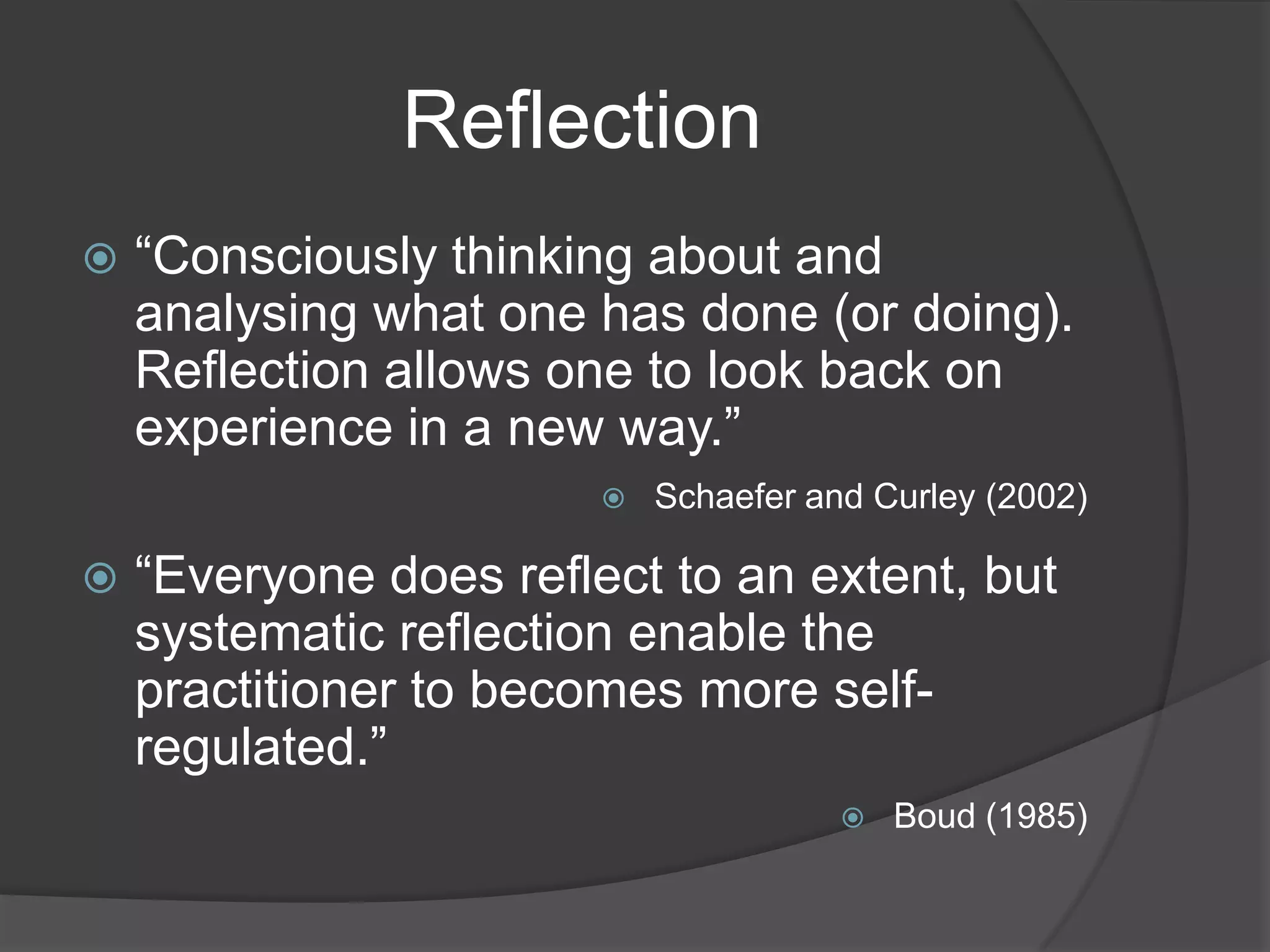
   “Consciously thinking about and
    analysing what one has done (or doing).
    Reflection allows one to look back on
    experience in a new way.”
                           Schaefer and Curley (2002)

   “Everyone does reflect to an extent, but
    systematic reflection enable the
    practitioner to becomes more self-
    regulated.”
                                          Boud (1985)
Why Reflect?
 Process of adult learning
 Learners re-evaluate their lives and
  construct new learning from experience
 Critically reflect own experience
     Transformative learning
   Learning tool to develop
     Critical thinker
     Self-directed learner
     Life-long learner (professionalism)
When to Reflect?
 “Reflectionis used by practitioners
  when they encounter situations that
  are unique, and when individuals may
  not be able to apply known theories or
  techniques previously learnt through
  formal education.”
                             Schön (1987)
Medical Students Reflection
               Exercise
   PBL
   CSL
   PPD
   Lectures
   Any other events in life
Stages of Reflection
1. Returning   to experience
2. Attending   to feeling
3. Evaluate   the experience
4. Turning   experience into learning
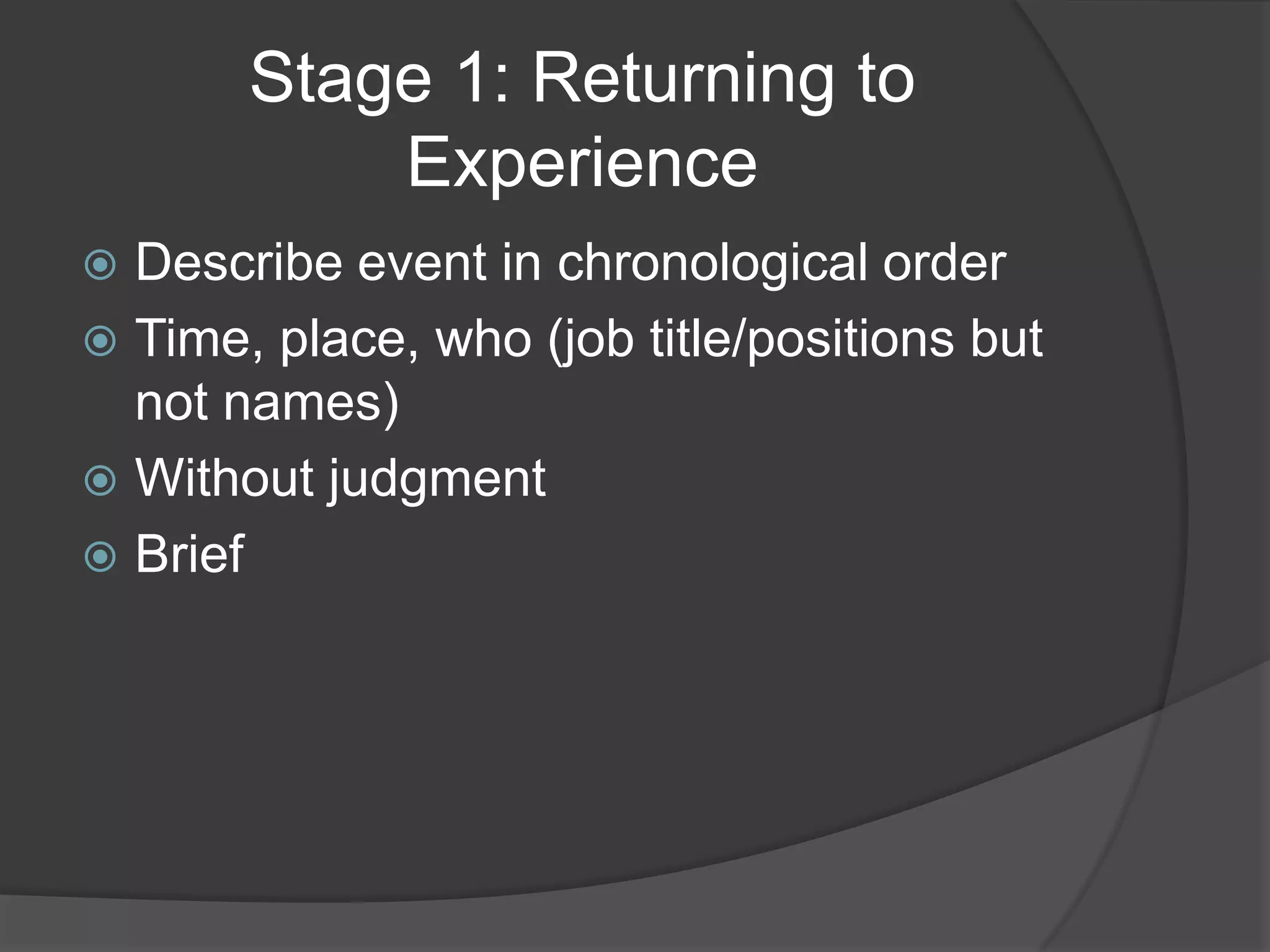
Stage 1: Returning to
           Experience
 Describe event in chronological order
 Time, place, who (job title/positions but
  not names)
 Without judgment
 Brief
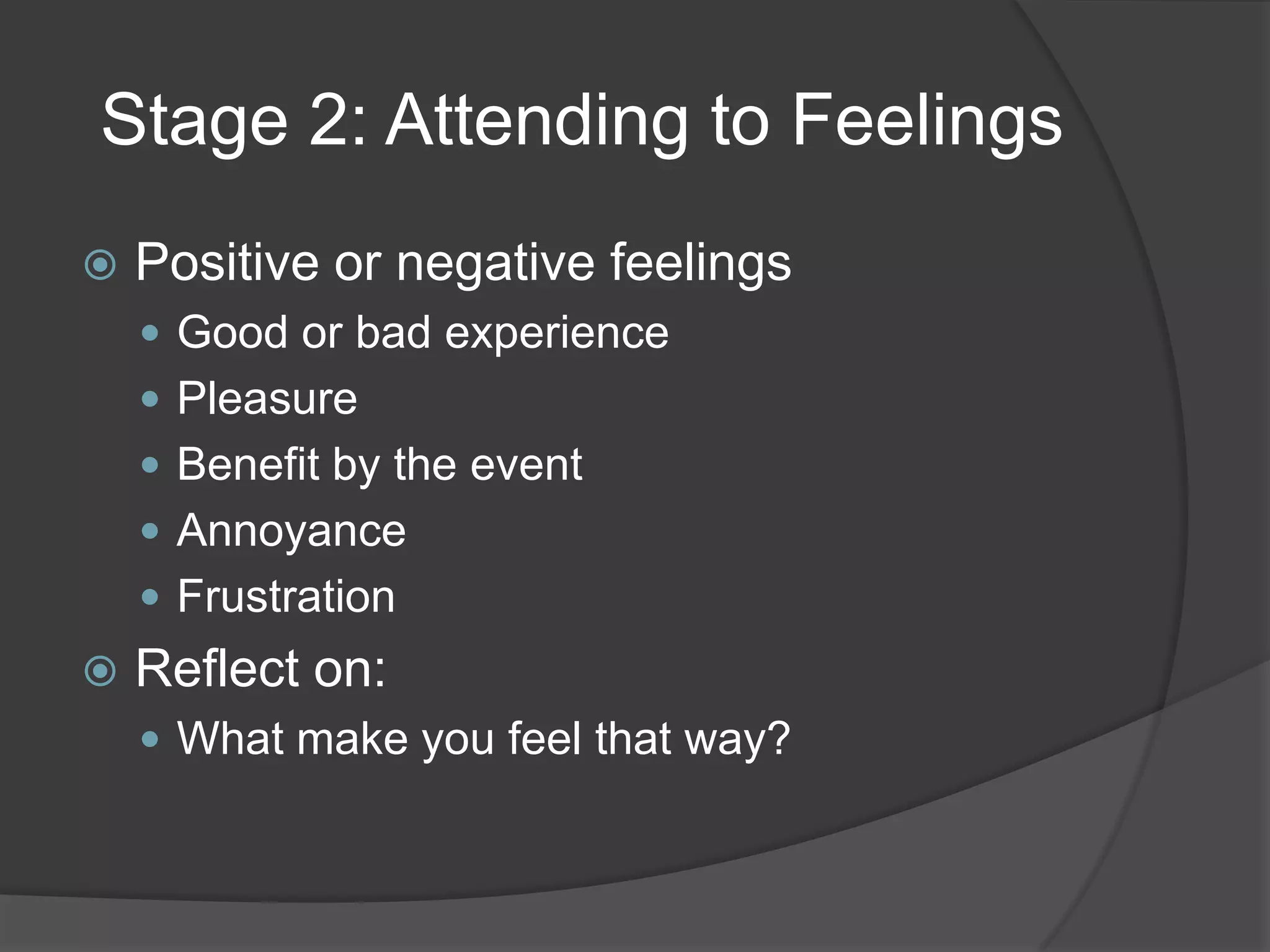
Stage 2: Attending to Feelings
   Positive or negative feelings
     Good or bad experience
     Pleasure
     Benefit by the event
     Annoyance
     Frustration
   Reflect on:
     What make you feel that way?
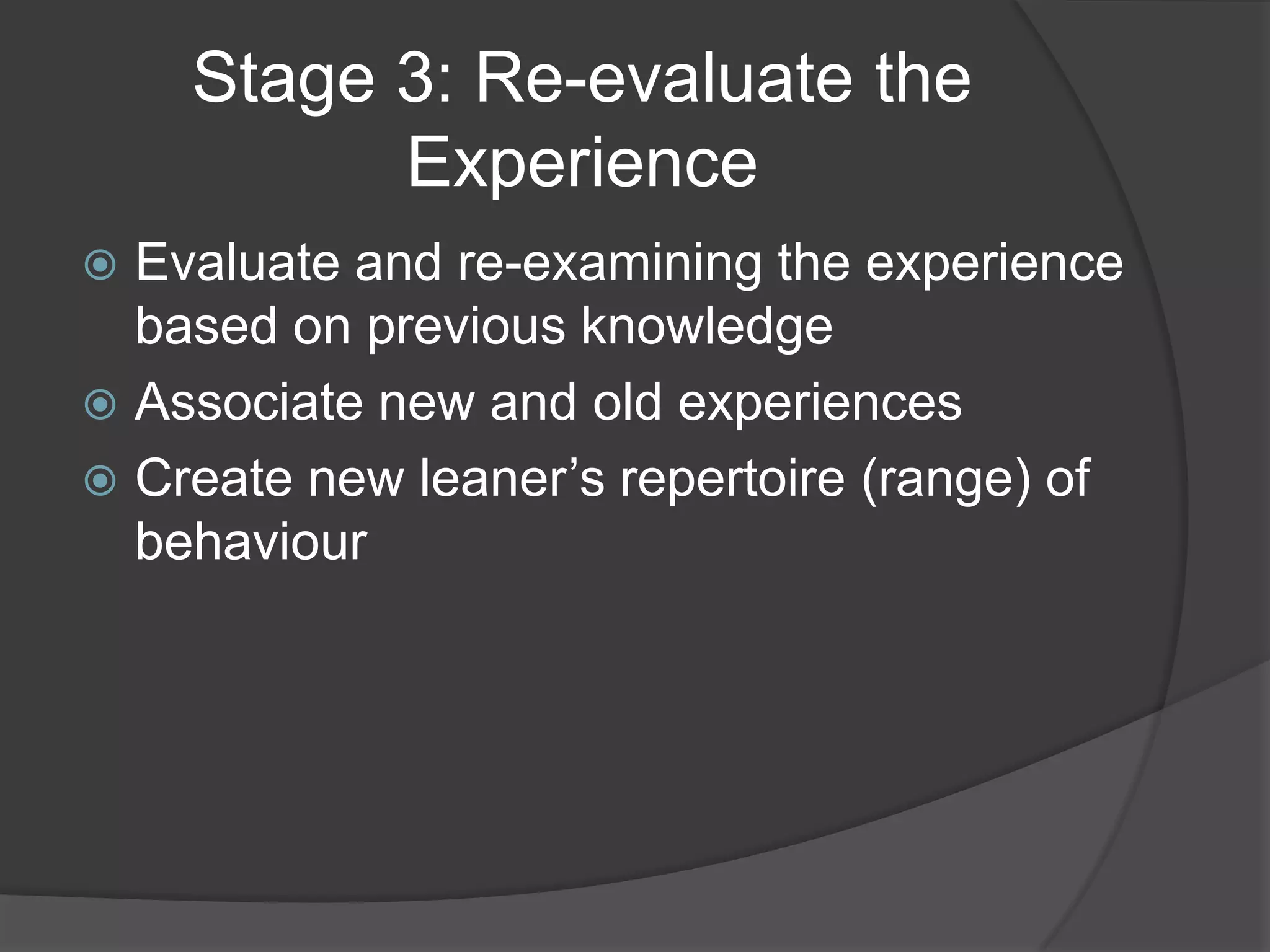
Stage 3: Re-evaluate the
          Experience
 Evaluate and re-examining the experience
  based on previous knowledge
 Associate new and old experiences
 Create new leaner’s repertoire (range) of
  behaviour
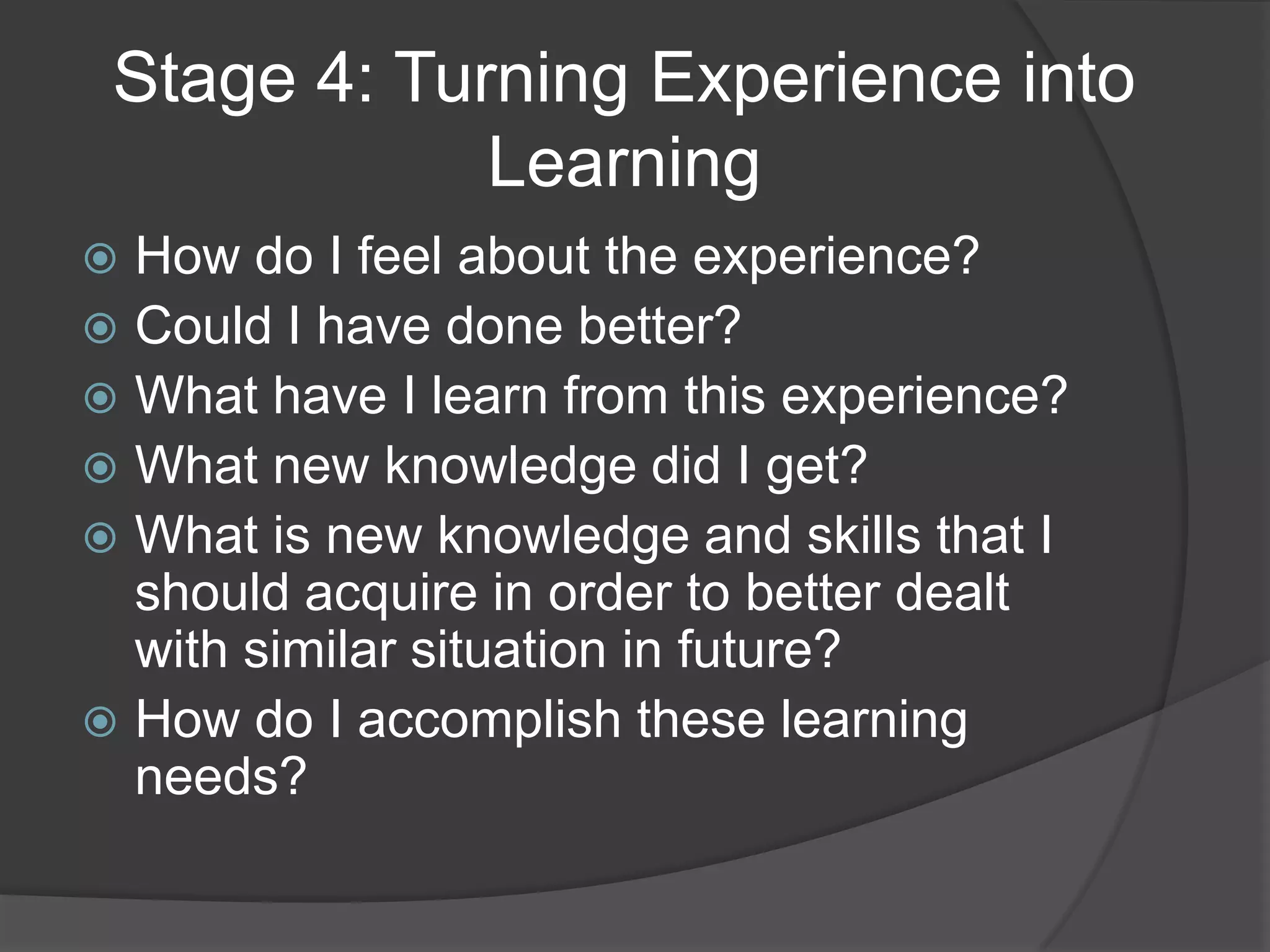
Stage 4: Turning Experience into
             Learning
 How do I feel about the experience?
 Could I have done better?
 What have I learn from this experience?
 What new knowledge did I get?
 What is new knowledge and skills that I
  should acquire in order to better dealt
  with similar situation in future?
 How do I accomplish these learning
  needs?
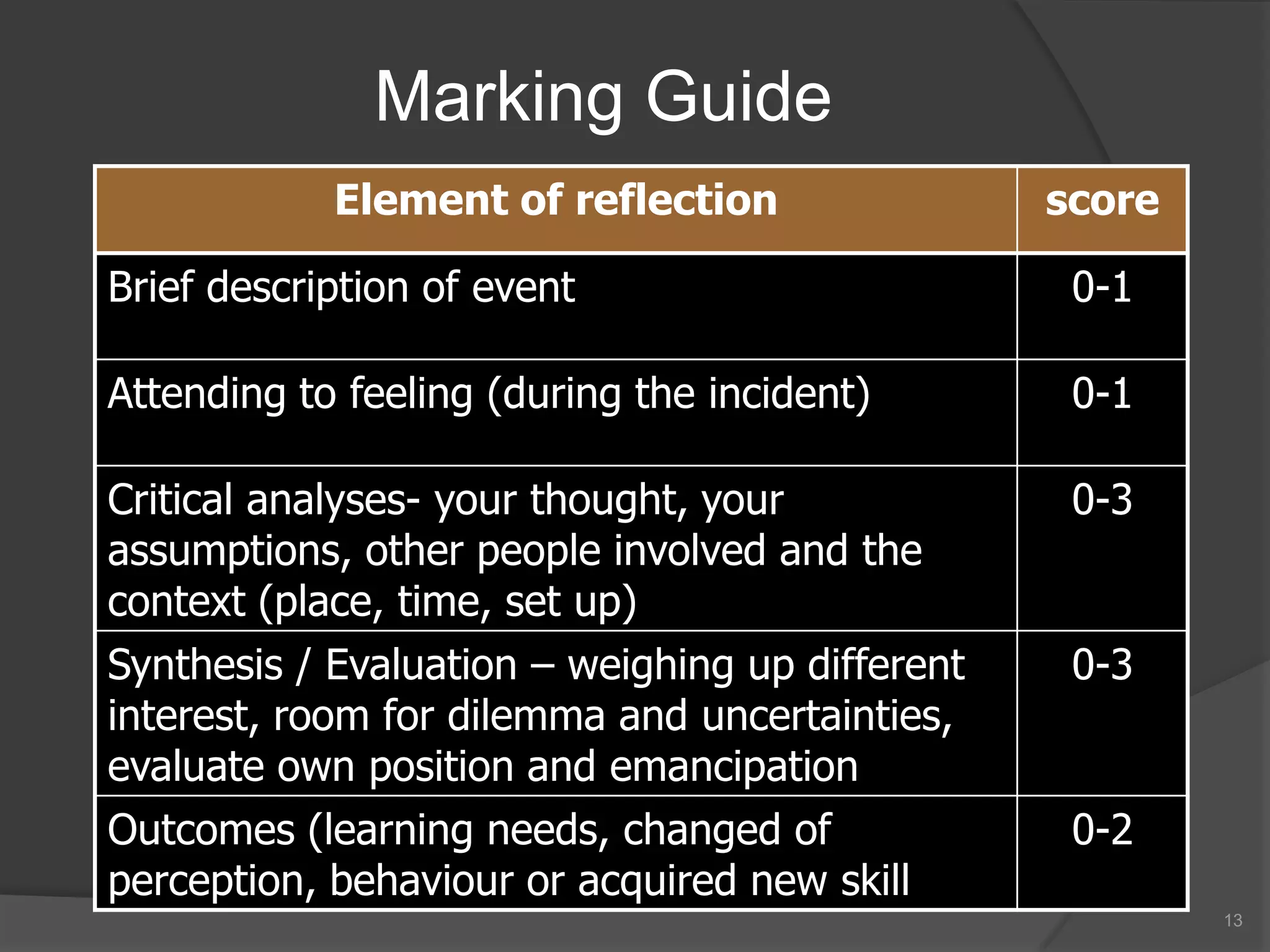
Marking Guide
            Element of reflection                score

Brief description of event                        0-1

Attending to feeling (during the incident)        0-1

Critical analyses- your thought, your             0-3
assumptions, other people involved and the
context (place, time, set up)
Synthesis / Evaluation – weighing up different    0-3
interest, room for dilemma and uncertainties,
evaluate own position and emancipation
Outcomes (learning needs, changed of              0-2
perception, behaviour or acquired new skill
                                                         13
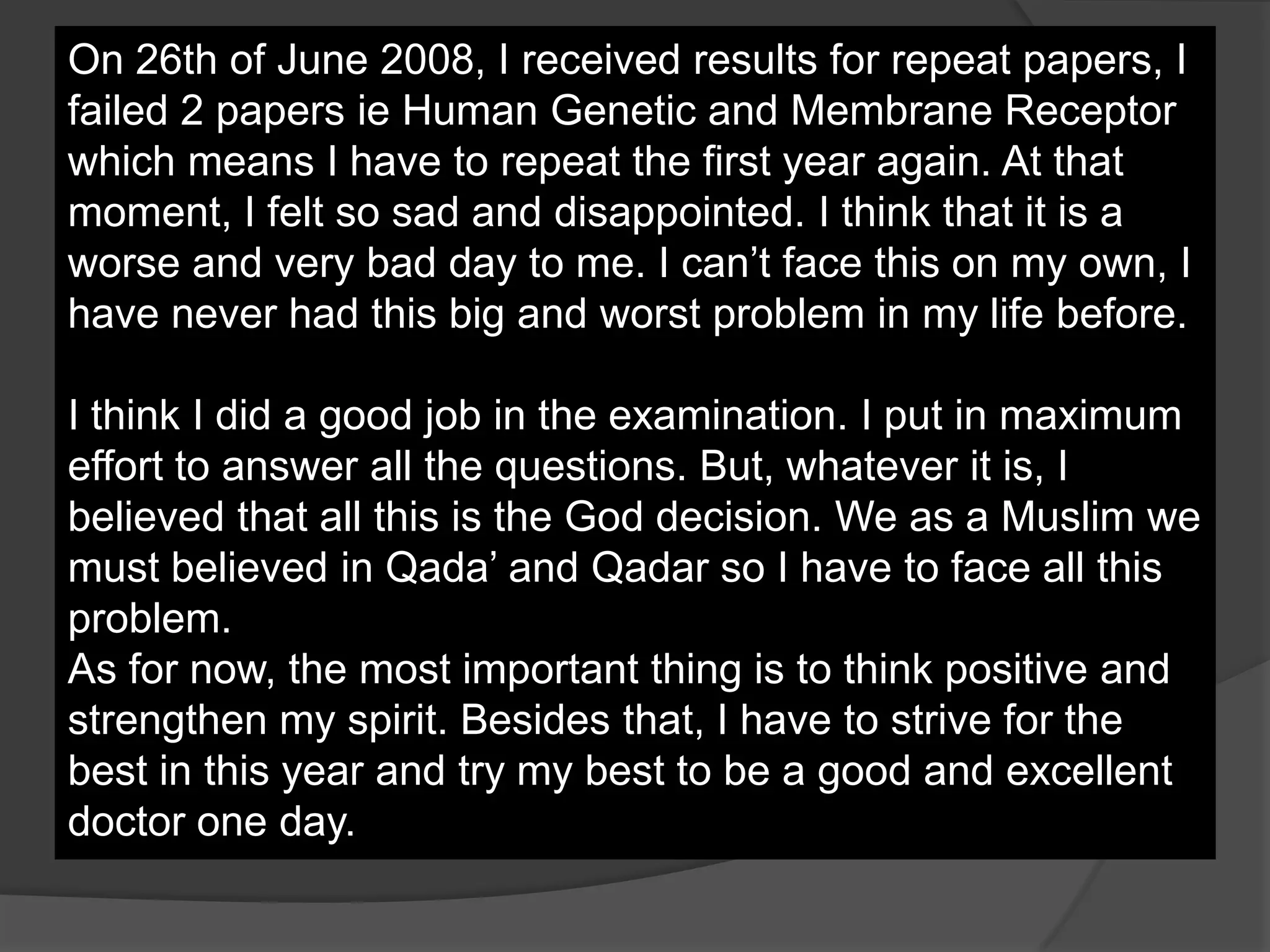
On 26th of June 2008, I received results for repeat papers, I
failed 2 papers ie Human Genetic and Membrane Receptor
which means I have to repeat the first year again. At that
moment, I felt so sad and disappointed. I think that it is a
worse and very bad day to me. I can’t face this on my own, I
have never had this big and worst problem in my life before.

I think I did a good job in the examination. I put in maximum
effort to answer all the questions. But, whatever it is, I
believed that all this is the God decision. We as a Muslim we
must believed in Qada’ and Qadar so I have to face all this
problem.
As for now, the most important thing is to think positive and
strengthen my spirit. Besides that, I have to strive for the
best in this year and try my best to be a good and excellent
doctor one day.
Summary
  Reflection
  Reflective Writing


                                ????


 Application of reflective learning in your
professional development & career

                                               15
Reflective Writing PG MMEd

Reflective Writing PG MMEd

  • 1.
    Dr Mohamad NurmanYaman Dept of Medical Education 2 Oct 2012
  • 2.
    Content  Reflection  ReflectiveWriting  Assessment of Reflective Writing
  • 4.
    Reflection  “Consciously thinking about and analysing what one has done (or doing). Reflection allows one to look back on experience in a new way.”  Schaefer and Curley (2002)  “Everyone does reflect to an extent, but systematic reflection enable the practitioner to becomes more self- regulated.”  Boud (1985)
  • 5.
    Why Reflect?  Processof adult learning  Learners re-evaluate their lives and construct new learning from experience  Critically reflect own experience  Transformative learning  Learning tool to develop  Critical thinker  Self-directed learner  Life-long learner (professionalism)
  • 6.
    When to Reflect? “Reflectionis used by practitioners when they encounter situations that are unique, and when individuals may not be able to apply known theories or techniques previously learnt through formal education.”  Schön (1987)
  • 7.
    Medical Students Reflection Exercise  PBL  CSL  PPD  Lectures  Any other events in life
  • 8.
    Stages of Reflection 1.Returning to experience 2. Attending to feeling 3. Evaluate the experience 4. Turning experience into learning
  • 9.
    Stage 1: Returningto Experience  Describe event in chronological order  Time, place, who (job title/positions but not names)  Without judgment  Brief
  • 10.
    Stage 2: Attendingto Feelings  Positive or negative feelings  Good or bad experience  Pleasure  Benefit by the event  Annoyance  Frustration  Reflect on:  What make you feel that way?
  • 11.
    Stage 3: Re-evaluatethe Experience  Evaluate and re-examining the experience based on previous knowledge  Associate new and old experiences  Create new leaner’s repertoire (range) of behaviour
  • 12.
    Stage 4: TurningExperience into Learning  How do I feel about the experience?  Could I have done better?  What have I learn from this experience?  What new knowledge did I get?  What is new knowledge and skills that I should acquire in order to better dealt with similar situation in future?  How do I accomplish these learning needs?
  • 13.
    Marking Guide Element of reflection score Brief description of event 0-1 Attending to feeling (during the incident) 0-1 Critical analyses- your thought, your 0-3 assumptions, other people involved and the context (place, time, set up) Synthesis / Evaluation – weighing up different 0-3 interest, room for dilemma and uncertainties, evaluate own position and emancipation Outcomes (learning needs, changed of 0-2 perception, behaviour or acquired new skill 13
  • 14.
    On 26th ofJune 2008, I received results for repeat papers, I failed 2 papers ie Human Genetic and Membrane Receptor which means I have to repeat the first year again. At that moment, I felt so sad and disappointed. I think that it is a worse and very bad day to me. I can’t face this on my own, I have never had this big and worst problem in my life before. I think I did a good job in the examination. I put in maximum effort to answer all the questions. But, whatever it is, I believed that all this is the God decision. We as a Muslim we must believed in Qada’ and Qadar so I have to face all this problem. As for now, the most important thing is to think positive and strengthen my spirit. Besides that, I have to strive for the best in this year and try my best to be a good and excellent doctor one day.
  • 15.
    Summary Reflection Reflective Writing ????  Application of reflective learning in your professional development & career 15