



A presentation
on
Purchase Return Book

Presented By:
Paras Joshi
Subsidiary Book


It is subdivision of journal.



Also known as Special journals or day books.



Refers to books meant for specific
transactions of similar nature.



Maintained under the modern methods of
book-keeping.
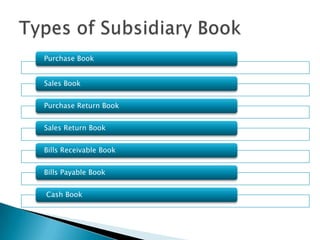
Purchase Book
Sales Book
Purchase Return Book
Sales Return Book
Bills Receivable Book

Bills Payable Book
Cash Book
Purchase Return Book








Type of subsidiary book.
Used to systematically record returns of goods
purchased on credit in the chronological order.
Also known as return outward book.
A debit note is prepared at the time of returning
the goods.


Goods being defective or damaged.



Goods not in required quantity.



Not according to samples shown.



Ordered the wrong product and need to
return it.


Saving of Time.



Detection of Errors.



Quick Access to Information.



Possibility of Internal Check.
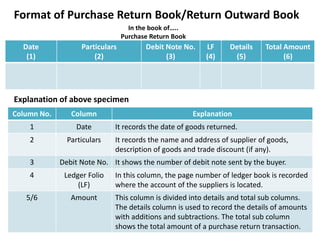
Format of Purchase Return Book/Return Outward Book
In the book of
..
Purchase Return Book

Date
(1)

Particulars
(2)

Debit Note No.
(3)

LF
(4)

Details
(5)

Total Amount
(6)

Explanation of above specimen
Column No.

Column

1

Date

2

Particulars

3

Explanation
It records the date of goods returned.
It records the name and address of supplier of goods,
description of goods and trade discount (if any).

Debit Note No. It shows the number of debit note sent by the buyer.

4

Ledger Folio
(LF)

In this column, the page number of ledger book is recorded
where the account of the suppliers is located.

5/6

Amount

This column is divided into details and total sub columns.
The details column is used to record the details of amounts
with additions and subtractions. The total sub column
shows the total amount of a purchase return transaction.
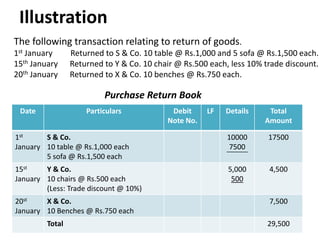
Illustration
The following transaction relating to return of goods.
1st January
15th January
20th January

Returned to S & Co. 10 table @ Rs.1,000 and 5 sofa @ Rs.1,500 each.
Returned to Y & Co. 10 chair @ Rs.500 each, less 10% trade discount.
Returned to X & Co. 10 benches @ Rs.750 each.

Purchase Return Book
Date

Particulars

Details

Total
Amount

1st
S & Co.
January 10 table @ Rs.1,000 each
5 sofa @ Rs.1,500 each

10000
7500

17500

15st
Y & Co.
January 10 chairs @ Rs.500 each
(Less: Trade discount @ 10%)

5,000
500

4,500

20st
X & Co.
January 10 Benches @ Rs.750 each
Total

Debit
Note No.

LF

7,500
29,500
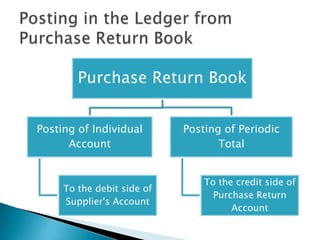
Purchase Return Book
Posting of Individual
Account

To the debit side of
Supplier's Account

Posting of Periodic
Total
To the credit side of
Purchase Return
Account
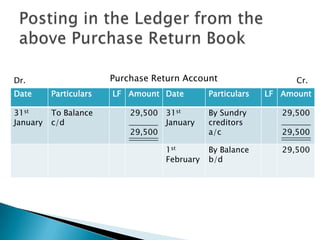
Purchase Return Account

Dr.
Date

Particulars

31st
January

To Balance
c/d

LF Amount Date
29,500
29,500

Particulars

Cr.
LF Amount

31st
January

By Sundry
creditors
a/c

29,500

1st
February

By Balance
b/d

29,500

29,500




It is a kind of subsidiary book which
records the returns of goods purchased on
credit

It show the total amount of return of goods
returned during a certain period.
Purchase return book

Purchase return book

  • 1.
    A presentation on Purchase ReturnBook Presented By: Paras Joshi
  • 2.
    Subsidiary Book  It issubdivision of journal.  Also known as Special journals or day books.  Refers to books meant for specific transactions of similar nature.  Maintained under the modern methods of book-keeping.
  • 3.
    Purchase Book Sales Book PurchaseReturn Book Sales Return Book Bills Receivable Book Bills Payable Book Cash Book
  • 4.
    Purchase Return Book     Typeof subsidiary book. Used to systematically record returns of goods purchased on credit in the chronological order. Also known as return outward book. A debit note is prepared at the time of returning the goods.
  • 5.
     Goods being defectiveor damaged.  Goods not in required quantity.  Not according to samples shown.  Ordered the wrong product and need to return it.
  • 6.
     Saving of Time.  Detectionof Errors.  Quick Access to Information.  Possibility of Internal Check.
  • 7.
    Format of PurchaseReturn Book/Return Outward Book In the book of
.. Purchase Return Book Date (1) Particulars (2) Debit Note No. (3) LF (4) Details (5) Total Amount (6) Explanation of above specimen Column No. Column 1 Date 2 Particulars 3 Explanation It records the date of goods returned. It records the name and address of supplier of goods, description of goods and trade discount (if any). Debit Note No. It shows the number of debit note sent by the buyer. 4 Ledger Folio (LF) In this column, the page number of ledger book is recorded where the account of the suppliers is located. 5/6 Amount This column is divided into details and total sub columns. The details column is used to record the details of amounts with additions and subtractions. The total sub column shows the total amount of a purchase return transaction.
  • 8.
    Illustration The following transactionrelating to return of goods. 1st January 15th January 20th January Returned to S & Co. 10 table @ Rs.1,000 and 5 sofa @ Rs.1,500 each. Returned to Y & Co. 10 chair @ Rs.500 each, less 10% trade discount. Returned to X & Co. 10 benches @ Rs.750 each. Purchase Return Book Date Particulars Details Total Amount 1st S & Co. January 10 table @ Rs.1,000 each 5 sofa @ Rs.1,500 each 10000 7500 17500 15st Y & Co. January 10 chairs @ Rs.500 each (Less: Trade discount @ 10%) 5,000 500 4,500 20st X & Co. January 10 Benches @ Rs.750 each Total Debit Note No. LF 7,500 29,500
  • 9.
    Purchase Return Book Postingof Individual Account To the debit side of Supplier's Account Posting of Periodic Total To the credit side of Purchase Return Account
  • 10.
    Purchase Return Account Dr. Date Particulars 31st January ToBalance c/d LF Amount Date 29,500 29,500 Particulars Cr. LF Amount 31st January By Sundry creditors a/c 29,500 1st February By Balance b/d 29,500 29,500
  • 11.
      It is akind of subsidiary book which records the returns of goods purchased on credit It show the total amount of return of goods returned during a certain period.