PUCCINIA
PRESENTED BY:
 DIBYA THAPA MAGAR (17)
 DINESH GHIMIRE (18)
 GAJENDRA BHATTA (19)
 SYSTEMATIC POSITION:
 Kingdom: Mycota
Division: Eumycota
Subdivision: Basidiomycotina
Class: Teliomycetes
Order: Uredinales
Family: Pucciniaceae
Genus: Puccinia
 Species : graminis
INTRODUCTION:
 The genus includes about 5000 species.
 Some species are autoecious(single host) whereas some are
heteroecious.
 Mainly 3 species are found to be devastating wheat and
other cereals field through rust:
 Puccinia graminis – Stem rust in wheat
 P. recondita –Brown leaf rust
 P. striformis - Yellow stripe rust
 Rust are polymorphic, it means several forms of spores
exist in its life cycle. (Fig. 1)
Fig.1. Various stages of Puccinia
SYMPTOMS:
 Black stem rust:
 Appear as elliptical blisters/pustules called uredia(Fig.2)
 Infected parts burst out exposing mass of brick-red colored
urediospores.(Fig.3)
 Later on, the blisters turn black as fungus produces
teliospores.
 Uredia are transformed into black telia.
FIG.2. STEM RUST
FIG.3. T.S. of affected leaf of wheat showing uredospores
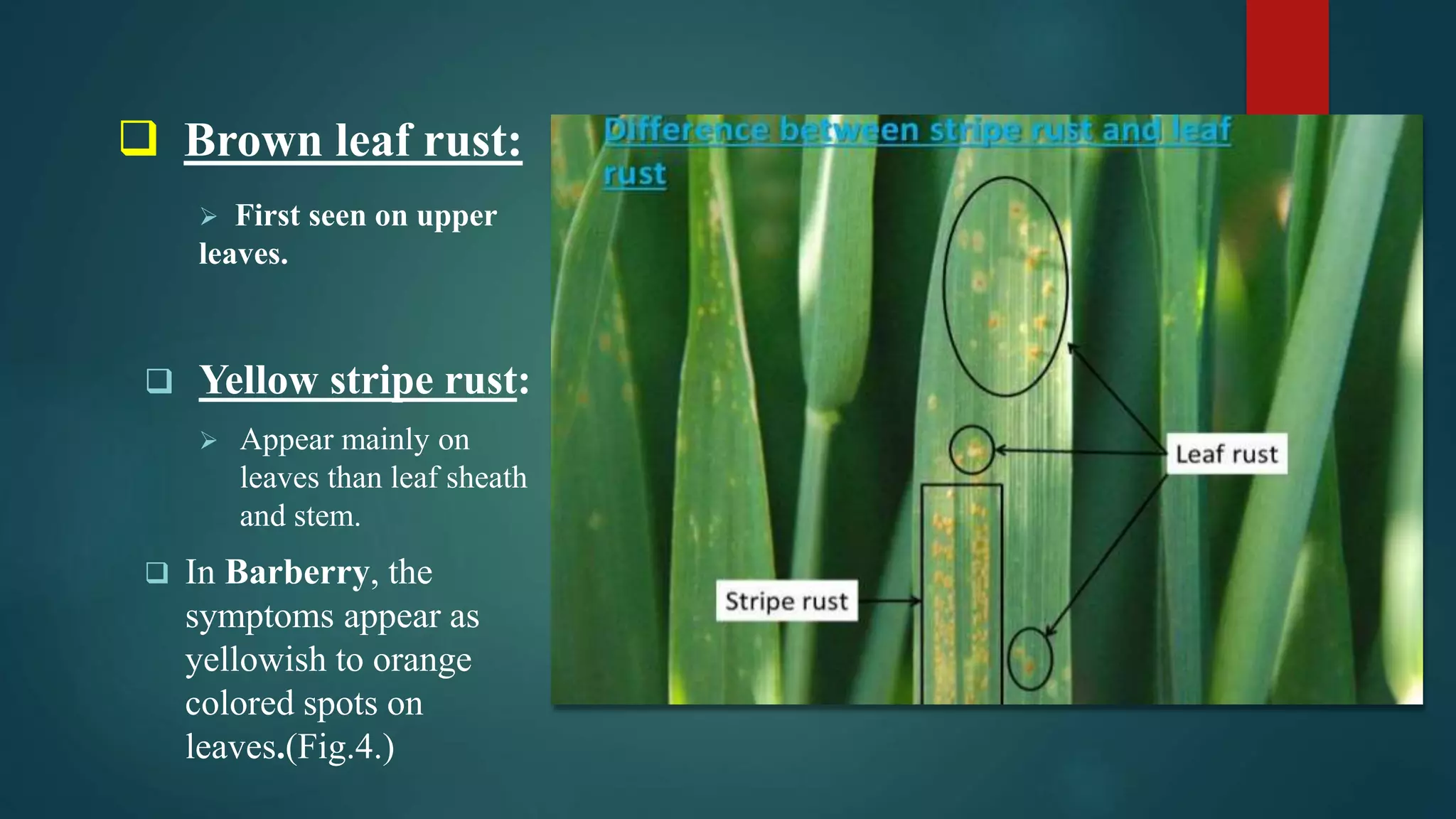
 Brown leaf rust:
 First seen on upper
leaves.
 Yellow stripe rust:
 Appear mainly on
leaves than leaf sheath
and stem.
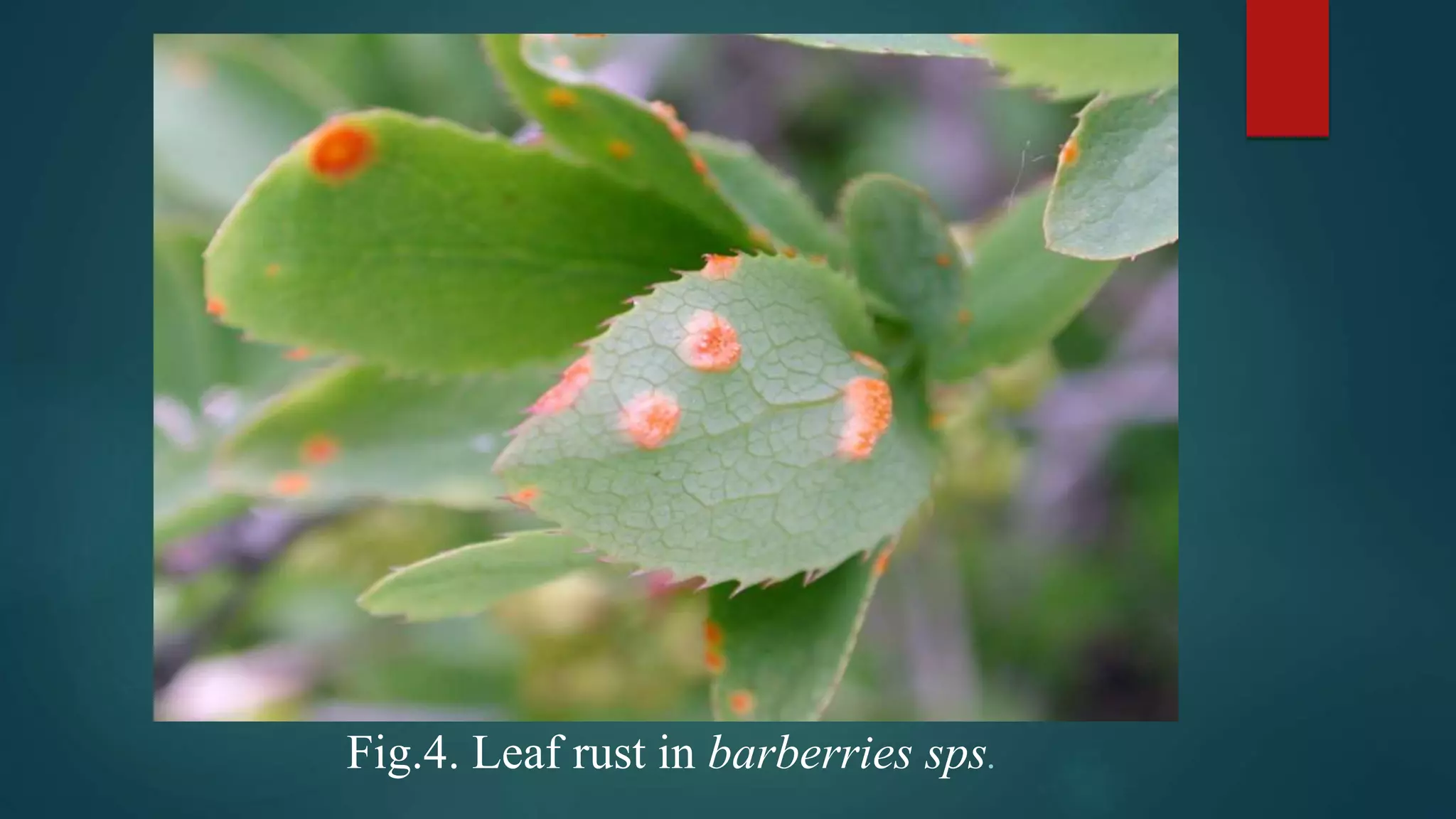
 In Barberry, the
symptoms appear as
yellowish to orange
colored spots on
leaves.(Fig.4.)
Fig.4. Leaf rust in barberries sps.
THANK YOU

Puccinia ppt

  • 1.
    PUCCINIA PRESENTED BY:  DIBYATHAPA MAGAR (17)  DINESH GHIMIRE (18)  GAJENDRA BHATTA (19)
  • 2.
     SYSTEMATIC POSITION: Kingdom: Mycota Division: Eumycota Subdivision: Basidiomycotina Class: Teliomycetes Order: Uredinales Family: Pucciniaceae Genus: Puccinia  Species : graminis
  • 3.
    INTRODUCTION:  The genusincludes about 5000 species.  Some species are autoecious(single host) whereas some are heteroecious.  Mainly 3 species are found to be devastating wheat and other cereals field through rust:  Puccinia graminis – Stem rust in wheat  P. recondita –Brown leaf rust  P. striformis - Yellow stripe rust  Rust are polymorphic, it means several forms of spores exist in its life cycle. (Fig. 1)
  • 4.
  • 5.
    SYMPTOMS:  Black stemrust:  Appear as elliptical blisters/pustules called uredia(Fig.2)  Infected parts burst out exposing mass of brick-red colored urediospores.(Fig.3)  Later on, the blisters turn black as fungus produces teliospores.  Uredia are transformed into black telia.
  • 6.
  • 7.
    FIG.3. T.S. ofaffected leaf of wheat showing uredospores
  • 8.
     Brown leafrust:  First seen on upper leaves.  Yellow stripe rust:  Appear mainly on leaves than leaf sheath and stem.  In Barberry, the symptoms appear as yellowish to orange colored spots on leaves.(Fig.4.)
  • 9.
    Fig.4. Leaf rustin barberries sps.
  • 10.