DEFINITION
PTSD are defined as individual who have been exposed to a traumatic event
in which one person experienced witnessed or was confronted with actual
or threatened death or serious injury or the threat to the physical integrity
of self or other
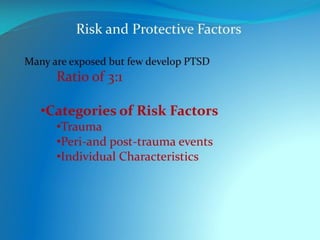
Risk Factors for PTSD include:
1. Women are at greater risk than males
2. Previous traumatic experiences, especially in early life
3. Family history of PTSD or depression
4. History of physical or sexual abuse
5. History of substance abuse History of depression, anxiety, or another
mental illness
6. High level of stress in everyday life
7. Lack of support after the trauma
8. Lack of coping skills
Traumatic events that can lead to PTSD include:-
1. War
2. Cars and planes crashes
3. Sudden death of loved one
4. Terrorist attacks
5. Natural disasters
6. Assault
7. Childhood neglect
8. Kidnapping
9. Rape
10.Physical abused
11.Sexual abuse
Signs and symptoms
1.Symptoms of PTSD: Re-experiencing the traumatic
event
• Intrusive, upsetting memories of the event
• Flashbacks
• Nightmares
• Feelings of intense distress when reminded of the trauma
• Intense physical reactions to reminders of the event (e.g.
pounding heart, rapid breathing, nausea, muscle tension,
sweating
2.Symptoms of PTSD: Avoidance and numbing
• Avoiding activities, places, thoughts, or feelings that
remind the trauma Inability to remember important
aspects of the trauma
• Loss of interest in activities and life in general
• Feeling detached from others and emotionally numb
• Sense of a limited future (you don’t expect to live a
normal life span, get married, have a career)
3.Symptoms of PTSD: Increased anxiety and
emotional arousal
• Difficulty falling or staying asleep
• Irritability or outbursts of anger
• Difficulty concentrating
• Hypervigilance (on constant “red alert”)
• Feeling jumpy and easily startled
Other common symptoms
• Anger and irritability
• Guilt, shame, or self-blame
• Substance abuse
• Feelings of mistrust
• Depression and hopelessness
• Suicidal thoughts and feelings
• Feeling alienated and alone
• Physical aches and pains
A Mnemonic for Screening Patients for Post-
traumatic Stress Disorder
DREAMS
D etachment
R eexperiencing the event
E vent had emotional effects
A voidance
M onth in duration
S ympathetic hyperactivity or hypervigilance
Epidemiology & Features of PTSD
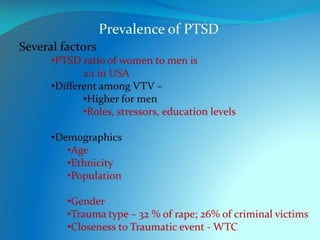
Lifetime prevalence: 7-8%. However, most persons exposed to trauma
do NOT develop PTSD.
May be especially severe or long-lasting with interpersonal and
intentional trauma.
Trauma, e.g., childhood abuse, increases suicide risk.
May have paranoid ideation and auditory pseudo-hallucinations (hearing
one’s thoughts spoken in 1 or more different voices).
For men, combat is the most frequent trauma; for women, it is physical
assault or rape. Can begin soon after the trauma or months/years
later.
PTSD resolves within 3 months in about 50% of adults, but can be
chronic, with waxing/waning especially with stresses.
Comorbidities: major depression, anxiety disorders, substance abuse, TBI
(48% co-occurrence of PTSD and mild TBI in recent combat veterans).
PTD.pdfpdfj
PTD.pdfpdfj
PTD.pdfpdfj
PTD.pdfpdfj
PTD.pdfpdfj
PTD.pdfpdfj
PTD.pdfpdfj

PTD.pdfpdfj

  • 2.
    DEFINITION PTSD are definedas individual who have been exposed to a traumatic event in which one person experienced witnessed or was confronted with actual or threatened death or serious injury or the threat to the physical integrity of self or other Risk Factors for PTSD include: 1. Women are at greater risk than males 2. Previous traumatic experiences, especially in early life 3. Family history of PTSD or depression 4. History of physical or sexual abuse 5. History of substance abuse History of depression, anxiety, or another mental illness 6. High level of stress in everyday life 7. Lack of support after the trauma 8. Lack of coping skills
  • 3.
    Traumatic events thatcan lead to PTSD include:- 1. War 2. Cars and planes crashes 3. Sudden death of loved one 4. Terrorist attacks 5. Natural disasters 6. Assault 7. Childhood neglect 8. Kidnapping 9. Rape 10.Physical abused 11.Sexual abuse
  • 4.
    Signs and symptoms 1.Symptomsof PTSD: Re-experiencing the traumatic event • Intrusive, upsetting memories of the event • Flashbacks • Nightmares • Feelings of intense distress when reminded of the trauma • Intense physical reactions to reminders of the event (e.g. pounding heart, rapid breathing, nausea, muscle tension, sweating
  • 5.
    2.Symptoms of PTSD:Avoidance and numbing • Avoiding activities, places, thoughts, or feelings that remind the trauma Inability to remember important aspects of the trauma • Loss of interest in activities and life in general • Feeling detached from others and emotionally numb • Sense of a limited future (you don’t expect to live a normal life span, get married, have a career)
  • 6.
    3.Symptoms of PTSD:Increased anxiety and emotional arousal • Difficulty falling or staying asleep • Irritability or outbursts of anger • Difficulty concentrating • Hypervigilance (on constant “red alert”) • Feeling jumpy and easily startled
  • 7.
    Other common symptoms •Anger and irritability • Guilt, shame, or self-blame • Substance abuse • Feelings of mistrust • Depression and hopelessness • Suicidal thoughts and feelings • Feeling alienated and alone • Physical aches and pains
  • 8.
    A Mnemonic forScreening Patients for Post- traumatic Stress Disorder DREAMS D etachment R eexperiencing the event E vent had emotional effects A voidance M onth in duration S ympathetic hyperactivity or hypervigilance
  • 9.
    Epidemiology & Featuresof PTSD Lifetime prevalence: 7-8%. However, most persons exposed to trauma do NOT develop PTSD. May be especially severe or long-lasting with interpersonal and intentional trauma. Trauma, e.g., childhood abuse, increases suicide risk. May have paranoid ideation and auditory pseudo-hallucinations (hearing one’s thoughts spoken in 1 or more different voices). For men, combat is the most frequent trauma; for women, it is physical assault or rape. Can begin soon after the trauma or months/years later. PTSD resolves within 3 months in about 50% of adults, but can be chronic, with waxing/waning especially with stresses. Comorbidities: major depression, anxiety disorders, substance abuse, TBI (48% co-occurrence of PTSD and mild TBI in recent combat veterans).