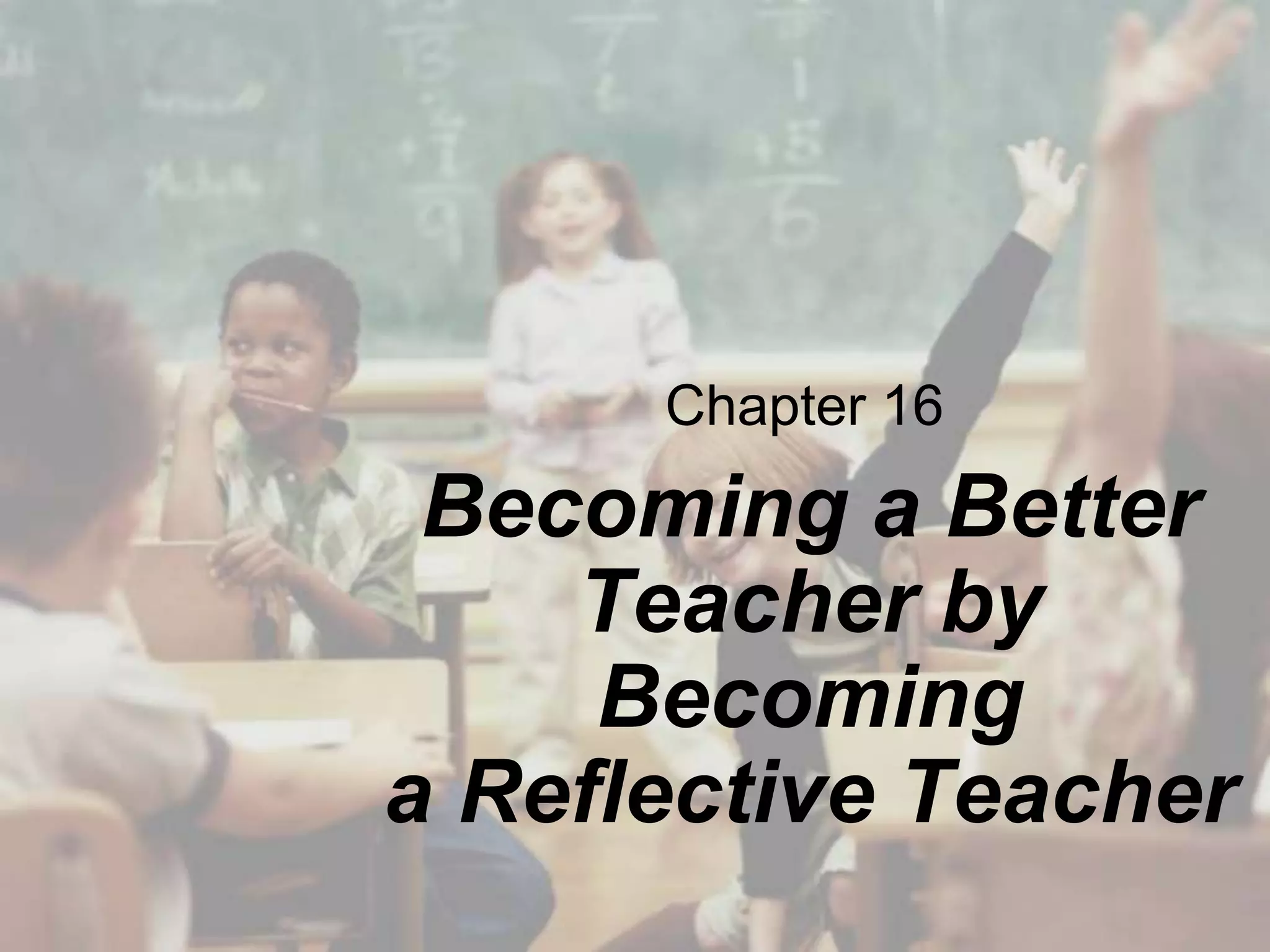
Chapter 16

Becoming a Better
Teacher by
Becoming
a Reflective Teacher
Overview
• Improving Your Reflection Skills to Improve Your
Teaching
• Using Technology for Reflective Inquiry

© 2013 Cengage Learning. All rights reserved.

1|2
Improving Your Reflection Skills to
Improve Your Teaching
• Being a reflective teacher means . . .
 Taking the time to think about the difference
between what you intended and what
actually happened, and using proven
techniques that will help you understand why
that gap exists and how to close it

© 2013 Cengage Learning. All rights reserved.

1|3
Student Feedback
• Student Feedback
– Informal feedback: facial expressions, yawning,
cell phone texting, disruptive behavior
– Formal feedback: questionnaires, evaluation
forms, rating scales

© 2013 Cengage Learning. All rights reserved.

1|4
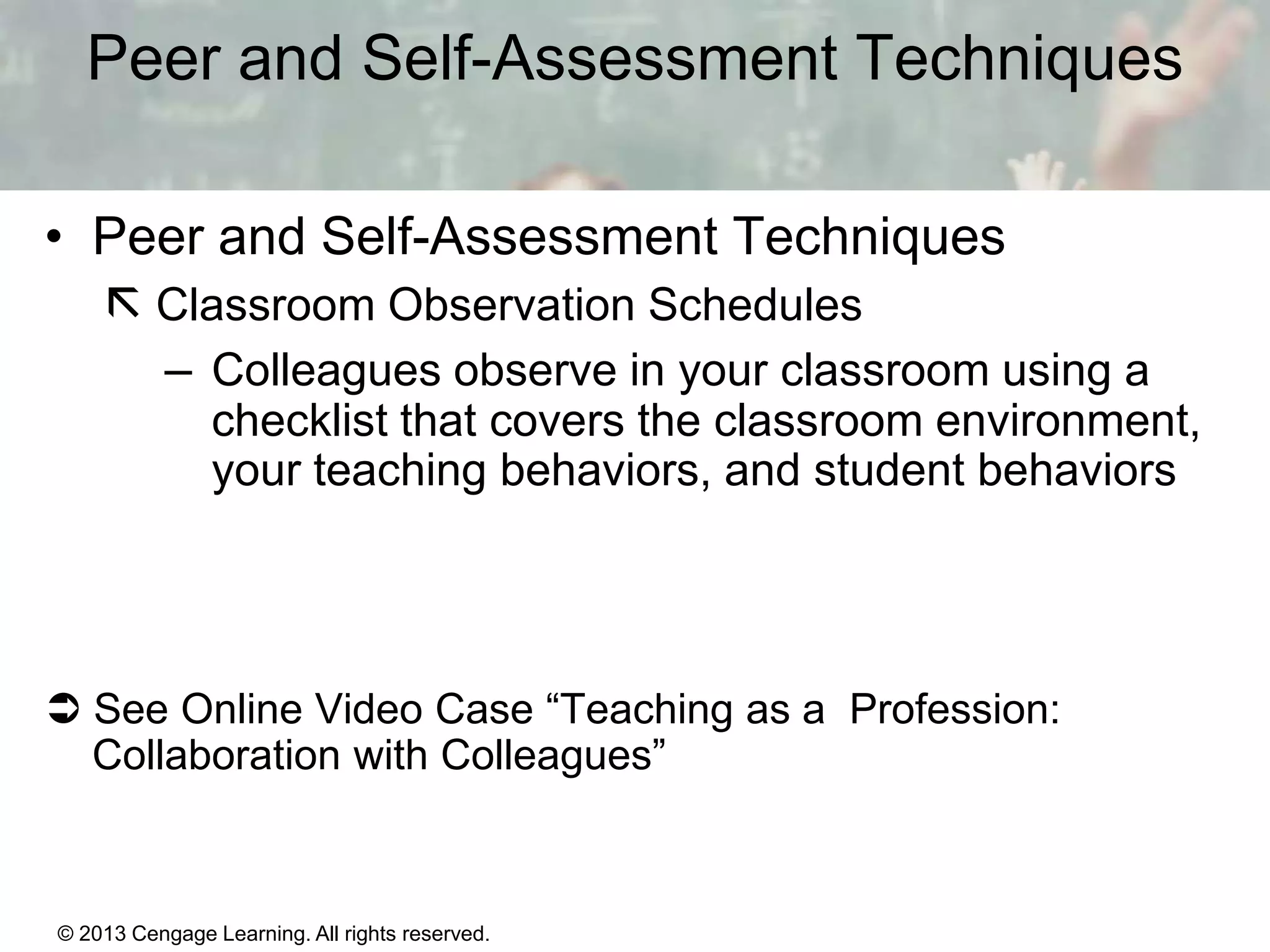
Peer and Self-Assessment Techniques
• Peer and Self-Assessment Techniques
 Classroom Observation Schedules
– Colleagues observe in your classroom using a
checklist that covers the classroom environment,
your teaching behaviors, and student behaviors

 See Online Video Case “Teaching as a Profession:
Collaboration with Colleagues”

© 2013 Cengage Learning. All rights reserved.

1|5
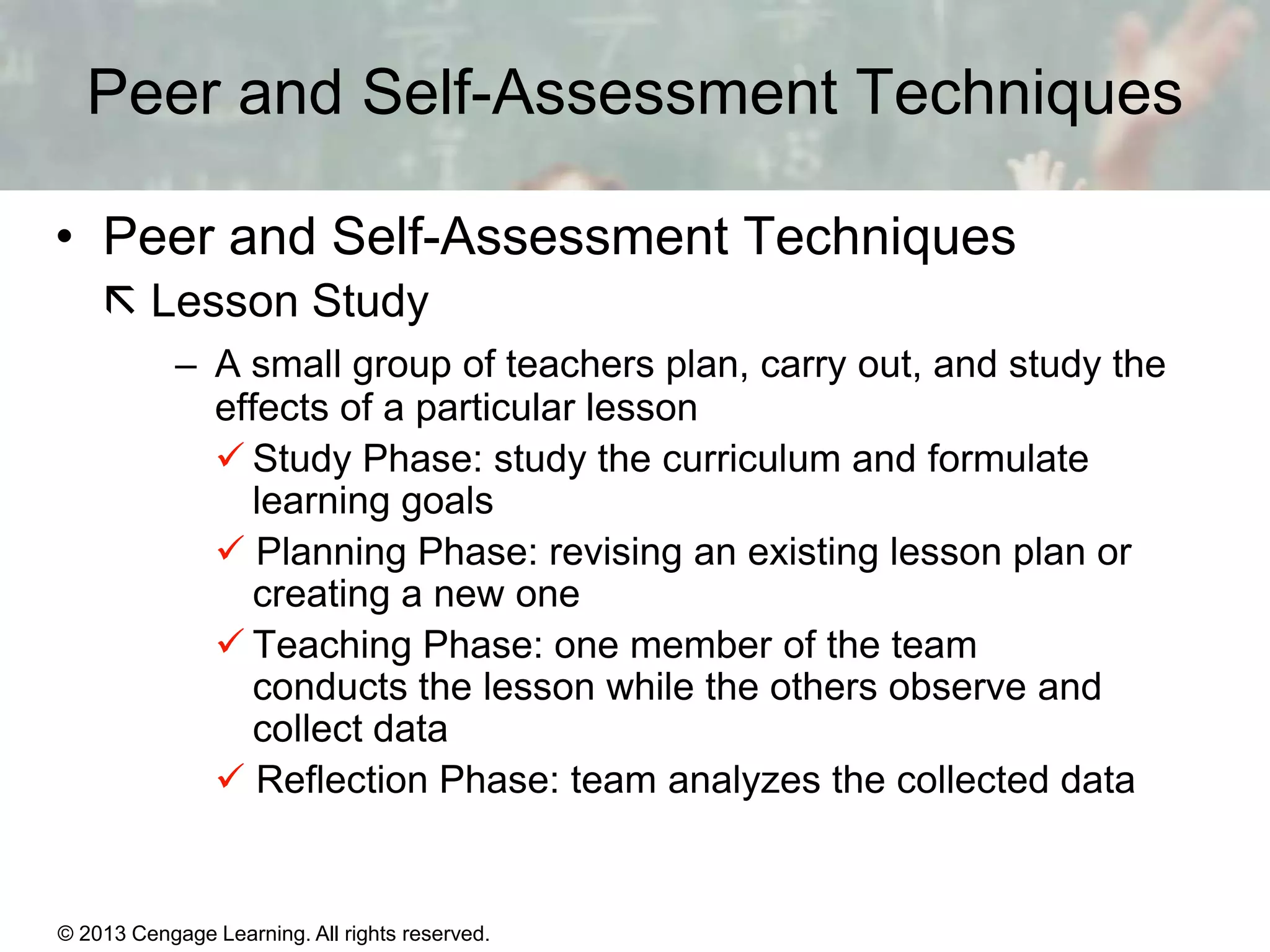
Peer and Self-Assessment Techniques
• Peer and Self-Assessment Techniques
 Lesson Study
– A small group of teachers plan, carry out, and study the
effects of a particular lesson
 Study Phase: study the curriculum and formulate
learning goals
 Planning Phase: revising an existing lesson plan or
creating a new one
 Teaching Phase: one member of the team
conducts the lesson while the others observe and
collect data
 Reflection Phase: team analyzes the collected data

© 2013 Cengage Learning. All rights reserved.

1|6
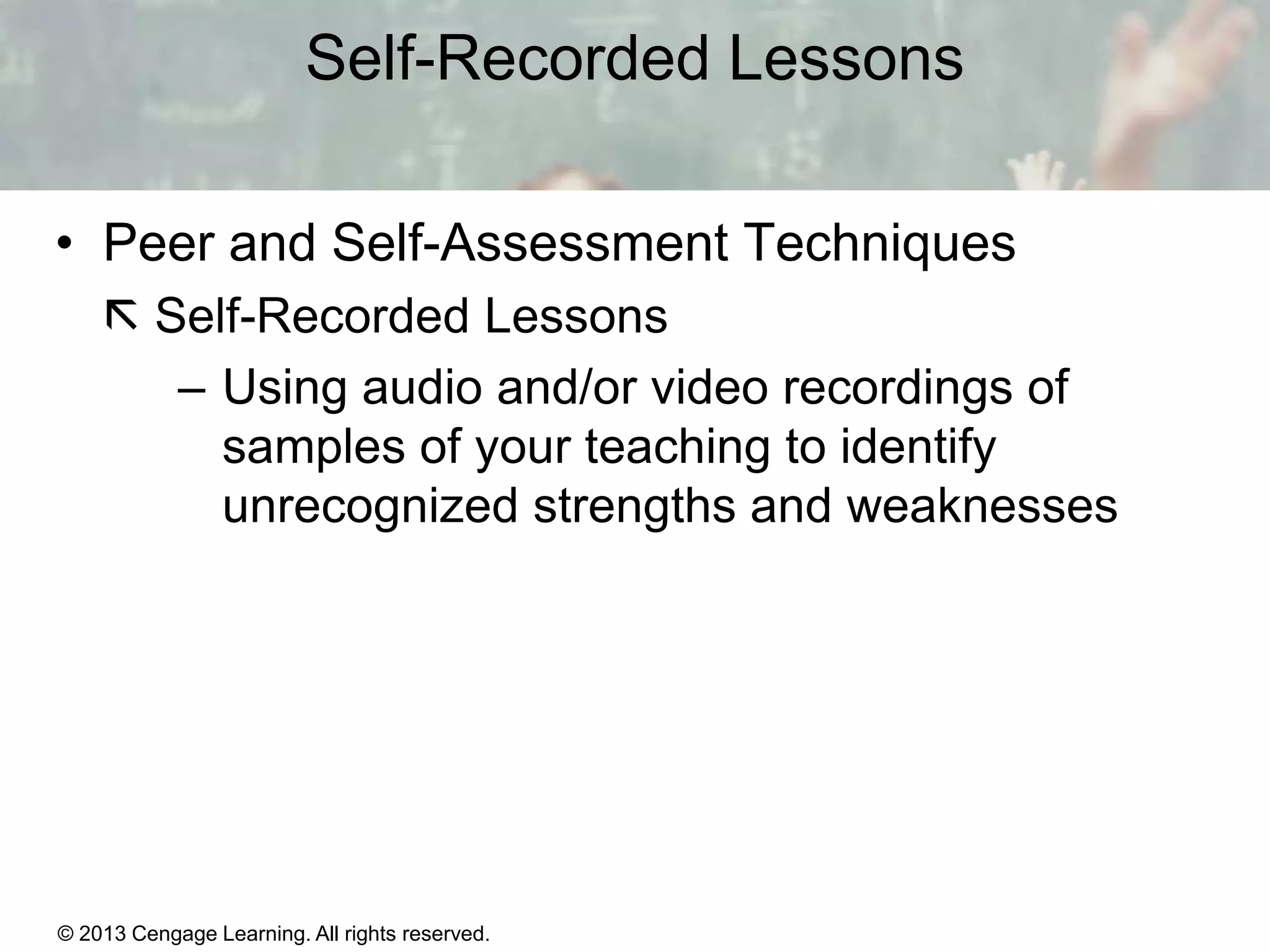
Self-Recorded Lessons
• Peer and Self-Assessment Techniques
 Self-Recorded Lessons
– Using audio and/or video recordings of
samples of your teaching to identify
unrecognized strengths and weaknesses

© 2013 Cengage Learning. All rights reserved.

1|7
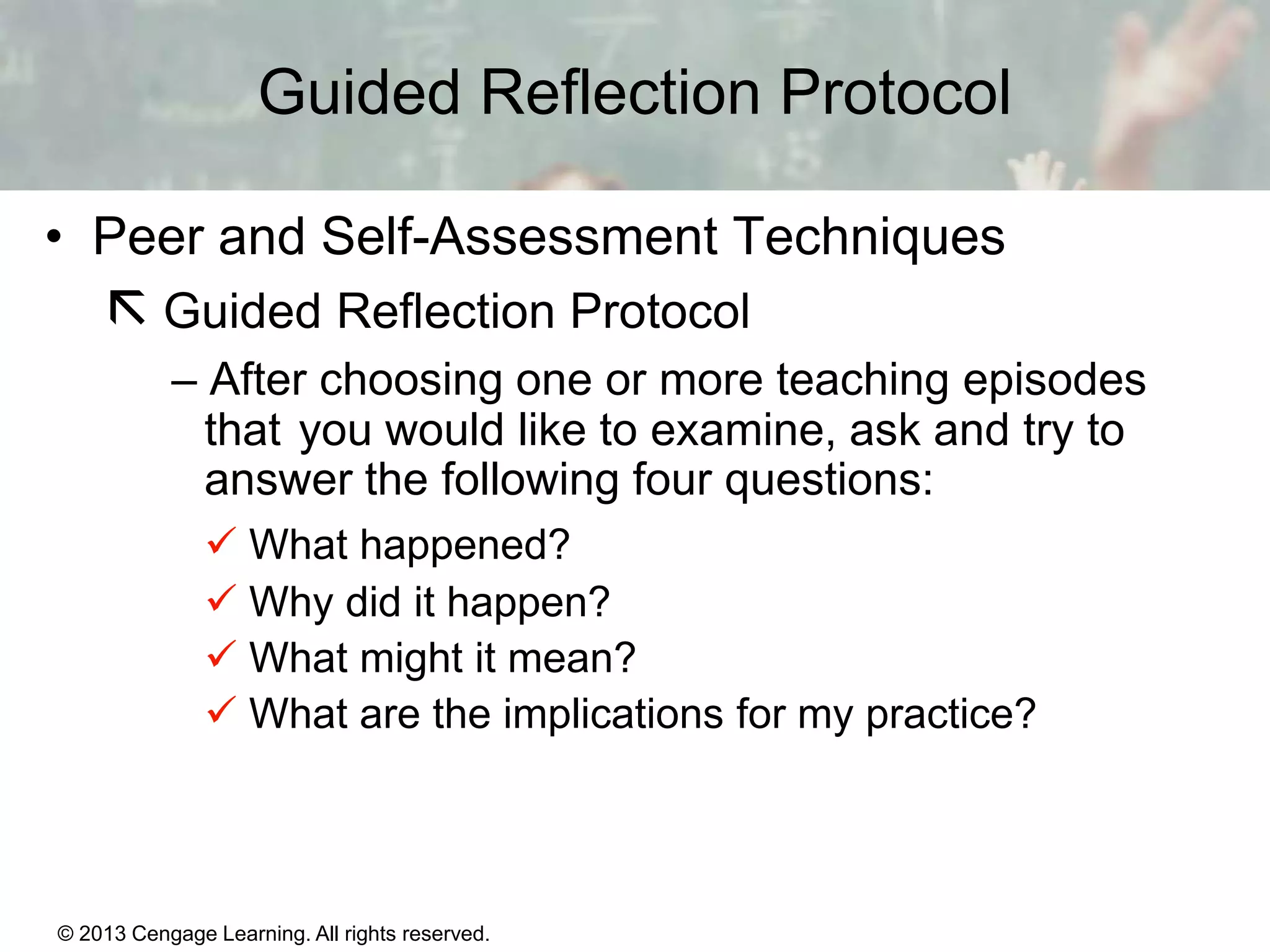
Guided Reflection Protocol
• Peer and Self-Assessment Techniques

 Guided Reflection Protocol
– After choosing one or more teaching episodes
that you would like to examine, ask and try to
answer the following four questions:
 What happened?
 Why did it happen?
 What might it mean?
 What are the implications for my practice?

© 2013 Cengage Learning. All rights reserved.

1|8
Developing a Reflective Journal
• Developing a Reflective Journal

 Reasons for Keeping a Reflective Journal
– To serve as a repository of instructional
ideas and techniques that you have either
created from your own experiences or
gleaned from other sources
– To give yourself a format for recording
your observations and reflections on
teaching

© 2013 Cengage Learning. All rights reserved.

1|9
Using a Portfolio with Your Journal
• A table of contents
• A resume
• A statement of your
educational philosophy
• A statement of your
teaching goals
• Official documents
• Letters of
recommendation
• Teaching evaluations

© 2013 Cengage Learning. All rights reserved.

• Photographs and
videotapes
• Samples of college work
• Samples of students’ work
• Examples of learning
activities
• An autobiography
• Reflections about how
teaching has impacted
you

1 | 10
What Makes Reflective Techniques
Effective?
• What Makes Reflective Techniques Effective?
 The intent to critically examine what one
does, why one does it, and to what effect for
the express purpose of raising the
achievement levels of all students, or to learn
from teaching
 See Online Video Case “Teaching as a Profession: What
Defines Effective Teaching?”

© 2013 Cengage Learning. All rights reserved.

1 | 11
Using Technology for Reflective Inquiry
• Digital Portals for Professional Development
 Web sites for teaching-related blogs (e.g.,
Edublogs)
 Discussion forums
 Chat rooms

 See Online Video Case “Teaching as a Profession: What
Defines Effective Teaching?”

© 2013 Cengage Learning. All rights reserved.

1 | 12

PSY 263 401 Chapter 16 SLIDES

  • 1.
    Chapter 16 Becoming aBetter Teacher by Becoming a Reflective Teacher
  • 2.
    Overview • Improving YourReflection Skills to Improve Your Teaching • Using Technology for Reflective Inquiry © 2013 Cengage Learning. All rights reserved. 1|2
  • 3.
    Improving Your ReflectionSkills to Improve Your Teaching • Being a reflective teacher means . . .  Taking the time to think about the difference between what you intended and what actually happened, and using proven techniques that will help you understand why that gap exists and how to close it © 2013 Cengage Learning. All rights reserved. 1|3
  • 4.
    Student Feedback • StudentFeedback – Informal feedback: facial expressions, yawning, cell phone texting, disruptive behavior – Formal feedback: questionnaires, evaluation forms, rating scales © 2013 Cengage Learning. All rights reserved. 1|4
  • 5.
    Peer and Self-AssessmentTechniques • Peer and Self-Assessment Techniques  Classroom Observation Schedules – Colleagues observe in your classroom using a checklist that covers the classroom environment, your teaching behaviors, and student behaviors  See Online Video Case “Teaching as a Profession: Collaboration with Colleagues” © 2013 Cengage Learning. All rights reserved. 1|5
  • 6.
    Peer and Self-AssessmentTechniques • Peer and Self-Assessment Techniques  Lesson Study – A small group of teachers plan, carry out, and study the effects of a particular lesson  Study Phase: study the curriculum and formulate learning goals  Planning Phase: revising an existing lesson plan or creating a new one  Teaching Phase: one member of the team conducts the lesson while the others observe and collect data  Reflection Phase: team analyzes the collected data © 2013 Cengage Learning. All rights reserved. 1|6
  • 7.
    Self-Recorded Lessons • Peerand Self-Assessment Techniques  Self-Recorded Lessons – Using audio and/or video recordings of samples of your teaching to identify unrecognized strengths and weaknesses © 2013 Cengage Learning. All rights reserved. 1|7
  • 8.
    Guided Reflection Protocol •Peer and Self-Assessment Techniques  Guided Reflection Protocol – After choosing one or more teaching episodes that you would like to examine, ask and try to answer the following four questions:  What happened?  Why did it happen?  What might it mean?  What are the implications for my practice? © 2013 Cengage Learning. All rights reserved. 1|8
  • 9.
    Developing a ReflectiveJournal • Developing a Reflective Journal  Reasons for Keeping a Reflective Journal – To serve as a repository of instructional ideas and techniques that you have either created from your own experiences or gleaned from other sources – To give yourself a format for recording your observations and reflections on teaching © 2013 Cengage Learning. All rights reserved. 1|9
  • 10.
    Using a Portfoliowith Your Journal • A table of contents • A resume • A statement of your educational philosophy • A statement of your teaching goals • Official documents • Letters of recommendation • Teaching evaluations © 2013 Cengage Learning. All rights reserved. • Photographs and videotapes • Samples of college work • Samples of students’ work • Examples of learning activities • An autobiography • Reflections about how teaching has impacted you 1 | 10
  • 11.
    What Makes ReflectiveTechniques Effective? • What Makes Reflective Techniques Effective?  The intent to critically examine what one does, why one does it, and to what effect for the express purpose of raising the achievement levels of all students, or to learn from teaching  See Online Video Case “Teaching as a Profession: What Defines Effective Teaching?” © 2013 Cengage Learning. All rights reserved. 1 | 11
  • 12.
    Using Technology forReflective Inquiry • Digital Portals for Professional Development  Web sites for teaching-related blogs (e.g., Edublogs)  Discussion forums  Chat rooms  See Online Video Case “Teaching as a Profession: What Defines Effective Teaching?” © 2013 Cengage Learning. All rights reserved. 1 | 12