Network Development & Expansion Building the Best Value Provider Network
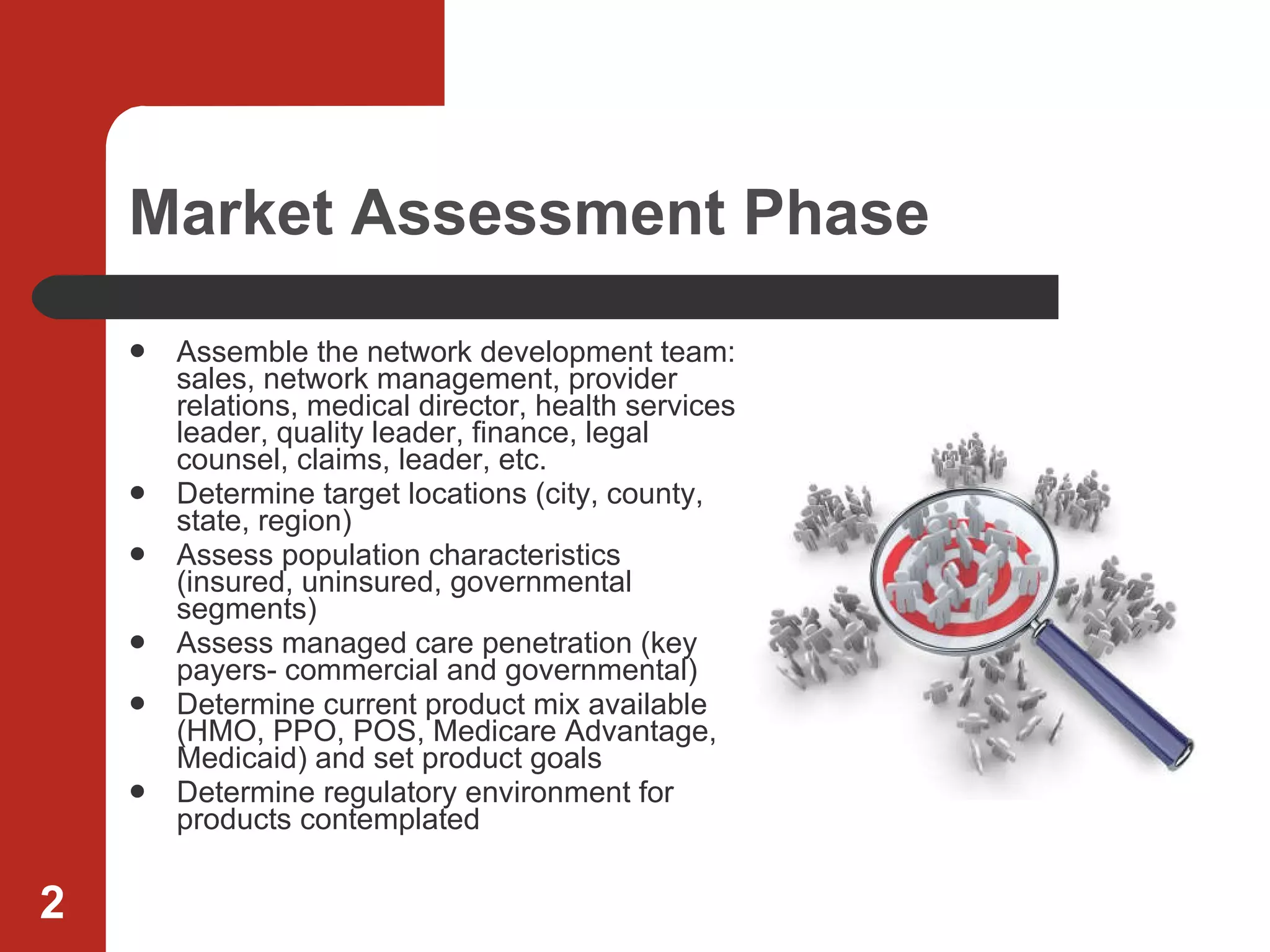
Market Assessment Phase Assemble the network development team: sales, network management, provider relations, medical director, health services leader, quality leader, finance, legal counsel, claims, leader, etc. Determine target locations (city, county, state, region) Assess population characteristics (insured, uninsured, governmental segments) Assess managed care penetration (key payers- commercial and governmental) Determine current product mix available (HMO, PPO, POS, Medicare Advantage, Medicaid) and set product goals Determine regulatory environment for products contemplated
Provider Network Assessment Phase Identify  must have  providers; their market share & clinical reputation for each geographic region desired Primary care Specialty care Academic and tertiary or quaternary care services Ancillary & allied health services Determine provider alignments (health systems, referrals, etc.) Determine regulatory requirements for network adequacy Conduct focus group studies if necessary (include purchasers and consumers) Set network configuration goal
Match Network Needs with Product Requirements (Plan Design) Employer Group Needs Market segment: small, mid-sized, large Insured vs self-funded Dept of Insurance or Dept of Labor (ERISA) requirements Individual Market Needs Dept of Insurance requirements Medicare Needs  CMS requirements Medicaid Needs State and CMS requirements
Contract Requirements  Review state or federal regulations (CMS) Enlist legal staff for contract templates Determine contract categories (facility, group, individual, IPA, PHO, other entities Prepare draft contracts Train negotiation team
Pricing Requirements Determine desired reimbursement methods for all provider types Research current market payment rates Establish pricing goals Create fee schedules, other payment rates according to goals
Provider Recruitment Phase Assemble recruitment packages (contracts, rates, other information) Mail/deliver to target providers Follow up calls/meetings within 7-10 days Answer questions/concerns promptly Record all transactions (initial contact & follow up) Keep abreast of contracting timeline & report progress
Contract Completion Phase Collect returned contracts Ensure contracts have not been altered Review for provider signature and compliance with acceptable revisions Perform all required credentialing and approval by payer committees Have contracts signed/executed by senior executive Return signed contracts to providers and schedule orientation/training sessions Load contracts into payer’s claims payment system
Provider Orientation Invite key providers to meeting (office/department mgr, patient accts, UR staff, other stakeholders) Review relevant contract terms (payment, utilization management, member identification, expected health plan designs, etc.) Distribute payer’s Provider Office Manual and other instructional material Establish face-to-face relationship with assigned professional services representative Set up periodic operational review meetings with key providers (i.e. hospitals, large medical practices and clinics, other provider types)
Begin Marketing Design and publish Provider Directory and Member Guide Create other Marketing Collateral Purchaser brochures  Consultant/broker brochures Advertising material Print media TV/Radio ads Hold kick-off events and invite key providers
Contact Us Eagle Run Managed Care, LLC http://www.eaglerunmcc.com 937-350-5457 25 years managed care experience The foregoing slides are just highlights of suggested key activities. More detailed actions are anticipated in any network development or market expansion projects

Provider Network Development

  • 1.
    Network Development &Expansion Building the Best Value Provider Network
  • 2.
    Market Assessment PhaseAssemble the network development team: sales, network management, provider relations, medical director, health services leader, quality leader, finance, legal counsel, claims, leader, etc. Determine target locations (city, county, state, region) Assess population characteristics (insured, uninsured, governmental segments) Assess managed care penetration (key payers- commercial and governmental) Determine current product mix available (HMO, PPO, POS, Medicare Advantage, Medicaid) and set product goals Determine regulatory environment for products contemplated
  • 3.
    Provider Network AssessmentPhase Identify must have providers; their market share & clinical reputation for each geographic region desired Primary care Specialty care Academic and tertiary or quaternary care services Ancillary & allied health services Determine provider alignments (health systems, referrals, etc.) Determine regulatory requirements for network adequacy Conduct focus group studies if necessary (include purchasers and consumers) Set network configuration goal
  • 4.
    Match Network Needswith Product Requirements (Plan Design) Employer Group Needs Market segment: small, mid-sized, large Insured vs self-funded Dept of Insurance or Dept of Labor (ERISA) requirements Individual Market Needs Dept of Insurance requirements Medicare Needs CMS requirements Medicaid Needs State and CMS requirements
  • 5.
    Contract Requirements Review state or federal regulations (CMS) Enlist legal staff for contract templates Determine contract categories (facility, group, individual, IPA, PHO, other entities Prepare draft contracts Train negotiation team
  • 6.
    Pricing Requirements Determinedesired reimbursement methods for all provider types Research current market payment rates Establish pricing goals Create fee schedules, other payment rates according to goals
  • 7.
    Provider Recruitment PhaseAssemble recruitment packages (contracts, rates, other information) Mail/deliver to target providers Follow up calls/meetings within 7-10 days Answer questions/concerns promptly Record all transactions (initial contact & follow up) Keep abreast of contracting timeline & report progress
  • 8.
    Contract Completion PhaseCollect returned contracts Ensure contracts have not been altered Review for provider signature and compliance with acceptable revisions Perform all required credentialing and approval by payer committees Have contracts signed/executed by senior executive Return signed contracts to providers and schedule orientation/training sessions Load contracts into payer’s claims payment system
  • 9.
    Provider Orientation Invitekey providers to meeting (office/department mgr, patient accts, UR staff, other stakeholders) Review relevant contract terms (payment, utilization management, member identification, expected health plan designs, etc.) Distribute payer’s Provider Office Manual and other instructional material Establish face-to-face relationship with assigned professional services representative Set up periodic operational review meetings with key providers (i.e. hospitals, large medical practices and clinics, other provider types)
  • 10.
    Begin Marketing Designand publish Provider Directory and Member Guide Create other Marketing Collateral Purchaser brochures Consultant/broker brochures Advertising material Print media TV/Radio ads Hold kick-off events and invite key providers
  • 11.
    Contact Us EagleRun Managed Care, LLC http://www.eaglerunmcc.com 937-350-5457 25 years managed care experience The foregoing slides are just highlights of suggested key activities. More detailed actions are anticipated in any network development or market expansion projects