What is a Project
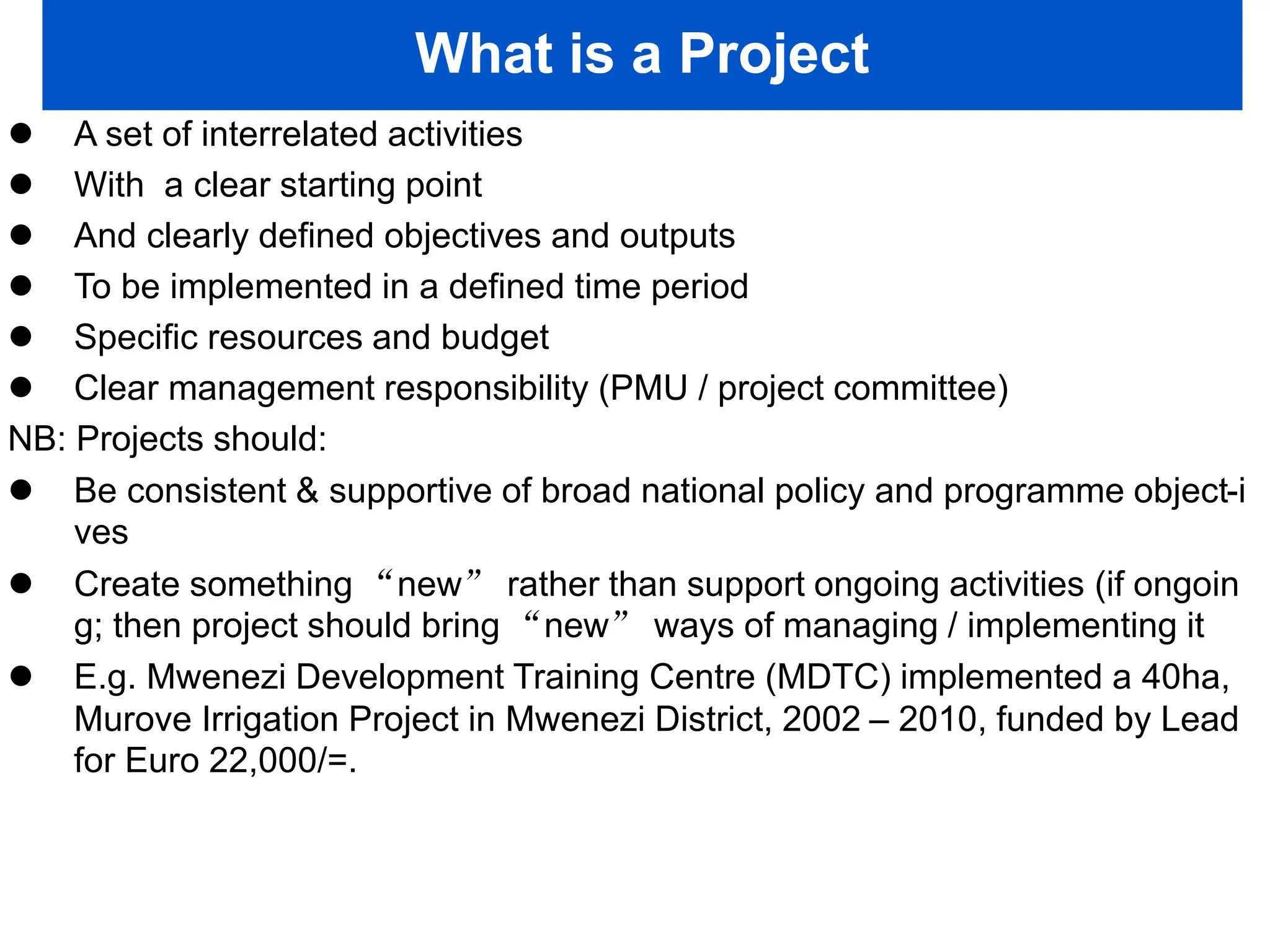
 A set of interrelated activities
 With a clear starting point
 And clearly defined objectives and outputs
 To be implemented in a defined time period
 Specific resources and budget
 Clear management responsibility (PMU / project committee)
NB: Projects should:
 Be consistent & supportive of broad national policy and programme object-i
ves
 Create something “new” rather than support ongoing activities (if ongoin
g; then project should bring “new” ways of managing / implementing it
 E.g. Mwenezi Development Training Centre (MDTC) implemented a 40ha,
Murove Irrigation Project in Mwenezi District, 2002 – 2010, funded by Lead
for Euro 22,000/=.
Project in Context
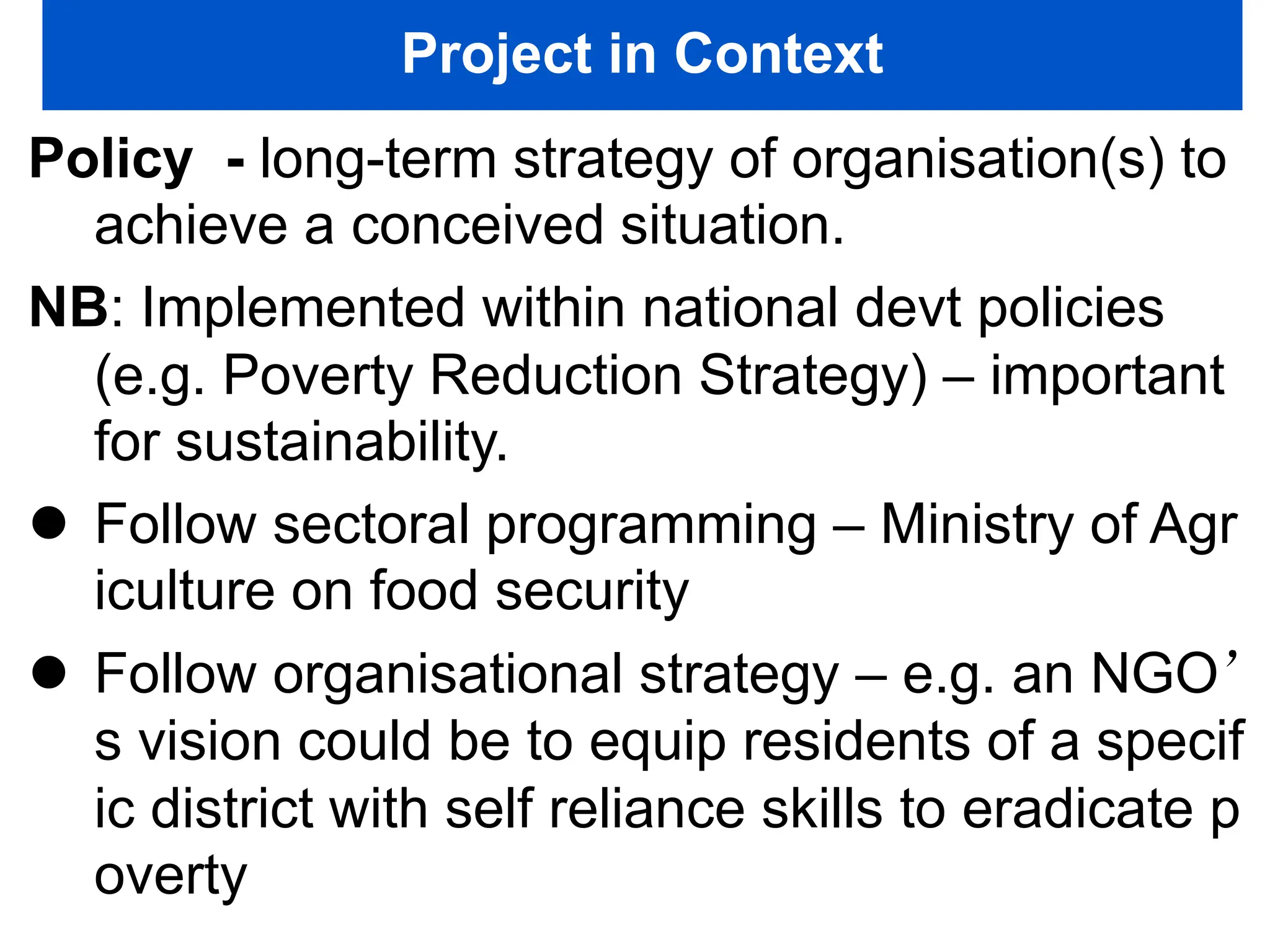
Policy - long-term strategy of organisation(s) to
achieve a conceived situation.
NB: Implemented within national devt policies
(e.g. Poverty Reduction Strategy) – important
for sustainability.
 Follow sectoral programming – Ministry of Agr
iculture on food security
 Follow organisational strategy – e.g. an NGO’
s vision could be to equip residents of a specif
ic district with self reliance skills to eradicate p
overty
Project in context cont…
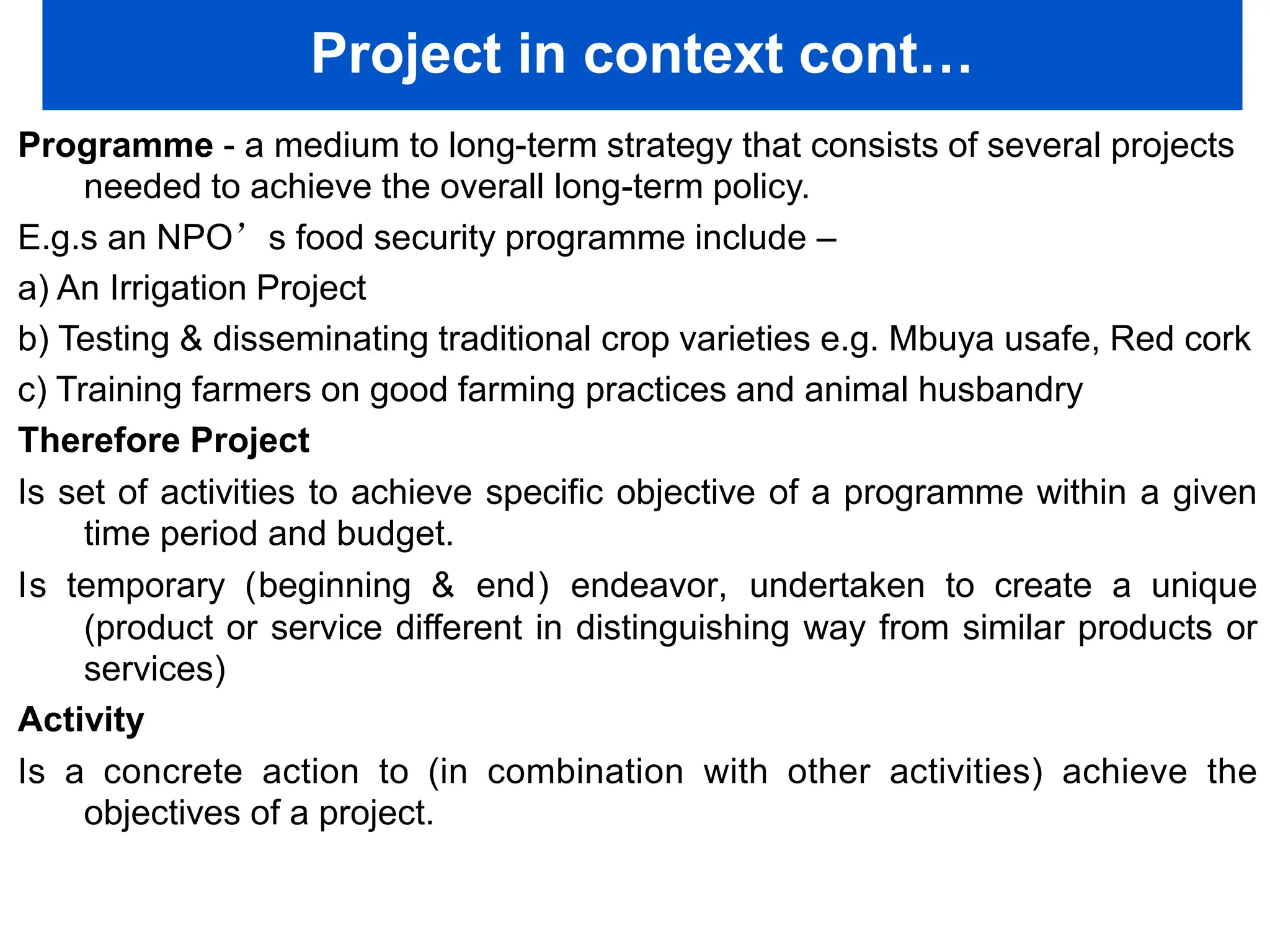
Programme - a medium to long-term strategy that consists of several projects
needed to achieve the overall long-term policy.
E.g.s an NPO’s food security programme include –
a) An Irrigation Project
b) Testing & disseminating traditional crop varieties e.g. Mbuya usafe, Red cork
c) Training farmers on good farming practices and animal husbandry
Therefore Project
Is set of activities to achieve specific objective of a programme within a given
time period and budget.
Is temporary (beginning & end) endeavor, undertaken to create a unique
(product or service different in distinguishing way from similar products or
services)
Activity
Is a concrete action to (in combination with other activities) achieve the
objectives of a project.
Why Policy or Programming in Projects
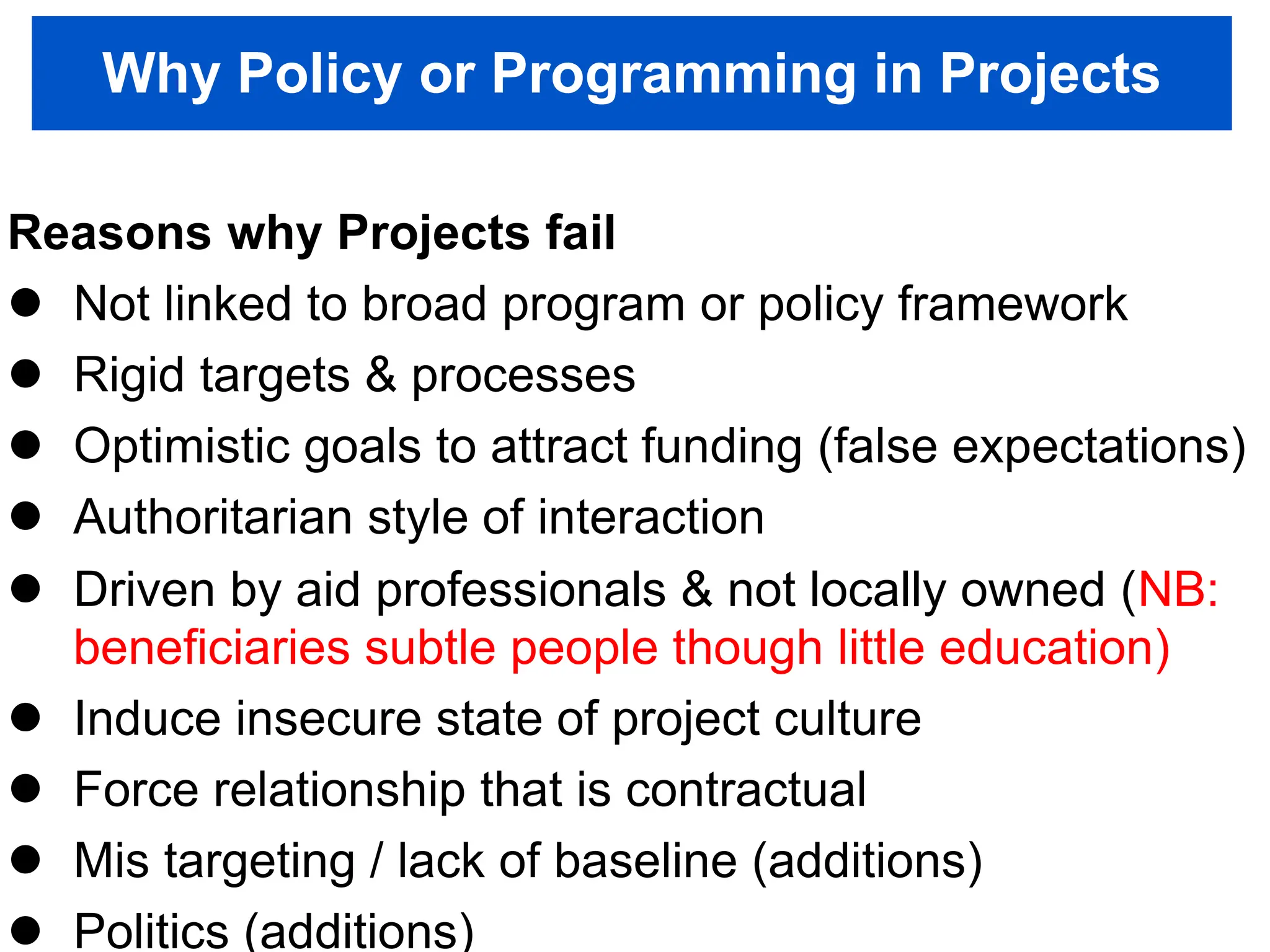
Reasons why Projects fail
 Not linked to broad program or policy framework
 Rigid targets & processes
 Optimistic goals to attract funding (false expectations)
 Authoritarian style of interaction
 Driven by aid professionals & not locally owned (NB:
beneficiaries subtle people though little education)
 Induce insecure state of project culture
 Force relationship that is contractual
 Mis targeting / lack of baseline (additions)
 Politics (additions)
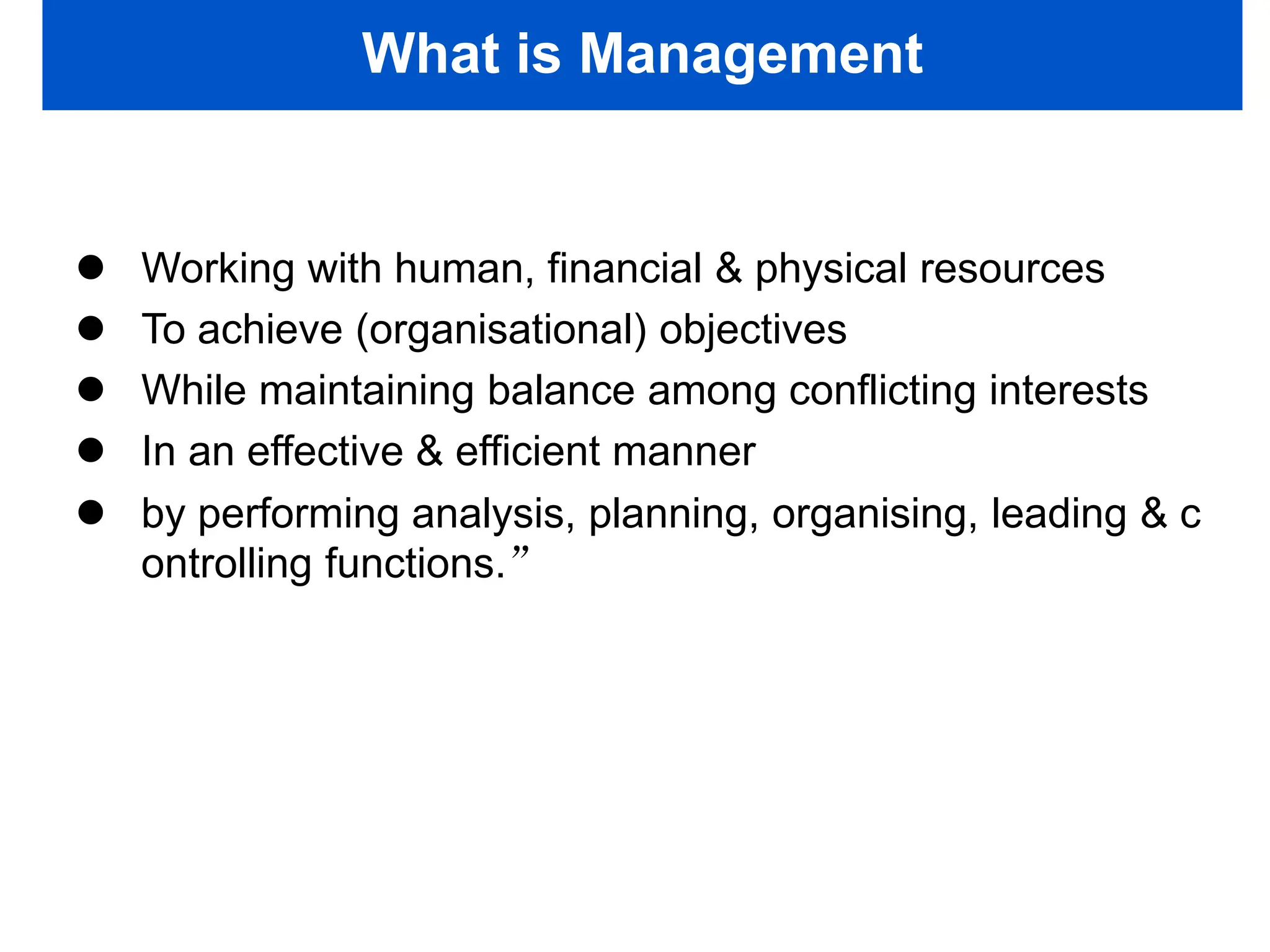
What is Management
 Working with human, financial & physical resources
 To achieve (organisational) objectives
 While maintaining balance among conflicting interests
 In an effective & efficient manner
 by performing analysis, planning, organising, leading & c
ontrolling functions.”
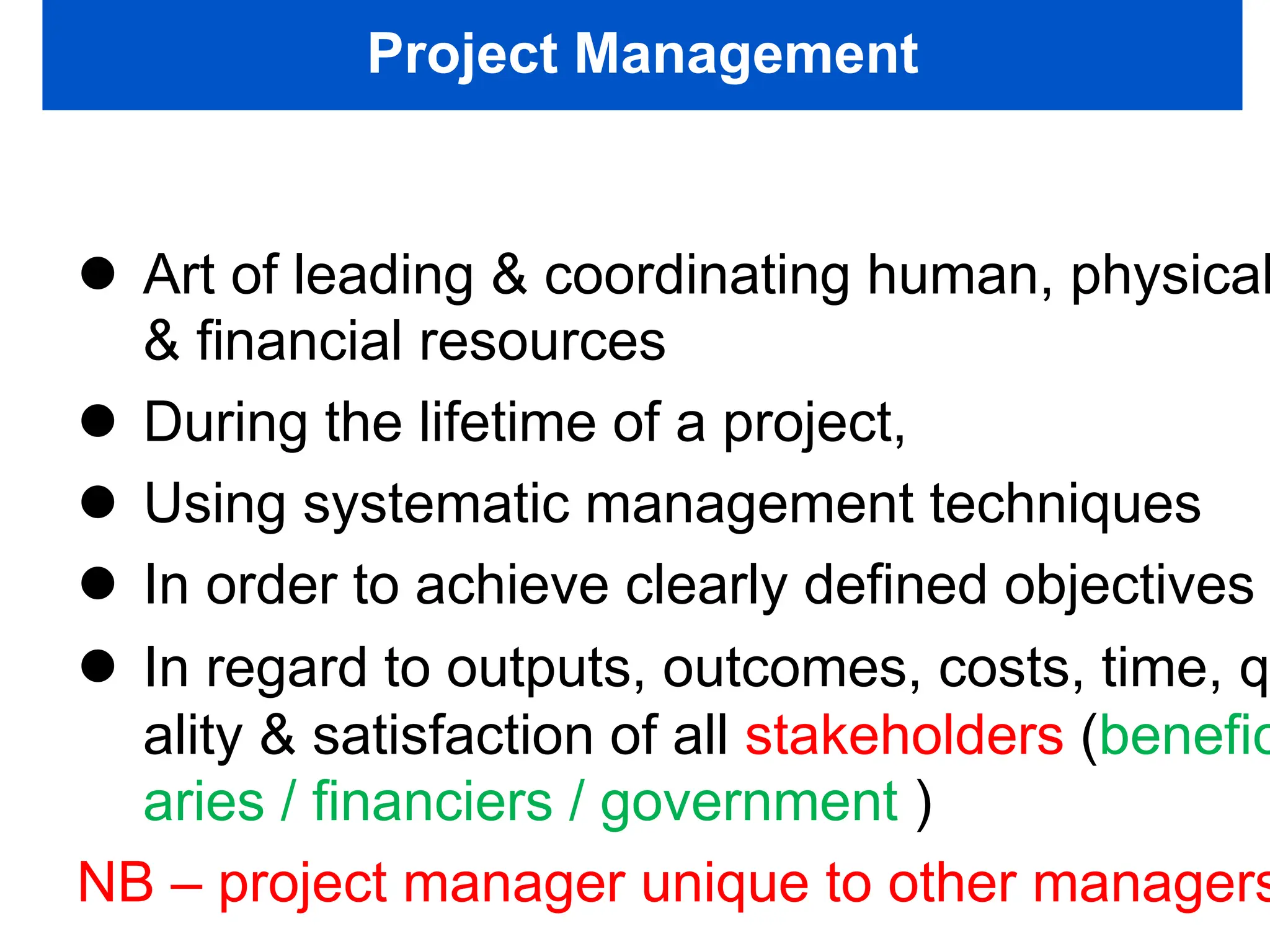
Project Management
 Art of leading & coordinating human, physical
& financial resources
 During the lifetime of a project,
 Using systematic management techniques
 In order to achieve clearly defined objectives
 In regard to outputs, outcomes, costs, time, q
ality & satisfaction of all stakeholders (benefic
aries / financiers / government )
NB – project manager unique to other managers
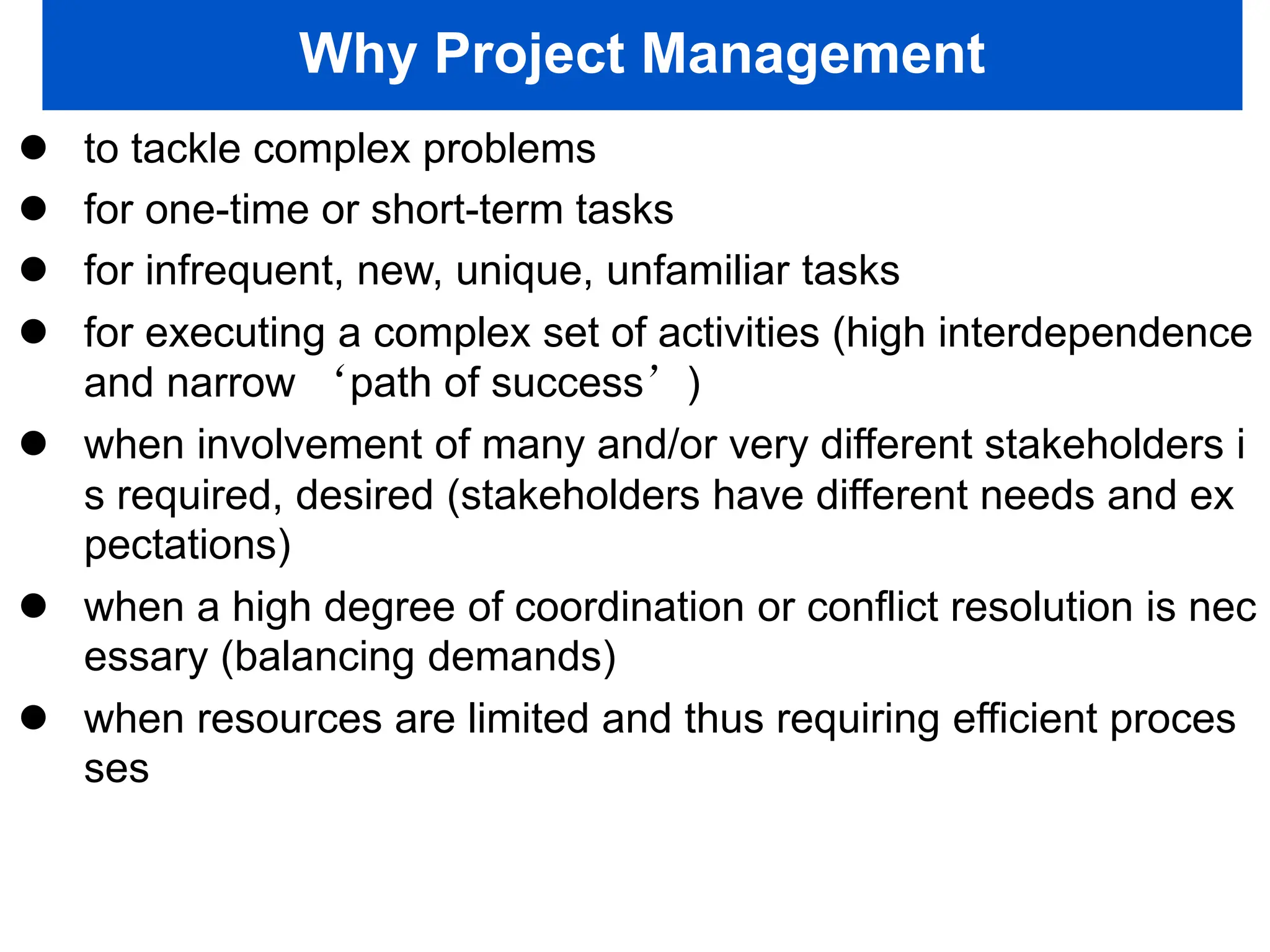
Why Project Management
 to tackle complex problems
 for one-time or short-term tasks
 for infrequent, new, unique, unfamiliar tasks
 for executing a complex set of activities (high interdependence
and narrow ‘path of success’)
 when involvement of many and/or very different stakeholders i
s required, desired (stakeholders have different needs and ex
pectations)
 when a high degree of coordination or conflict resolution is nec
essary (balancing demands)
 when resources are limited and thus requiring efficient proces
ses
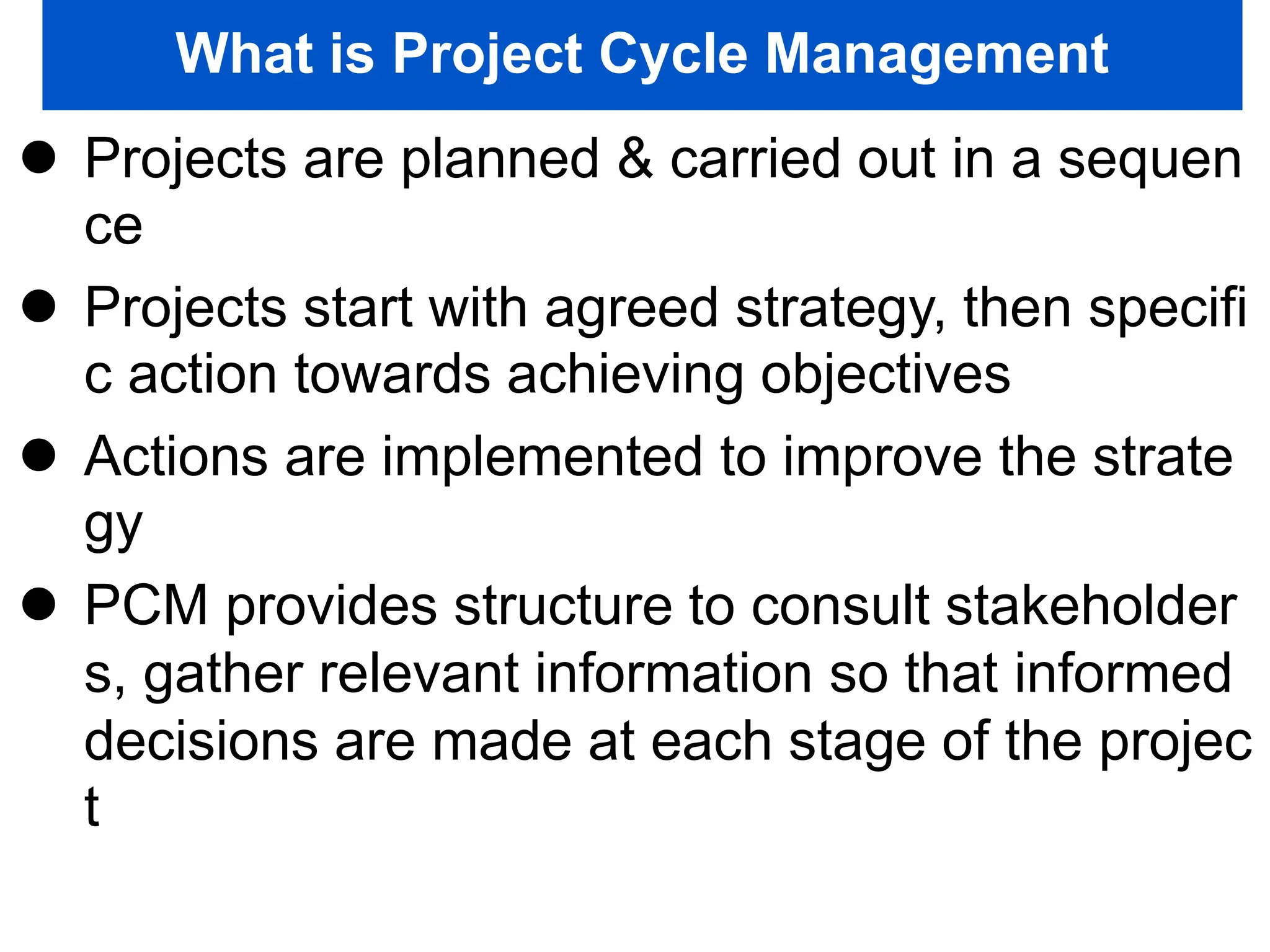
What is Project Cycle Management
 Projects are planned & carried out in a sequen
ce
 Projects start with agreed strategy, then specifi
c action towards achieving objectives
 Actions are implemented to improve the strate
gy
 PCM provides structure to consult stakeholder
s, gather relevant information so that informed
decisions are made at each stage of the projec
t
PCM Principles
 Project cycle phases – structured & informed d
ecision making & feedback from evaluation
 Partners / stakeholder ownership – involvemen
t of stakeholders in decision making / team wor
k and communication
 Logframe planning – comprehensive & consist
ent analysis
 Integrated documentation - standardised docu
mentation and assessment criteria
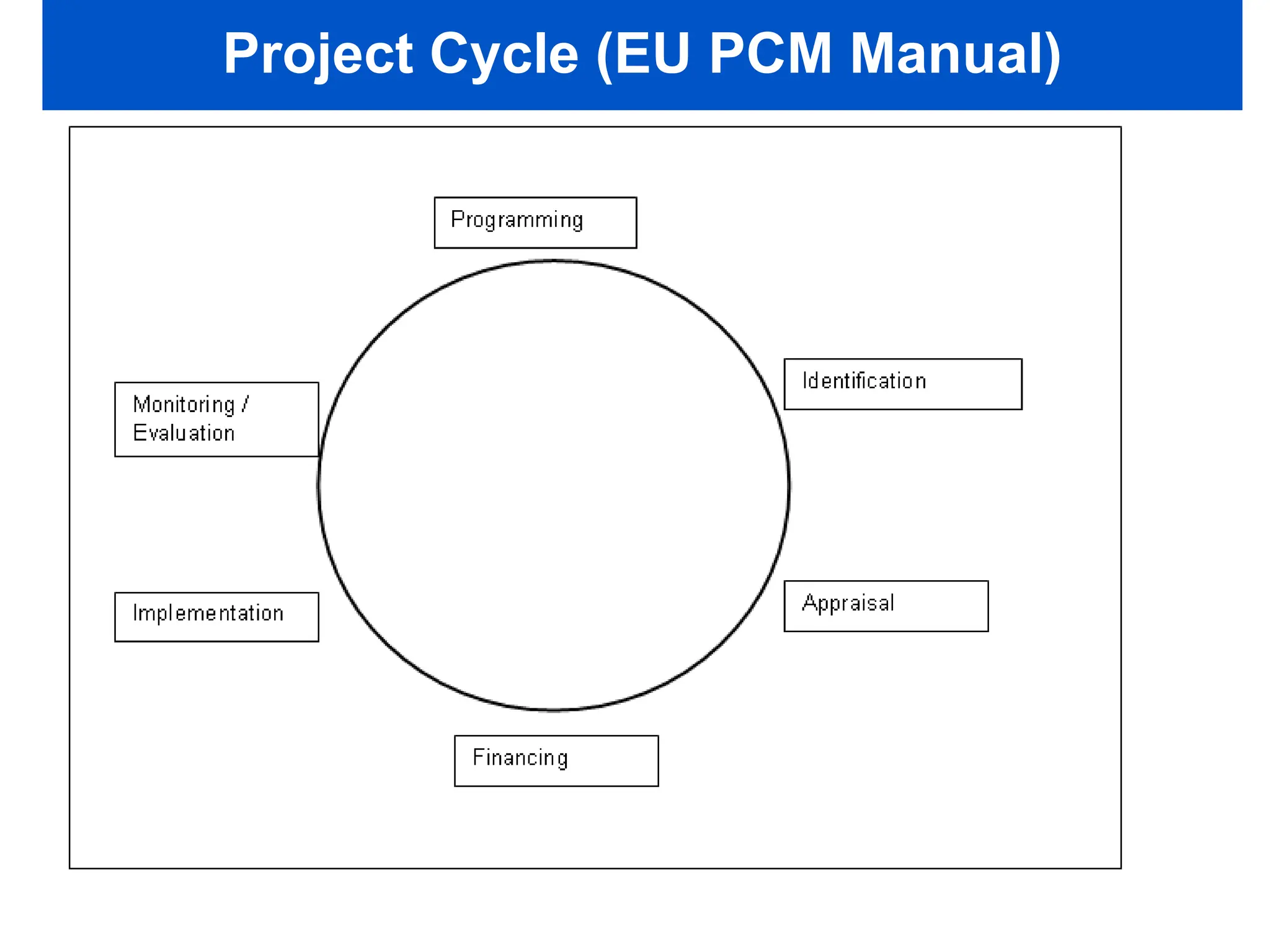
Project Cycle (EU PCM Manual)
Project Cycle
 Programming / identification – project idea stage; possibility / worthy of f
urther investigation. Resources to be exploited or need / demand to be sati
sfied. National, regional & district problems that projects / dvt cooperation c
an address. (What problems are NGOs represented addressing?)
 Formulation - define alternatives for project, select & plan for optimum alt
ernatives (size, location, technical details & institutional requirements)
 Appraisal – All aspects of project reviewed to decide whether not to proce
ed with the project
 Financing – allocating, disbursing & accounting for project funds
 Implementation – institutions established, funds disbursed & facilities con
structed (refer to notes)
 Evaluation – learning from ongoing project to give feedback onto improvin
g the project itself or new projects
(Cusworth, 1993) Managing Project in Developing Countries
(Which stage would you say is most important??)

Project Panning and Management Intro.ppt

  • 1.
    What is aProject  A set of interrelated activities  With a clear starting point  And clearly defined objectives and outputs  To be implemented in a defined time period  Specific resources and budget  Clear management responsibility (PMU / project committee) NB: Projects should:  Be consistent & supportive of broad national policy and programme object-i ves  Create something “new” rather than support ongoing activities (if ongoin g; then project should bring “new” ways of managing / implementing it  E.g. Mwenezi Development Training Centre (MDTC) implemented a 40ha, Murove Irrigation Project in Mwenezi District, 2002 – 2010, funded by Lead for Euro 22,000/=.
  • 2.
    Project in Context Policy- long-term strategy of organisation(s) to achieve a conceived situation. NB: Implemented within national devt policies (e.g. Poverty Reduction Strategy) – important for sustainability.  Follow sectoral programming – Ministry of Agr iculture on food security  Follow organisational strategy – e.g. an NGO’ s vision could be to equip residents of a specif ic district with self reliance skills to eradicate p overty
  • 3.
    Project in contextcont… Programme - a medium to long-term strategy that consists of several projects needed to achieve the overall long-term policy. E.g.s an NPO’s food security programme include – a) An Irrigation Project b) Testing & disseminating traditional crop varieties e.g. Mbuya usafe, Red cork c) Training farmers on good farming practices and animal husbandry Therefore Project Is set of activities to achieve specific objective of a programme within a given time period and budget. Is temporary (beginning & end) endeavor, undertaken to create a unique (product or service different in distinguishing way from similar products or services) Activity Is a concrete action to (in combination with other activities) achieve the objectives of a project.
  • 4.
    Why Policy orProgramming in Projects Reasons why Projects fail  Not linked to broad program or policy framework  Rigid targets & processes  Optimistic goals to attract funding (false expectations)  Authoritarian style of interaction  Driven by aid professionals & not locally owned (NB: beneficiaries subtle people though little education)  Induce insecure state of project culture  Force relationship that is contractual  Mis targeting / lack of baseline (additions)  Politics (additions)
  • 5.
    What is Management Working with human, financial & physical resources  To achieve (organisational) objectives  While maintaining balance among conflicting interests  In an effective & efficient manner  by performing analysis, planning, organising, leading & c ontrolling functions.”
  • 6.
    Project Management  Artof leading & coordinating human, physical & financial resources  During the lifetime of a project,  Using systematic management techniques  In order to achieve clearly defined objectives  In regard to outputs, outcomes, costs, time, q ality & satisfaction of all stakeholders (benefic aries / financiers / government ) NB – project manager unique to other managers
  • 7.
    Why Project Management to tackle complex problems  for one-time or short-term tasks  for infrequent, new, unique, unfamiliar tasks  for executing a complex set of activities (high interdependence and narrow ‘path of success’)  when involvement of many and/or very different stakeholders i s required, desired (stakeholders have different needs and ex pectations)  when a high degree of coordination or conflict resolution is nec essary (balancing demands)  when resources are limited and thus requiring efficient proces ses
  • 8.
    What is ProjectCycle Management  Projects are planned & carried out in a sequen ce  Projects start with agreed strategy, then specifi c action towards achieving objectives  Actions are implemented to improve the strate gy  PCM provides structure to consult stakeholder s, gather relevant information so that informed decisions are made at each stage of the projec t
  • 9.
    PCM Principles  Projectcycle phases – structured & informed d ecision making & feedback from evaluation  Partners / stakeholder ownership – involvemen t of stakeholders in decision making / team wor k and communication  Logframe planning – comprehensive & consist ent analysis  Integrated documentation - standardised docu mentation and assessment criteria
  • 10.
    Project Cycle (EUPCM Manual)
  • 11.
    Project Cycle  Programming/ identification – project idea stage; possibility / worthy of f urther investigation. Resources to be exploited or need / demand to be sati sfied. National, regional & district problems that projects / dvt cooperation c an address. (What problems are NGOs represented addressing?)  Formulation - define alternatives for project, select & plan for optimum alt ernatives (size, location, technical details & institutional requirements)  Appraisal – All aspects of project reviewed to decide whether not to proce ed with the project  Financing – allocating, disbursing & accounting for project funds  Implementation – institutions established, funds disbursed & facilities con structed (refer to notes)  Evaluation – learning from ongoing project to give feedback onto improvin g the project itself or new projects (Cusworth, 1993) Managing Project in Developing Countries (Which stage would you say is most important??)

Editor's Notes