PRESENTED BY: Mohammad Al Sabea
Class: 6E
Mr: Mohammad Al Sheshtawy
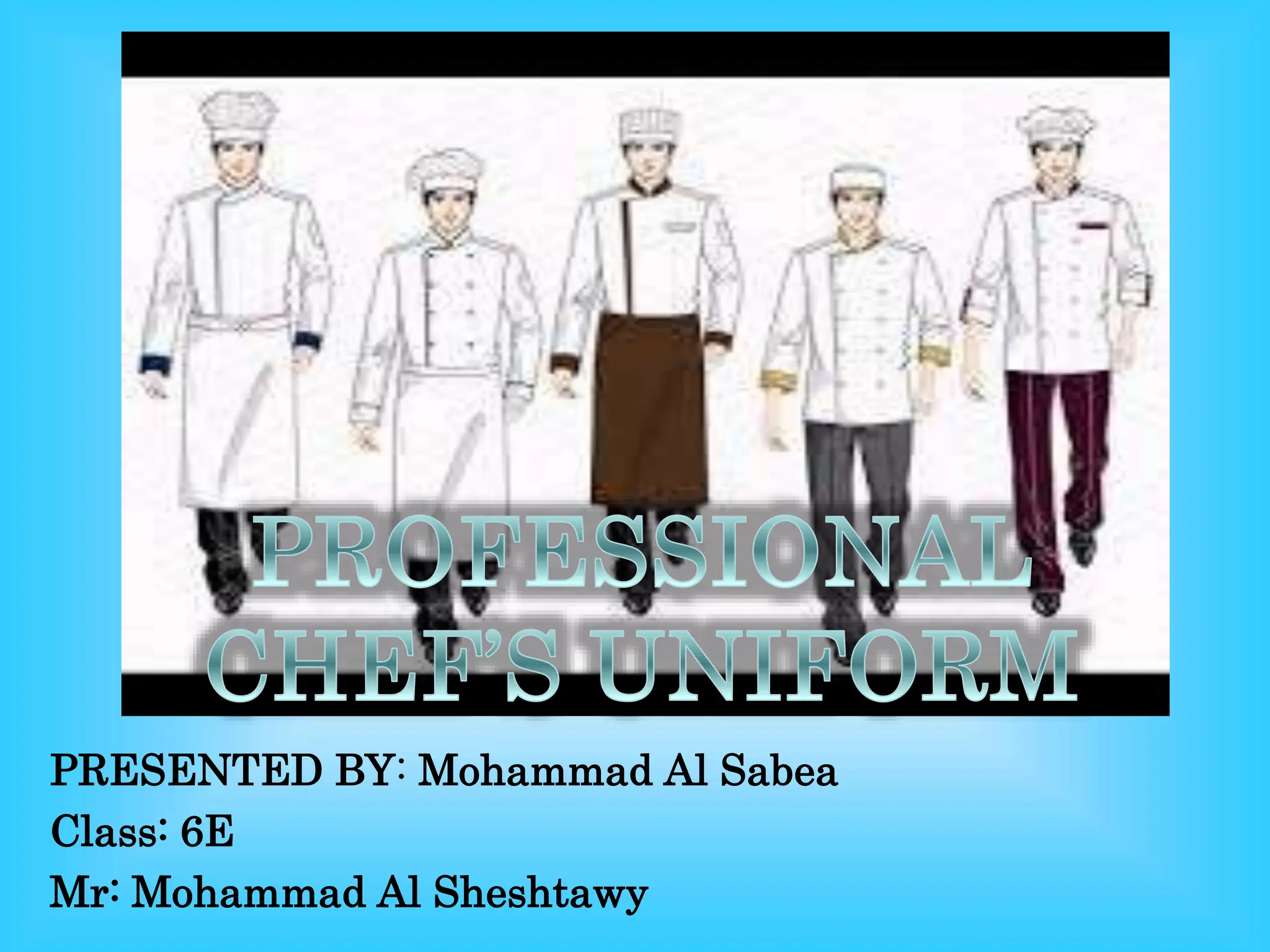
PROFESSIONAL CHEF’S
UNIFORM
A CHEF'S UNIFORM IS
WORN:
FOR SAFETY REASONS TO:
• Protect the body against burns from boiling hot liquids.
• Protect the body from heat rays from ovens and grills.
FOR HYGIENIC REASONS TO:
• Be easily laundered look clean and fresh and appear
smart.
FOR HISTORICAL REASONS TO:
• Show professional respect and portray a commercial
image.
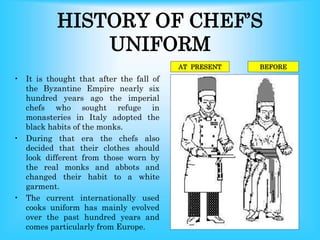
HISTORY OF CHEF’S
UNIFORM
• It is thought that after the fall of
the Byzantine Empire nearly six
hundred years ago the imperial
chefs who sought refuge in
monasteries in Italy adopted the
black habits of the monks.
• During that era the chefs also
decided that their clothes should
look different from those worn by
the real monks and abbots and
changed their habit to a white
garment.
• The current internationally used
cooks uniform has mainly evolved
over the past hundred years and
comes particularly from Europe.
BEFORE
AT PRESENT
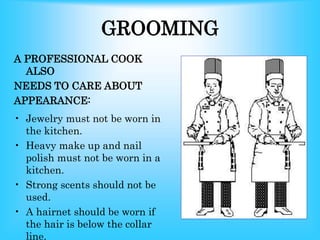
GROOMING
A PROFESSIONAL COOK
ALSO
NEEDS TO CARE ABOUT
APPEARANCE:
• Jewelry must not be worn in
the kitchen.
• Heavy make up and nail
polish must not be worn in a
kitchen.
• Strong scents should not be
used.
• A hairnet should be worn if
the hair is below the collar
line.
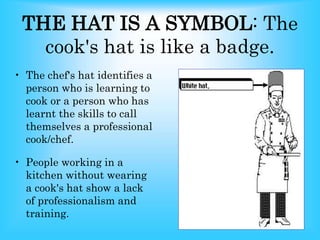
THE HAT IS A SYMBOL: The
cook's hat is like a badge.
• The chef's hat identifies a
person who is learning to
cook or a person who has
learnt the skills to call
themselves a professional
cook/chef.
• People working in a
kitchen without wearing
a cook's hat show a lack
of professionalism and
training.
THE HAT IS DESIGNED TO
KEEP THE HAIR CLEAN AND
HEALTHY BY:
• Protecting hair from the smoke and oil in the kitchen.
• Allowing air to circulate on top of the head.
• Preventing loose hairs from falling onto the food.
• Absorbing perspiration from the forehead.
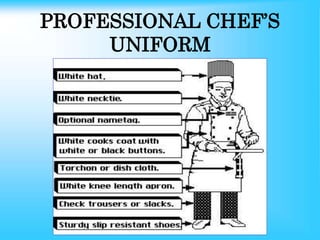
• A professional chef will always wear a hat and
demand that other cooks in the kitchen wear the
traditional cooks hat.
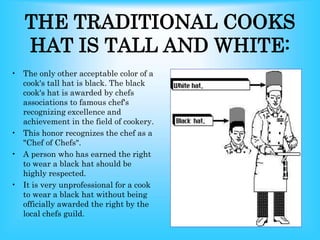
THE TRADITIONAL COOKS
HAT IS TALL AND WHITE:
• The only other acceptable color of a
cook's tall hat is black. The black
cook's hat is awarded by chefs
associations to famous chef's
recognizing excellence and
achievement in the field of cookery.
• This honor recognizes the chef as a
"Chef of Chefs".
• A person who has earned the right
to wear a black hat should be
highly respected.
• It is very unprofessional for a cook
to wear a black hat without being
officially awarded the right by the
local chefs guild.
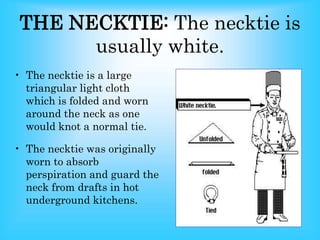
THE NECKTIE: The necktie is
usually white.
• The necktie is a large
triangular light cloth
which is folded and worn
around the neck as one
would knot a normal tie.
• The necktie was originally
worn to absorb
perspiration and guard the
neck from drafts in hot
underground kitchens.
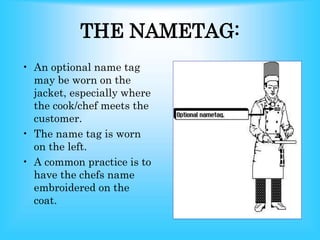
THE NAMETAG:
• An optional name tag
may be worn on the
jacket, especially where
the cook/chef meets the
customer.
• The name tag is worn
on the left.
• A common practice is to
have the chefs name
embroidered on the
coat.
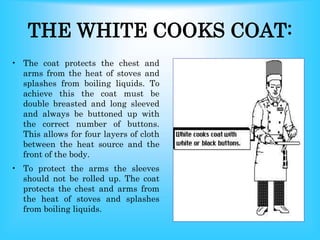
THE WHITE COOKS COAT:
• The coat protects the chest and
arms from the heat of stoves and
splashes from boiling liquids. To
achieve this the coat must be
double breasted and long sleeved
and always be buttoned up with
the correct number of buttons.
This allows for four layers of cloth
between the heat source and the
front of the body.
• To protect the arms the sleeves
should not be rolled up. The coat
protects the chest and arms from
the heat of stoves and splashes
from boiling liquids.
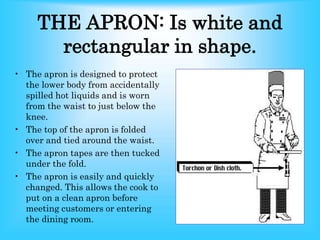
THE APRON: Is white and
rectangular in shape.
• The apron is designed to protect
the lower body from accidentally
spilled hot liquids and is worn
from the waist to just below the
knee.
• The top of the apron is folded
over and tied around the waist.
• The apron tapes are then tucked
under the fold.
• The apron is easily and quickly
changed. This allows the cook to
put on a clean apron before
meeting customers or entering
the dining room.
THE TORCHON:
PRONOUNCED "TOR-SHUN".
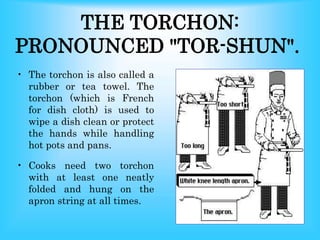
• The torchon is also called a
rubber or tea towel. The
torchon (which is French
for dish cloth) is used to
wipe a dish clean or protect
the hands while handling
hot pots and pans.
• Cooks need two torchon
with at least one neatly
folded and hung on the
apron string at all times.
THE TROUSERS OR
SLACKS:
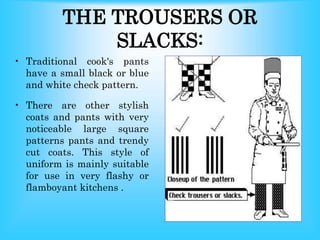
• Traditional cook's pants
have a small black or blue
and white check pattern.
• There are other stylish
coats and pants with very
noticeable large square
patterns pants and trendy
cut coats. This style of
uniform is mainly suitable
for use in very flashy or
flamboyant kitchens .
SHOES:
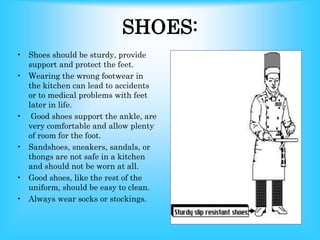
• Shoes should be sturdy, provide
support and protect the feet.
• Wearing the wrong footwear in
the kitchen can lead to accidents
or to medical problems with feet
later in life.
• Good shoes support the ankle, are
very comfortable and allow plenty
of room for the foot.
• Sandshoes, sneakers, sandals, or
thongs are not safe in a kitchen
and should not be worn at all.
• Good shoes, like the rest of the
uniform, should be easy to clean.
• Always wear socks or stockings.
Profissional dress code (chef uniform).pptx

Profissional dress code (chef uniform).pptx

  • 1.
    PRESENTED BY: MohammadAl Sabea Class: 6E Mr: Mohammad Al Sheshtawy
  • 3.
  • 4.
    A CHEF'S UNIFORMIS WORN: FOR SAFETY REASONS TO: • Protect the body against burns from boiling hot liquids. • Protect the body from heat rays from ovens and grills. FOR HYGIENIC REASONS TO: • Be easily laundered look clean and fresh and appear smart. FOR HISTORICAL REASONS TO: • Show professional respect and portray a commercial image.
  • 5.
    HISTORY OF CHEF’S UNIFORM •It is thought that after the fall of the Byzantine Empire nearly six hundred years ago the imperial chefs who sought refuge in monasteries in Italy adopted the black habits of the monks. • During that era the chefs also decided that their clothes should look different from those worn by the real monks and abbots and changed their habit to a white garment. • The current internationally used cooks uniform has mainly evolved over the past hundred years and comes particularly from Europe. BEFORE AT PRESENT
  • 6.
    GROOMING A PROFESSIONAL COOK ALSO NEEDSTO CARE ABOUT APPEARANCE: • Jewelry must not be worn in the kitchen. • Heavy make up and nail polish must not be worn in a kitchen. • Strong scents should not be used. • A hairnet should be worn if the hair is below the collar line.
  • 7.
    THE HAT ISA SYMBOL: The cook's hat is like a badge. • The chef's hat identifies a person who is learning to cook or a person who has learnt the skills to call themselves a professional cook/chef. • People working in a kitchen without wearing a cook's hat show a lack of professionalism and training.
  • 8.
    THE HAT ISDESIGNED TO KEEP THE HAIR CLEAN AND HEALTHY BY: • Protecting hair from the smoke and oil in the kitchen. • Allowing air to circulate on top of the head. • Preventing loose hairs from falling onto the food. • Absorbing perspiration from the forehead. • A professional chef will always wear a hat and demand that other cooks in the kitchen wear the traditional cooks hat.
  • 9.
    THE TRADITIONAL COOKS HATIS TALL AND WHITE: • The only other acceptable color of a cook's tall hat is black. The black cook's hat is awarded by chefs associations to famous chef's recognizing excellence and achievement in the field of cookery. • This honor recognizes the chef as a "Chef of Chefs". • A person who has earned the right to wear a black hat should be highly respected. • It is very unprofessional for a cook to wear a black hat without being officially awarded the right by the local chefs guild.
  • 10.
    THE NECKTIE: Thenecktie is usually white. • The necktie is a large triangular light cloth which is folded and worn around the neck as one would knot a normal tie. • The necktie was originally worn to absorb perspiration and guard the neck from drafts in hot underground kitchens.
  • 11.
    THE NAMETAG: • Anoptional name tag may be worn on the jacket, especially where the cook/chef meets the customer. • The name tag is worn on the left. • A common practice is to have the chefs name embroidered on the coat.
  • 12.
    THE WHITE COOKSCOAT: • The coat protects the chest and arms from the heat of stoves and splashes from boiling liquids. To achieve this the coat must be double breasted and long sleeved and always be buttoned up with the correct number of buttons. This allows for four layers of cloth between the heat source and the front of the body. • To protect the arms the sleeves should not be rolled up. The coat protects the chest and arms from the heat of stoves and splashes from boiling liquids.
  • 13.
    THE APRON: Iswhite and rectangular in shape. • The apron is designed to protect the lower body from accidentally spilled hot liquids and is worn from the waist to just below the knee. • The top of the apron is folded over and tied around the waist. • The apron tapes are then tucked under the fold. • The apron is easily and quickly changed. This allows the cook to put on a clean apron before meeting customers or entering the dining room.
  • 14.
    THE TORCHON: PRONOUNCED "TOR-SHUN". •The torchon is also called a rubber or tea towel. The torchon (which is French for dish cloth) is used to wipe a dish clean or protect the hands while handling hot pots and pans. • Cooks need two torchon with at least one neatly folded and hung on the apron string at all times.
  • 15.
    THE TROUSERS OR SLACKS: •Traditional cook's pants have a small black or blue and white check pattern. • There are other stylish coats and pants with very noticeable large square patterns pants and trendy cut coats. This style of uniform is mainly suitable for use in very flashy or flamboyant kitchens .
  • 16.
    SHOES: • Shoes shouldbe sturdy, provide support and protect the feet. • Wearing the wrong footwear in the kitchen can lead to accidents or to medical problems with feet later in life. • Good shoes support the ankle, are very comfortable and allow plenty of room for the foot. • Sandshoes, sneakers, sandals, or thongs are not safe in a kitchen and should not be worn at all. • Good shoes, like the rest of the uniform, should be easy to clean. • Always wear socks or stockings.

Editor's Notes

  • #8 Traditional cooks/chefs hats are tall and indicate fully trained. Alternatively, white or black caps are worn at school or college and usually indicate that training is not complete, or by cooks  working in a kitchen. Genuine chefs wear a traditional chef's hat when in front of the public.
  • #11 Modern air conditioned kitchens make the necktie out of date, however the necktie is still worn by professional cooks as a symbol and respect for the trade. You can identify chefs who are fully trained and passionate about their skills, they wear tall white hats and a white necktie. Untrained or lazy chefs wear caps and no necktie and use the excuse that the tall hat and necktie is old fashioned.
  • #12 Some hotels issue their cooks with a company nametag which also shows the company logo.
  • #15 The dish cloth must be kept dry especially if handling a hot pot. Avoid using old cloths which may have holes as they are dangerous. 
  • #16 These trendy uniforms are not generally accepted by serious professional chefs, institutes or colleges. The most common uniform style worn in commercial kitchens still is the internationally recognized classical design and color.