Introduction to AI
ArtificialIntelligence (AI) refers to the development of computer systems capable of
that typically require human intelligence. These include learning, problem-solving, a
3.
Key Concepts inAI
- Machine Learning: Systems that learn from data
- Deep Learning: Neural networks with multiple layers
- Natural Language Processing: Language understanding and generation
- Computer Vision: Interpretation of visual inputs
4.
Types of AI
-Narrow AI: Specialized for specific tasks
- General AI: Human-level cognitive abilities
- Superintelligent AI: Hypothetical intelligence beyond human capabilities
5.
How AI Works
AIsystems operate by processing vast datasets through algorithms, identifying patte
over time. Data training, model selection, and continuous feedback are key element
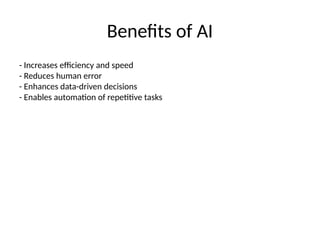
Benefits of AI
-Increases efficiency and speed
- Reduces human error
- Enhances data-driven decisions
- Enables automation of repetitive tasks
8.
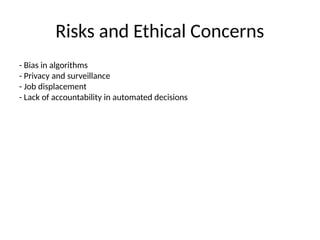
Risks and EthicalConcerns
- Bias in algorithms
- Privacy and surveillance
- Job displacement
- Lack of accountability in automated decisions
9.
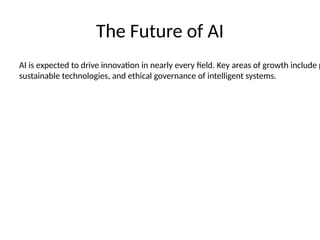
The Future ofAI
AI is expected to drive innovation in nearly every field. Key areas of growth include p
sustainable technologies, and ethical governance of intelligent systems.
10.
Conclusion & Q&A
AIis shaping the way we live, work, and connect. While the potential is immense, re
development and ethical deployment are essential.
Questions?
![Artificial Intelligence
An Insight into the Future of Technology
Presented by: [Your Name]
Date: [Presentation Date]](https://image.slidesharecdn.com/professionalaipresentation-250704075154-04834c62/85/Professional_AI_Presentation-pptxNS-CKJsdvhfjefshv-1-320.jpg)