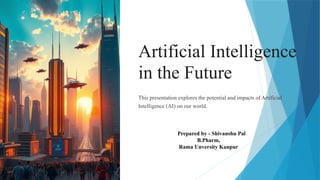
Artificial Intelligence
in the Future
This presentation explores the potential and impacts of Artificial
Intelligence (AI) on our world.
Prepared by - Shivanshu Pal
B.Pharm,
Rama Unversity Kanpur
Introduction to Artificial Intelligence (AI)
Definition
Artificial Intelligence (AI) is the simulation of human
intelligence in machines designed to perform tasks that
typically require human intelligence, like learning,
problem-solving, and decision-making.
Key Areas of AI
- Machine Learning - Natural Language Processing -
Robotics - Computer Vision
Current Uses of AI
1 Healthcare
Disease diagnosis, personalized
treatment, robotic surgery.
2 Finance
Fraud detection, investment
analysis, algorithmic trading.
3 Transportation
Autonomous vehicles, traffic
prediction.
4 Entertainment
Recommendations (e.g., Netflix, YouTube), game
development.
5 Personal Assistants
Virtual assistants like Siri, Alexa.
Future Prospects of AI
Healthcare Advancements
Improved diagnostics, new drug
discovery, and predictive analytics for
patient care.
Smart Cities
Optimized urban planning, traffic
management, energy conservation.
Education
Personalized learning platforms, AI
tutors, and learning analytics.
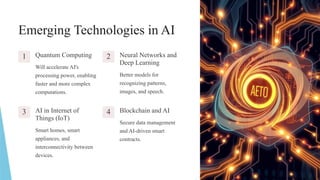
Emerging Technologies in AI
1 Quantum Computing
Will accelerate AI's
processing power, enabling
faster and more complex
computations.
2 Neural Networks and
Deep Learning
Better models for
recognizing patterns,
images, and speech.
3 AI in Internet of
Things (IoT)
Smart homes, smart
appliances, and
interconnectivity between
devices.
4 Blockchain and AI
Secure data management
and AI-driven smart
contracts.
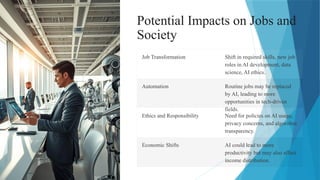
Potential Impacts on Jobs and
Society
Job Transformation Shift in required skills, new job
roles in AI development, data
science, AI ethics.
Automation Routine jobs may be replaced
by AI, leading to more
opportunities in tech-driven
fields.
Ethics and Responsibility Need for policies on AI usage,
privacy concerns, and algorithm
transparency.
Economic Shifts AI could lead to more
productivity but may also affect
income distribution.
Challenges and Risks
1 Ethics
Bias in AI algorithms,
privacy concerns, and
misuse.
2 Security
Vulnerability to hacking,
AI-driven cybersecurity
risks.
3 Dependency on
Technology
Potential over-reliance on
AI for critical decisions.
4 Job Displacement
Risk of job loss in certain
sectors due to automation.
Preparing for an AI Future
1 Skills to Develop
Coding, data analysis, understanding AI ethics, and
critical thinking.
2 Adaptability
Embrace new technology, lifelong learning.
3 Awareness of AI Policies
Follow AI regulations, understand ethical AI principles.
4 Collaboration with AI
Working alongside AI tools, leveraging them for
productivity.
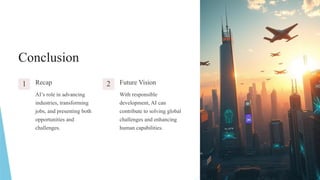
Conclusion
1 Recap
AI’s role in advancing
industries, transforming
jobs, and presenting both
opportunities and
challenges.
2 Future Vision
With responsible
development, AI can
contribute to solving global
challenges and enhancing
human capabilities.
Q&A
Invite questions from the audience.

Artificial-Intelligence-in-the-Future.pptx

  • 1.
    Artificial Intelligence in theFuture This presentation explores the potential and impacts of Artificial Intelligence (AI) on our world. Prepared by - Shivanshu Pal B.Pharm, Rama Unversity Kanpur
  • 2.
    Introduction to ArtificialIntelligence (AI) Definition Artificial Intelligence (AI) is the simulation of human intelligence in machines designed to perform tasks that typically require human intelligence, like learning, problem-solving, and decision-making. Key Areas of AI - Machine Learning - Natural Language Processing - Robotics - Computer Vision
  • 3.
    Current Uses ofAI 1 Healthcare Disease diagnosis, personalized treatment, robotic surgery. 2 Finance Fraud detection, investment analysis, algorithmic trading. 3 Transportation Autonomous vehicles, traffic prediction. 4 Entertainment Recommendations (e.g., Netflix, YouTube), game development. 5 Personal Assistants Virtual assistants like Siri, Alexa.
  • 4.
    Future Prospects ofAI Healthcare Advancements Improved diagnostics, new drug discovery, and predictive analytics for patient care. Smart Cities Optimized urban planning, traffic management, energy conservation. Education Personalized learning platforms, AI tutors, and learning analytics.
  • 5.
    Emerging Technologies inAI 1 Quantum Computing Will accelerate AI's processing power, enabling faster and more complex computations. 2 Neural Networks and Deep Learning Better models for recognizing patterns, images, and speech. 3 AI in Internet of Things (IoT) Smart homes, smart appliances, and interconnectivity between devices. 4 Blockchain and AI Secure data management and AI-driven smart contracts.
  • 6.
    Potential Impacts onJobs and Society Job Transformation Shift in required skills, new job roles in AI development, data science, AI ethics. Automation Routine jobs may be replaced by AI, leading to more opportunities in tech-driven fields. Ethics and Responsibility Need for policies on AI usage, privacy concerns, and algorithm transparency. Economic Shifts AI could lead to more productivity but may also affect income distribution.
  • 7.
    Challenges and Risks 1Ethics Bias in AI algorithms, privacy concerns, and misuse. 2 Security Vulnerability to hacking, AI-driven cybersecurity risks. 3 Dependency on Technology Potential over-reliance on AI for critical decisions. 4 Job Displacement Risk of job loss in certain sectors due to automation.
  • 8.
    Preparing for anAI Future 1 Skills to Develop Coding, data analysis, understanding AI ethics, and critical thinking. 2 Adaptability Embrace new technology, lifelong learning. 3 Awareness of AI Policies Follow AI regulations, understand ethical AI principles. 4 Collaboration with AI Working alongside AI tools, leveraging them for productivity.
  • 9.
    Conclusion 1 Recap AI’s rolein advancing industries, transforming jobs, and presenting both opportunities and challenges. 2 Future Vision With responsible development, AI can contribute to solving global challenges and enhancing human capabilities.
  • 10.