PRINCIPLES OF LEARNING
Dr Sridevi NH
MBBS MD community medicine
Chikmagalur
Learning objectives
1. Understand learning as a process and a product.
2. Understand major Theories of Learning.
3. Recognize the importance of Educational Spiral.
4. Understand Bloom’s Domains and be able to relate
any instructional activity to the domain/s it targets.
5. Describe the qualities and identify elements of
specific learning objectives.
Contents
 Learning
 Theories of learning
 Bloom’s domains
 Educational spiral
 Specific learning objectives
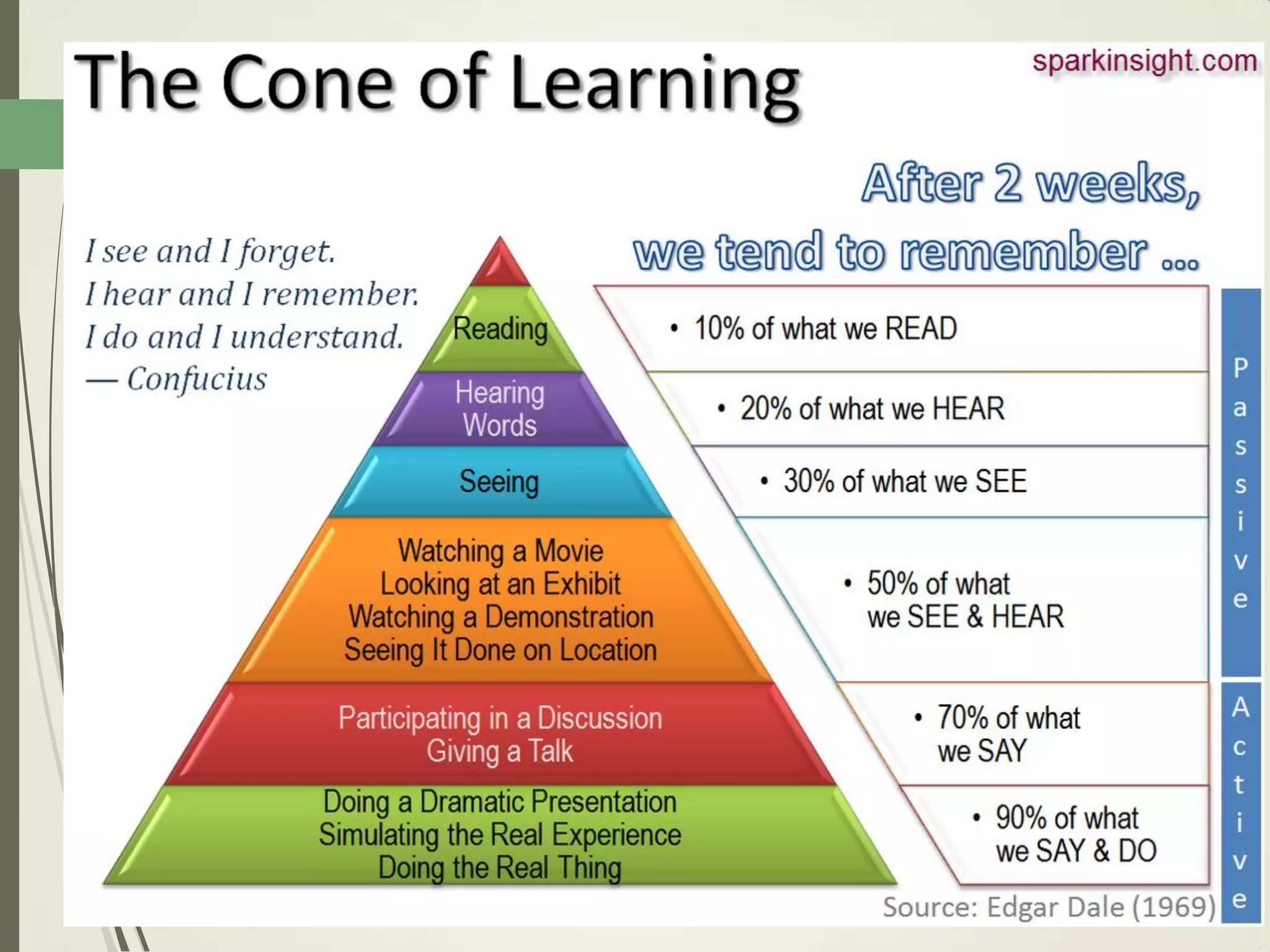
 Cone of learning
 References
What is learning?
 Process that brings relatively permanent
change in behavior.
 It means aquiring something new.
 Learning is an active and continuous
process.
 Both conscious and unconcious.
Conditions that affect learning
 Intelligence
 Age
 Learning situation
 Motivation
 Physical health
 Mental health
Theories of learning
 Behaviourism
 Cognitivism
 Humanism
 Constructivism
 Social learning theory.
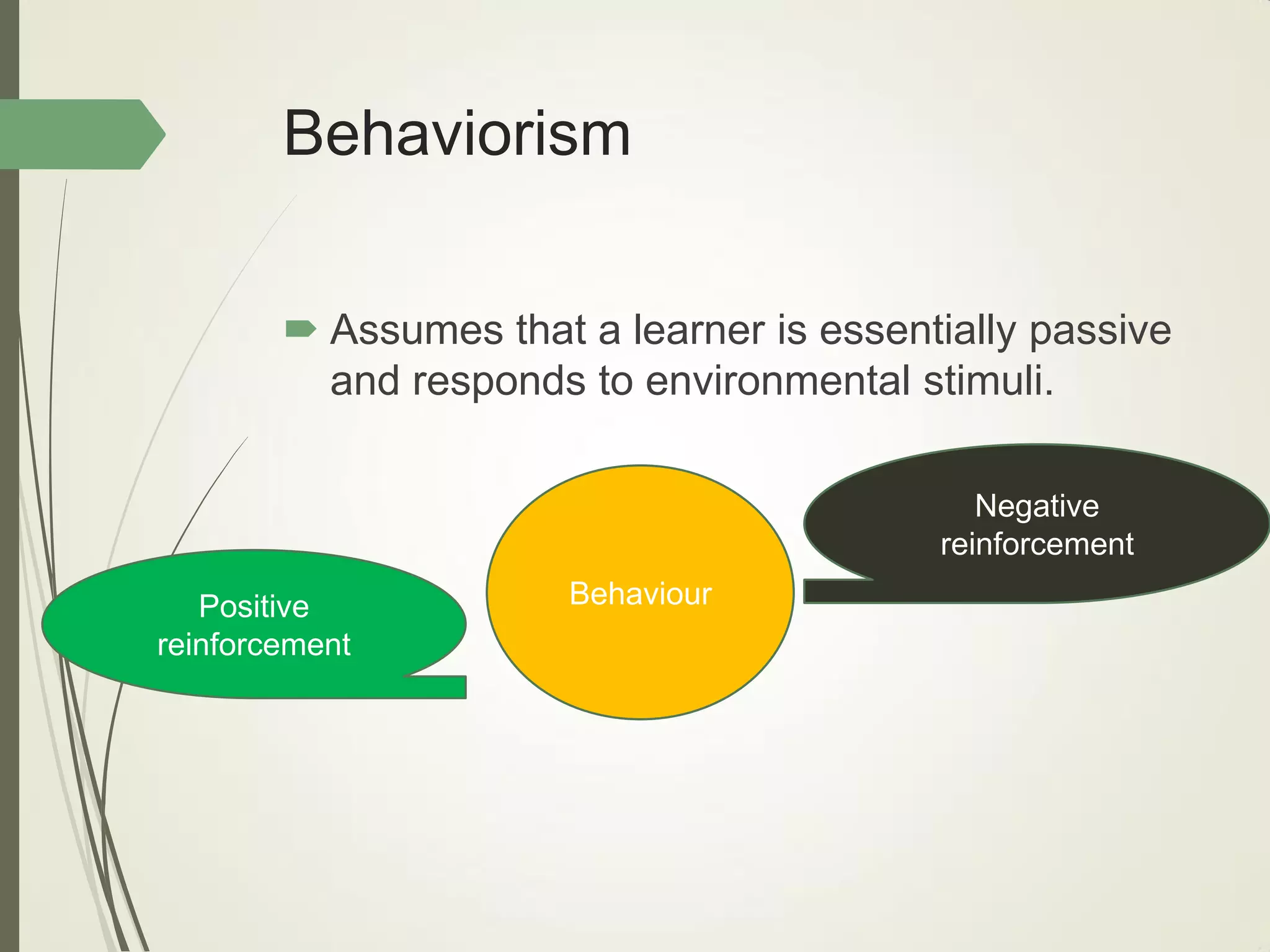
Behaviorism
 Assumes that a learner is essentially passive
and responds to environmental stimuli.
BehaviourPositive
reinforcement
Negative
reinforcement
Cognitivism
 In 1960s
 Focuses on inner mental activities.
 Cognitivists use the metaphor of mind as
computer
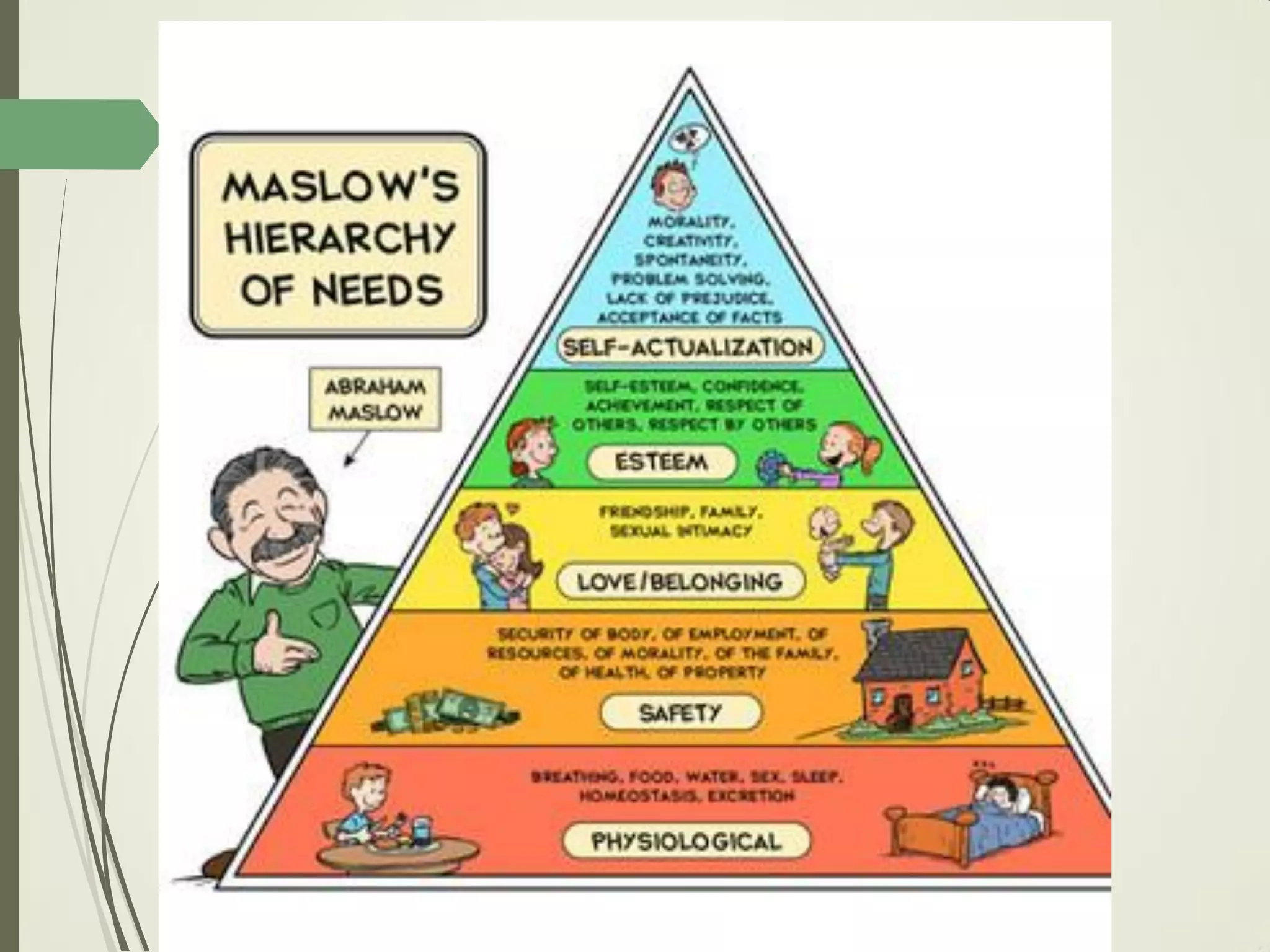
Humanism
 People act with intentionality and values.
 Here study of person as a whole, motivation
and goals are of interest.
 Learning is student centered.
 The goal is to develop self actualized people
in a cooperative, supportive environment.
Constructivism
 Learning is considered as an active, constructive
process. Learner is a constructor.
 Knowledge is constructed based on personal
experiences and hypotheses of the environment.
 Major themes
Social interaction- cognitive development.
More knowledgeable other
The zone of proximal development
Social learning theory.
 Observation of others behaviour, attitudes
and outcomes of those behaviours.
 Learning by social participation.
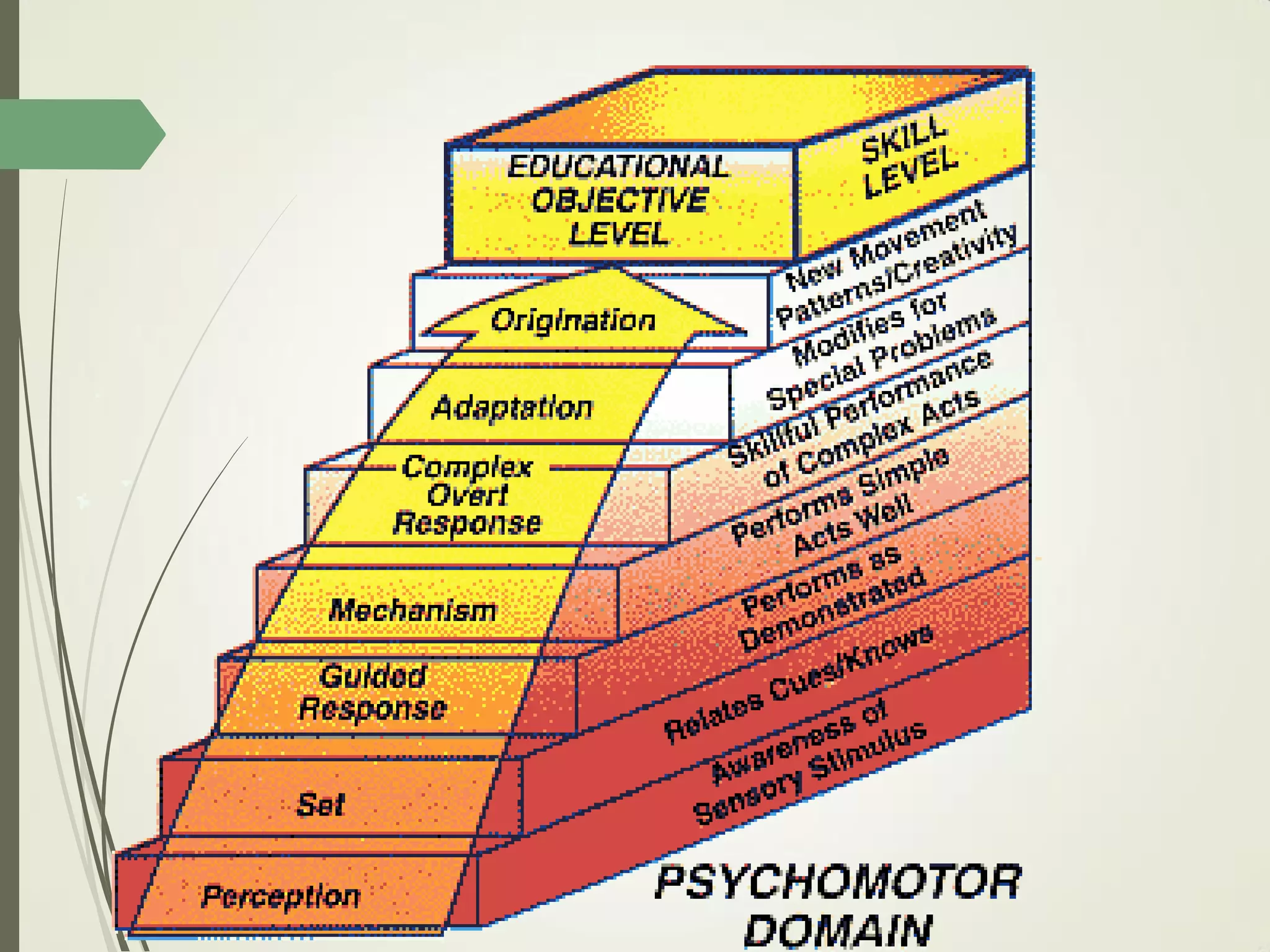
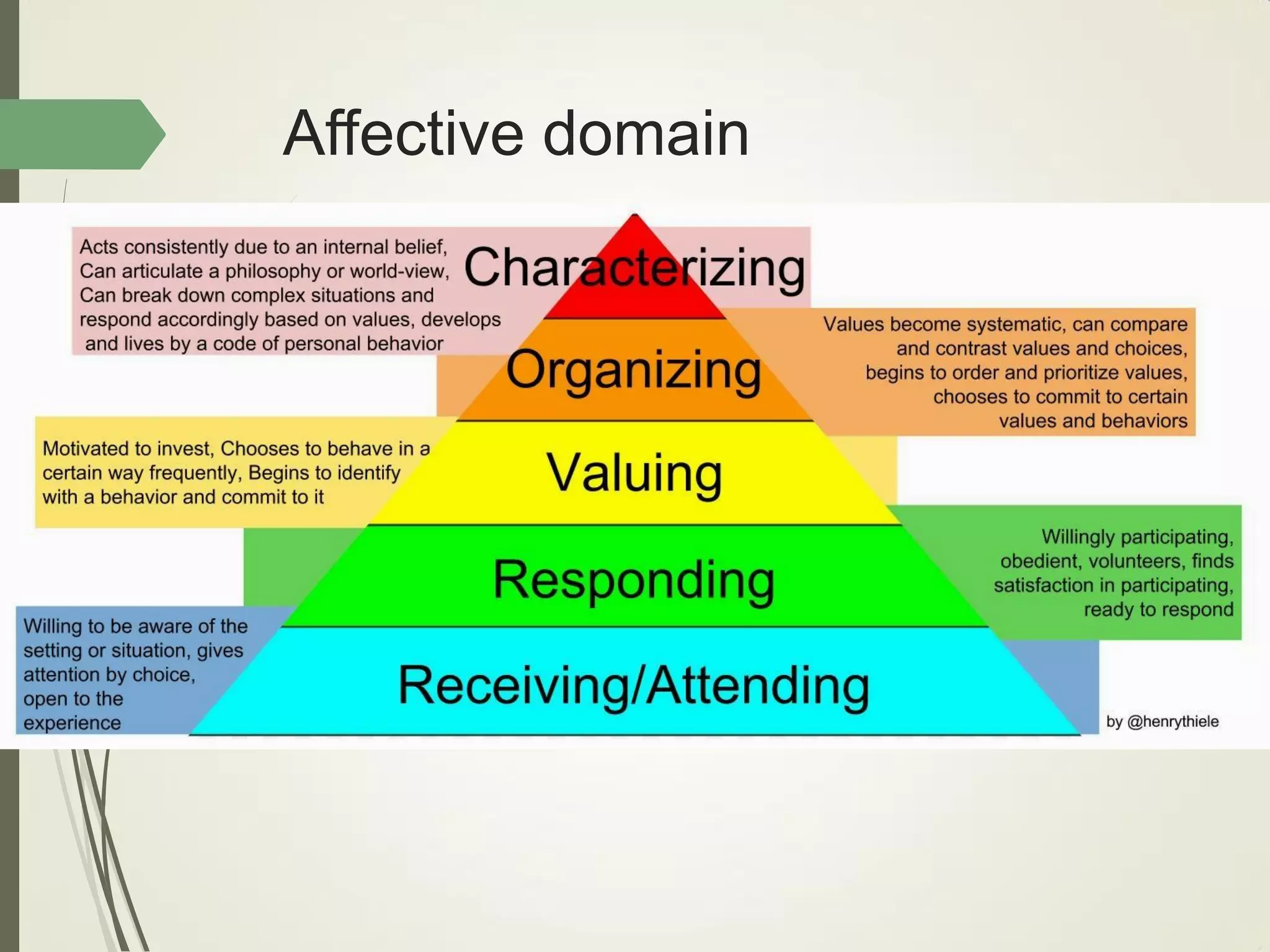
Blooms domains of learning
 Cognitive : mental skills
 Psychomotor: manual or physical skills
 Affective: growth in feelings or emotional
areas.
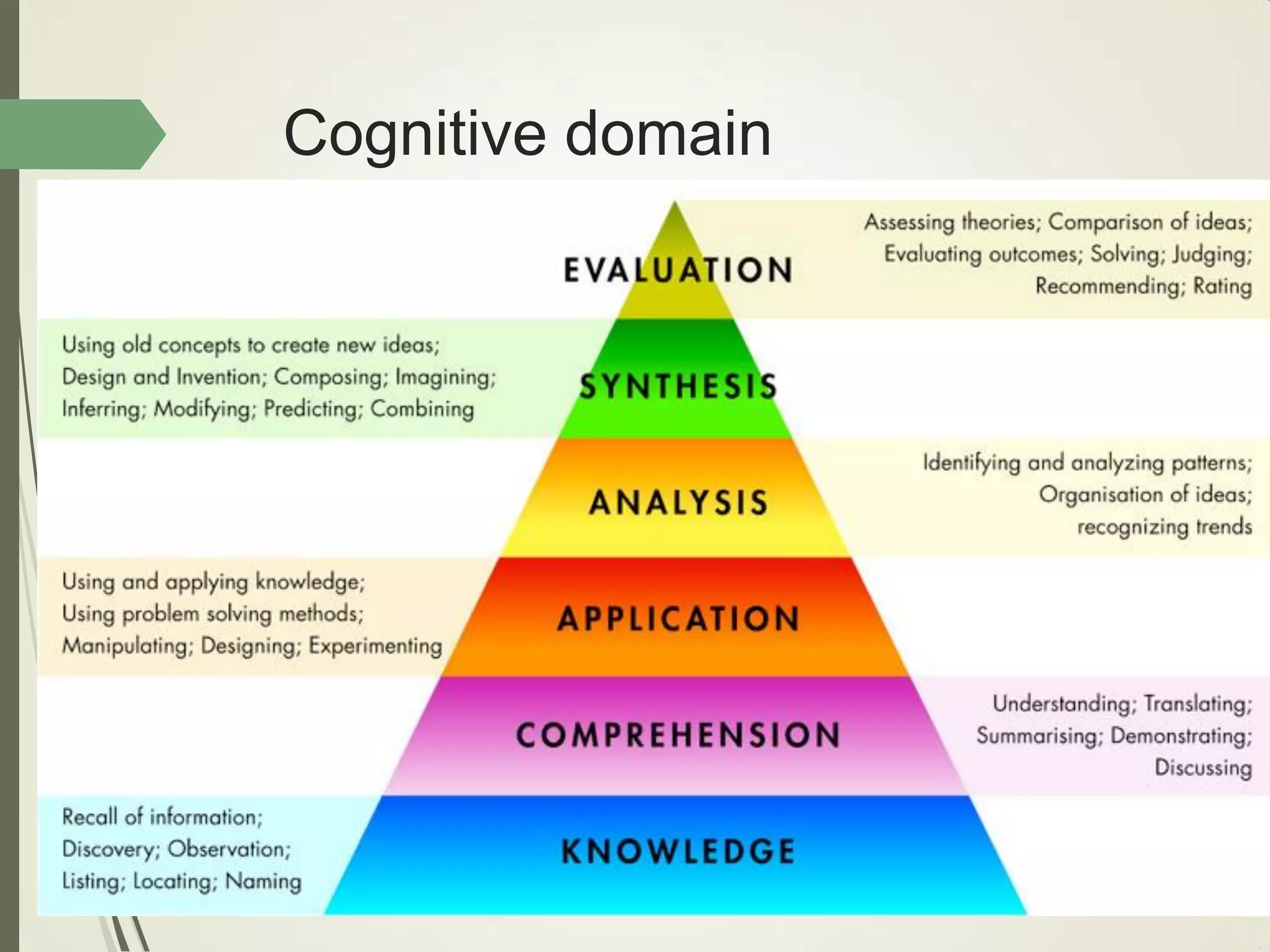
Cognitive domain
Affective domain
Education
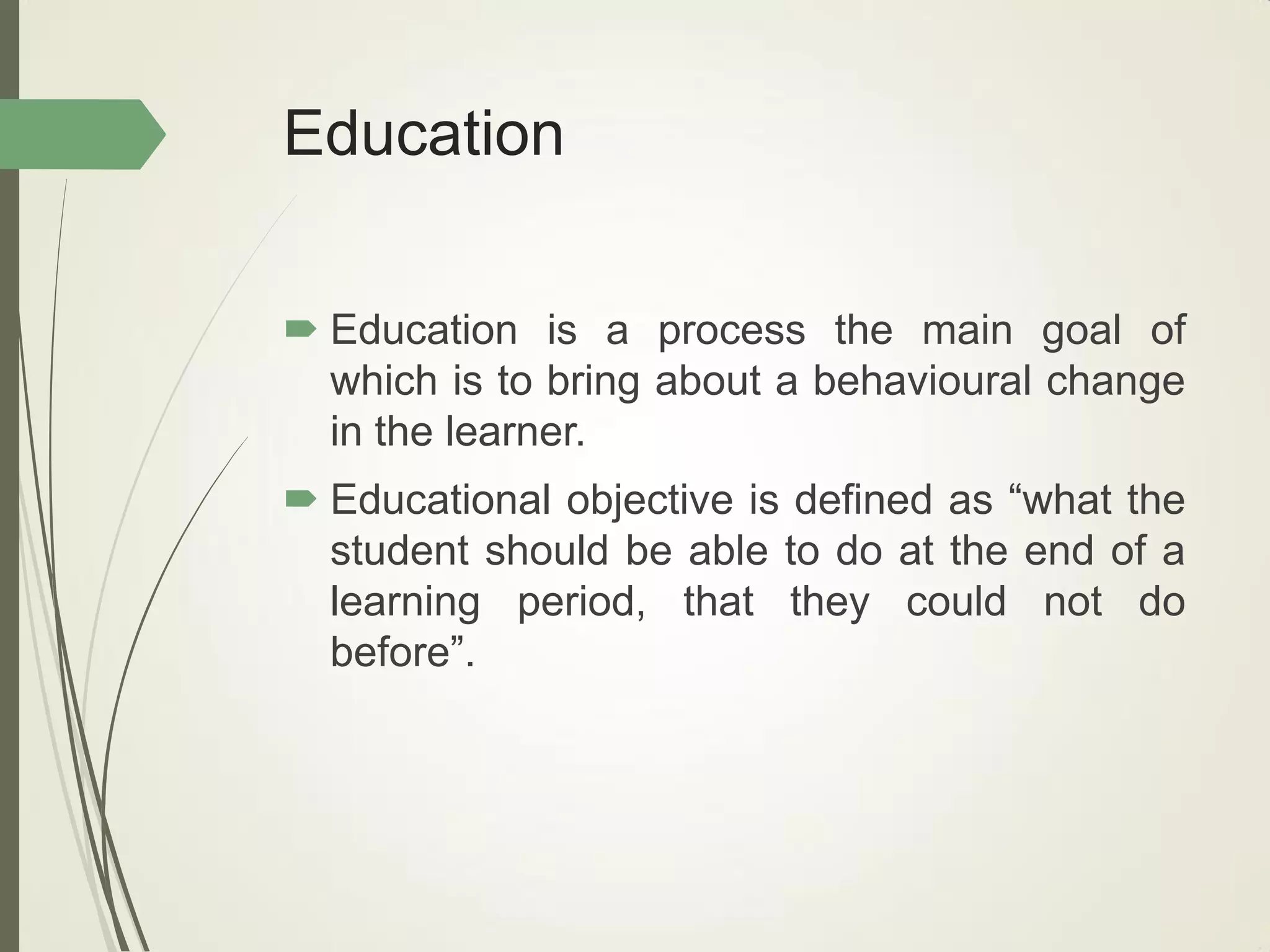
 Education is a process the main goal of
which is to bring about a behavioural change
in the learner.
 Educational objective is defined as “what the
student should be able to do at the end of a
learning period, that they could not do
before”.
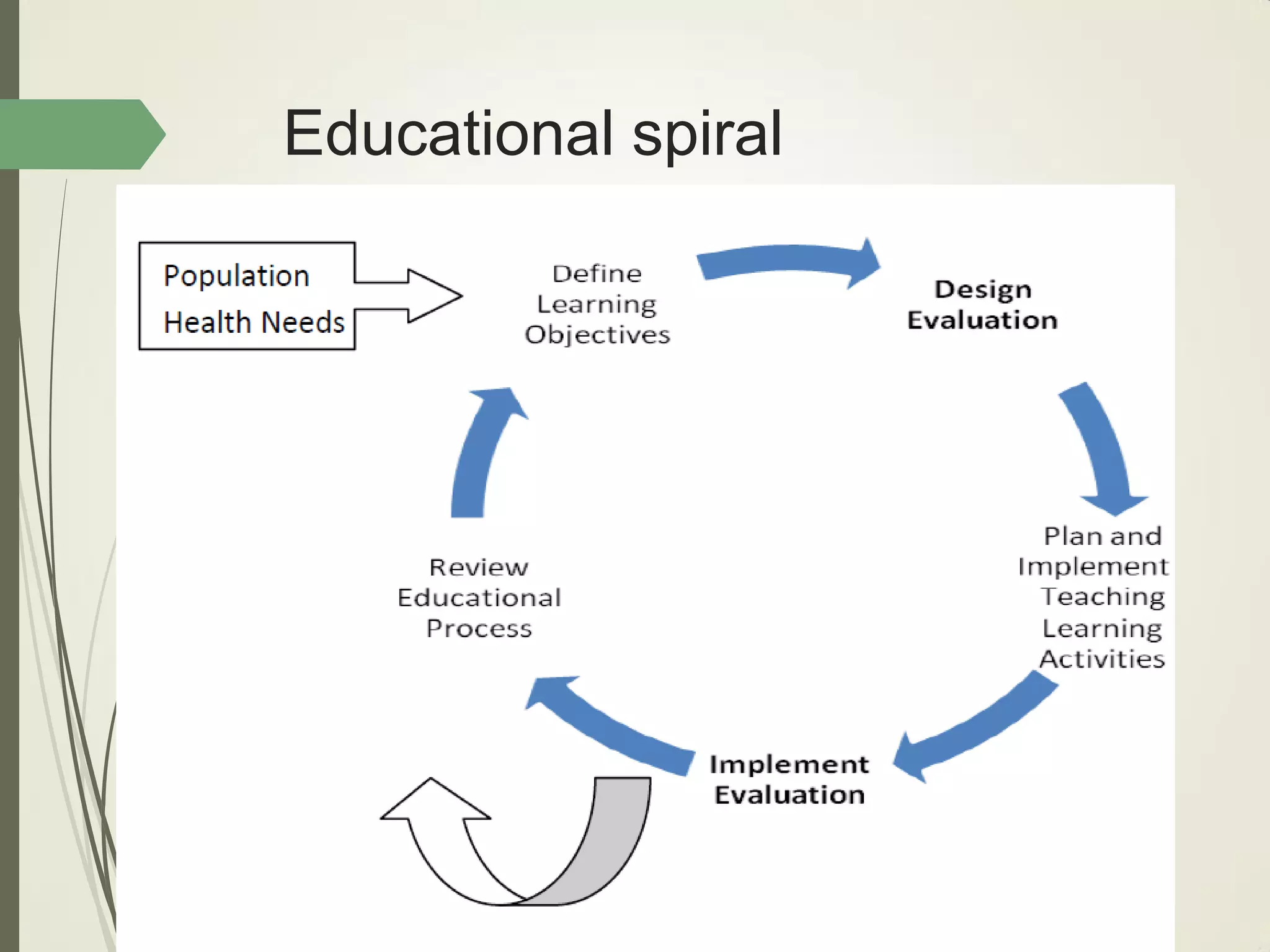
Educational spiral
Specific learning objectives
 Specific - Is it precise?
 Measurable - Is the objective quantifiable/
measurable?
 Achievable -Are we attempting too much?
 Realistic - Are adequate resources available ?
 Timed - Is the time limit specified ?
Components of learning
objectives
 Activity – What the learner is expected to do
(Verb)
 Content – describes the subject / object or those
in relation to which the activity has to be
performed
 Condition – under what circumstances should the
activity performed or given what tools/ equipment/
logistic
 Criterion – define the desirable level of
proficiency
Learning objectives
1. Understand learning as a process and a product.
2. Understand major Theories of Learning.
3. Recognize the importance of Educational Spiral.
4. Understand Bloom’s Domains and be able to relate any
instructional activity to the domain/s it targets.
5. Describe the qualities and identify elements of specific
learning objectives
Thank you
References
 Pre-service Innovative Teaching Methodologies
Participants Workbook The Teacher Training Workshop Team
Department of Medical Education St. John’s Medical
College, Bangalore, India. Pages 4-23
 N Ananthakrishnan , medical education principles and
practice 2nd edition alumni association of national teachers
training center JIPMER, Pondicherry, India. Pages 8- 21

Principles of learning pdf

  • 1.
    PRINCIPLES OF LEARNING DrSridevi NH MBBS MD community medicine Chikmagalur
  • 2.
    Learning objectives 1. Understandlearning as a process and a product. 2. Understand major Theories of Learning. 3. Recognize the importance of Educational Spiral. 4. Understand Bloom’s Domains and be able to relate any instructional activity to the domain/s it targets. 5. Describe the qualities and identify elements of specific learning objectives.
  • 3.
    Contents  Learning  Theoriesof learning  Bloom’s domains  Educational spiral  Specific learning objectives  Cone of learning  References
  • 4.
    What is learning? Process that brings relatively permanent change in behavior.  It means aquiring something new.  Learning is an active and continuous process.  Both conscious and unconcious.
  • 5.
    Conditions that affectlearning  Intelligence  Age  Learning situation  Motivation  Physical health  Mental health
  • 6.
    Theories of learning Behaviourism  Cognitivism  Humanism  Constructivism  Social learning theory.
  • 7.
    Behaviorism  Assumes thata learner is essentially passive and responds to environmental stimuli. BehaviourPositive reinforcement Negative reinforcement
  • 8.
    Cognitivism  In 1960s Focuses on inner mental activities.  Cognitivists use the metaphor of mind as computer
  • 9.
    Humanism  People actwith intentionality and values.  Here study of person as a whole, motivation and goals are of interest.  Learning is student centered.  The goal is to develop self actualized people in a cooperative, supportive environment.
  • 11.
    Constructivism  Learning isconsidered as an active, constructive process. Learner is a constructor.  Knowledge is constructed based on personal experiences and hypotheses of the environment.  Major themes Social interaction- cognitive development. More knowledgeable other The zone of proximal development
  • 12.
    Social learning theory. Observation of others behaviour, attitudes and outcomes of those behaviours.  Learning by social participation.
  • 13.
    Blooms domains oflearning  Cognitive : mental skills  Psychomotor: manual or physical skills  Affective: growth in feelings or emotional areas.
  • 14.
  • 16.
  • 17.
    Education  Education isa process the main goal of which is to bring about a behavioural change in the learner.  Educational objective is defined as “what the student should be able to do at the end of a learning period, that they could not do before”.
  • 18.
  • 19.
    Specific learning objectives Specific - Is it precise?  Measurable - Is the objective quantifiable/ measurable?  Achievable -Are we attempting too much?  Realistic - Are adequate resources available ?  Timed - Is the time limit specified ?
  • 20.
    Components of learning objectives Activity – What the learner is expected to do (Verb)  Content – describes the subject / object or those in relation to which the activity has to be performed  Condition – under what circumstances should the activity performed or given what tools/ equipment/ logistic  Criterion – define the desirable level of proficiency
  • 22.
    Learning objectives 1. Understandlearning as a process and a product. 2. Understand major Theories of Learning. 3. Recognize the importance of Educational Spiral. 4. Understand Bloom’s Domains and be able to relate any instructional activity to the domain/s it targets. 5. Describe the qualities and identify elements of specific learning objectives
  • 23.
  • 24.
    References  Pre-service InnovativeTeaching Methodologies Participants Workbook The Teacher Training Workshop Team Department of Medical Education St. John’s Medical College, Bangalore, India. Pages 4-23  N Ananthakrishnan , medical education principles and practice 2nd edition alumni association of national teachers training center JIPMER, Pondicherry, India. Pages 8- 21