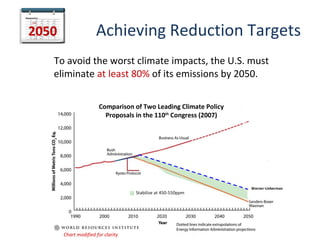
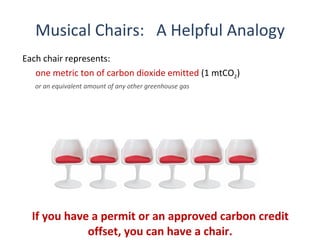
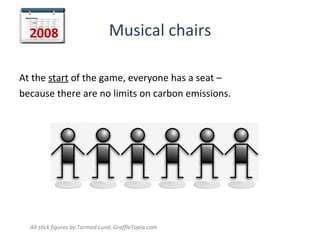
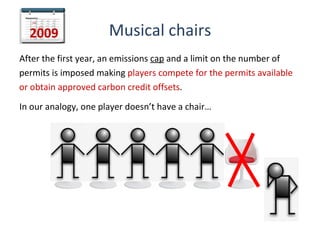
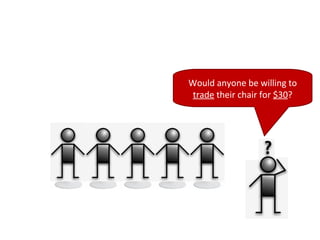
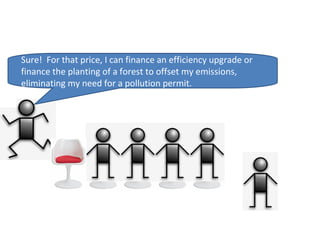
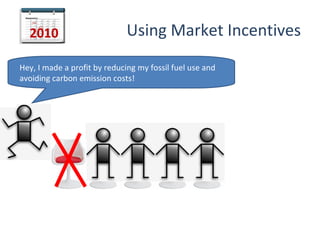
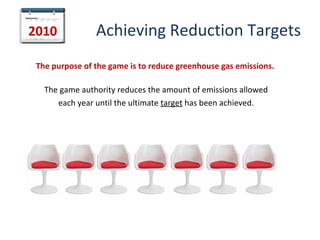
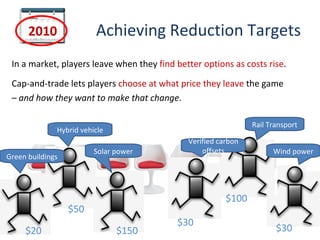
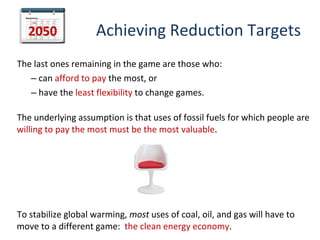
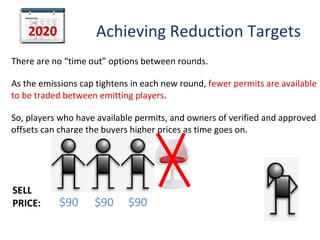
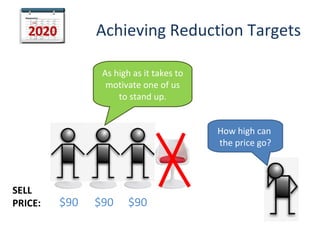
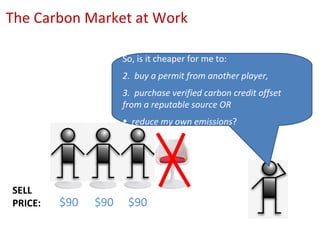
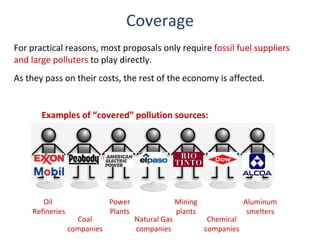
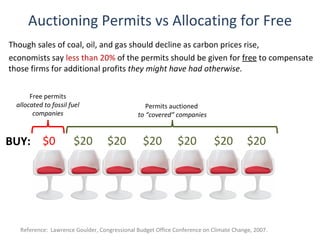
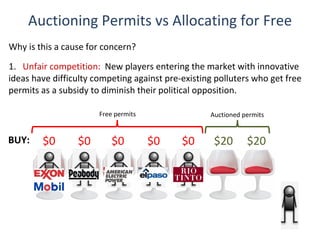
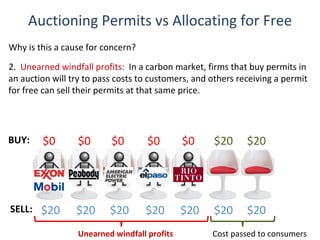
This document provides an overview of cap-and-trade climate policy through an analogy to a game of musical chairs. It explains that a cap-and-trade program establishes an emissions cap that declines over time, creates a market for carbon permits, and uses market mechanisms to incentivize emission reductions at the lowest cost. The document also discusses key design considerations for cap-and-trade programs such as which sources are covered, how initial permits are distributed, and how revenues can be spent to support various climate-related goals.