


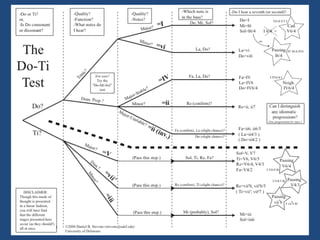
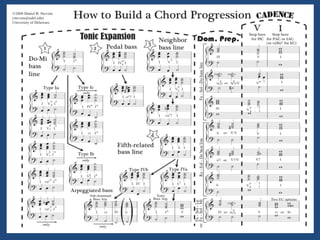
How to Understand a Harmonic Progression in Fewer than      Hearings:Extending and Implementing the Guide-Tone Method Using the “Do-Ti Test”
Methodological AssumptionsMultiple modes of hearing produce a convergence of evidenceProductive methods interact with one anotherDo-Ti Test is not a replacement but rather a supplement to existing methodsDo-Ti Test is designed primarily for first-year studentsDo-Ti Test assumes the use of moveable-Do
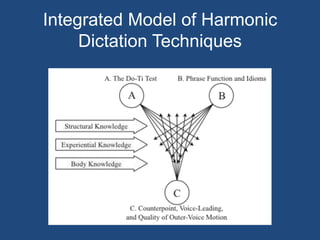
Integrated Model of Harmonic Dictation Techniques
How students see the face:
Beethoven Piano Sonata Op. 13, mvt. 2, Adagio cantabile, mm. 9–11What students hear:What (some) students notate:
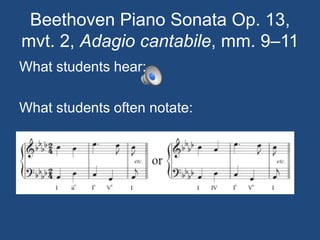
Beethoven Piano Sonata Op. 13, mvt. 2, Adagio cantabile, mm. 9–11What students hear:What students often notate:
How might students pull the pieces together?
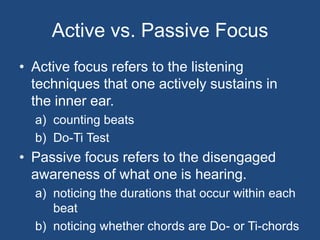
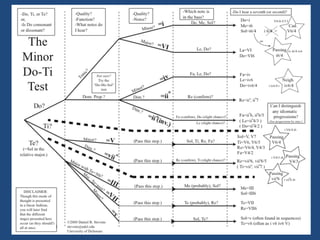
Active vs. Passive FocusActive focus refers to the listening techniques that one actively sustains in the inner ear.counting beatsDo-Ti TestPassive focus refers to the disengaged awareness of what one is hearing.noticing the durations that occur within each beatnoticing whether chords are Do- or Ti-chords
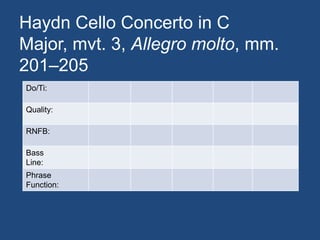
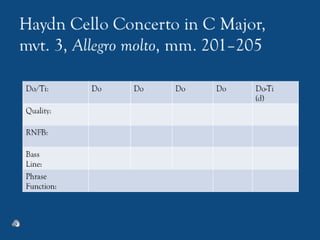
Haydn Cello Concerto in C Major, mvt. 3, Allegro molto, mm. 201–205
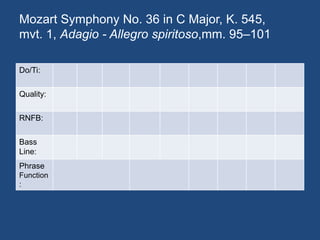
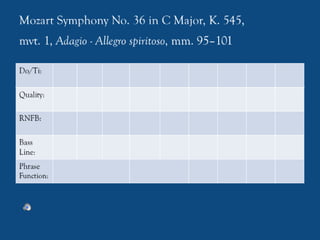
Mozart Symphony No. 36 in C Major, K. 545, mvt. 1, Adagio - Allegro spiritoso,mm. 95–101
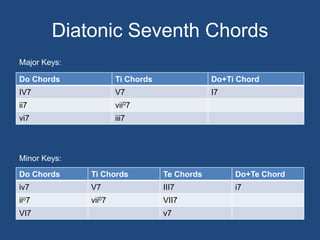
Diatonic Seventh ChordsMajor Keys:Minor Keys:
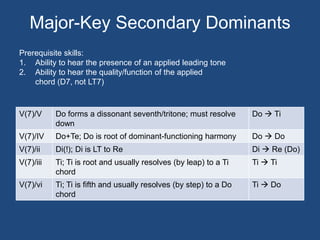
Major-Key Secondary DominantsPrerequisite skills:1. 	Ability to hear the presence of an applied leading tone2. 	Ability to hear the quality/function of the applied 	chord (D7, not LT7)
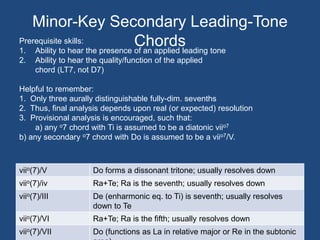
Minor-Key Secondary Leading-Tone ChordsPrerequisite skills:1. 	Ability to hear the presence of an applied leading tone2. 	Ability to hear the quality/function of the applied 	chord (LT7, not D7)Helpful to remember:1.  Only three aurally distinguishable fully-dim. sevenths2.  Thus, final analysis depends upon real (or expected) resolution3.  Provisional analysis is encouraged, such that:	a) any o7 chord with Ti is assumed to be a diatonic viio7b) any secondary o7 chord with Do is assumed to be a viio7/V.
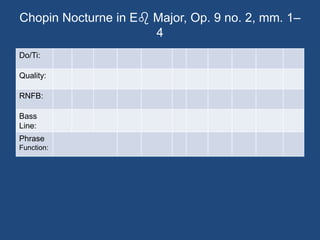
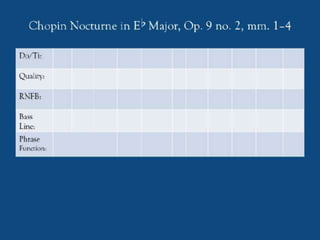
Chopin Nocturne in Eb Major, Op. 9 no. 2, mm. 1–4
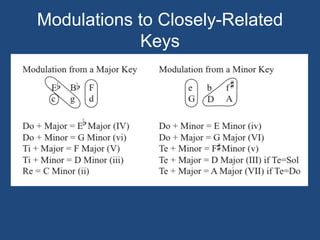
Modulations to Closely-Related Keys
Enharmonic Modulations“Abandon hope all ye who enter here…”
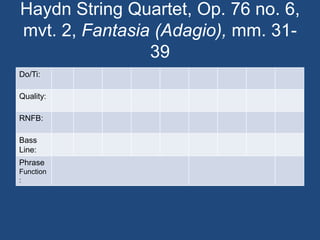
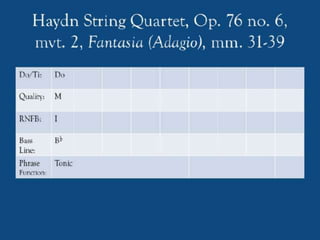
Haydn String Quartet, Op. 76 no. 6, mvt. 2, Fantasia (Adagio), mm. 31-39
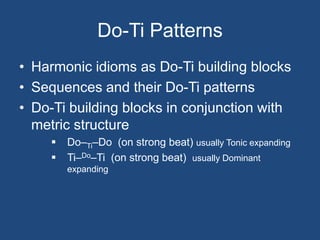
Do-Ti PatternsHarmonic idioms as Do-Ti building blocksSequences and their Do-Ti patterns Do-Ti building blocks in conjunction with metric structureDo–Ti–Do  (on strong beat) usually Tonic expanding
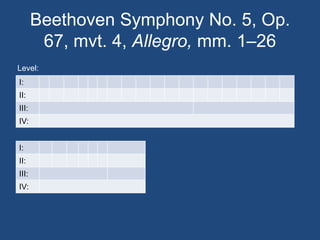
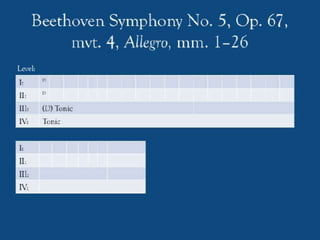
Ti–Do–Ti  (on strong beat)  usually Dominant expandingBeethoven Symphony No. 5, Op. 67, mvt. 4, Allegro, mm. 1–26Level:
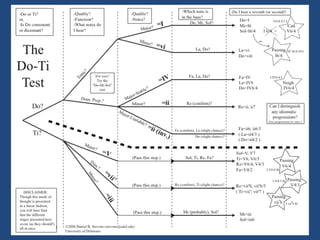
Benefits of the Do-Ti Test“Triangulates” other methodsA clear, practical model for thinking and hearingCritical distinctions placed at the beginning of the hearing processTrains the ear to listen horizontallyPromotes active listening

How to Understand a Harmonic Progression in Fewer than 10 Hearings: Extending and Implementing the Guide-tone Method using the "Do-Ti Test"

  • 1.
    How to Understanda Harmonic Progression in Fewer than Hearings:Extending and Implementing the Guide-Tone Method Using the “Do-Ti Test”
  • 2.
    Methodological AssumptionsMultiple modesof hearing produce a convergence of evidenceProductive methods interact with one anotherDo-Ti Test is not a replacement but rather a supplement to existing methodsDo-Ti Test is designed primarily for first-year studentsDo-Ti Test assumes the use of moveable-Do
  • 3.
    Integrated Model ofHarmonic Dictation Techniques
  • 4.
  • 5.
    Beethoven Piano SonataOp. 13, mvt. 2, Adagio cantabile, mm. 9–11What students hear:What (some) students notate:
  • 6.
    Beethoven Piano SonataOp. 13, mvt. 2, Adagio cantabile, mm. 9–11What students hear:What students often notate:
  • 7.
    How might studentspull the pieces together?
  • 8.
    How might studentspull the pieces together?
  • 10.
    Active vs. PassiveFocusActive focus refers to the listening techniques that one actively sustains in the inner ear.counting beatsDo-Ti TestPassive focus refers to the disengaged awareness of what one is hearing.noticing the durations that occur within each beatnoticing whether chords are Do- or Ti-chords
  • 13.
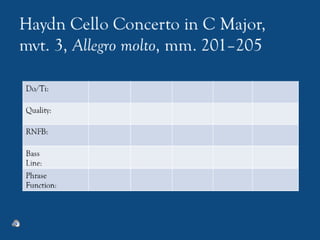
    Haydn Cello Concertoin C Major, mvt. 3, Allegro molto, mm. 201–205
  • 16.
    Mozart Symphony No.36 in C Major, K. 545, mvt. 1, Adagio - Allegro spiritoso,mm. 95–101
  • 19.
  • 20.
    Major-Key Secondary DominantsPrerequisiteskills:1. Ability to hear the presence of an applied leading tone2. Ability to hear the quality/function of the applied chord (D7, not LT7)
  • 21.
    Minor-Key Secondary Leading-ToneChordsPrerequisite skills:1. Ability to hear the presence of an applied leading tone2. Ability to hear the quality/function of the applied chord (LT7, not D7)Helpful to remember:1. Only three aurally distinguishable fully-dim. sevenths2. Thus, final analysis depends upon real (or expected) resolution3. Provisional analysis is encouraged, such that: a) any o7 chord with Ti is assumed to be a diatonic viio7b) any secondary o7 chord with Do is assumed to be a viio7/V.
  • 22.
    Chopin Nocturne inEb Major, Op. 9 no. 2, mm. 1–4
  • 24.
  • 25.
    Enharmonic Modulations“Abandon hopeall ye who enter here…”
  • 26.
    Haydn String Quartet,Op. 76 no. 6, mvt. 2, Fantasia (Adagio), mm. 31-39
  • 28.
    Do-Ti PatternsHarmonic idiomsas Do-Ti building blocksSequences and their Do-Ti patterns Do-Ti building blocks in conjunction with metric structureDo–Ti–Do (on strong beat) usually Tonic expanding
  • 29.
    Ti–Do–Ti (onstrong beat) usually Dominant expandingBeethoven Symphony No. 5, Op. 67, mvt. 4, Allegro, mm. 1–26Level:
  • 31.
    Benefits of theDo-Ti Test“Triangulates” other methodsA clear, practical model for thinking and hearingCritical distinctions placed at the beginning of the hearing processTrains the ear to listen horizontallyPromotes active listening

Editor's Notes