Anteena
What is polarization in antenna
 An antenna is a transducer that converts
radio frequency electric current to
electromagnetic waves that are then
radiated into space. The electric field or "E"
plane determines the polarization or
orientation of the radio wave. In general,
most antennas radiate either linear or
circular polarization.
Polarization categories:
 Vertical and horizontal are the simplest forms of
antenna polarization and they both fall into a category
known as linear polarization.
 However it is also possible to use circular polarization.
 Another form of polarization is known as elliptical
polarization. It occurs when there is a mix of linear
and circular polarization
Vertical Polarization
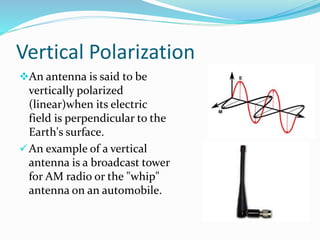
An antenna is said to be
vertically polarized
(linear)when its electric
field is perpendicular to the
Earth's surface.
An example of a vertical
antenna is a broadcast tower
for AM radio or the "whip"
antenna on an automobile.
Application of Vertical polarization
Vertical polarization is most often
used when it is desired to
radiate a radio signal in all
directions such as widely
distributed mobile units.
Vertical polarization also works
well in the suburbs or out in the
country, especially where hills
are present.
As a result, nowadays most two-
way Earth to Earth
communications in the
frequency range above 30 MHz
use vertical polarization
Horizontal polarization
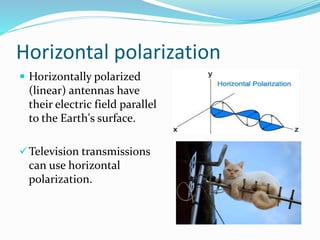
 Horizontally polarized
(linear) antennas have
their electric field parallel
to the Earth's surface.
Television transmissions
can use horizontal
polarization.
Application of Horizontal
polarization
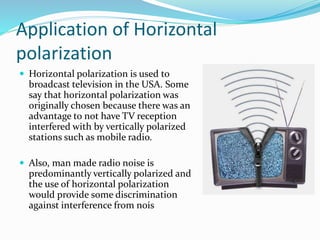
 Horizontal polarization is used to
broadcast television in the USA. Some
say that horizontal polarization was
originally chosen because there was an
advantage to not have TV reception
interfered with by vertically polarized
stations such as mobile radio.
 Also, man made radio noise is
predominantly vertically polarized and
the use of horizontal polarization
would provide some discrimination
against interference from nois
circular polarization & elliptical polarization
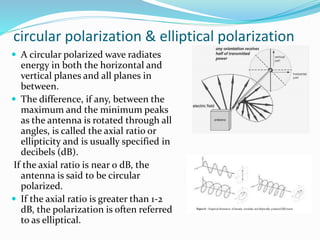
 A circular polarized wave radiates
energy in both the horizontal and
vertical planes and all planes in
between.
 The difference, if any, between the
maximum and the minimum peaks
as the antenna is rotated through all
angles, is called the axial ratio or
ellipticity and is usually specified in
decibels (dB).
If the axial ratio is near 0 dB, the
antenna is said to be circular
polarized.
 If the axial ratio is greater than 1-2
dB, the polarization is often referred
to as elliptical.
Applications of circular polarization
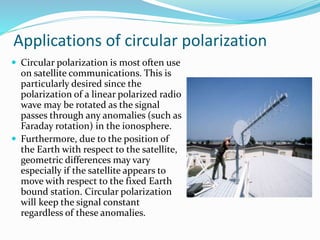
 Circular polarization is most often use
on satellite communications. This is
particularly desired since the
polarization of a linear polarized radio
wave may be rotated as the signal
passes through any anomalies (such as
Faraday rotation) in the ionosphere.
 Furthermore, due to the position of
the Earth with respect to the satellite,
geometric differences may vary
especially if the satellite appears to
move with respect to the fixed Earth
bound station. Circular polarization
will keep the signal constant
regardless of these anomalies.
Summary:
 Polarization in an important parameter and
consideration when discussing about antenna. It
helps to have a good grasp of all the aspects of this
subject. In this presentation we discussed about
the classifications of polarization of antenna and
applications of them.
Presentation-3

Presentation-3

  • 1.
  • 2.
    What is polarizationin antenna  An antenna is a transducer that converts radio frequency electric current to electromagnetic waves that are then radiated into space. The electric field or "E" plane determines the polarization or orientation of the radio wave. In general, most antennas radiate either linear or circular polarization.
  • 3.
    Polarization categories:  Verticaland horizontal are the simplest forms of antenna polarization and they both fall into a category known as linear polarization.  However it is also possible to use circular polarization.  Another form of polarization is known as elliptical polarization. It occurs when there is a mix of linear and circular polarization
  • 4.
    Vertical Polarization An antennais said to be vertically polarized (linear)when its electric field is perpendicular to the Earth's surface. An example of a vertical antenna is a broadcast tower for AM radio or the "whip" antenna on an automobile.
  • 5.
    Application of Verticalpolarization Vertical polarization is most often used when it is desired to radiate a radio signal in all directions such as widely distributed mobile units. Vertical polarization also works well in the suburbs or out in the country, especially where hills are present. As a result, nowadays most two- way Earth to Earth communications in the frequency range above 30 MHz use vertical polarization
  • 6.
    Horizontal polarization  Horizontallypolarized (linear) antennas have their electric field parallel to the Earth's surface. Television transmissions can use horizontal polarization.
  • 7.
    Application of Horizontal polarization Horizontal polarization is used to broadcast television in the USA. Some say that horizontal polarization was originally chosen because there was an advantage to not have TV reception interfered with by vertically polarized stations such as mobile radio.  Also, man made radio noise is predominantly vertically polarized and the use of horizontal polarization would provide some discrimination against interference from nois
  • 8.
    circular polarization &elliptical polarization  A circular polarized wave radiates energy in both the horizontal and vertical planes and all planes in between.  The difference, if any, between the maximum and the minimum peaks as the antenna is rotated through all angles, is called the axial ratio or ellipticity and is usually specified in decibels (dB). If the axial ratio is near 0 dB, the antenna is said to be circular polarized.  If the axial ratio is greater than 1-2 dB, the polarization is often referred to as elliptical.
  • 9.
    Applications of circularpolarization  Circular polarization is most often use on satellite communications. This is particularly desired since the polarization of a linear polarized radio wave may be rotated as the signal passes through any anomalies (such as Faraday rotation) in the ionosphere.  Furthermore, due to the position of the Earth with respect to the satellite, geometric differences may vary especially if the satellite appears to move with respect to the fixed Earth bound station. Circular polarization will keep the signal constant regardless of these anomalies.
  • 10.
    Summary:  Polarization inan important parameter and consideration when discussing about antenna. It helps to have a good grasp of all the aspects of this subject. In this presentation we discussed about the classifications of polarization of antenna and applications of them.