UNIVERSAL DC MICROGRID
Guided By :–
Er. Rishabh Upadhyay
Er. Shivam Srivastav
Team member’s name
Abhishek Yadav 19EED26
Dilip Kumar 19EED66
Pankaj Yadav 19EED50
Sachin Kumar 19 EE22
Sumit Sahu 19EED61
INDEX
• INTRODUCTION
• BLOCK DIAGRAM
• METHODOLOGY
• CONCLUSION
INTRODUCTION
Operational controls are designed to support the integration of wind and solar
power within microgrids. An aggregated model of renewable wind and solar power
generation forecast is proposed to support the quantification of the operational
reserve for day-ahead and real-time scheduling. Then, a droop control for power
electronic converters connected to battery storage is developed and tested.
Compared with the existing droop controls, it is distinguished in that the droop
curves are set as a function of the storage state-of-charge (SOC) and can become
asymmetric. The adaptation of the slopes ensures that the power output supports
the terminal voltage while at the same keeping the SOC within a target range of
desired operational reserve. This is shown to maintain the equilibrium of the
microgrid’s real-time supply and demand. The controls are implemented for the
special case of a dc microgrid that is vertically integrated within a high-rise host
building of an urban area. Previously untapped wind and solar power are harvested
on the roof and sides of a tower, thereby supporting delivery to electric vehicles on
the ground. The microgrid vertically integrates with the host building without
creating a large footprint.
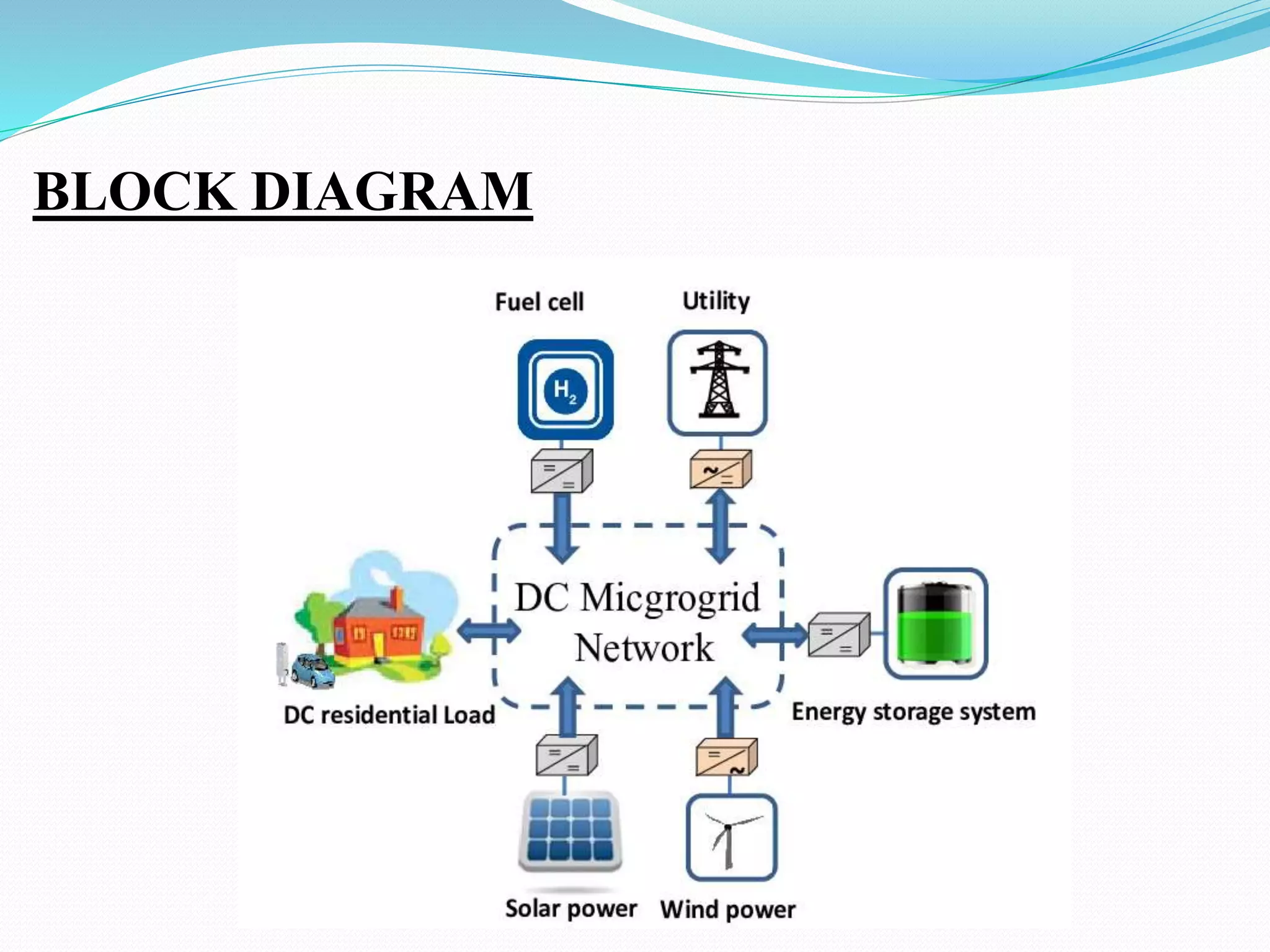
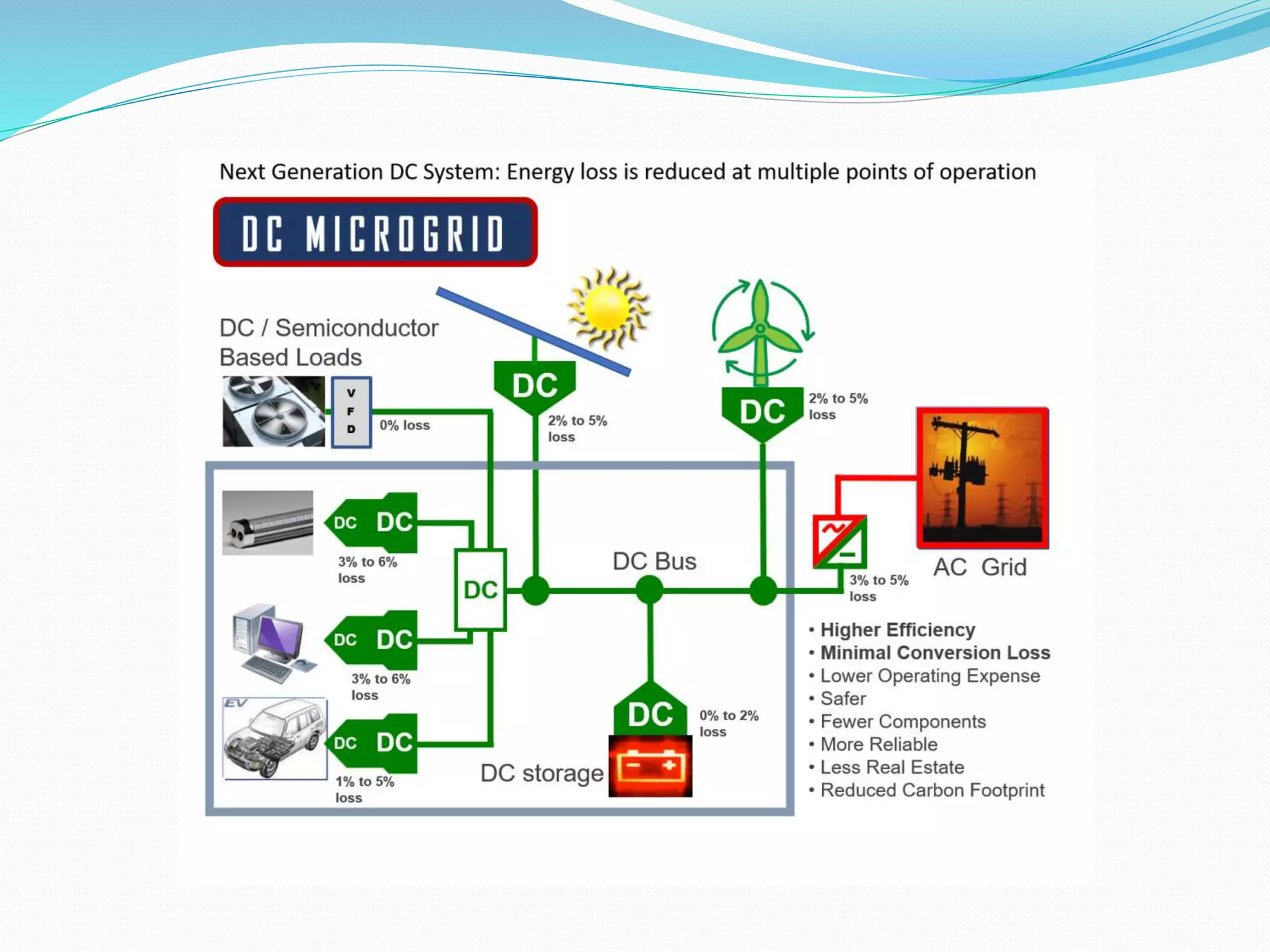
BLOCK DIAGRAM
METHODOLOGY
The methodology for designing and implementing a DC universal microgrid involves
several steps:
Assessment: Evaluating the energy demand, the availability of renewable energy
resources, and the cost of energy from the grid.
System Design: Determining the size and configuration of the microgrid, including
the types and capacities of renewable energy sources, energy storage systems, and
backup generators.
Equipment Selection: Choosing the appropriate equipment for the microgrid, taking
into account factors like reliability, efficiency, and cost.
Implementation: Installing and commissioning the microgrid, including connecting
it to the main grid, if required.
Monitoring and Control: Setting up a system for monitoring and controlling the
microgrid, including remote monitoring and control capabilities.
Maintenance: Establishing a maintenance plan to ensure the microgrid continues to
operate effectively and efficiently over time.
Throughout this process, it is important to consider factors such as safety,
environmental impact, and regulatory compliance.
CONCLUSION
The costs of solar photovoltaic generation, wind energy and battery storage are
rapidly dropping, to the point that they are closing in on cost parity with
traditional electricity sources. As a result, broad adoption of these technologies
may soon accelerate to the point that energy presumption, where end users
import and export electricity, is the norm rather than the exception. Before
millions of distributed energy resources are connected to the electrical grid, it
behooves society to plan ahead and to understand what architecture will best
integrate these and other distributed energy technologies. Microgrids are
poised to manage this transition by balancing supply and demand locally while
ensuring reliability and resilience against what appear to be escalating natural
and man-made disturbances.
Presentation1.pptx

Presentation1.pptx

  • 1.
    UNIVERSAL DC MICROGRID GuidedBy :– Er. Rishabh Upadhyay Er. Shivam Srivastav Team member’s name Abhishek Yadav 19EED26 Dilip Kumar 19EED66 Pankaj Yadav 19EED50 Sachin Kumar 19 EE22 Sumit Sahu 19EED61
  • 2.
    INDEX • INTRODUCTION • BLOCKDIAGRAM • METHODOLOGY • CONCLUSION
  • 3.
    INTRODUCTION Operational controls aredesigned to support the integration of wind and solar power within microgrids. An aggregated model of renewable wind and solar power generation forecast is proposed to support the quantification of the operational reserve for day-ahead and real-time scheduling. Then, a droop control for power electronic converters connected to battery storage is developed and tested. Compared with the existing droop controls, it is distinguished in that the droop curves are set as a function of the storage state-of-charge (SOC) and can become asymmetric. The adaptation of the slopes ensures that the power output supports the terminal voltage while at the same keeping the SOC within a target range of desired operational reserve. This is shown to maintain the equilibrium of the microgrid’s real-time supply and demand. The controls are implemented for the special case of a dc microgrid that is vertically integrated within a high-rise host building of an urban area. Previously untapped wind and solar power are harvested on the roof and sides of a tower, thereby supporting delivery to electric vehicles on the ground. The microgrid vertically integrates with the host building without creating a large footprint.
  • 4.
  • 6.
    METHODOLOGY The methodology fordesigning and implementing a DC universal microgrid involves several steps: Assessment: Evaluating the energy demand, the availability of renewable energy resources, and the cost of energy from the grid. System Design: Determining the size and configuration of the microgrid, including the types and capacities of renewable energy sources, energy storage systems, and backup generators. Equipment Selection: Choosing the appropriate equipment for the microgrid, taking into account factors like reliability, efficiency, and cost. Implementation: Installing and commissioning the microgrid, including connecting it to the main grid, if required. Monitoring and Control: Setting up a system for monitoring and controlling the microgrid, including remote monitoring and control capabilities. Maintenance: Establishing a maintenance plan to ensure the microgrid continues to operate effectively and efficiently over time. Throughout this process, it is important to consider factors such as safety, environmental impact, and regulatory compliance.
  • 7.
    CONCLUSION The costs ofsolar photovoltaic generation, wind energy and battery storage are rapidly dropping, to the point that they are closing in on cost parity with traditional electricity sources. As a result, broad adoption of these technologies may soon accelerate to the point that energy presumption, where end users import and export electricity, is the norm rather than the exception. Before millions of distributed energy resources are connected to the electrical grid, it behooves society to plan ahead and to understand what architecture will best integrate these and other distributed energy technologies. Microgrids are poised to manage this transition by balancing supply and demand locally while ensuring reliability and resilience against what appear to be escalating natural and man-made disturbances.