Contents
• Introduction
• Whatis Microgrid Technology
• History of microgrid Technology
• Why Microgrid
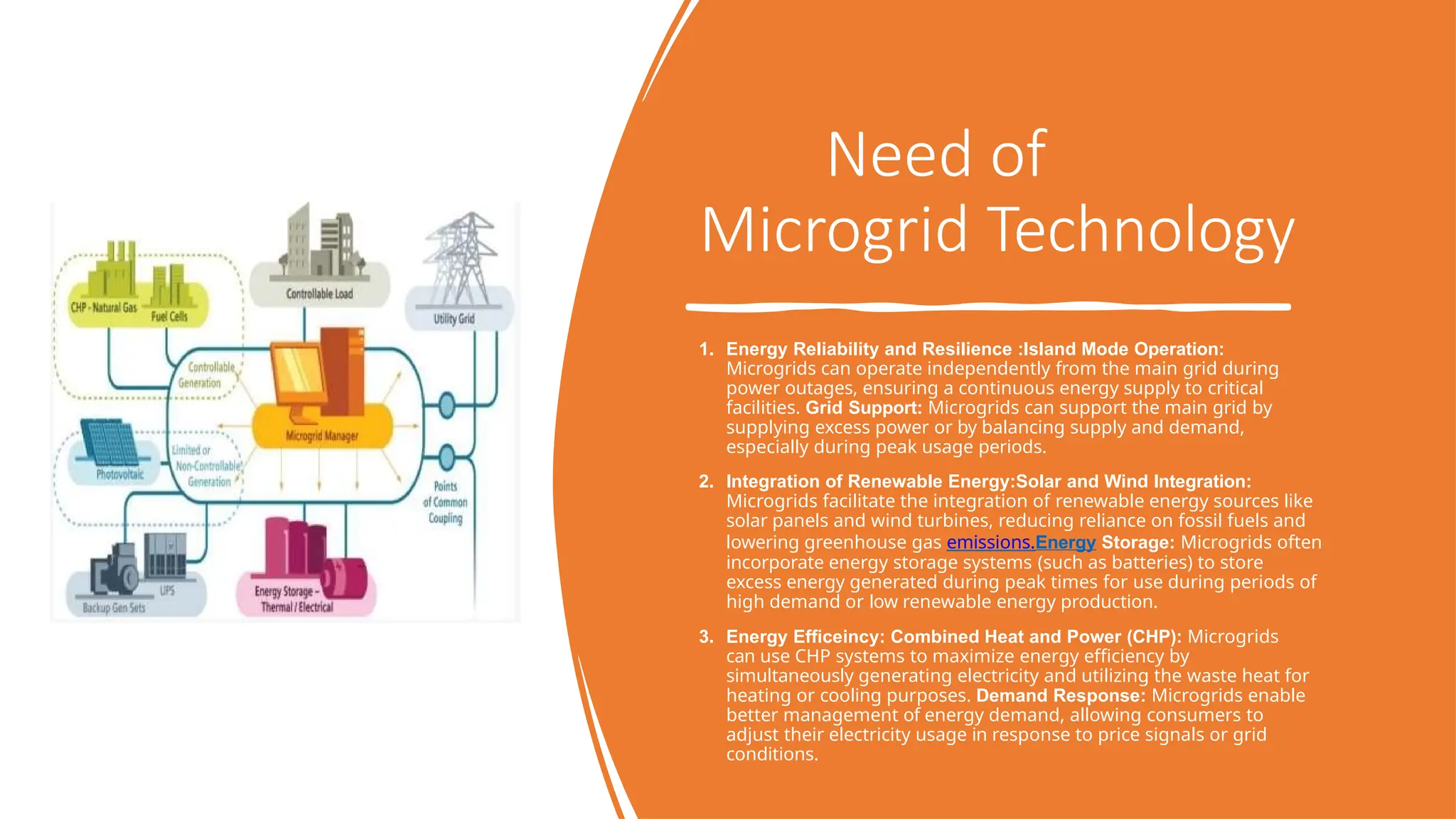
• Need of Microgrid Technology
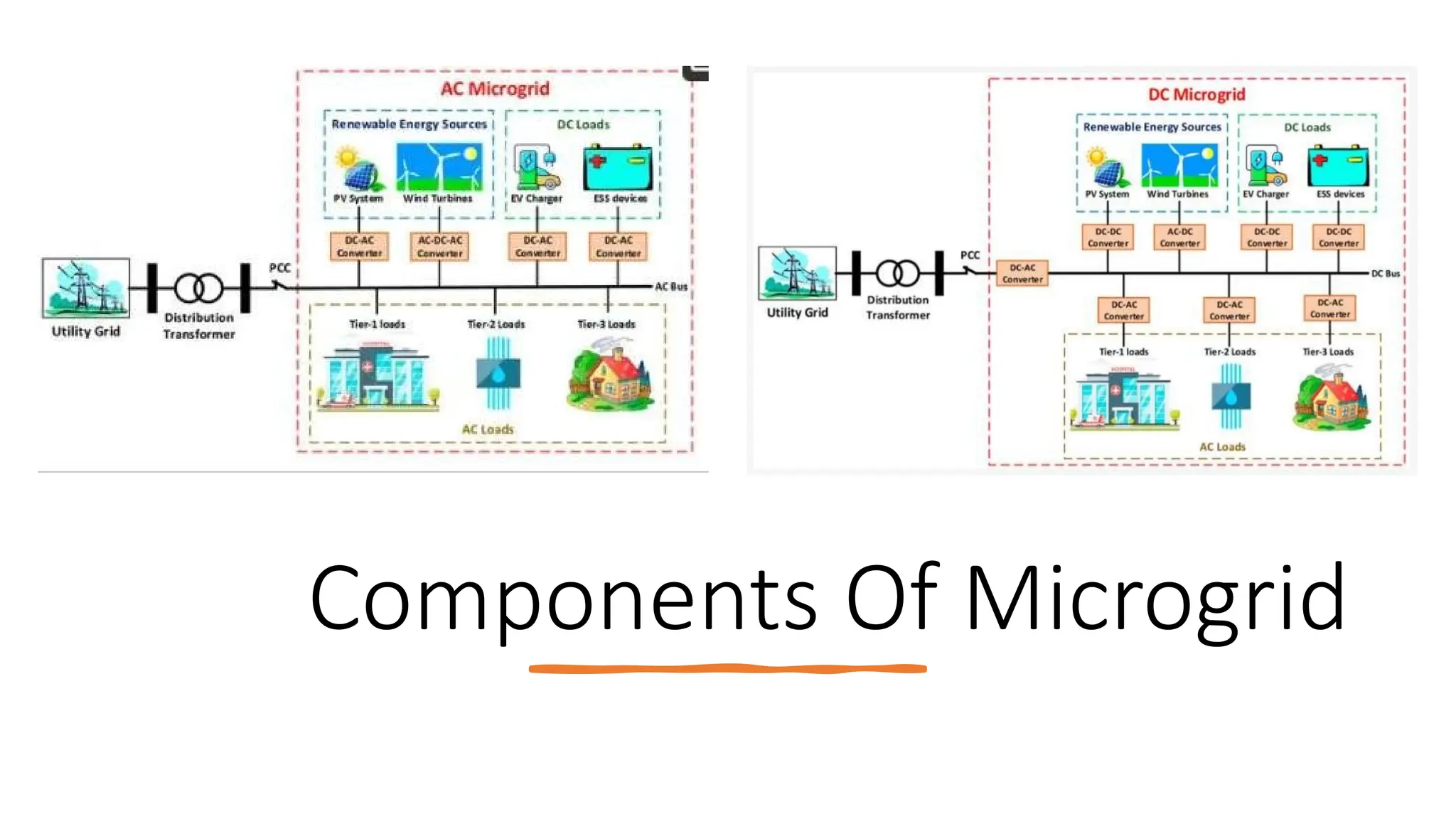
• Components of Microgrid
• Uses of Microgrid
• Success of Microgrid
• Advantages and Disadvantages
• Conclusion
• Declaration
• Data Availability
• References
3.
INTRODUCTION
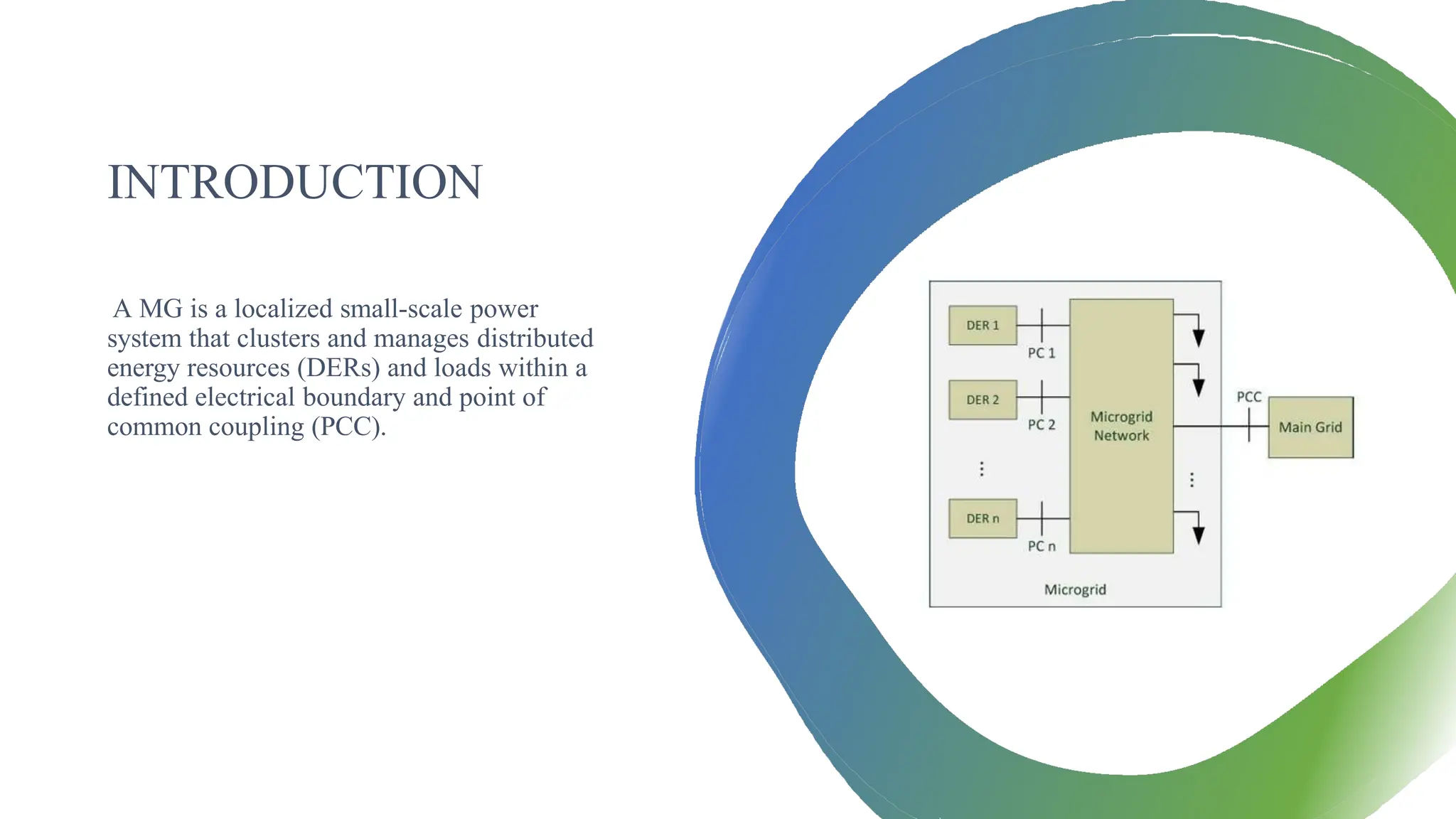
A MG isa localized small-scale power
system that clusters and manages distributed
energy resources (DERs) and loads within a
defined electrical boundary and point of
common coupling (PCC).
4.
History Of MicrogridTechnology
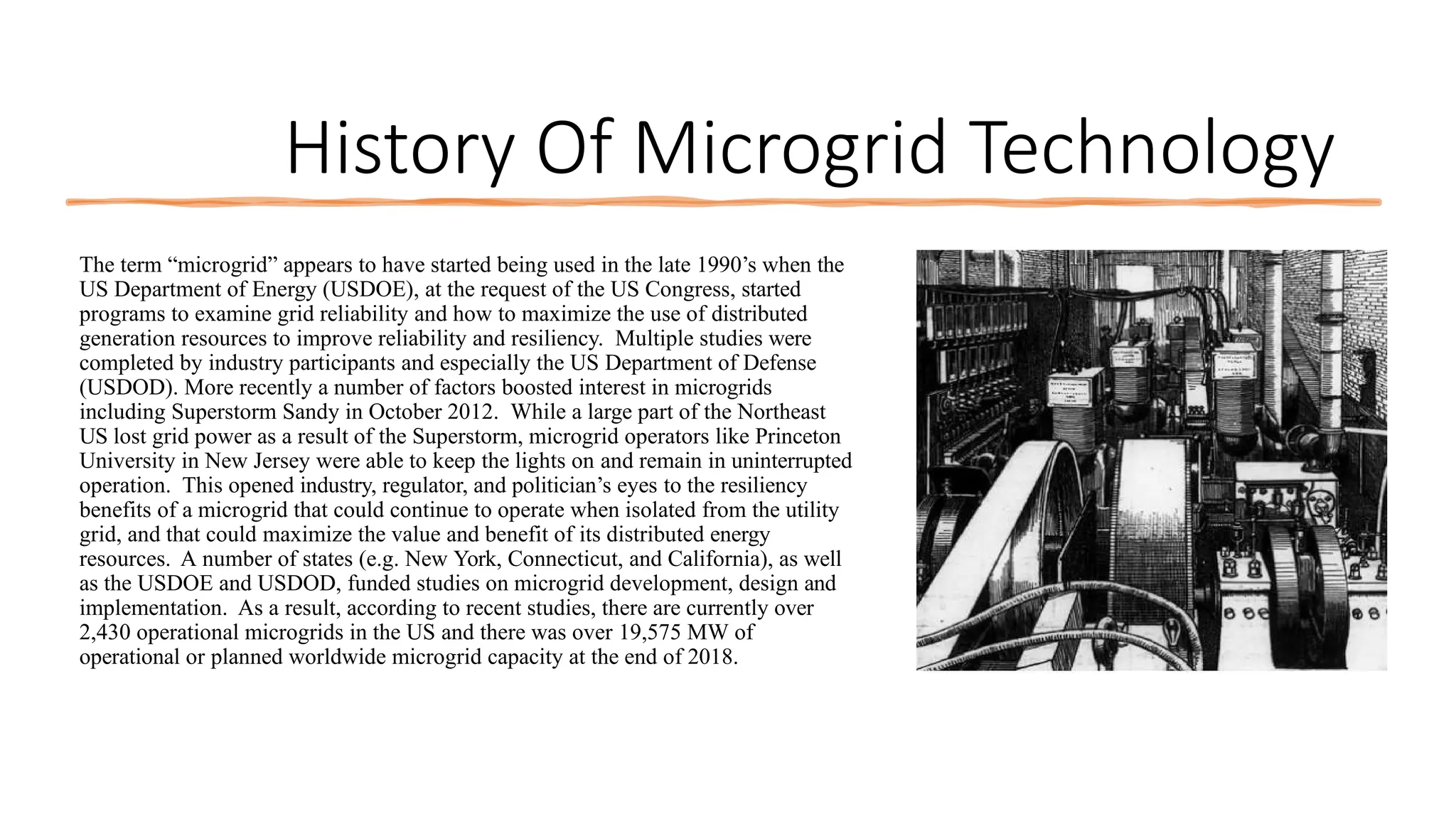
The term “microgrid” appears to have started being used in the late 1990’s when the
US Department of Energy (USDOE), at the request of the US Congress, started
programs to examine grid reliability and how to maximize the use of distributed
generation resources to improve reliability and resiliency. Multiple studies were
completed by industry participants and especially the US Department of Defense
(USDOD). More recently a number of factors boosted interest in microgrids
including Superstorm Sandy in October 2012. While a large part of the Northeast
US lost grid power as a result of the Superstorm, microgrid operators like Princeton
University in New Jersey were able to keep the lights on and remain in uninterrupted
operation. This opened industry, regulator, and politician’s eyes to the resiliency
benefits of a microgrid that could continue to operate when isolated from the utility
grid, and that could maximize the value and benefit of its distributed energy
resources. A number of states (e.g. New York, Connecticut, and California), as well
as the USDOE and USDOD, funded studies on microgrid development, design and
implementation. As a result, according to recent studies, there are currently over
2,430 operational microgrids in the US and there was over 19,575 MW of
operational or planned worldwide microgrid capacity at the end of 2018.
5.
Why Microgrid
• Amicrogrid can offer a number of significant benefits to those connected to the
microgrid as well as to the local utility. These include:
•
• Increased reliability and resiliency allowing microgrid connected facilities to
continue in operation during a grid outage
• Efficient use of generating resources such as CHP, reducing fuel use, line
losses
and carbon footprint
• Sharing and efficient use of existing or planned distributed generating resources
between microgrid connected facilities (e.g. instead of a back-up generator for
each building, a shared back-up generator for multiple buildings)
• Improved operation of the utility grid, reduced grid congestion, and reduced peak
loads.
6.
Need of
Microgrid Technology
1.Energy Reliability and Resilience :Island Mode Operation:
Microgrids can operate independently from the main grid during
power outages, ensuring a continuous energy supply to critical
facilities. Grid Support: Microgrids can support the main grid by
supplying excess power or by balancing supply and demand,
especially during peak usage periods.
2. Integration of Renewable Energy:Solar and Wind Integration:
Microgrids facilitate the integration of renewable energy sources like
solar panels and wind turbines, reducing reliance on fossil fuels and
lowering greenhouse gas emissions.Energy Storage: Microgrids often
incorporate energy storage systems (such as batteries) to store
excess energy generated during peak times for use during periods of
high demand or low renewable energy production.
3. Energy Efficeincy: Combined Heat and Power (CHP): Microgrids
can use CHP systems to maximize energy efficiency by
simultaneously generating electricity and utilizing the waste heat for
heating or cooling purposes. Demand Response: Microgrids enable
better management of energy demand, allowing consumers to
adjust their electricity usage in response to price signals or grid
conditions.
Use Of Microgrid
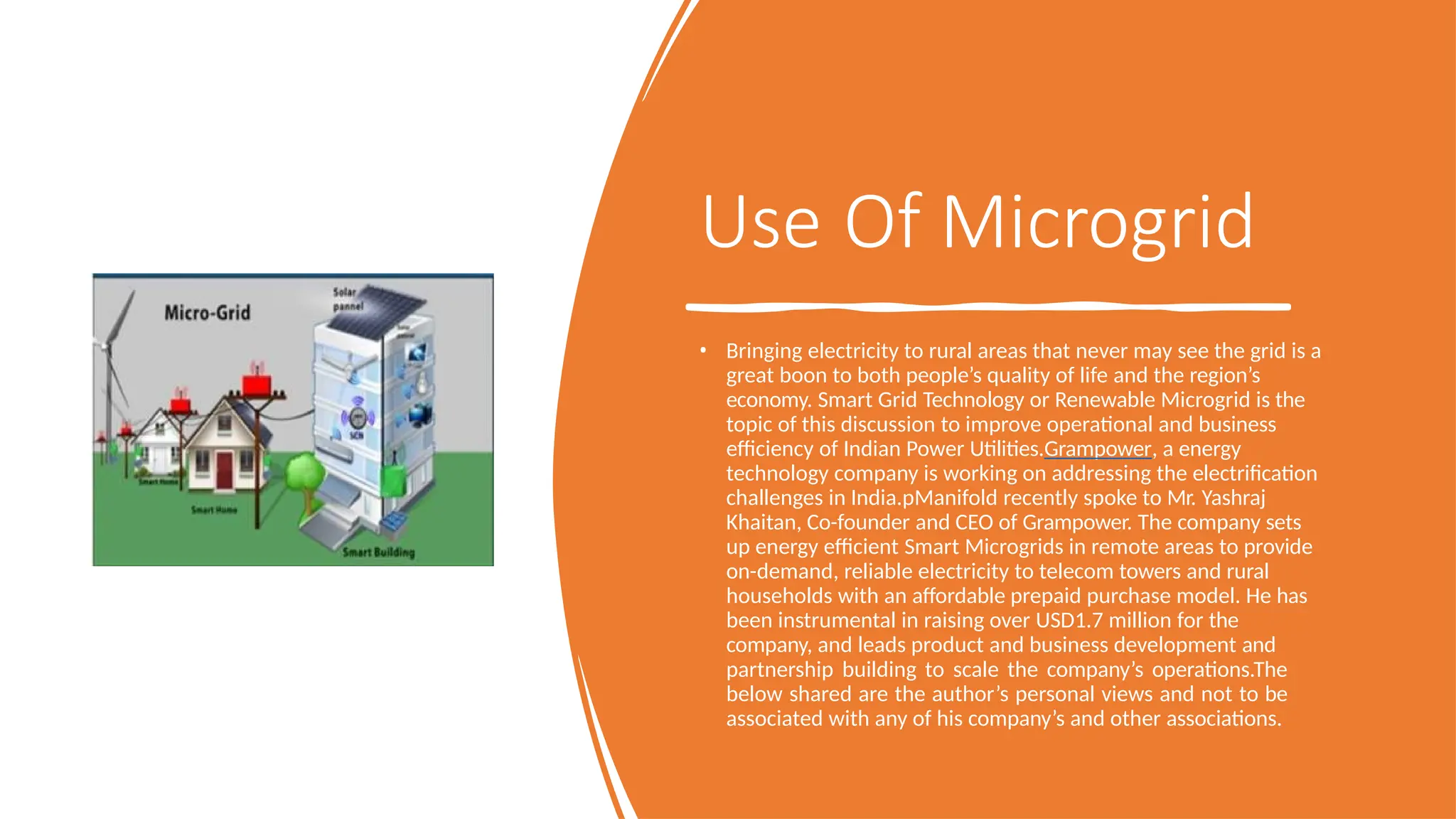
•Bringing electricity to rural areas that never may see the grid is a
great boon to both people’s quality of life and the region’s
economy. Smart Grid Technology or Renewable Microgrid is the
topic of this discussion to improve operational and business
efficiency of Indian Power Utilities.Grampower, a energy
technology company is working on addressing the electrification
challenges in India.pManifold recently spoke to Mr. Yashraj
Khaitan, Co-founder and CEO of Grampower. The company sets
up energy efficient Smart Microgrids in remote areas to provide
on-demand, reliable electricity to telecom towers and rural
households with an affordable prepaid purchase model. He has
been instrumental in raising over USD1.7 million for the
company, and leads product and business development and
partnership building to scale the company’s operations.The
below shared are the author’s personal views and not to be
associated with any of his company’s and other associations.
9.
Success of Microgrid
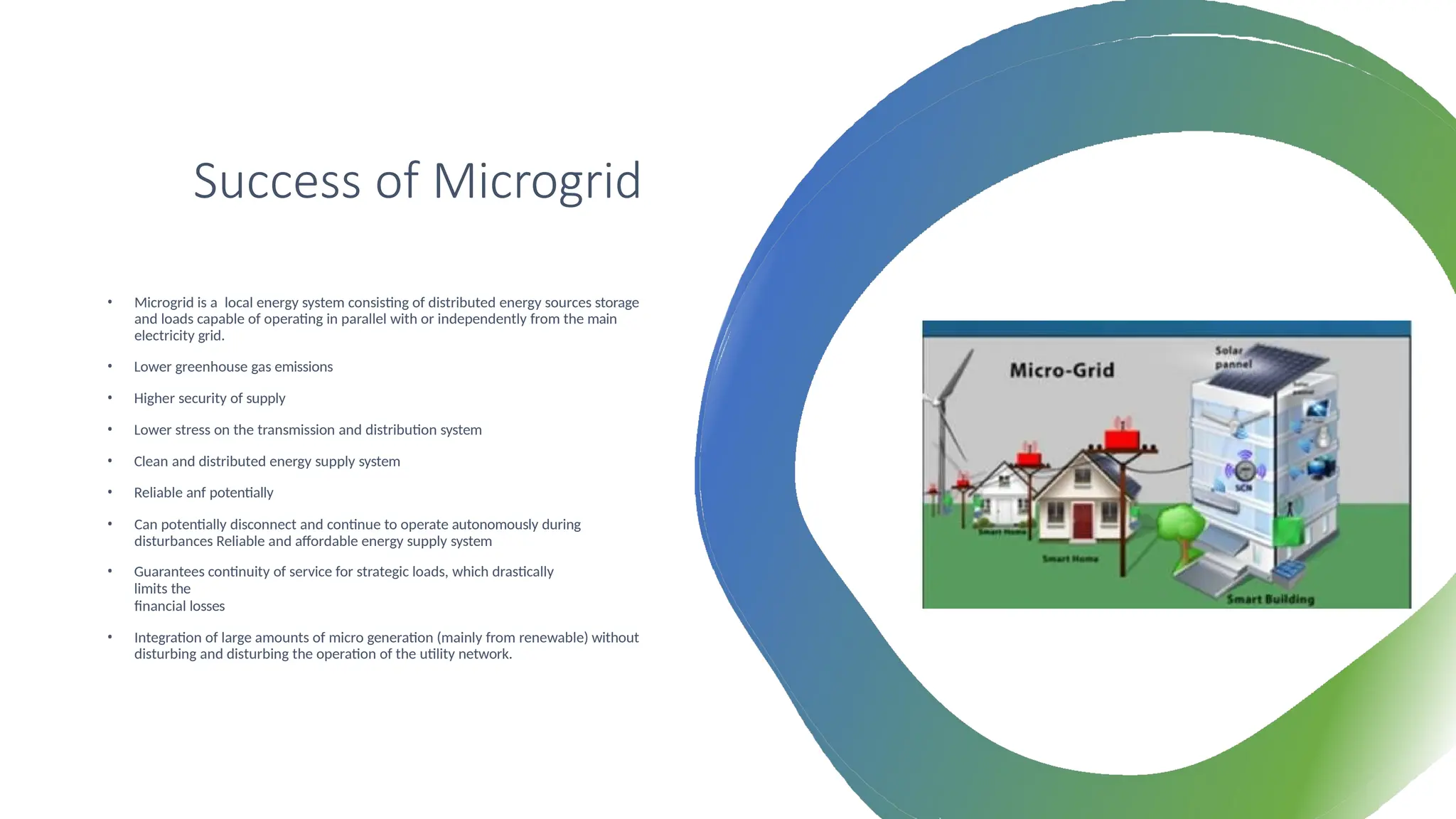
•Microgrid is a local energy system consisting of distributed energy sources storage
and loads capable of operating in parallel with or independently from the main
electricity grid.
• Lower greenhouse gas emissions
• Higher security of supply
• Lower stress on the transmission and distribution system
• Clean and distributed energy supply system
• Reliable anf potentially
• Can potentially disconnect and continue to operate autonomously during
disturbances Reliable and affordable energy supply system
• Guarantees continuity of service for strategic loads, which drastically
limits the
financial losses
• Integration of large amounts of micro generation (mainly from renewable) without
disturbing and disturbing the operation of the utility network.
10.
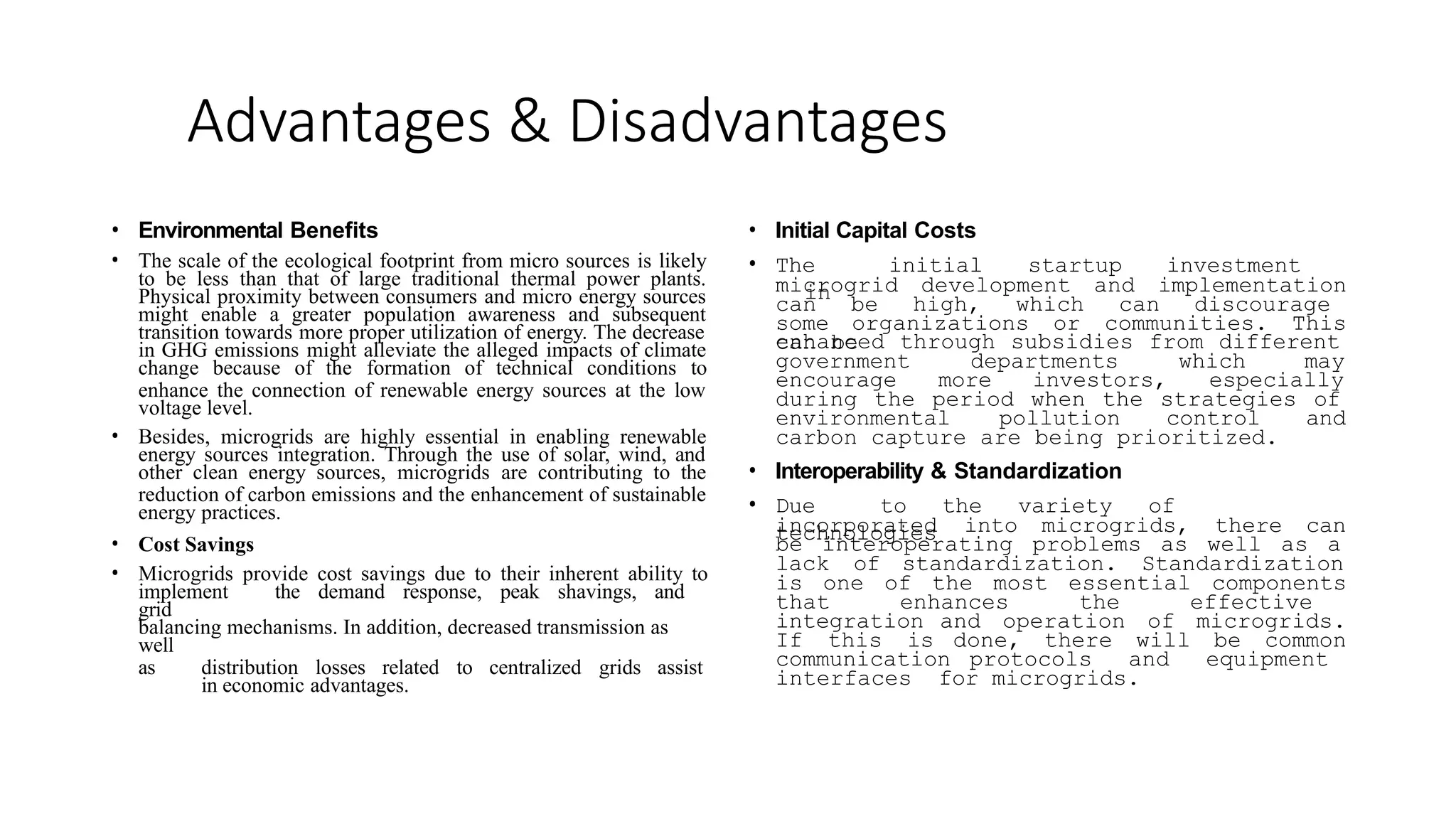
Advantages & Disadvantages
•Environmental Benefits
• The scale of the ecological footprint from micro sources is likely
to be less than that of large traditional thermal power plants.
Physical proximity between consumers and micro energy sources
might enable a greater population awareness and subsequent
transition towards more proper utilization of energy. The decrease
in GHG emissions might alleviate the alleged impacts of climate
change because of the formation of technical conditions to
enhance the connection of renewable energy sources at the low
voltage level.
• Besides, microgrids are highly essential in enabling renewable
energy sources integration. Through the use of solar, wind, and
other clean energy sources, microgrids are contributing to the
reduction of carbon emissions and the enhancement of sustainable
energy practices.
• Cost Savings
• Microgrids provide cost savings due to their inherent ability to
implement the demand response, peak shavings, and
grid
balancing mechanisms. In addition, decreased transmission as
well
as distribution losses related to centralized grids assist
in economic advantages.
• Initial Capital Costs
• The initial startup investment
in
microgrid development and implementation
can be high, which can discourage
some organizations or communities. This
can be
enhanced through subsidies from different
government departments which may
encourage more investors, especially
during the period when the strategies of
environmental pollution control and
carbon capture are being prioritized.
• Interoperability & Standardization
• Due to the variety of
technologies
incorporated into microgrids, there can
be interoperating problems as well as a
lack of standardization. Standardization
is one of the most essential components
that enhances the effective
integration and operation of microgrids.
If this is done, there will be common
communication protocols and equipment
interfaces for microgrids.
11.
Conclusion
• This workwas set out to present the overview of
MGs. Due to the potential importance of MGs,
this survey explores the key technologies used in
MGs. This review also classifies MGs into seven
groups according to their applications,
infrastructure, and end-users requirements.
Further, MG control strategies are reviewed to
provide an insight into these techniques. There is
no doubt that the emergence of MGs leads to a
more environmentally sound future and better
power supply services. However, there are still
many certain significant aspects for
improvement. A number of research issues and
challenges have been identified for MGs.
Future research areas to address the identified
issues and challenges have been outlined. The
state-of-the- art information of MGs provided in
this review would draw attention to the
investigators, experts, and researchers for MGs. In
this paper, however, essential communication
systems for MG implementation have not been
reviewed. Therefore, further research could also
be conducted to highlight the current status of MG
communications research.
12.
Declaration
• The authorsdeclare the following financial
interests/personal relationships which may be
considered as potential competing interests: Huadong
Mo reports financial support was provided by University
of New South Wales.
References
1. Aderibole A.,Zeineldin H., Al Hosani M.
2. A critical assessment of oscillatory modes in multi-microgrids comprising of synchronous and inverter based
distributed
generation
3. IEEE Trans. Smart Grid (2018)
4. Google Scholar
5. [2]Jafari M., Malekjamshidi Z., Lu D.D.-C., Zhu J.
6. Development of a fuzzy-logic-based energy management system for a multiport multioperation mode
residential smart
microgrid
7. IEEE Trans. Power Electron., 34 (4) (2018), pp. 3283-3301
8. Google Scholar
9. [3]Mariam L., Basu M., Conlon M.F.
10. A review of existing microgrid architectures
11. J. Eng., 2013 (2013)
12. Google Scholar
13.[4]Thirunavukkarasu G.S., Seyedmahmoudian M., Jamei E., Horan B., Mekhilef S., Stojcevski A.
14.Role of optimization techniques in microgrid energy management systems—A review



![References
1. Aderibole A., Zeineldin H., Al Hosani M.
2. A critical assessment of oscillatory modes in multi-microgrids comprising of synchronous and inverter based
distributed
generation
3. IEEE Trans. Smart Grid (2018)
4. Google Scholar
5. [2]Jafari M., Malekjamshidi Z., Lu D.D.-C., Zhu J.
6. Development of a fuzzy-logic-based energy management system for a multiport multioperation mode
residential smart
microgrid
7. IEEE Trans. Power Electron., 34 (4) (2018), pp. 3283-3301
8. Google Scholar
9. [3]Mariam L., Basu M., Conlon M.F.
10. A review of existing microgrid architectures
11. J. Eng., 2013 (2013)
12. Google Scholar
13.[4]Thirunavukkarasu G.S., Seyedmahmoudian M., Jamei E., Horan B., Mekhilef S., Stojcevski A.
14.Role of optimization techniques in microgrid energy management systems—A review](https://image.slidesharecdn.com/microgrid-250219174930-e3f342f6/75/microgrid-ppt-knowledge-about-microgrid-Tecnology-14-2048.jpg)


![Rahul[1]](https://cdn.slidesharecdn.com/ss_thumbnails/rahul1-170329035504-thumbnail.jpg?width=640&height=640&fit=bounds)


