DiaTune
A PATIENT CASE
Discussion
BY: Dr Ratan Kumar
MRCP-UK , Dip Diabetes -Scotland
Approval Code: Z5-8092
Expiry Date: March 2026
AstraZeneca abides by the IFPMA Code of Pharmaceutical Marketing
Practices, the Middle East & Africa LAWG Code of Practices and
AstraZeneca Global Policies, and as such will not engage in the
promotion of unregistered products or unapproved indications.
Presentations are intended for educational purposes only and do not
replace independent professional judgment. Statements of fact and
opinions expressed are those of the speakers individually and, unless
expressly stated to the contrary, are not the opinion or position of
AstraZeneca. AstraZeneca does not endorse or approve, and assumes no
responsibility for, the content, accuracy or completeness of the information
presented.
Please refer to the appropriate approved Product Information before prescribing
any agents mentioned in this presentation.
Disclaime
r
3
Pre-event Question:
Do you agree that your controlled T2D patients still at risk to progress to
renal disease?
A
Yes
B
No
C
Not Sure
4
Pre-event Question:
A
Yes
B
No
C
Not Sure
Do you consider prescribing SGLT2is to your T2D patients with
controlled A1C to protect their kidneys?
Case
Presentatio
n
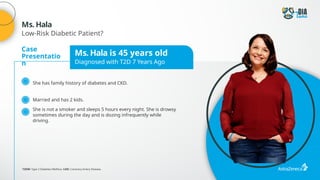
Ms. Hala is 45 years old
Diagnosed with T2D 7 Years Ago
She has family history of diabetes and CKD.
Married and has 2 kids.
She is not a smoker and sleeps 5 hours every night. She is drowsy
sometimes during the day and is dozing infrequently while
driving.
T2DM: Type 2 Diabetes Mellitus; CAD: Coronary Artery Disease.
Ms. Hala
Low-Risk Diabetic Patient?
Ms. Hala
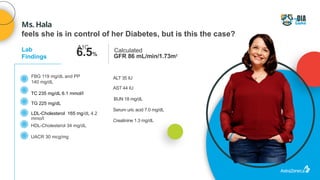
feels she is in control of her Diabetes, but is this the case?
Lab
Findings
A1C
6.5%
FBG 119 mg/dL and PP
140 mg/dL
TC 235 mg/dL 6.1 mmol/l
TG 225 mg/dL
LDL-Cholesterol 165 mg/dL 4.2
mmo/l
ALT 35 IU
AST 44 IU
HDL-Cholesterol 34 mg/dL
UACR 30 mcg/mg
Creatinine 1.3 mg/dL
Serum uric acid 7.0 mg/dL
GFR 86 mL/min/1.73m2
Calculated
BUN 18 mg/dL
T2DM: Type 2 Diabetes Mellitus;
Ms. Hala
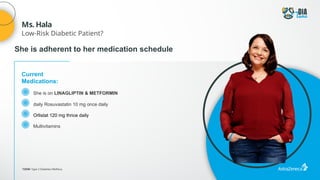
Low-Risk Diabetic Patient?
She is adherent to her medication schedule
Current
Medications:
She is on LINAGLIPTIN & METFORMIN
daily Rosuvastatin 10 mg once daily
Orlistat 120 mg thrice daily
Multivitamins
8
Pre-event Question:
A
Yes
B
No
C
Not Sure
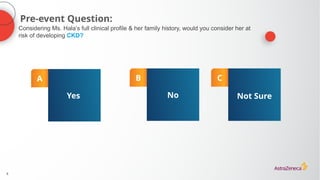
Considering Ms. Hala’s full clinical profile & her family history, would you consider her at
risk of developing CKD?
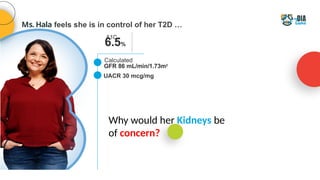
Ms. Hala feels she is in control of her T2D …
A1C
6.5%
Why would her Kidneys be
of concern?
GFR 86 mL/min/1.73m2
Calculated
UACR 30 mcg/mg
A1C
6.5%
GFR 86 mL/min/1.73m2
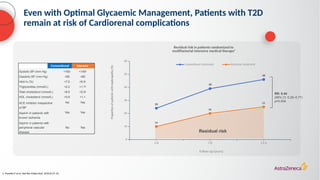
Even with Optimal Glycaemic Management, Patients with T2D
remain at risk of Cardiorenal complications
1. Fioretto P et al. Nat Rev Endocrinol. 2010;6:19–25.
3.8 7.8 13.3
0
10
20
30
40
50
60
24
39
46
10
20
25
Residual risk in patients randomized to
multifactorial intensive medical therapy¹
Conventional treatment Intensive treatment
Follow-up (years)
Proportion
of
patients
with
nephropathy
(%)
Residual risk
RR: 0.44
(95% CI: 0.25–0.77)
p=0.004
Intensive
Systolic BP (mm Hg) <160 <140b
Diastolic BP (mm Hg) <95 <85
HbA1c (%) <7.5 <6.5c
Triglycerides (mmol/L) <2.2 <1.7d
Total cholesterol (mmol/L) <6.5 <5.0e
HDL cholesterol (mmol/L) >0.9 >1.1
ACE inhibitor irrespective No Yes
of BP
Aspirin in patients with Yes Yes
known ischemia
Aspirin in patients with
peripheral vascular No Yes
disease
Conventional
Diabetes is a strong risk factor for CKD and increases the risk of
progression to ESKD1
a
CKD was defined as eGFR of 15–59 mL/min/1.73 m2
(stages 3–4); b
HRs were adjusted for age, sex, race, smoking, history of CVD, serum total cholesterol concentration, body mass index, and albuminuria (log urine albumin:creatinine ratio, log urine protein:creatinine ratio, or categorical dipstick proteinuria [negative, trace, 1+, ≥2+]);c
Blue and purple circles denote
P<0.05 as compared with the reference (diamond); d
eGFR 50 mL/min/1.73 m2
used as the reference point (diamond) in diabetes and no diabetes groups
CKD, chronic kidney disease; eGFR, estimated glomerular filtration rate; ESKD, end stage kidney disease; T2D, Type 2 diabetes
1. Murphy D, et al. Ann Intern Med. 2016;165:473–481; 2. Fox CS, et al. Lancet 2012;380:1662–1673
No diabetes Diabetes
0
10
20
30
40
50
5.3
19.1
Proportion
of
patients
(%)
Prevalence of CKD is more than three
times higher in patients with diabetes1
Prevalence of CKD stages 3–41,a
2011–2012
Risk of ESKD according to baseline eGFR
in individuals with and without diabetes2,b–d
Diabetes, 95% CI
No diabetes, 95% CI
Adjusted
hazard
ratio
eGFR (mL/min/1.73 m2
)
15 30 45 60
0
0.5
64
32
16
8
4
2
1
Risk of ESKD is higher in patients with
diabetes2
NSAIDS, non-steroidal anti-inflammatory drugs
1. National Kidney Foundation, https://nkfs.org/kidney-failure/are-you-at-risk-checklist/ accessed on 29th
March 2021 2. KDIGO 2020 Clinical Practice Guideline
for Diabetes Management in Chronic Kidney Disease.
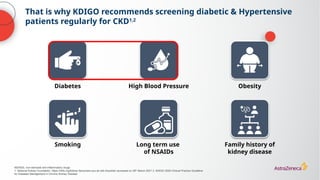
That is why KDIGO recommends screening diabetic & Hypertensive
patients regularly for CKD1,2
Diabetes High Blood Pressure Obesity
Smoking Long term use
of NSAIDs
Family history of
kidney disease
13
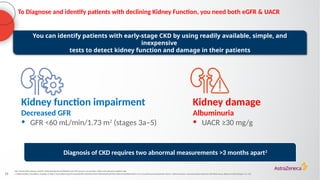
To Diagnose and identify patients with declining Kidney Function, you need both eGFR & UACR
CKD, chronic kidney disease; (e)GFR, (estimated) glomerular filtration rate; PCP, primary care provider; UACR, urine albumin:creatinine ratio
1. National Kidney Foundation. Available at: https://www.kidney.org/sites/default/files/CKDinform%20-%20Module%201%20-%20Core%20Slides%2011.16.15.v2.pdf (Accessed September 2021); 2. Kidney Disease: Improving Global Outcomes CKD Work Group. Kidney Int 2013;3(Suppl. 1):1–150
Diagnosis of CKD requires two abnormal measurements >3 months apart2
Kidney function impairment
Decreased GFR
• GFR <60 mL/min/1.73 m2
(stages 3a–5)
Kidney damage
Albuminuria
• UACR ≥30 mg/g
You can identify patients with early-stage CKD by using readily available, simple, and
inexpensive
tests to detect kidney function and damage in their patients
G1
G2
G3a
G3b
G4
G5
A1 A2 A3
≥90
60-89
45-59
30-44
15-29
<15
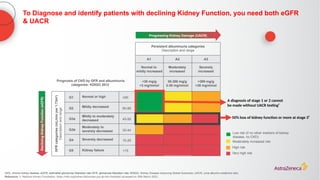
Low risk (if no other markers of kidney
disease, no CKD)
Moderately increased risk
High risk
Very high risk
Prognosis of CKD by GFR and albuminuria
categories: KDIGO 2012
Normal or high
Mildly decreased
Mildly to moderately
decreased
Moderately to
severely decreased
Severely decreased
Kidney failure
Normal to
mildly increased
<30 mg/g
<3 mg/mmol
Moderately
increased
30-300 mg/g
3-30 mg/mmol
Severely
increased
>300 mg/g
>30 mg/mmol
Persistent albuminuria categories
Description and range
Progressing Kidney Damage (UACR)
Declining
Kidney
Function
(eGFR)
GFR
categories
(mL/min
per
1.73m
2
)
Description
and
range
To Diagnose and identify patients with declining Kidney Function, you need both eGFR
& UACR
A diagnosis of stage 1 or 2 cannot
be made without UACR testing¹
50% loss of kidney function or more at stage 3¹
CKD, chronic kidney disease; eGFR, estimated glomerular filteration rate GFR, glomerular filteration rate; KDIGO, Kidney Disease Improving Global Outcomes; UACR, urine albumin-creatinine ratio.
Reference: 1. National Kidney Foundation, https://nkfs.org/kidney-failure/are-you-at-risk-checklist/ accessed on 29th March 2023
15
Would You consider Ms Hala as a CKD Patient?
A
Yes
B
No
C
I’m not
sure
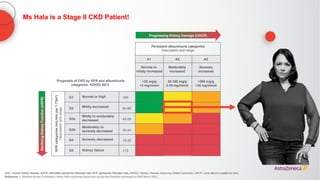
G1
G2
G3a
G3b
G4
G5
A1 A2 A3
≥90
60-89
45-59
30-44
15-29
<15
Prognosis of CKD by GFR and albuminuria
categories: KDIGO 2012
Normal or high
Mildly decreased
Mildly to moderately
decreased
Moderately to
severely decreased
Severely decreased
Kidney failure
Normal to
mildly increased
<30 mg/g
<3 mg/mmol
Moderately
increased
30-300 mg/g
3-30 mg/mmol
Severely
increased
>300 mg/g
>30 mg/mmol
Persistent albuminuria categories
Description and range
Progressing Kidney Damage (UACR)
Declining
Kidney
Function
(eGFR)
GFR
categories
(mL/min
per
1.73m
2
)
Description
and
range
Ms Hala is a Stage II CKD Patient!
CKD, chronic kidney disease; eGFR, estimated glomerular filteration rate GFR, glomerular filteration rate; KDIGO, Kidney Disease Improving Global Outcomes; UACR, urine albumin-creatinine ratio.
Reference: 1. National Kidney Foundation, https://nkfs.org/kidney-failure/are-you-at-risk-checklist/ accessed on 29th March 2023
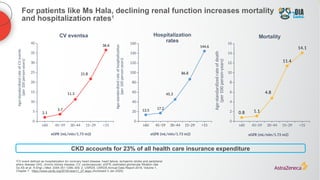
≥60 45–59 30–44 15–29 <15
0
2
4
6
8
10
12
14
16
0.8 1.1
4.8
11.4
14.1
Mortality
eGFR (mL/min/1.73 m2)
Age-standardized
rate
of
death
(per
100
person-years)
≥60 45–59 30–44 15–29 <15
0
20
40
60
80
100
120
140
160
13.5 17.2
45.3
86.8
144.6
Hospitalization
rates
eGFR (mL/min/1.73 m2)
Age-standardized
rate
of
hospitalization
(per
100
person-years)
≥60 45–59 30–44 15–29 <15
0
5
10
15
20
25
30
35
40
2.1
3.7
11.3
21.8
36.6
CV eventsa
eGFR (mL/min/1.73 m2)
Age-standardized
rate
of
CV
events
(per
100
person-years)
CKD accounts for 23% of all health care insurance expenditure
a
CV event defined as hospitalization for coronary heart disease, heart failure, ischaemic stroke and peripheral
artery disease CKD, chronic kidney disease; CV, cardiovascular; eGFR, estimated glomerular filtration rate
Go AS et al. N Engl J Med. 2004;351:1296–305; 2. USRDS. USRDS Annual Data Report 2018, Volume 1,
Chapter 7. https://www.usrds.org/2018/view/v1_07.aspx (Accessed 3 Jan 2020)
For patients like Ms Hala, declining renal function increases mortality
and hospitalization rates1
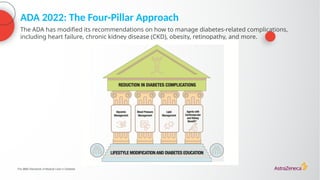
ADA 2022: The Four-Pillar Approach
The ADA has modified its recommendations on how to manage diabetes-related complications,
including heart failure, chronic kidney disease (CKD), obesity, retinopathy, and more.
The 2022 Standards of Medical Care in Diabetes
19
2024 ADA Standards of Care in Diabetes
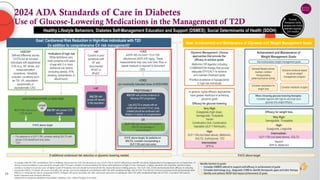
Use of Glucose-Lowering Medications in the Management of T2D
a
In people with HF, CKD, established CVD or multiple risk factors for CVD, the decision to use a GLP-1 RA or SGLT2i with proven benefit should be independent of background use of metformin; b
A
strong recommendation is warranted for people with CVD and a weaker recommendation for those with indicators of high CV risk. Moreover, a higher absolute risk reduction and thus lower
numbers needed to treat are seen at higher levels of baseline risk and should be factored into the shared decision-making process; c
For GLP-1 RA, CVOTs demonstrate their efficacy in reducing
composite MACE, CV death, all-cause mortality, MI, stroke, and renal endpoints in individuals with T2D with established/high risk of CVD; d
For SGLT2i, CV/renal outcomes trials demonstrate their
efficacy in reducing the risk of composite MACE, CV death, all-cause mortality, MI, hHF, and renal outcomes in individuals with T2D with established/high risk of CVD; e
Low-dose TZD may be
better tolerated and similarly effective.
Adapted from American Diabetes Association. Diabetes Care. 2024;47(suppl 1):S1-S321.
Healthy Lifestyle Behaviors; Diabetes Self-Management Education and Support (DSMES); Social Determinants of Health (SDOH)
Goal: Achievement and Maintenance of Glycemic and Weight Management Goals
To avoid
therapeutic inertia
reassess and modify
treatment regularly
(3-6 months)
Efficacy for weight loss
Neutral:
DPP-4i, Metformin
Intermediate:
GLP-1 RA (not listed above), SGLT2i
High:
Dulaglutide, Liraglutide
Very High:
Semaglutide, Tirzepatide
In general, higher efficacy approaches
have greater likelihood of achieving
glycemic goals
Efficacy for glucose lowering
Intermediate:
DPP-4i
High:
GLP-1 RA (not listed above), Metformin,
SGLT2i, Sulfonylurea, TZD
Very High:
Dulaglutide (high dose),
Semaglutide, Tirzepatide
Insulin
Combination Oral, Combination
Injectable (GLP-1 RA/Insulin)
Glycemic Management: Choose
approaches that provide the
efficacy to achieve goals:
Metformin OR Agent(s) including
COMBINATION therapy that provide
adequate EFFICACY to achieve
and maintain treatment goals
Prioritize avoidance of hypoglycemia
in high-risk individuals
Achievement and Maintenance of
Weight Management Goals:
Set individualized weight management goals
General lifestyle advice:
medical, nutrition
therapy/eating
patterns/physical activity
Intensive evidence-based
structural weight
management program
Consider medication for
weight loss
Consider metabolic surgery
When choosing glucose-lowering therapies:
Consider regimen with high-to-very-high dual
glucose and weight efficacy
Identify barriers to goals:
• Consider DSMES referral to support self-efficacy in achievement of goals
• Consider technology (e.g., diagnostic CGM) to identify therapeutic gaps and tailor therapy
• Identify and address SDOH that impact achievement of goals
If A1C above target
If additional cardiorenal risk reduction or glycemic lowering needed
+HF
SGLT2id
with
proven HF benefit
in this population
+ASCVDb
Defined differently across
CVOTs but all included
individuals with established
CVD (e.g., MI, stroke, any
revascularization
procedure). Variability
included: conditions such
as TIA, UA, amputation,
symptomatic or
asymptomatic CAD.
+Indicators of high risk
While definitions vary,
most comprise ≥55 years
of age with 2 or more
additional risk factors
(including obesity, HTN,
smoking, dyslipidemia, or
albuminuria)
+CKD
(on maximally tolerated dose of ACEi/ARB)
GLP-1 RA with proven CVD benefit if
SGLT2i not tolerated or
contraindicated
SGLT2id
with primary evidence of
reducing CKD progression
Use SGLT2i in people with an
eGFR ≥20 mL/min/1.73 m2
; once
initiated should be continued until
initiation of dialysis or transplantation
PREFERABLY
OR
If A1C above target, for patients on
SGLT2i, consider incorporating a
GLP-1 RA and vice versa
+ASCVD/INDICATORS of HIGH RISK
GLP-1 RAc
with proven
CVD benefit
SGLT2id
with proven CVD
benefit
EITHER/
OR
• For patients on a GLP-1 RA, consider adding SGLT2i with
proven CVD benefit and vice versa
• TZDe
+HF
Current or prior
symptoms with
HF with
documented
HFrEF or
HFpEF
+CKD
eGFR <60 mL/min/1.73 m2
OR
albuminuria (ACR ≥30 mg/g). These
measurements may vary over time; thus, a
repeat measure is required to document
CKD.
If A1C above target
Goal: Cardiorenal Risk Reduction in High-Risk Individuals with T2D
(in addition to comprehensive CV risk management)a
How can you protect Ms. Hala from a similar fate like her Mother?
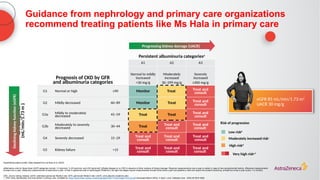
Guidance from nephrology and primary care organizations
recommend treating patients like Ms Hala in primary care
Hypothetical patient profile; Table adapted from de Boer et al. 20223
aAlternative units for these three UACR categories include: <3 mg/mmol, 3–29 mg/mmol, and ≥30 mg/mmol2; bStable disease or no CKD in absence of other markers of kidney damage. Requires measurements once a year or earlier in case of new symptoms/risk factors; cRequires measurements
at least once a year; dRequires measurements at least twice a year; eTreat in agreement with a nephrologist; fPatients in the light red stages require measurements at least three times a year and patients in dark red require the closest monitoring, at least four times a year (every 1–3 months)
CKD, chronic kidney disease, eGFR, estimated glomerular filtration rate; GFR, glomerular filtration rate; UACR, urine albumin:creatinine ratio
1. CKD: Early Identification and intervention in primary care. Available at: https://www.theisn.org/wp-content/uploads/2022/11/One-Page-Print-Out.pdf (Accessed March 2023); 3. Boer I, et al. Diabetes Care . 2022;45:3075-3090
Prognosis of CKD by GFR
and albuminuria categories
Persistent albuminuria categoriesa
A1 A2 A3
Normal to mildly
increased
<30 mg/g
Moderately
increased
30–299 mg/g
Severely
increased
≥300 mg/g
GFR
categories
(mL/min/1.73
m
2
)
G1 Normal or high ≥90 Monitor Treat Treat and
consult
G2 Mildly decreased 60–89 Monitor Treat Treat and
consult
G3a Mildly to moderately
decreased 45–59 Treat Treat Treat and
consult
G3b Moderately to severely
decreased 30–44 Treat Treat and
consult
Treat and
consult
G4 Severely decreased 15–29 Treat and
consult
Treat and
consult
Treat and
consult
G5 Kidney failure <15 Treat and
consult
Treat and
consult
Treat and
consult
Declining
kidney
function
(eGFR)
Progressing kidney damage (UACR)
Low riskb
Moderately increased riskc
High riskd
Very high riske,f
Risk of progression
eGFR 85 mL/min/1.73 m2
UACR 30 mg/g
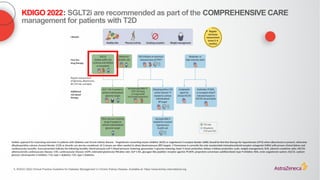
KDIGO 2022: SGLT2i are recommended as part of the COMPREHENSIVE CARE
management for patients with T2D
1. KDIGO 2022 Clinical Practice Guideline for Diabetes Management in Chronic Kidney Disease. Available at: https://www.kidney-international.org
Holistic approach for improving outcomes in patients with diabetes and chronic kidney disease. *Angiotensin-converting ezyme inhibitor (ACEi) or angiotensin II receptor blocker (ARB) should be first-line therapy for hypertension (HTN) when albuminuria is present, otherwise
dihydropyridine calcium channel blocker (CCB) or diuretic can also be considered; all 3 classes are often needed to attain blood pressure (BP) targets. † Finerenone is currently the only nonsteroidal mineralocorticoid receptor antagonist (MRA) with proven clinical kidney and
cardiovascular benefits. Icons presented indicate the following benefits: blood pressure cuff ¼ blood pressure–lowering; glucometer ¼ glucose-lowering; heart ¼ heart protection; kidney ¼ kidney protection; scale, weight management; ACR, albumin-creatinine ratio; ASCVD,
atherosclerotic cardiovascular disease; CVD, cardiovascular disease; eGFR, estimated glomerular filtration rate; GLP-1 RA, glucagon-like peptide1 receptor agonist; PCSK9i, proprotein convertase subtilisin/kexin type 9 inhibitor; RAS, renin-angiotensin system; SGLT2i, sodium-
glucose cotransporter-2 inhibitor; T1D, type 1 diabetes; T2D, type 2 diabetes.
GFR, glomerular filtration rate; T2DM, type 2 diabetes mellitus, UACR: Urinary albumin creatinine ratio.
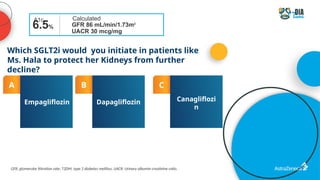
GFR 86 mL/min/1.73m2
Calculated
A1c
6.5%
A
Empagliflozin
B
Dapagliflozin
C
Canagliflozi
n
Which SGLT2i would you initiate in patients like
Ms. Hala to protect her Kidneys from further
decline?
UACR 30 mcg/mg
The cardiorenal benefits of FORXIGA were initially observed in patients
with early renal disease and T2D in DECLARE TIMI 58
‑
a
Baseline UACR data were missing from 316 (2%) patients; b
Nominally significant, prespecified exploratory renal composite outcome of a sustained decrease of ≥40% in eGFR to
<60 mL/min/1.73 m2
, new ESKD, or death from kidney causes; c
hHF alone was a separate, nominally significant exploratory endpoint in DECLARE. The primary endpoint composite of CV death/hHF (17% RRR [0.9% ARR]) was driven by hHF
ARR, absolute risk reduction; CI, confidence interval; CV, cardiovascular; eGFR, estimated glomerular filtration rate; ESKD, end-stage kidney disease; hHF, hospitalization for heart failure; HR, hazard ratio; RRR, relative risk reduction; T2D, Type 2
diabetes; UACR, urine albumin:creatinine ratio
1. Wiviott SD, et al. N Engl J Med 2019;380:347–357; 2. Raz I, et al. Diabetes Obes Metab 2018;20:1102–1110
N=17,1601
Renal-specific
composite outcome1,b
(1.5% vs 2.8%)
1.3%
ARR
47RRR
%
<30
(68% of
patients)
30–≤300
(23% of
patients)
>300
(7% of
patients)
UACR2,a
(mg/g)
≥100 90 80 70 60 50 40 30 20
eGFR (mL/min/1.73 m2
)
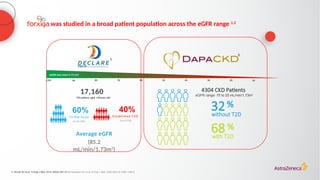
10
17,160
T2D patients aged ≥40years old1
CV Risk factor
(n=10,186)
60%
Established CVD
(n=6,974))
40%
4304 CKD Patients
Average eGFR
(85.2
mL/min/1.73m2
)
%
32
without T2D
68
with T2D
%
eGFR range: 75 to 25 mL/min/1.73m2
was studied in a broad patient population across the eGFR range 1,2
1. Wiviott SD et al. N Engl J Med. 2019; 380(4):347–57 2.Heerspink HJL et al. N Engl J Med. 2020;383(15):1436–1446.2
2
1
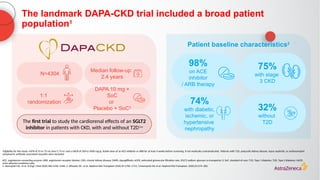
The landmark DAPA-CKD trial included a broad patient
population1
a
Eligibility for this study: eGFR of 25 to 75 mL/min/1.73 m2
and a UACR of 200 to 5000 mg/g. Stable dose of an ACE inhibitor or ARB for at least 4 weeks before screening, if not medically contraindicated. Patients with T1D, polycystic kidney disease, lupus nephritis, or antineutrophil
cytoplasmic antibody-associated vasculitis were excluded
ACE, angiotensin-converting enzyme; ARB, angiotensin receptor blocker; CKD, chronic kidney disease; DAPA, dapagliflozin; eGFR, estimated glomerular filtration rate; SGLT2 sodium–glucose co-transporter 2; SoC, standard of care; T1D, Type 1 diabetes; T2D, Type 2 diabetes; UACR,
urine albumin:creatinine ratio
1. Heerspink HJL, et al. N Engl J Med 2020;383:1436–1446; 2. Wheeler DC, et al. Nephrol Dial Transplant 2020;35:1700–1711; 3.Heerspink HJL et al. Nephrol Dial Transplant. 2020;35:274–282.
Patient baseline characteristics2
The first trial to study the cardiorenal effects of an SGLT2
inhibitor in patients with CKD, with and without T2D1,a
N=4304
1:1
randomization
Median follow-up:
2.4 years
DAPA 10 mg +
SoC
or
Placebo + SoC3
98%
on ACE
inhibitor
/ ARB therapy
74%
with diabetic,
ischemic, or
hypertensive
nephropathy
75%
with stage
3 CKD
32%
without
T2D
DAPA-CKD PRIMARY COMPOSITE ENDPOINT: DECLINING KIDNEY FUNCTION, ESKD, AND RENAL OR CV DEATH1*
HR 0.61 (95% CI, 0.51, 0.72)
p<0.001
Placebo
(n=2152)
0
4
8
12
16
20
24
Cumulative
incidence
(%)
0 4 8 12 16 20 24 28 32
FORXIGA 10 mg
(n=2152)
Time from randomisation
Median follow-up of 2.4 years
5.3%
ARR
39RRR
%
NNT=19
PATIENTS
Consistent efficacy in patients
with or without T2D2†
*Primary composite endpoint of ≥50% sustained decline in eGFR, reaching ESKD, and renal or CV death1
. ESKD defined as the need for maintenance dialysis (peritoneal or haemodialysis)
for at least 28 days and renal transplantation or sustained eGFR <15 mL/min/1.73m2
for at least 28 days1
; †
There was no significant interaction of the effect on the primary composite endpoint
by diabetes status (p for interaction = 0.24).2
ARR = absolute risk reduction; CI = confidence interval; CKD = chronic kidney disease; CV = cardiovascular; DAPA-CKD = Dapagliflozin And Prevention of Adverse outcomes in
Chronic Kidney Disease; eGFR = estimated glomerular filtration rate; ESKD = end-stage kidney disease; HR = hazard ratio; NNT = number needed to treat; RRR = relative risk
reduction; T2D = Type 2 diabetes.
Reference: 1.Heerspink HJL et al. N Engl J Med. 2020;383(15):1436–1446.2. Wheeler DC et al. Lancet Diabetes Endocrinol. 2021;9(1):22–31
Adapted from Heerspink HJL et al. 2020.
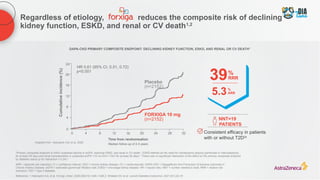
Regardless of etiology, reduces the composite risk of declining
kidney function, ESKD, and renal or CV death1,2
DAPA-CKD PRIMARY COMPOSITE ENDPOINT: DECLINING KIDNEY FUNCTION, ESKD, AND RENAL OR CV DEATH1*
HR 0.61 (95% CI, 0.51, 0.72)
p<0.001
Placebo
(n=2152)
0
4
8
12
16
20
24
Cumulative
incidence
(%)
0 4 8 12 16 20 24 28 32
FORXIGA 10 mg
(n=2152)
Time from randomisation
Median follow-up of 2.4 years
5.3%
ARR
39RRR
%
NNT=19
PATIENTS
Consistent efficacy in patients
with or without T2D2†
*Primary composite endpoint of ≥50% sustained decline in eGFR, reaching ESKD, and renal or CV death1
. ESKD defined as the need for maintenance dialysis (peritoneal or haemodialysis)
for at least 28 days and renal transplantation or sustained eGFR <15 mL/min/1.73m2
for at least 28 days1
; †
There was no significant interaction of the effect on the primary composite endpoint
by diabetes status (p for interaction = 0.24).2
ARR = absolute risk reduction; CI = confidence interval; CKD = chronic kidney disease; CV = cardiovascular; DAPA-CKD = Dapagliflozin And Prevention of Adverse outcomes in
Chronic Kidney Disease; eGFR = estimated glomerular filtration rate; ESKD = end-stage kidney disease; HR = hazard ratio; NNT = number needed to treat; RRR = relative risk
reduction; T2D = Type 2 diabetes.
Reference: 1.Heerspink HJL et al. N Engl J Med. 2020;383(15):1436–1446.2. Wheeler DC et al. Lancet Diabetes Endocrinol. 2021;9(1):22–31
Adapted from Heerspink HJL et al. 2020.
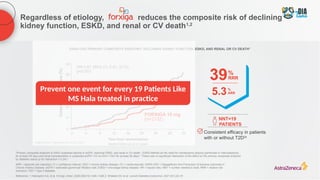
Regardless of etiology, reduces the composite risk of declining
kidney function, ESKD, and renal or CV death1,2
Prevent one event for every 19 Patients Like
MS Hala treated in practice
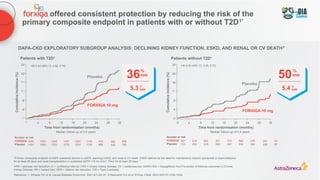
offered consistent protection by reducing the risk of the
primary composite endpoint in patients with or without T2D1*
DAPA-CKD EXPLORATORY SUBGROUP ANALYSIS: DECLINING KIDNEY FUNCTION, ESKD, AND RENAL OR CV DEATH2*
5.3 %
ARR
36RRR
%
50RRR
%
HR 0.50 (95% CI, 0.35, 0.72)
Number at risk
Placebo
FORXIGA
Number at risk
Placebo
FORXIGA
Placebo
FORXIGA 10 mg
Placebo
FORXIGA 10 mg
1455
1451
1383
1360
1349
1321
1307
1275
1262
1224
1155
1130
910
868
580
545
215
190
697
701
618
633
606
615
591
583
579
567
546
534
378
364
251
229
94
80
HR 0.64 (95% CI, 0.52, 0.79)
0
4
8
12
16
20
24
Cumulative
incidence
(%)
0
4 8 12 16 20 24 28 32
Time from randomisation (months)
Median follow-up of 2.4 years
0
4
8
12
16
20
24
Cumulative
incidence
(%)
0 4 8 12 16 20 24 28 32
Time from randomisation (months)
Median follow-up of 2.4 years
Patients with T2D1
Patients without T2D1
5.4 %
ARR
*Primary composite endpoint of ≥50% sustained decline in eGFR, reaching ESKD, and renal or CV death. ESKD defined as the need for maintenance dialysis (peritoneal or haemodialysis)
for at least 28 days and renal transplantation or sustained eGFR <15 mL/min/1.73m2 for at least 28 days.1
ARR = absolute risk reduction; CI = confidence interval; CKD = chronic kidney disease; CV = cardiovascular; DAPA-CKD = Dapagliflozin And Prevention of Adverse outcomes in Chronic
Kidney Disease; HR = hazard ratio; RRR = relative risk reduction; T2D = Type 2 diabetes.
Reference: 1. Wheeler DC et al. Lancet Diabetes Endocrinol. 2021;9(1):22–31. 2.Heerspink HJL et al. N Engl J Med. 2020;383(15):1436–1446.
ARR = absolute risk reduction; CV = cardiovascular; DAPA = dapagliflozin; RRR = relative risk reduction.
1. Heerspink HJL et al. N Engl J Med. 2020; 383:1436-1446; 2. Invokana 100 mg film-coated tablets. Summary of product characteristics. April 2022.
2. Jardiance 10 mg and 25 mg film-coated tablets. Summary of product characteristics. March 2022.3.. Steglatro 5 mg and 15 mg film-coated tablets. Summary of product characteristics. February 2022.
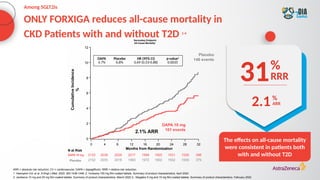
DAPA 10 mg
Placebo
DAPA 10 mg
101 events
Placebo
146 events
Cumulative
Incidence
%
N at Risk
2152 2039 2029 2017 1998 1925 1531 1028 398
2152 2035 2018 1993 1972 1902 1502 1009 379
0
2
4
6
8
10
12
0 4 8 12 16 20 24 28 32
Months from Randomization
DAPA
4.7%
Placebo
6.8%
HR (95% CI)
0.69 (0.53-0.88)
p-value2
0.0035
2.1% ARR
Secondary Endpoint
All-Cause Mortality1
Among SGLT2is
ONLY FORXIGA reduces all-cause mortality in
CKD Patients with and without T2D 1-4
The effects on all-cause mortality
were consistent in patients both
with and without T2D
2.1%
ARR
31RRR
%
ARR = absolute risk reduction; CV = cardiovascular; DAPA = dapagliflozin; HR = hazard ratio; RRR = relative risk reduction.
1. Heerspink HJL et al. N Engl J Med. 2020; 383:1436-1446; 2. Heerspink HJL. Presented at: ESC Congress – The Digital Experience; August 29 – September 1, 2020.
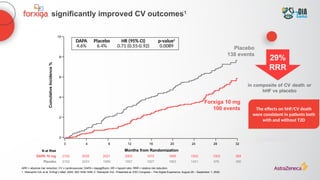
Forxiga 10 mg
100 events
Placebo
138 events
2152 2035 2021 2003 1975 1895 1502 1003 384
2152 2023 1989 1957 1927 1853 1451 976 360
DAPA 10 mg
Placebo
0
2
4
6
8
10
0 4 8 12 16 20 24 28 32
Months from Randomization
Cumulative
Incidence
%
N at Risk
DAPA
4.6%
Placebo
6.4%
HR (95% CI)
0.71 (0.55-0.92)
p-value2
0.0089
significantly improved CV outcomes1
29%​
RRR
in composite of CV death or
hHF vs placebo
The effects on hHF/CV death
were consistent in patients both
with and without T2D
*Primary composite endpoint of ≥50% sustained decline in eGFR, reaching ESKD, and renal or CV death. ESKD defined as the need for maintenance dialysis (peritoneal or haemodialysis) for at least 28 days and renal transplantation or sustained eGFR <15 mL/min/1.73m2
for at least 28 days1,3
; †
there was no significant interaction of the effect on the primary composite endpoint by diabetes status
(p for interaction = 0.24).2
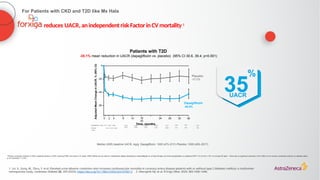
reduces UACR,anindependentriskFactorinCVmortality 1
For Patients with CKD and T2D like Ms Hala
Patients with T2D
-35.1% mean reduction in UACR (dapagliflozin vs. placebo) (95% CI 30.6, 39.4; p<0.001)
Dapagliflozin 1455 1411 1387 1398 1339 1288 1262 1206 1127 826 482 159
Placebo 1451 1415 1383
1368
1297 1258 1237 1182 1088 791 446 158
Adjusted
Mean
Change
in
UACR,
%
(95%
CI)
0
60
-40
-20
0 4 8 12 16
20
Time, months
24 28 32
2 36
Dapagliflozin
-46.6%
Placebo
-17.7%
Median (IQR) baseline UACR, mg/g Dapagliflozin: 1025 (473–2111) Placebo: 1005 (493–2017)
UACR
1. Lin, X., Song, W., Zhou, Y. et al. Elevated urine albumin creatinine ratio increases cardiovascular mortality in coronary artery disease patients with or without type 2 diabetes mellitus: a multicenter
retrospective study. Cardiovasc Diabetol 22, 203 (2023). https://doi.org/10.1186/s12933-023-01907-3 2. Heerspink HJL et al. N Engl J Med. 2020; 383:1436-1446;
35
%
33
How can we integrate evidence from &
to help prevent onset and progression of CKD in T2D?
34
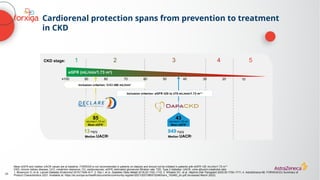
Inclusion criterion: CrCl ≥60 mL/min1
949 mg/g
Median UACR3
13 mg/g
Median UACR2
1 2 3 4 5
CKD stage:
≥100 90 80 70 60 50 40 30 20
eGFR (mL/min/1.73 m2
)
10
Inclusion criterion: eGFR ≥25 to ≤75 mL/min/1.73 m2 3
85
mL/min/1.73 m2
Mean eGFR1
43
mL/min/1.73 m2
Mean eGFR3
Mean eGFR and median UACR values are at baseline. FORXIGA is not recommended in patients on dialysis and should not be initiated in patients with eGFR <25 mL/min/1.73 m2 4
CKD, chronic kidney disease; CrCl, creatinine clearance; CV, cardiovascular; eGFR, estimated glomerular filtration rate; T2D, Type 2 diabetes; UACR, urine albumin:creatinine ratio
1. Mosenzon O, et al. Lancet Diabetes Endocrinol 2019;7:606–617; 2. Raz I, et al. Diabetes Obes Metab 2018;20:1102–1110; 3. Wheeler DC, et al. Nephrol Dial Transplant 2020;35:1700–1711; 4. AstraZeneca AB. FORXIGA EU Summary of
Product Characteristics 2021. Available at: https://ec.europa.eu/health/documents/community-register/2021/20210805152483/anx_152483_en.pdf (Accessed March 2022)
Cardiorenal protection spans from prevention to treatment
in CKD
35
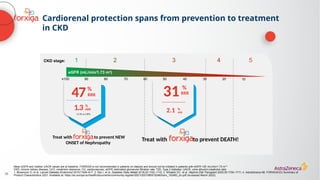
1 2 3 4 5
CKD stage:
≥100 90 80 70 60 50 40 30 20
eGFR (mL/min/1.73 m2
)
10
Mean eGFR and median UACR values are at baseline. FORXIGA is not recommended in patients on dialysis and should not be initiated in patients with eGFR <25 mL/min/1.73 m2 4
CKD, chronic kidney disease; CrCl, creatinine clearance; CV, cardiovascular; eGFR, estimated glomerular filtration rate; T2D, Type 2 diabetes; UACR, urine albumin:creatinine ratio
1. Mosenzon O, et al. Lancet Diabetes Endocrinol 2019;7:606–617; 2. Raz I, et al. Diabetes Obes Metab 2018;20:1102–1110; 3. Wheeler DC, et al. Nephrol Dial Transplant 2020;35:1700–1711; 4. AstraZeneca AB. FORXIGA EU Summary of
Product Characteristics 2021. Available at: https://ec.europa.eu/health/documents/community-register/2021/20210805152483/anx_152483_en.pdf (Accessed March 2022)
Cardiorenal protection spans from prevention to treatment
in CKD
(1.5% vs 2.8%)
1.3 %
ARR
47RRR
%
Treat with to prevent NEW
ONSET of Nephropathy
2.1 %
ARR
31RRR
%
Treat with to prevent DEATH!
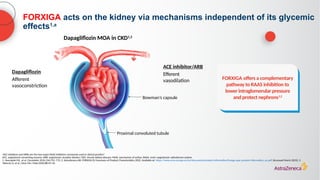
FORXIGA acts on the kidney via mechanisms independent of its glycemic
effects1,a
a
ACE inhibitors and ARBs are the two major RAAS inhibitors commonly used in clinical practice3
ACE, angiotensin-converting enzyme; ARB, angiotensin receptor blocker; CKD, chronic kidney disease; MOA, mechanism of action; RAAS, renin–angiotensin–aldosterone system
1. Heerspink HJL, et al. Circulation 2016;134:752–772; 2. AstraZeneca AB. FORXIGA EU Summary of Product Characteristics 2022. Available at: https://www.ema.europa.eu/en/documents/product-information/forxiga-epar-product-information_en.pdf (Accessed March 2023); 3.
Taliercio JJ, et al. Cleve Clin J Med 2020;88:59–63
FORXIGA offers a complementary
pathway to RAAS inhibition to
lower intraglomerular pressure
and protect nephrons1,2
Dapagliflozin
Afferent
vasoconstriction
ACE inhibitor/ARB
Efferent
vasodilation
Bowman’s capsule
Proximal convoluted tubule
Dapagliflozin MOA in CKD1,2
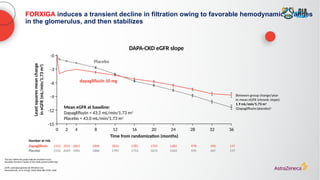
FORXIGA induces a transient decline in filtration owing to favorable hemodynamic changes
in the glomerulus, and then stabilizes
The bars within the graph indicate standard errors
a
Excludes the first 2 weeks of the study period (eGFR dip)
eGFR, estimated glomerular filtration rate
Heerspink HJL, et al. N Engl J Med 2020;383:1436–1446
Between-group change/year
in mean eGFR (chronic slope):
1.9 mL/min/1.73 m2
(Dapagliflozin/placebo)a
Dapagliflozin 2152 2031 2001 1896 1832 1785 1705 1482 978 496 157
Placebo 2152 2029 1981 1866 1795 1753 1672 1443 935 447 157
Number at risk
Mean eGFR at baseline:
Dapagliflozin = 43.2 mL/min/1.73 m2
Placebo = 43.0 mL/min/1.73 m2
Placebo
dapagliflozin 10 mg
0 4
2 28 36
8 12 16 20 24 32
-0
-3
-6
-9
-12
-15
Time from randomization (months)
Least
squares
mean
change
in
eGFR
(mL/min/1.73
m
2
)
DAPA-CKD eGFR slope
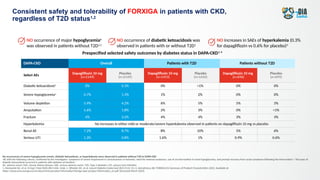
Consistent safety and tolerability of FORXIGA in patients with CKD,
regardless of T2D status1,2
No occurrences of severe hypoglycemic events, diabetic ketoacidosis, or hyperkalemia were observed in patients without T2D in DAPA-CKD
a
AE with the following criteria, confirmed by the investigator: symptoms of severe impairment in consciousness or behavior, need for external assistance, use of an intervention to treat hypoglycemia, and prompt recovery from acute symptoms following the intervention 2
; b
All cases of
diabetic ketoacidosis occurred in patients with diabetes at baseline1
AE, adverse event; CKD, chronic kidney disease; SAE, serious adverse event; T2D, Type 2 diabetes; UTI, urinary tract infection
1. Heerspink HJL, et al. N Engl J Med 2020;383:1436–1446; 2. Wheeler DC, et al. Lancet Diabetes Endocrinol 2021;9:22–31; 3. AstraZeneca AB. FORXIGA EU Summary of Product Characteristics 2022. Available at:
https://www.ema.europa.eu/en/documents/product-information/forxiga-epar-product-information_en.pdf (Accessed March 2023)
NO occurrence of major hypoglycemiaa
was observed in patients without T2D1,2
NO occurrence of diabetic ketoacidosis was
observed in patients with or without T2D1
NO increases in SAEs of hyperkalemia (0.3%
for dapagliflozin vs 0.6% for placebo)3
Prespecified selected safety outcomes by diabetes status in DAPA-CKD1–3
DAPA-CKD Overall Patients with T2D Patients without T2D
Select AEs
Dapagliflozin 10 mg
(n=2149)
Placebo
(n=2149)
Dapagliflozin 10 mg
(n=1453)
Placebo
(n=1450)
Dapagliflozin 10 mg
(n=696)
Placebo
(n=699)
Diabetic ketoacidosisb
0% 0.1% 0% <1% 0% 0%
Severe hypoglycemiaa
0.7% 1.3% 1% 2% 0% 0%
Volume depletion 5.9% 4.2% 6% 5% 5% 3%
Amputation 1.6% 1.8% 2% 3% 0% <1%
Fracture 4% 3.2% 4% 4% 3% 3%
Hyperkalemia No increases in either mild or moderate/severe hyperkalemia observed in patients on dapagliflozin 10 mg vs placebo
Renal AE 7.2% 8.7% 8% 10% 5% 6%
Serious UTI 1.3% 0.8% 1.6% 1% 0.9% 0.6%
Select AEs
DECLARE-TIMI 58
(CVOT in T2D)1 DAPA-HF (HFrEF)2
DAPA-CKD3
DELIVER4
Dapagliflozin
10mg
(n=8574)
Placebo
(n=8569)
Dapagliflozin
10mg
(n=2368)
Placebo
(n=2368)
Dapagliflozin 10
mg
(n=2149)
Placebo
(n=2149)
Dapagliflozin
10mg
(N=3131)
Placebo (n=3127)
Diabetic
ketoacidosis
0.3% 0.1% 0.1% 0.0% 0.0% <0.1% 0.1% 0.0%
Severe
hypoglycemiaa 0.7% 1.0% 0.2% 0.2% 0.7% 1.3% 0.2% 0.2%
Volume depletion 2.5% 2.4% 7.5% 6.8% 5.9% 4.2% 1.3% 1.0%
Amputation 1.4% 1.3% 0.5% 0.5% 1.6% 1.8% 0.6% 0.8%
Fracture 5.3% 5.1% 2.1% 2.1% 4.0% 3.2% TBD TBD
Hyperkalemia No hyperkalemia (not listed in SmPC)
No increase in either mild or
moderate/severe hypokalemia observed
TBD TBD
Renal AE 1.5%b
2.0%b
6.5% 7.2% 7.2% 8.7% 2.3% 2.5%
Serious UTI 0.9% 1.3% 0.5% 0.7% 0.9% 0.7% TBD TBD
FORXIGA has demonstrated a consistent safety profile in >32,000 patients across
DECLARE-TIMI 58, DAPA-HF, DAPA-CKD, and DELIVER1–4
a
Severe hypoglycemia was defined in DAPA-CKD and DELIVER as hypoglycemia with the following criteria, confirmed by the investigator: symptoms of severe impairment in consciousness or behavior, need for external assistance, use of an intervention to treat hypoglycemia, and
prompt recovery of acute symptoms following the intervention.2,4,5
Severe hypoglycemia was defined in DECLARE and DAPA-HF as hypoglycemia requiring the assistance of another person to actively administer carbohydrates or glucagon or to take other corrective action. 1,2
All cases of
major hypoglycemia in DAPA-CKD and DAPA-HF occurred in patients with diabetes at baseline 2,3
; b
Acute kidney injury1
AE, adverse event; CVOT, cardiovascular outcomes trial; HFrEF, heart failure with reduced ejection fraction; SmPC, Summary of Product Characteristics; T2D, Type 2 diabetes; TBD, to be determined; UTI, urinary tract infection
1. Wiviott SD, et al. N Engl J Med 2019;380:347–357; 2. McMurray J, et al. N Engl J Med 2019;381:1995–2008; 3. Heerspink HJL, et al. N Engl J Med 2020;383:1436–1446; 4. Solomon S, et al. N Engl J Med 2022;387:1089–1098;
5. AstraZeneca UK Limited. FORXIGA Summary of Product Characteristics [YEAR]. Available at: [Placeholder for link subject to final approval by the European Medical Agency]; 6. AstraZeneca Pharmaceuticals LP. Data on File
It is estimated that >23 million patients were treated with FORXIGA and XIGDUO across indications throughout 20236
Prespecified selected safety outcomes across dapagliflozin clinical trials
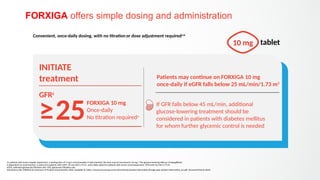
FORXIGA offers simple dosing and administration
a
In patients with severe hepatic impairment, a starting dose of 5 mg is recommended. If well tolerated, the dose may be increased to 10 mg1
; b
The glucose-lowering efficacy of dapagliflozin
is dependent on renal function, is reduced in patients with eGFR <45 mL/min/1.73 m2
, and is likely absent in patients with severe renal impairment; c
GFR units mL/min/1.73 m2
eGFR, estimated glomerular filtration rate; GFR, glomerular filtration rate
AstraZeneca AB. FORXIGA EU Summary of Product Characteristics 2022. Available at: https://www.ema.europa.eu/en/documents/product-information/forxiga-epar-product-information_en.pdf (Accessed March 2023)
Convenient, once-daily dosing, with no titration or dose adjustment requireda,b
10 mg tablet
≥25
INITIATE
treatment
FORXIGA 10 mg
Once-daily
No titration requireda
If GFR falls below 45 mL/min, additional
glucose-lowering treatment should be
considered in patients with diabetes mellitus
for whom further glycemic control is needed
Patients may continue on FORXIGA 10 mg
once-daily if eGFR falls below 25 mL/min/1.73 m2
GFRc
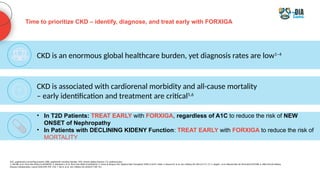
Time to prioritize CKD – identify, diagnose, and treat early with FORXIGA
ACE, angiotensin-converting enzyme; ARB, angiotensin receptor blocker; CKD, chronic kidney disease; CV, cardiovascular
1. Hill NR, et al. PLoS One 2016;11:e0158765; 2. Elshahat S, et al. PLoS One 2020;15:e0230512; 3. Sesso R, Belasco AG. Nephrol Dial Transplant 1996;11:2417–2420; 4. Ravera M, et al. Am J Kidney Dis 2011;57:71–77; 5. Segall L, et al. Biomed Res Int 2014;2014:937398; 6. GBD Chronic Kidney
Disease Collaboration. Lancet 2020;395:709–733; 7. Xie X, et al. Am J Kidney Dis 2016;67:728–741
CKD is an enormous global healthcare burden, yet diagnosis rates are low1–4
CKD is associated with cardiorenal morbidity and all-cause mortality
– early identification and treatment are critical5,6
• In T2D Patients: TREAT EARLY with FORXIGA, regardless of A1C to reduce the risk of NEW
ONSET of Nephropathy
• In Patients with DECLINING KIDENY Function: TREAT EARLY with FORXIGA to reduce the risk of
MORTALITY
42
Post-event Question:
Do you agree that your controlled T2D patients still at risk to progress to
renal disease?
A
Yes
B
No
C
Not Sure
43
Post-event Question:
A
Yes
B
No
C
Not Sure
Do you consider prescribing Forxiga to your T2D patients with
controlled A1C to protect their kidneys?
For Reporting Adverse events and/or Product Quality Complains:
• Website: https://contactazmedical.astrazeneca.com
• E-mail: Patientsafety-azgulf@astrazeneca.com
•
• Call AstraZeneca FZ LLC land line : +97143624888.
For Medical information Enquires :
• Website: https://contactazmedical.astrazeneca.com
• E-mail : gulf-medicalinfo@astrazeneca.com
•
• Call AstraZeneca FZ LLC land line : +97143624888
Reporting Adverse Events / Medical Information
Requests
For Adverse Events:
Please contact AZ Patient Safety Team through any of the channels below:
+966 112249235
eventsksa.adverse@astrazeneca.com
For Medical Information Requests:
Please contact AZ Medical Information Team through any of the channels below:
medinfo-ksa@astrazeneca.com
Presentation T2D_W_Declining_Kidney_Function[1].pptx

Presentation T2D_W_Declining_Kidney_Function[1].pptx

  • 1.
    DiaTune A PATIENT CASE Discussion BY:Dr Ratan Kumar MRCP-UK , Dip Diabetes -Scotland Approval Code: Z5-8092 Expiry Date: March 2026
  • 2.
    AstraZeneca abides bythe IFPMA Code of Pharmaceutical Marketing Practices, the Middle East & Africa LAWG Code of Practices and AstraZeneca Global Policies, and as such will not engage in the promotion of unregistered products or unapproved indications. Presentations are intended for educational purposes only and do not replace independent professional judgment. Statements of fact and opinions expressed are those of the speakers individually and, unless expressly stated to the contrary, are not the opinion or position of AstraZeneca. AstraZeneca does not endorse or approve, and assumes no responsibility for, the content, accuracy or completeness of the information presented. Please refer to the appropriate approved Product Information before prescribing any agents mentioned in this presentation. Disclaime r
  • 3.
    3 Pre-event Question: Do youagree that your controlled T2D patients still at risk to progress to renal disease? A Yes B No C Not Sure
  • 4.
    4 Pre-event Question: A Yes B No C Not Sure Doyou consider prescribing SGLT2is to your T2D patients with controlled A1C to protect their kidneys?
  • 5.
    Case Presentatio n Ms. Hala is45 years old Diagnosed with T2D 7 Years Ago She has family history of diabetes and CKD. Married and has 2 kids. She is not a smoker and sleeps 5 hours every night. She is drowsy sometimes during the day and is dozing infrequently while driving. T2DM: Type 2 Diabetes Mellitus; CAD: Coronary Artery Disease. Ms. Hala Low-Risk Diabetic Patient?
  • 6.
    Ms. Hala feels sheis in control of her Diabetes, but is this the case? Lab Findings A1C 6.5% FBG 119 mg/dL and PP 140 mg/dL TC 235 mg/dL 6.1 mmol/l TG 225 mg/dL LDL-Cholesterol 165 mg/dL 4.2 mmo/l ALT 35 IU AST 44 IU HDL-Cholesterol 34 mg/dL UACR 30 mcg/mg Creatinine 1.3 mg/dL Serum uric acid 7.0 mg/dL GFR 86 mL/min/1.73m2 Calculated BUN 18 mg/dL
  • 7.
    T2DM: Type 2Diabetes Mellitus; Ms. Hala Low-Risk Diabetic Patient? She is adherent to her medication schedule Current Medications: She is on LINAGLIPTIN & METFORMIN daily Rosuvastatin 10 mg once daily Orlistat 120 mg thrice daily Multivitamins
  • 8.
    8 Pre-event Question: A Yes B No C Not Sure ConsideringMs. Hala’s full clinical profile & her family history, would you consider her at risk of developing CKD?
  • 9.
    Ms. Hala feelsshe is in control of her T2D … A1C 6.5% Why would her Kidneys be of concern? GFR 86 mL/min/1.73m2 Calculated UACR 30 mcg/mg A1C 6.5% GFR 86 mL/min/1.73m2
  • 10.
    Even with OptimalGlycaemic Management, Patients with T2D remain at risk of Cardiorenal complications 1. Fioretto P et al. Nat Rev Endocrinol. 2010;6:19–25. 3.8 7.8 13.3 0 10 20 30 40 50 60 24 39 46 10 20 25 Residual risk in patients randomized to multifactorial intensive medical therapy¹ Conventional treatment Intensive treatment Follow-up (years) Proportion of patients with nephropathy (%) Residual risk RR: 0.44 (95% CI: 0.25–0.77) p=0.004 Intensive Systolic BP (mm Hg) <160 <140b Diastolic BP (mm Hg) <95 <85 HbA1c (%) <7.5 <6.5c Triglycerides (mmol/L) <2.2 <1.7d Total cholesterol (mmol/L) <6.5 <5.0e HDL cholesterol (mmol/L) >0.9 >1.1 ACE inhibitor irrespective No Yes of BP Aspirin in patients with Yes Yes known ischemia Aspirin in patients with peripheral vascular No Yes disease Conventional
  • 11.
    Diabetes is astrong risk factor for CKD and increases the risk of progression to ESKD1 a CKD was defined as eGFR of 15–59 mL/min/1.73 m2 (stages 3–4); b HRs were adjusted for age, sex, race, smoking, history of CVD, serum total cholesterol concentration, body mass index, and albuminuria (log urine albumin:creatinine ratio, log urine protein:creatinine ratio, or categorical dipstick proteinuria [negative, trace, 1+, ≥2+]);c Blue and purple circles denote P<0.05 as compared with the reference (diamond); d eGFR 50 mL/min/1.73 m2 used as the reference point (diamond) in diabetes and no diabetes groups CKD, chronic kidney disease; eGFR, estimated glomerular filtration rate; ESKD, end stage kidney disease; T2D, Type 2 diabetes 1. Murphy D, et al. Ann Intern Med. 2016;165:473–481; 2. Fox CS, et al. Lancet 2012;380:1662–1673 No diabetes Diabetes 0 10 20 30 40 50 5.3 19.1 Proportion of patients (%) Prevalence of CKD is more than three times higher in patients with diabetes1 Prevalence of CKD stages 3–41,a 2011–2012 Risk of ESKD according to baseline eGFR in individuals with and without diabetes2,b–d Diabetes, 95% CI No diabetes, 95% CI Adjusted hazard ratio eGFR (mL/min/1.73 m2 ) 15 30 45 60 0 0.5 64 32 16 8 4 2 1 Risk of ESKD is higher in patients with diabetes2
  • 12.
    NSAIDS, non-steroidal anti-inflammatorydrugs 1. National Kidney Foundation, https://nkfs.org/kidney-failure/are-you-at-risk-checklist/ accessed on 29th March 2021 2. KDIGO 2020 Clinical Practice Guideline for Diabetes Management in Chronic Kidney Disease. That is why KDIGO recommends screening diabetic & Hypertensive patients regularly for CKD1,2 Diabetes High Blood Pressure Obesity Smoking Long term use of NSAIDs Family history of kidney disease
  • 13.
    13 To Diagnose andidentify patients with declining Kidney Function, you need both eGFR & UACR CKD, chronic kidney disease; (e)GFR, (estimated) glomerular filtration rate; PCP, primary care provider; UACR, urine albumin:creatinine ratio 1. National Kidney Foundation. Available at: https://www.kidney.org/sites/default/files/CKDinform%20-%20Module%201%20-%20Core%20Slides%2011.16.15.v2.pdf (Accessed September 2021); 2. Kidney Disease: Improving Global Outcomes CKD Work Group. Kidney Int 2013;3(Suppl. 1):1–150 Diagnosis of CKD requires two abnormal measurements >3 months apart2 Kidney function impairment Decreased GFR • GFR <60 mL/min/1.73 m2 (stages 3a–5) Kidney damage Albuminuria • UACR ≥30 mg/g You can identify patients with early-stage CKD by using readily available, simple, and inexpensive tests to detect kidney function and damage in their patients
  • 14.
    G1 G2 G3a G3b G4 G5 A1 A2 A3 ≥90 60-89 45-59 30-44 15-29 <15 Lowrisk (if no other markers of kidney disease, no CKD) Moderately increased risk High risk Very high risk Prognosis of CKD by GFR and albuminuria categories: KDIGO 2012 Normal or high Mildly decreased Mildly to moderately decreased Moderately to severely decreased Severely decreased Kidney failure Normal to mildly increased <30 mg/g <3 mg/mmol Moderately increased 30-300 mg/g 3-30 mg/mmol Severely increased >300 mg/g >30 mg/mmol Persistent albuminuria categories Description and range Progressing Kidney Damage (UACR) Declining Kidney Function (eGFR) GFR categories (mL/min per 1.73m 2 ) Description and range To Diagnose and identify patients with declining Kidney Function, you need both eGFR & UACR A diagnosis of stage 1 or 2 cannot be made without UACR testing¹ 50% loss of kidney function or more at stage 3¹ CKD, chronic kidney disease; eGFR, estimated glomerular filteration rate GFR, glomerular filteration rate; KDIGO, Kidney Disease Improving Global Outcomes; UACR, urine albumin-creatinine ratio. Reference: 1. National Kidney Foundation, https://nkfs.org/kidney-failure/are-you-at-risk-checklist/ accessed on 29th March 2023
  • 15.
    15 Would You considerMs Hala as a CKD Patient? A Yes B No C I’m not sure
  • 16.
    G1 G2 G3a G3b G4 G5 A1 A2 A3 ≥90 60-89 45-59 30-44 15-29 <15 Prognosisof CKD by GFR and albuminuria categories: KDIGO 2012 Normal or high Mildly decreased Mildly to moderately decreased Moderately to severely decreased Severely decreased Kidney failure Normal to mildly increased <30 mg/g <3 mg/mmol Moderately increased 30-300 mg/g 3-30 mg/mmol Severely increased >300 mg/g >30 mg/mmol Persistent albuminuria categories Description and range Progressing Kidney Damage (UACR) Declining Kidney Function (eGFR) GFR categories (mL/min per 1.73m 2 ) Description and range Ms Hala is a Stage II CKD Patient! CKD, chronic kidney disease; eGFR, estimated glomerular filteration rate GFR, glomerular filteration rate; KDIGO, Kidney Disease Improving Global Outcomes; UACR, urine albumin-creatinine ratio. Reference: 1. National Kidney Foundation, https://nkfs.org/kidney-failure/are-you-at-risk-checklist/ accessed on 29th March 2023
  • 17.
    ≥60 45–59 30–4415–29 <15 0 2 4 6 8 10 12 14 16 0.8 1.1 4.8 11.4 14.1 Mortality eGFR (mL/min/1.73 m2) Age-standardized rate of death (per 100 person-years) ≥60 45–59 30–44 15–29 <15 0 20 40 60 80 100 120 140 160 13.5 17.2 45.3 86.8 144.6 Hospitalization rates eGFR (mL/min/1.73 m2) Age-standardized rate of hospitalization (per 100 person-years) ≥60 45–59 30–44 15–29 <15 0 5 10 15 20 25 30 35 40 2.1 3.7 11.3 21.8 36.6 CV eventsa eGFR (mL/min/1.73 m2) Age-standardized rate of CV events (per 100 person-years) CKD accounts for 23% of all health care insurance expenditure a CV event defined as hospitalization for coronary heart disease, heart failure, ischaemic stroke and peripheral artery disease CKD, chronic kidney disease; CV, cardiovascular; eGFR, estimated glomerular filtration rate Go AS et al. N Engl J Med. 2004;351:1296–305; 2. USRDS. USRDS Annual Data Report 2018, Volume 1, Chapter 7. https://www.usrds.org/2018/view/v1_07.aspx (Accessed 3 Jan 2020) For patients like Ms Hala, declining renal function increases mortality and hospitalization rates1
  • 18.
    ADA 2022: TheFour-Pillar Approach The ADA has modified its recommendations on how to manage diabetes-related complications, including heart failure, chronic kidney disease (CKD), obesity, retinopathy, and more. The 2022 Standards of Medical Care in Diabetes
  • 19.
    19 2024 ADA Standardsof Care in Diabetes Use of Glucose-Lowering Medications in the Management of T2D a In people with HF, CKD, established CVD or multiple risk factors for CVD, the decision to use a GLP-1 RA or SGLT2i with proven benefit should be independent of background use of metformin; b A strong recommendation is warranted for people with CVD and a weaker recommendation for those with indicators of high CV risk. Moreover, a higher absolute risk reduction and thus lower numbers needed to treat are seen at higher levels of baseline risk and should be factored into the shared decision-making process; c For GLP-1 RA, CVOTs demonstrate their efficacy in reducing composite MACE, CV death, all-cause mortality, MI, stroke, and renal endpoints in individuals with T2D with established/high risk of CVD; d For SGLT2i, CV/renal outcomes trials demonstrate their efficacy in reducing the risk of composite MACE, CV death, all-cause mortality, MI, hHF, and renal outcomes in individuals with T2D with established/high risk of CVD; e Low-dose TZD may be better tolerated and similarly effective. Adapted from American Diabetes Association. Diabetes Care. 2024;47(suppl 1):S1-S321. Healthy Lifestyle Behaviors; Diabetes Self-Management Education and Support (DSMES); Social Determinants of Health (SDOH) Goal: Achievement and Maintenance of Glycemic and Weight Management Goals To avoid therapeutic inertia reassess and modify treatment regularly (3-6 months) Efficacy for weight loss Neutral: DPP-4i, Metformin Intermediate: GLP-1 RA (not listed above), SGLT2i High: Dulaglutide, Liraglutide Very High: Semaglutide, Tirzepatide In general, higher efficacy approaches have greater likelihood of achieving glycemic goals Efficacy for glucose lowering Intermediate: DPP-4i High: GLP-1 RA (not listed above), Metformin, SGLT2i, Sulfonylurea, TZD Very High: Dulaglutide (high dose), Semaglutide, Tirzepatide Insulin Combination Oral, Combination Injectable (GLP-1 RA/Insulin) Glycemic Management: Choose approaches that provide the efficacy to achieve goals: Metformin OR Agent(s) including COMBINATION therapy that provide adequate EFFICACY to achieve and maintain treatment goals Prioritize avoidance of hypoglycemia in high-risk individuals Achievement and Maintenance of Weight Management Goals: Set individualized weight management goals General lifestyle advice: medical, nutrition therapy/eating patterns/physical activity Intensive evidence-based structural weight management program Consider medication for weight loss Consider metabolic surgery When choosing glucose-lowering therapies: Consider regimen with high-to-very-high dual glucose and weight efficacy Identify barriers to goals: • Consider DSMES referral to support self-efficacy in achievement of goals • Consider technology (e.g., diagnostic CGM) to identify therapeutic gaps and tailor therapy • Identify and address SDOH that impact achievement of goals If A1C above target If additional cardiorenal risk reduction or glycemic lowering needed +HF SGLT2id with proven HF benefit in this population +ASCVDb Defined differently across CVOTs but all included individuals with established CVD (e.g., MI, stroke, any revascularization procedure). Variability included: conditions such as TIA, UA, amputation, symptomatic or asymptomatic CAD. +Indicators of high risk While definitions vary, most comprise ≥55 years of age with 2 or more additional risk factors (including obesity, HTN, smoking, dyslipidemia, or albuminuria) +CKD (on maximally tolerated dose of ACEi/ARB) GLP-1 RA with proven CVD benefit if SGLT2i not tolerated or contraindicated SGLT2id with primary evidence of reducing CKD progression Use SGLT2i in people with an eGFR ≥20 mL/min/1.73 m2 ; once initiated should be continued until initiation of dialysis or transplantation PREFERABLY OR If A1C above target, for patients on SGLT2i, consider incorporating a GLP-1 RA and vice versa +ASCVD/INDICATORS of HIGH RISK GLP-1 RAc with proven CVD benefit SGLT2id with proven CVD benefit EITHER/ OR • For patients on a GLP-1 RA, consider adding SGLT2i with proven CVD benefit and vice versa • TZDe +HF Current or prior symptoms with HF with documented HFrEF or HFpEF +CKD eGFR <60 mL/min/1.73 m2 OR albuminuria (ACR ≥30 mg/g). These measurements may vary over time; thus, a repeat measure is required to document CKD. If A1C above target Goal: Cardiorenal Risk Reduction in High-Risk Individuals with T2D (in addition to comprehensive CV risk management)a
  • 20.
    How can youprotect Ms. Hala from a similar fate like her Mother?
  • 21.
    Guidance from nephrologyand primary care organizations recommend treating patients like Ms Hala in primary care Hypothetical patient profile; Table adapted from de Boer et al. 20223 aAlternative units for these three UACR categories include: <3 mg/mmol, 3–29 mg/mmol, and ≥30 mg/mmol2; bStable disease or no CKD in absence of other markers of kidney damage. Requires measurements once a year or earlier in case of new symptoms/risk factors; cRequires measurements at least once a year; dRequires measurements at least twice a year; eTreat in agreement with a nephrologist; fPatients in the light red stages require measurements at least three times a year and patients in dark red require the closest monitoring, at least four times a year (every 1–3 months) CKD, chronic kidney disease, eGFR, estimated glomerular filtration rate; GFR, glomerular filtration rate; UACR, urine albumin:creatinine ratio 1. CKD: Early Identification and intervention in primary care. Available at: https://www.theisn.org/wp-content/uploads/2022/11/One-Page-Print-Out.pdf (Accessed March 2023); 3. Boer I, et al. Diabetes Care . 2022;45:3075-3090 Prognosis of CKD by GFR and albuminuria categories Persistent albuminuria categoriesa A1 A2 A3 Normal to mildly increased <30 mg/g Moderately increased 30–299 mg/g Severely increased ≥300 mg/g GFR categories (mL/min/1.73 m 2 ) G1 Normal or high ≥90 Monitor Treat Treat and consult G2 Mildly decreased 60–89 Monitor Treat Treat and consult G3a Mildly to moderately decreased 45–59 Treat Treat Treat and consult G3b Moderately to severely decreased 30–44 Treat Treat and consult Treat and consult G4 Severely decreased 15–29 Treat and consult Treat and consult Treat and consult G5 Kidney failure <15 Treat and consult Treat and consult Treat and consult Declining kidney function (eGFR) Progressing kidney damage (UACR) Low riskb Moderately increased riskc High riskd Very high riske,f Risk of progression eGFR 85 mL/min/1.73 m2 UACR 30 mg/g
  • 22.
    KDIGO 2022: SGLT2iare recommended as part of the COMPREHENSIVE CARE management for patients with T2D 1. KDIGO 2022 Clinical Practice Guideline for Diabetes Management in Chronic Kidney Disease. Available at: https://www.kidney-international.org Holistic approach for improving outcomes in patients with diabetes and chronic kidney disease. *Angiotensin-converting ezyme inhibitor (ACEi) or angiotensin II receptor blocker (ARB) should be first-line therapy for hypertension (HTN) when albuminuria is present, otherwise dihydropyridine calcium channel blocker (CCB) or diuretic can also be considered; all 3 classes are often needed to attain blood pressure (BP) targets. † Finerenone is currently the only nonsteroidal mineralocorticoid receptor antagonist (MRA) with proven clinical kidney and cardiovascular benefits. Icons presented indicate the following benefits: blood pressure cuff ¼ blood pressure–lowering; glucometer ¼ glucose-lowering; heart ¼ heart protection; kidney ¼ kidney protection; scale, weight management; ACR, albumin-creatinine ratio; ASCVD, atherosclerotic cardiovascular disease; CVD, cardiovascular disease; eGFR, estimated glomerular filtration rate; GLP-1 RA, glucagon-like peptide1 receptor agonist; PCSK9i, proprotein convertase subtilisin/kexin type 9 inhibitor; RAS, renin-angiotensin system; SGLT2i, sodium- glucose cotransporter-2 inhibitor; T1D, type 1 diabetes; T2D, type 2 diabetes.
  • 23.
    GFR, glomerular filtrationrate; T2DM, type 2 diabetes mellitus, UACR: Urinary albumin creatinine ratio. GFR 86 mL/min/1.73m2 Calculated A1c 6.5% A Empagliflozin B Dapagliflozin C Canagliflozi n Which SGLT2i would you initiate in patients like Ms. Hala to protect her Kidneys from further decline? UACR 30 mcg/mg
  • 24.
    The cardiorenal benefitsof FORXIGA were initially observed in patients with early renal disease and T2D in DECLARE TIMI 58 ‑ a Baseline UACR data were missing from 316 (2%) patients; b Nominally significant, prespecified exploratory renal composite outcome of a sustained decrease of ≥40% in eGFR to <60 mL/min/1.73 m2 , new ESKD, or death from kidney causes; c hHF alone was a separate, nominally significant exploratory endpoint in DECLARE. The primary endpoint composite of CV death/hHF (17% RRR [0.9% ARR]) was driven by hHF ARR, absolute risk reduction; CI, confidence interval; CV, cardiovascular; eGFR, estimated glomerular filtration rate; ESKD, end-stage kidney disease; hHF, hospitalization for heart failure; HR, hazard ratio; RRR, relative risk reduction; T2D, Type 2 diabetes; UACR, urine albumin:creatinine ratio 1. Wiviott SD, et al. N Engl J Med 2019;380:347–357; 2. Raz I, et al. Diabetes Obes Metab 2018;20:1102–1110 N=17,1601 Renal-specific composite outcome1,b (1.5% vs 2.8%) 1.3% ARR 47RRR % <30 (68% of patients) 30–≤300 (23% of patients) >300 (7% of patients) UACR2,a (mg/g)
  • 25.
    ≥100 90 8070 60 50 40 30 20 eGFR (mL/min/1.73 m2 ) 10 17,160 T2D patients aged ≥40years old1 CV Risk factor (n=10,186) 60% Established CVD (n=6,974)) 40% 4304 CKD Patients Average eGFR (85.2 mL/min/1.73m2 ) % 32 without T2D 68 with T2D % eGFR range: 75 to 25 mL/min/1.73m2 was studied in a broad patient population across the eGFR range 1,2 1. Wiviott SD et al. N Engl J Med. 2019; 380(4):347–57 2.Heerspink HJL et al. N Engl J Med. 2020;383(15):1436–1446.2 2 1
  • 26.
    The landmark DAPA-CKDtrial included a broad patient population1 a Eligibility for this study: eGFR of 25 to 75 mL/min/1.73 m2 and a UACR of 200 to 5000 mg/g. Stable dose of an ACE inhibitor or ARB for at least 4 weeks before screening, if not medically contraindicated. Patients with T1D, polycystic kidney disease, lupus nephritis, or antineutrophil cytoplasmic antibody-associated vasculitis were excluded ACE, angiotensin-converting enzyme; ARB, angiotensin receptor blocker; CKD, chronic kidney disease; DAPA, dapagliflozin; eGFR, estimated glomerular filtration rate; SGLT2 sodium–glucose co-transporter 2; SoC, standard of care; T1D, Type 1 diabetes; T2D, Type 2 diabetes; UACR, urine albumin:creatinine ratio 1. Heerspink HJL, et al. N Engl J Med 2020;383:1436–1446; 2. Wheeler DC, et al. Nephrol Dial Transplant 2020;35:1700–1711; 3.Heerspink HJL et al. Nephrol Dial Transplant. 2020;35:274–282. Patient baseline characteristics2 The first trial to study the cardiorenal effects of an SGLT2 inhibitor in patients with CKD, with and without T2D1,a N=4304 1:1 randomization Median follow-up: 2.4 years DAPA 10 mg + SoC or Placebo + SoC3 98% on ACE inhibitor / ARB therapy 74% with diabetic, ischemic, or hypertensive nephropathy 75% with stage 3 CKD 32% without T2D
  • 27.
    DAPA-CKD PRIMARY COMPOSITEENDPOINT: DECLINING KIDNEY FUNCTION, ESKD, AND RENAL OR CV DEATH1* HR 0.61 (95% CI, 0.51, 0.72) p<0.001 Placebo (n=2152) 0 4 8 12 16 20 24 Cumulative incidence (%) 0 4 8 12 16 20 24 28 32 FORXIGA 10 mg (n=2152) Time from randomisation Median follow-up of 2.4 years 5.3% ARR 39RRR % NNT=19 PATIENTS Consistent efficacy in patients with or without T2D2† *Primary composite endpoint of ≥50% sustained decline in eGFR, reaching ESKD, and renal or CV death1 . ESKD defined as the need for maintenance dialysis (peritoneal or haemodialysis) for at least 28 days and renal transplantation or sustained eGFR <15 mL/min/1.73m2 for at least 28 days1 ; † There was no significant interaction of the effect on the primary composite endpoint by diabetes status (p for interaction = 0.24).2 ARR = absolute risk reduction; CI = confidence interval; CKD = chronic kidney disease; CV = cardiovascular; DAPA-CKD = Dapagliflozin And Prevention of Adverse outcomes in Chronic Kidney Disease; eGFR = estimated glomerular filtration rate; ESKD = end-stage kidney disease; HR = hazard ratio; NNT = number needed to treat; RRR = relative risk reduction; T2D = Type 2 diabetes. Reference: 1.Heerspink HJL et al. N Engl J Med. 2020;383(15):1436–1446.2. Wheeler DC et al. Lancet Diabetes Endocrinol. 2021;9(1):22–31 Adapted from Heerspink HJL et al. 2020. Regardless of etiology, reduces the composite risk of declining kidney function, ESKD, and renal or CV death1,2
  • 28.
    DAPA-CKD PRIMARY COMPOSITEENDPOINT: DECLINING KIDNEY FUNCTION, ESKD, AND RENAL OR CV DEATH1* HR 0.61 (95% CI, 0.51, 0.72) p<0.001 Placebo (n=2152) 0 4 8 12 16 20 24 Cumulative incidence (%) 0 4 8 12 16 20 24 28 32 FORXIGA 10 mg (n=2152) Time from randomisation Median follow-up of 2.4 years 5.3% ARR 39RRR % NNT=19 PATIENTS Consistent efficacy in patients with or without T2D2† *Primary composite endpoint of ≥50% sustained decline in eGFR, reaching ESKD, and renal or CV death1 . ESKD defined as the need for maintenance dialysis (peritoneal or haemodialysis) for at least 28 days and renal transplantation or sustained eGFR <15 mL/min/1.73m2 for at least 28 days1 ; † There was no significant interaction of the effect on the primary composite endpoint by diabetes status (p for interaction = 0.24).2 ARR = absolute risk reduction; CI = confidence interval; CKD = chronic kidney disease; CV = cardiovascular; DAPA-CKD = Dapagliflozin And Prevention of Adverse outcomes in Chronic Kidney Disease; eGFR = estimated glomerular filtration rate; ESKD = end-stage kidney disease; HR = hazard ratio; NNT = number needed to treat; RRR = relative risk reduction; T2D = Type 2 diabetes. Reference: 1.Heerspink HJL et al. N Engl J Med. 2020;383(15):1436–1446.2. Wheeler DC et al. Lancet Diabetes Endocrinol. 2021;9(1):22–31 Adapted from Heerspink HJL et al. 2020. Regardless of etiology, reduces the composite risk of declining kidney function, ESKD, and renal or CV death1,2 Prevent one event for every 19 Patients Like MS Hala treated in practice
  • 29.
    offered consistent protectionby reducing the risk of the primary composite endpoint in patients with or without T2D1* DAPA-CKD EXPLORATORY SUBGROUP ANALYSIS: DECLINING KIDNEY FUNCTION, ESKD, AND RENAL OR CV DEATH2* 5.3 % ARR 36RRR % 50RRR % HR 0.50 (95% CI, 0.35, 0.72) Number at risk Placebo FORXIGA Number at risk Placebo FORXIGA Placebo FORXIGA 10 mg Placebo FORXIGA 10 mg 1455 1451 1383 1360 1349 1321 1307 1275 1262 1224 1155 1130 910 868 580 545 215 190 697 701 618 633 606 615 591 583 579 567 546 534 378 364 251 229 94 80 HR 0.64 (95% CI, 0.52, 0.79) 0 4 8 12 16 20 24 Cumulative incidence (%) 0 4 8 12 16 20 24 28 32 Time from randomisation (months) Median follow-up of 2.4 years 0 4 8 12 16 20 24 Cumulative incidence (%) 0 4 8 12 16 20 24 28 32 Time from randomisation (months) Median follow-up of 2.4 years Patients with T2D1 Patients without T2D1 5.4 % ARR *Primary composite endpoint of ≥50% sustained decline in eGFR, reaching ESKD, and renal or CV death. ESKD defined as the need for maintenance dialysis (peritoneal or haemodialysis) for at least 28 days and renal transplantation or sustained eGFR <15 mL/min/1.73m2 for at least 28 days.1 ARR = absolute risk reduction; CI = confidence interval; CKD = chronic kidney disease; CV = cardiovascular; DAPA-CKD = Dapagliflozin And Prevention of Adverse outcomes in Chronic Kidney Disease; HR = hazard ratio; RRR = relative risk reduction; T2D = Type 2 diabetes. Reference: 1. Wheeler DC et al. Lancet Diabetes Endocrinol. 2021;9(1):22–31. 2.Heerspink HJL et al. N Engl J Med. 2020;383(15):1436–1446.
  • 30.
    ARR = absoluterisk reduction; CV = cardiovascular; DAPA = dapagliflozin; RRR = relative risk reduction. 1. Heerspink HJL et al. N Engl J Med. 2020; 383:1436-1446; 2. Invokana 100 mg film-coated tablets. Summary of product characteristics. April 2022. 2. Jardiance 10 mg and 25 mg film-coated tablets. Summary of product characteristics. March 2022.3.. Steglatro 5 mg and 15 mg film-coated tablets. Summary of product characteristics. February 2022. DAPA 10 mg Placebo DAPA 10 mg 101 events Placebo 146 events Cumulative Incidence % N at Risk 2152 2039 2029 2017 1998 1925 1531 1028 398 2152 2035 2018 1993 1972 1902 1502 1009 379 0 2 4 6 8 10 12 0 4 8 12 16 20 24 28 32 Months from Randomization DAPA 4.7% Placebo 6.8% HR (95% CI) 0.69 (0.53-0.88) p-value2 0.0035 2.1% ARR Secondary Endpoint All-Cause Mortality1 Among SGLT2is ONLY FORXIGA reduces all-cause mortality in CKD Patients with and without T2D 1-4 The effects on all-cause mortality were consistent in patients both with and without T2D 2.1% ARR 31RRR %
  • 31.
    ARR = absoluterisk reduction; CV = cardiovascular; DAPA = dapagliflozin; HR = hazard ratio; RRR = relative risk reduction. 1. Heerspink HJL et al. N Engl J Med. 2020; 383:1436-1446; 2. Heerspink HJL. Presented at: ESC Congress – The Digital Experience; August 29 – September 1, 2020. Forxiga 10 mg 100 events Placebo 138 events 2152 2035 2021 2003 1975 1895 1502 1003 384 2152 2023 1989 1957 1927 1853 1451 976 360 DAPA 10 mg Placebo 0 2 4 6 8 10 0 4 8 12 16 20 24 28 32 Months from Randomization Cumulative Incidence % N at Risk DAPA 4.6% Placebo 6.4% HR (95% CI) 0.71 (0.55-0.92) p-value2 0.0089 significantly improved CV outcomes1 29%​ RRR in composite of CV death or hHF vs placebo The effects on hHF/CV death were consistent in patients both with and without T2D
  • 32.
    *Primary composite endpointof ≥50% sustained decline in eGFR, reaching ESKD, and renal or CV death. ESKD defined as the need for maintenance dialysis (peritoneal or haemodialysis) for at least 28 days and renal transplantation or sustained eGFR <15 mL/min/1.73m2 for at least 28 days1,3 ; † there was no significant interaction of the effect on the primary composite endpoint by diabetes status (p for interaction = 0.24).2 reduces UACR,anindependentriskFactorinCVmortality 1 For Patients with CKD and T2D like Ms Hala Patients with T2D -35.1% mean reduction in UACR (dapagliflozin vs. placebo) (95% CI 30.6, 39.4; p<0.001) Dapagliflozin 1455 1411 1387 1398 1339 1288 1262 1206 1127 826 482 159 Placebo 1451 1415 1383 1368 1297 1258 1237 1182 1088 791 446 158 Adjusted Mean Change in UACR, % (95% CI) 0 60 -40 -20 0 4 8 12 16 20 Time, months 24 28 32 2 36 Dapagliflozin -46.6% Placebo -17.7% Median (IQR) baseline UACR, mg/g Dapagliflozin: 1025 (473–2111) Placebo: 1005 (493–2017) UACR 1. Lin, X., Song, W., Zhou, Y. et al. Elevated urine albumin creatinine ratio increases cardiovascular mortality in coronary artery disease patients with or without type 2 diabetes mellitus: a multicenter retrospective study. Cardiovasc Diabetol 22, 203 (2023). https://doi.org/10.1186/s12933-023-01907-3 2. Heerspink HJL et al. N Engl J Med. 2020; 383:1436-1446; 35 %
  • 33.
    33 How can weintegrate evidence from & to help prevent onset and progression of CKD in T2D?
  • 34.
    34 Inclusion criterion: CrCl≥60 mL/min1 949 mg/g Median UACR3 13 mg/g Median UACR2 1 2 3 4 5 CKD stage: ≥100 90 80 70 60 50 40 30 20 eGFR (mL/min/1.73 m2 ) 10 Inclusion criterion: eGFR ≥25 to ≤75 mL/min/1.73 m2 3 85 mL/min/1.73 m2 Mean eGFR1 43 mL/min/1.73 m2 Mean eGFR3 Mean eGFR and median UACR values are at baseline. FORXIGA is not recommended in patients on dialysis and should not be initiated in patients with eGFR <25 mL/min/1.73 m2 4 CKD, chronic kidney disease; CrCl, creatinine clearance; CV, cardiovascular; eGFR, estimated glomerular filtration rate; T2D, Type 2 diabetes; UACR, urine albumin:creatinine ratio 1. Mosenzon O, et al. Lancet Diabetes Endocrinol 2019;7:606–617; 2. Raz I, et al. Diabetes Obes Metab 2018;20:1102–1110; 3. Wheeler DC, et al. Nephrol Dial Transplant 2020;35:1700–1711; 4. AstraZeneca AB. FORXIGA EU Summary of Product Characteristics 2021. Available at: https://ec.europa.eu/health/documents/community-register/2021/20210805152483/anx_152483_en.pdf (Accessed March 2022) Cardiorenal protection spans from prevention to treatment in CKD
  • 35.
    35 1 2 34 5 CKD stage: ≥100 90 80 70 60 50 40 30 20 eGFR (mL/min/1.73 m2 ) 10 Mean eGFR and median UACR values are at baseline. FORXIGA is not recommended in patients on dialysis and should not be initiated in patients with eGFR <25 mL/min/1.73 m2 4 CKD, chronic kidney disease; CrCl, creatinine clearance; CV, cardiovascular; eGFR, estimated glomerular filtration rate; T2D, Type 2 diabetes; UACR, urine albumin:creatinine ratio 1. Mosenzon O, et al. Lancet Diabetes Endocrinol 2019;7:606–617; 2. Raz I, et al. Diabetes Obes Metab 2018;20:1102–1110; 3. Wheeler DC, et al. Nephrol Dial Transplant 2020;35:1700–1711; 4. AstraZeneca AB. FORXIGA EU Summary of Product Characteristics 2021. Available at: https://ec.europa.eu/health/documents/community-register/2021/20210805152483/anx_152483_en.pdf (Accessed March 2022) Cardiorenal protection spans from prevention to treatment in CKD (1.5% vs 2.8%) 1.3 % ARR 47RRR % Treat with to prevent NEW ONSET of Nephropathy 2.1 % ARR 31RRR % Treat with to prevent DEATH!
  • 36.
    FORXIGA acts onthe kidney via mechanisms independent of its glycemic effects1,a a ACE inhibitors and ARBs are the two major RAAS inhibitors commonly used in clinical practice3 ACE, angiotensin-converting enzyme; ARB, angiotensin receptor blocker; CKD, chronic kidney disease; MOA, mechanism of action; RAAS, renin–angiotensin–aldosterone system 1. Heerspink HJL, et al. Circulation 2016;134:752–772; 2. AstraZeneca AB. FORXIGA EU Summary of Product Characteristics 2022. Available at: https://www.ema.europa.eu/en/documents/product-information/forxiga-epar-product-information_en.pdf (Accessed March 2023); 3. Taliercio JJ, et al. Cleve Clin J Med 2020;88:59–63 FORXIGA offers a complementary pathway to RAAS inhibition to lower intraglomerular pressure and protect nephrons1,2 Dapagliflozin Afferent vasoconstriction ACE inhibitor/ARB Efferent vasodilation Bowman’s capsule Proximal convoluted tubule Dapagliflozin MOA in CKD1,2
  • 37.
    FORXIGA induces atransient decline in filtration owing to favorable hemodynamic changes in the glomerulus, and then stabilizes The bars within the graph indicate standard errors a Excludes the first 2 weeks of the study period (eGFR dip) eGFR, estimated glomerular filtration rate Heerspink HJL, et al. N Engl J Med 2020;383:1436–1446 Between-group change/year in mean eGFR (chronic slope): 1.9 mL/min/1.73 m2 (Dapagliflozin/placebo)a Dapagliflozin 2152 2031 2001 1896 1832 1785 1705 1482 978 496 157 Placebo 2152 2029 1981 1866 1795 1753 1672 1443 935 447 157 Number at risk Mean eGFR at baseline: Dapagliflozin = 43.2 mL/min/1.73 m2 Placebo = 43.0 mL/min/1.73 m2 Placebo dapagliflozin 10 mg 0 4 2 28 36 8 12 16 20 24 32 -0 -3 -6 -9 -12 -15 Time from randomization (months) Least squares mean change in eGFR (mL/min/1.73 m 2 ) DAPA-CKD eGFR slope
  • 38.
    Consistent safety andtolerability of FORXIGA in patients with CKD, regardless of T2D status1,2 No occurrences of severe hypoglycemic events, diabetic ketoacidosis, or hyperkalemia were observed in patients without T2D in DAPA-CKD a AE with the following criteria, confirmed by the investigator: symptoms of severe impairment in consciousness or behavior, need for external assistance, use of an intervention to treat hypoglycemia, and prompt recovery from acute symptoms following the intervention 2 ; b All cases of diabetic ketoacidosis occurred in patients with diabetes at baseline1 AE, adverse event; CKD, chronic kidney disease; SAE, serious adverse event; T2D, Type 2 diabetes; UTI, urinary tract infection 1. Heerspink HJL, et al. N Engl J Med 2020;383:1436–1446; 2. Wheeler DC, et al. Lancet Diabetes Endocrinol 2021;9:22–31; 3. AstraZeneca AB. FORXIGA EU Summary of Product Characteristics 2022. Available at: https://www.ema.europa.eu/en/documents/product-information/forxiga-epar-product-information_en.pdf (Accessed March 2023) NO occurrence of major hypoglycemiaa was observed in patients without T2D1,2 NO occurrence of diabetic ketoacidosis was observed in patients with or without T2D1 NO increases in SAEs of hyperkalemia (0.3% for dapagliflozin vs 0.6% for placebo)3 Prespecified selected safety outcomes by diabetes status in DAPA-CKD1–3 DAPA-CKD Overall Patients with T2D Patients without T2D Select AEs Dapagliflozin 10 mg (n=2149) Placebo (n=2149) Dapagliflozin 10 mg (n=1453) Placebo (n=1450) Dapagliflozin 10 mg (n=696) Placebo (n=699) Diabetic ketoacidosisb 0% 0.1% 0% <1% 0% 0% Severe hypoglycemiaa 0.7% 1.3% 1% 2% 0% 0% Volume depletion 5.9% 4.2% 6% 5% 5% 3% Amputation 1.6% 1.8% 2% 3% 0% <1% Fracture 4% 3.2% 4% 4% 3% 3% Hyperkalemia No increases in either mild or moderate/severe hyperkalemia observed in patients on dapagliflozin 10 mg vs placebo Renal AE 7.2% 8.7% 8% 10% 5% 6% Serious UTI 1.3% 0.8% 1.6% 1% 0.9% 0.6%
  • 39.
    Select AEs DECLARE-TIMI 58 (CVOTin T2D)1 DAPA-HF (HFrEF)2 DAPA-CKD3 DELIVER4 Dapagliflozin 10mg (n=8574) Placebo (n=8569) Dapagliflozin 10mg (n=2368) Placebo (n=2368) Dapagliflozin 10 mg (n=2149) Placebo (n=2149) Dapagliflozin 10mg (N=3131) Placebo (n=3127) Diabetic ketoacidosis 0.3% 0.1% 0.1% 0.0% 0.0% <0.1% 0.1% 0.0% Severe hypoglycemiaa 0.7% 1.0% 0.2% 0.2% 0.7% 1.3% 0.2% 0.2% Volume depletion 2.5% 2.4% 7.5% 6.8% 5.9% 4.2% 1.3% 1.0% Amputation 1.4% 1.3% 0.5% 0.5% 1.6% 1.8% 0.6% 0.8% Fracture 5.3% 5.1% 2.1% 2.1% 4.0% 3.2% TBD TBD Hyperkalemia No hyperkalemia (not listed in SmPC) No increase in either mild or moderate/severe hypokalemia observed TBD TBD Renal AE 1.5%b 2.0%b 6.5% 7.2% 7.2% 8.7% 2.3% 2.5% Serious UTI 0.9% 1.3% 0.5% 0.7% 0.9% 0.7% TBD TBD FORXIGA has demonstrated a consistent safety profile in >32,000 patients across DECLARE-TIMI 58, DAPA-HF, DAPA-CKD, and DELIVER1–4 a Severe hypoglycemia was defined in DAPA-CKD and DELIVER as hypoglycemia with the following criteria, confirmed by the investigator: symptoms of severe impairment in consciousness or behavior, need for external assistance, use of an intervention to treat hypoglycemia, and prompt recovery of acute symptoms following the intervention.2,4,5 Severe hypoglycemia was defined in DECLARE and DAPA-HF as hypoglycemia requiring the assistance of another person to actively administer carbohydrates or glucagon or to take other corrective action. 1,2 All cases of major hypoglycemia in DAPA-CKD and DAPA-HF occurred in patients with diabetes at baseline 2,3 ; b Acute kidney injury1 AE, adverse event; CVOT, cardiovascular outcomes trial; HFrEF, heart failure with reduced ejection fraction; SmPC, Summary of Product Characteristics; T2D, Type 2 diabetes; TBD, to be determined; UTI, urinary tract infection 1. Wiviott SD, et al. N Engl J Med 2019;380:347–357; 2. McMurray J, et al. N Engl J Med 2019;381:1995–2008; 3. Heerspink HJL, et al. N Engl J Med 2020;383:1436–1446; 4. Solomon S, et al. N Engl J Med 2022;387:1089–1098; 5. AstraZeneca UK Limited. FORXIGA Summary of Product Characteristics [YEAR]. Available at: [Placeholder for link subject to final approval by the European Medical Agency]; 6. AstraZeneca Pharmaceuticals LP. Data on File It is estimated that >23 million patients were treated with FORXIGA and XIGDUO across indications throughout 20236 Prespecified selected safety outcomes across dapagliflozin clinical trials
  • 40.
    FORXIGA offers simpledosing and administration a In patients with severe hepatic impairment, a starting dose of 5 mg is recommended. If well tolerated, the dose may be increased to 10 mg1 ; b The glucose-lowering efficacy of dapagliflozin is dependent on renal function, is reduced in patients with eGFR <45 mL/min/1.73 m2 , and is likely absent in patients with severe renal impairment; c GFR units mL/min/1.73 m2 eGFR, estimated glomerular filtration rate; GFR, glomerular filtration rate AstraZeneca AB. FORXIGA EU Summary of Product Characteristics 2022. Available at: https://www.ema.europa.eu/en/documents/product-information/forxiga-epar-product-information_en.pdf (Accessed March 2023) Convenient, once-daily dosing, with no titration or dose adjustment requireda,b 10 mg tablet ≥25 INITIATE treatment FORXIGA 10 mg Once-daily No titration requireda If GFR falls below 45 mL/min, additional glucose-lowering treatment should be considered in patients with diabetes mellitus for whom further glycemic control is needed Patients may continue on FORXIGA 10 mg once-daily if eGFR falls below 25 mL/min/1.73 m2 GFRc
  • 41.
    Time to prioritizeCKD – identify, diagnose, and treat early with FORXIGA ACE, angiotensin-converting enzyme; ARB, angiotensin receptor blocker; CKD, chronic kidney disease; CV, cardiovascular 1. Hill NR, et al. PLoS One 2016;11:e0158765; 2. Elshahat S, et al. PLoS One 2020;15:e0230512; 3. Sesso R, Belasco AG. Nephrol Dial Transplant 1996;11:2417–2420; 4. Ravera M, et al. Am J Kidney Dis 2011;57:71–77; 5. Segall L, et al. Biomed Res Int 2014;2014:937398; 6. GBD Chronic Kidney Disease Collaboration. Lancet 2020;395:709–733; 7. Xie X, et al. Am J Kidney Dis 2016;67:728–741 CKD is an enormous global healthcare burden, yet diagnosis rates are low1–4 CKD is associated with cardiorenal morbidity and all-cause mortality – early identification and treatment are critical5,6 • In T2D Patients: TREAT EARLY with FORXIGA, regardless of A1C to reduce the risk of NEW ONSET of Nephropathy • In Patients with DECLINING KIDENY Function: TREAT EARLY with FORXIGA to reduce the risk of MORTALITY
  • 42.
    42 Post-event Question: Do youagree that your controlled T2D patients still at risk to progress to renal disease? A Yes B No C Not Sure
  • 43.
    43 Post-event Question: A Yes B No C Not Sure Doyou consider prescribing Forxiga to your T2D patients with controlled A1C to protect their kidneys?
  • 44.
    For Reporting Adverseevents and/or Product Quality Complains: • Website: https://contactazmedical.astrazeneca.com • E-mail: Patientsafety-azgulf@astrazeneca.com • • Call AstraZeneca FZ LLC land line : +97143624888. For Medical information Enquires : • Website: https://contactazmedical.astrazeneca.com • E-mail : gulf-medicalinfo@astrazeneca.com • • Call AstraZeneca FZ LLC land line : +97143624888
  • 45.
    Reporting Adverse Events/ Medical Information Requests For Adverse Events: Please contact AZ Patient Safety Team through any of the channels below: +966 112249235 eventsksa.adverse@astrazeneca.com For Medical Information Requests: Please contact AZ Medical Information Team through any of the channels below: medinfo-ksa@astrazeneca.com

Editor's Notes

  • #3 Please add D: none of these. Some may opt for urine dipstick
  • #4 Please add D: none of these. Some may opt for urine dipstick
  • #8 Please add D: none of these. Some may opt for urine dipstick
  • #10 Note to presenter: Please click on the list icon to go back to the table of contents slide. Abbreviations: ACE = angiotensin-converting enzyme; BP = blood pressure; HbA1c = glycated hemoglobin; HDL = high-density lipoprotein; RR = relative risk. Speaker notes: In the STENO-2 study2–5, patients were allocated conventional treatment (n=80) or intensive treatment (n=80). Conventional treatment followed 1988 recommendations from the Danish Medical Association. Intensive treatment was a stepwise implementation of behavior modification, pharmacological therapy targeting hyperglycaemia, hypertension, dyslipidaemia, and microalbuminuria. Intensive interventions The aim of dietary intervention was a total daily intake of fat that was less than 30 percent of the daily energy intake and an intake of saturated fatty acids that was less than 10 percent of the daily energy intake. Light-to-moderate exercise for at least 30 minutes three to five times weekly was recommended. All smoking patients and their spouses were invited to participate in smoking-cessation courses. All patients were prescribed an angiotensin-converting– enzyme (ACE) inhibitor in a dose equivalent to 50 mg of captopril twice daily or, if such a drug was contraindicated, an angiotensin II–receptor antagonist was used. They also received a daily vitamin–mineral supplement containing 250 mg of vitamin C, and 100 mg of d-a-tocopherol. HbA1c below 6.5 percent. BP, and lipids were treated to target. Progression to diabetic nephropathy was reduced by 48% in the intensive-therapy group compared to the standard treatment group in the latest 21-year median follow-up.3 References: Fioretto P, Dodson PM, Ziegler D, et al. Residual microvascular risk in diabetes: unmet needs and future directions. Nat Rev Endocrinol. 2010;6:19–25. Gaede P, Vedel P, Parving HH, et al. Intensified multifactorial intervention in patients with type 2 diabetes mellitus and microalbuminuria: the Steno type 2 randomized study. Lancet. 1999;353:617–622. Gæde P, Oellgaard J, Carstensen, B et al. Years of life gained by multifactorial intervention in patients with type 2 diabetes mellitus and microalbuminuria: 21 years follow-up on the Steno-2 randomised trial. Diabetologia. 2016;59:2298–2307. Gæde P, Lund-Andersen H, Parving HH, et al. Effect of a Multifactorial Intervention on Mortality in Type 2 Diabetes. N Engl J Med. 2008;358:580–591. Gæde P, Vedel P, Larsen N, et al. Multifactorial Intervention and Cardiovascular Disease in Patients with Type 2 Diabetes. N Engl J Med. 2003;348:383–893.
  • #11 References: Murphy D, et al. Trends in prevalence of chronic kidney disease in the United States. Ann Intern Med 2016;165:473–481 Fox CS, et al. Associations of kidney disease measures with mortality and end-stage renal disease in individuals with and without diabetes: A meta-analysis. Lancet 2012;380:1162–1173
  • #15 Please add D: none of these. Some may opt for urine dipstick
  • #17 Cardio-renal complications of type 2 diabetes: focus on chronic kidney disease ML-4006-ALL-0112 Slide 25 Notes: Go et al.1 assessed the eGFR among 1,120,295 adults within a large, integrated healthcare system in whom serum creatinine had been measured between 1996 and 2000, and who had not undergone dialysis or kidney transplantation. The mean age of the patient population was 52 years and 55% were women. The median follow-up was 2.84 years. The multivariable association between the eGFR and the risks of death, CV events and hospitalization was examined. As shown on the slide, the rates of CV events, hospitalization and mortality increased substantially with progressively lower eGFRs. The adjusted hazard ratio (HR) for CV events increased as the eGFR decreased below 60 mL/min/1.73 m2: eGFR ≥ 60 mL/min/1.73 m2, 73,108 events (reference) eGFR of 45 to 59 mL/min/1.73 m2, 34,690 events (HR 1.4) eGFR of 30 to 44 mL/min/1.73 m2, 18,580 events (HR 2.0) eGFR of 15 to 29 mL/min/1.73 m2, 8809 events (HR 2.8) eGFR < 15 mL/min/1.73 m2, 3824 events (HR 3.4). The adjusted HR of hospitalization with a reduced eGFR followed a similar pattern: eGFR ≥ 60 mL/min/1.73 m2, 366,757 events (reference) eGFR of 45 to 59 mL/min/1.73 m2, 106,543 events(HR 1.1) eGFR of 30 to 44 mL/min/1.73 m2, 49,177 events (HR 1.5) eGFR of 15 to 29 mL/min/1.73 m2, 20,581 events (HR 2.1) eGFR < 15 mL/min/1.73 m2, 11,593 events (HR 3.1). The adjusted HR for mortality increased as the eGFR decreased below 60 mL/min/1.73 m2 eGFR of 60 mL/min/1.73 m2, 25,803 events (reference) eGFR of 45 to 59 mL/min/1.73 m2, 11,569 events (HR: 1.2) eGFR of 30 to 44 mL/min/1.73 m2 , 7802 events (HR: 1.8) eGFR of 15 to 29 mL/min/1.73 m2, 4408 events (HR: 3.2) eGFR < 15 mL/min/1.73 m2, 1842 events (HR: 5.9). The authors observed a graded association between reduced eGFR and the risk of death, CV events, and hospitalization in this large, community-based population. The USRDS 2018 Annual Data Report2 calculated that Medicare spending for all beneficiaries who had CKD (12.5% of total) exceeded $79 billion in 2016, an increase of 23% from 2015. When including the costs of ESRD ($35 billion), total Medicare spending on both CKD and ESRD was over $114 billion, representing 23% of total Medicare fee-for-service spending. In 2016, Medicare spending for beneficiaries with CKD ≥ 65 years consumed 25% of all Medicare spending in this age group. Medicare expenditures for CKD were 20% higher in 2016 than in 2015 ($55 billion). This was mostly due to an 18% rise in the diagnosis of CKD. Growth in CKD spending has primarily been driven by the rise of CKD diagnoses, particularly in earlier stages (CKD stages 1–3). Reference(s): Go AS, Chertow GM, Fan D et al. Chronic kidney disease and the risks of death, cardiovascular events, and hospitalization. N Engl J Med. 2004;351:1296–1305. United States Renal Data System (USRDS). USRDS Annual Data Report 2018. Volume 1, Chapter 7. https://www.usrds.org/2018/view/v1_07.aspx (Accessed 3 Jan 2020)
  • #19 Note to presenter: Please click on the icon at the top right-hand corner to go back to the table of contents slide. Abbreviations: A1C = glycated hemoglobin; ACEi = angiotensin-converting enzyme inhibitor; ACR = albumin-to-creatinine ratio; ADA = American Diabetes Association; ARB = angiotensin-receptor blocker; ASCVD = atherosclerotic cardiovascular disease; CAD = coronary artery disease; CGM = continuous glucose monitoring; CKD = chronic kidney disease; CV = cardiovascular; CVD = cardiovascular disease; CVOT = cardiovascular outcomes trial; DPP-4i = dipeptidyl peptidase-4 inhibitor; DSMES = Diabetes Self-Management Education and Support; eGFR = estimated glomerular filtration rate; GLP-1 RA = glucagon-like peptide-1 receptor agonist; HF = heart failure; hHF = hospitalization for heart failure; HFpEF = heart failure with preserved ejection fraction; HFrEF = heart failure with reduced ejection fraction; HTN = hypertension; MACE = major adverse cardiovascular event; MI = myocardial infarction; SDOH = Social Determinants of Health; SGLT2i = sodium-glucose cotransporter 2 inhibitor; TIA = transient ischemic attack; T2D = type 2 diabetes; TZD = thiazolidinedione; UA = unstable angina. Reference(s): American Diabetes Association. Standards of Medical Care in Diabetes-2024. Diabetes Care. 2024;47(suppl 1):S1-S321. https://ada.silverchair-cdn.com/ada/content_public/journal/care/issue/47/supplement_1/10/standards-of-care-2024.pdf
  • #21 [BUILD] New recommendations from KDIGO and ISN outline that patients like Martin, with CKD stage 3a, should be treated in primary care Approximately 42% of patients with CKD have Stage 3a In fact, all the patients within this highlighted field can and should be managed in primary care, without need to consult with nephrology
  • #30 Speaker Notes: A significant reduction in the risk of all-cause mortality was observed with dapagliflozin compared to placebo (101 vs. 146 events; HR 0.69; 95% CI 0.53-0.88; p=0.0035).1,2 Reference(s): Heerspink HJL, Stefánsson BV, Correa-Rotter R, et al, for the DAPA-CKD Trial Committees and Investigators. Dapagliflozin in patients with chronic kidney disease. N Engl J Med. 2020; 383:1436-1446. Heerspink HJL. Dapagliflozin in patients with chronic kidney disease [presentation]. Presented at: European Society of Cardiology Congress – The Digital Experience; August 29 - September 1, 2020. Heerspink HJL, Sjöström CD, Jongs N, et al, for the DAPA-CKD Trial Committees and Investigators. Effects of dapagliflozin on mortality in patients with chronic kidney disease: a pre-specified analysis from the DAPA-CKD randomized controlled trial. Eur Heart J. 2021;42:1216-1227.
  • #31 Speaker Notes: A significant reduction in the risk of the composite of CV death or hospitalization for heart failure was observed with dapagliflozin compared to placebo (100 vs. 138 events; HR 0.71; 95% CI 0.55-0.92; p=0.0089).1,2 Reference(s): Heerspink HJL, Stefánsson BV, Correa-Rotter R, et al, for the DAPA-CKD Trial Committees and Investigators. Dapagliflozin in patients with chronic kidney disease. N Engl J Med. 2020; 383:1436-1446. Heerspink HJL. Dapagliflozin in patients with chronic kidney disease [presentation]. Presented at: European Society of Cardiology Congress – The Digital Experience; August 29 - September 1, 2020.
  • #41 So, to summarize, the healthcare burden of CKD is high, yet diagnosis is low2–4 CKD is associated with an increased risk of cardiorenal morbidity and all-cause mortality, and this risk increases as the disease progresses, emphasizing the need to identify and treat early to improve outcomes5,6 Even when patients with CKD are treated with RAAS inhibitors, residual risk of progression remains – new therapies for CKD are needed7,8
  • #42 Please add D: none of these. Some may opt for urine dipstick
  • #43 Please add D: none of these. Some may opt for urine dipstick
  • #44 Note to presenter: Please click on the icon at the top right-hand corner to go back to the table of contents slide.