Chronic Kidney Disease:
An Update
(Part I)
Yassin Ibrahim El-Shahat
Consultant: Nephrology & Hypertension
Chief Medical Officer
Burjeel Hospital, Abu Dhabi
Objectives
Upon completion of this talk the attendant will be able to:
 Understand the pathophysiology of Chronic Kidney Disease
 Recognize the signs and symptoms of Chronic Kidney Disease
 Identify the disease progression and treatment interventions
Plan
1-What is the definition and Epidemiology of Chronic Kidney Disease (CKD)?
2-What is the Pathophysiology of CKD?
3-How should clinicians estimate the stage of CKD?
4-What laboratory tests and imaging should clinicians use to evaluate CKD?
5-What clinical manifestations should clinicians look for when evaluating patients for
CKD?
6-How should clinicians construct a differential diagnosis of CKD?
7-When should clinicians consider consulting with a nephrologist for diagnosing patients
with possible CKD?
8-How should Clinician Monitor CKD?
9-Which drugs and other agents cause acute kidney injury in patients with CKD?
Plan
What is the definition and
Epidemiology of
Chronic Kidney Disease (CKD)?
What is the definition of CKD?
Structural or functional abnormalities of the kidneys for >3 months, as
manifested by either:
 Kidney damage
 Kidney damage can be either functional or structural
 Functional abnormalities
 Proteinuria, albuminuria
 Abnormalities of urinary sediment (microscopic hematuria)
 Structural abnormalities
 On ultrasound scanning or other radiological tests
(Polycystic kidney disease, reflux nephropathy, or other abnormalities)
 The presence of GFR <60 mL/min/1.73 m2 for three months, with or
without other signs of kidney damage as described above.
Am J Kidney Dis 2012; 39:S1
 It is progressive tissue destruction with permanent
loss of nephrons and renal function
 CKD stage V: eGFR < 15 ml/min/1.73 m2
 ESRD is a defined term that indicates advanced CKD
which necessitates treatment by Renal Replacement
Therapy-RRT (dialysis &/or kidney transplantation)
What is the definition of CKD?
CKD as a Public Health Issue
 Increases risk for all-cause mortality,
CV mortality,
End stage renal disease (ESRD),
and other adverse outcomes.
1. NKF Fact Sheets. http://www.kidney.org/news/newsroom/factsheets/FastFacts. Accessed Nov 5, 2014.
2. USRDS. www.usrds.org. Accessed Nov 5, 2014.
3. Coresh et al. JAMA. 2007. 298:2038-2047.
26 million Americans have CKD
Coresh, et al., 2015
10.1
15.5
0.7
0
5
10
15
20
25
Persistent
albuminuria with
eGFR ≥ 60
(CKD Stage I-II)
eGFR of 30-59
(CKD Stage III)
eGFR of 15-29
(CKD Stage IV)
Millionsofpeople
26 million American affected
Prevalence is 11-13% of adult population in the US
Data Source: Special analyses, Medicare 5 percent sample. Known CKD stages presented as bars; curve showing “All codes” includes known CKD stages (codes 585.1-585.5) and the CKD-stage
unspecified codes (585.9, and remaining non-585 CKD codes). Note: In previous years, this graph reported 585.9 codes as a component of the stacked bars. Abbreviation: CKD, chronic kidney disease.
Trends in prevalence of recognized CKD, overall
and by CKD stage, among Medicare patients
aged 65+, 2000-2013
Stage I Stage II Stage III Stage IV Stage V
Chronic Kidney Disease (CKD)
USRDS ADR, 2007
Prevalence of ESRD has been rising steadily
Prevalence of CKD by stage among NHANES
participants, 1988-2012
Data Source: National Health and Nutrition Examination Survey (NHANES), 1988–1994, 1999-2004 & 2007–2012
participants aged 20 & older. Whisker lines indicate 95% confidence intervals. Abbreviations: CKD, chronic kidney disease.
Incident ESRD patients; rates adjusted for age & gender.
Incidence varies widely by race
and ethnicityRatepermillionpopulation
Af Am
N Am
Hispanic
Asian
White
Non-Hispanic
USRDS ADR, 2007
Disproportionately affects African Americans and Hispanics
ESRD, end stage renal disease
USRDS ADR, 2007
Diabetes and hypertension are
leading causes of CKD
Incident ESRD rates, by primary diagnosis, adjusted for age, gender, & race.
USRDS
Incident counts & adjusted rates, by age
USRDS ADR, 2007
Prevalence of Abnormalities
at each level of GFR
0
10
20
30
40
50
60
70
80
90
15-29 30-59 60-89 90+
Estimated GFR (ml/min/1.73 m2
)
Proportionofpopulation(%)
Hypertension* Hemoglobin < 12.0 g/dL
Unable to walk 1/4 mile Serum albumin < 3.5 g/dL
Serum calcium < 8.5 mg/dL Serum phosphorus > 4.5 mg/dL
*>140/90 or antihypertensive medication p-trend < 0.001 for each abnormality
Prevalence of CKD by age & risk factor
among NHANES participants, 1988-2012
Vol 1, CKD, Ch 1 16
Data Source: National Health and Nutrition Examination Survey (NHANES), 1988–1994, 1999-2004 & 2007–2012 participants aged 20 & older.
Diabetes defined as either HbA1c >7%, self-reported, or currently taking glucose-lowering medications. Hypertension defined as BP ≥130/≥80 for
those with diabetes or CKD, otherwise BP ≥140/≥90, or taking medication for hypertension. Abbreviations: BMI, body mass index; CKD, chronic
kidney disease; CVD, cardiovascular disease; DM, diabetes mellitus; HbA1c, glycosylated hemoglobin; HTN, hypertension; SR, self-reported.
CKD is disproportionately costly
Distribution of costs for CKD, HTN, & diabetic patients in Medicare population, 20014
Overall expenditures for CKD in the
Medicare population age 65 & older
Point prevalent Medicare CKD patients age 65 & older; costs are total expenditures per calendar year
28% of Medicare budget in 2013, up from 6.9% in 1993
($42 billion in 2013)
USRDS ADR, 2013
Data Source: Special analyses, Medicare 5 percent sample. Abbreviations: CKD, chronic kidney disease; CHF, congestive heart failure, DM, diabetes mellitus; PPPY, per person per year.
Per person per year expenditures on Parts A, B,
and D services for the CKD Medicare population
aged 65+, by DM, CHF, and year, 1993-2013
Per person per month (PPPM) expenditures
during the transition to ESRD, by dataset, 2011
Incident Medicare (age 67 & older) & Truven Health MarketScan (younger than 65)
ESRD patients, initiating in 2008
USRDS ADR, 2013
Preventing progression of
CKD will help hold down
costs as the treatment of
ESRD is expensive,
requires some type of
replacement therapy to
maintain life.
Relationships between cardiac events and
loss of life expectancy resulting
from CVD by stage of CKD
Marcello Tonelli et al. Circulation. 2016;133:518-536
The Lancet, Gansevoort et al; 2013, Elsevier.
Data source: Special analyses, Medicare 5 percent sample. January 1 of each reported year, point prevalent Medicare patients age 66 and older. Ref: 2012 patients. Abbreviation: CKD,
chronic kidney disease.
All-cause mortality rates (per 1,000 patient
years at risk) for Medicare patients aged 66+,
by CKD status and year, 2001-2013
Data source: Special analyses, Medicare 5 percent sample. January 1, 2013 point prevalent patients aged 66 and older. Adj: age/sex/race. Ref: all patients, 2013. Abbreviations: CKD,
chronic kidney disease; CVD, cardiovascular disease; DM, diabetes mellitus.
Adjusted all-cause mortality rates (per 1,000
patient years at risk) for Medicare patients
aged 66+, by cardiovascular disease and
diabetes mellitus, CKD status and stage, 2013
Cardiovascular Mortality in the General
Population and in ESRD Treated by Dialysis
0.01
100
10
1
0.1
Annual mortality (%)
25–34 45–54 65–74 8535–44 55–64 75–84
Male
Female
Black
White
Dialysis
General population
Age (years)
Am J Kidney Dis 2012; 39(S2): S1-246
Data Source: National Health and Nutrition Examination Survey (NHANES), 2001-2012 participants aged 20 & older. Abbreviations: CKD, chronic kidney disease.
NHANES participants with CKD aware of their
kidney disease, 2001-2012
Gaps in CKD Diagnosis
In Diabetic Patients
Szczech, Lynda A, et al. "Primary Care Detection of Chronic Kidney Disease in Adults with Type-2 Diabetes: The ADD-CKD Study
(Awareness, Detection and Drug Therapy in Type-2 Diabetes and Chronic Kidney Disease)." PLOS One - In press (2014).
0
10
20
30
40
50
60
Not Appropriately
Tested
Appropriately tested -
no diagnosis
Appropriately tested -
accurate diagnosis
CKD Screening in Primary Care
(% of patients)
% of Patients
Improved Diagnosis of CKD
In Diabetic Patients
Studies demonstrate that clinician behavior changes when
CKD diagnosis improves. Significant improvements realized in:1-3
• Increased urinary albumin testing
• Increased appropriate use of ACEi or ARBs
• Avoidance of NSAIDs prescribing among patients with
low proteinuria &/or eGFR
• Appropriate nephrology consultation
1. Wei L, et al. Kidney Int. 2013;84:174-178.
2. Chan M, et al. Am J Med. 2007:120;1063-1070.
3. Fink J, et al. Am J Kidney Dis. 2009,53:681-668.
Plan
What is the Pathophysiology of
CKD?
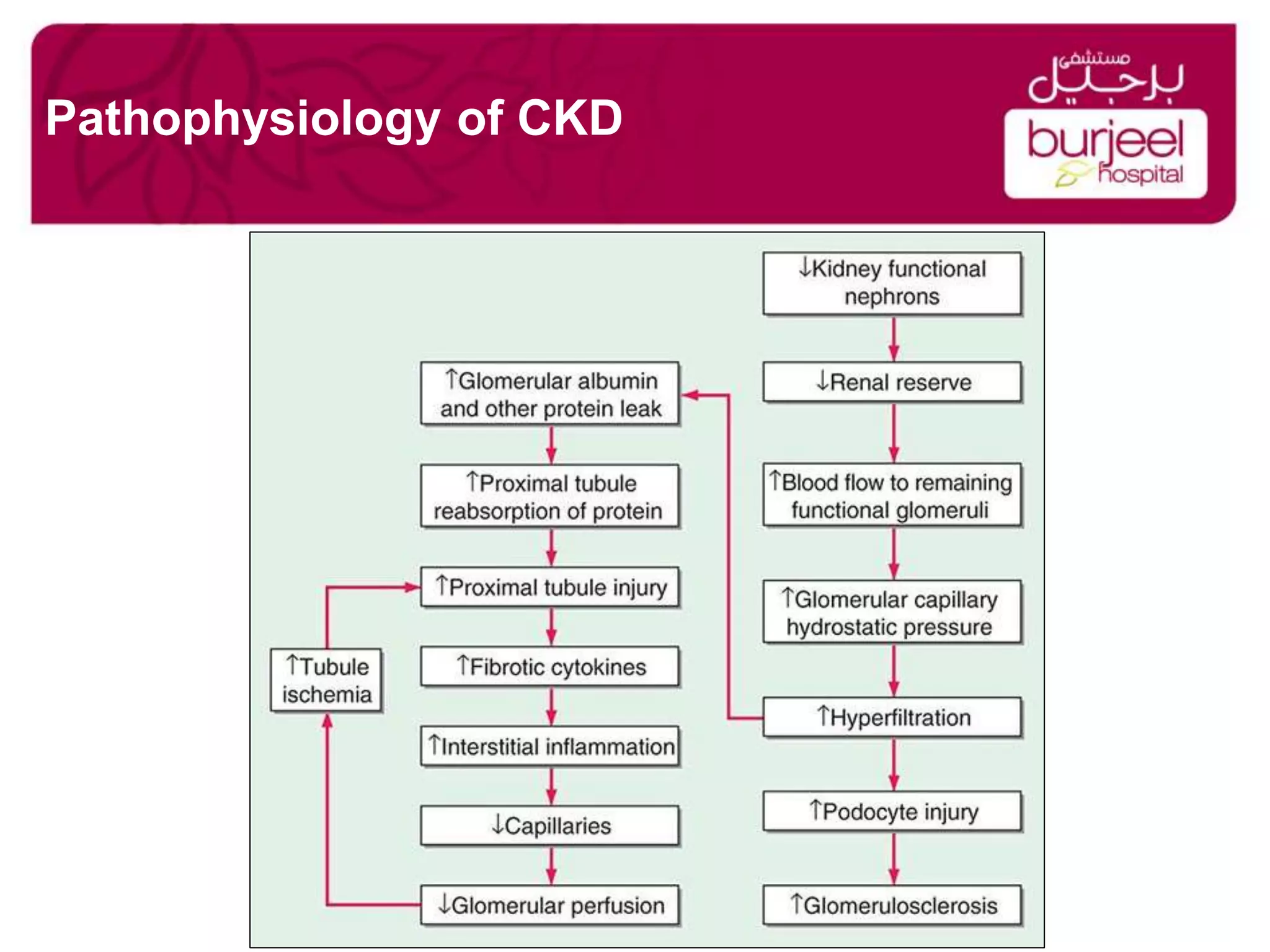
Pathophysiology of CKD
Risk Factors and Causes for CKD
Pathophysiology of CKD
Stage I & II CKD
Diminished Renal Reserve
eGFR 50%
eGFR
Proteinuria
Glomerulosclerosis
Impaired/Sluggish
Blood Flow
Modifiable Factors
-DM
-Hypertension
-Increase Protein & Fat intake
-Smoking
-Use of NSAIDS
Non-Modifiable Factors
-Heriditary
-Age greater than 60 yrs old
-Gender
-Race
Thickening &/or an in the
amount of collagen in the
basement membranes
of the small vessels
Pathophysiology of CKD
Pathophysiological
Events Underlying the
Origin and Evolution of
Hypertensive
Nephropathy
Pathogenesis of kidney disease in
patients with diabetes
Muskiet, M. H. A. et al. (2013), Nat. Rev. Nephrol. doi:10.1038/nrneph.2013.272
Pathophysiology of CKD
Pathogenesis of disordered
mineral metabolism in CKD
Increase FGF-23
Hypocalcemia
Increase PTH
Bone Disease
Severe inhibition of
1-α hydroxylase and
1,25 dihydroxyvitamin D
Vit D Deficiency
Vit D Resistance
Hyperphosphatemia
Decrease GFR
Pathogenesis of disordered
mineral metabolism in CKD
Self-perpetuating triad formed by the interactions among anemia, chronic kidney
disease (CKD) and congestive heart failure (CHF) that mutually potentiate each
other and translate into mortality multipliers.
Madhumathi Rao, Brian J.G. Pereira, Kidney International, Volume 68, Issue 4, 2005, 1432–1438
Optimal anemia management reduces CV
morbidity, mortality, and costs in CKD
Madhumathi Rao, Brian J.G. Pereira, Kidney International, Volume 68, Issue 4, 2005, 1432–1438
Mechanisms of Anemia in CKD
􀂃 EPO deficiency
􀂃 Blood loss
􀂃 Shorter RBC life span
􀂃 Decreased bone marrow
responsiveness to EPO
􀂃 Vitamin deficiencies
􀂃 Iron deficiency (poor iron absorption)
􀂃 High uremia level
􀂃 Intoxication impairing RBC
development (Aluminium)
􀂃 Hemolysis (copper, chloramines)
􀂃 Chronic inflammation
Data Source: Special analyses, Medicare 5 percent sample. Patients aged 66 and older, alive, without end-stage renal disease, and residing in the U.S. on 12/31/2013 with fee-for-service
coverage for the entire calendar year. Totals of patients for the study cohort: N=1,238,888; With CKD=132,840; Without CKD=1,106,048. Abbreviations: AFIB, atrial fibrillation; AMI, acute
myocardial infarction; ASHD, atherosclerotic heart disease; CHF, congestive heart failure; CKD, chronic kidney disease; CVA/TIA, cerebrovascular accident/transient ischemic attack; CVD,
cardiovascular disease; PAD, peripheral arterial disease; SCA/VA, sudden cardiac arrest and ventricular arrhythmias; VHD, valvular heart disease..
Cardiovascular disease in patients
with or without CKD, 2013
Proposed feedback loops in cardiorenal
syndrome (CRS)
Marcello Tonelli et al. Circulation. 2016;133:518-536
Pathophysiology and
definitions of the five
subtypes of CRS
Claudio Ronco et al. Eur Heart J 2010;31:703-711
Hyperlipidemia (Role ?)
 Hyperlipidemia common in CRF- especially in Nephrotic
Syndrome
 Excessive lipids accelerate progression of renal disease
 Cholesterol increases glomerular injury
 Two known paths of hyperlipidemia progression in CRF:
 Hyperlipidemia activates LDL receptors in mesangial cells
 Increased synthesis of lipoproteins in the liver related to
increased albumin production
Inflammation (Role ?)
 Inflammatory response can be
triggered by: tissue injury,
infections, toxins, immune
responses and/or Angiotensin II
 Can be acute or chronic
 Can affect the renal pelvis and
interstitial tissue as in
pyelonephritis
 Can affect the glomeruli as in
glomerulonephritis
Legg, V.(2005). Complications of chronic kidney disease. AJN,105(6),40-50
CKD prolongs inflammatory reactions
Causes of Inflammation in CRF
 Infection
 Anemia
 Uremia – increases oxidation of
proteins, lipids &
carbohydrates, leading to
vascular inflammation
 Malnutrition – decreases
antioxidants
 Low serum albumin –
decreases antioxidants
Inflammation- (Cont.)
 Adverse effects of chronic inflammation
 Decreased appetite
 Muscle and fat wasting
 Endothelial damage
 Atherosclerosis
 Hypoalbuminemia
 Increased cardiovascular disease risk
Legg, V.(2005). Complications of chronic kidney disease. AJN,105(6),40-50
 Angio-II is an Inflammatory mediator causing:
• Increased vascular permeability
• Increased leukocyte infiltration (monocytes, macrophages)
• Cell proliferation & hypertrophy
Genetic Considerations
 Autosomal dominant Polycystic Kidney Disease
 Alport’s hereditary nephritis
 Familial FSGS
 Nephronopthisis, Nephropathic Cystinosis
(Fanconi’s Syndrome)
 Medullary cystic kidney disease
 Fabry’s disease
Sanford, R. (2004). Autosomal dominant polycystic kidney disease. Retrieved February 8, 2006,
Polycystic Kidney Disease
 Most Common Genetic Disorder
 Numerous fluid-filled cysts in kidneys and renal
tubules
 Normal renal tissue replaced by cysts
 Decreased function leads to ESRD
Two Major Forms of PKD
 Autosomal Dominant PKD (90%)
 Occurs equally males and females, mainly Caucasians
 One parent with ADPKD gene = 50% chance children
will inherit disease
 Gene mutation on chromosome 16 or 4
 Autosomal Recessive PKD (10%)
 1 in 4 babies (of parents with mutation)
 Mutation on chromosome 6 Only treatment for both when arrived to
ESRD = dialysis and kidney transplantation
Risk Factors for CKD
Risk Factor Definition Examples
Susceptibility
factors
Increase susceptibility to kidney
damage
Older age, Family H/O CKD,
Reduction in kidney mass, Low
Birthweight, Low income or education
Initiation
Factors
Directly initiate kidney damage DM, HTN, Autoimmune Diseases,
Systemic Infections, Urinary Stones,
Lower UT Obstruction, Drug Toxicity
Progression
Factors
Cause worsening kidney damage
and faster decline in kidney
function after initiation of kidney
damage
Higher Level of Proteinuria, Higher
BP, Poor Glycemic Control, Smoking
ESRD Increase morbidity and mortality in
kidney failure
Lowe Dialysis Dose (KT/V),
Temporary Vascular Access, Low
Serum Albumin Level, Late Referal
Plan
How should clinicians estimate
the stage of CKD?
2 simple tests will identify CKD in adults
 eGFR - Estimated GFR from serum creatinine using
a certain equation
 UACR - Urine albumin to creatinine ratio on a “spot”
urine sample
 24-hour urine collections are NOT needed
-Diabetics should be tested once a year. Others at risk
can be tested less frequently as long as normal.
How should clinicians estimate GFR and
the stage of CKD?
 MDRD equation
 GFR (mL/min per 1.73 m2)= 186.3 × (Scr mg/dL)−1.154 × age−0.203 ×
(1.210 if black) × (0.742 if female)
 CKD-EPI equation
GFR = 141 × minimum(Scr/κ, 1)α × maximum(Scr/κ, 1)-1.209 × 0.993Age ×
(1.018 if female) × (1.159 if black)
Cockcroft-Gault
Men: CrCl (mL/min) = (140 - age) x wt (kg)
SCr x 0.81
Women: multiply by 0.85
Scr is serum creatinine, κ is 0.7 for females and 0.9 for males, α is -0.329 for females and -0.411 for males
minimum indicates the minimum of Scr/κ or 1,
maximum indicates the maximum of Scr/κ or 1
NICE Stages of CKD
CKD Stage Description (eGFR ml/min/1.73m2)
Stage 1 Normal eGFR (>90)
With other evidence of kidney damage*
Stage 2 eGFR 60 – 90
With other evidence of kidney damage*
Stage 3a
Stage 3b
eGFR 45-59
eGFR 30-44
Stage 4 eGFR 15 – 29
Stage 5 eGFR < 15
* Evidence of chronic kidney damage includes: persistent microalbuminuria or proteinuria,
haematuria, structural abnormalities, biopsy proven glomerulonephritis.
K/DOQI CKD Classification
24-yo
Black Man
63-yo
White Man
59-yo
White
Woman
S. Cr 1.3 mg/dL 1.3 mg/dL 1.3 mg/dL
GFR as
estimated
by CKD-EPI
Study
equation
66
mL/min/1.73 m2
45
mL/min/1.73 m2
55
mL/min/1.73 m2
The perils of using serum creatinine to
“guess” level of renal function
Prevalence of CKD and Estimated
Number of Adults with CKD in the US
(NHANES 88-2012)
Stage Description
GFR
(ml/min/1.73 m2)
Prevalence*
N
(1000s)
%
1
Kidney Damage with
Normal or  GFR
 90 5,900 3.3
2
Kidney Damage with
Mild  GFR
60-89 5,300 3.0
3 Moderate  GFR 30-59 7,600 4.3
4 Severe  GFR 15-29 400 0.2
5 Kidney Failure < 15 or Dialysis 300 0.1
*Stages 1-4 from NHANES III (1988-2008). Population of 177 million with age 20. Stage 5 from USRDS (2012), includes approximately 230,000 patients
treated by dialysis, and assuming 70,000 additional patients not on dialysis. GFR estimated from serum creatinine using MDRD Study equation based on
age, gender, race and calibration for serum creatinine. For Stage 1 and 2, kidney damage estimated by spot albumin-to-creatinine ratio 17 mg/g in men or
25 mg/g in women in two measurements.
Classification of CKD Based on GFR and
Albuminuria Categories: “Heat Map”
Kidney Disease: Improving Global Outcomes (KDIGO) CKD Work Group. Kidney Int Suppls. 2013;3:1-150.
Automatic eGFR by the laboratory
reporting is best
 GFR is the accepted measure of kidney function
 GFR is difficult to infer from serum creatinine alone
 Automatic reporting identifies CKD patients with
apparently “normal” serum creatinine, reduces barrier to
early detection, and identifies people at high risk for
contrast agents and other nephrotoxins
Caveats to eGFR
 An estimate based on population data, not the patient’s
actual GFR
 Not reliable when used with patients:
 with rapidly changing creatinine levels (e.g., AKI in
the ICU)
 with extremes in muscle mass, e.g. cachexia or
paraplegia
Plan
What laboratory tests and imaging
should clinicians use to evaluate CKD?
Evaluation for CKD
 Blood
 CBC with diff
 Urea, Creatinine and Electrolytes
with Ca2+ and phosphorous
 PTH
 HBA1c
 LFTs
 Uric acid
 Fe2+ studies
 Urine
 Urinalysis with microscopy
 Spot urine for microalbumin
 24-urine collection for protein
and creatinine (if needed)
 Ultrasound
-For hydronephrosis, cysts, and
stones
-To assess echogenicity, size,
kidney symmetry
 If indicated by history or by findings:
 Antinuclear antibody to evaluate for lupus and other autoimmune dis
 Serologies for HBV, HCV, and HIV
 Serum antineutrophil cytoplasmic antibodies for vasculitis
 Serum and urine protein immunoelectrophoresis for multiple
myeloma
 Stages 4 and 5 CKD:
 test for hyperkalemia, acidosis, hypocalcemia, hyperphosphatemia
Evaluation for CKD (Cont.)
Urine albumin & protein to creatinine ratio
 Albumin-to-creatinine ratio
 Normal to mildly increased <30 mg/g
 Moderately increased 30-300 mg/g
 Severely increased >300 mg/g
 Protein-to-creatinine ratio
 Normal to mildly increased <150 mg/g
 Moderately increased 150-500 mg/g
 Severely increased >500 mg/g
• Type 2 diabetes: screen for albuminuria regularly
 Positive when >30 mg/g creatinine in a spot urine sample
Plan
What clinical manifestations should
clinicians look for when evaluating
patients for CKD?
Chronic vs. Acute Renal Failure
 Acute Renal Failure (ARF):
 Abrupt onset
 Potentially reversible
 Chronic Renal Failure (CRF):
 Progresses over at least 3 months
 Permanent- non-reversible damage to nephrons
What clinical manifestations should
clinicians look for when evaluating
patients for CKD?
• Recent diarrhea, bleeding, or dehydration may decrease renal perfusion
that leads to acute kidney injury
• A medication history may reveal a drug cause of CKD
• History of HF or cirrhosis suggests decreased renal perfusion
• Skin rash, arthritis, mononeuropathy, or systemic symptoms suggests
vasculitis, including lupus
• Findings associated with diabetes and hypertension
• Infection with HBV, HCV, or HIV may cause proteinuria
• Family history of kidney disease suggests polycystic disease, the Alport
syndrome, or medullary cystic kidney disease
Signs & Symptoms
Visual / Verbal Clues
 Dry mouth, fatigue, nausea – d/t hyponatremia & uremia
 Hypertension – d/t sodium & water retention
 Hypervolemia – d/t sodium & water retention
 Gray/yellow skin – d/t accumulated urine pigments
 Cardiac irritability – d/t hyperkalemia
 Muscle cramps – d/t hypocalcemia
 Bone & muscle pain – d/t hypocalcemia/hyperphosphatemia
 Restless leg syndrome – d/t toxins’ effects on the nervous
system
 Check for orthostasis
 Look for rashes and petechiae
 Examine the fundus for diabetic retinopathy or hypertensive
retinopathy
 Evaluate for heart failure
 A renal bruit suggests renal artery stenosis
 Inflamed joints suggest vasculitis or autoimmune processes
 Asterixis or encephalopathy suggests uremia
Signs & Symptoms
Visual / Verbal Clues
Manifestations of CKD
Stages and Clinical Features of
Non-Diabetic CKD
Stages and Clinical Features of
Diabetic CKD
Plan
How should clinicians construct a
differential diagnosis of CKD?
How should clinicians classify CKD and
construct a differential diagnosis?
 By GFR and albuminuria
 Determine cause based on:
 Presence or absence of systemic disease
 Presumed location of damage in the kidney (glomerular,
tubulointerstitial, vascular, or cystic)
 Classify patients with CKD into 1 of 3 broad categories:
Diabetic kidney disease
Hypertensive kidney disease
Non-hypertensive, non-diabetic kidney disease
Classification of CKD by Diagnosis
 Diabetic Kidney Disease
 Glomerular diseases (autoimmune diseases, systemic
infections, drugs, neoplasia)
 Vascular diseases (renal artery disease, hypertension,
microangiopathy)
 Tubulointerstitial diseases (urinary tract infection,
stones, obstruction, drug toxicity)
 Cystic diseases (polycystic kidney disease)
 Diseases in the transplant (Allograft nephropathy,
drug toxicity, recurrent diseases, transplant glomerulopathy)
Identify reversible causes
 Think about volume contraction, urinary obstruction,
or toxic effects of medications
 Rx
 ACEs/ARBs
 NSAIDs
 Aminoglycosides and amphotericin B
 IV Radiocontrast agents
Plan
When should clinicians consider
consulting with a nephrologist for
diagnosing patients with possible CKD?
Nephrology referral suggestions
• Regardless of when you refer:
• Obtaining preliminary evaluation (e.g. ultrasound,
screening serologies)
• Providing consultant with patient history including serial
measures of renal function
• To assist with diagnostic challenge (e.g. decision to biopsy)
• To assist with therapeutic challenge (e.g. blood pressure or
immunosuppression)
• Preparation for renal replacement therapy, especially when
GFR less than 30
*Significant albuminuria is defined as ACR ≥300 mg/g (≥30 mg/mmol) or AER ≥300 mg/24 hours, approximately
equivalent to PCR ≥500 mg/g (≥50 mg/mmol) or PER ≥500 mg/24 hours
**Progression of CKD is defined as one or more of the following: 1) A decline in GFR category accompanied by a 25%
or greater drop in eGFR from baseline; and/or 2) rapid progression of CKD defined as a sustained decline in eGFR of more than 5ml/min/1.73m2/year.
KDOQI US Commentary on the 2012 KDIGO Evaluation and Management of CKD
Indications for Referral to Specialist
Kidney Care Services for People with CKD
• Acute kidney injury or abrupt sustained fall in GFR
• GFR <30 ml/min/1.73m
2
(GFR categories G4-G5)
• Persistent albuminuria (ACR > 300 mg/g)*
• Atypical Progression of CKD
**
• Urinary red cell casts, RBC more than 20 per HPF sustained and not readily explained
• Hypertension refractory to treatment with 4 or more antihypertensive agents
• Persistent abnormalities of serum potassium
• Recurrent or extensive nephrolithiasis
• Hereditary kidney disease
• No clear etiology of CKD
• Type 2 diabetes with proteinuria w/o coexistent retinopathy or neuropathy
• Rapid decline in kidney function (>5 mL/min per 1.73 m2 per year)
Observational Studies of Early vs. Late
Nephrology Consultation
Chan M, et al. Am J Med. 2007;120:1063-1070.
KDIGO CKD Work Group. Kidney Int Suppls. 2013;3:1-150.
Variable Early Referral Mean
(SD)
Late Referral Mean
(SD)
P
Value
Overall Mortality % 11 (3) 23 (4) <0.00
01
1-Year Mortality % 13 (4) 29 (5) 0.028
Hospital Length of stay-
day
13.5 (2.2) 25.3 (3.8) 0.000
7
Serum Albumin at start of
Dialysis
3.62 (0.05) 3.40 (0.03) 0.001
Hematocrit at start of
Dialysis
30.54 (0.18) 29.71 (0.10) 0.013
Plan
How should Clinician Monitor CKD?
Monitoring of CKD
 Serial measurements of
 Creatinine
 eGFR
 Albumin
 Protein-creatinine ratio in the 1st morning sample
 Electrolytes including HCO3, Ca, Phosph, alkaline
phosphatase, iron studies, intact PTH
 Renal sonogram
 Renal biopsy
Stage of CKD by eGFR and albuminuria
categories
Clinical Practice Guidelines for the Detection,
Evaluation and Management of CKD
Stage Description GFR Evaluation Management
At increased
risk
Test for CKD Risk factor management
1
Kidney
damage with
normal or 
GFR
>90
Diagnosis
Comorbid
conditions
CVD and CVD
risk factors
Specific therapy, based on diagnosis
Management of comorbid conditions
Treatment of CVD and CVD risk factors
2
Kidney
damage with
mild  GFR
60-89
Rate of
progression
Slowing rate of loss of kidney function 1
3
Moderate 
GFR
30-59 Complications Prevention and treatment of complications
4 Severe  GFR 15-29
Preparation for kidney replacement therapy
Referral to Nephrologist
5 Kidney Failure <15 Kidney replacement therapy
1
Target blood pressure less than 130/80 mm Hg. Angiotension converting enzyme inhibitors
(ACEI) or angiotension receptor blocker (ARB) for diabetic or non-diabetic kidney disease with spot
urine total protein-to-creatinine ratio of greater than 200 mg/g.
Plan
Which drugs and other agents cause
acute kidney injury in patients with CKD?
Medications and CKD
 NSAIDS – inhibit prostaglandins decreasing GFR and reduced sodium excretion
 Decongestants – elevate blood-pressure and increase renal damage
 Antacids and laxatives containing magnesium & aluminum: causes mineral
accumulation and metabolic complications
 Herbal Remedies – (juniper berry, buckthorn bark, cascara bark, licorice root)
can cause electrolyte imbalances which worsen with diuretic therapy
 Aminoglycoside antibiotics,
 Amphotericin B,
 If Radiocontrast Agents essential: give
 sodium bicarbonate or 0.9% normal saline IV before and after procedure for
patients at increased risk for contrast nephropathy,
 Consider N-acetylcysteine before and after radiocontrast only in high-risk
patients
 stop Metformin
 Avoid high doses of Gadolinium Contrast in stages 4 and 5 due to risk for
nephrogenic systemic fibrosis
Campoy, S, Elwell, R.(2005). Pharmacology & CKD. AJN, 105(9),60-72.
Common Medications Requiring Dose
Reduction in CKD
 Allopurinol
 Gabapentin
 CKD 4- Max dose 300mg qd
 CKD 5- Max dose 300mg qod
 Reglan
 Reduce 50% for eGFR< 40
 Can cause irreversible EPS with
chronic use
 Narcotics
 Methadone and fentanyl best for
ESRD patients
 Lowest risk of toxic
metabolites
• Renally cleared beta blockers
o Atenolol, bisoprolol, nadolol
• Digoxin
• Some Statins
o Lovastatin, pravastatin,
simvastatin. Fluvastatin,
rosuvastatin
• Antimicrobials
o Antifungals, aminoglycosides,
Bactrim, Macrobid
• Enoxaparin
• Methotrexate
• ColchicineAdjust dosing of other medications to
avoid other AEs
Medications in CKD
 CKD patients at high risk for drug-related adverse events
 Several classes of drugs renally eliminated
 Consider kidney function and current eGFR (not just SCr) when
prescribing meds
 Minimize pill burden as much as possible
 Remind CKD patients to avoid NSAIDs
 No Dual RAAS blockade (with exceptions)
 Any med with >30% renal clearance probably needs dose
adjustment for CKD
 No bisphosphonates for eGFR <30
 Avoid Gadolinium Contrast for eGFR <30
Clinical Bottom Line: Diagnosis...
o CKD is defined as kidney
damage or a GFR <60 mL/min
per 1.73 m2 for > 3 months
o Classify
o Diabetic nephropathy
o Hypertensive nephropathy
o Nondiabetic, nonhypertensive
kidney disease
o Then, into groups based on
levels of GFR and
albuminuria
o History and physical exam often
point to a cause
o Definitive diagnosis requires:
o Diagnostic tests
o Renal ultrasound
o Sometimes renal biopsy
o Identify risk factors
o Know patient’s GFR using
appropriate screening tools
o Help your patient adjust
medication
o Modify diet
o Partner and refer to specialist
Pathophysiology of CKD-CVD
Kidney
damage and
normal or  GFR
Kidney
damage and
mild 
GFR
Severe
 GFR
Kidney
failure
Moderate
 GFR
Stage 1 Stage 2 Stage 3 Stage 4 Stage 5
NephrologistPrimary Care Practitioner
The Patient (always)
and other subspecialists (as needed)
GFR 90 60 30 15
Who Should be Involved in the
Patient Safety Approach to CKD?
Patient safety
Consult?
Chronic Kidney Disease:
An Update
(Part II)
Yassin Ibrahim El-Shahat
Consultant: Nephrology & Hypertension
Chief Medical Officer
Burjeel Hospital, Abu Dhabi
Pathophysiology
of CKD in DM
Jun Wada, and Hirofumi Makino Clin. Sci. 2013;124:139-152

Ckd 2016 100 1

  • 1.
    Chronic Kidney Disease: AnUpdate (Part I) Yassin Ibrahim El-Shahat Consultant: Nephrology & Hypertension Chief Medical Officer Burjeel Hospital, Abu Dhabi
  • 2.
    Objectives Upon completion ofthis talk the attendant will be able to:  Understand the pathophysiology of Chronic Kidney Disease  Recognize the signs and symptoms of Chronic Kidney Disease  Identify the disease progression and treatment interventions
  • 3.
    Plan 1-What is thedefinition and Epidemiology of Chronic Kidney Disease (CKD)? 2-What is the Pathophysiology of CKD? 3-How should clinicians estimate the stage of CKD? 4-What laboratory tests and imaging should clinicians use to evaluate CKD? 5-What clinical manifestations should clinicians look for when evaluating patients for CKD? 6-How should clinicians construct a differential diagnosis of CKD? 7-When should clinicians consider consulting with a nephrologist for diagnosing patients with possible CKD? 8-How should Clinician Monitor CKD? 9-Which drugs and other agents cause acute kidney injury in patients with CKD?
  • 4.
    Plan What is thedefinition and Epidemiology of Chronic Kidney Disease (CKD)?
  • 5.
    What is thedefinition of CKD? Structural or functional abnormalities of the kidneys for >3 months, as manifested by either:  Kidney damage  Kidney damage can be either functional or structural  Functional abnormalities  Proteinuria, albuminuria  Abnormalities of urinary sediment (microscopic hematuria)  Structural abnormalities  On ultrasound scanning or other radiological tests (Polycystic kidney disease, reflux nephropathy, or other abnormalities)  The presence of GFR <60 mL/min/1.73 m2 for three months, with or without other signs of kidney damage as described above. Am J Kidney Dis 2012; 39:S1
  • 6.
     It isprogressive tissue destruction with permanent loss of nephrons and renal function  CKD stage V: eGFR < 15 ml/min/1.73 m2  ESRD is a defined term that indicates advanced CKD which necessitates treatment by Renal Replacement Therapy-RRT (dialysis &/or kidney transplantation) What is the definition of CKD?
  • 7.
    CKD as aPublic Health Issue  Increases risk for all-cause mortality, CV mortality, End stage renal disease (ESRD), and other adverse outcomes. 1. NKF Fact Sheets. http://www.kidney.org/news/newsroom/factsheets/FastFacts. Accessed Nov 5, 2014. 2. USRDS. www.usrds.org. Accessed Nov 5, 2014. 3. Coresh et al. JAMA. 2007. 298:2038-2047.
  • 8.
    26 million Americanshave CKD Coresh, et al., 2015 10.1 15.5 0.7 0 5 10 15 20 25 Persistent albuminuria with eGFR ≥ 60 (CKD Stage I-II) eGFR of 30-59 (CKD Stage III) eGFR of 15-29 (CKD Stage IV) Millionsofpeople 26 million American affected Prevalence is 11-13% of adult population in the US
  • 9.
    Data Source: Specialanalyses, Medicare 5 percent sample. Known CKD stages presented as bars; curve showing “All codes” includes known CKD stages (codes 585.1-585.5) and the CKD-stage unspecified codes (585.9, and remaining non-585 CKD codes). Note: In previous years, this graph reported 585.9 codes as a component of the stacked bars. Abbreviation: CKD, chronic kidney disease. Trends in prevalence of recognized CKD, overall and by CKD stage, among Medicare patients aged 65+, 2000-2013 Stage I Stage II Stage III Stage IV Stage V Chronic Kidney Disease (CKD)
  • 10.
    USRDS ADR, 2007 Prevalenceof ESRD has been rising steadily
  • 11.
    Prevalence of CKDby stage among NHANES participants, 1988-2012 Data Source: National Health and Nutrition Examination Survey (NHANES), 1988–1994, 1999-2004 & 2007–2012 participants aged 20 & older. Whisker lines indicate 95% confidence intervals. Abbreviations: CKD, chronic kidney disease.
  • 12.
    Incident ESRD patients;rates adjusted for age & gender. Incidence varies widely by race and ethnicityRatepermillionpopulation Af Am N Am Hispanic Asian White Non-Hispanic USRDS ADR, 2007 Disproportionately affects African Americans and Hispanics
  • 13.
    ESRD, end stagerenal disease USRDS ADR, 2007 Diabetes and hypertension are leading causes of CKD Incident ESRD rates, by primary diagnosis, adjusted for age, gender, & race.
  • 14.
    USRDS Incident counts &adjusted rates, by age USRDS ADR, 2007
  • 15.
    Prevalence of Abnormalities ateach level of GFR 0 10 20 30 40 50 60 70 80 90 15-29 30-59 60-89 90+ Estimated GFR (ml/min/1.73 m2 ) Proportionofpopulation(%) Hypertension* Hemoglobin < 12.0 g/dL Unable to walk 1/4 mile Serum albumin < 3.5 g/dL Serum calcium < 8.5 mg/dL Serum phosphorus > 4.5 mg/dL *>140/90 or antihypertensive medication p-trend < 0.001 for each abnormality
  • 16.
    Prevalence of CKDby age & risk factor among NHANES participants, 1988-2012 Vol 1, CKD, Ch 1 16 Data Source: National Health and Nutrition Examination Survey (NHANES), 1988–1994, 1999-2004 & 2007–2012 participants aged 20 & older. Diabetes defined as either HbA1c >7%, self-reported, or currently taking glucose-lowering medications. Hypertension defined as BP ≥130/≥80 for those with diabetes or CKD, otherwise BP ≥140/≥90, or taking medication for hypertension. Abbreviations: BMI, body mass index; CKD, chronic kidney disease; CVD, cardiovascular disease; DM, diabetes mellitus; HbA1c, glycosylated hemoglobin; HTN, hypertension; SR, self-reported.
  • 17.
    CKD is disproportionatelycostly Distribution of costs for CKD, HTN, & diabetic patients in Medicare population, 20014
  • 18.
    Overall expenditures forCKD in the Medicare population age 65 & older Point prevalent Medicare CKD patients age 65 & older; costs are total expenditures per calendar year 28% of Medicare budget in 2013, up from 6.9% in 1993 ($42 billion in 2013) USRDS ADR, 2013
  • 19.
    Data Source: Specialanalyses, Medicare 5 percent sample. Abbreviations: CKD, chronic kidney disease; CHF, congestive heart failure, DM, diabetes mellitus; PPPY, per person per year. Per person per year expenditures on Parts A, B, and D services for the CKD Medicare population aged 65+, by DM, CHF, and year, 1993-2013
  • 20.
    Per person permonth (PPPM) expenditures during the transition to ESRD, by dataset, 2011 Incident Medicare (age 67 & older) & Truven Health MarketScan (younger than 65) ESRD patients, initiating in 2008 USRDS ADR, 2013 Preventing progression of CKD will help hold down costs as the treatment of ESRD is expensive, requires some type of replacement therapy to maintain life.
  • 21.
    Relationships between cardiacevents and loss of life expectancy resulting from CVD by stage of CKD Marcello Tonelli et al. Circulation. 2016;133:518-536 The Lancet, Gansevoort et al; 2013, Elsevier.
  • 22.
    Data source: Specialanalyses, Medicare 5 percent sample. January 1 of each reported year, point prevalent Medicare patients age 66 and older. Ref: 2012 patients. Abbreviation: CKD, chronic kidney disease. All-cause mortality rates (per 1,000 patient years at risk) for Medicare patients aged 66+, by CKD status and year, 2001-2013
  • 23.
    Data source: Specialanalyses, Medicare 5 percent sample. January 1, 2013 point prevalent patients aged 66 and older. Adj: age/sex/race. Ref: all patients, 2013. Abbreviations: CKD, chronic kidney disease; CVD, cardiovascular disease; DM, diabetes mellitus. Adjusted all-cause mortality rates (per 1,000 patient years at risk) for Medicare patients aged 66+, by cardiovascular disease and diabetes mellitus, CKD status and stage, 2013
  • 24.
    Cardiovascular Mortality inthe General Population and in ESRD Treated by Dialysis 0.01 100 10 1 0.1 Annual mortality (%) 25–34 45–54 65–74 8535–44 55–64 75–84 Male Female Black White Dialysis General population Age (years) Am J Kidney Dis 2012; 39(S2): S1-246
  • 25.
    Data Source: NationalHealth and Nutrition Examination Survey (NHANES), 2001-2012 participants aged 20 & older. Abbreviations: CKD, chronic kidney disease. NHANES participants with CKD aware of their kidney disease, 2001-2012
  • 26.
    Gaps in CKDDiagnosis In Diabetic Patients Szczech, Lynda A, et al. "Primary Care Detection of Chronic Kidney Disease in Adults with Type-2 Diabetes: The ADD-CKD Study (Awareness, Detection and Drug Therapy in Type-2 Diabetes and Chronic Kidney Disease)." PLOS One - In press (2014). 0 10 20 30 40 50 60 Not Appropriately Tested Appropriately tested - no diagnosis Appropriately tested - accurate diagnosis CKD Screening in Primary Care (% of patients) % of Patients
  • 27.
    Improved Diagnosis ofCKD In Diabetic Patients Studies demonstrate that clinician behavior changes when CKD diagnosis improves. Significant improvements realized in:1-3 • Increased urinary albumin testing • Increased appropriate use of ACEi or ARBs • Avoidance of NSAIDs prescribing among patients with low proteinuria &/or eGFR • Appropriate nephrology consultation 1. Wei L, et al. Kidney Int. 2013;84:174-178. 2. Chan M, et al. Am J Med. 2007:120;1063-1070. 3. Fink J, et al. Am J Kidney Dis. 2009,53:681-668.
  • 28.
    Plan What is thePathophysiology of CKD?
  • 29.
  • 30.
    Risk Factors andCauses for CKD
  • 31.
    Pathophysiology of CKD StageI & II CKD Diminished Renal Reserve eGFR 50% eGFR Proteinuria Glomerulosclerosis Impaired/Sluggish Blood Flow Modifiable Factors -DM -Hypertension -Increase Protein & Fat intake -Smoking -Use of NSAIDS Non-Modifiable Factors -Heriditary -Age greater than 60 yrs old -Gender -Race Thickening &/or an in the amount of collagen in the basement membranes of the small vessels
  • 32.
  • 33.
    Pathophysiological Events Underlying the Originand Evolution of Hypertensive Nephropathy
  • 34.
    Pathogenesis of kidneydisease in patients with diabetes Muskiet, M. H. A. et al. (2013), Nat. Rev. Nephrol. doi:10.1038/nrneph.2013.272
  • 35.
  • 36.
  • 37.
    Pathogenesis of disordered mineralmetabolism in CKD Increase FGF-23 Hypocalcemia Increase PTH Bone Disease Severe inhibition of 1-α hydroxylase and 1,25 dihydroxyvitamin D Vit D Deficiency Vit D Resistance Hyperphosphatemia Decrease GFR
  • 38.
  • 39.
    Self-perpetuating triad formedby the interactions among anemia, chronic kidney disease (CKD) and congestive heart failure (CHF) that mutually potentiate each other and translate into mortality multipliers. Madhumathi Rao, Brian J.G. Pereira, Kidney International, Volume 68, Issue 4, 2005, 1432–1438 Optimal anemia management reduces CV morbidity, mortality, and costs in CKD
  • 40.
    Madhumathi Rao, BrianJ.G. Pereira, Kidney International, Volume 68, Issue 4, 2005, 1432–1438 Mechanisms of Anemia in CKD 􀂃 EPO deficiency 􀂃 Blood loss 􀂃 Shorter RBC life span 􀂃 Decreased bone marrow responsiveness to EPO 􀂃 Vitamin deficiencies 􀂃 Iron deficiency (poor iron absorption) 􀂃 High uremia level 􀂃 Intoxication impairing RBC development (Aluminium) 􀂃 Hemolysis (copper, chloramines) 􀂃 Chronic inflammation
  • 41.
    Data Source: Specialanalyses, Medicare 5 percent sample. Patients aged 66 and older, alive, without end-stage renal disease, and residing in the U.S. on 12/31/2013 with fee-for-service coverage for the entire calendar year. Totals of patients for the study cohort: N=1,238,888; With CKD=132,840; Without CKD=1,106,048. Abbreviations: AFIB, atrial fibrillation; AMI, acute myocardial infarction; ASHD, atherosclerotic heart disease; CHF, congestive heart failure; CKD, chronic kidney disease; CVA/TIA, cerebrovascular accident/transient ischemic attack; CVD, cardiovascular disease; PAD, peripheral arterial disease; SCA/VA, sudden cardiac arrest and ventricular arrhythmias; VHD, valvular heart disease.. Cardiovascular disease in patients with or without CKD, 2013
  • 42.
    Proposed feedback loopsin cardiorenal syndrome (CRS) Marcello Tonelli et al. Circulation. 2016;133:518-536
  • 43.
    Pathophysiology and definitions ofthe five subtypes of CRS Claudio Ronco et al. Eur Heart J 2010;31:703-711
  • 44.
    Hyperlipidemia (Role ?) Hyperlipidemia common in CRF- especially in Nephrotic Syndrome  Excessive lipids accelerate progression of renal disease  Cholesterol increases glomerular injury  Two known paths of hyperlipidemia progression in CRF:  Hyperlipidemia activates LDL receptors in mesangial cells  Increased synthesis of lipoproteins in the liver related to increased albumin production
  • 45.
    Inflammation (Role ?) Inflammatory response can be triggered by: tissue injury, infections, toxins, immune responses and/or Angiotensin II  Can be acute or chronic  Can affect the renal pelvis and interstitial tissue as in pyelonephritis  Can affect the glomeruli as in glomerulonephritis Legg, V.(2005). Complications of chronic kidney disease. AJN,105(6),40-50 CKD prolongs inflammatory reactions Causes of Inflammation in CRF  Infection  Anemia  Uremia – increases oxidation of proteins, lipids & carbohydrates, leading to vascular inflammation  Malnutrition – decreases antioxidants  Low serum albumin – decreases antioxidants
  • 46.
    Inflammation- (Cont.)  Adverseeffects of chronic inflammation  Decreased appetite  Muscle and fat wasting  Endothelial damage  Atherosclerosis  Hypoalbuminemia  Increased cardiovascular disease risk Legg, V.(2005). Complications of chronic kidney disease. AJN,105(6),40-50  Angio-II is an Inflammatory mediator causing: • Increased vascular permeability • Increased leukocyte infiltration (monocytes, macrophages) • Cell proliferation & hypertrophy
  • 47.
    Genetic Considerations  Autosomaldominant Polycystic Kidney Disease  Alport’s hereditary nephritis  Familial FSGS  Nephronopthisis, Nephropathic Cystinosis (Fanconi’s Syndrome)  Medullary cystic kidney disease  Fabry’s disease Sanford, R. (2004). Autosomal dominant polycystic kidney disease. Retrieved February 8, 2006,
  • 48.
    Polycystic Kidney Disease Most Common Genetic Disorder  Numerous fluid-filled cysts in kidneys and renal tubules  Normal renal tissue replaced by cysts  Decreased function leads to ESRD Two Major Forms of PKD  Autosomal Dominant PKD (90%)  Occurs equally males and females, mainly Caucasians  One parent with ADPKD gene = 50% chance children will inherit disease  Gene mutation on chromosome 16 or 4  Autosomal Recessive PKD (10%)  1 in 4 babies (of parents with mutation)  Mutation on chromosome 6 Only treatment for both when arrived to ESRD = dialysis and kidney transplantation
  • 49.
    Risk Factors forCKD Risk Factor Definition Examples Susceptibility factors Increase susceptibility to kidney damage Older age, Family H/O CKD, Reduction in kidney mass, Low Birthweight, Low income or education Initiation Factors Directly initiate kidney damage DM, HTN, Autoimmune Diseases, Systemic Infections, Urinary Stones, Lower UT Obstruction, Drug Toxicity Progression Factors Cause worsening kidney damage and faster decline in kidney function after initiation of kidney damage Higher Level of Proteinuria, Higher BP, Poor Glycemic Control, Smoking ESRD Increase morbidity and mortality in kidney failure Lowe Dialysis Dose (KT/V), Temporary Vascular Access, Low Serum Albumin Level, Late Referal
  • 50.
    Plan How should cliniciansestimate the stage of CKD?
  • 51.
    2 simple testswill identify CKD in adults  eGFR - Estimated GFR from serum creatinine using a certain equation  UACR - Urine albumin to creatinine ratio on a “spot” urine sample  24-hour urine collections are NOT needed -Diabetics should be tested once a year. Others at risk can be tested less frequently as long as normal.
  • 52.
    How should cliniciansestimate GFR and the stage of CKD?  MDRD equation  GFR (mL/min per 1.73 m2)= 186.3 × (Scr mg/dL)−1.154 × age−0.203 × (1.210 if black) × (0.742 if female)  CKD-EPI equation GFR = 141 × minimum(Scr/κ, 1)α × maximum(Scr/κ, 1)-1.209 × 0.993Age × (1.018 if female) × (1.159 if black) Cockcroft-Gault Men: CrCl (mL/min) = (140 - age) x wt (kg) SCr x 0.81 Women: multiply by 0.85 Scr is serum creatinine, κ is 0.7 for females and 0.9 for males, α is -0.329 for females and -0.411 for males minimum indicates the minimum of Scr/κ or 1, maximum indicates the maximum of Scr/κ or 1
  • 53.
    NICE Stages ofCKD CKD Stage Description (eGFR ml/min/1.73m2) Stage 1 Normal eGFR (>90) With other evidence of kidney damage* Stage 2 eGFR 60 – 90 With other evidence of kidney damage* Stage 3a Stage 3b eGFR 45-59 eGFR 30-44 Stage 4 eGFR 15 – 29 Stage 5 eGFR < 15 * Evidence of chronic kidney damage includes: persistent microalbuminuria or proteinuria, haematuria, structural abnormalities, biopsy proven glomerulonephritis. K/DOQI CKD Classification
  • 54.
    24-yo Black Man 63-yo White Man 59-yo White Woman S.Cr 1.3 mg/dL 1.3 mg/dL 1.3 mg/dL GFR as estimated by CKD-EPI Study equation 66 mL/min/1.73 m2 45 mL/min/1.73 m2 55 mL/min/1.73 m2 The perils of using serum creatinine to “guess” level of renal function
  • 55.
    Prevalence of CKDand Estimated Number of Adults with CKD in the US (NHANES 88-2012) Stage Description GFR (ml/min/1.73 m2) Prevalence* N (1000s) % 1 Kidney Damage with Normal or  GFR  90 5,900 3.3 2 Kidney Damage with Mild  GFR 60-89 5,300 3.0 3 Moderate  GFR 30-59 7,600 4.3 4 Severe  GFR 15-29 400 0.2 5 Kidney Failure < 15 or Dialysis 300 0.1 *Stages 1-4 from NHANES III (1988-2008). Population of 177 million with age 20. Stage 5 from USRDS (2012), includes approximately 230,000 patients treated by dialysis, and assuming 70,000 additional patients not on dialysis. GFR estimated from serum creatinine using MDRD Study equation based on age, gender, race and calibration for serum creatinine. For Stage 1 and 2, kidney damage estimated by spot albumin-to-creatinine ratio 17 mg/g in men or 25 mg/g in women in two measurements.
  • 56.
    Classification of CKDBased on GFR and Albuminuria Categories: “Heat Map” Kidney Disease: Improving Global Outcomes (KDIGO) CKD Work Group. Kidney Int Suppls. 2013;3:1-150.
  • 57.
    Automatic eGFR bythe laboratory reporting is best  GFR is the accepted measure of kidney function  GFR is difficult to infer from serum creatinine alone  Automatic reporting identifies CKD patients with apparently “normal” serum creatinine, reduces barrier to early detection, and identifies people at high risk for contrast agents and other nephrotoxins
  • 58.
    Caveats to eGFR An estimate based on population data, not the patient’s actual GFR  Not reliable when used with patients:  with rapidly changing creatinine levels (e.g., AKI in the ICU)  with extremes in muscle mass, e.g. cachexia or paraplegia
  • 59.
    Plan What laboratory testsand imaging should clinicians use to evaluate CKD?
  • 60.
    Evaluation for CKD Blood  CBC with diff  Urea, Creatinine and Electrolytes with Ca2+ and phosphorous  PTH  HBA1c  LFTs  Uric acid  Fe2+ studies  Urine  Urinalysis with microscopy  Spot urine for microalbumin  24-urine collection for protein and creatinine (if needed)  Ultrasound -For hydronephrosis, cysts, and stones -To assess echogenicity, size, kidney symmetry
  • 61.
     If indicatedby history or by findings:  Antinuclear antibody to evaluate for lupus and other autoimmune dis  Serologies for HBV, HCV, and HIV  Serum antineutrophil cytoplasmic antibodies for vasculitis  Serum and urine protein immunoelectrophoresis for multiple myeloma  Stages 4 and 5 CKD:  test for hyperkalemia, acidosis, hypocalcemia, hyperphosphatemia Evaluation for CKD (Cont.)
  • 62.
    Urine albumin &protein to creatinine ratio  Albumin-to-creatinine ratio  Normal to mildly increased <30 mg/g  Moderately increased 30-300 mg/g  Severely increased >300 mg/g  Protein-to-creatinine ratio  Normal to mildly increased <150 mg/g  Moderately increased 150-500 mg/g  Severely increased >500 mg/g • Type 2 diabetes: screen for albuminuria regularly  Positive when >30 mg/g creatinine in a spot urine sample
  • 63.
    Plan What clinical manifestationsshould clinicians look for when evaluating patients for CKD?
  • 64.
    Chronic vs. AcuteRenal Failure  Acute Renal Failure (ARF):  Abrupt onset  Potentially reversible  Chronic Renal Failure (CRF):  Progresses over at least 3 months  Permanent- non-reversible damage to nephrons
  • 65.
    What clinical manifestationsshould clinicians look for when evaluating patients for CKD? • Recent diarrhea, bleeding, or dehydration may decrease renal perfusion that leads to acute kidney injury • A medication history may reveal a drug cause of CKD • History of HF or cirrhosis suggests decreased renal perfusion • Skin rash, arthritis, mononeuropathy, or systemic symptoms suggests vasculitis, including lupus • Findings associated with diabetes and hypertension • Infection with HBV, HCV, or HIV may cause proteinuria • Family history of kidney disease suggests polycystic disease, the Alport syndrome, or medullary cystic kidney disease
  • 66.
    Signs & Symptoms Visual/ Verbal Clues  Dry mouth, fatigue, nausea – d/t hyponatremia & uremia  Hypertension – d/t sodium & water retention  Hypervolemia – d/t sodium & water retention  Gray/yellow skin – d/t accumulated urine pigments  Cardiac irritability – d/t hyperkalemia  Muscle cramps – d/t hypocalcemia  Bone & muscle pain – d/t hypocalcemia/hyperphosphatemia  Restless leg syndrome – d/t toxins’ effects on the nervous system
  • 67.
     Check fororthostasis  Look for rashes and petechiae  Examine the fundus for diabetic retinopathy or hypertensive retinopathy  Evaluate for heart failure  A renal bruit suggests renal artery stenosis  Inflamed joints suggest vasculitis or autoimmune processes  Asterixis or encephalopathy suggests uremia Signs & Symptoms Visual / Verbal Clues
  • 68.
  • 69.
    Stages and ClinicalFeatures of Non-Diabetic CKD
  • 70.
    Stages and ClinicalFeatures of Diabetic CKD
  • 71.
    Plan How should cliniciansconstruct a differential diagnosis of CKD?
  • 72.
    How should cliniciansclassify CKD and construct a differential diagnosis?  By GFR and albuminuria  Determine cause based on:  Presence or absence of systemic disease  Presumed location of damage in the kidney (glomerular, tubulointerstitial, vascular, or cystic)  Classify patients with CKD into 1 of 3 broad categories: Diabetic kidney disease Hypertensive kidney disease Non-hypertensive, non-diabetic kidney disease
  • 73.
    Classification of CKDby Diagnosis  Diabetic Kidney Disease  Glomerular diseases (autoimmune diseases, systemic infections, drugs, neoplasia)  Vascular diseases (renal artery disease, hypertension, microangiopathy)  Tubulointerstitial diseases (urinary tract infection, stones, obstruction, drug toxicity)  Cystic diseases (polycystic kidney disease)  Diseases in the transplant (Allograft nephropathy, drug toxicity, recurrent diseases, transplant glomerulopathy)
  • 74.
    Identify reversible causes Think about volume contraction, urinary obstruction, or toxic effects of medications  Rx  ACEs/ARBs  NSAIDs  Aminoglycosides and amphotericin B  IV Radiocontrast agents
  • 75.
    Plan When should cliniciansconsider consulting with a nephrologist for diagnosing patients with possible CKD?
  • 76.
    Nephrology referral suggestions •Regardless of when you refer: • Obtaining preliminary evaluation (e.g. ultrasound, screening serologies) • Providing consultant with patient history including serial measures of renal function • To assist with diagnostic challenge (e.g. decision to biopsy) • To assist with therapeutic challenge (e.g. blood pressure or immunosuppression) • Preparation for renal replacement therapy, especially when GFR less than 30
  • 77.
    *Significant albuminuria isdefined as ACR ≥300 mg/g (≥30 mg/mmol) or AER ≥300 mg/24 hours, approximately equivalent to PCR ≥500 mg/g (≥50 mg/mmol) or PER ≥500 mg/24 hours **Progression of CKD is defined as one or more of the following: 1) A decline in GFR category accompanied by a 25% or greater drop in eGFR from baseline; and/or 2) rapid progression of CKD defined as a sustained decline in eGFR of more than 5ml/min/1.73m2/year. KDOQI US Commentary on the 2012 KDIGO Evaluation and Management of CKD Indications for Referral to Specialist Kidney Care Services for People with CKD • Acute kidney injury or abrupt sustained fall in GFR • GFR <30 ml/min/1.73m 2 (GFR categories G4-G5) • Persistent albuminuria (ACR > 300 mg/g)* • Atypical Progression of CKD ** • Urinary red cell casts, RBC more than 20 per HPF sustained and not readily explained • Hypertension refractory to treatment with 4 or more antihypertensive agents • Persistent abnormalities of serum potassium • Recurrent or extensive nephrolithiasis • Hereditary kidney disease • No clear etiology of CKD • Type 2 diabetes with proteinuria w/o coexistent retinopathy or neuropathy • Rapid decline in kidney function (>5 mL/min per 1.73 m2 per year)
  • 78.
    Observational Studies ofEarly vs. Late Nephrology Consultation Chan M, et al. Am J Med. 2007;120:1063-1070. KDIGO CKD Work Group. Kidney Int Suppls. 2013;3:1-150. Variable Early Referral Mean (SD) Late Referral Mean (SD) P Value Overall Mortality % 11 (3) 23 (4) <0.00 01 1-Year Mortality % 13 (4) 29 (5) 0.028 Hospital Length of stay- day 13.5 (2.2) 25.3 (3.8) 0.000 7 Serum Albumin at start of Dialysis 3.62 (0.05) 3.40 (0.03) 0.001 Hematocrit at start of Dialysis 30.54 (0.18) 29.71 (0.10) 0.013
  • 79.
  • 80.
    Monitoring of CKD Serial measurements of  Creatinine  eGFR  Albumin  Protein-creatinine ratio in the 1st morning sample  Electrolytes including HCO3, Ca, Phosph, alkaline phosphatase, iron studies, intact PTH  Renal sonogram  Renal biopsy
  • 81.
    Stage of CKDby eGFR and albuminuria categories
  • 82.
    Clinical Practice Guidelinesfor the Detection, Evaluation and Management of CKD Stage Description GFR Evaluation Management At increased risk Test for CKD Risk factor management 1 Kidney damage with normal or  GFR >90 Diagnosis Comorbid conditions CVD and CVD risk factors Specific therapy, based on diagnosis Management of comorbid conditions Treatment of CVD and CVD risk factors 2 Kidney damage with mild  GFR 60-89 Rate of progression Slowing rate of loss of kidney function 1 3 Moderate  GFR 30-59 Complications Prevention and treatment of complications 4 Severe  GFR 15-29 Preparation for kidney replacement therapy Referral to Nephrologist 5 Kidney Failure <15 Kidney replacement therapy 1 Target blood pressure less than 130/80 mm Hg. Angiotension converting enzyme inhibitors (ACEI) or angiotension receptor blocker (ARB) for diabetic or non-diabetic kidney disease with spot urine total protein-to-creatinine ratio of greater than 200 mg/g.
  • 83.
    Plan Which drugs andother agents cause acute kidney injury in patients with CKD?
  • 84.
    Medications and CKD NSAIDS – inhibit prostaglandins decreasing GFR and reduced sodium excretion  Decongestants – elevate blood-pressure and increase renal damage  Antacids and laxatives containing magnesium & aluminum: causes mineral accumulation and metabolic complications  Herbal Remedies – (juniper berry, buckthorn bark, cascara bark, licorice root) can cause electrolyte imbalances which worsen with diuretic therapy  Aminoglycoside antibiotics,  Amphotericin B,  If Radiocontrast Agents essential: give  sodium bicarbonate or 0.9% normal saline IV before and after procedure for patients at increased risk for contrast nephropathy,  Consider N-acetylcysteine before and after radiocontrast only in high-risk patients  stop Metformin  Avoid high doses of Gadolinium Contrast in stages 4 and 5 due to risk for nephrogenic systemic fibrosis Campoy, S, Elwell, R.(2005). Pharmacology & CKD. AJN, 105(9),60-72.
  • 85.
    Common Medications RequiringDose Reduction in CKD  Allopurinol  Gabapentin  CKD 4- Max dose 300mg qd  CKD 5- Max dose 300mg qod  Reglan  Reduce 50% for eGFR< 40  Can cause irreversible EPS with chronic use  Narcotics  Methadone and fentanyl best for ESRD patients  Lowest risk of toxic metabolites • Renally cleared beta blockers o Atenolol, bisoprolol, nadolol • Digoxin • Some Statins o Lovastatin, pravastatin, simvastatin. Fluvastatin, rosuvastatin • Antimicrobials o Antifungals, aminoglycosides, Bactrim, Macrobid • Enoxaparin • Methotrexate • ColchicineAdjust dosing of other medications to avoid other AEs
  • 86.
    Medications in CKD CKD patients at high risk for drug-related adverse events  Several classes of drugs renally eliminated  Consider kidney function and current eGFR (not just SCr) when prescribing meds  Minimize pill burden as much as possible  Remind CKD patients to avoid NSAIDs  No Dual RAAS blockade (with exceptions)  Any med with >30% renal clearance probably needs dose adjustment for CKD  No bisphosphonates for eGFR <30  Avoid Gadolinium Contrast for eGFR <30
  • 87.
    Clinical Bottom Line:Diagnosis... o CKD is defined as kidney damage or a GFR <60 mL/min per 1.73 m2 for > 3 months o Classify o Diabetic nephropathy o Hypertensive nephropathy o Nondiabetic, nonhypertensive kidney disease o Then, into groups based on levels of GFR and albuminuria o History and physical exam often point to a cause o Definitive diagnosis requires: o Diagnostic tests o Renal ultrasound o Sometimes renal biopsy o Identify risk factors o Know patient’s GFR using appropriate screening tools o Help your patient adjust medication o Modify diet o Partner and refer to specialist
  • 88.
  • 89.
    Kidney damage and normal or GFR Kidney damage and mild  GFR Severe  GFR Kidney failure Moderate  GFR Stage 1 Stage 2 Stage 3 Stage 4 Stage 5 NephrologistPrimary Care Practitioner The Patient (always) and other subspecialists (as needed) GFR 90 60 30 15 Who Should be Involved in the Patient Safety Approach to CKD? Patient safety Consult?
  • 90.
    Chronic Kidney Disease: AnUpdate (Part II) Yassin Ibrahim El-Shahat Consultant: Nephrology & Hypertension Chief Medical Officer Burjeel Hospital, Abu Dhabi
  • 92.
    Pathophysiology of CKD inDM Jun Wada, and Hirofumi Makino Clin. Sci. 2013;124:139-152