Computer vision, a pivotal subfield of artificial intelligence (AI), has revolutionized the way machines interpret and interact with the visual world. This presentation delves into the foundational concepts, applications, and transformative potential of computer vision, offering a comprehensive overview of its current state and future directions. By bridging the gap between human visual perception and machine understanding, computer vision enables systems to analyze images and videos, extract meaningful information, and perform tasks ranging from object recognition to complex scene interpretation. The presentation underscores the interdisciplinary nature of computer vision, highlighting its reliance on machine learning, deep learning, and vast datasets to achieve human-like accuracy and beyond.
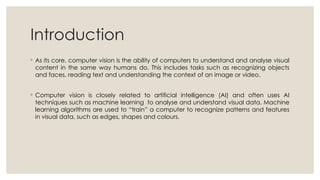
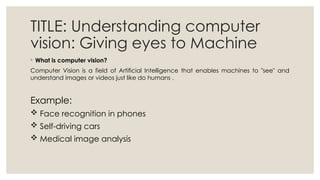
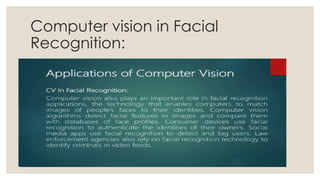
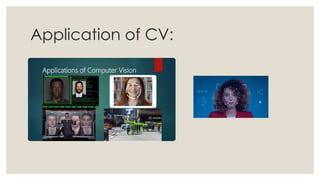
The introduction sets the stage by defining computer vision as the technology that empowers machines to "see" and interpret visual data, akin to human cognition. It emphasizes the synergy between computer vision and AI, particularly through machine learning algorithms that train systems to recognize patterns, edges, shapes, and colors in visual inputs. Examples such as facial recognition in smartphones, self-driving cars, and medical image analysis illustrate the pervasive impact of computer vision in everyday life. The title, "Understanding Computer Vision: Giving Eyes to Machines," encapsulates the essence of the field, portraying it as a transformative force that equips machines with the ability to perceive and understand their surroundings.
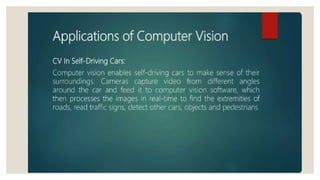
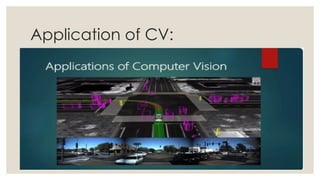
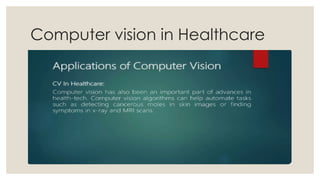
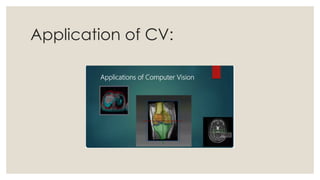
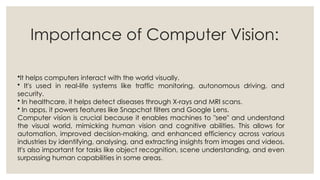
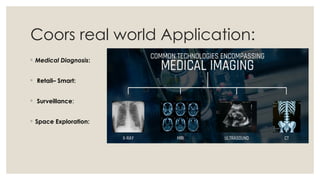
A significant portion of the presentation is dedicated to exploring the diverse applications of computer vision across industries. In healthcare, computer vision plays a critical role in diagnosing diseases through advanced imaging techniques like X-rays and MRI scans, enabling early detection of conditions such as tumors. The retail sector leverages computer vision for cashier-free checkout systems and in-store analytics, tracking shopper behavior to optimize business operations. Surveillance systems utilize real-time video analysis to enhance security by identifying suspicious activities, while space missions employ computer vision to process satellite imagery and explore extraterrestrial terrain. Agriculture benefits from precision farming techniques, where computer vision monitors crop health and guides automated harvesting robots. Autonomous vehicles, perhaps one of the most prominent applications, rely on computer vision to navigate safely by detecting and interpreting road conditions, traffic signals, and obstacles. These examples collectively demonstrate the versatility and far-reaching implications of computer vision in solving real-world problems.
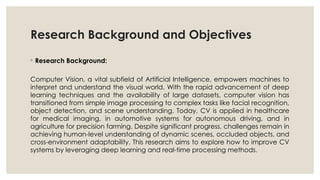
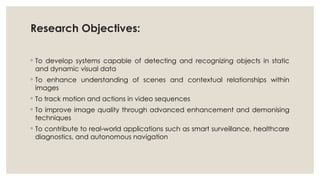
The presentation also addresses the research background and objectives, shedding light on the evolution of computer vision from simple image processing to sophisticated tasks like facial recognition and scene understanding.