Medication Reminder System
Vansh raj
Introduction
 Welcome to MediSafe, a new reminder service for easy .
 Our mission is to empower patients to seamlessly manage their medications.
 Let me introduce you to the concept of medication reminder systems. These
innovative solutions aim to address the common issue of medication non-
adherence
 A digital solution that improves communication, appointment adherence, and
medication adherence for healthcare providers and patients
Theoretical Background
 The theoretical background of medication reminder systems. These systems
play a crucial role in improving patient adherence to prescribed medications,
which is essential for successful treatment outcomes.
 medication reminder systems bridge the gap between prescribed treatments
and patient adherence, ultimately contributing to better health outcomes.
While challenges remain, ongoing research and technological innovations
continue to enhance these systems.
Problem Definition
A problem definition for a medication reminder system would outline the specific
challenges and requirements associated with ensuring that patients take their
medications as prescribed.
1. Problem Statement: Patients often forget or neglect to take their
medications on time, which can lead to suboptimal treatment outcomes and
increased healthcare costs.
2. Objective: To design a system that reliably reminds patients to take their
medication at the correct times, thereby improving adherence to prescribed
treatment regimens.
3. Scope: The system should cater to various patient needs, including those with
complex medication schedules, chronic conditions, and those who require
caregiver support.
4. Constraints: The solution must be user-friendly, accessible to patients of all
ages, and capable of integrating with existing healthcare systems
Project Objectives
 The project objectives for a medication reminder system are typically
centered around enhancing patient adherence to their medication schedules,
improving health outcomes, and streamlining communication between
patients and healthcare providers.
Project Scope
 The project scope for a medication reminders system typically encompasses
the following elements:
1. Objective: To develop a comprehensive system that assists individuals in
managing their medication schedules, ensuring timely intake, and improving
adherence to prescribed treatments.
2. Features:
1. User Profiles: To store personal information, medication details, and schedules.
2. Reminders: Notifications via app, SMS, or email to remind users about their
medications.
3. Medication Tracking: Monitor and log the intake of medicines.
4. Reports: Generate reports on medication adherence for users or healthcare
providers.
System Analysis
 A system analysis of a medication reminder system involves examining the
components and processes that make up the system to ensure it meets the needs
of its users effectively. Here’s a breakdown of what such an analysis might entail:
1. User Requirements Analysis:
1. Understanding the needs of different user groups, including patients, caregivers, and
healthcare providers.
2. Identifying the types of medications and schedules the system must support.
2. Functional Requirements:
1. Defining the core functionalities such as setting up medication schedules, sending
reminders, and tracking adherence.
2. Ensuring the system can handle various medication forms and dosing requirement.
Proposed System
 The proposed system for a medication reminders system aims to enhance
medication adherence and management through various technological
solutions. Here’s an overview of different approaches based on recent
research and implementations:
Telemedicine Reminder System:
A user-friendly interface accessible through web and mobile platforms.
Features appointment management, automated reminders, and medication
reminder modules.
Communication via SMS, email, or push notifications.
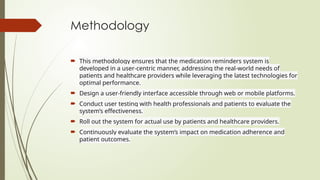
Methodology
 This methodology ensures that the medication reminders system is
developed in a user-centric manner, addressing the real-world needs of
patients and healthcare providers while leveraging the latest technologies for
optimal performance.
 Design a user-friendly interface accessible through web or mobile platforms.
 Conduct user testing with health professionals and patients to evaluate the
system’s effectiveness.
 Roll out the system for actual use by patients and healthcare providers.
 Continuously evaluate the system’s impact on medication adherence and
patient outcomes.
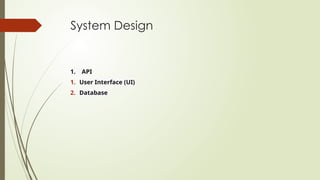
System Design
1. API
1. User Interface (UI)
2. Database
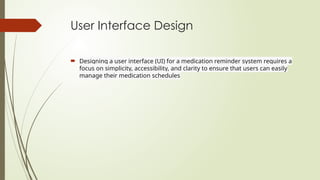
User Interface Design
 Designing a user interface (UI) for a medication reminder system requires a
focus on simplicity, accessibility, and clarity to ensure that users can easily
manage their medication schedules
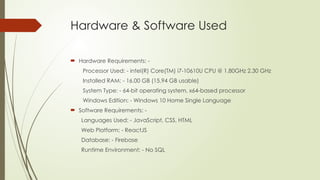
Hardware & Software Used
 Hardware Requirements: -
Processor Used: - intel(R) Core(TM) i7-10610U CPU @ 1.80GHz 2.30 GHz
Installed RAM: - 16.00 GB (15.94 GB usable)
System Type: - 64-bit operating system, x64-based processor
Windows Edition: - Windows 10 Home Single Language
 Software Requirements: -
Languages Used: - JavaScript, CSS, HTML
Web Platform: - ReactJS
Database: - Firebase
Runtime Environment: - No SQL
Future Scope
 The future scope of medication reminder systems is quite promising, with
potential advancements that could significantly enhance patient care and
medication management. Here are some anticipated developments:-
 Utilizing artificial intelligence to analyze patient data and personalize
medication schedules.
 Syncing with smartwatches and fitness trackers to provide real-time health
monitoring and medication alerts.
 Employing AR to create interactive and engaging medication schedules.
 Advanced robotics to automate medication dispensing, reducing errors and
improving efficiency.
.
THANK YOU

Presentation ON MEDICATION REMINDER SYSTEM.pptx

  • 1.
  • 2.
    Introduction  Welcome toMediSafe, a new reminder service for easy .  Our mission is to empower patients to seamlessly manage their medications.  Let me introduce you to the concept of medication reminder systems. These innovative solutions aim to address the common issue of medication non- adherence  A digital solution that improves communication, appointment adherence, and medication adherence for healthcare providers and patients
  • 3.
    Theoretical Background  Thetheoretical background of medication reminder systems. These systems play a crucial role in improving patient adherence to prescribed medications, which is essential for successful treatment outcomes.  medication reminder systems bridge the gap between prescribed treatments and patient adherence, ultimately contributing to better health outcomes. While challenges remain, ongoing research and technological innovations continue to enhance these systems.
  • 4.
    Problem Definition A problemdefinition for a medication reminder system would outline the specific challenges and requirements associated with ensuring that patients take their medications as prescribed. 1. Problem Statement: Patients often forget or neglect to take their medications on time, which can lead to suboptimal treatment outcomes and increased healthcare costs. 2. Objective: To design a system that reliably reminds patients to take their medication at the correct times, thereby improving adherence to prescribed treatment regimens. 3. Scope: The system should cater to various patient needs, including those with complex medication schedules, chronic conditions, and those who require caregiver support. 4. Constraints: The solution must be user-friendly, accessible to patients of all ages, and capable of integrating with existing healthcare systems
  • 5.
    Project Objectives  Theproject objectives for a medication reminder system are typically centered around enhancing patient adherence to their medication schedules, improving health outcomes, and streamlining communication between patients and healthcare providers.
  • 6.
    Project Scope  Theproject scope for a medication reminders system typically encompasses the following elements: 1. Objective: To develop a comprehensive system that assists individuals in managing their medication schedules, ensuring timely intake, and improving adherence to prescribed treatments. 2. Features: 1. User Profiles: To store personal information, medication details, and schedules. 2. Reminders: Notifications via app, SMS, or email to remind users about their medications. 3. Medication Tracking: Monitor and log the intake of medicines. 4. Reports: Generate reports on medication adherence for users or healthcare providers.
  • 7.
    System Analysis  Asystem analysis of a medication reminder system involves examining the components and processes that make up the system to ensure it meets the needs of its users effectively. Here’s a breakdown of what such an analysis might entail: 1. User Requirements Analysis: 1. Understanding the needs of different user groups, including patients, caregivers, and healthcare providers. 2. Identifying the types of medications and schedules the system must support. 2. Functional Requirements: 1. Defining the core functionalities such as setting up medication schedules, sending reminders, and tracking adherence. 2. Ensuring the system can handle various medication forms and dosing requirement.
  • 8.
    Proposed System  Theproposed system for a medication reminders system aims to enhance medication adherence and management through various technological solutions. Here’s an overview of different approaches based on recent research and implementations: Telemedicine Reminder System: A user-friendly interface accessible through web and mobile platforms. Features appointment management, automated reminders, and medication reminder modules. Communication via SMS, email, or push notifications.
  • 9.
    Methodology  This methodologyensures that the medication reminders system is developed in a user-centric manner, addressing the real-world needs of patients and healthcare providers while leveraging the latest technologies for optimal performance.  Design a user-friendly interface accessible through web or mobile platforms.  Conduct user testing with health professionals and patients to evaluate the system’s effectiveness.  Roll out the system for actual use by patients and healthcare providers.  Continuously evaluate the system’s impact on medication adherence and patient outcomes.
  • 10.
    System Design 1. API 1.User Interface (UI) 2. Database
  • 11.
    User Interface Design Designing a user interface (UI) for a medication reminder system requires a focus on simplicity, accessibility, and clarity to ensure that users can easily manage their medication schedules
  • 12.
    Hardware & SoftwareUsed  Hardware Requirements: - Processor Used: - intel(R) Core(TM) i7-10610U CPU @ 1.80GHz 2.30 GHz Installed RAM: - 16.00 GB (15.94 GB usable) System Type: - 64-bit operating system, x64-based processor Windows Edition: - Windows 10 Home Single Language  Software Requirements: - Languages Used: - JavaScript, CSS, HTML Web Platform: - ReactJS Database: - Firebase Runtime Environment: - No SQL
  • 13.
    Future Scope  Thefuture scope of medication reminder systems is quite promising, with potential advancements that could significantly enhance patient care and medication management. Here are some anticipated developments:-  Utilizing artificial intelligence to analyze patient data and personalize medication schedules.  Syncing with smartwatches and fitness trackers to provide real-time health monitoring and medication alerts.  Employing AR to create interactive and engaging medication schedules.  Advanced robotics to automate medication dispensing, reducing errors and improving efficiency.
  • 14.