Download to read offline
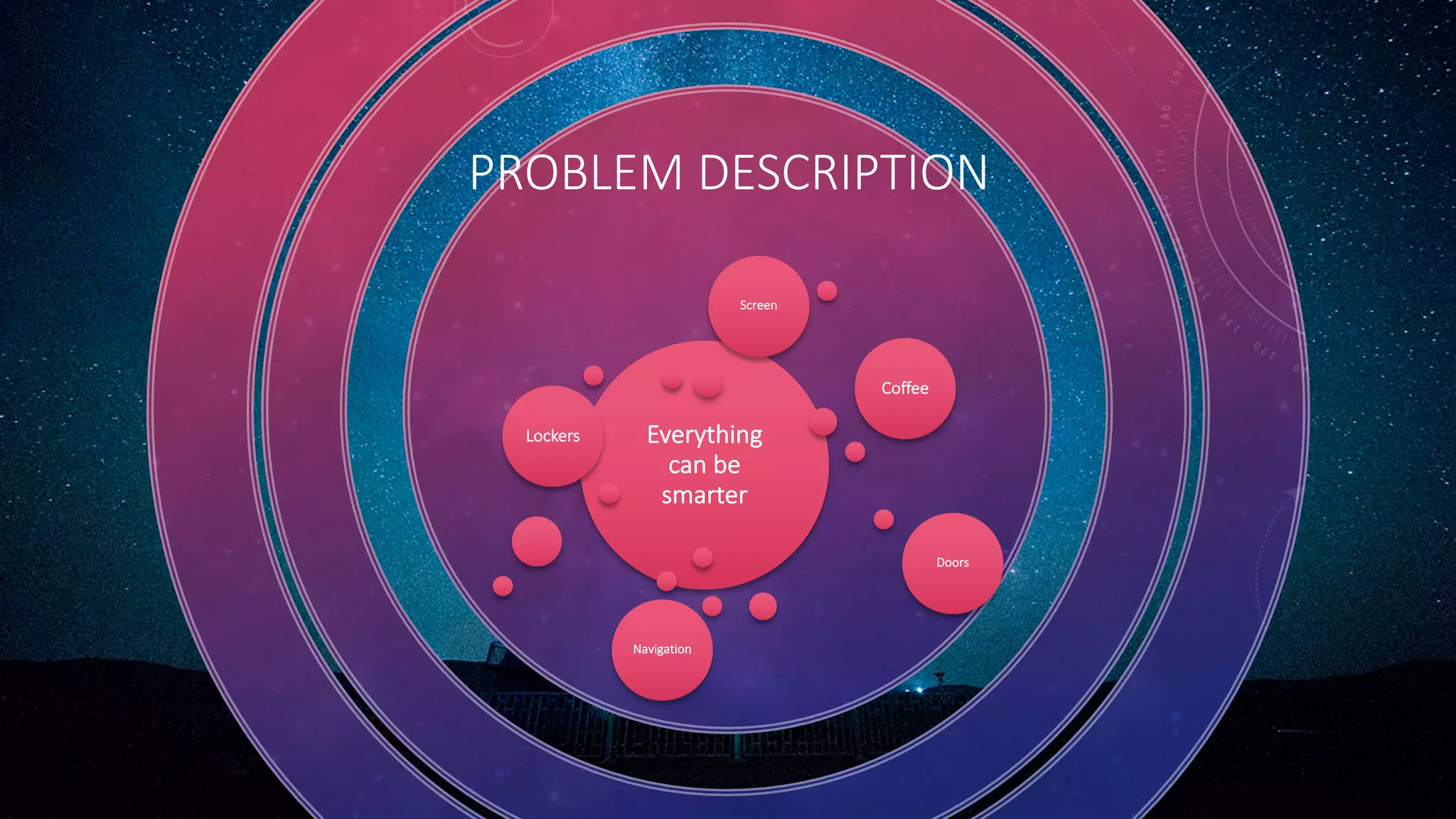
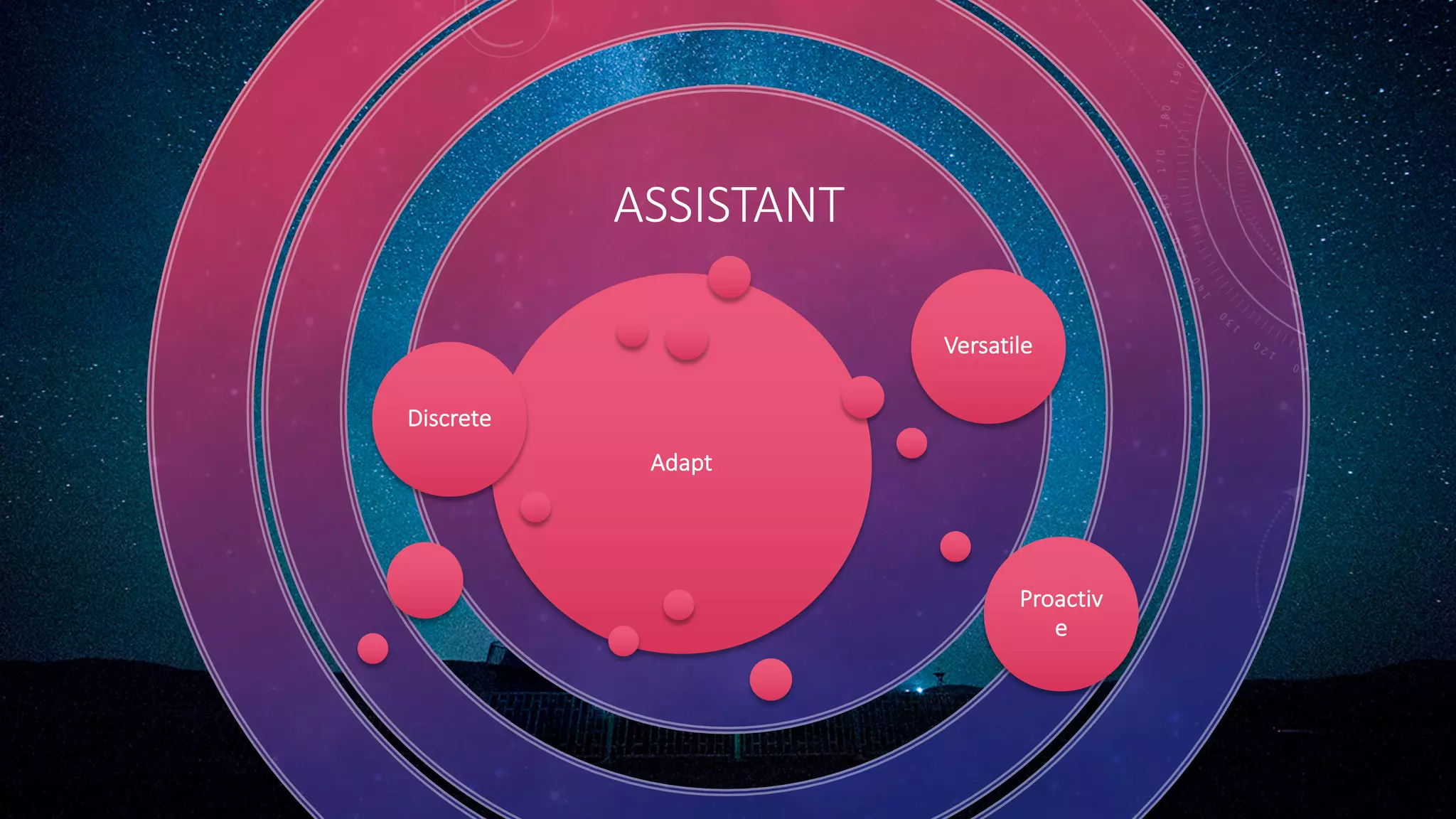
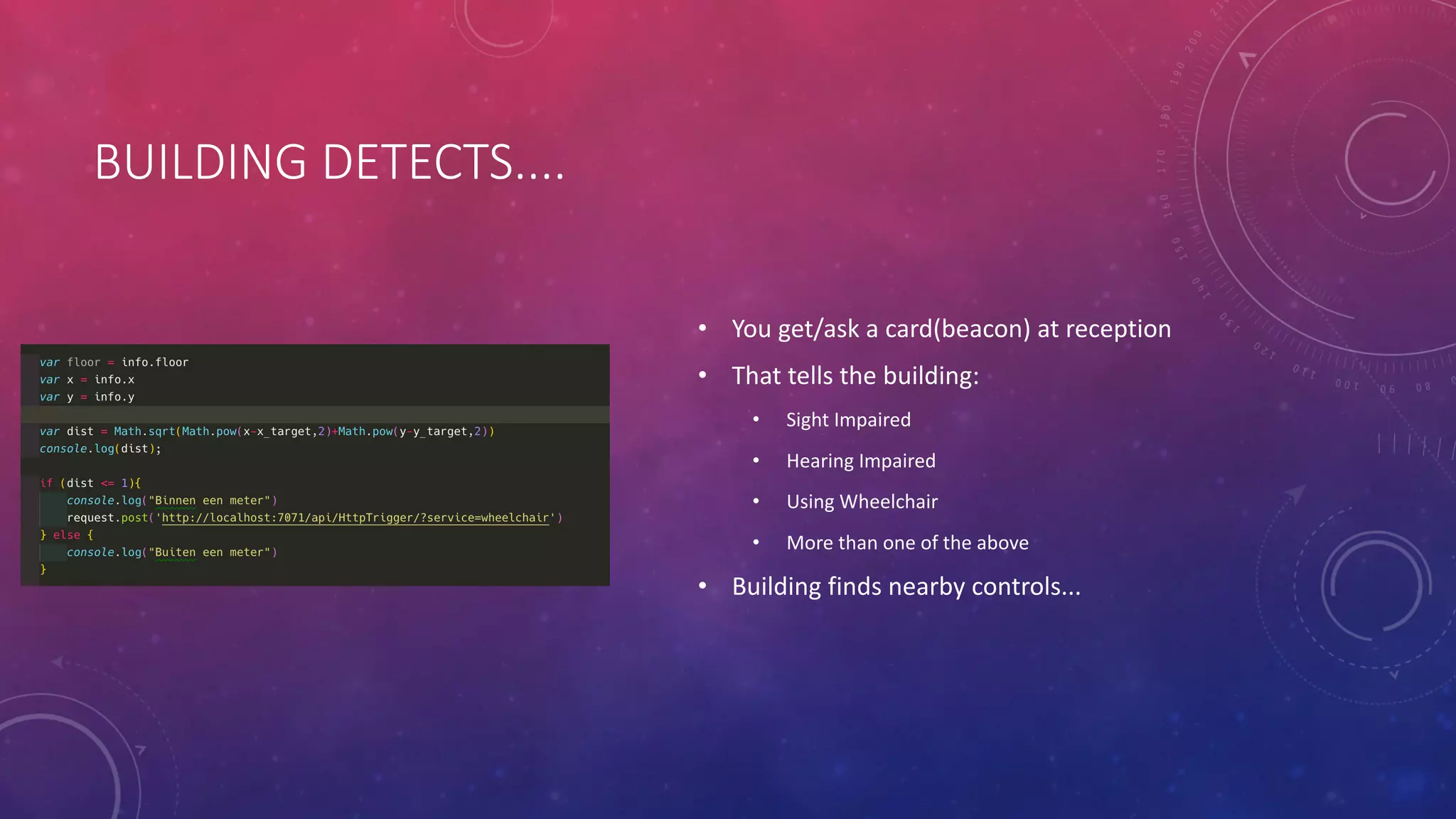
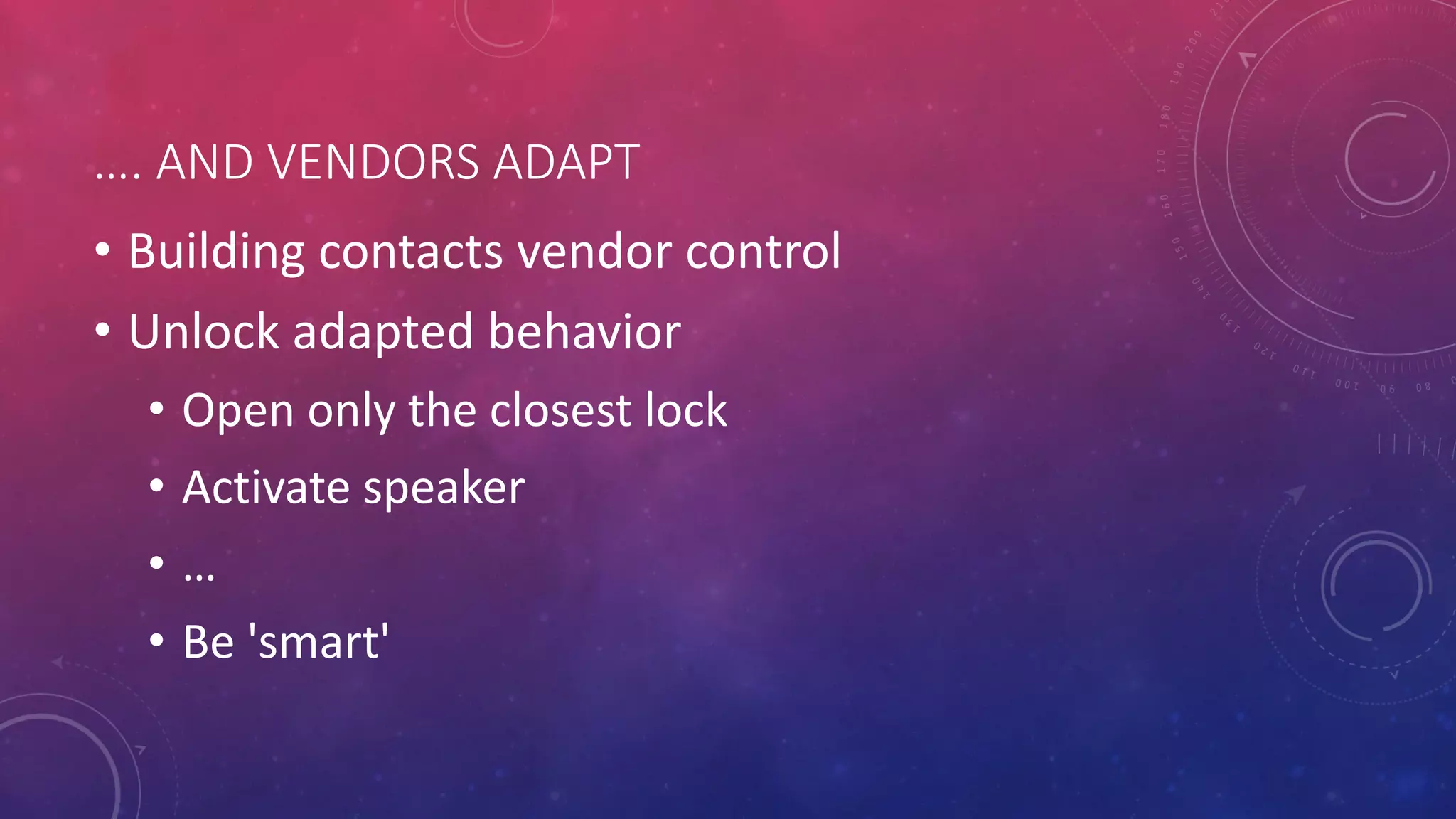
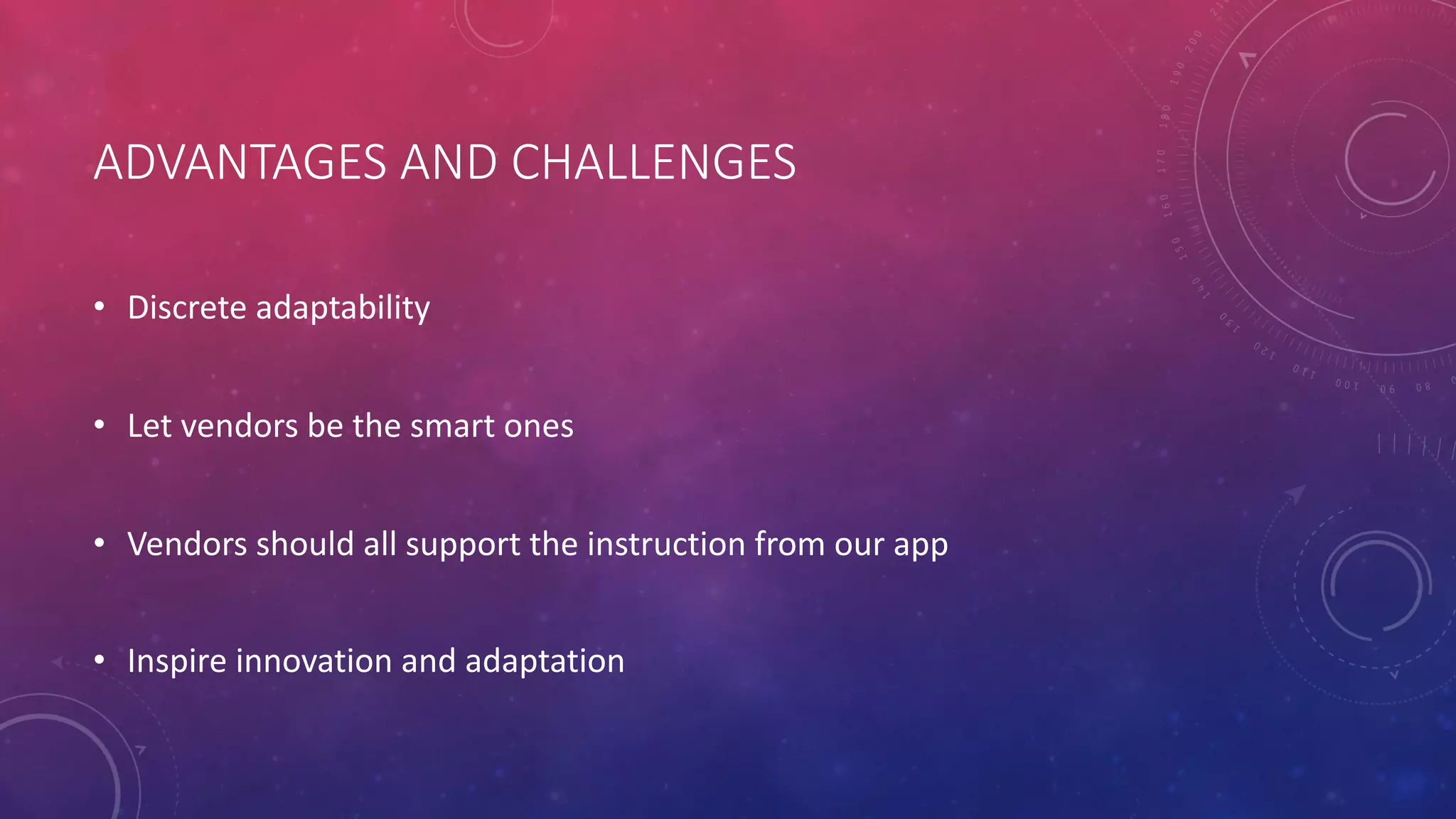



The document discusses how a smart building can adapt to better assist users with different needs or impairments. The building detects information from cards received at reception about any visual, hearing, or mobility impairments and then signals nearby controls like lockers, doors, and screens to adapt accordingly, such as unlocking only the closest locker or activating speakers. This is done by the building contacting the control systems of different vendors to unlock adapted behaviors tailored to each user's profile, with the goal of discreetly providing assistance. The approach aims to leverage existing smart technologies from different vendors to inspire innovation and adaptation while allowing the vendors themselves to develop specialized adaptive functions.


