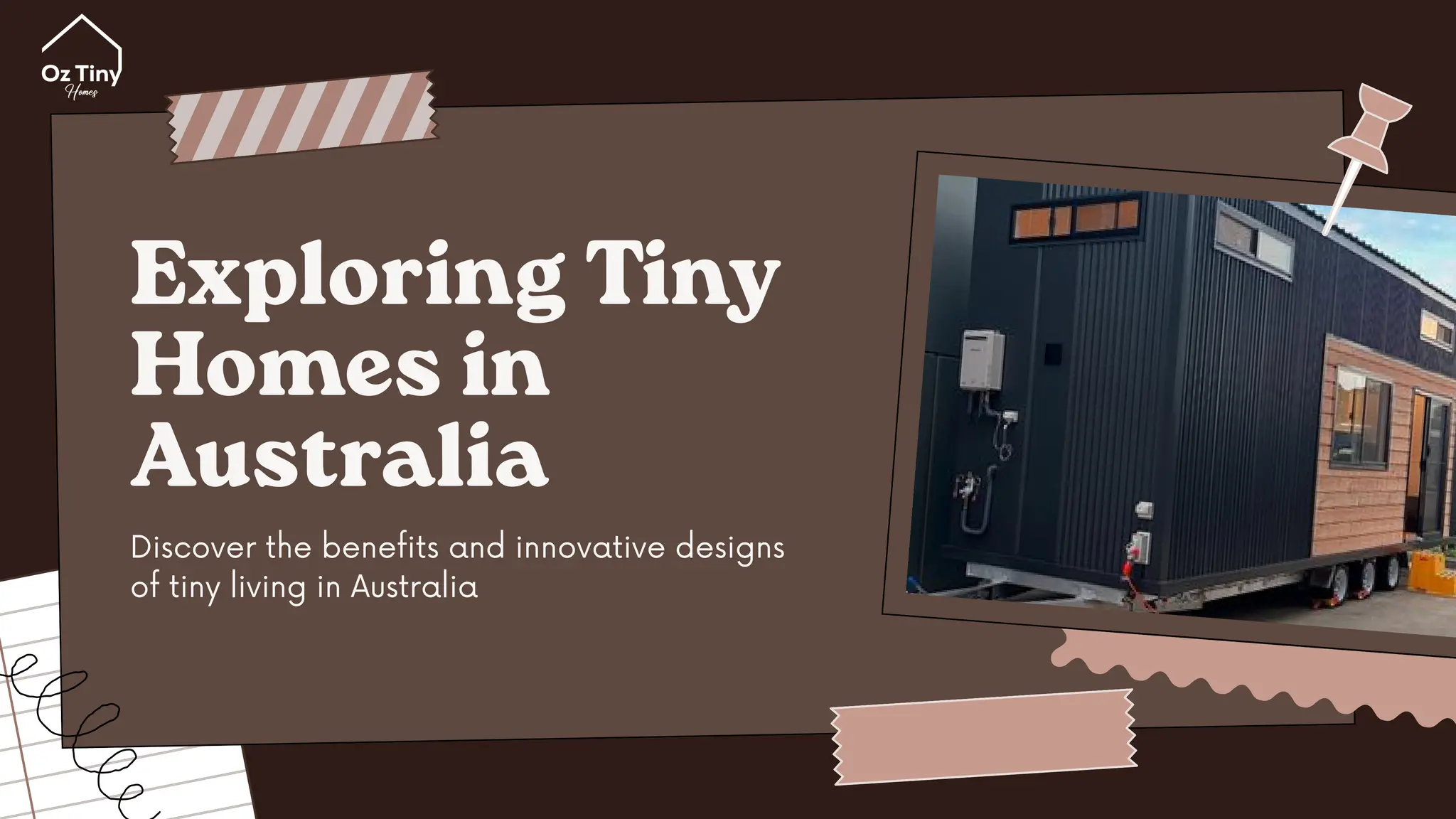
Exploring Tiny
Homes in
Australia
Discover the benefits and innovative designs
of tiny living in Australia
Affordability and financial
freedom through tiny homes
Sustainable living with reduced
ecological footprints
Innovative designs maximizing
space and functionality
Community building and
connected living experiences
Exploring Key Concepts of Tiny
Living in Australia
Tiny homes offer affordable living
solutions while promoting sustainable
lifestyles. They require fewer
resources to build and maintain,
which helps reduce environmental
impact. Additionally, downsizing into
a tiny home encourages a simpler,
more intentional way of living,
leading to greater financial
freedom and less clutter.
The Many Benefits
of Tiny Homes
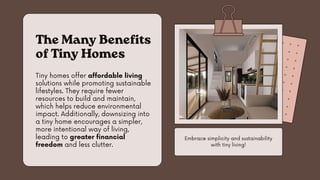
Embrace simplicity and sustainability
with tiny living!
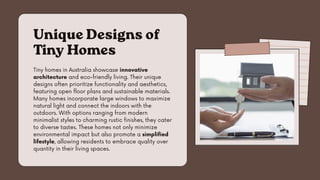
Tiny homes in Australia showcase innovative
architecture and eco-friendly living. Their unique
designs often prioritize functionality and aesthetics,
featuring open floor plans and sustainable materials.
Many homes incorporate large windows to maximize
natural light and connect the indoors with the
outdoors. With options ranging from modern
minimalist styles to charming rustic finishes, they cater
to diverse tastes. These homes not only minimize
environmental impact but also promote a simplified
lifestyle, allowing residents to embrace quality over
quantity in their living spaces.
Unique Designs of
Tiny Homes
Key Aspects of Tiny Home Living
Tiny homes offer a cost-
effective alternative to
traditional housing, making
homeownership accessible
for many Australians. Lower
build costs and minimal
upkeep expenses mean
that homeowners can invest
in their futures while
enjoying a simpler lifestyle.
Affordability and
Accessibility
Many tiny homes are
mobile, giving owners the
freedom to travel and
relocate without losing
their home. This flexibility
allows individuals to
explore various locations
across Australia while
maintaining a sense of
stability in their living
situation.
Flexibility and
Mobility
These homes are designed
with sustainability in mind,
using eco-friendly materials
and energy-efficient
appliances. Tiny homes
often have a smaller
carbon footprint,
promoting a more
environmentally friendly
way of living that aligns
with Australia’s commitment
to conservation.
Sustainability and
Eco-Friendliness
Living in tiny home
communities fosters a
strong sense of connection
among residents. Shared
values and communal
spaces encourage social
interactions, creating
supportive networks that
enhance the overall living
experience for tiny
homeowners.
Community and
Connection
Examples of Tiny
Home Communities
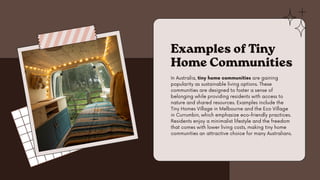
In Australia, tiny home communities are gaining
popularity as sustainable living options. These
communities are designed to foster a sense of
belonging while providing residents with access to
nature and shared resources. Examples include the
Tiny Homes Village in Melbourne and the Eco Village
in Currumbin, which emphasize eco-friendly practices.
Residents enjoy a minimalist lifestyle and the freedom
that comes with lower living costs, making tiny home
communities an attractive choice for many Australians.
Exploring the unique difficulties and effective strategies for thriving in Australia’s
growing tiny home community.
Challenges and Solutions in Tiny Home Living
Space Limitations
Maximizing
functionality is essential
as tiny homes have
limited space, requiring
innovative storage
solutions and multi-
purpose furniture.
Navigating local laws
can be challenging;
however, advocacy
and education are
paving the way for
more accommodating
policies.
Sustainability
Practices
Tiny homes offer eco-
friendly living options,
utilizing renewable
energy sources and
promoting a minimalist
lifestyle that reduces
overall consumption.
Zoning Regulations
Thankyou
https:/
/www.oztinyhomes.com/
Contect Us : (+61) 468 883 853
Thank you for being a part of our story. Whether you're dreaming of your own tiny home or
simply curious about the movement, we're here to help.

Presentation - Exploring Tiny Homes in Australia.pdf

  • 1.
    Exploring Tiny Homes in Australia Discoverthe benefits and innovative designs of tiny living in Australia
  • 2.
    Affordability and financial freedomthrough tiny homes Sustainable living with reduced ecological footprints Innovative designs maximizing space and functionality Community building and connected living experiences Exploring Key Concepts of Tiny Living in Australia
  • 3.
    Tiny homes offeraffordable living solutions while promoting sustainable lifestyles. They require fewer resources to build and maintain, which helps reduce environmental impact. Additionally, downsizing into a tiny home encourages a simpler, more intentional way of living, leading to greater financial freedom and less clutter. The Many Benefits of Tiny Homes Embrace simplicity and sustainability with tiny living!
  • 4.
    Tiny homes inAustralia showcase innovative architecture and eco-friendly living. Their unique designs often prioritize functionality and aesthetics, featuring open floor plans and sustainable materials. Many homes incorporate large windows to maximize natural light and connect the indoors with the outdoors. With options ranging from modern minimalist styles to charming rustic finishes, they cater to diverse tastes. These homes not only minimize environmental impact but also promote a simplified lifestyle, allowing residents to embrace quality over quantity in their living spaces. Unique Designs of Tiny Homes
  • 5.
    Key Aspects ofTiny Home Living Tiny homes offer a cost- effective alternative to traditional housing, making homeownership accessible for many Australians. Lower build costs and minimal upkeep expenses mean that homeowners can invest in their futures while enjoying a simpler lifestyle. Affordability and Accessibility Many tiny homes are mobile, giving owners the freedom to travel and relocate without losing their home. This flexibility allows individuals to explore various locations across Australia while maintaining a sense of stability in their living situation. Flexibility and Mobility These homes are designed with sustainability in mind, using eco-friendly materials and energy-efficient appliances. Tiny homes often have a smaller carbon footprint, promoting a more environmentally friendly way of living that aligns with Australia’s commitment to conservation. Sustainability and Eco-Friendliness Living in tiny home communities fosters a strong sense of connection among residents. Shared values and communal spaces encourage social interactions, creating supportive networks that enhance the overall living experience for tiny homeowners. Community and Connection
  • 6.
    Examples of Tiny HomeCommunities In Australia, tiny home communities are gaining popularity as sustainable living options. These communities are designed to foster a sense of belonging while providing residents with access to nature and shared resources. Examples include the Tiny Homes Village in Melbourne and the Eco Village in Currumbin, which emphasize eco-friendly practices. Residents enjoy a minimalist lifestyle and the freedom that comes with lower living costs, making tiny home communities an attractive choice for many Australians.
  • 7.
    Exploring the uniquedifficulties and effective strategies for thriving in Australia’s growing tiny home community. Challenges and Solutions in Tiny Home Living Space Limitations Maximizing functionality is essential as tiny homes have limited space, requiring innovative storage solutions and multi- purpose furniture. Navigating local laws can be challenging; however, advocacy and education are paving the way for more accommodating policies. Sustainability Practices Tiny homes offer eco- friendly living options, utilizing renewable energy sources and promoting a minimalist lifestyle that reduces overall consumption. Zoning Regulations
  • 8.
    Thankyou https:/ /www.oztinyhomes.com/ Contect Us :(+61) 468 883 853 Thank you for being a part of our story. Whether you're dreaming of your own tiny home or simply curious about the movement, we're here to help.