Shaping XR Experiences in Healthcare: Leveraging
User Experience and Feedback for
Enhancing Immersive Designs
Jose Ferrer Costa, MD, MsC
Innovation and Projects
Badalona Serveis Assistencials (BSA), Spain
Presentation Overview
1. Introduction and BSA´s VR Projects Overview
2. Four Key XR Projects - Insights and Lessons Learned
3. Key Takeaways
Enhancing Healthcare XR: User Experience
and Feedback in Immersive Design
1. Introduction and BSA´s VR
Projects Overview
From Clinical Practice
to XR Innovation at BSA
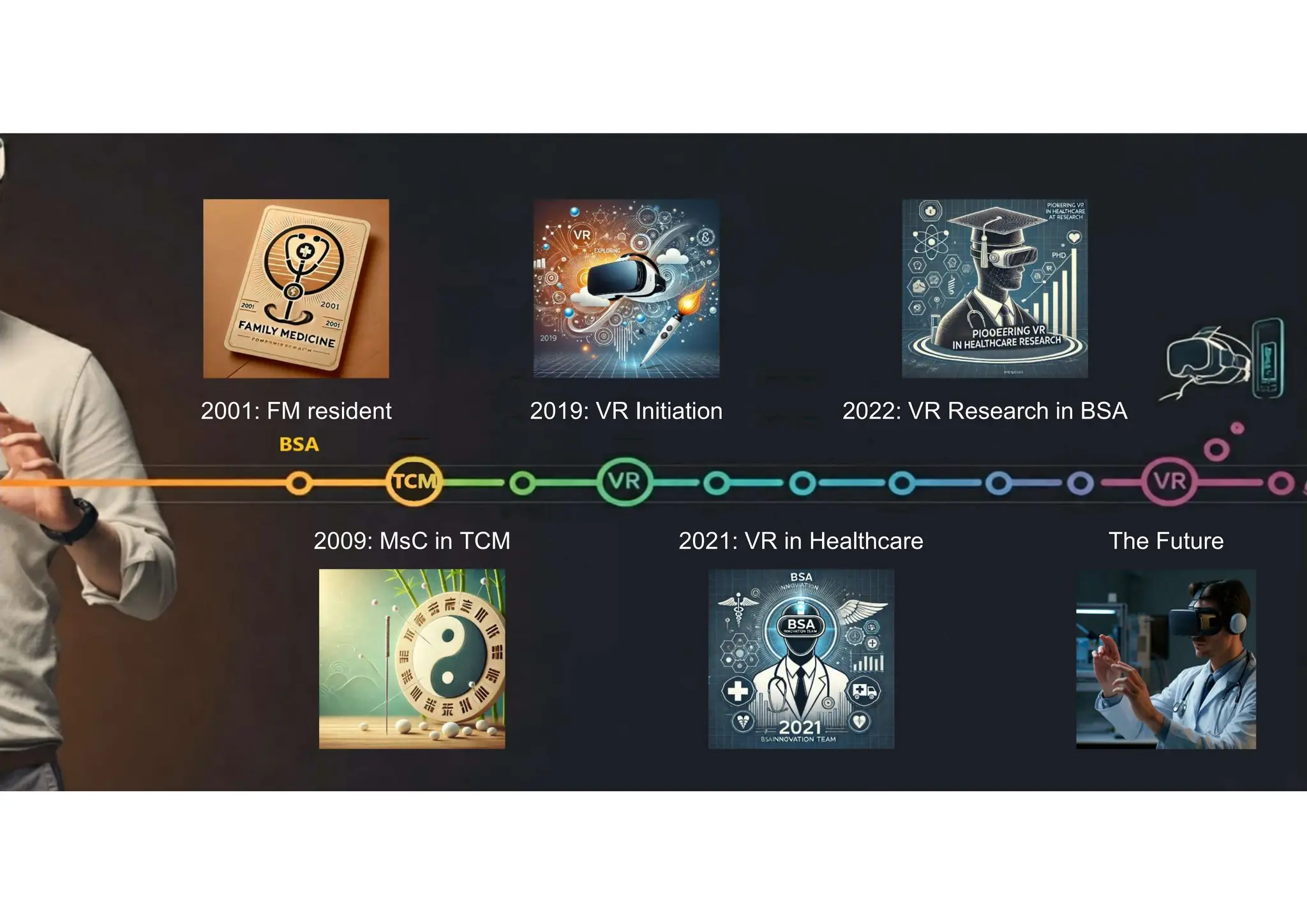
2001: FM resident
2009: MsC in TCM 2021: VR in Healthcare
2019: VR Initiation 2022: VR Research in BSA
The Future
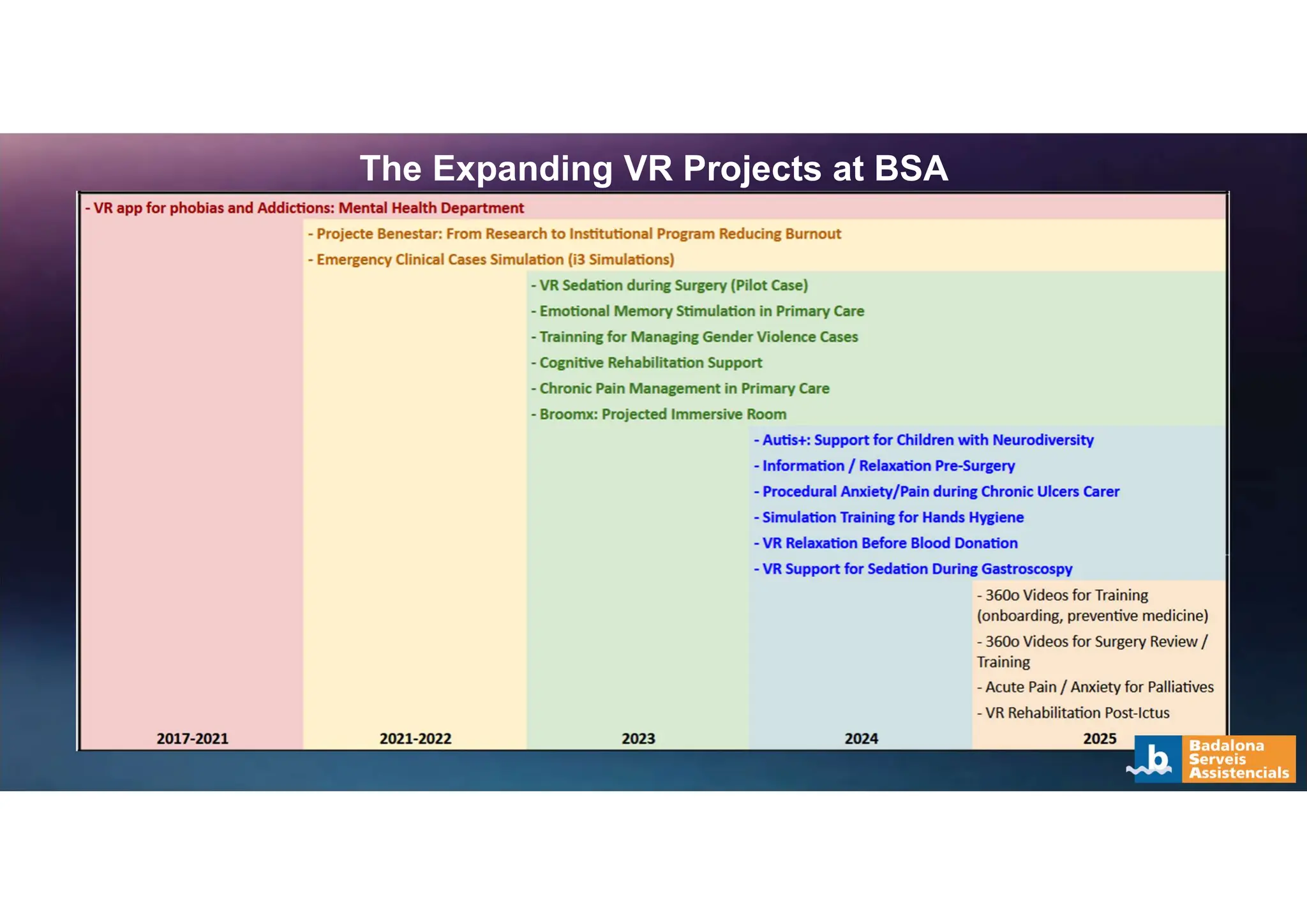
The Expanding VR Projects at BSA
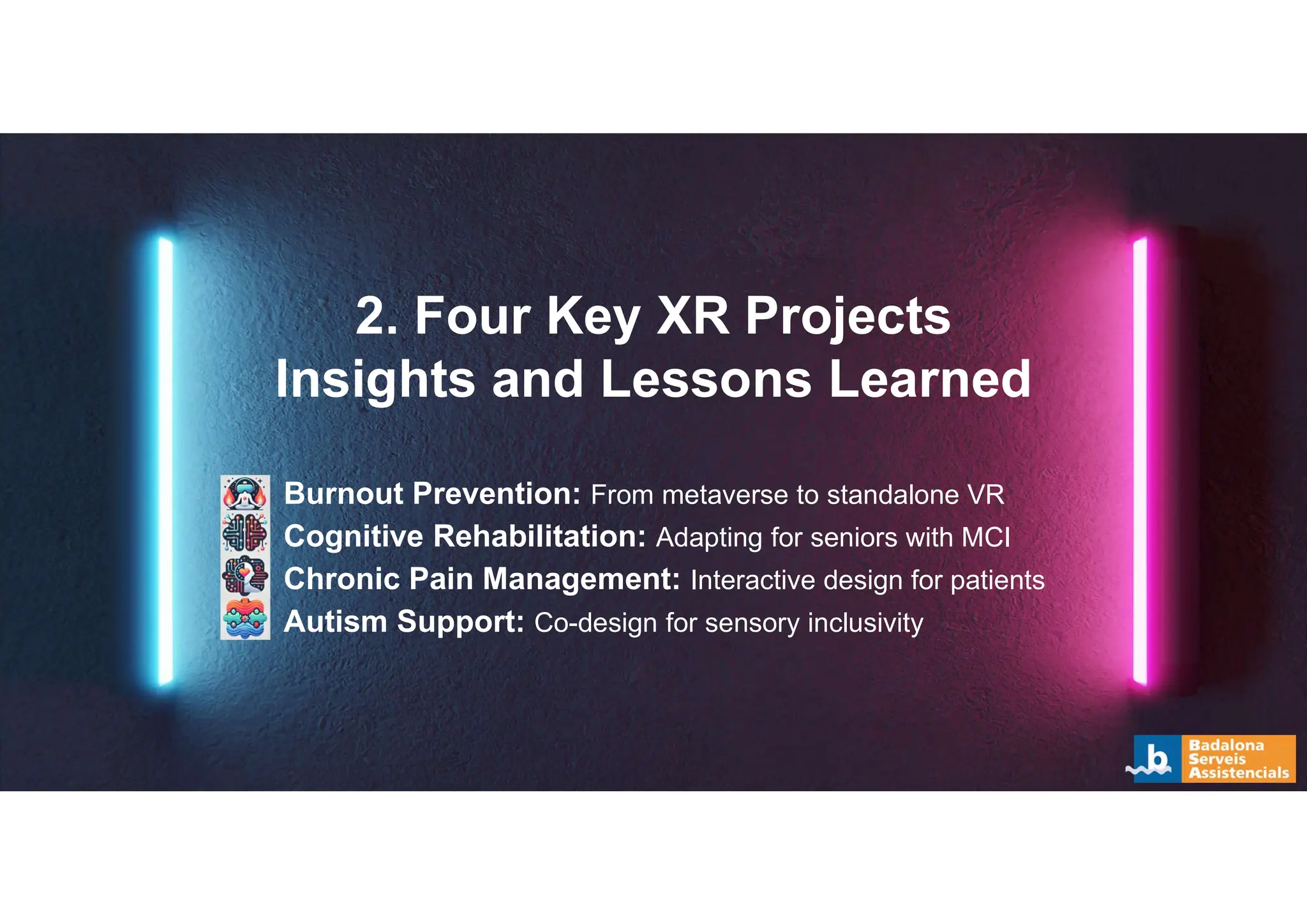
2. Four Key XR Projects
Insights and Lessons Learned
Burnout Prevention: From metaverse to standalone VR
Cognitive Rehabilitation: Adapting for seniors with MCI
Chronic Pain Management: Interactive design for patients
Autism Support: Co-design for sensory inclusivity
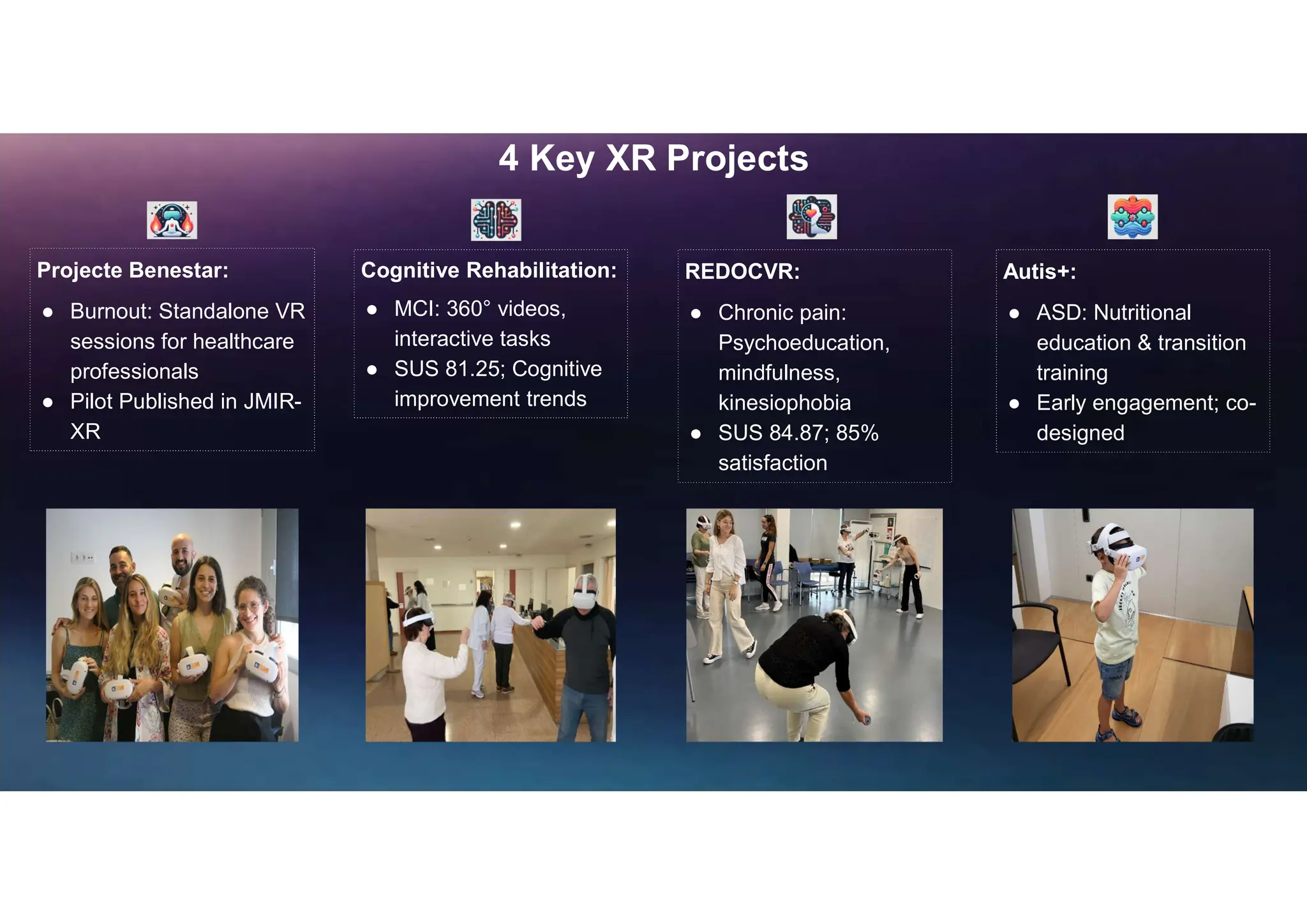
4 Key XR Projects
Cognitive Rehabilitation:
● MCI: 360° videos,
interactive tasks
● SUS 81.25; Cognitive
improvement trends
Projecte Benestar:
● Burnout: Standalone VR
sessions for healthcare
professionals
● Pilot Published in JMIR-
XR
REDOCVR:
● Chronic pain:
Psychoeducation,
mindfulness,
kinesiophobia
● SUS 84.87; 85%
satisfaction
Autis+:
● ASD: Nutritional
education & transition
training
● Early engagement; co-
designed
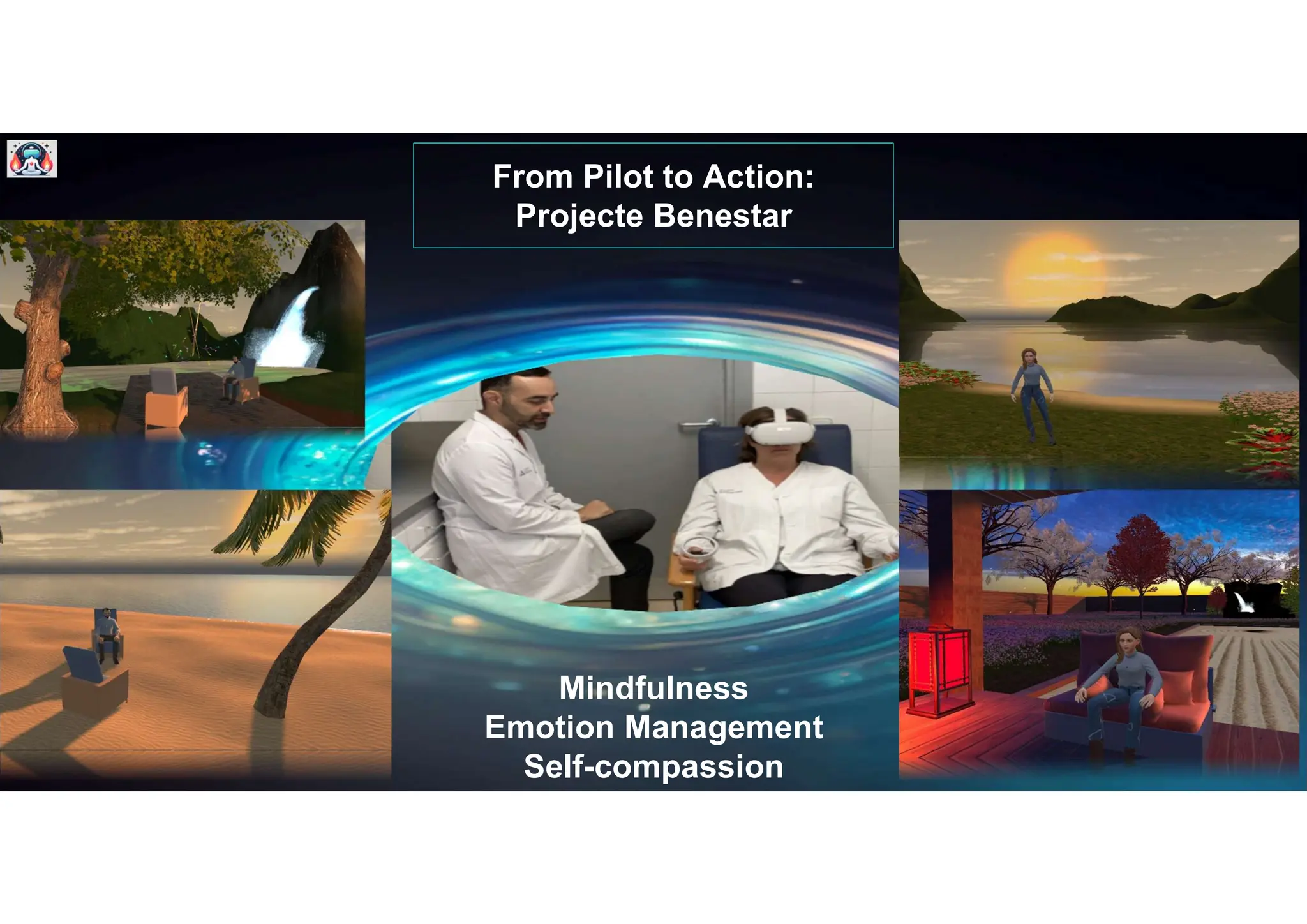
From Pilot to Action:
Projecte Benestar
Mindfulness
Emotion Management
Self-compassion
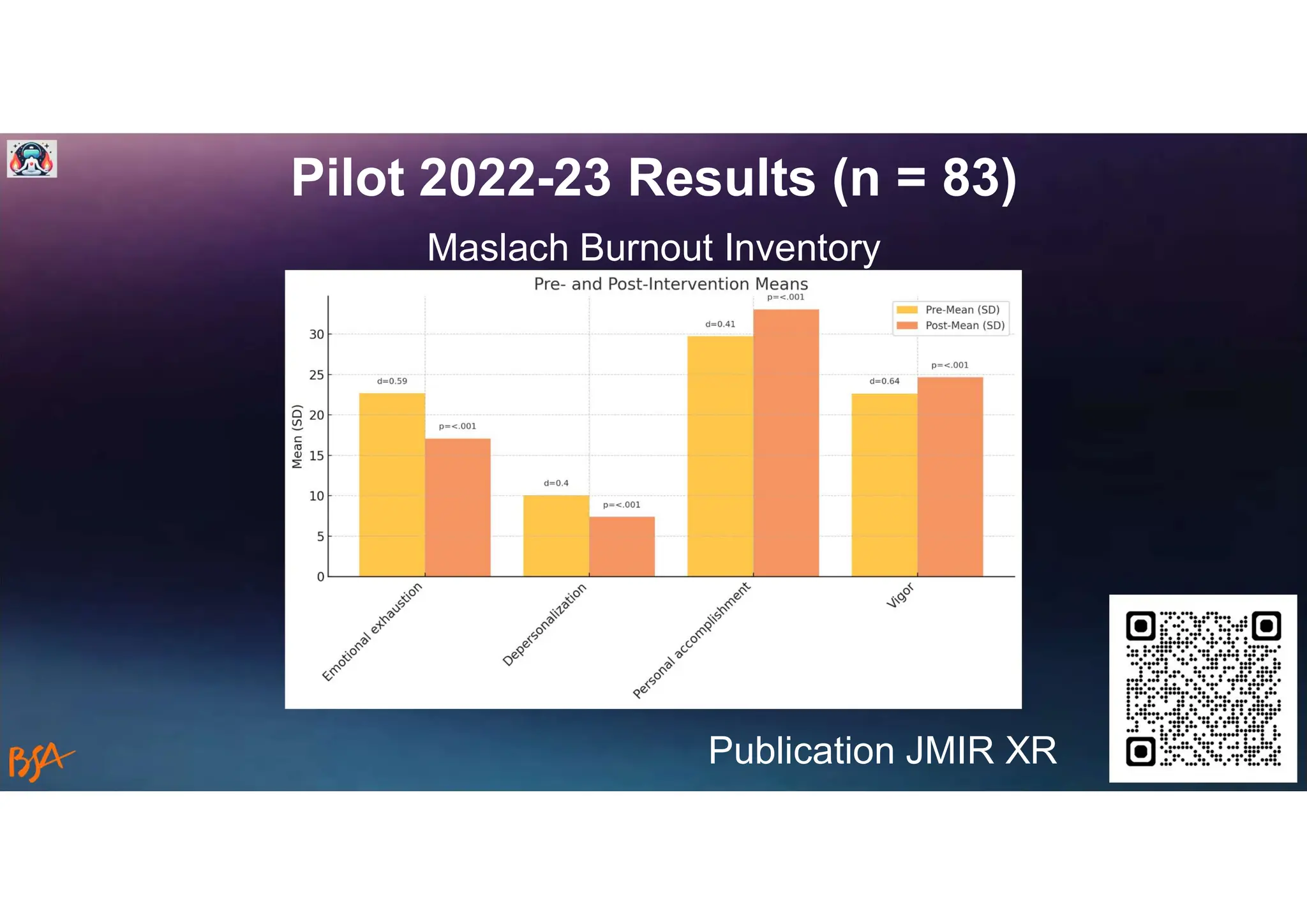
Pilot 2022-23 Results (n = 83)
Publication JMIR XR
Maslach Burnout Inventory
Video - BSABenestarEnvironments
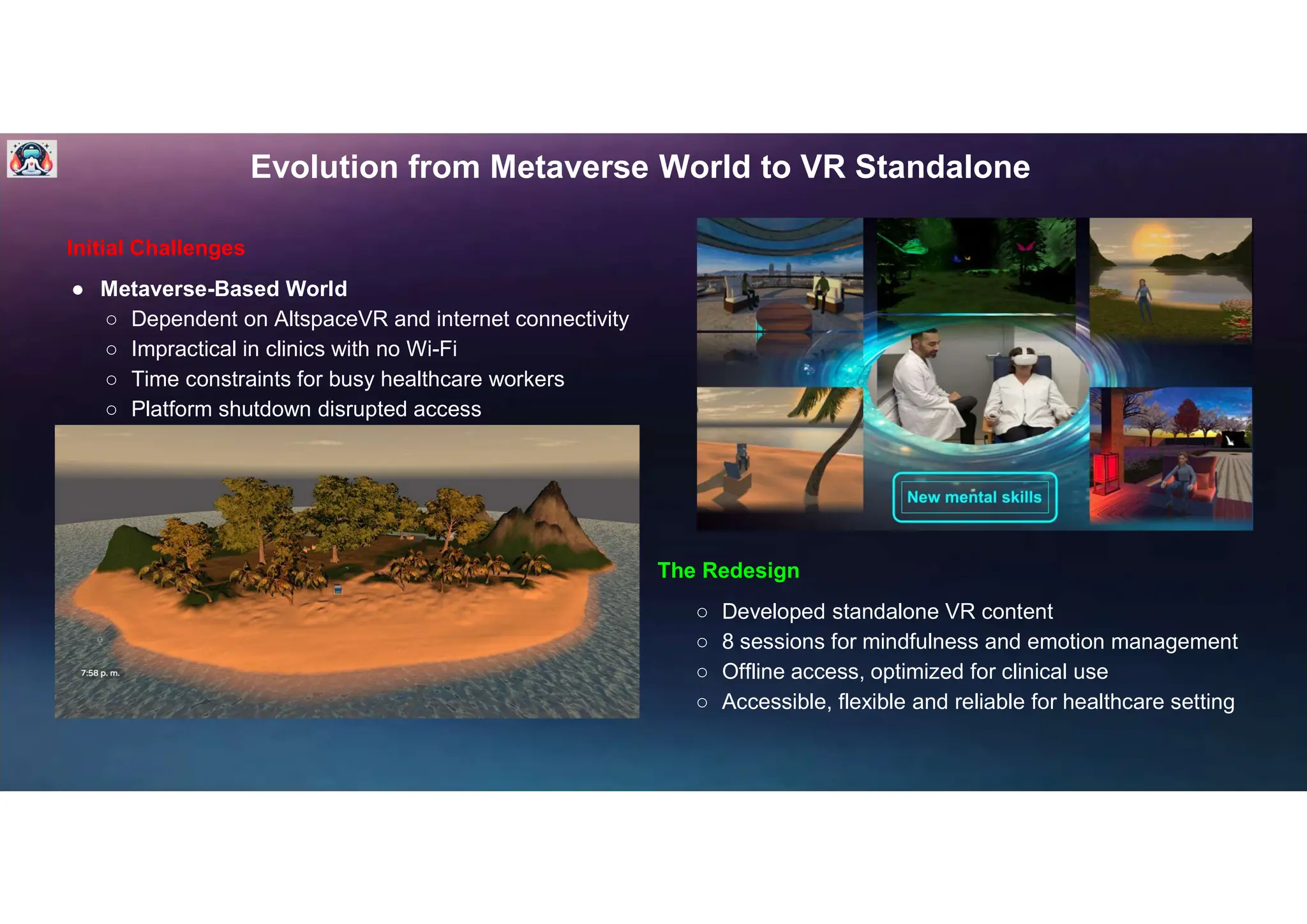
Evolution from Metaverse World to VR Standalone
Initial Challenges
● Metaverse-Based World
○ Dependent on AltspaceVR and internet connectivity
○ Impractical in clinics with no Wi-Fi
○ Time constraints for busy healthcare workers
○ Platform shutdown disrupted access
The Redesign
○ Developed standalone VR content
○ 8 sessions for mindfulness and emotion management
○ Offline access, optimized for clinical use
○ Accessible, flexible and reliable for healthcare setting
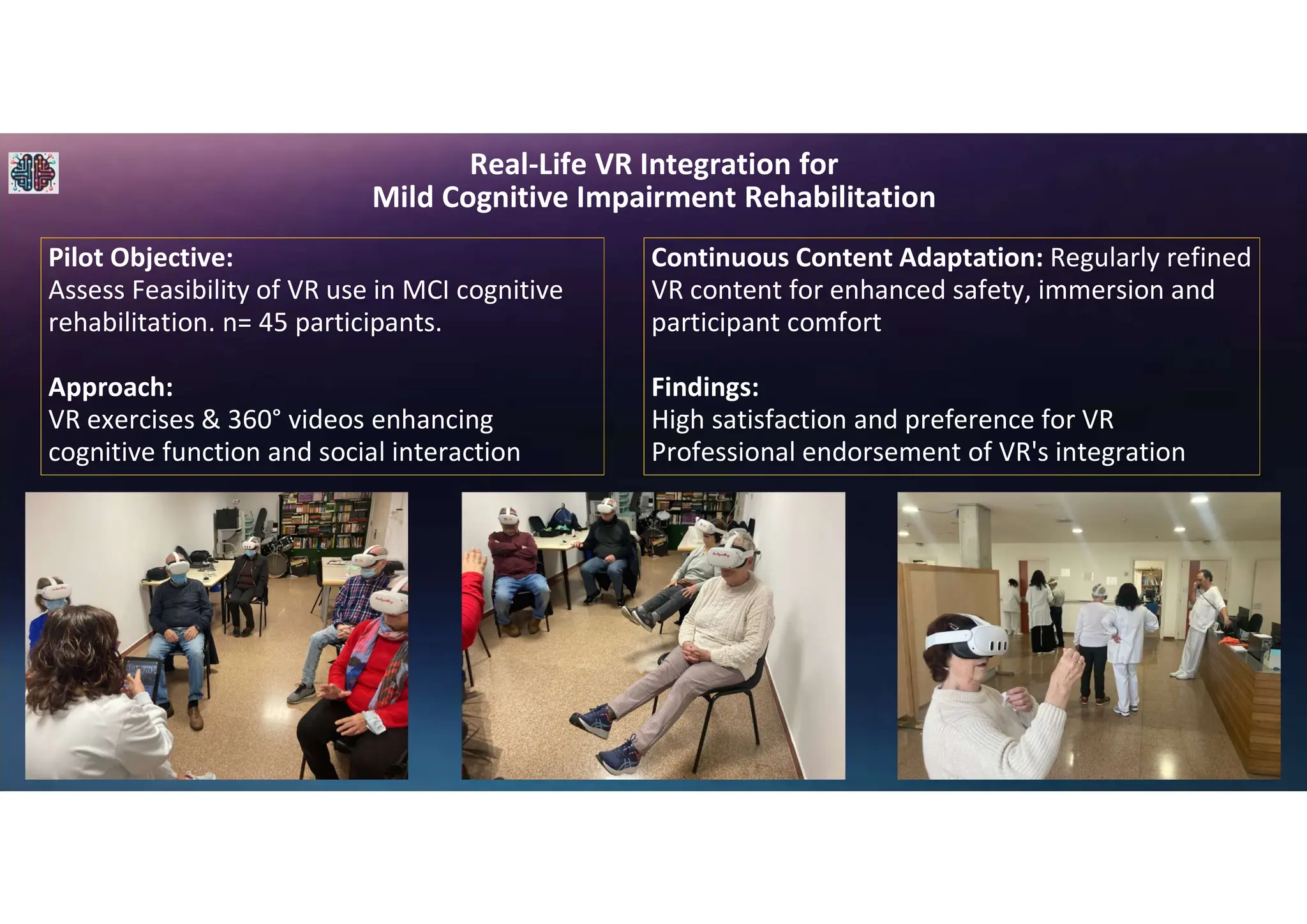
Real-Life VR Integration for
Mild Cognitive Impairment Rehabilitation
Pilot Objective:
Assess Feasibility of VR use in MCI cognitive
rehabilitation. n= 45 participants.
Approach:
VR exercises & 360° videos enhancing
cognitive function and social interaction
Continuous Content Adaptation: Regularly refined
VR content for enhanced safety, immersion and
participant comfort
Findings:
High satisfaction and preference for VR
Professional endorsement of VR's integration
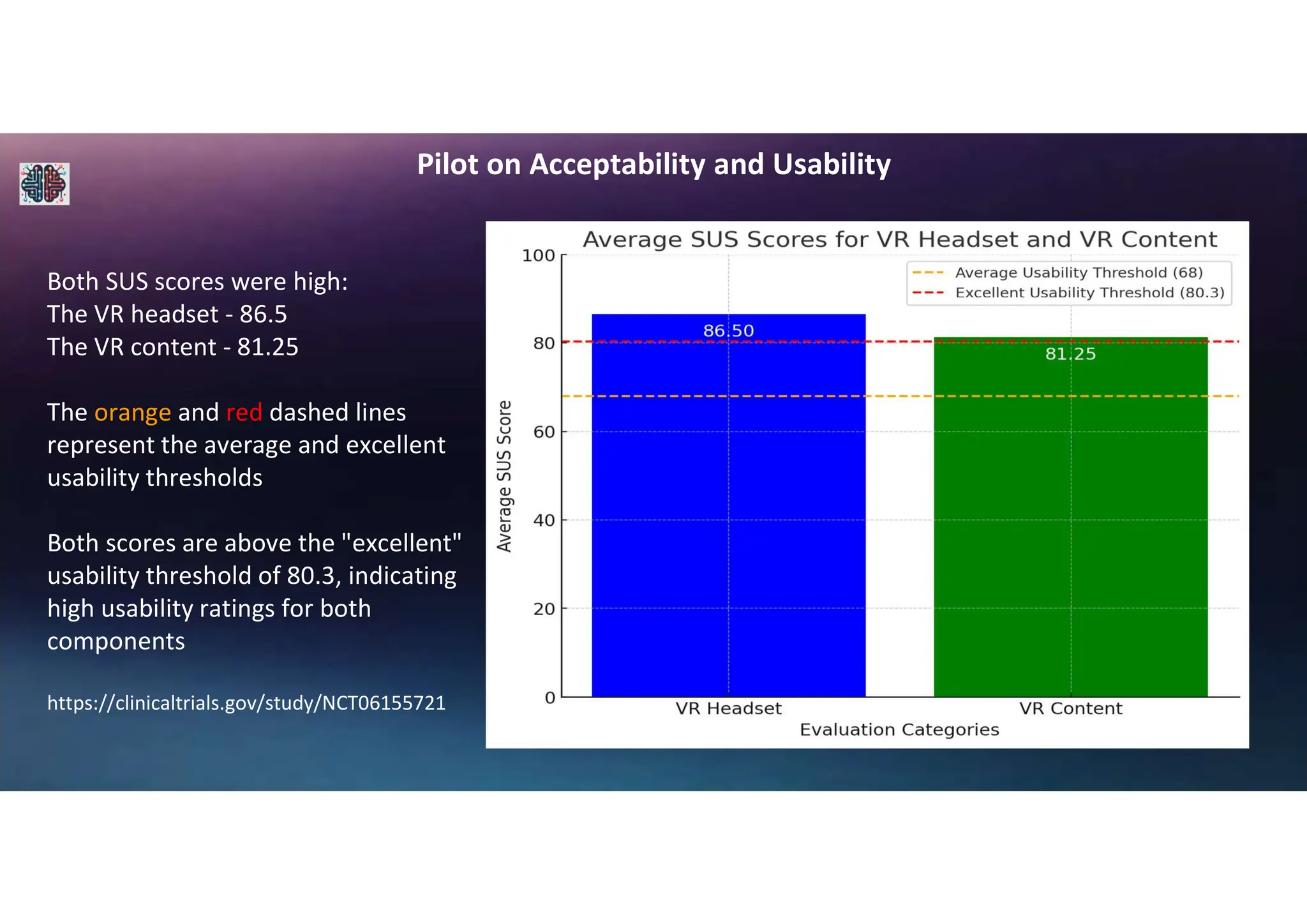
Both SUS scores were high:
The VR headset - 86.5
The VR content - 81.25
The orange and red dashed lines
represent the average and excellent
usability thresholds
Both scores are above the "excellent"
usability threshold of 80.3, indicating
high usability ratings for both
components
https://clinicaltrials.gov/study/NCT06155721
Pilot on Acceptability and Usability
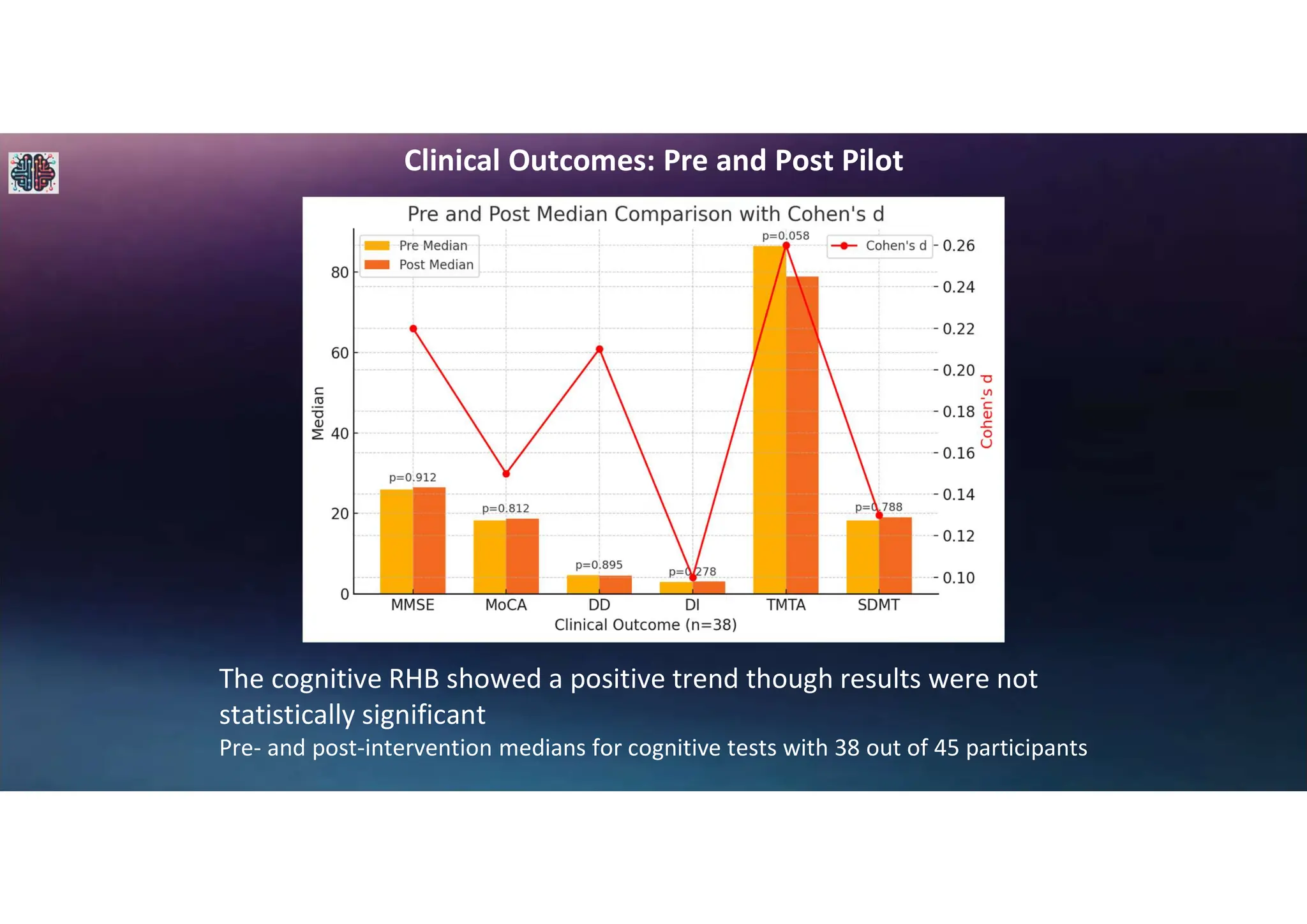
Clinical Outcomes: Pre and Post Pilot
The cognitive RHB showed a positive trend though results were not
statistically significant
Pre- and post-intervention medians for cognitive tests with 38 out of 45 participants
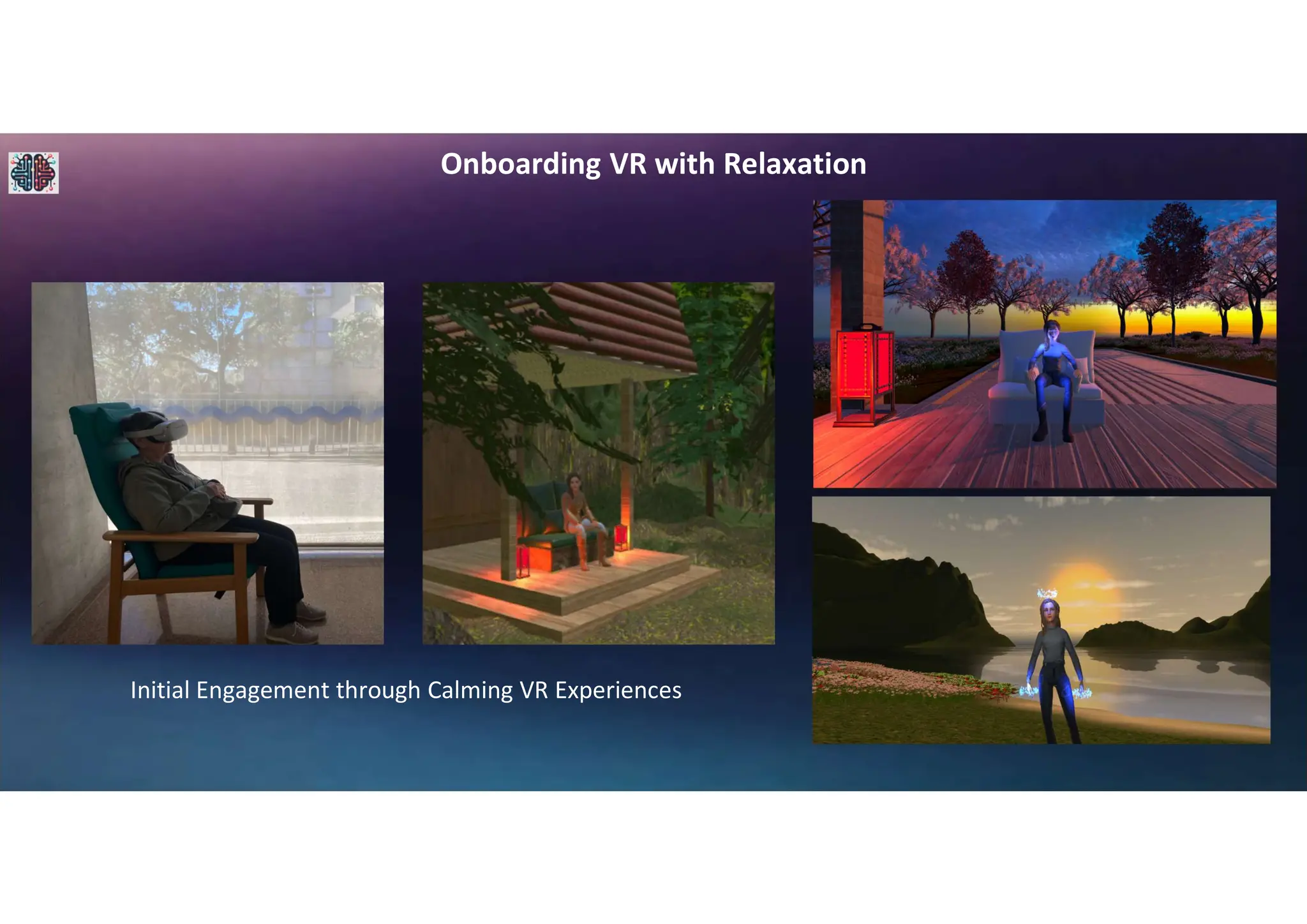
Onboarding VR with Relaxation
Initial Engagement through Calming VR Experiences
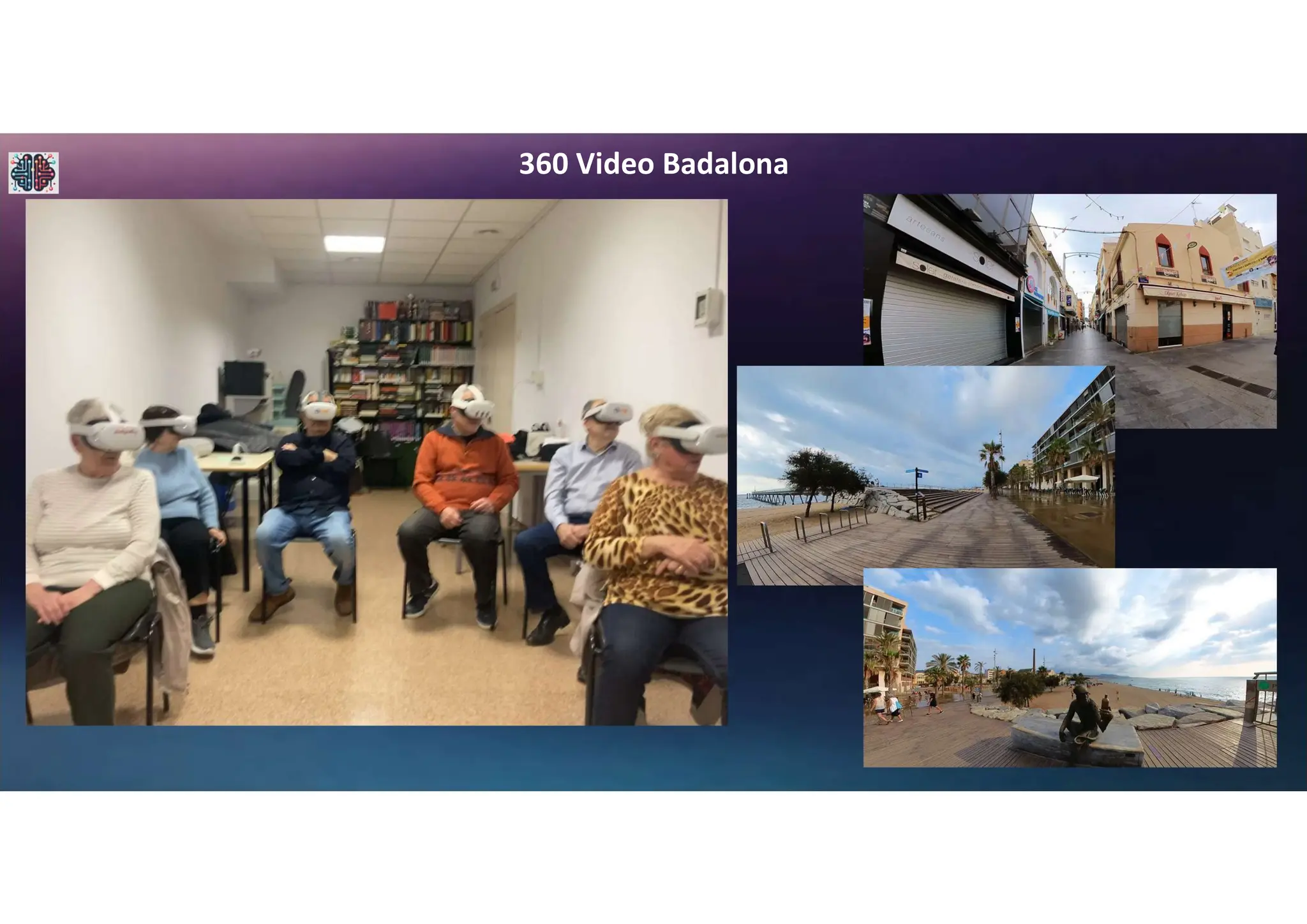
360 Video Badalona
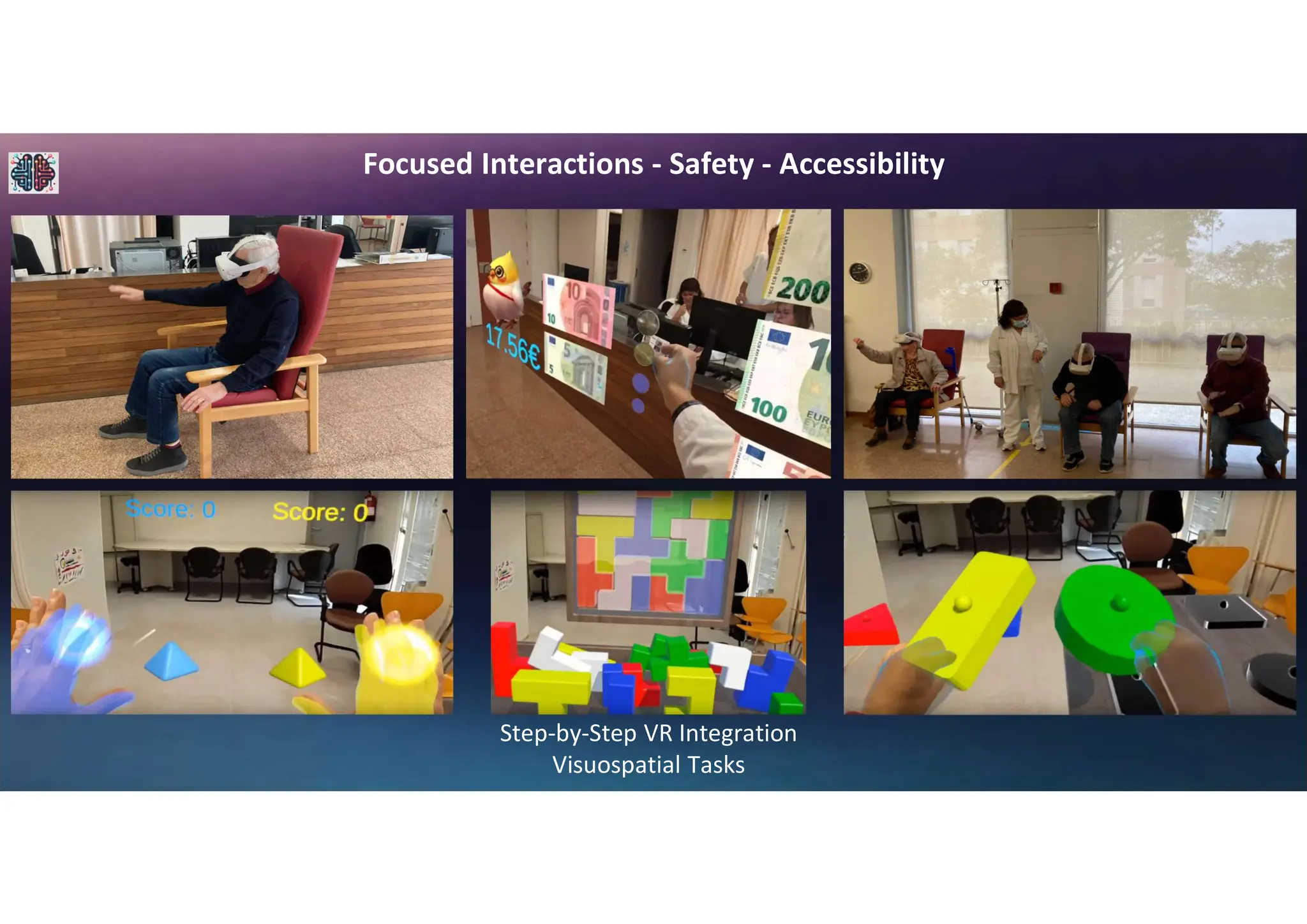
Focused Interactions - Safety - Accessibility
Step-by-Step VR Integration
Visuospatial Tasks
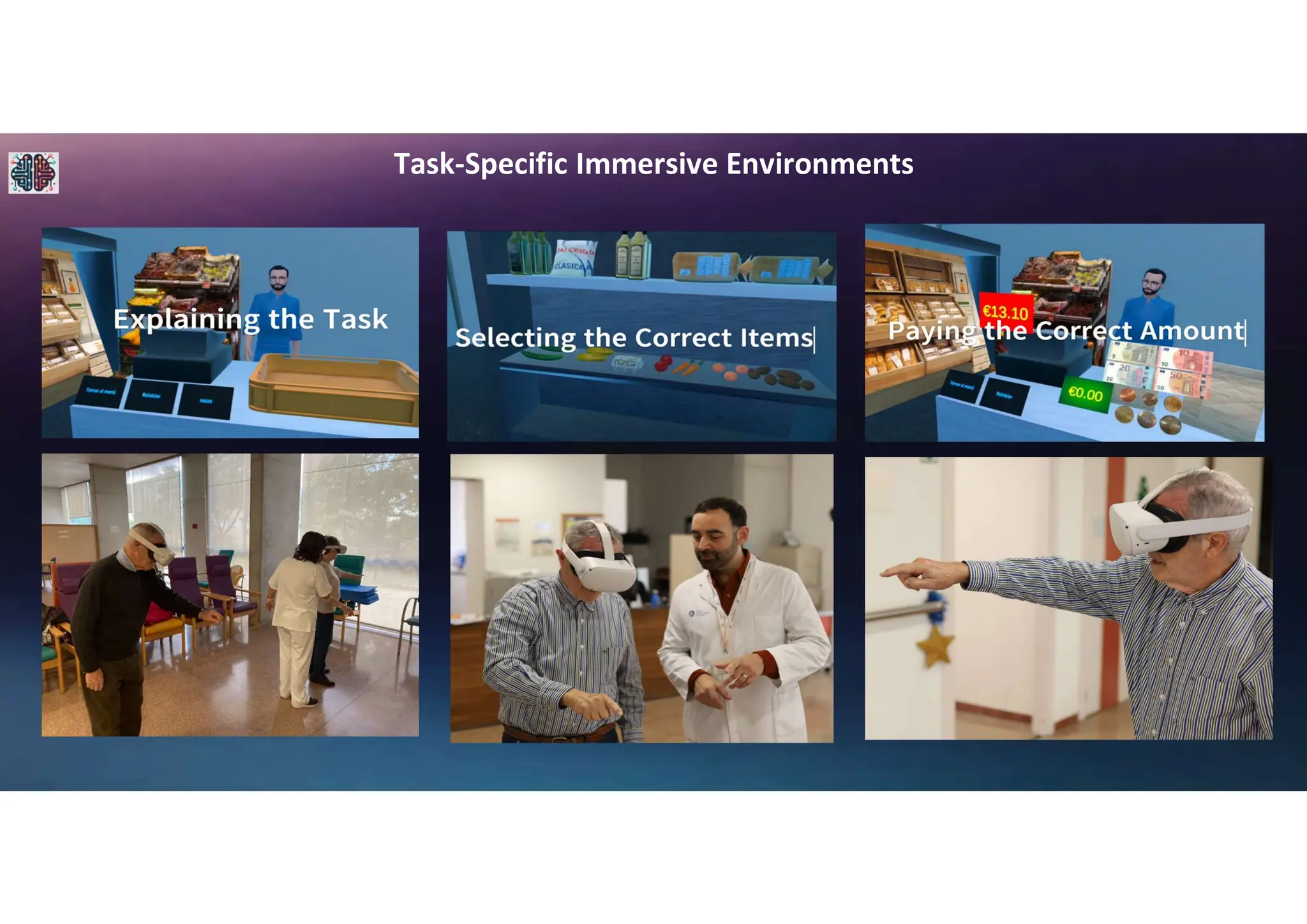
Task-Specific Immersive Environments
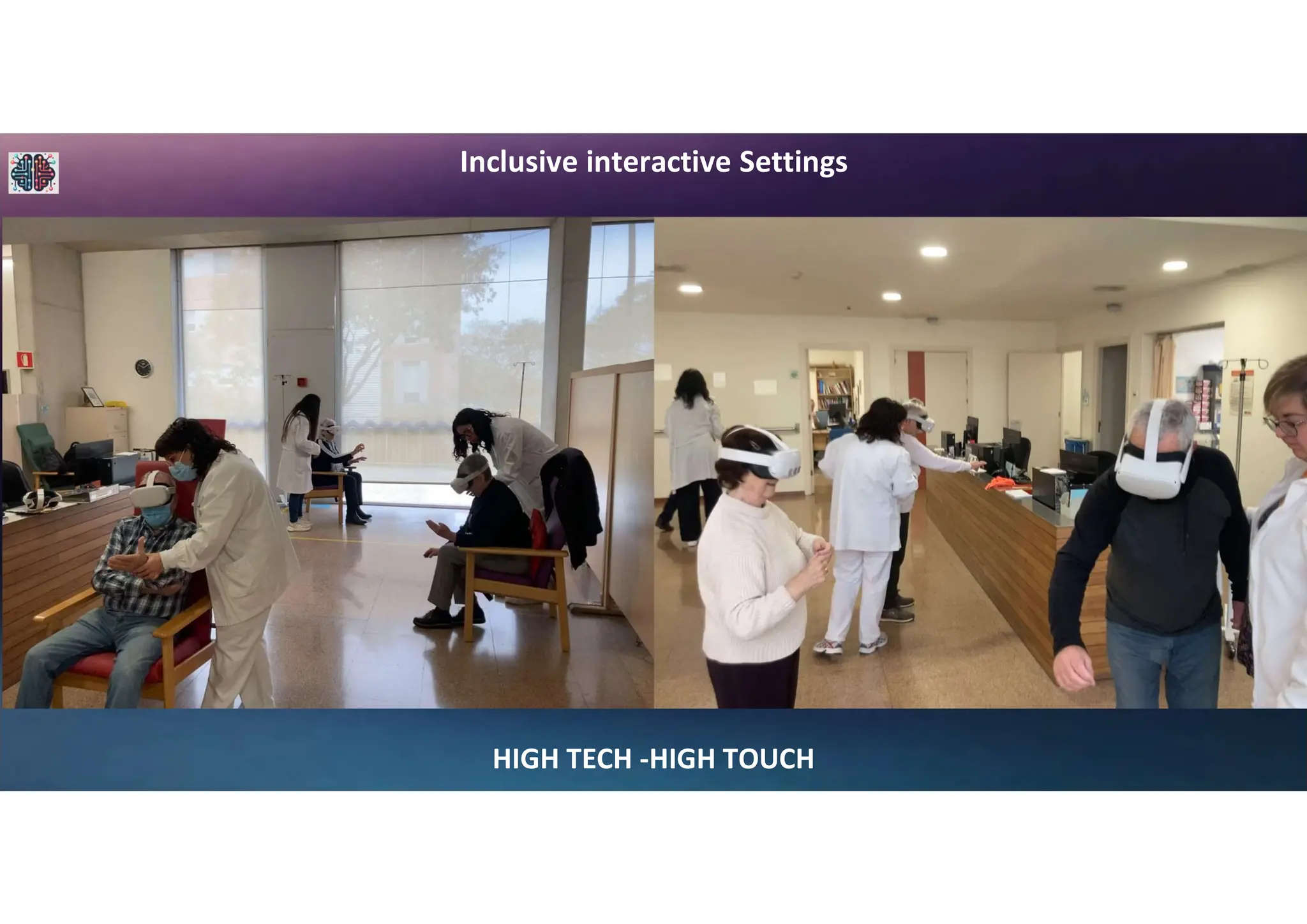
Inclusive interactive Settings
HIGH TECH -HIGH TOUCH
Interactive Environments
Transferable skills
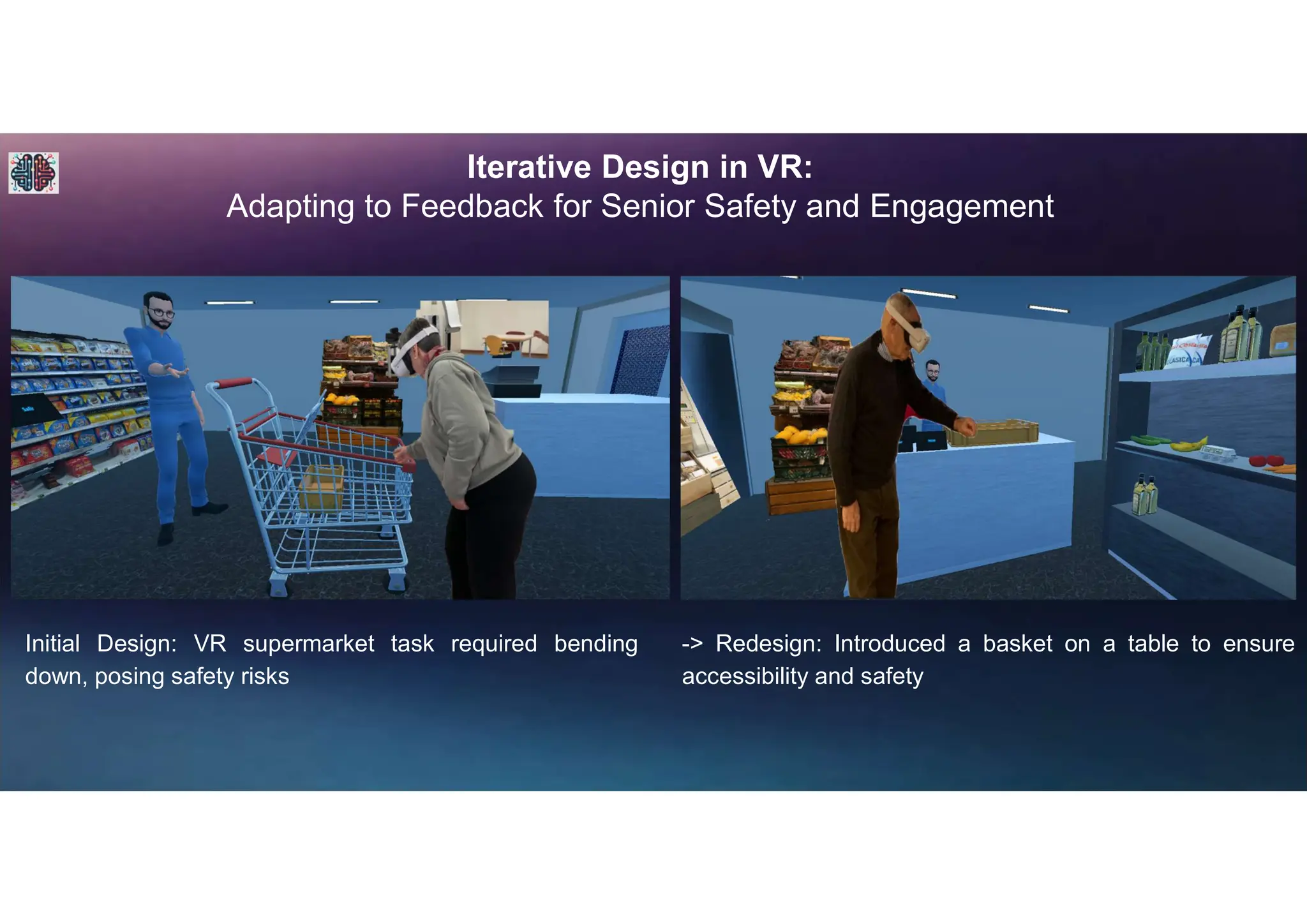
Iterative Design in VR:
Adapting to Feedback for Senior Safety and Engagement
Initial Design: VR supermarket task required bending
down, posing safety risks
-> Redesign: Introduced a basket on a table to ensure
accessibility and safety
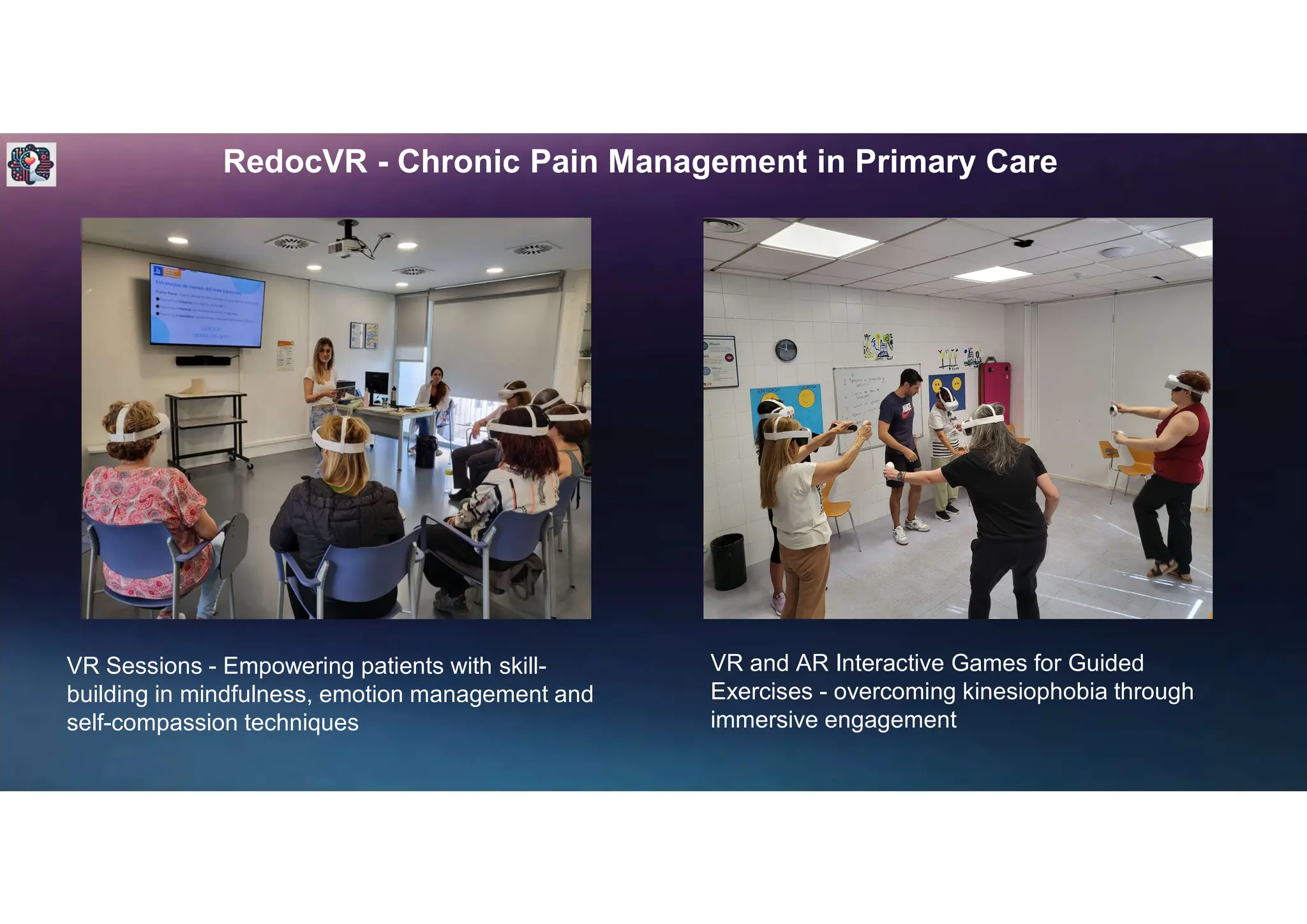
RedocVR - Chronic Pain Management in Primary Care
VR Sessions - Empowering patients with skill-
building in mindfulness, emotion management and
self-compassion techniques
VR and AR Interactive Games for Guided
Exercises - overcoming kinesiophobia through
immersive engagement
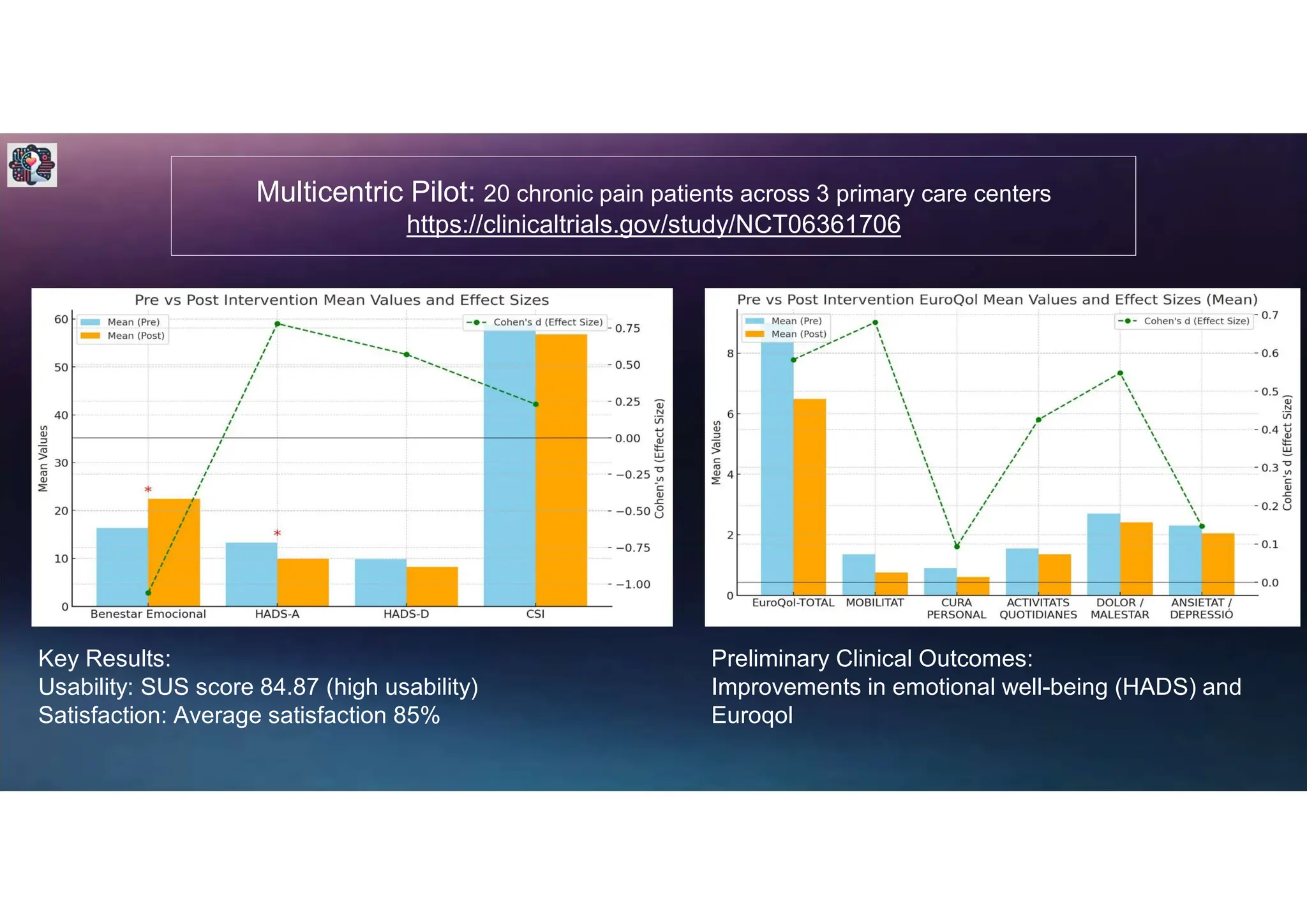
Multicentric Pilot: 20 chronic pain patients across 3 primary care centers
https://clinicaltrials.gov/study/NCT06361706
Key Results:
Usability: SUS score 84.87 (high usability)
Satisfaction: Average satisfaction 85%
Preliminary Clinical Outcomes:
Improvements in emotional well-being (HADS) and
Euroqol
RedocVR - Chronic Pain Management in Primary Care
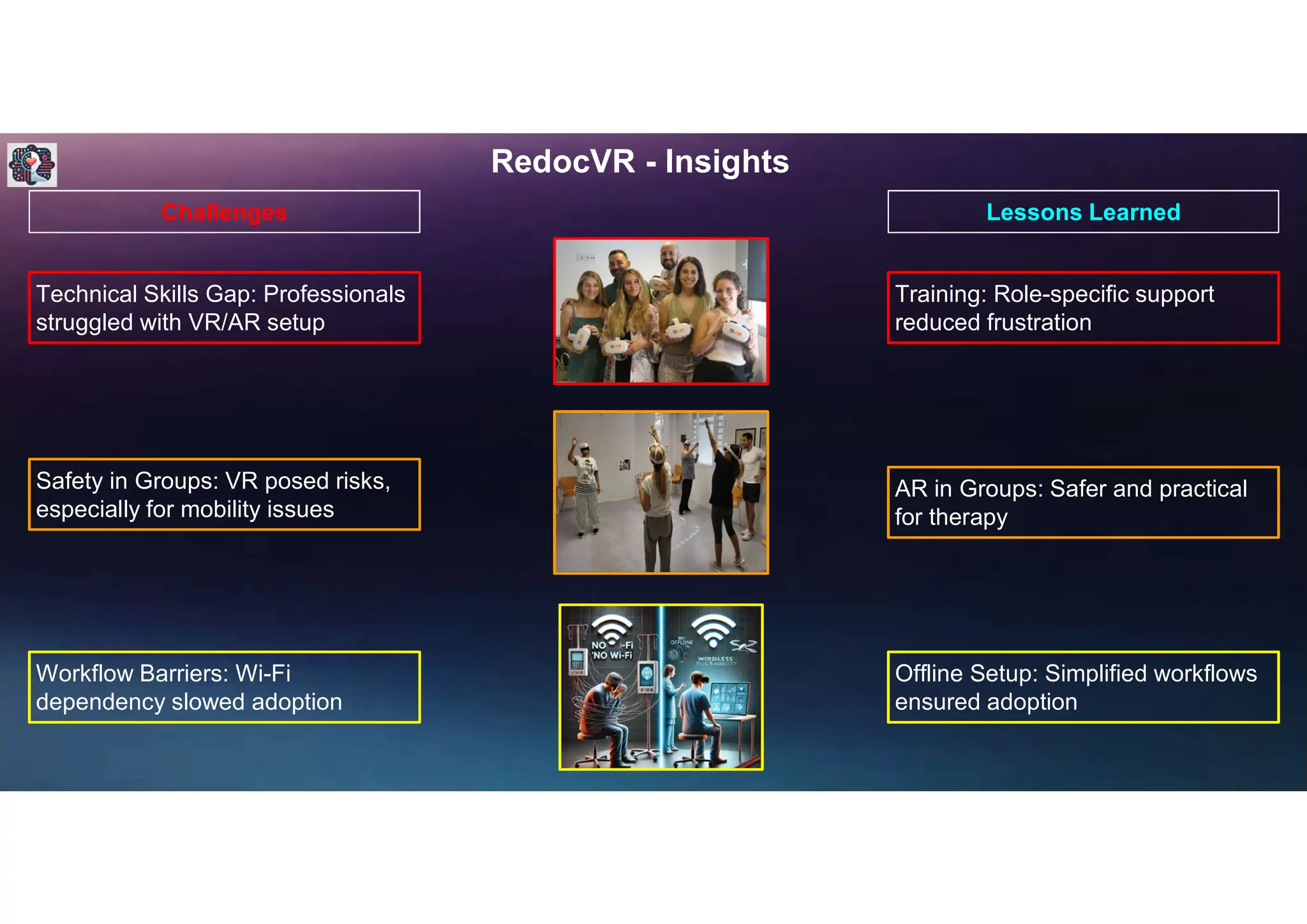
RedocVR - Insights
Technical Skills Gap: Professionals
struggled with VR/AR setup
Safety in Groups: VR posed risks,
especially for mobility issues
Workflow Barriers: Wi-Fi
dependency slowed adoption
Training: Role-specific support
reduced frustration
AR in Groups: Safer and practical
for therapy
Offline Setup: Simplified workflows
ensured adoption
Challenges Lessons Learned
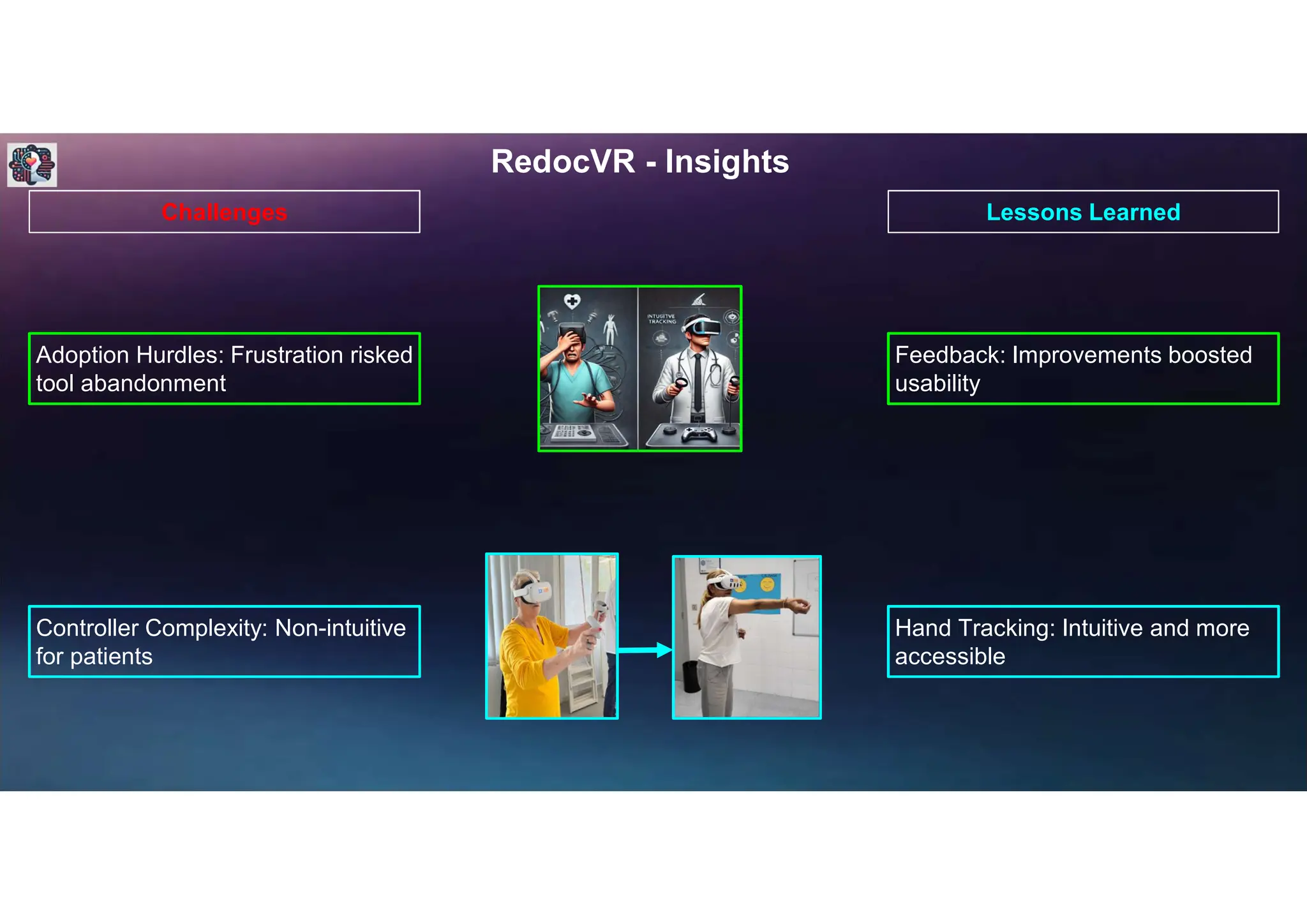
RedocVR - Insights
Adoption Hurdles: Frustration risked
tool abandonment
Feedback: Improvements boosted
usability
Controller Complexity: Non-intuitive
for patients
Hand Tracking: Intuitive and more
accessible
Challenges Lessons Learned
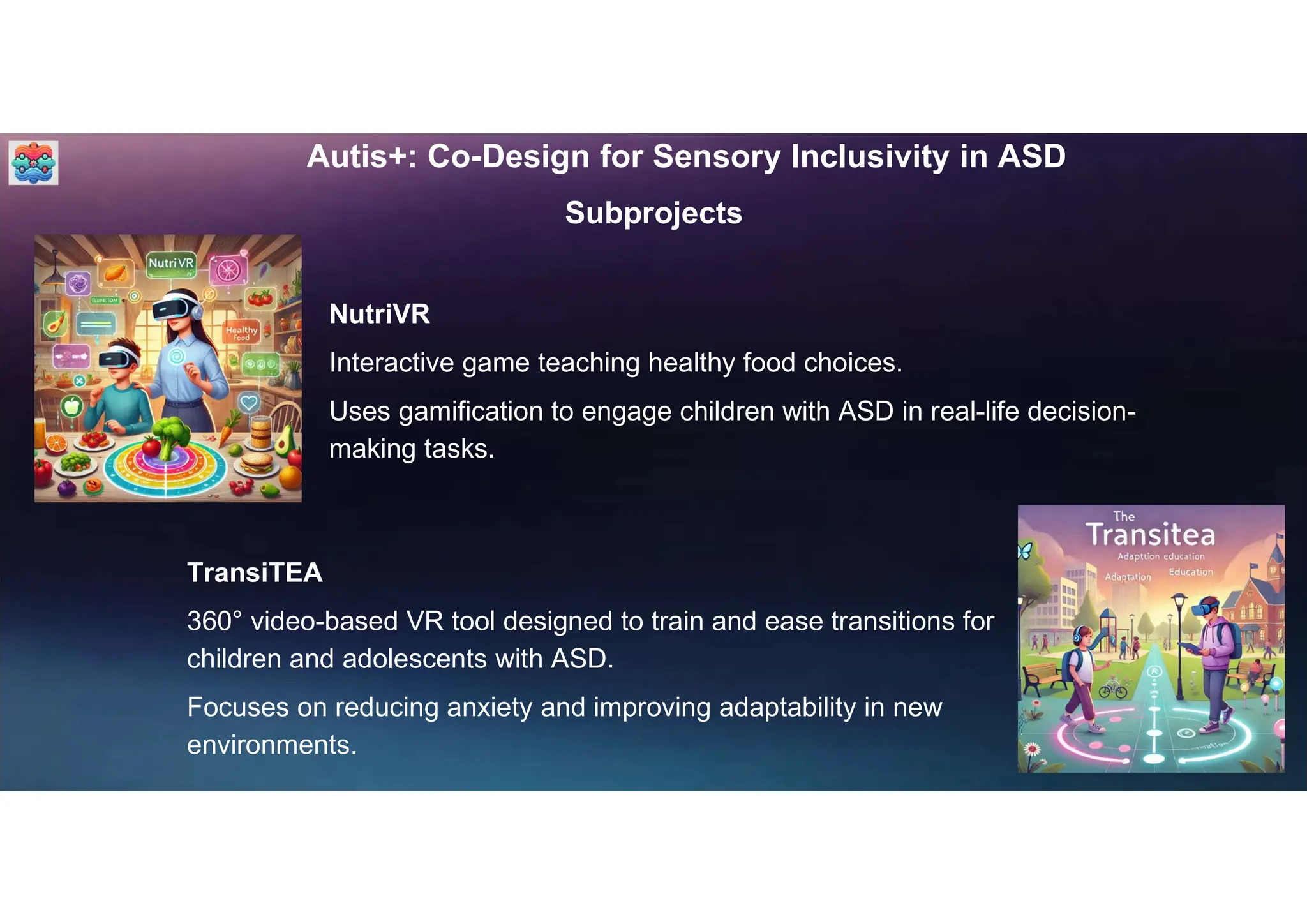
Autis+: Co-Design for Sensory Inclusivity in ASD
Subprojects
NutriVR
Interactive game teaching healthy food choices.
Uses gamification to engage children with ASD in real-life decision-
making tasks.
TransiTEA
360° video-based VR tool designed to train and ease transitions for
children and adolescents with ASD.
Focuses on reducing anxiety and improving adaptability in new
environments.
NutriVR - VR gamification for nutritional education
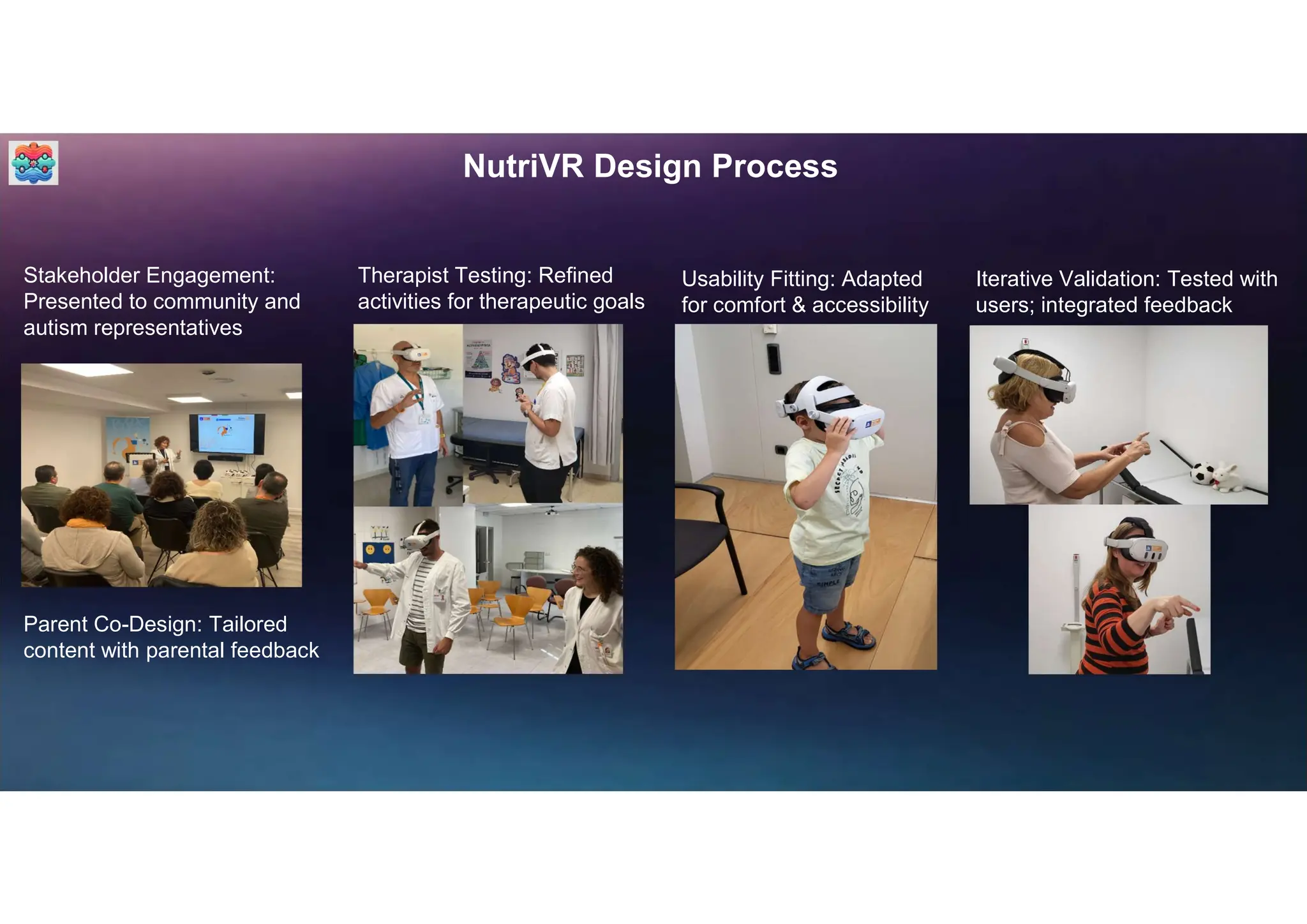
NutriVR Design Process
Therapist Testing: Refined
activities for therapeutic goals
Iterative Validation: Tested with
users; integrated feedback
Usability Fitting: Adapted
for comfort & accessibility
Stakeholder Engagement:
Presented to community and
autism representatives
Parent Co-Design: Tailored
content with parental feedback
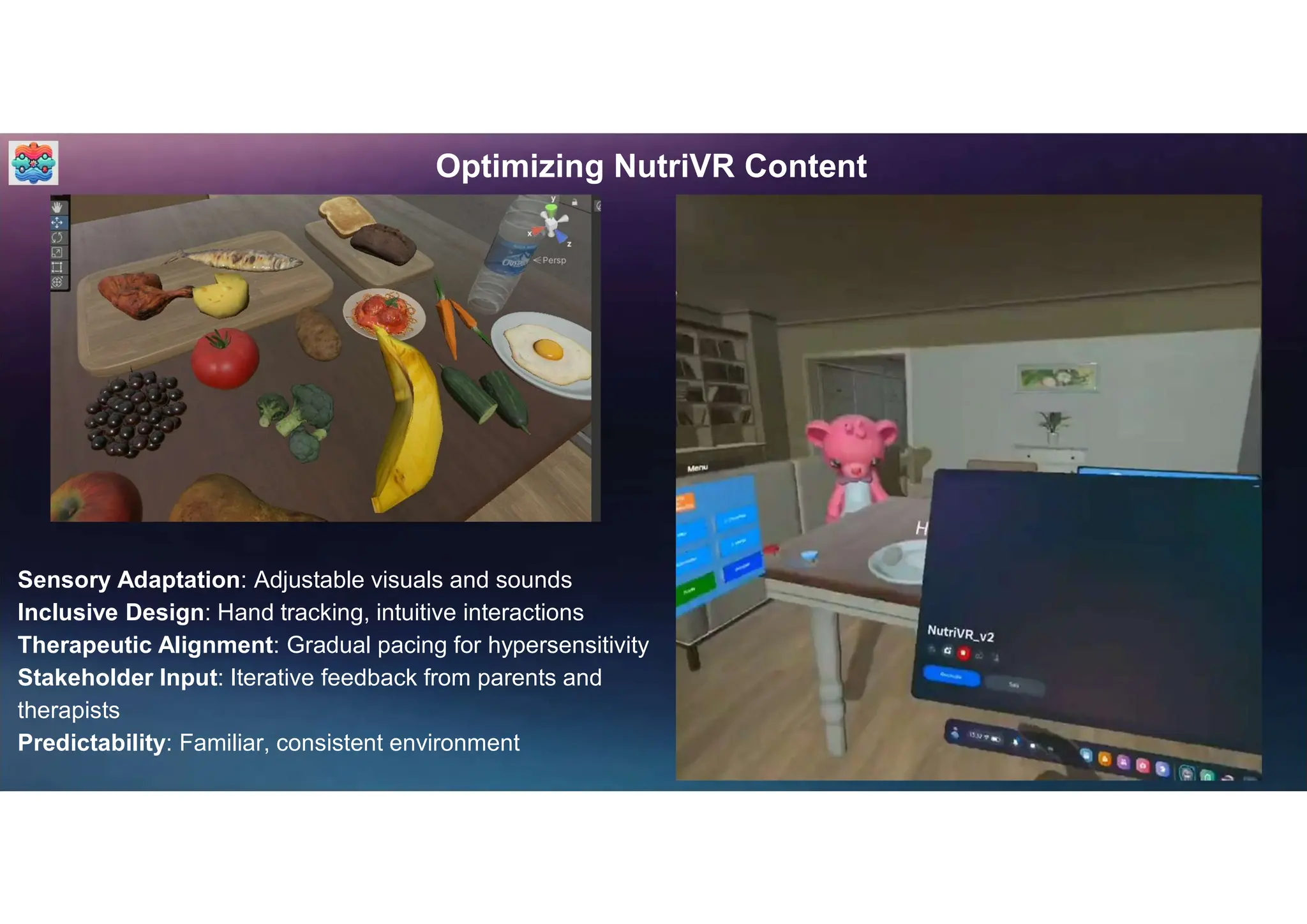
Optimizing NutriVR Content
Sensory Adaptation: Adjustable visuals and sounds
Inclusive Design: Hand tracking, intuitive interactions
Therapeutic Alignment: Gradual pacing for hypersensitivity
Stakeholder Input: Iterative feedback from parents and
therapists
Predictability: Familiar, consistent environment
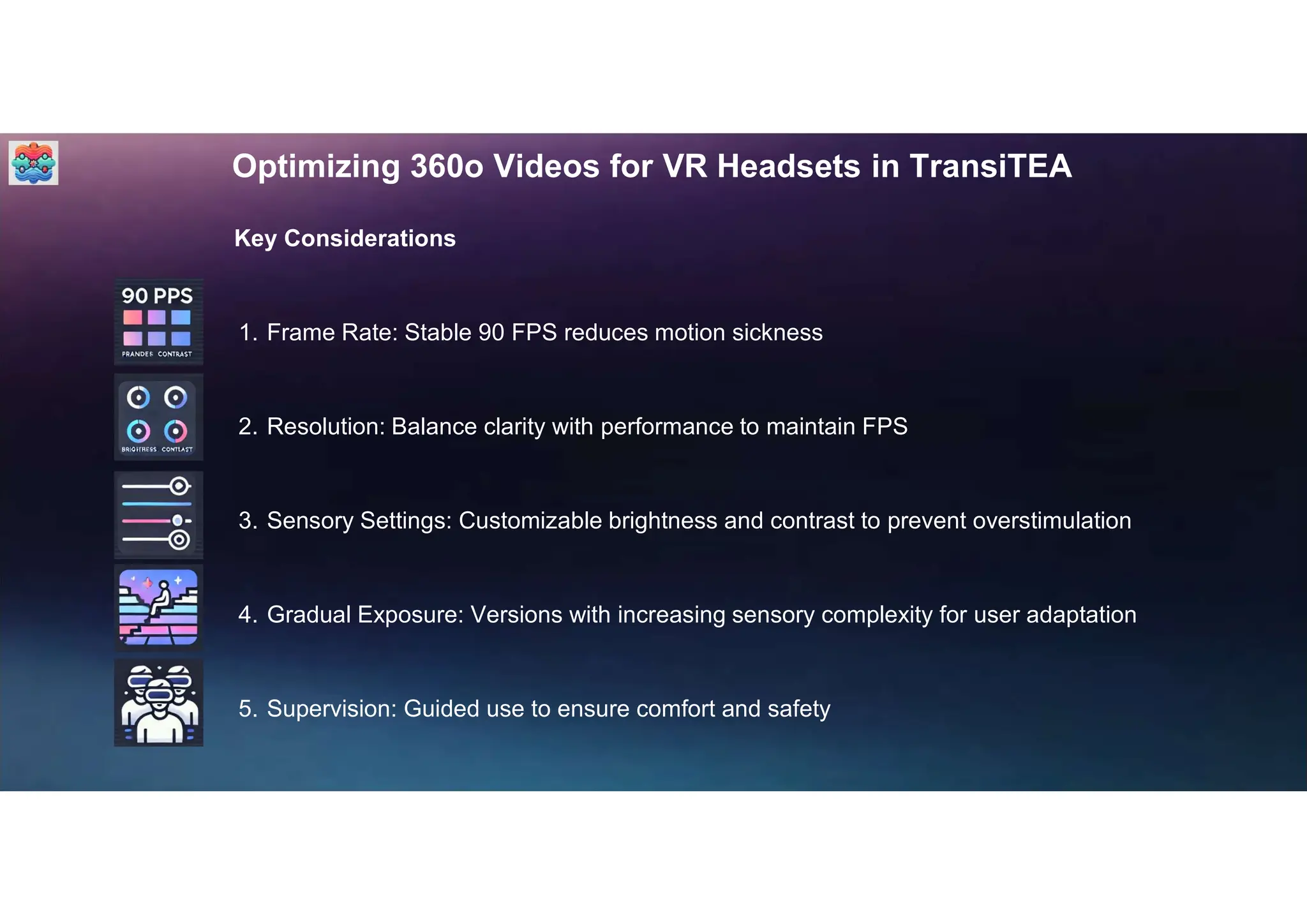
Optimizing 360o Videos for VR Headsets in TransiTEA
Key Considerations
1. Frame Rate: Stable 90 FPS reduces motion sickness
2. Resolution: Balance clarity with performance to maintain FPS
3. Sensory Settings: Customizable brightness and contrast to prevent overstimulation
4. Gradual Exposure: Versions with increasing sensory complexity for user adaptation
5. Supervision: Guided use to ensure comfort and safety
3. Key Takeaways
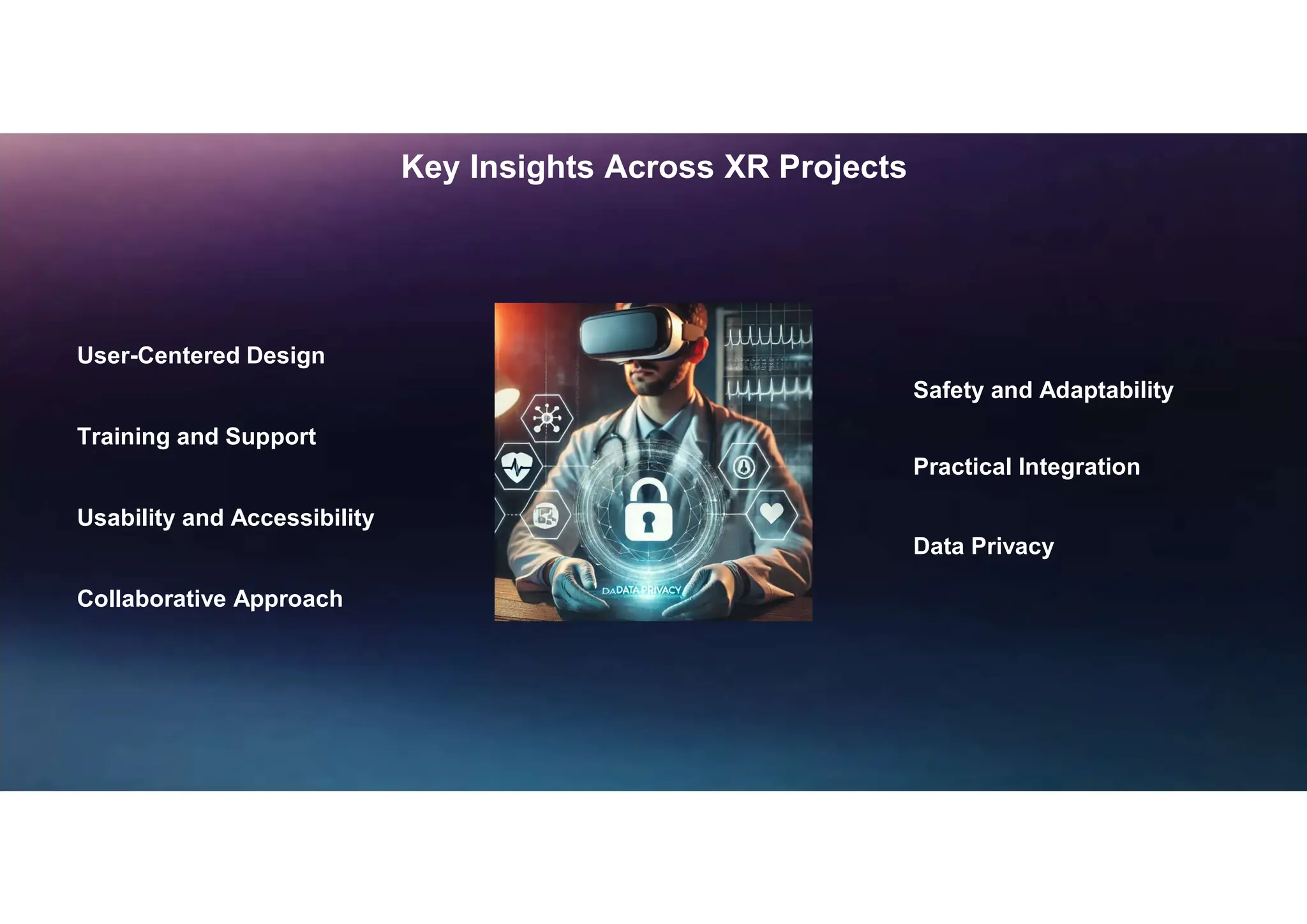
Key Insights Across XR Projects
User-Centered Design
Training and Support
Usability and Accessibility
Collaborative Approach
Safety and Adaptability
Practical Integration
Data Privacy
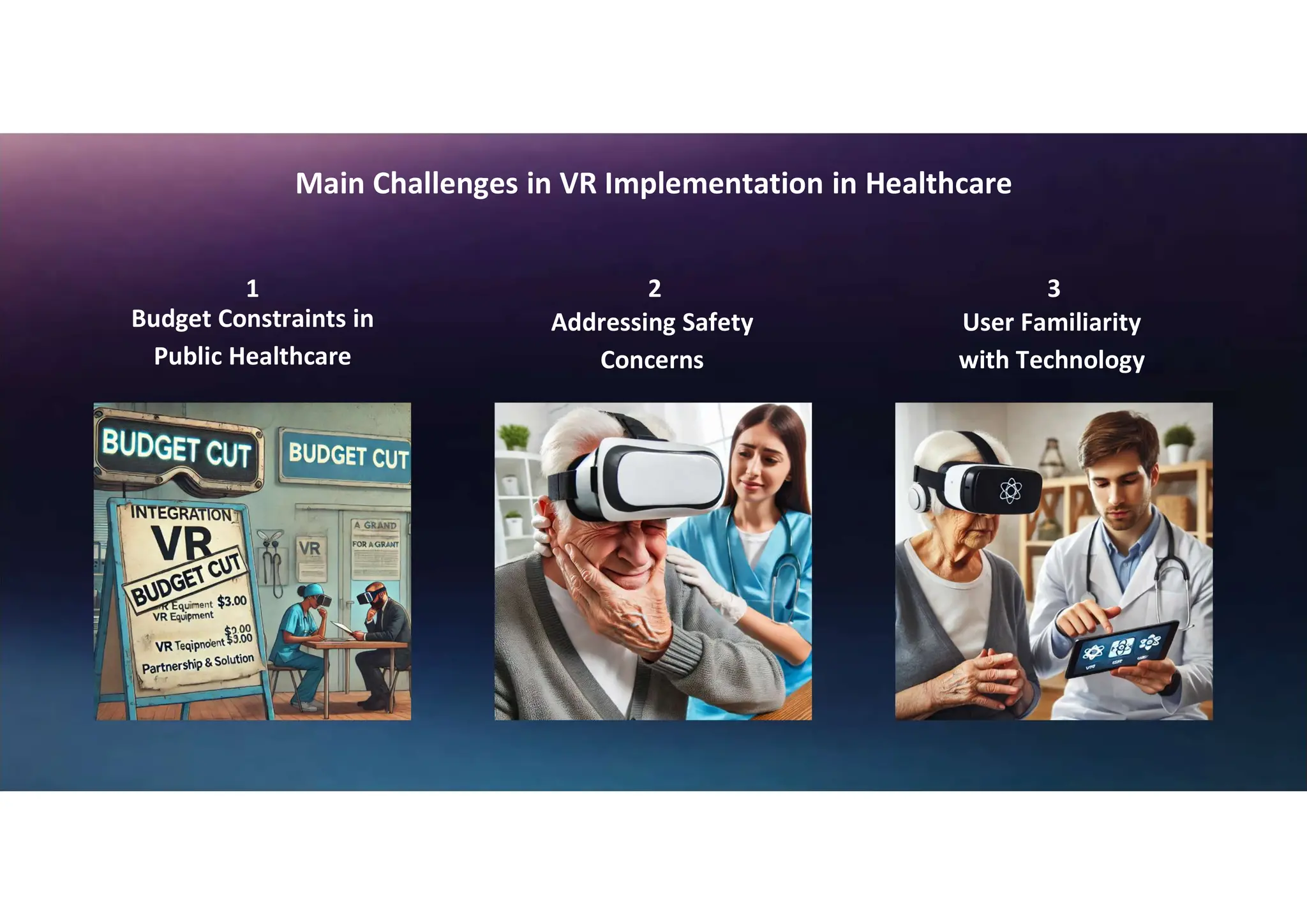
Main Challenges in VR Implementation in Healthcare
Budget Constraints in
Public Healthcare
Addressing Safety
Concerns
User Familiarity
with Technology
1 2 3
Budget Constraints in Public Healthcare
Institutional and Professionals Support:
- Key Protagonist as directive board and final
users
Collaborations:
- Alliance to bring VR technology and develop
interactive experiences for patients
Financing:
- Grants or Donations
- Research Projects
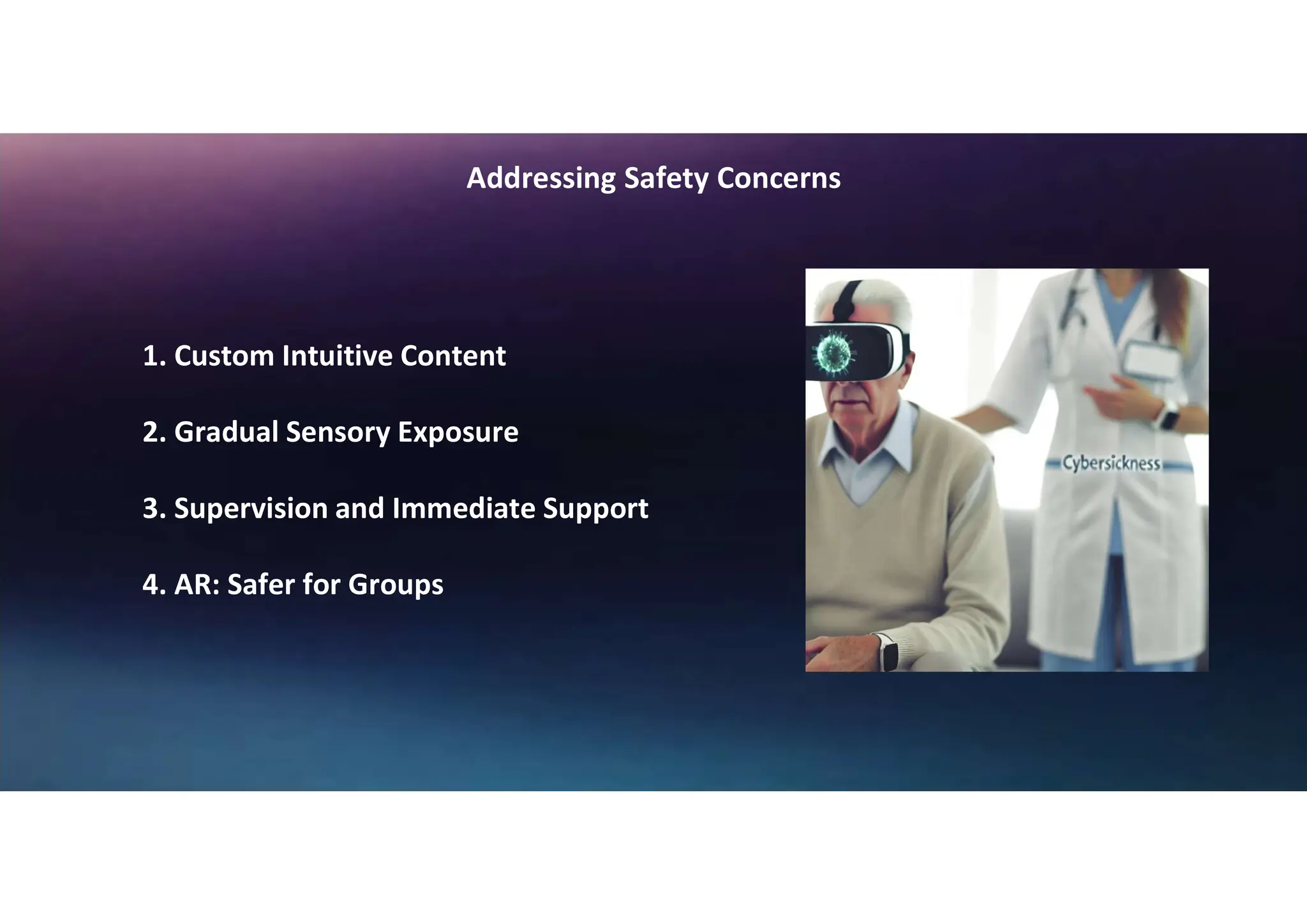
1. Custom Intuitive Content
2. Gradual Sensory Exposure
3. Supervision and Immediate Support
4. AR: Safer for Groups
Addressing Safety Concerns
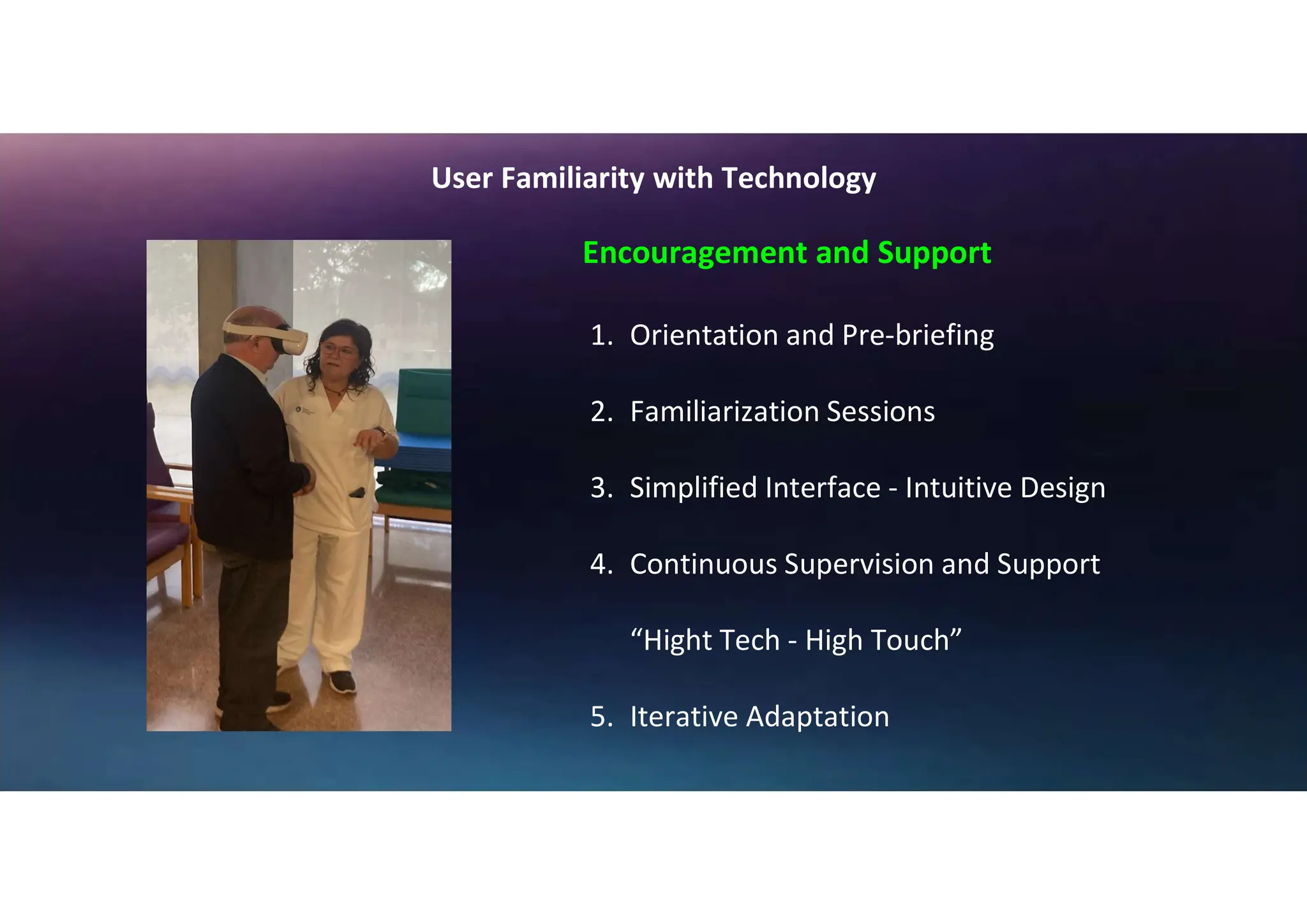
Encouragement and Support
1. Orientation and Pre-briefing
2. Familiarization Sessions
3. Simplified Interface - Intuitive Design
4. Continuous Supervision and Support
“Hight Tech - High Touch”
5. Iterative Adaptation
User Familiarity with Technology
Thank you!
José Ferrer Costa MD
jfcosta@bsa.cat

Presentació "Shaping XR Experiences in Healthcare: Leveraging User Experience and Feedback for Enhancing Immersive Designs"

  • 1.
    Shaping XR Experiencesin Healthcare: Leveraging User Experience and Feedback for Enhancing Immersive Designs Jose Ferrer Costa, MD, MsC Innovation and Projects Badalona Serveis Assistencials (BSA), Spain
  • 2.
    Presentation Overview 1. Introductionand BSA´s VR Projects Overview 2. Four Key XR Projects - Insights and Lessons Learned 3. Key Takeaways Enhancing Healthcare XR: User Experience and Feedback in Immersive Design
  • 3.
    1. Introduction andBSA´s VR Projects Overview From Clinical Practice to XR Innovation at BSA
  • 4.
    2001: FM resident 2009:MsC in TCM 2021: VR in Healthcare 2019: VR Initiation 2022: VR Research in BSA The Future
  • 5.
    The Expanding VRProjects at BSA
  • 6.
    2. Four KeyXR Projects Insights and Lessons Learned Burnout Prevention: From metaverse to standalone VR Cognitive Rehabilitation: Adapting for seniors with MCI Chronic Pain Management: Interactive design for patients Autism Support: Co-design for sensory inclusivity
  • 7.
    4 Key XRProjects Cognitive Rehabilitation: ● MCI: 360° videos, interactive tasks ● SUS 81.25; Cognitive improvement trends Projecte Benestar: ● Burnout: Standalone VR sessions for healthcare professionals ● Pilot Published in JMIR- XR REDOCVR: ● Chronic pain: Psychoeducation, mindfulness, kinesiophobia ● SUS 84.87; 85% satisfaction Autis+: ● ASD: Nutritional education & transition training ● Early engagement; co- designed
  • 8.
    From Pilot toAction: Projecte Benestar Mindfulness Emotion Management Self-compassion
  • 9.
    Pilot 2022-23 Results(n = 83) Publication JMIR XR Maslach Burnout Inventory
  • 10.
  • 11.
    Evolution from MetaverseWorld to VR Standalone Initial Challenges ● Metaverse-Based World ○ Dependent on AltspaceVR and internet connectivity ○ Impractical in clinics with no Wi-Fi ○ Time constraints for busy healthcare workers ○ Platform shutdown disrupted access The Redesign ○ Developed standalone VR content ○ 8 sessions for mindfulness and emotion management ○ Offline access, optimized for clinical use ○ Accessible, flexible and reliable for healthcare setting
  • 12.
    Real-Life VR Integrationfor Mild Cognitive Impairment Rehabilitation Pilot Objective: Assess Feasibility of VR use in MCI cognitive rehabilitation. n= 45 participants. Approach: VR exercises & 360° videos enhancing cognitive function and social interaction Continuous Content Adaptation: Regularly refined VR content for enhanced safety, immersion and participant comfort Findings: High satisfaction and preference for VR Professional endorsement of VR's integration
  • 13.
    Both SUS scoreswere high: The VR headset - 86.5 The VR content - 81.25 The orange and red dashed lines represent the average and excellent usability thresholds Both scores are above the "excellent" usability threshold of 80.3, indicating high usability ratings for both components https://clinicaltrials.gov/study/NCT06155721 Pilot on Acceptability and Usability
  • 14.
    Clinical Outcomes: Preand Post Pilot The cognitive RHB showed a positive trend though results were not statistically significant Pre- and post-intervention medians for cognitive tests with 38 out of 45 participants
  • 15.
    Onboarding VR withRelaxation Initial Engagement through Calming VR Experiences
  • 16.
  • 17.
    Focused Interactions -Safety - Accessibility Step-by-Step VR Integration Visuospatial Tasks
  • 18.
  • 19.
  • 20.
  • 21.
    Iterative Design inVR: Adapting to Feedback for Senior Safety and Engagement Initial Design: VR supermarket task required bending down, posing safety risks -> Redesign: Introduced a basket on a table to ensure accessibility and safety
  • 22.
    RedocVR - ChronicPain Management in Primary Care VR Sessions - Empowering patients with skill- building in mindfulness, emotion management and self-compassion techniques VR and AR Interactive Games for Guided Exercises - overcoming kinesiophobia through immersive engagement
  • 23.
    Multicentric Pilot: 20chronic pain patients across 3 primary care centers https://clinicaltrials.gov/study/NCT06361706 Key Results: Usability: SUS score 84.87 (high usability) Satisfaction: Average satisfaction 85% Preliminary Clinical Outcomes: Improvements in emotional well-being (HADS) and Euroqol
  • 24.
    RedocVR - ChronicPain Management in Primary Care
  • 25.
    RedocVR - Insights TechnicalSkills Gap: Professionals struggled with VR/AR setup Safety in Groups: VR posed risks, especially for mobility issues Workflow Barriers: Wi-Fi dependency slowed adoption Training: Role-specific support reduced frustration AR in Groups: Safer and practical for therapy Offline Setup: Simplified workflows ensured adoption Challenges Lessons Learned
  • 26.
    RedocVR - Insights AdoptionHurdles: Frustration risked tool abandonment Feedback: Improvements boosted usability Controller Complexity: Non-intuitive for patients Hand Tracking: Intuitive and more accessible Challenges Lessons Learned
  • 27.
    Autis+: Co-Design forSensory Inclusivity in ASD Subprojects NutriVR Interactive game teaching healthy food choices. Uses gamification to engage children with ASD in real-life decision- making tasks. TransiTEA 360° video-based VR tool designed to train and ease transitions for children and adolescents with ASD. Focuses on reducing anxiety and improving adaptability in new environments.
  • 28.
    NutriVR - VRgamification for nutritional education
  • 29.
    NutriVR Design Process TherapistTesting: Refined activities for therapeutic goals Iterative Validation: Tested with users; integrated feedback Usability Fitting: Adapted for comfort & accessibility Stakeholder Engagement: Presented to community and autism representatives Parent Co-Design: Tailored content with parental feedback
  • 30.
    Optimizing NutriVR Content SensoryAdaptation: Adjustable visuals and sounds Inclusive Design: Hand tracking, intuitive interactions Therapeutic Alignment: Gradual pacing for hypersensitivity Stakeholder Input: Iterative feedback from parents and therapists Predictability: Familiar, consistent environment
  • 31.
    Optimizing 360o Videosfor VR Headsets in TransiTEA Key Considerations 1. Frame Rate: Stable 90 FPS reduces motion sickness 2. Resolution: Balance clarity with performance to maintain FPS 3. Sensory Settings: Customizable brightness and contrast to prevent overstimulation 4. Gradual Exposure: Versions with increasing sensory complexity for user adaptation 5. Supervision: Guided use to ensure comfort and safety
  • 32.
  • 33.
    Key Insights AcrossXR Projects User-Centered Design Training and Support Usability and Accessibility Collaborative Approach Safety and Adaptability Practical Integration Data Privacy
  • 34.
    Main Challenges inVR Implementation in Healthcare Budget Constraints in Public Healthcare Addressing Safety Concerns User Familiarity with Technology 1 2 3
  • 35.
    Budget Constraints inPublic Healthcare Institutional and Professionals Support: - Key Protagonist as directive board and final users Collaborations: - Alliance to bring VR technology and develop interactive experiences for patients Financing: - Grants or Donations - Research Projects
  • 36.
    1. Custom IntuitiveContent 2. Gradual Sensory Exposure 3. Supervision and Immediate Support 4. AR: Safer for Groups Addressing Safety Concerns
  • 37.
    Encouragement and Support 1.Orientation and Pre-briefing 2. Familiarization Sessions 3. Simplified Interface - Intuitive Design 4. Continuous Supervision and Support “Hight Tech - High Touch” 5. Iterative Adaptation User Familiarity with Technology
  • 38.
    Thank you! José FerrerCosta MD jfcosta@bsa.cat