Present
Perfect
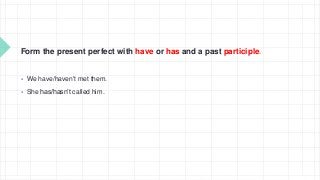
Form the present perfect with have or has and a past participle.
 We have/haven't met them.
 She has/hasn’t called him.
Yes/no questions
 Have you done your homework?
 Yes, we have./ I No, we haven’t.
 Has she called him?
 Yes, she has. /I No, she hasn’t.
Usage
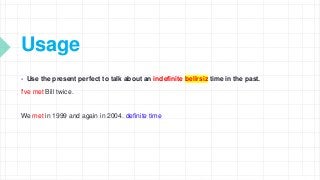
 Use the present perfect to talk about an indefinite belirsiz time in the past.
I've met Bill twice.
We met in 1999 and again in 2004. definite time
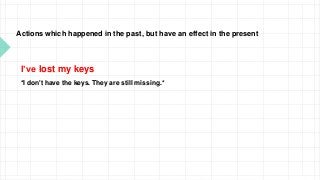
Actions which happened in the past, but have an effect in the present
I’ve lost my keys
*I don't have the keys. They are still missing.*
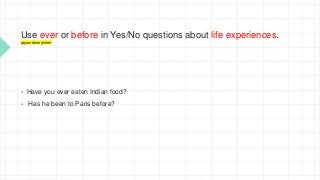
Use ever or before in Yes/No questions about life experiences.
yaşam deneyimleri
 Have you ever eaten Indian food?
 Has he been to Paris before?
Use yet or already
 Use yet or already in questions.
 Have you read the book yet?
 Have you already read the book?
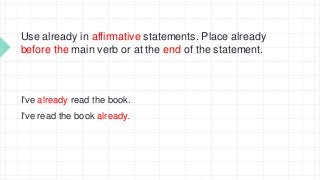
Use already in affirmative statements. Place already
before the main verb or at the end of the statement.
I've already read the book.
I've read the book already.
Use yet in negative statements. Place yet at the end of
the statement or between have and the base form.
 I haven't read the book yet.
 I haven't yet read the book.
Be careful!
 Don't use yet in affirmative statements. Don't use already in negative statements.
 DON'T SAY
 Yes, I've read the book yet. / No, I haven’t already read the book.
Don't use ever with yet or already.
 DON'T SAY
 Have you ever read the book yet?
 Have you ever read the book already?
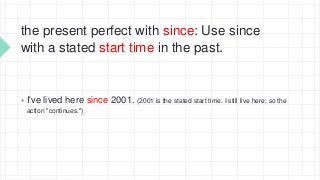
the present perfect with since: Use since
with a stated start time in the past.
 I've lived here since 2001. (2001 is the stated start time. I still live here, so the
action "continues.")
the present perfect with for : Use for to describe the
period of time from its start until the present.
 I've lived here for five years. (Emphasis is on the five-year period. I still live
here, so the action "continues.")
Other uses:
 with always: I've always wanted to see Car Planet.
 with ordinals and superlatives: This is the third time I've seen Ping Pong. It's the best
movie I've ever seen.
 with lately, recently, or just: Have you seen a good movie recently (or lately)? I've just
seen The Beach-what a great movie!
 with still or so far: You still haven't seen Tomato Babies. I've seen it three times so far.

present perfect.pptx

  • 1.
  • 2.
    Form the presentperfect with have or has and a past participle.  We have/haven't met them.  She has/hasn’t called him.
  • 3.
    Yes/no questions  Haveyou done your homework?  Yes, we have./ I No, we haven’t.  Has she called him?  Yes, she has. /I No, she hasn’t.
  • 4.
    Usage  Use thepresent perfect to talk about an indefinite belirsiz time in the past. I've met Bill twice. We met in 1999 and again in 2004. definite time
  • 5.
    Actions which happenedin the past, but have an effect in the present I’ve lost my keys *I don't have the keys. They are still missing.*
  • 6.
    Use ever orbefore in Yes/No questions about life experiences. yaşam deneyimleri  Have you ever eaten Indian food?  Has he been to Paris before?
  • 7.
    Use yet oralready  Use yet or already in questions.  Have you read the book yet?  Have you already read the book?
  • 8.
    Use already inaffirmative statements. Place already before the main verb or at the end of the statement. I've already read the book. I've read the book already.
  • 9.
    Use yet innegative statements. Place yet at the end of the statement or between have and the base form.  I haven't read the book yet.  I haven't yet read the book.
  • 10.
    Be careful!  Don'tuse yet in affirmative statements. Don't use already in negative statements.  DON'T SAY  Yes, I've read the book yet. / No, I haven’t already read the book.
  • 11.
    Don't use everwith yet or already.  DON'T SAY  Have you ever read the book yet?  Have you ever read the book already?
  • 12.
    the present perfectwith since: Use since with a stated start time in the past.  I've lived here since 2001. (2001 is the stated start time. I still live here, so the action "continues.")
  • 13.
    the present perfectwith for : Use for to describe the period of time from its start until the present.  I've lived here for five years. (Emphasis is on the five-year period. I still live here, so the action "continues.")
  • 14.
    Other uses:  withalways: I've always wanted to see Car Planet.  with ordinals and superlatives: This is the third time I've seen Ping Pong. It's the best movie I've ever seen.  with lately, recently, or just: Have you seen a good movie recently (or lately)? I've just seen The Beach-what a great movie!  with still or so far: You still haven't seen Tomato Babies. I've seen it three times so far.