How to Prepare For 
The Career Fair 
C University Caarreeeerr SSeerrvviicceess
What are 
employers 
looking for in 
an applicant? 
What do I need 
to do before, 
during, and after 
the fair? 
What if I don’t 
find a job at the 
career fair? 
Today we will answer tthhee ffoolllloowwiinngg qquueessttiioonnss…
What skills are 
employers 
looking for?
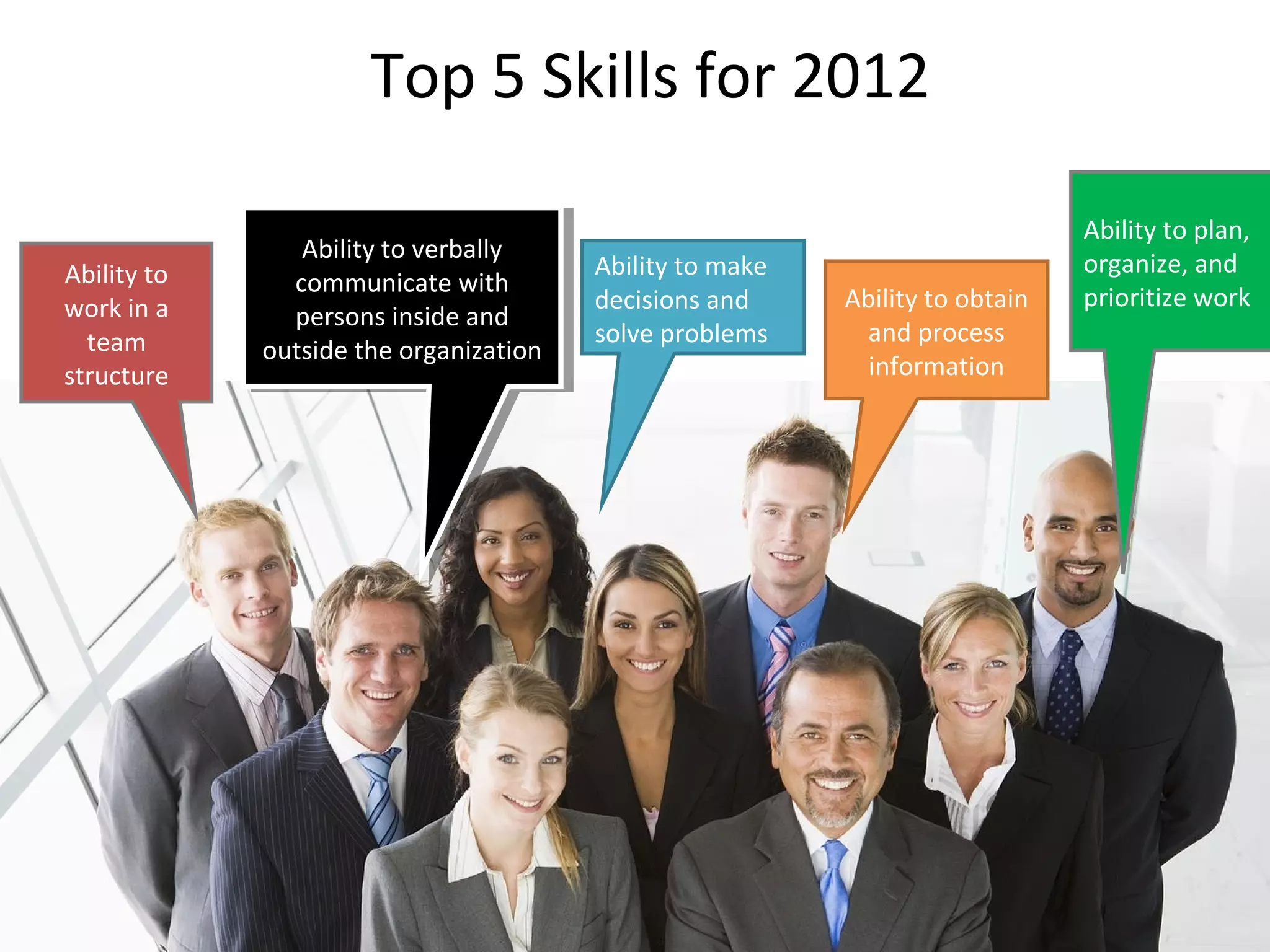
Top 5 Skills for 2012 
Ability to 
work in a 
team 
structure 
Ability to plan, 
organize, and 
Ability to obtain prioritize work 
and process 
information 
Ability to make 
decisions and 
solve problems 
Ability to verbally 
communicate with 
persons inside and 
Ability to verbally 
communicate with 
persons inside and 
outside the organization 
outside the organization
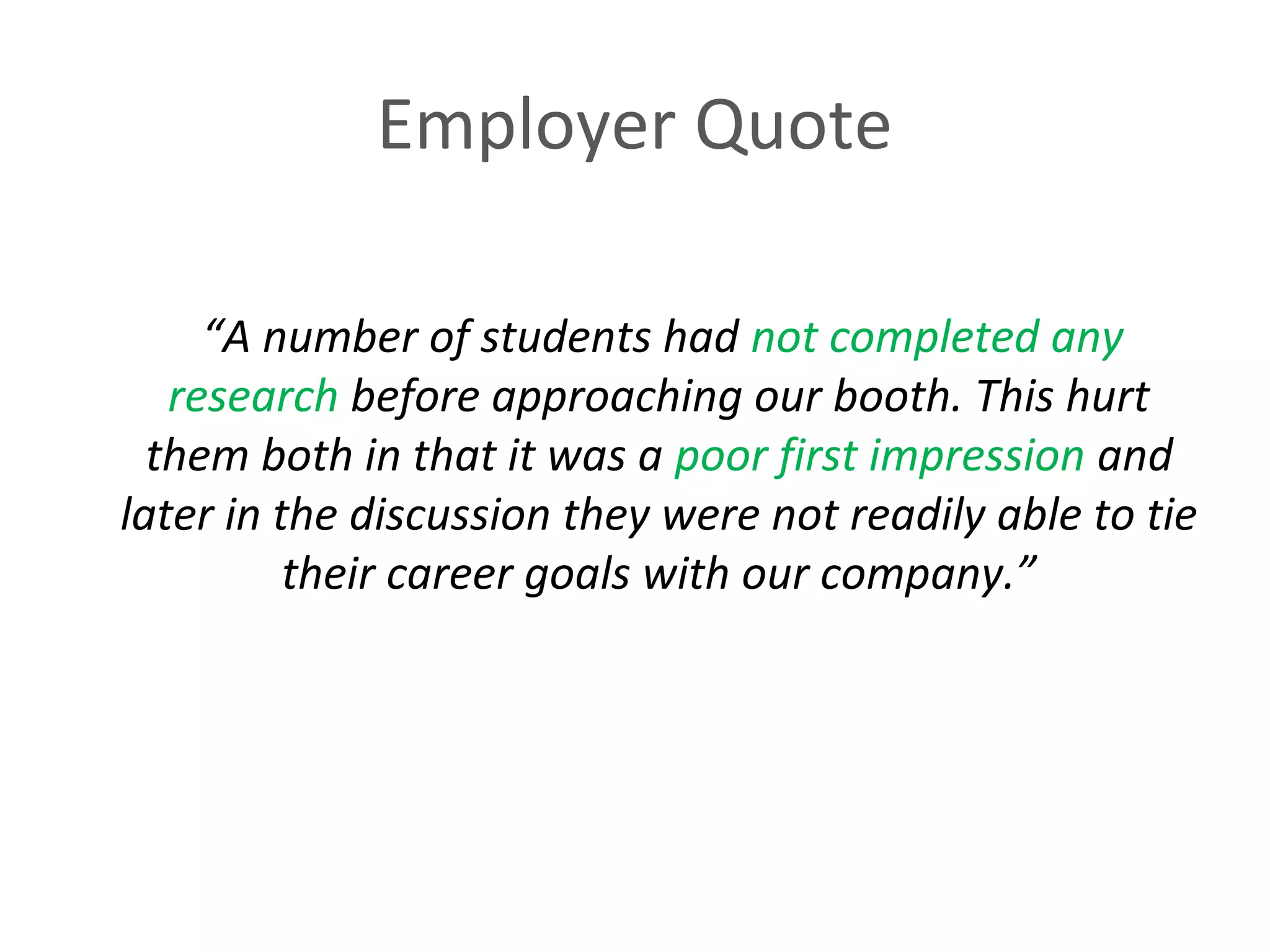
Employer Quote 
“A number of students had not completed any 
research before approaching our booth. This hurt 
them both in that it was a poor first impression and 
later in the discussion they were not readily able to tie 
their career goals with our company.”
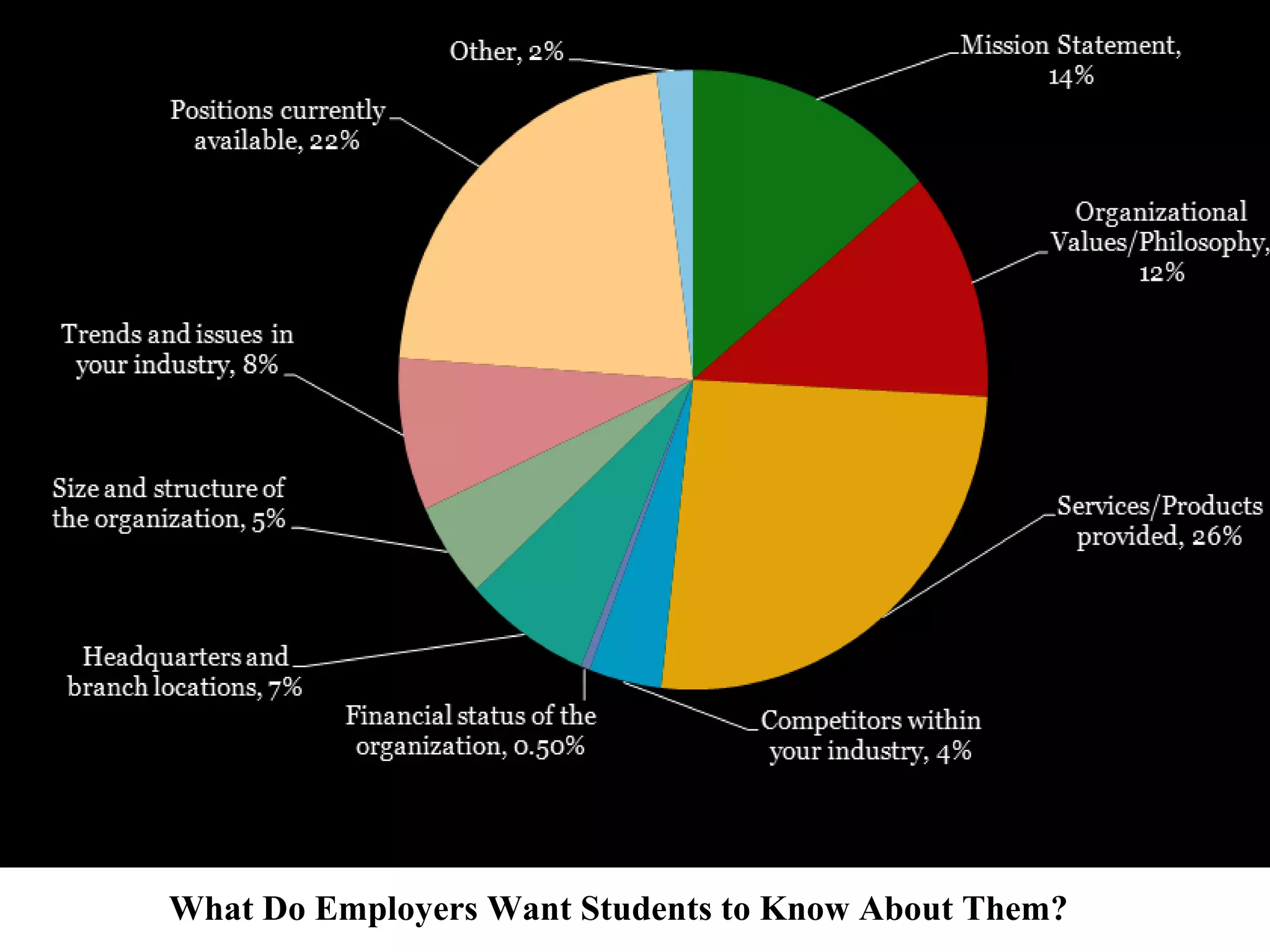
What Do Employers Want Students to Know About Them?
What do I need to do before, 
during, and after the fair?
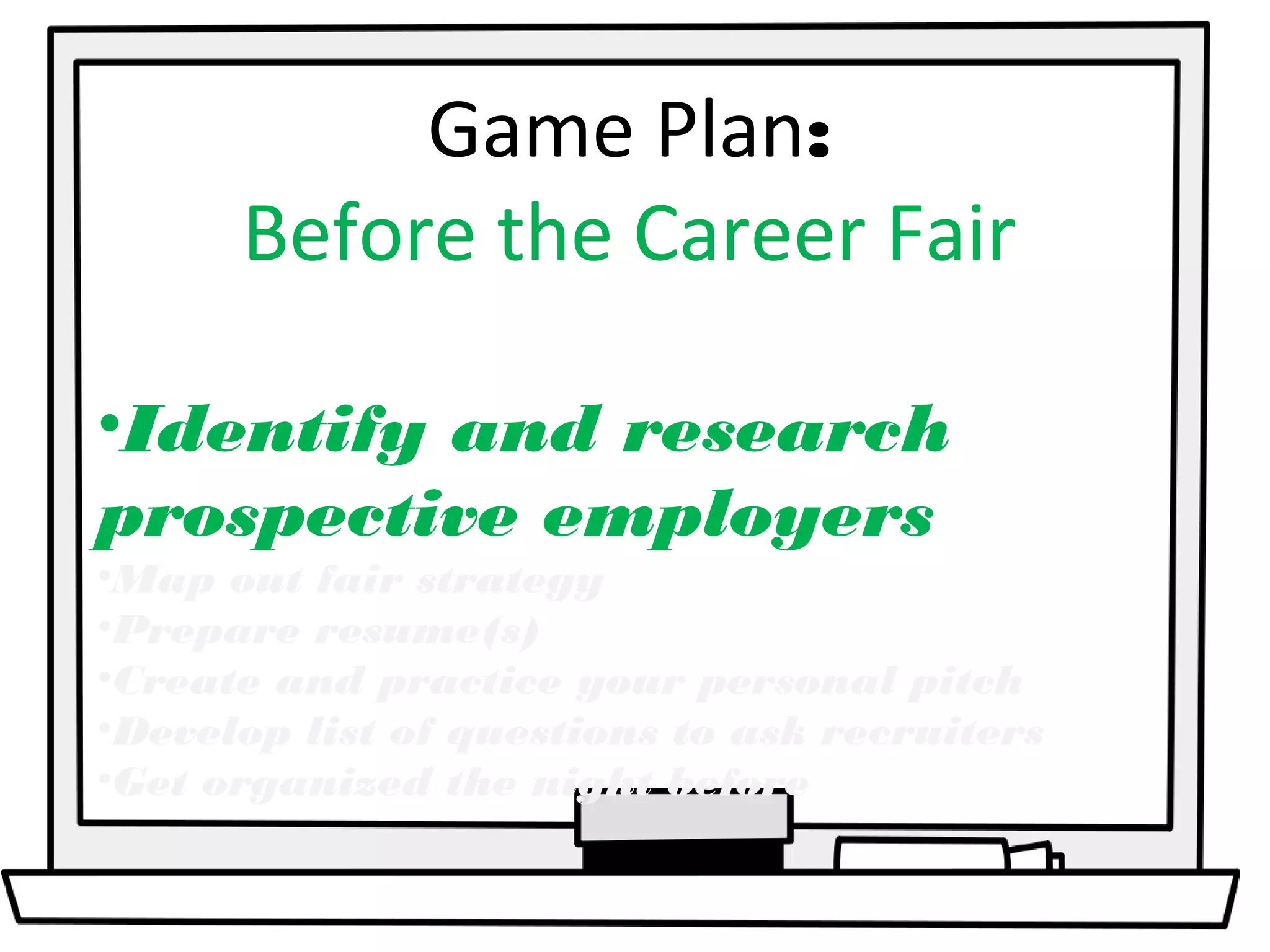
Game Plan: 
Before the Career Fair 
•Identify and research 
prospective employers 
•Map out fair strategy 
•Prepare resume(s) 
•Create and practice your personal pitch 
•Develop list of questions to ask recruiters 
•Get organized the night before
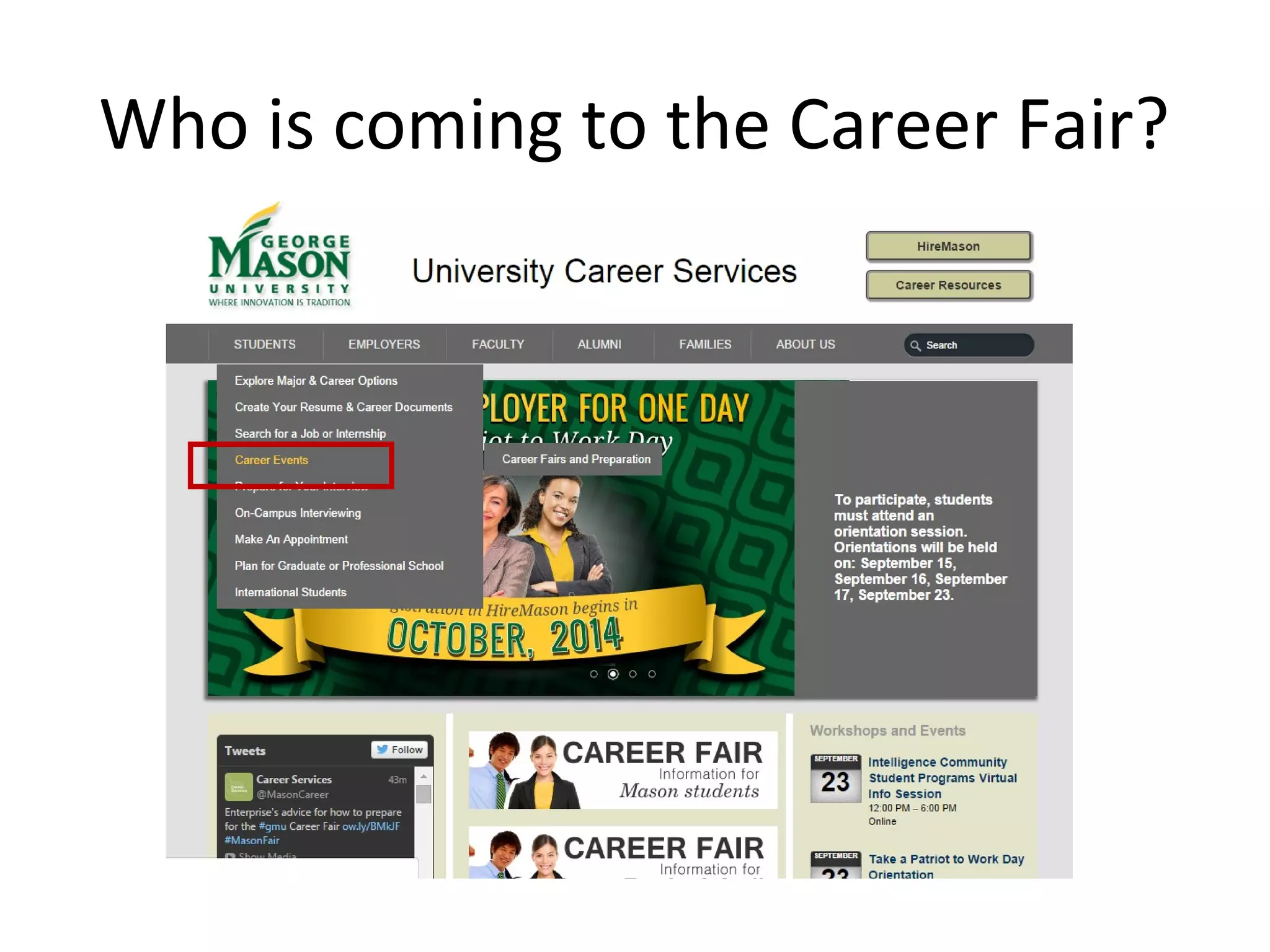
Who is coming to the Career Fair?
Game Plan: 
Before the Career Fair 
•Identify and research prospective employers 
•Map out fair strategy 
•Prepare resume(s) 
•Create and practice your personal pitch 
•Develop list of questions to ask recruiters 
•Get organized the night before
Game Plan: 
Before the Career Fair 
•Identify and research prospective employers 
•Map out fair strategy 
•Prepare resume(s) 
•Create and practice your personal pitch 
•Develop list of questions to ask recruiters 
•Get organized the night before
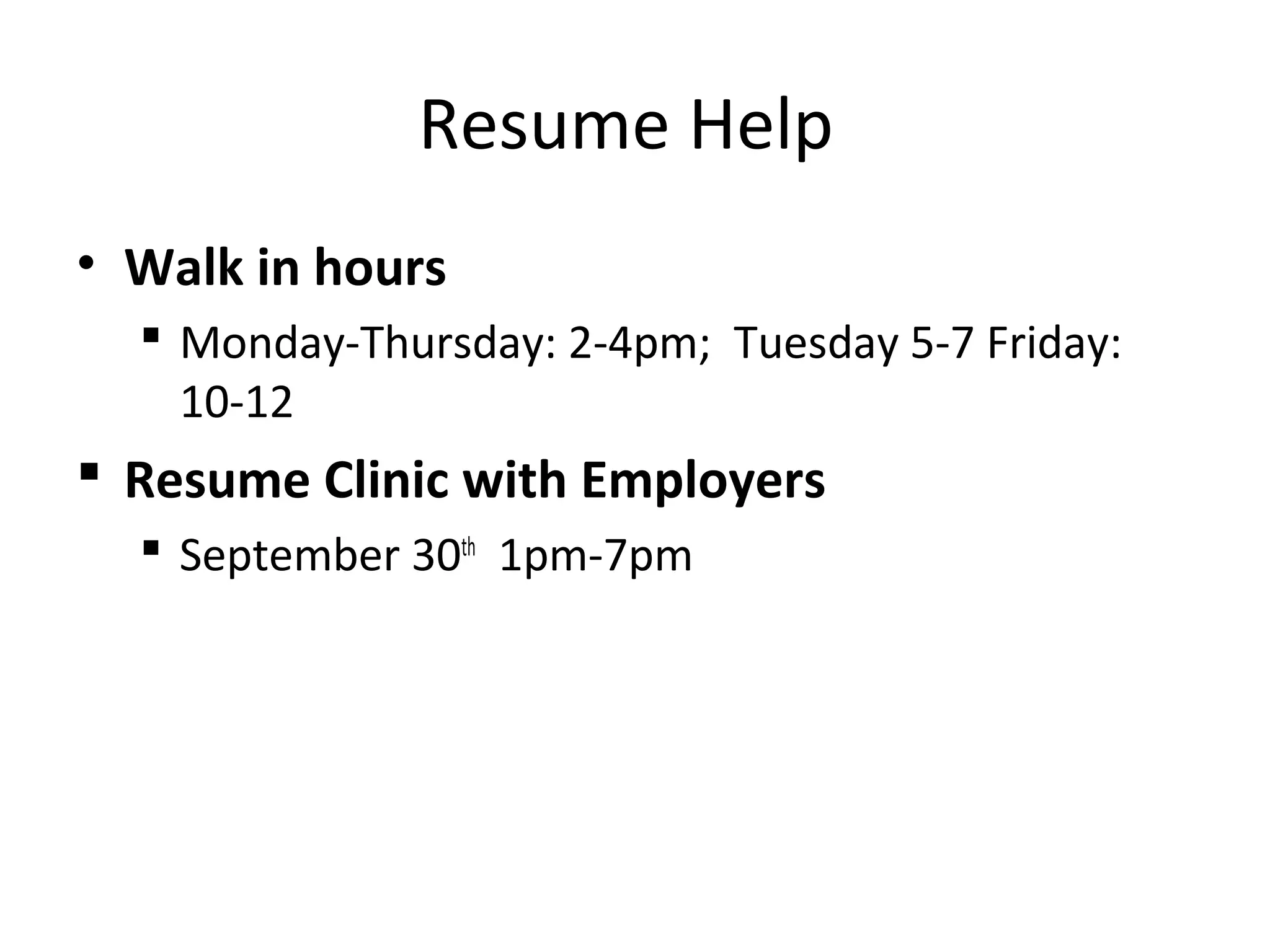
Resume Help 
• Walk in hours 
 Monday-Thursday: 2-4pm; Tuesday 5-7 Friday: 
10-12 
 Resume Clinic with Employers 
 September 30th 1pm-7pm
Game Plan: 
Before the Career Fair 
•Identify and research prospective employers 
•Map out fair strategy 
•Prepare resume(s) 
•Create and practice your 
personal pitch 
•Develop list of questions to ask recruiters 
•Get organized the night before
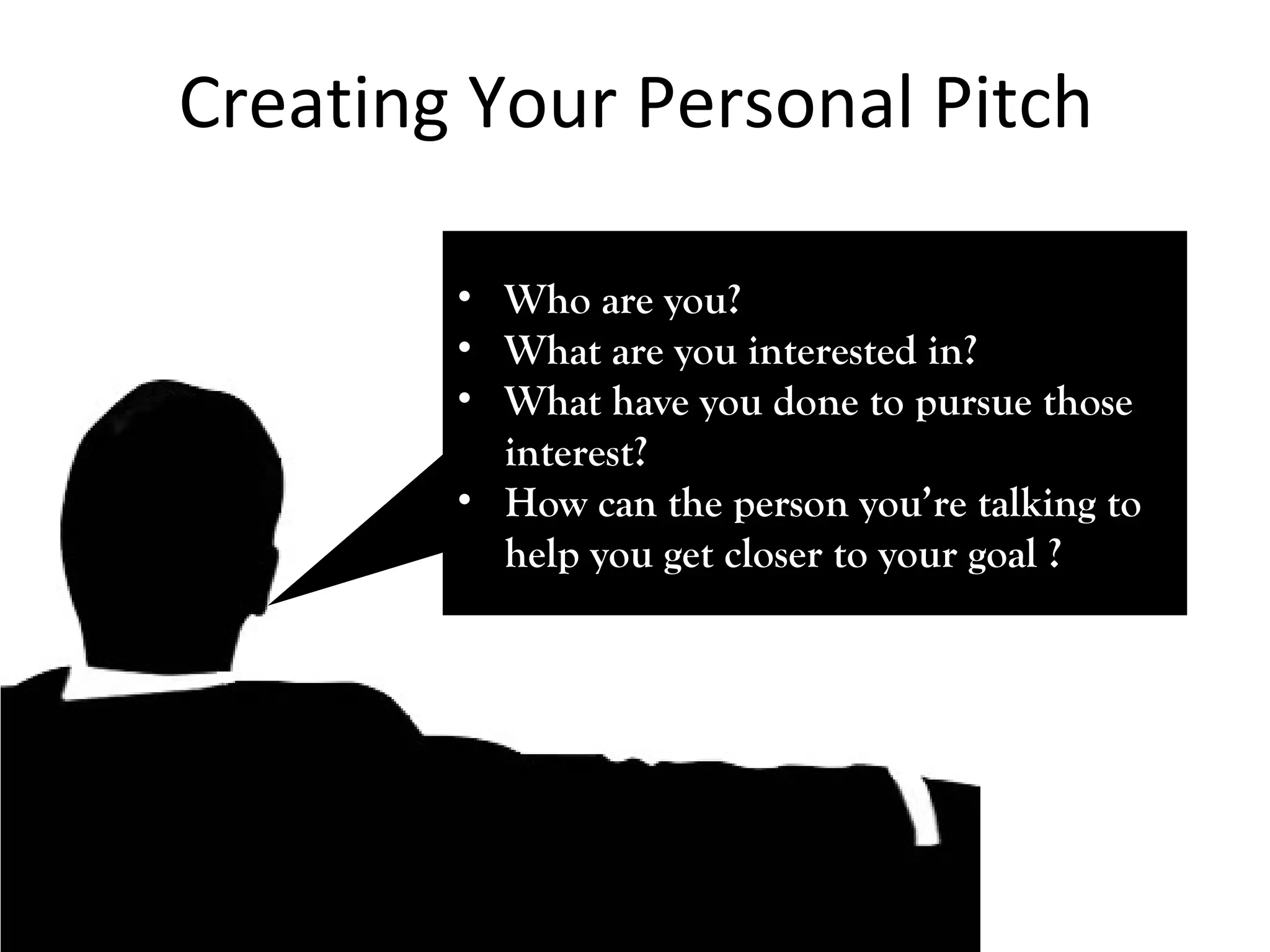
Creating Your Personal Pitch 
• WWhhoo aarree yyoouu?? 
• WWhhaatt aarree yyoouu iinntteerreesstteedd iinn?? 
• WWhhaatt hhaavvee yyoouu ddoonnee ttoo ppuurrssuuee tthhoossee 
iinntteerreesstt?? 
• HHooww ccaann tthhee ppeerrssoonn yyoouu’’rree ttaallkkiinngg ttoo 
hheellpp yyoouu ggeett cclloosseerr ttoo yyoouurr ggooaall ??
Creating your pitch 
Hello, my name is __________, and I am passionate 
about the IT industry. I have always been interested in 
computers, and I am looking for a position in software 
engineering . Last year I had an internship with InScope 
International where I participated in reviews of the 
system architecture, coding and designing technical 
documents. In this position I also developed scripts and 
other programmatic test tools required to execute tests. 
I am particularly interested in the software engineering 
position I saw posted for your company. Can you tell me 
a little more about what you are looking for in an 
applicant?
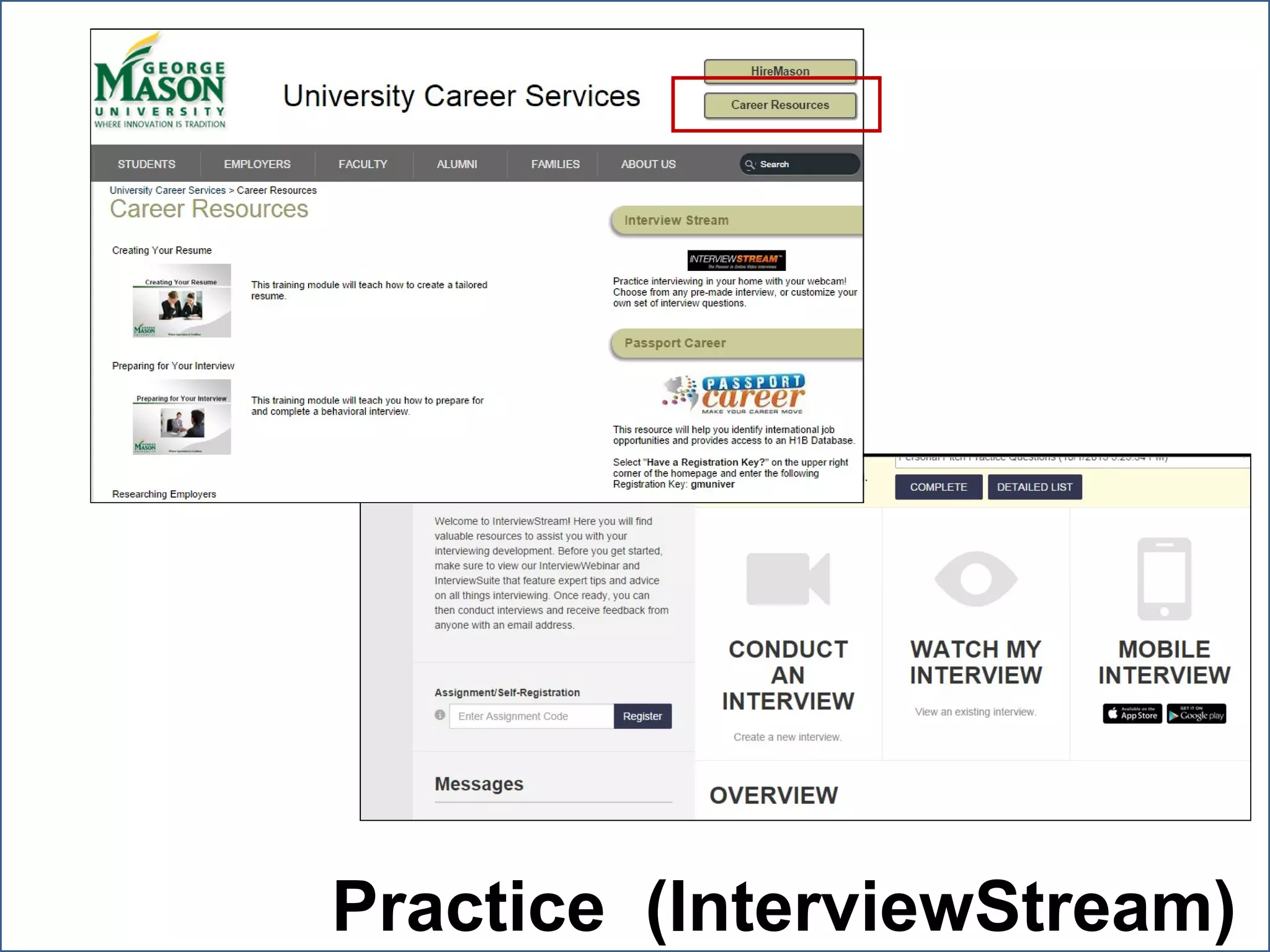
Practice (InterviewStream)
Game Plan: 
Before the Career Fair 
•Identify and research prospective employers 
•Map out fair strategy 
•Prepare resume(s) 
•Create and practice your personal pitch 
•Develop list of questions to 
ask recruiters 
•Get organized the night before
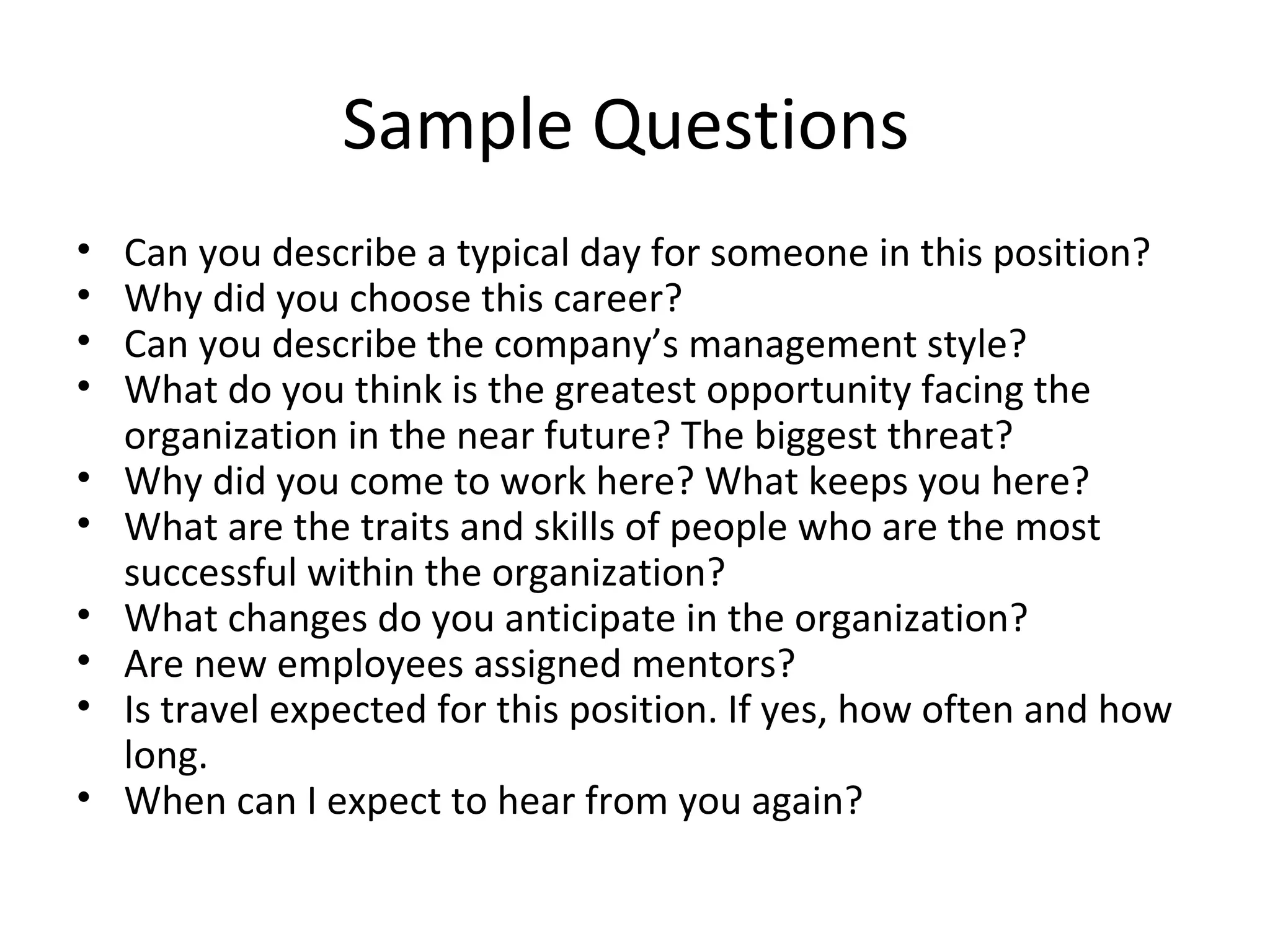
Sample Questions 
• Can you describe a typical day for someone in this position? 
• Why did you choose this career? 
• Can you describe the company’s management style? 
• What do you think is the greatest opportunity facing the 
organization in the near future? The biggest threat? 
• Why did you come to work here? What keeps you here? 
• What are the traits and skills of people who are the most 
successful within the organization? 
• What changes do you anticipate in the organization? 
• Are new employees assigned mentors? 
• Is travel expected for this position. If yes, how often and how 
long. 
• When can I expect to hear from you again?
Game Plan: 
Before the Career Fair 
•Identify and research prospective employers 
•Map out fair strategy 
•Prepare resume(s) 
•Create and practice your personal pitch 
•Develop list of questions to ask recruiters 
•Get organized the night 
before
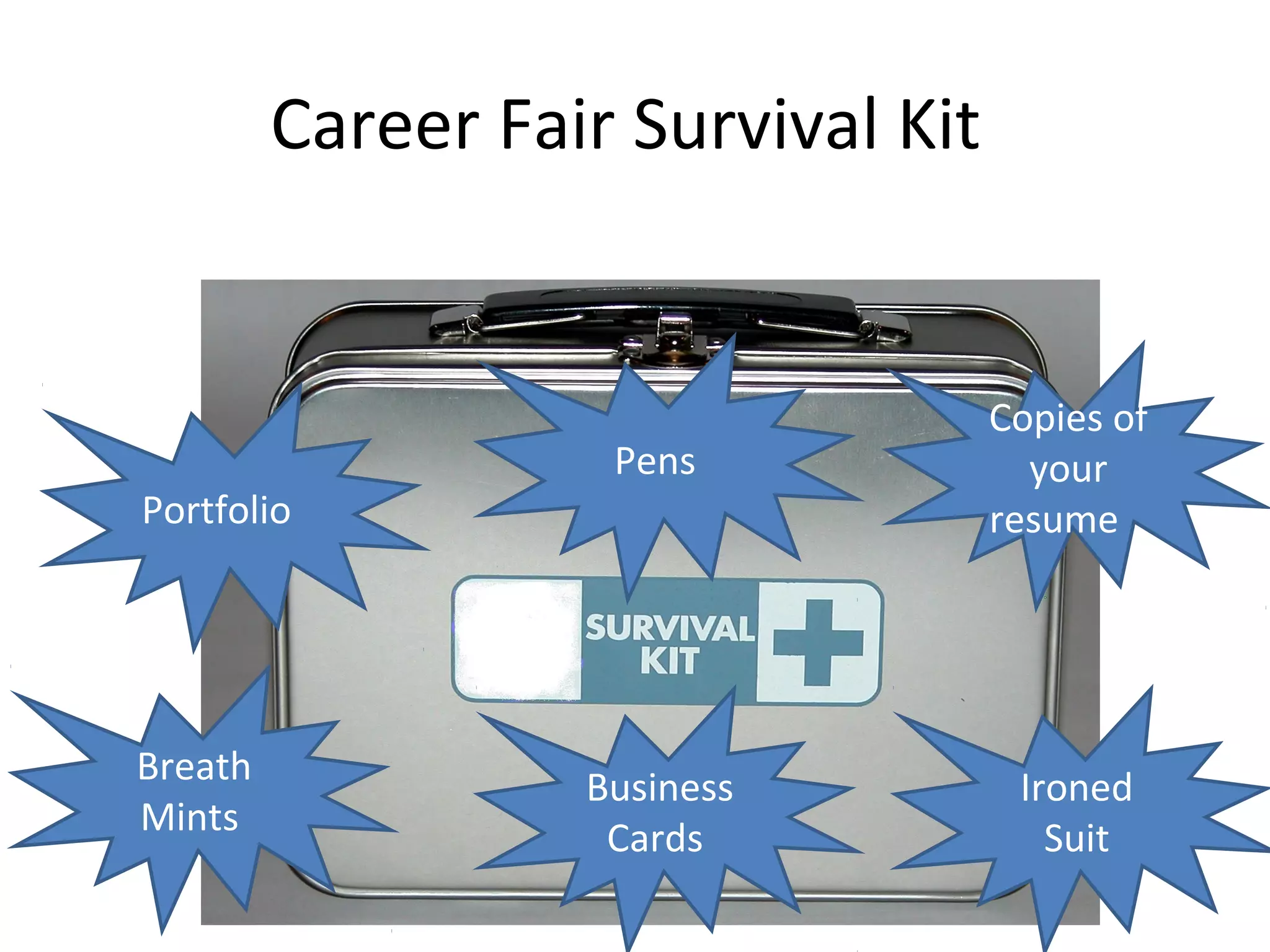
Career Fair Survival Kit 
Portfolio 
Copies of 
your 
resume 
Breath 
Mints 
Ironed 
Suit 
Pens 
Business 
Cards
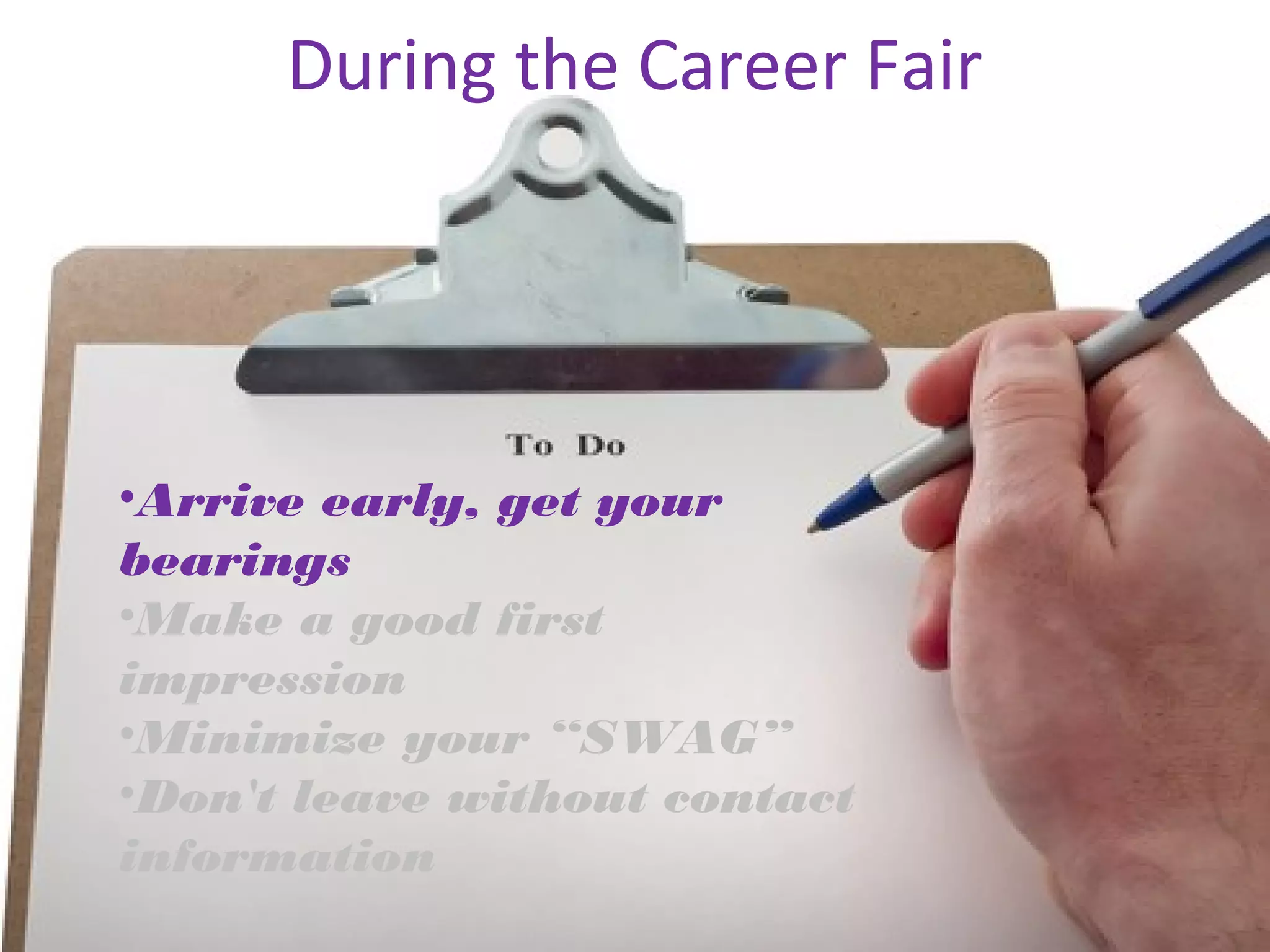
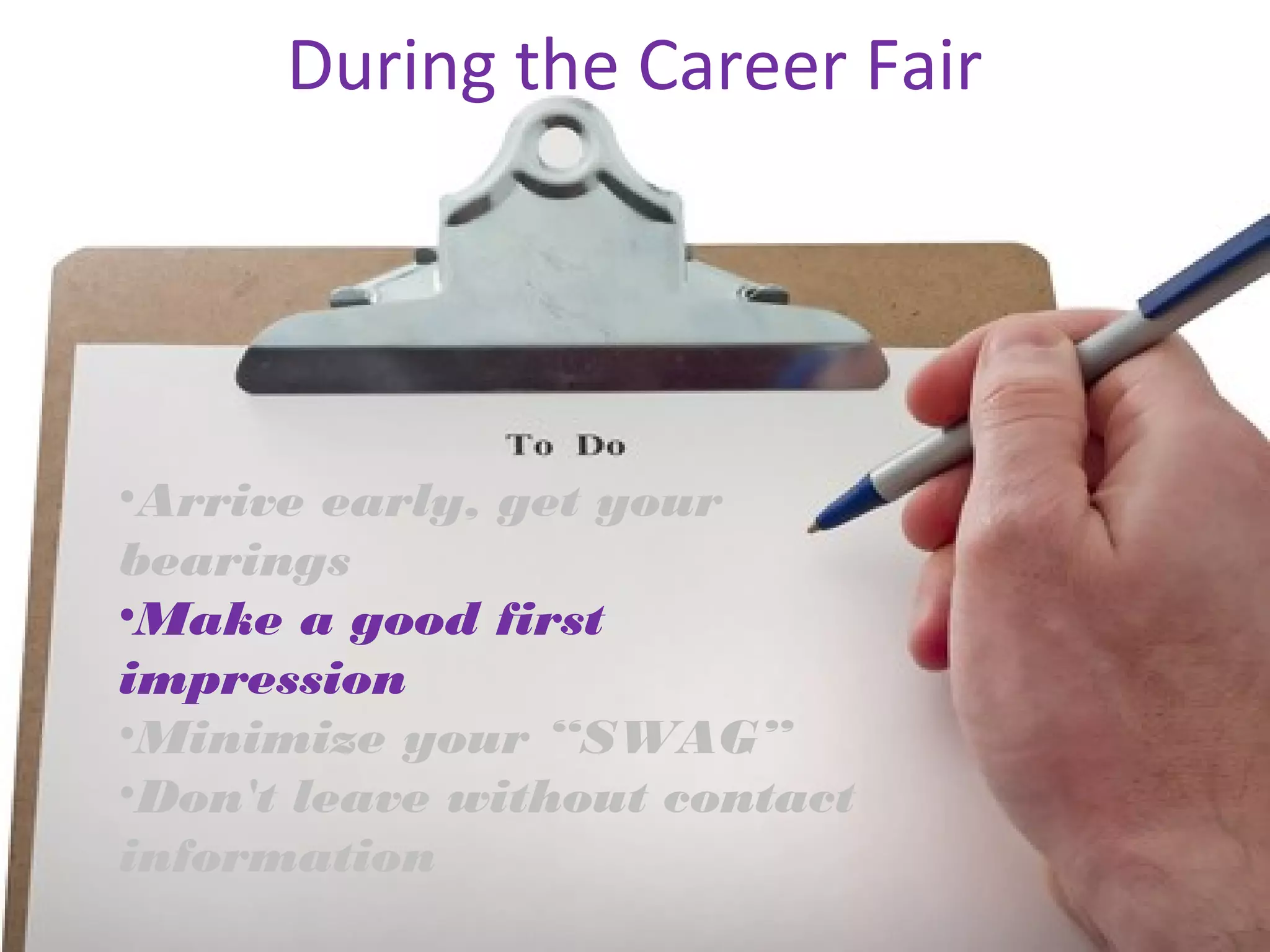
During the Career Fair 
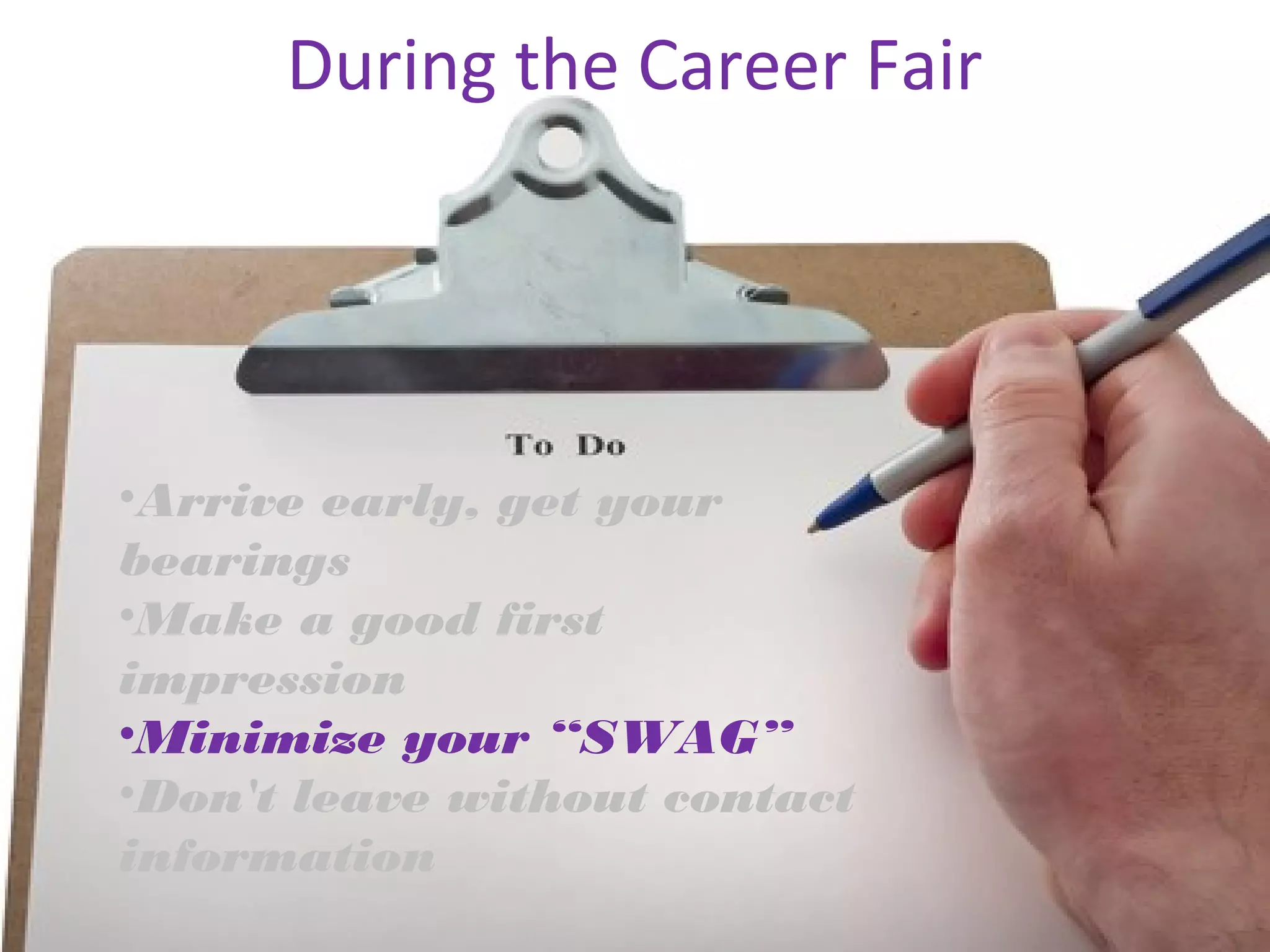
•Arrive early, get your 
bearings 
•Make a good first 
impression 
•Minimize your “SWAG” 
•Don't leave without contact 
information
During the Career Fair 
•Arrive early, get your 
bearings 
•Make a good first 
impression 
•Minimize your “SWAG” 
•Don't leave without contact 
information
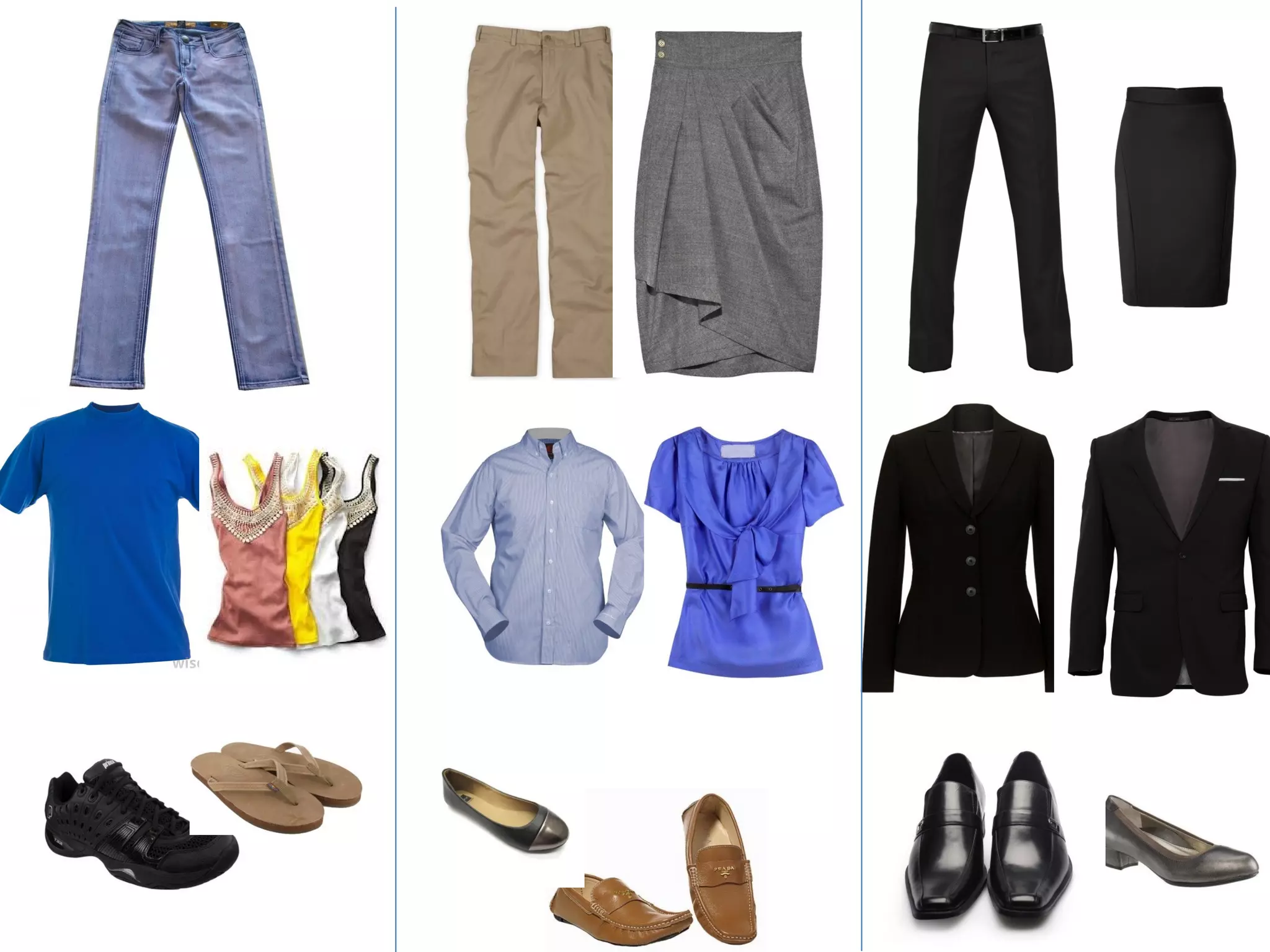
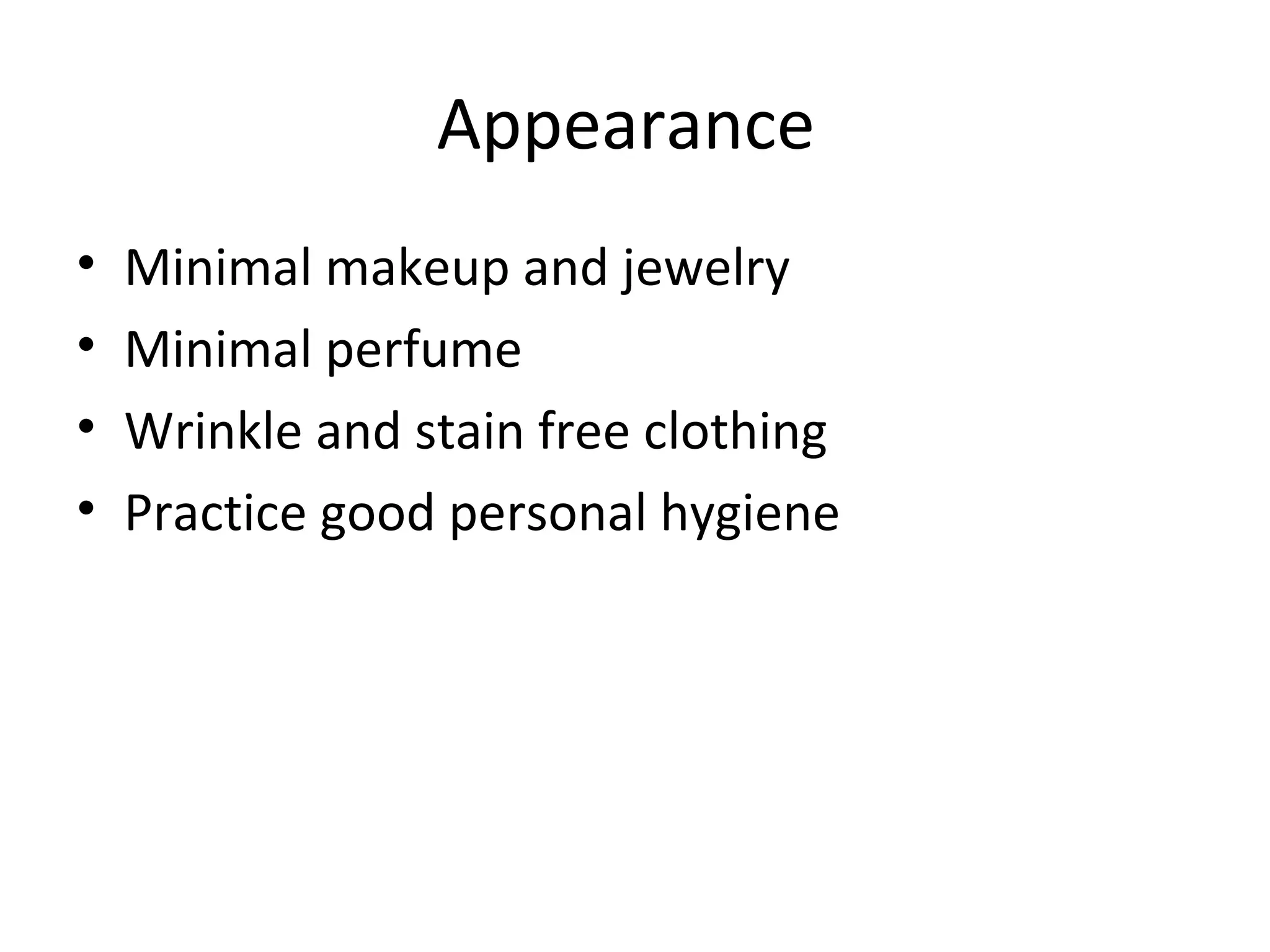
Appearance 
• Minimal makeup and jewelry 
• Minimal perfume 
• Wrinkle and stain free clothing 
• Practice good personal hygiene
Handshake
Body Language
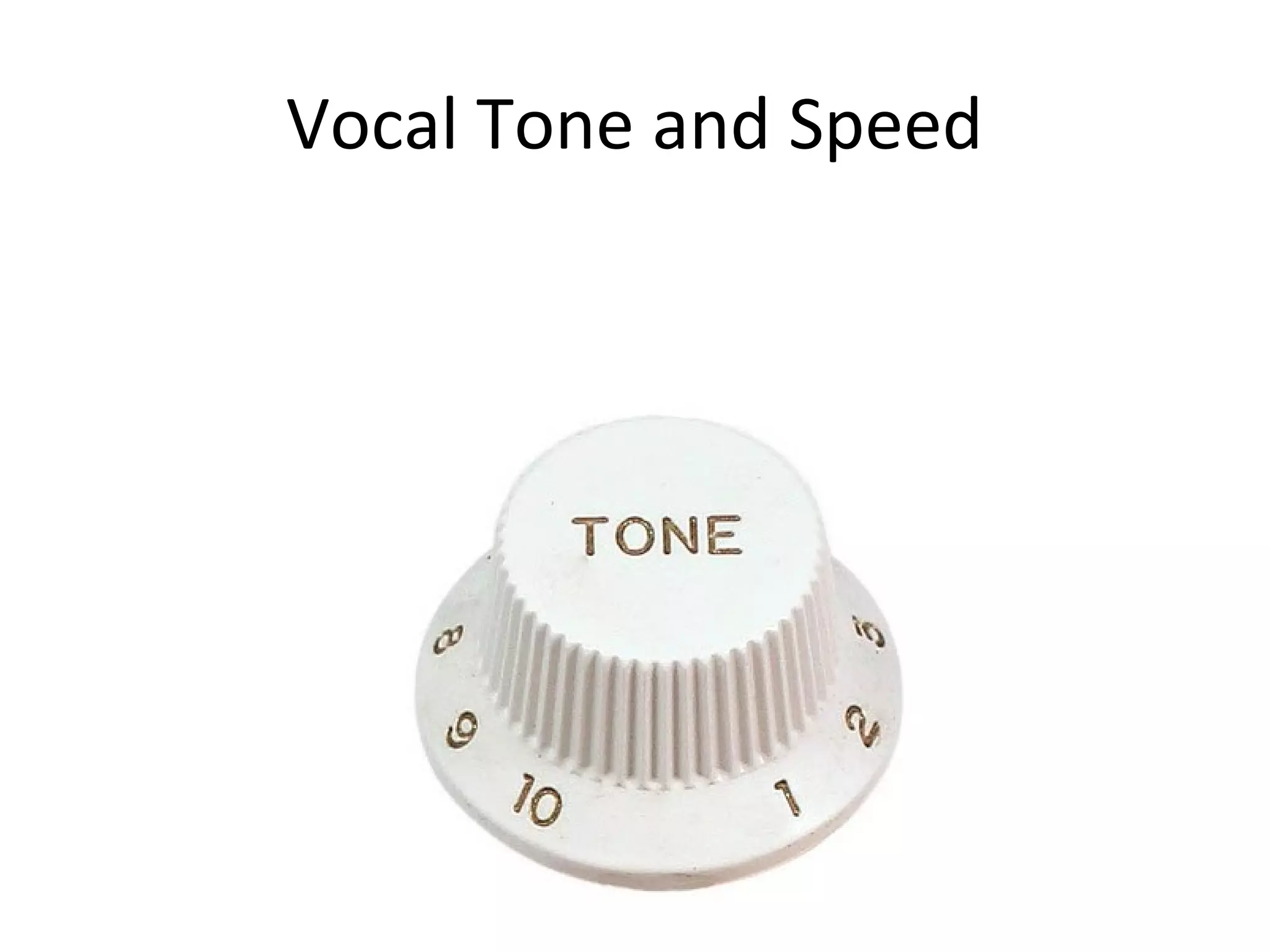
Vocal Tone and Speed
During the Career Fair 
•Arrive early, get your 
bearings 
•Make a good first 
impression 
•Minimize your “SWAG” 
•Don't leave without contact 
information
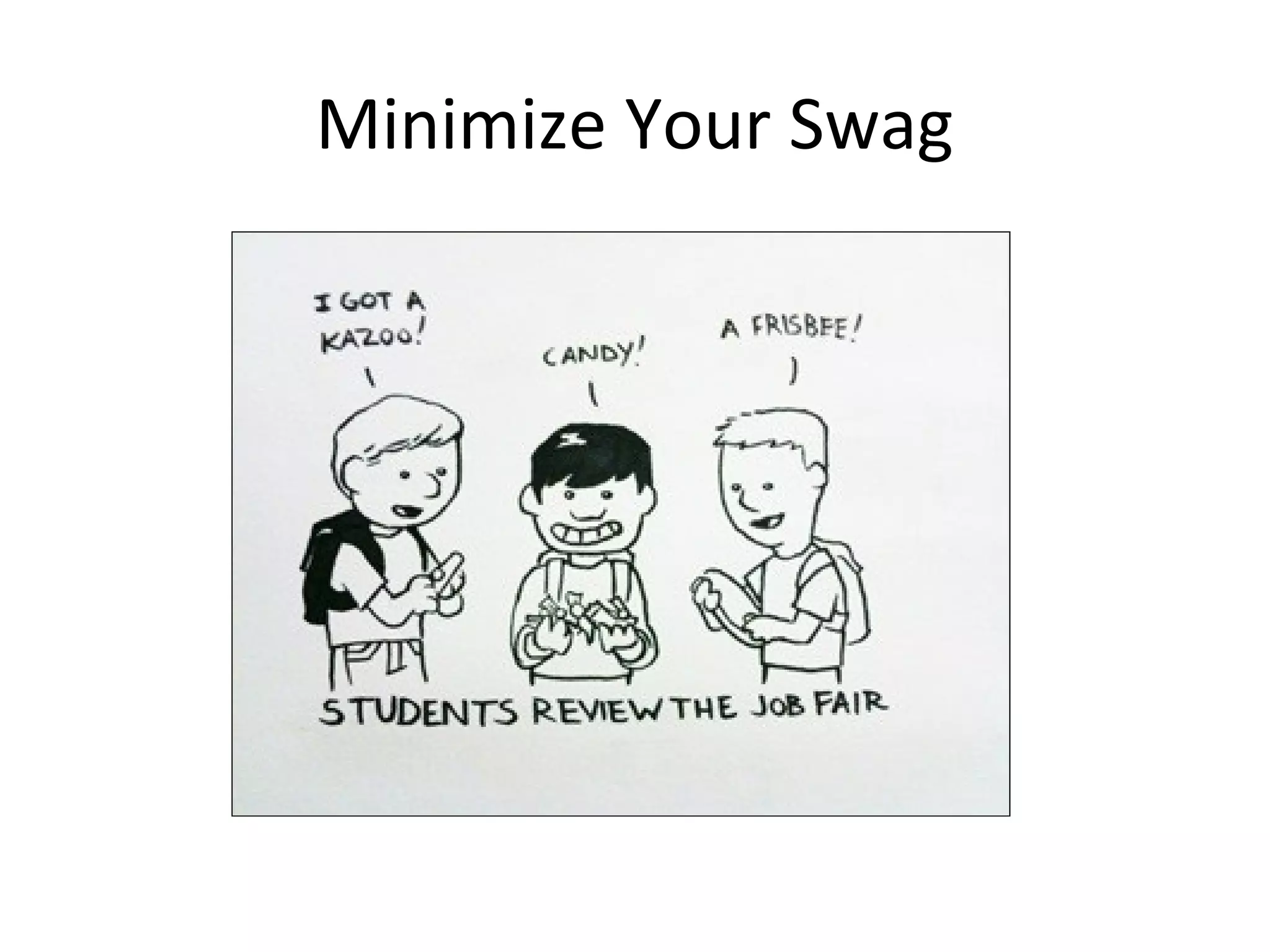
Minimize Your Swag
During the Career Fair 
•Arrive early, get your 
bearings 
•Make a good first 
impression 
•Minimize your “SWAG” 
•Don't leave without contact 
information
After the Career Fair 
•Send a follow up email to 
companies you are interested in 
working for 
•Organize all your contact 
information, notes, and 
literature from the fair 
•Devise a follow-up plan
After the Career Fair 
•Send a follow up email to 
companies you are interested in 
working for 
•Organize all your contact 
information, notes, and 
literature from the fair 
•Devise a follow-up plan
After the Career Fair 
•Send a follow up email to 
companies you are interested in 
working for 
•Organize all your contact 
information, notes, and 
literature from the fair 
•Devise a follow-up plan
What if I don’t find a 
job at the career fair?
SUB 1 
Room 3400 
(703) 993-2370 
Make an appointment wwiitthh ccaarreeeerr sseerrvviicceess
Additional Opportunities 
Career 
Events 
HireMason 
On Campus 
Interviewing 
Practice 
Interview 
Days 
Informational 
Interviews with 
Alums
Questions?

How to Prepare for the Career Fair

  • 1.
    How to PrepareFor The Career Fair C University Caarreeeerr SSeerrvviicceess
  • 2.
    What are employers looking for in an applicant? What do I need to do before, during, and after the fair? What if I don’t find a job at the career fair? Today we will answer tthhee ffoolllloowwiinngg qquueessttiioonnss…
  • 3.
    What skills are employers looking for?
  • 4.
    Top 5 Skillsfor 2012 Ability to work in a team structure Ability to plan, organize, and Ability to obtain prioritize work and process information Ability to make decisions and solve problems Ability to verbally communicate with persons inside and Ability to verbally communicate with persons inside and outside the organization outside the organization
  • 5.
    Employer Quote “Anumber of students had not completed any research before approaching our booth. This hurt them both in that it was a poor first impression and later in the discussion they were not readily able to tie their career goals with our company.”
  • 6.
    What Do EmployersWant Students to Know About Them?
  • 7.
    What do Ineed to do before, during, and after the fair?
  • 8.
    Game Plan: Beforethe Career Fair •Identify and research prospective employers •Map out fair strategy •Prepare resume(s) •Create and practice your personal pitch •Develop list of questions to ask recruiters •Get organized the night before
  • 9.
    Who is comingto the Career Fair?
  • 10.
    Game Plan: Beforethe Career Fair •Identify and research prospective employers •Map out fair strategy •Prepare resume(s) •Create and practice your personal pitch •Develop list of questions to ask recruiters •Get organized the night before
  • 11.
    Game Plan: Beforethe Career Fair •Identify and research prospective employers •Map out fair strategy •Prepare resume(s) •Create and practice your personal pitch •Develop list of questions to ask recruiters •Get organized the night before
  • 12.
    Resume Help •Walk in hours  Monday-Thursday: 2-4pm; Tuesday 5-7 Friday: 10-12  Resume Clinic with Employers  September 30th 1pm-7pm
  • 13.
    Game Plan: Beforethe Career Fair •Identify and research prospective employers •Map out fair strategy •Prepare resume(s) •Create and practice your personal pitch •Develop list of questions to ask recruiters •Get organized the night before
  • 14.
    Creating Your PersonalPitch • WWhhoo aarree yyoouu?? • WWhhaatt aarree yyoouu iinntteerreesstteedd iinn?? • WWhhaatt hhaavvee yyoouu ddoonnee ttoo ppuurrssuuee tthhoossee iinntteerreesstt?? • HHooww ccaann tthhee ppeerrssoonn yyoouu’’rree ttaallkkiinngg ttoo hheellpp yyoouu ggeett cclloosseerr ttoo yyoouurr ggooaall ??
  • 15.
    Creating your pitch Hello, my name is __________, and I am passionate about the IT industry. I have always been interested in computers, and I am looking for a position in software engineering . Last year I had an internship with InScope International where I participated in reviews of the system architecture, coding and designing technical documents. In this position I also developed scripts and other programmatic test tools required to execute tests. I am particularly interested in the software engineering position I saw posted for your company. Can you tell me a little more about what you are looking for in an applicant?
  • 16.
  • 17.
    Game Plan: Beforethe Career Fair •Identify and research prospective employers •Map out fair strategy •Prepare resume(s) •Create and practice your personal pitch •Develop list of questions to ask recruiters •Get organized the night before
  • 18.
    Sample Questions •Can you describe a typical day for someone in this position? • Why did you choose this career? • Can you describe the company’s management style? • What do you think is the greatest opportunity facing the organization in the near future? The biggest threat? • Why did you come to work here? What keeps you here? • What are the traits and skills of people who are the most successful within the organization? • What changes do you anticipate in the organization? • Are new employees assigned mentors? • Is travel expected for this position. If yes, how often and how long. • When can I expect to hear from you again?
  • 19.
    Game Plan: Beforethe Career Fair •Identify and research prospective employers •Map out fair strategy •Prepare resume(s) •Create and practice your personal pitch •Develop list of questions to ask recruiters •Get organized the night before
  • 20.
    Career Fair SurvivalKit Portfolio Copies of your resume Breath Mints Ironed Suit Pens Business Cards
  • 21.
    During the CareerFair •Arrive early, get your bearings •Make a good first impression •Minimize your “SWAG” •Don't leave without contact information
  • 22.
    During the CareerFair •Arrive early, get your bearings •Make a good first impression •Minimize your “SWAG” •Don't leave without contact information
  • 24.
    Appearance • Minimalmakeup and jewelry • Minimal perfume • Wrinkle and stain free clothing • Practice good personal hygiene
  • 25.
  • 26.
  • 27.
  • 28.
    During the CareerFair •Arrive early, get your bearings •Make a good first impression •Minimize your “SWAG” •Don't leave without contact information
  • 29.
  • 30.
    During the CareerFair •Arrive early, get your bearings •Make a good first impression •Minimize your “SWAG” •Don't leave without contact information
  • 31.
    After the CareerFair •Send a follow up email to companies you are interested in working for •Organize all your contact information, notes, and literature from the fair •Devise a follow-up plan
  • 32.
    After the CareerFair •Send a follow up email to companies you are interested in working for •Organize all your contact information, notes, and literature from the fair •Devise a follow-up plan
  • 33.
    After the CareerFair •Send a follow up email to companies you are interested in working for •Organize all your contact information, notes, and literature from the fair •Devise a follow-up plan
  • 34.
    What if Idon’t find a job at the career fair?
  • 35.
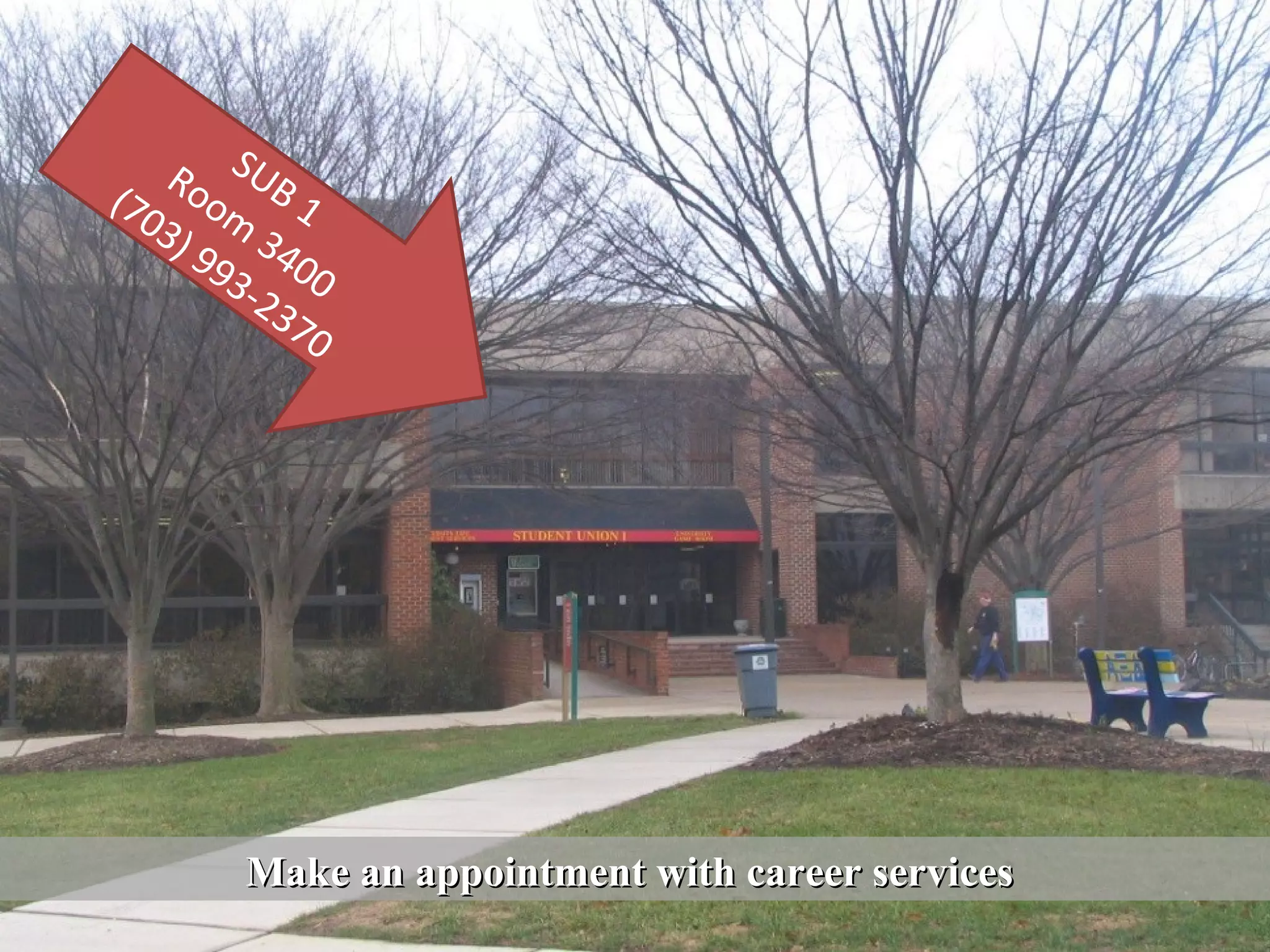
    SUB 1 Room3400 (703) 993-2370 Make an appointment wwiitthh ccaarreeeerr sseerrvviicceess
  • 36.
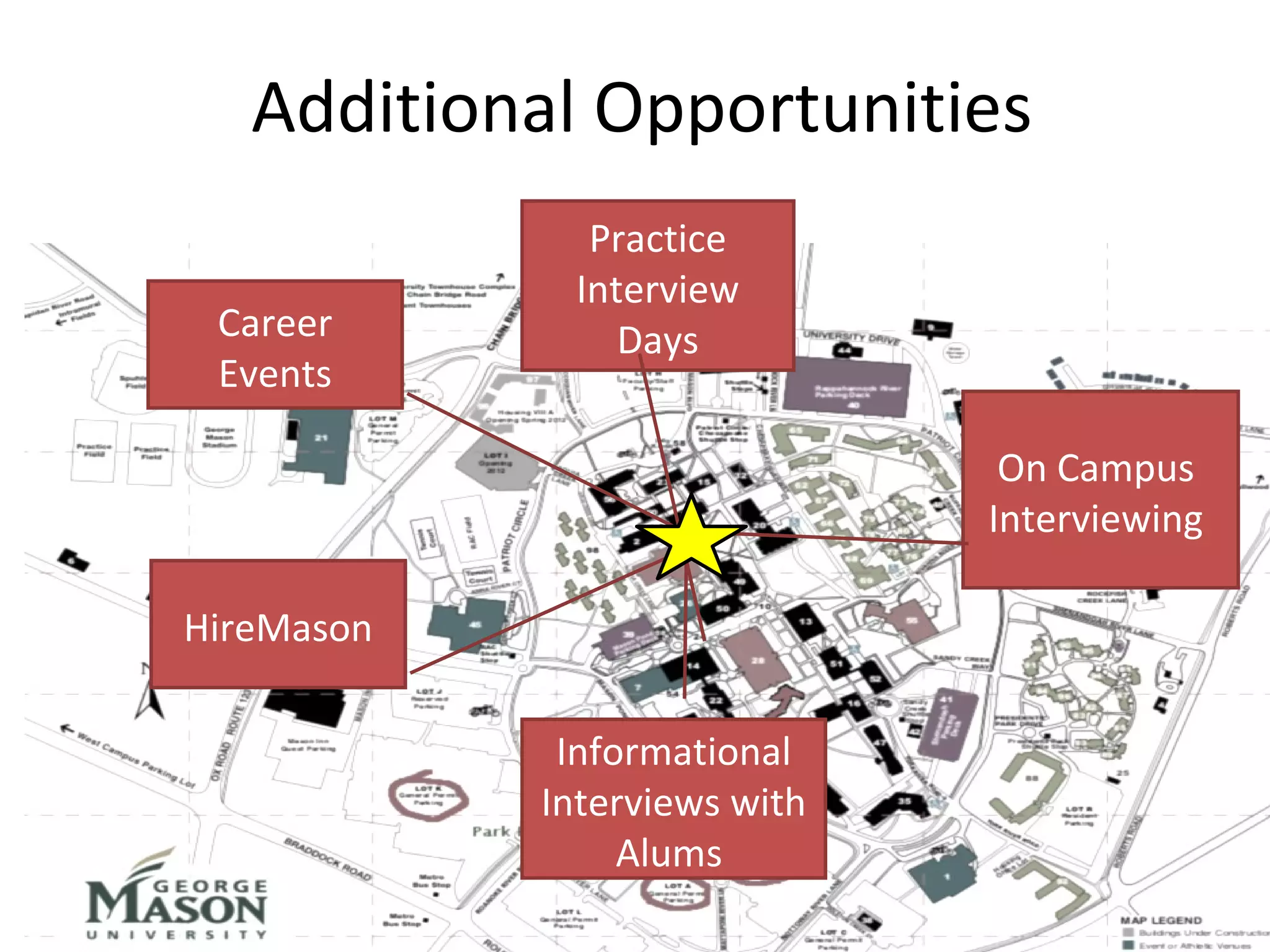
    Additional Opportunities Career Events HireMason On Campus Interviewing Practice Interview Days Informational Interviews with Alums
  • 37.

Editor's Notes

  • #2 Top Skills 4.60   4.59 4.49 4.46 4.45 Ability to analyze quantitative data 4.23 Technical knowledge related to the job 4.23 Proficiency with computer software programs 4.04 Ability to create and/or edit written reports 3.65 Ability to sell or influence others 3.51 Materials needed: PowerPoint presentation to be emailed to participants after workshop Moving On Pocket Guide to Researching Employers Sign-in sheet Evaluation forms Ask participants “What do you hope to learn from the workshop? See slide 2 for session overview Introduce Presenters
  • #5 Ability to work in a team structure 4.55 Ability to make decisions and solve problems 4.50 Ability to plan, organize, and prioritize work 4.48 Ability to verbally communicate with persons inside and outside the organization Now it is time to think like an employer. We are going to talk about the five must have competencies, as well as some tips for effectively answering behavioral questions based upon what an employer is looking for. What do you think the five must have competencies for employers are?
  • #7 Services Products Provided Positions Available Mission Statement
  • #15 DEMONSTRATE WITH FELLOW PRESENTER OR VOLUNTEER IF NO PARTNER Point out networking questions should not be obvious – something easily found on website – see Moving on pg 9 and 10 for examples Bring Resume with you to Job Fair and Business/networking cards to networking events (show notebook of biz cards ex: vistaprint.com) Thank you e-mail or hand write – mention refer to something specific you talked about in case they met with many that day Construct your personal pitch Brief statement (30 – 60 sec) that introducesyou and your situation Pitch strengths, current work /student role, skills, education, expertise, interests, and accomplishments End of the pitch clarify what you are looking for Be prepared– Bring networking card and prepare a list of networking questions Follow-up/thank you notes are essential!
  • #22 Arrive early, get your bearings. By arriving early you are able to see the layout of the career fair before all of the students arrive, and you are also able to get more face time with the employers because you are in the first group of students. Arriving early allows you talk with the recruiters while they are they are still fresh and eager to meet candidates. As the day wears on, everybody gets tired. Once you arrive at the fair venue, sign-in, and grab (or create) your nametag. Do you know where to place the tag? If you said your right lapel, you are right! Finally, arriving early allows enough time to change your career fair stratgegy if you notice that nother company has been added at the last minute. Checking the list of atendees for any last minute additions or cancelations for that matter, is a good practice to get into regardless of what time you get there. Don’t forget what your mission is once you arrive, find a job, network or find an internship
  • #23 Next make the first good impression. You want to start with a short introduction using a natural, but forceful voice (especially if you are typically a quiet person; but please, no shouting). Make sure you have strong eye contact, but don’t go too crazy. When you extend your hand for a hand shake, make sure it is a Firm handshake (not limp, damp, or bone-crushing). You can practice with your friends before the event to get some feedback. Smile, and And if there is a long line to meet the recruiter, remember to relax and not get over-anxious -- or worse, to make noises like your time is more important than anyone else's. Don't overstay your welcome; meet with the recruiter, make your pitch, get the key information you need, but don't linger too long -- especially if there is a long line of people behind you. Maintain a comfortable distance; when talking with the recruiter, you want to be close enough to be able to communicate, but not so close that you invade the recruiter's personal space. Now we are going to talk about your elevator pitch/30 second commercial. Here are some examples of a bad pitch. (Give example) Here are some examples of a good pitch. Raechel- We want you to walk out feeling confident with your pitch so I have brought this worksheet from gottamentor.com for you to fill out to help you craft your speech. Your commercial should be no more then 30 seconds, short, and concise. Your commercial should address the following questions Who are you, (Name, Major, class year) Why would you be interested in working for this company? (show you have done your research) What makes you qualified for this position (information in your worksheet)? Once you fill out your worksheet, I want you to pair up with the person next to you and share your commercial. Tell the person the type of position you are looking for so they can give you feedback on your speech.
  • #24 Here is a little recap. It is difficult to find examples of gender netural
  • #31 You never want to leave without contact information. You think you will remember, but you won’t. What do you do if the recruiter does not have a business card? Ask for his/her contact information. Be especially careful in getting the title correct, as well as the spelling of his/her name. You can use their name in your cover letter, and you want to make sure you have everything correct. While your asking about contact information, make sure to ask about the preferred method of following-up your conversation. Some folks love email, others prefer a phone call. Ask for his or her preference. Whatever the case may be, you need to make sure you know what the next stage of the hiring process is if you like the company. Do you need to submit your resume online, email the recruiter directly, etc.
  • #32 Write thank-you notes to all the recruiters you met with. You can send an email or handwritten note, email is quicker, but hand written notes may have more of an impact since less people do it. This is another reason you need to make sure you get the correct spelling and title of the recruiter. Make sure to mention something that you talked about during your conversation to help the recruiter rmemeber you. If you net any other people at the fair that y
  • #33 Organize all your contact information, notes, and literature from the fair. You will get a tons of handouts, trinkets, etc. from the fair and if you don’t organize it quickly you run the risk of losing it, forgetting about it, or accidently throwing it away. .
  • #34 Finally, devise your follow up plan after the career fair. Do you need to submit an online resume? If so when is the deadline? Do you need to call the recruiter? If so when are you going to do that. Do you need to contact references? If so who are you going to contact. Whatever the case may be, don’t lose the momentum that you gained at the career fair, take the time to create your follow up plan to ensure that you land the job or internship you were interested in.
  • #35 CHRISTINE STARTS HERE…
  • #36 11:20-11:30 Overview of programs/services/online resourceshand out brochures HireMason – please encourage students to create an account You all are also employers and might have opportunities Please sign up for a HireMason account and post any and all internship opps. You might have at your company!
  • #37 In addition to the Five fs, you can also find a lot of opportunities on campus to network such as.