TKMMCOLLEGE
NANGIARKULANGARA
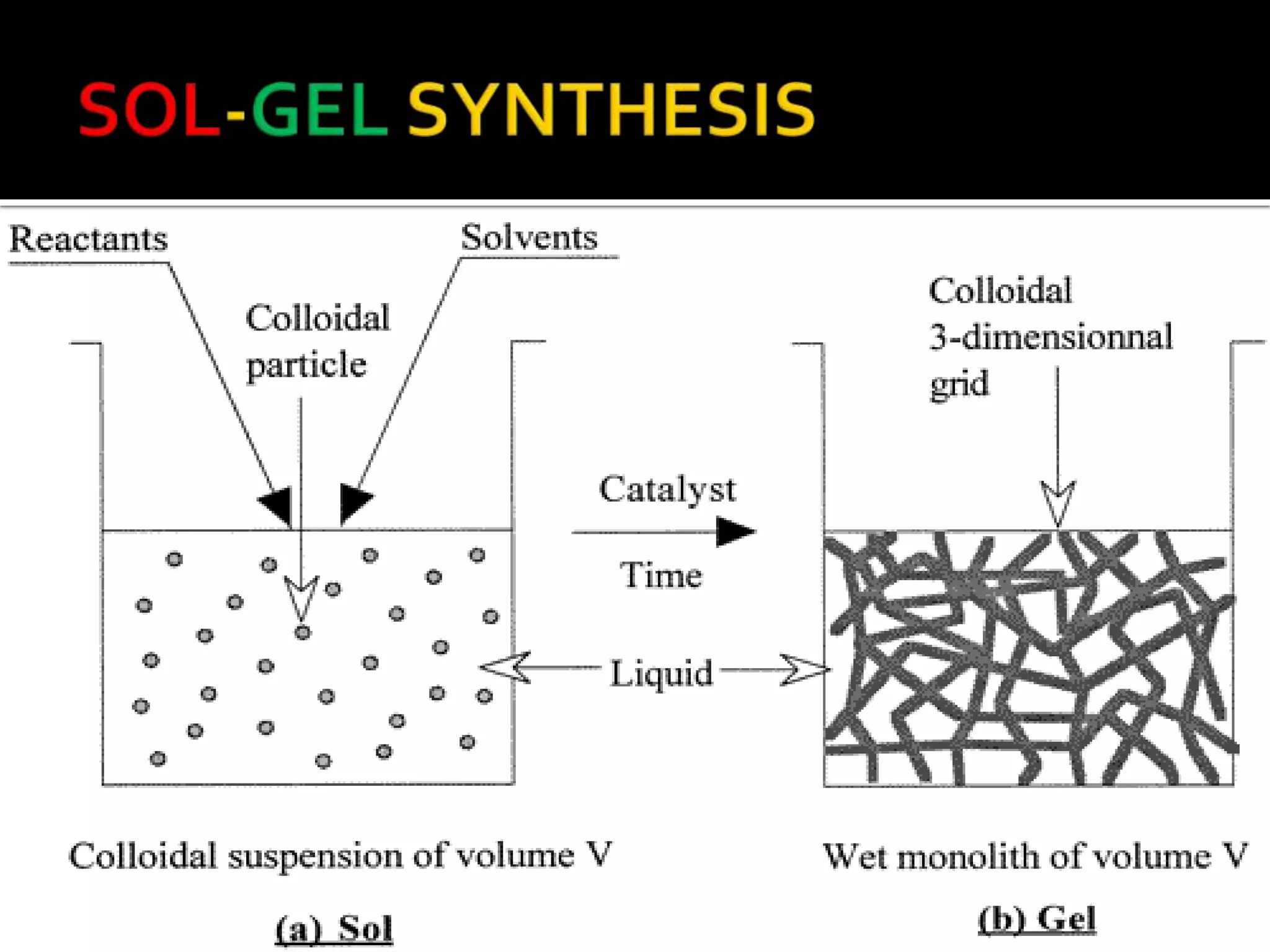
 SOL-GEL SYNTHESIS
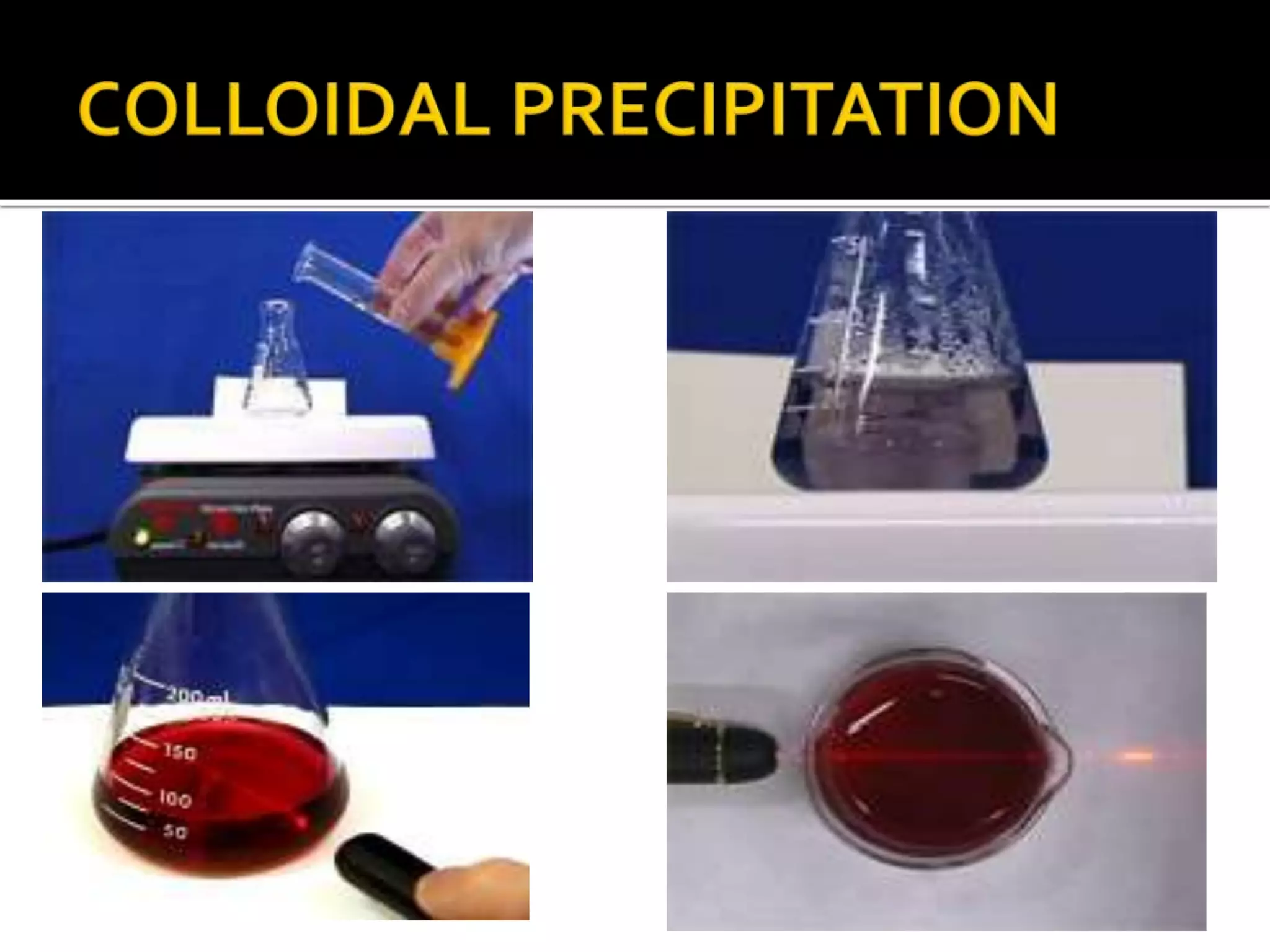
 COLLOIDAL PRECIPITATION
 CO-PRECIPITATION
 COMBUSTIONTECHNIQUE
 HYDROTHERMALTECHNIQUE
 HIGH ENERGY BALL MILLING
 SONOCHEMISTRY
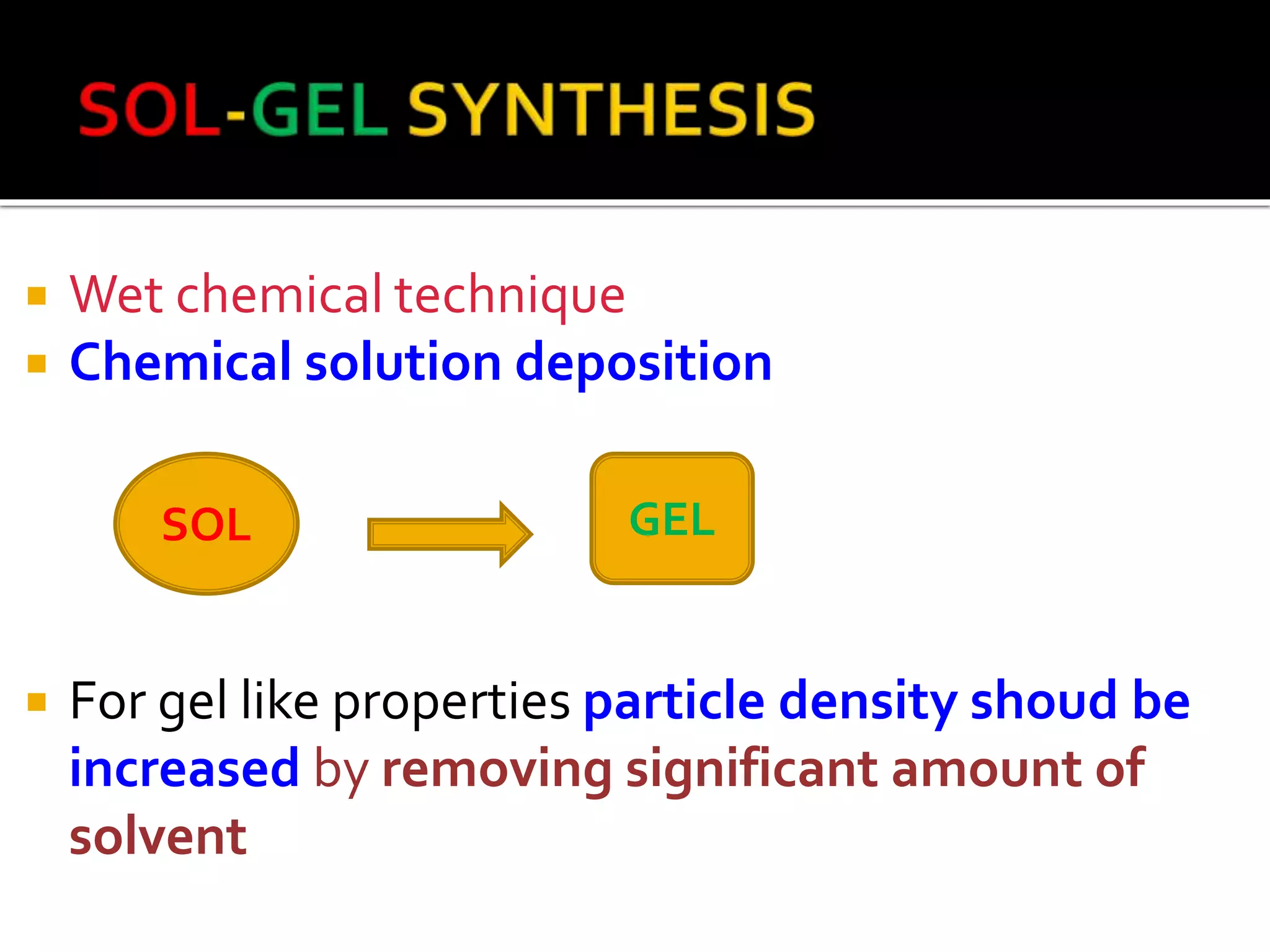
 Wet chemical technique
 Chemical solution deposition
 For gel like properties particle density shoud be
increased by removing significant amount of
solvent
SOL GEL
 Sedimentation
 Centrifugation
 Drying process (shrinkage and densification)
 Thermal treatment/firing process (favour
polycondensation , enhance mechanical properties
and structural stability via final
sintering,densification and grain growth)
 Densification can be achieved at a much
lower temperature
 Sol-gel approach is a cheap and low
temperature technique that allows for the
fine control of products’ chemical
composition
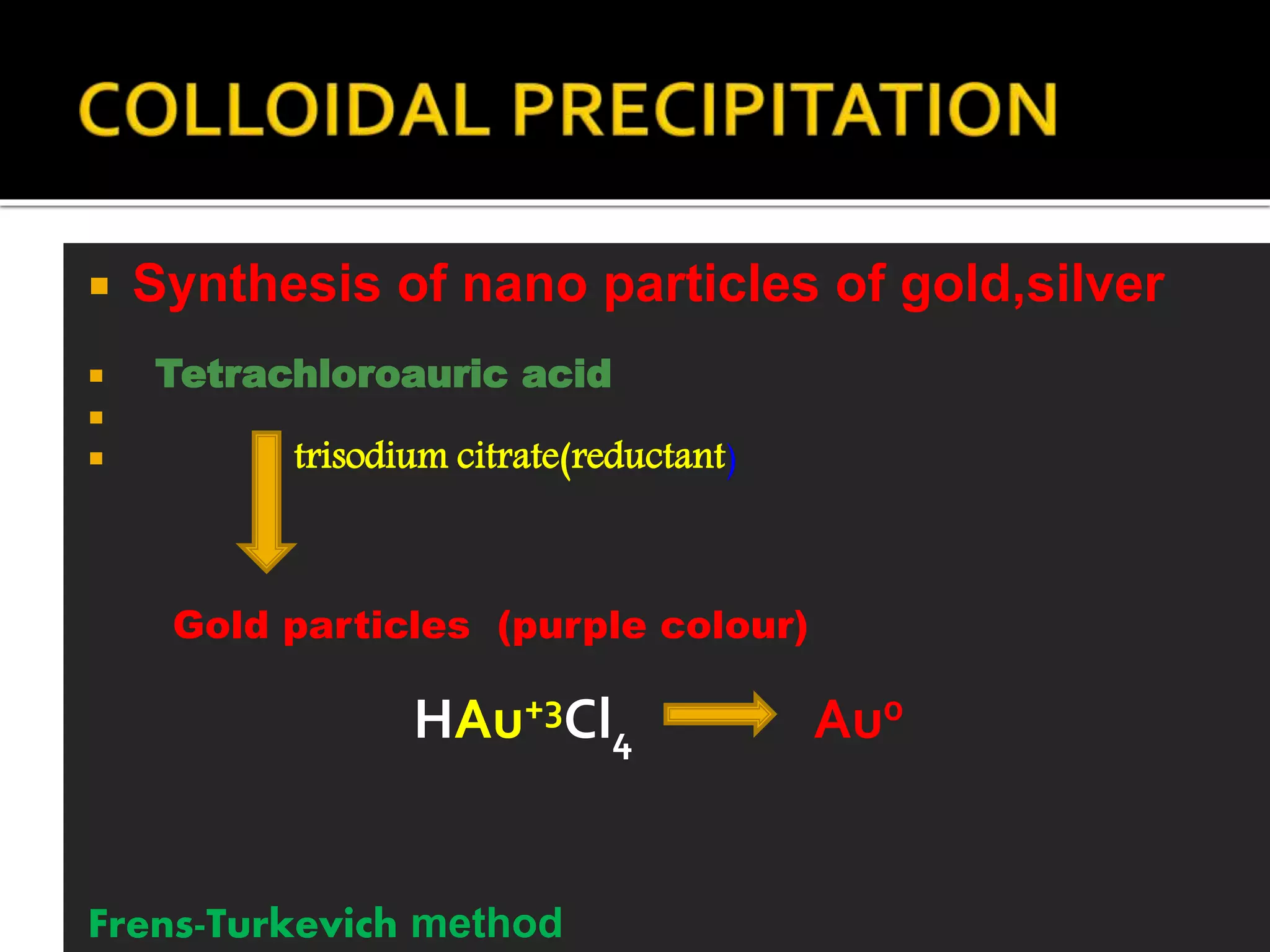
 Synthesis of nano particles of gold,silver
 Tetrachloroauric acid

 trisodium citrate(reductant)
Gold particles (purple colour)
HAu+3Cl4 Au0
Frens-Turkevich method
 Simple and low cost process
 Applicable to preparation of magnetic nano
particles
Iron oxide nano particles are synthesised by
co-precipitation reaction of FeCl3 and
1,2,4,5-benzene tetracarboxylic acid
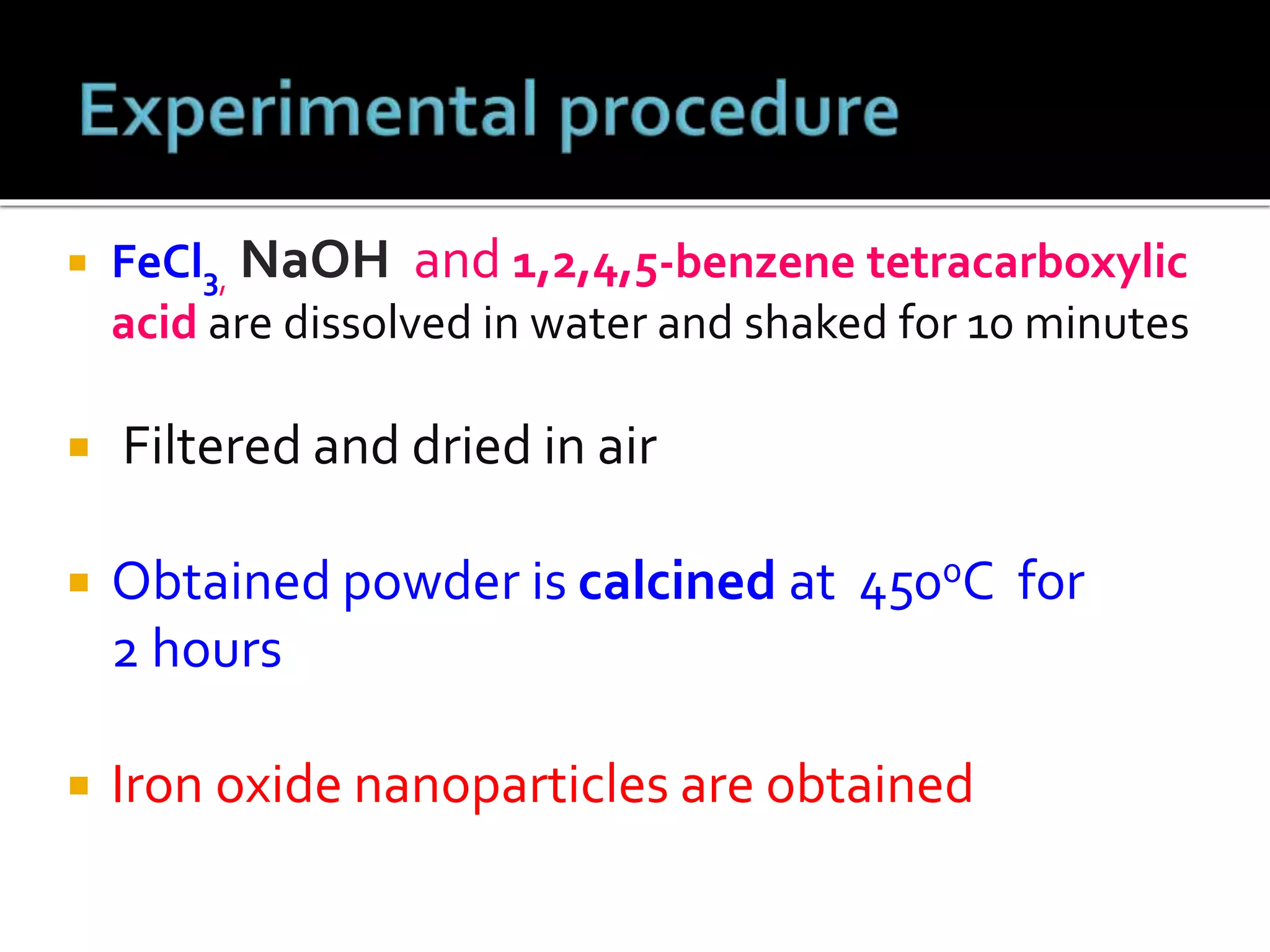
 FeCl3, NaOH and 1,2,4,5-benzene tetracarboxylic
acid are dissolved in water and shaked for 10 minutes
 Filtered and dried in air
 Obtained powder is calcined at 4500C for
2 hours
 Iron oxide nanoparticles are obtained
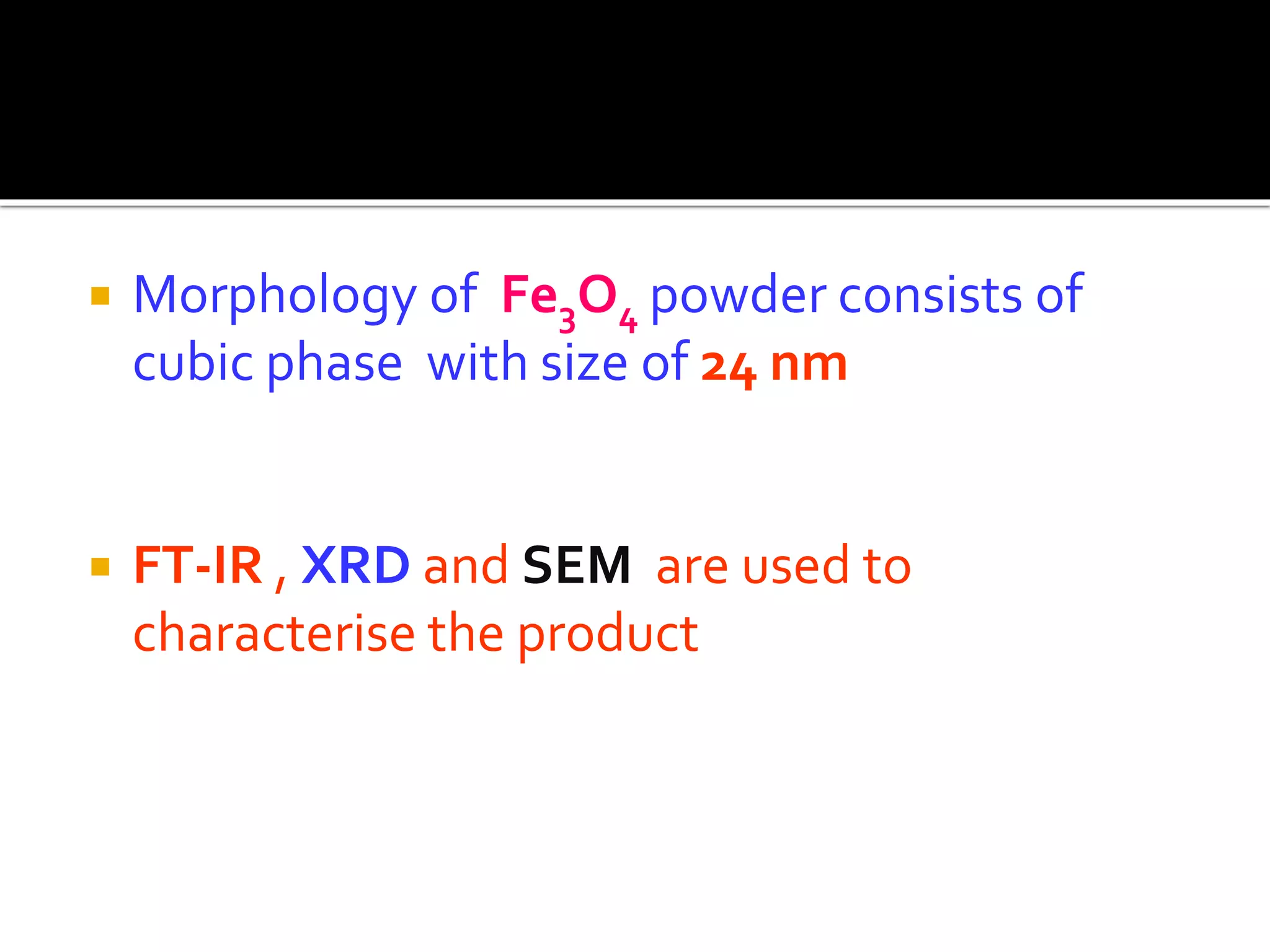
 Morphology of Fe3O4 powder consists of
cubic phase with size of 24 nm
 FT-IR , XRD and SEM are used to
characterise the product
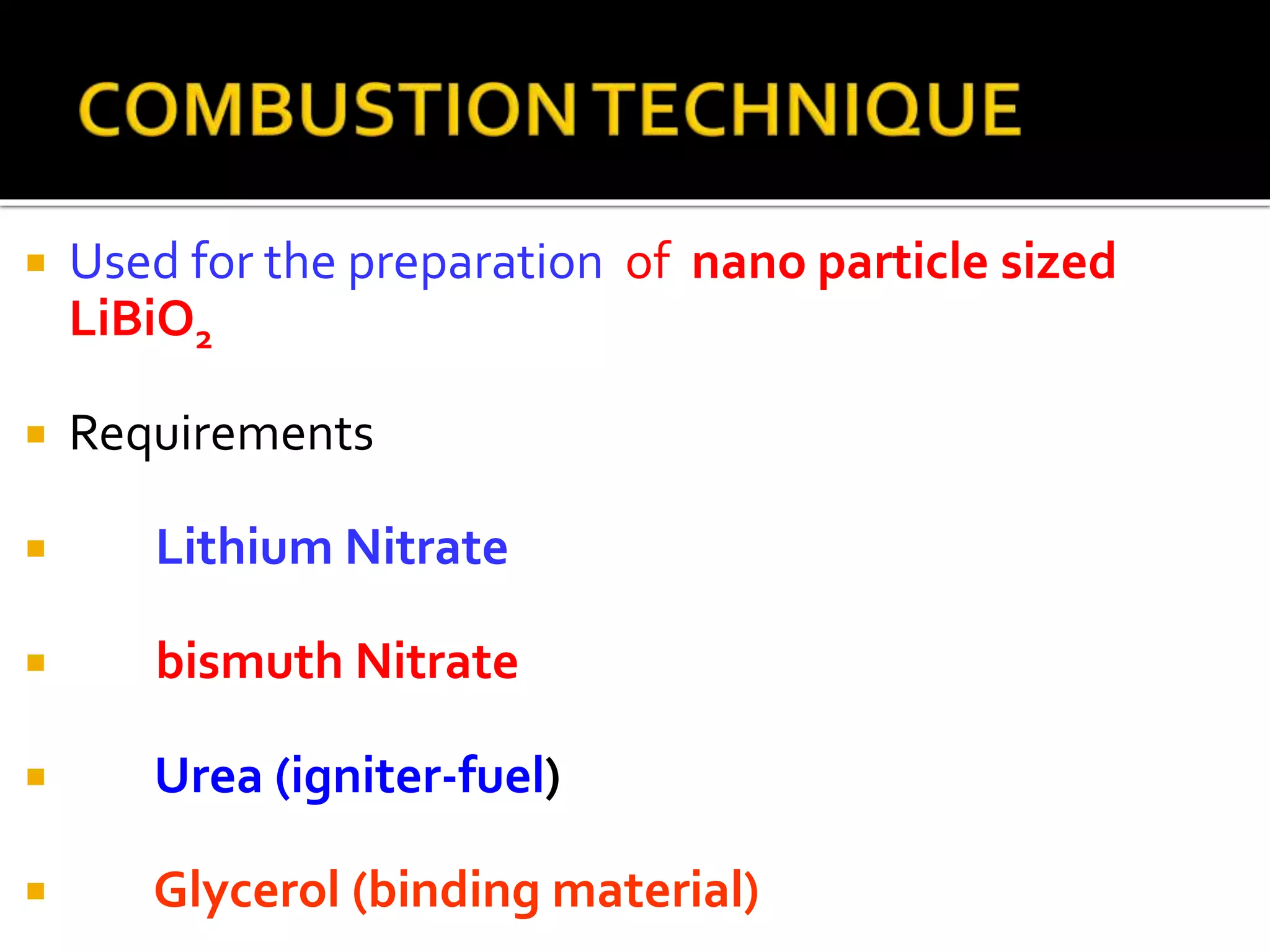
 Used for the preparation of nano particle sized
LiBiO2
 Requirements
 Lithium Nitrate
 bismuth Nitrate
 Urea (igniter-fuel)
 Glycerol (binding material)
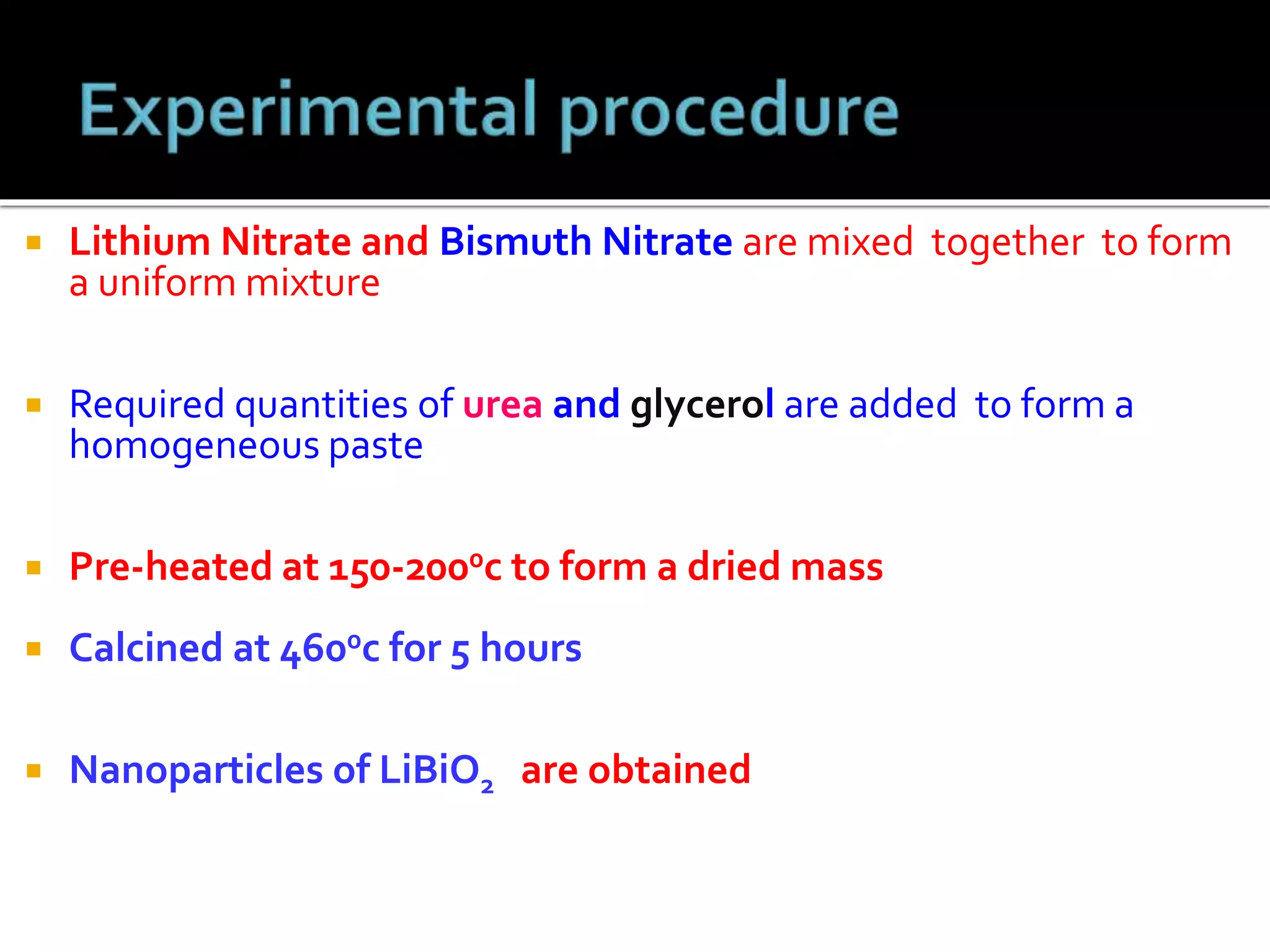
 Lithium Nitrate and Bismuth Nitrate are mixed together to form
a uniform mixture
 Required quantities of urea and glycerol are added to form a
homogeneous paste
 Pre-heated at 150-2000c to form a dried mass
 Calcined at 4600c for 5 hours
 Nanoparticles of LiBiO2 are obtained
 Conducted in steel pressure vessels called
autoclaves with or without teflon liners
 Under controlled temperature and/or pressure
with the reaction in aqueous solution
 Widely used for the production of small particles in
ceramics industry
 Used to prepare nanoparticles of TiO2
AUTOCLAVE
 Hydrothermal treatment of peptized precipitate of a titanium
precursor with water
 Precipitates are prepared by adding 0.5M isopropanol
solution of titanium butoxide into deionisde water
 They are peptized at 700C for 1 hour in the presence of
tetraalkyl ammonium hydroxide (peptizer)
 Filtration and treatment at 2400C for 2 hours
 Obtained powder are washed with deionised water and
absolute alcohol
 Dried at 600C
 Under the same concentrations of the peptizer,the
particle size decreased with increasing alkyl
chain length
 The peptizers and their concentrations
influenced the morphology of the particle
 Utilized in industries to perform size reduction
 Induce structural changes and chemical reactions by mechanical
energy rather than thermal energy,reaction are possible at room
temperature and so non-equilibrium in nature
 The milling process embraces a complex mixture of fracturing,
grinding, high speed plastic deformation, cold
welding,thermalshock, intimate mixing etc
.
 Produced a large range of nanoscaled materials – nanocrystalline
materials, nanoparticles, nanocomposites ,nanotubes,nanowires
and nanorods
 Mechanical Alloying (MA)
 Mechanical Milling (MM)
 Mechanochemical Synthesis (MS)
 Mixtures of powders are milled together
 Material transfer is involved
 A homogeneous alloy is obtained
 Only powder with uniform composition is milled
 No material transfer is involved
 A special MA process
 Chemical reaction between the powders take
place during milling
 Grain refinement and chemical reactions take
place at low temperature under far from
equilibrium conditions
 Cold welding and Agglomeration during milling
opposes MA and MM
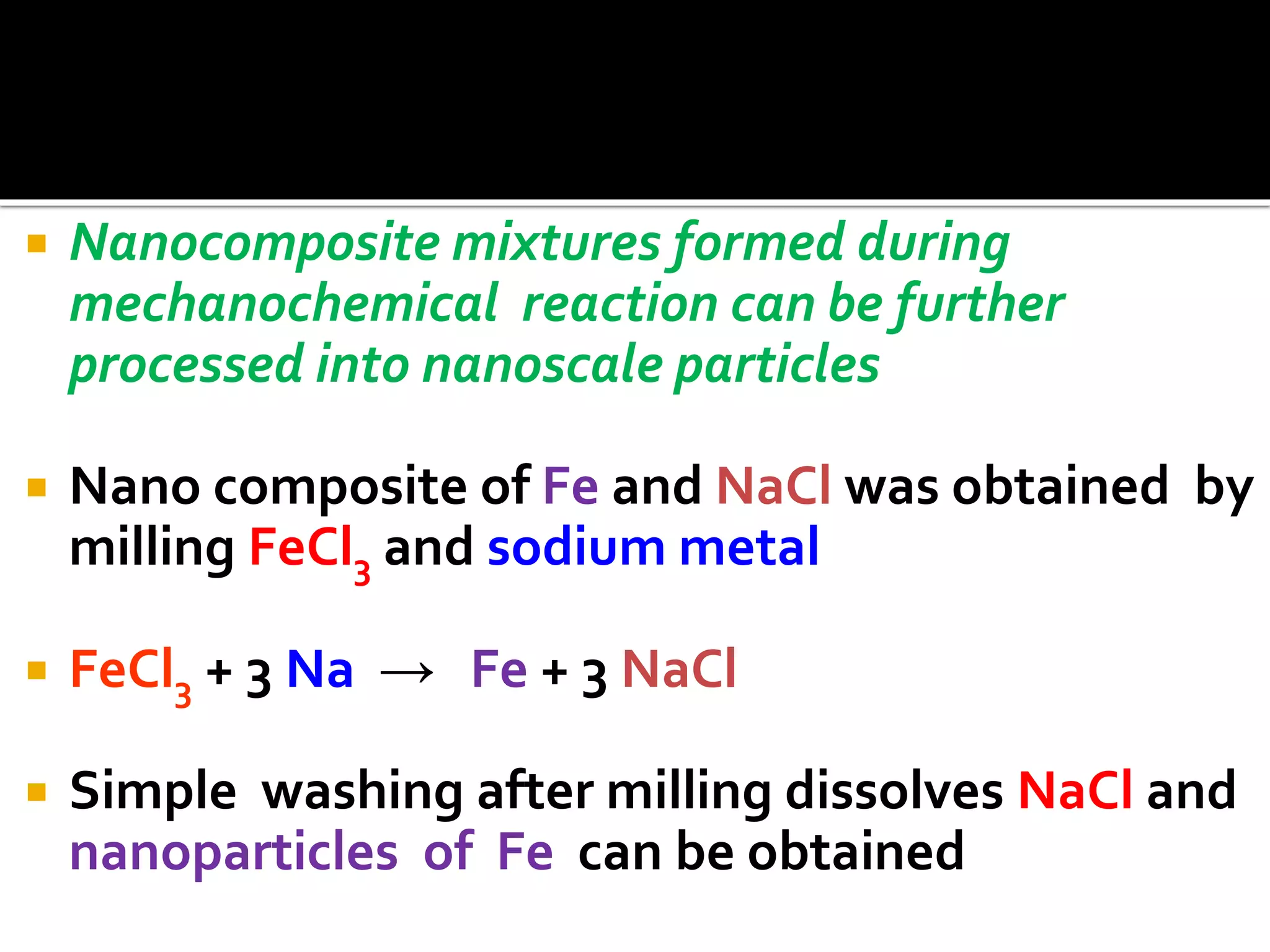
 Nanocomposite mixtures formed during
mechanochemical reaction can be further
processed into nanoscale particles
 Nano composite of Fe and NaCl was obtained by
milling FeCl3 and sodium metal
 FeCl3 + 3 Na → Fe + 3 NaCl
 Simple washing after milling dissolves NaCl and
nanoparticles of Fe can be obtained
 Excellent versatility
 Scalability
 Cost effectiveness
TKMMCOLLEGE
NANGIARKULANGARA

Preparation of nano particles

  • 1.
  • 2.
     SOL-GEL SYNTHESIS COLLOIDAL PRECIPITATION  CO-PRECIPITATION  COMBUSTIONTECHNIQUE  HYDROTHERMALTECHNIQUE  HIGH ENERGY BALL MILLING  SONOCHEMISTRY
  • 3.
     Wet chemicaltechnique  Chemical solution deposition  For gel like properties particle density shoud be increased by removing significant amount of solvent SOL GEL
  • 4.
     Sedimentation  Centrifugation Drying process (shrinkage and densification)  Thermal treatment/firing process (favour polycondensation , enhance mechanical properties and structural stability via final sintering,densification and grain growth)
  • 5.
     Densification canbe achieved at a much lower temperature  Sol-gel approach is a cheap and low temperature technique that allows for the fine control of products’ chemical composition
  • 7.
     Synthesis ofnano particles of gold,silver  Tetrachloroauric acid   trisodium citrate(reductant) Gold particles (purple colour) HAu+3Cl4 Au0 Frens-Turkevich method
  • 9.
     Simple andlow cost process  Applicable to preparation of magnetic nano particles Iron oxide nano particles are synthesised by co-precipitation reaction of FeCl3 and 1,2,4,5-benzene tetracarboxylic acid
  • 10.
     FeCl3, NaOHand 1,2,4,5-benzene tetracarboxylic acid are dissolved in water and shaked for 10 minutes  Filtered and dried in air  Obtained powder is calcined at 4500C for 2 hours  Iron oxide nanoparticles are obtained
  • 11.
     Morphology ofFe3O4 powder consists of cubic phase with size of 24 nm  FT-IR , XRD and SEM are used to characterise the product
  • 12.
     Used forthe preparation of nano particle sized LiBiO2  Requirements  Lithium Nitrate  bismuth Nitrate  Urea (igniter-fuel)  Glycerol (binding material)
  • 13.
     Lithium Nitrateand Bismuth Nitrate are mixed together to form a uniform mixture  Required quantities of urea and glycerol are added to form a homogeneous paste  Pre-heated at 150-2000c to form a dried mass  Calcined at 4600c for 5 hours  Nanoparticles of LiBiO2 are obtained
  • 14.
     Conducted insteel pressure vessels called autoclaves with or without teflon liners  Under controlled temperature and/or pressure with the reaction in aqueous solution  Widely used for the production of small particles in ceramics industry  Used to prepare nanoparticles of TiO2
  • 15.
  • 16.
     Hydrothermal treatmentof peptized precipitate of a titanium precursor with water  Precipitates are prepared by adding 0.5M isopropanol solution of titanium butoxide into deionisde water  They are peptized at 700C for 1 hour in the presence of tetraalkyl ammonium hydroxide (peptizer)  Filtration and treatment at 2400C for 2 hours  Obtained powder are washed with deionised water and absolute alcohol  Dried at 600C
  • 17.
     Under thesame concentrations of the peptizer,the particle size decreased with increasing alkyl chain length  The peptizers and their concentrations influenced the morphology of the particle
  • 19.
     Utilized inindustries to perform size reduction  Induce structural changes and chemical reactions by mechanical energy rather than thermal energy,reaction are possible at room temperature and so non-equilibrium in nature  The milling process embraces a complex mixture of fracturing, grinding, high speed plastic deformation, cold welding,thermalshock, intimate mixing etc .  Produced a large range of nanoscaled materials – nanocrystalline materials, nanoparticles, nanocomposites ,nanotubes,nanowires and nanorods
  • 20.
     Mechanical Alloying(MA)  Mechanical Milling (MM)  Mechanochemical Synthesis (MS)
  • 21.
     Mixtures ofpowders are milled together  Material transfer is involved  A homogeneous alloy is obtained
  • 22.
     Only powderwith uniform composition is milled  No material transfer is involved
  • 23.
     A specialMA process  Chemical reaction between the powders take place during milling  Grain refinement and chemical reactions take place at low temperature under far from equilibrium conditions  Cold welding and Agglomeration during milling opposes MA and MM
  • 24.
     Nanocomposite mixturesformed during mechanochemical reaction can be further processed into nanoscale particles  Nano composite of Fe and NaCl was obtained by milling FeCl3 and sodium metal  FeCl3 + 3 Na → Fe + 3 NaCl  Simple washing after milling dissolves NaCl and nanoparticles of Fe can be obtained
  • 25.
     Excellent versatility Scalability  Cost effectiveness
  • 26.