AT THE END OF LESSON,THE STUDENT
WILL BE ABLE TO:
• Define what opinion, belief, and conviction are
• Differentiate the opinion, belief, and conviction by giving different
examples and;
• Relate opinion, belief, or conviction on a material viewed in real life
situation.
ANSWER THE FF QUESTIONS;
Can you identify the pictures? If yes,
what are those? If no, explain why?
What is your basis
to have such beliefs?
Do you think that your belief will
determine
your character as a person?
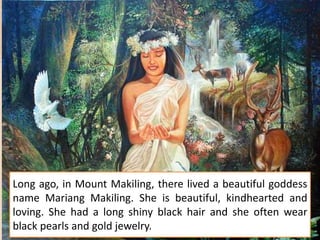
Long ago, in Mount Makiling, there lived a beautiful goddess
name Mariang Makiling. She is beautiful, kindhearted and
loving. She had a long shiny black hair and she often wear
black pearls and gold jewelry.
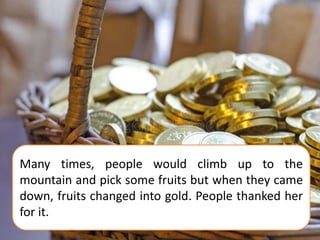
Many times, people would climb up to the
mountain and pick some fruits but when they came
down, fruits changed into gold. People thanked her
for it.
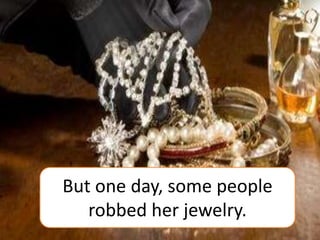
But one day, some people
robbed her jewelry.
Some hunters climb up the mountain and hunted for
wild animals, cut down trees and left the forest at the
top of the mountain denuded.
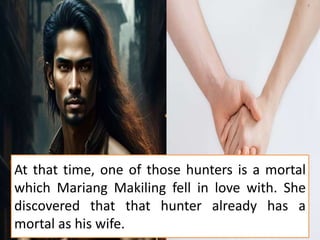
At that time, one of those hunters is a mortal
which Mariang Makiling fell in love with. She
discovered that that hunter already has a
mortal as his wife.
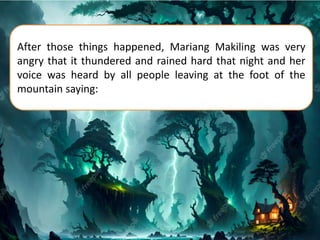
After those things happened, Mariang Makiling was very
angry that it thundered and rained hard that night and her
voice was heard by all people leaving at the foot of the
mountain saying:
“I have provided you food, treasures and shelter but it
wasn’t enough for you! I have given you everything you
want but still you aren’t contented. I loved you more than
myself but still you searched for mortal love. Now, feel
my anger! And wait for my revenge! From now on, you
shall stand on your own feet and you will never see me
again. I swear!” And she laughed so hard that it brought
an earthquake.
After her large voice was heard, she never
showed herself again to those mortals who
abused her kindness. Today, it is still believed
that Mariang Makiling is still living there.”
Who are the characters in
the story?
How you would describe
Mariang Makiling?
How would you end the
story?
- is a judgment formed about something not
necessarily based on fact or knowledge. It is
brief, formed regularly, and evolve quickly as
data emerges.
- a judgment about a person or thing
- a belief based on experience and on
seeing certain facts that falls short of
positive knowledge
1. The cake tastes delicious.
2. She looks sad.
3. He is childish.
4. My history teacher hates me.
5. The movie was boring.
- is a judgment formed about something not
necessarily based on fact or knowledge. It is
brief, formed regularly, and evolves quickly as
data - is an acceptance that a statement is
true or that something exists. It has more
staying power but can shift as data and life
experiences occur.
- a belief is an idea one accepts as being true
or real.
-I choose to believe that my life is an incredible
gift.
- Everyone I meet is a best friend I don’t know
yet.
-Every 24 hours is the most important of my life.
- Everything will turn out all right.
- Life is a game to be played, not a problem to
be fixed.
- is a firmly held and stable, long-
term belief. These are powerful
life-long truths that we should be
prepared to defend.
-can be defined as a firm belief
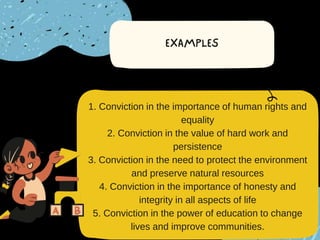
1. Conviction in the importance of human rights and
equality
2. Conviction in the value of hard work and
persistence
3. Conviction in the need to protect the environment
and preserve natural resources
4. Conviction in the importance of honesty and
integrity in all aspects of life
5. Conviction in the power of education to change
lives and improve communities.
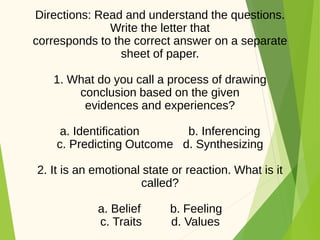
Directions: Read and understand the questions.
Write the letter that
corresponds to the correct answer on a separate
sheet of paper.
1. What do you call a process of drawing
conclusion based on the given
evidences and experiences?
a. Identification b. Inferencing
c. Predicting Outcome d. Synthesizing
2. It is an emotional state or reaction. What is it
called?
a. Belief b. Feeling
c. Traits d. Values
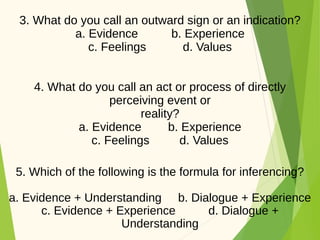
3. What do you call an outward sign or an indication?
a. Evidence b. Experience
c. Feelings d. Values
4. What do you call an act or process of directly
perceiving event or
reality?
a. Evidence b. Experience
c. Feelings d. Values
5. Which of the following is the formula for inferencing?
a. Evidence + Understanding b. Dialogue + Experience
c. Evidence + Experience d. Dialogue +
Understanding
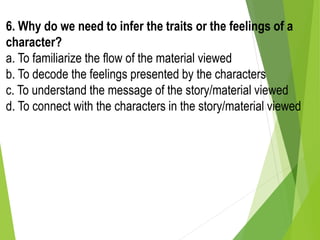
6. Why do we need to infer the traits or the feelings of a
character?
a. To familiarize the flow of the material viewed
b. To decode the feelings presented by the characters
c. To understand the message of the story/material viewed
d. To connect with the characters in the story/material viewed
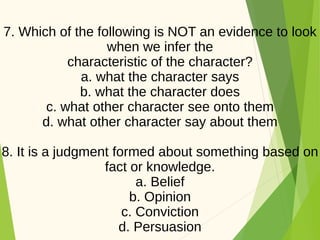
7. Which of the following is NOT an evidence to look
when we infer the
characteristic of the character?
a. what the character says
b. what the character does
c. what other character see onto them
d. what other character say about them
8. It is a judgment formed about something based on
fact or knowledge.
a. Belief
b. Opinion
c. Conviction
d. Persuasion
9. This is a powerful life-long truth that we should be
prepared to
defend.
a. Belief
b. Opinion
c. Conviction
d. Persuasion
10. It is something that an individual considers as the
truth.
a. Belief c. Conviction
b. Opinion d. Persuasion
Directions: Read and understand the questions.
Write the letter that
corresponds to the correct answer on a separate
sheet of paper.
1. What do you call a process of drawing
conclusion based on the given
evidences and experiences?
a. Identification b. Inferencing
c. Predicting Outcome d. Synthesizing
2. It is an emotional state or reaction. What is it
called?
a. Belief b. Feeling
c. Traits d. Values
LET US CHECK!!
1. What do you call a process of drawing
conclusion based on the given
evidences and experiences?
a. Identification b. Inferencing
c. Predicting Outcome d. Synthesizing
2. It is an emotional state or reaction. What is it
called?
a. Belief b. Feeling
c. Traits d. Values
LET US CHECK!!
1. What do you call a process of drawing
conclusion based on the given
evidences and experiences?
a. Identification b. Inferencing
c. Predicting Outcome d. Synthesizing
2. It is an emotional state or reaction. What is it
called?
a. Belief b. Feeling
c. Traits d. Values
3. What do you call an outward sign or an indication?
a. Evidence b. Experience
c. Feelings d. Values
4. What do you call an act or process of directly
perceiving event or
reality?
a. Evidence b. Experience
c. Feelings d. Values
5. Which of the following is the formula for inferencing?
a. Evidence + Understanding b. Dialogue + Experience
c. Evidence + Experience d. Dialogue +
Understanding
3. What do you call an outward sign or an indication?
a. Evidence b. Experience
c. Feelings d. Values
4. What do you call an act or process of directly
perceiving event or
reality?
a. Evidence b. Experience
c. Feelings d. Values
5. Which of the following is the formula for inferencing?
a. Evidence + Understanding b. Dialogue + Experience
c. Evidence + Experience d. Dialogue +
Understanding
3. What do you call an outward sign or an indication?
a. Evidence b. Experience
c. Feelings d. Values
4. What do you call an act or process of directly
perceiving event or
reality?
a. Evidence b. Experience
c. Feelings d. Values
5. Which of the following is the formula for inferencing?
a. Evidence + Understanding b. Dialogue + Experience
c. Evidence + Experience d. Dialogue +
Understanding
3. What do you call an outward sign or an indication?
a. Evidence b. Experience
c. Feelings d. Values
4. What do you call an act or process of directly
perceiving event or
reality?
a. Evidence b. Experience
c. Feelings d. Values
5. Which of the following is the formula for inferencing?
a. Evidence + Understanding b. Dialogue + Experience
c. Evidence + Experience d. Dialogue +
Understanding
6. Why do we need to infer the traits or the feelings of a
character?
a. To familiarize the flow of the material viewed
b. To decode the feelings presented by the characters
c. To understand the message of the story/material viewed
d. To connect with the characters in the story/material viewed
6. Why do we need to infer the traits or the feelings of a
character?
a. To familiarize the flow of the material viewed
b. To decode the feelings presented by the characters
c. To understand the message of the story/material
viewed
d. To connect with the characters in the story/material viewed
7. Which of the following is NOT an evidence to look
when we infer the
characteristic of the character?
a. what the character says
b. what the character does
c. what other character see onto them
d. what other character say about them
8. It is a judgment formed about something based on
fact or knowledge.
a. Belief
b. Opinion
c. Conviction
d. Persuasion
7. Which of the following is NOT an evidence to look
when we infer the
characteristic of the character?
a. what the character says
b. what the character does
c. what other character see onto them
d. what other character say about them
8. It is a judgment formed about something based on
fact or knowledge.
a. Belief
b. Opinion
c. Conviction
d. Persuasion
7. Which of the following is NOT an evidence to look
when we infer the
characteristic of the character?
a. what the character says
b. what the character does
c. what other character see onto them
d. what other character say about them
8. It is a judgment formed about something based on
fact or knowledge.
a. Belief
b. Opinion
c. Conviction
d. Persuasion
9. This is a powerful life-long truth that we should be
prepared to
defend.
a. Belief
b. Opinion
c. Conviction
d. Persuasion
10. It is something that an individual considers as the
truth.
a. Belief c. Conviction
b. Opinion d. Persuasion
9. This is a powerful life-long truth that we should be
prepared to
defend.
a. Belief
b. Opinion
c. Conviction
d. Persuasion
10. It is something that an individual considers as the
truth.
a. Belief c. Conviction
b. Opinion d. Persuasion
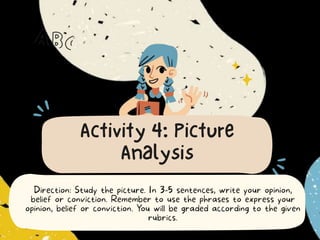
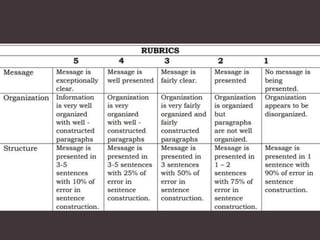
Directions: Political corruption is a problem that
exists and has detrimental impacts on society, the
environment, the economy, the law, national
security, and international relations. In a clean sheet
of paper, create an essay about the said issue and
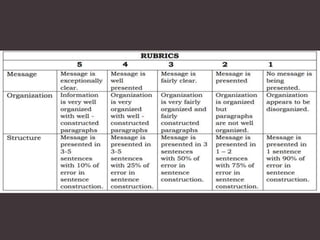
express your opinion, belief or conviction. You will
be graded according to the given rubrics. Pass it on
our next meeting.
ppt for ranking.pptx

ppt for ranking.pptx

  • 2.
    AT THE ENDOF LESSON,THE STUDENT WILL BE ABLE TO: • Define what opinion, belief, and conviction are • Differentiate the opinion, belief, and conviction by giving different examples and; • Relate opinion, belief, or conviction on a material viewed in real life situation.
  • 5.
    ANSWER THE FFQUESTIONS; Can you identify the pictures? If yes, what are those? If no, explain why? What is your basis to have such beliefs? Do you think that your belief will determine your character as a person?
  • 7.
    Long ago, inMount Makiling, there lived a beautiful goddess name Mariang Makiling. She is beautiful, kindhearted and loving. She had a long shiny black hair and she often wear black pearls and gold jewelry.
  • 8.
    Many times, peoplewould climb up to the mountain and pick some fruits but when they came down, fruits changed into gold. People thanked her for it.
  • 9.
    But one day,some people robbed her jewelry.
  • 10.
    Some hunters climbup the mountain and hunted for wild animals, cut down trees and left the forest at the top of the mountain denuded.
  • 11.
    At that time,one of those hunters is a mortal which Mariang Makiling fell in love with. She discovered that that hunter already has a mortal as his wife.
  • 12.
    After those thingshappened, Mariang Makiling was very angry that it thundered and rained hard that night and her voice was heard by all people leaving at the foot of the mountain saying:
  • 13.
    “I have providedyou food, treasures and shelter but it wasn’t enough for you! I have given you everything you want but still you aren’t contented. I loved you more than myself but still you searched for mortal love. Now, feel my anger! And wait for my revenge! From now on, you shall stand on your own feet and you will never see me again. I swear!” And she laughed so hard that it brought an earthquake.
  • 14.
    After her largevoice was heard, she never showed herself again to those mortals who abused her kindness. Today, it is still believed that Mariang Makiling is still living there.”
  • 15.
    Who are thecharacters in the story?
  • 16.
    How you woulddescribe Mariang Makiling?
  • 17.
    How would youend the story?
  • 19.
    - is ajudgment formed about something not necessarily based on fact or knowledge. It is brief, formed regularly, and evolve quickly as data emerges. - a judgment about a person or thing - a belief based on experience and on seeing certain facts that falls short of positive knowledge
  • 20.
    1. The caketastes delicious. 2. She looks sad. 3. He is childish. 4. My history teacher hates me. 5. The movie was boring.
  • 21.
    - is ajudgment formed about something not necessarily based on fact or knowledge. It is brief, formed regularly, and evolves quickly as data - is an acceptance that a statement is true or that something exists. It has more staying power but can shift as data and life experiences occur. - a belief is an idea one accepts as being true or real.
  • 22.
    -I choose tobelieve that my life is an incredible gift. - Everyone I meet is a best friend I don’t know yet. -Every 24 hours is the most important of my life. - Everything will turn out all right. - Life is a game to be played, not a problem to be fixed.
  • 23.
    - is afirmly held and stable, long- term belief. These are powerful life-long truths that we should be prepared to defend. -can be defined as a firm belief
  • 24.
    1. Conviction inthe importance of human rights and equality 2. Conviction in the value of hard work and persistence 3. Conviction in the need to protect the environment and preserve natural resources 4. Conviction in the importance of honesty and integrity in all aspects of life 5. Conviction in the power of education to change lives and improve communities.
  • 35.
    Directions: Read andunderstand the questions. Write the letter that corresponds to the correct answer on a separate sheet of paper. 1. What do you call a process of drawing conclusion based on the given evidences and experiences? a. Identification b. Inferencing c. Predicting Outcome d. Synthesizing 2. It is an emotional state or reaction. What is it called? a. Belief b. Feeling c. Traits d. Values
  • 36.
    3. What doyou call an outward sign or an indication? a. Evidence b. Experience c. Feelings d. Values 4. What do you call an act or process of directly perceiving event or reality? a. Evidence b. Experience c. Feelings d. Values 5. Which of the following is the formula for inferencing? a. Evidence + Understanding b. Dialogue + Experience c. Evidence + Experience d. Dialogue + Understanding
  • 37.
    6. Why dowe need to infer the traits or the feelings of a character? a. To familiarize the flow of the material viewed b. To decode the feelings presented by the characters c. To understand the message of the story/material viewed d. To connect with the characters in the story/material viewed
  • 38.
    7. Which ofthe following is NOT an evidence to look when we infer the characteristic of the character? a. what the character says b. what the character does c. what other character see onto them d. what other character say about them 8. It is a judgment formed about something based on fact or knowledge. a. Belief b. Opinion c. Conviction d. Persuasion
  • 39.
    9. This isa powerful life-long truth that we should be prepared to defend. a. Belief b. Opinion c. Conviction d. Persuasion 10. It is something that an individual considers as the truth. a. Belief c. Conviction b. Opinion d. Persuasion
  • 40.
    Directions: Read andunderstand the questions. Write the letter that corresponds to the correct answer on a separate sheet of paper. 1. What do you call a process of drawing conclusion based on the given evidences and experiences? a. Identification b. Inferencing c. Predicting Outcome d. Synthesizing 2. It is an emotional state or reaction. What is it called? a. Belief b. Feeling c. Traits d. Values
  • 41.
    LET US CHECK!! 1.What do you call a process of drawing conclusion based on the given evidences and experiences? a. Identification b. Inferencing c. Predicting Outcome d. Synthesizing 2. It is an emotional state or reaction. What is it called? a. Belief b. Feeling c. Traits d. Values
  • 42.
    LET US CHECK!! 1.What do you call a process of drawing conclusion based on the given evidences and experiences? a. Identification b. Inferencing c. Predicting Outcome d. Synthesizing 2. It is an emotional state or reaction. What is it called? a. Belief b. Feeling c. Traits d. Values
  • 43.
    3. What doyou call an outward sign or an indication? a. Evidence b. Experience c. Feelings d. Values 4. What do you call an act or process of directly perceiving event or reality? a. Evidence b. Experience c. Feelings d. Values 5. Which of the following is the formula for inferencing? a. Evidence + Understanding b. Dialogue + Experience c. Evidence + Experience d. Dialogue + Understanding
  • 44.
    3. What doyou call an outward sign or an indication? a. Evidence b. Experience c. Feelings d. Values 4. What do you call an act or process of directly perceiving event or reality? a. Evidence b. Experience c. Feelings d. Values 5. Which of the following is the formula for inferencing? a. Evidence + Understanding b. Dialogue + Experience c. Evidence + Experience d. Dialogue + Understanding
  • 45.
    3. What doyou call an outward sign or an indication? a. Evidence b. Experience c. Feelings d. Values 4. What do you call an act or process of directly perceiving event or reality? a. Evidence b. Experience c. Feelings d. Values 5. Which of the following is the formula for inferencing? a. Evidence + Understanding b. Dialogue + Experience c. Evidence + Experience d. Dialogue + Understanding
  • 46.
    3. What doyou call an outward sign or an indication? a. Evidence b. Experience c. Feelings d. Values 4. What do you call an act or process of directly perceiving event or reality? a. Evidence b. Experience c. Feelings d. Values 5. Which of the following is the formula for inferencing? a. Evidence + Understanding b. Dialogue + Experience c. Evidence + Experience d. Dialogue + Understanding
  • 47.
    6. Why dowe need to infer the traits or the feelings of a character? a. To familiarize the flow of the material viewed b. To decode the feelings presented by the characters c. To understand the message of the story/material viewed d. To connect with the characters in the story/material viewed
  • 48.
    6. Why dowe need to infer the traits or the feelings of a character? a. To familiarize the flow of the material viewed b. To decode the feelings presented by the characters c. To understand the message of the story/material viewed d. To connect with the characters in the story/material viewed
  • 49.
    7. Which ofthe following is NOT an evidence to look when we infer the characteristic of the character? a. what the character says b. what the character does c. what other character see onto them d. what other character say about them 8. It is a judgment formed about something based on fact or knowledge. a. Belief b. Opinion c. Conviction d. Persuasion
  • 50.
    7. Which ofthe following is NOT an evidence to look when we infer the characteristic of the character? a. what the character says b. what the character does c. what other character see onto them d. what other character say about them 8. It is a judgment formed about something based on fact or knowledge. a. Belief b. Opinion c. Conviction d. Persuasion
  • 51.
    7. Which ofthe following is NOT an evidence to look when we infer the characteristic of the character? a. what the character says b. what the character does c. what other character see onto them d. what other character say about them 8. It is a judgment formed about something based on fact or knowledge. a. Belief b. Opinion c. Conviction d. Persuasion
  • 52.
    9. This isa powerful life-long truth that we should be prepared to defend. a. Belief b. Opinion c. Conviction d. Persuasion 10. It is something that an individual considers as the truth. a. Belief c. Conviction b. Opinion d. Persuasion
  • 53.
    9. This isa powerful life-long truth that we should be prepared to defend. a. Belief b. Opinion c. Conviction d. Persuasion 10. It is something that an individual considers as the truth. a. Belief c. Conviction b. Opinion d. Persuasion
  • 54.
    Directions: Political corruptionis a problem that exists and has detrimental impacts on society, the environment, the economy, the law, national security, and international relations. In a clean sheet of paper, create an essay about the said issue and express your opinion, belief or conviction. You will be graded according to the given rubrics. Pass it on our next meeting.