Here is where your presentation begins
Blockchain Forensics
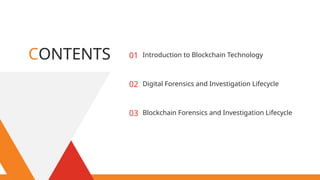
CONTENTS 01 Introduction to Blockchain Technology
02 Digital Forensics and Investigation Lifecycle
03 Blockchain Forensics and Investigation Lifecycle
01
PART
Introduction to Blockchain
Technology
01
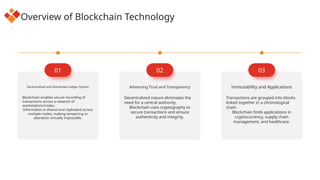
Blockchain enables secure recording of
transactions across a network of
workstations/nodes.
Information is shared and replicated across
multiple nodes, making tampering or
alteration virtually impossible.
Decentralized and Distributed Ledger System
02
Decentralized nature eliminates the
need for a central authority.
Blockchain uses cryptography to
secure transactions and ensure
authenticity and integrity.
Advancing Trust and Transparency
03
Transactions are grouped into blocks
linked together in a chronological
chain.
Blockchain finds applications in
cryptocurrency, supply chain
management, and healthcare.
Immutability and Applications
Overview of Blockchain Technology
01
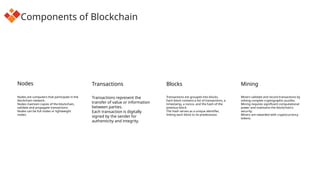
Nodes
Nodes are computers that participate in the
blockchain network.
Nodes maintain copies of the blockchain,
validate and propagate transactions.
Nodes can be full nodes or lightweight
nodes.
02
Transactions
Transactions represent the
transfer of value or information
between parties.
Each transaction is digitally
signed by the sender for
authenticity and integrity.
03
Blocks
Transactions are grouped into blocks.
Each block contains a list of transactions, a
timestamp, a nonce, and the hash of the
previous block.
The hash serves as a unique identifier,
linking each block to its predecessor.
04
Mining
Miners validate and record transactions by
solving complex cryptographic puzzles.
Mining requires significant computational
power and maintains the blockchain's
security.
Miners are rewarded with cryptocurrency
tokens.
Components of Blockchain
02
PART
Digital Forensics and
Investigation Lifecycle
Digital forensics is the
process of collecting,
analyzing, and preserving
electronic evidence.
It is used to investigate and
prevent cybercrimes.
Definition and Purpose
Overview of Digital Forensics
Planning the investigation, acquiring necessary tools
and resources.
Preparation
Collecting digital evidence, ensuring its integrity and
preservation.
Collection
Analyzing the collected evidence, searching for
relevant information.
Examination
Interpreting and evaluating the findings to draw
conclusions.
Analysis
Documenting the investigation process and
presenting the findings.
Reporting
Communicating the results to stakeholders, such as
law enforcement or legal professionals.
Presentation
Investigation Lifecycle
03
PART
Blockchain Forensics and
Investigation Lifecycle
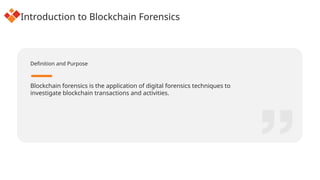
Blockchain forensics is the application of digital forensics techniques to
investigate blockchain transactions and activities.
Definition and Purpose
Introduction to Blockchain Forensics
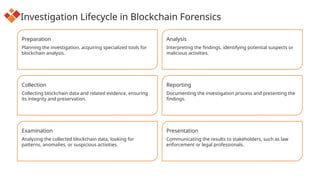
Planning the investigation, acquiring specialized tools for
blockchain analysis.
Preparation
2
Collecting blockchain data and related evidence, ensuring
its integrity and preservation.
Collection
2
Analyzing the collected blockchain data, looking for
patterns, anomalies, or suspicious activities.
Examination
Interpreting the findings, identifying potential suspects or
malicious activities.
Analysis
2
Documenting the investigation process and presenting the
findings.
Reporting
2
Communicating the results to stakeholders, such as law
enforcement or legal professionals.
Presentation
Investigation Lifecycle in Blockchain Forensics
Edited by Education G2Academy
Thanks

PPT Blockchain forensics, in digitil forensics

  • 1.
    Here is whereyour presentation begins Blockchain Forensics
  • 2.
    CONTENTS 01 Introductionto Blockchain Technology 02 Digital Forensics and Investigation Lifecycle 03 Blockchain Forensics and Investigation Lifecycle
  • 3.
  • 4.
    01 Blockchain enables securerecording of transactions across a network of workstations/nodes. Information is shared and replicated across multiple nodes, making tampering or alteration virtually impossible. Decentralized and Distributed Ledger System 02 Decentralized nature eliminates the need for a central authority. Blockchain uses cryptography to secure transactions and ensure authenticity and integrity. Advancing Trust and Transparency 03 Transactions are grouped into blocks linked together in a chronological chain. Blockchain finds applications in cryptocurrency, supply chain management, and healthcare. Immutability and Applications Overview of Blockchain Technology
  • 5.
    01 Nodes Nodes are computersthat participate in the blockchain network. Nodes maintain copies of the blockchain, validate and propagate transactions. Nodes can be full nodes or lightweight nodes. 02 Transactions Transactions represent the transfer of value or information between parties. Each transaction is digitally signed by the sender for authenticity and integrity. 03 Blocks Transactions are grouped into blocks. Each block contains a list of transactions, a timestamp, a nonce, and the hash of the previous block. The hash serves as a unique identifier, linking each block to its predecessor. 04 Mining Miners validate and record transactions by solving complex cryptographic puzzles. Mining requires significant computational power and maintains the blockchain's security. Miners are rewarded with cryptocurrency tokens. Components of Blockchain
  • 6.
  • 7.
    Digital forensics isthe process of collecting, analyzing, and preserving electronic evidence. It is used to investigate and prevent cybercrimes. Definition and Purpose Overview of Digital Forensics
  • 8.
    Planning the investigation,acquiring necessary tools and resources. Preparation Collecting digital evidence, ensuring its integrity and preservation. Collection Analyzing the collected evidence, searching for relevant information. Examination Interpreting and evaluating the findings to draw conclusions. Analysis Documenting the investigation process and presenting the findings. Reporting Communicating the results to stakeholders, such as law enforcement or legal professionals. Presentation Investigation Lifecycle
  • 9.
  • 10.
    Blockchain forensics isthe application of digital forensics techniques to investigate blockchain transactions and activities. Definition and Purpose Introduction to Blockchain Forensics
  • 11.
    Planning the investigation,acquiring specialized tools for blockchain analysis. Preparation 2 Collecting blockchain data and related evidence, ensuring its integrity and preservation. Collection 2 Analyzing the collected blockchain data, looking for patterns, anomalies, or suspicious activities. Examination Interpreting the findings, identifying potential suspects or malicious activities. Analysis 2 Documenting the investigation process and presenting the findings. Reporting 2 Communicating the results to stakeholders, such as law enforcement or legal professionals. Presentation Investigation Lifecycle in Blockchain Forensics
  • 12.
    Edited by EducationG2Academy Thanks