ADVANCE POWER ELCTRONICS 
Power Converters Report 
COMSATS INSTITUTE OF INFORMATION & TECHNOLOGY, ABBOTABAD 
PREPARED BY: 
ZUNAIB ALI FA13-R09-013 
DEPTT: ELECTRICAL ENGINEERING (POWER)
Power Converters 
Note: 
 All simulation results are taken by using mosfet at frequency of 
Buck BOOST CONVERTER 
Table 1: Conduction Mode & Efficiency For Different values of duty cycle of Buck-Boost Converter 
For Constant Duty Cycle, 
Inductance Value 
Condition Mode 
Efficiency, 
DCM 
50.71% 
BCM 
57.02% 
CCM 
57.53% 
Continuouspowergui v+ - V2v+ - V1Scope2Scope1R1PulseGenerator1gmDSMosfetInMeanMean Value3L1i+ - IL2i+ - IL1i+ - IL[H] Goto[H] FromDisplay1Diode1DC Voltage Source1C1
Inductor Current vs. Gate Signal Figures for Buck-Boost Converter 
Figure 1: For D=50%, DCM (BUCK BOOST) 
Figure 2: For D=50%, BCM ( BUCK BOOST)
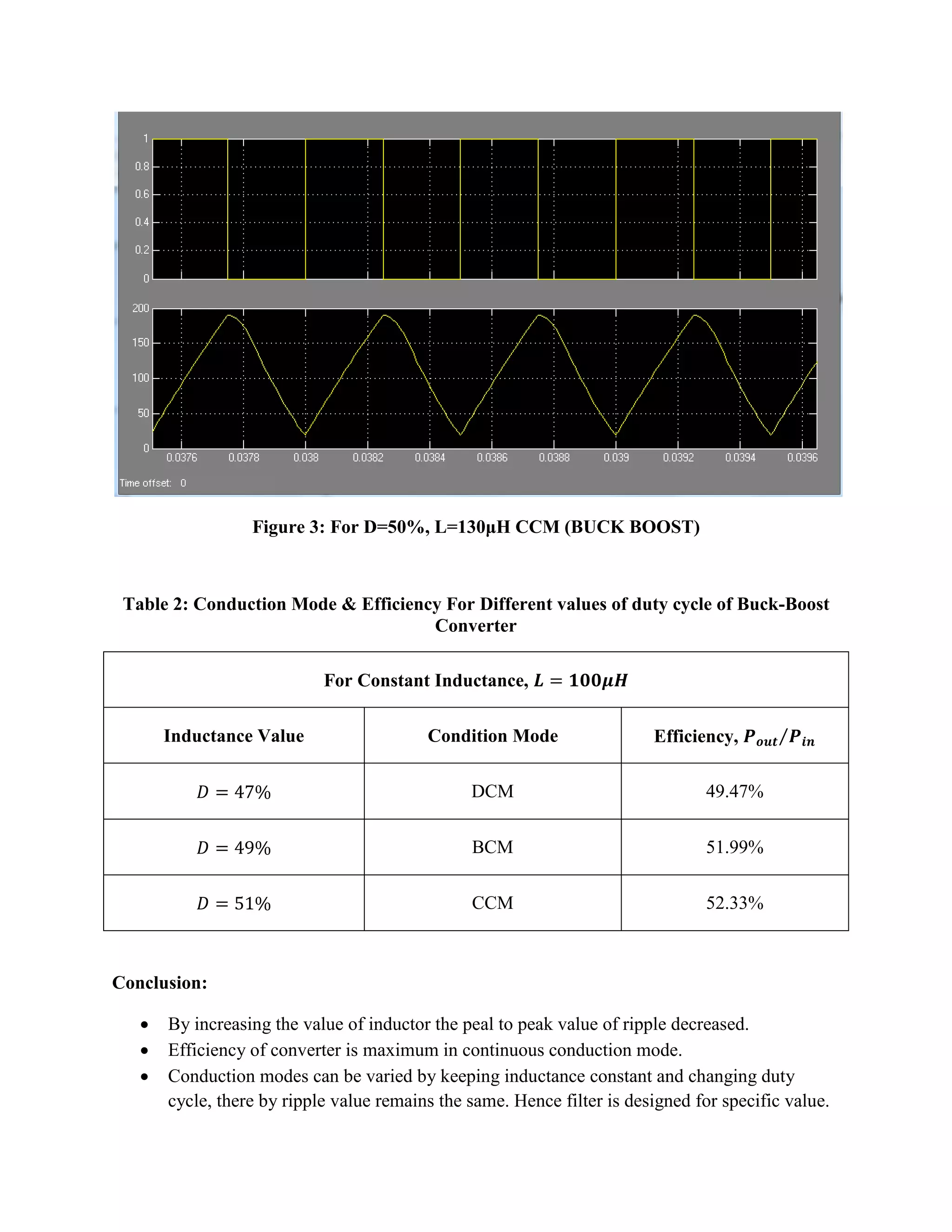
Figure 3: For D=50%, L=130μH CCM (BUCK BOOST) 
Table 2: Conduction Mode & Efficiency For Different values of duty cycle of Buck-Boost Converter 
For Constant Inductance, 
Inductance Value 
Condition Mode 
Efficiency, 
DCM 
49.47% 
BCM 
51.99% 
CCM 
52.33% 
Conclusion: 
 By increasing the value of inductor the peal to peak value of ripple decreased. 
 Efficiency of converter is maximum in continuous conduction mode. 
 Conduction modes can be varied by keeping inductance constant and changing duty cycle, there by ripple value remains the same. Hence filter is designed for specific value.
Buck CONVERTER 
Table 3: Conduction Mode & Efficiency For Different values of Inductance of Buck Converter 
For Constant Duty Cycle, 
Inductance Value 
Condition Mode 
Efficiency, 
DCM 
62.27% 
BCM 
64.78% 
CCM 
66.56% 
Continuouspowerguiv+ - VScope3RPulseGeneratorgmDSMosfet1InMeanMean Value3InMeanMean Value2InMeanMean Value1Li+ - I_L2i+ - I_L1i+ - I_L[E] Goto1Divide2Divide1Divide0.6656DisplayDiodeDC Voltage Source10ConstantC
Inductor Current vs. Gate Signal Figures for Buck Converter 
Figure 4: For D=50%, BCM (BUCK) 
Figure 5: For D=50%, L=90μH DCM (BUCK)
Figure 6: For D=50%, L=110μH CCM (BUCK) 
Table 4: Conduction Mode & Efficiency For Different values of duty cycle of Buck Converter 
For Constant Inductance, 
Inductance Value 
Condition Mode 
Efficiency, 
DCM 
63.29% 
BCM 
64.78% 
CCM 
65.45% 
Conclusion: 
 By increasing the value of inductor the peal to peak value of ripple decreased. 
 Efficiency of converter is maximum in continuous conduction mode. 
 Conduction modes can be varied by keeping inductance constant and changing duty cycle, there by ripple value remains the same. Hence filter is designed for specific value.
Boost CONVERTER 
Table 5: Conduction Mode & Efficiency For Different values of Inductance of Boost Converter 
For Constant Duty Cycle, 
Inductance Value 
Condition Mode 
Efficiency, 
DCM 
74.91% 
BCM 
76.47% 
CCM 
79.28% 
Continuouspowerguiv+ - V2Scope1R2PulseGenerator2InMeanMean Value3InMeanMean Value2InMeanMean Value1L2 gm12 Ideal Switch2i+ - I_L1[A] Goto2Divide2Divide1Divide0.5182DisplayDiode2DC Voltage Source2i+ - Current Measurement10ConstantC2
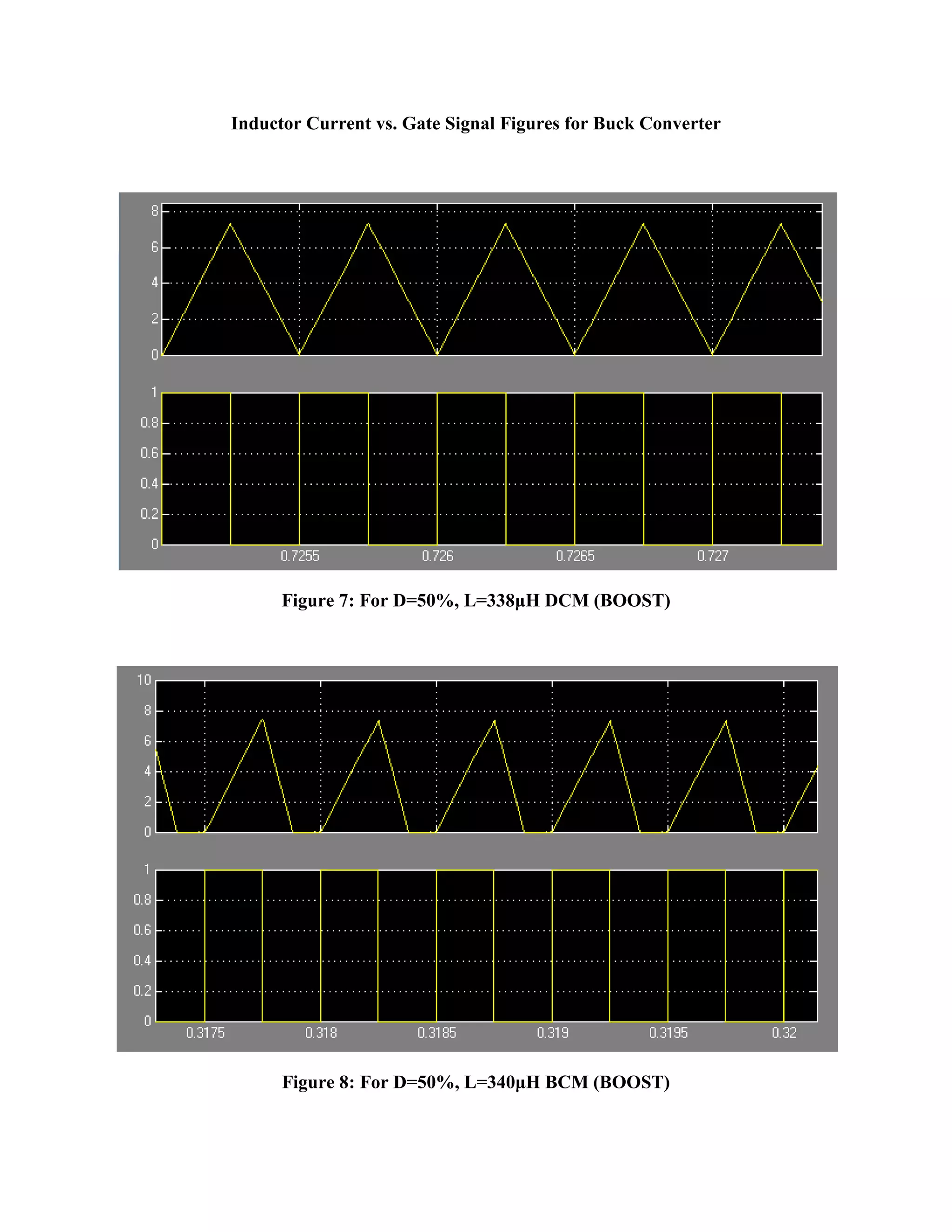
Inductor Current vs. Gate Signal Figures for Buck Converter 
Figure 7: For D=50%, L=338μH DCM (BOOST) 
Figure 8: For D=50%, L=340μH BCM (BOOST)
Figure 9: For D=50%, L=380μH DCM (BOOST) 
Table 6: Conduction Mode & Efficiency For Different values of duty cycle of Boost Converter 
For Constant Inductance, 
Inductance Value 
Condition Mode 
Efficiency, 
DCM 
73.11% 
BCM 
75.21% 
CCM 
76.96% 
Conclusion: 
 By increasing the value of inductor the peal to peak value of ripple decreased. 
 Efficiency of converter is maximum in continuous conduction mode. 
 Conduction modes can be varied by keeping inductance constant and changing duty cycle, there by ripple value remains the same. Hence filter is designed for specific value.

Power converter report

  • 1.
    ADVANCE POWER ELCTRONICS Power Converters Report COMSATS INSTITUTE OF INFORMATION & TECHNOLOGY, ABBOTABAD PREPARED BY: ZUNAIB ALI FA13-R09-013 DEPTT: ELECTRICAL ENGINEERING (POWER)
  • 2.
    Power Converters Note:  All simulation results are taken by using mosfet at frequency of Buck BOOST CONVERTER Table 1: Conduction Mode & Efficiency For Different values of duty cycle of Buck-Boost Converter For Constant Duty Cycle, Inductance Value Condition Mode Efficiency, DCM 50.71% BCM 57.02% CCM 57.53% Continuouspowergui v+ - V2v+ - V1Scope2Scope1R1PulseGenerator1gmDSMosfetInMeanMean Value3L1i+ - IL2i+ - IL1i+ - IL[H] Goto[H] FromDisplay1Diode1DC Voltage Source1C1
  • 3.
    Inductor Current vs.Gate Signal Figures for Buck-Boost Converter Figure 1: For D=50%, DCM (BUCK BOOST) Figure 2: For D=50%, BCM ( BUCK BOOST)
  • 4.
    Figure 3: ForD=50%, L=130μH CCM (BUCK BOOST) Table 2: Conduction Mode & Efficiency For Different values of duty cycle of Buck-Boost Converter For Constant Inductance, Inductance Value Condition Mode Efficiency, DCM 49.47% BCM 51.99% CCM 52.33% Conclusion:  By increasing the value of inductor the peal to peak value of ripple decreased.  Efficiency of converter is maximum in continuous conduction mode.  Conduction modes can be varied by keeping inductance constant and changing duty cycle, there by ripple value remains the same. Hence filter is designed for specific value.
  • 5.
    Buck CONVERTER Table3: Conduction Mode & Efficiency For Different values of Inductance of Buck Converter For Constant Duty Cycle, Inductance Value Condition Mode Efficiency, DCM 62.27% BCM 64.78% CCM 66.56% Continuouspowerguiv+ - VScope3RPulseGeneratorgmDSMosfet1InMeanMean Value3InMeanMean Value2InMeanMean Value1Li+ - I_L2i+ - I_L1i+ - I_L[E] Goto1Divide2Divide1Divide0.6656DisplayDiodeDC Voltage Source10ConstantC
  • 6.
    Inductor Current vs.Gate Signal Figures for Buck Converter Figure 4: For D=50%, BCM (BUCK) Figure 5: For D=50%, L=90μH DCM (BUCK)
  • 7.
    Figure 6: ForD=50%, L=110μH CCM (BUCK) Table 4: Conduction Mode & Efficiency For Different values of duty cycle of Buck Converter For Constant Inductance, Inductance Value Condition Mode Efficiency, DCM 63.29% BCM 64.78% CCM 65.45% Conclusion:  By increasing the value of inductor the peal to peak value of ripple decreased.  Efficiency of converter is maximum in continuous conduction mode.  Conduction modes can be varied by keeping inductance constant and changing duty cycle, there by ripple value remains the same. Hence filter is designed for specific value.
  • 8.
    Boost CONVERTER Table5: Conduction Mode & Efficiency For Different values of Inductance of Boost Converter For Constant Duty Cycle, Inductance Value Condition Mode Efficiency, DCM 74.91% BCM 76.47% CCM 79.28% Continuouspowerguiv+ - V2Scope1R2PulseGenerator2InMeanMean Value3InMeanMean Value2InMeanMean Value1L2 gm12 Ideal Switch2i+ - I_L1[A] Goto2Divide2Divide1Divide0.5182DisplayDiode2DC Voltage Source2i+ - Current Measurement10ConstantC2
  • 9.
    Inductor Current vs.Gate Signal Figures for Buck Converter Figure 7: For D=50%, L=338μH DCM (BOOST) Figure 8: For D=50%, L=340μH BCM (BOOST)
  • 10.
    Figure 9: ForD=50%, L=380μH DCM (BOOST) Table 6: Conduction Mode & Efficiency For Different values of duty cycle of Boost Converter For Constant Inductance, Inductance Value Condition Mode Efficiency, DCM 73.11% BCM 75.21% CCM 76.96% Conclusion:  By increasing the value of inductor the peal to peak value of ripple decreased.  Efficiency of converter is maximum in continuous conduction mode.  Conduction modes can be varied by keeping inductance constant and changing duty cycle, there by ripple value remains the same. Hence filter is designed for specific value.