Title:Plastic Pollution A
threatto Our Environment
Presented By: Japkirat Kaur
Course: B.Sc B.Ed (Integrated)
University: Chandigarh University UID:
[24BSB60031]
Subject:Communication skills
Submitted to: Miss. Sarpreet Kaur
2.
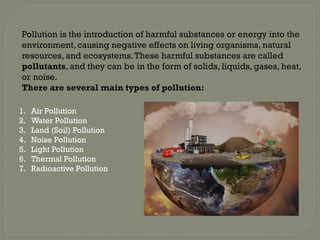
Pollution is theintroduction of harmful substances or energy into the
environment, causing negative effects on living organisms, natural
resources, and ecosystems.These harmful substances are called
pollutants, and they can be in the form of solids, liquids, gases, heat,
or noise.
There are several main types of pollution:
1. Air Pollution
2. Water Pollution
3. Land (Soil) Pollution
4. Noise Pollution
5. Light Pollution
6. Thermal Pollution
7. Radioactive Pollution
3.
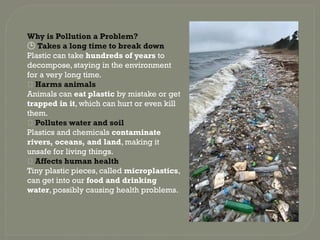
Why is Pollutiona Problem?
🕒 Takes a long time to break down
Plastic can take hundreds of years to
decompose, staying in the environment
for a very long time.
🐢 Harms animals
Animals can eat plastic by mistake or get
trapped in it, which can hurt or even kill
them.
💧 Pollutes water and soil
Plastics and chemicals contaminate
rivers, oceans, and land, making it
unsafe for living things.
🧬 Affects human health
Tiny plastic pieces, called microplastics,
can get into our food and drinking
water, possibly causing health problems.
4.
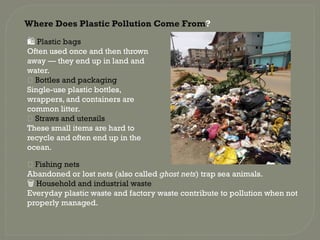
Where Does PlasticPollution Come From?
️
🛍️Plastic bags
Often used once and then thrown
away — they end up in land and
water.
🧴 Bottles and packaging
Single-use plastic bottles,
wrappers, and containers are
common litter.
🥤 Straws and utensils
These small items are hard to
recycle and often end up in the
ocean.
🎣 Fishing nets
Abandoned or lost nets (also called ghost nets) trap sea animals.
️
🗑️Household and industrial waste
Everyday plastic waste and factory waste contribute to pollution when not
properly managed.
5.
Effects of PlasticPollution
🐢 Harms Marine Animals
Sea creatures like turtles, fish, and birds can choke, get tangled, or
die from eating plastic.
️
🏖️Dirty Beaches and Water
Plastic waste ruins the beauty of beaches and pollutes oceans and
rivers.
️
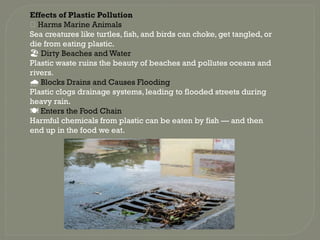
🌧️Blocks Drains and Causes Flooding
Plastic clogs drainage systems, leading to flooded streets during
heavy rain.
️
🍽️Enters the Food Chain
Harmful chemicals from plastic can be eaten by fish — and then
end up in the food we eat.
6.
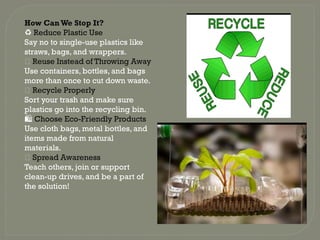
How Can WeStop It?
♻️Reduce Plastic Use
Say no to single-use plastics like
straws, bags, and wrappers.
🔁 Reuse Instead of Throwing Away
Use containers, bottles, and bags
more than once to cut down waste.
✅ Recycle Properly
Sort your trash and make sure
plastics go into the recycling bin.
🛍️Choose Eco-Friendly Products
Use cloth bags, metal bottles, and
items made from natural
materials.
📢 Spread Awareness
Teach others, join or support
clean-up drives, and be a part of
the solution!
7.
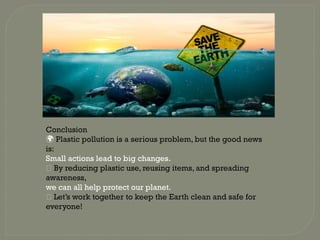
Conclusion
🌍 Plastic pollutionis a serious problem, but the good news
is:
Small actions lead to big changes.
✨ By reducing plastic use, reusing items, and spreading
awareness,
we can all help protect our planet.
💪 Let’s work together to keep the Earth clean and safe for
everyone!
![Title:Plastic Pollution A
threat to Our Environment
Presented By: Japkirat Kaur
Course: B.Sc B.Ed (Integrated)
University: Chandigarh University UID:
[24BSB60031]
Subject:Communication skills
Submitted to: Miss. Sarpreet Kaur](https://image.slidesharecdn.com/japkiratppt2-250417135352-077172d6/85/Plastic-pollution-a-threat-to-our-environment-1-320.jpg)
![Title:Plastic Pollution A
threat to Our Environment
Presented By: Japkirat Kaur
Course: B.Sc B.Ed (Integrated)
University: Chandigarh University UID:
[24BSB60031]
Subject:Communication skills
Submitted to: Miss. Sarpreet Kaur](https://image.slidesharecdn.com/japkiratppt2-250417135352-077172d6/75/Plastic-pollution-a-threat-to-our-environment-1-2048.jpg)