By:
Tejashwini K C
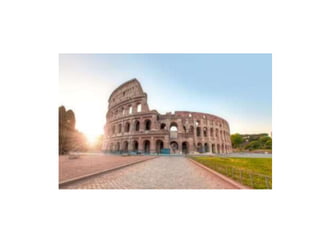
The Colosseum, also known as the Flavian
Amphitheatre, was a massive amphitheater established
in Rome during the reign of the Flavian emperors. The
huge edifice, which stood four storeys tall and spanned
189 by 156 metres (620 by 513 feet), had eighty
entrances to the amphitheatre—seventy-six for clients,
two for event participants, and two for the emperor
alone. It is now one of the top historical places in the
world, with millions of tourists each year.
Location: Piazza del Colosseo, 1, 00184 Roma RM, Italy
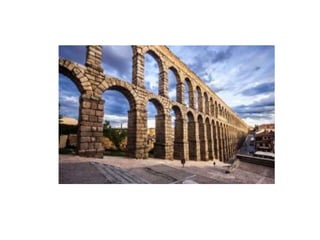
The Aqueduct of Segovia was erected under Roman
authority in the second half of the first century A.D.
and carried water from the Fro River to the city until
the twentieth century. The Segovia Aqueduct is a one-
of-a-kind Roman Empire construction that retains its
original character and serves as a significant and
evocative element of the region’s environment. In
1985, the aqueduct was added to the UNESCO World
Heritage List.
Location: Plaza del Azoguejo, 1, 40001 Segovia, Spain
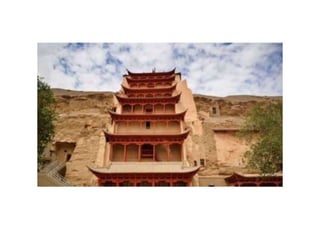
Mogao Caves are without a doubt one of the most remarkable
historical sites in the world.
The ‘Caves of the Thousand Buddhas’ (Qianfodong), commonly
known as Mogao, are a wonderful Buddhist art treasure trove.
Extensive murals portraying Buddha tales, Buddhist sutras,
portraits of cave benefactors, decorative motifs, and scenes of
social and economic life adorn the walls and ceilings of the
painted caverns, which occupy over 500,000 square feet.
Location: Dunhuang, Jiuquan, Gansu, China
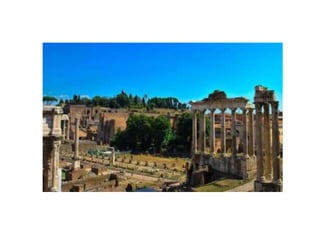
The Trajan’s column constructed by the Roman Senate in 113
A.D. to commemorate Emperor Trajan’s triumphs over the
Dacians is one of Imperial Rome’s best-preserved monuments.
The column is composed of fine-grained Luna marble and rises
38.4 metres (c. 98 ft) tall atop a tall pedestal. The iconographic
depiction engraved into the Column in swirling friezes exposes
Trajan’s chronicle of the Dacian Wars, and visitors flock to
wonder at the sheer grandeur of the column.
Location: Via dei Fori Imperiali, 00187 Roma RM, Italy, Rome
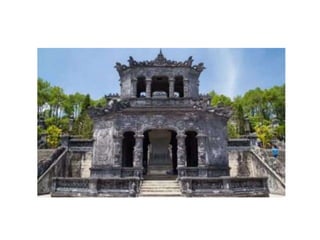
The Khai Dinh Tomb in Vietnam is one of the most
fascinating historical sites in the world. It was built for
the Nguyen Dynasty’s twelfth monarch, Khai Dinh. The
architecture of this tomb is a blend of Vietnamese and
European styles. The tomb’s outside is covered in
blackened concrete, giving it a magnificent appearance,
and the interior is considerably more colourful, with a
plethora of mosaics.
Location: Khải Định, Thủy Bằng, Hương Thủy, Thừa
Thiên Huế 530000, Vietnam
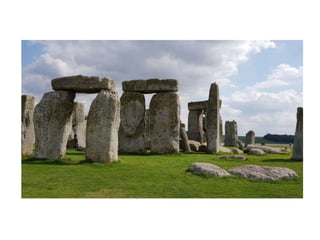
Stonehenge
Wiltshire, United Kingdom
While experts agree that Stonehenge, a circle of stone megaliths
in the English countryside, dates back to 2500 B.C.E., the reason
for its creation remains mysterious. Some archaeologists think
ancient Britons built it for religious ceremonies, while others
believe the structures were used to study the movements of the
sun and the moon. Either way, the construction was an
engineering feat. (To shape Stonehenge’s megalithic structures,
workers hammered wedges of wood into cracks in the stone and
then used rope to pull each mass upright.)
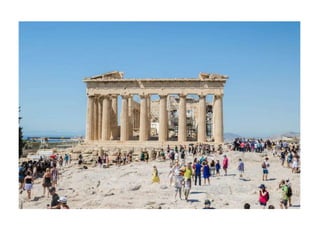
The Parthenon
Athens, Greece
Perched atop a rocky outcrop known as Acropolis hill in Athens, this
classical and partly intact temple has presided over Greece’s capital
city since the Athenian Empire was at the peak of its power. In 447
B.C.E., the Athenians constructed the Parthenon—dedicated to the
goddess Athena—to celebrate their victory over Persian invaders. It
has since served as a city treasury, a Christian church dedicated to the
Virgin Mary, and, after the Ottoman conquest, a mosque. At the foot
of the Acropolis, the Acropolis Museum showcases the Parthenon
frieze (although some sections are still controversially on display at
London’s British Museum), artifacts discovered on Acropolis hill, and
even the remains of an ancient neighborhood uncovered during the
museum’s construction.
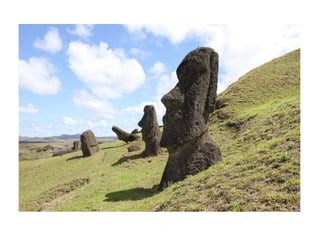
Easter Island
Chile
Located 2,200 miles off the coast of Chile, this remote island
was named by 18th-century Dutch explorers who spotted the
landmass on Easter Sunday. It’s famous for its approximately
1,000 mammoth statues, which the Indigenous Polynesian
inhabitants created from the 10th through 16th centuries to
represent their ancestors. Rapa Nui National Park, which
covers half of Easter Island, is the best place to see the carved
figures, or moai. There are about 400 moai at the ancient
quarry Rano Raraku, including a 70-foot-tall statue that was
never raised upright. The most famous site, Tongariki, features
15 moai beside the ocean. Made from a soft volcanic rock
called tuff, the monuments are vulnerable to the elements,
and archaeologists believe one day they may disappear.
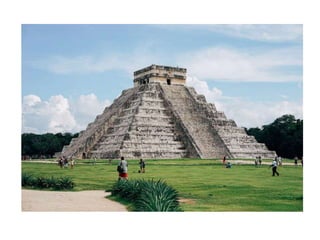
Chichén Itzá
Yucatán Peninsula, Mexico
Chichén Itzá, a complex of pre-Columbian ruins on
Mexico’s Yucatán Peninsula, thrived as one of the
largest Maya cities from 400 C.E. to the 1400s. It’s
thought to have had the most diverse population in
the Maya world due to the variety of Mesoamerican
architectural styles found on the site. Chichén Itzá’s
most famous structures include the Great Ball Court,
the Temple of the Warriors, and El Castillo (also
known as the Temple of Kukulkan), a step
pyramid that towers over one of the most beautiful
UNESCO World Heritage sites.
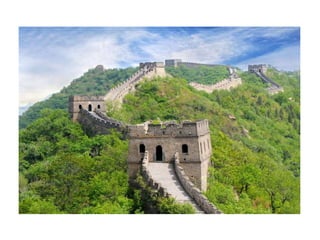
The Great Wall of China
Beijing, China
It took more than 2,500 years to build the Great Wall, China’s
most recognizable symbol, which snakes through the northern
part of the country for more than 13,000 miles. During the 8th
century B.C.E., the Zhou dynasty–era state of Chu began
construction on the wall to protect against foreign invaders.
Most tourists explore only a section or two of the stone and
brick fortification; it would take approximately 177 days of
nonstop walking to see the entire wall.

places.pptx

  • 1.
  • 3.
    The Colosseum, alsoknown as the Flavian Amphitheatre, was a massive amphitheater established in Rome during the reign of the Flavian emperors. The huge edifice, which stood four storeys tall and spanned 189 by 156 metres (620 by 513 feet), had eighty entrances to the amphitheatre—seventy-six for clients, two for event participants, and two for the emperor alone. It is now one of the top historical places in the world, with millions of tourists each year. Location: Piazza del Colosseo, 1, 00184 Roma RM, Italy
  • 5.
    The Aqueduct ofSegovia was erected under Roman authority in the second half of the first century A.D. and carried water from the Fro River to the city until the twentieth century. The Segovia Aqueduct is a one- of-a-kind Roman Empire construction that retains its original character and serves as a significant and evocative element of the region’s environment. In 1985, the aqueduct was added to the UNESCO World Heritage List. Location: Plaza del Azoguejo, 1, 40001 Segovia, Spain
  • 7.
    Mogao Caves arewithout a doubt one of the most remarkable historical sites in the world. The ‘Caves of the Thousand Buddhas’ (Qianfodong), commonly known as Mogao, are a wonderful Buddhist art treasure trove. Extensive murals portraying Buddha tales, Buddhist sutras, portraits of cave benefactors, decorative motifs, and scenes of social and economic life adorn the walls and ceilings of the painted caverns, which occupy over 500,000 square feet. Location: Dunhuang, Jiuquan, Gansu, China
  • 9.
    The Trajan’s columnconstructed by the Roman Senate in 113 A.D. to commemorate Emperor Trajan’s triumphs over the Dacians is one of Imperial Rome’s best-preserved monuments. The column is composed of fine-grained Luna marble and rises 38.4 metres (c. 98 ft) tall atop a tall pedestal. The iconographic depiction engraved into the Column in swirling friezes exposes Trajan’s chronicle of the Dacian Wars, and visitors flock to wonder at the sheer grandeur of the column. Location: Via dei Fori Imperiali, 00187 Roma RM, Italy, Rome
  • 11.
    The Khai DinhTomb in Vietnam is one of the most fascinating historical sites in the world. It was built for the Nguyen Dynasty’s twelfth monarch, Khai Dinh. The architecture of this tomb is a blend of Vietnamese and European styles. The tomb’s outside is covered in blackened concrete, giving it a magnificent appearance, and the interior is considerably more colourful, with a plethora of mosaics. Location: Khải Định, Thủy Bằng, Hương Thủy, Thừa Thiên Huế 530000, Vietnam
  • 13.
    Stonehenge Wiltshire, United Kingdom Whileexperts agree that Stonehenge, a circle of stone megaliths in the English countryside, dates back to 2500 B.C.E., the reason for its creation remains mysterious. Some archaeologists think ancient Britons built it for religious ceremonies, while others believe the structures were used to study the movements of the sun and the moon. Either way, the construction was an engineering feat. (To shape Stonehenge’s megalithic structures, workers hammered wedges of wood into cracks in the stone and then used rope to pull each mass upright.)
  • 15.
    The Parthenon Athens, Greece Perchedatop a rocky outcrop known as Acropolis hill in Athens, this classical and partly intact temple has presided over Greece’s capital city since the Athenian Empire was at the peak of its power. In 447 B.C.E., the Athenians constructed the Parthenon—dedicated to the goddess Athena—to celebrate their victory over Persian invaders. It has since served as a city treasury, a Christian church dedicated to the Virgin Mary, and, after the Ottoman conquest, a mosque. At the foot of the Acropolis, the Acropolis Museum showcases the Parthenon frieze (although some sections are still controversially on display at London’s British Museum), artifacts discovered on Acropolis hill, and even the remains of an ancient neighborhood uncovered during the museum’s construction.
  • 17.
    Easter Island Chile Located 2,200miles off the coast of Chile, this remote island was named by 18th-century Dutch explorers who spotted the landmass on Easter Sunday. It’s famous for its approximately 1,000 mammoth statues, which the Indigenous Polynesian inhabitants created from the 10th through 16th centuries to represent their ancestors. Rapa Nui National Park, which covers half of Easter Island, is the best place to see the carved figures, or moai. There are about 400 moai at the ancient quarry Rano Raraku, including a 70-foot-tall statue that was never raised upright. The most famous site, Tongariki, features 15 moai beside the ocean. Made from a soft volcanic rock called tuff, the monuments are vulnerable to the elements, and archaeologists believe one day they may disappear.
  • 19.
    Chichén Itzá Yucatán Peninsula,Mexico Chichén Itzá, a complex of pre-Columbian ruins on Mexico’s Yucatán Peninsula, thrived as one of the largest Maya cities from 400 C.E. to the 1400s. It’s thought to have had the most diverse population in the Maya world due to the variety of Mesoamerican architectural styles found on the site. Chichén Itzá’s most famous structures include the Great Ball Court, the Temple of the Warriors, and El Castillo (also known as the Temple of Kukulkan), a step pyramid that towers over one of the most beautiful UNESCO World Heritage sites.
  • 21.
    The Great Wallof China Beijing, China It took more than 2,500 years to build the Great Wall, China’s most recognizable symbol, which snakes through the northern part of the country for more than 13,000 miles. During the 8th century B.C.E., the Zhou dynasty–era state of Chu began construction on the wall to protect against foreign invaders. Most tourists explore only a section or two of the stone and brick fortification; it would take approximately 177 days of nonstop walking to see the entire wall.