The Art & Science
of
Pitching
Bringi Dev
October 10, 2015
To Pitch or
not to Pitch?
Pitches:
Persuasive or
informative?
Types of
Pitches?
- Sales
- Elevator
- Idea/Investor/Business
Plan
- New Hire
- Film script
- Girl/Boyfriend
Our Focus:
The
Elevator/
Idea/Investor
Pitch
Sell me a pen!
Sell me a pen!
Art
or
Science?
Aristotle &
Joshua Bell
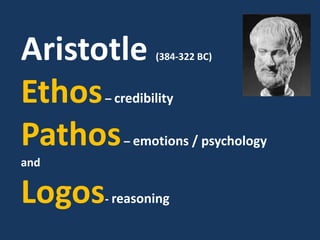
Aristotle (384-322 BC)
Ethos– credibility
Pathos– emotions / psychology
and
Logos- reasoning
Today’s Model
Ethos
Frame for Common
Ground
Pathos &
Logos
Pitch
Objective
A
I
D
A
What‘s an
elevator
pitch?
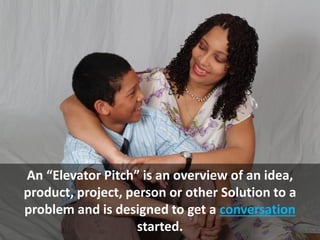
An “Elevator Pitch” is an overview of an idea,
product, project, person or other Solution to a
problem and is designed to get a conversation
started.
An “Elevator Pitch” answers the questions:
What is it, Who needs it, Why do they need it, and
Who are you to see the problem and develop the
solution?
An effective “Elevator Pitch” is designed
to give the audience just enough
information to want to know more
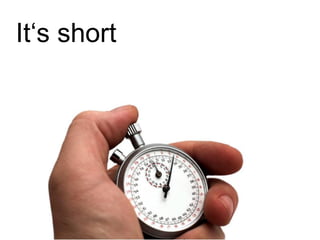
It‘s short
mediano
An “Elevator Pitch” is Consistent by having each
variation deliver the same basic message
An “Elevator Pitch” is Customized by addressing the
specific concerns and concerns of the audience
+useful
HINTs
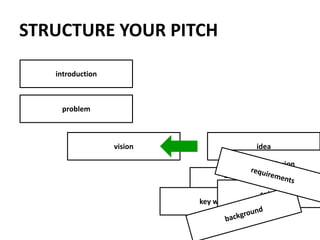
STRUCTURE YOUR PITCH
introduction
problem
vision idea
soltuion
key words
solution
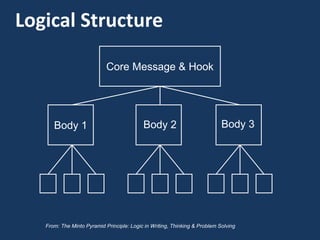
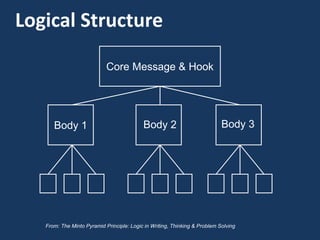
Core Message & Hook
Body 1
From: The Minto Pyramid Principle: Logic in Writing, Thinking & Problem Solving
Logical Structure
Body 2 Body 3
in one sentence each…
introduce
yourself
and...
…your background
Elevator Speech… Who’s Listening?
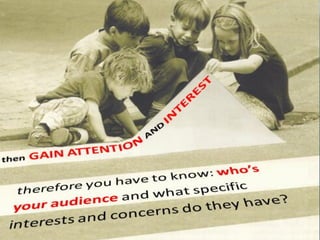
Know who you’re talking to
Know your listeners and what they want
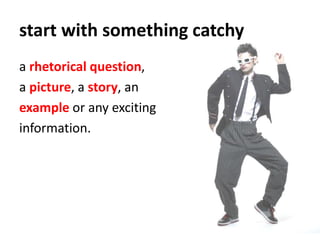
start with something catchy
a rhetorical question,
a picture, a story, an
example or any exciting
information.
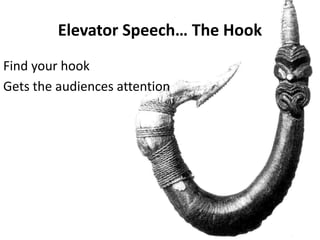
Elevator Speech… The Hook
Find your hook
Gets the audiences attention
describe the
problem
you want to solve
use picture language, comparisons and
examples to activate positive connections with
your audience.
describe your vision
an effective elevator
pitch describes
the solution
by pointing out
the benefits for
the customers.
Elevator Speech… Ask for it
Close the message: base the close on your audience
Call for action close: calls for a specific action within a
time frame
Ask for reaction close: a soft sell that uses the power
of suggestion
The 5 C’s of a
Good Idea
Pitch
A good Pitch is Compelling by explaining the
problem and the solution
A good Pitch is Credible and explains why you
are qualified
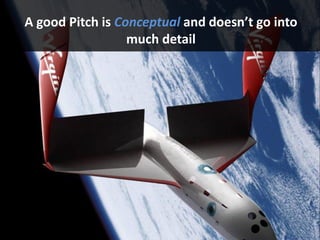
A good Pitch is Conceptual and doesn’t go into
much detail
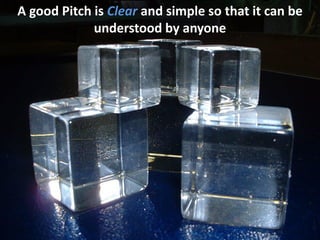
A good Pitch is Clear and simple so that it can be
understood by anyone
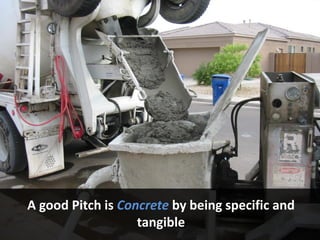
A good Pitch is Concrete by being specific and
tangible
How do we get
there?
1. Know your
audience
2. Understand their
needs/wants/goals
/process
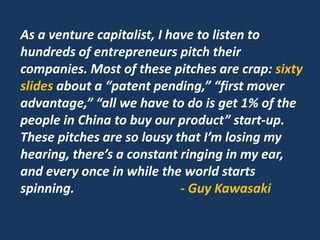
As a venture capitalist, I have to listen to
hundreds of entrepreneurs pitch their
companies. Most of these pitches are crap: sixty
slides about a “patent pending,” “first mover
advantage,” “all we have to do is get 1% of the
people in China to buy our product” start-up.
These pitches are so lousy that I’m losing my
hearing, there’s a constant ringing in my ear,
and every once in while the world starts
spinning. - Guy Kawasaki
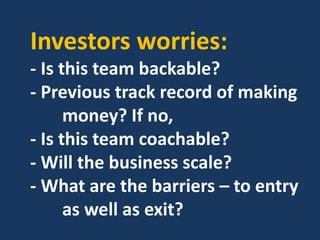
Investors worries:
- Is this team backable?
- Previous track record of making
money? If no,
- Is this team coachable?
- Will the business scale?
- What are the barriers – to entry
as well as exit?
3. Plan and
Prepare
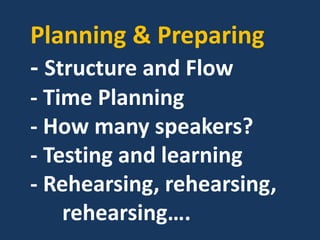
Planning & Preparing
- Structure and Flow
- Time Planning
- How many speakers?
- Testing and learning
- Rehearsing, rehearsing,
rehearsing….
Time Planning
- How many slides?
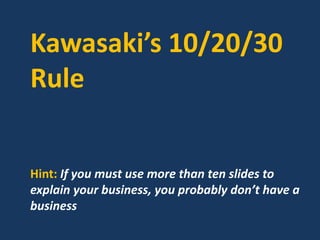
Kawasaki’s 10/20/30
Rule
Hint: If you must use more than ten slides to
explain your business, you probably don’t have a
business
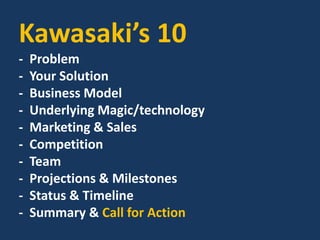
Kawasaki’s 10
- Problem
- Your Solution
- Business Model
- Underlying Magic/technology
- Marketing & Sales
- Competition
- Team
- Projections & Milestones
- Status & Timeline
- Summary & Call for Action
Time Planning
- How much presentation
and how much
interaction?
To Demo or not to
Demo?
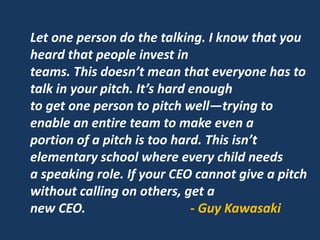
How many speakers?
Let one person do the talking. I know that you
heard that people invest in
teams. This doesn’t mean that everyone has to
talk in your pitch. It’s hard enough
to get one person to pitch well—trying to
enable an entire team to make even a
portion of a pitch is too hard. This isn’t
elementary school where every child needs
a speaking role. If your CEO cannot give a pitch
without calling on others, get a
new CEO. - Guy Kawasaki
Test Your Pitch!
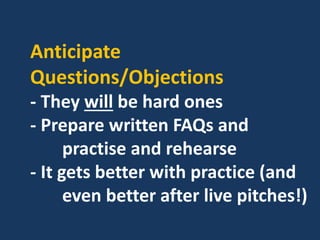
Anticipate
Questions/Objections
- They will be hard ones
- Prepare written FAQs and
practise and rehearse
- It gets better with practice (and
even better after live pitches!)
4. Get their
attention!
And Do it Quickly!
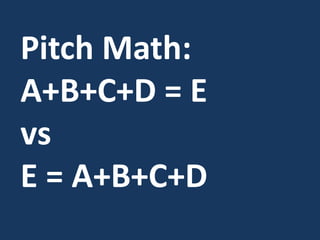
Pitch Math:
A+B+C+D = E
vs
E = A+B+C+D
Core Message & Hook
Body 1
From: The Minto Pyramid Principle: Logic in Writing, Thinking & Problem Solving
Logical Structure
Body 2 Body 3
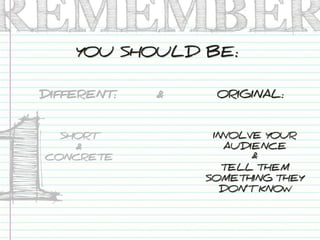
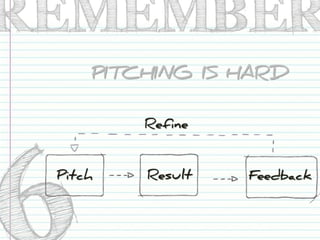
Remember
The Hook!
be different
what makes your solution/team/idea unique?
5. Be Ruthless!
(On yourself and your
pitch)
The
‘So What?’
Test
Takeaways:
Things to
Remember!
COMMENTS / QUESTIONS?
bringi.dev@iimb.ernet.in
Acknowledgements:
-The Art of the Elevator Pitch: by Andreas Roettl, andreas@starteurope.at
http://www.starteurope.at
-Principles of Presentation Delivery: John Fallon; Slideshare
-The Minimalist Guide to Pitching, Guy Kawasaki

Pitching4 startups