Amir Dotan
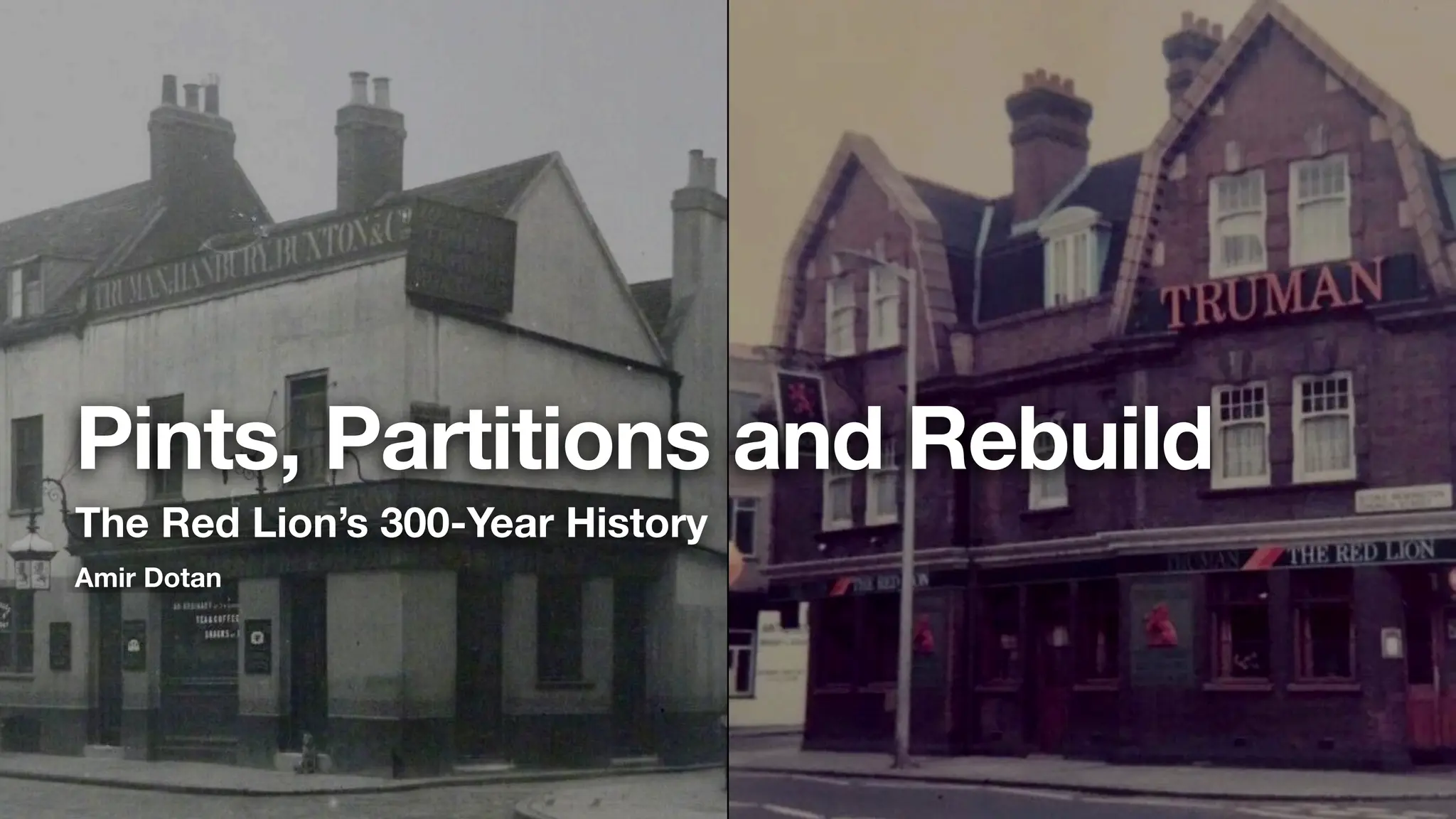
Pints, Partitions and Rebuild
The Red Lion’s 300-Year History
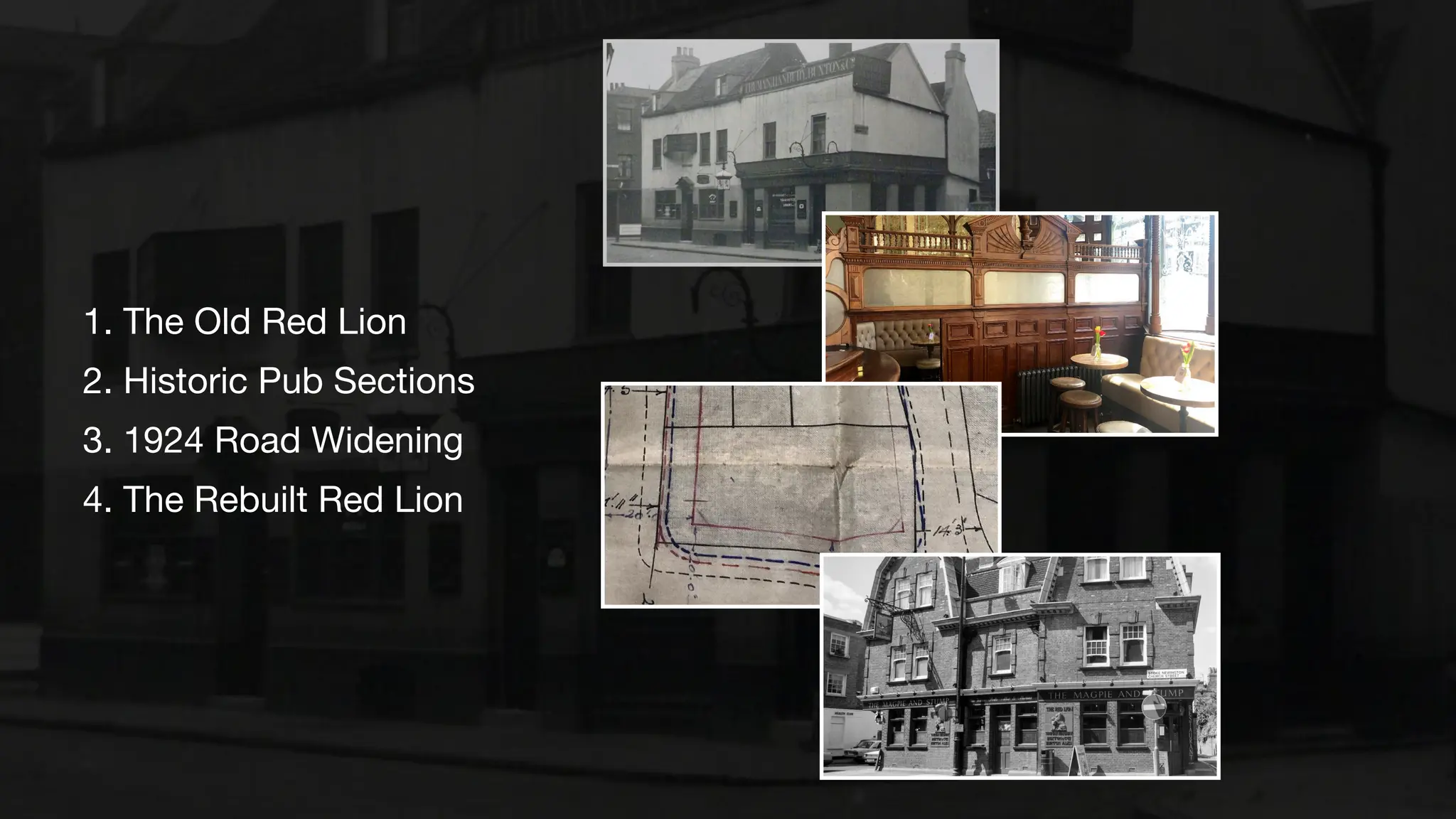
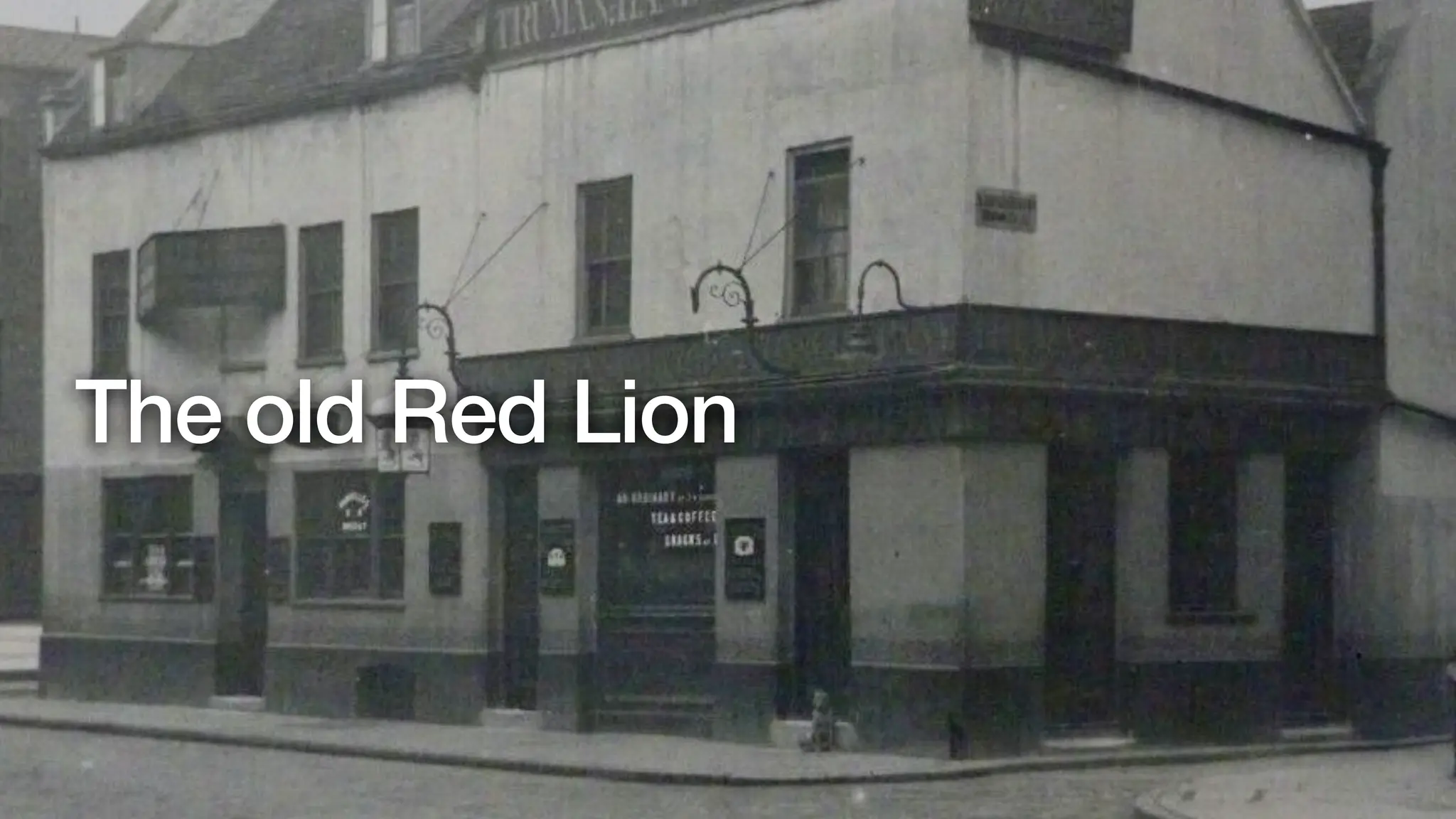
1. The Old Red Lion
2. Historic Pub Sections
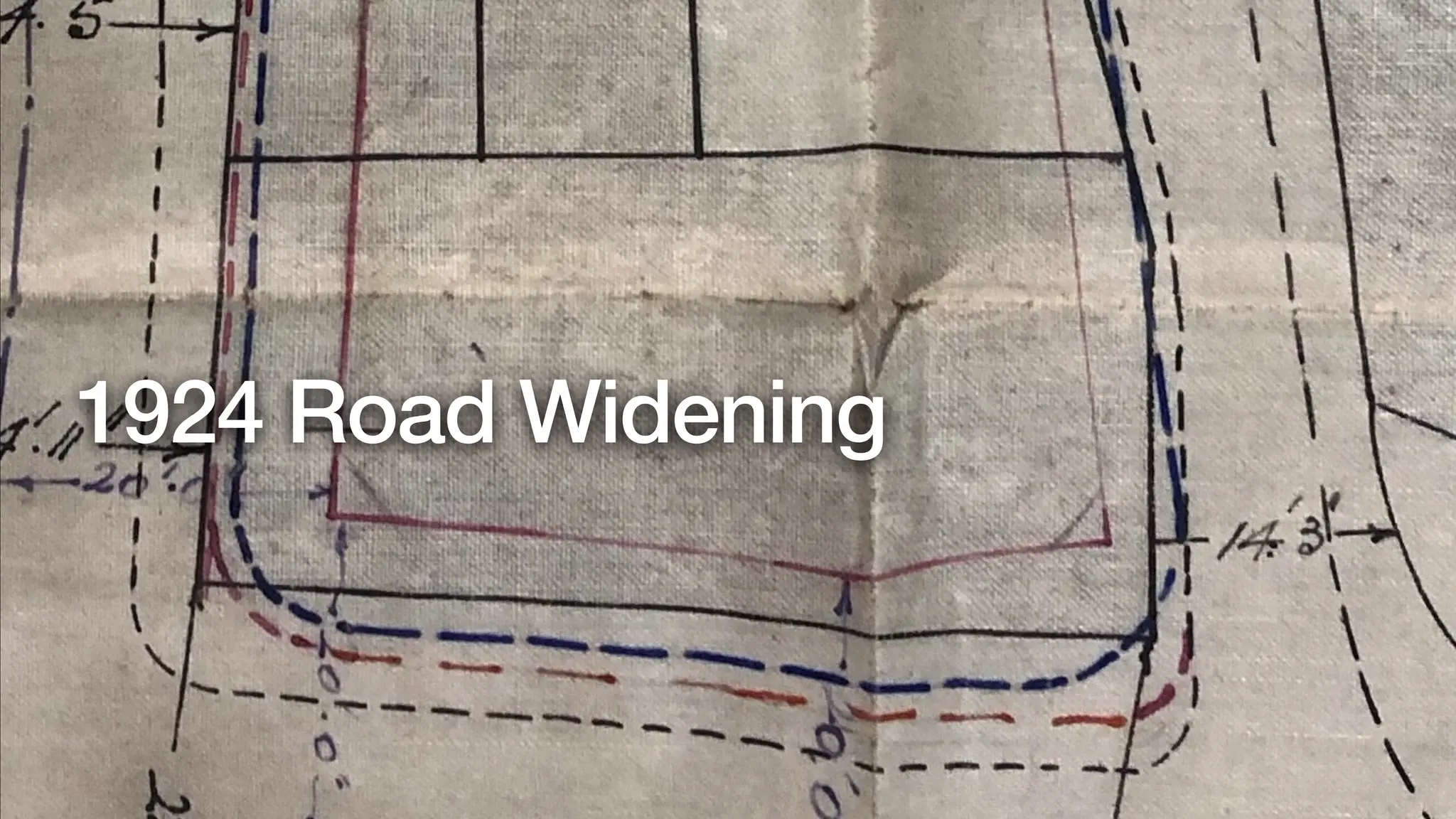
3. 1924 Road Widening
4. The Rebuilt Red Lion
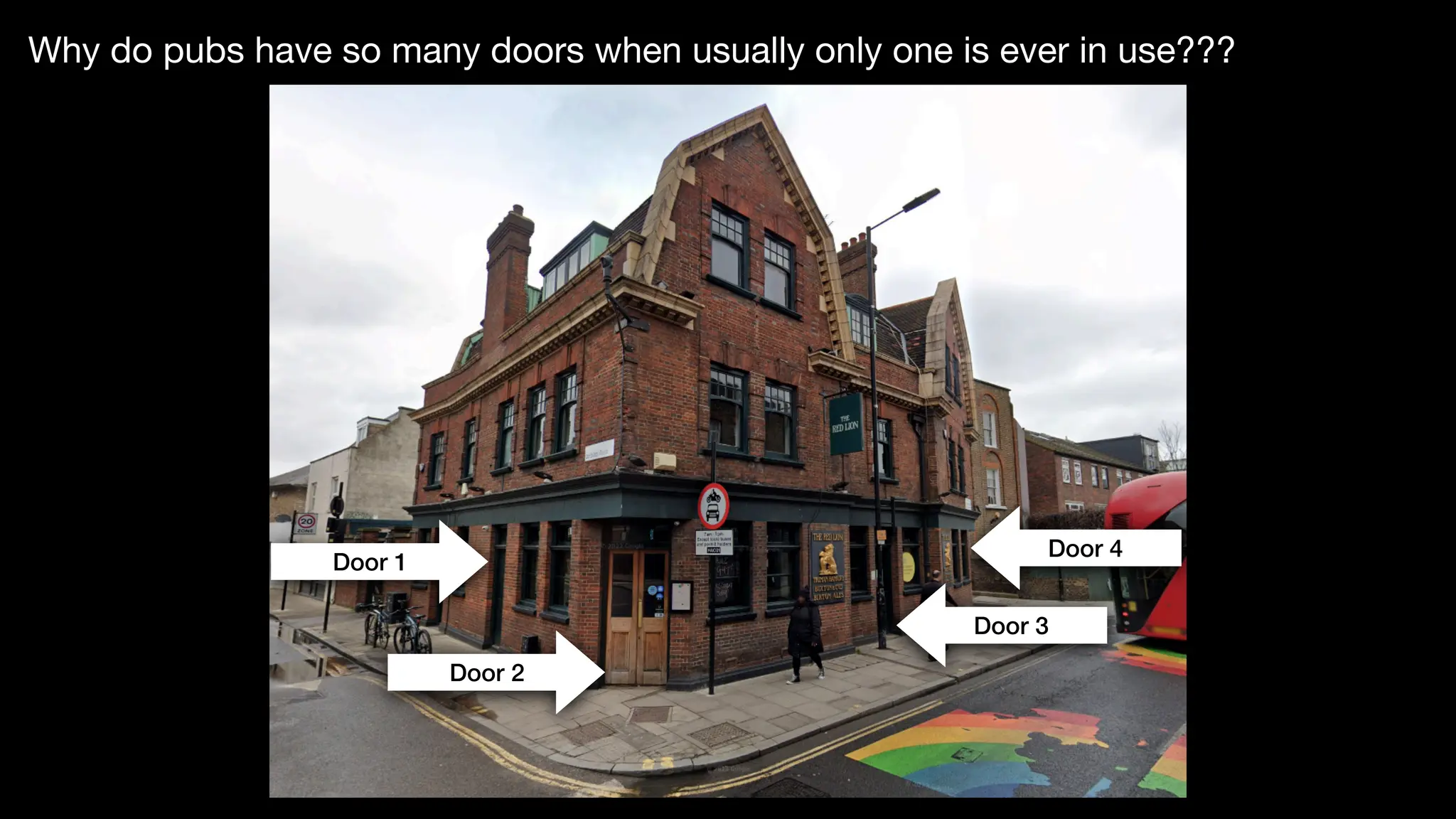
Door 1
Door 2
Door 3
Door 4
Why do pubs have so many doors when usually only one is ever in use???
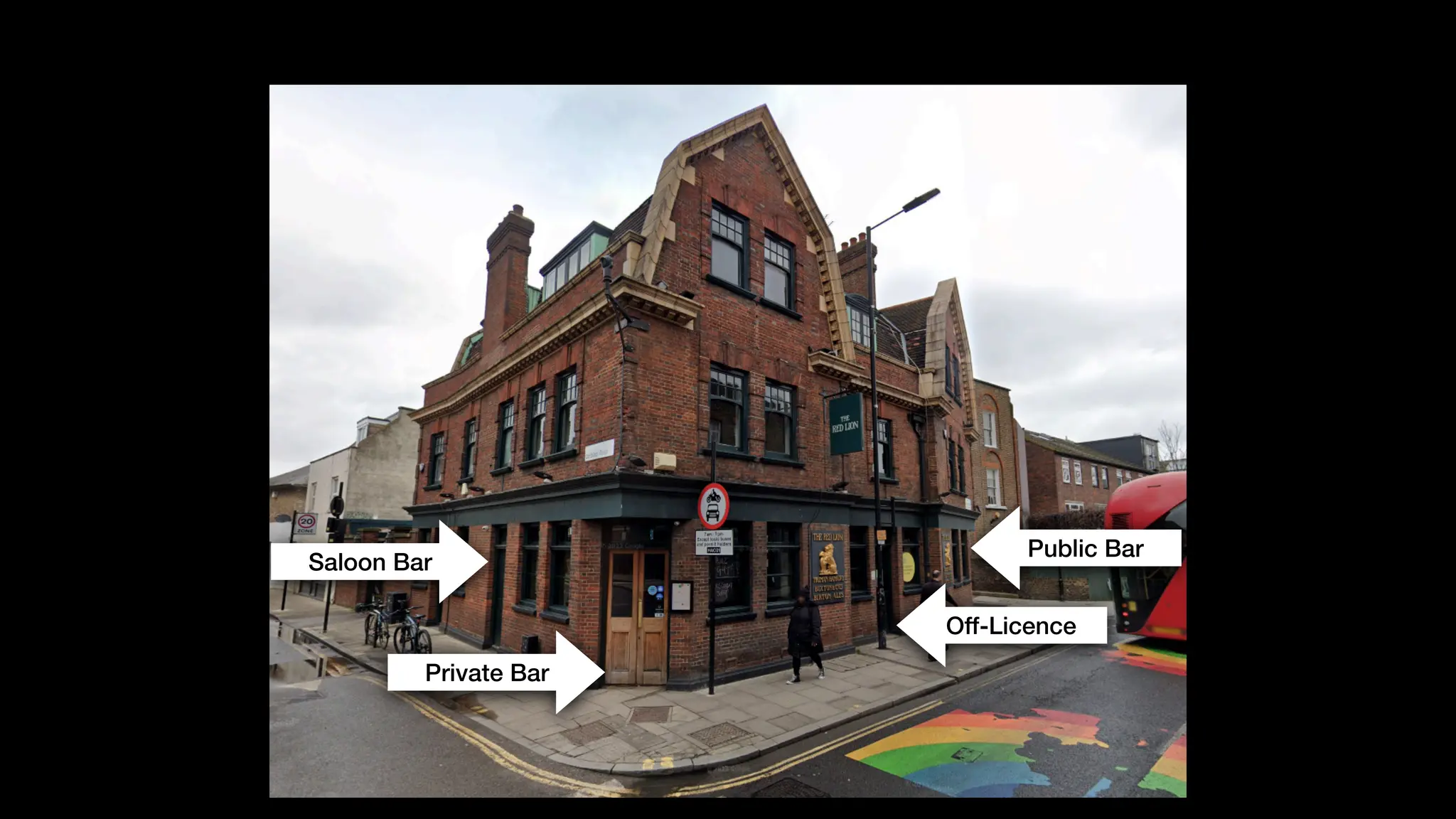
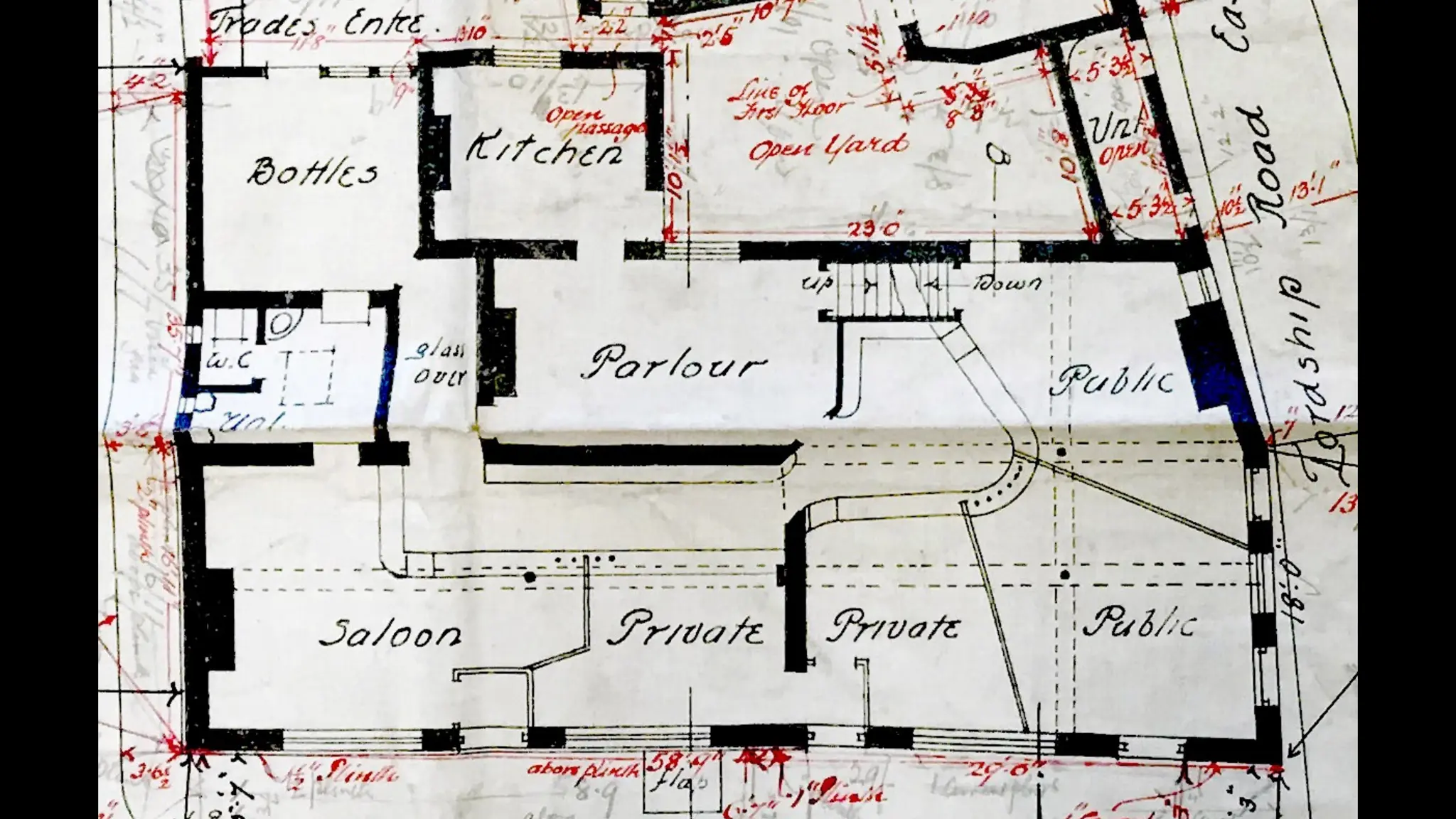
Saloon Bar
Private Bar
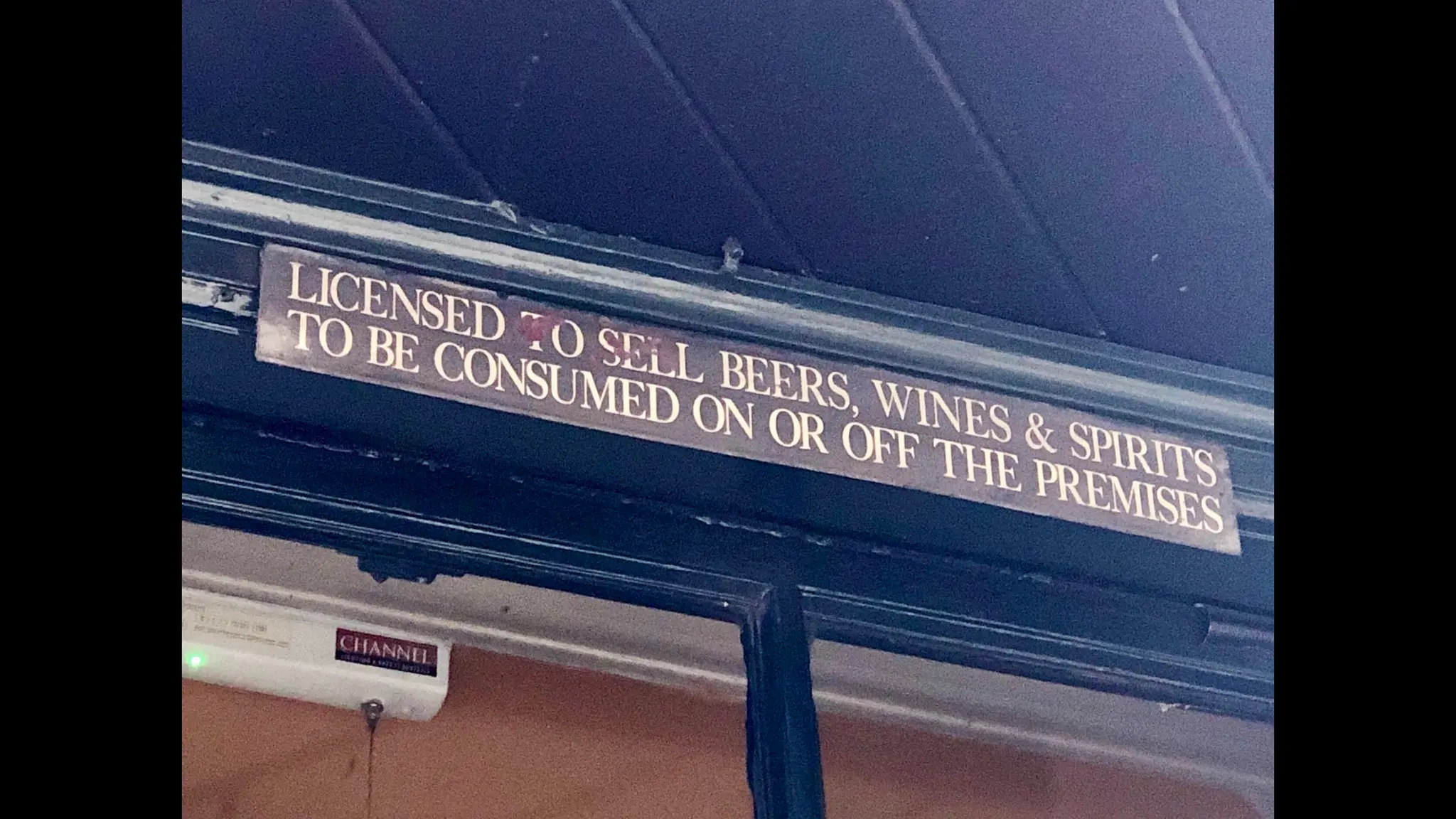
Off-Licence
Public Bar
The old Red Lion
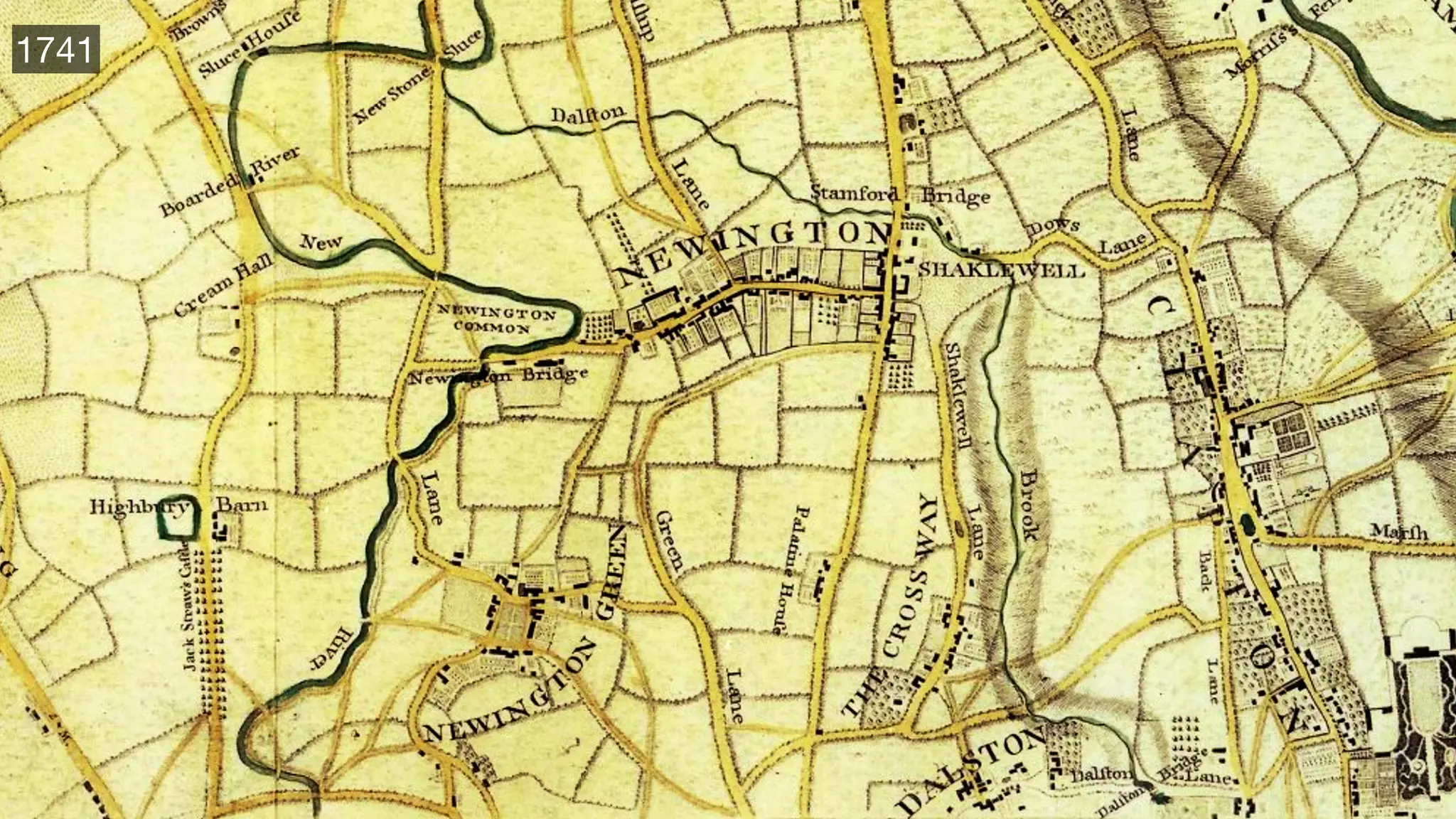
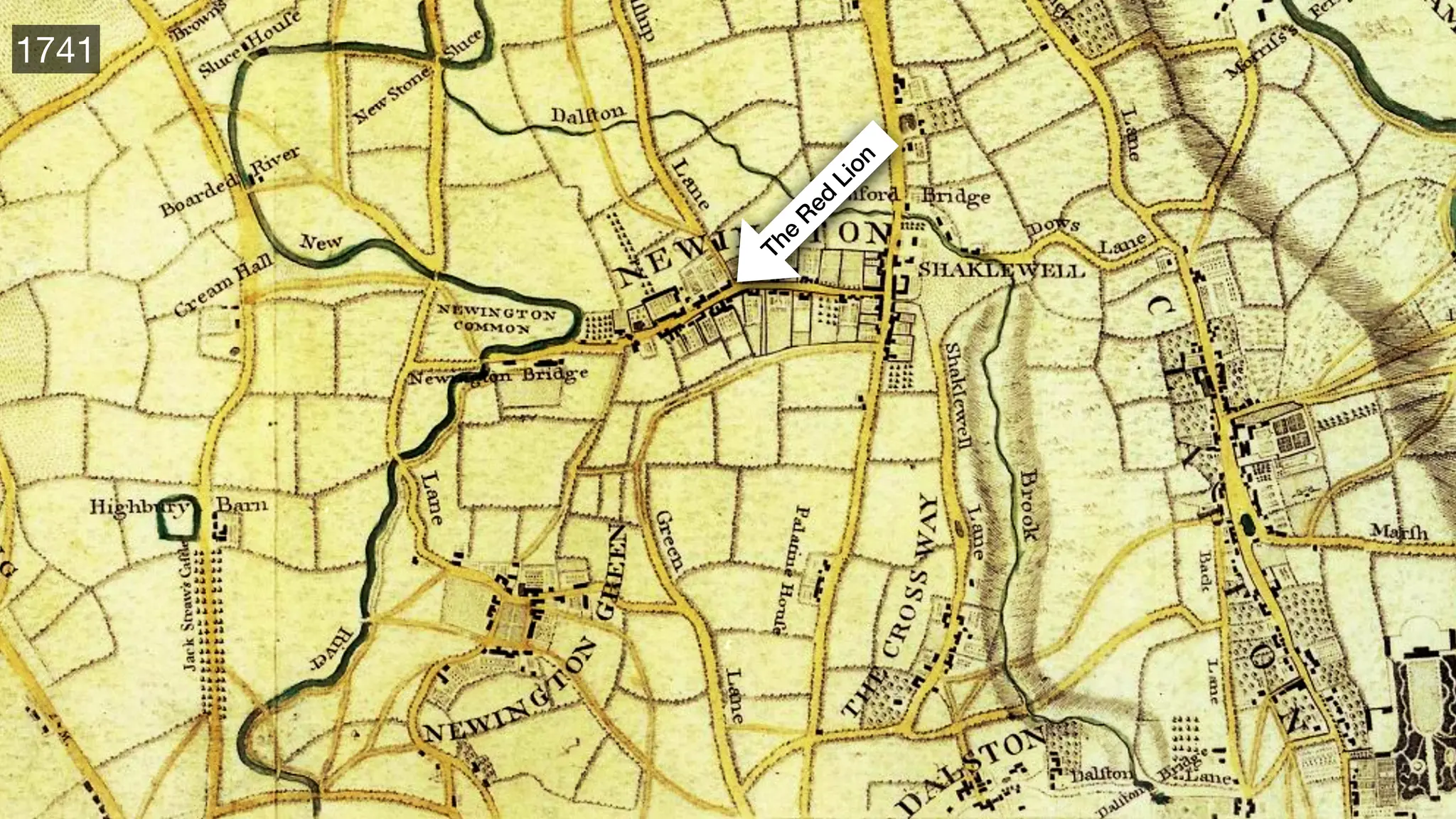
1741
T
h
e
R
e
d
L
i
o
n
1741
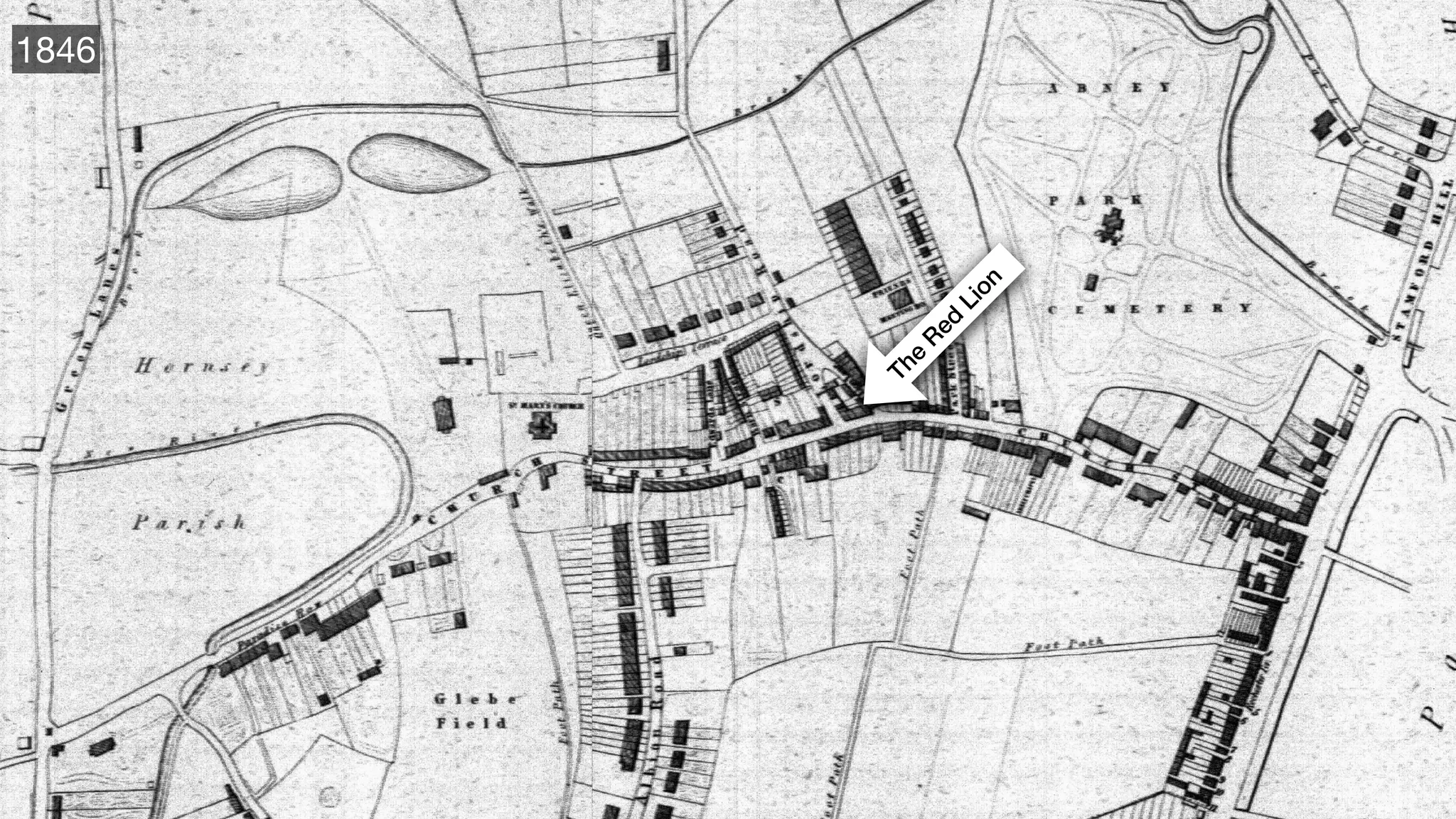
1846
T
h
e
R
e
d
L
i
o
n
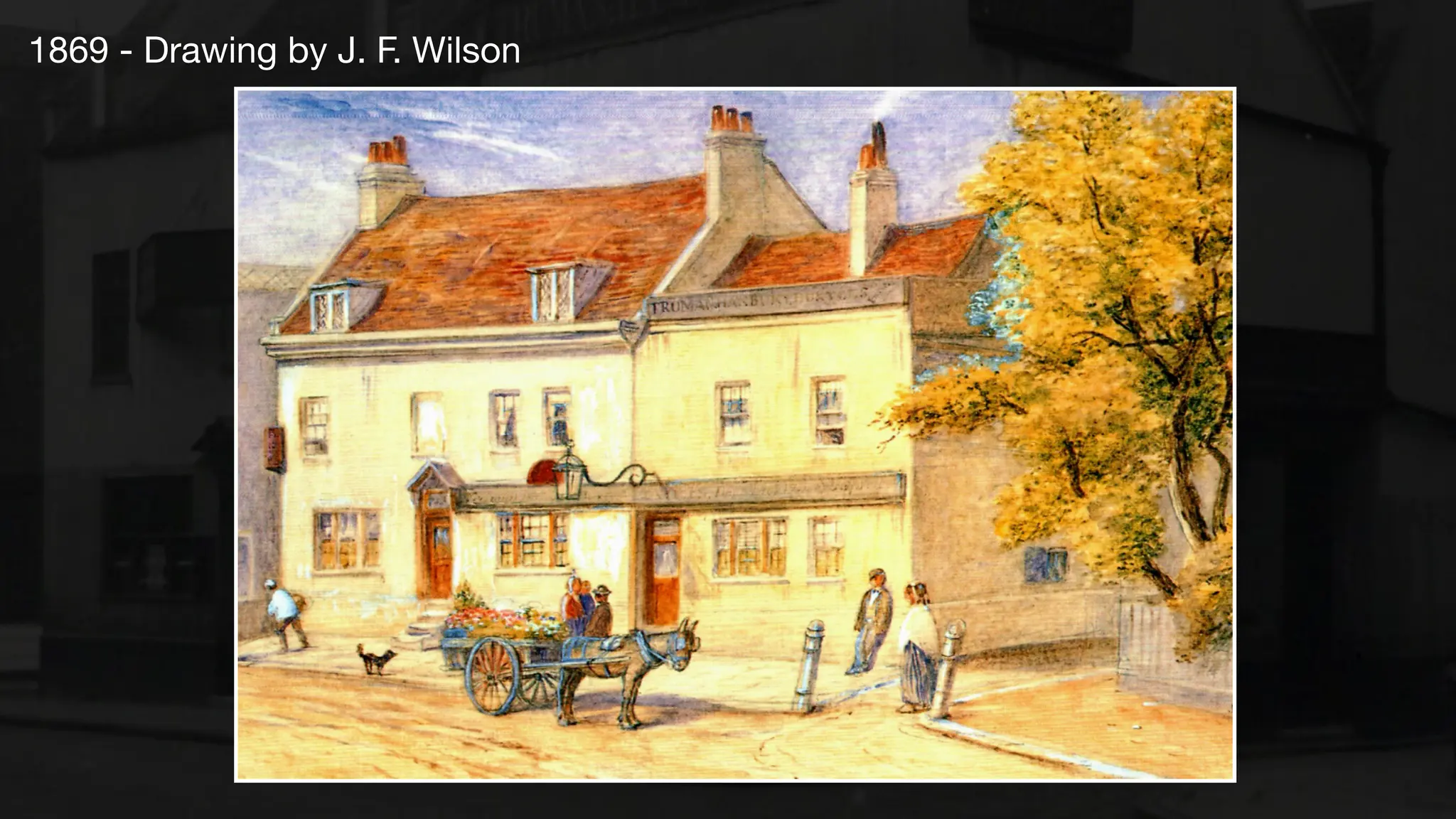
1869 - Drawing by J. F. Wilson
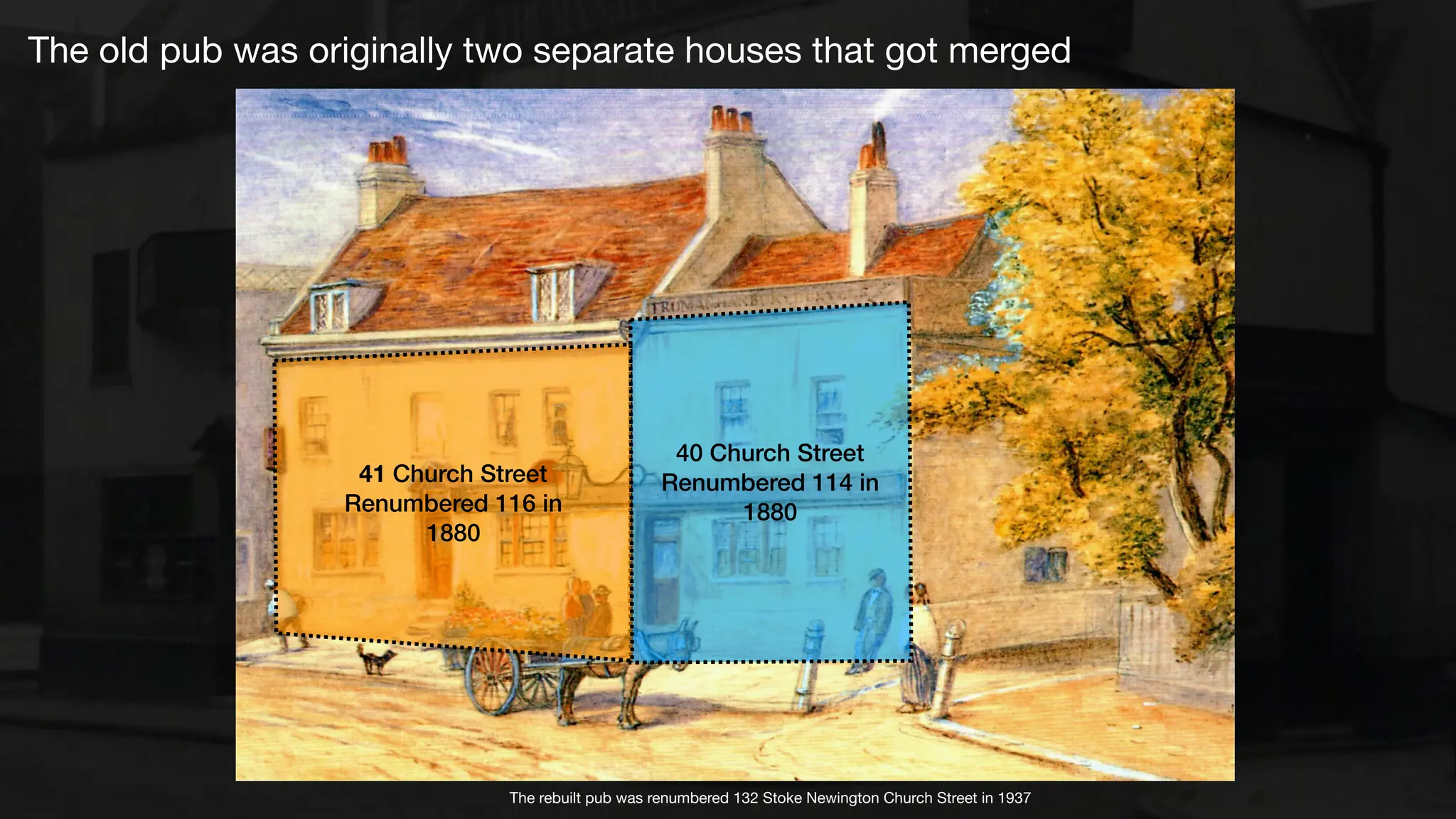
The old pub was originally two separate houses that got merged
40 Church Street
Renumbered 114 in
1880
41 Church Street
Renumbered 116 in
1880
The rebuilt pub was renumbered 132 Stoke Newington Church Street in 1937
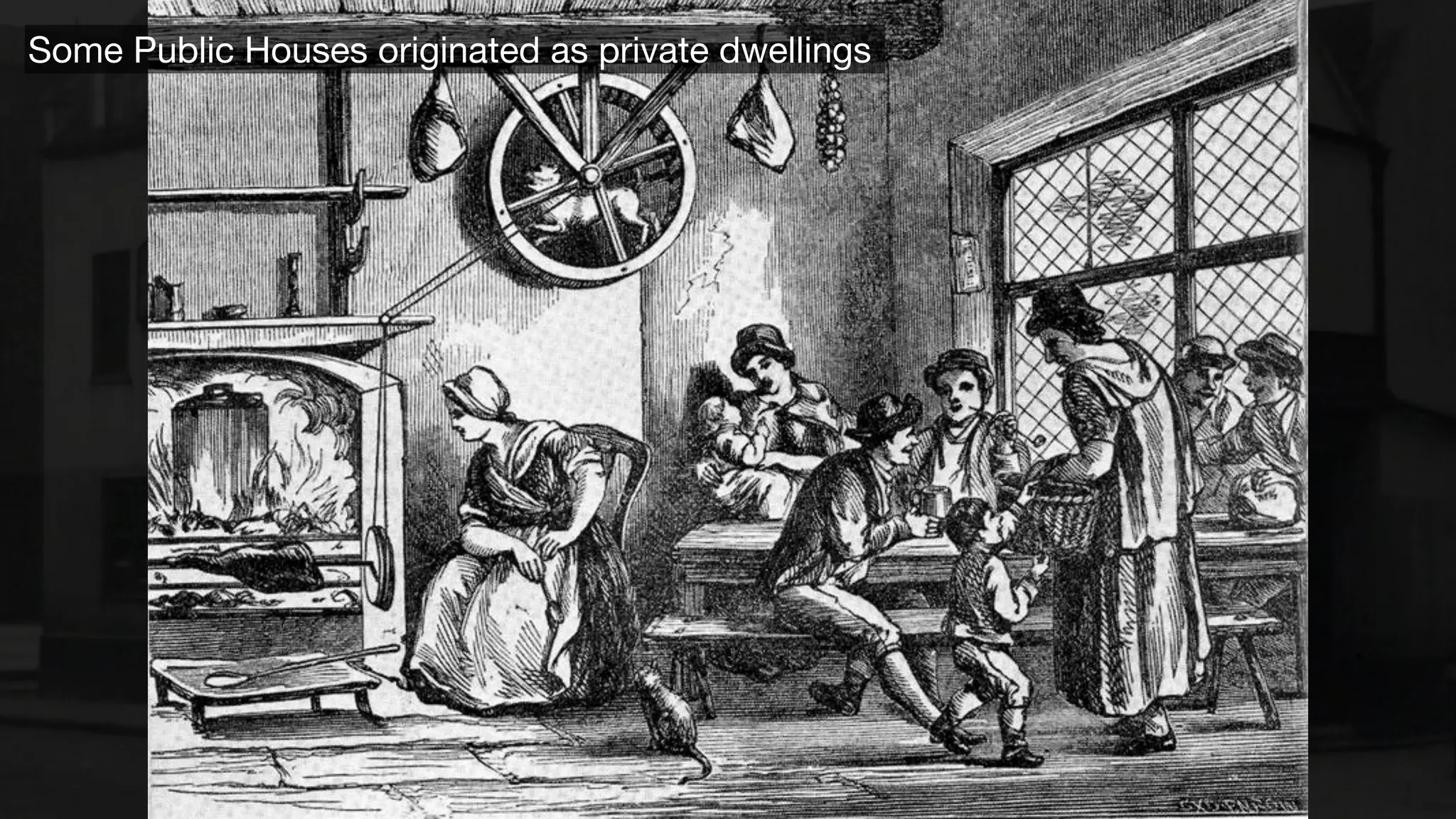
Some Public Houses originated as private dwellings
1861 census
- Thomas Charles, Licensed Victualler, 46
- Ann Amelia Charles, Wife, 37
- Charles James Charles, Son, Clerk, 16
- Elizabeth Ann Charles, Daughter, 17
- Hannah Susannah Hurrell, Visitor, Milliner, Widow, 35
- Charlotte Tuff, Housemaid, 20
- William Stockbridge, Barman, 25
- William Byworth, Potboy, 14
- Reuben Lutkin, Potman, 25
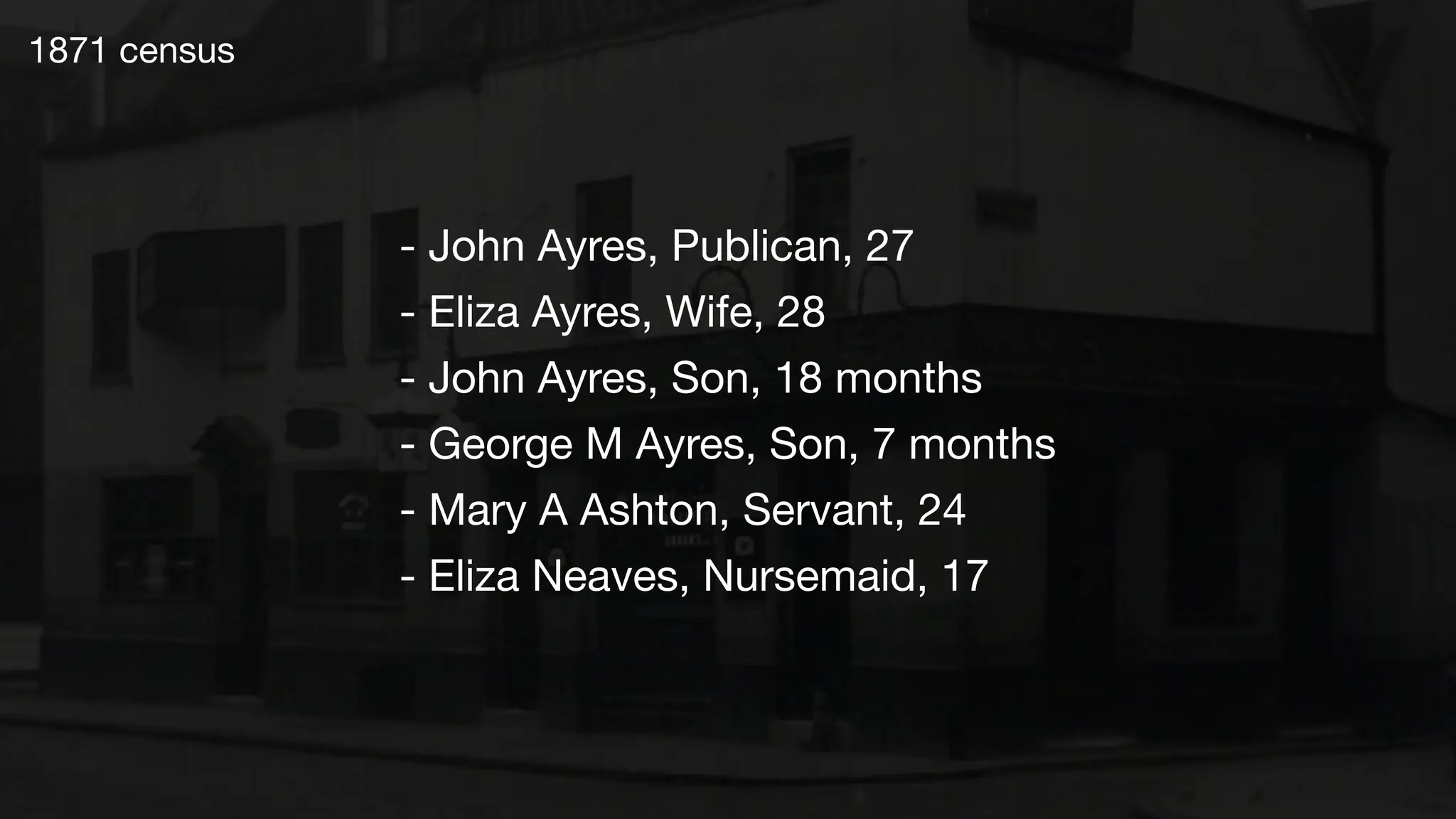
1871 census
- John Ayres, Publican, 27
- Eliza Ayres, Wife, 28
- John Ayres, Son, 18 months
- George M Ayres, Son, 7 months
- Mary A Ashton, Servant, 24
- Eliza Neaves, Nursemaid, 17
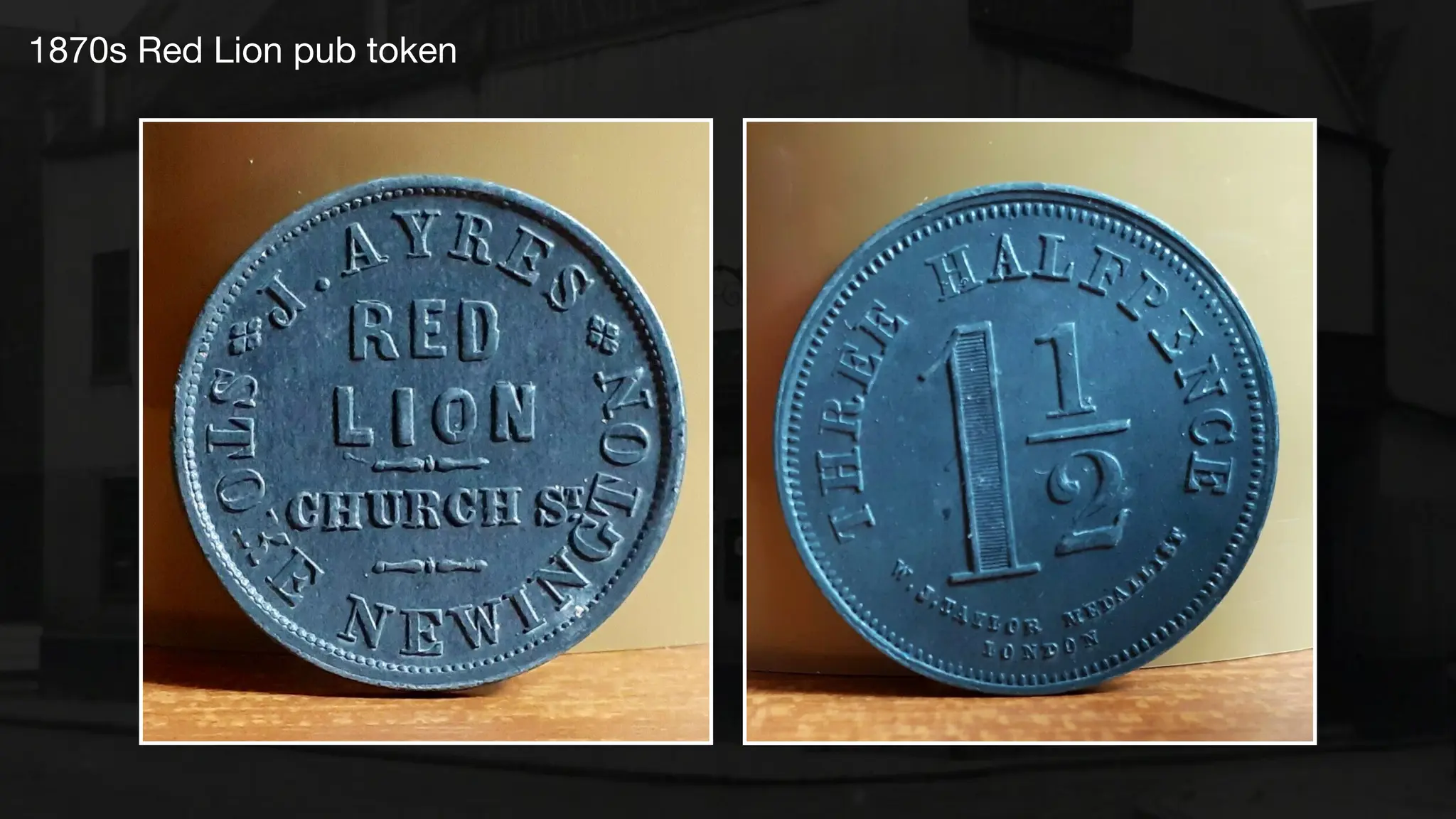
1870s Red Lion pub token
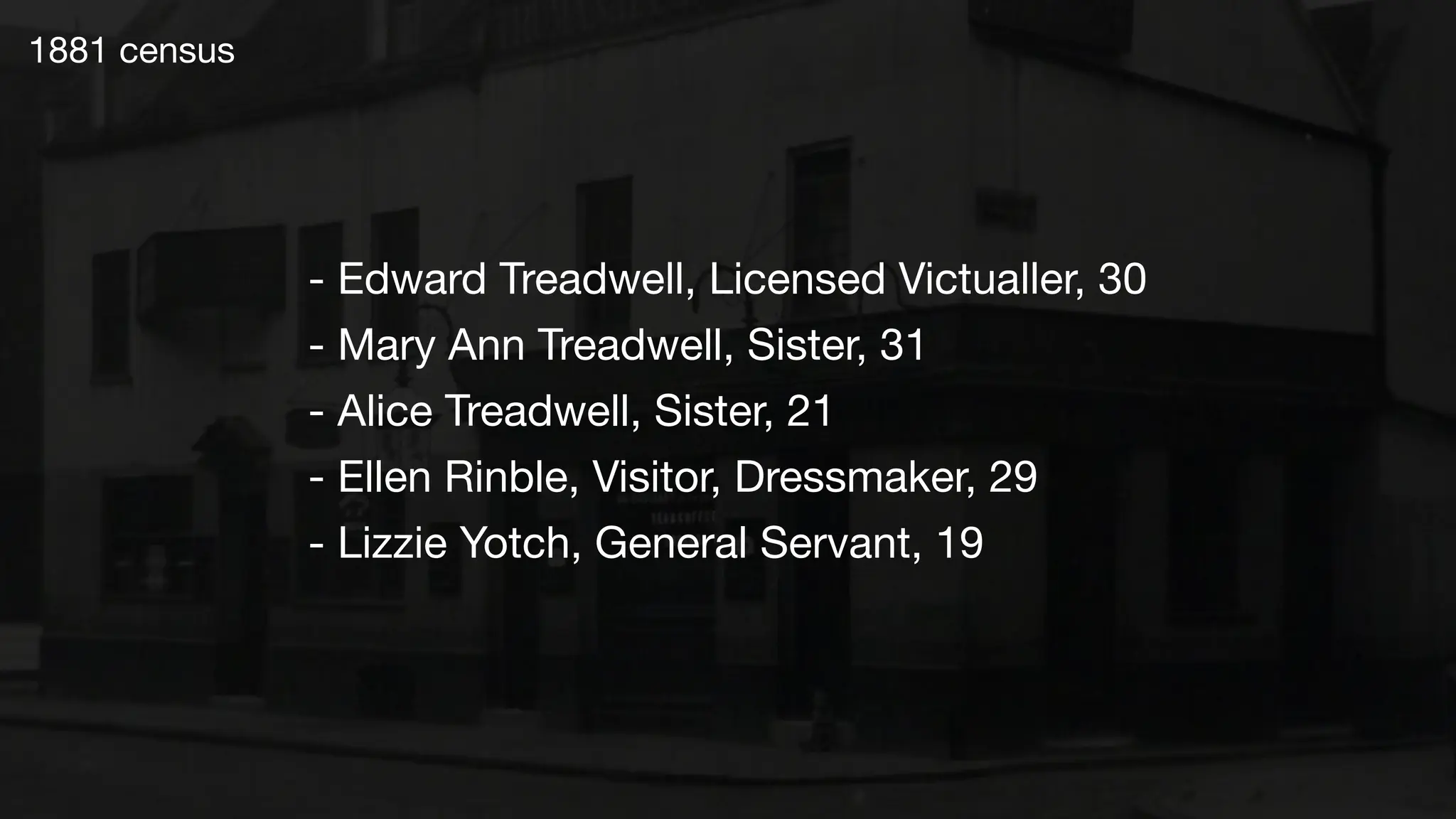
1881 census
- Edward Treadwell, Licensed Victualler, 30
- Mary Ann Treadwell, Sister, 31
- Alice Treadwell, Sister, 21
- Ellen Rinble, Visitor, Dressmaker, 29
- Lizzie Yotch, General Servant, 19
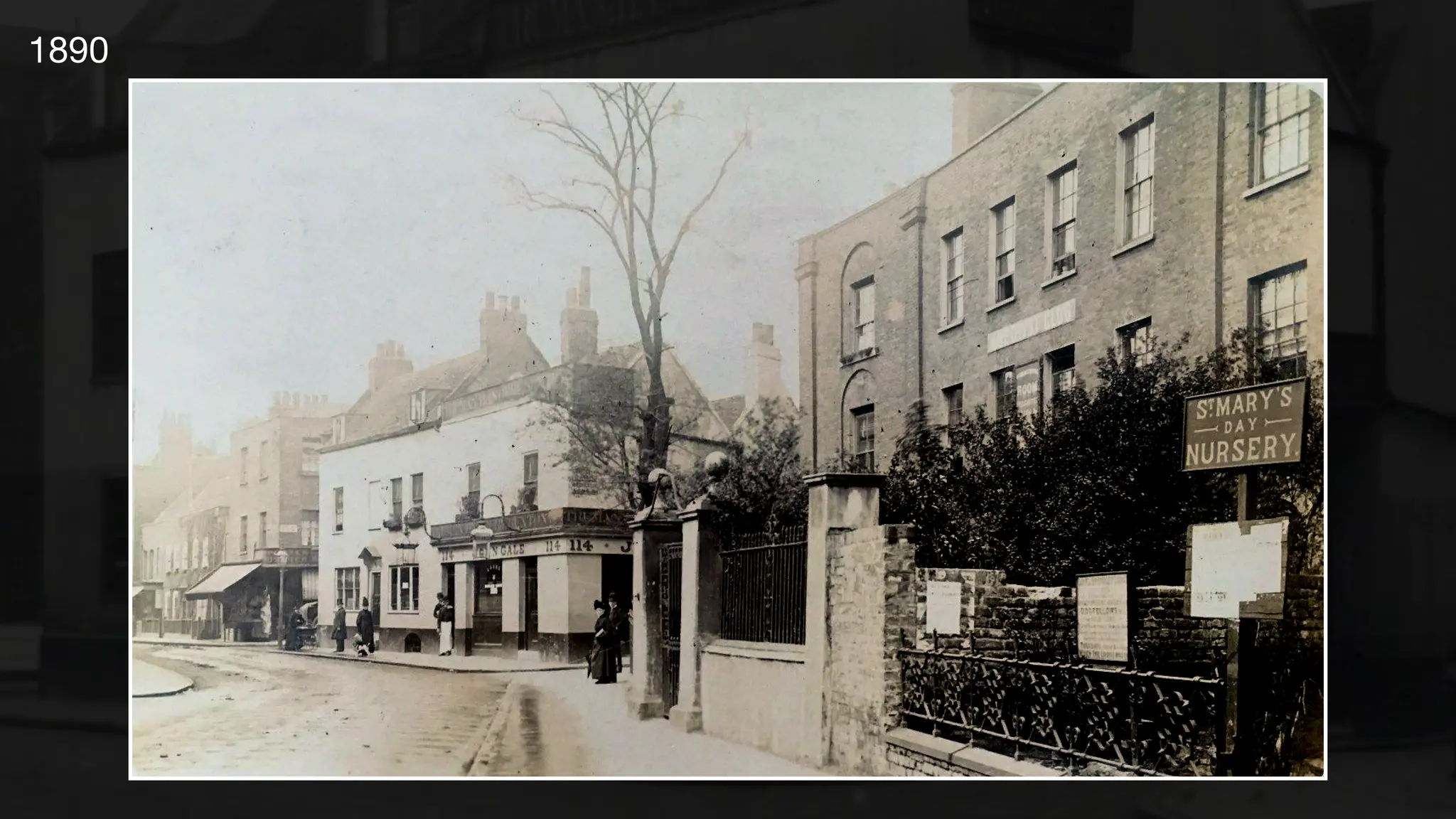
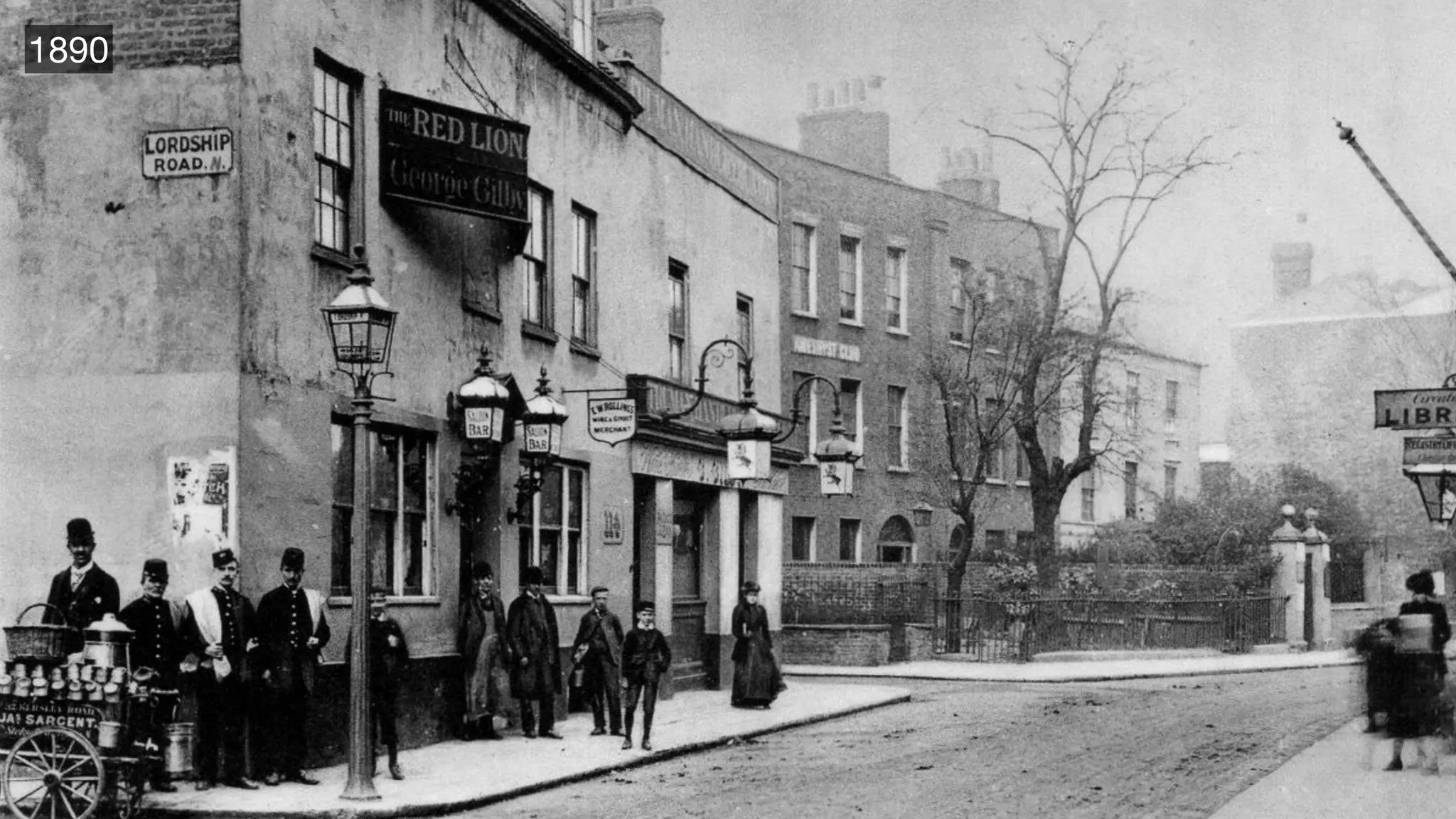
1890
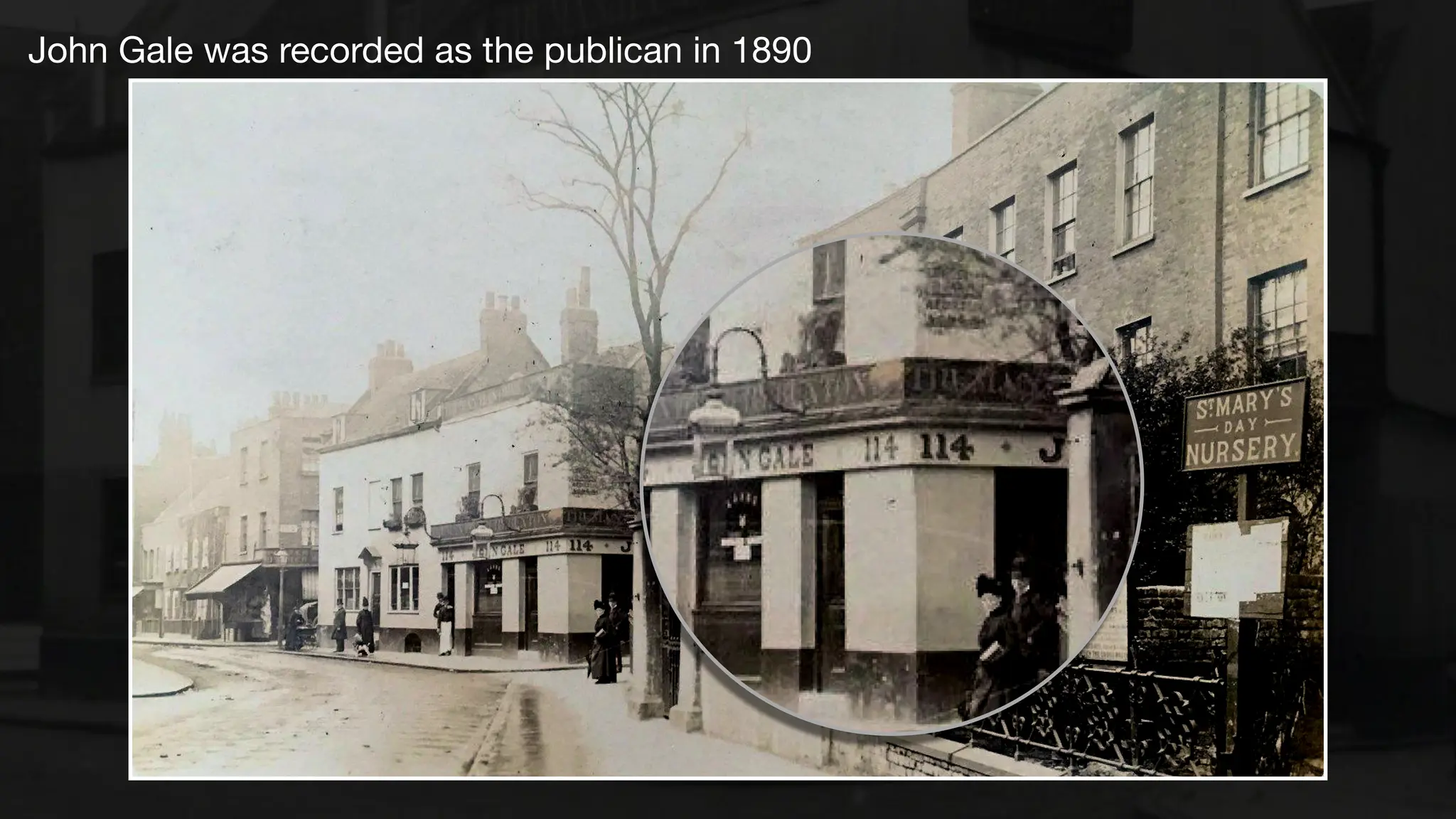
John Gale was recorded as the publican in 1890
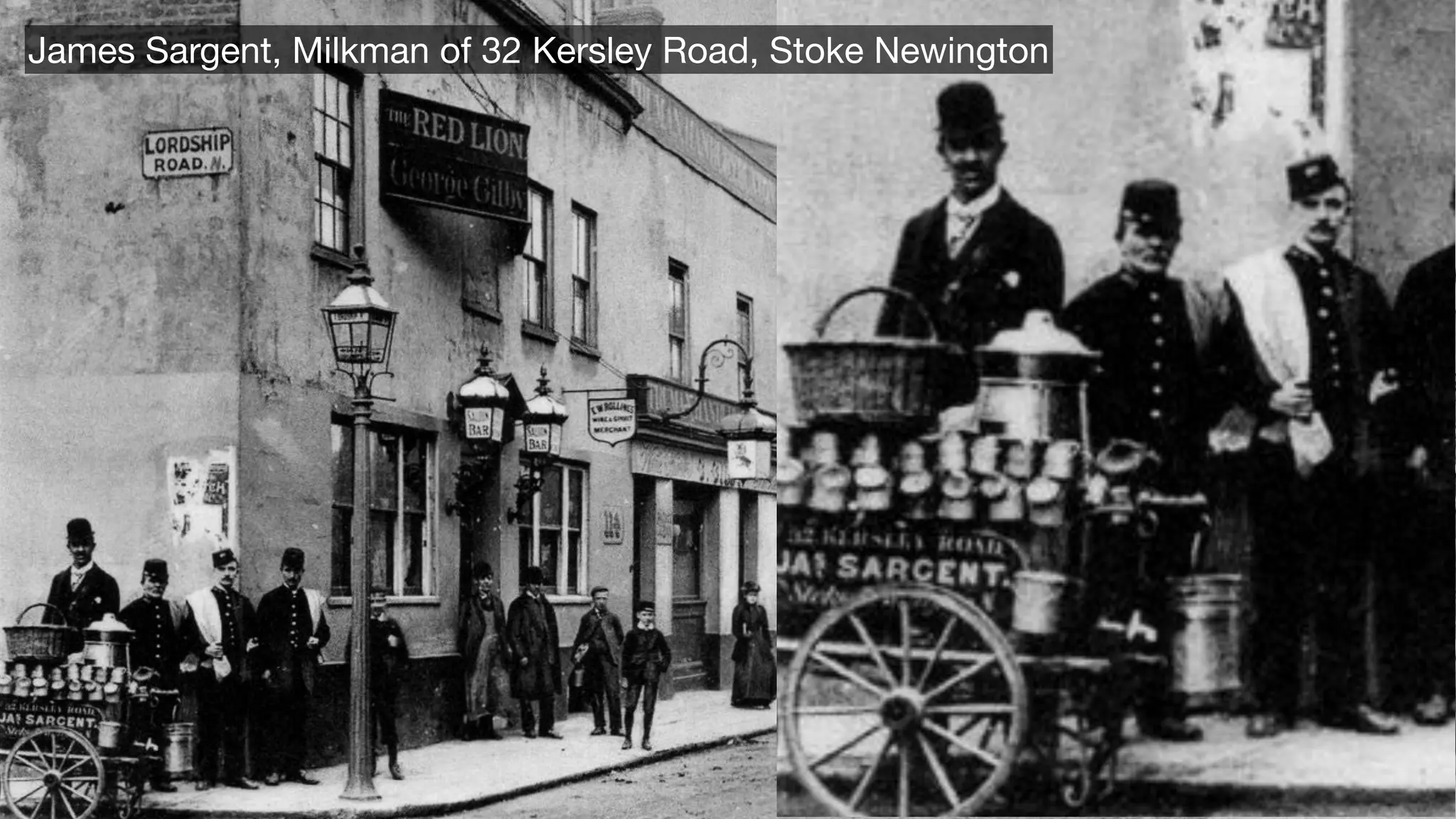
1890
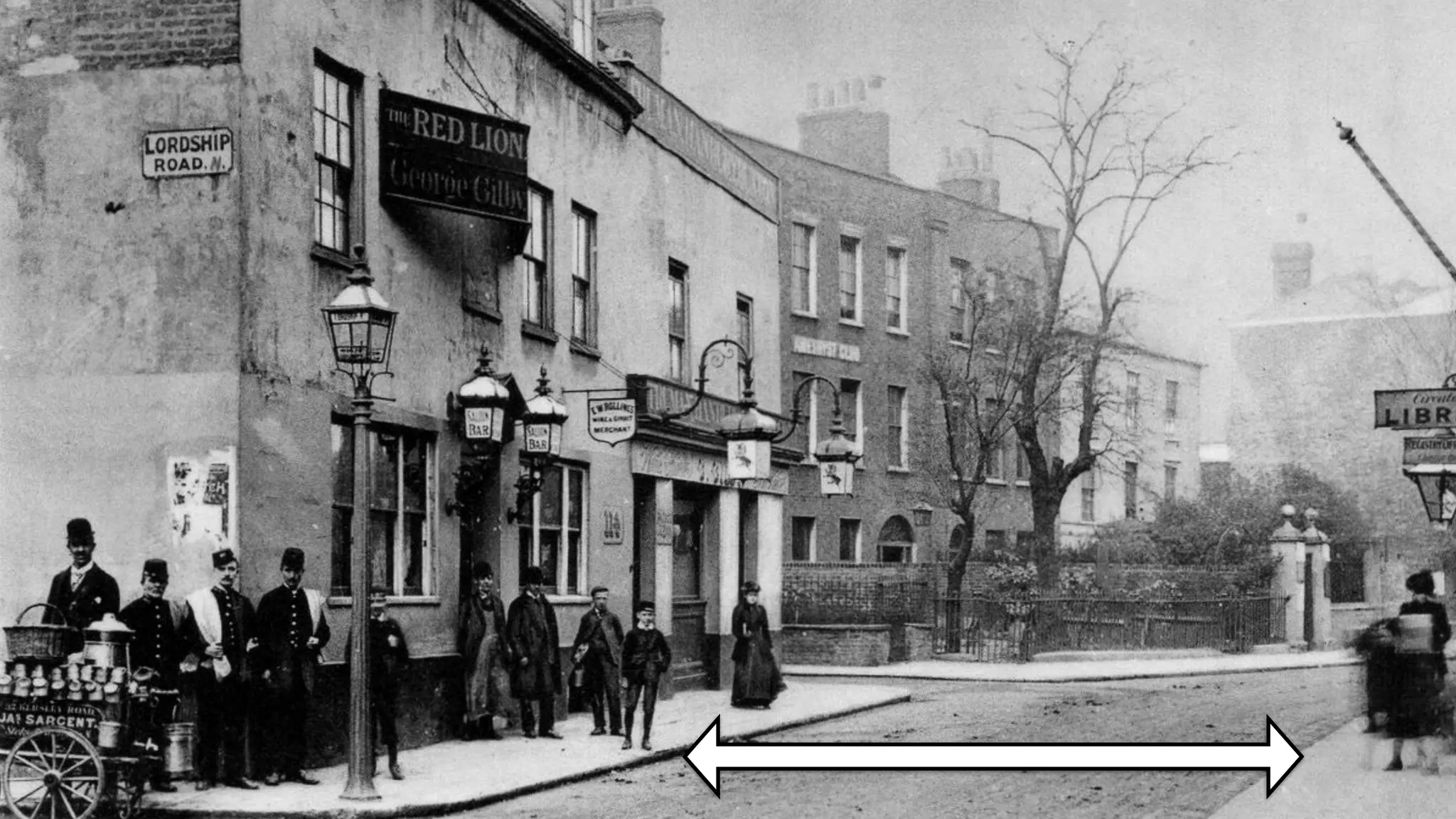
James Sargent, Milkman of 32 Kersley Road, Stoke Newington
1891 census
- Edward W Rollings, Publican, 25
- Florence A Rollings, Wife, 25
- Eleanor Rollings, Daughter, 3
- John Rollings, Son, 1
- Alice A White, Barmaid, 23
- Elizabeth Barker, Cook, 21
- Eliza Warren, Nursemaid, 15
- Emily Spurling, Barmaid, 30
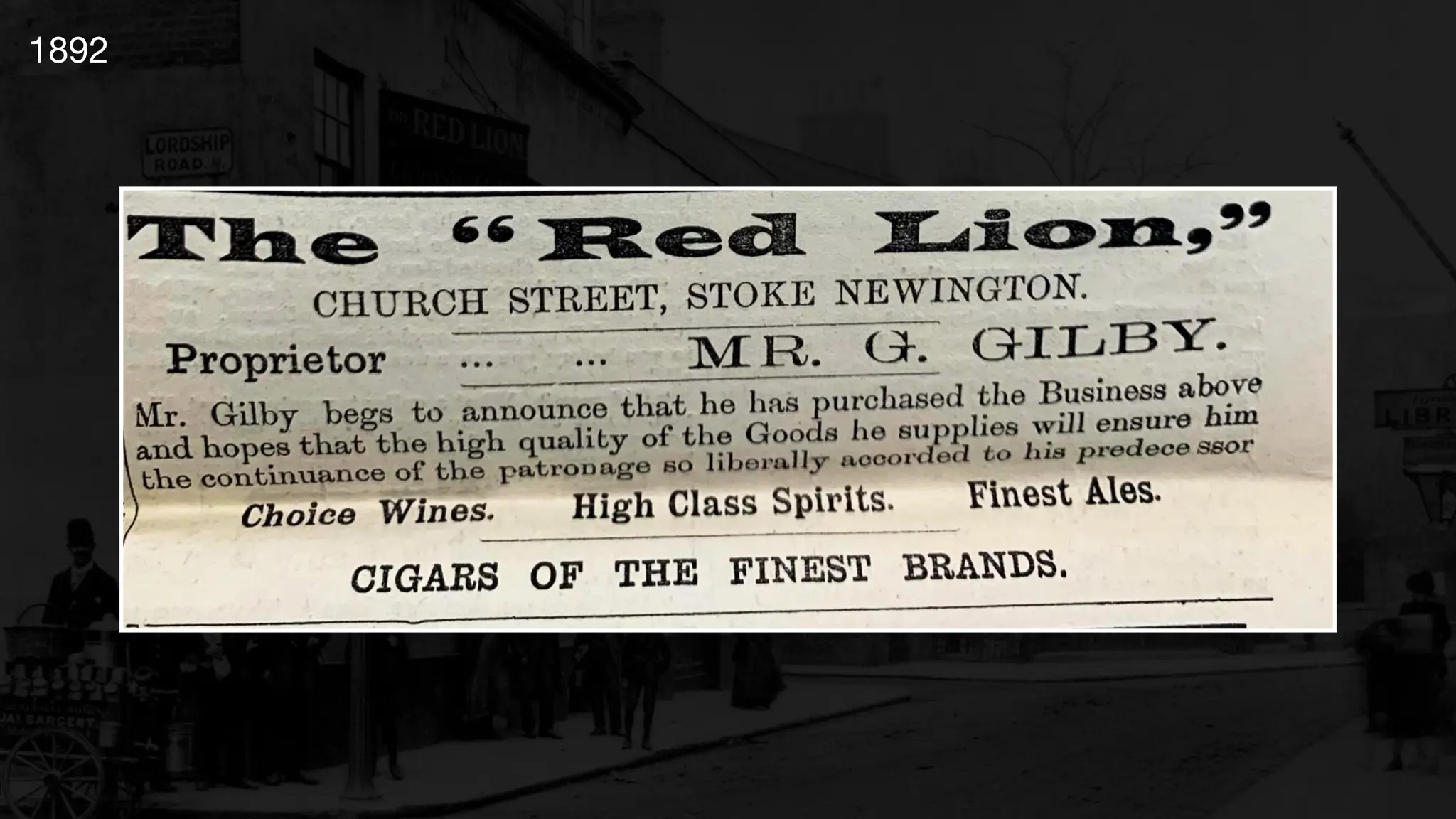
1892
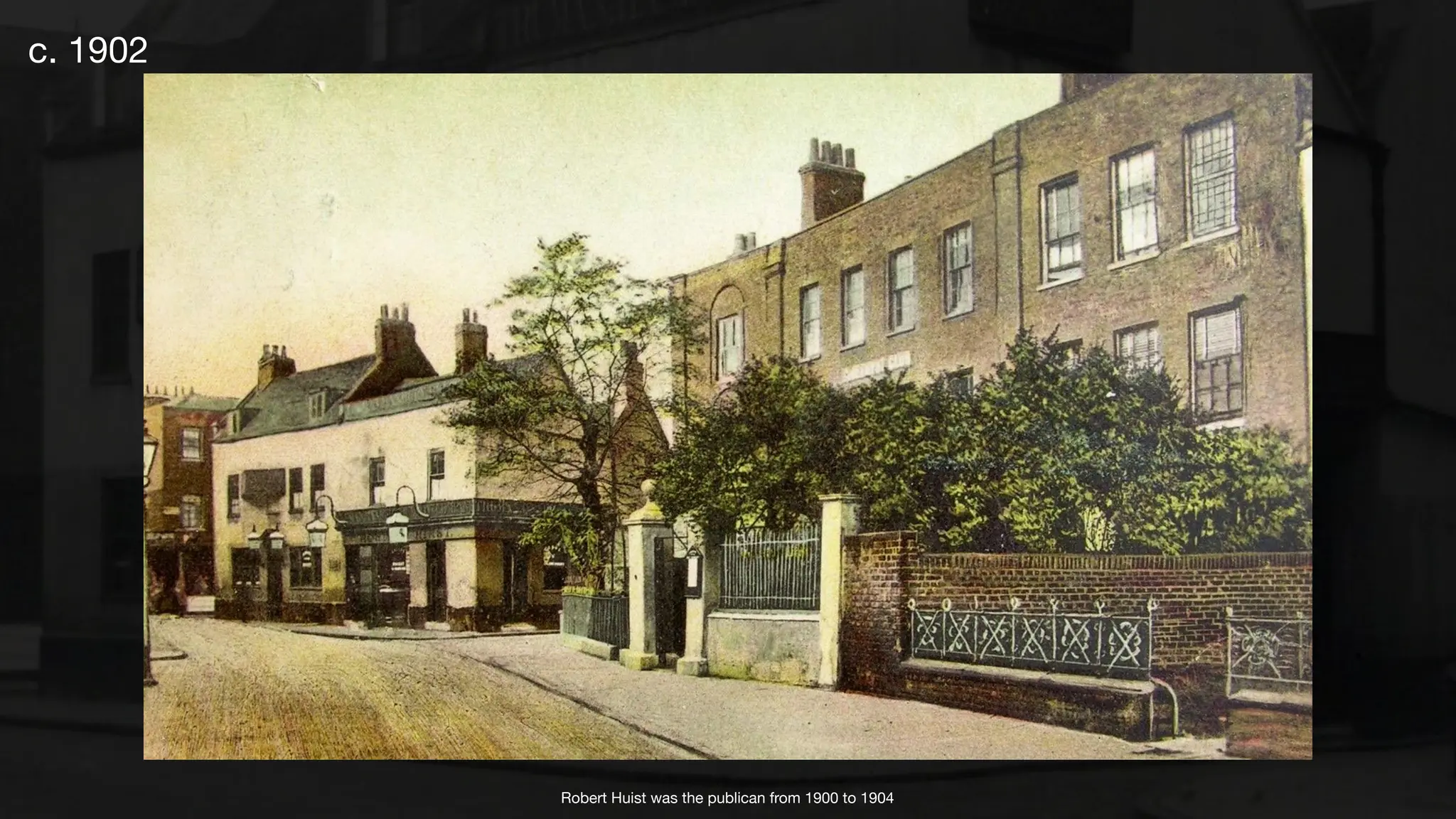
c. 1902
Robert Huist was the publican from 1900 to 1904
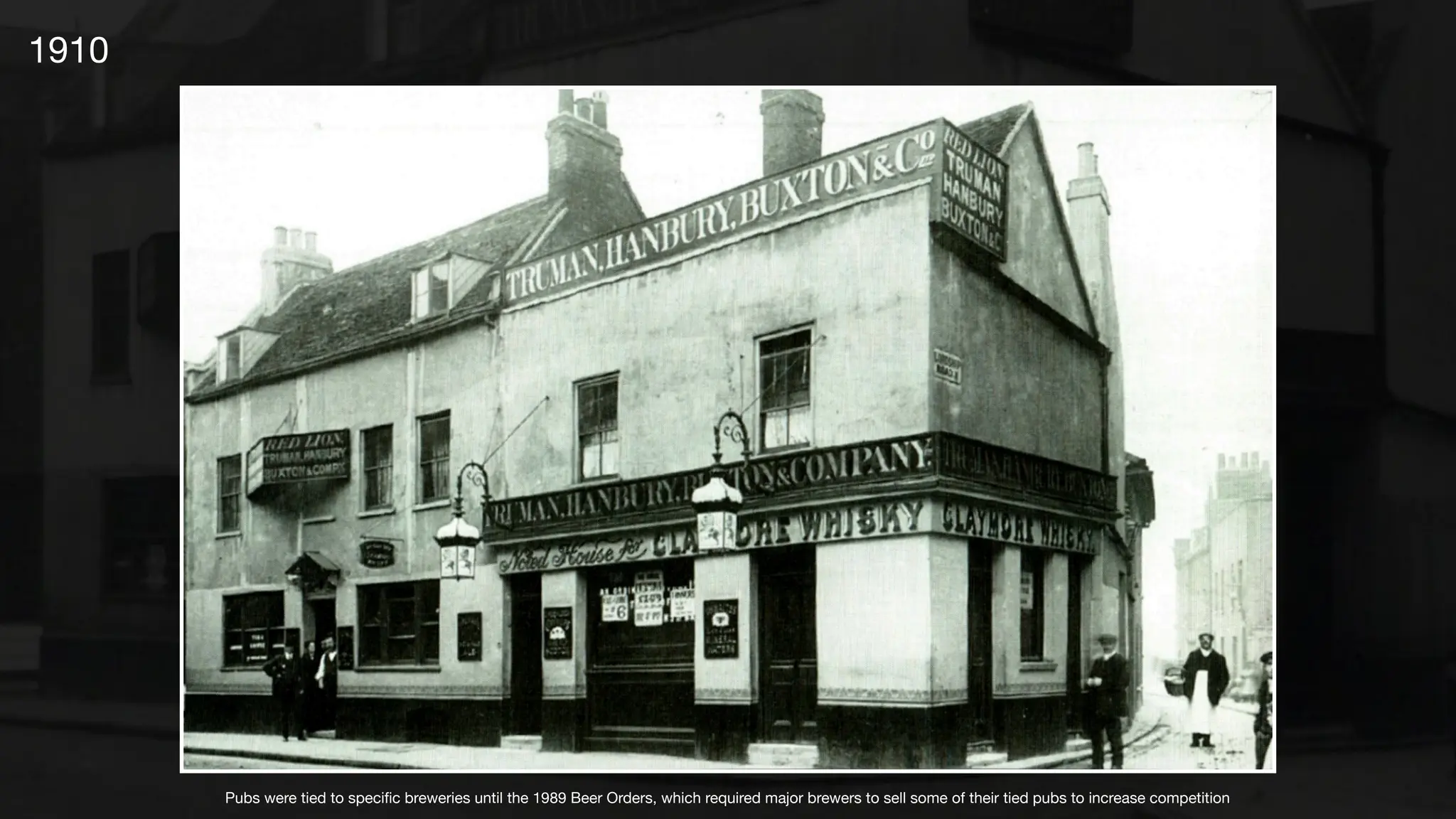
1910
Pubs were tied to specific breweries until the 1989 Beer Orders, which required major brewers to sell some of their tied pubs to increase competition
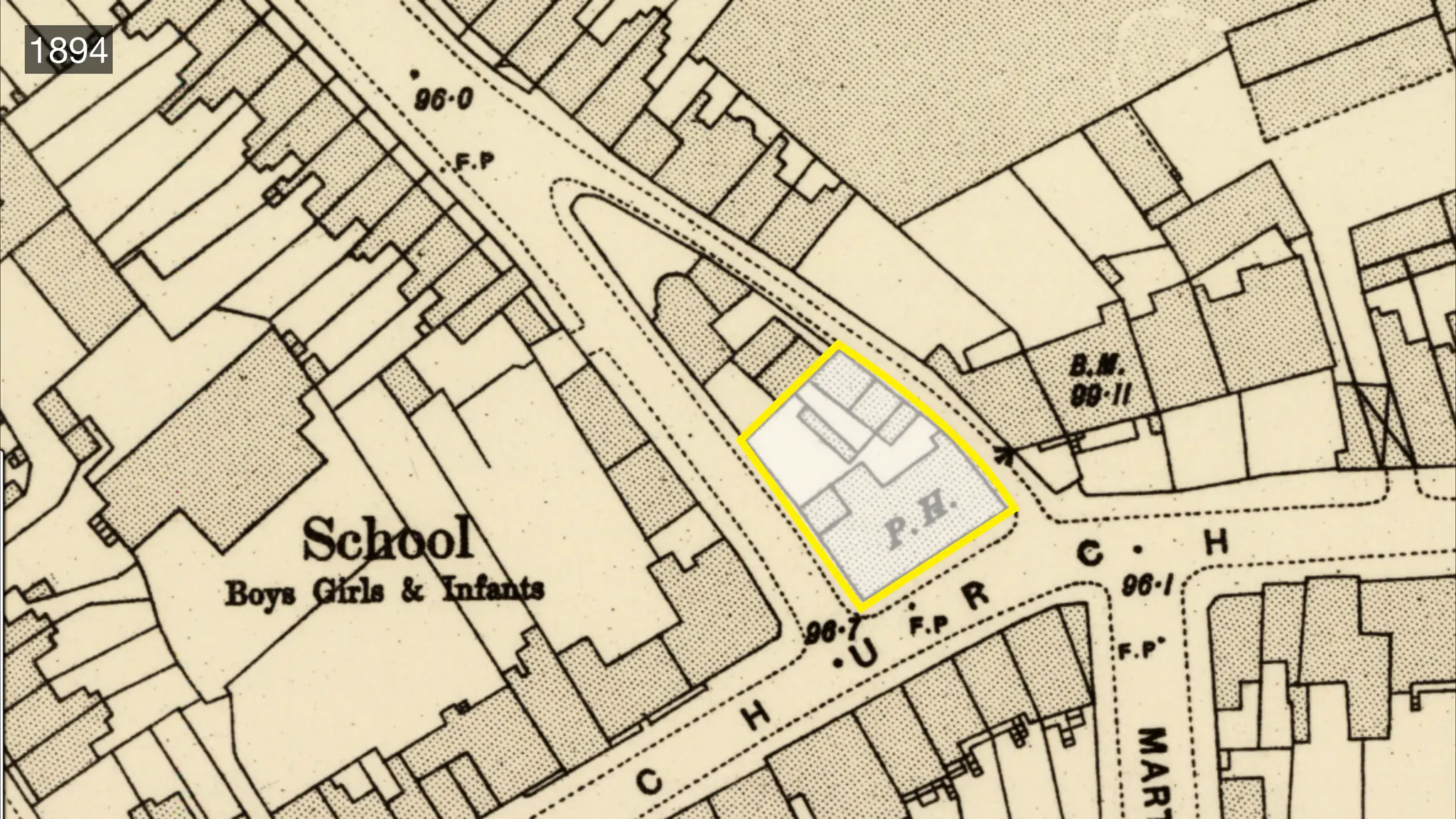
1894
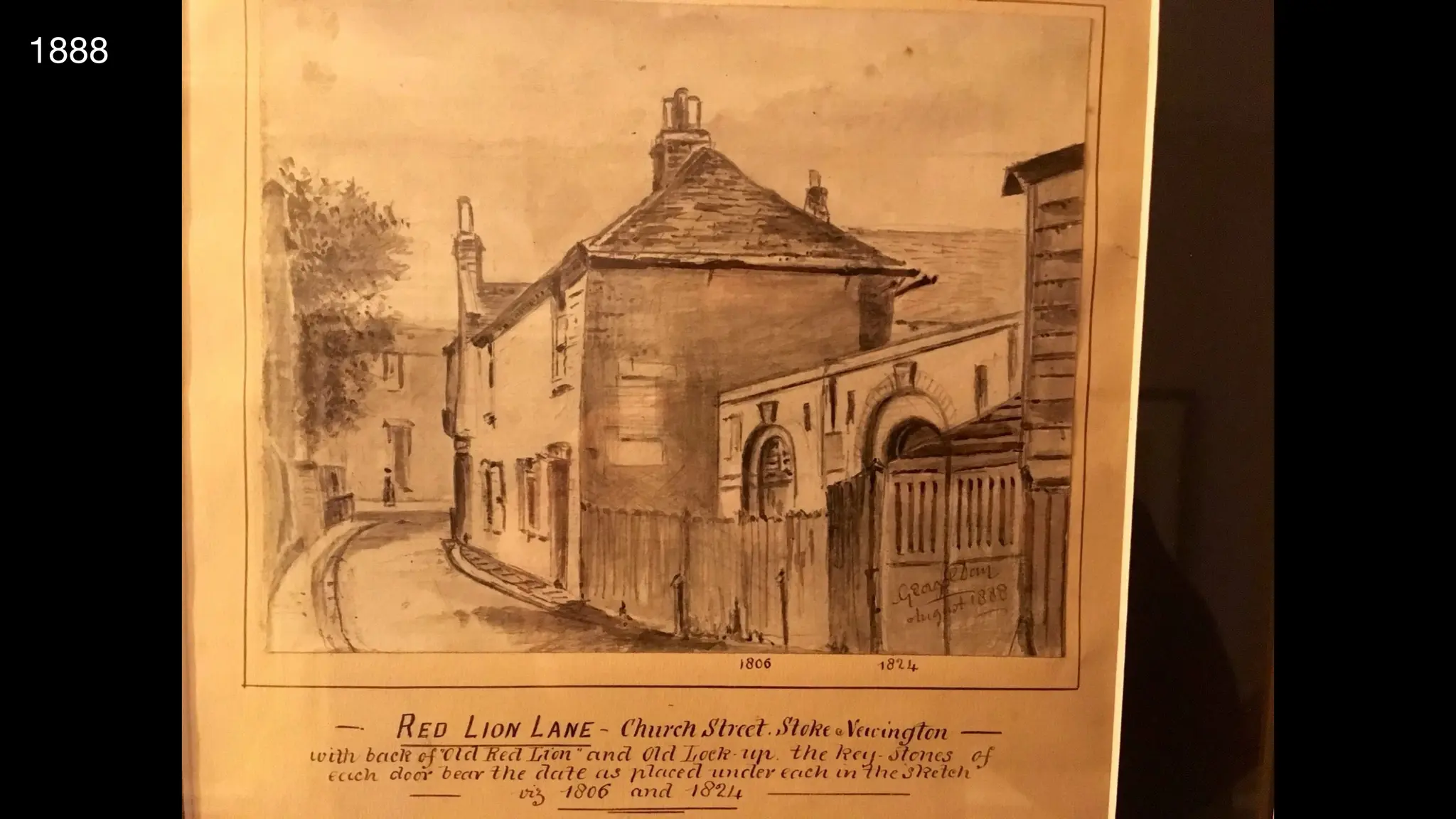
1888
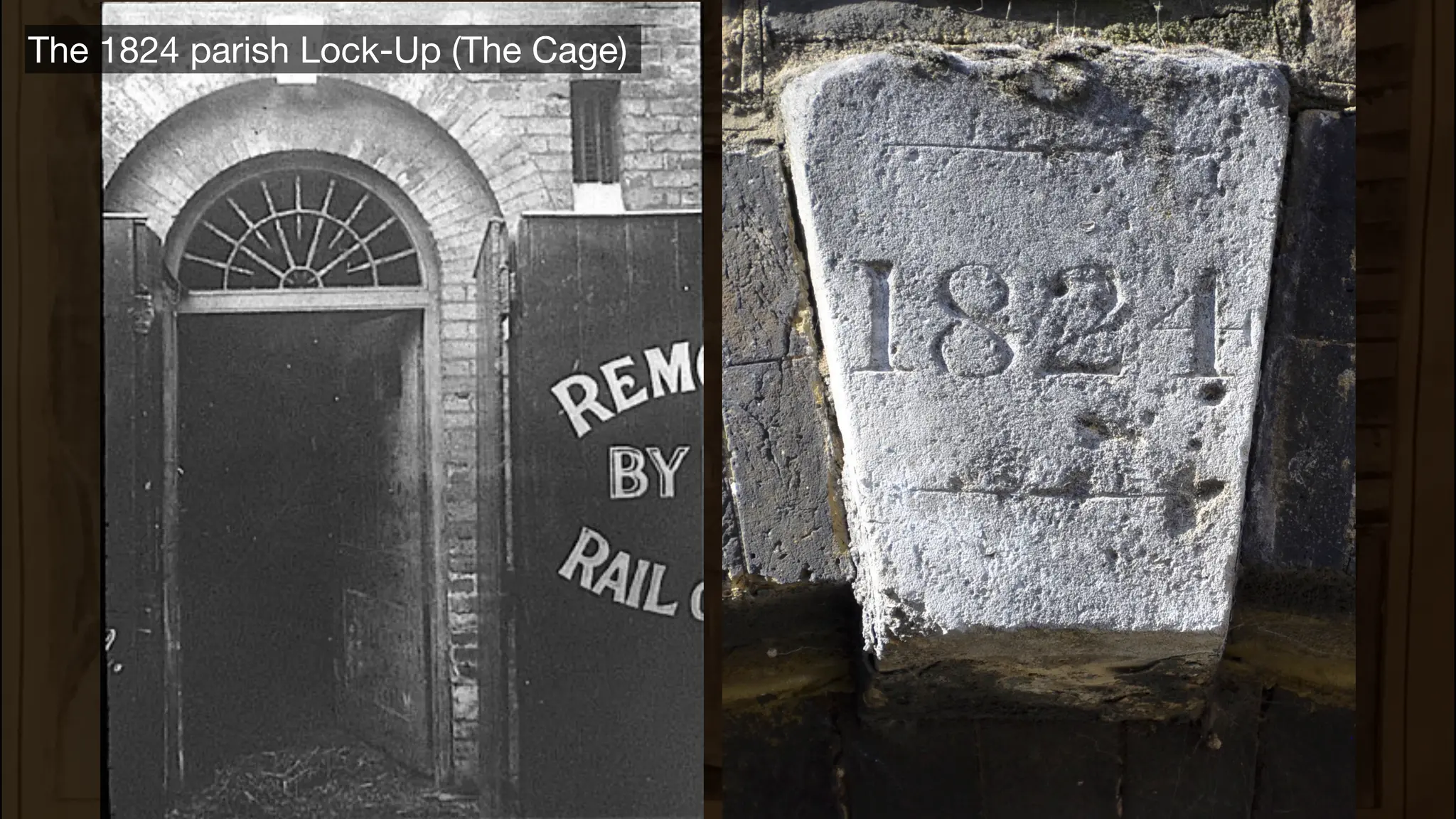
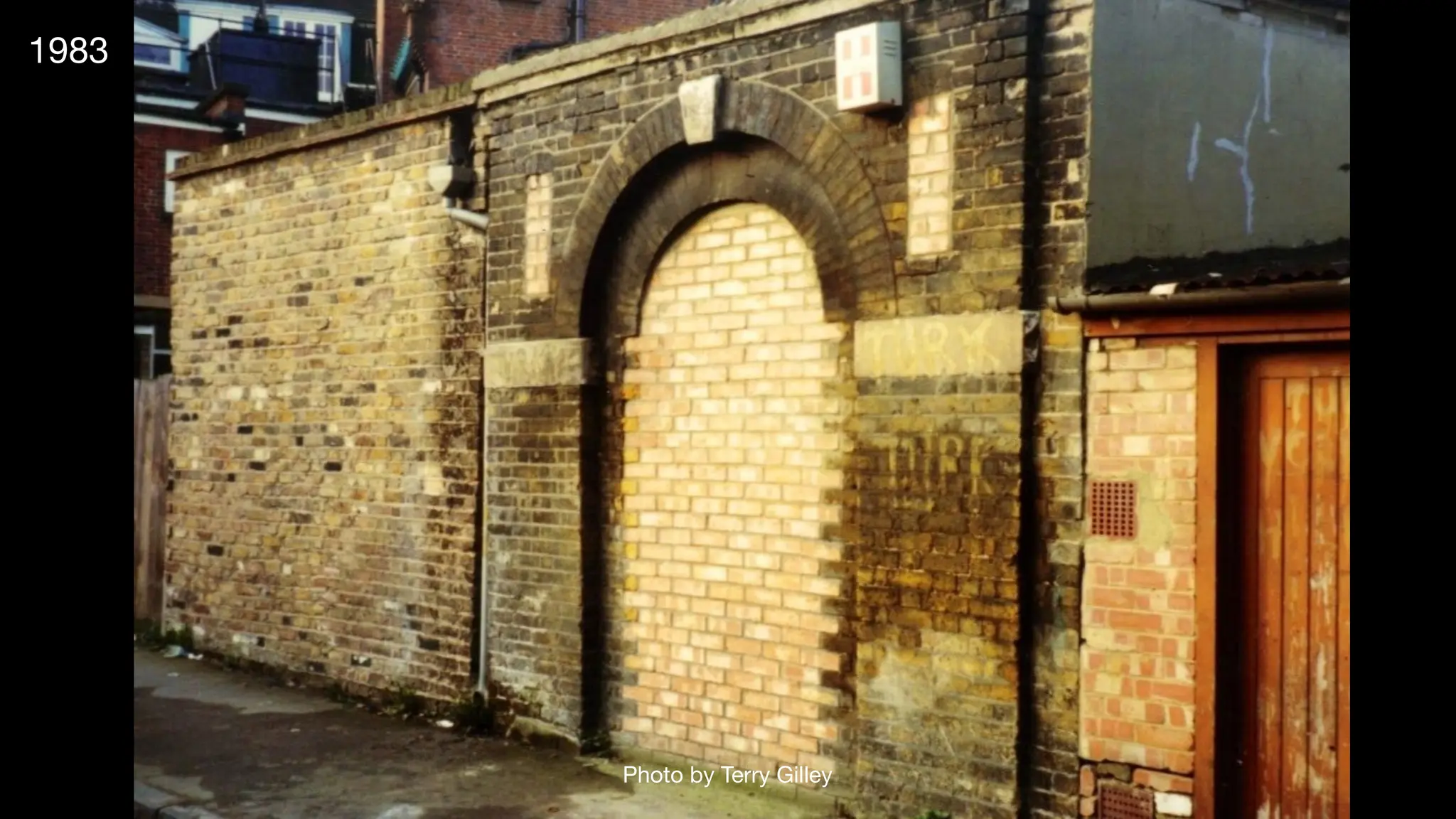
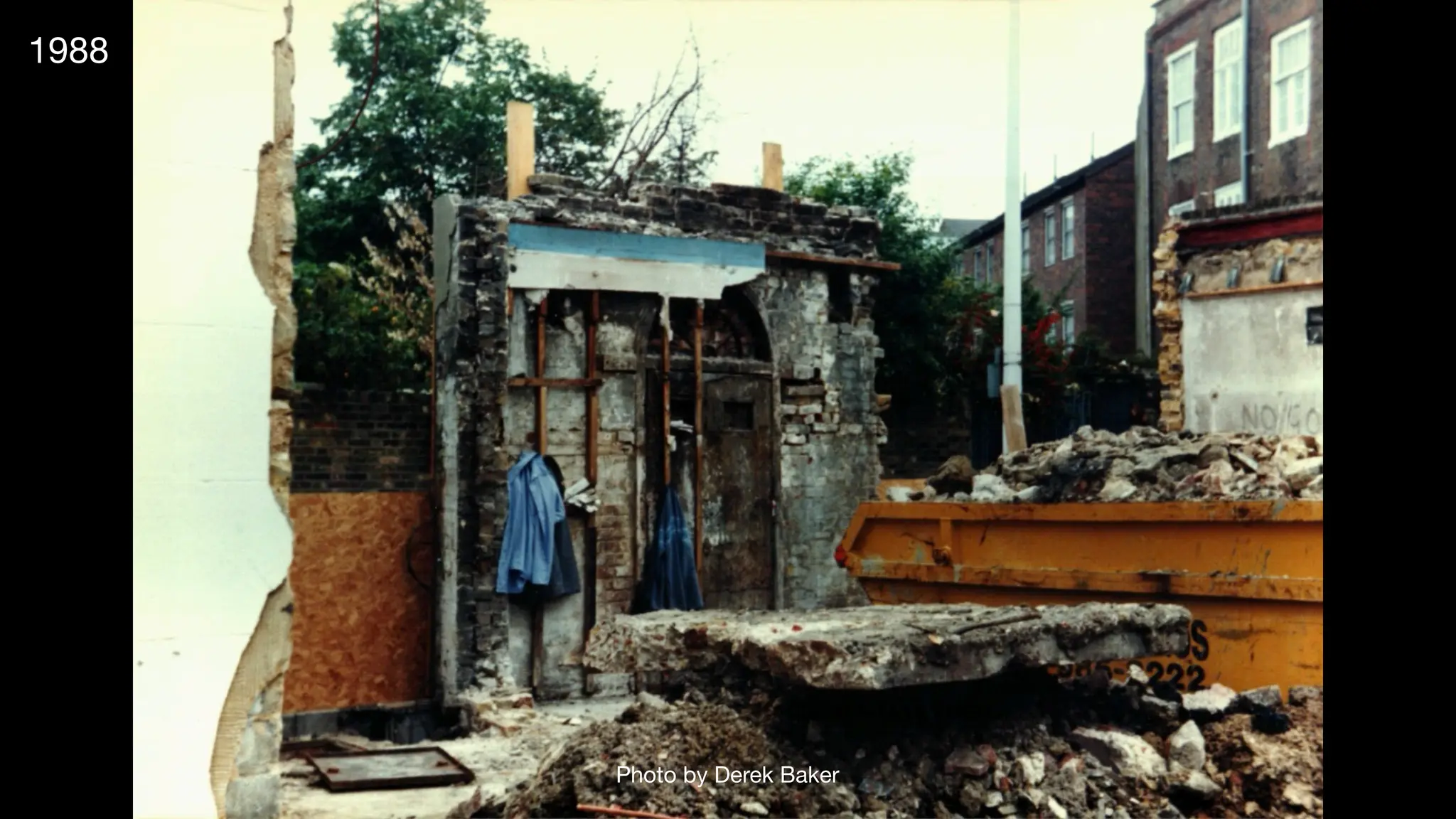
The 1824 parish Lock-Up (The Cage)
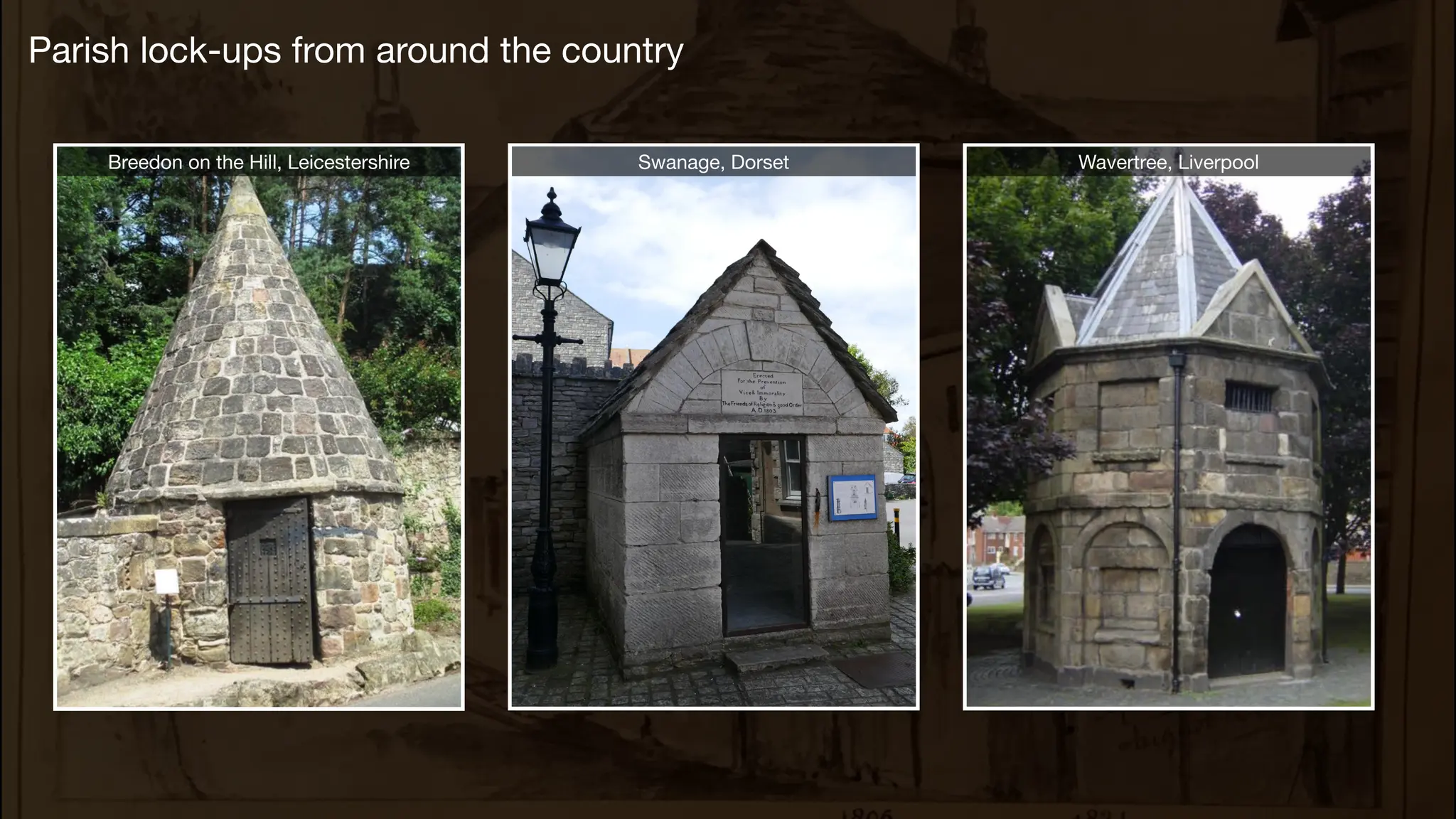
Parish lock-ups from around the country
Breedon on the Hill, Leicestershire Swanage, Dorset Wavertree, Liverpool
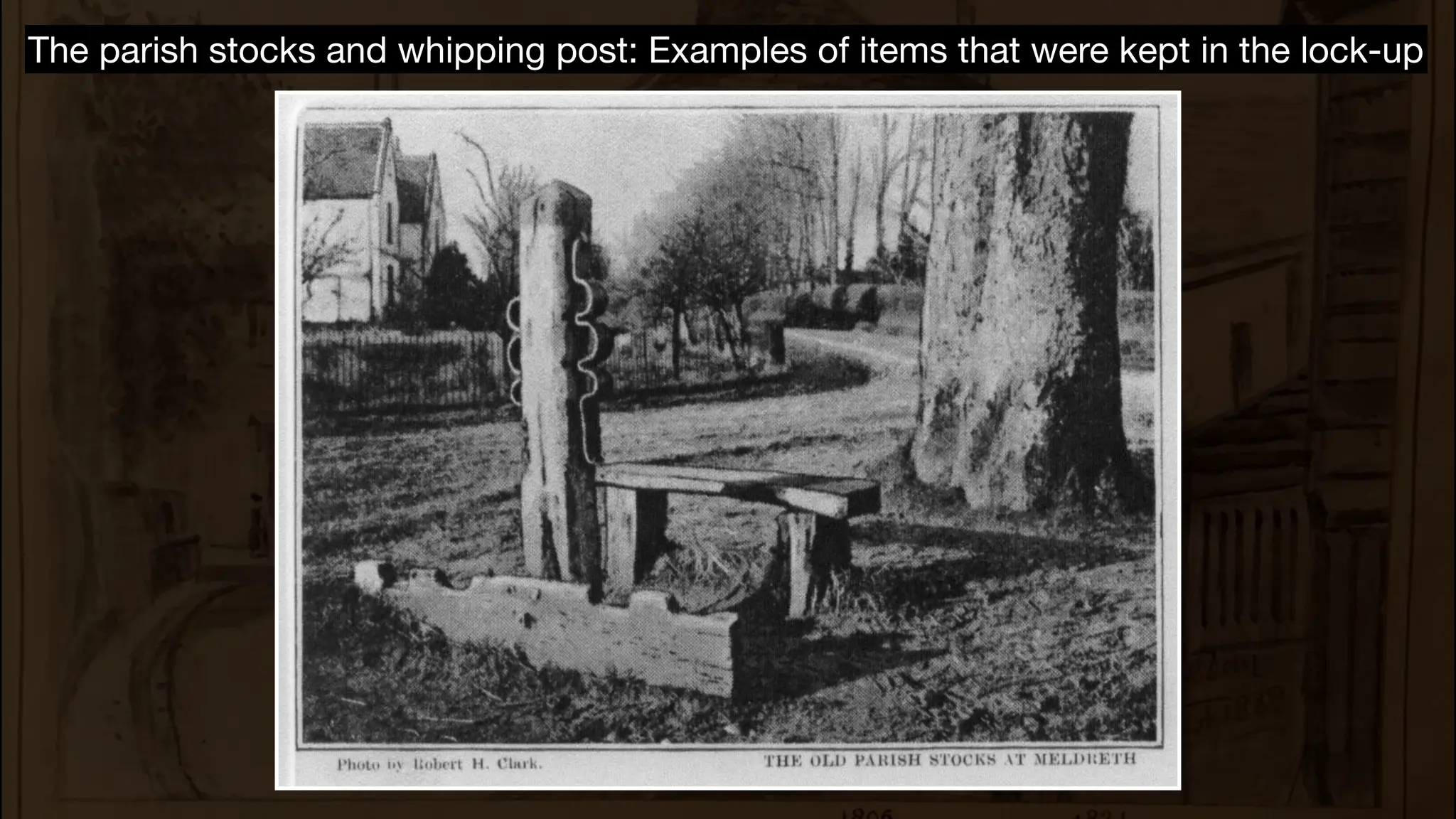
The parish stocks and whipping post: Examples of items that were kept in the lock-up
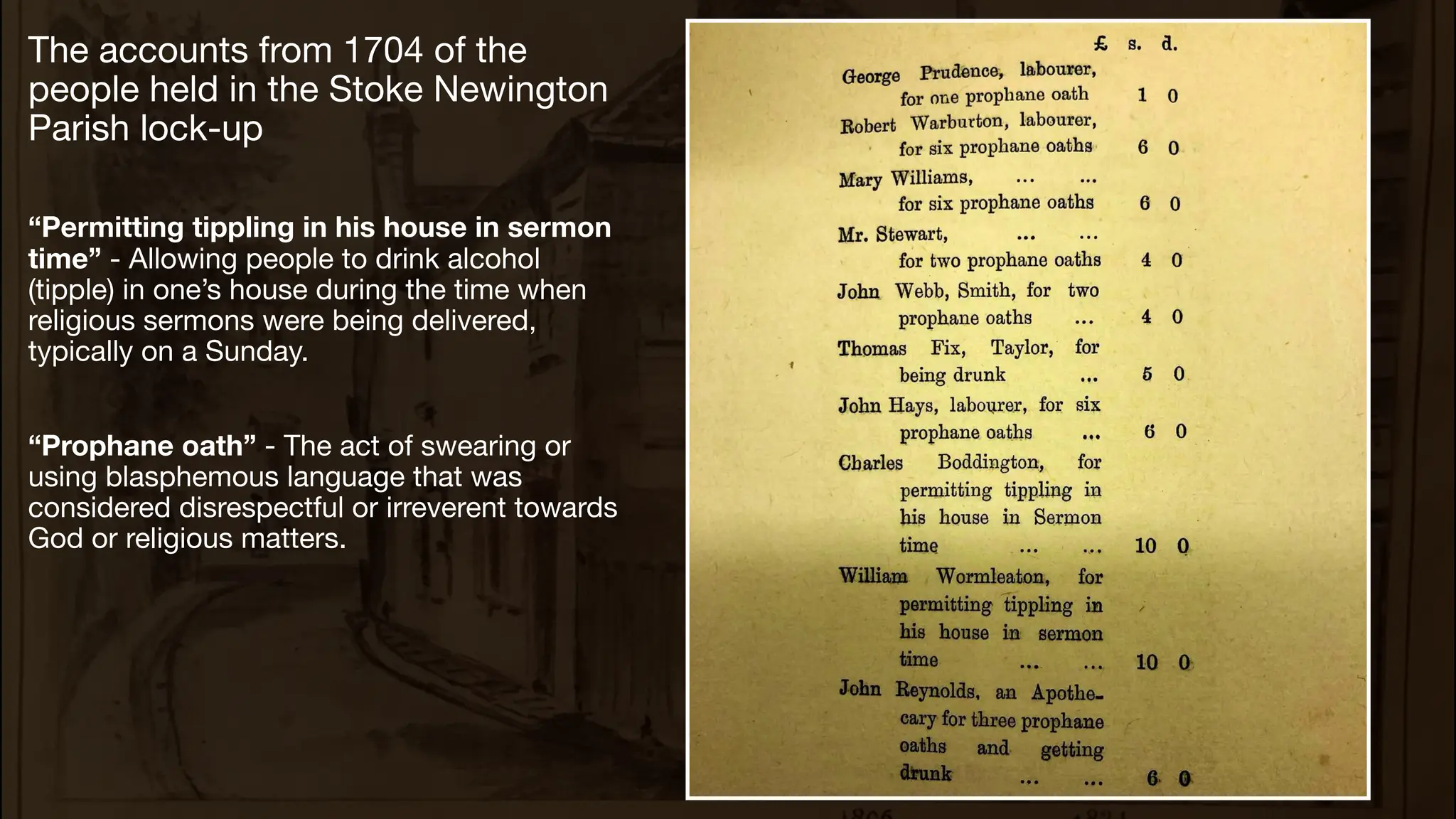
The accounts from 1704 of the
people held in the Stoke Newington
Parish lock-up
“Permitting tippling in his house in sermon
time” - Allowing people to drink alcohol
(tipple) in one’s house during the time when
religious sermons were being delivered,
typically on a Sunday.
“Prophane oath” - The act of swearing or
using blasphemous language that was
considered disrespectful or irreverent towards
God or religious matters.
Photo by Terry Gilley
1983
1988
Photo by Derek Baker
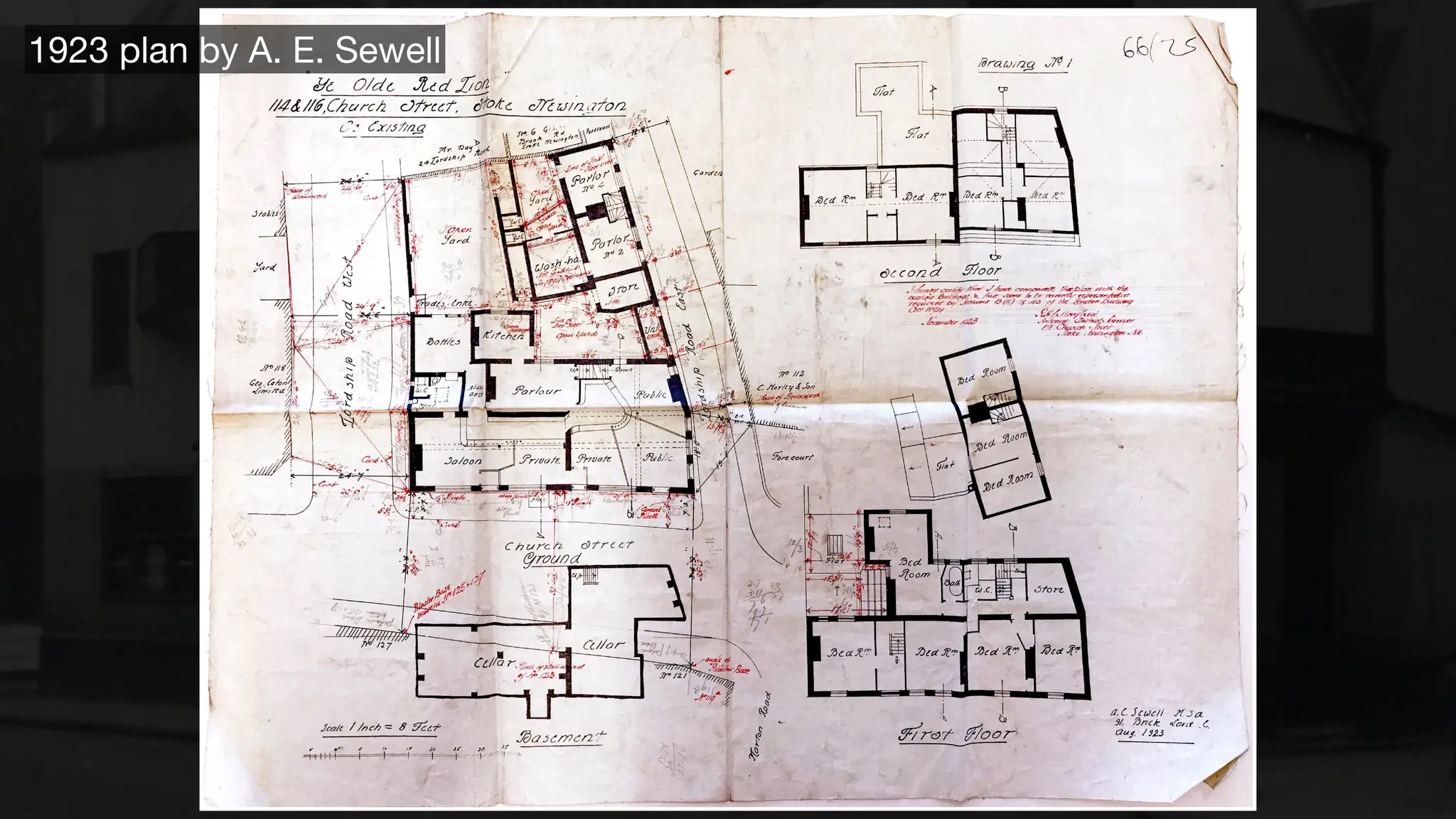
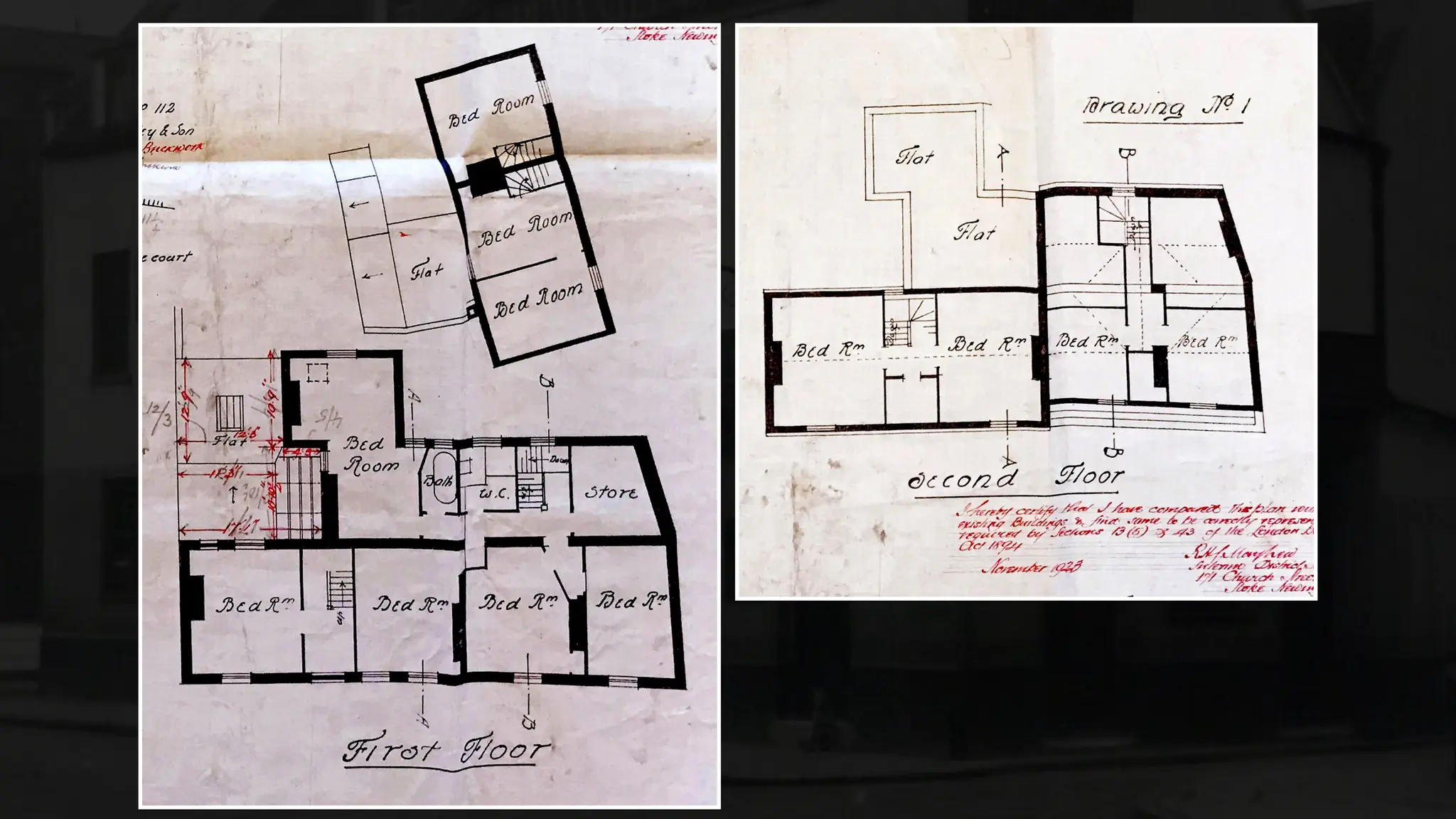
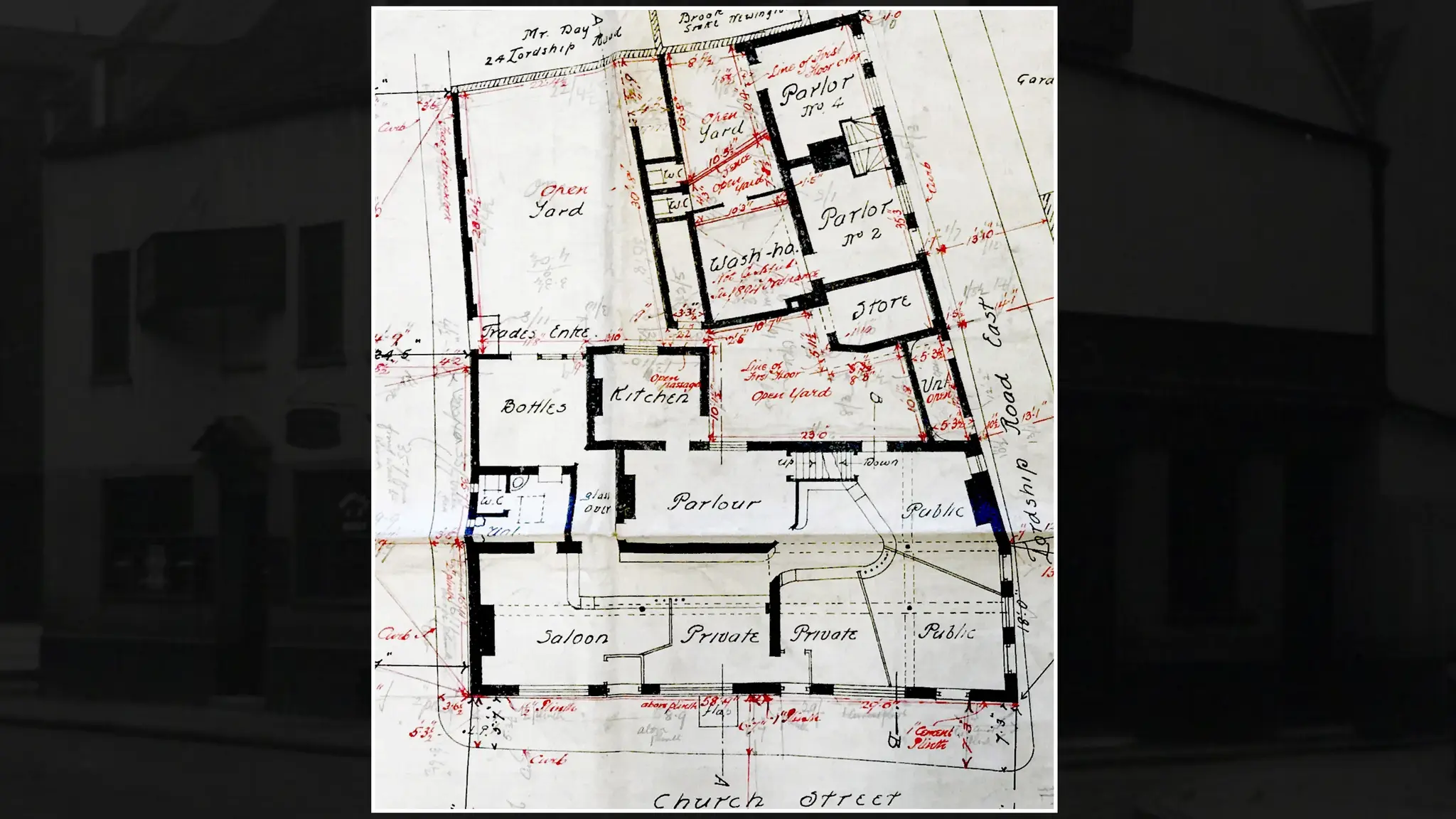
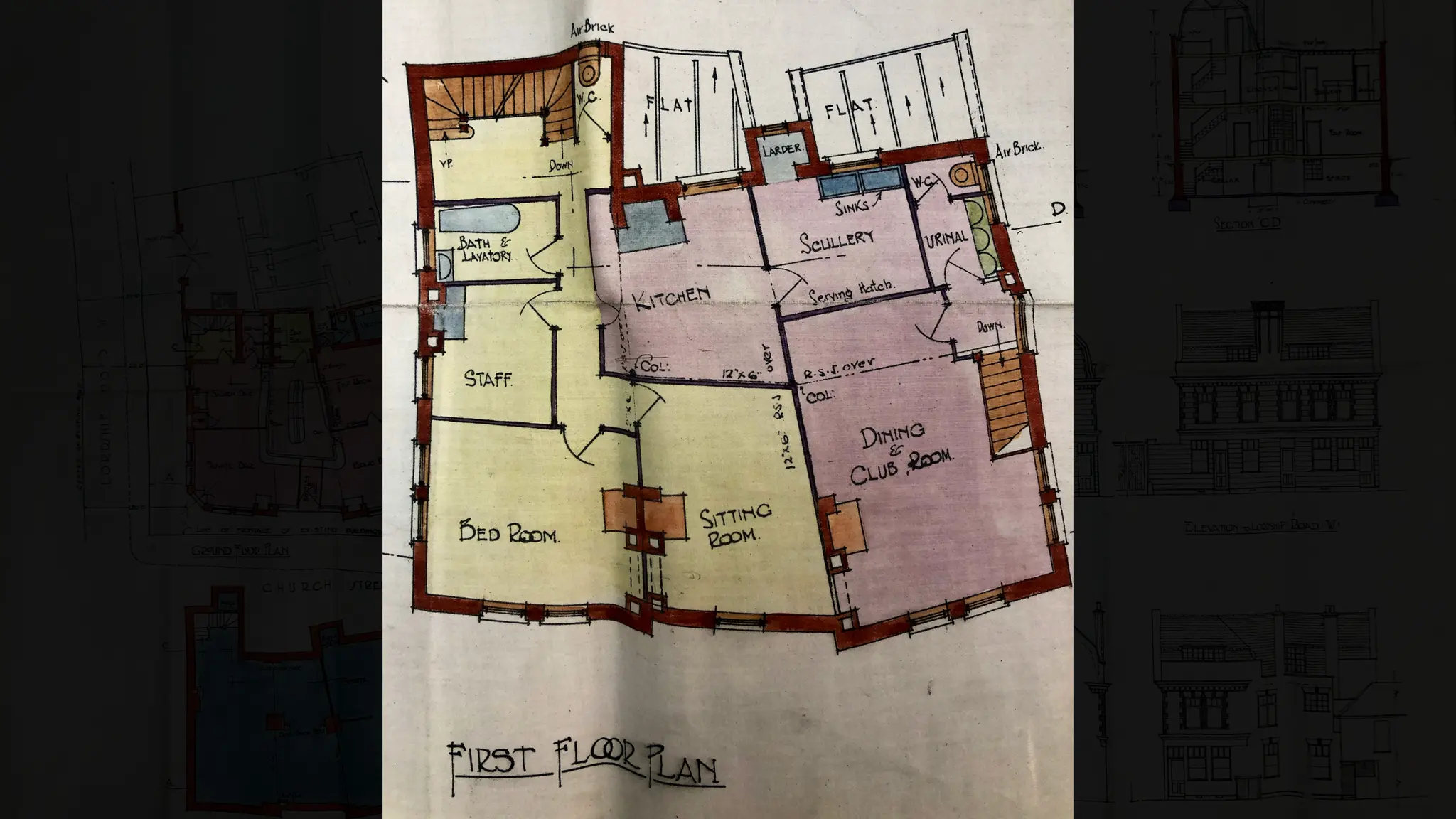
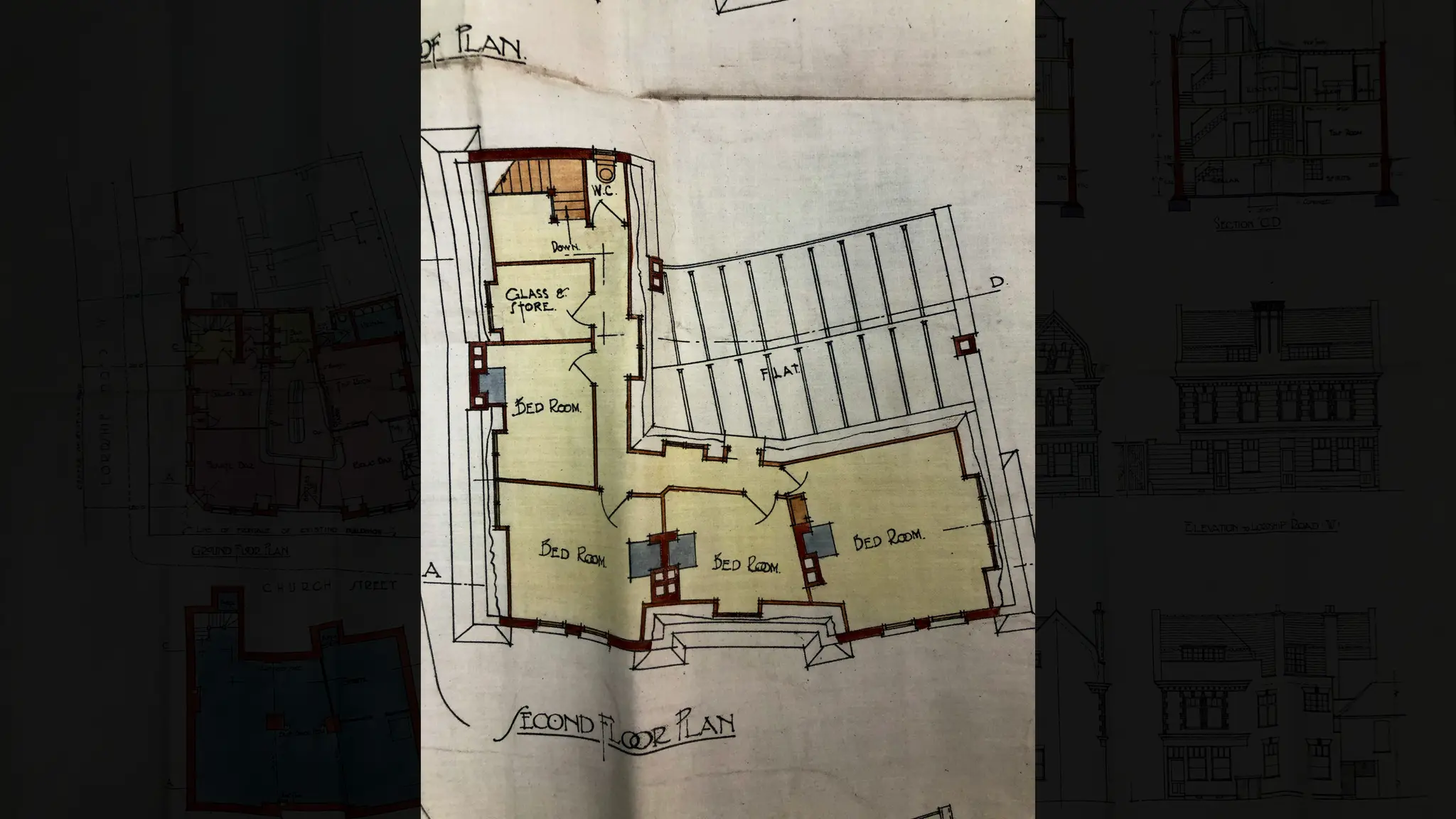
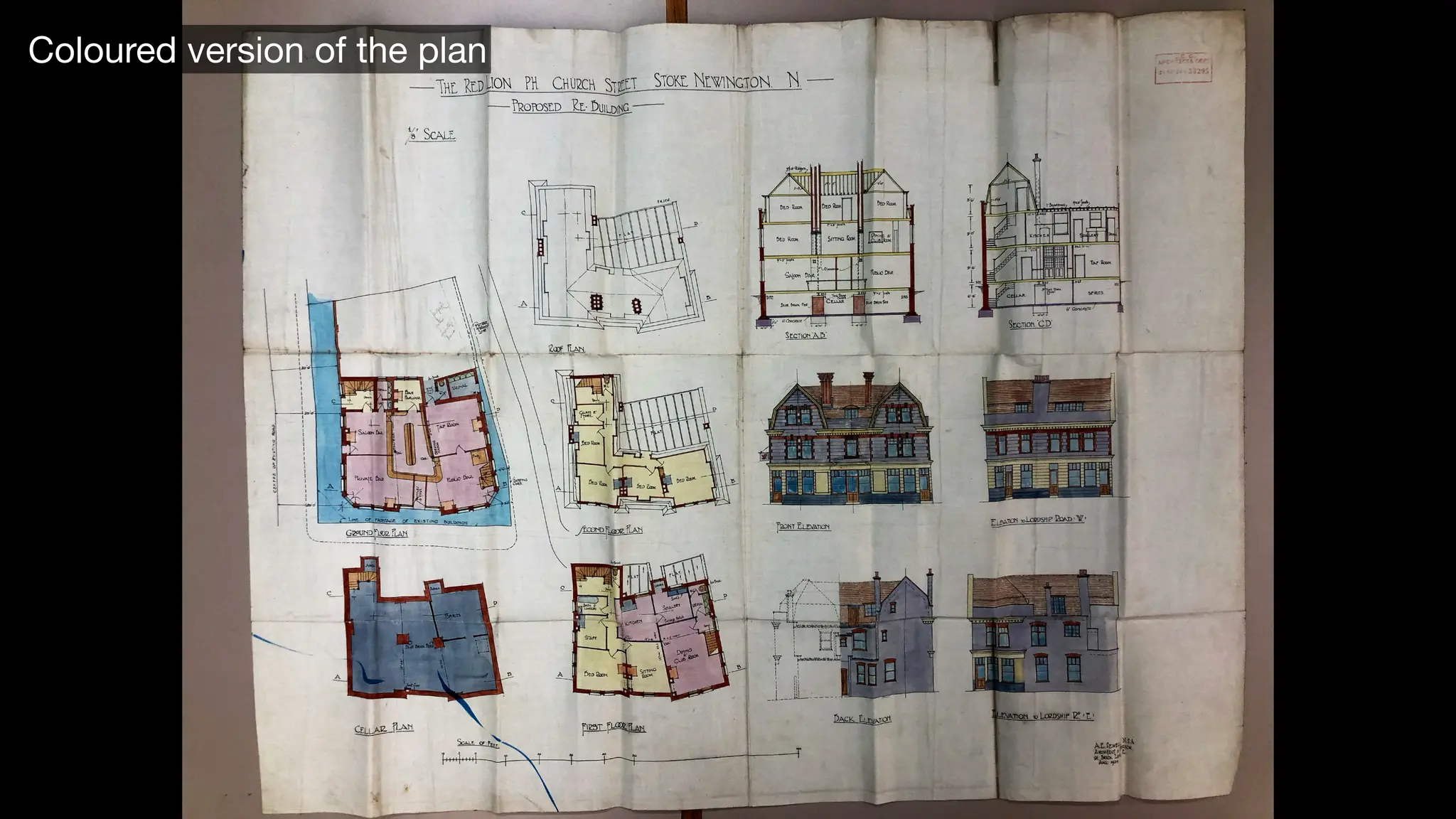
1923 plan by A. E. Sewell
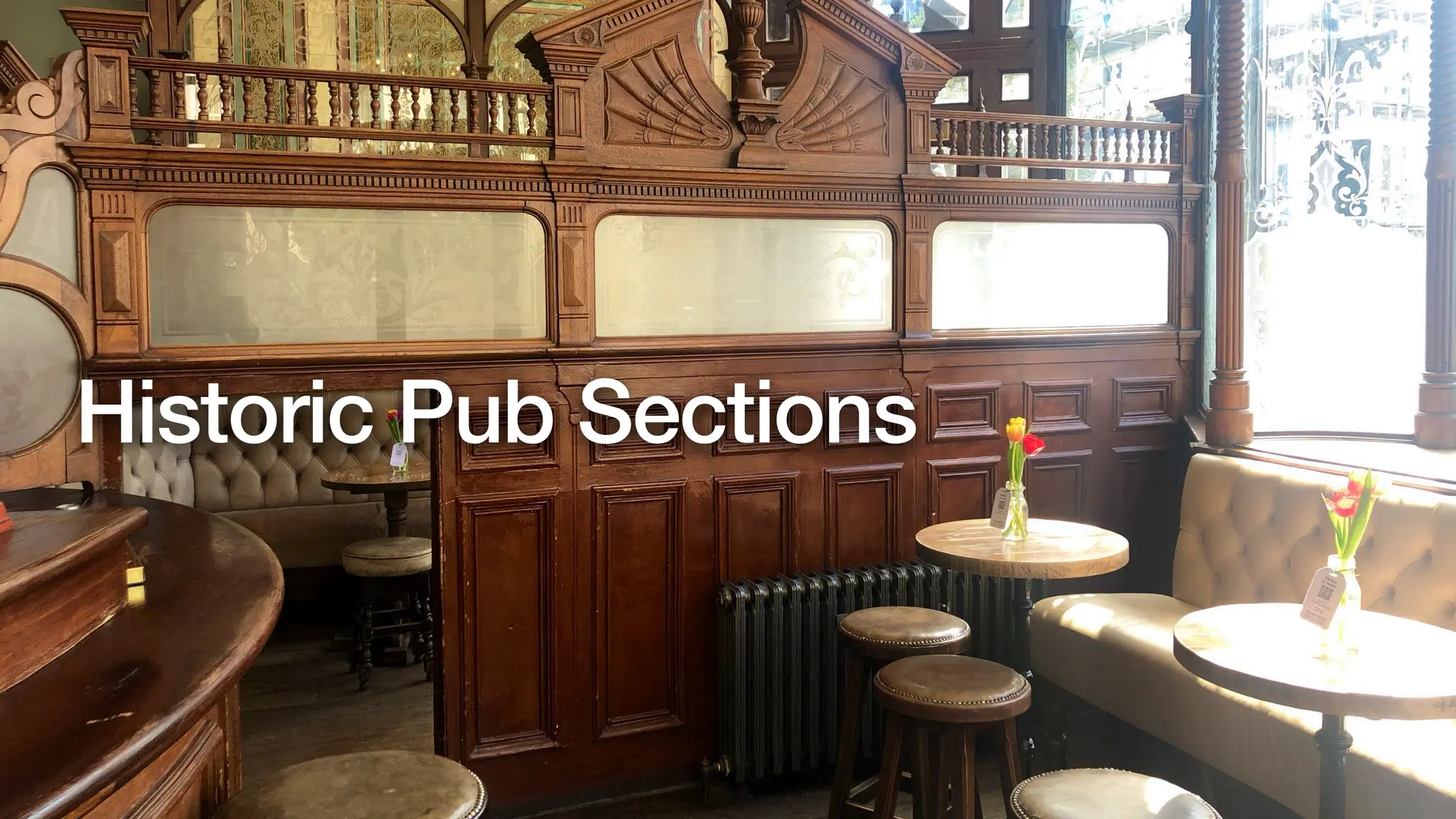
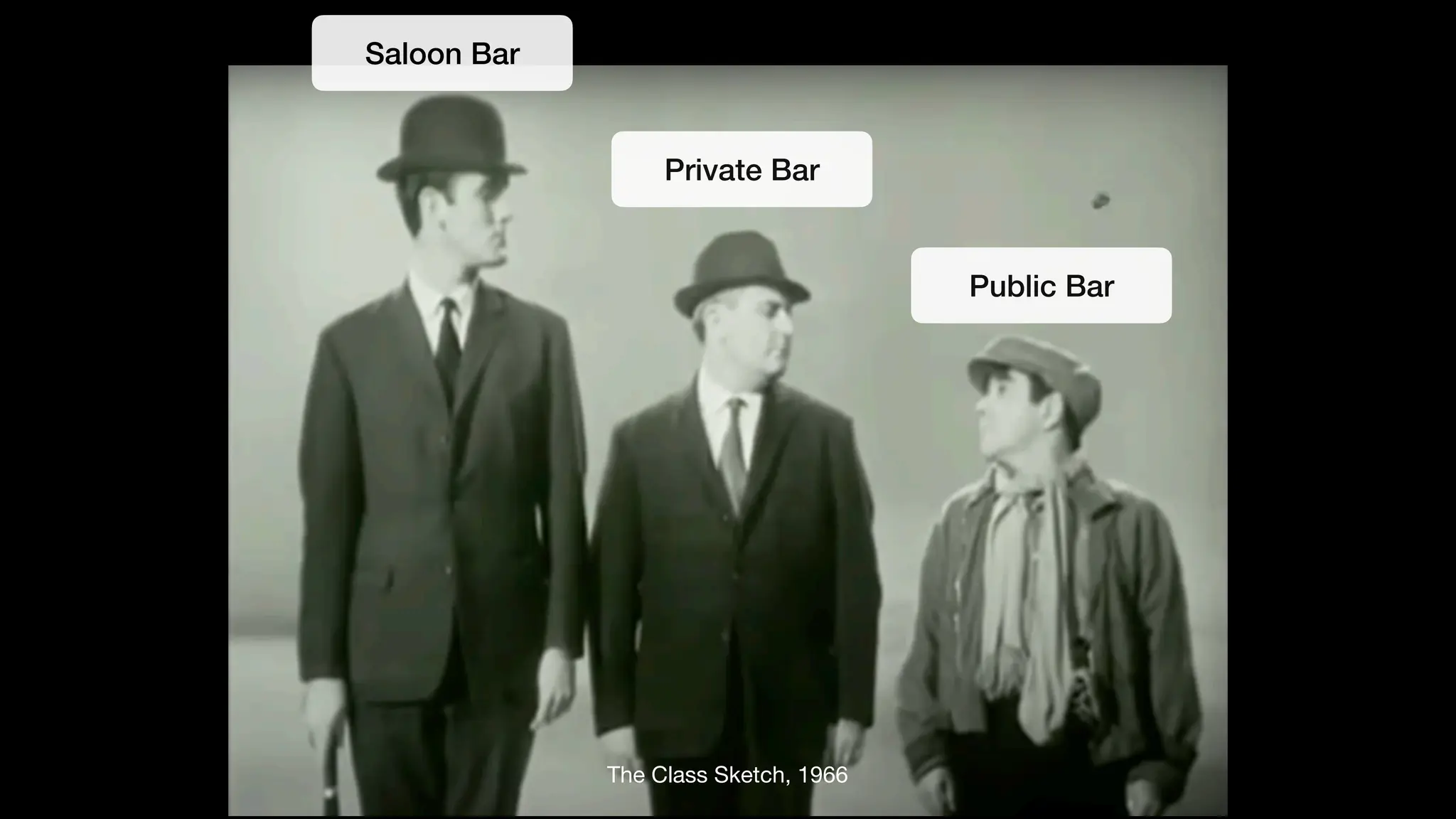
Historic Pub Sections
Saloon Bar
Private Bar
Public Bar
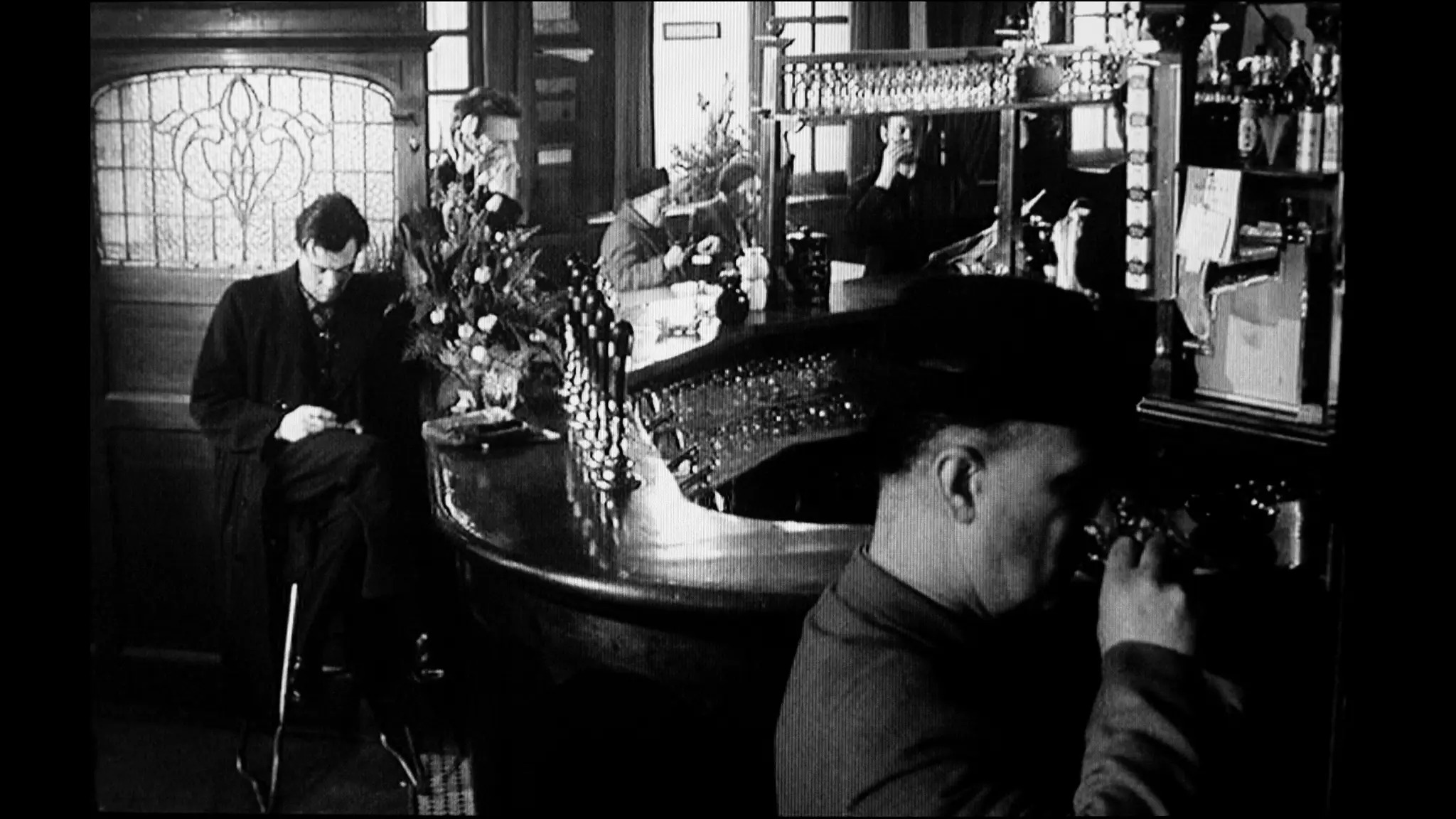
The Class Sketch, 1966
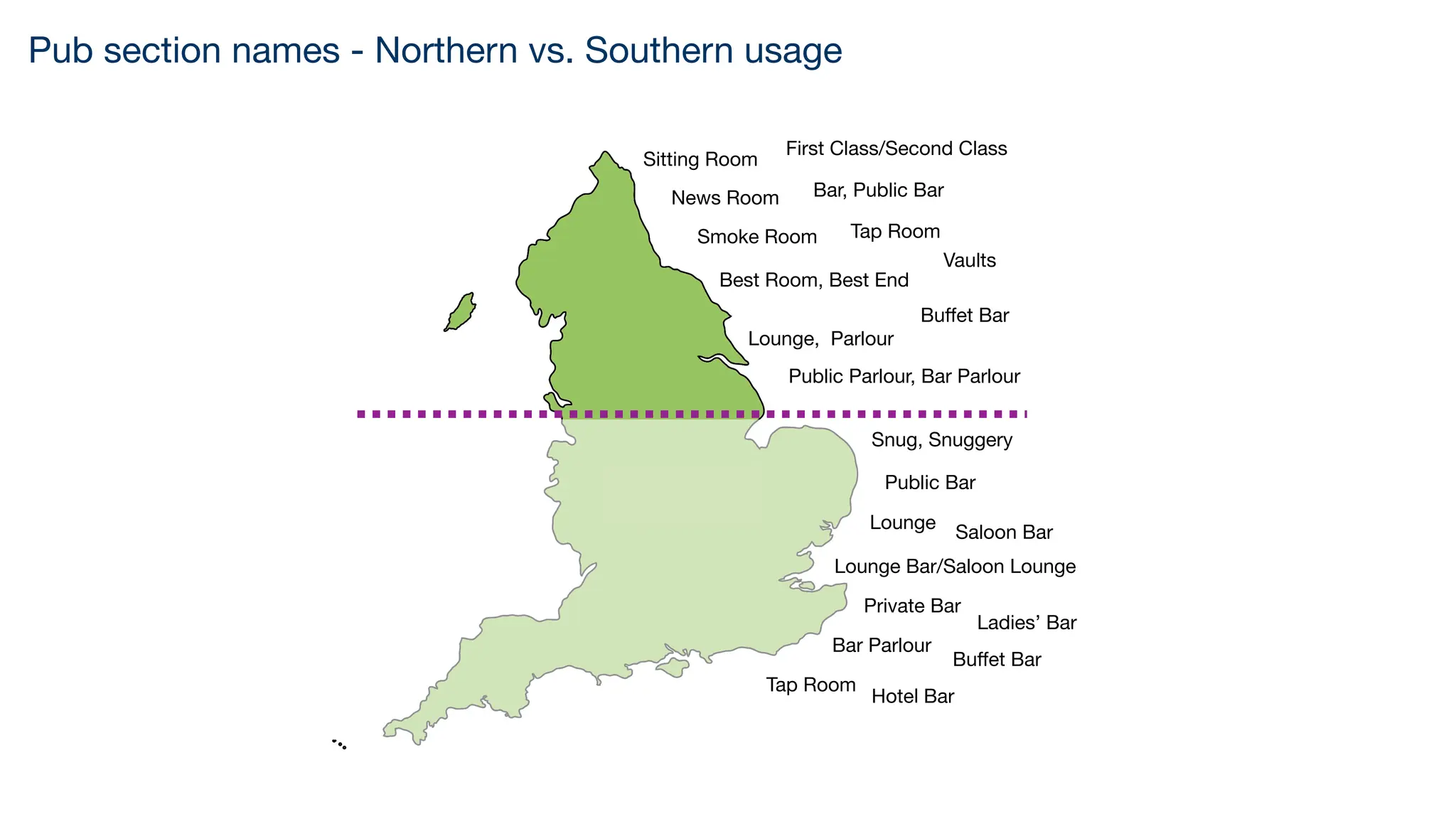
Bar, Public Bar
Vaults
Smoke Room Tap Room
Lounge, Parlour
Best Room, Best End
Snug, Snuggery
News Room
Buffet Bar
Sitting Room
First Class/Second Class
Public Bar
Saloon Bar
Lounge
Lounge Bar/Saloon Lounge
Private Bar
Ladies’ Bar
Bar Parlour
Buffet Bar
Tap Room
Hotel Bar
Public Parlour, Bar Parlour
Pub section names - Northern vs. Southern usage
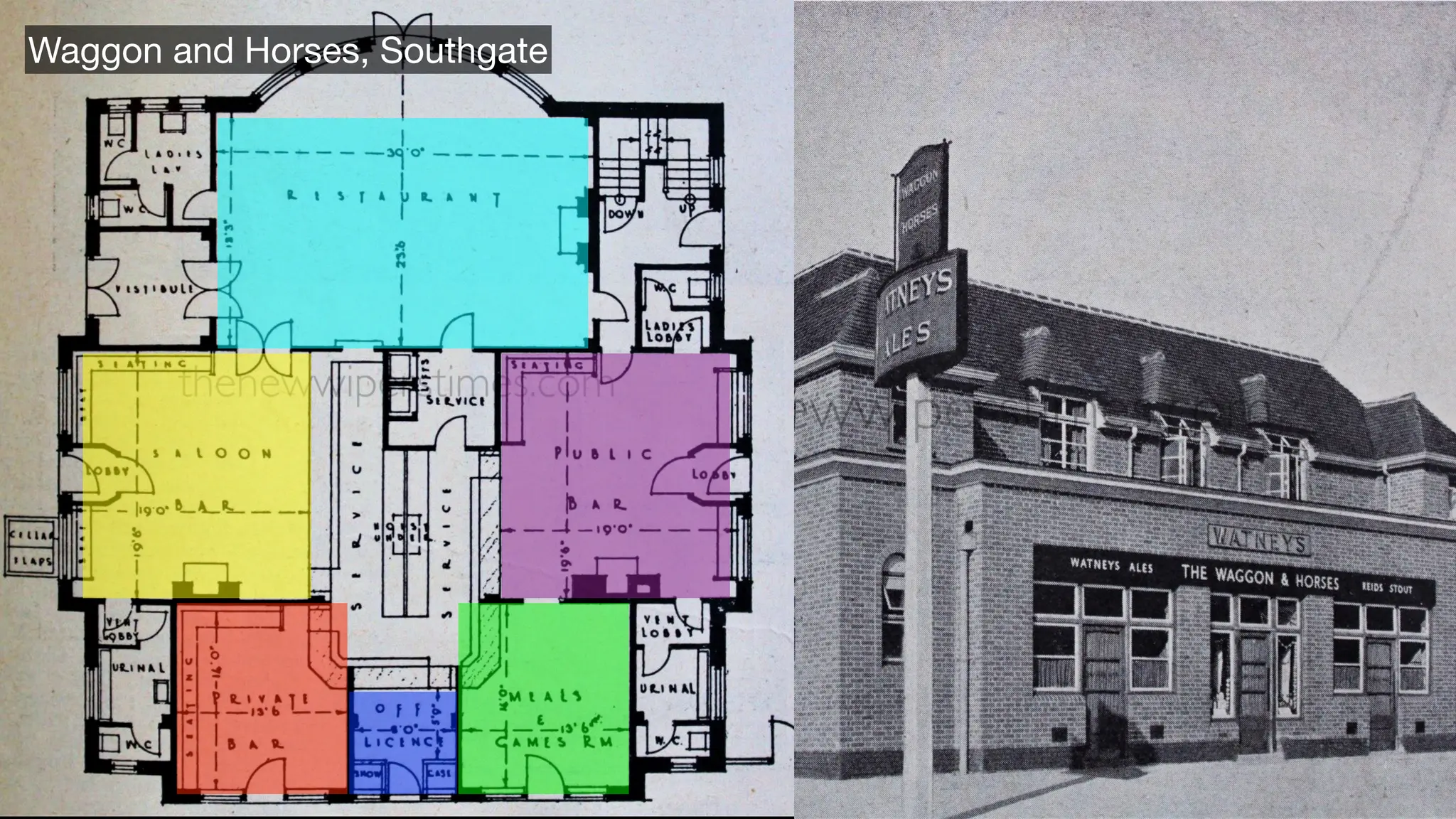
Waggon and Horses, Southgate
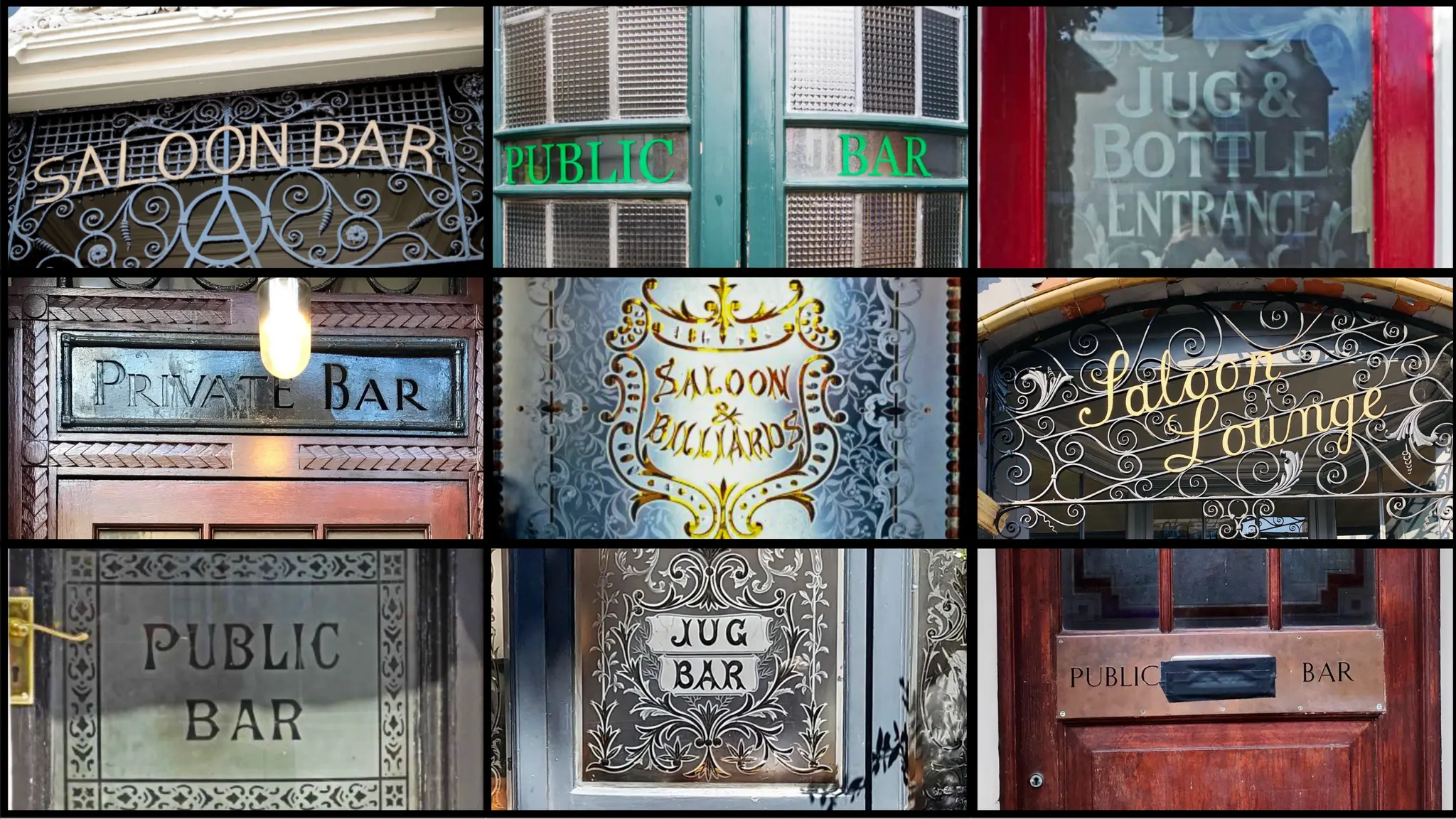
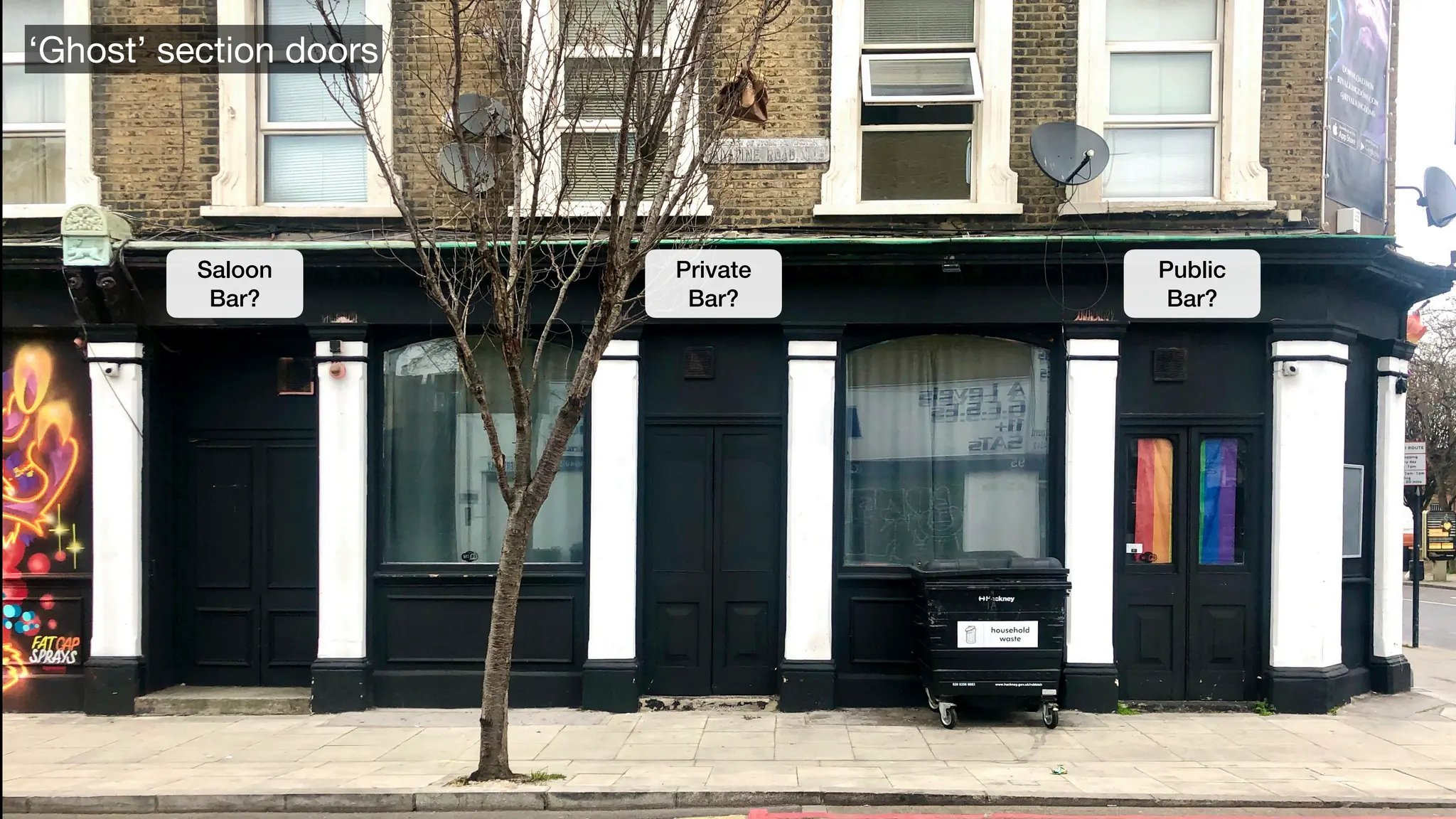
Saloon
Bar?
Public
Bar?
Private
Bar?
‘Ghost’ section doors
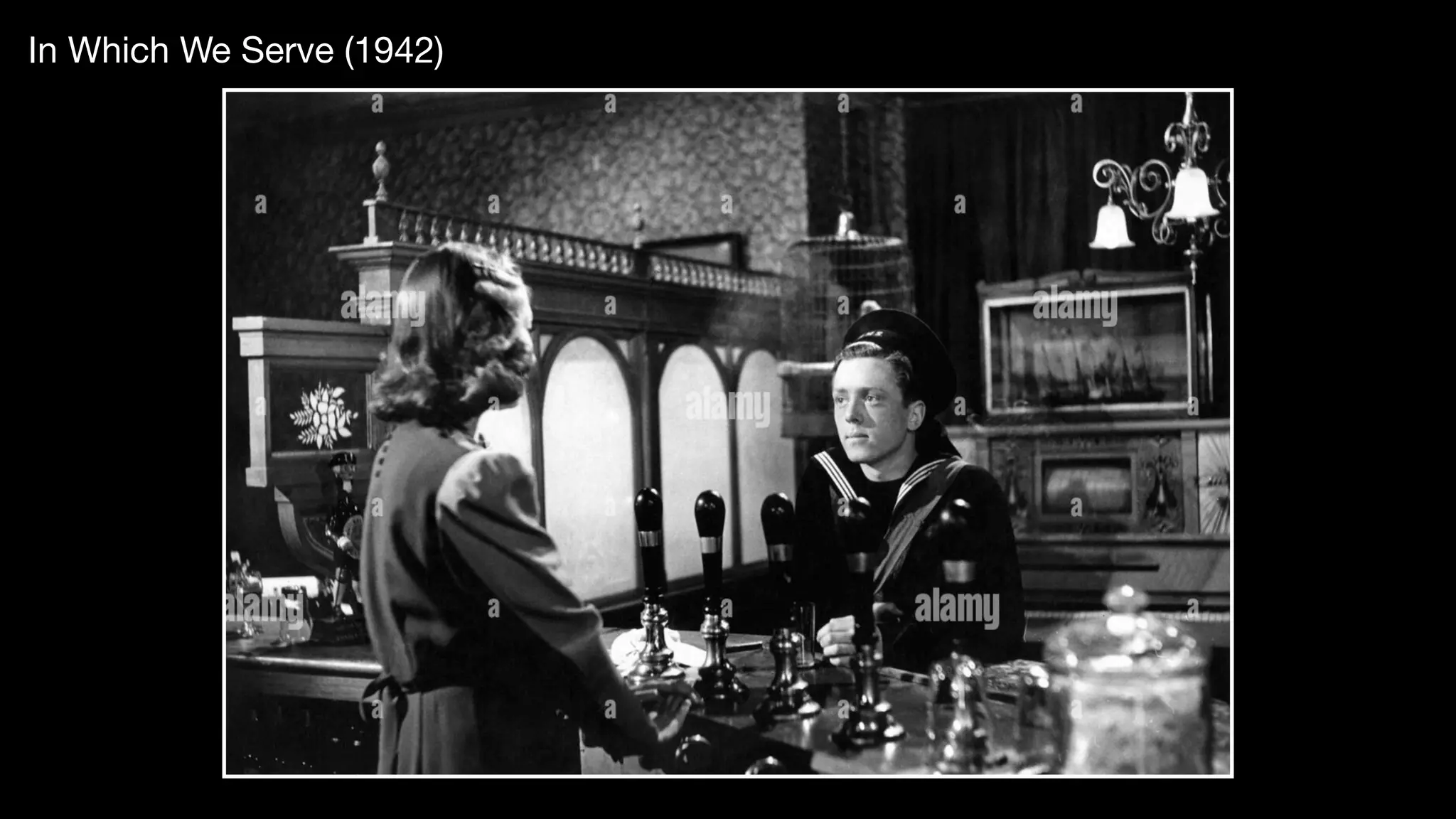
In Which We Serve (1942)
Fewer than 4% of existing pub
interior retain much historic value
Licence to Sell - The History and Heritage of the Public House, 2004
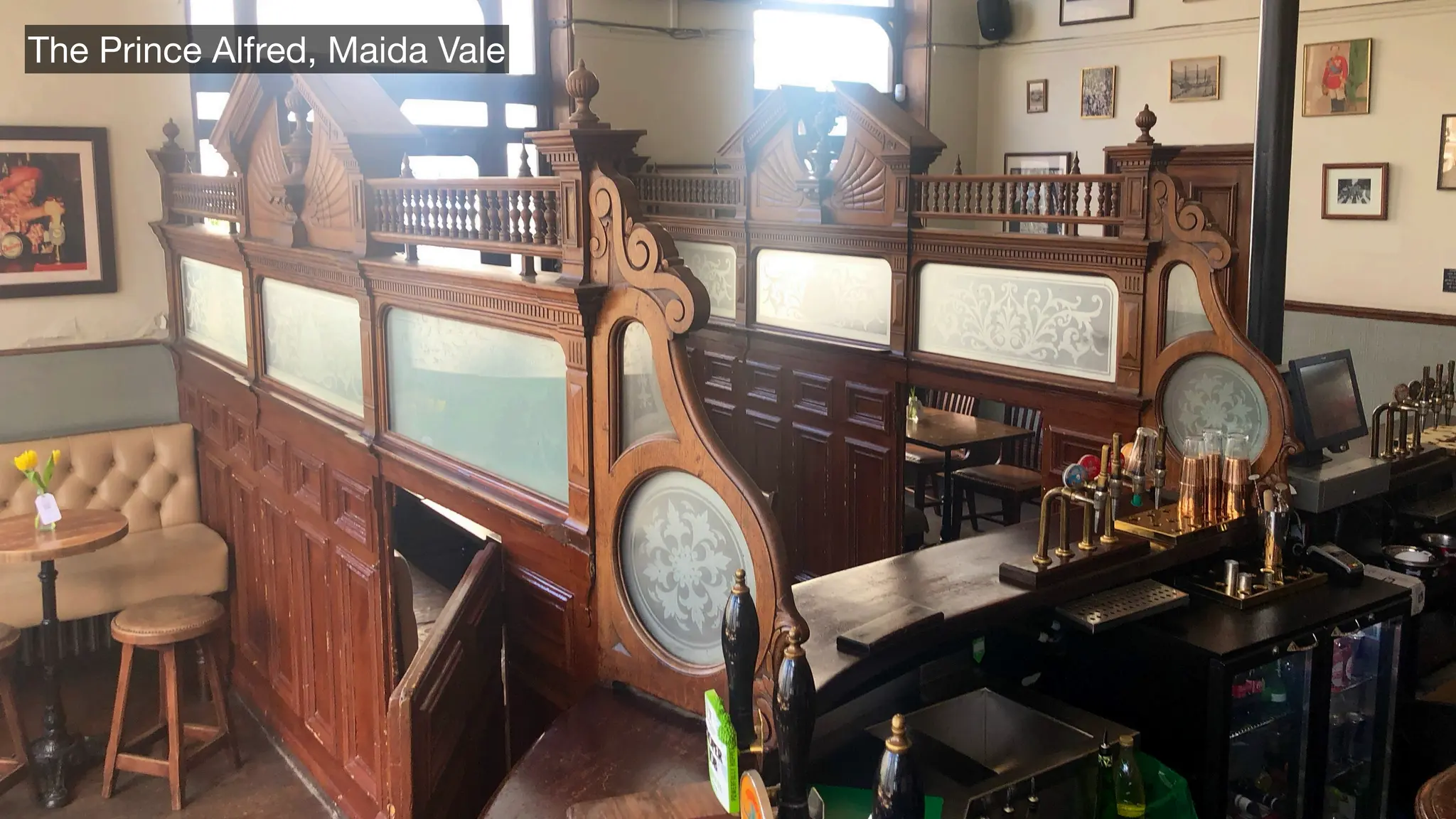
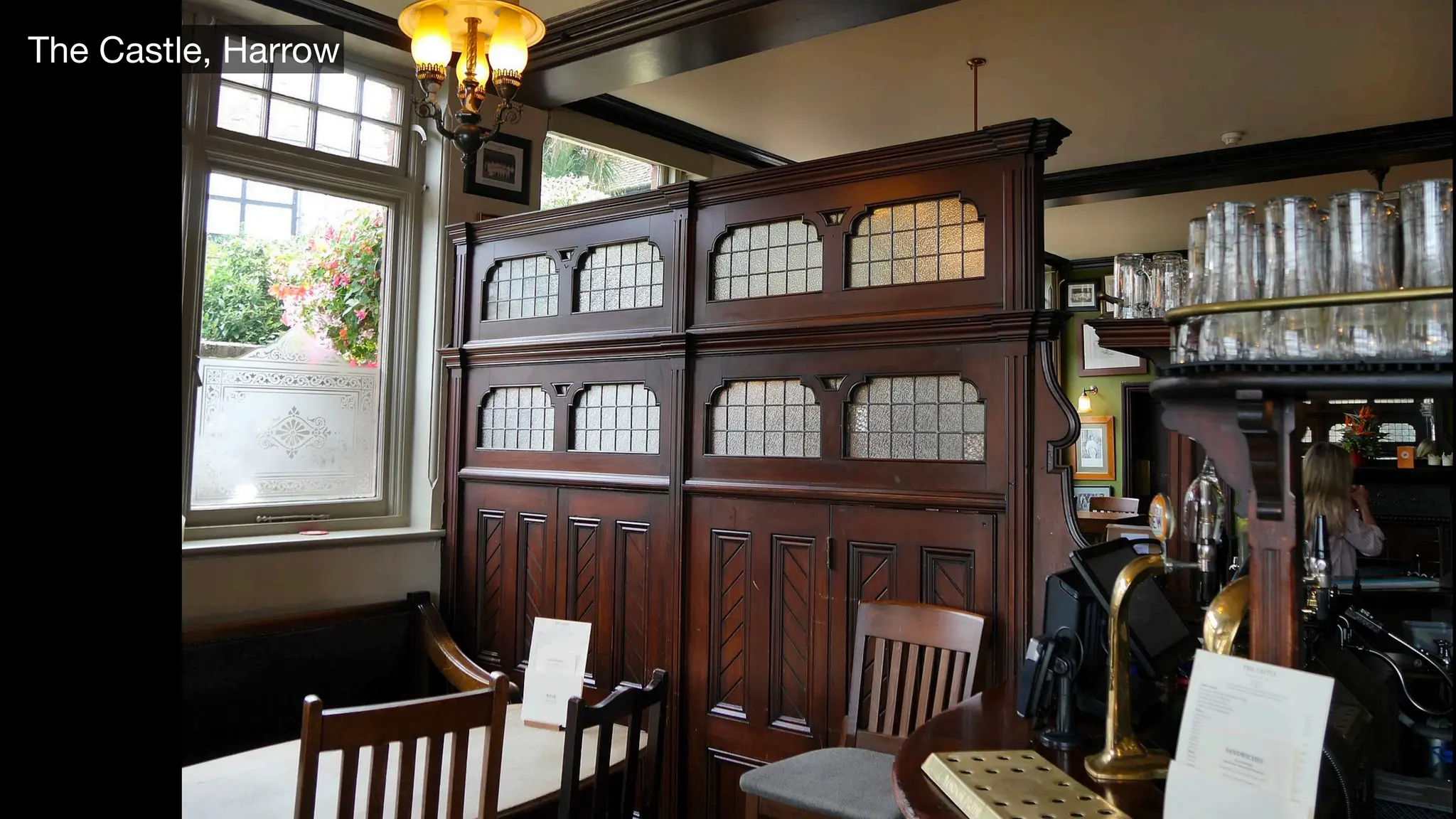
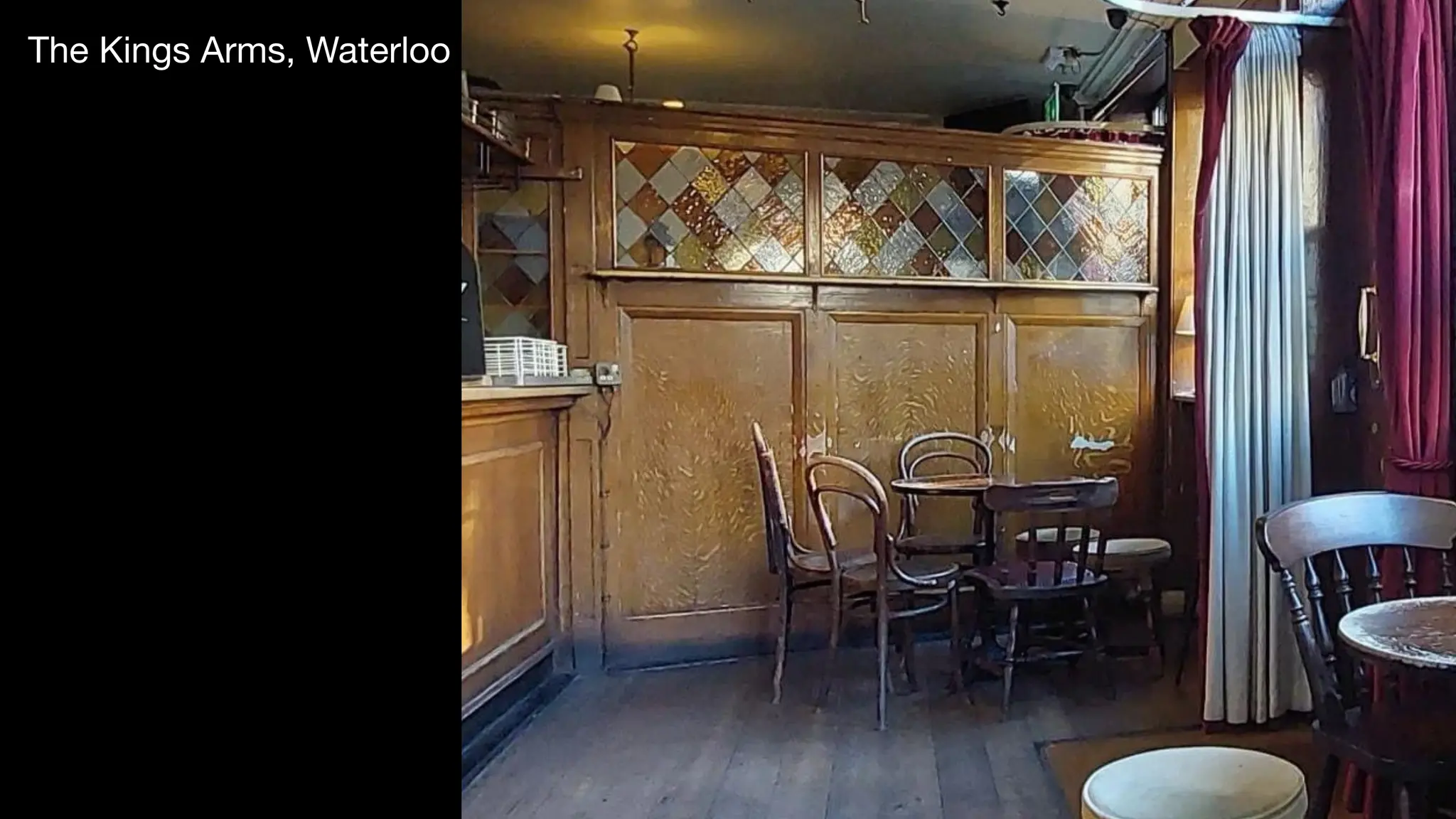
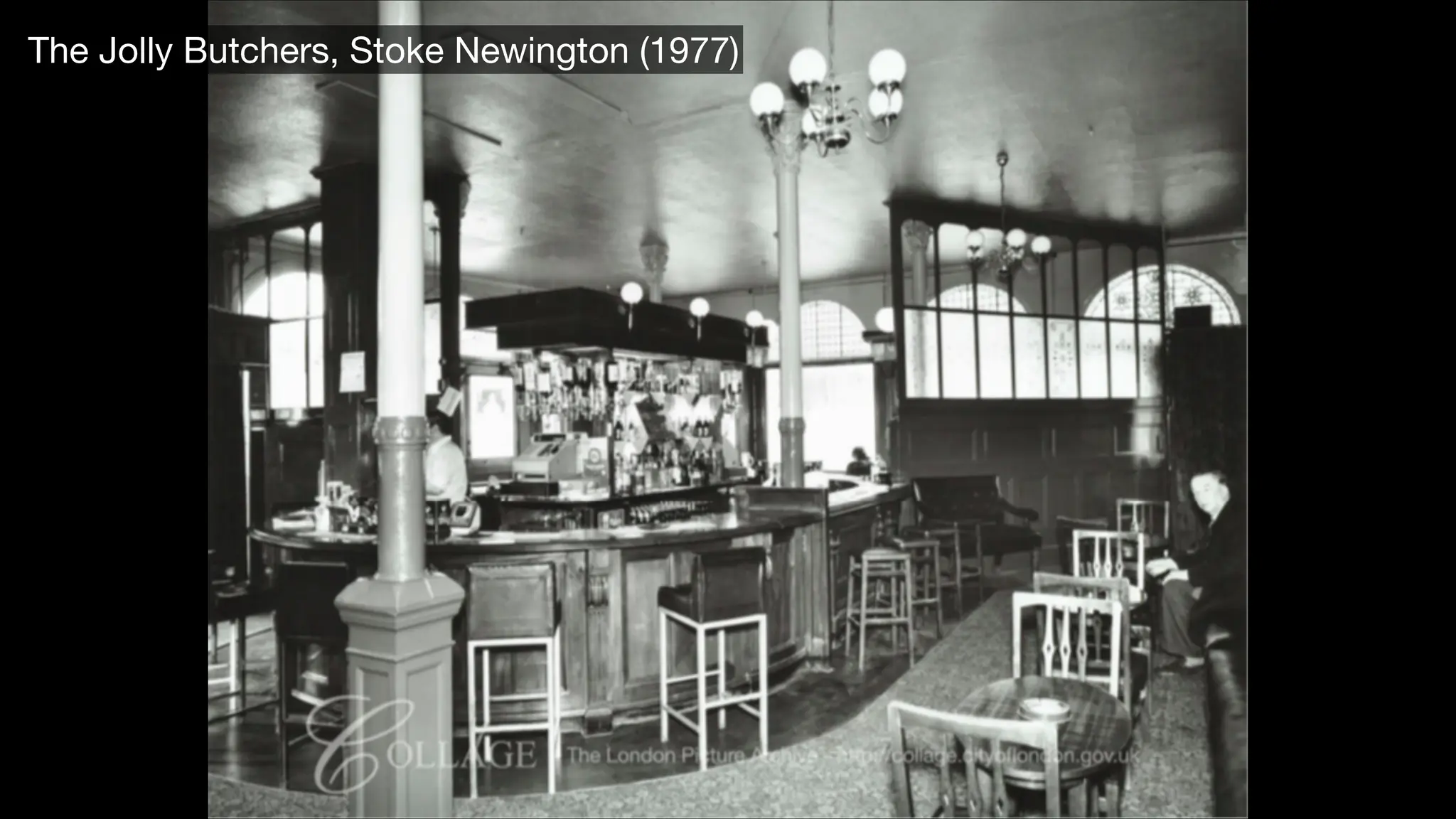
The Prince Alfred, Maida Vale
The Castle, Harrow
The Kings Arms, Waterloo
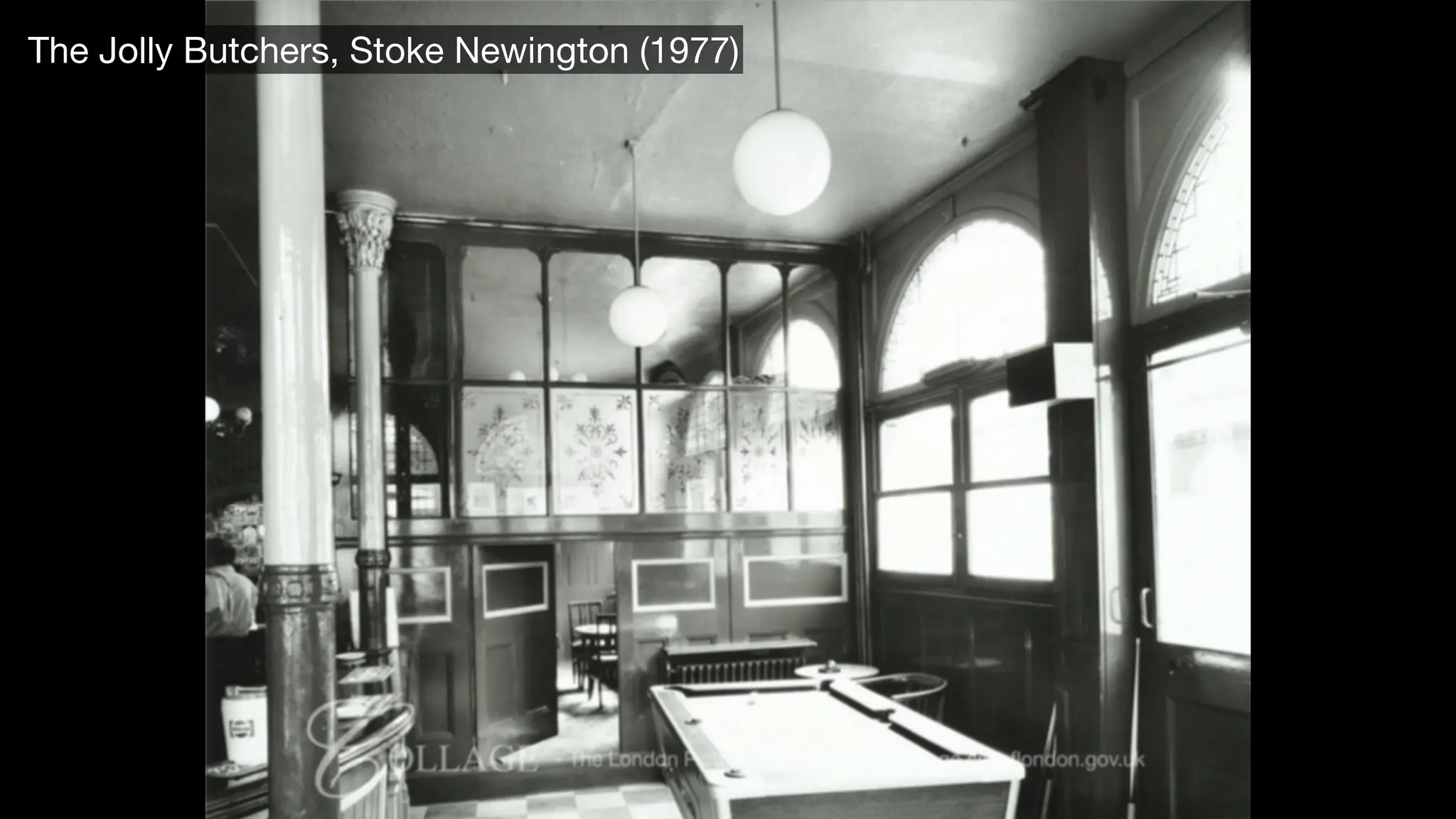
The Jolly Butchers, Stoke Newington (1977)
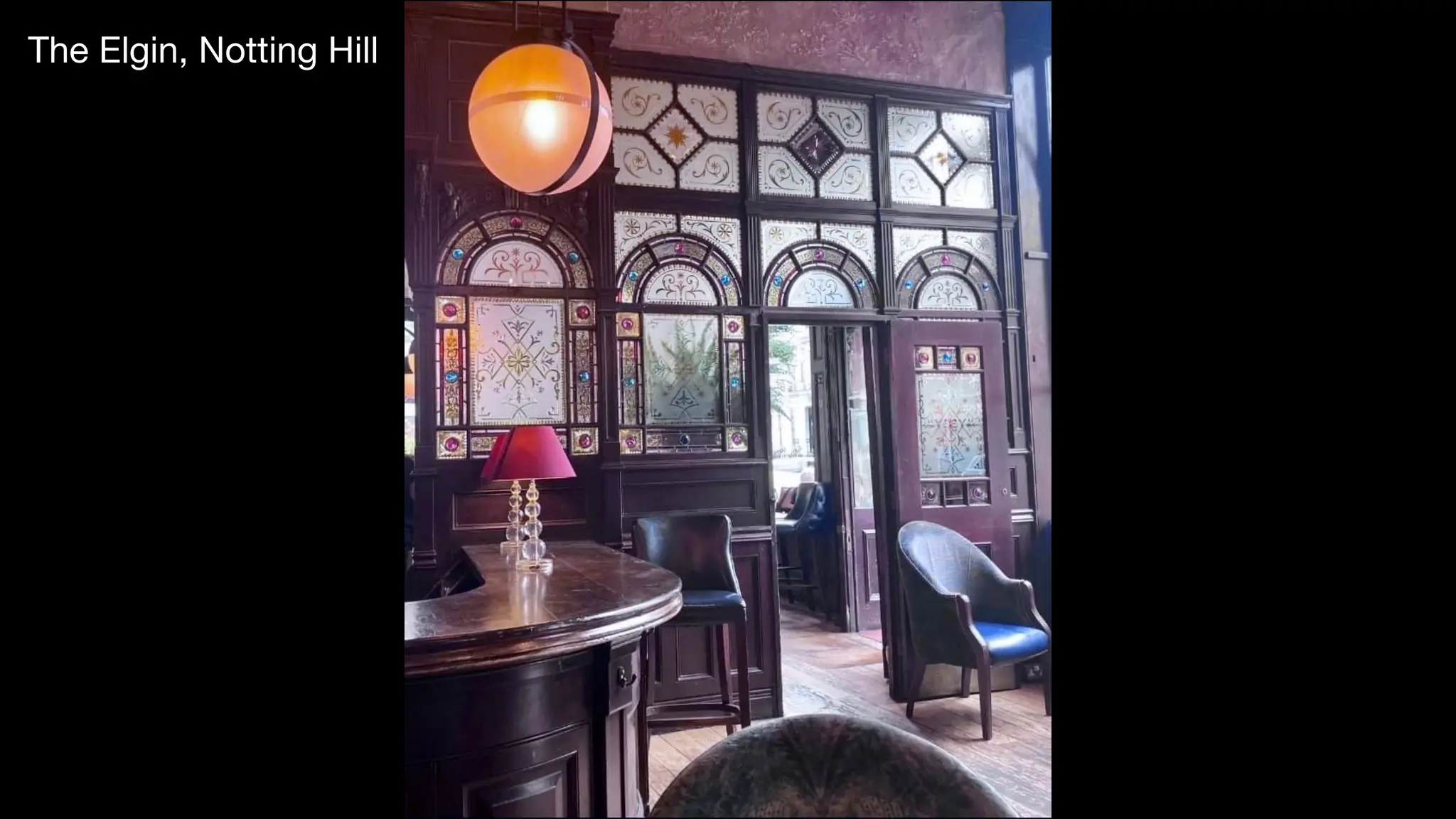
The Elgin, Notting Hill
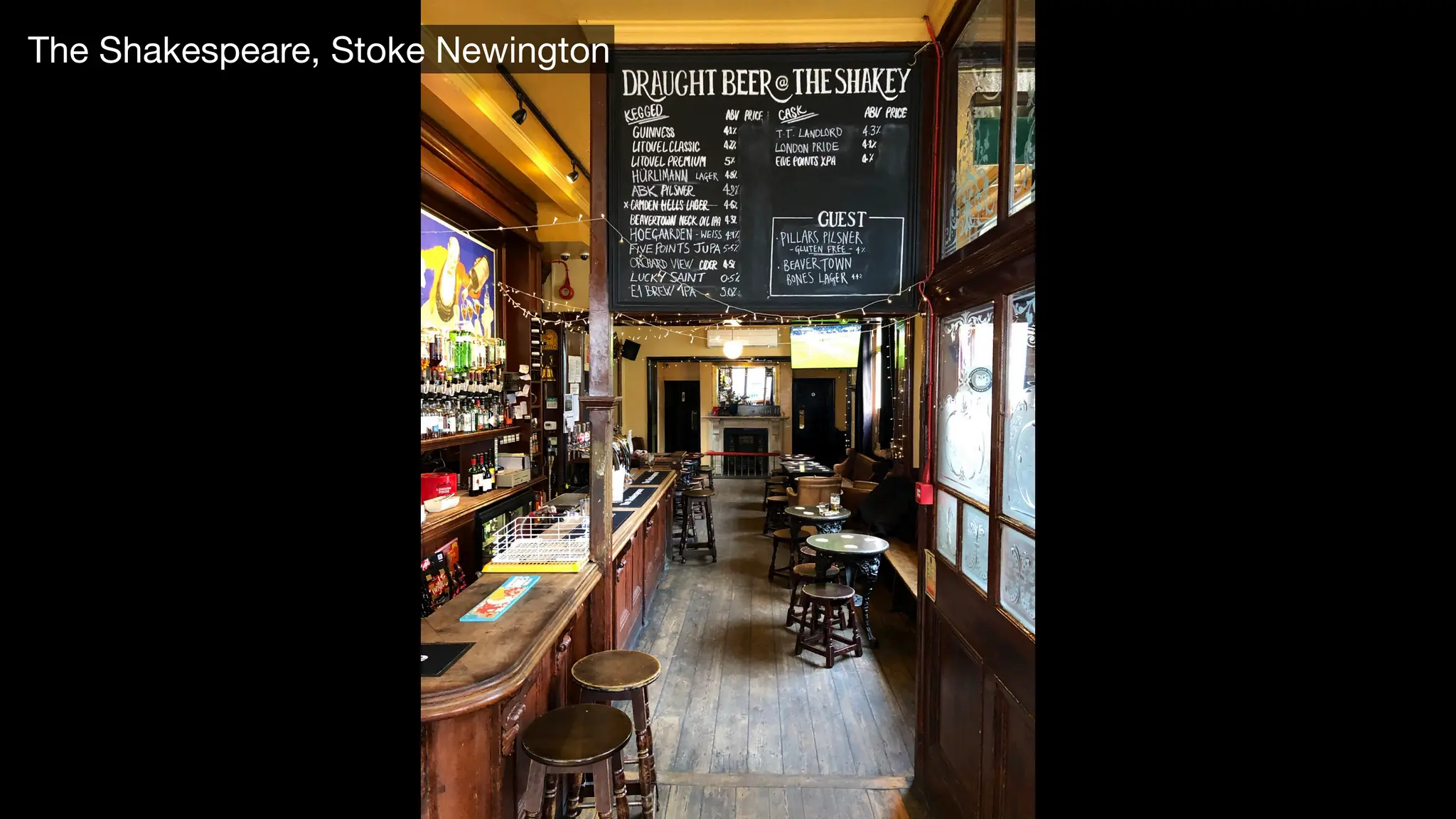
The Shakespeare, Stoke Newington
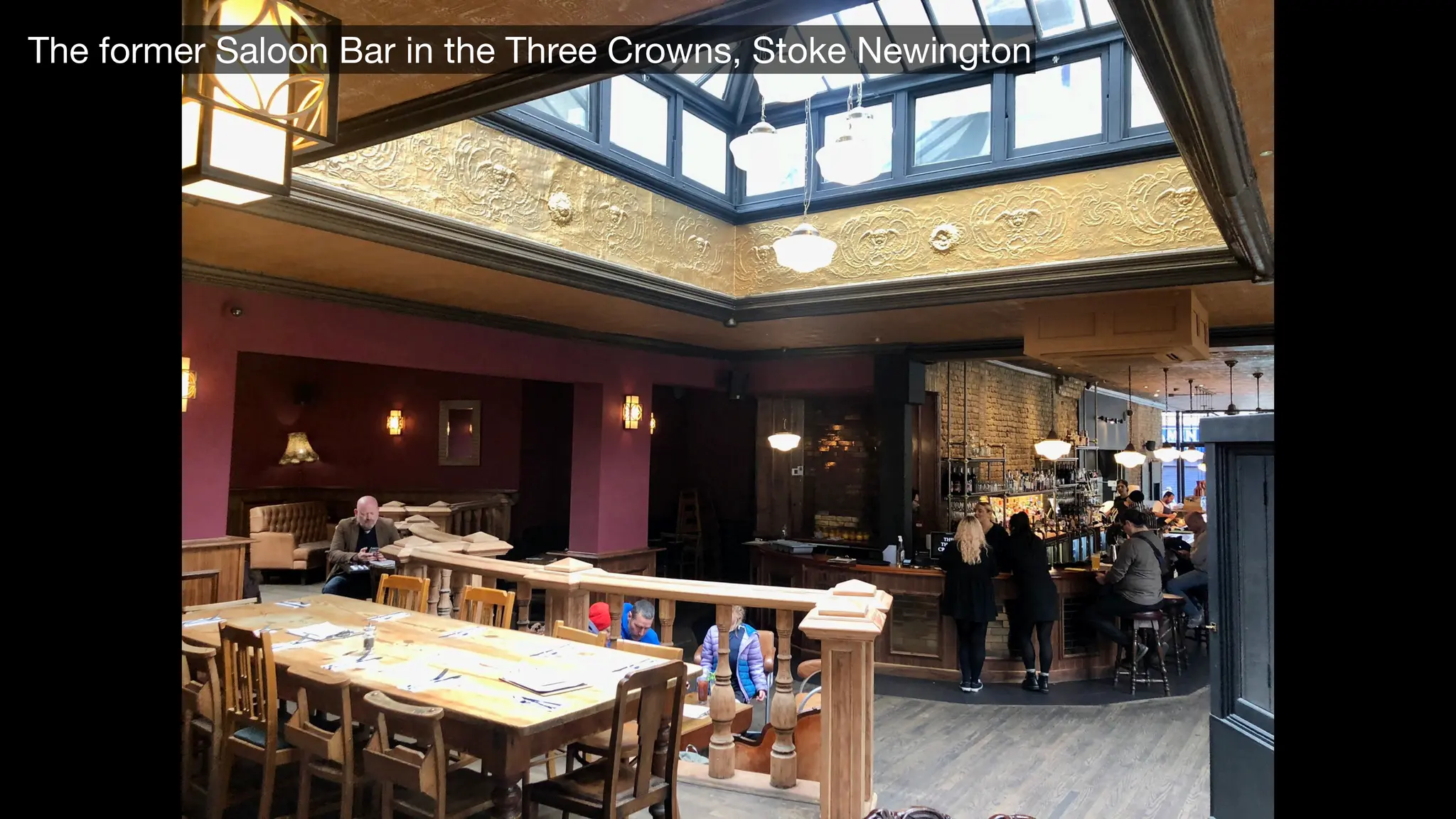
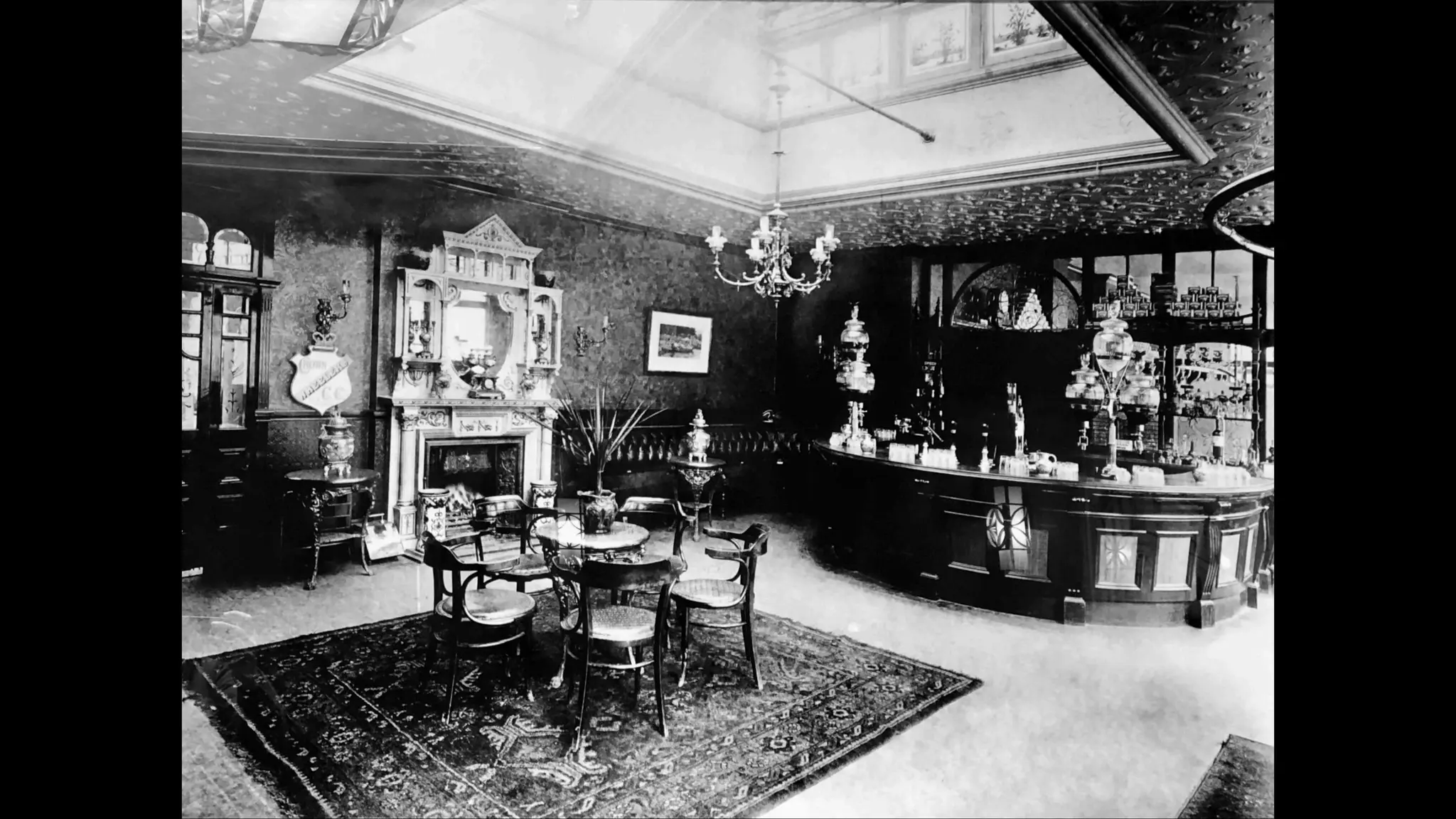
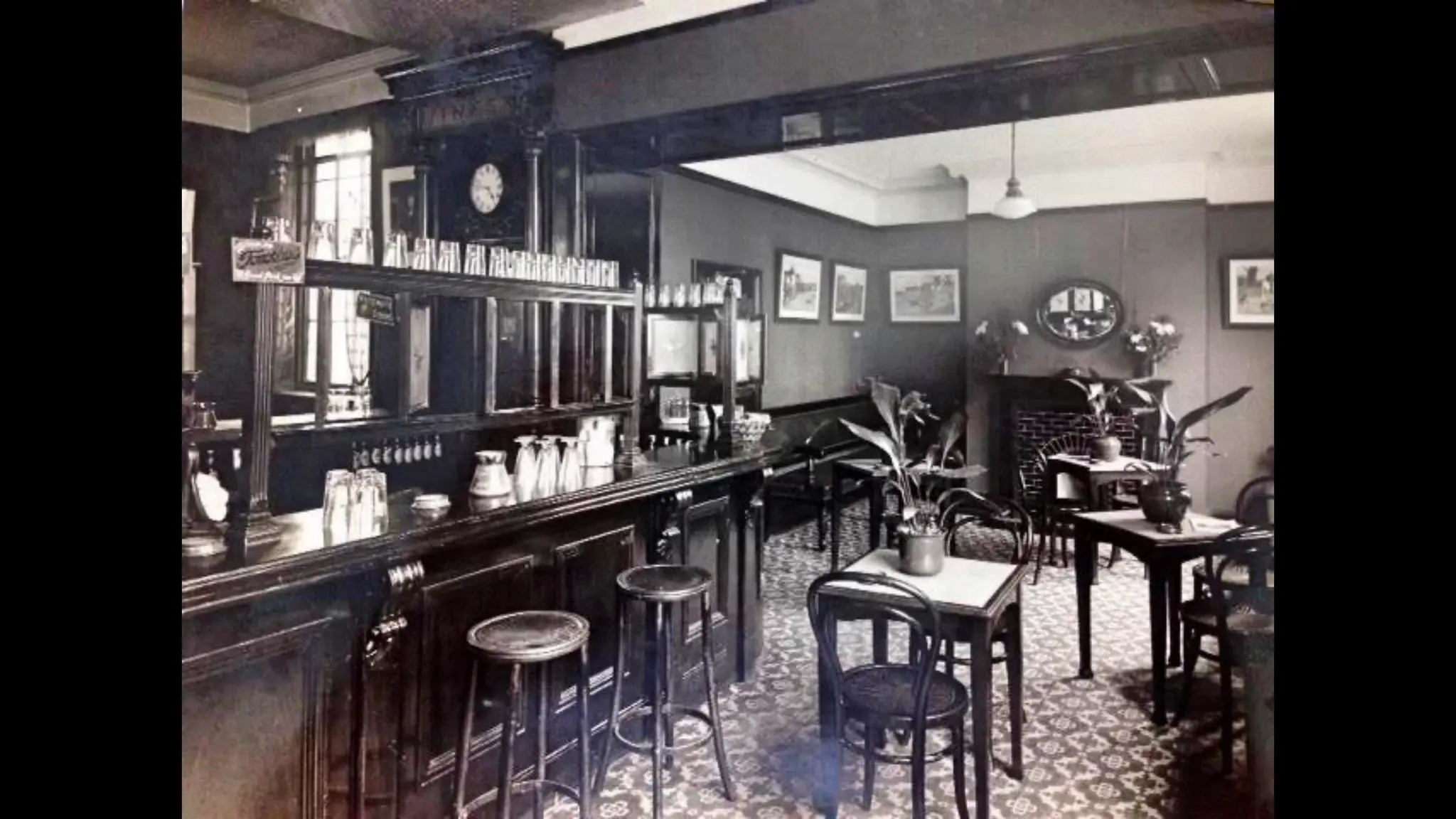
The Saloon Bar in the Three Crowns
The former Saloon Bar in the Three Crowns, Stoke Newington
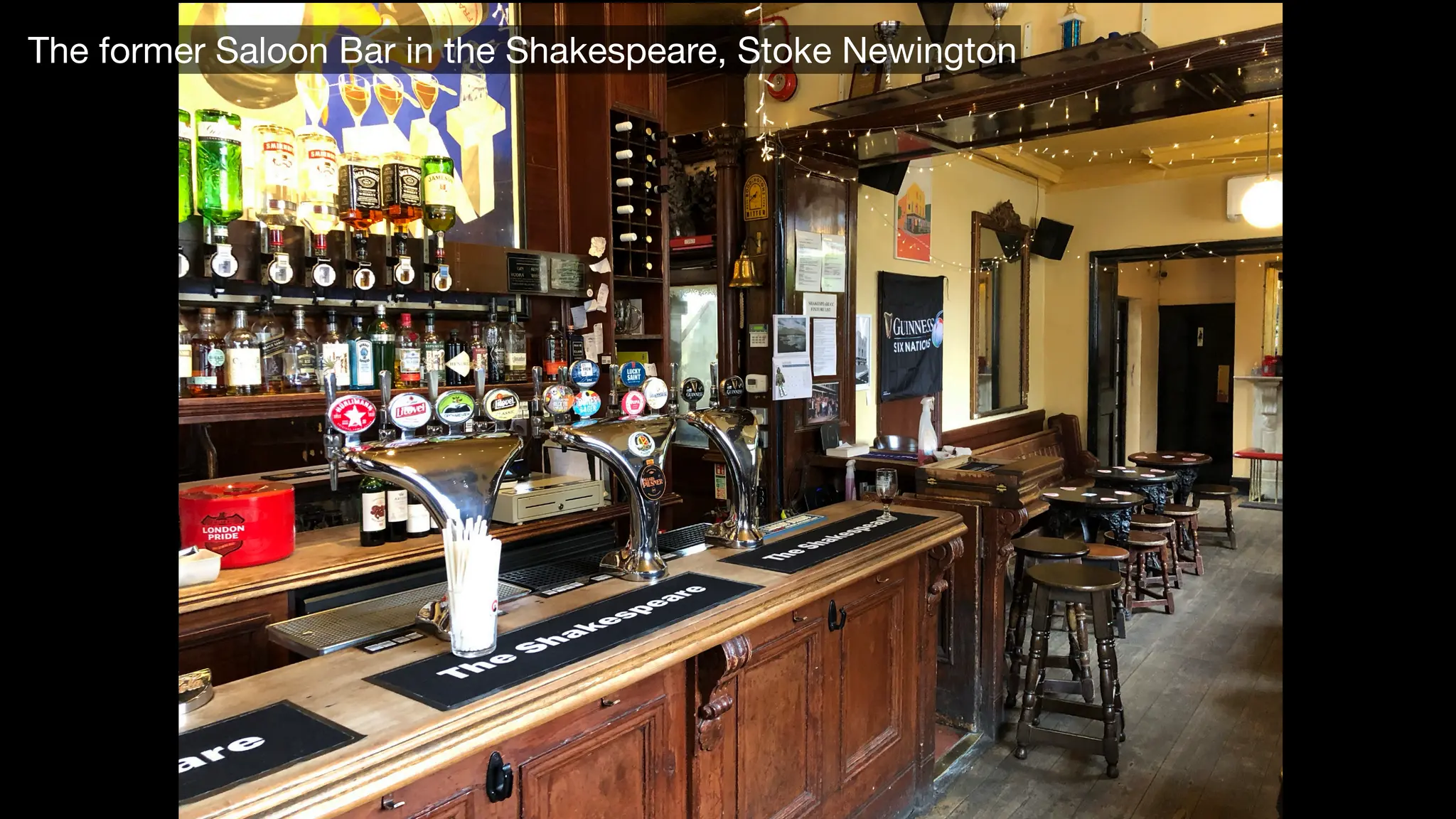
The former Saloon Bar in the Shakespeare, Stoke Newington
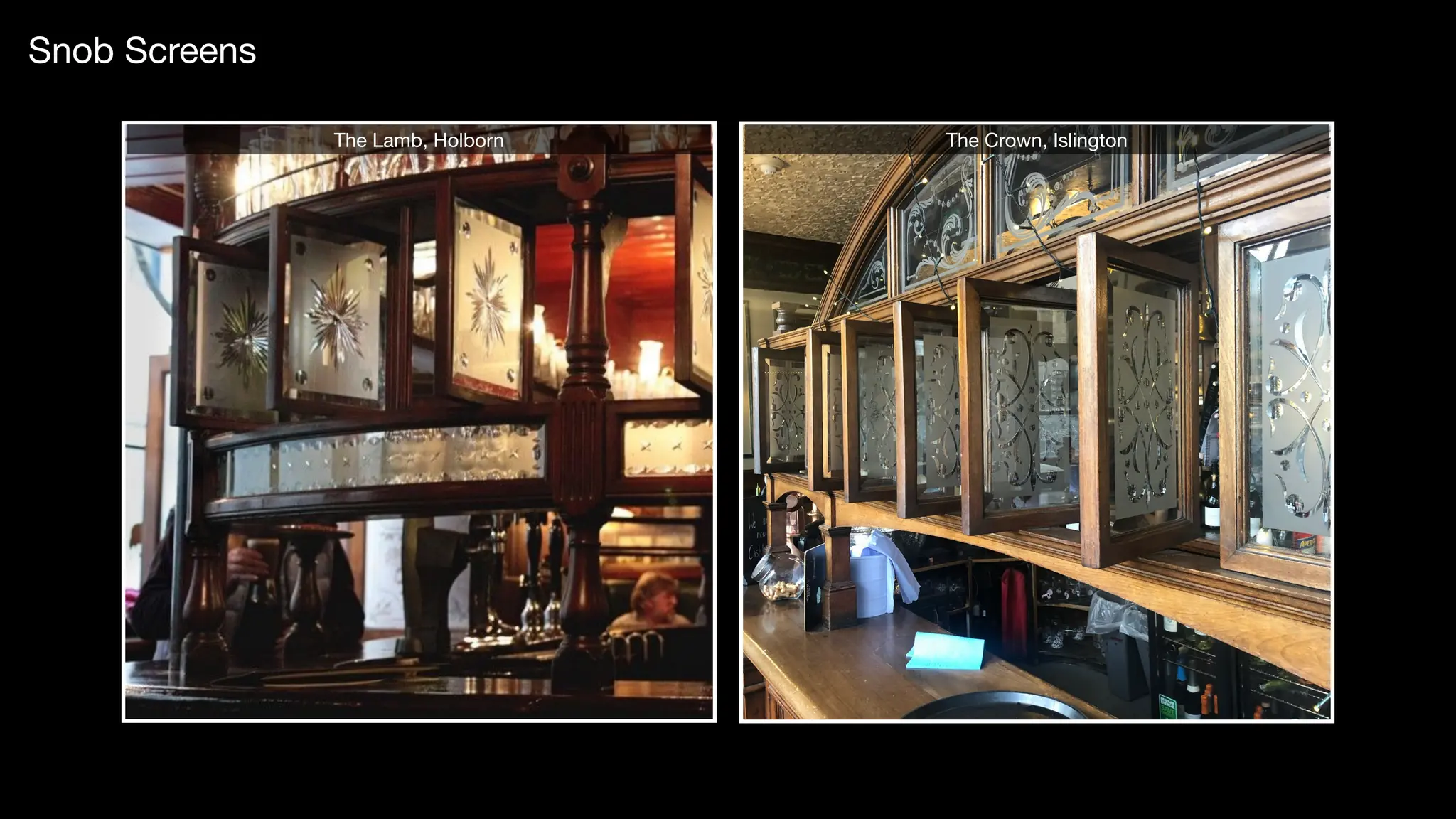
Snob Screens
The Lamb, Holborn The Crown, Islington
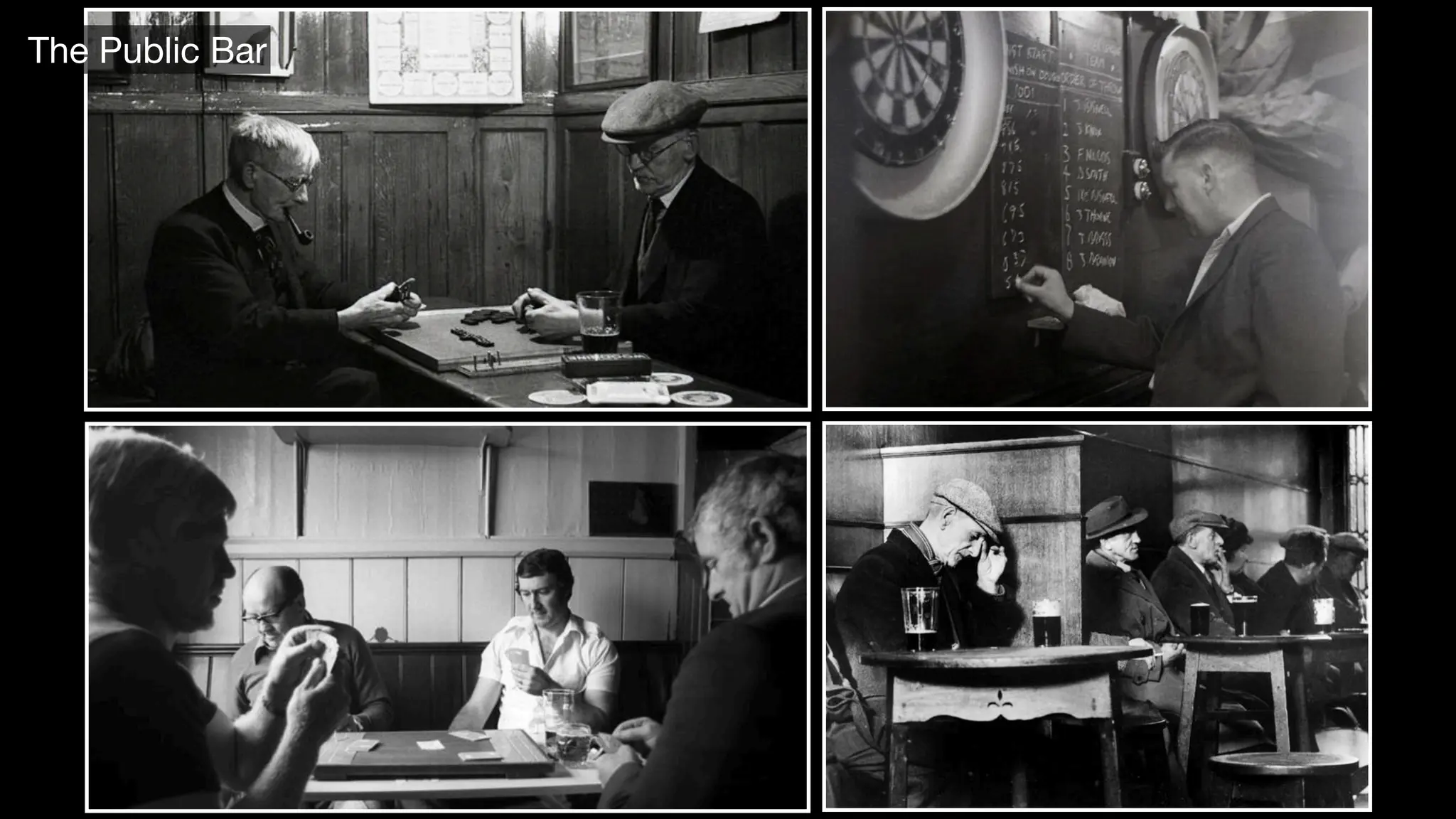
The Public Bar
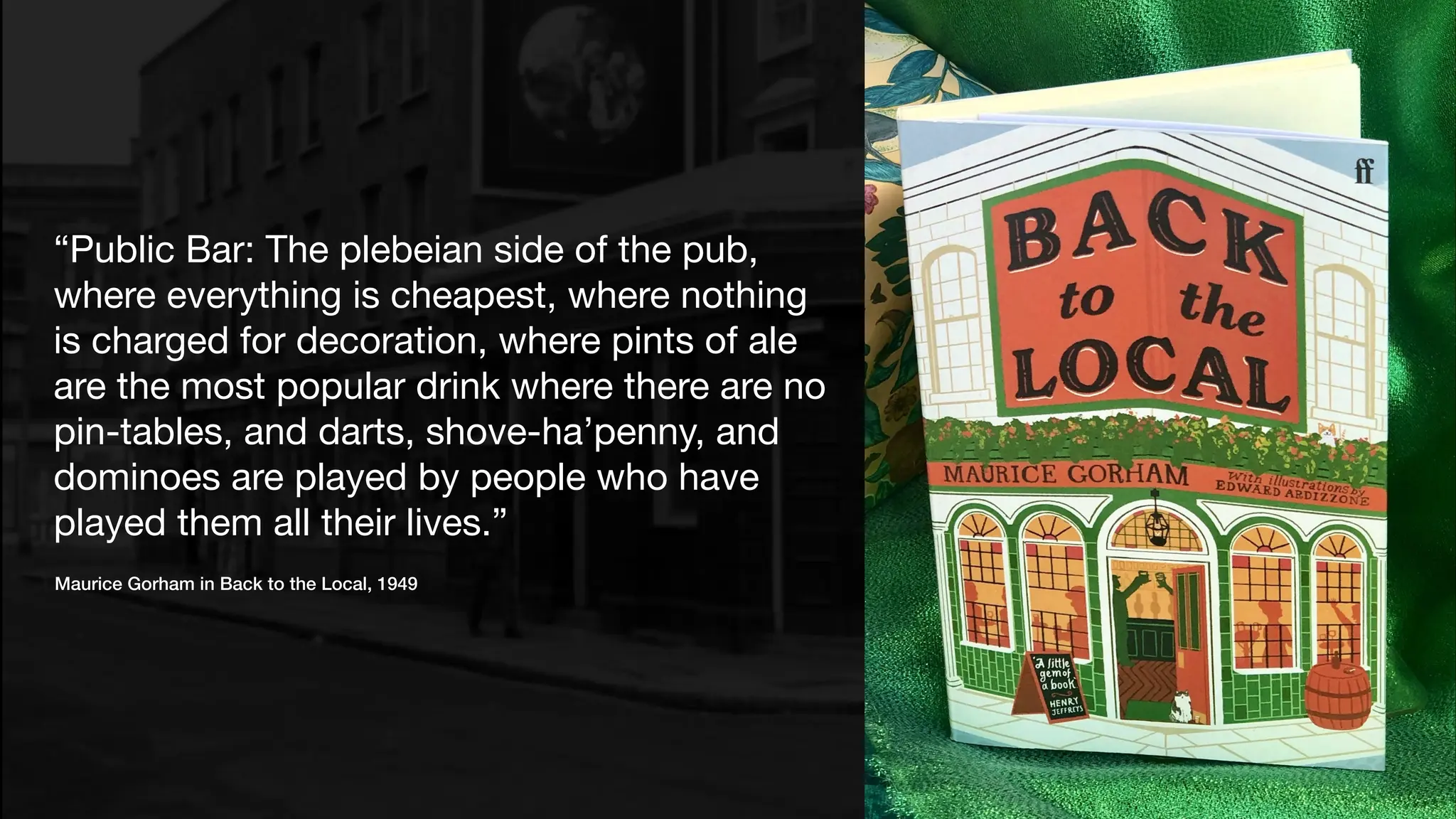
“Public Bar: The plebeian side of the pub,
where everything is cheapest, where nothing
is charged for decoration, where pints of ale
are the most popular drink where there are no
pin-tables, and darts, shove-ha’penny, and
dominoes are played by people who have
played them all their lives.”
Maurice Gorham in Back to the Local, 1949
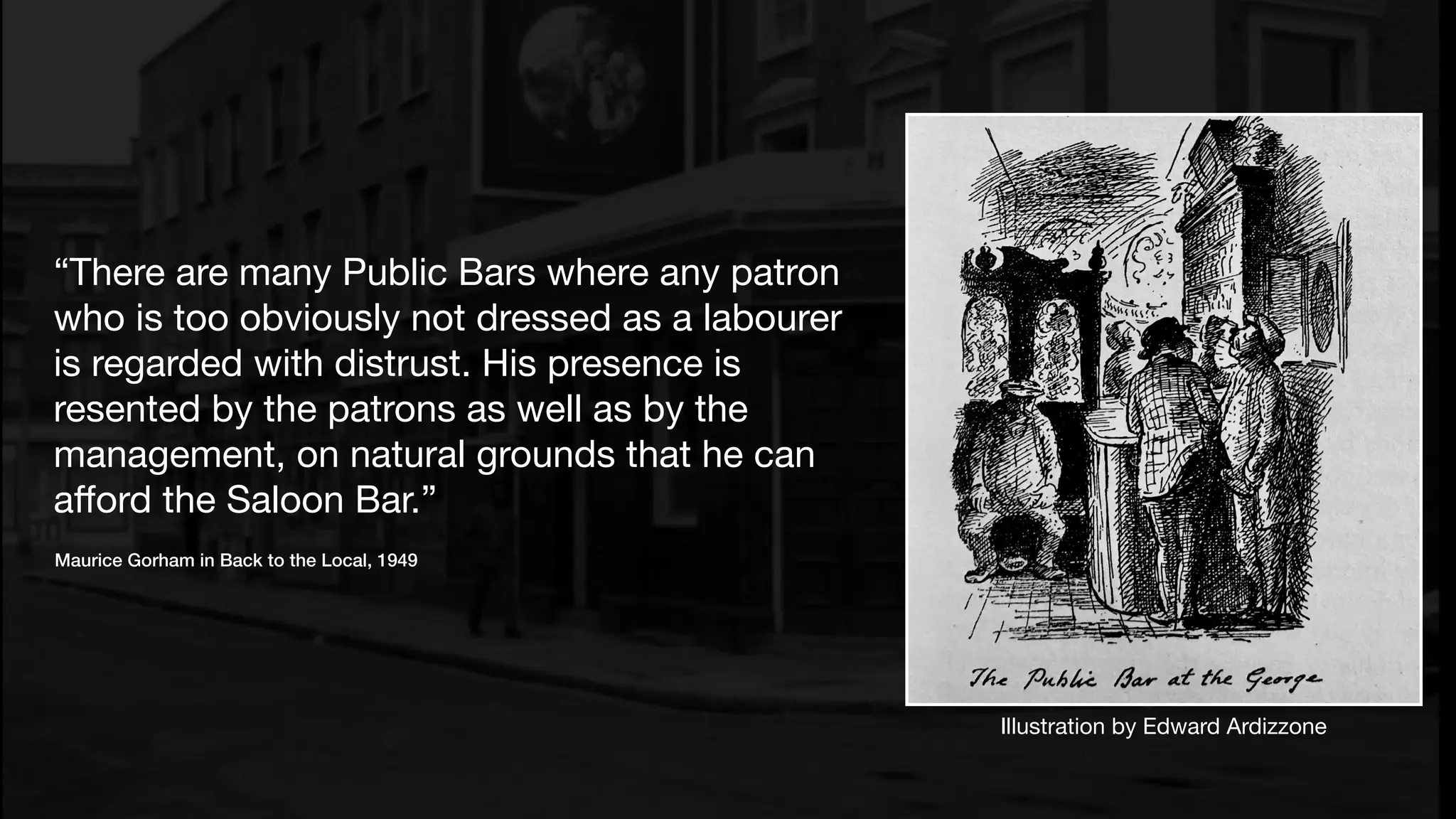
“There are many Public Bars where any patron
who is too obviously not dressed as a labourer
is regarded with distrust. His presence is
resented by the patrons as well as by the
management, on natural grounds that he can
afford the Saloon Bar.”
Maurice Gorham in Back to the Local, 1949
Illustration by Edward Ardizzone
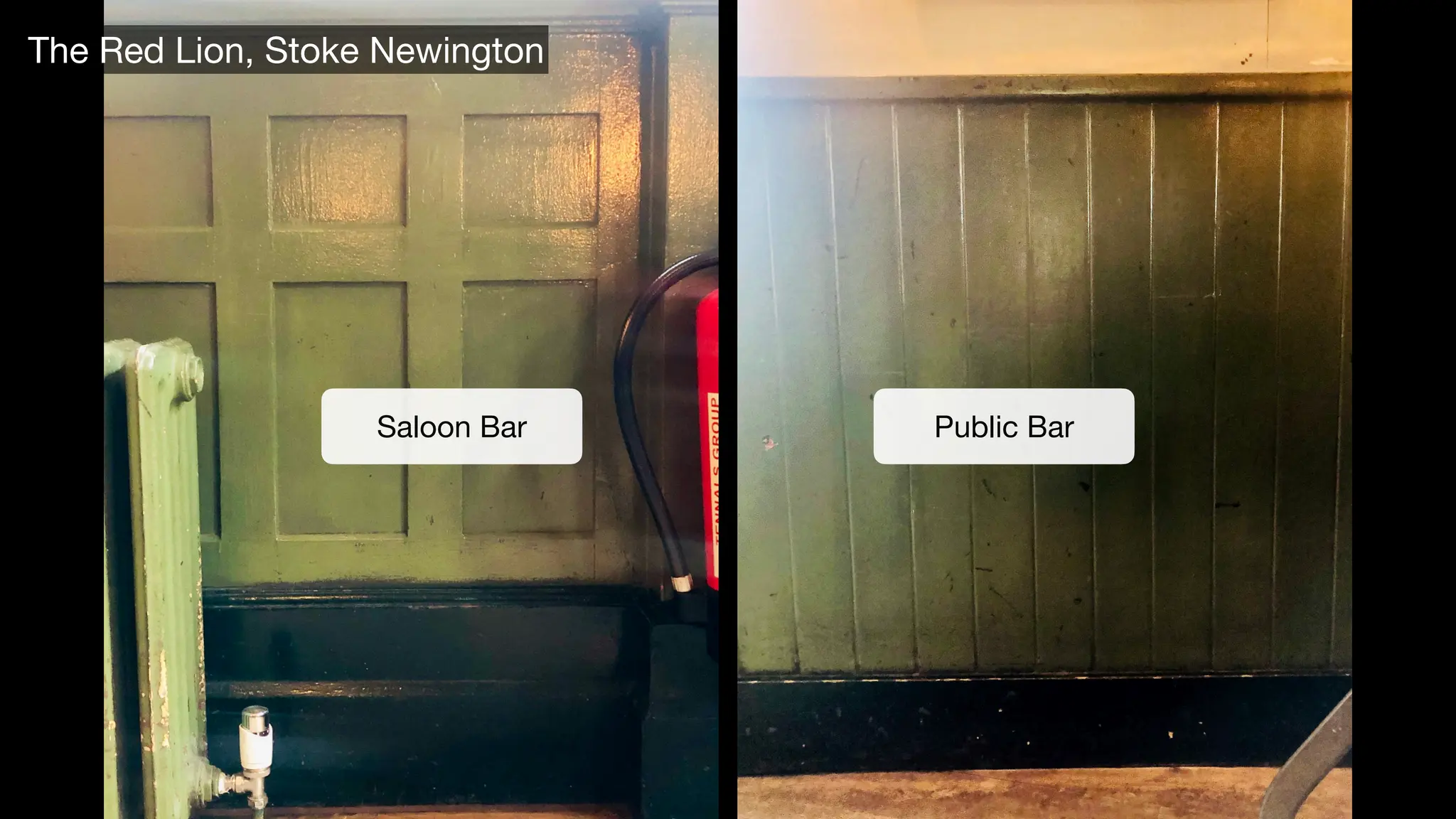
Saloon Bar Public Bar
The Red Lion, Stoke Newington
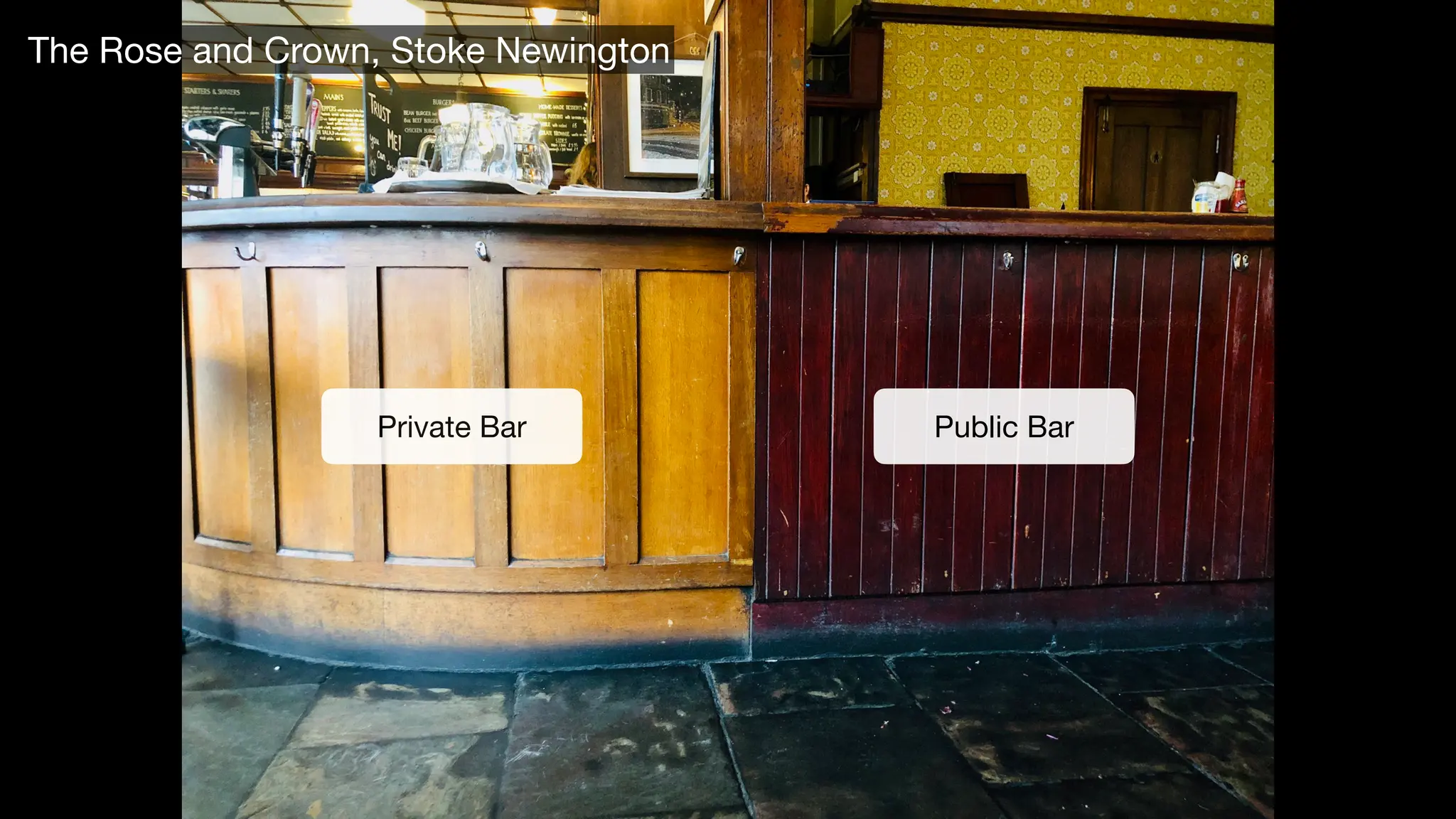
Private Bar Public Bar
The Rose and Crown, Stoke Newington
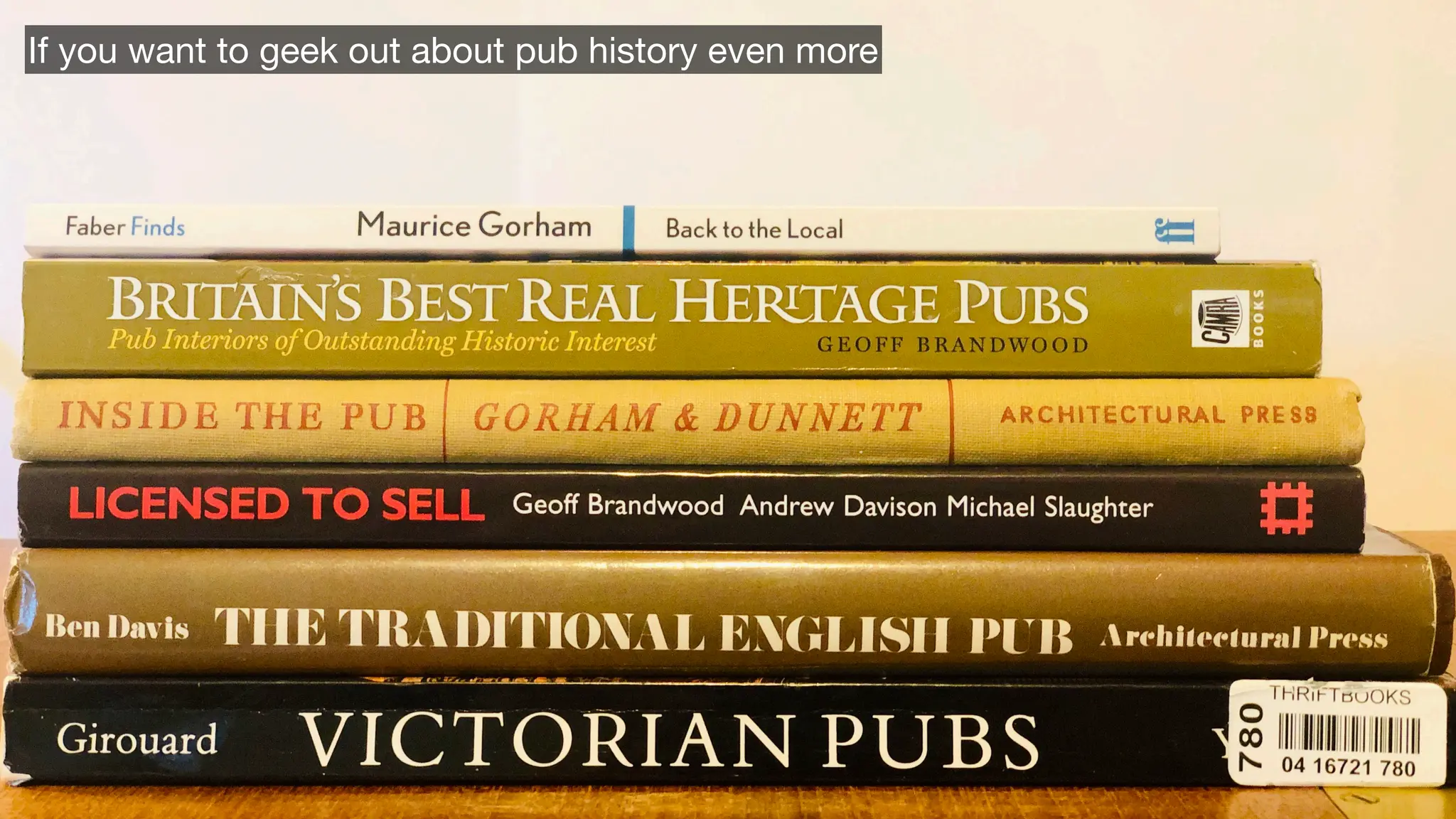
If you want to geek out about pub history even more
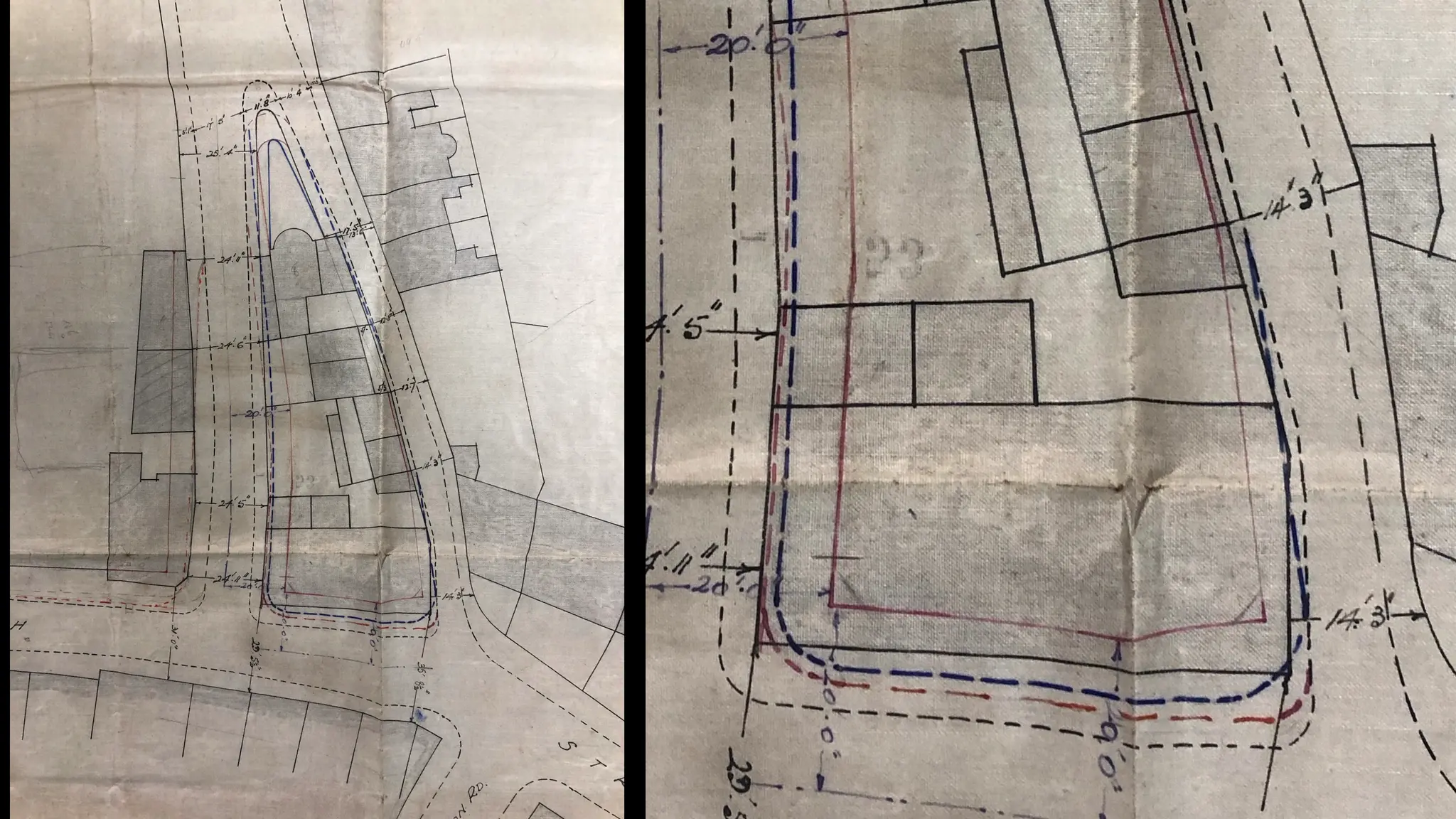
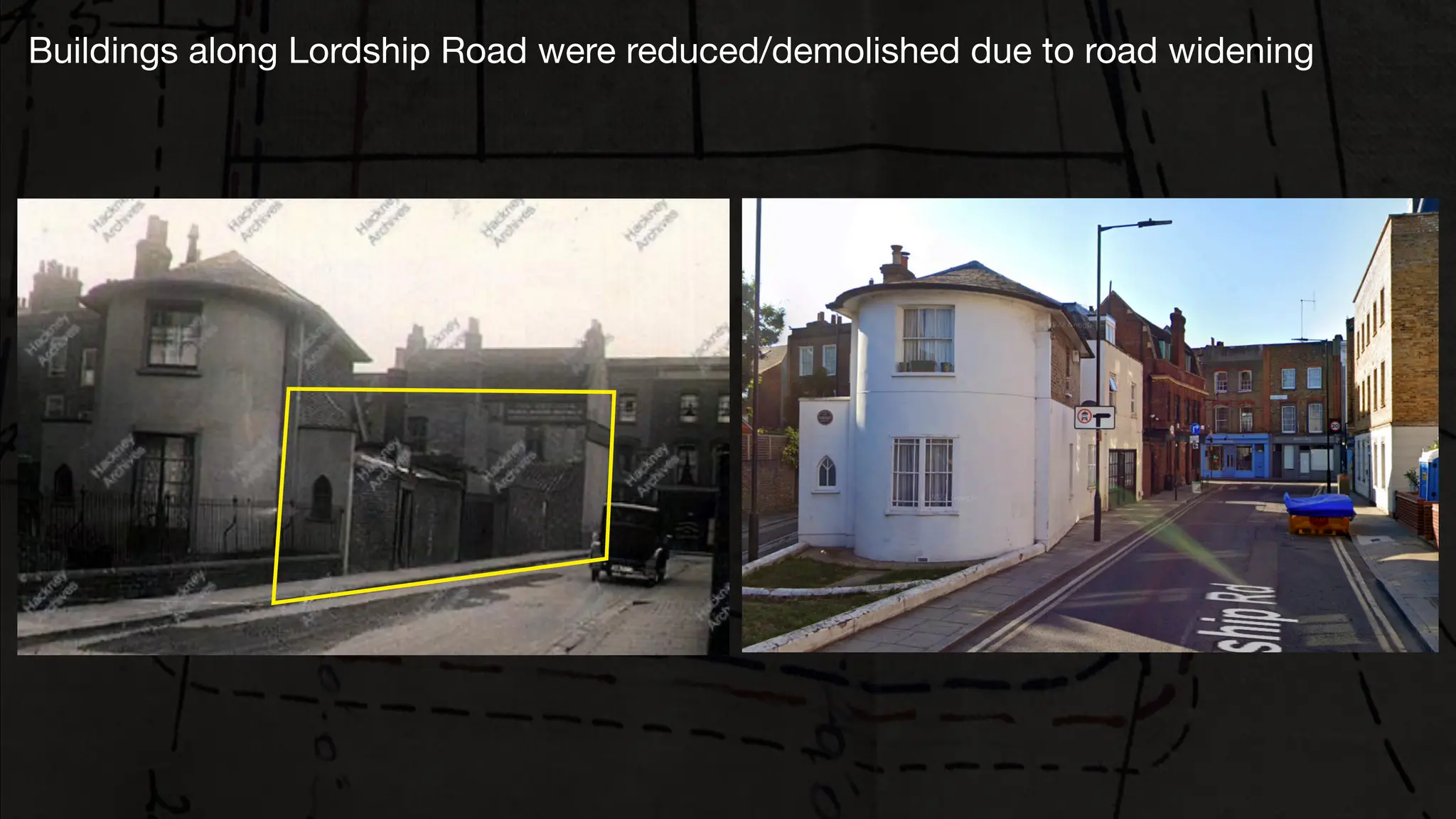
1924 Road Widening
Buildings along Lordship Road were reduced/demolished due to road widening
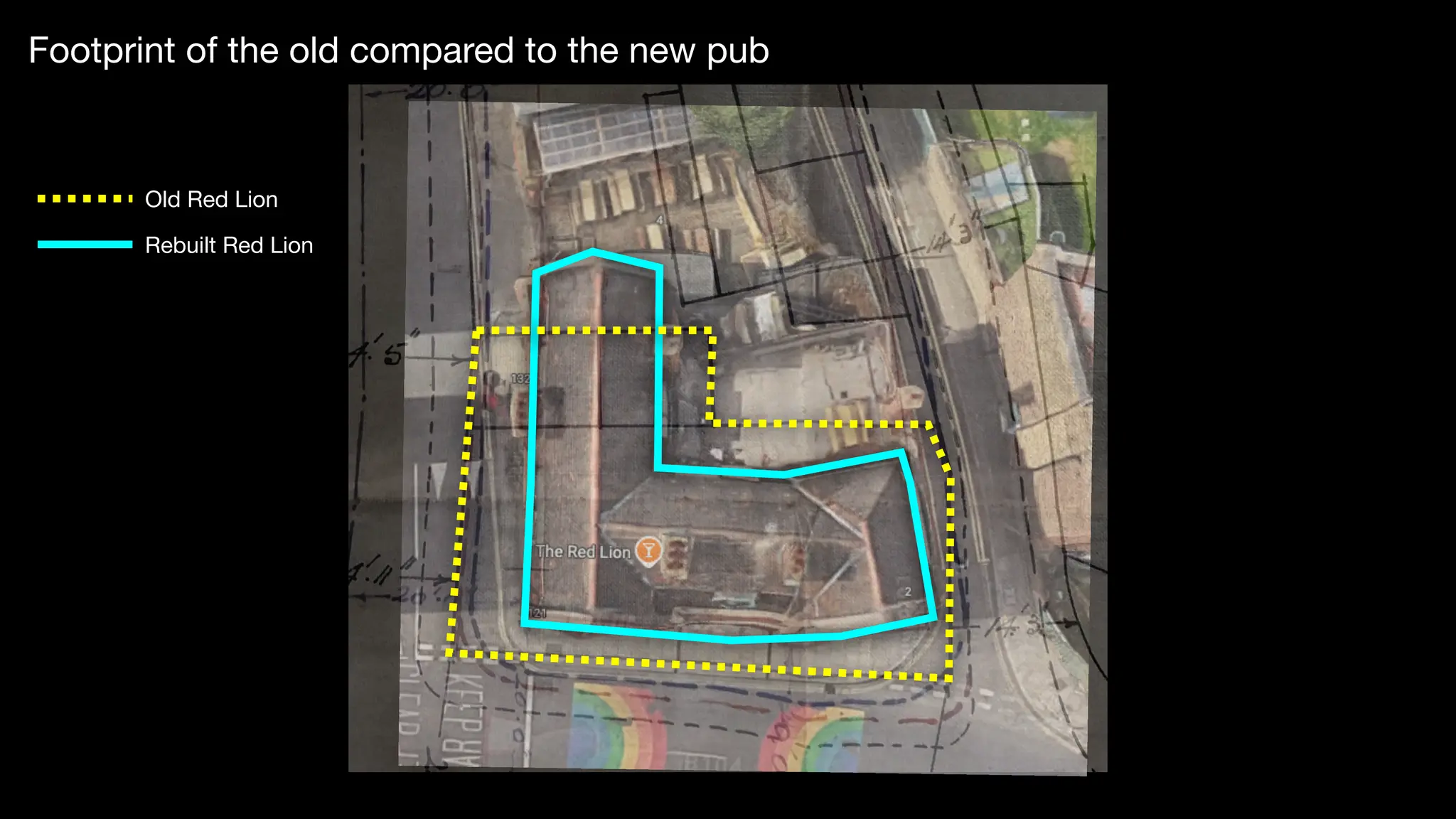
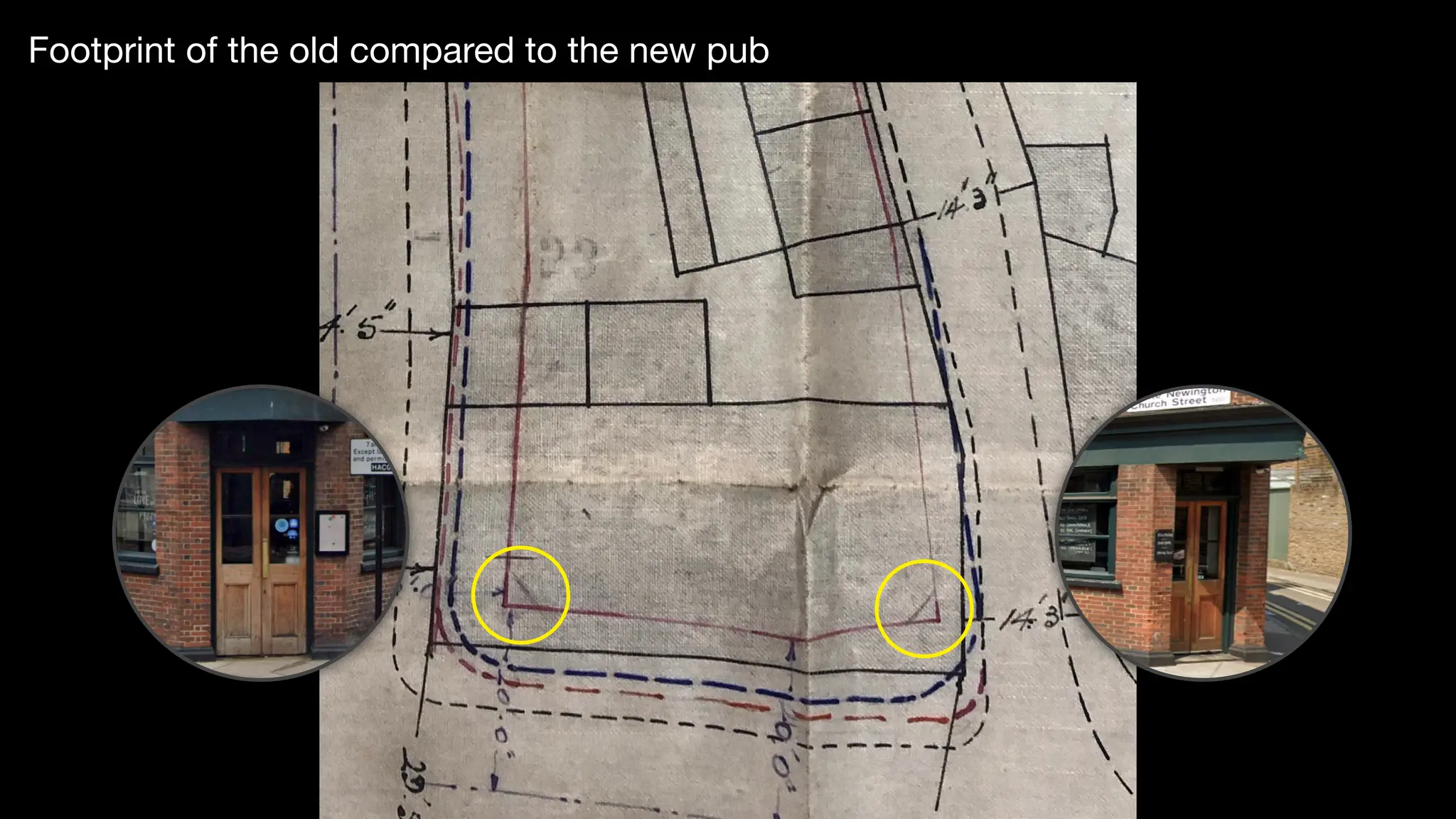
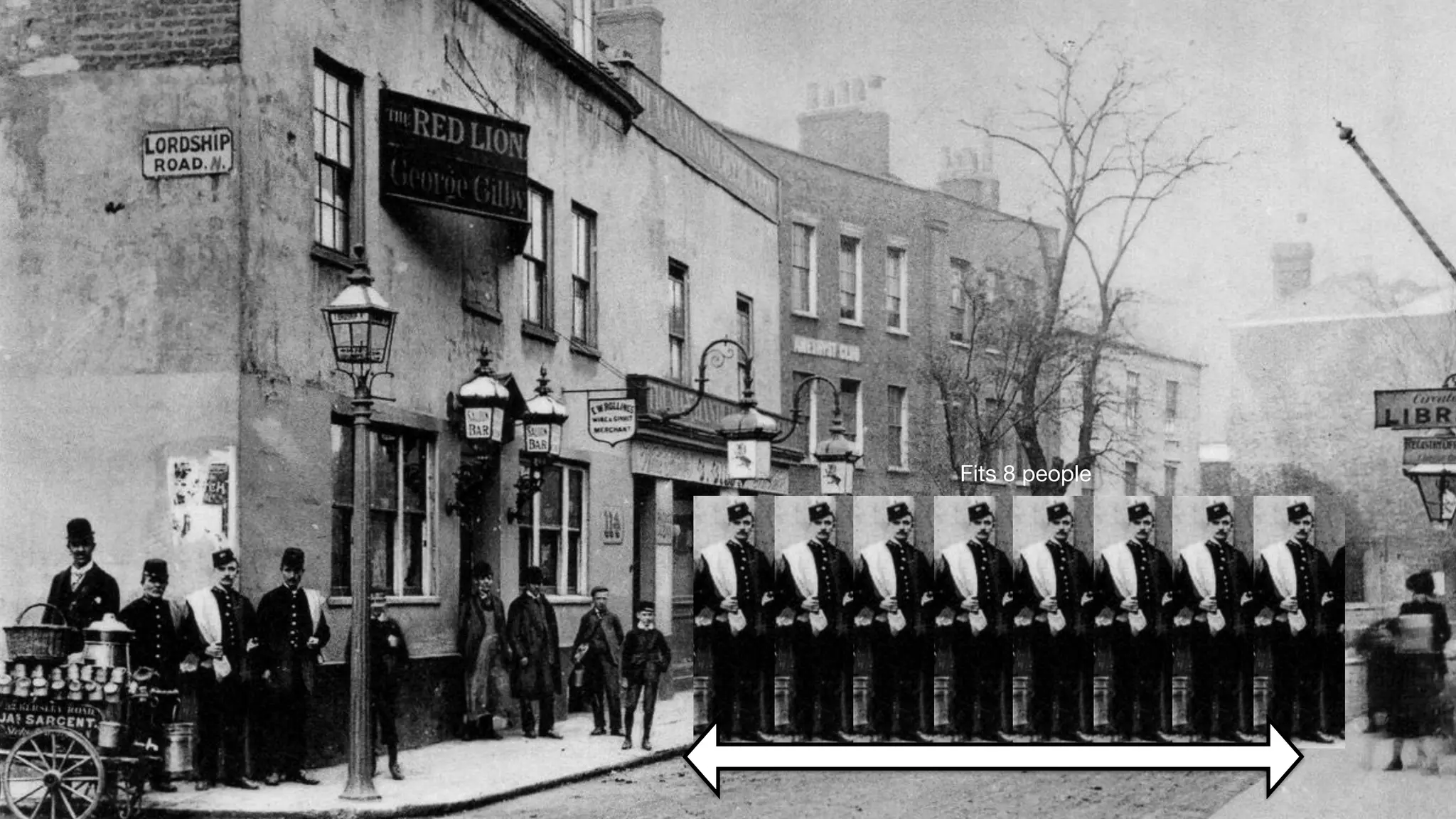
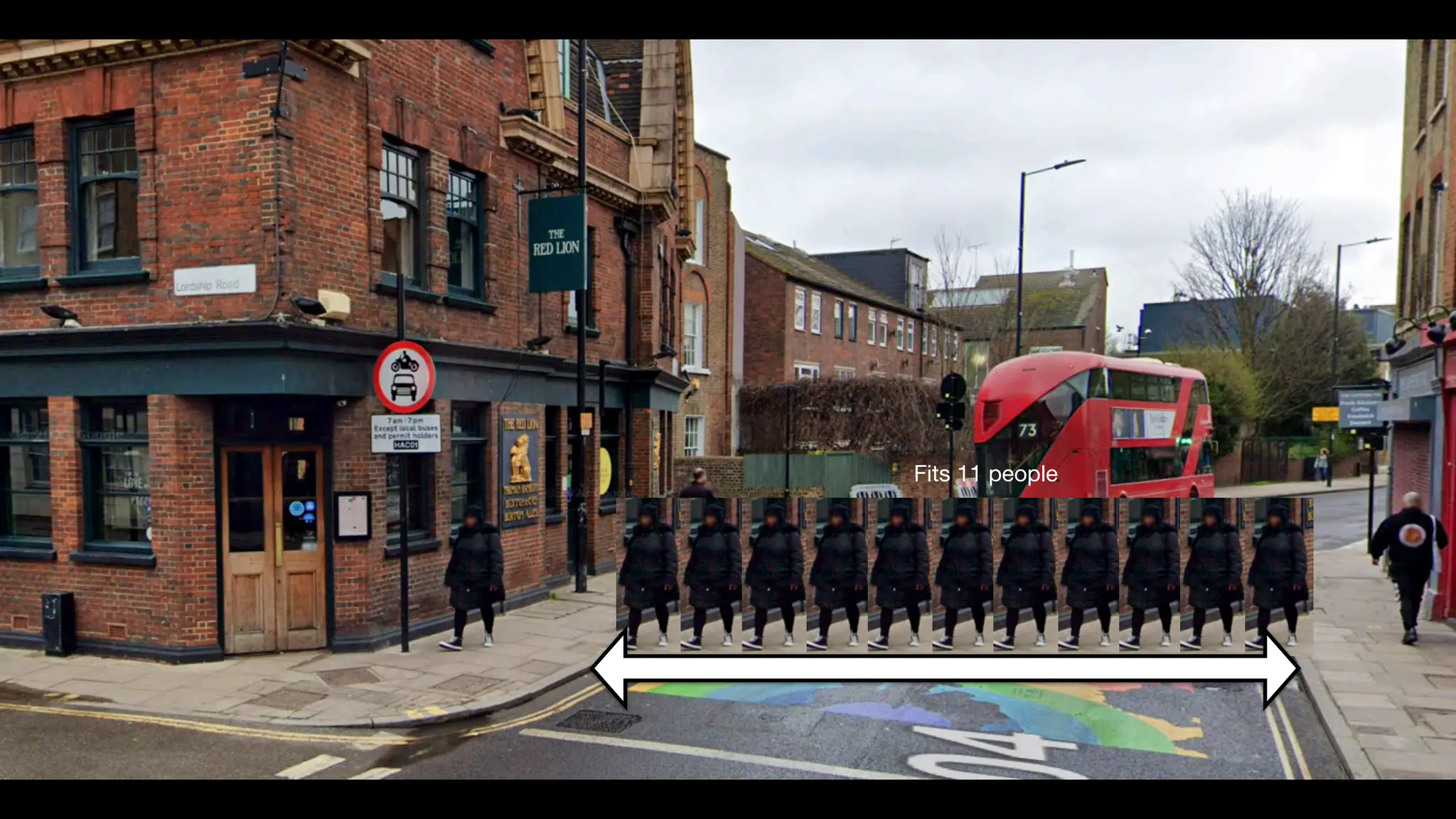
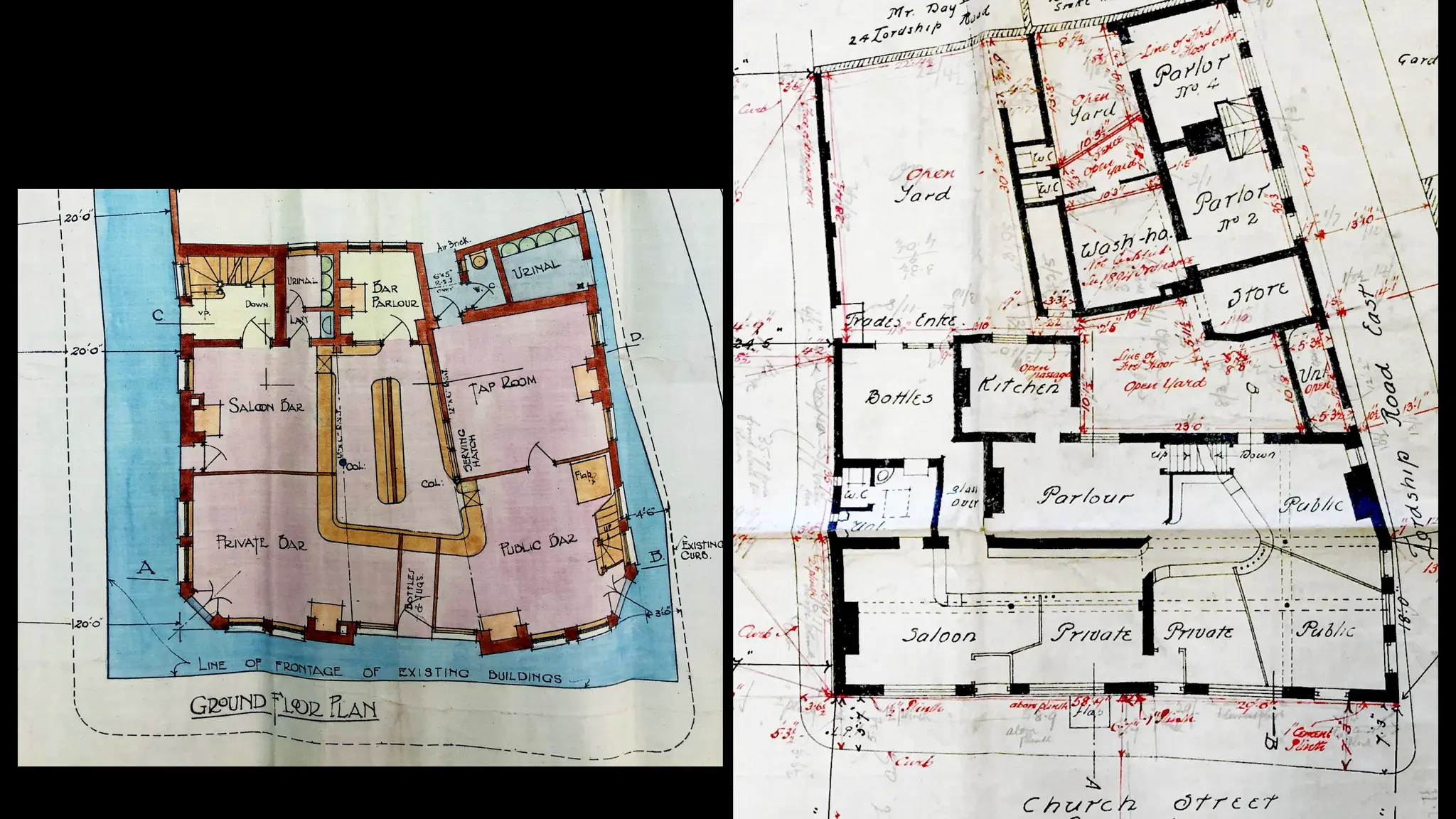
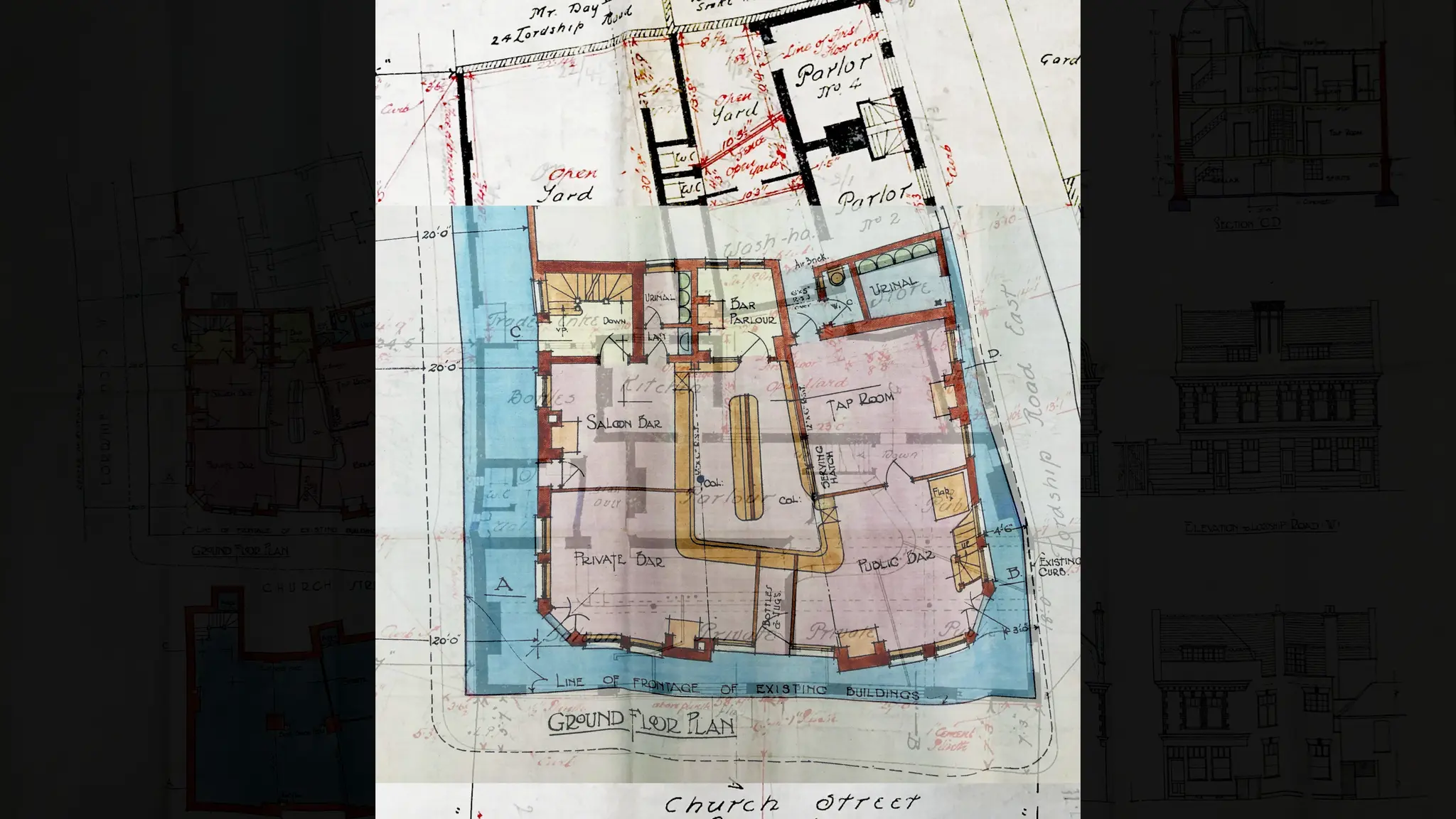
Footprint of the old compared to the new pub
Old Red Lion
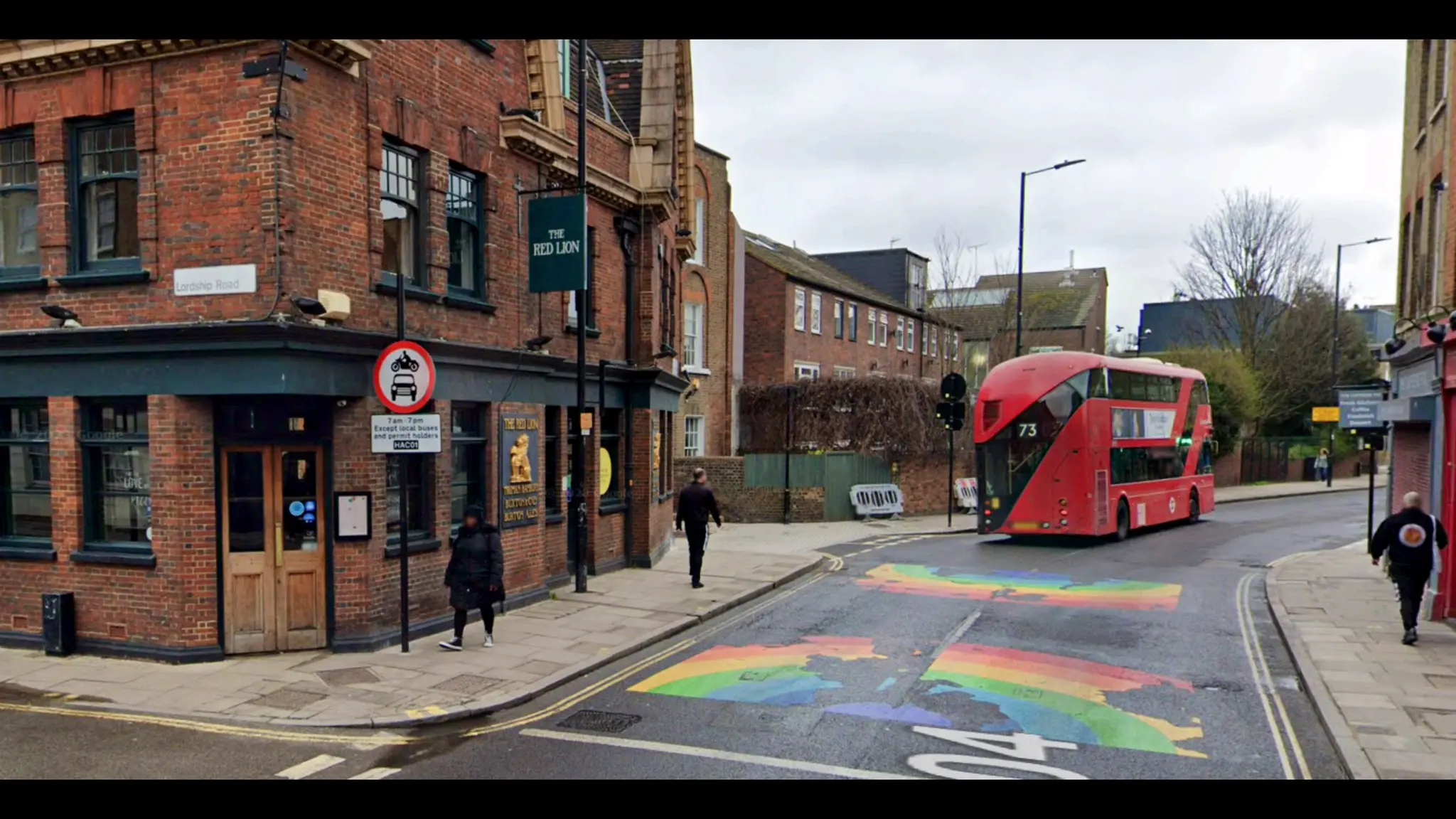
Rebuilt Red Lion
Footprint of the old compared to the new pub
Fits 8 people
Fits 11 people
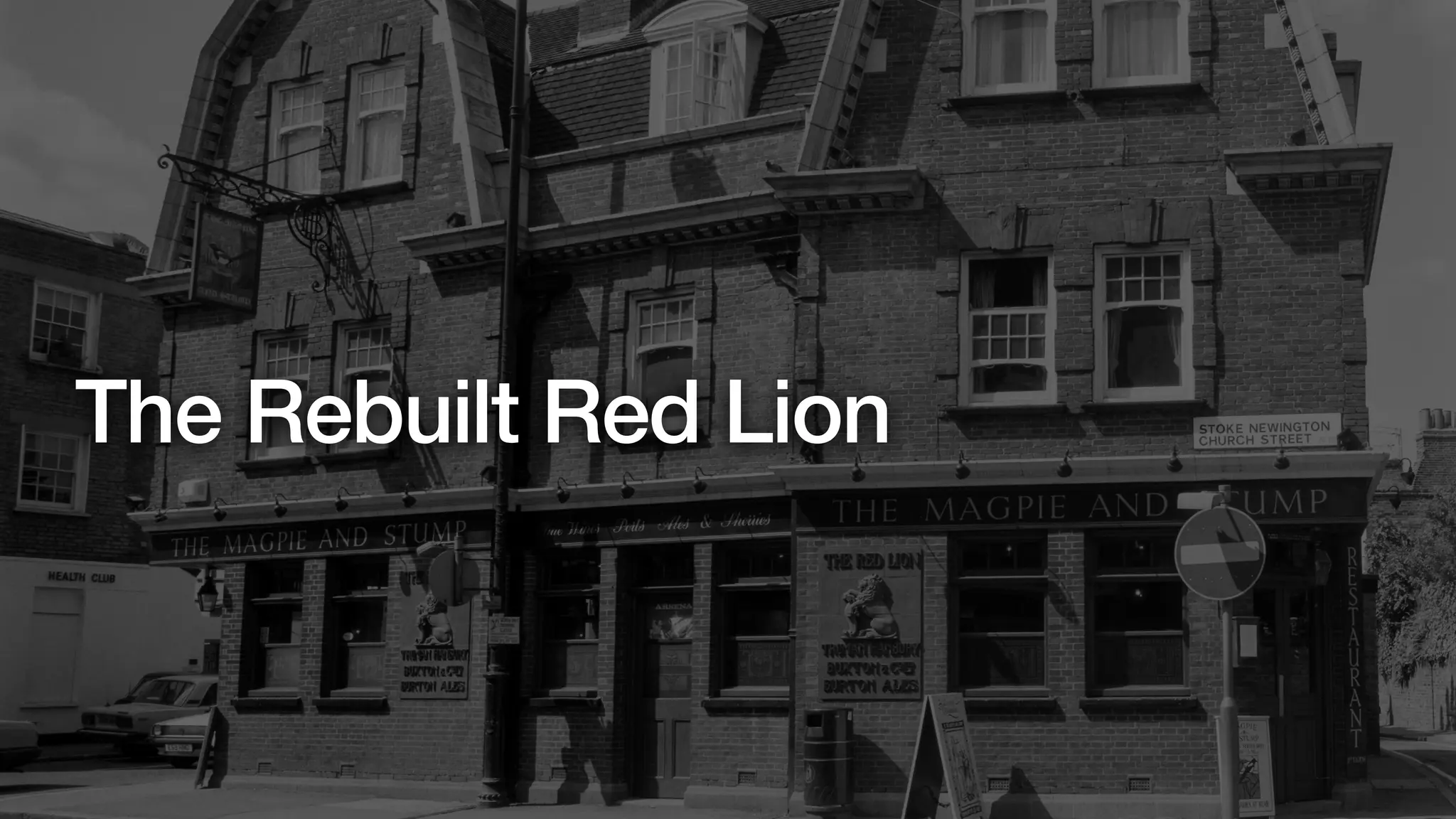
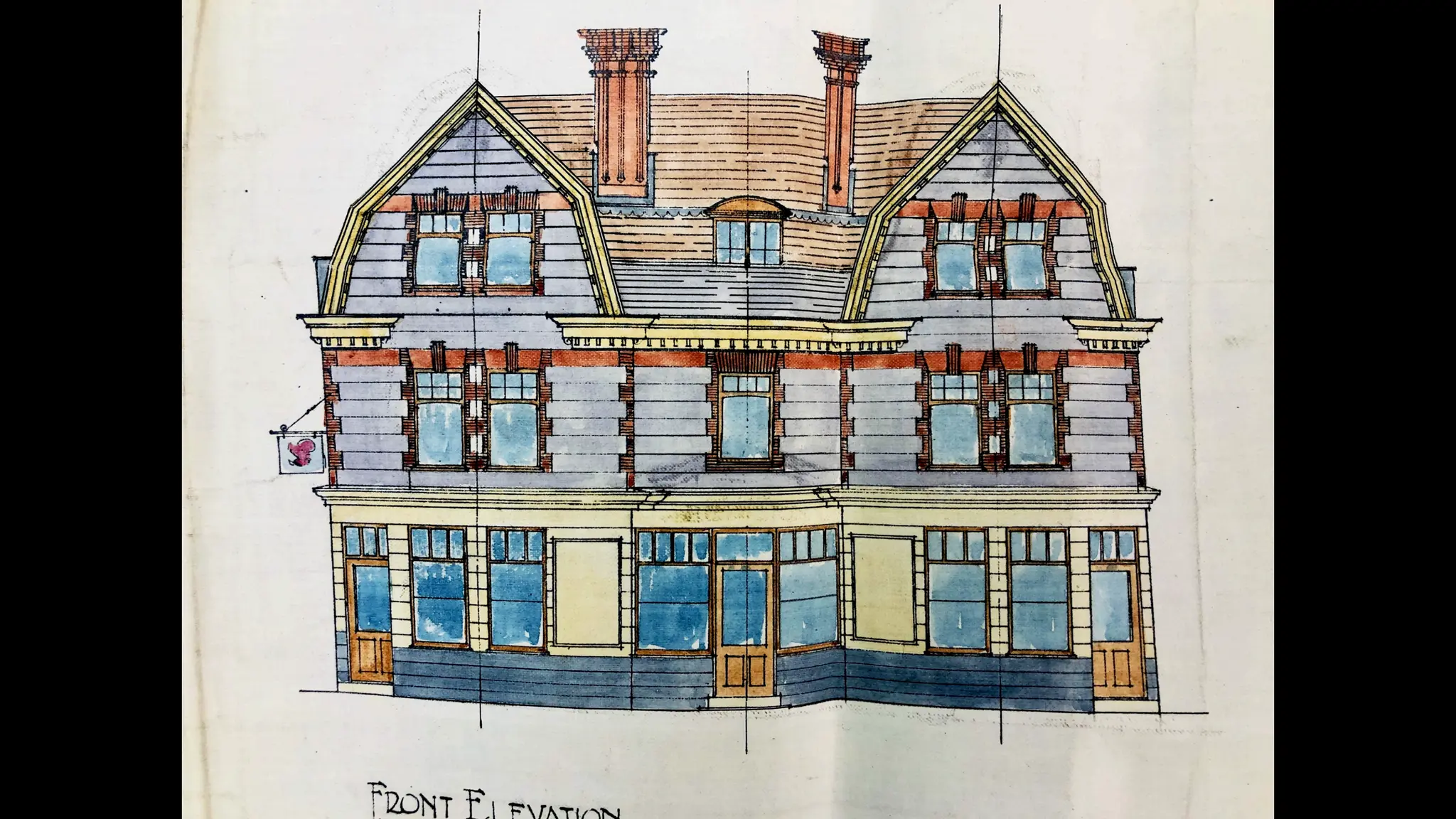
The Rebuilt Red Lion
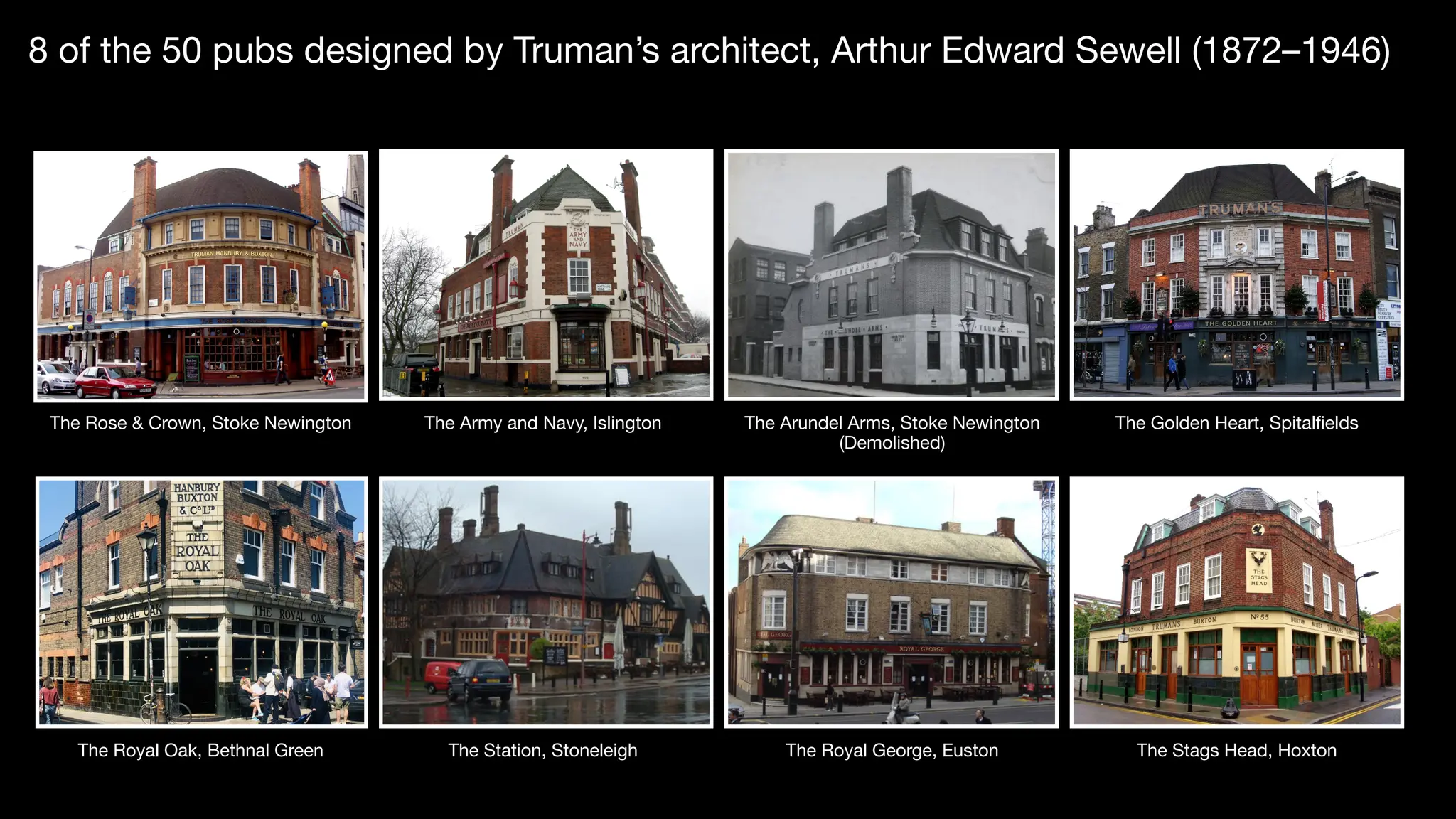
8 of the 50 pubs designed by Truman’s architect, Arthur Edward Sewell (1872–1946)
The Rose & Crown, Stoke Newington The Army and Navy, Islington The Arundel Arms, Stoke Newington
(Demolished)
The Golden Heart, Spitalfields
The Royal Oak, Bethnal Green The Station, Stoneleigh The Royal George, Euston The Stags Head, Hoxton
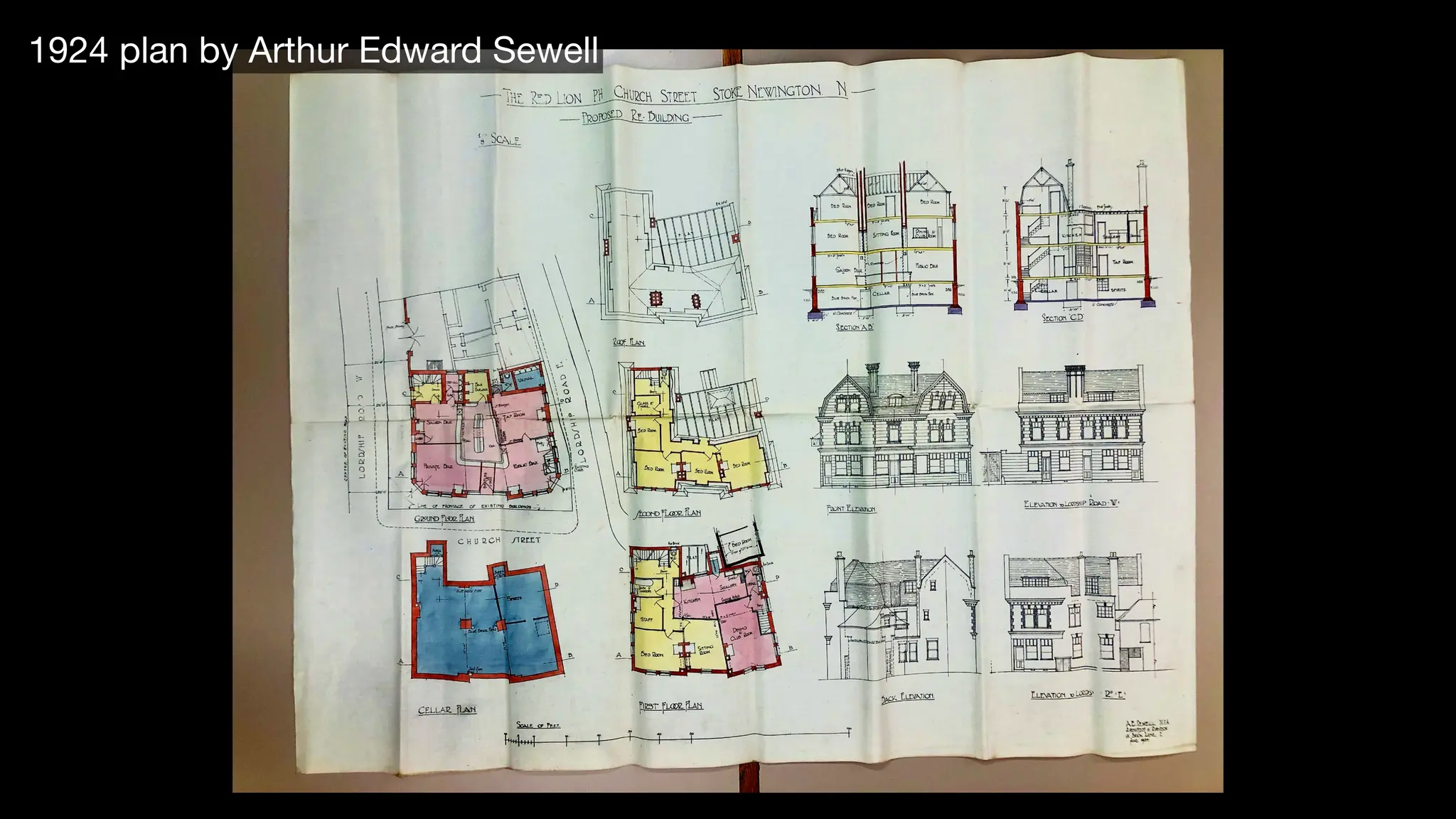
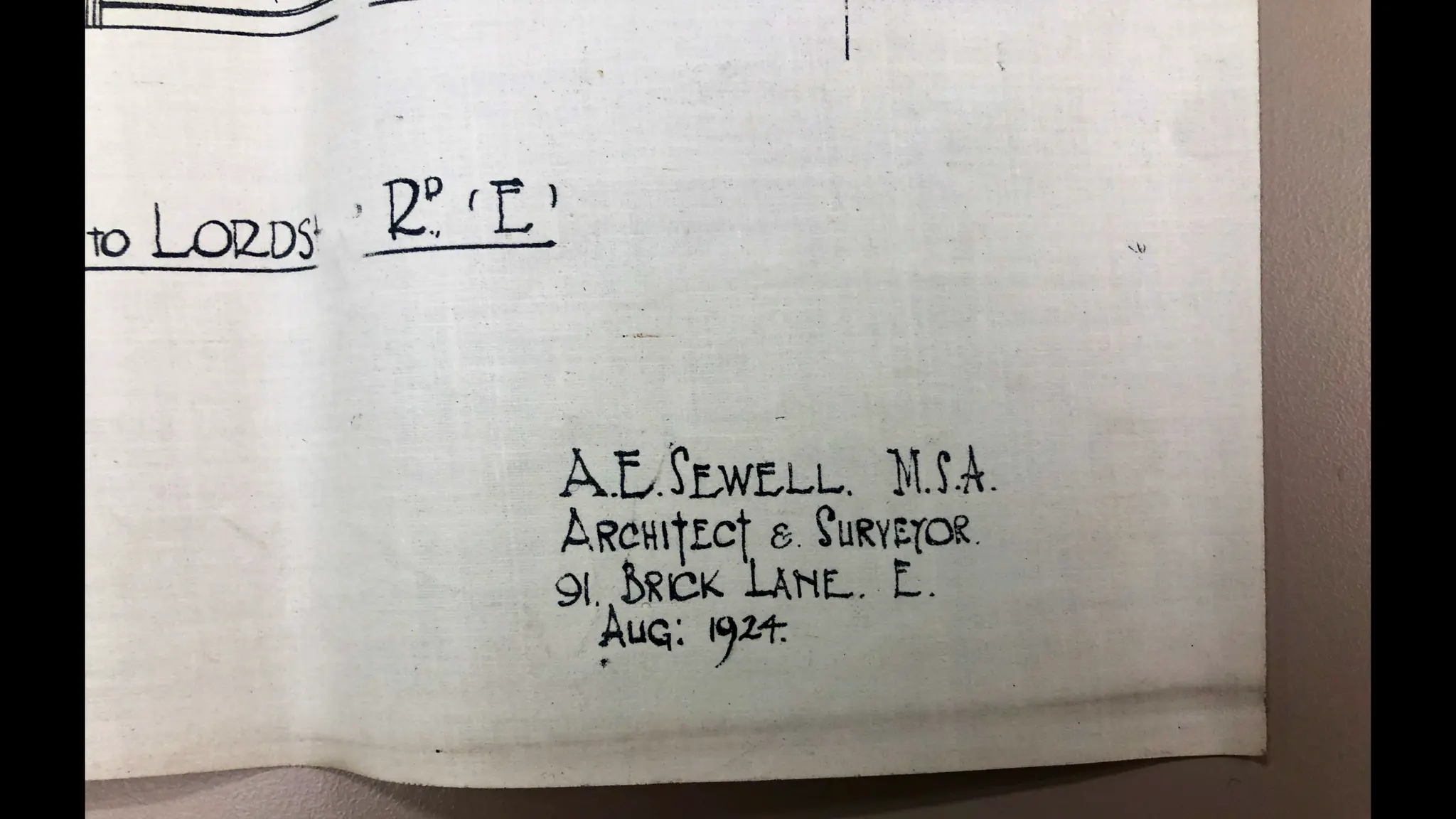
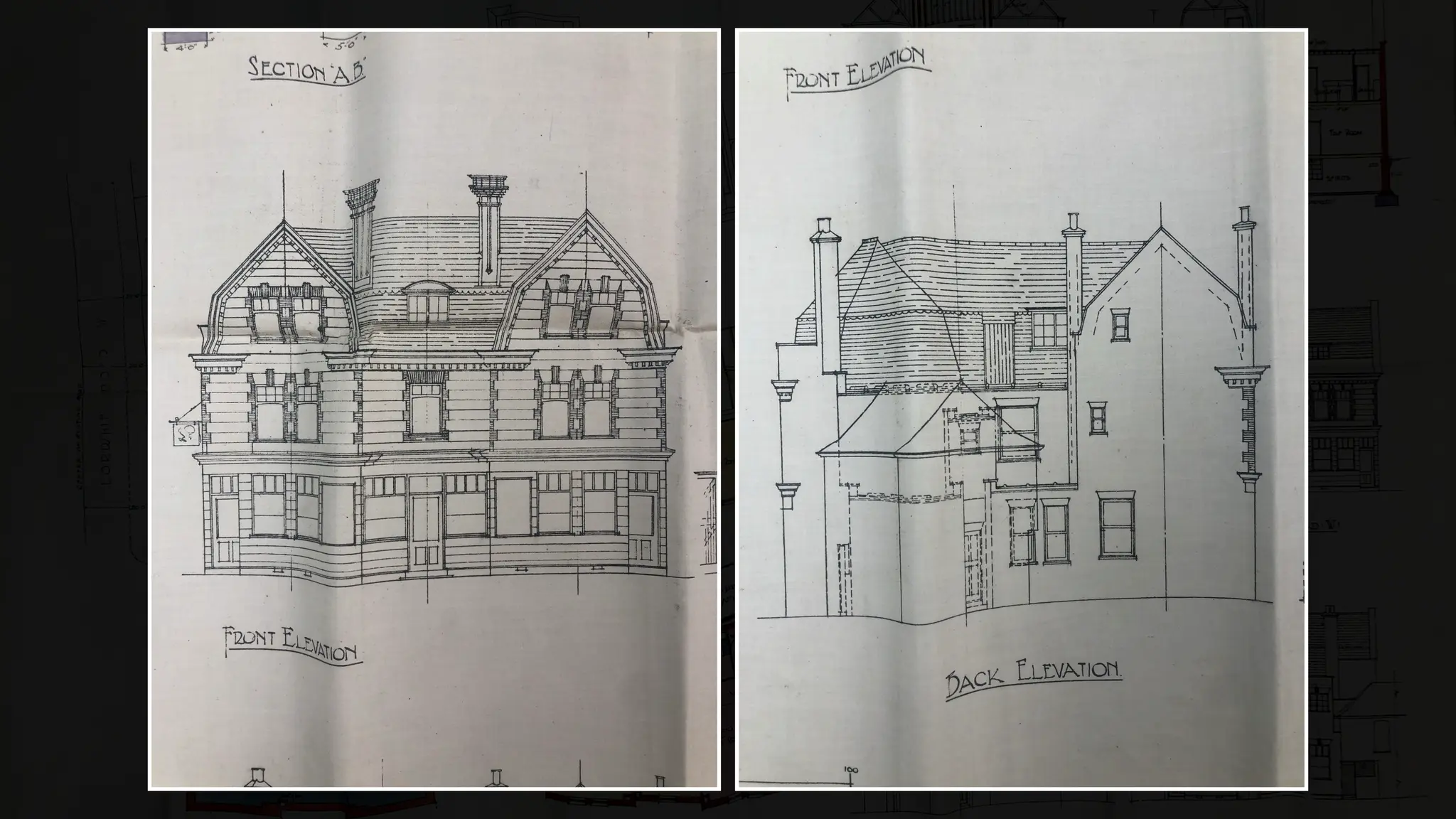
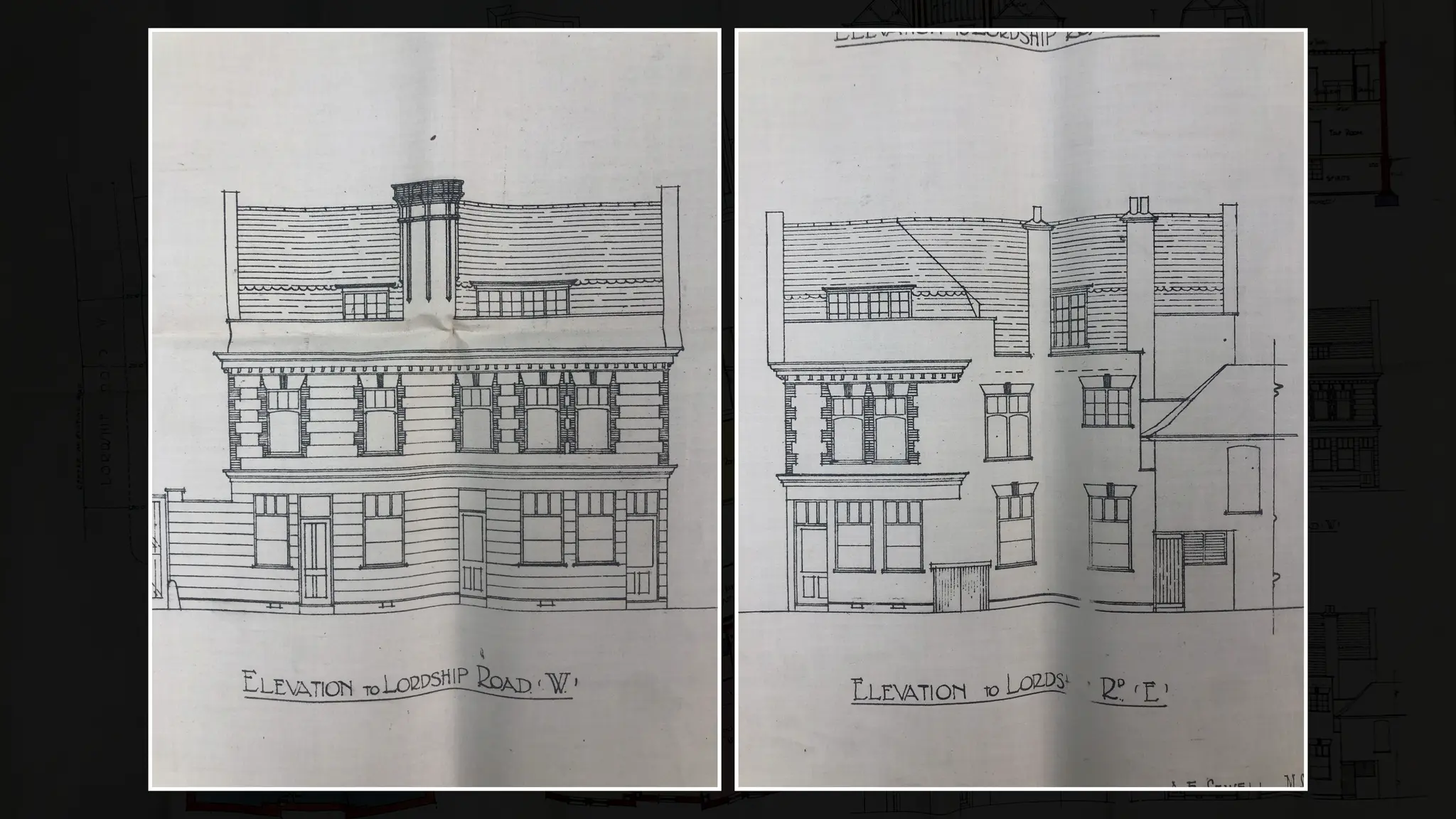
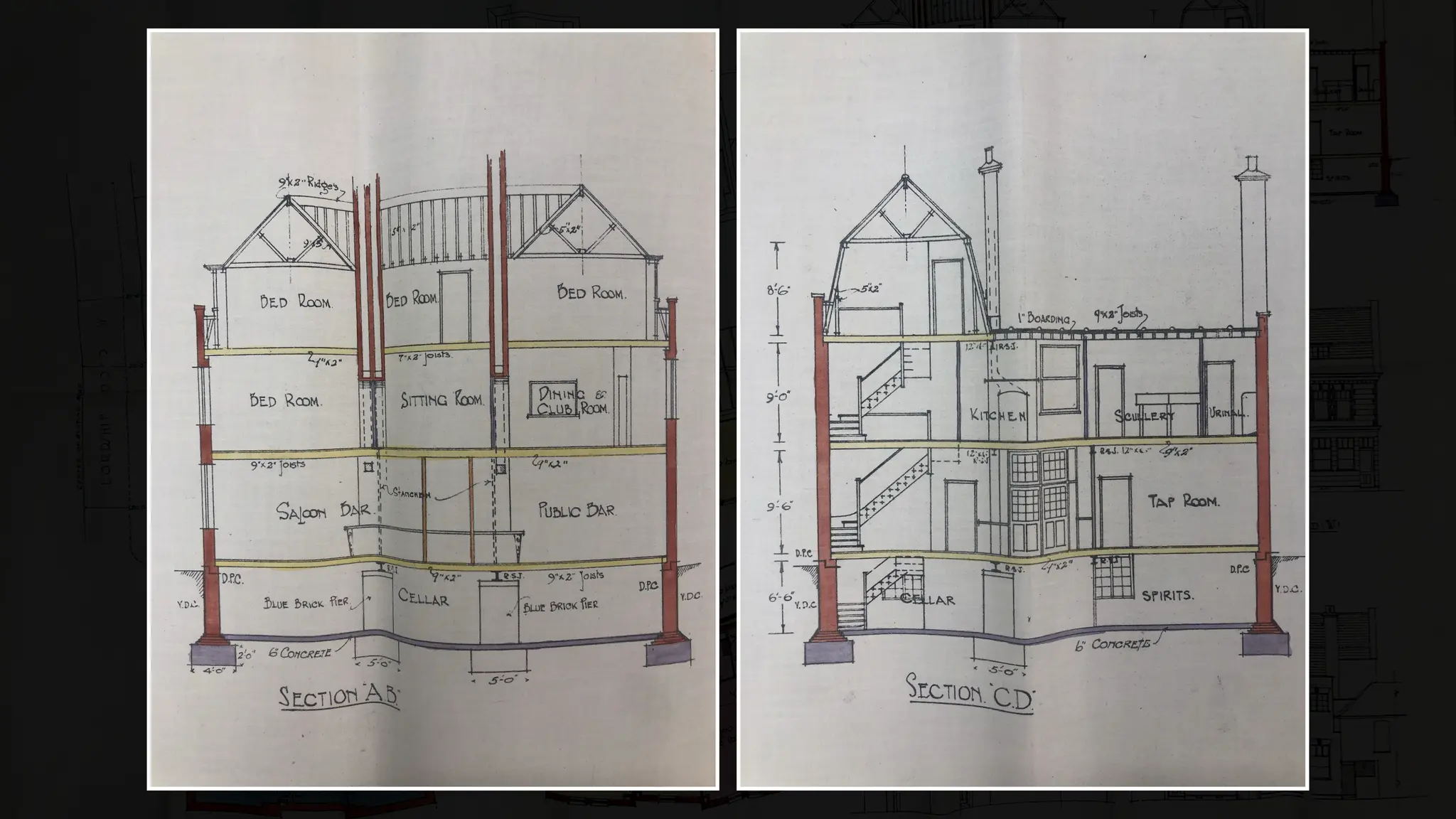
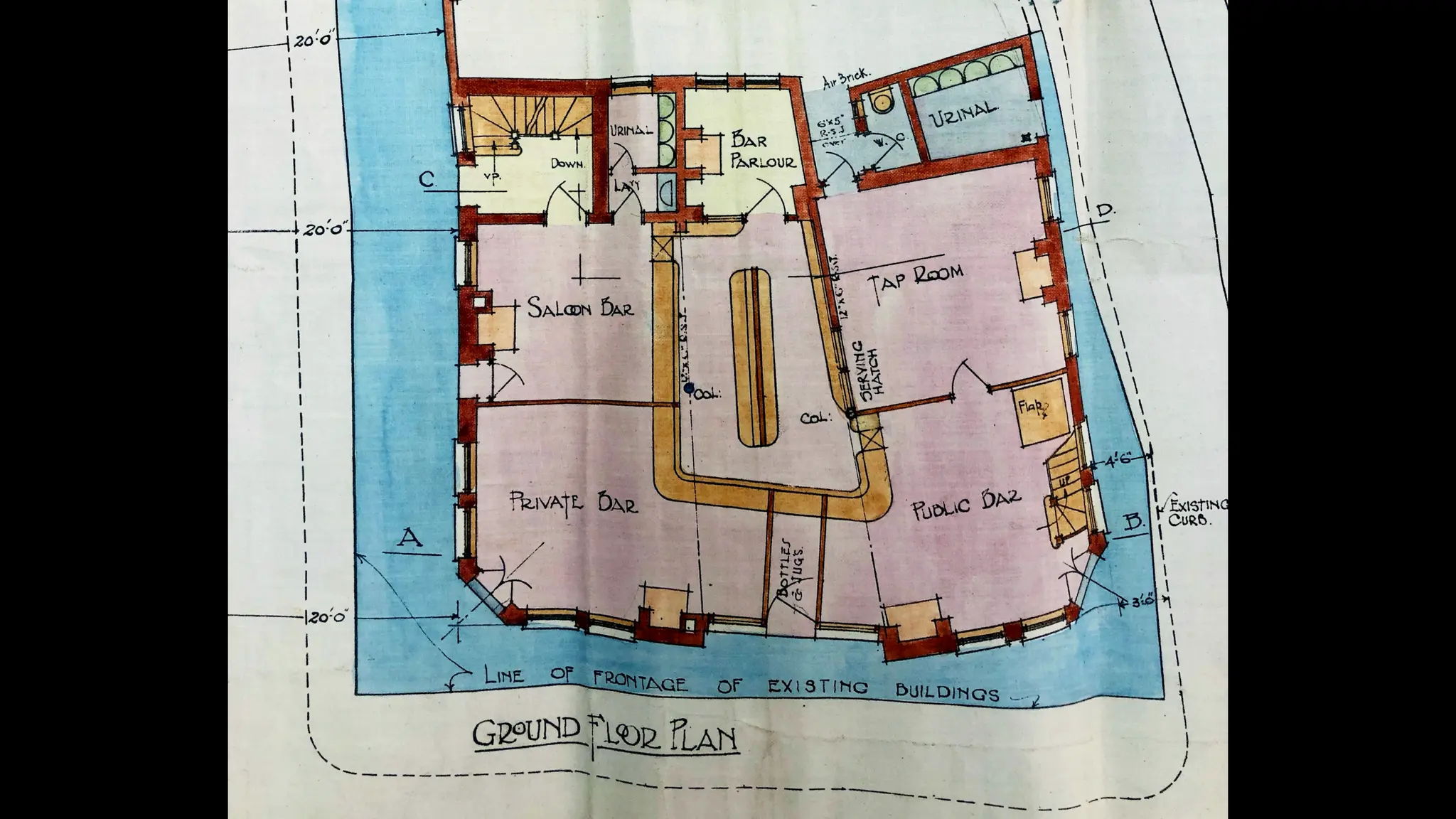
1924 plan by Arthur Edward Sewell
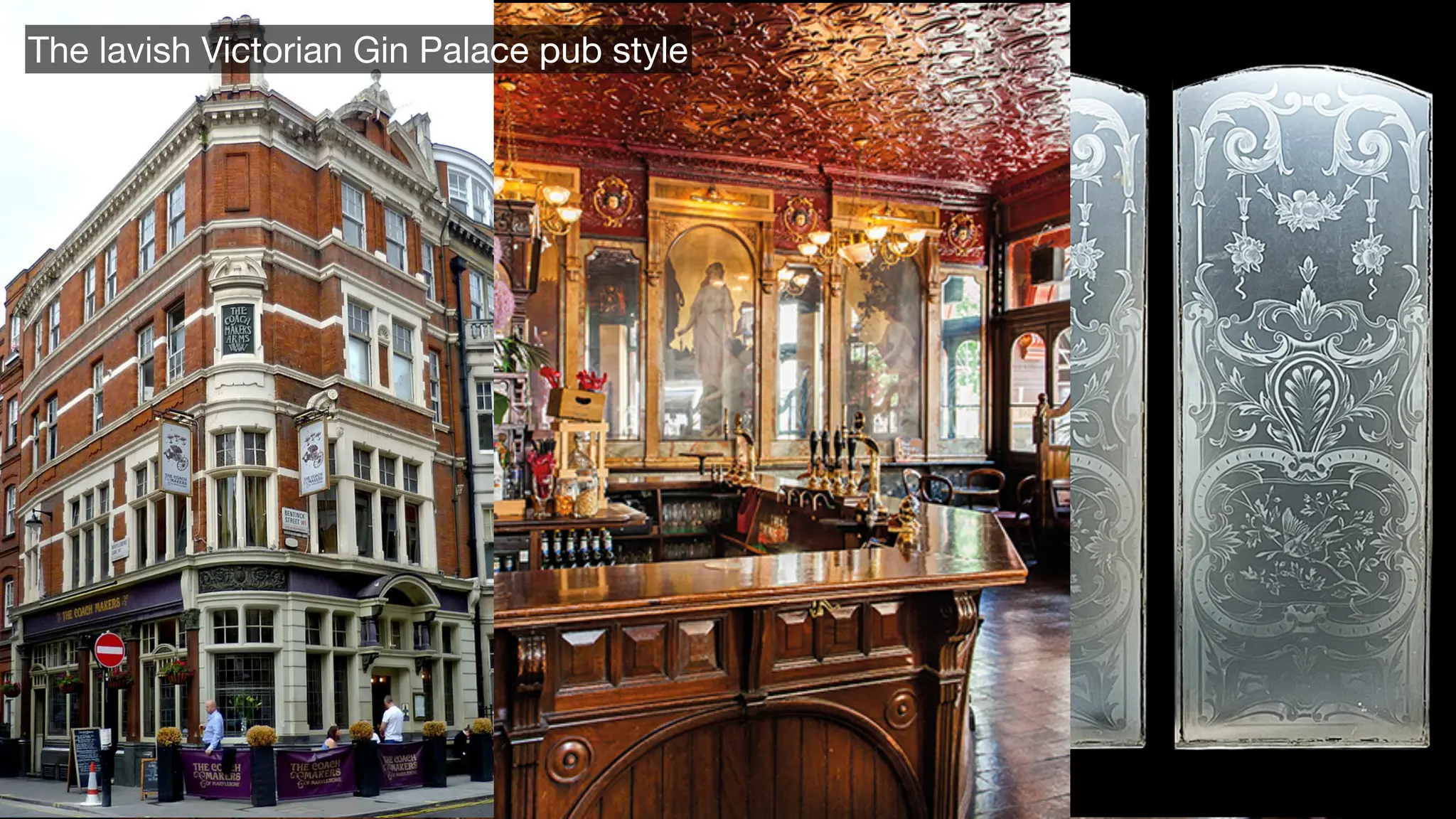
The lavish Victorian Gin Palace pub style
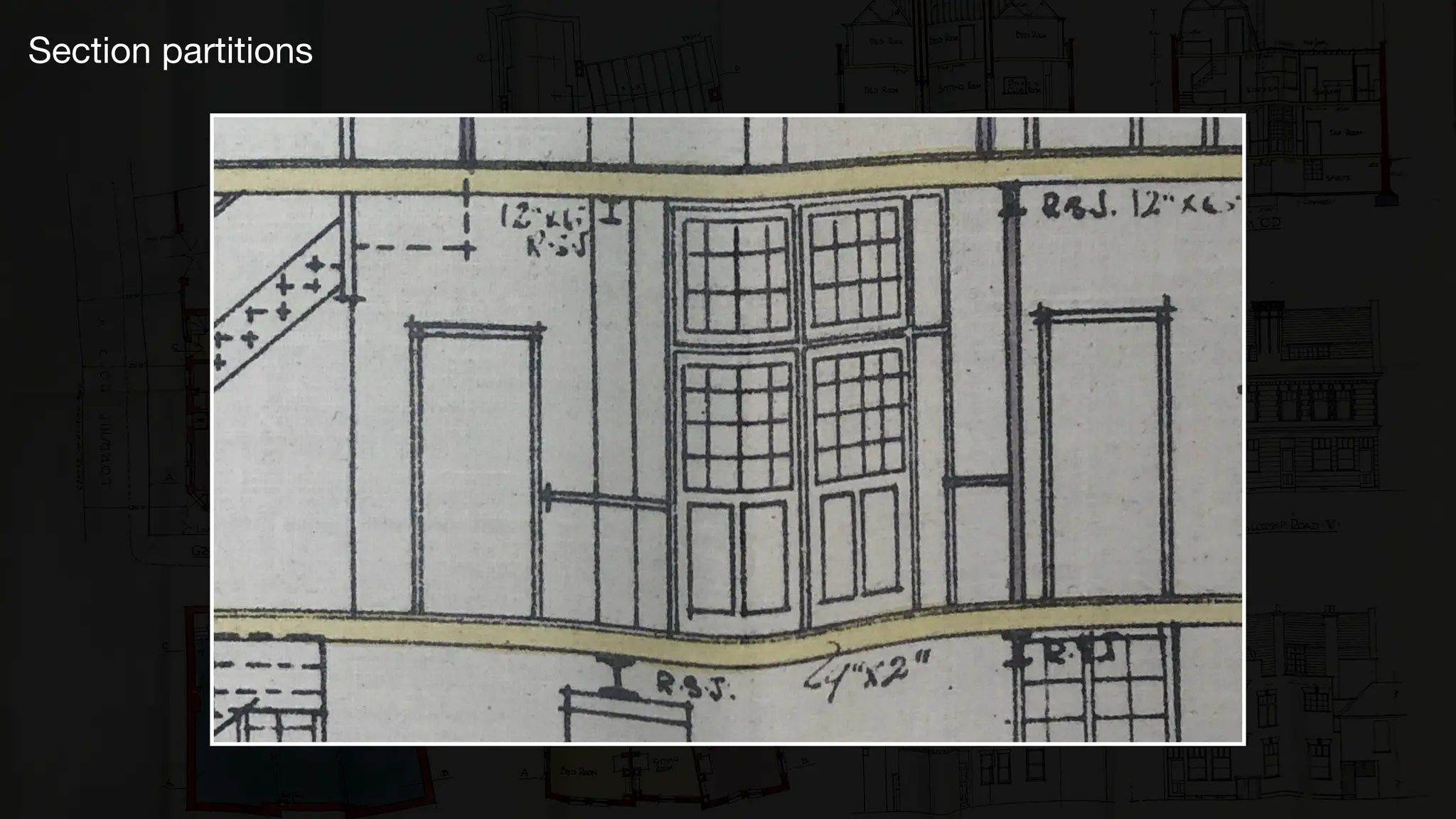
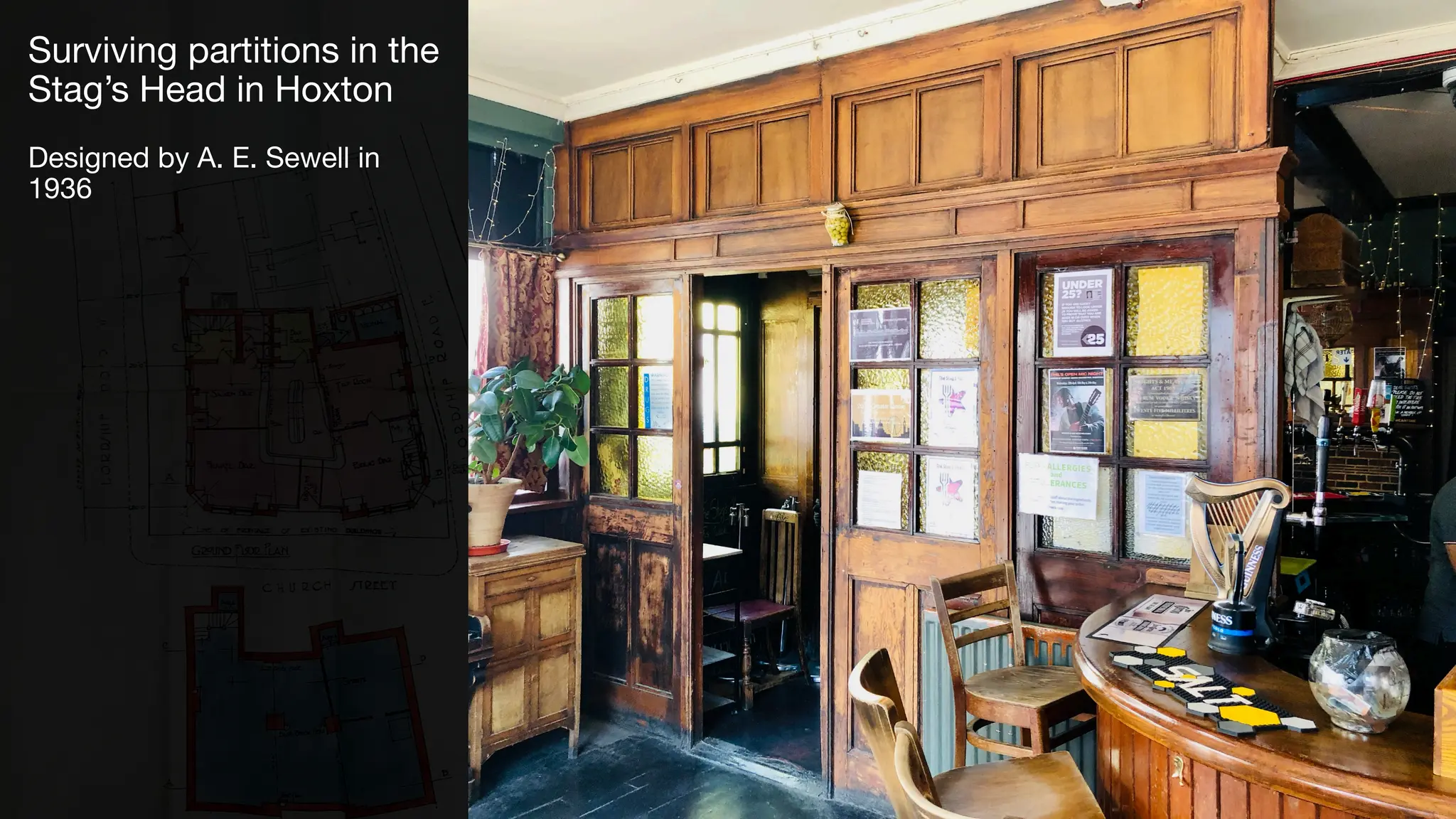
Section partitions
Surviving partitions in the
Stag’s Head in Hoxton
Designed by A. E. Sewell in
1936
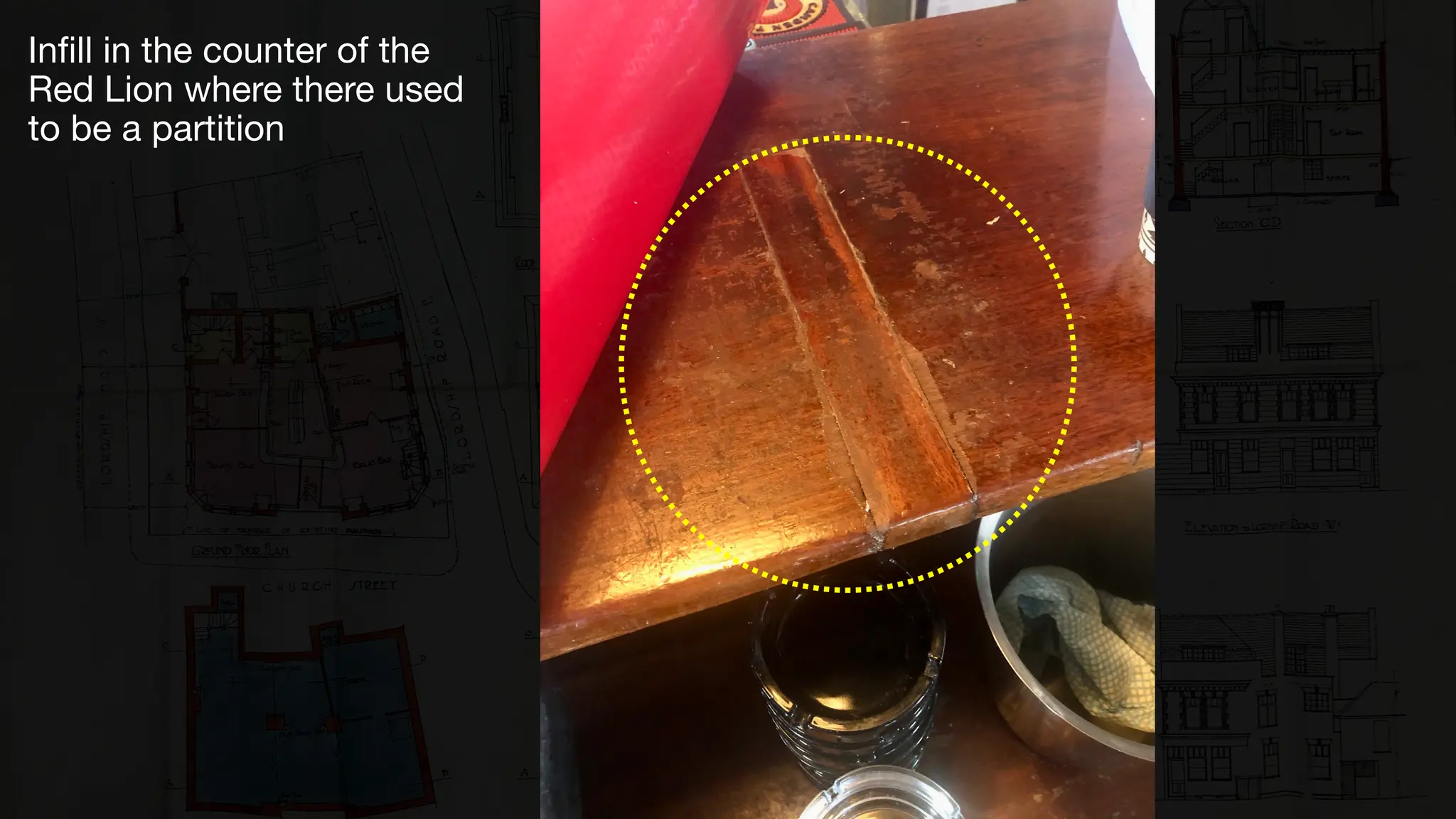
Infill in the counter of the
Red Lion where there used
to be a partition
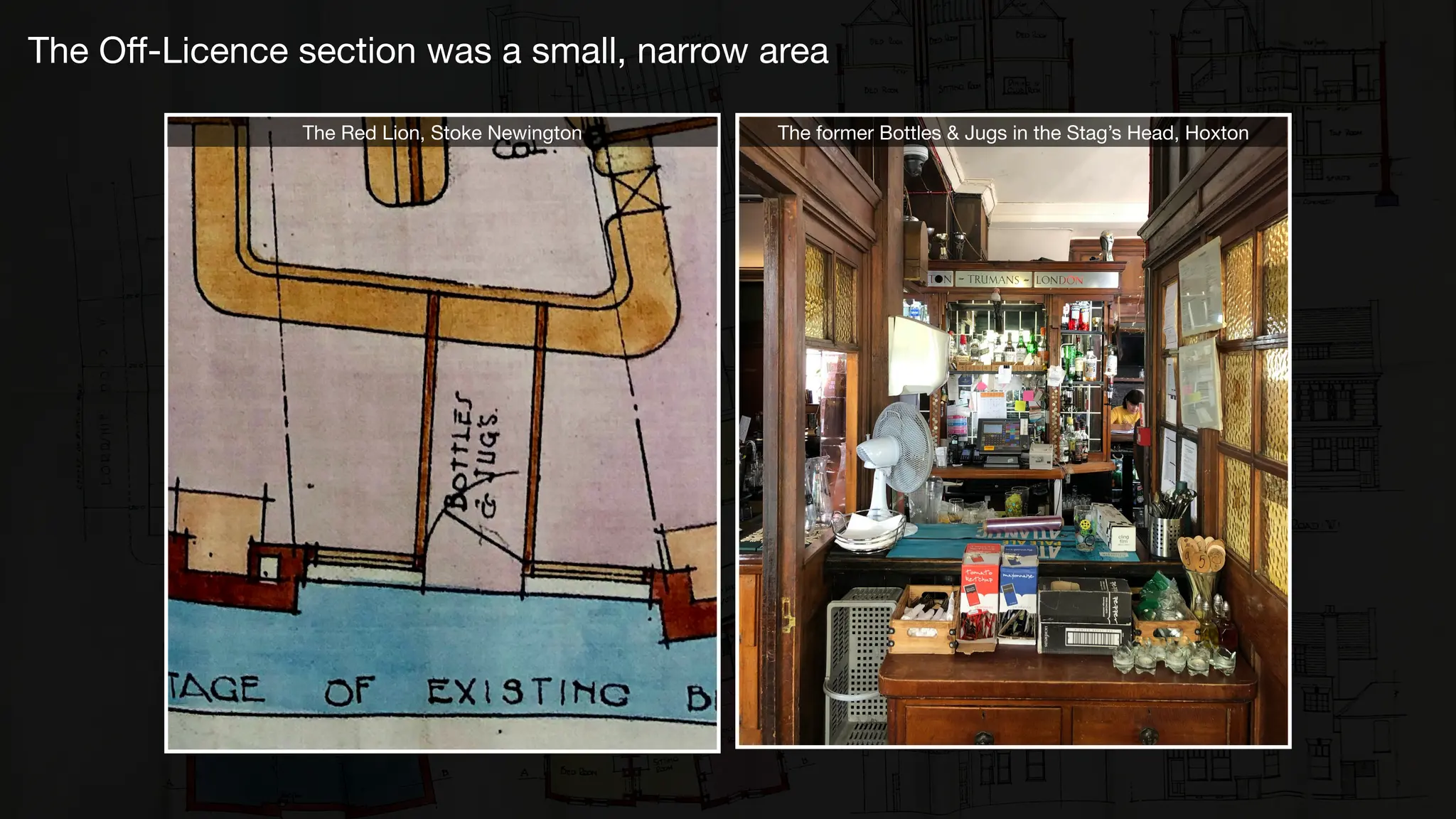
The Red Lion, Stoke Newington The former Bottles & Jugs in the Stag’s Head, Hoxton
The Off-Licence section was a small, narrow area
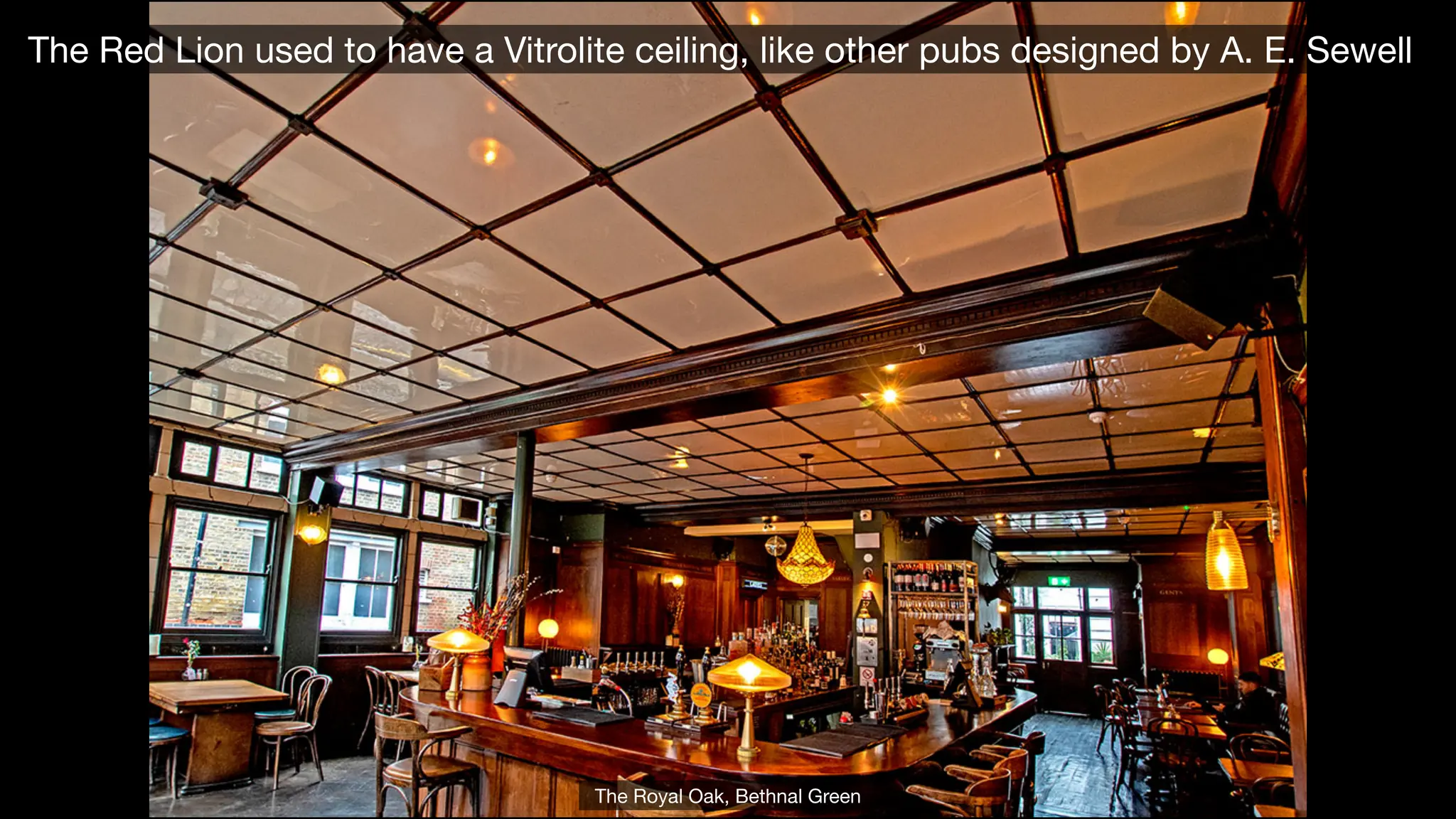
The Red Lion used to have a Vitrolite ceiling, like other pubs designed by A. E. Sewell
The Royal Oak, Bethnal Green
Coloured version of the plan
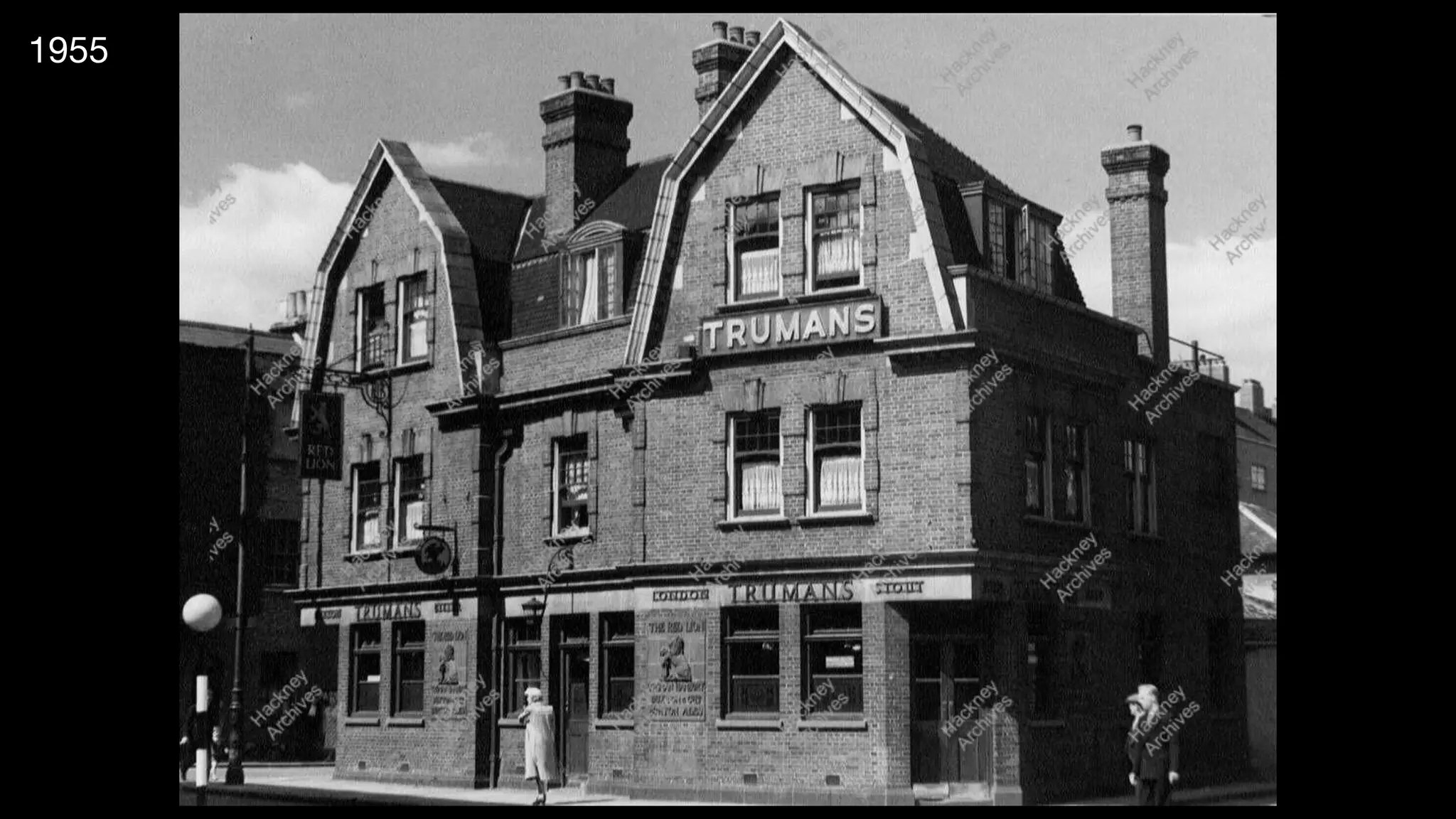
1955
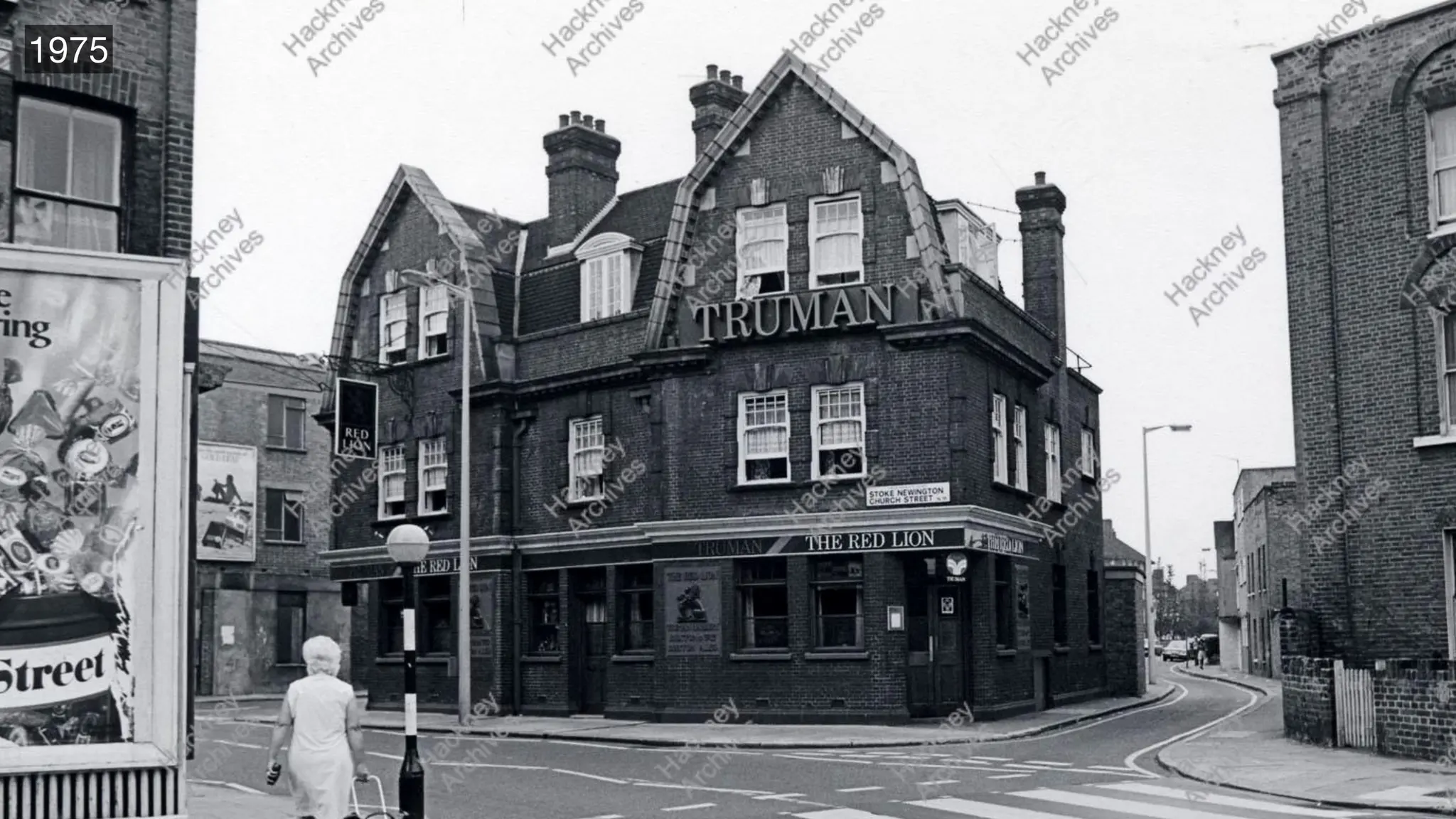
1975
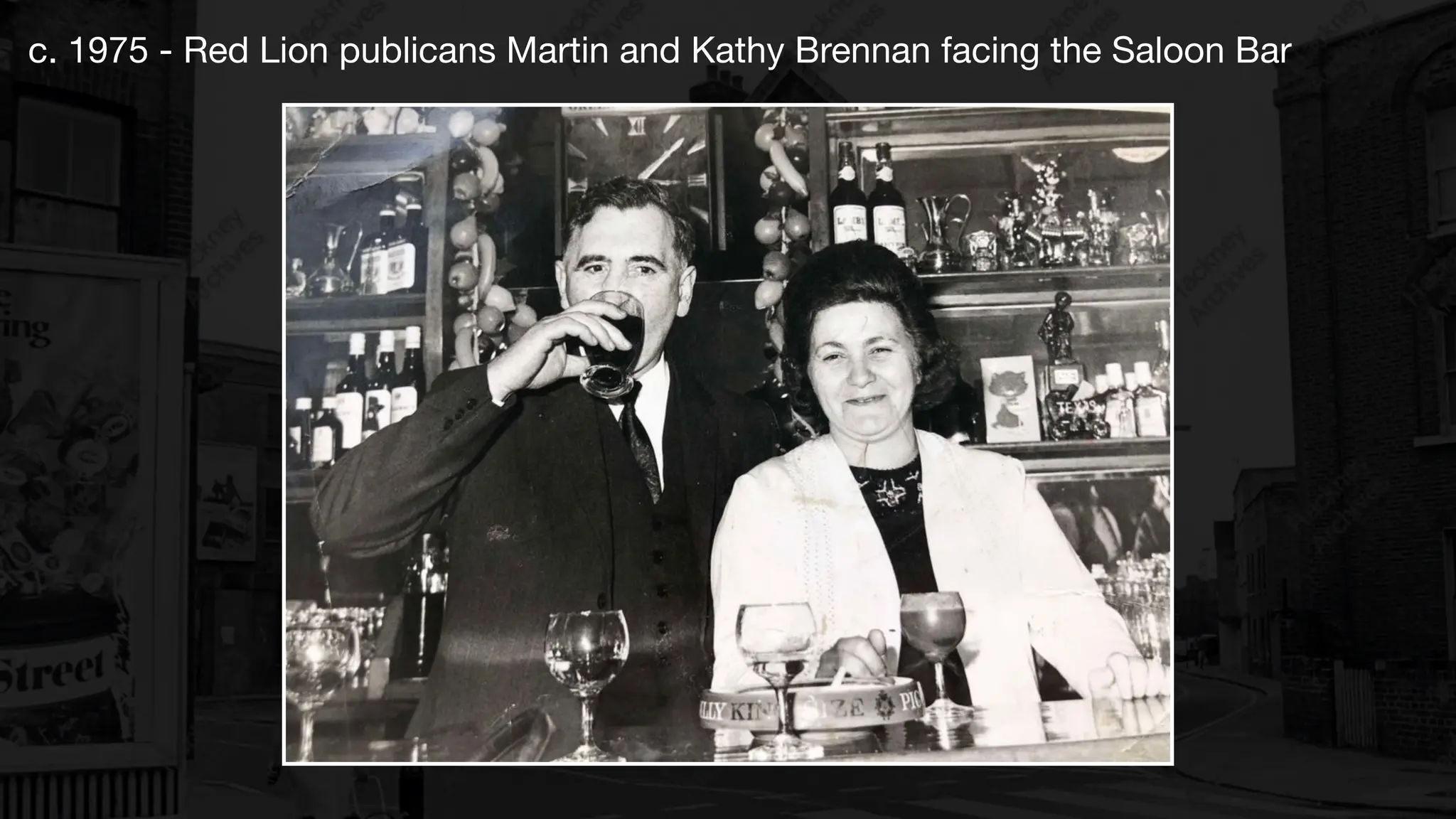
c. 1975 - Red Lion publicans Martin and Kathy Brennan facing the Saloon Bar
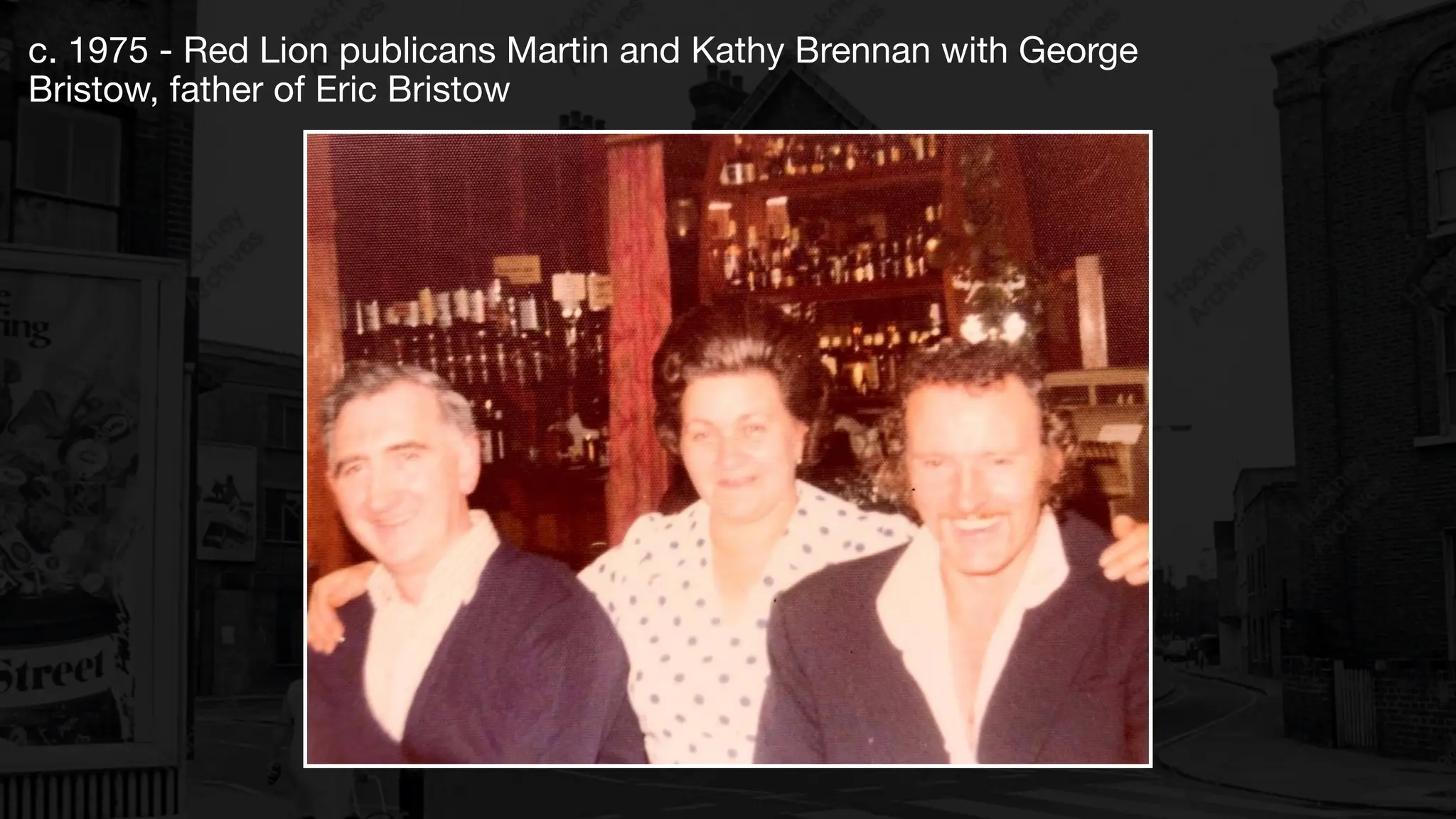
c. 1975 - Red Lion publicans Martin and Kathy Brennan with George
Bristow, father of Eric Bristow
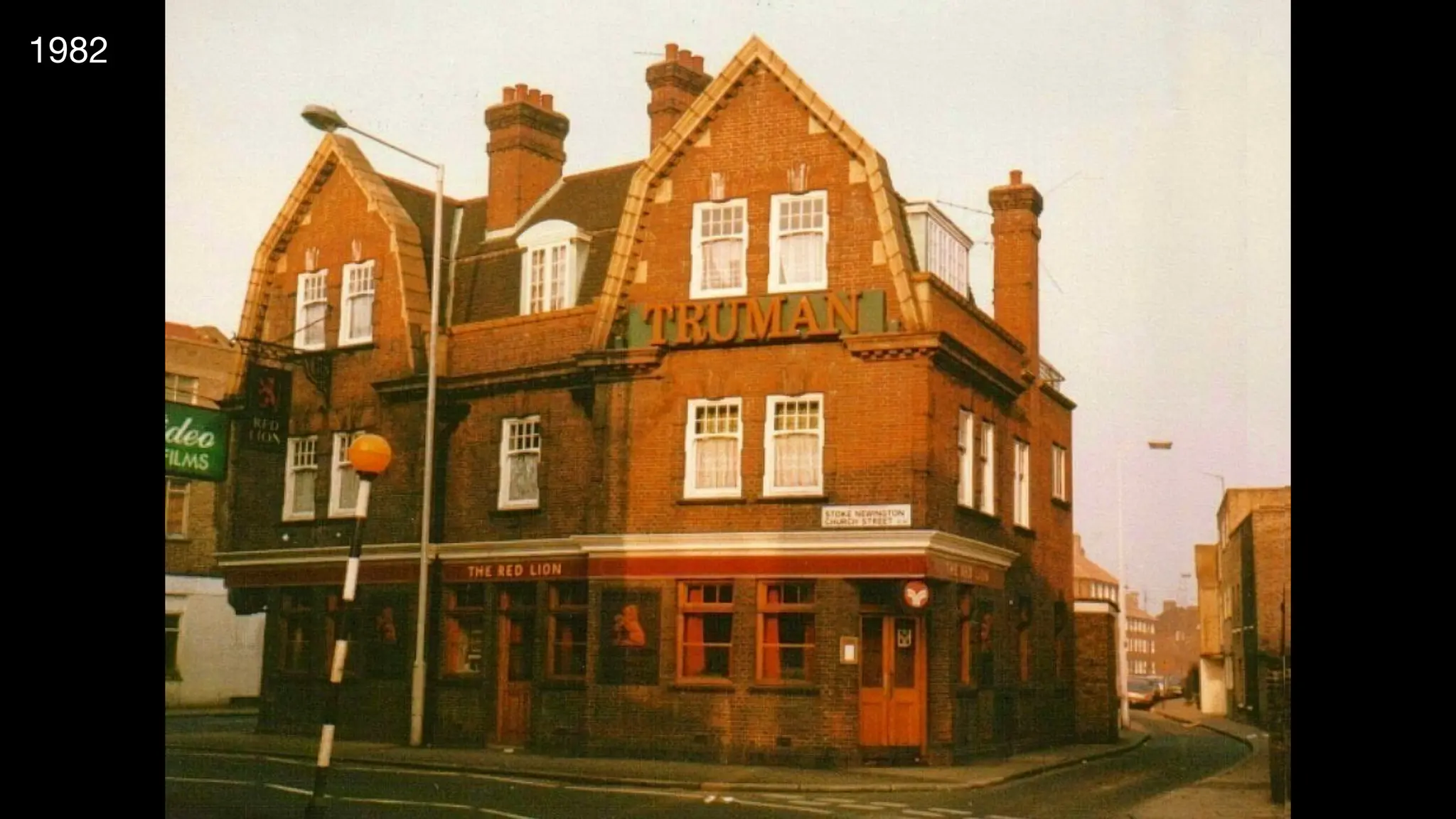
1982
1983
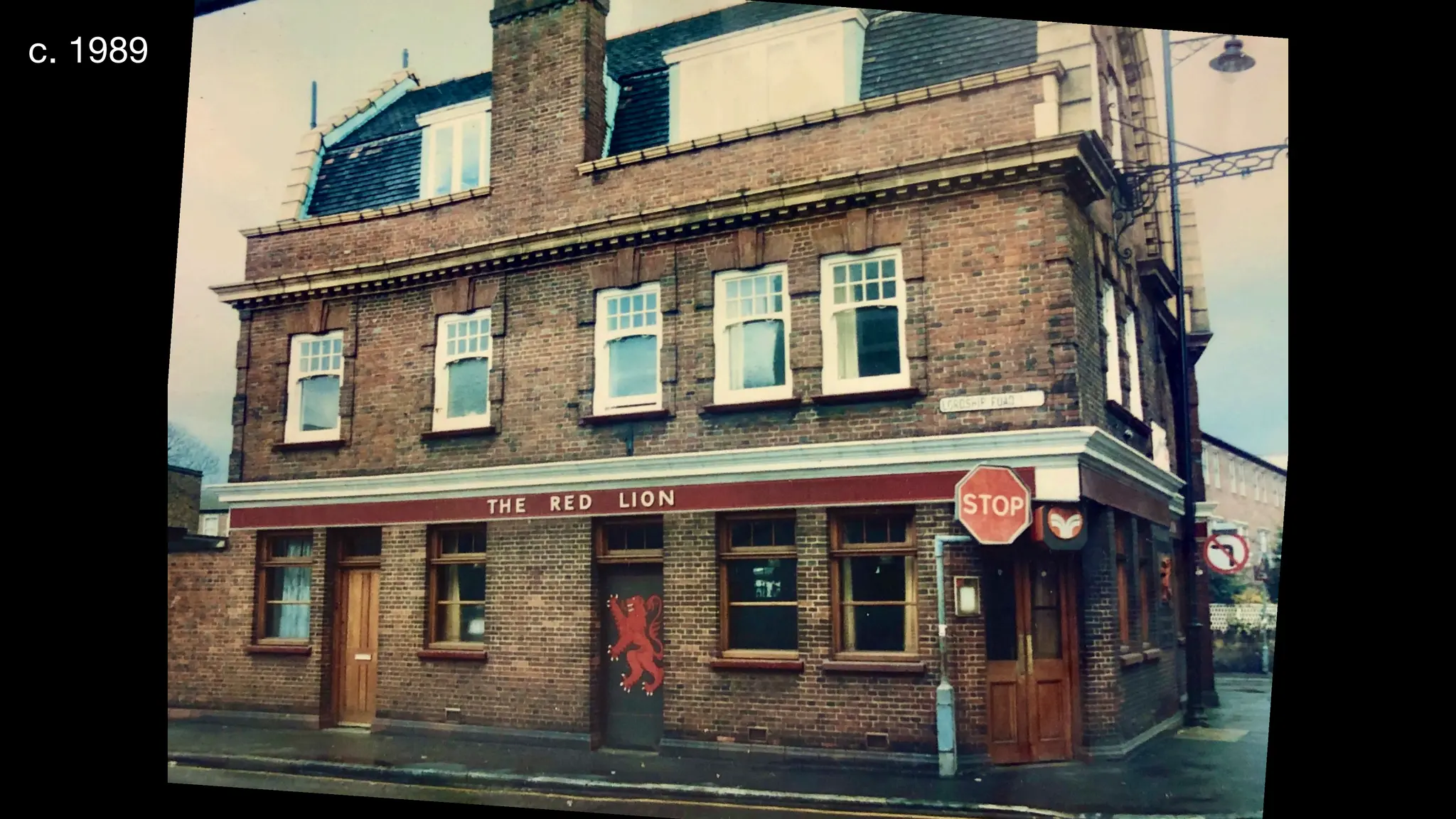
c. 1989
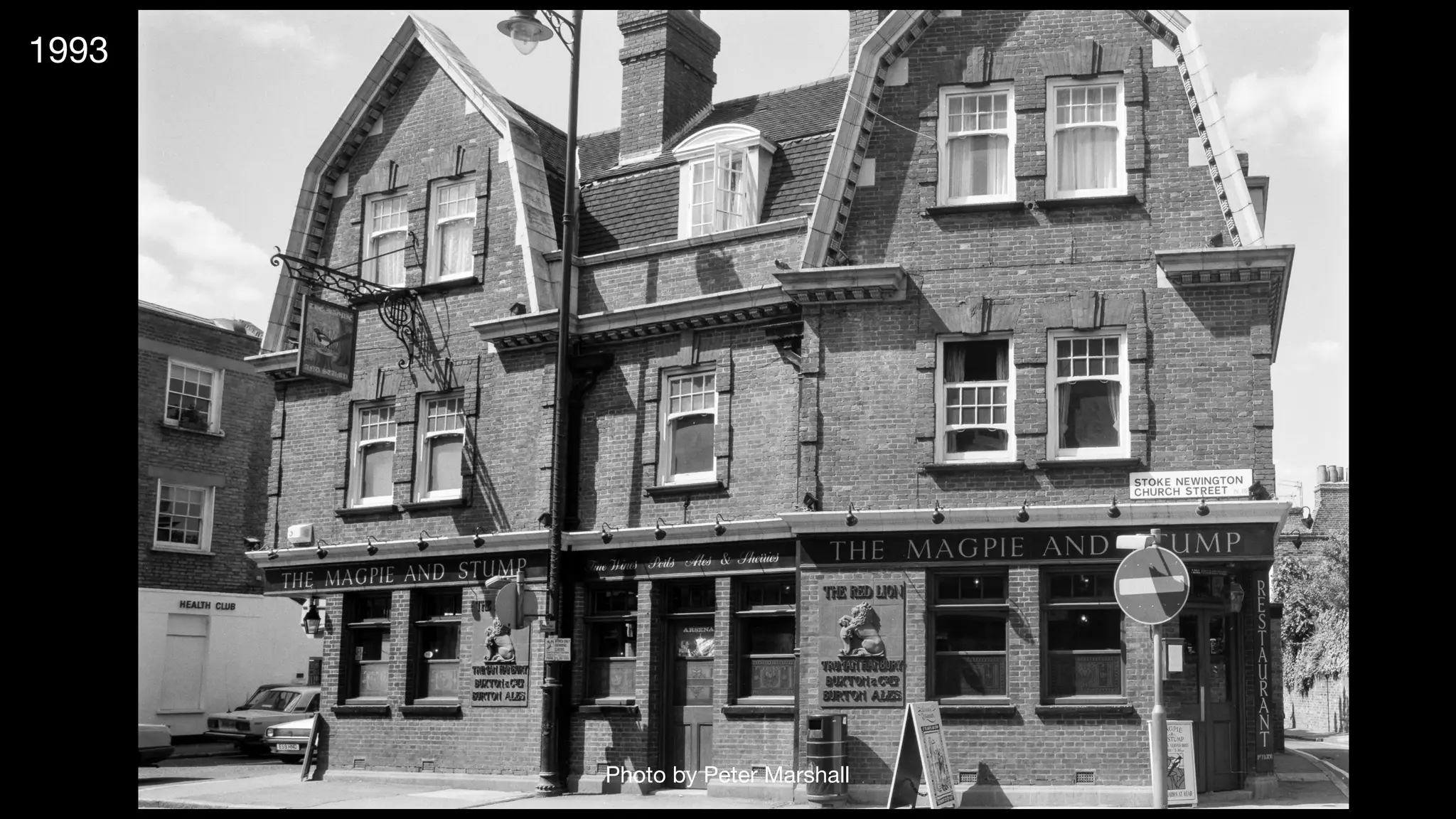
1993
Photo by Peter Marshall
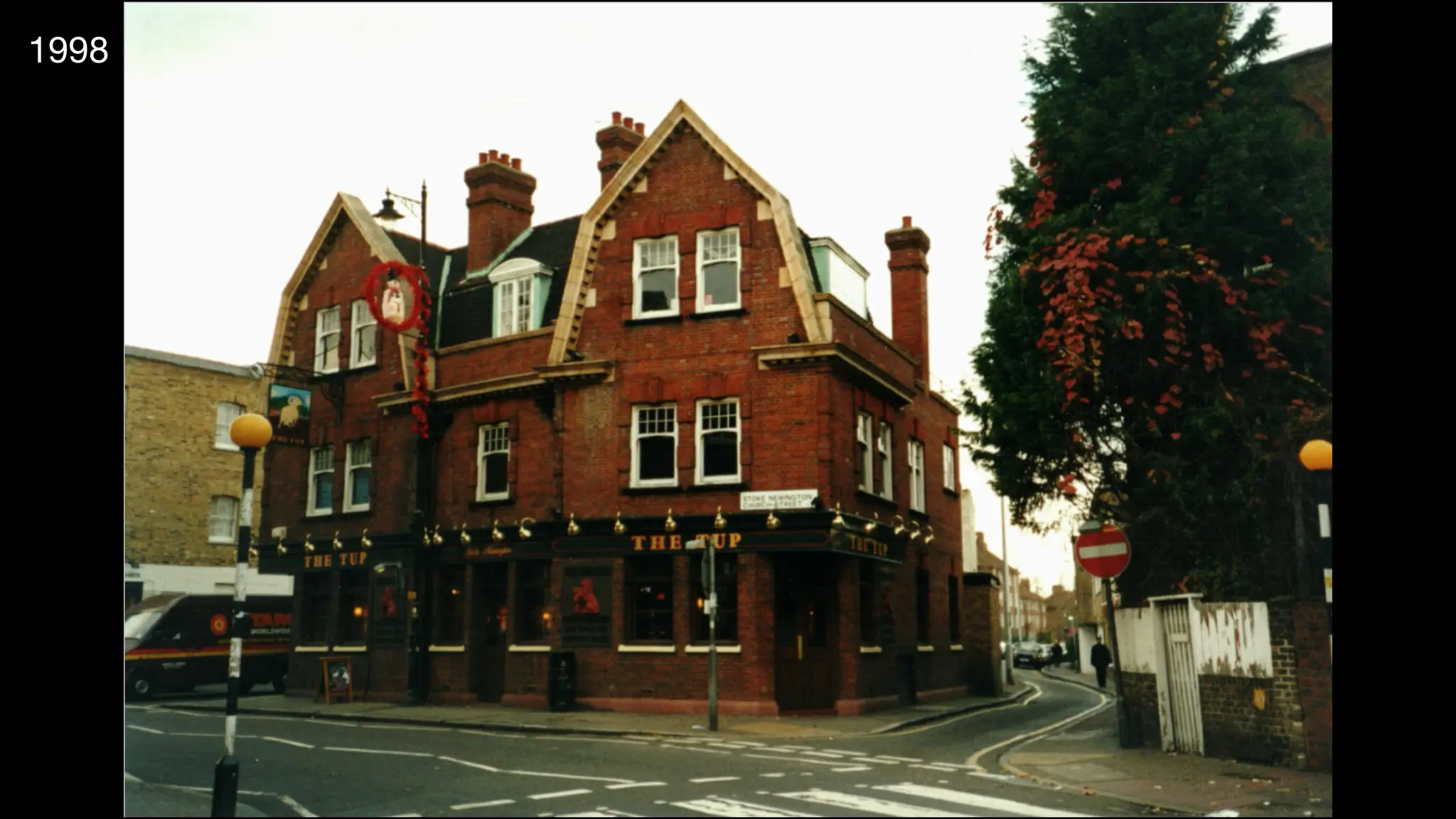
1998
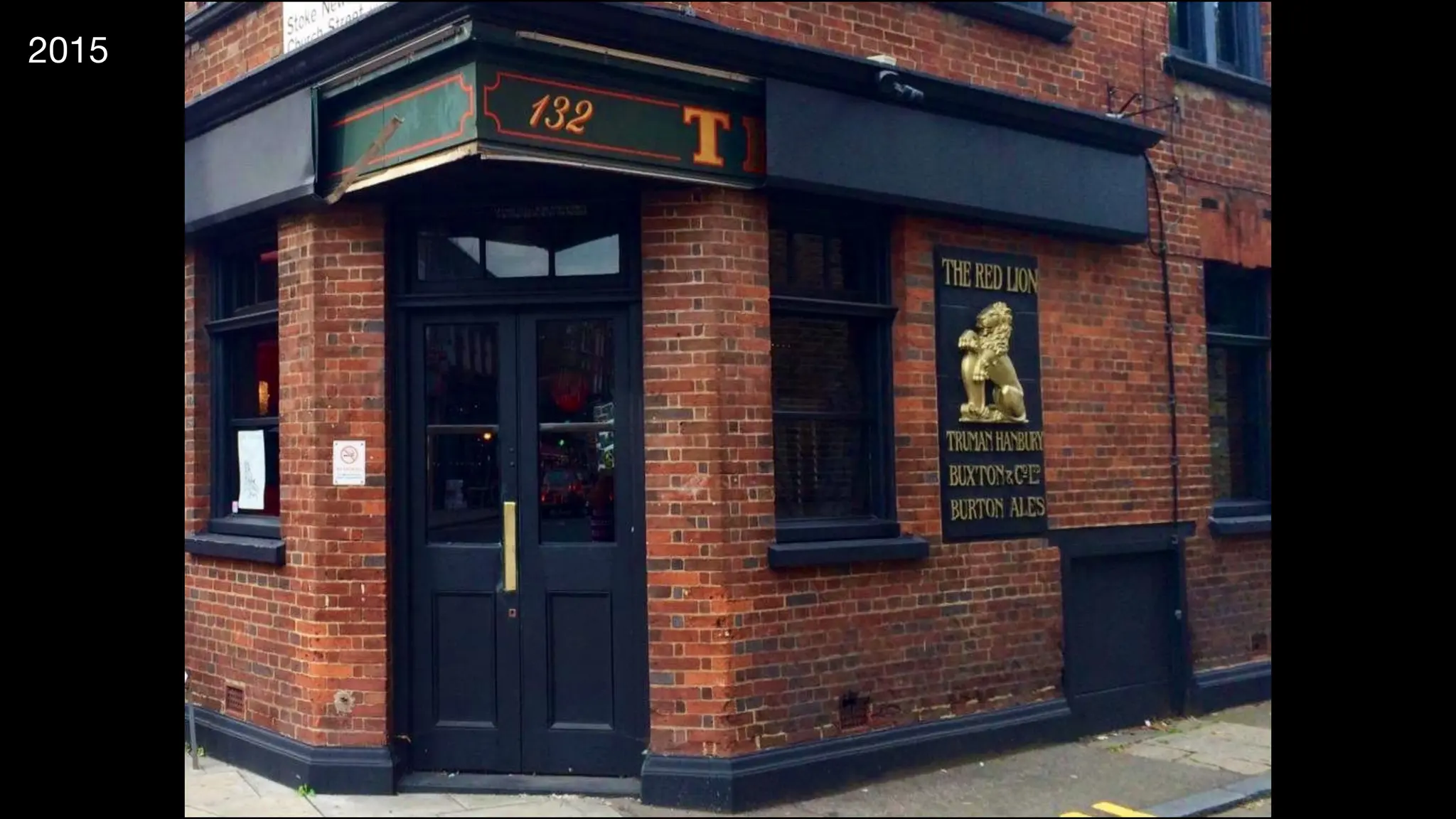
2015
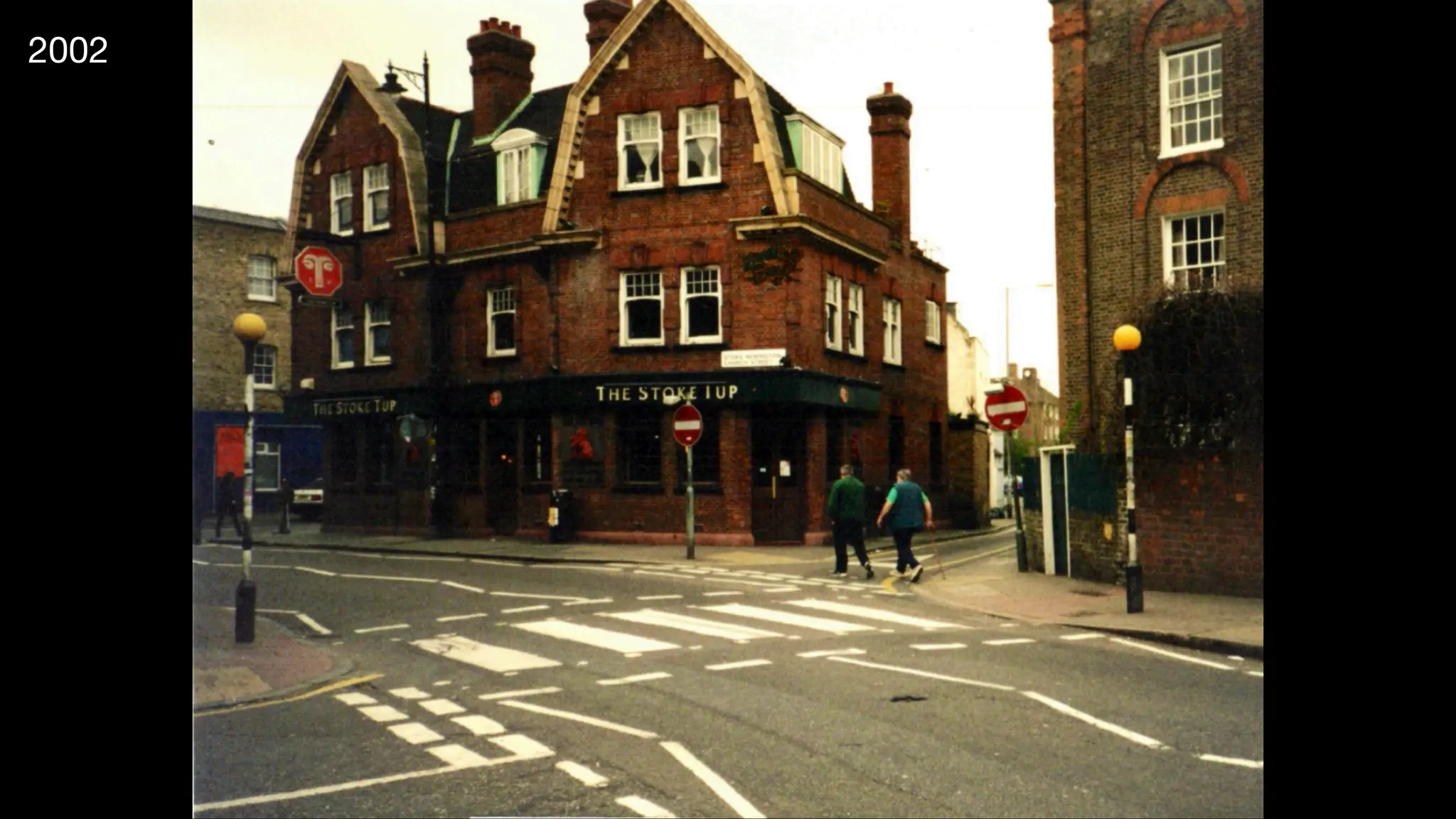
2002
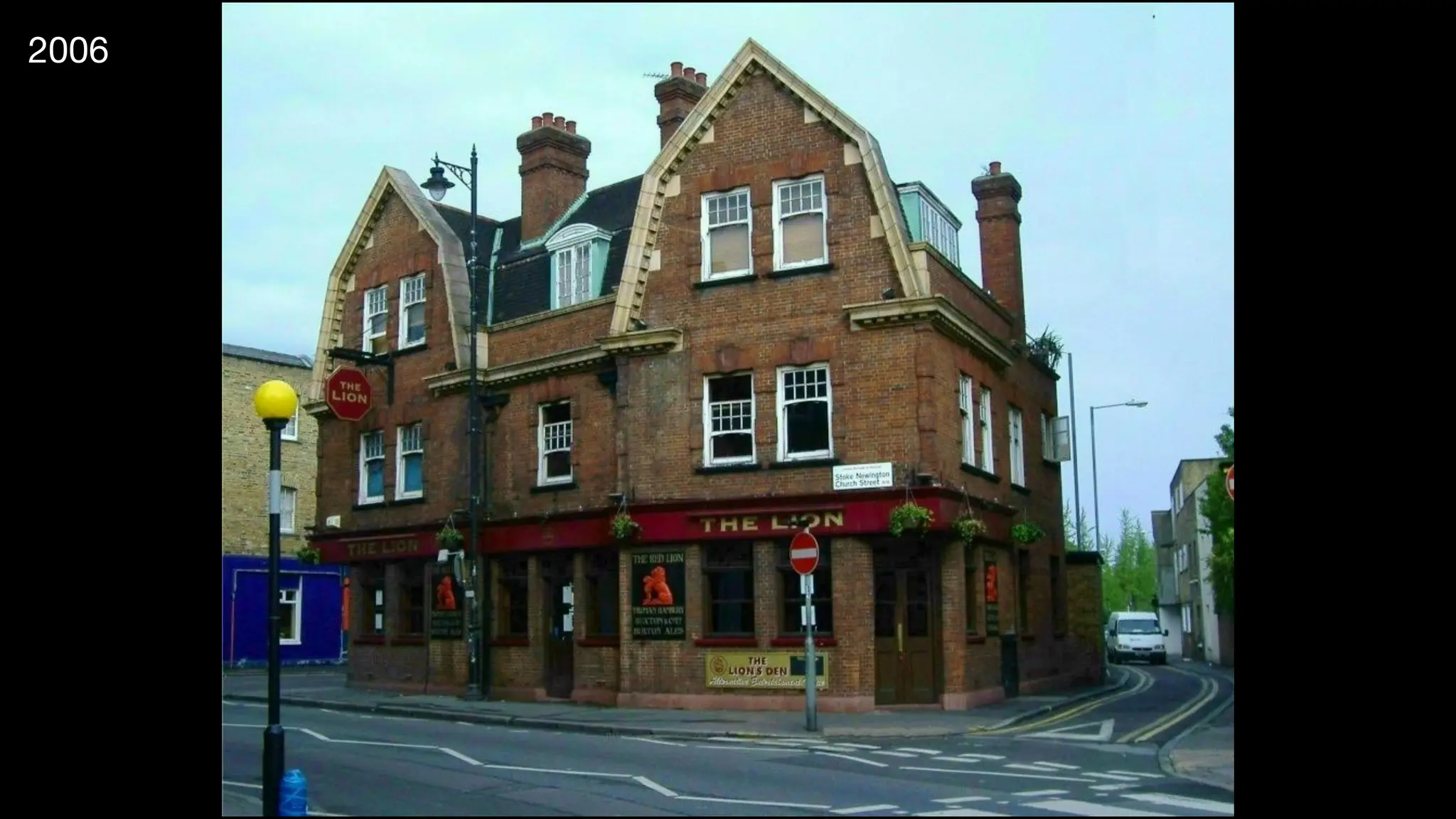
2006
Thank you

Pints, Partitions and Rebuild - The Red Lion’s 300-Year History