Physics in Mechanical
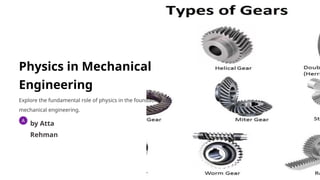
Engineering
Explore the fundamental role of physics in the foundation of
mechanical engineering.
by Atta
Rehman
Introduction to Mechanical Engineering
Design
Creating solutions for practical
problems.
Analysis
Predicting behavior of mechanical
systems.
Manufacturing
Building and producing
mechanical devices.
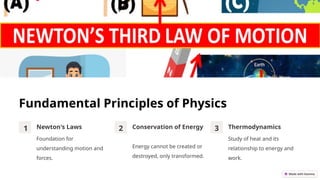
Fundamental Principles of Physics
1 Newton's Laws
Foundation for
understanding motion and
forces.
2 Conservation of Energy
Energy cannot be created or
destroyed, only transformed.
3 Thermodynamics
Study of heat and its
relationship to energy and
work.
Statics and Dynamics in
Mechanical Systems
Statics
Analysis of forces in equilibrium.
Dynamics
Study of motion and its causes.
Applications
Bridge design, vehicle suspension, robotics.
Thermodynamics and Heat Transfer
1
Thermodynamics
Energy flow and transformation.
2
Heat Transfer
Conduction, convection, radiation.
3
Applications
Power plants, HVAC systems.
Fluid Mechanics and Hydraulics
Fluids
Liquids and gases.
Pressure
Force per unit area.
Flow
Movement of fluids.
Vibration and Wave
Propagation
1 Vibration
Oscillatory motion.
2 Waves
Disturbances that travel through a medium.
3 Applications
Seismic analysis, musical instruments.
Material Science and
Strength of Materials
Material Properties
Strength, stiffness, ductility.
Stress and Strain
Forces and deformations.
Failure Analysis
Predicting material behavior under load.
Engineering Design and Optimization
1
Design Process
Ideation, prototyping, testing.
2
Optimization Techniques
Finding the best design solutions.
3
Applications
Automotive, aerospace, manufacturing.
Conclusion and Future
Trends
Physics will continue to drive innovation in mechanical engineering.

.. Physics-in-Mechanical-Engineering.pptx

  • 1.
    Physics in Mechanical Engineering Explorethe fundamental role of physics in the foundation of mechanical engineering. by Atta Rehman
  • 2.
    Introduction to MechanicalEngineering Design Creating solutions for practical problems. Analysis Predicting behavior of mechanical systems. Manufacturing Building and producing mechanical devices.
  • 3.
    Fundamental Principles ofPhysics 1 Newton's Laws Foundation for understanding motion and forces. 2 Conservation of Energy Energy cannot be created or destroyed, only transformed. 3 Thermodynamics Study of heat and its relationship to energy and work.
  • 4.
    Statics and Dynamicsin Mechanical Systems Statics Analysis of forces in equilibrium. Dynamics Study of motion and its causes. Applications Bridge design, vehicle suspension, robotics.
  • 5.
    Thermodynamics and HeatTransfer 1 Thermodynamics Energy flow and transformation. 2 Heat Transfer Conduction, convection, radiation. 3 Applications Power plants, HVAC systems.
  • 6.
    Fluid Mechanics andHydraulics Fluids Liquids and gases. Pressure Force per unit area. Flow Movement of fluids.
  • 7.
    Vibration and Wave Propagation 1Vibration Oscillatory motion. 2 Waves Disturbances that travel through a medium. 3 Applications Seismic analysis, musical instruments.
  • 8.
    Material Science and Strengthof Materials Material Properties Strength, stiffness, ductility. Stress and Strain Forces and deformations. Failure Analysis Predicting material behavior under load.
  • 9.
    Engineering Design andOptimization 1 Design Process Ideation, prototyping, testing. 2 Optimization Techniques Finding the best design solutions. 3 Applications Automotive, aerospace, manufacturing.
  • 10.
    Conclusion and Future Trends Physicswill continue to drive innovation in mechanical engineering.